CSE1300 Ethical Hacking Introduction to Ethical Hacking Ethical hacking is the practice of testing and securing computer systems and networks by identifying vulnerabilities before malicious hackers can exploit them. Helps organizations
"CSE1300 Ethical Hacking Introduction to Ethical" is the property of its rightful owner. Permission is granted to
download and print the materials on this website for personal, non-commercial use only, and to display it
on your personal computer provided you do not modify the materials and that you retain all copyright
notices contained in the materials. By downloading content from our website, you accept the terms of this
agreement.
Presentation Transcript
01
CSE1300 Ethical Hacking<br>
02
Introduction to Ethical Hacking Ethical hacking is the practice of testing and securing computer systems and networks by identifying vulnerabilities before malicious hackers can exploit them.
Helps organizations strengthen their security measures and prevent cyber-attacks.
Professionals who use their skills legally to help companies safeguard their data and networks.<br>
03
Types of Hackers White Hat Hackers: Ethical hackers who work with organizations to improve cybersecurity.
Black Hat Hackers: Malicious hackers who exploit vulnerabilities for personal or financial gain.
Grey Hat Hackers: Individuals who may violate ethical boundaries but do not have malicious intent.<br>
04
The Ethical Hacking Process Reconnaissance: Gathering information about the target system.
Scanning: Identifying vulnerabilities using tools and techniques.
Gaining Access: Exploiting weaknesses to enter the system.
Maintaining Access: Ensuring continued access for further testing.
Covering Tracks: Removing evidence of hacking activities.<br>
05
Tools Used in Ethical Hacking Kali Linux: A Linux distribution for penetration testing.
Metasploit: A framework for testing security vulnerabilities.
Nmap: A tool for network scanning and mapping.
Wireshark: A network packet analyzer.
John the Ripper: A password cracking tool.<br>
06
Laws and Ethics in Hacking Computer Fraud and Abuse Act (CFAA): Criminalizes unauthorized computer access.
Digital Millennium Copyright Act (DMCA): Protects digital copyright and access controls.
Penetration Testing Agreements: Legal contracts that define ethical hacking scope and permissions.<br>
07
Certifications for Ethical Hackers Certified Ethical Hacker (CEH): Foundational certification in ethical hacking.
Offensive Security Certified Professional (OSCP): Advanced penetration testing certification.
GIAC Penetration Tester (GPEN): Certification focusing on ethical hacking methodologies.
CISSP: Security management certification.<br>
08
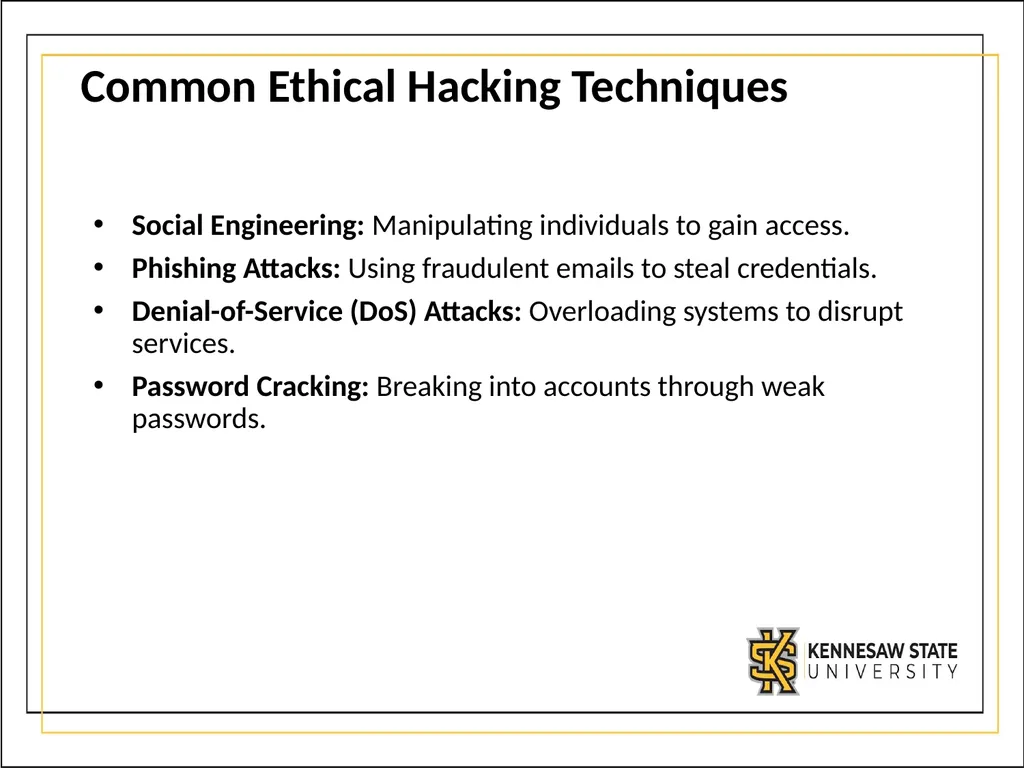
Common Ethical Hacking Techniques Social Engineering: Manipulating individuals to gain access.
Phishing Attacks: Using fraudulent emails to steal credentials.
Denial-of-Service (DoS) Attacks: Overloading systems to disrupt services.
Password Cracking: Breaking into accounts through weak passwords.<br>
09
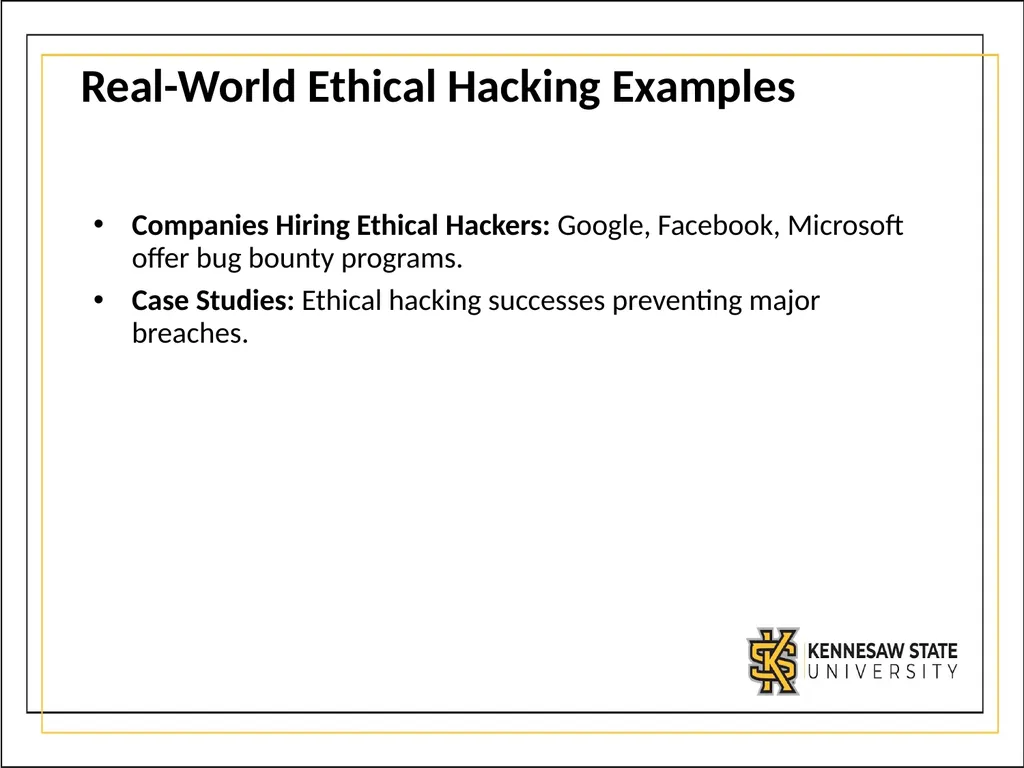
Real-World Ethical Hacking Examples Companies Hiring Ethical Hackers: Google, Facebook, Microsoft offer bug bounty programs.
Case Studies: Ethical hacking successes preventing major breaches.<br>