"Current Challenges to Representing Immigrant" is the property of its rightful owner. Permission is granted to
download and print the materials on this website for personal, non-commercial use only, and to display it
on your personal computer provided you do not modify the materials and that you retain all copyright
notices contained in the materials. By downloading content from our website, you accept the terms of this
agreement.
Presentation Transcript
01
Current Challenges to Representing Immigrant Survivors Survivor Summit
October 23, 2026<br>
Sarah Moran, Senior Specialty Refugee, Immigrant, Limited English Speaker (RIL) Attorney, Women’s Center and Shelter Civil Law Project
Previously worked as an immigration attorney at Goldstein & Associates, LLC<br>
03
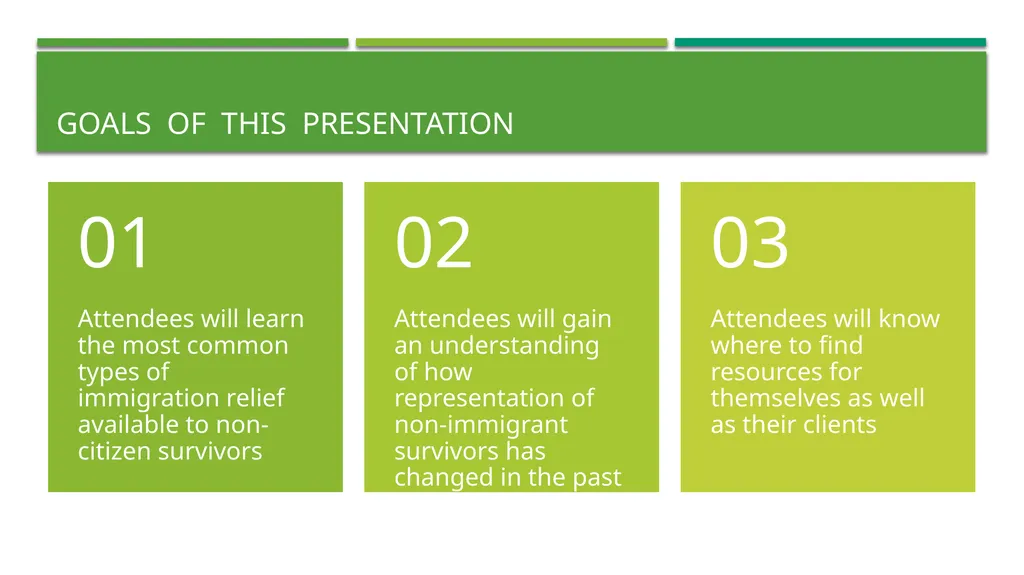
Goals of this Presentation<br>
04
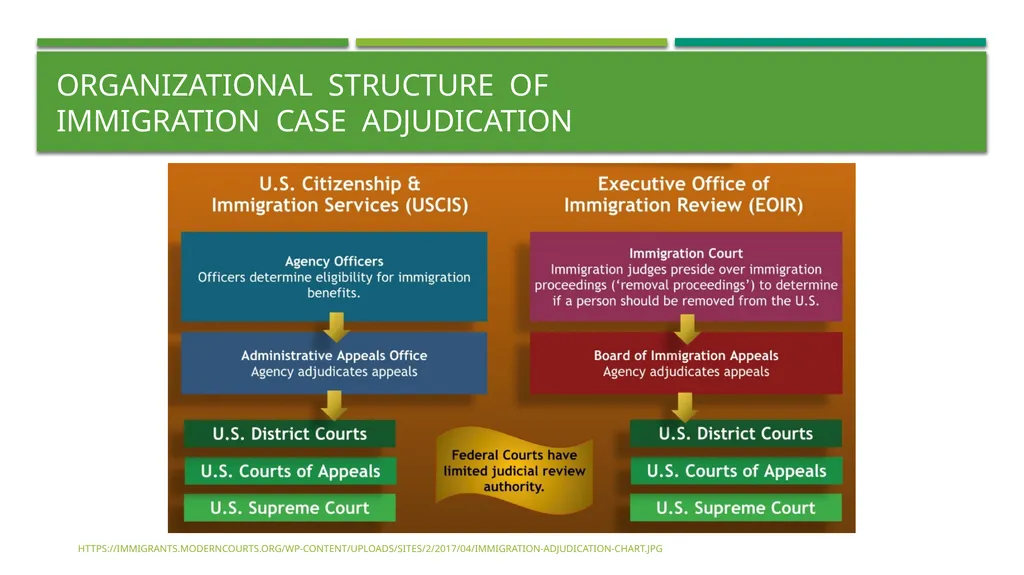
Organizational Structure of Immigration Case Adjudication https://immigrants.moderncourts.org/wp-content/uploads/sites/2/2017/04/immigration-adjudication-chart.jpg<br>
05
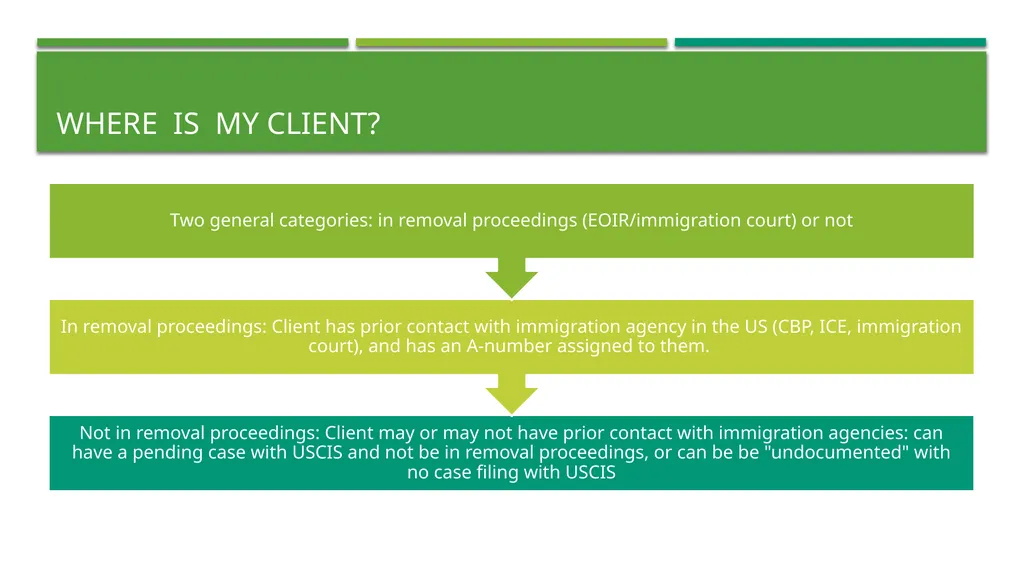
Where is my client?<br>
06
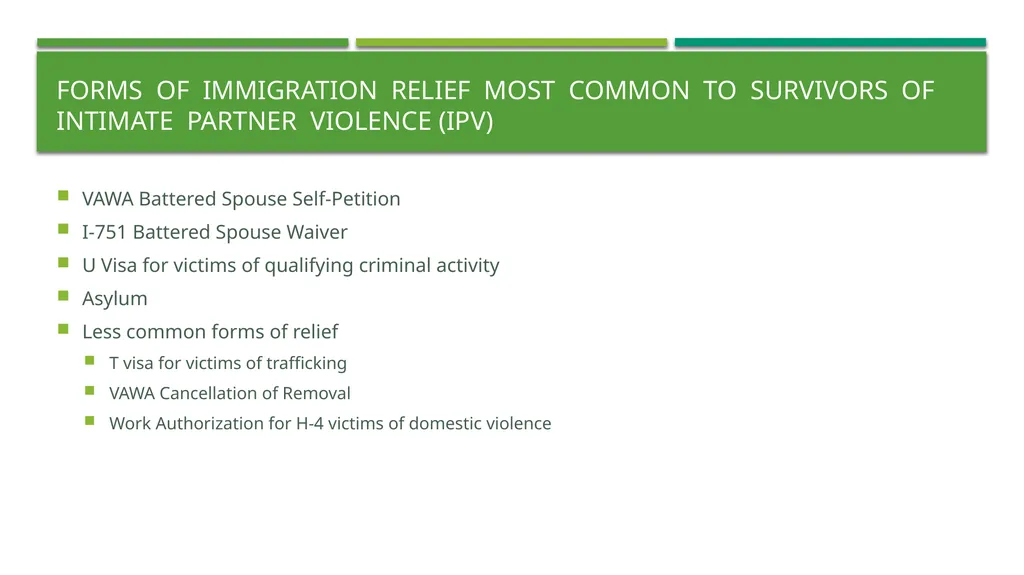
Forms of Immigration Relief Most Common to Survivors of Intimate Partner Violence (IPV) VAWA Battered Spouse Self-Petition
I-751 Battered Spouse Waiver
U Visa for victims of qualifying criminal activity
Asylum
Less common forms of relief
T visa for victims of trafficking
VAWA Cancellation of Removal
Work Authorization for H-4 victims of domestic violence<br>
07
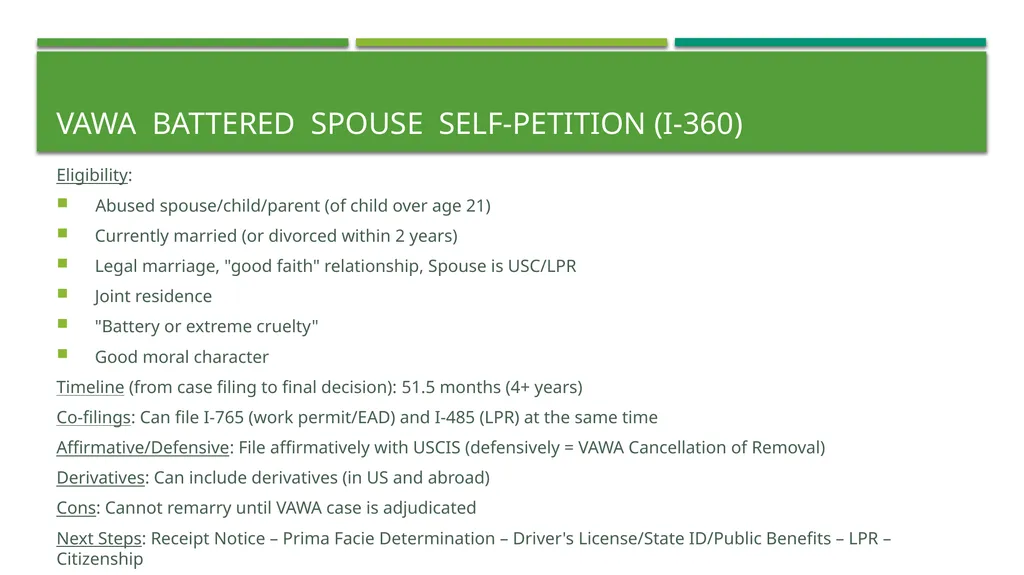
VAWA Battered Spouse Self-Petition (I-360) Eligibility:
Abused spouse/child/parent (of child over age 21)
Currently married (or divorced within 2 years)
Legal marriage, "good faith" relationship, Spouse is USC/LPR
Joint residence
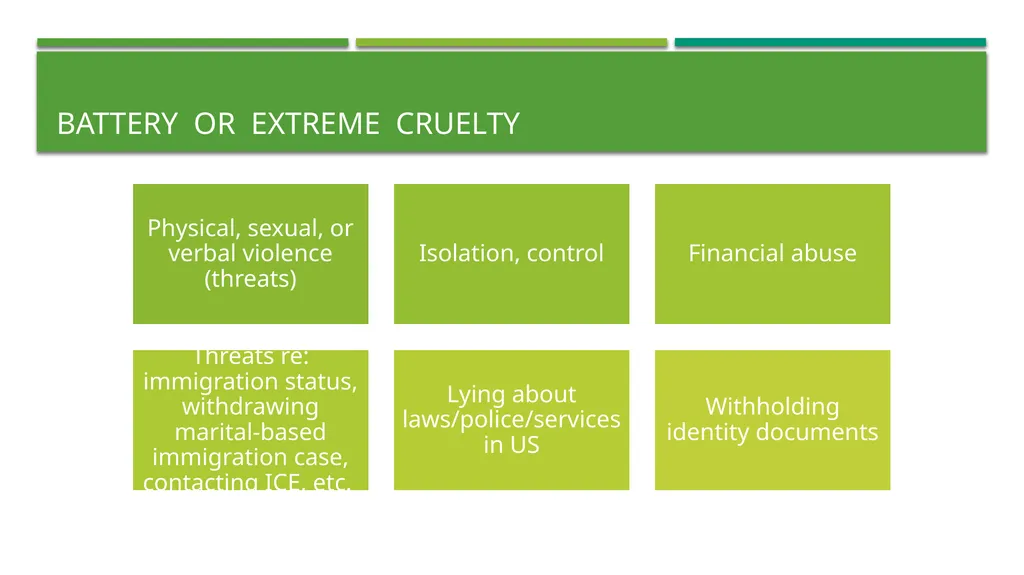
"Battery or extreme cruelty"
Good moral character
Timeline (from case filing to final decision): 51.5 months (4+ years)
Co-filings: Can file I-765 (work permit/EAD) and I-485 (LPR) at the same time
Affirmative/Defensive: File affirmatively with USCIS (defensively = VAWA Cancellation of Removal)
Derivatives: Can include derivatives (in US and abroad)
Cons: Cannot remarry until VAWA case is adjudicated
Next Steps: Receipt Notice – Prima Facie Determination – Driver's License/State ID/Public Benefits – LPR – Citizenship<br>
08
Battery or Extreme Cruelty<br>
09
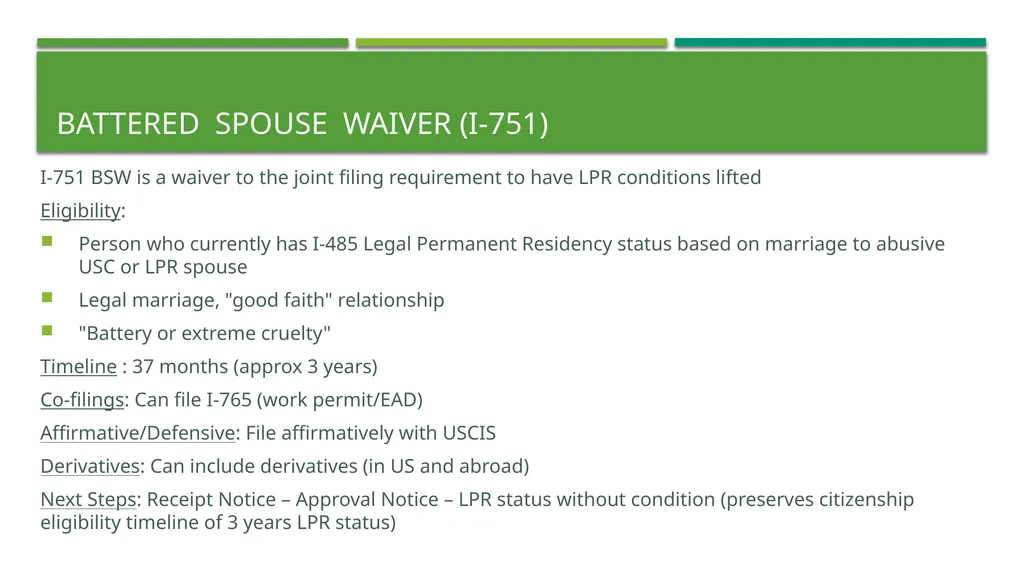
Battered Spouse Waiver (I-751) I-751 BSW is a waiver to the joint filing requirement to have LPR conditions lifted
Eligibility:
Person who currently has I-485 Legal Permanent Residency status based on marriage to abusive USC or LPR spouse
Legal marriage, "good faith" relationship
"Battery or extreme cruelty"
Timeline : 37 months (approx 3 years)
Co-filings: Can file I-765 (work permit/EAD)
Affirmative/Defensive: File affirmatively with USCIS
Derivatives: Can include derivatives (in US and abroad)
Next Steps: Receipt Notice – Approval Notice – LPR status without condition (preserves citizenship eligibility timeline of 3 years LPR status)<br>
10
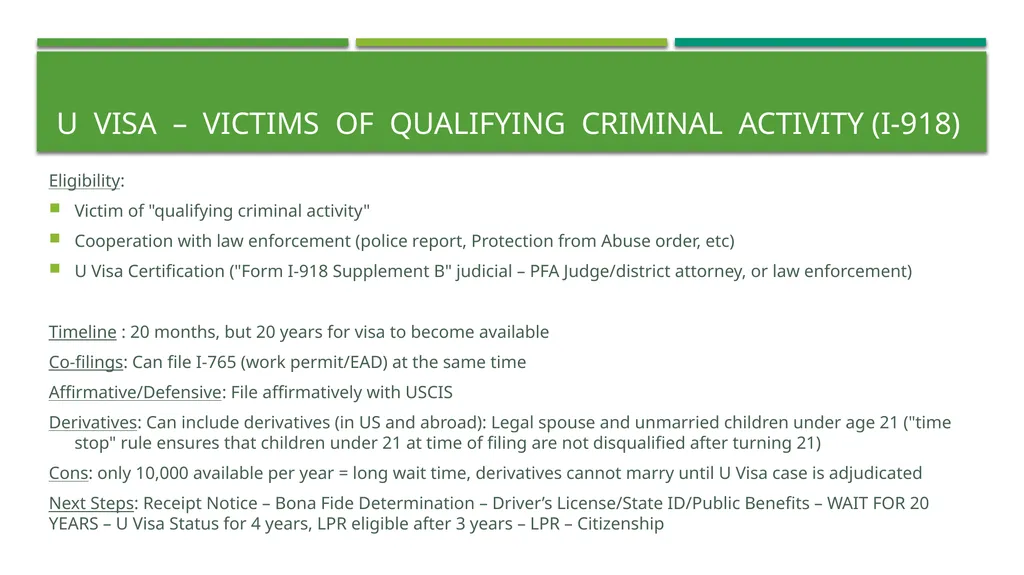
U Visa – Victims of Qualifying Criminal Activity (I-918) Eligibility:
Victim of "qualifying criminal activity"
Cooperation with law enforcement (police report, Protection from Abuse order, etc)
U Visa Certification ("Form I-918 Supplement B" judicial – PFA Judge/district attorney, or law enforcement)
Timeline : 20 months, but 20 years for visa to become available
Co-filings: Can file I-765 (work permit/EAD) at the same time
Affirmative/Defensive: File affirmatively with USCIS
Derivatives: Can include derivatives (in US and abroad): Legal spouse and unmarried children under age 21 ("time stop" rule ensures that children under 21 at time of filing are not disqualified after turning 21)
Cons: only 10,000 available per year = long wait time, derivatives cannot marry until U Visa case is adjudicated
Next Steps: Receipt Notice – Bona Fide Determination – Driver’s License/State ID/Public Benefits – WAIT FOR 20 YEARS – U Visa Status for 4 years, LPR eligible after 3 years – LPR – Citizenship<br>
11
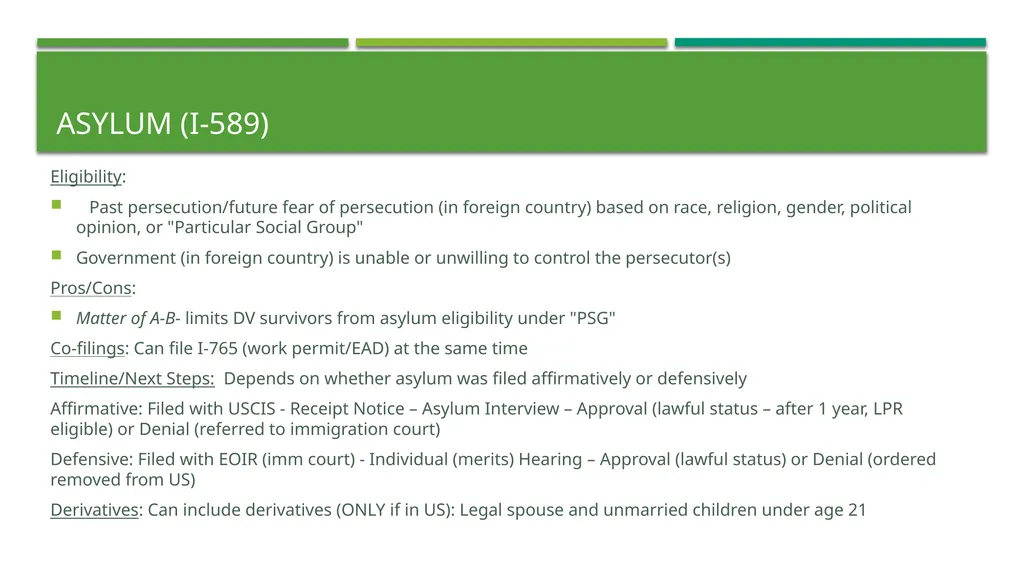
Asylum (I-589) Eligibility:
Past persecution/future fear of persecution (in foreign country) based on race, religion, gender, political opinion, or "Particular Social Group"
Government (in foreign country) is unable or unwilling to control the persecutor(s)
Pros/Cons:
Matter of A-B- limits DV survivors from asylum eligibility under "PSG"
Co-filings: Can file I-765 (work permit/EAD) at the same time
Timeline/Next Steps: Depends on whether asylum was filed affirmatively or defensively
Affirmative: Filed with USCIS - Receipt Notice – Asylum Interview – Approval (lawful status – after 1 year, LPR eligible) or Denial (referred to immigration court)
Defensive: Filed with EOIR (imm court) - Individual (merits) Hearing – Approval (lawful status) or Denial (ordered removed from US)
Derivatives: Can include derivatives (ONLY if in US): Legal spouse and unmarried children under age 21<br>
12
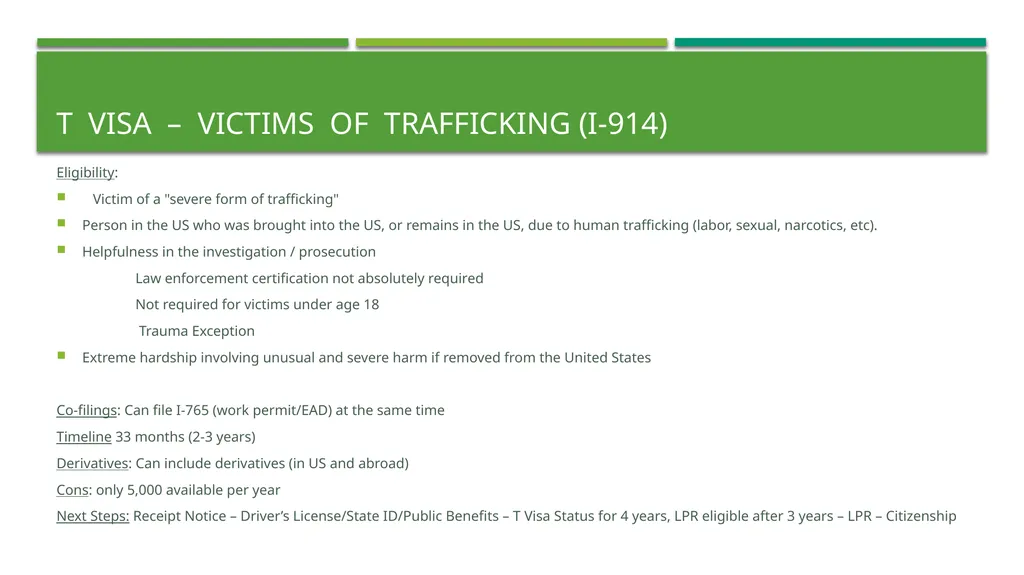
T Visa – Victims of Trafficking (I-914) Eligibility:
Victim of a "severe form of trafficking"
Person in the US who was brought into the US, or remains in the US, due to human trafficking (labor, sexual, narcotics, etc).
Helpfulness in the investigation / prosecution
Law enforcement certification not absolutely required
Not required for victims under age 18
Trauma Exception
Extreme hardship involving unusual and severe harm if removed from the United States
Co-filings: Can file I-765 (work permit/EAD) at the same time
Timeline 33 months (2-3 years)
Derivatives: Can include derivatives (in US and abroad)
Cons: only 5,000 available per year
Next Steps: Receipt Notice – Driver’s License/State ID/Public Benefits – T Visa Status for 4 years, LPR eligible after 3 years – LPR – Citizenship<br>
13
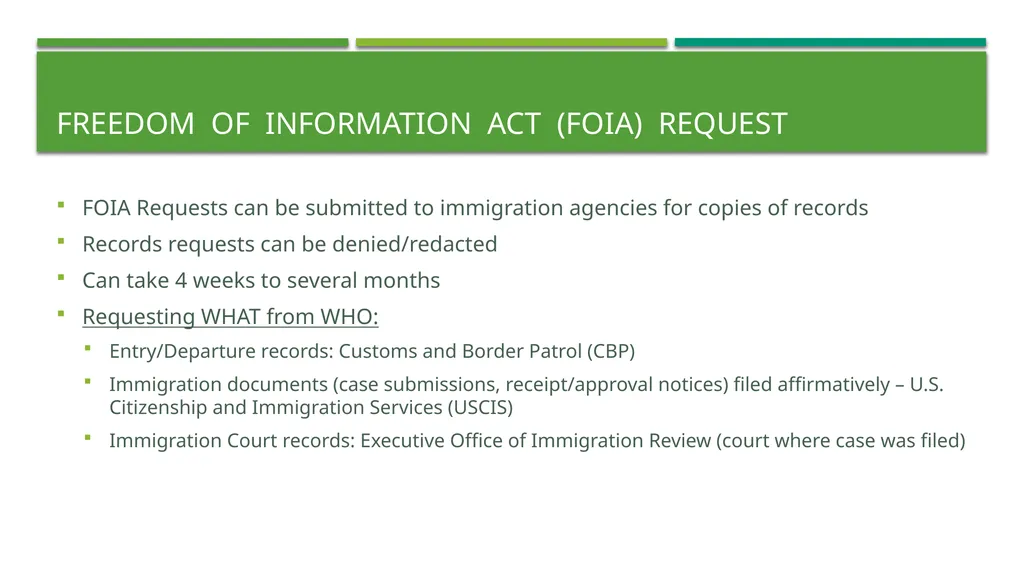
Freedom of Information Act (FOIA) Request FOIA Requests can be submitted to immigration agencies for copies of records
Records requests can be denied/redacted
Can take 4 weeks to several months
Requesting WHAT from WHO:
Entry/Departure records: Customs and Border Patrol (CBP)
Immigration documents (case submissions, receipt/approval notices) filed affirmatively – U.S. Citizenship and Immigration Services (USCIS)
Immigration Court records: Executive Office of Immigration Review (court where case was filed)<br>
14
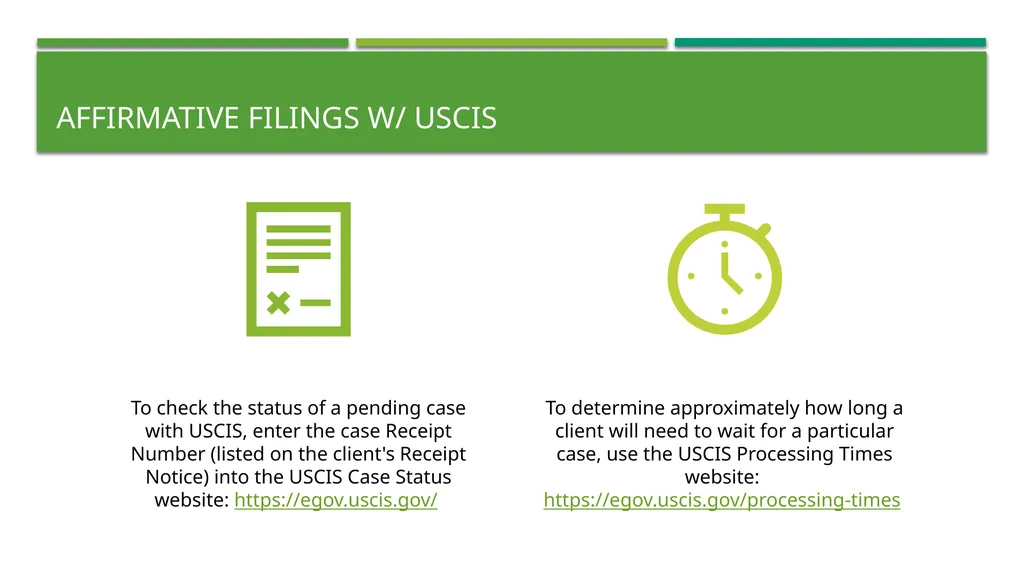
Affirmative filings w/ USCIS<br>
15
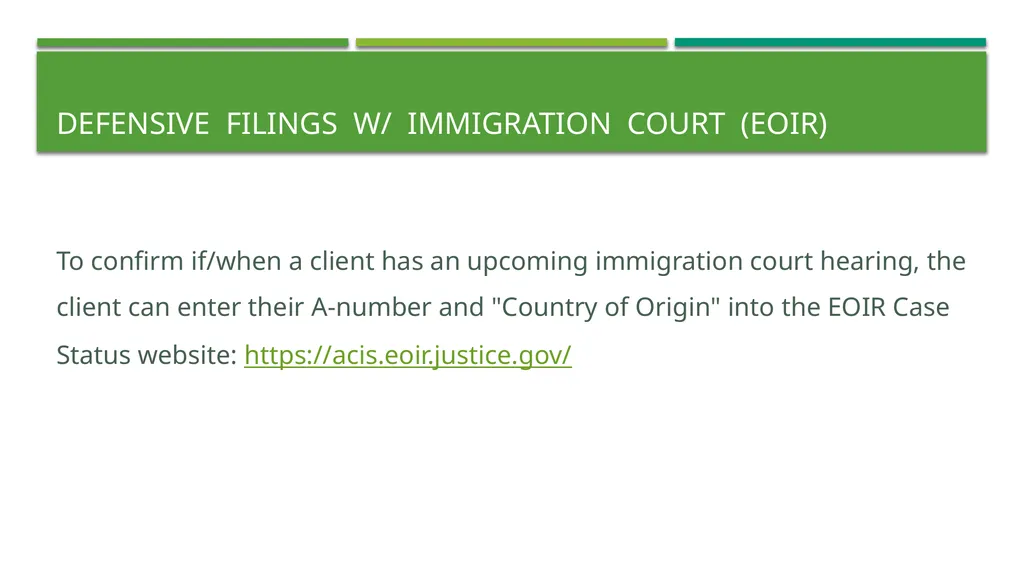
Defensive filings w/ Immigration Court (EOIR) To confirm if/when a client has an upcoming immigration court hearing, the client can enter their A-number and "Country of Origin" into the EOIR Case Status website: https://acis.eoir.justice.gov/<br>
16
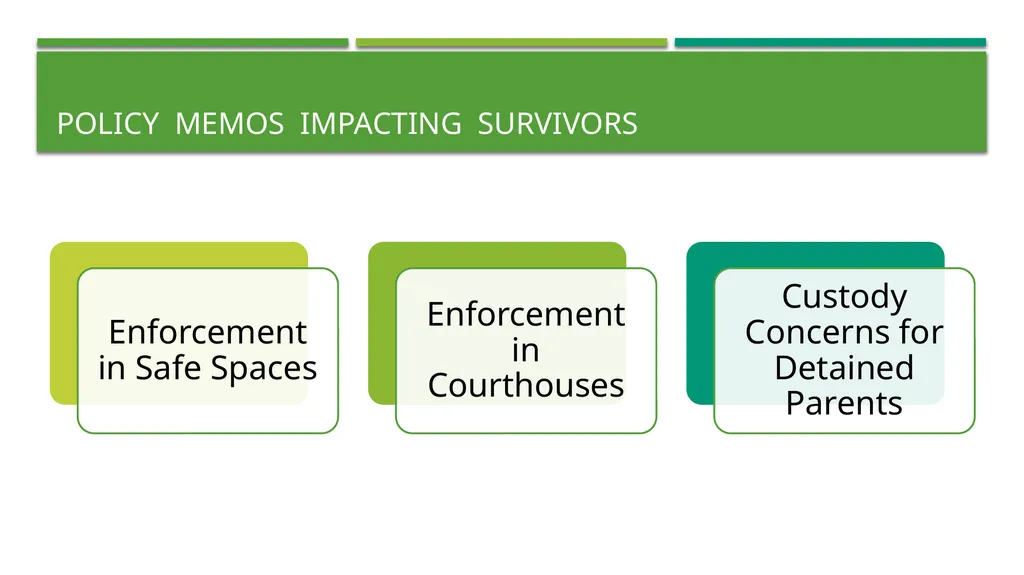
Policy Memos Impacting Survivors<br>
17
A Word on VAWA Confidentiality Statute vs. Practice
Preventing discovery in state court cases<br>
18
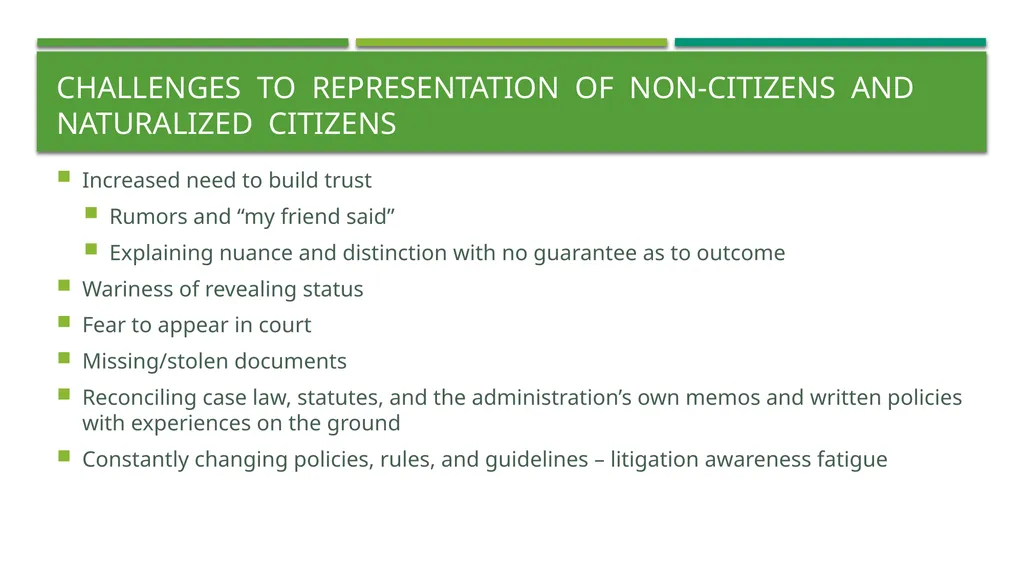
Challenges to Representation of Non-citizens and Naturalized Citizens Increased need to build trust
Rumors and “my friend said”
Explaining nuance and distinction with no guarantee as to outcome
Wariness of revealing status
Fear to appear in court
Missing/stolen documents
Reconciling case law, statutes, and the administration’s own memos and written policies with experiences on the ground
Constantly changing policies, rules, and guidelines – litigation awareness fatigue<br>
19
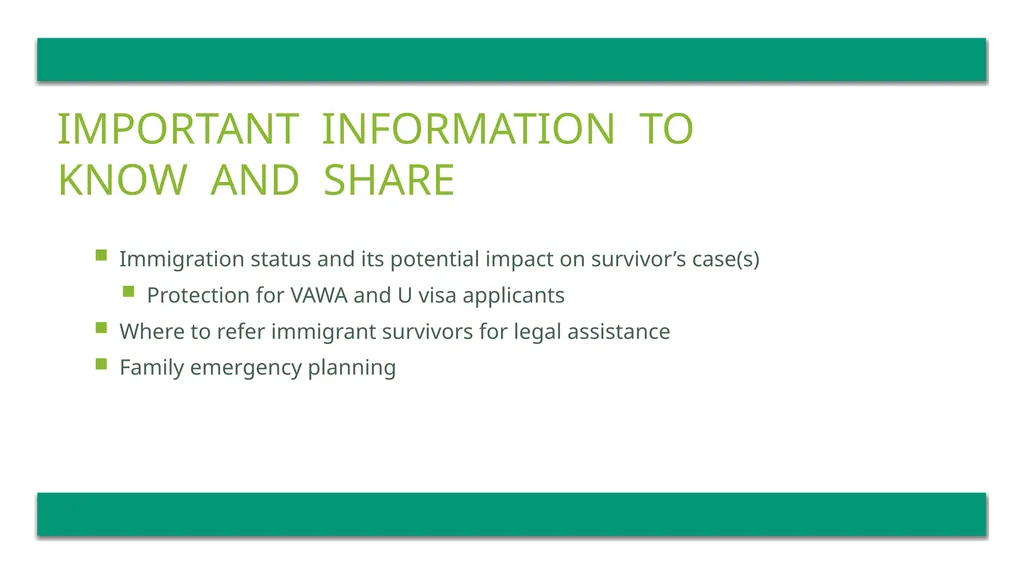
Important Information to Know and Share Immigration status and its potential impact on survivor’s case(s)
Protection for VAWA and U visa applicants
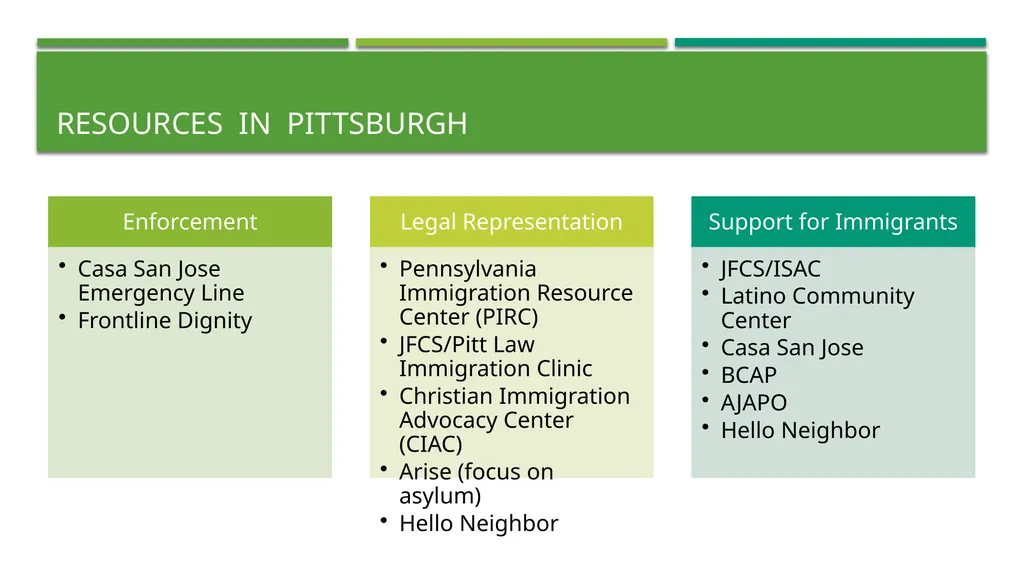
Where to refer immigrant survivors for legal assistance
Family emergency planning<br>
20
Resources in Pittsburgh<br>
21
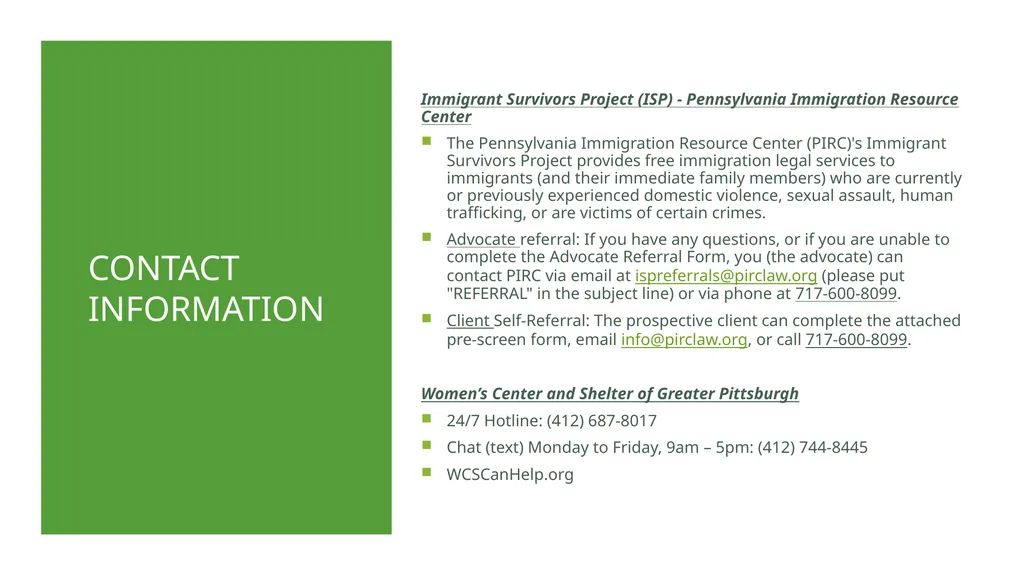
Contact Information Immigrant Survivors Project (ISP) - Pennsylvania Immigration Resource Center
The Pennsylvania Immigration Resource Center (PIRC)'s Immigrant Survivors Project provides free immigration legal services to immigrants (and their immediate family members) who are currently or previously experienced domestic violence, sexual assault, human trafficking, or are victims of certain crimes.
Advocate referral: If you have any questions, or if you are unable to complete the Advocate Referral Form, you (the advocate) can contact PIRC via email at ispreferrals@pirclaw.org (please put "REFERRAL" in the subject line) or via phone at 717-600-8099.
Client Self-Referral: The prospective client can complete the attached pre-screen form, email info@pirclaw.org, or call 717-600-8099.
Women’s Center and Shelter of Greater Pittsburgh
24/7 Hotline: (412) 687-8017
Chat (text) Monday to Friday, 9am – 5pm: (412) 744-8445
WCSCanHelp.org<br>