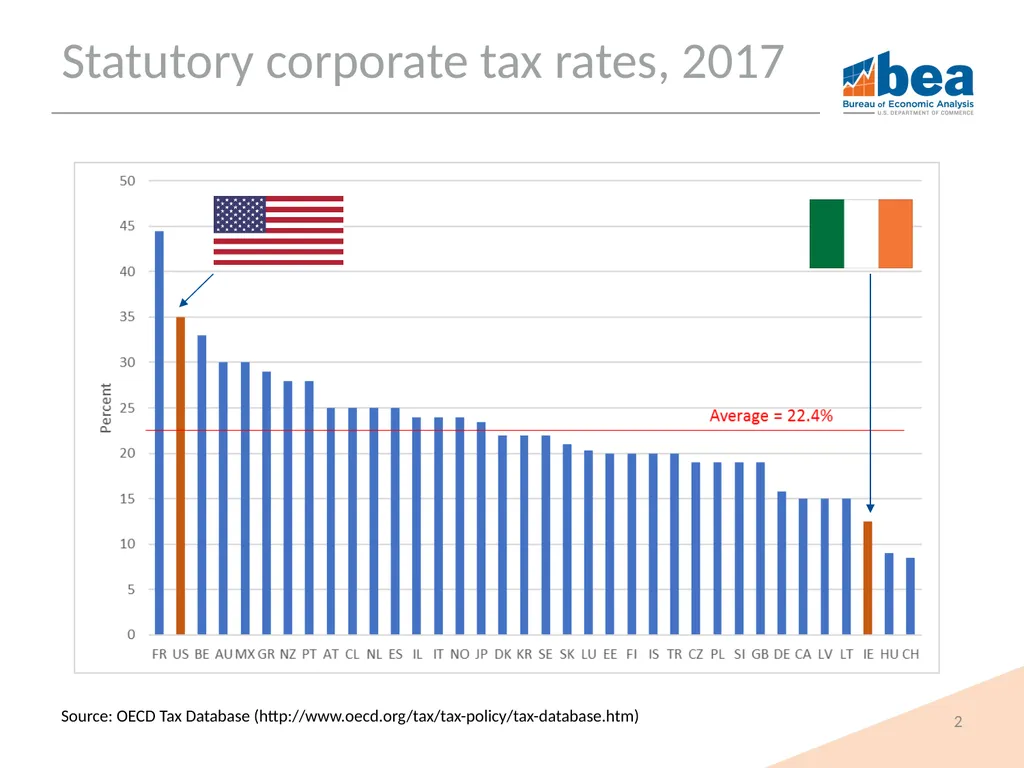
Current Issue: Offshore Profit Shifting Ray Mataloni, Balance of Payments Division BEA Advisory Committee Meeting November 9, 2018 Statutory corporate tax rates, 2017 2 Source: OECD Tax Database
Related Topics
Share
Embed code
Download this presentation From Below
"Current Issue: Offshore Profit Shifting Ray" is the property of its rightful owner. Permission is granted to
download and print the materials on this website for personal, non-commercial use only, and to display it
on your personal computer provided you do not modify the materials and that you retain all copyright
notices contained in the materials. By downloading content from our website, you accept the terms of this
agreement.
Presentation Transcript
01
Current Issue: Offshore Profit Shifting Ray Mataloni, Balance of Payments Division
BEA Advisory Committee Meeting
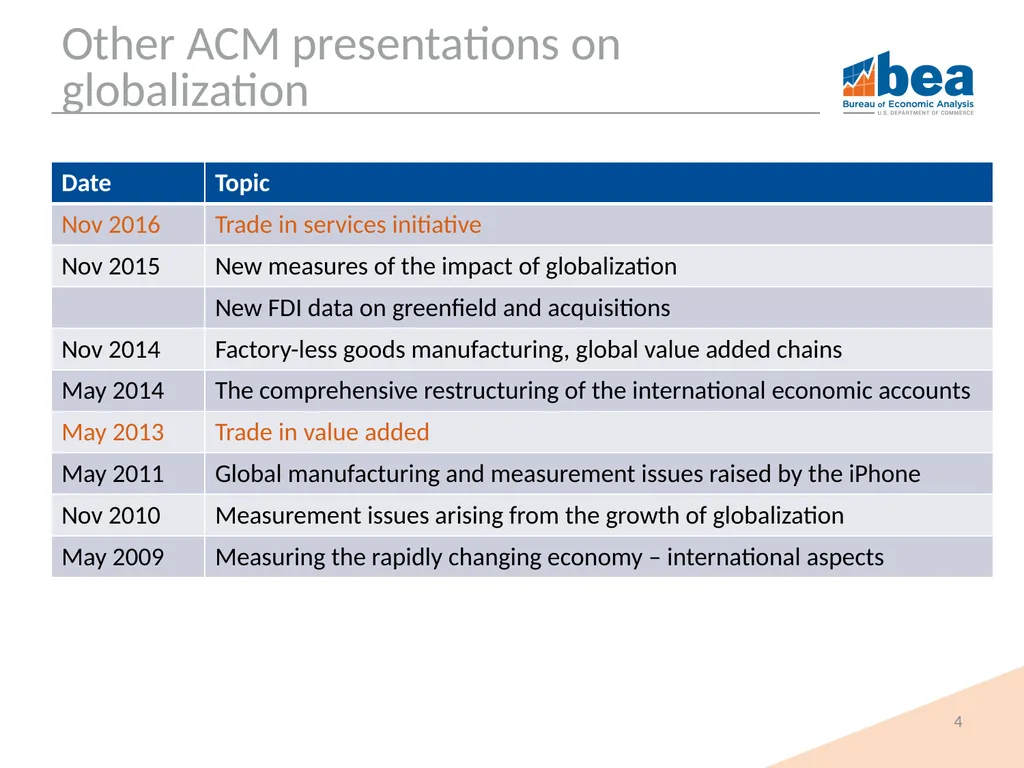
November 9, 2018<br>
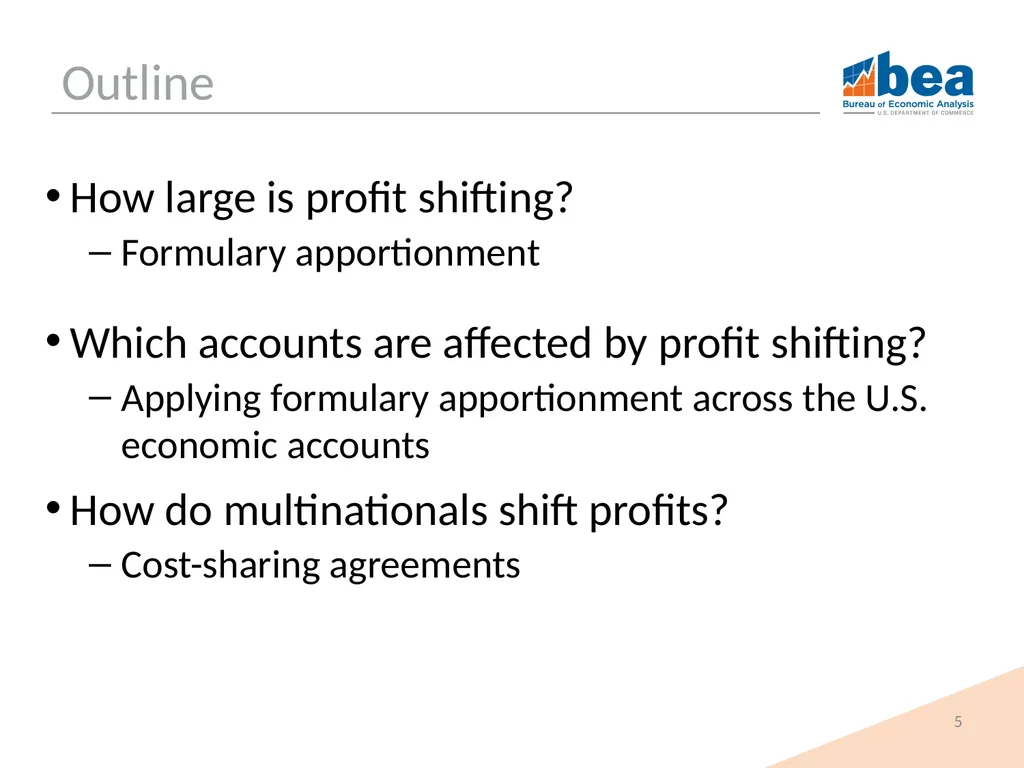
Outline How large is profit shifting?
Formulary apportionment
Which accounts are affected by profit shifting?
Applying formulary apportionment across the U.S. economic accounts
How do multinationals shift profits?
Cost-sharing agreements 5<br>
06
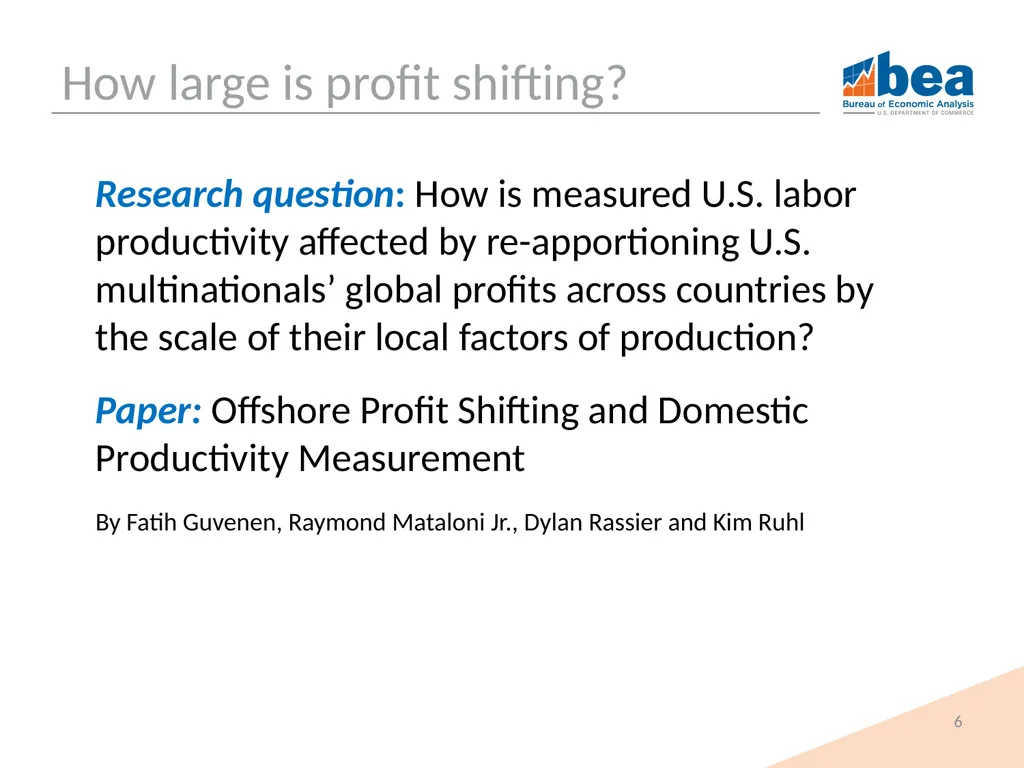
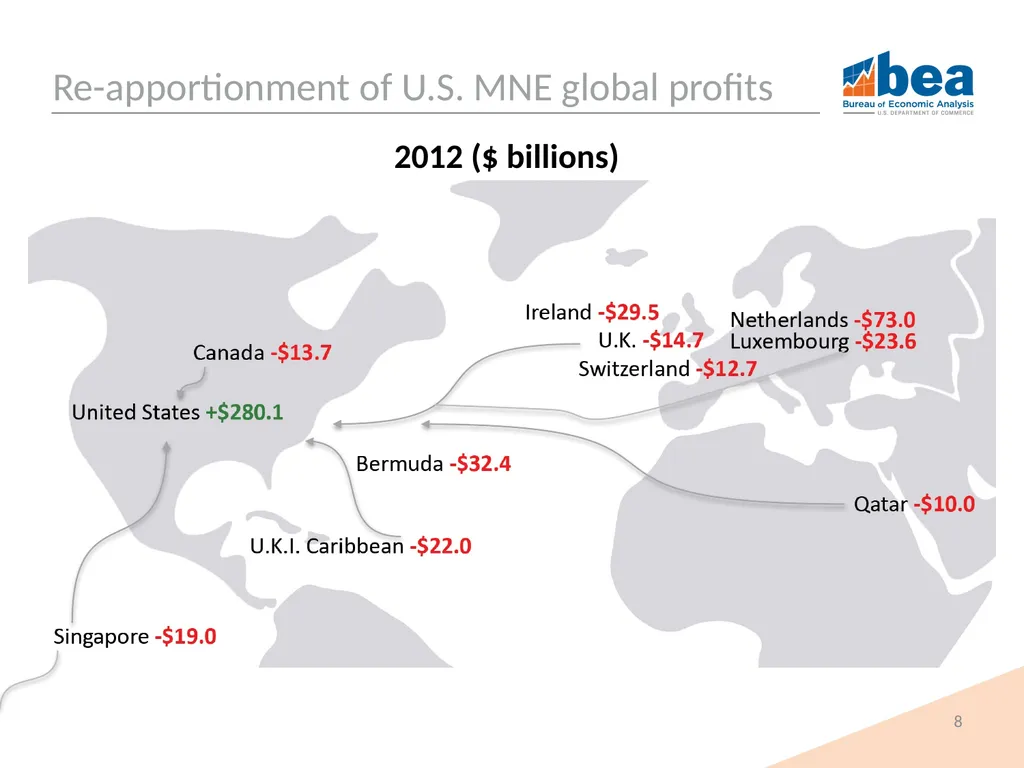
How large is profit shifting? 6 Research question: How is measured U.S. labor productivity affected by re-apportioning U.S. multinationals’ global profits across countries by the scale of their local factors of production?
Paper: Offshore Profit Shifting and Domestic Productivity Measurement
By Fatih Guvenen, Raymond Mataloni Jr., Dylan Rassier and Kim Ruhl<br>
07
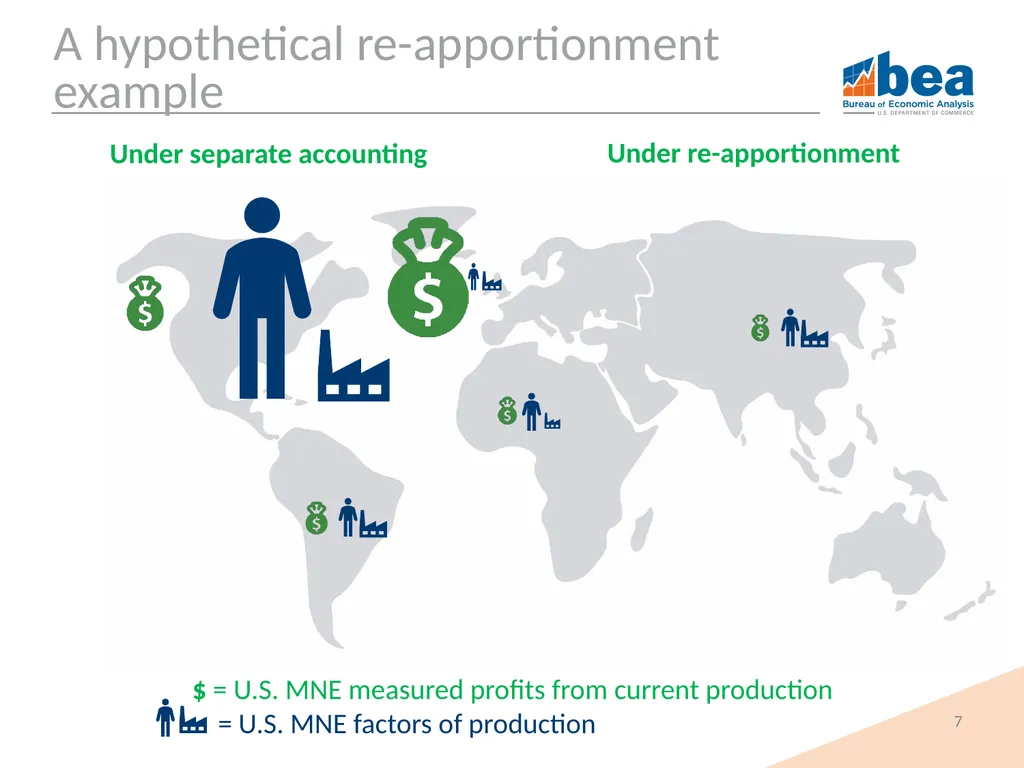
A hypothetical re-apportionment example 7 $ = U.S. MNE measured profits from current production
= U.S. MNE factors of production Under separate accounting Under re-apportionment<br>
08
8 2012 ($ billions) Re-apportionment of U.S. MNE global profits<br>
09
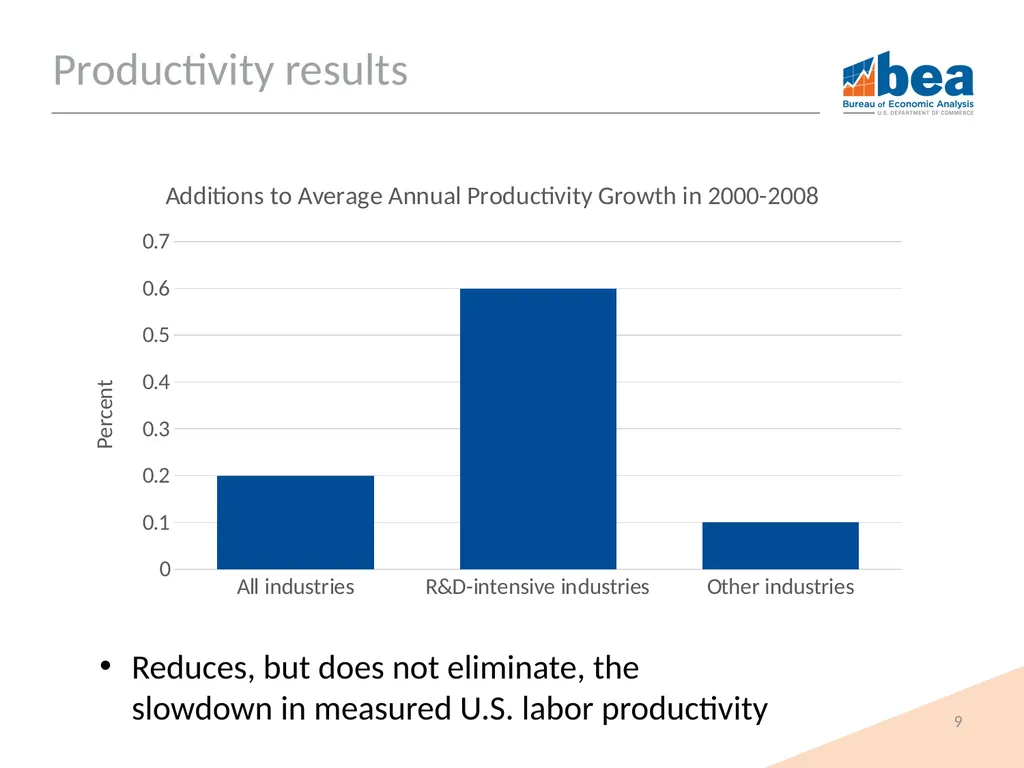
Productivity results 9 Reduces, but does not eliminate, the slowdown in measured U.S. labor productivity<br>
10
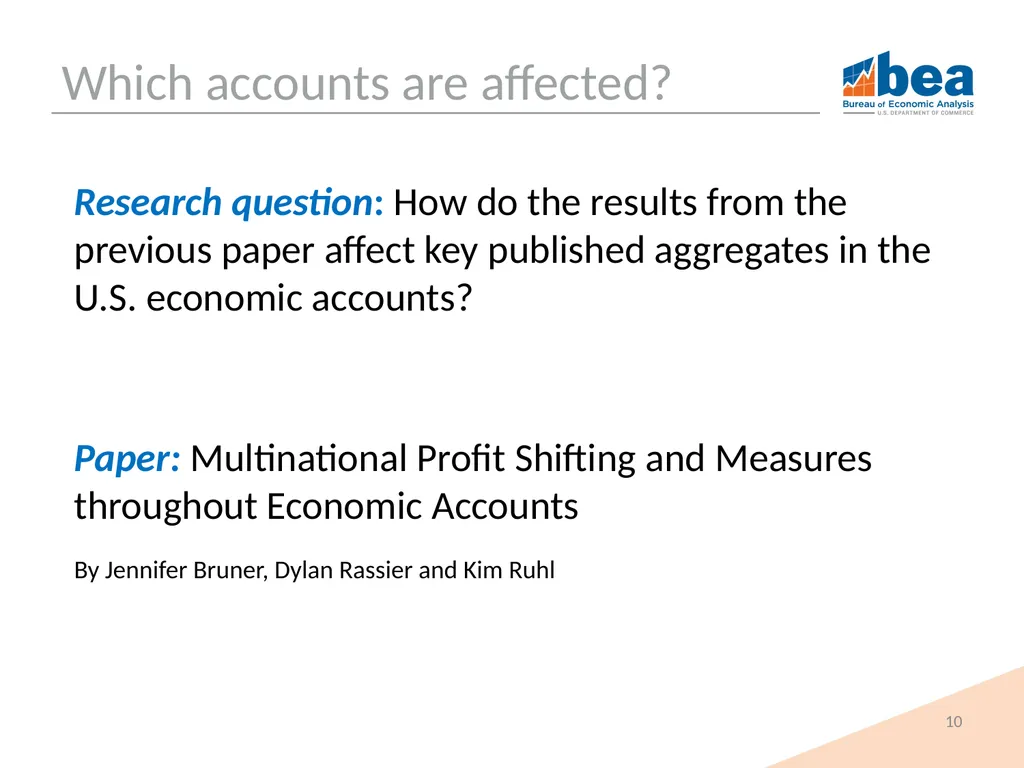
Which accounts are affected? 10 Research question: How do the results from the previous paper affect key published aggregates in the U.S. economic accounts?
Paper: Multinational Profit Shifting and Measures throughout Economic Accounts
By Jennifer Bruner, Dylan Rassier and Kim Ruhl<br>
11
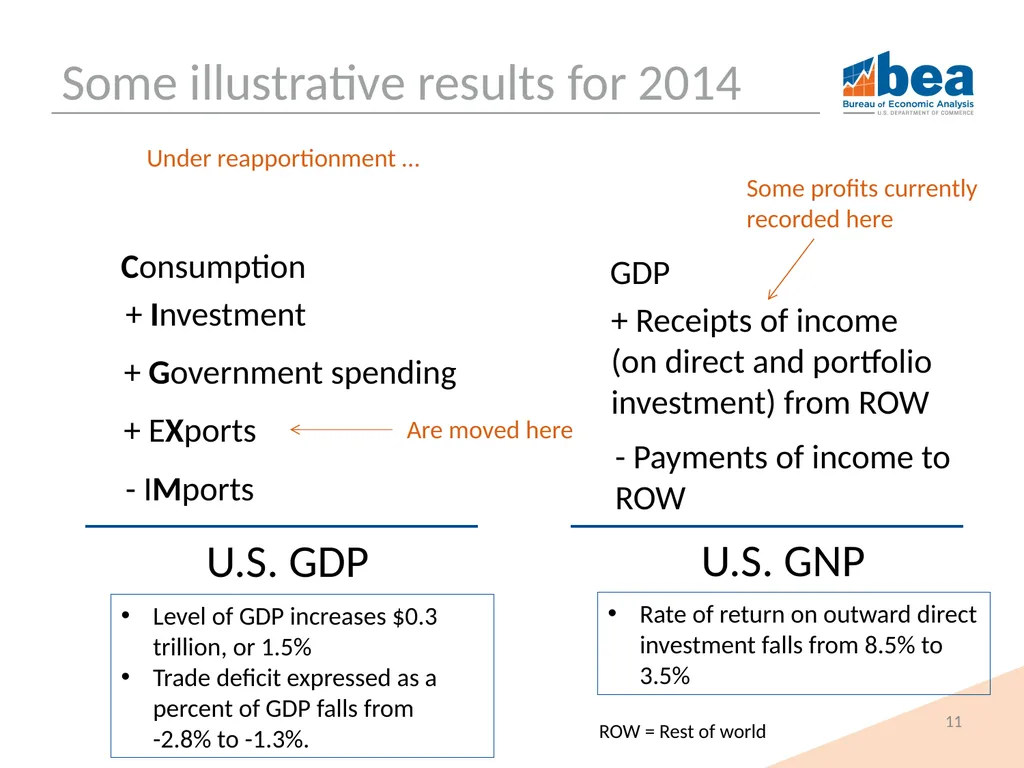
Some illustrative results for 2014 11 U.S. GDP Consumption + Investment + Government spending + EXports - IMports GDP + Receipts of income (on direct and portfolio investment) from ROW - Payments of income to ROW U.S. GNP Under reapportionment … Some profits currently recorded here Are moved here ROW = Rest of world Rate of return on outward direct investment falls from 8.5% to 3.5% Level of GDP increases $0.3 trillion, or 1.5%
Trade deficit expressed as a percent of GDP falls from -2.8% to -1.3%.<br>
12
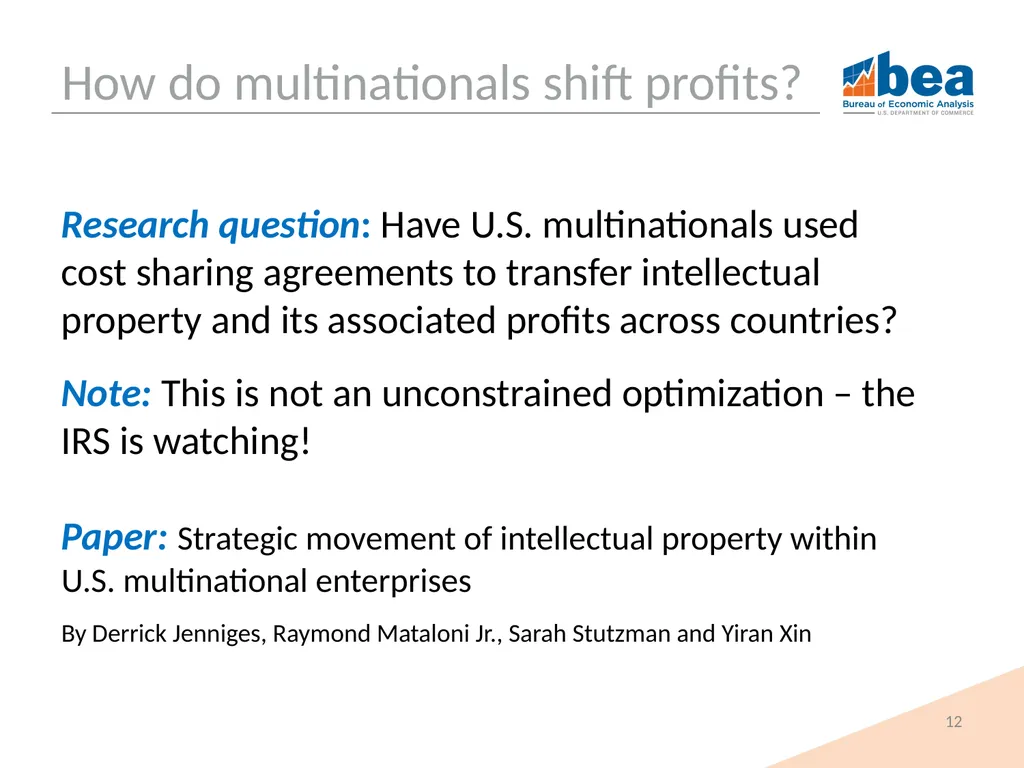
How do multinationals shift profits? 12 Research question: Have U.S. multinationals used cost sharing agreements to transfer intellectual property and its associated profits across countries?
Note: This is not an unconstrained optimization – the IRS is watching!
Paper: Strategic movement of intellectual property within U.S. multinational enterprises
By Derrick Jenniges, Raymond Mataloni Jr., Sarah Stutzman and Yiran Xin<br>
13
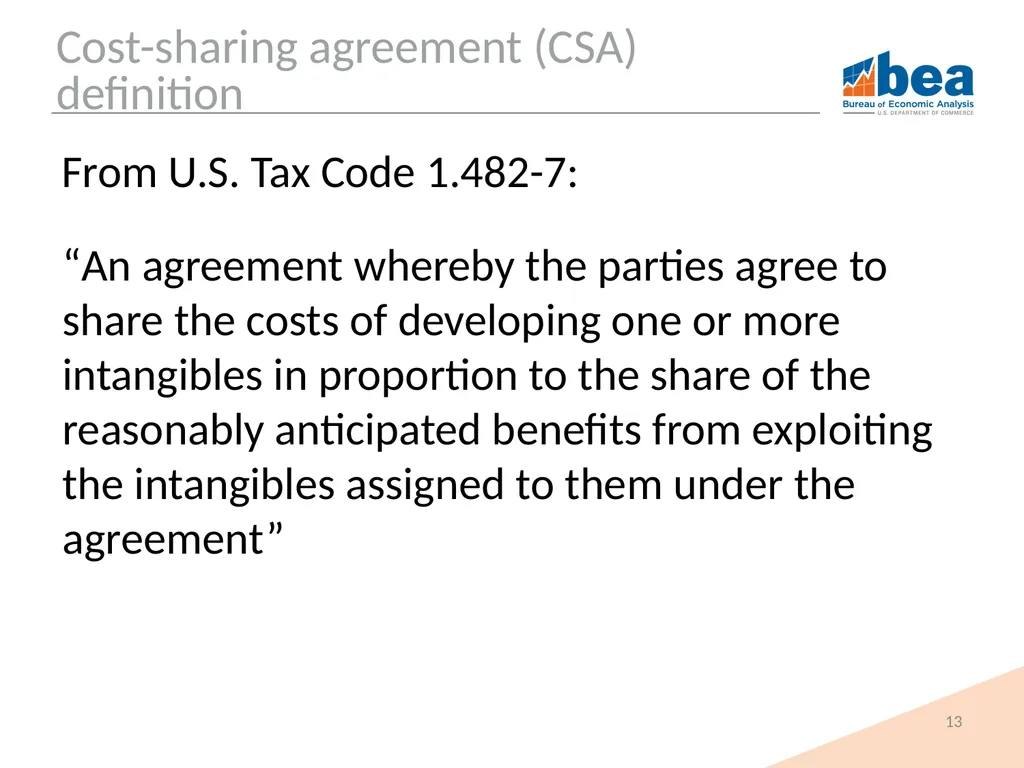
Cost-sharing agreement (CSA) definition “An agreement whereby the parties agree to share the costs of developing one or more intangibles in proportion to the share of the reasonably anticipated benefits from exploiting the intangibles assigned to them under the agreement” 13 From U.S. Tax Code 1.482-7:<br>
14
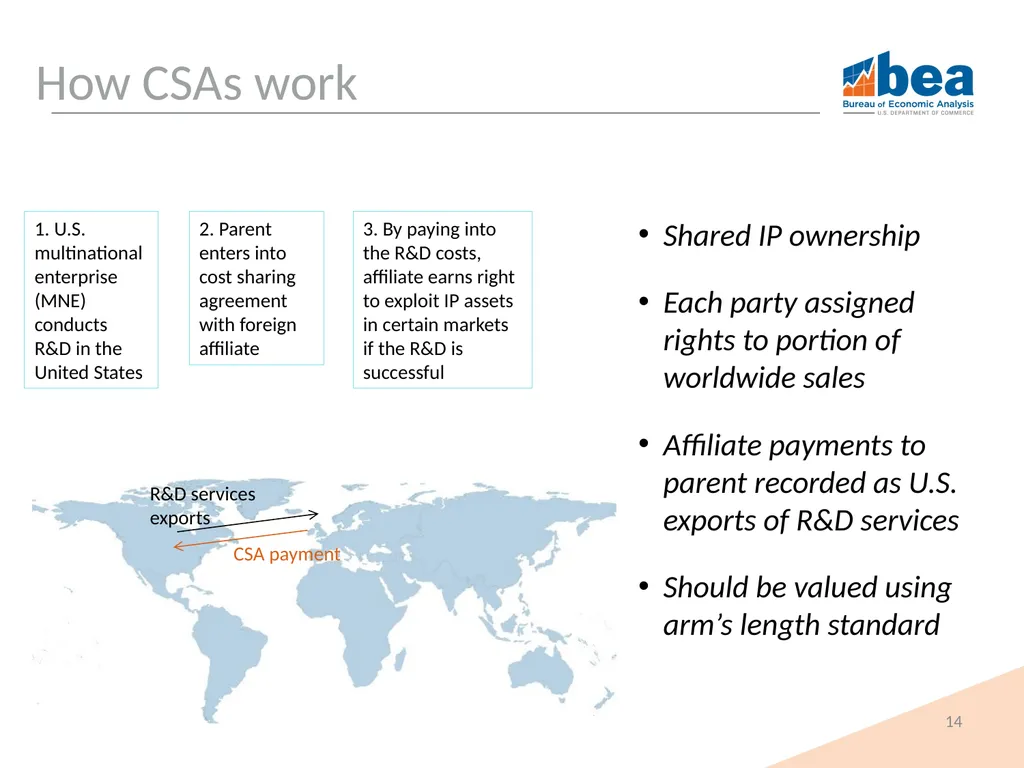
How CSAs work Shared IP ownership
Each party assigned rights to portion of worldwide sales
Affiliate payments to parent recorded as U.S. exports of R&D services
Should be valued using arm’s length standard 14 1. U.S. multinational enterprise (MNE) conducts R&D in the United States 3. By paying into the R&D costs, affiliate earns right to exploit IP assets in certain markets if the R&D is successful R&D services exports 2. Parent enters into cost sharing agreement with foreign affiliate CSA payment<br>
15
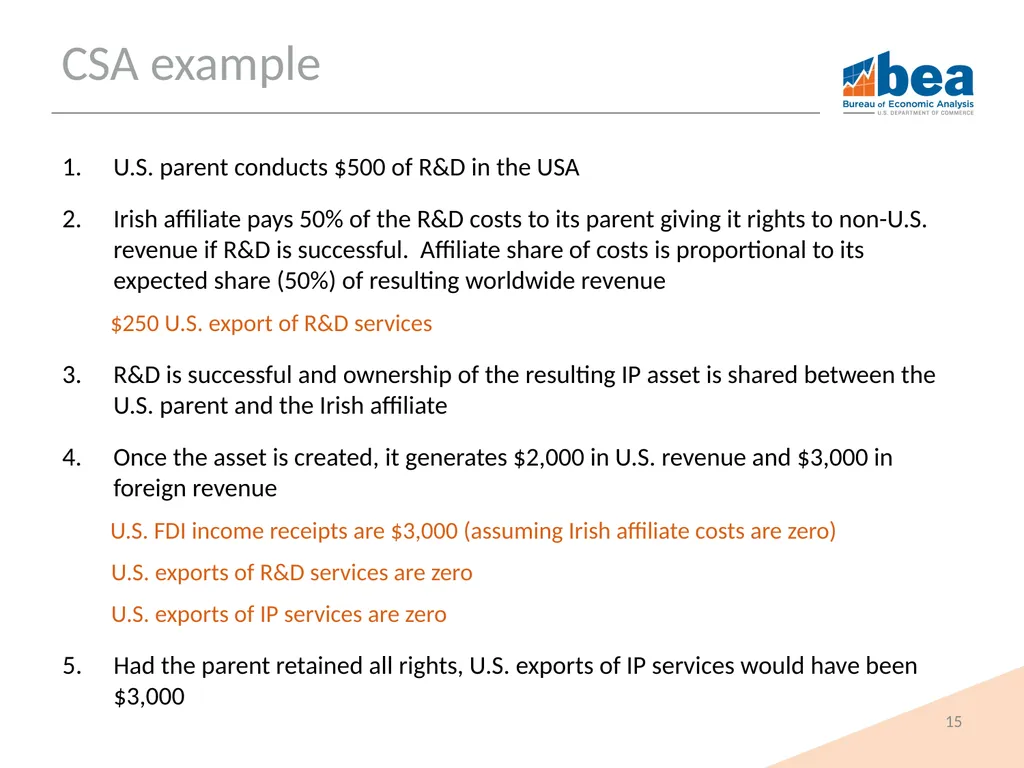
CSA example U.S. parent conducts $500 of R&D in the USA
Irish affiliate pays 50% of the R&D costs to its parent giving it rights to non-U.S. revenue if R&D is successful. Affiliate share of costs is proportional to its expected share (50%) of resulting worldwide revenue
$250 U.S. export of R&D services
R&D is successful and ownership of the resulting IP asset is shared between the U.S. parent and the Irish affiliate
Once the asset is created, it generates $2,000 in U.S. revenue and $3,000 in foreign revenue
U.S. FDI income receipts are $3,000 (assuming Irish affiliate costs are zero)
U.S. exports of R&D services are zero
U.S. exports of IP services are zero
Had the parent retained all rights, U.S. exports of IP services would have been $3,000 15<br>
16
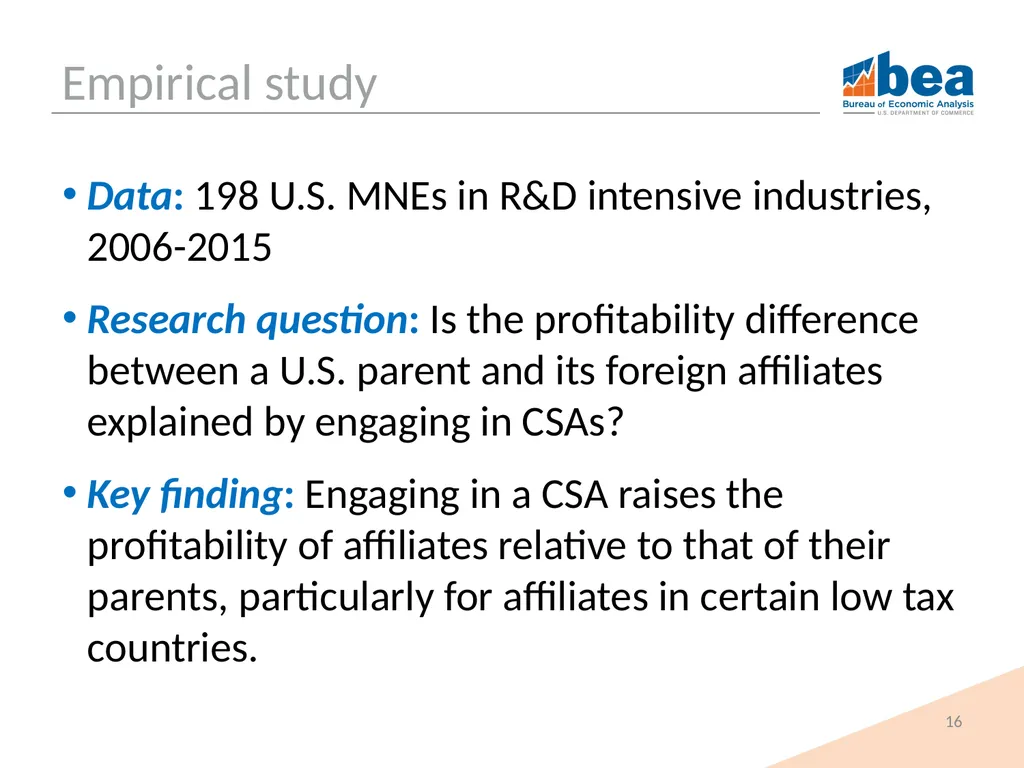
Empirical study Data: 198 U.S. MNEs in R&D intensive industries, 2006-2015
Research question: Is the profitability difference between a U.S. parent and its foreign affiliates explained by engaging in CSAs?
Key finding: Engaging in a CSA raises the profitability of affiliates relative to that of their parents, particularly for affiliates in certain low tax countries. 16<br>
17
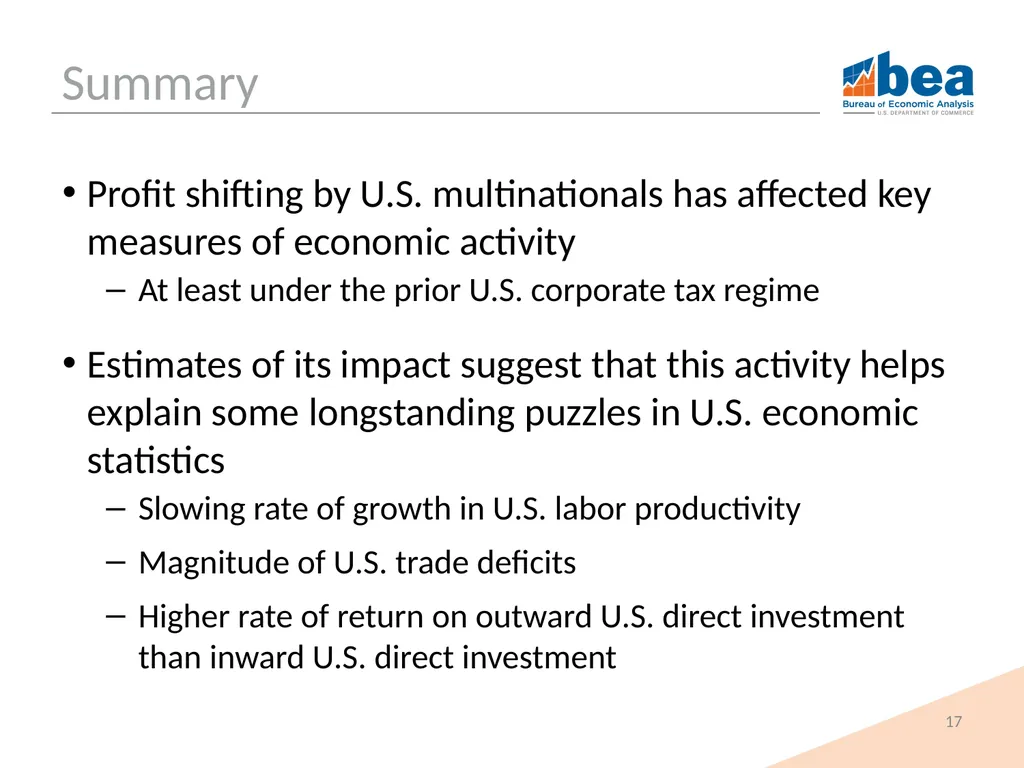
Summary Profit shifting by U.S. multinationals has affected key measures of economic activity
At least under the prior U.S. corporate tax regime
Estimates of its impact suggest that this activity helps explain some longstanding puzzles in U.S. economic statistics
Slowing rate of growth in U.S. labor productivity
Magnitude of U.S. trade deficits
Higher rate of return on outward U.S. direct investment than inward U.S. direct investment 17<br>
18
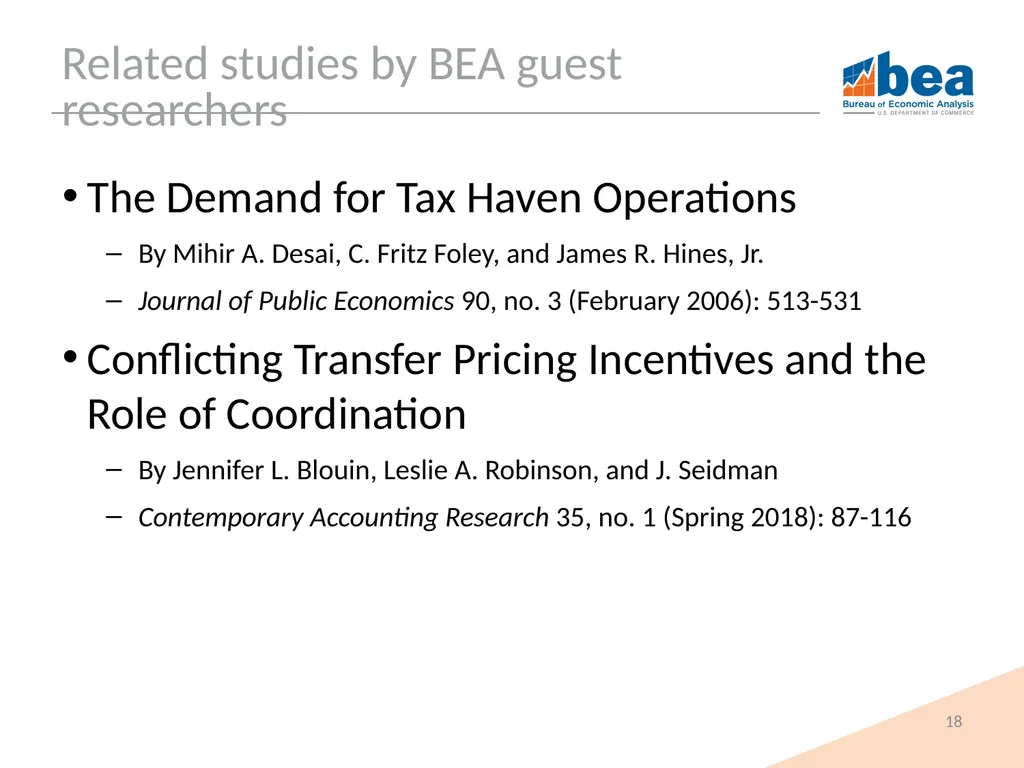
Related studies by BEA guest researchers The Demand for Tax Haven Operations
By Mihir A. Desai, C. Fritz Foley, and James R. Hines, Jr.
Journal of Public Economics 90, no. 3 (February 2006): 513-531
Conflicting Transfer Pricing Incentives and the Role of Coordination
By Jennifer L. Blouin, Leslie A. Robinson, and J. Seidman
Contemporary Accounting Research 35, no. 1 (Spring 2018): 87-116 18<br>
19
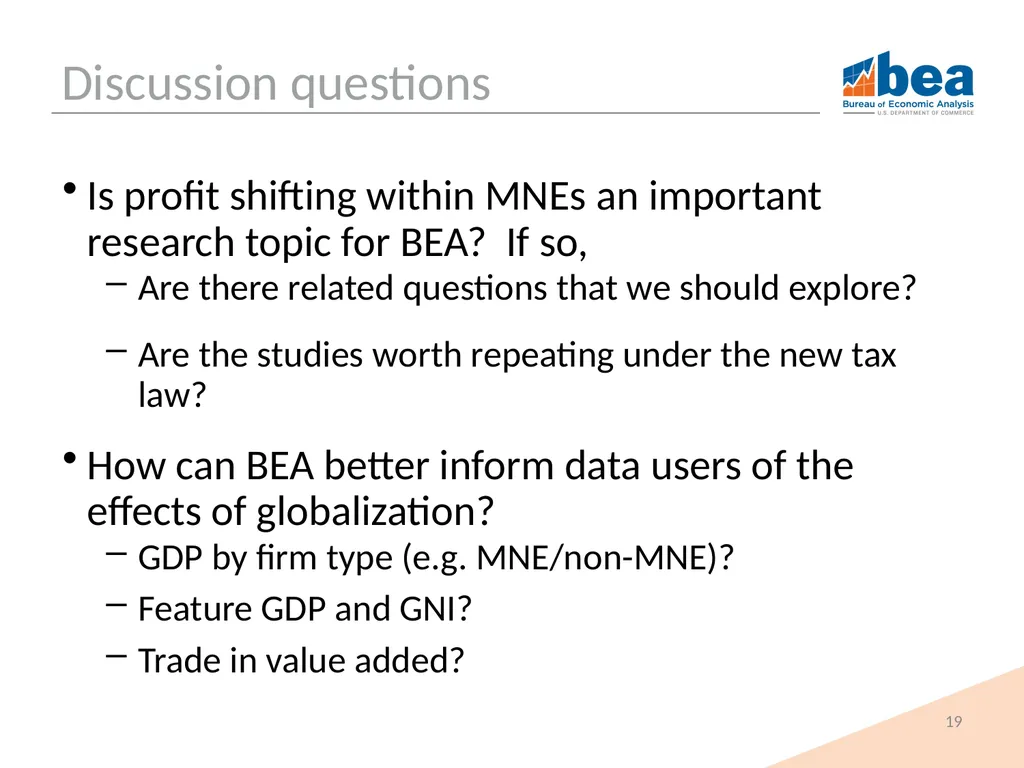
Discussion questions Is profit shifting within MNEs an important research topic for BEA? If so,
Are there related questions that we should explore?
Are the studies worth repeating under the new tax law?
How can BEA better inform data users of the effects of globalization?
GDP by firm type (e.g. MNE/non-MNE)?
Feature GDP and GNI?
Trade in value added? 19<br>