
CUSTOMS VALUATION Tariff and Trade Affairs


Description: CUSTOMS VALUATION Tariff and Trade Affairs Directorate Knowledge Academy 2 3 July 2014 WHY CUSTOMS VALUATION? Taxable base for Customs duty revenue Compiling trade statistics Monitoring quantitative restrictions Administering preferential
Related Topics
Download Presentation
"CUSTOMS VALUATION Tariff and Trade Affairs" is the property of its rightful owner. Permission is granted to download and print the materials on this website for personal, non-commercial use only, and to display it on your personal computer provided you do not modify the materials and that you retain all copyright notices contained in the materials. By downloading content from our website, you accept the terms of this agreement.
Presentation Transcript
slide1. CUSTOMS VALUATION Tariff and Trade Affairs Directorate
Knowledge Academy
2 – 3 July 2014<br>
slide2. WHY CUSTOMS VALUATION? Taxable base for Customs duty revenue
Compiling trade statistics
Monitoring quantitative restrictions
Administering preferential systems
Collecting internal taxes on imports<br>
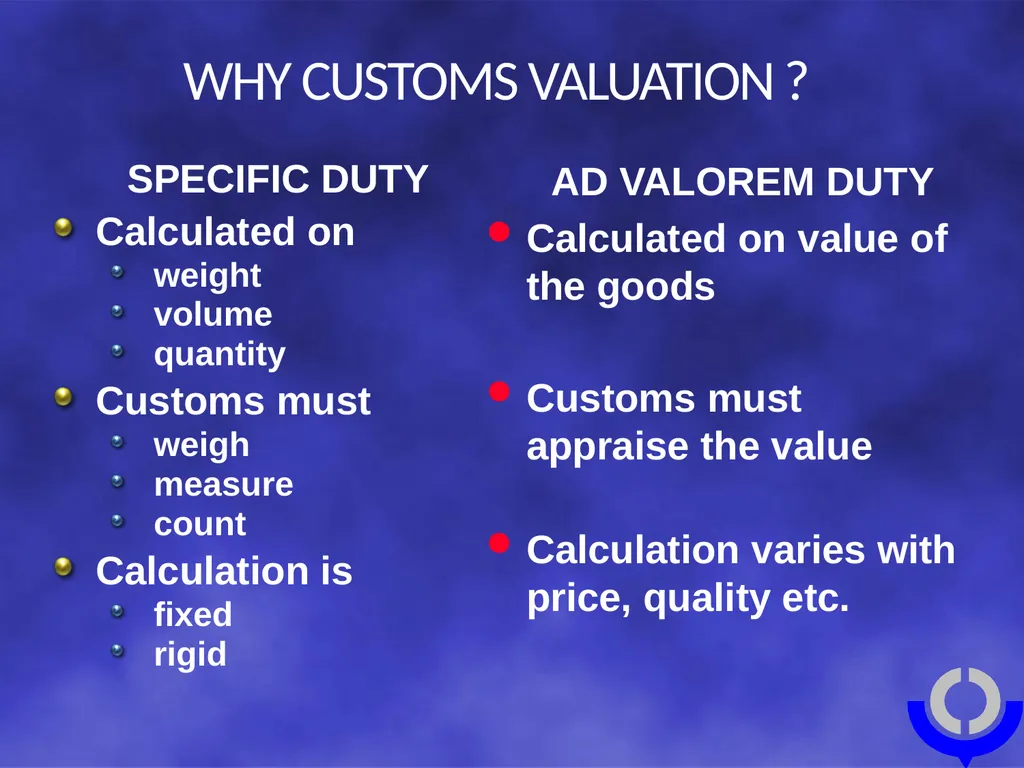
slide3. WHY CUSTOMS VALUATION ? SPECIFIC DUTY
Calculated on
weight
volume
quantity
Customs must
weigh
measure
count
Calculation is
fixed
rigid AD VALOREM DUTY
Calculated on value of the goods
Customs must appraise the value
Calculation varies with price, quality etc.<br>
slide4. VALUATION CUSTOMS V/S COMMERCIAL VALUATION
the process of thought which appreciates one thing in terms of the other
CUSTOMS VALUATION:
Methodology
need for standard that must be one which can be applied equitably to all transactions.<br>
slide5. DEFINITION OF VALUE Key element of any Customs valuation standard
Notional vs Positive<br>
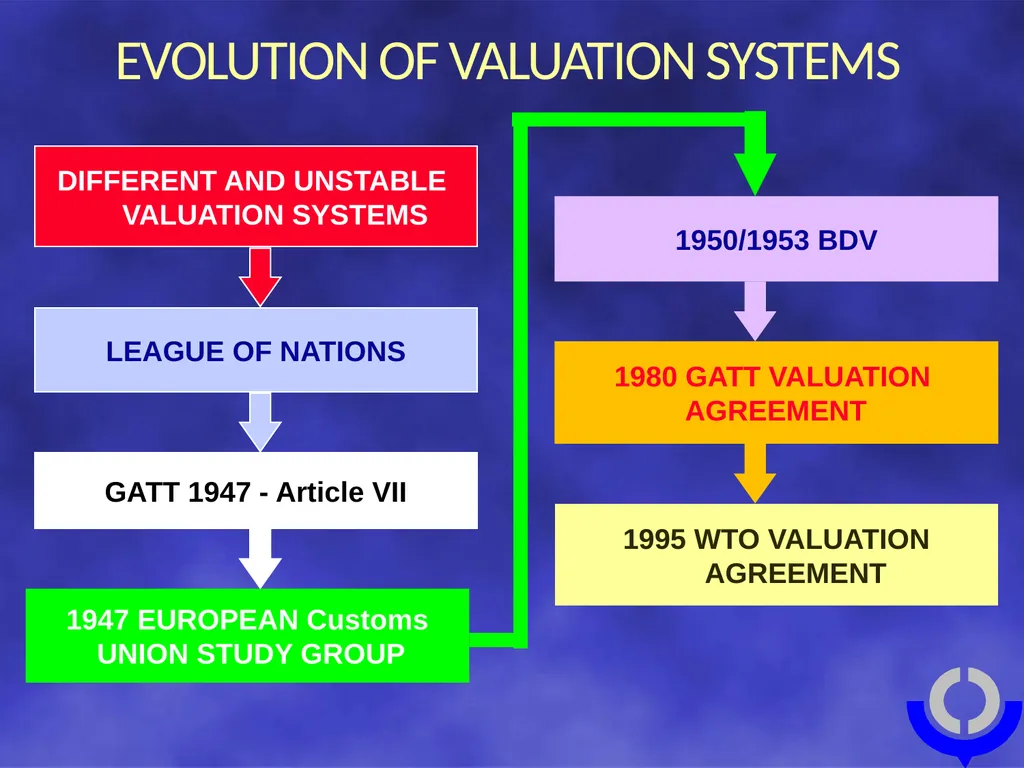
slide6. EVOLUTION OF VALUATION SYSTEMS DIFFERENT AND UNSTABLE VALUATION SYSTEMS LEAGUE OF NATIONS 1950/1953 BDV GATT 1947 - Article VII 1947 EUROPEAN Customs UNION STUDY GROUP 1980 GATT VALUATION AGREEMENT 1995 WTO VALUATION AGREEMENT<br>
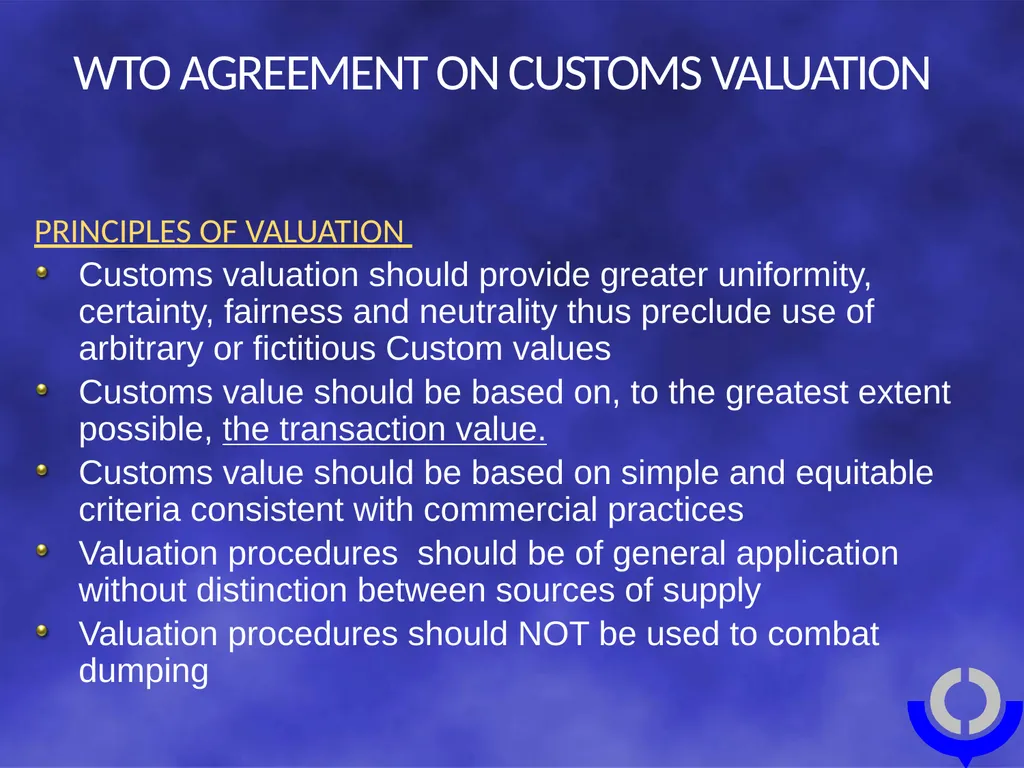
slide7. WTO AGREEMENT ON CUSTOMS VALUATION PRINCIPLES OF VALUATION
Customs valuation should provide greater uniformity, certainty, fairness and neutrality thus preclude use of arbitrary or fictitious Custom values
Customs value should be based on, to the greatest extent possible, the transaction value.
Customs value should be based on simple and equitable criteria consistent with commercial practices
Valuation procedures should be of general application without distinction between sources of supply
Valuation procedures should NOT be used to combat dumping<br>
slide8. ECONOMIC RATIONAL OF THE AGREEMENT The effect of tariff concessions must not be derogated by non-tariff barriers, e.g. an arbitrary Customs valuation regime
An arbitrary valuation system has the same trade restrictive effect as an increase in the tariff<br>
slide9. WCO’S ROLE IN THE IMPLEMENTATION OF THE VALUATION AGREEMENT<br>
slide10. MEMBERS’ CONCERNS Members’ concerns with regard to the consequences of implementing the Agreement relate to :
loss of fiscal revenue;
commercial fraud (under-valuation, double invoicing…);
price used between related persons in a commercial transaction, etc.<br>
slide11. WCO’s ROLE Service the Technical Committee on Customs Valuation (TCCV)
Provide technical assistance
Provide capacity building to Members 11<br>
slide12. TECHNICAL COMMITTEE ON CUSTOMS VALUATION (TCCV) The function of this Committee is to ensure, at the technical level, uniformity in the interpretation and application of the Agreement.
The TCCV meets twice a year and examines, inter alia, technical problems arising in the day-to-day administration of Members’ Customs valuation systems. 12<br>
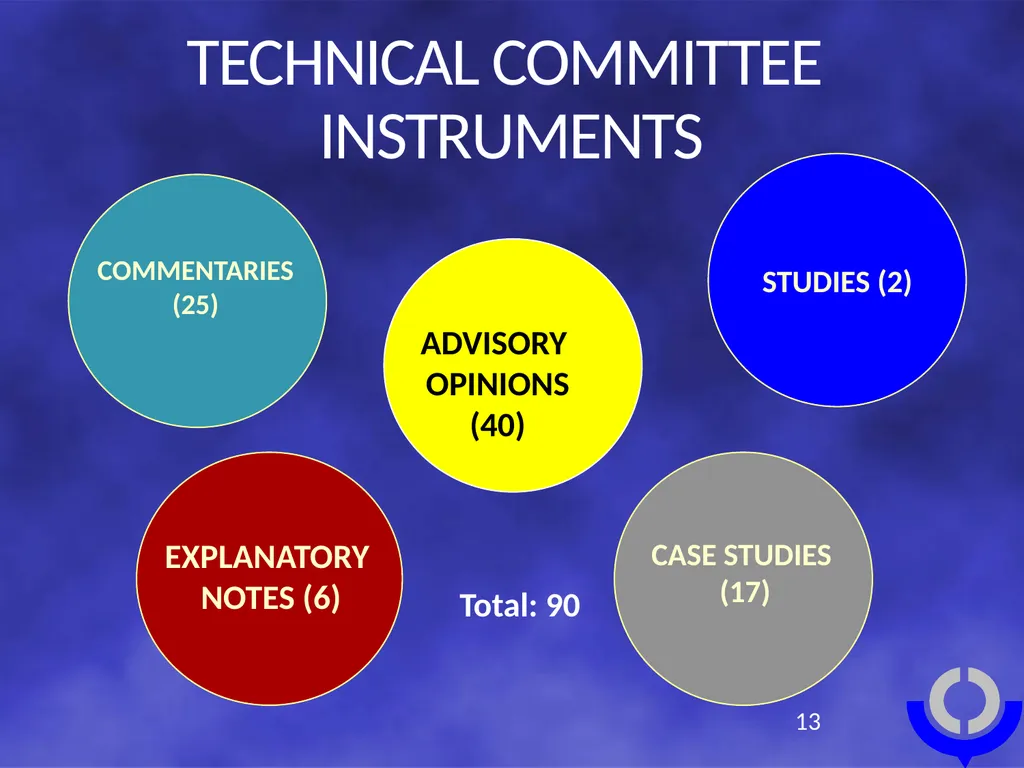
slide13. TECHNICAL COMMITTEE INSTRUMENTS 13 ADVISORY
OPINIONS
(40) COMMENTARIES
(25) EXPLANATORY
NOTES (6) STUDIES (2) CASE STUDIES
(17) Total: 90<br>
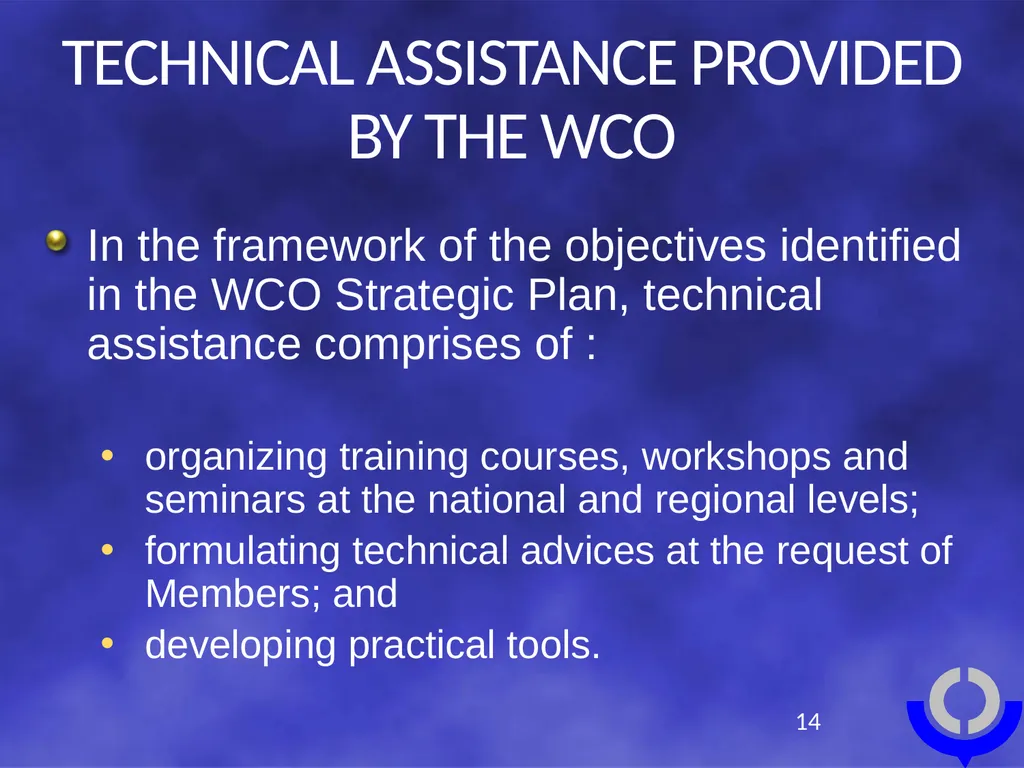
slide14. TECHNICAL ASSISTANCE PROVIDED BY THE WCO In the framework of the objectives identified in the WCO Strategic Plan, technical assistance comprises of :
organizing training courses, workshops and seminars at the national and regional levels;
formulating technical advices at the request of Members; and
developing practical tools. 14<br>
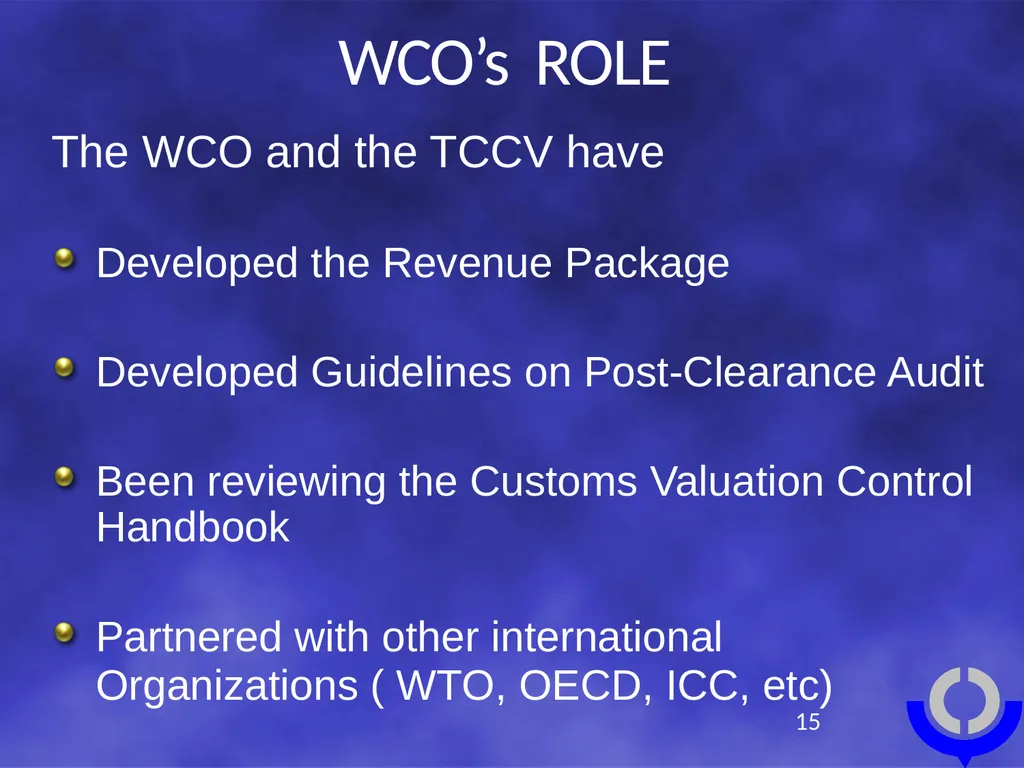
slide15. WCO’s ROLE The WCO and the TCCV have
Developed the Revenue Package
Developed Guidelines on Post-Clearance Audit
Been reviewing the Customs Valuation Control Handbook
Partnered with other international Organizations ( WTO, OECD, ICC, etc) 15<br>
slide16. ON GOING ISSUES Transfer pricing
Royalties and licence fees
Global Value Chain
Payment for unlocking a function after importation<br>
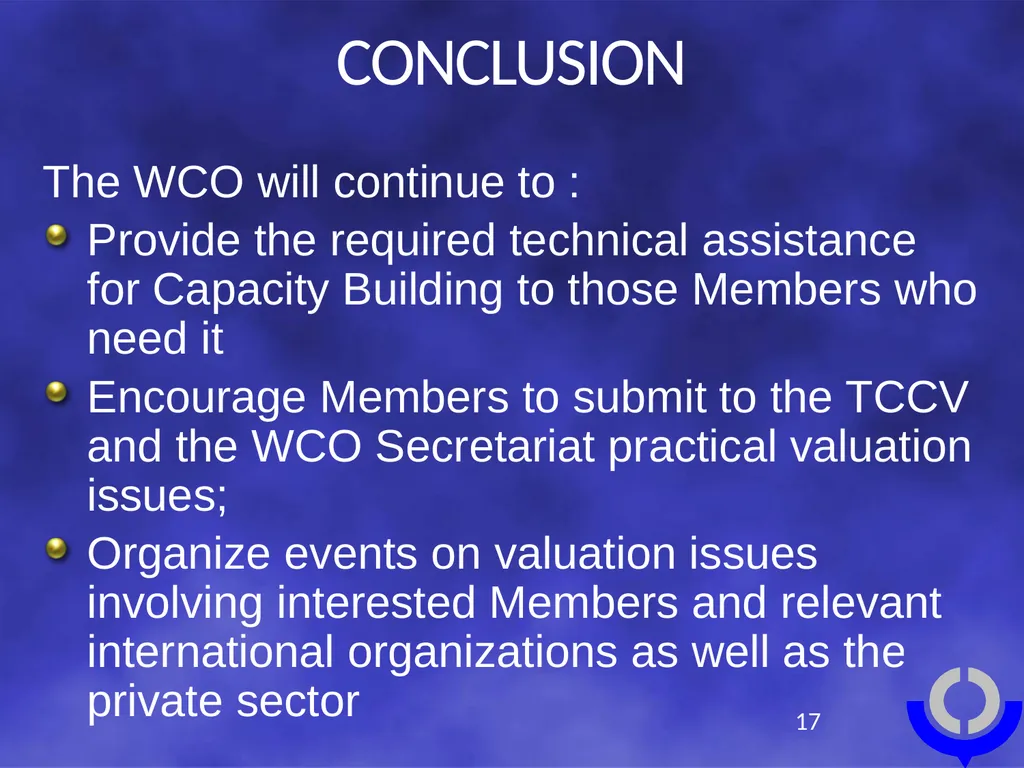
slide17. CONCLUSION The WCO will continue to :
Provide the required technical assistance for Capacity Building to those Members who need it
Encourage Members to submit to the TCCV and the WCO Secretariat practical valuation issues;
Organize events on valuation issues involving interested Members and relevant international organizations as well as the private sector 17<br>
slide18. Thank you<br>
Knowledge Academy
2 – 3 July 2014<br>
slide2. WHY CUSTOMS VALUATION? Taxable base for Customs duty revenue
Compiling trade statistics
Monitoring quantitative restrictions
Administering preferential systems
Collecting internal taxes on imports<br>
slide3. WHY CUSTOMS VALUATION ? SPECIFIC DUTY
Calculated on
weight
volume
quantity
Customs must
weigh
measure
count
Calculation is
fixed
rigid AD VALOREM DUTY
Calculated on value of the goods
Customs must appraise the value
Calculation varies with price, quality etc.<br>
slide4. VALUATION CUSTOMS V/S COMMERCIAL VALUATION
the process of thought which appreciates one thing in terms of the other
CUSTOMS VALUATION:
Methodology
need for standard that must be one which can be applied equitably to all transactions.<br>
slide5. DEFINITION OF VALUE Key element of any Customs valuation standard
Notional vs Positive<br>
slide6. EVOLUTION OF VALUATION SYSTEMS DIFFERENT AND UNSTABLE VALUATION SYSTEMS LEAGUE OF NATIONS 1950/1953 BDV GATT 1947 - Article VII 1947 EUROPEAN Customs UNION STUDY GROUP 1980 GATT VALUATION AGREEMENT 1995 WTO VALUATION AGREEMENT<br>
slide7. WTO AGREEMENT ON CUSTOMS VALUATION PRINCIPLES OF VALUATION
Customs valuation should provide greater uniformity, certainty, fairness and neutrality thus preclude use of arbitrary or fictitious Custom values
Customs value should be based on, to the greatest extent possible, the transaction value.
Customs value should be based on simple and equitable criteria consistent with commercial practices
Valuation procedures should be of general application without distinction between sources of supply
Valuation procedures should NOT be used to combat dumping<br>
slide8. ECONOMIC RATIONAL OF THE AGREEMENT The effect of tariff concessions must not be derogated by non-tariff barriers, e.g. an arbitrary Customs valuation regime
An arbitrary valuation system has the same trade restrictive effect as an increase in the tariff<br>
slide9. WCO’S ROLE IN THE IMPLEMENTATION OF THE VALUATION AGREEMENT<br>
slide10. MEMBERS’ CONCERNS Members’ concerns with regard to the consequences of implementing the Agreement relate to :
loss of fiscal revenue;
commercial fraud (under-valuation, double invoicing…);
price used between related persons in a commercial transaction, etc.<br>
slide11. WCO’s ROLE Service the Technical Committee on Customs Valuation (TCCV)
Provide technical assistance
Provide capacity building to Members 11<br>
slide12. TECHNICAL COMMITTEE ON CUSTOMS VALUATION (TCCV) The function of this Committee is to ensure, at the technical level, uniformity in the interpretation and application of the Agreement.
The TCCV meets twice a year and examines, inter alia, technical problems arising in the day-to-day administration of Members’ Customs valuation systems. 12<br>
slide13. TECHNICAL COMMITTEE INSTRUMENTS 13 ADVISORY
OPINIONS
(40) COMMENTARIES
(25) EXPLANATORY
NOTES (6) STUDIES (2) CASE STUDIES
(17) Total: 90<br>
slide14. TECHNICAL ASSISTANCE PROVIDED BY THE WCO In the framework of the objectives identified in the WCO Strategic Plan, technical assistance comprises of :
organizing training courses, workshops and seminars at the national and regional levels;
formulating technical advices at the request of Members; and
developing practical tools. 14<br>
slide15. WCO’s ROLE The WCO and the TCCV have
Developed the Revenue Package
Developed Guidelines on Post-Clearance Audit
Been reviewing the Customs Valuation Control Handbook
Partnered with other international Organizations ( WTO, OECD, ICC, etc) 15<br>
slide16. ON GOING ISSUES Transfer pricing
Royalties and licence fees
Global Value Chain
Payment for unlocking a function after importation<br>
slide17. CONCLUSION The WCO will continue to :
Provide the required technical assistance for Capacity Building to those Members who need it
Encourage Members to submit to the TCCV and the WCO Secretariat practical valuation issues;
Organize events on valuation issues involving interested Members and relevant international organizations as well as the private sector 17<br>
slide18. Thank you<br>