Cyber Security Training Presentation 2022 Learning Objectives Understand the scale of the threat Know who are our adversaries are and what do they do The red flags to look for Our companys cyber security policy Security incidents are: ...
"Cyber Security Training Presentation 2022 Learning" is the property of its rightful owner. Permission is granted to
download and print the materials on this website for personal, non-commercial use only, and to display it
on your personal computer provided you do not modify the materials and that you retain all copyright
notices contained in the materials. By downloading content from our website, you accept the terms of this
agreement.
Presentation Transcript
01
Cyber Security Training Presentation 2022<br>
02
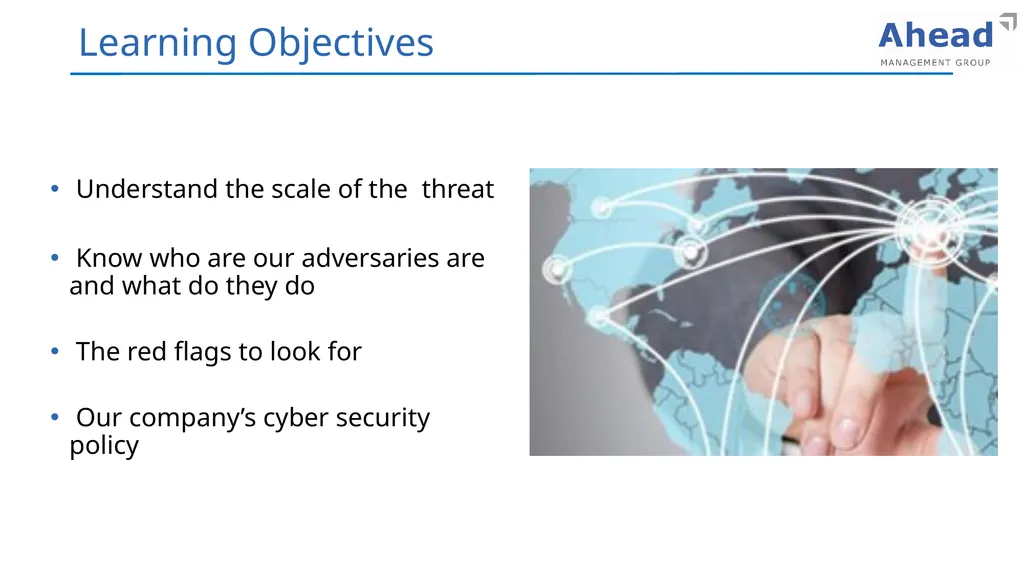
Learning Objectives Understand the scale of the threat
Know who are our adversaries are and what do they do
The red flags to look for
Our company’s cyber security policy<br>
03
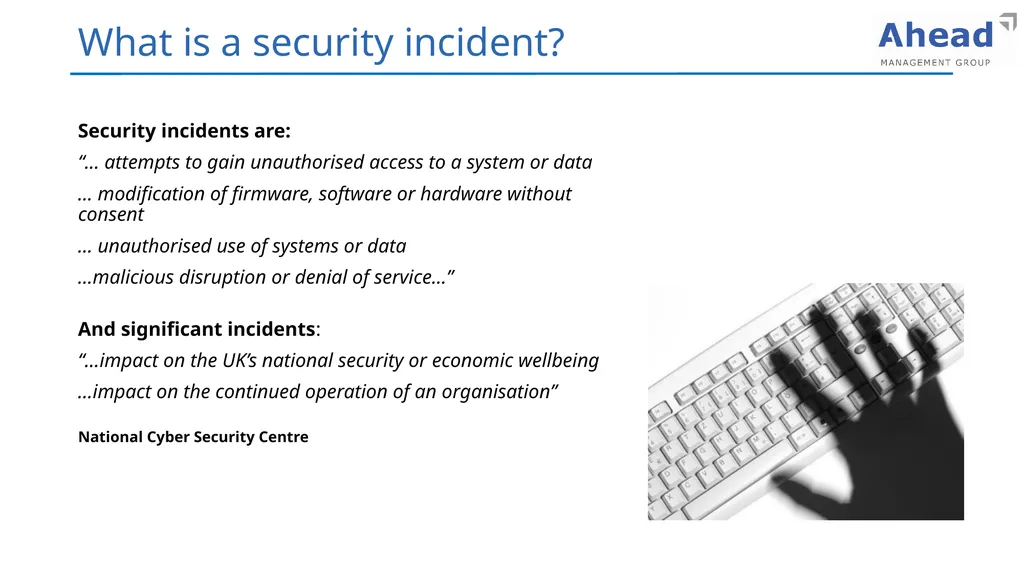
Security incidents are:
“... attempts to gain unauthorised access to a system or data
… modification of firmware, software or hardware without consent
… unauthorised use of systems or data
…malicious disruption or denial of service…”
And significant incidents:
“…impact on the UK’s national security or economic wellbeing
…impact on the continued operation of an organisation”
National Cyber Security Centre What is a security incident?<br>
04
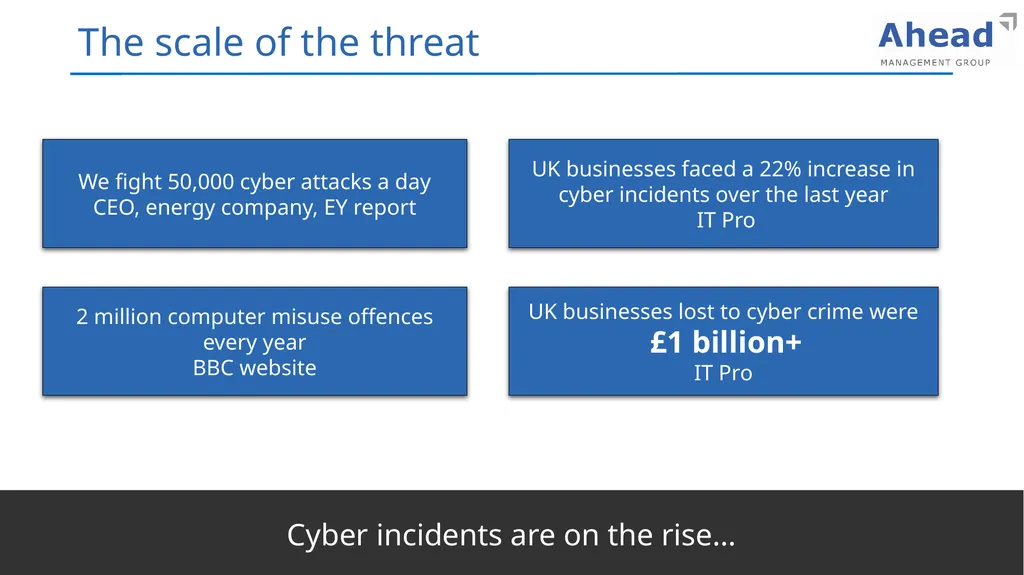
The scale of the threat Cyber incidents are on the rise… We fight 50,000 cyber attacks a day
CEO, energy company, EY report 2 million computer misuse offences every year
BBC website UK businesses faced a 22% increase in cyber incidents over the last year IT Pro UK businesses lost to cyber crime were £1 billion+
IT Pro<br>
05
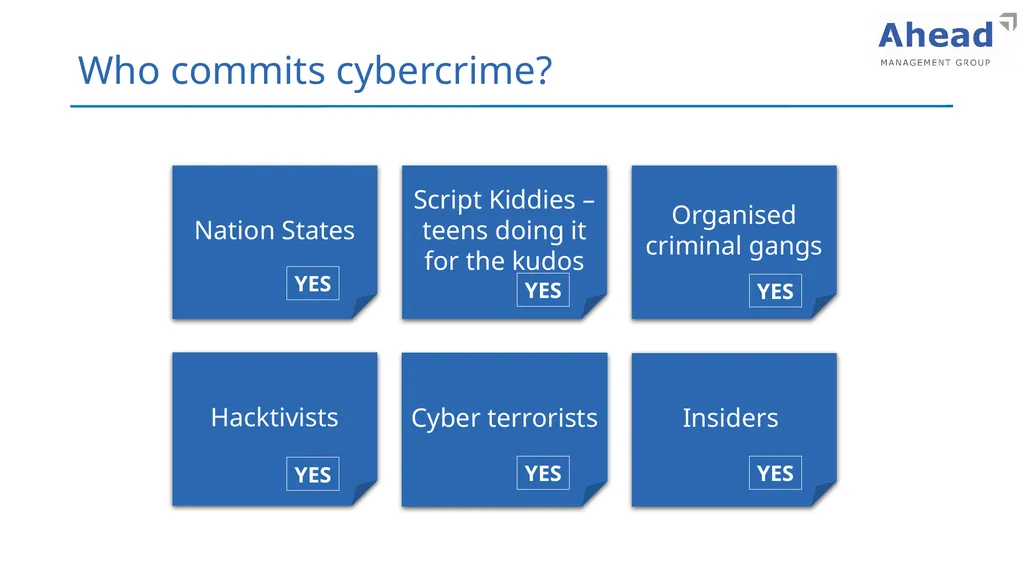
Who commits cybercrime? Nation States Script Kiddies – teens doing it for the kudos Organised criminal gangs Hacktivists YES YES YES YES Cyber terrorists YES Insiders YES<br>
06
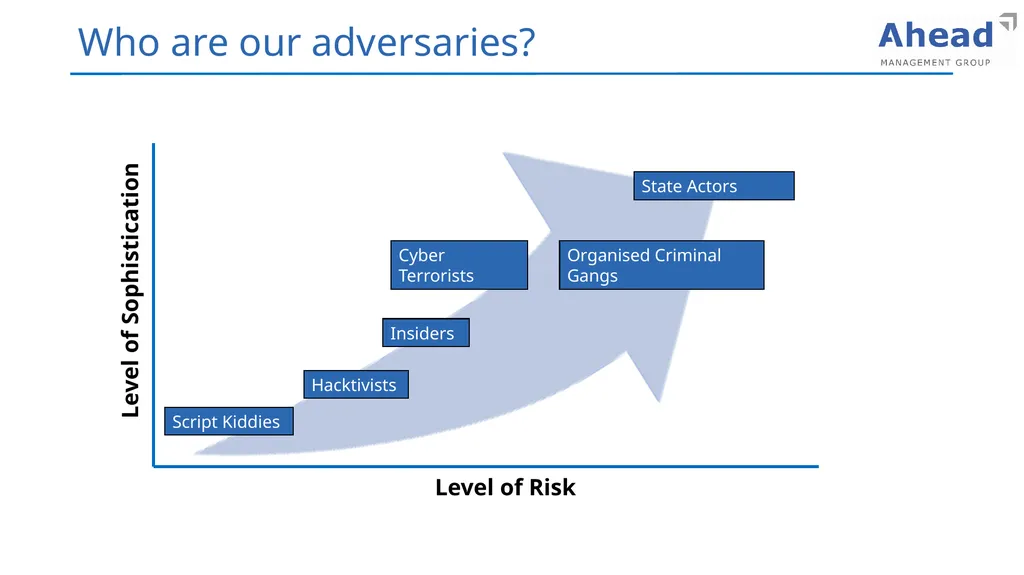
Who are our adversaries? Level of Risk Level of Sophistication Script Kiddies State Actors Hacktivists Organised Criminal Gangs Cyber Terrorists Insiders<br>
07
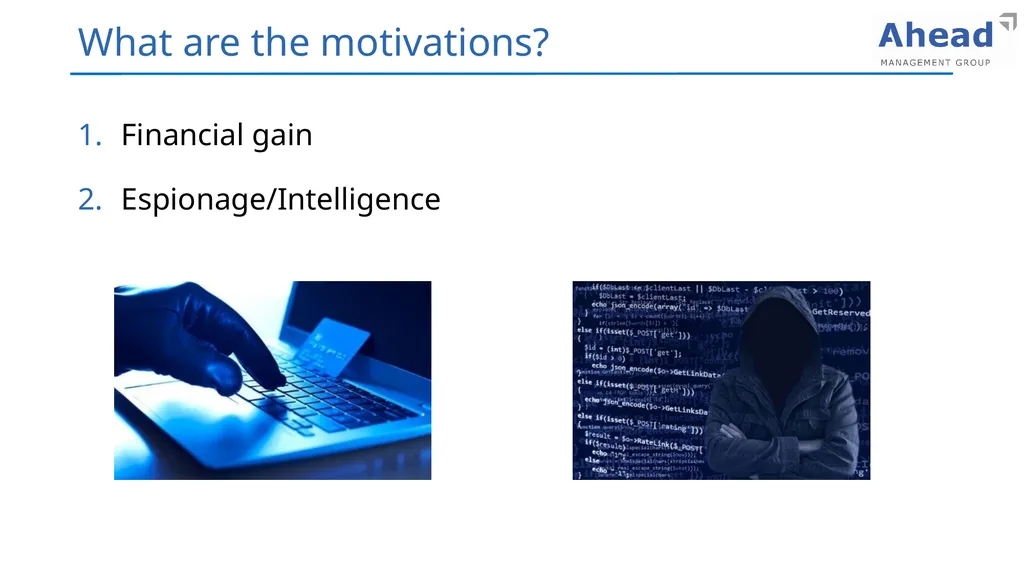
What are the motivations? Financial gain
Espionage/Intelligence<br>
08
What cyber criminals do: techniques Buying compromised data, low-end malware, basic DDoS, exploiting known vulnerabilities Hacktivists Basic DDoS, buying in services Cyber terrorists Malware development, targeted emails, other attack tools bought on market Organised criminal gangs Watering hole, advanced DDoS, targeted emails, zero-day exploits Nation states Data theft, sharing logins and escalating privileges Insiders<br>
09
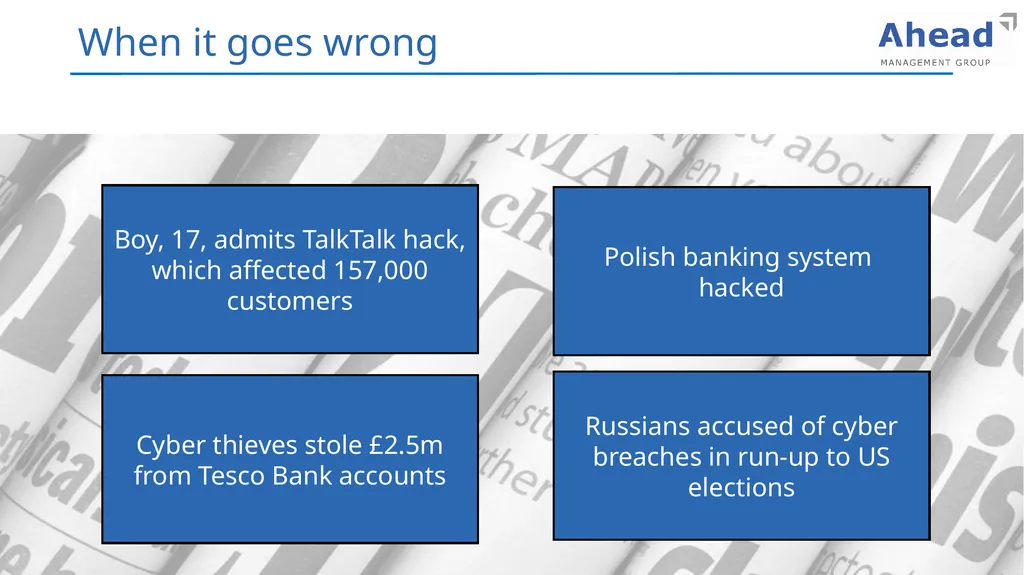
When it goes wrong Boy, 17, admits TalkTalk hack, which affected 157,000 customers Polish banking system
hacked Russians accused of cyber breaches in run-up to US elections Cyber thieves stole £2.5m from Tesco Bank accounts<br>
10
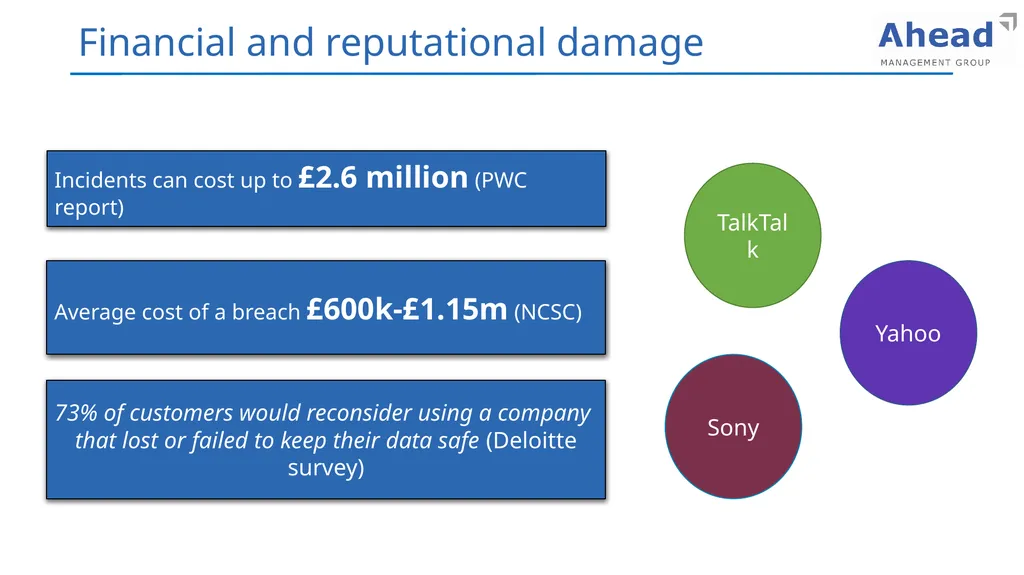
Financial and reputational damage Incidents can cost up to £2.6 million (PWC report) 73% of customers would reconsider using a company that lost or failed to keep their data safe (Deloitte survey) TalkTalk Sony Yahoo Average cost of a breach £600k-£1.15m (NCSC)<br>
11
How they attack Phishing, smishing or vishing
Social engineering
Impersonation - of suppliers, senior managers, the Police
Coercion
Malware and Trojans
Pharming and spoof URLs (fake sites)
Physical access<br>
12
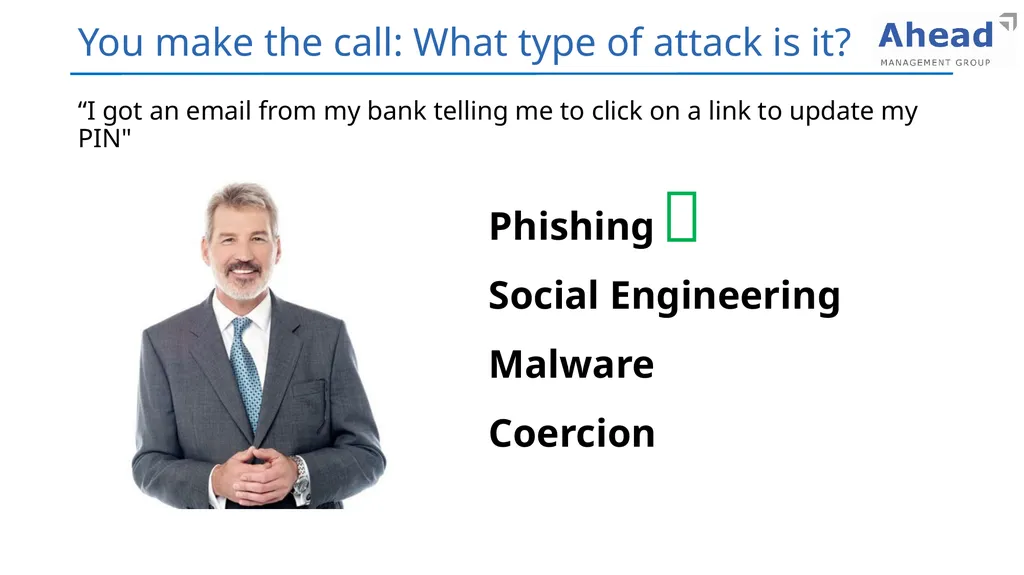
You make the call: What type of attack is it? “I got an email from my bank telling me to click on a link to update my PIN" Phishing
Social Engineering
Malware
Coercion <br>
13
You make the call: What type of attack is it? “The site looked so genuine – the logo was exactly the same. But my partner spotted that it was spelt ‘ebayy’ not ‘ebay’" Phishing
Social Engineering
Malware
Pharming or spoof URL<br>
14
Phishing
Social Engineering
Coercion
Malware You make the call: What type of attack is it? “I found a USB in the carpark – I was only trying to find out who it belonged to. How was I to know it contained a virus?" <br>
15
You make the call: What type of attack is it? “I was messaging a friend of a friend on Facebook. He said he used to work with me. I didn’t remember. Then, he tried getting me to pass on inside information.” Phishing
Pharming
Coercion
Malware<br>
16
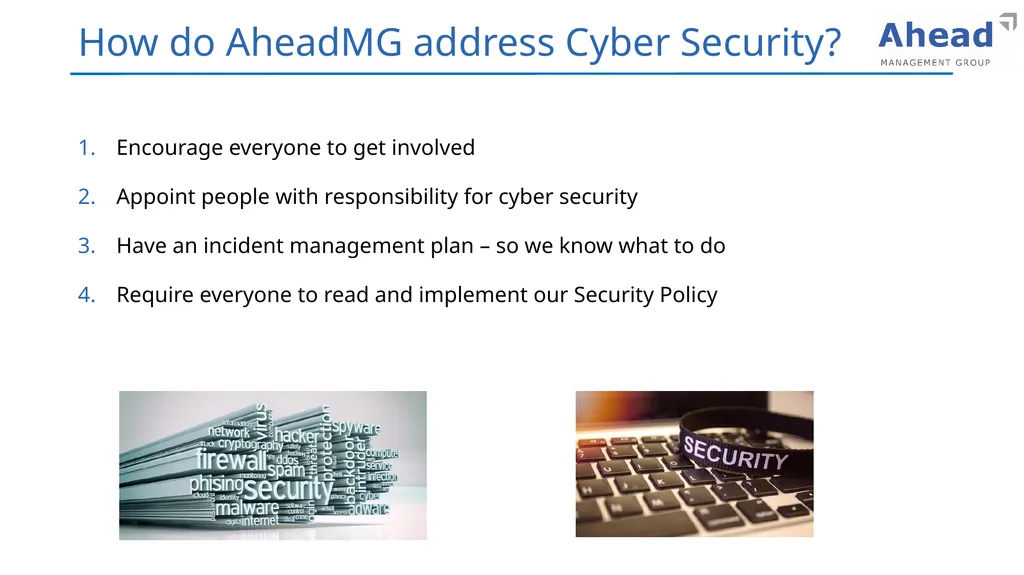
How do AheadMG address Cyber Security? Encourage everyone to get involved
Appoint people with responsibility for cyber security
Have an incident management plan – so we know what to do
Require everyone to read and implement our Security Policy<br>
17
Do… Read our company's Security Policy - make sure you understand the rules and why they're important
Be vigilant - cyber criminals can attack anywhere, when you’re working at home, travelling on the Tube, on your way to a meeting, etc
Keep anti-virus software up-to-date - download updates or patches as soon as they’re available
Promptly report signs your device may be infected - e.g. high CPU, slower response, duplicated files, ghosting
Keep backup copies of all data - this makes us less vulnerable to ransomware attacks
Tell your manager - if you click on a link or download something by accident – the sooner we know, the quicker we can resolve it<br>
18
Don’t… Respond to or click on the links in unsolicited emails
Advertise where you work on social media profiles - keep information to a minimum (you may be targeted because of where you work)
Download unauthorised software to our IT systems
Connect external devices to our network – e.g. USBs. If you find a USB, notify management.
Access social media, gaming or adult sites using work devices – as well as breaching our conduct rules, they are often infected with malware
Use public WiFi to connect to our data or network – anything you type can be seen by others!<br>
19
Working from home All security measures apply, regardless of whether you work onsite or from home.
When working at home, care should be taken to ensure that all IT equipment is kept secure.
Home Wi-Fi should have password protection to ensure no unauthorised access to your home network.
Security incidents that occur whilst working at home should be reported as per the AheadMG Information Security Incident Management Policy and Procedure.<br>