
Data Demand & Use (DDU) Why we collect



Description: Data Demand Use (DDU) Why we collect health-related data Session Overview Understanding the need for data Importance of improving data informed decision making Explain the context of decision-making Role of monitoring and evaluation data
Related Topics
Download Presentation
"Data Demand & Use (DDU) Why we collect" is the property of its rightful owner. Permission is granted to download and print the materials on this website for personal, non-commercial use only, and to display it on your personal computer provided you do not modify the materials and that you retain all copyright notices contained in the materials. By downloading content from our website, you accept the terms of this agreement.
Presentation Transcript
slide1. Data Demand & Use
(DDU) Why we collect health-related data<br>
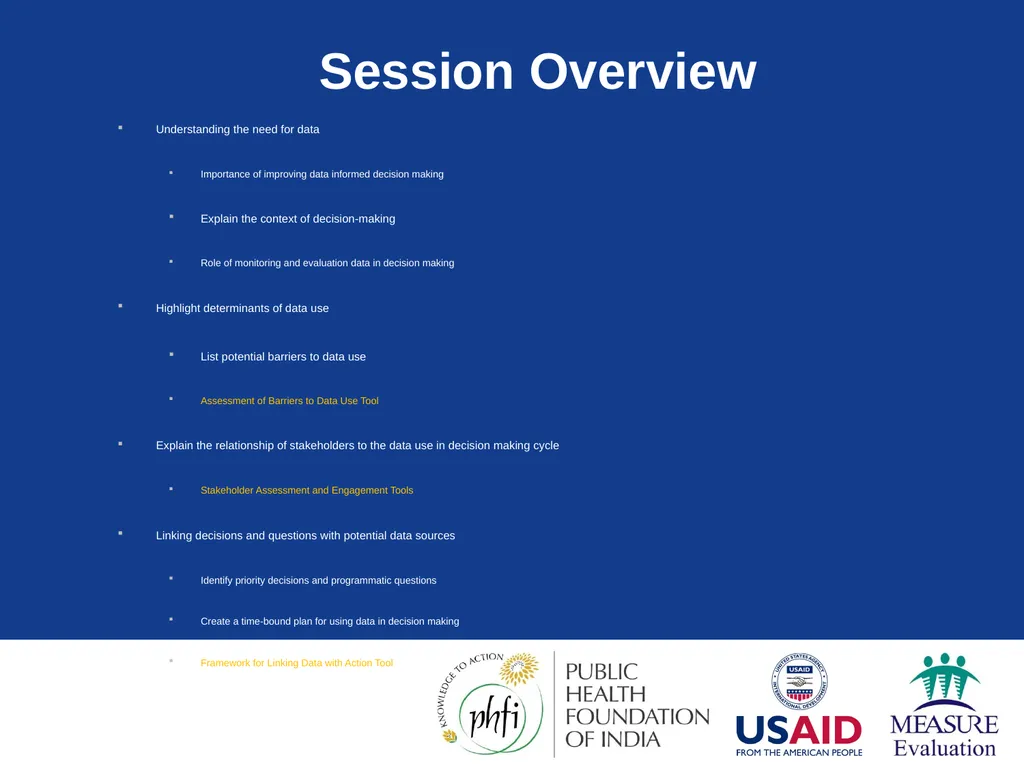
slide2. Session Overview Understanding the need for data
Importance of improving data informed decision making
Explain the context of decision-making
Role of monitoring and evaluation data in decision making
Highlight determinants of data use
List potential barriers to data use
Assessment of Barriers to Data Use Tool
Explain the relationship of stakeholders to the data use in decision making cycle
Stakeholder Assessment and Engagement Tools
Linking decisions and questions with potential data sources
Identify priority decisions and programmatic questions
Create a time-bound plan for using data in decision making
Framework for Linking Data with Action Tool<br>
slide3. Understanding the need for data<br>
slide4. Decisions Within Programs Ensure program activities are executed as planned & services are delivered as intended
Are we doing the right things, doing them right, and reaching those we intended?
Decisions about:
employment & manpower
mobilization & allocation of resources
needed information and developing feedback channels<br>
slide5. Factors other than evidence-based information influence decisions Power relationships
Timing
Competing priorities
Public opinion
Political ideology Arbitrariness
Local culture of decision-making
Other information sources<br>
slide6. Understanding Decision-Making What is the decision to be made?
Who makes it?
When and why is the decision made?
How is the decision made?
What information is needed?
What is my role in decision making?<br>
slide7. Why Improve Data Informed Decision Making? HIV epidemic
Resurgence of TB
Continued prevalence of malaria
Pockets of stalled fertility decline
Population burden
Shortage of health care workers<br>
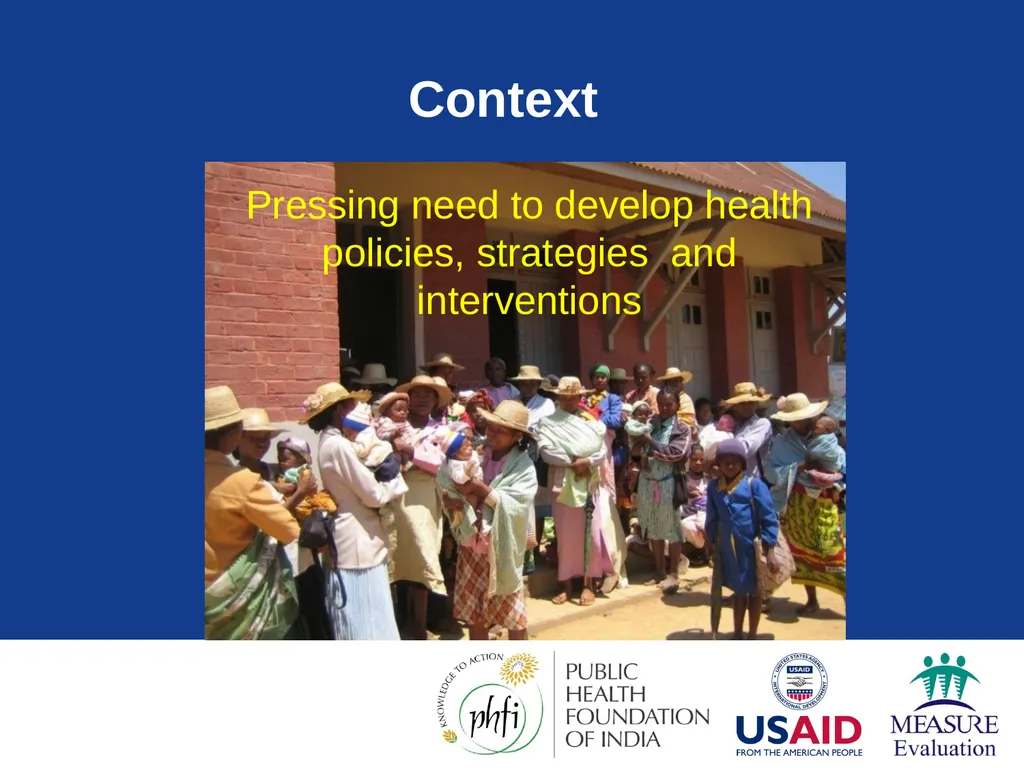
slide8. Context Pressing need to develop health policies, strategies and interventions<br>
slide9. Why Improve Data Informed Decision Making? Increased financial investments for service delivery
Increased accountability requirements
Improved national HMIS
Increased demand for evaluation and other research<br>
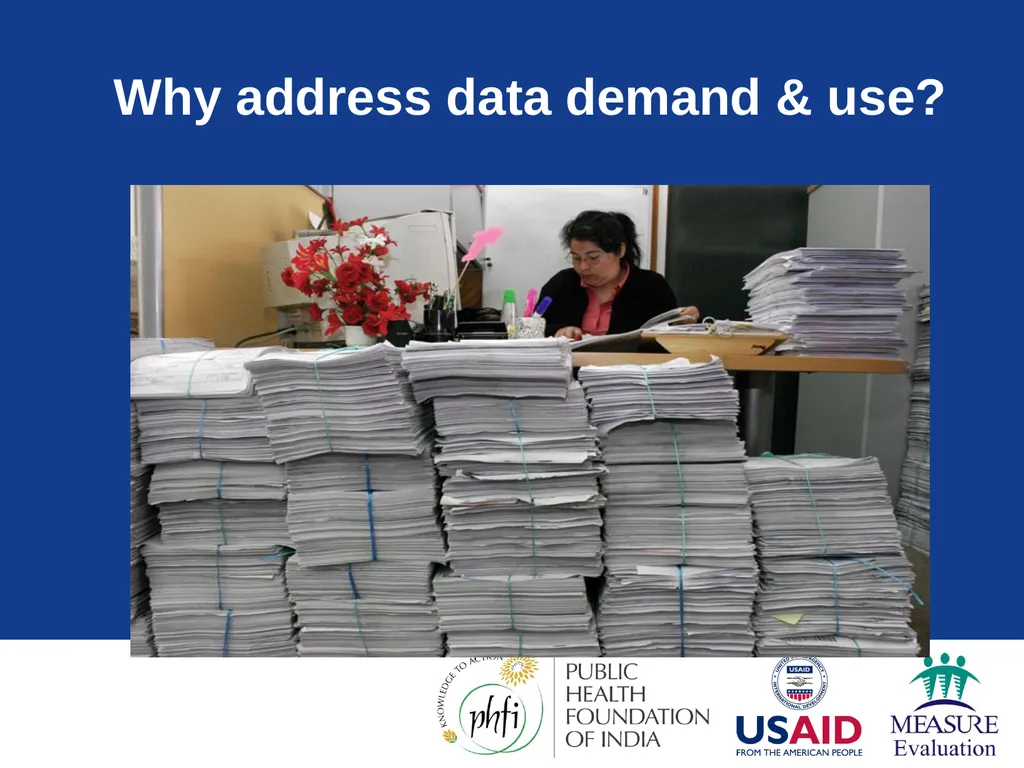
slide10. Why address data demand & use?<br>
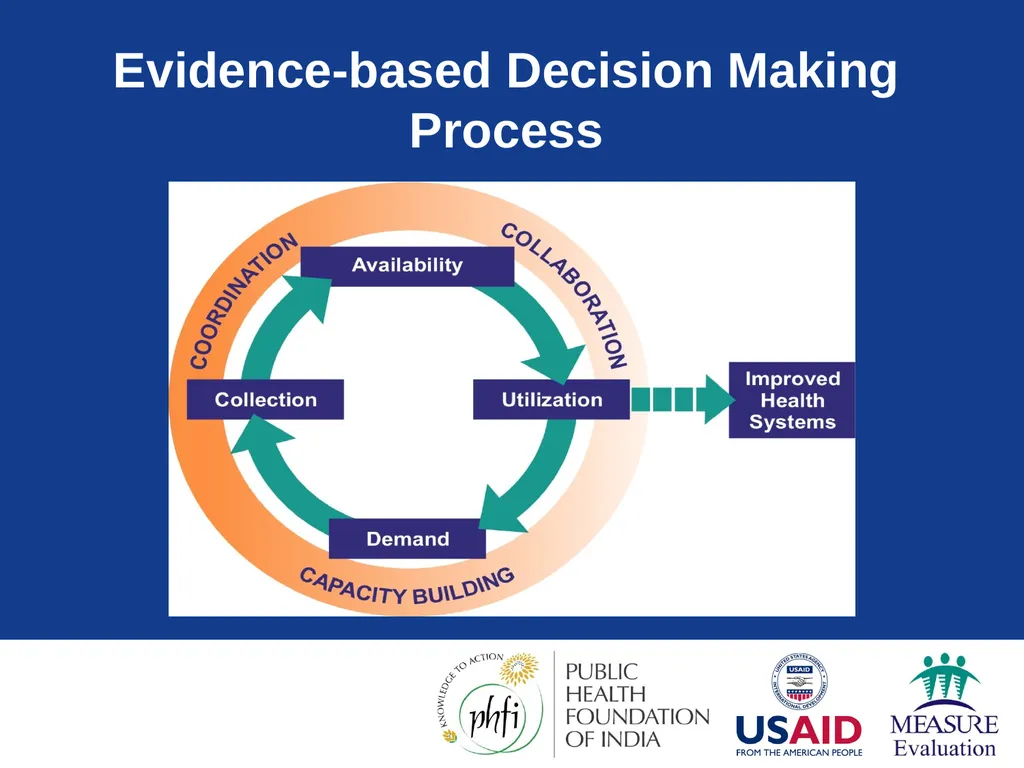
slide11. Evidence-based Decision Making Process<br>
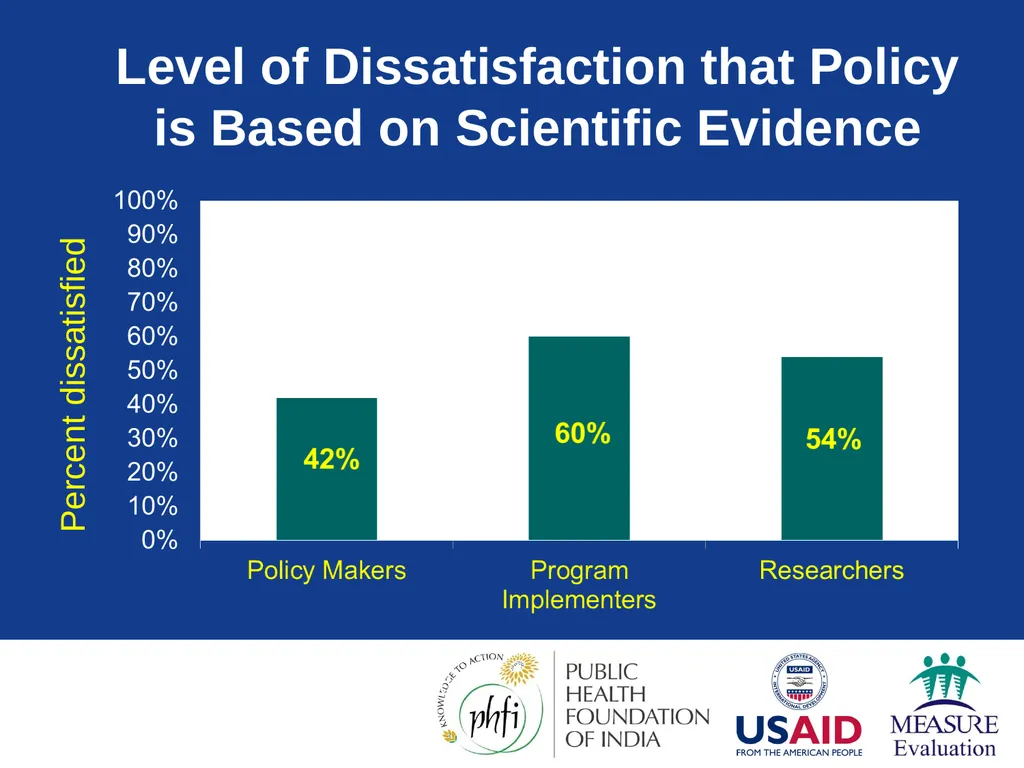
slide12. Level of Dissatisfaction that Policy is Based on Scientific Evidence Percent dissatisfied Overseas Development Institute, Jones et al., 2008.<br>
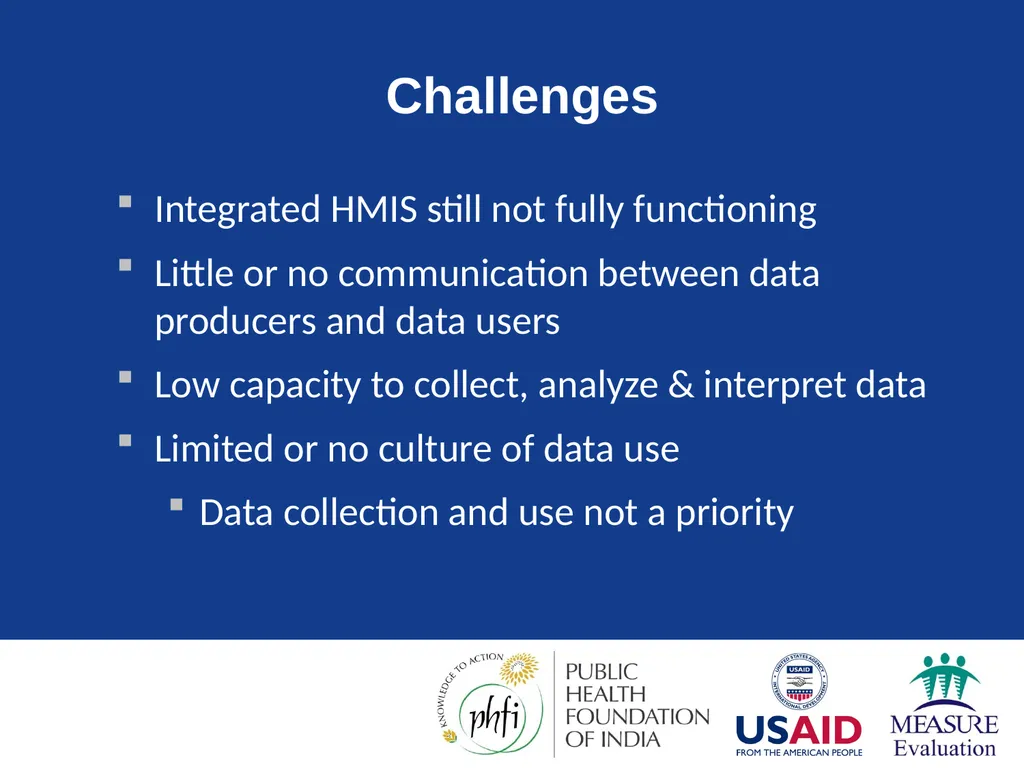
slide13. Challenges Integrated HMIS still not fully functioning
Little or no communication between data producers and data users
Low capacity to collect, analyze & interpret data
Limited or no culture of data use
Data collection and use not a priority<br>
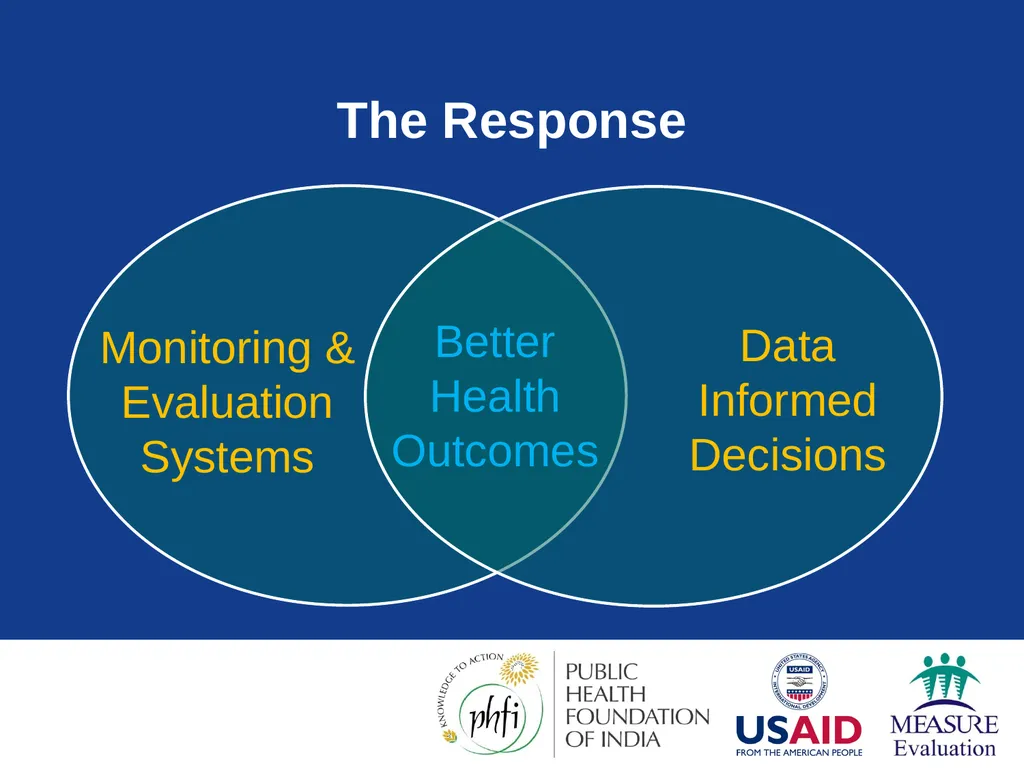
slide14. The Response Monitoring & Evaluation Systems Better Health Outcomes Data Informed Decisions<br>
slide15. Group Participation How do you and your organization use data and information?<br>
slide16. We can use information to… Inform health policies and plans
Raise additional resources
Strengthen programs and improve results
Ensure accountability and reporting
Improve quality of services provided
Contribute to global lessons learned<br>
slide17. “Making Data Speak” in Thailand Need: Strengthen commitment of policy makers to HIV Prevention
Data: Behavioral and epidemiological data
Response:
Analyzed data with Asian Epidemic Model and Goals model
Determined responses and resources needed
Communicated data to stakeholders
Decision/Action:
Successfully emphasized prevention agenda in national strategic plan and developed an operation plan to guide prevention programming<br>
slide18. Key Messages Decisions based on evidence lead to better health outcomes
We all have a role in M&E – partners in progress
High quality information is needed for decision-making at policy, planning and program levels
Purpose of M&E is not just to produce more information but to inform action<br>
slide19. Determinants of DDU<br>
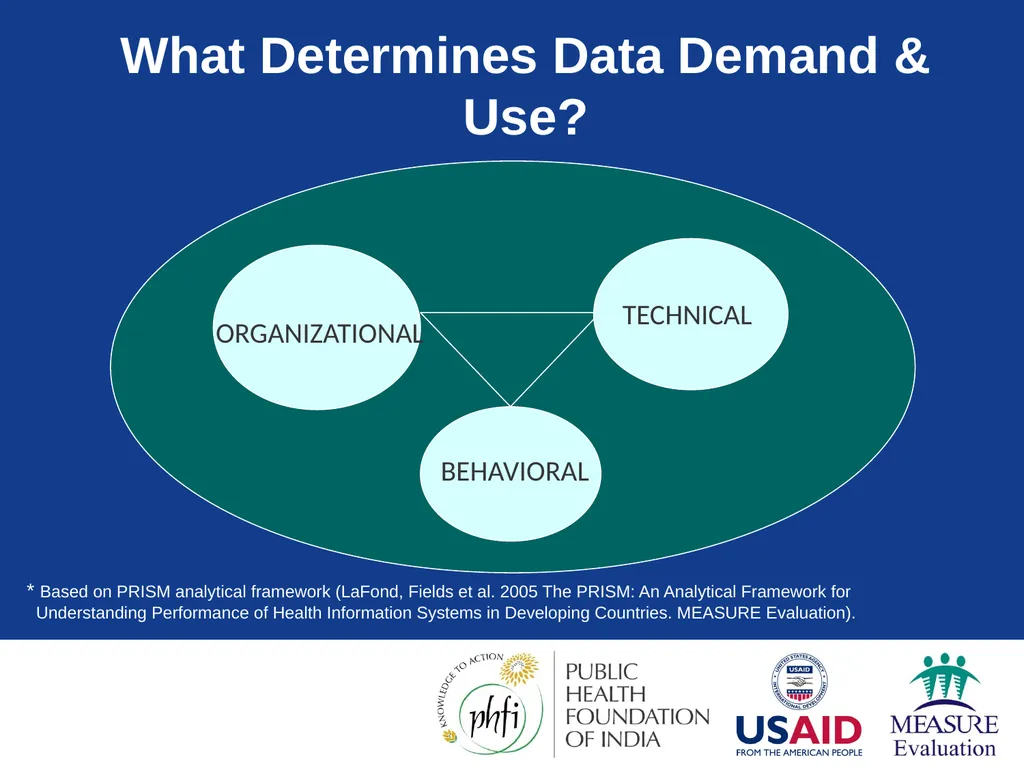
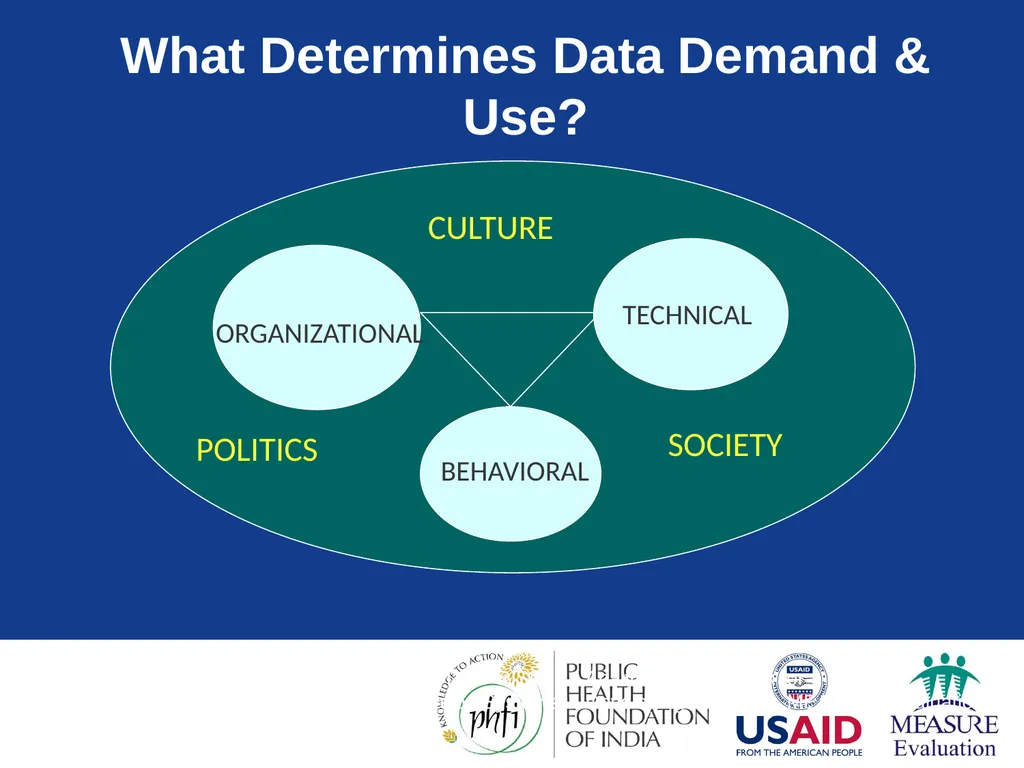
slide20. What Determines Data Demand & Use? * Based on PRISM analytical framework (LaFond, Fields et al. 2005 The PRISM: An Analytical Framework for
Understanding Performance of Health Information Systems in Developing Countries. MEASURE Evaluation).<br>
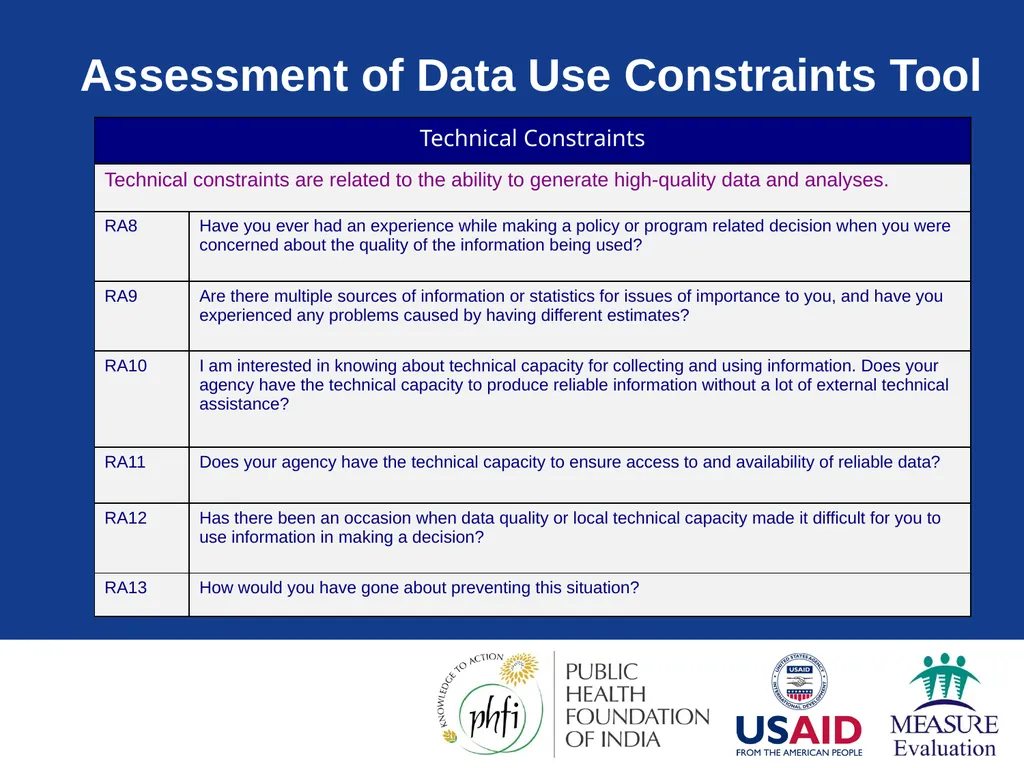
slide21. Data are often underutilized because of… Technical constraints
Individual technical skills,
Availability of computers,
Data system design,
Definition of indicators,
Lack of data quality assurance protocols<br>
slide22. Data are often underutilized because of… Organizational constraints
Structural – roads, telecommunication
Organizational – clarity of roles, support, flow of information
Political interference<br>
slide23. Data are often underutilized because of… Individual constraints
Decision maker attitudes,
Staff motivation,
Lack of “data culture”<br>
slide24. What Determines Data Demand & Use? POLITICS CULTURE SOCIETY * Based on PRISM analytical Fields et al. 2005 The PRISM: An Analytical Framework for
Understanding Performance of Health Information Systems in Developing Countries. MEASURE Evaluation).<br>
slide25. What barriers have you faced to using or getting others to use data and information? Discussion<br>
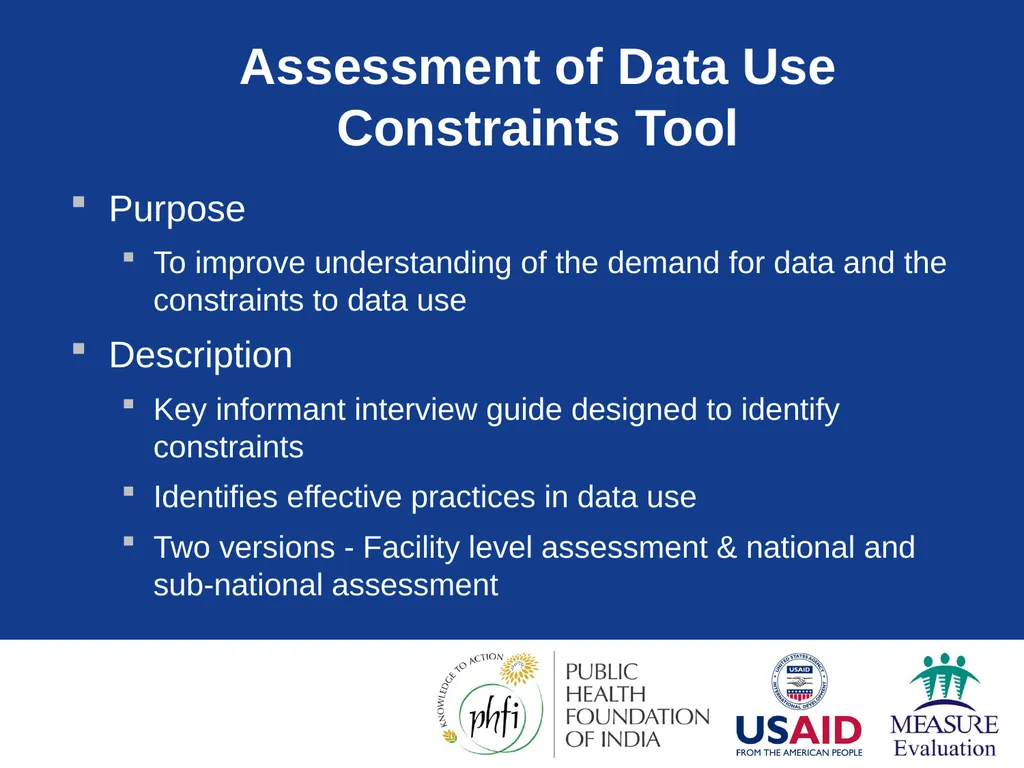
slide26. Assessment of Data Use Constraints Tool Purpose
To improve understanding of the demand for data and the constraints to data use
Description
Key informant interview guide designed to identify constraints
Identifies effective practices in data use
Two versions - Facility level assessment & national and sub-national assessment<br>
slide27. Assessment of Data Use Constraints Tool<br>
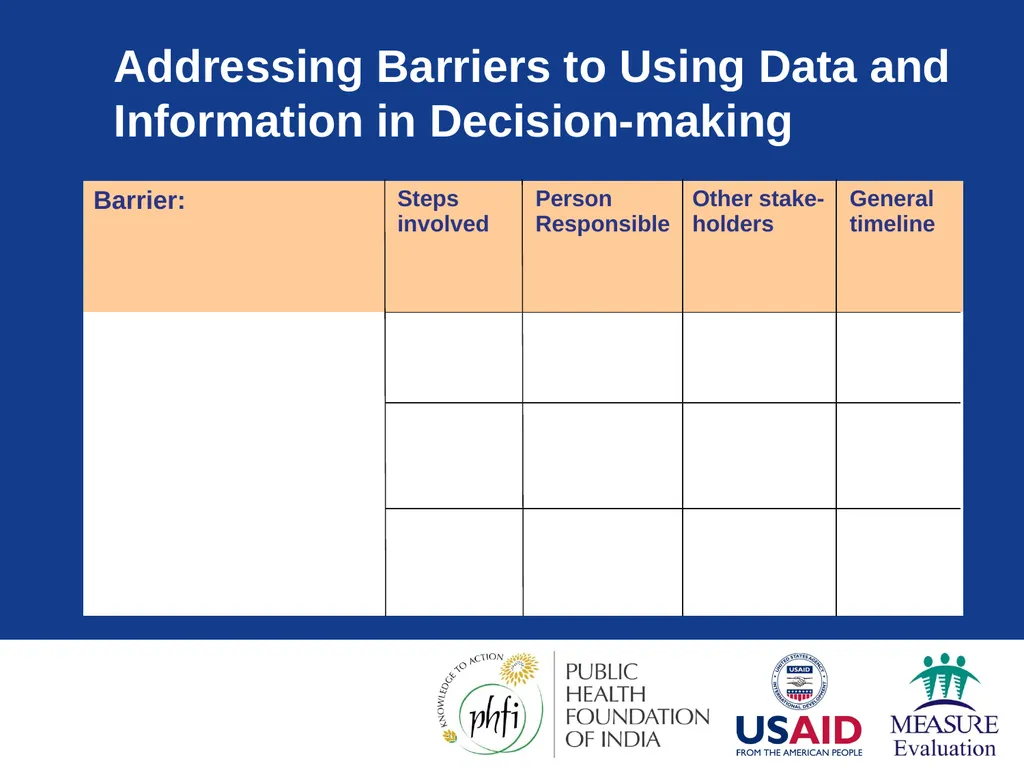
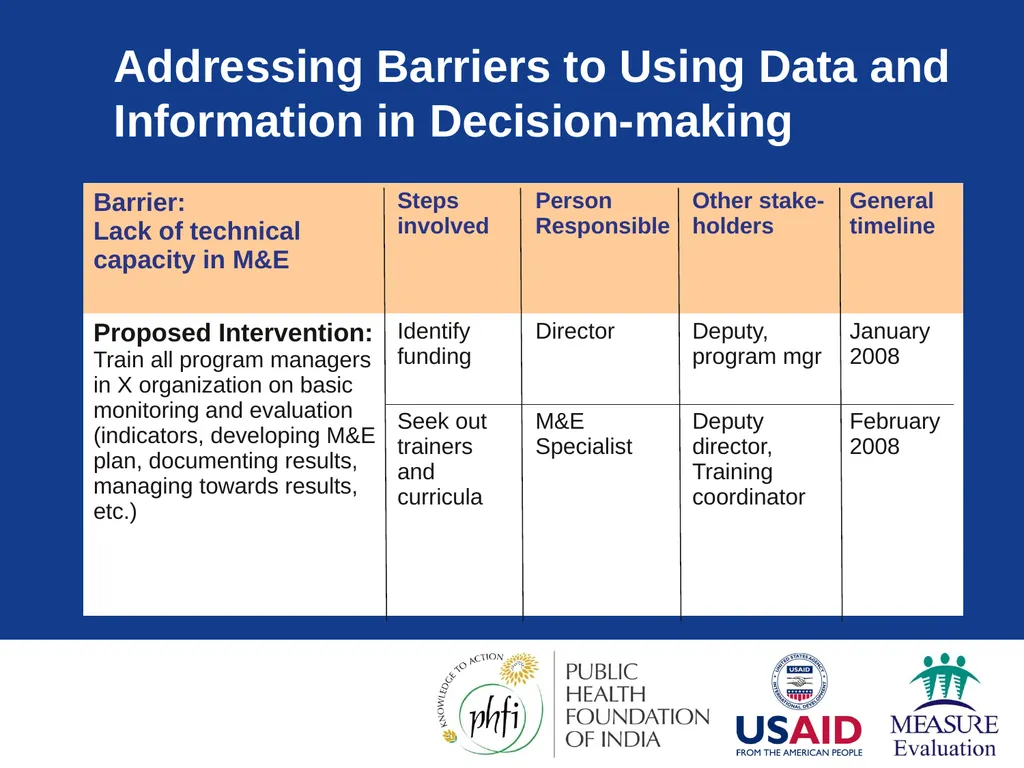
slide28. Addressing Barriers to Using Data and Information in Decision-making<br>
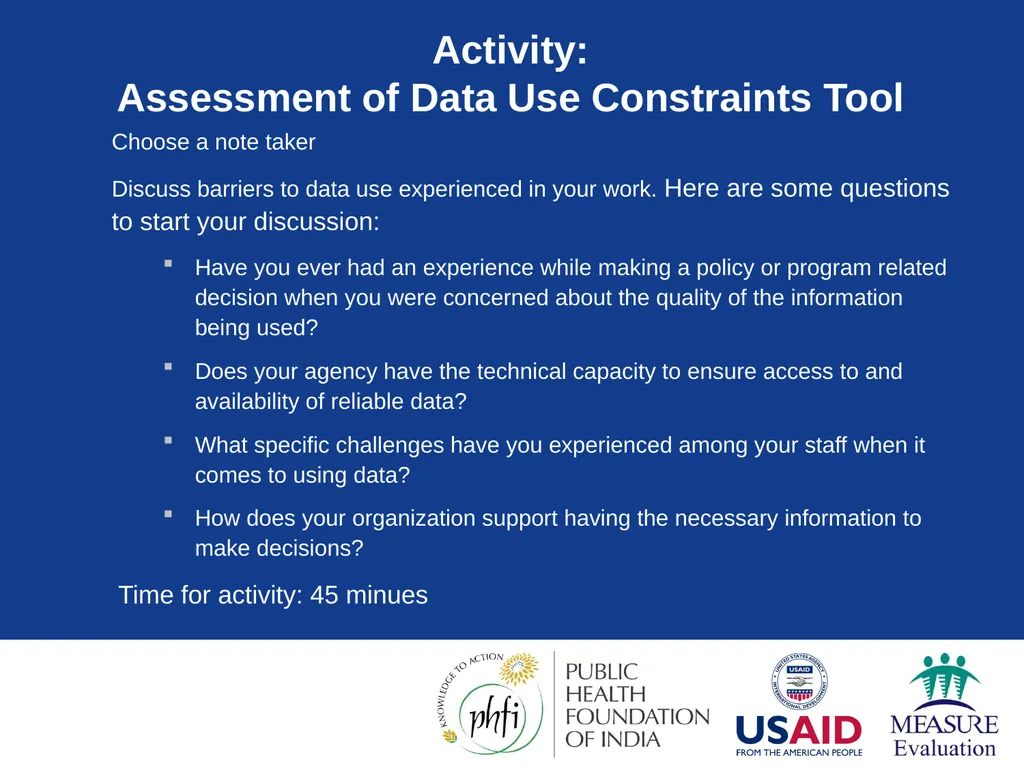
slide29. Activity: Assessment of Data Use Constraints Tool Choose a note taker
Discuss barriers to data use experienced in your work. Here are some questions to start your discussion:
Have you ever had an experience while making a policy or program related decision when you were concerned about the quality of the information being used?
Does your agency have the technical capacity to ensure access to and availability of reliable data?
What specific challenges have you experienced among your staff when it comes to using data?
How does your organization support having the necessary information to make decisions?
Time for activity: 45 minues<br>
slide30. Addressing Barriers to Using Data and Information in Decision-making<br>
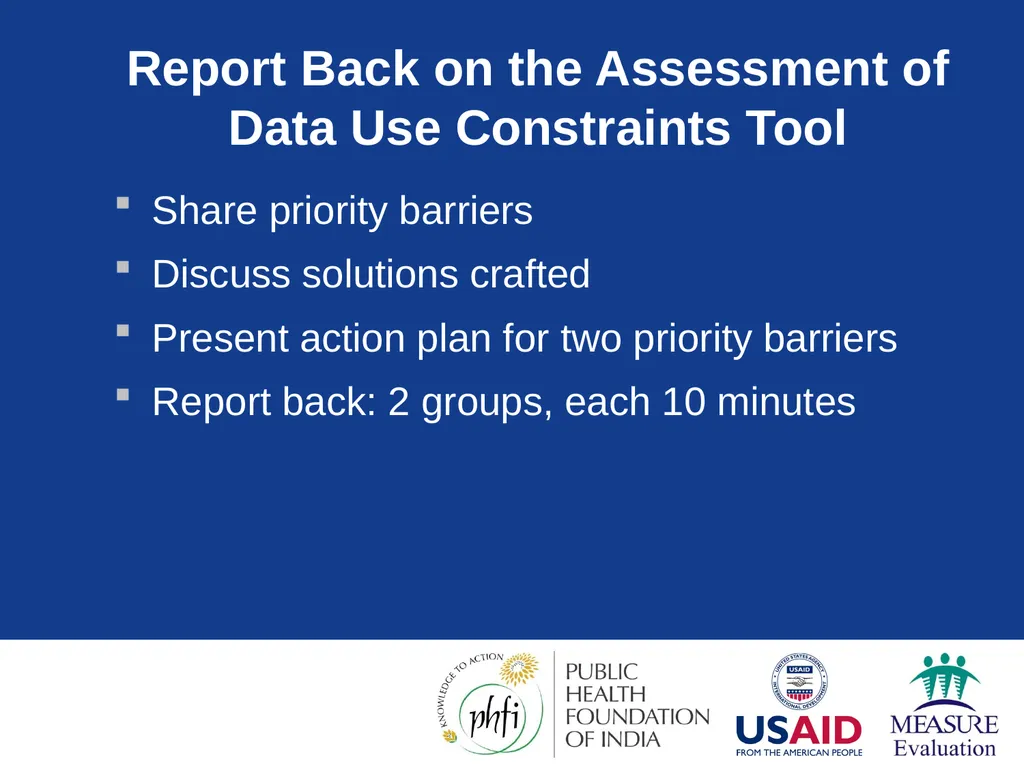
slide31. Report Back on the Assessment of Data Use Constraints Tool Share priority barriers
Discuss solutions crafted
Present action plan for two priority barriers
Report back: 2 groups, each 10 minutes<br>
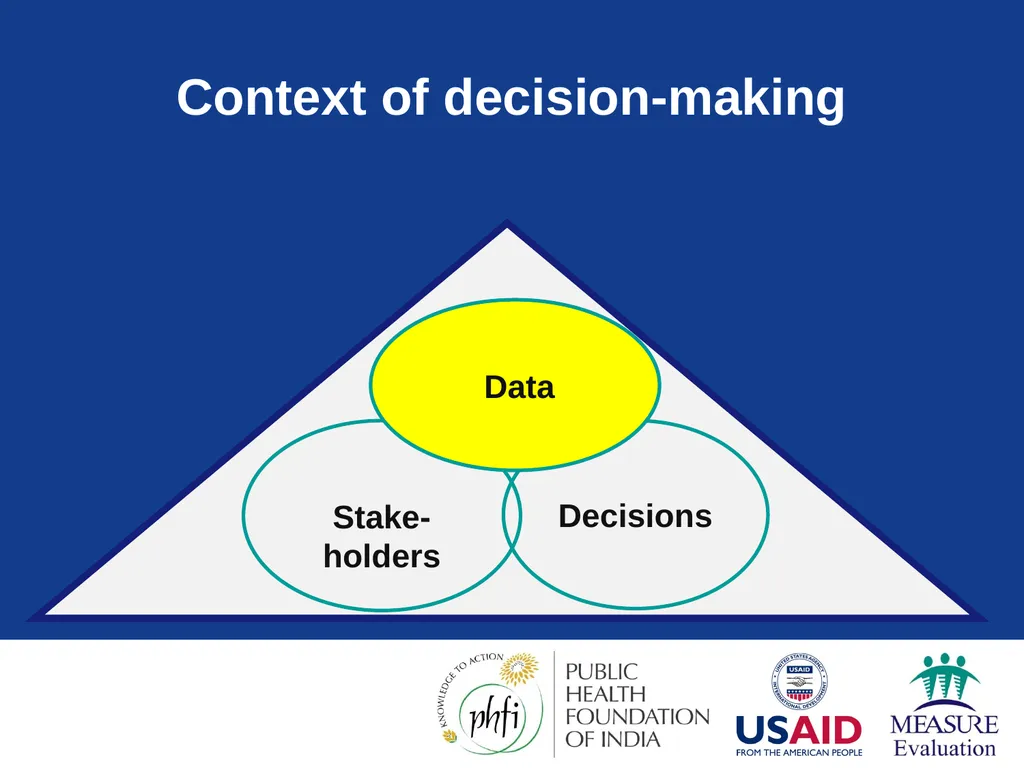
slide32. Context of decision-making<br>
slide33. Discussion How can we ensure that information is being used to make diagnoses and inform decisions?<br>
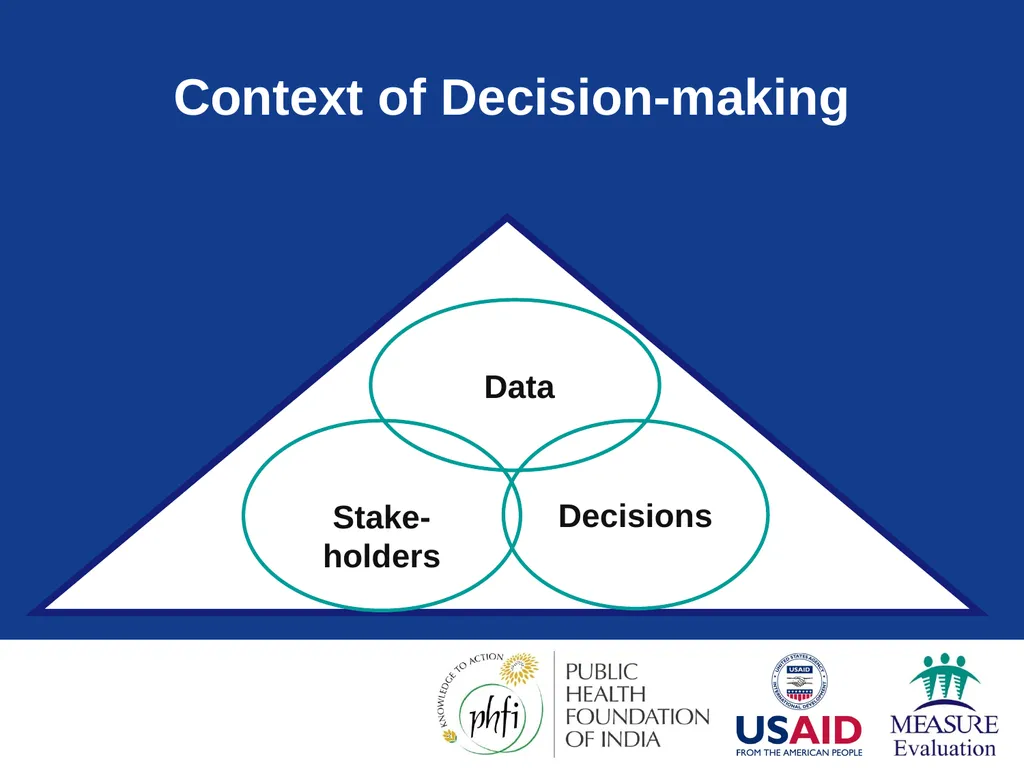
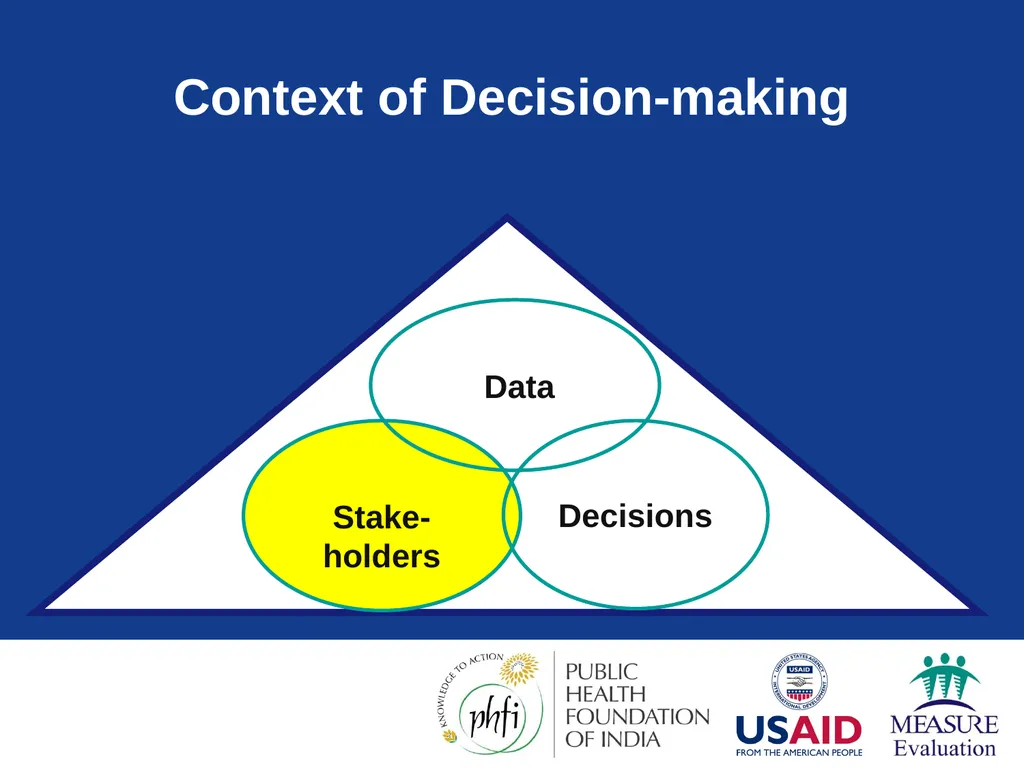
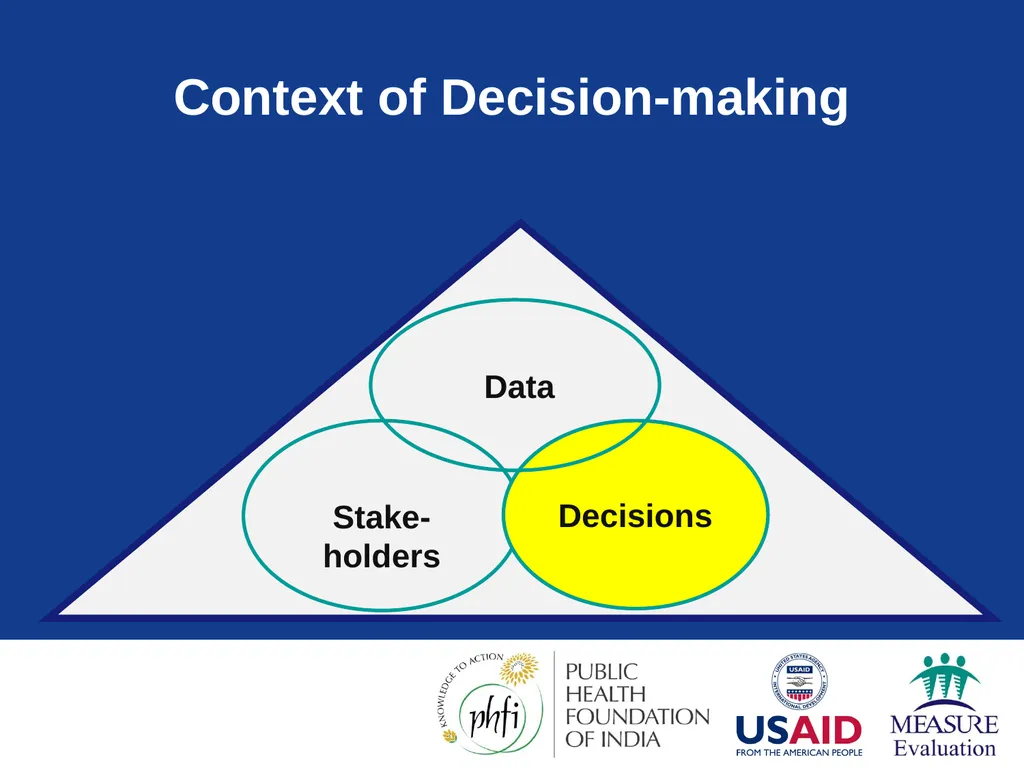
slide34. Stake-holders Decisions Context of Decision-making Data<br>
slide35. Stake-holders Decisions Context of Decision-making Data<br>
slide36. What is a Stakeholder? Any person, group or organization with a particular interest in a policy or program
Government agencies
Beneficiaries
Policymakers
Funding agencies
Providers / Implementers
Civil society
Researchers
M&E Specialists<br>
slide37. Stakeholders Non-governmental organizations
Professional associations
Religious leaders
Journalists/media
Private sector/business<br>
slide38. Data Producers vs. Data Users Data producers think that decision-makers:
Value “political” considerations over evidence
Are unprepared to measure or evaluate the consequences of their decisions
Decision makers or data users think that health researchers and M&E specialists:
Lack responsiveness to priorities
Favor numbers / jargon to transparent communication
Prefer written reports to face-to-face conversation<br>
slide39. Importance of Knowing Your Stakeholders View activities from different perspectives
Have different degrees of understanding
Need/want different information
Need information at different levels of complexity
Have different intensities of interest
Have different roles in the decision making process<br>
slide40. Results of Involving Stakeholders in Data Use Process Relevance of data
Ownership of data
Appropriate dissemination of data
Use of data<br>
slide41. Stakeholder Analysis Matrix & Engagement Plan Clarifies who has interest in a program and what that interest is
Identifies who can help a program and how, and who can hurt it
Helps you use this information for the success of the planning effort<br>
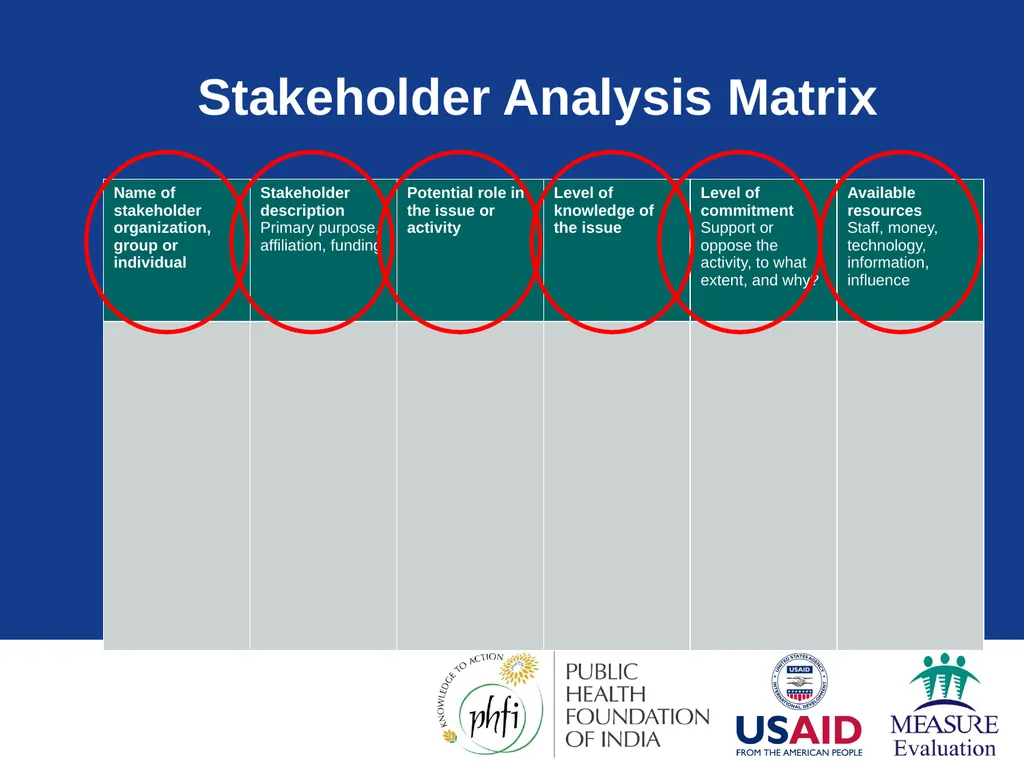
slide42. Stakeholder Analysis Matrix The Stakeholder Analysis tool is a matrix framework and process for:
Identifying stakeholders
Defining their roles and resources
Identifying dynamics among stakeholders
Setting the optimum stakeholder group<br>
slide43. Stakeholder Analysis Matrix<br>
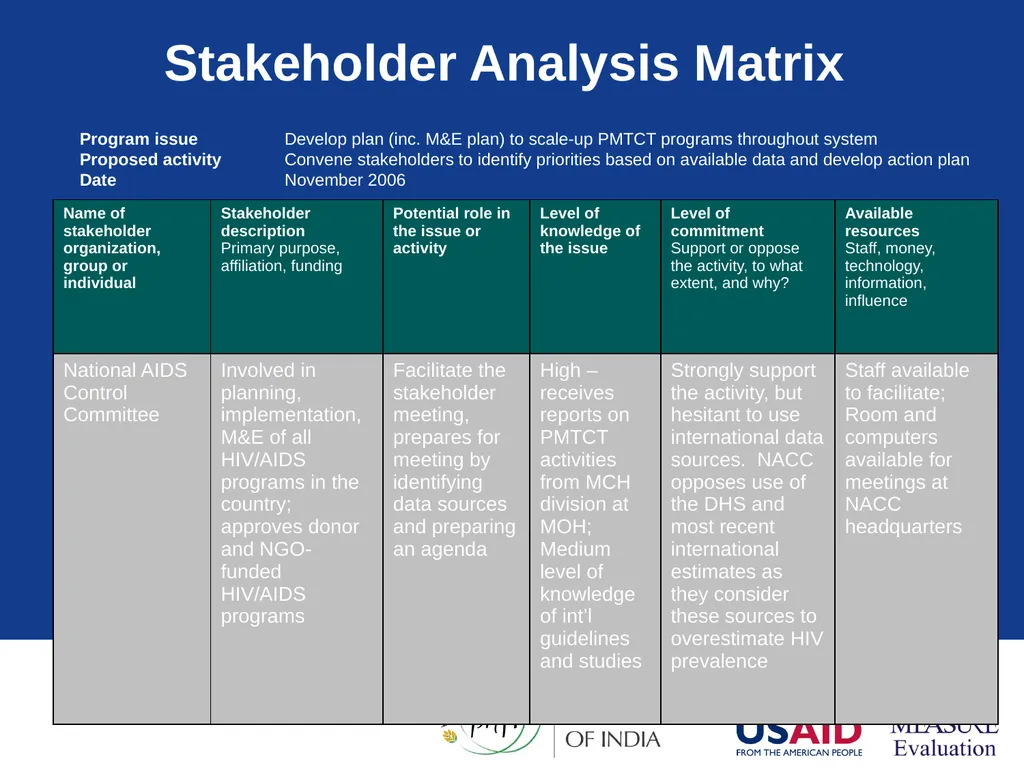
slide44. Stakeholder Analysis Matrix Program issue Develop plan (inc. M&E plan) to scale-up PMTCT programs throughout system
Proposed activity Convene stakeholders to identify priorities based on available data and develop action plan
Date November 2006<br>
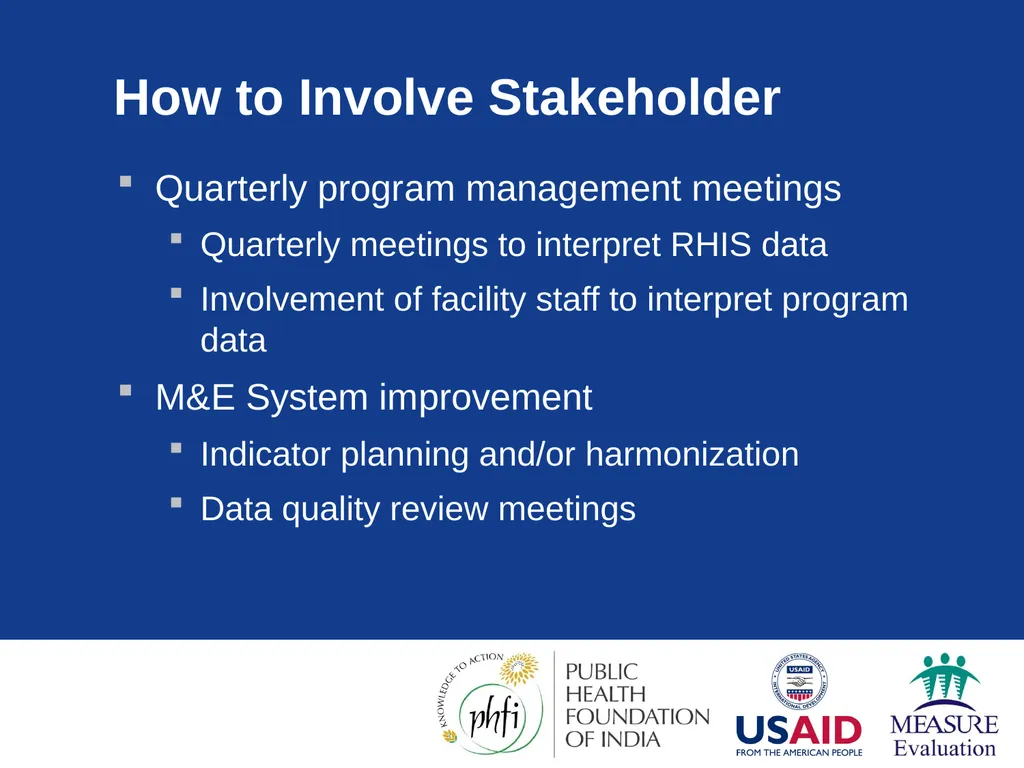
slide45. How to Involve Stakeholder Quarterly program management meetings
Quarterly meetings to interpret RHIS data
Involvement of facility staff to interpret program data
M&E System improvement
Indicator planning and/or harmonization
Data quality review meetings<br>
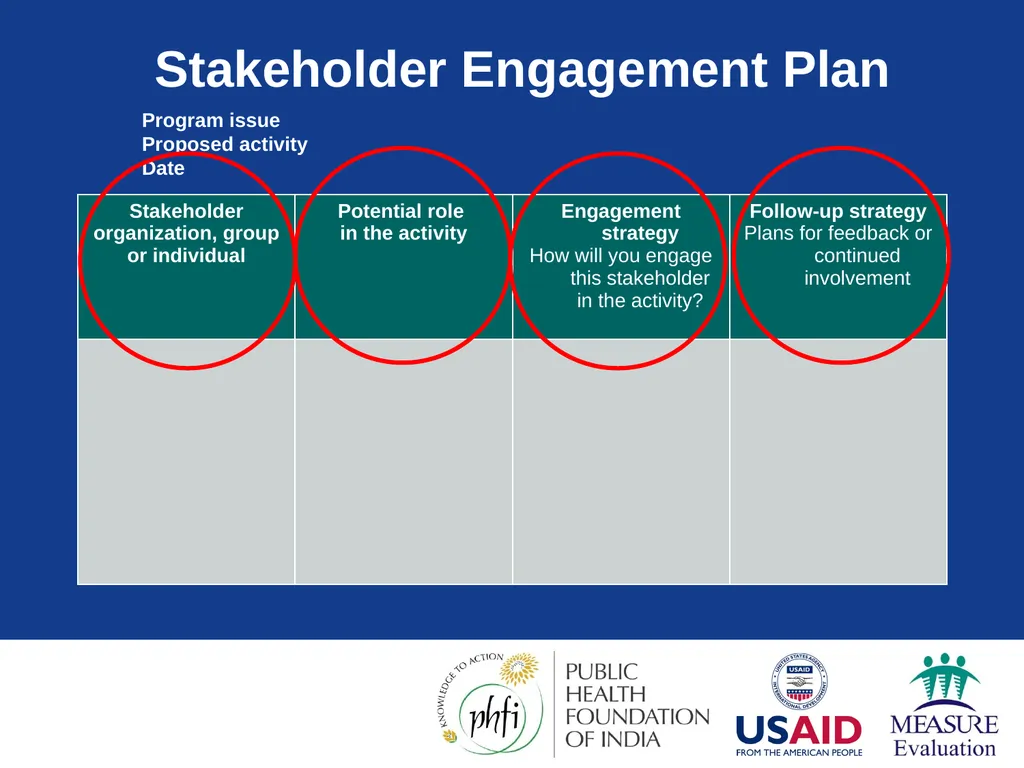
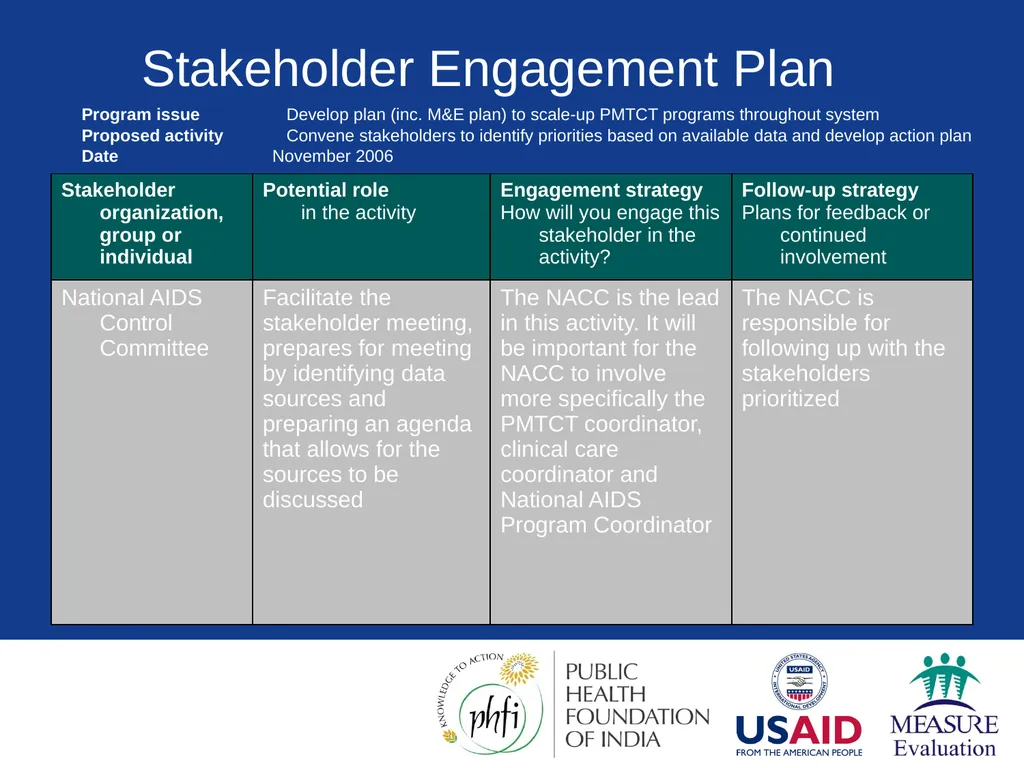
slide46. Stakeholder Engagement Plan Program issue
Proposed activity
Date<br>
slide47. Stakeholder Engagement Plan Program issue Develop plan (inc. M&E plan) to scale-up PMTCT programs throughout system
Proposed activity Convene stakeholders to identify priorities based on available data and develop action plan
Date November 2006<br>
slide48. Stake-holders Decisions Context of Decision-making Data<br>
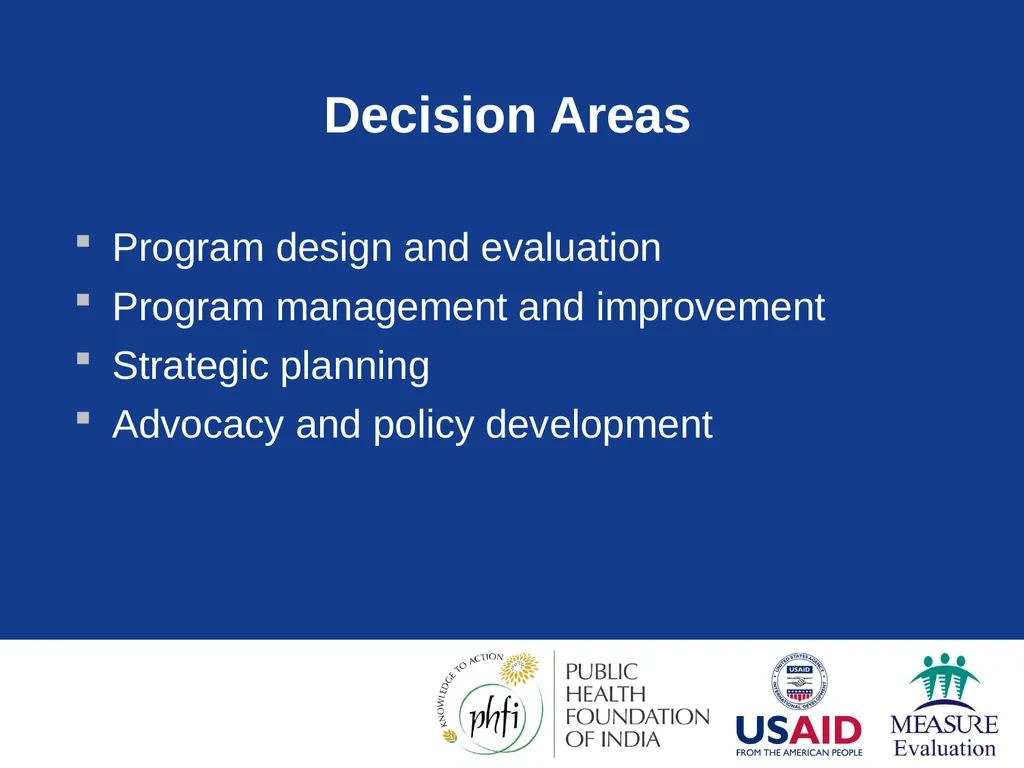
slide49. Decision Areas Program design and evaluation
Program management and improvement
Strategic planning
Advocacy and policy development<br>
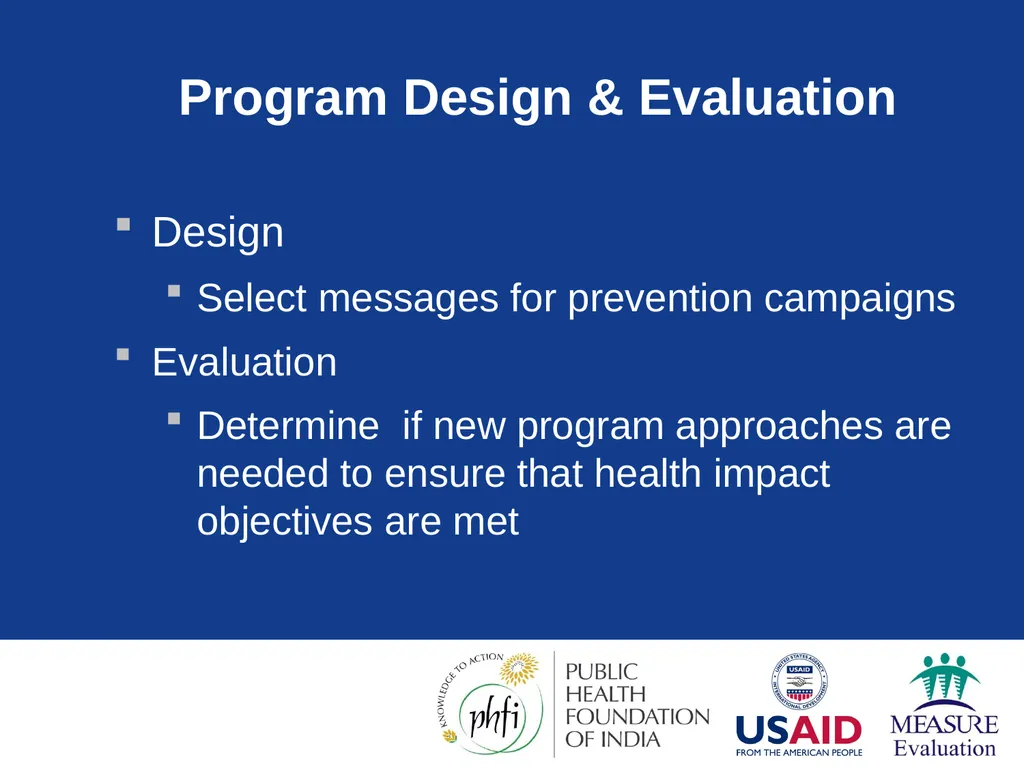
slide50. Program Design & Evaluation Design
Select messages for prevention campaigns
Evaluation
Determine if new program approaches are needed to ensure that health impact objectives are met<br>
slide51. Program Management and Improvement Management
Determine if the program is meeting its process objectives
Improvement
Develop new strategies to increase coverage<br>
slide52. Strategic Planning Identify geographic areas of highest need
Determine human resource allocation
Determine which of offered services is making the greatest impact<br>
slide53. Advocacy and Policy Development Identifying and quantifying underserved populations
Identifying focus areas for new policies<br>
slide54. Stake-holders Decisions Context of decision-making Data<br>
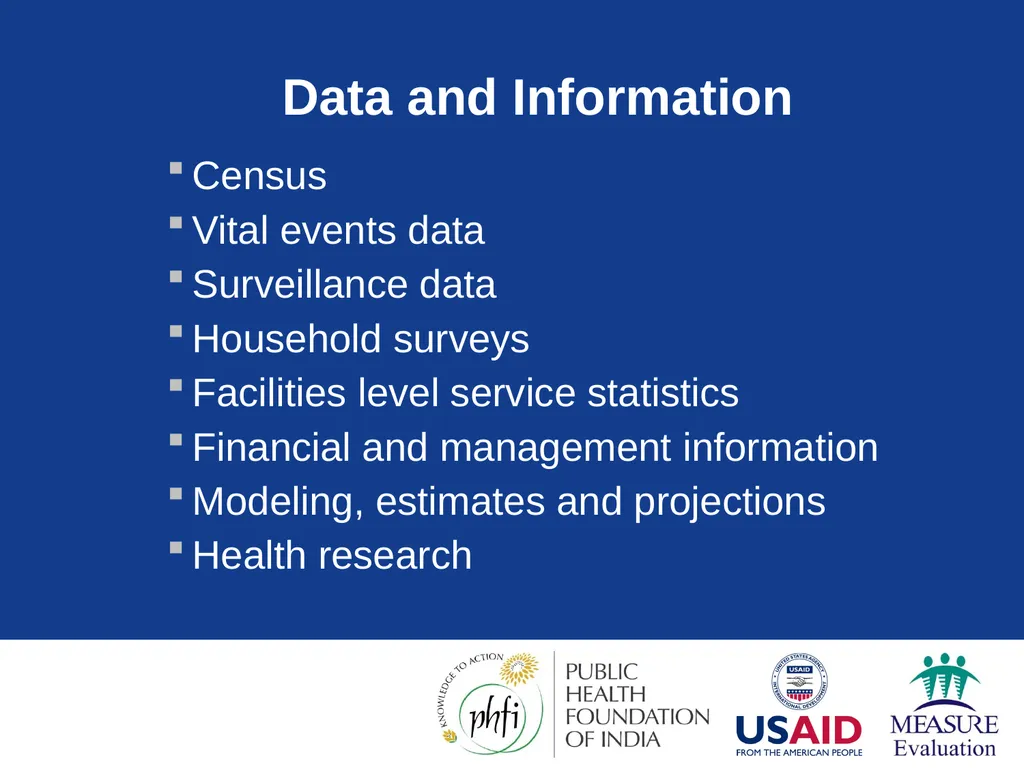
slide55. Data and Information Census
Vital events data
Surveillance data
Household surveys
Facilities level service statistics
Financial and management information
Modeling, estimates and projections
Health research<br>
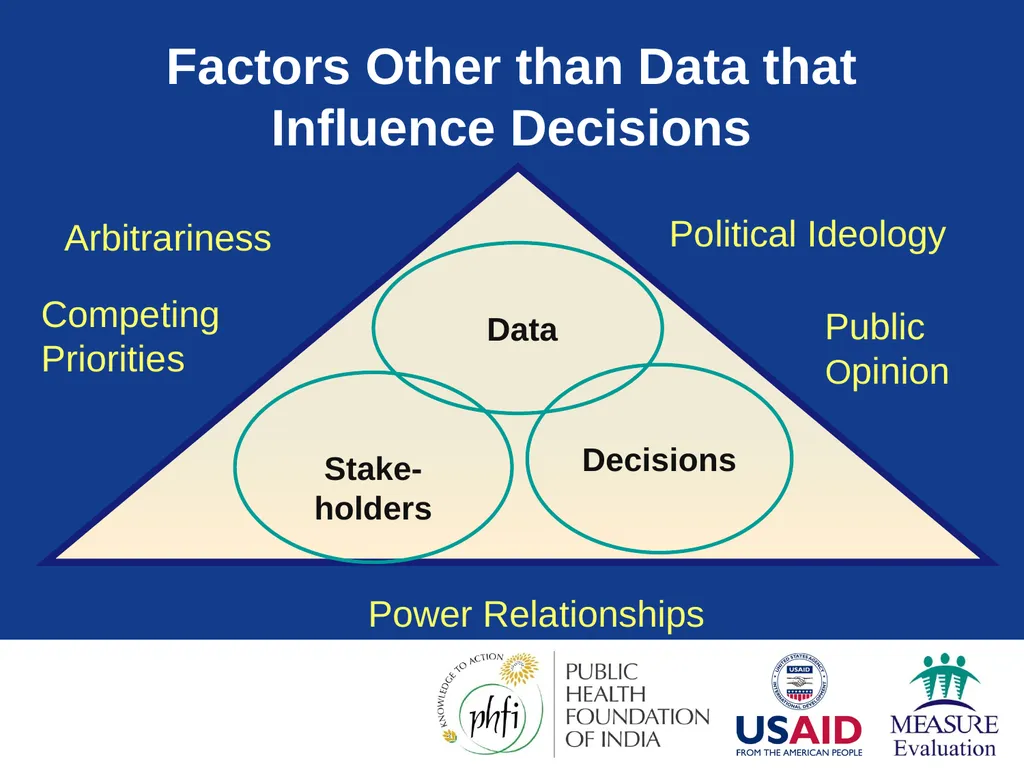
slide56. Stake-holders Decisions Factors Other than Data that Influence Decisions Data Political Ideology Competing Priorities Power Relationships Public Opinion Arbitrariness<br>
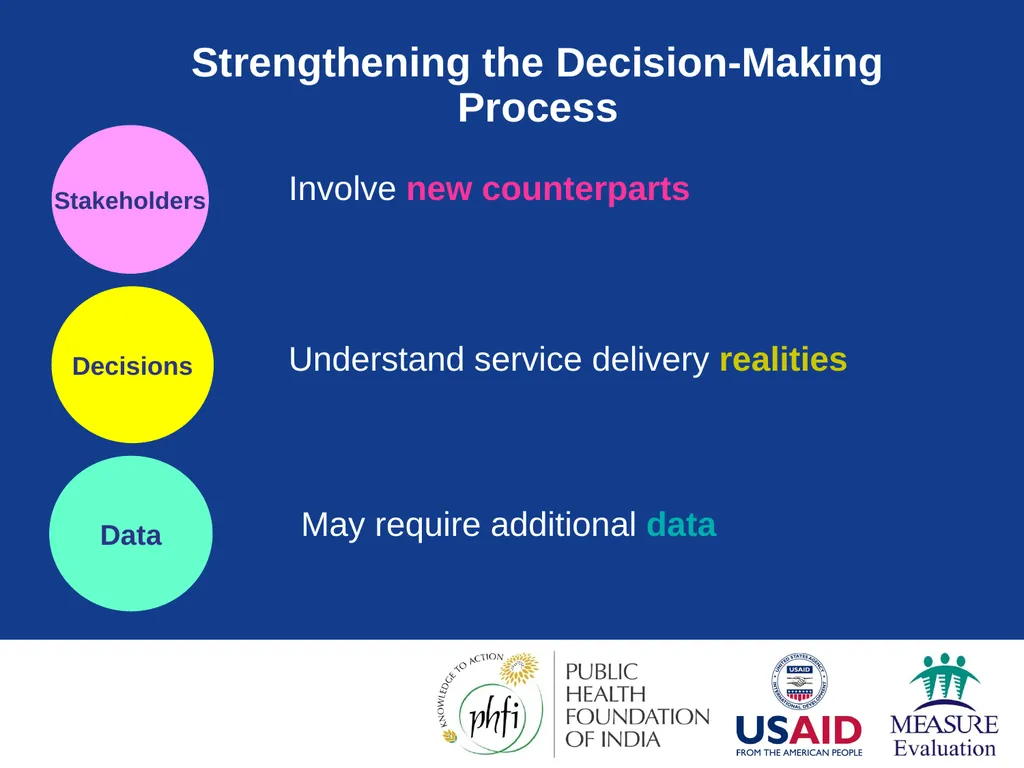
slide57. Stakeholders Involve new counterparts Strengthening the Decision-Making Process Decisions Understand service delivery realities Data May require additional data<br>
slide58. Activity: Stakeholder matrix & engagement plan Break into small groups
Each group should select a decision that they make in their work settings and complete the stakeholder analysis around that decision.
A minimum of 7 stakeholders should be identified
Complete the matrix across the columns for 1-2 stakeholders.
Select one stakeholder and complete the stakeholder engagement plan for that stakeholder
Time for activity: 45 minutes<br>
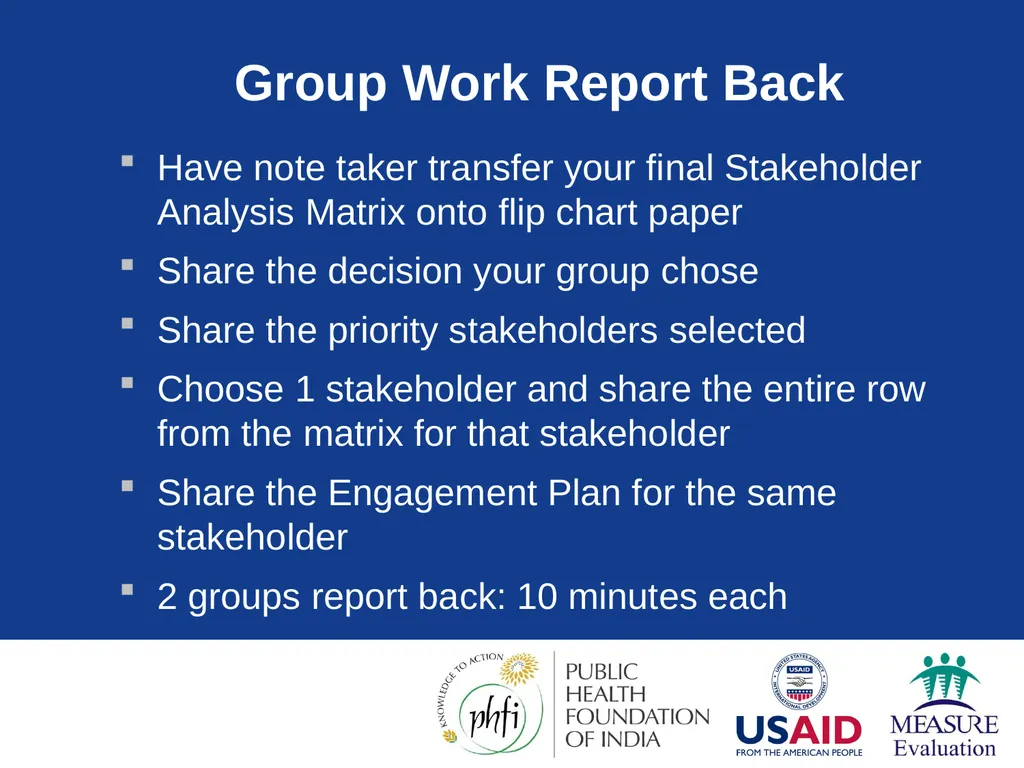
slide59. Group Work Report Back Have note taker transfer your final Stakeholder Analysis Matrix onto flip chart paper
Share the decision your group chose
Share the priority stakeholders selected
Choose 1 stakeholder and share the entire row from the matrix for that stakeholder
Share the Engagement Plan for the same stakeholder
2 groups report back: 10 minutes each<br>
slide60. Linking decisions and questions with potential data sources<br>
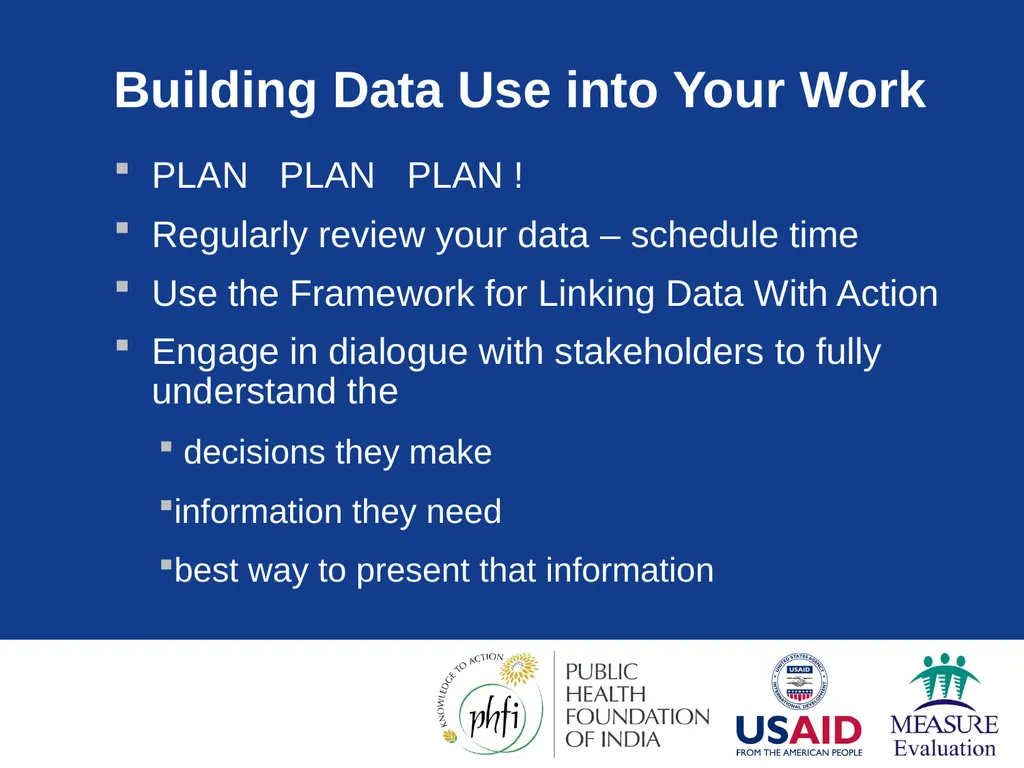
slide61. Building Data Use into Your Work PLAN PLAN PLAN !
Regularly review your data – schedule time
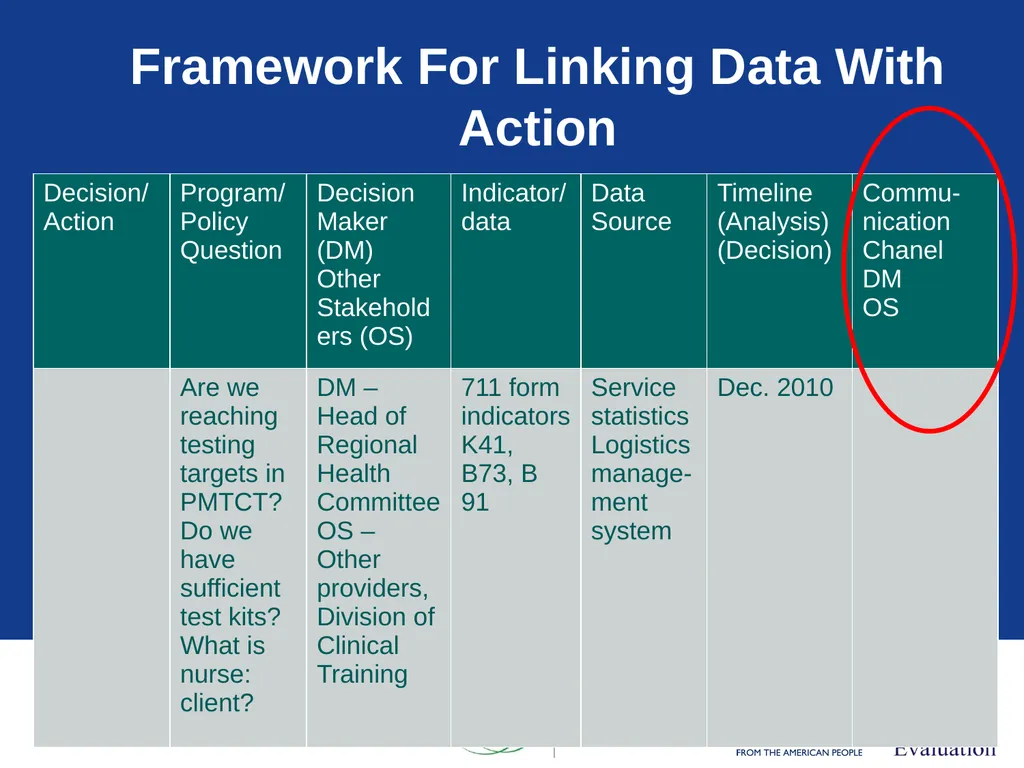
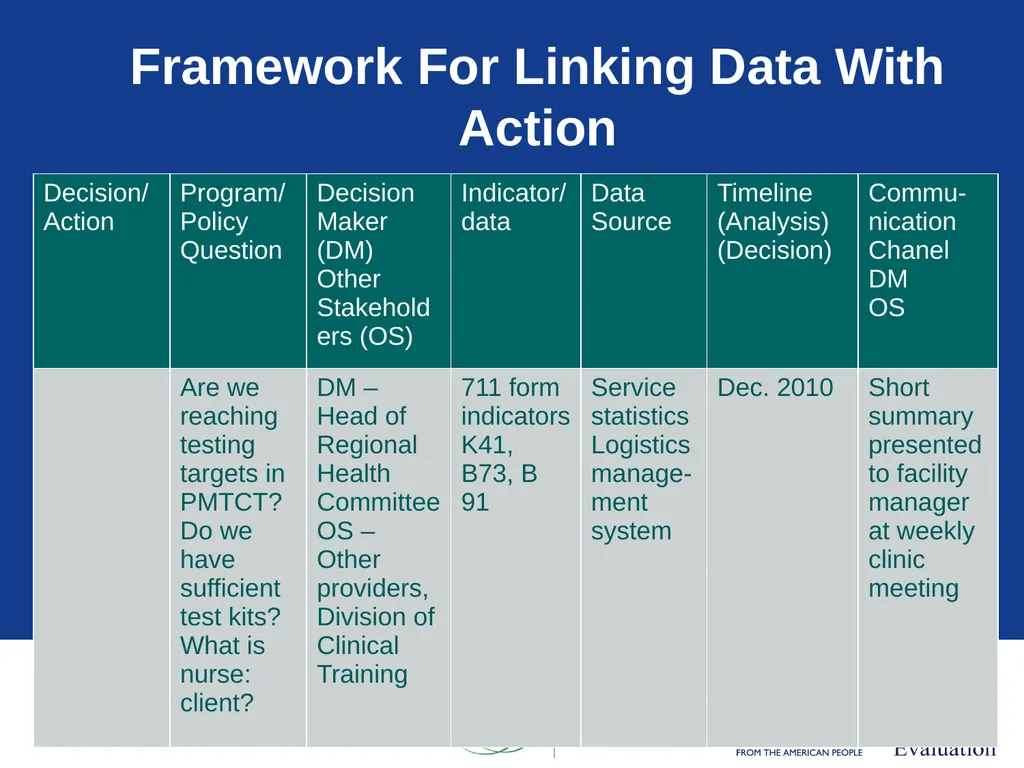
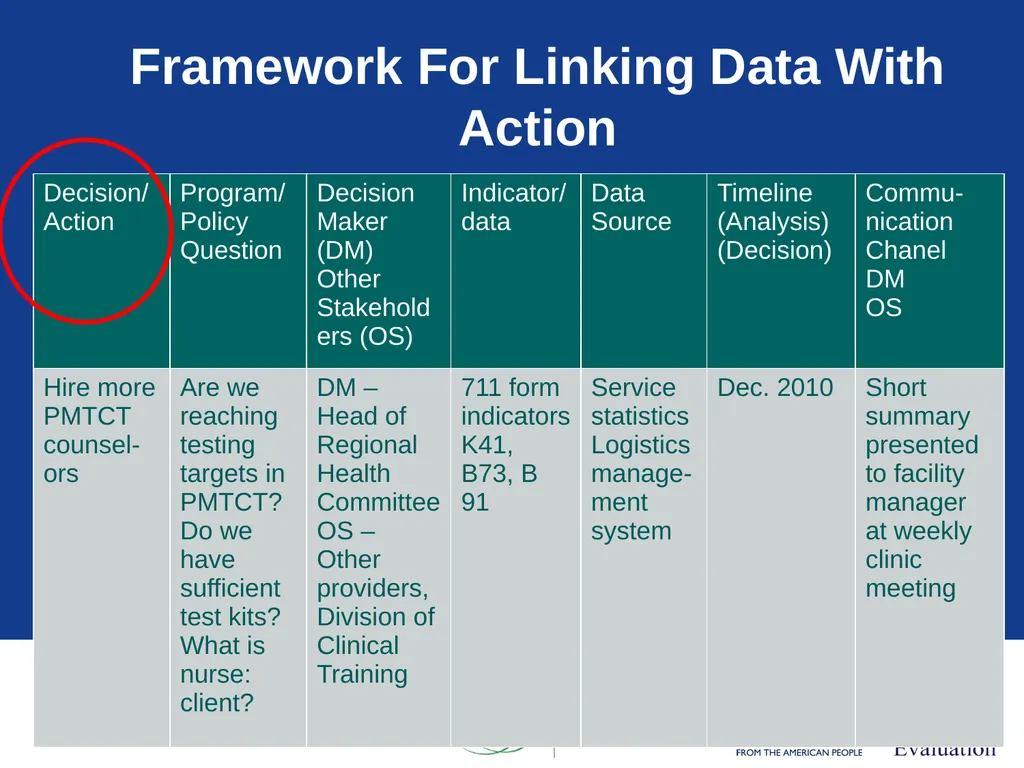
Use the Framework for Linking Data With Action
Engage in dialogue with stakeholders to fully understand the
decisions they make
information they need
best way to present that information<br>
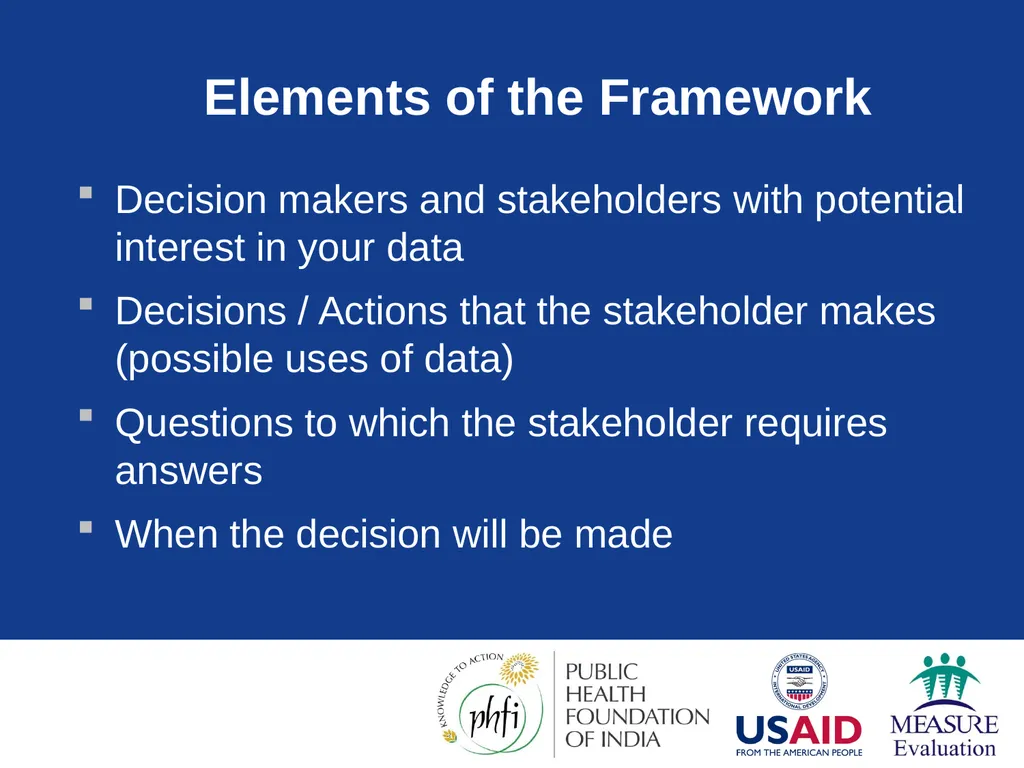
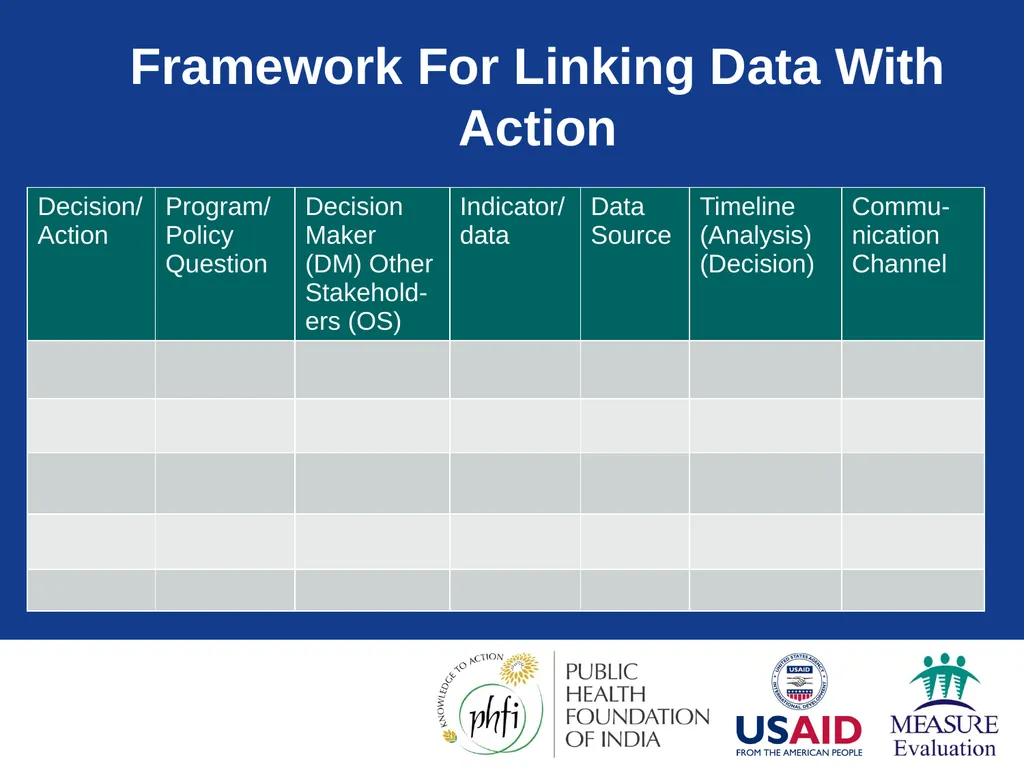
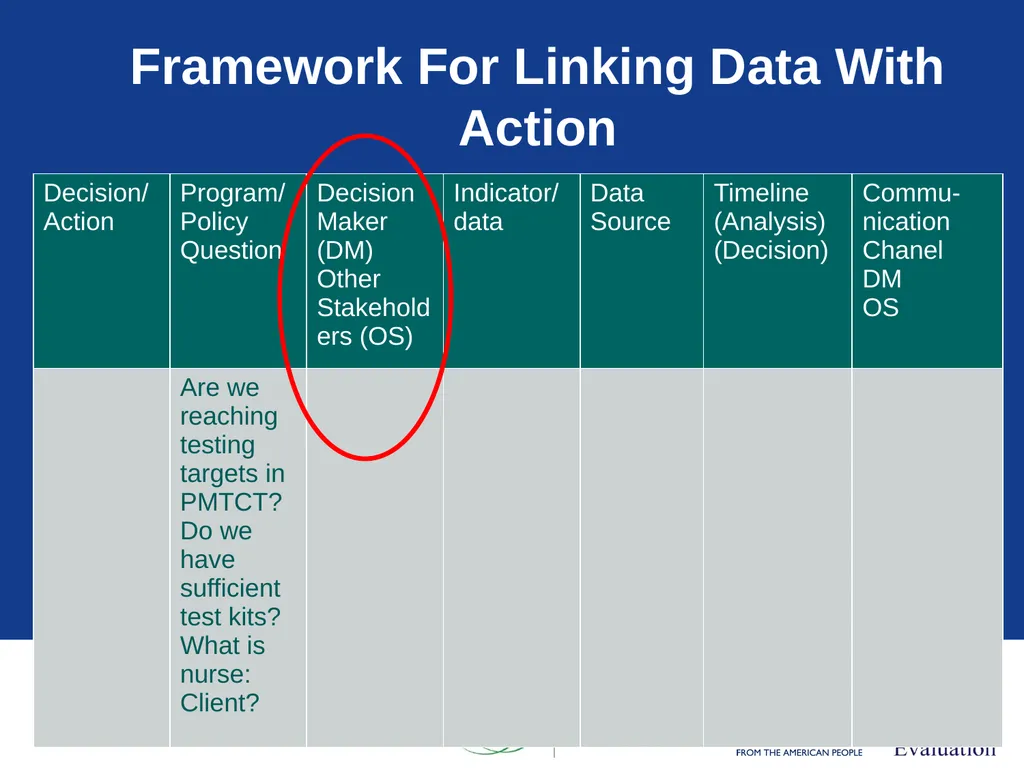
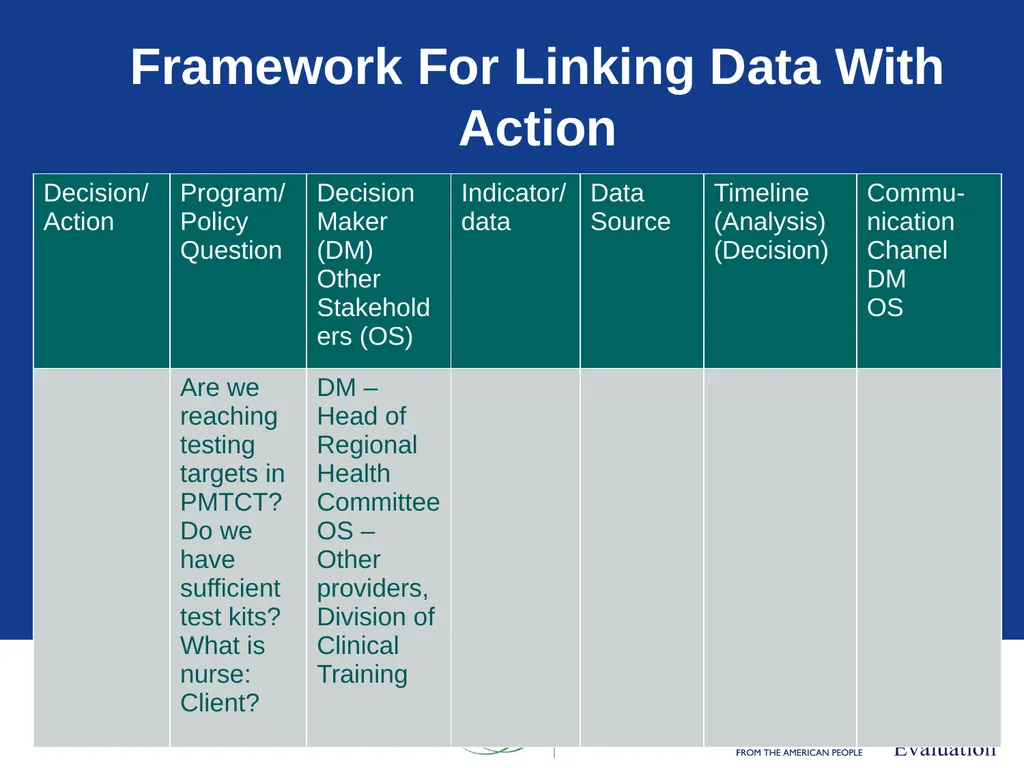
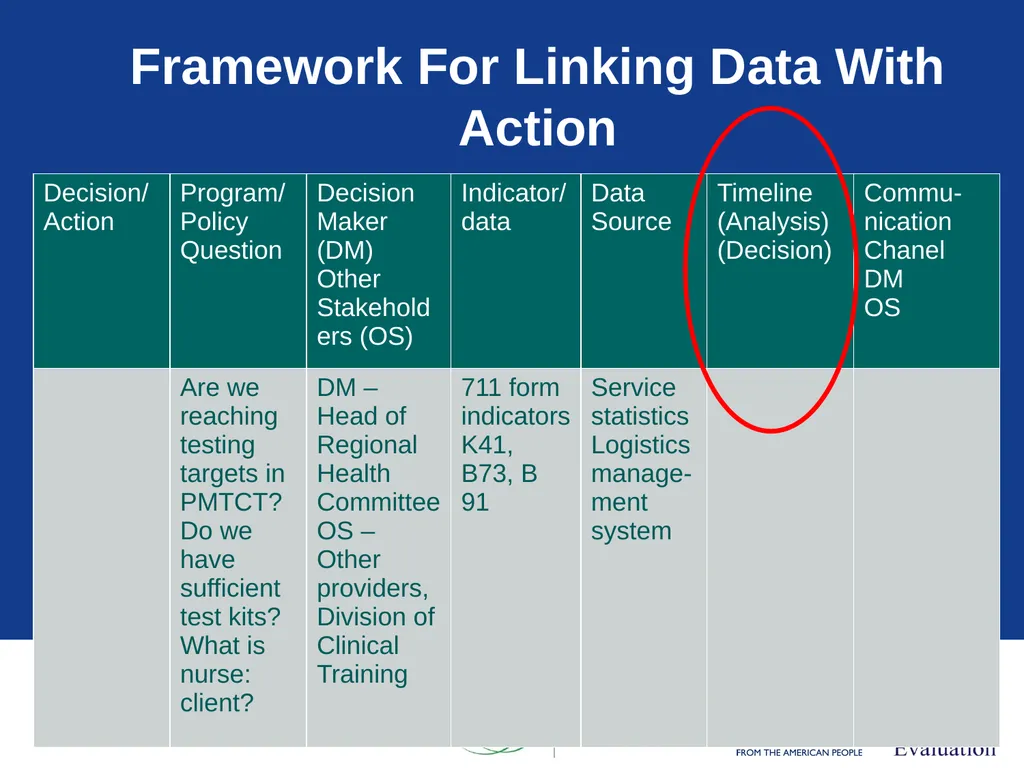
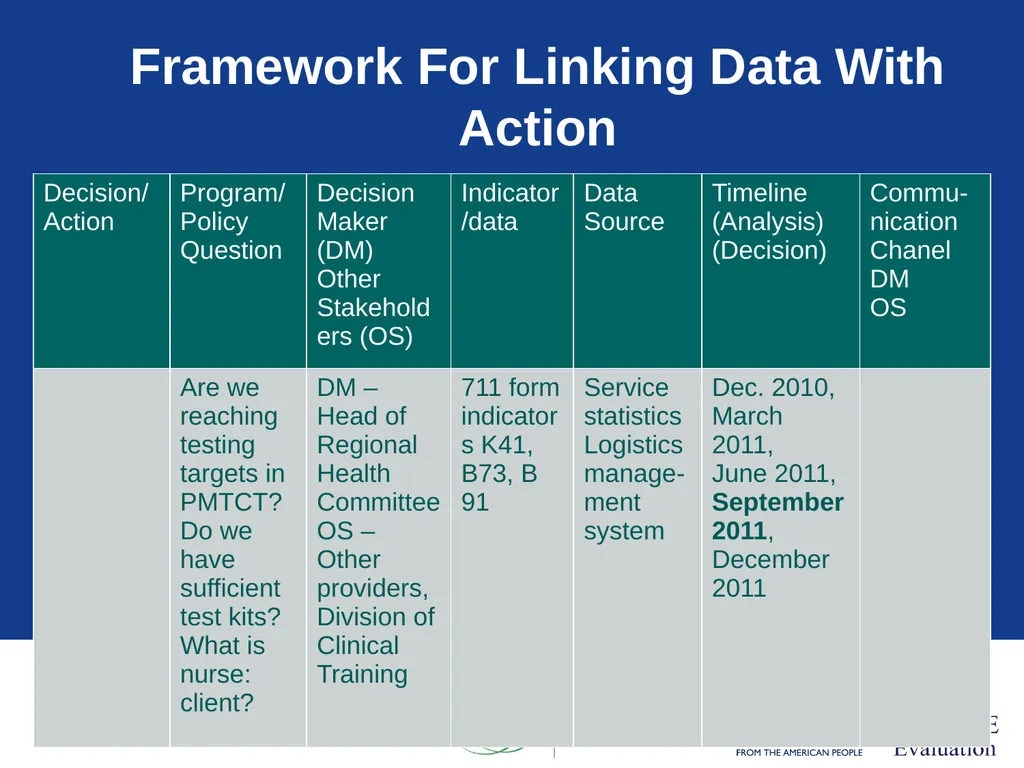
slide62. Elements of the Framework Decision makers and stakeholders with potential interest in your data
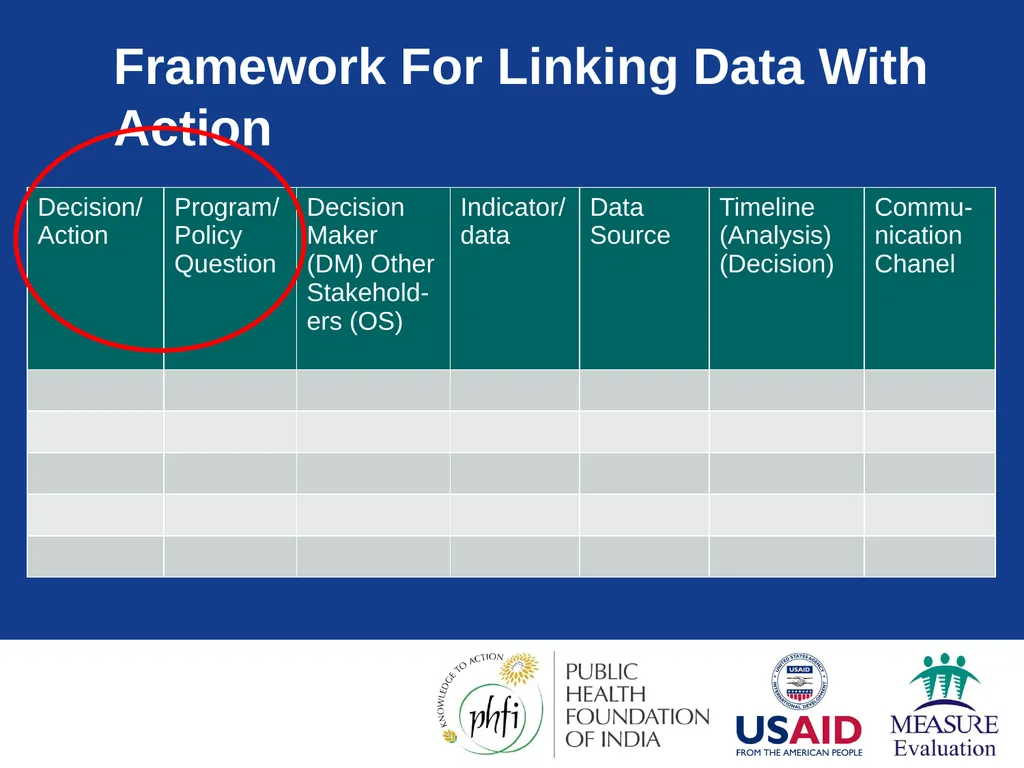
Decisions / Actions that the stakeholder makes (possible uses of data)
Questions to which the stakeholder requires answers
When the decision will be made<br>
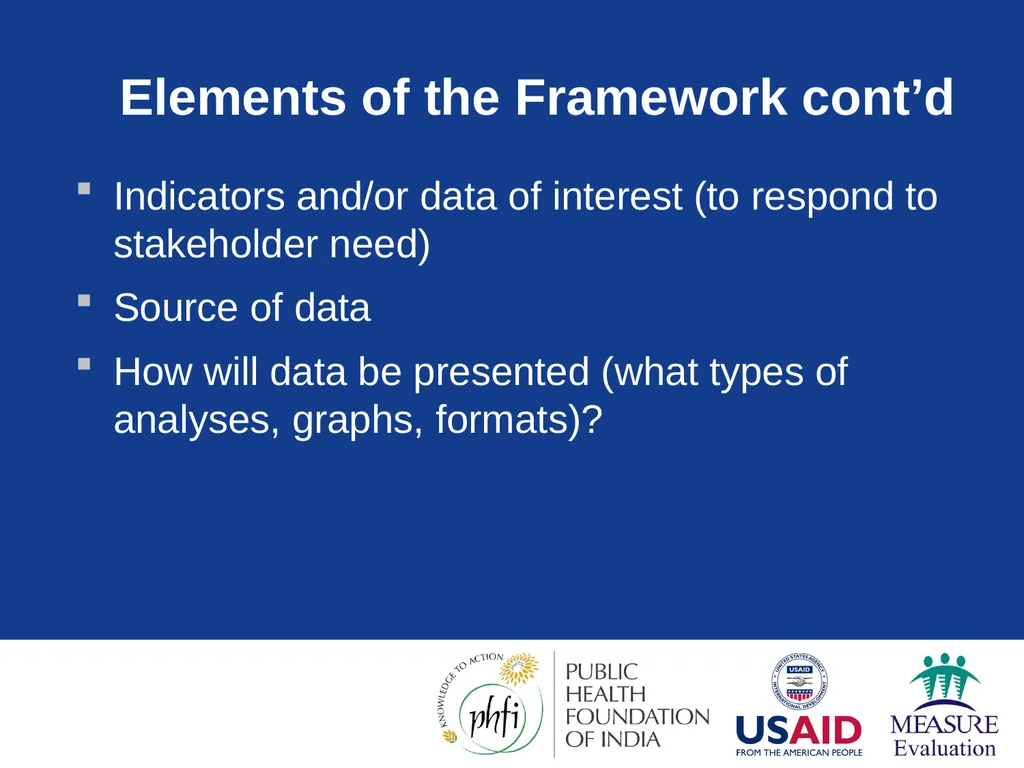
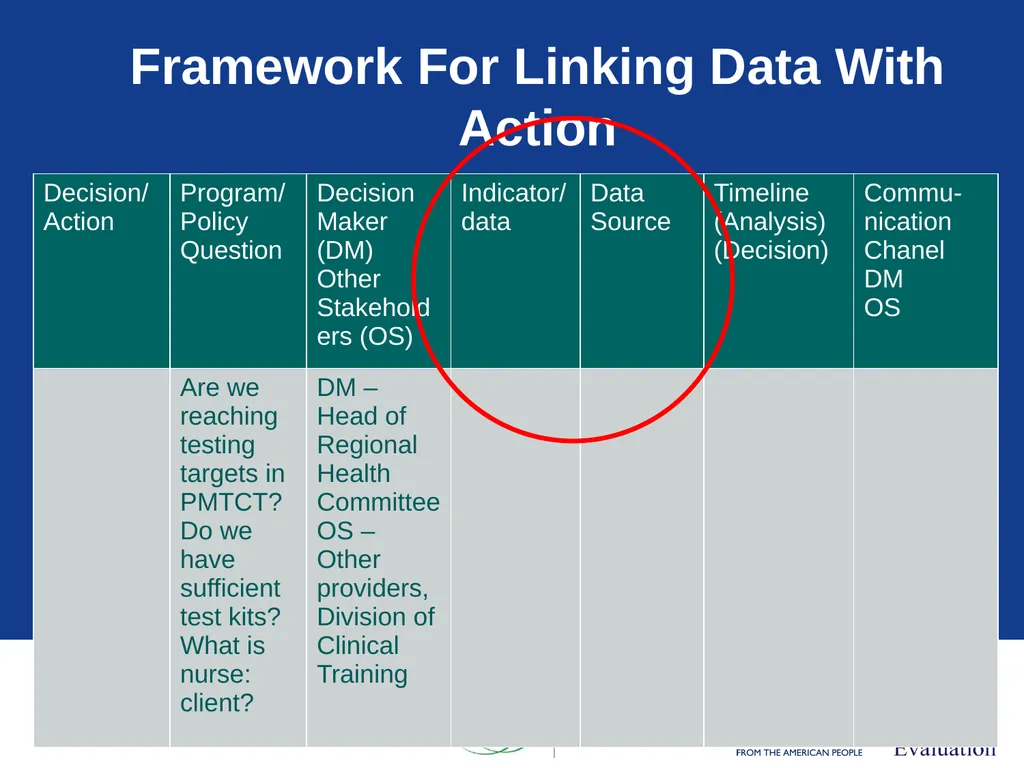
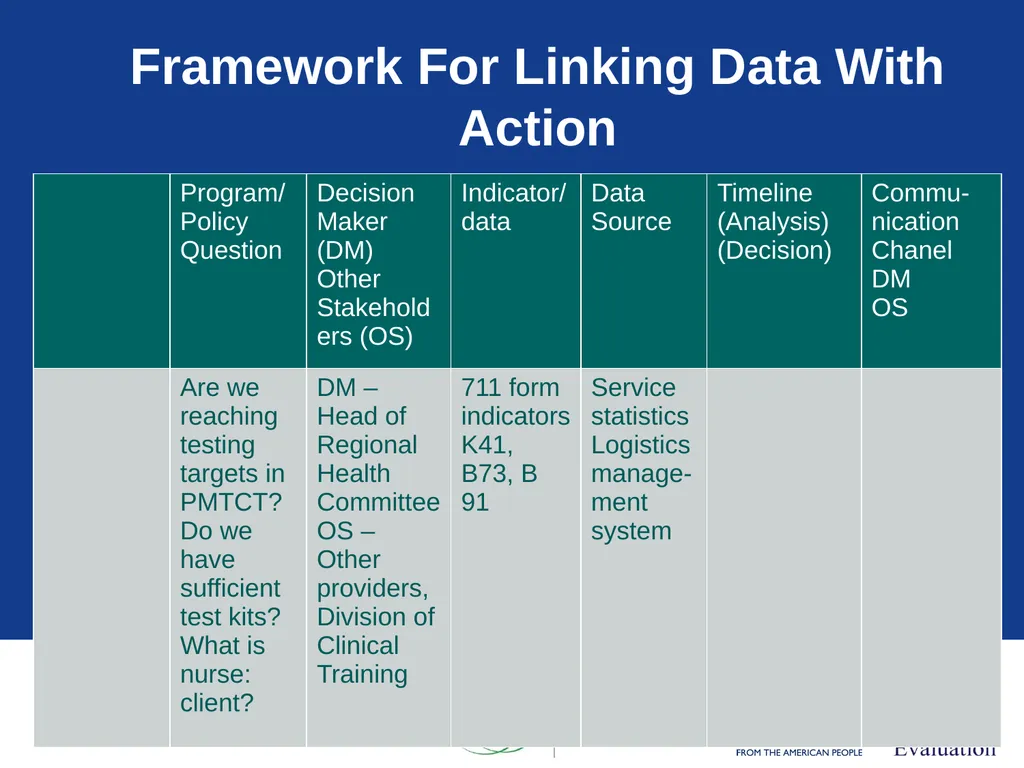
slide63. Elements of the Framework cont’d Indicators and/or data of interest (to respond to stakeholder need)
Source of data
How will data be presented (what types of analyses, graphs, formats)?<br>
slide64. Framework For Linking Data With Action<br>
slide65. Framework For Linking Data With Action<br>
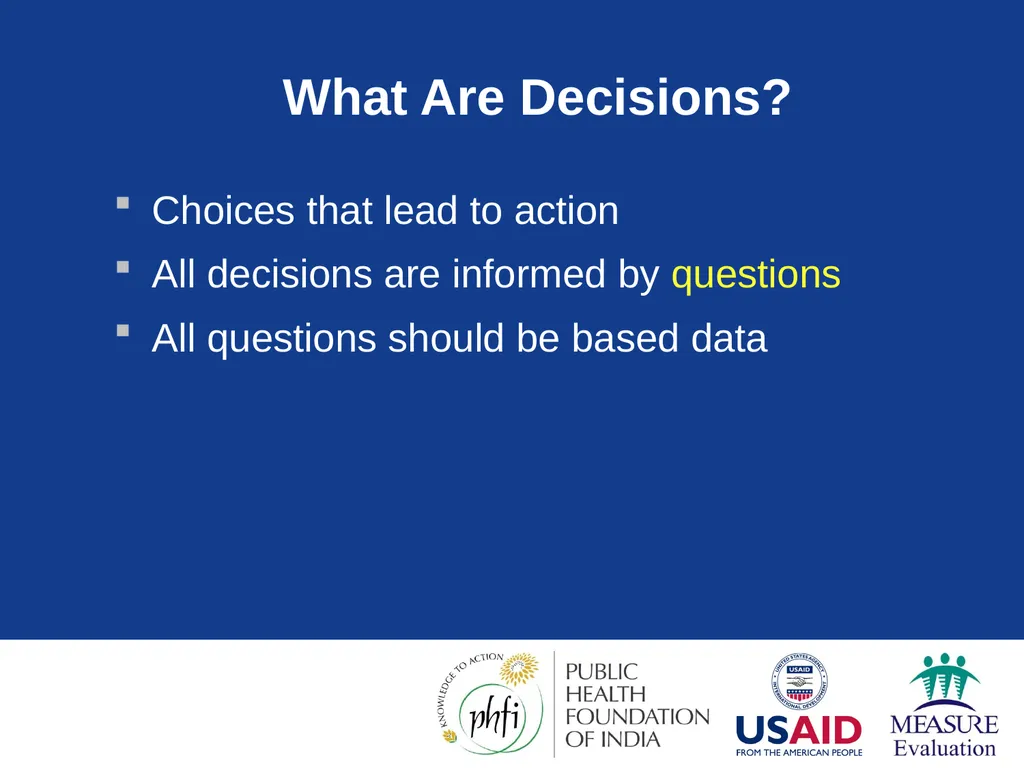
slide66. What Are Decisions? Choices that lead to action
All decisions are informed by questions
All questions should be based data<br>
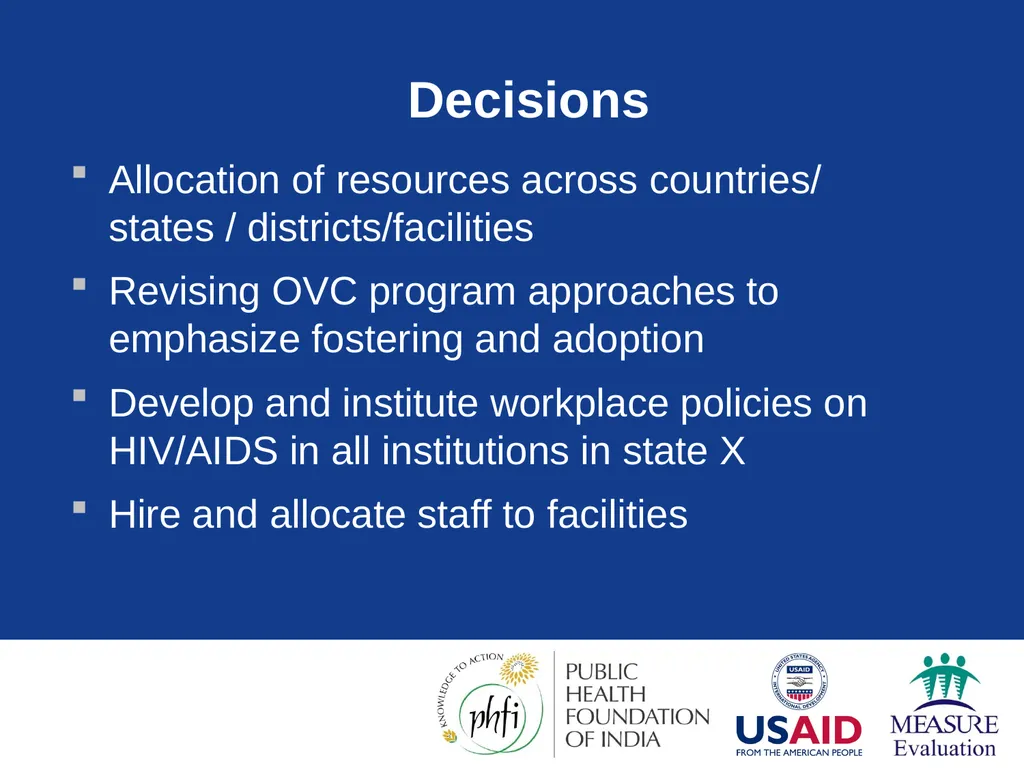
slide67. Decisions Allocation of resources across countries/ states / districts/facilities
Revising OVC program approaches to emphasize fostering and adoption
Develop and institute workplace policies on HIV/AIDS in all institutions in state X
Hire and allocate staff to facilities<br>
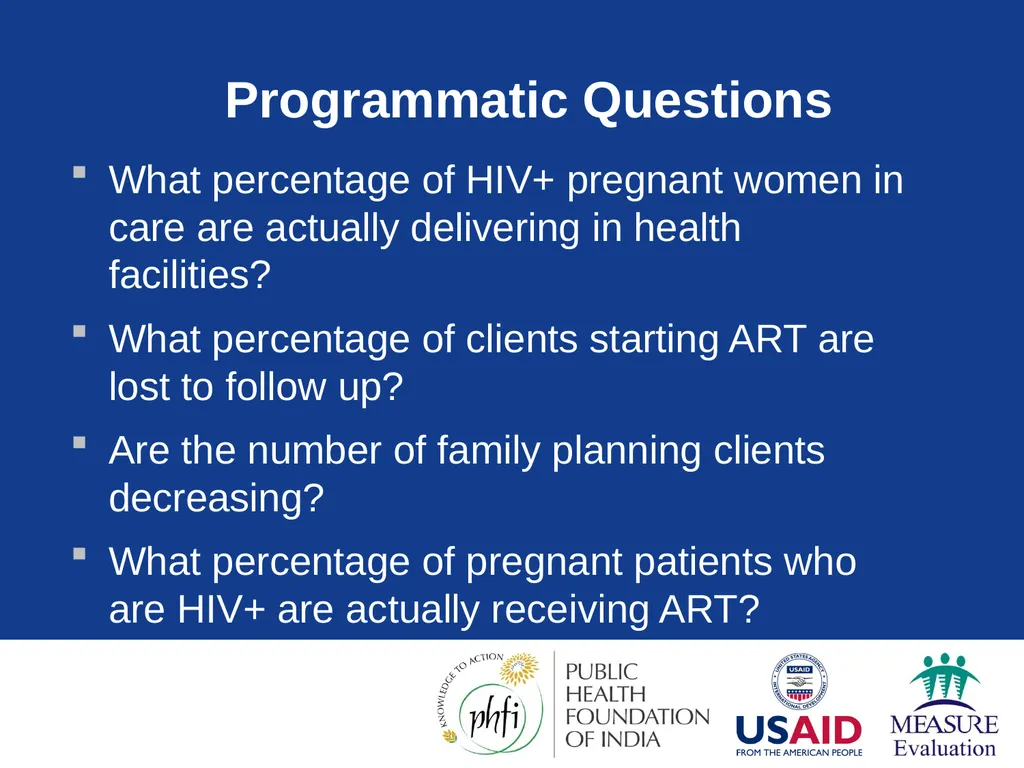
slide68. Programmatic Questions What percentage of HIV+ pregnant women in care are actually delivering in health facilities?
What percentage of clients starting ART are lost to follow up?
Are the number of family planning clients decreasing?
What percentage of pregnant patients who are HIV+ are actually receiving ART?<br>
slide69. Framework For Linking Data With Action<br>
slide70. Framework For Linking Data With Action<br>
slide71. Framework For Linking Data With Action<br>
slide72. Framework For Linking Data With Action<br>
slide73. Framework For Linking Data With Action<br>
slide74. Framework For Linking Data With Action<br>
slide75. Framework For Linking Data With Action<br>
slide76. Framework For Linking Data With Action<br>
slide77. Framework For Linking Data With Action<br>
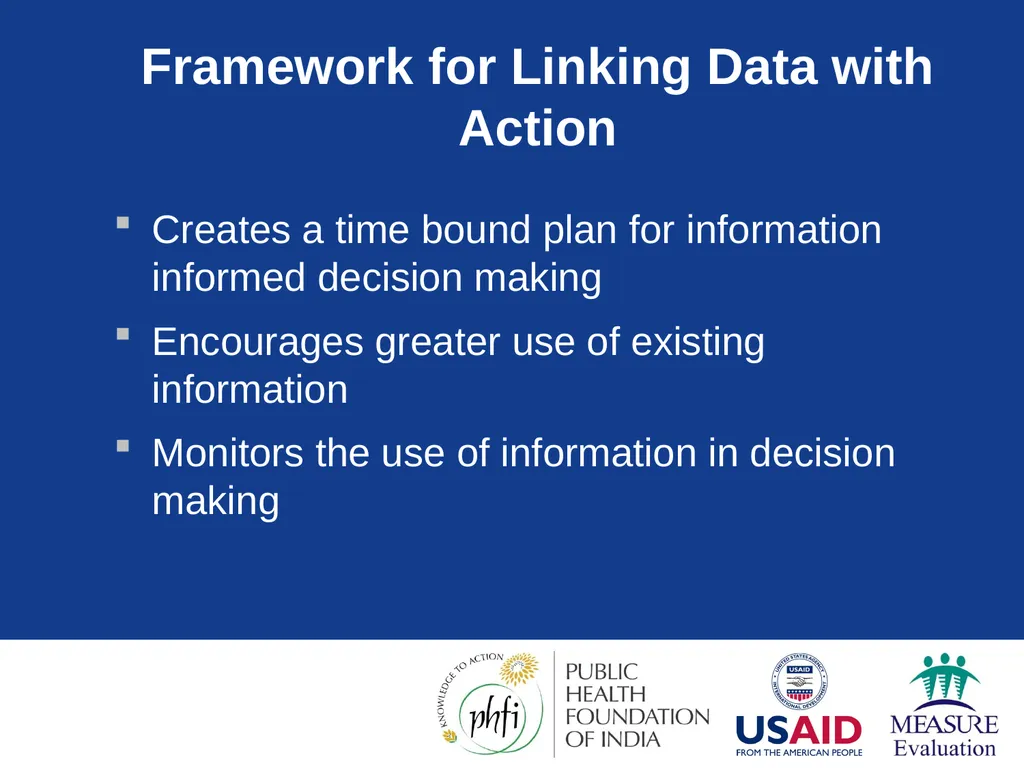
slide78. Framework for Linking Data with Action Creates a time bound plan for information informed decision making
Encourages greater use of existing information
Monitors the use of information in decision making<br>
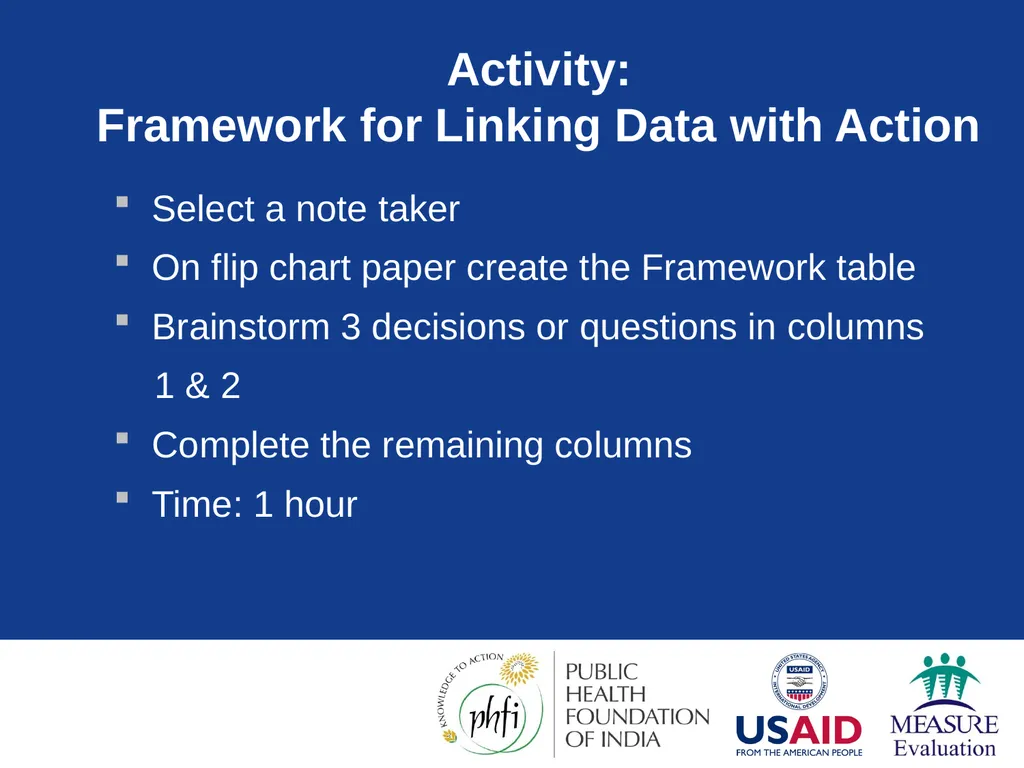
slide79. Activity: Framework for Linking Data with Action Select a note taker
On flip chart paper create the Framework table
Brainstorm 3 decisions or questions in columns
1 & 2
Complete the remaining columns
Time: 1 hour<br>
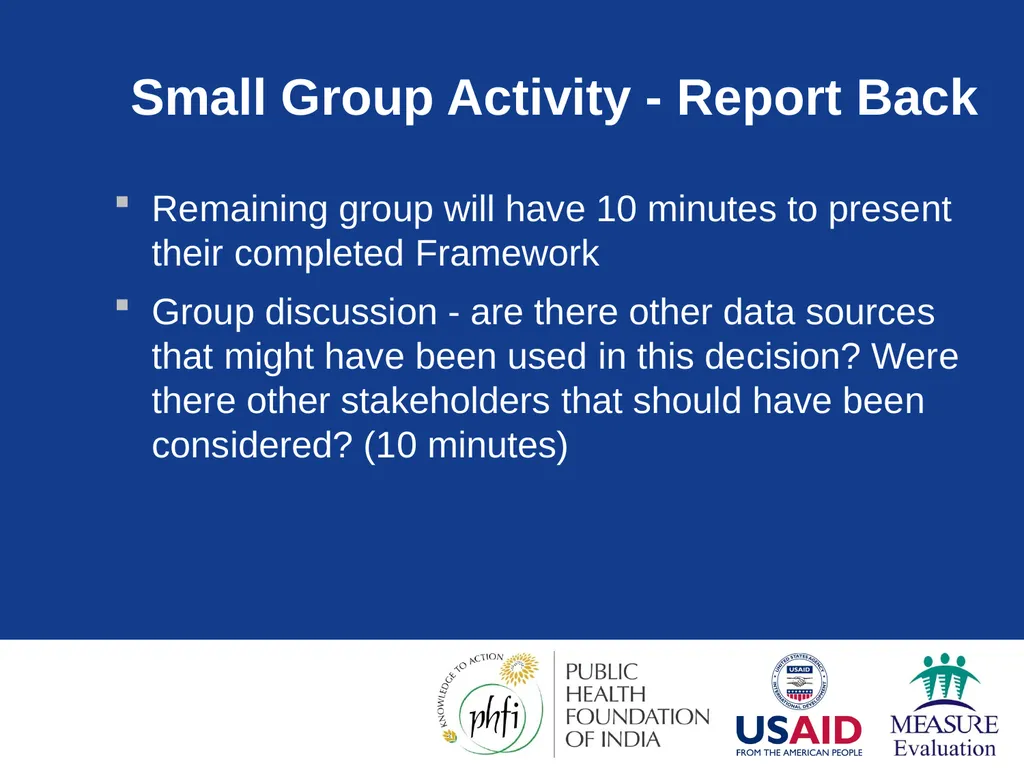
slide80. Small Group Activity - Report Back Remaining group will have 10 minutes to present their completed Framework
Group discussion - are there other data sources that might have been used in this decision? Were there other stakeholders that should have been considered? (10 minutes)<br>
slide81. MEASURE Evaluation is a MEASURE project funded by the
U.S. Agency for International Development and implemented by
the Carolina Population Center at the University of North Carolina
at Chapel Hill in partnership with Futures Group International,
ICF Macro, John Snow, Inc., Management Sciences for Health,
and Tulane University. Views expressed in this presentation do not
necessarily reflect the views of USAID or the U.S. Government.
MEASURE Evaluation is the USAID Global Health Bureau's
primary vehicle for supporting improvements in monitoring and
evaluation in population, health and nutrition worldwide.<br>
slide2. Session Overview Understanding the need for data
Importance of improving data informed decision making
Explain the context of decision-making
Role of monitoring and evaluation data in decision making
Highlight determinants of data use
List potential barriers to data use
Assessment of Barriers to Data Use Tool
Explain the relationship of stakeholders to the data use in decision making cycle
Stakeholder Assessment and Engagement Tools
Linking decisions and questions with potential data sources
Identify priority decisions and programmatic questions
Create a time-bound plan for using data in decision making
Framework for Linking Data with Action Tool<br>
slide3. Understanding the need for data<br>
slide4. Decisions Within Programs Ensure program activities are executed as planned & services are delivered as intended
Are we doing the right things, doing them right, and reaching those we intended?
Decisions about:
employment & manpower
mobilization & allocation of resources
needed information and developing feedback channels<br>
slide5. Factors other than evidence-based information influence decisions Power relationships
Timing
Competing priorities
Public opinion
Political ideology Arbitrariness
Local culture of decision-making
Other information sources<br>
slide6. Understanding Decision-Making What is the decision to be made?
Who makes it?
When and why is the decision made?
How is the decision made?
What information is needed?
What is my role in decision making?<br>
slide7. Why Improve Data Informed Decision Making? HIV epidemic
Resurgence of TB
Continued prevalence of malaria
Pockets of stalled fertility decline
Population burden
Shortage of health care workers<br>
slide8. Context Pressing need to develop health policies, strategies and interventions<br>
slide9. Why Improve Data Informed Decision Making? Increased financial investments for service delivery
Increased accountability requirements
Improved national HMIS
Increased demand for evaluation and other research<br>
slide10. Why address data demand & use?<br>
slide11. Evidence-based Decision Making Process<br>
slide12. Level of Dissatisfaction that Policy is Based on Scientific Evidence Percent dissatisfied Overseas Development Institute, Jones et al., 2008.<br>
slide13. Challenges Integrated HMIS still not fully functioning
Little or no communication between data producers and data users
Low capacity to collect, analyze & interpret data
Limited or no culture of data use
Data collection and use not a priority<br>
slide14. The Response Monitoring & Evaluation Systems Better Health Outcomes Data Informed Decisions<br>
slide15. Group Participation How do you and your organization use data and information?<br>
slide16. We can use information to… Inform health policies and plans
Raise additional resources
Strengthen programs and improve results
Ensure accountability and reporting
Improve quality of services provided
Contribute to global lessons learned<br>
slide17. “Making Data Speak” in Thailand Need: Strengthen commitment of policy makers to HIV Prevention
Data: Behavioral and epidemiological data
Response:
Analyzed data with Asian Epidemic Model and Goals model
Determined responses and resources needed
Communicated data to stakeholders
Decision/Action:
Successfully emphasized prevention agenda in national strategic plan and developed an operation plan to guide prevention programming<br>
slide18. Key Messages Decisions based on evidence lead to better health outcomes
We all have a role in M&E – partners in progress
High quality information is needed for decision-making at policy, planning and program levels
Purpose of M&E is not just to produce more information but to inform action<br>
slide19. Determinants of DDU<br>
slide20. What Determines Data Demand & Use? * Based on PRISM analytical framework (LaFond, Fields et al. 2005 The PRISM: An Analytical Framework for
Understanding Performance of Health Information Systems in Developing Countries. MEASURE Evaluation).<br>
slide21. Data are often underutilized because of… Technical constraints
Individual technical skills,
Availability of computers,
Data system design,
Definition of indicators,
Lack of data quality assurance protocols<br>
slide22. Data are often underutilized because of… Organizational constraints
Structural – roads, telecommunication
Organizational – clarity of roles, support, flow of information
Political interference<br>
slide23. Data are often underutilized because of… Individual constraints
Decision maker attitudes,
Staff motivation,
Lack of “data culture”<br>
slide24. What Determines Data Demand & Use? POLITICS CULTURE SOCIETY * Based on PRISM analytical Fields et al. 2005 The PRISM: An Analytical Framework for
Understanding Performance of Health Information Systems in Developing Countries. MEASURE Evaluation).<br>
slide25. What barriers have you faced to using or getting others to use data and information? Discussion<br>
slide26. Assessment of Data Use Constraints Tool Purpose
To improve understanding of the demand for data and the constraints to data use
Description
Key informant interview guide designed to identify constraints
Identifies effective practices in data use
Two versions - Facility level assessment & national and sub-national assessment<br>
slide27. Assessment of Data Use Constraints Tool<br>
slide28. Addressing Barriers to Using Data and Information in Decision-making<br>
slide29. Activity: Assessment of Data Use Constraints Tool Choose a note taker
Discuss barriers to data use experienced in your work. Here are some questions to start your discussion:
Have you ever had an experience while making a policy or program related decision when you were concerned about the quality of the information being used?
Does your agency have the technical capacity to ensure access to and availability of reliable data?
What specific challenges have you experienced among your staff when it comes to using data?
How does your organization support having the necessary information to make decisions?
Time for activity: 45 minues<br>
slide30. Addressing Barriers to Using Data and Information in Decision-making<br>
slide31. Report Back on the Assessment of Data Use Constraints Tool Share priority barriers
Discuss solutions crafted
Present action plan for two priority barriers
Report back: 2 groups, each 10 minutes<br>
slide32. Context of decision-making<br>
slide33. Discussion How can we ensure that information is being used to make diagnoses and inform decisions?<br>
slide34. Stake-holders Decisions Context of Decision-making Data<br>
slide35. Stake-holders Decisions Context of Decision-making Data<br>
slide36. What is a Stakeholder? Any person, group or organization with a particular interest in a policy or program
Government agencies
Beneficiaries
Policymakers
Funding agencies
Providers / Implementers
Civil society
Researchers
M&E Specialists<br>
slide37. Stakeholders Non-governmental organizations
Professional associations
Religious leaders
Journalists/media
Private sector/business<br>
slide38. Data Producers vs. Data Users Data producers think that decision-makers:
Value “political” considerations over evidence
Are unprepared to measure or evaluate the consequences of their decisions
Decision makers or data users think that health researchers and M&E specialists:
Lack responsiveness to priorities
Favor numbers / jargon to transparent communication
Prefer written reports to face-to-face conversation<br>
slide39. Importance of Knowing Your Stakeholders View activities from different perspectives
Have different degrees of understanding
Need/want different information
Need information at different levels of complexity
Have different intensities of interest
Have different roles in the decision making process<br>
slide40. Results of Involving Stakeholders in Data Use Process Relevance of data
Ownership of data
Appropriate dissemination of data
Use of data<br>
slide41. Stakeholder Analysis Matrix & Engagement Plan Clarifies who has interest in a program and what that interest is
Identifies who can help a program and how, and who can hurt it
Helps you use this information for the success of the planning effort<br>
slide42. Stakeholder Analysis Matrix The Stakeholder Analysis tool is a matrix framework and process for:
Identifying stakeholders
Defining their roles and resources
Identifying dynamics among stakeholders
Setting the optimum stakeholder group<br>
slide43. Stakeholder Analysis Matrix<br>
slide44. Stakeholder Analysis Matrix Program issue Develop plan (inc. M&E plan) to scale-up PMTCT programs throughout system
Proposed activity Convene stakeholders to identify priorities based on available data and develop action plan
Date November 2006<br>
slide45. How to Involve Stakeholder Quarterly program management meetings
Quarterly meetings to interpret RHIS data
Involvement of facility staff to interpret program data
M&E System improvement
Indicator planning and/or harmonization
Data quality review meetings<br>
slide46. Stakeholder Engagement Plan Program issue
Proposed activity
Date<br>
slide47. Stakeholder Engagement Plan Program issue Develop plan (inc. M&E plan) to scale-up PMTCT programs throughout system
Proposed activity Convene stakeholders to identify priorities based on available data and develop action plan
Date November 2006<br>
slide48. Stake-holders Decisions Context of Decision-making Data<br>
slide49. Decision Areas Program design and evaluation
Program management and improvement
Strategic planning
Advocacy and policy development<br>
slide50. Program Design & Evaluation Design
Select messages for prevention campaigns
Evaluation
Determine if new program approaches are needed to ensure that health impact objectives are met<br>
slide51. Program Management and Improvement Management
Determine if the program is meeting its process objectives
Improvement
Develop new strategies to increase coverage<br>
slide52. Strategic Planning Identify geographic areas of highest need
Determine human resource allocation
Determine which of offered services is making the greatest impact<br>
slide53. Advocacy and Policy Development Identifying and quantifying underserved populations
Identifying focus areas for new policies<br>
slide54. Stake-holders Decisions Context of decision-making Data<br>
slide55. Data and Information Census
Vital events data
Surveillance data
Household surveys
Facilities level service statistics
Financial and management information
Modeling, estimates and projections
Health research<br>
slide56. Stake-holders Decisions Factors Other than Data that Influence Decisions Data Political Ideology Competing Priorities Power Relationships Public Opinion Arbitrariness<br>
slide57. Stakeholders Involve new counterparts Strengthening the Decision-Making Process Decisions Understand service delivery realities Data May require additional data<br>
slide58. Activity: Stakeholder matrix & engagement plan Break into small groups
Each group should select a decision that they make in their work settings and complete the stakeholder analysis around that decision.
A minimum of 7 stakeholders should be identified
Complete the matrix across the columns for 1-2 stakeholders.
Select one stakeholder and complete the stakeholder engagement plan for that stakeholder
Time for activity: 45 minutes<br>
slide59. Group Work Report Back Have note taker transfer your final Stakeholder Analysis Matrix onto flip chart paper
Share the decision your group chose
Share the priority stakeholders selected
Choose 1 stakeholder and share the entire row from the matrix for that stakeholder
Share the Engagement Plan for the same stakeholder
2 groups report back: 10 minutes each<br>
slide60. Linking decisions and questions with potential data sources<br>
slide61. Building Data Use into Your Work PLAN PLAN PLAN !
Regularly review your data – schedule time
Use the Framework for Linking Data With Action
Engage in dialogue with stakeholders to fully understand the
decisions they make
information they need
best way to present that information<br>
slide62. Elements of the Framework Decision makers and stakeholders with potential interest in your data
Decisions / Actions that the stakeholder makes (possible uses of data)
Questions to which the stakeholder requires answers
When the decision will be made<br>
slide63. Elements of the Framework cont’d Indicators and/or data of interest (to respond to stakeholder need)
Source of data
How will data be presented (what types of analyses, graphs, formats)?<br>
slide64. Framework For Linking Data With Action<br>
slide65. Framework For Linking Data With Action<br>
slide66. What Are Decisions? Choices that lead to action
All decisions are informed by questions
All questions should be based data<br>
slide67. Decisions Allocation of resources across countries/ states / districts/facilities
Revising OVC program approaches to emphasize fostering and adoption
Develop and institute workplace policies on HIV/AIDS in all institutions in state X
Hire and allocate staff to facilities<br>
slide68. Programmatic Questions What percentage of HIV+ pregnant women in care are actually delivering in health facilities?
What percentage of clients starting ART are lost to follow up?
Are the number of family planning clients decreasing?
What percentage of pregnant patients who are HIV+ are actually receiving ART?<br>
slide69. Framework For Linking Data With Action<br>
slide70. Framework For Linking Data With Action<br>
slide71. Framework For Linking Data With Action<br>
slide72. Framework For Linking Data With Action<br>
slide73. Framework For Linking Data With Action<br>
slide74. Framework For Linking Data With Action<br>
slide75. Framework For Linking Data With Action<br>
slide76. Framework For Linking Data With Action<br>
slide77. Framework For Linking Data With Action<br>
slide78. Framework for Linking Data with Action Creates a time bound plan for information informed decision making
Encourages greater use of existing information
Monitors the use of information in decision making<br>
slide79. Activity: Framework for Linking Data with Action Select a note taker
On flip chart paper create the Framework table
Brainstorm 3 decisions or questions in columns
1 & 2
Complete the remaining columns
Time: 1 hour<br>
slide80. Small Group Activity - Report Back Remaining group will have 10 minutes to present their completed Framework
Group discussion - are there other data sources that might have been used in this decision? Were there other stakeholders that should have been considered? (10 minutes)<br>
slide81. MEASURE Evaluation is a MEASURE project funded by the
U.S. Agency for International Development and implemented by
the Carolina Population Center at the University of North Carolina
at Chapel Hill in partnership with Futures Group International,
ICF Macro, John Snow, Inc., Management Sciences for Health,
and Tulane University. Views expressed in this presentation do not
necessarily reflect the views of USAID or the U.S. Government.
MEASURE Evaluation is the USAID Global Health Bureau's
primary vehicle for supporting improvements in monitoring and
evaluation in population, health and nutrition worldwide.<br>