04
MANAGEMENT ACCOUNTING The scope of Management Accounting is broader than the scope of cost accounting. It helps the Management in planning, controlling and analyzing the performance of the organization in order to follow the path of continuous improvement.<br>
05
IMPORTANCE TO MANAGEMENT Classification and sub-division of costs
Control of material, labour and overhead costs
Price determination
Business policy
Standards for measuring efficiency
Best use of limited resources
Special factors<br>
06
TOOLS FOR INVENTORY CONTROL 1. Economic Order Quantity.
2. Fixing Levels of Material.
3. ABC Inventory Control
4. Perpetual Inventory System
5. VED classification.
6. Just-In-Time
7. FSN Analysis
8. Inventory Turnover Ratio<br>
07
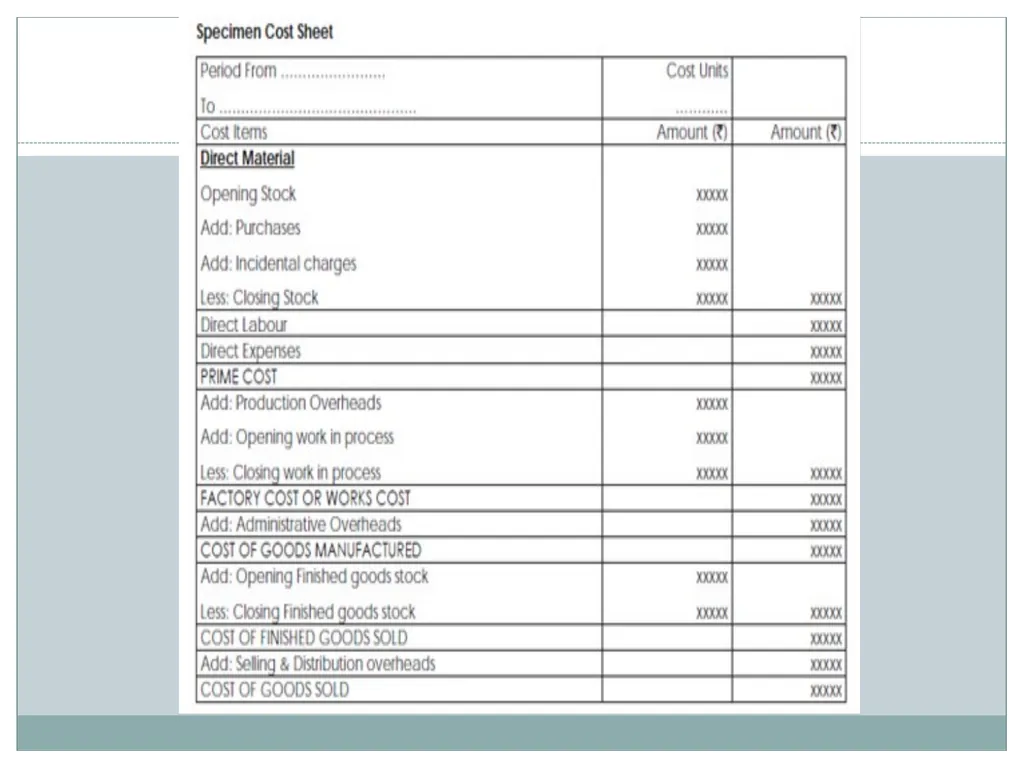
Reports provided by costing department to management (a) Cost Sheets setting out the total cost, analyzed into various elements, giving comparative figures of the previous period and for other plants under the same management.
(b) Consumption of material statement, showing total quantity of materials issued for production, material actually consumed in production and scrapped as waste.
(c) Labour utilization statements providing details about the total number of hours paid for, standard hours for the output, idle time and causes thereof.
d) Overheads incurred compared with budgets, overheads actually charged to production and the difference between the amount actually incurred and the amount so charged.<br>
08
(e) Sales effected compared with budgets, showing the differences between the two because of quality being different from those taken into account while budgeting
(f) Reconciliation of actual profit earned with the estimated or budgeted profit.
(g) The total cost of abnormally spoiled work in the factory and abnormal losses in the store.
(h) The total cost of inventory carried, analyzed into raw materials in chief stores and other stores. The total no of months for which stocks would be sufficient.
(i) Labour turnover, and the cost of recruitment and training of new employees.
(j) Expenses incurred on research & development as compared with the budget.
(k) Any information relating to cost audit, cost accounting records and cost compliance report etc. Reports provided by costing department to management<br>
09
Cost accountant and Cost data collection The Cost Accountant must play a pivotal role in ensuring that the process of cost data collection is very strong. The cost analysis and reporting will not be useful for managerial decision-making if the data collection process is wrong. Presence of a strong and robust Costing System is needed to ensure comprehensive data collection process.<br>
10
COST CONTROL AND COST REDUCTION<br>
11
Cost control is a preventive function
Cost reduction is a corrective function<br>
12
COST REDUCTION Cost reduction should not overlook quality of the product or service offered merely for the sake of competing. Rather it should aim at elimination of wasteful elements in the process of manufacture and maintenance of performance.<br>
13
AREAS OF COST REDUCTION Raw material and inventory costs
Manufacturing costs
Labour costs
Finance costs
Marketing costs
General administrative costs<br>
14
? In what circumstances is a company justified in selling its products at a price below variable cost?<br>
15
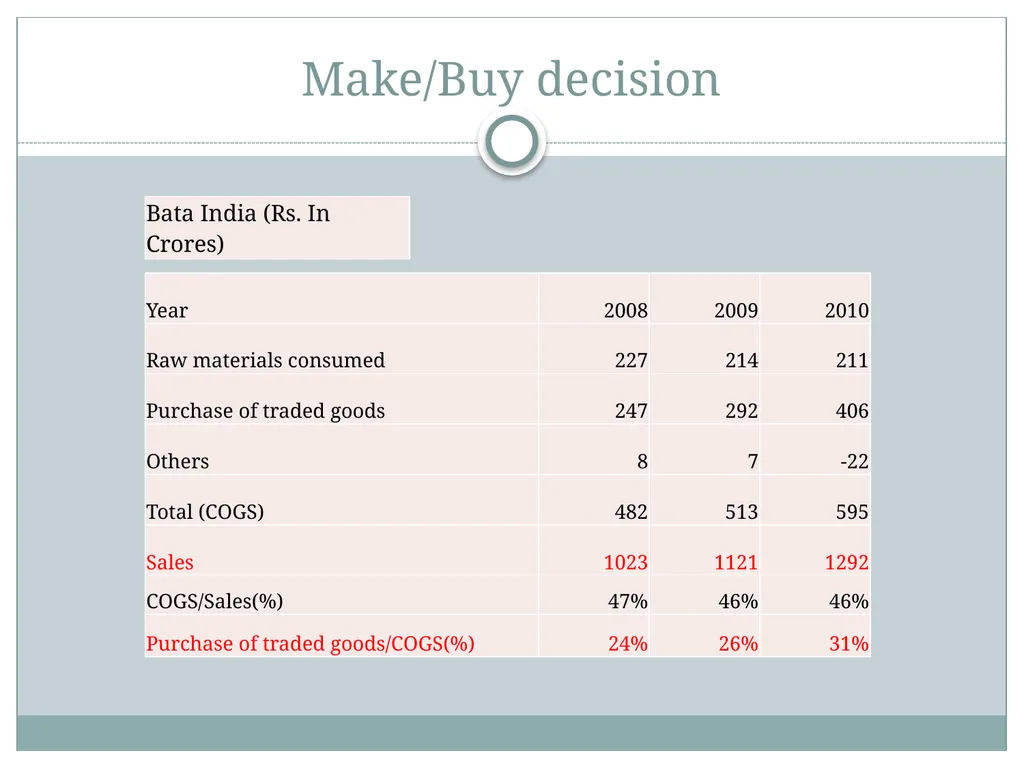
DECISION MAKING a) Make or buy decisions,
b) Exploring foreign markets,
c) Accept an order or not,
d) Determination of selling price in different conditions,
e) Replace one product with some other product,
f) Optimum utilisation of labour or machine hours,
g) Evaluation of alternative choices,
h) Subcontract some of the production processes or not,
i) Expand the business or not,
j) Diversification,
k) Shutdown or continue,<br>
17
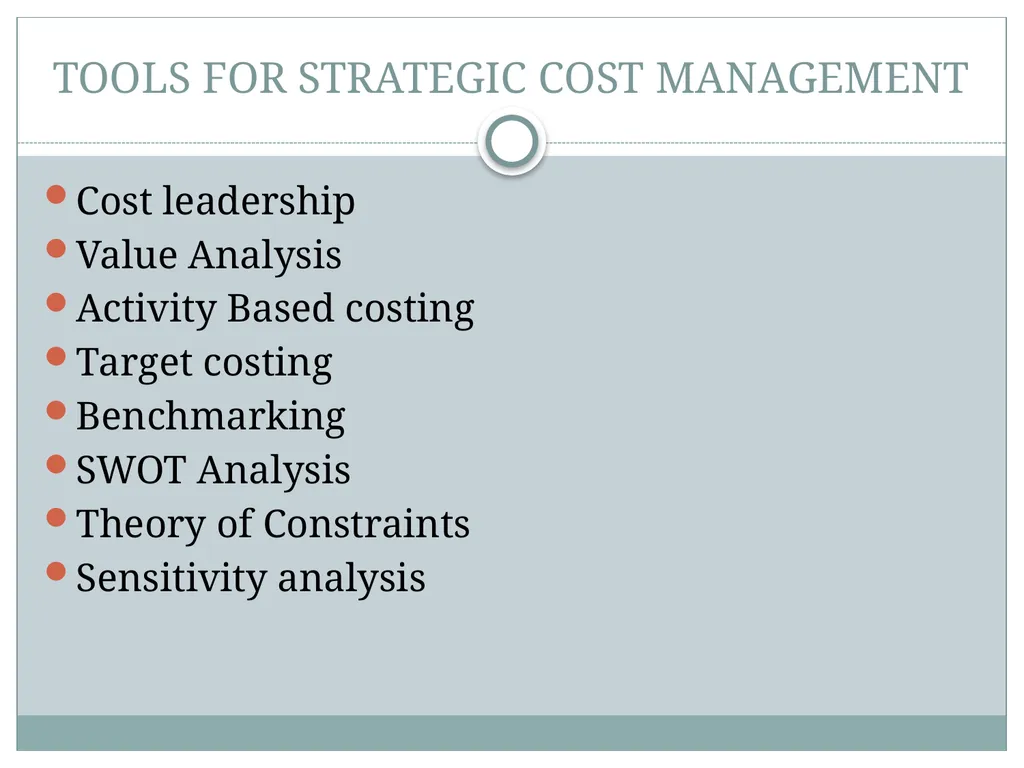
TOOLS FOR STRATEGIC COST MANAGEMENT Cost leadership
Value Analysis
Activity Based costing
Target costing
Benchmarking
SWOT Analysis
Theory of Constraints
Sensitivity analysis<br>
18
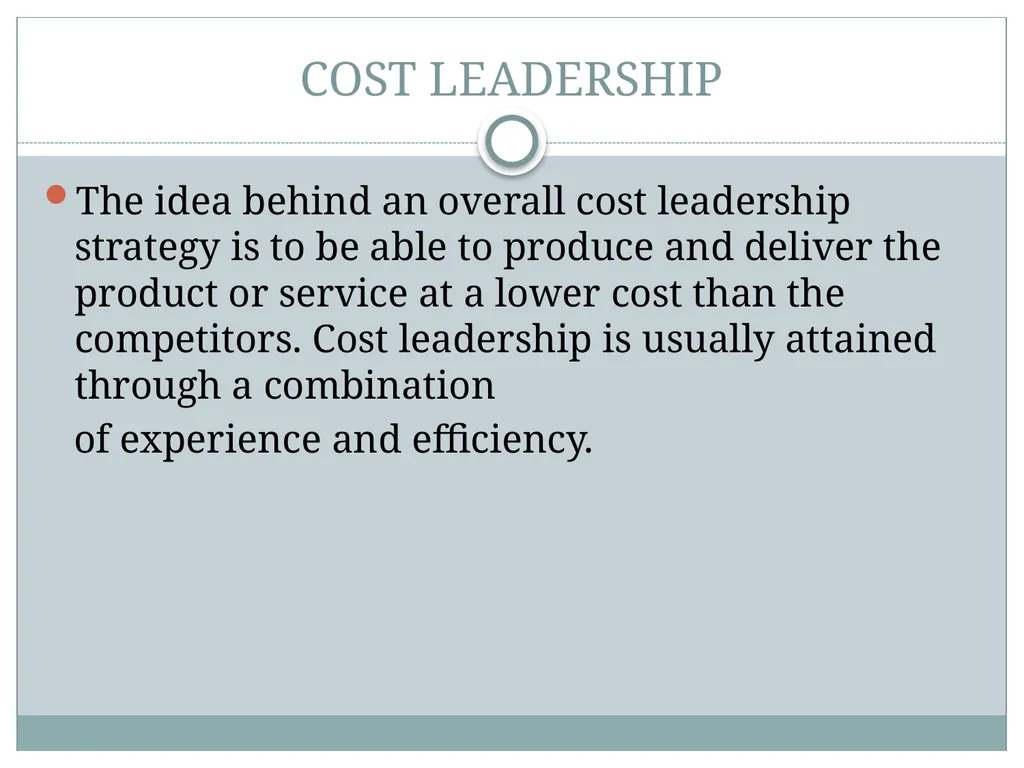
COST LEADERSHIP The idea behind an overall cost leadership strategy is to be able to produce and deliver the product or service at a lower cost than the competitors. Cost leadership is usually attained through a combination
of experience and efficiency.<br>
19
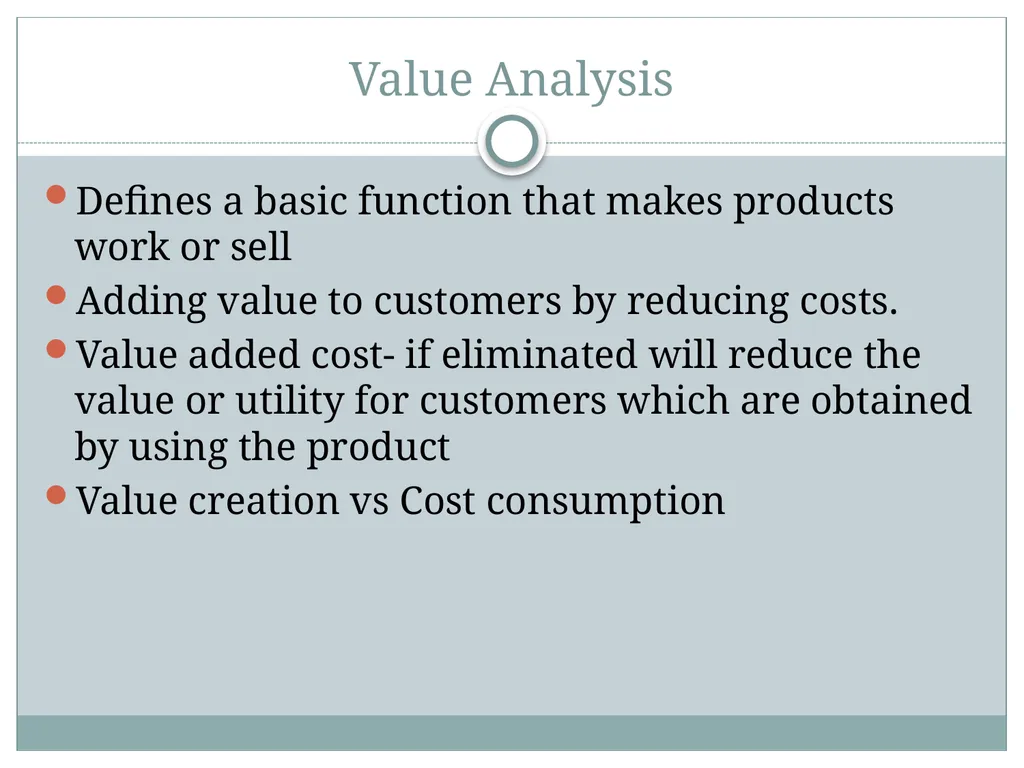
Value Analysis Defines a basic function that makes products work or sell
Adding value to customers by reducing costs.
Value added cost- if eliminated will reduce the value or utility for customers which are obtained by using the product
Value creation vs Cost consumption<br>
20
ACTIVITY BASED COSTING A costing methodology that identifies activities in an organization and assigns the cost of each activity. This model assigns more indirect costs into direct costs.<br>
21
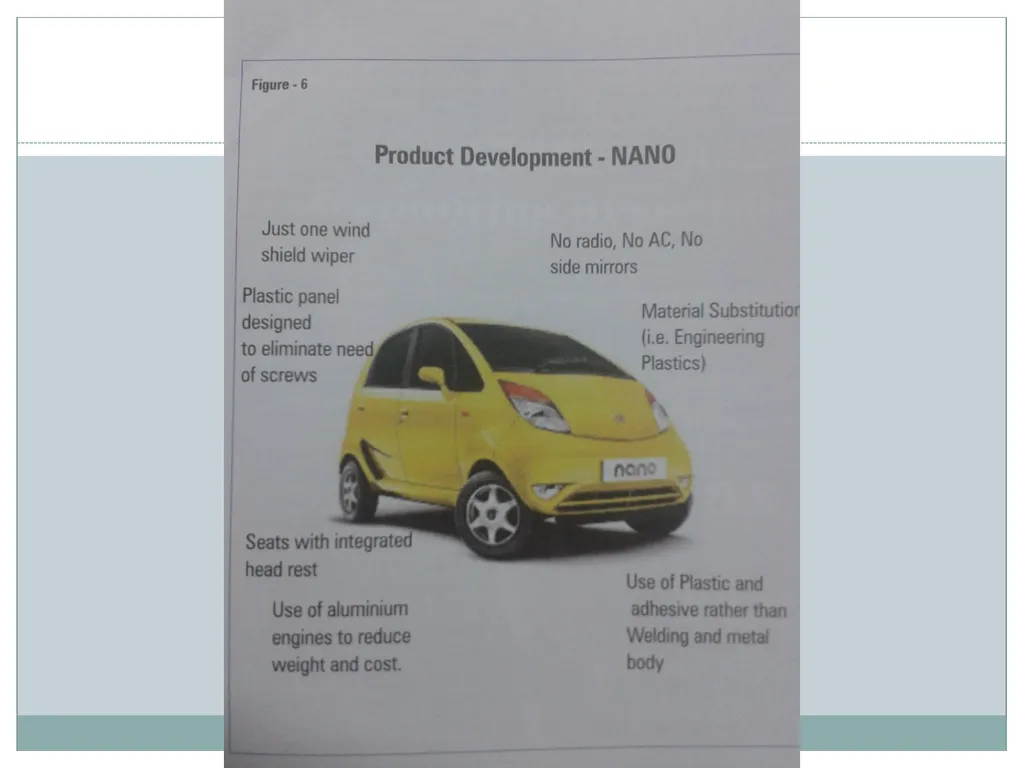
TARGET COSTING Cost that an Organization is expected to incur to achieve desired profit
Target cost = Competitive price – Desired profit<br>
22
BENCHMARKING Identification of best practices and organizational performance compared with competitors<br>
23
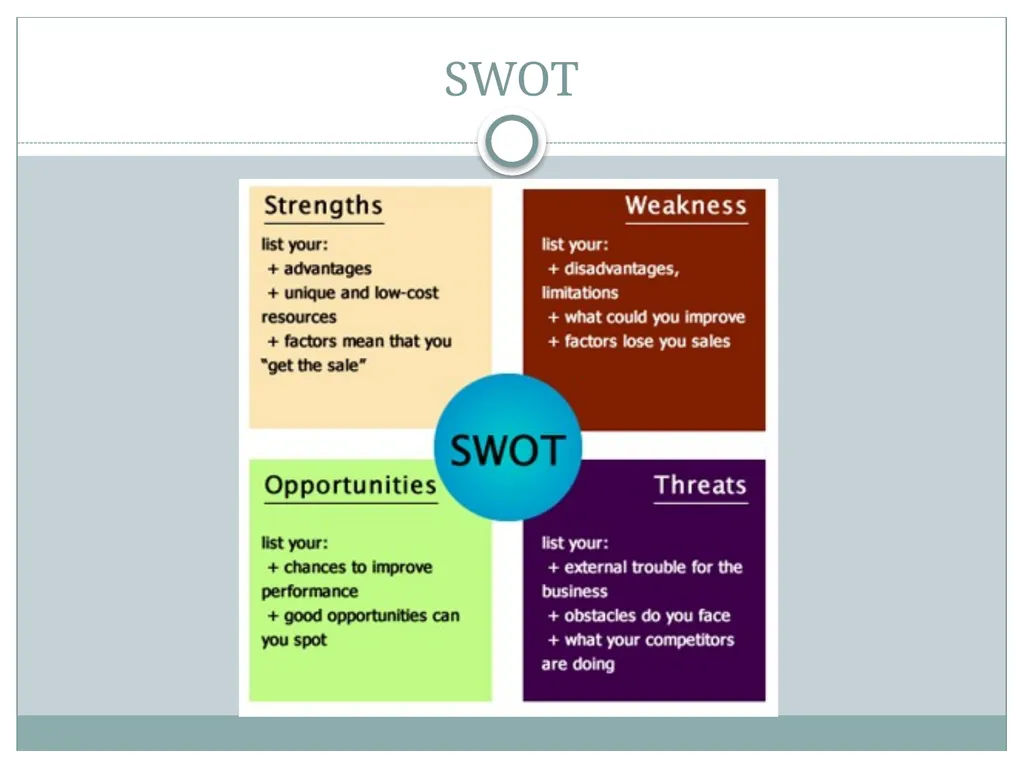
SWOT ANALYSIS Identification of critical success factors<br>
25
THEORY OF CONSTRAINTS TOC is a management paradigm that views any manageable system as being limited in achieving more of its goals by a very small number of constraints.<br>
26
SENSITIVITY ANALYSIS Sensitivity analysis is a method of systematically determining the effect which, different values of decision parameters (i.e. the key variables in a decision model) will have on the decision criteria (i.e. the ultimate expected output).<br>
27
PRICING STRATEGIES 1. Cost-based pricing policies.
2. Demand - based pricing policies.
3. Competition - based pricing policies.
4. Value-based pricing policies.<br>
28
COST BASED PRICING POLICY Cost plus pricing
Target pricing
Marginal cost pricing
Break-even pricing<br>
29
In what circumstances is a company justified in selling its products at a price below variable cost? (i) Where the product is of perishable nature
(ii) Where heavy stocks have been accumulated.
(iii) where it is decided to use the product as loss leader i.e. to boost the sales of other products
(iv) where the product is intended to be popularized by an introductory/temporary offer
(v) where it is intended to be an entry barrier to the would-be competitor<br>