04
GENUS CLOSTRIDIUM�
This genus contains many species of gram-positive,�anaerobic and spore-forming rods.
Some of them are pathogenic for humans and�animals.
They are obligate anaerobes capable of producing endospores.
Clostridium species inhabit soils and the intestinal tract of animals, including humans.
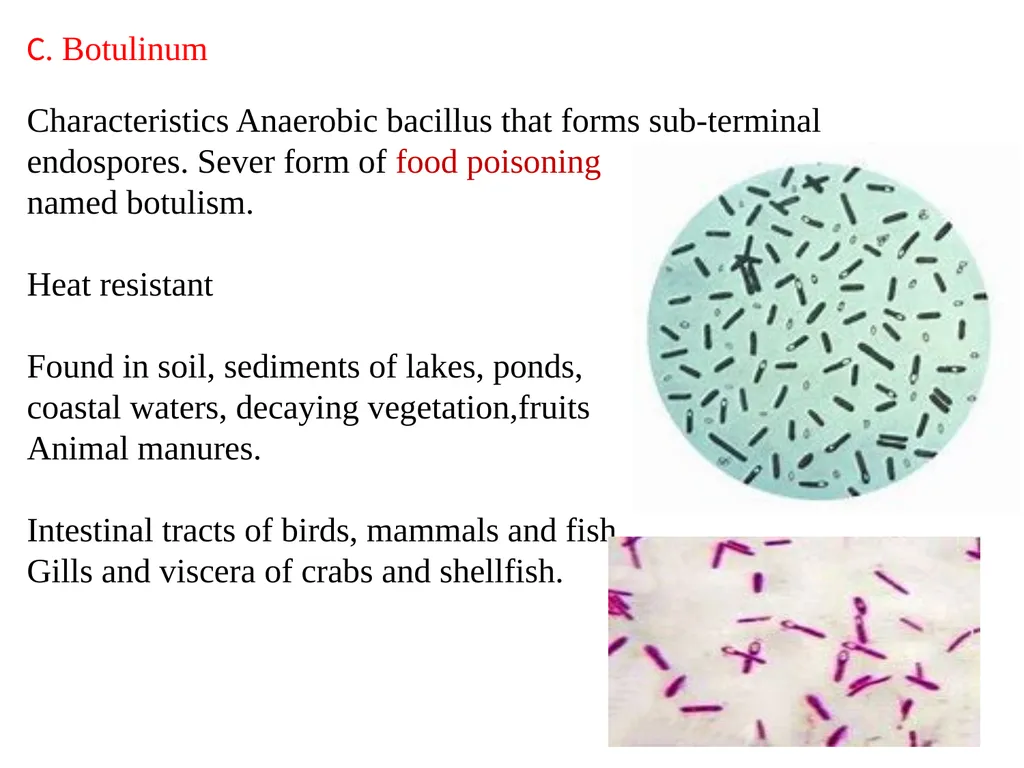
Clostridium endospores have a distinct bowling pin or bottle shape, distinguishing them from other bacterial endospores, which are usually ovoid in shape.<br>
05
Clostridium tetani
General Characteristics
Obligate anaerobes
Heat sensitive
Limited flagella-mediated motility
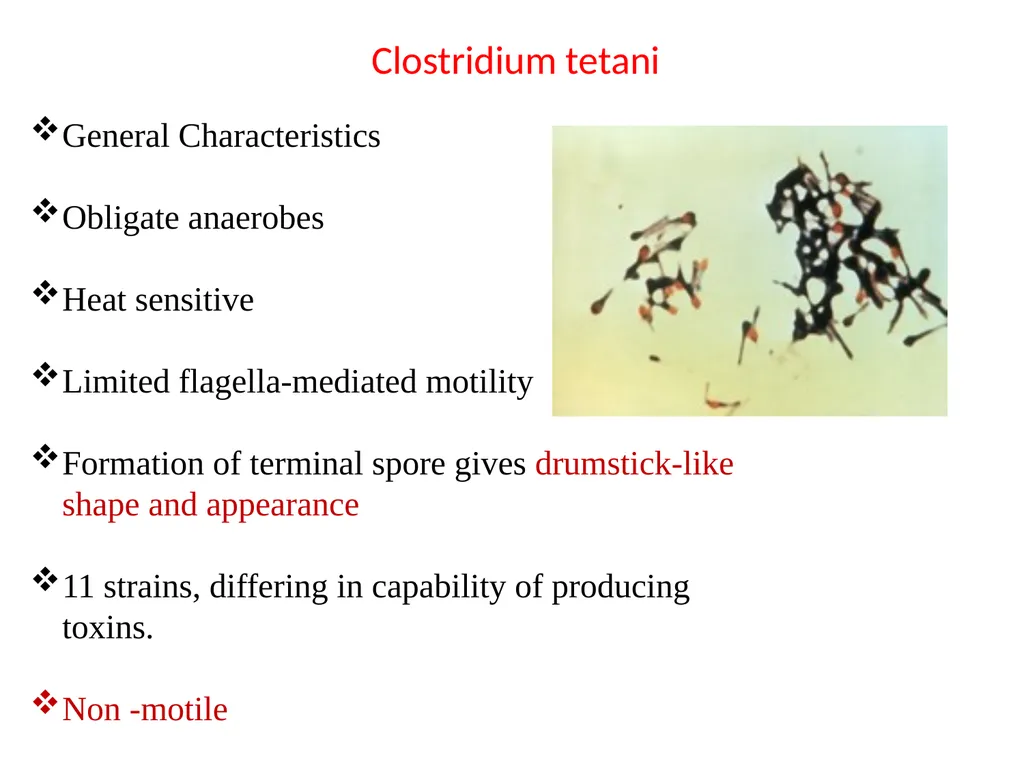
Formation of terminal spore gives drumstick-like�shape and appearance
11 strains, differing in capability of producing�toxins.
Non -motile<br>
06
Habitats
Spores in soil
Parasites in gastrointestinal tracts of animals�(sheep, cattle, dogs, chickens, horses, rats,�guinea pigs)
Endospores prevalent in manure-treated soils
Endospores prevalent on human skin and in�contaminated heroin (source of inorganic-lead intoxication).
I.P.-5-6 days or several months.<br>
07
Clostridia tetani
Gram +ve rods, delicate, may appear filamentous after 48 hrs incubation at 37 0C.On agar colonies are irregular and in gelatine stabs typical FIR TREE like.
Round terminal spores – drumstick appearance.
On horse BA they are
-hemolytic which tends to change into
-hemolysis after prolonged incubation
Clostridia tetani
Hemolysis is due to tetanolysin<br>
08
Flagellated and non-capsulated
Clostridia tetani
Strictly anaerobic
Swarming growth on BA; swarming prevented by firm agar (2-3%) or tetanus antitoxin.
Tiny colonies with rhizoids (medusa head appearance).
No effect on egg yolk.
Grows in cooked meat but no effect on the meat.
Can be identified by gas chromatography.
Isolation difficult in the lab.<br>
09
Clostridia tetani
Antigenic structure
serotypes on the basis of specific flagellar antigens
All share a common O antigen.
Toxins Tetanospasmin (exotoxin), polypeptide, MW 160,000, released in lysis; production under control of a plasmid gene.
Clostridia tetani
Neurotoxin, inhibits release of acetylcholine, thus interfering with neuromuscular transmission.<br>
10
Inhibits post synaptic spinal neurons by blocking the release of an inhibitory mediator = generalized muscular spasms, hypereflexia and seizures.
toxoid Tetanolysis = hemolysin
Antiseptic resistant
Chemical agent resistant (ie phenol)<br>
11
Mechanism of Pathogenicity
Production of two exotoxins
Tetanolysin function not determined
Tetanospasim Neurotoxin<br>
12
Tetanospasmin
Targets
Several sites within the CNS, including
spinal cord and brain.
PNS Peripheral nerve terminals
ANS.
SNS (prolonged stimulation leads
to hypertension).
Heat labile antigenic protein which is readily neutralized antitoxin and destroyed by intestinal proteases.
Horse is very susceptible to tetanospasmin.<br>
13
Symptoms of tetanus
Sudden difficulties with mastication due to�rigidity of masticatory muscles.
Elevated temperature.
The patient cannot open his mouth, this effect is�named as trismus.
Risus sardonicus is another sign in which trismus�is combined with facial spasm.<br>
14
In severe cases, spasms of the back muscles�produce the opisthotonus.
The patients are fully conscious, and pain may be very intensive.�
Stiffness of limbs, head ,neck and tail.
Nostrils become dilated, ears earect, nictitating membrane is protruded mouth cannot be opened and hence called as locked jaw.
Diagnosis- Take wound material Meat broth meat broth is heated at 65digree centigrade for 30 minute (inoculated at 37digree centigrade for 2-3 days) on blood agar.
And incubated anaerobically. Confirmation may be arrived at by inoculating Mice s/c or i/m prophylaxis.<br>
15
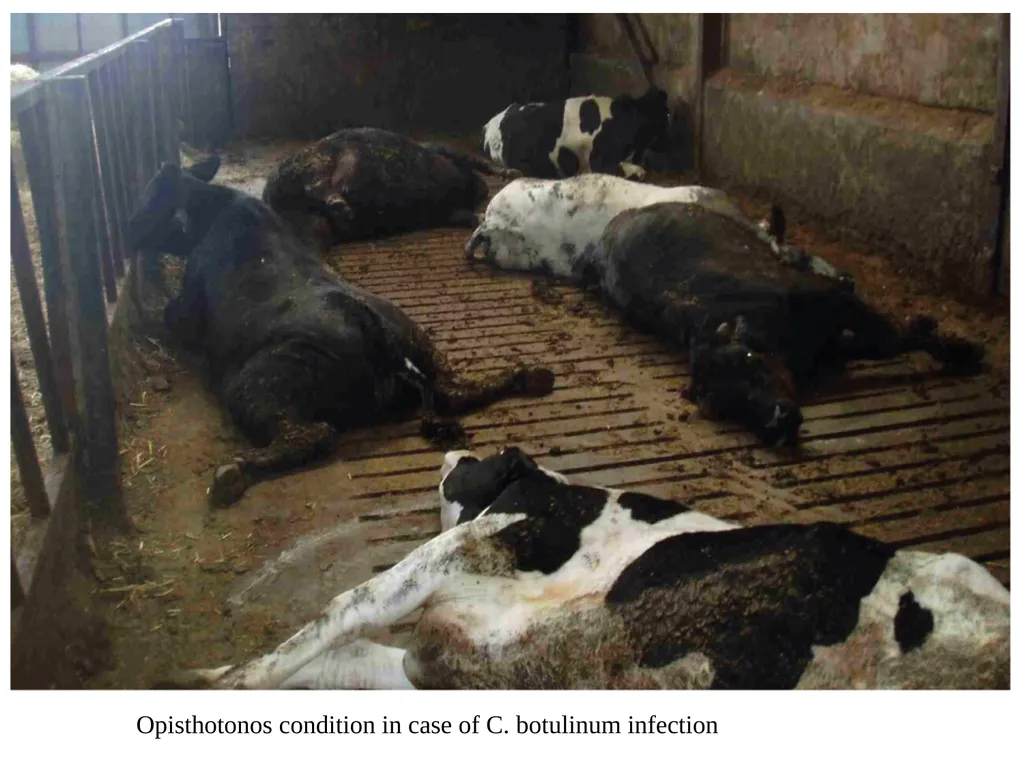
Opisthotonos condition in case of C. botulinum infection<br>
16
C. Botulinum
�Characteristics Anaerobic bacillus that forms sub-terminal�endospores. Sever form of food poisoning
named botulism.
Heat resistant
Found in soil, sediments of lakes, ponds,�coastal waters, decaying vegetation,fruits
Animal manures.
Intestinal tracts of birds, mammals and fish
Gills and viscera of crabs and shellfish.<br>
17
Neutral or low acid environments.
Usually seen in canned foods.
Seven toxigenic subtypes of the organism
A, B, C, D, E, F and G.
Differ by pre-synaptic proteins bound at�exocytosis stage.
Media- on solid media – large, semi-transparent with irregular edges, on blood agar haemolysis around the colonies.<br>
18
Symptoms
Begin 8-36 hours after ingestion of contaminated food.
Paralysis of muscles in the region of mouth, animal being unable to eat, tongue protruding from the mouth.
Gestroenteritis, vomiting, thirst etc.
Length 2 hours to 14 days after entering�circulation
Preliminary symptoms weakness, dizziness,�dryness mouth, nausea, vomiting
After Neurological disturbance blurred vision,�inability to swallow, difficulty in speech,�descending weakness of skeletal muscles and�respiratory paralysis.<br>
19
Infant infection, establishes itself in the�bowels of infants, colonizes and produces the�toxin common source is honey.
Unidentified source is unknown, usually from�intestinal colonization with in vivo production�of toxin usually from surgeries.
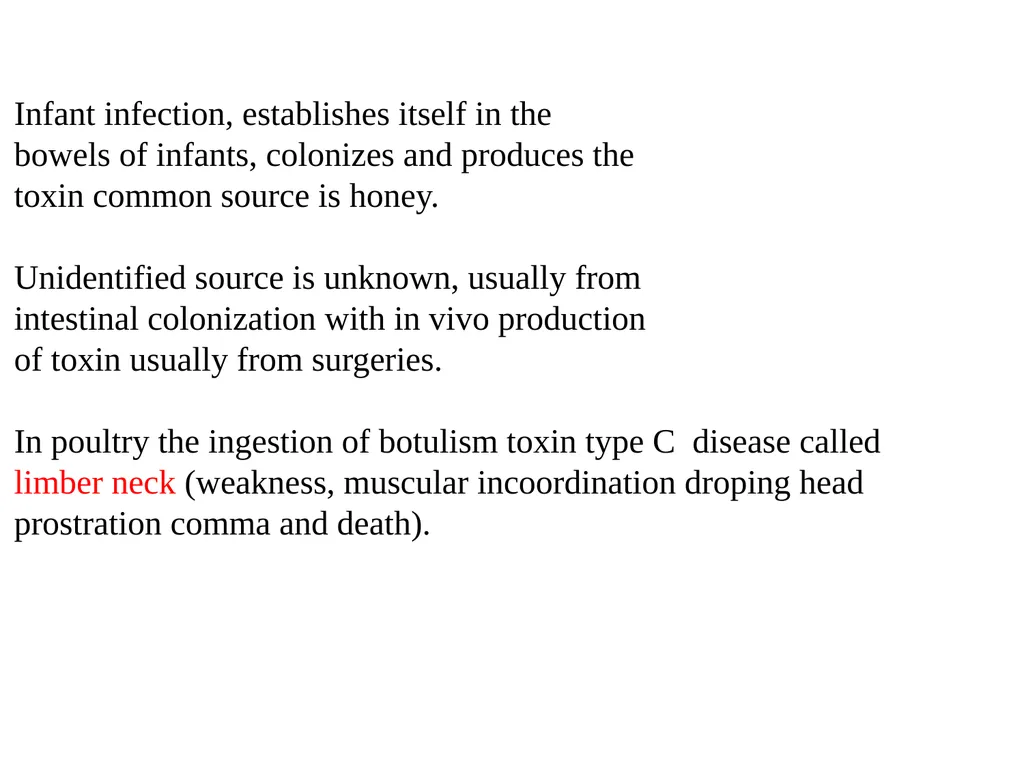
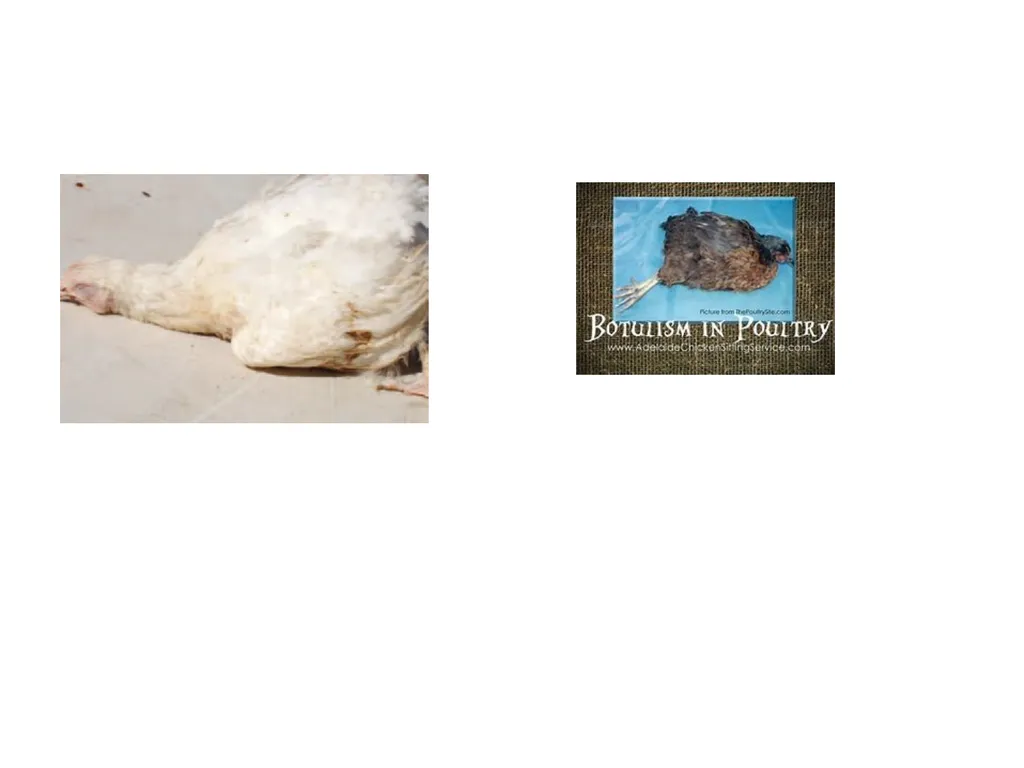
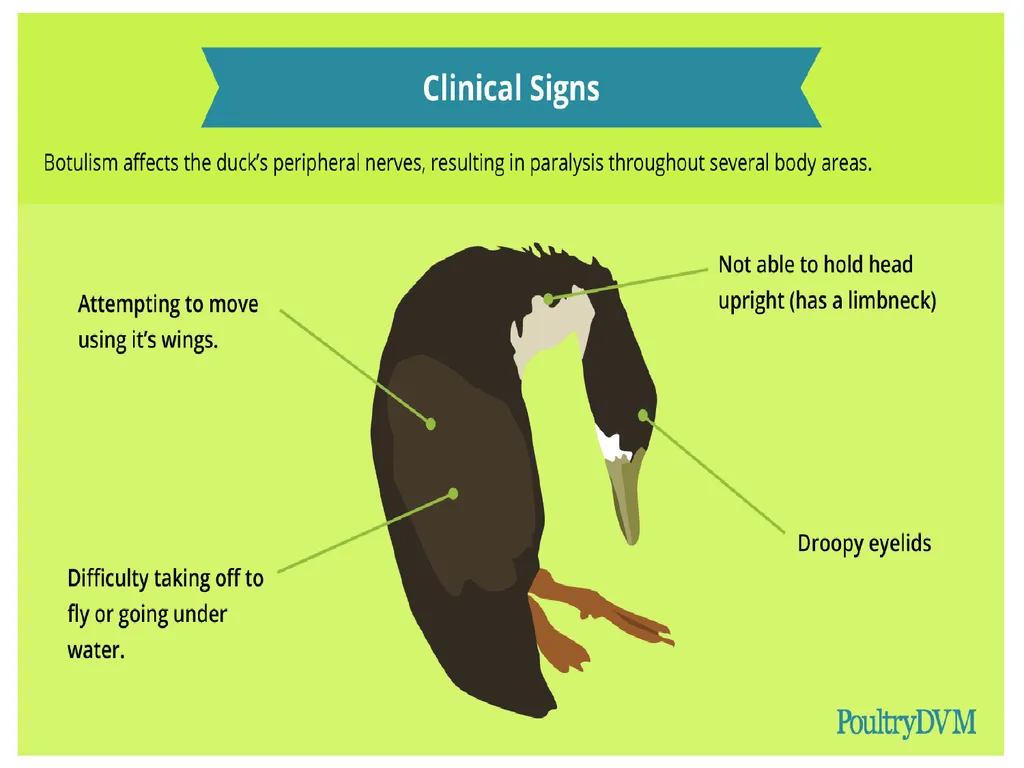
In poultry the ingestion of botulism toxin type C disease called limber neck (weakness, muscular incoordination droping head prostration comma and death).<br>