David E. Kandzari, Adam C. Salisbury, and J. Aaron Grantham on behalf of the OPTIMUM Investigators Outcomes of Percutaneous RevascularizaTIon for Management of SUrgically Ineligible Patients with Multivessel or Left Main Coronary Artery
"David E. Kandzari, Adam C. Salisbury, and J. Aaron" is the property of its rightful owner. Permission is granted to
download and print the materials on this website for personal, non-commercial use only, and to display it
on your personal computer provided you do not modify the materials and that you retain all copyright
notices contained in the materials. By downloading content from our website, you accept the terms of this
agreement.
Presentation Transcript
01
David E. Kandzari, Adam C. Salisbury, and J. Aaron Grantham on behalf of the OPTIMUM Investigators Outcomes of Percutaneous RevascularizaTIon for Management of SUrgically Ineligible Patients with Multivessel or Left Main Coronary Artery Disease: Primary Results from the OPTIMUM Registry<br>
02
Within the past 12 months, I or my spouse/partner have had a financial interest/arrangement or affiliation with the organization(s) listed below
Affiliation/Financial Relationship Company
Grant/Research Support (Institutional) Abbott Vascular, Boston Scientific, Medtronic CardioVascular, Biotronik, Medinol, Orbus Neich, Teleflex
Consulting Fees/Honoraria Medtronic CardioVascular, CSI, Magenta
Major Stock Shareholder/Equity BioStar Ventures (none related to ASI)
Royalty Income None
Ownership/Founder None
Intellectual Property Rights None
Other Financial Benefit None Disclosure<br>
03
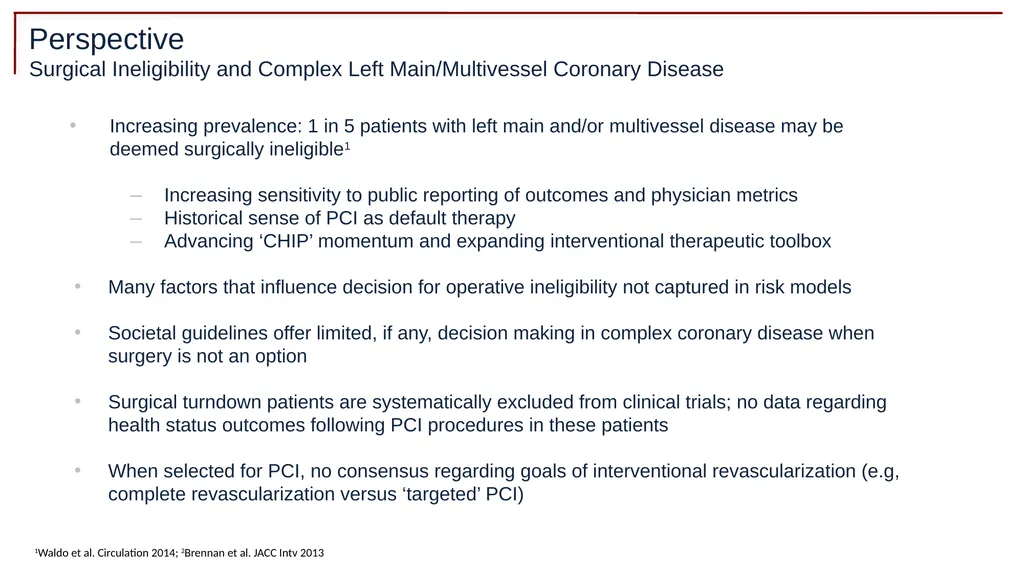
Perspective Surgical Ineligibility and Complex Left Main/Multivessel Coronary Disease Increasing prevalence: 1 in 5 patients with left main and/or multivessel disease may be deemed surgically ineligible1
Increasing sensitivity to public reporting of outcomes and physician metrics
Historical sense of PCI as default therapy
Advancing ‘CHIP’ momentum and expanding interventional therapeutic toolbox
Many factors that influence decision for operative ineligibility not captured in risk models
Societal guidelines offer limited, if any, decision making in complex coronary disease when surgery is not an option
Surgical turndown patients are systematically excluded from clinical trials; no data regarding health status outcomes following PCI procedures in these patients
When selected for PCI, no consensus regarding goals of interventional revascularization (e.g, complete revascularization versus ‘targeted’ PCI) 1Waldo et al. Circulation 2014; 2Brennan et al. JACC Intv 2013<br>
04
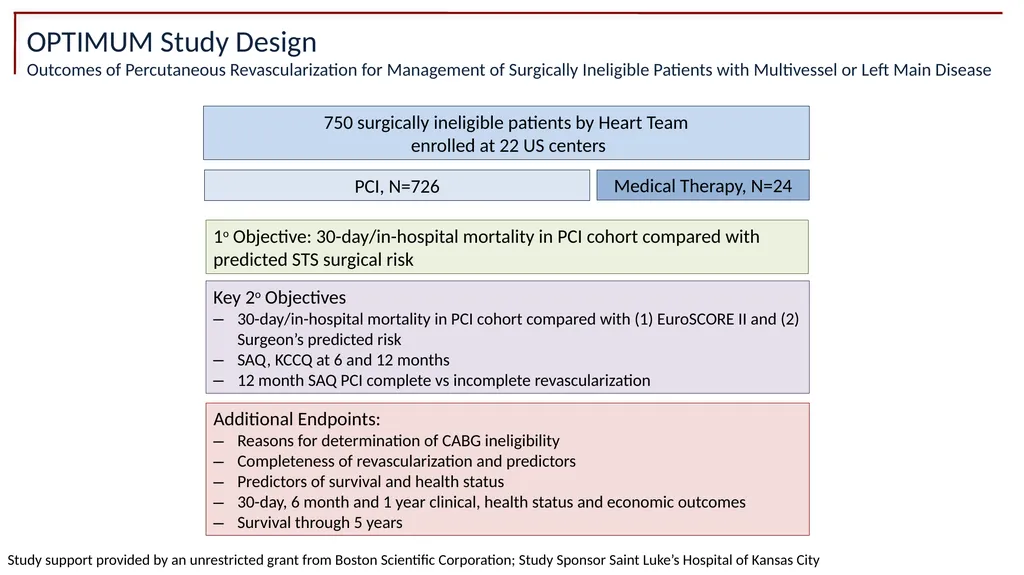
OPTIMUM Study Design Outcomes of Percutaneous Revascularization for Management of Surgically Ineligible Patients with Multivessel or Left Main Disease 750 surgically ineligible patients by Heart Team
enrolled at 22 US centers PCI, N=726 Medical Therapy, N=24 1o Objective: 30-day/in-hospital mortality in PCI cohort compared with predicted STS surgical risk Key 2o Objectives
30-day/in-hospital mortality in PCI cohort compared with (1) EuroSCORE II and (2) Surgeon’s predicted risk
SAQ, KCCQ at 6 and 12 months
12 month SAQ PCI complete vs incomplete revascularization Additional Endpoints:
Reasons for determination of CABG ineligibility
Completeness of revascularization and predictors
Predictors of survival and health status
30-day, 6 month and 1 year clinical, health status and economic outcomes
Survival through 5 years Study support provided by an unrestricted grant from Boston Scientific Corporation; Study Sponsor Saint Luke’s Hospital of Kansas City<br>
05
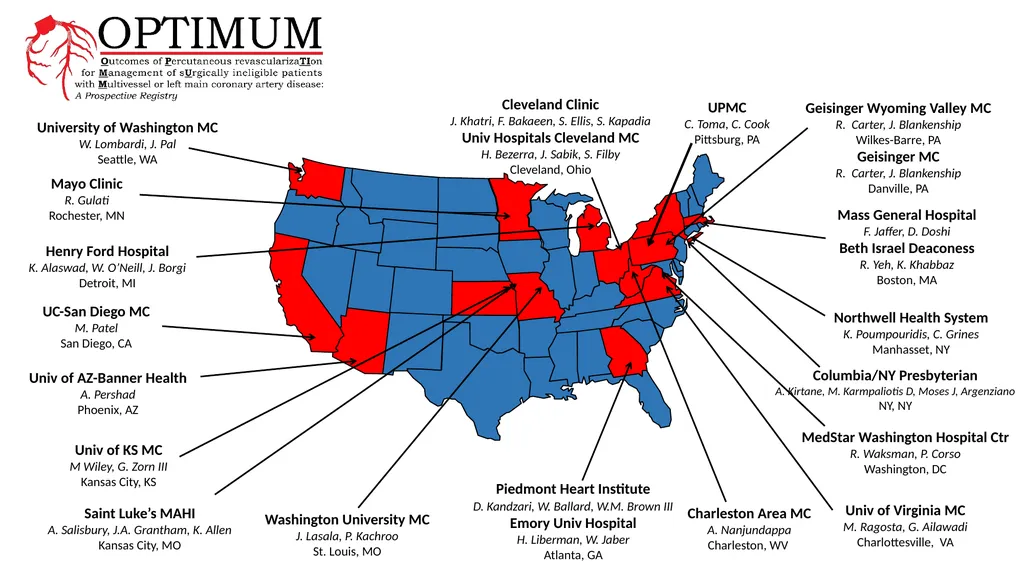
Saint Luke’s MAHI
A. Salisbury, J.A. Grantham, K. Allen
Kansas City, MO Columbia/NY Presbyterian
A. Kirtane, M. Karmpaliotis D, Moses J, Argenziano
NY, NY MedStar Washington Hospital Ctr
R. Waksman, P. Corso
Washington, DC Univ of KS MC
M Wiley, G. Zorn III
Kansas City, KS Mayo Clinic
R. Gulati
Rochester, MN University of Washington MC
W. Lombardi, J. Pal
Seattle, WA Univ of Virginia MC
M. Ragosta, G. Ailawadi
Charlottesville, VA Piedmont Heart Institute
D. Kandzari, W. Ballard, W.M. Brown III
Emory Univ Hospital
H. Liberman, W. Jaber
Atlanta, GA UPMC
C. Toma, C. Cook
Pittsburg, PA Washington University MC
J. Lasala, P. Kachroo
St. Louis, MO Geisinger Wyoming Valley MC
R. Carter, J. Blankenship
Wilkes-Barre, PA
Geisinger MC
R. Carter, J. Blankenship
Danville, PA Mass General Hospital
F. Jaffer, D. Doshi
Beth Israel Deaconess
R. Yeh, K. Khabbaz
Boston, MA Cleveland Clinic J. Khatri, F. Bakaeen, S. Ellis, S. Kapadia
Univ Hospitals Cleveland MC
H. Bezerra, J. Sabik, S. Filby
Cleveland, Ohio Charleston Area MC
A. Nanjundappa
Charleston, WV Univ of AZ-Banner Health
A. Pershad
Phoenix, AZ UC-San Diego MC
M. Patel
San Diego, CA Northwell Health System
K. Poumpouridis, C. Grines
Manhasset, NY Henry Ford Hospital
K. Alaswad, W. O’Neill, J. Borgi
Detroit, MI<br>
06
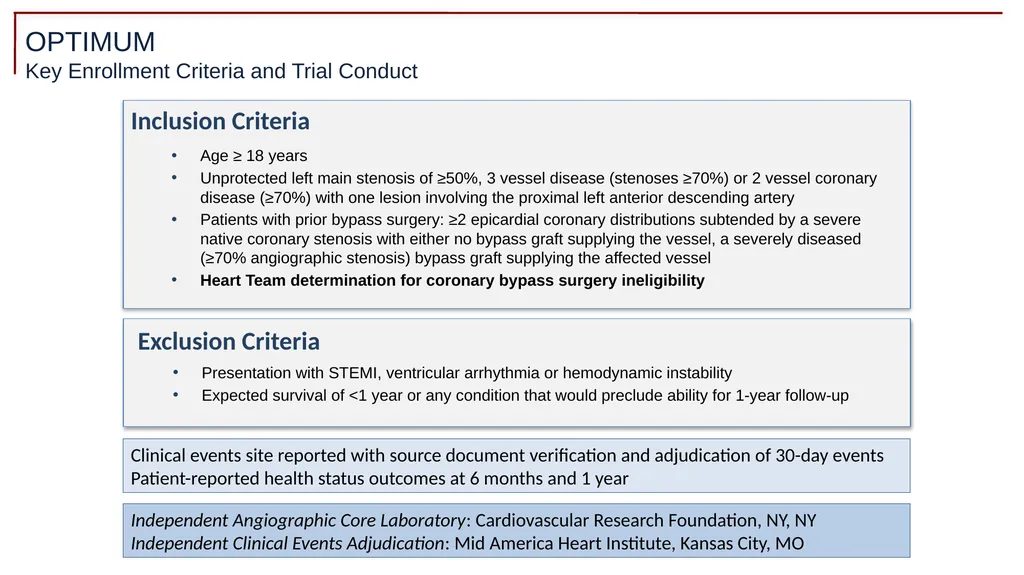
OPTIMUM Key Enrollment Criteria and Trial Conduct Inclusion Criteria Age ≥ 18 years
Unprotected left main stenosis of ≥50%, 3 vessel disease (stenoses ≥70%) or 2 vessel coronary disease (≥70%) with one lesion involving the proximal left anterior descending artery
Patients with prior bypass surgery: ≥2 epicardial coronary distributions subtended by a severe native coronary stenosis with either no bypass graft supplying the vessel, a severely diseased (≥70% angiographic stenosis) bypass graft supplying the affected vessel
Heart Team determination for coronary bypass surgery ineligibility Exclusion Criteria Presentation with STEMI, ventricular arrhythmia or hemodynamic instability
Expected survival of <1 year or any condition that would preclude ability for 1-year follow-up Independent Angiographic Core Laboratory: Cardiovascular Research Foundation, NY, NY
Independent Clinical Events Adjudication: Mid America Heart Institute, Kansas City, MO Clinical events site reported with source document verification and adjudication of 30-day events
Patient-reported health status outcomes at 6 months and 1 year<br>
07
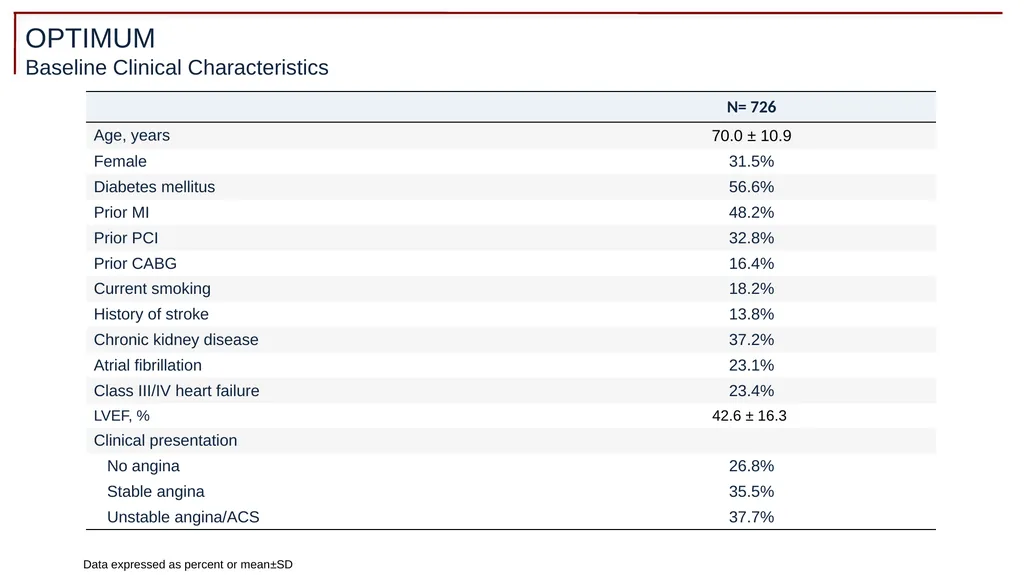
OPTIMUM Baseline Clinical Characteristics Data expressed as percent or mean±SD<br>
08
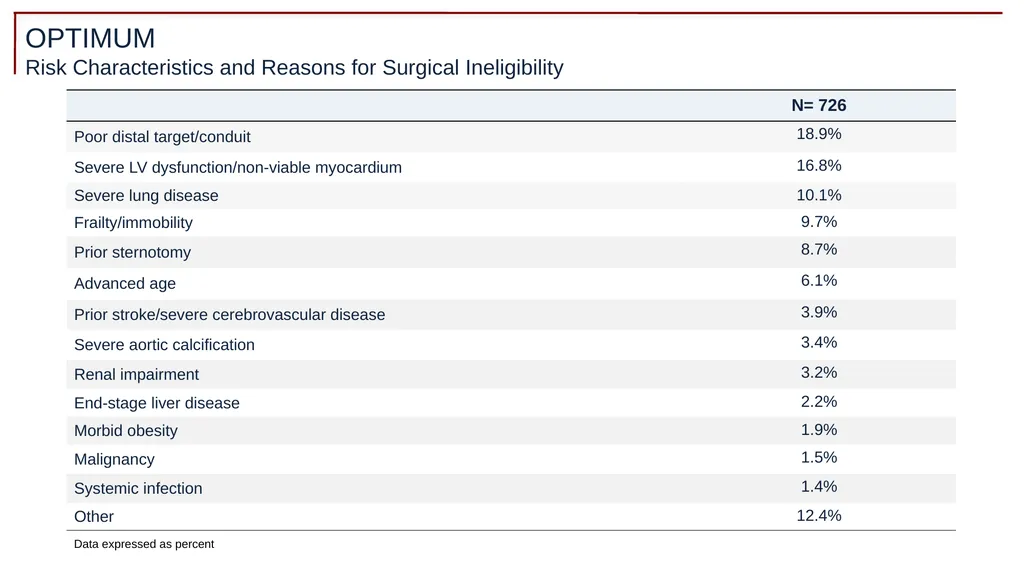
OPTIMUM Risk Characteristics and Reasons for Surgical Ineligibility Data expressed as percent<br>
09
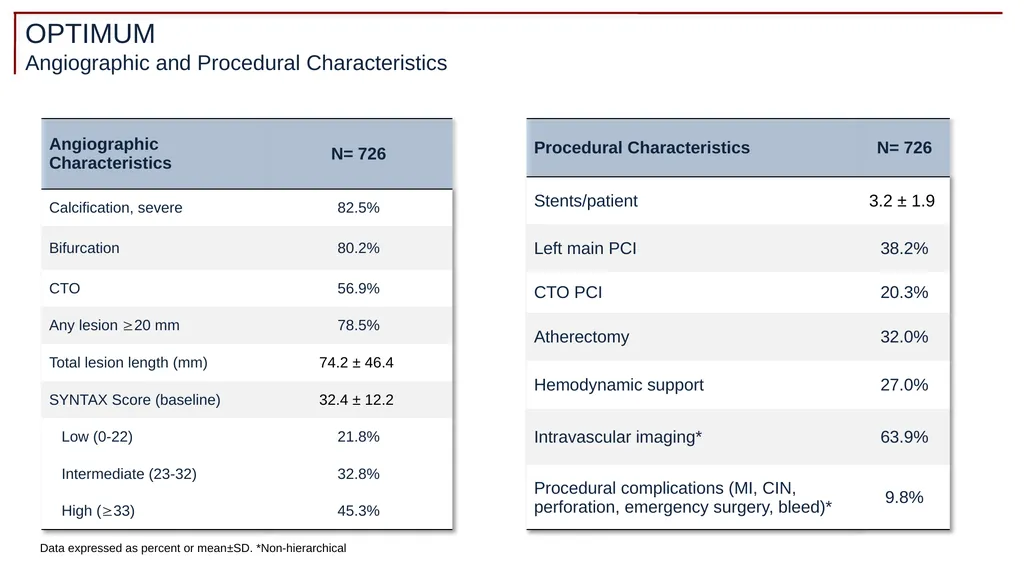
OPTIMUM Angiographic and Procedural Characteristics Data expressed as percent or mean±SD. *Non-hierarchical<br>
10
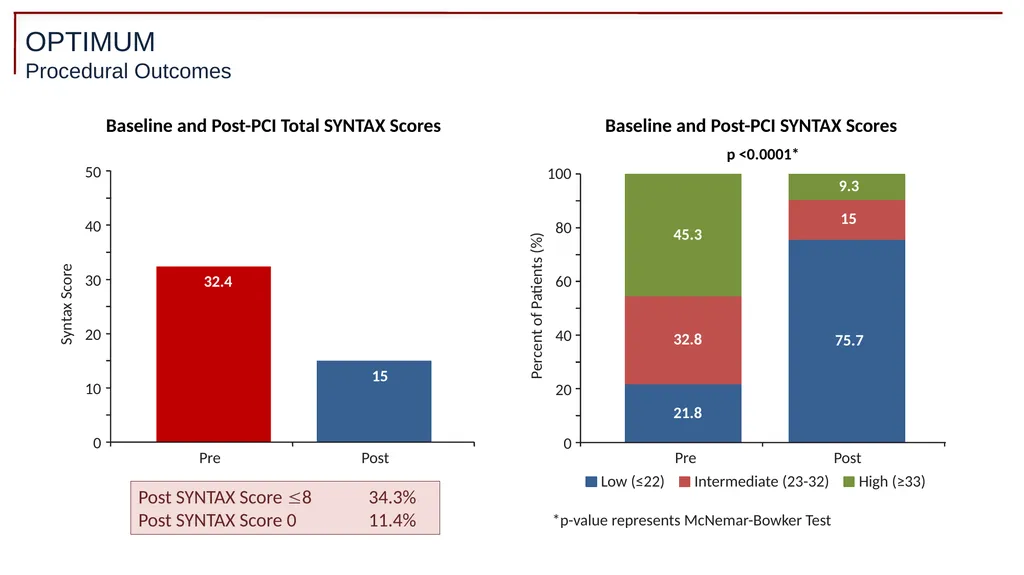
OPTIMUM Procedural Outcomes p <0.0001* *p-value represents McNemar-Bowker Test Post SYNTAX Score 8 34.3%
Post SYNTAX Score 0 11.4% Baseline and Post-PCI Total SYNTAX Scores Baseline and Post-PCI SYNTAX Scores<br>
11
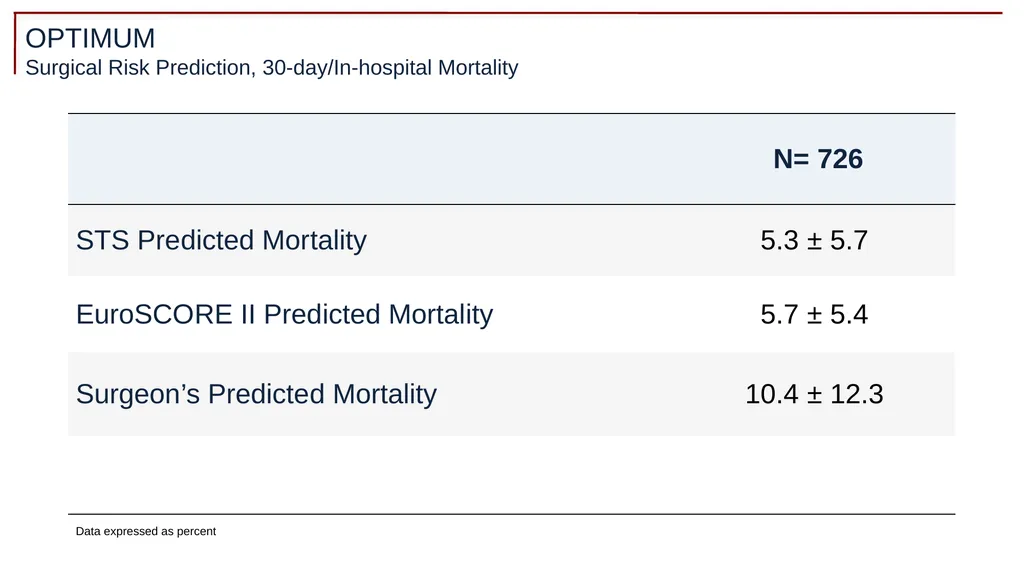
OPTIMUM Surgical Risk Prediction, 30-day/In-hospital Mortality Data expressed as percent<br>
12
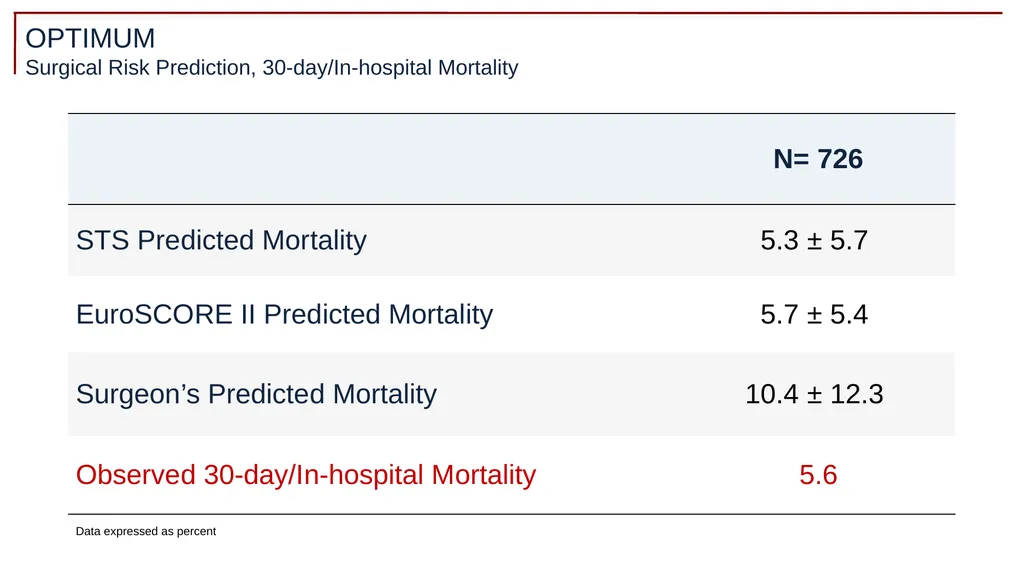
OPTIMUM Surgical Risk Prediction, 30-day/In-hospital Mortality Data expressed as percent<br>
13
OPTIMUM 30-day/In-hospital Mortality and Observed/Expected Estimates 100% 30-day follow-up regarding survival status; confidence intervals calculated using bootstrap samples<br>
14
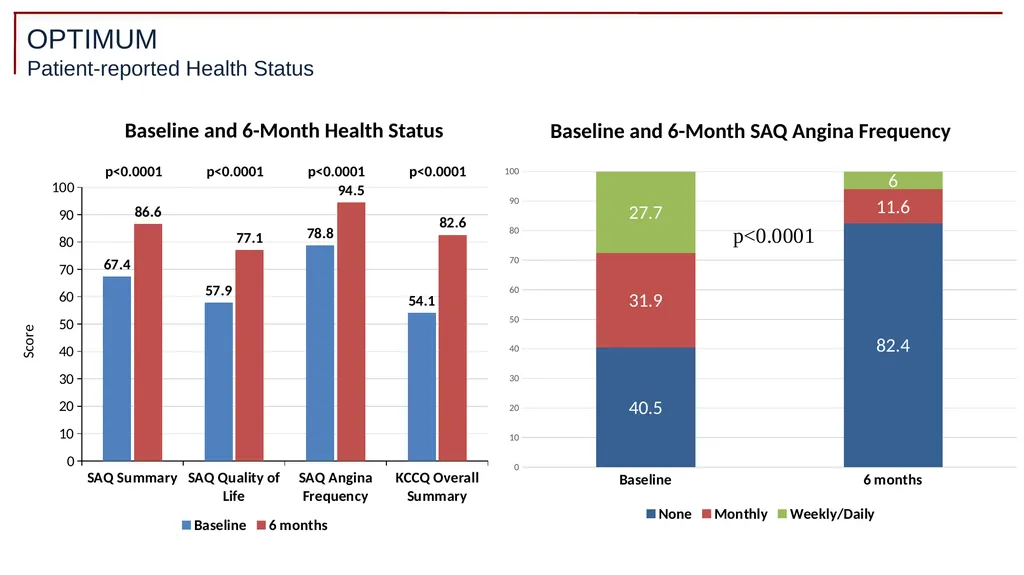
OPTIMUM Patient-reported Health Status p<0.0001 p<0.0001 p<0.0001 p<0.0001 Baseline and 6-Month Health Status Baseline and 6-Month SAQ Angina Frequency<br>
15
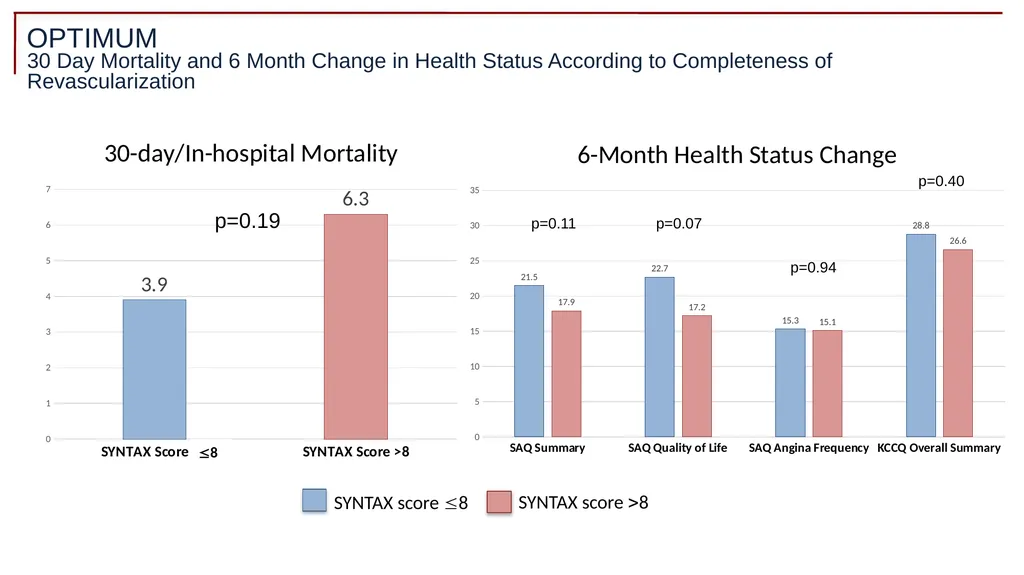
OPTIMUM 30 Day Mortality and 6 Month Change in Health Status According to Completeness of Revascularization p=0.19 p=0.11 p=0.07 p=0.94 p=0.40 SYNTAX score 8 SYNTAX score 8 8<br>
16
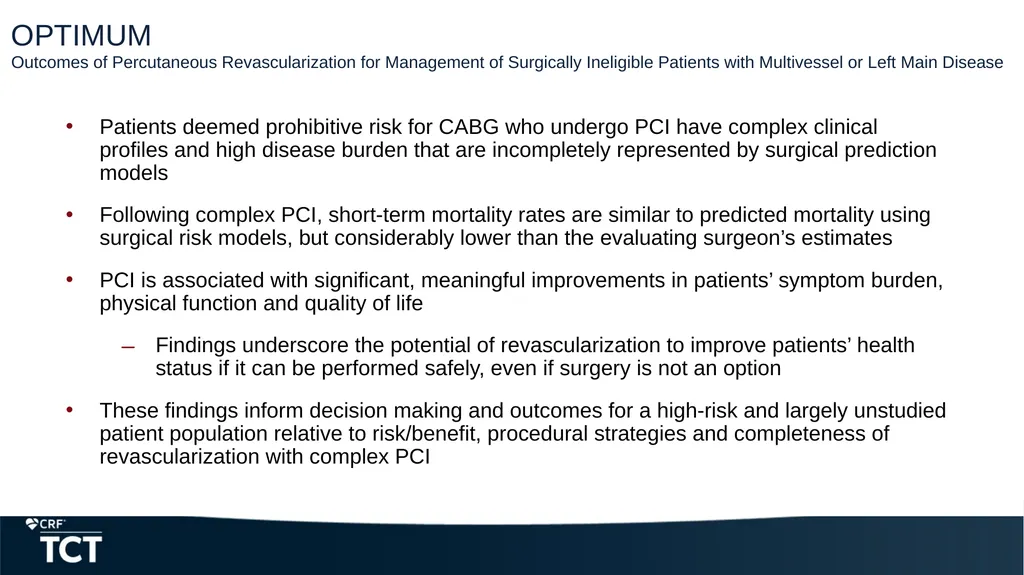
Patients deemed prohibitive risk for CABG who undergo PCI have complex clinical profiles and high disease burden that are incompletely represented by surgical prediction models
Following complex PCI, short-term mortality rates are similar to predicted mortality using surgical risk models, but considerably lower than the evaluating surgeon’s estimates
PCI is associated with significant, meaningful improvements in patients’ symptom burden, physical function and quality of life
Findings underscore the potential of revascularization to improve patients’ health status if it can be performed safely, even if surgery is not an option
These findings inform decision making and outcomes for a high-risk and largely unstudied patient population relative to risk/benefit, procedural strategies and completeness of revascularization with complex PCI OPTIMUM Outcomes of Percutaneous Revascularization for Management of Surgically Ineligible Patients with Multivessel or Left Main Disease<br>
17
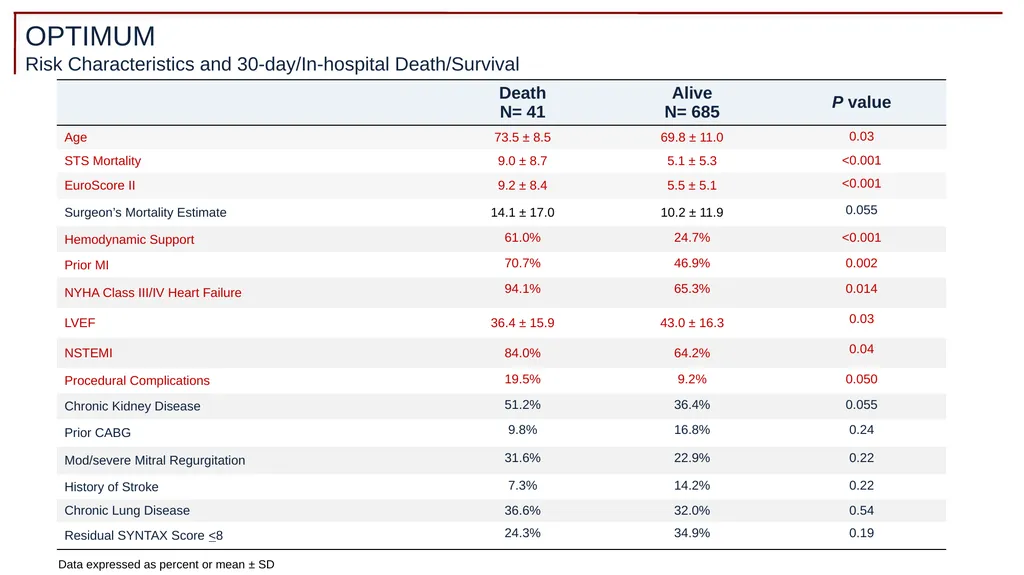
OPTIMUM Risk Characteristics and 30-day/In-hospital Death/Survival Data expressed as percent or mean ± SD<br>