
DEFINITION, FUNCTION AND STRUCTURE OF PRODUCTION
Description: DEFINITION, FUNCTION AND STRUCTURE OF PRODUCTION MANAGEMENT What is management? Management is a process of planning, organizing, leading, motivating and controlling the human, financial, physical resources, and information of an
Related Topics
Download Presentation
"DEFINITION, FUNCTION AND STRUCTURE OF PRODUCTION" is the property of its rightful owner. Permission is granted to download and print the materials on this website for personal, non-commercial use only, and to display it on your personal computer provided you do not modify the materials and that you retain all copyright notices contained in the materials. By downloading content from our website, you accept the terms of this agreement.
Presentation Transcript
slide1. DEFINITION, FUNCTION AND STRUCTURE OF PRODUCTION MANAGEMENT<br>
slide2. What is management? Management is a process of planning, organizing, leading, motivating and controlling the human, financial, physical resources, and information of an organization to reach its goals in an efficient and effective manner.
It is the act of getting people together to accomplish desired goals and objectives using available resources efficiently and effectively.<br>
slide3. Functions of Management Planning
Organizing
Staffing
Directing
Coordinating and
Controlling<br>
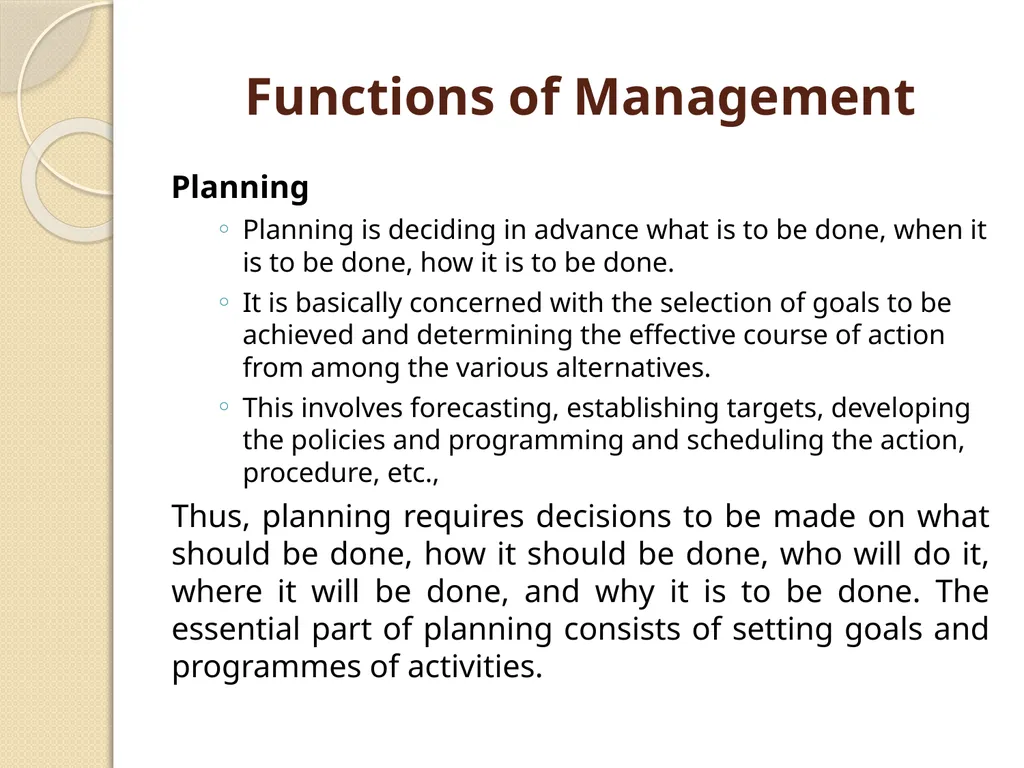
slide4. Functions of Management Planning
Planning is deciding in advance what is to be done, when it is to be done, how it is to be done.
It is basically concerned with the selection of goals to be achieved and determining the effective course of action from among the various alternatives.
This involves forecasting, establishing targets, developing the policies and programming and scheduling the action, procedure, etc.,
Thus, planning requires decisions to be made on what should be done, how it should be done, who will do it, where it will be done, and why it is to be done. The essential part of planning consists of setting goals and programmes of activities.<br>
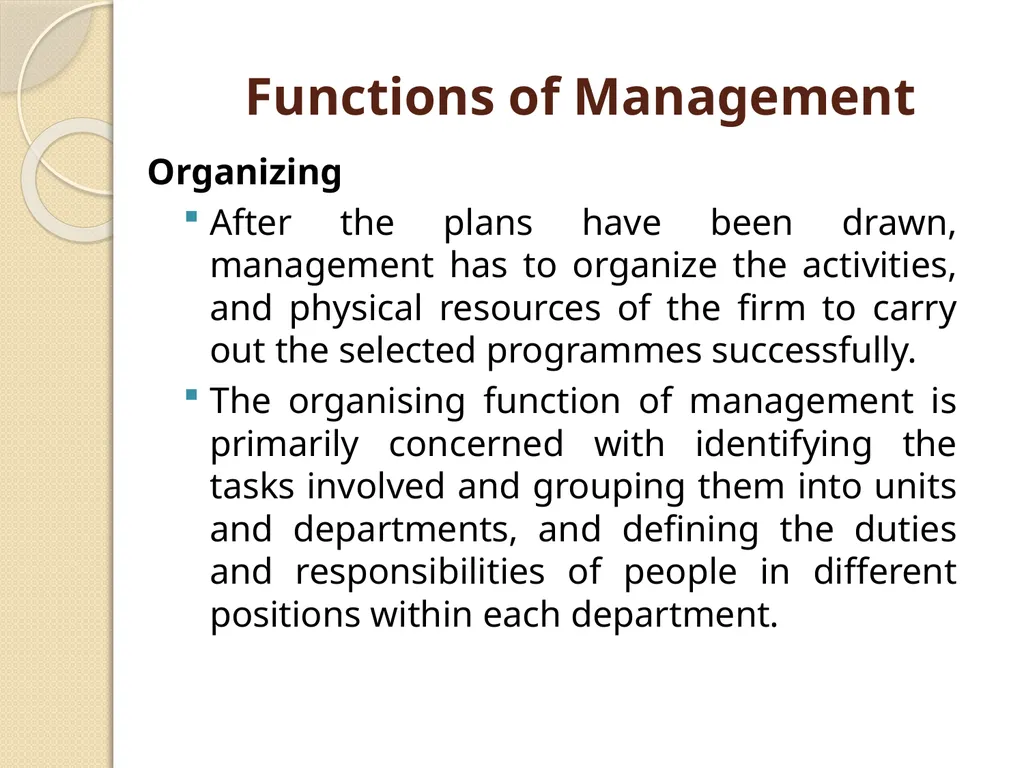
slide5. Functions of Management Organizing
After the plans have been drawn, management has to organize the activities, and physical resources of the firm to carry out the selected programmes successfully.
The organising function of management is primarily concerned with identifying the tasks involved and grouping them into units and departments, and defining the duties and responsibilities of people in different positions within each department.<br>
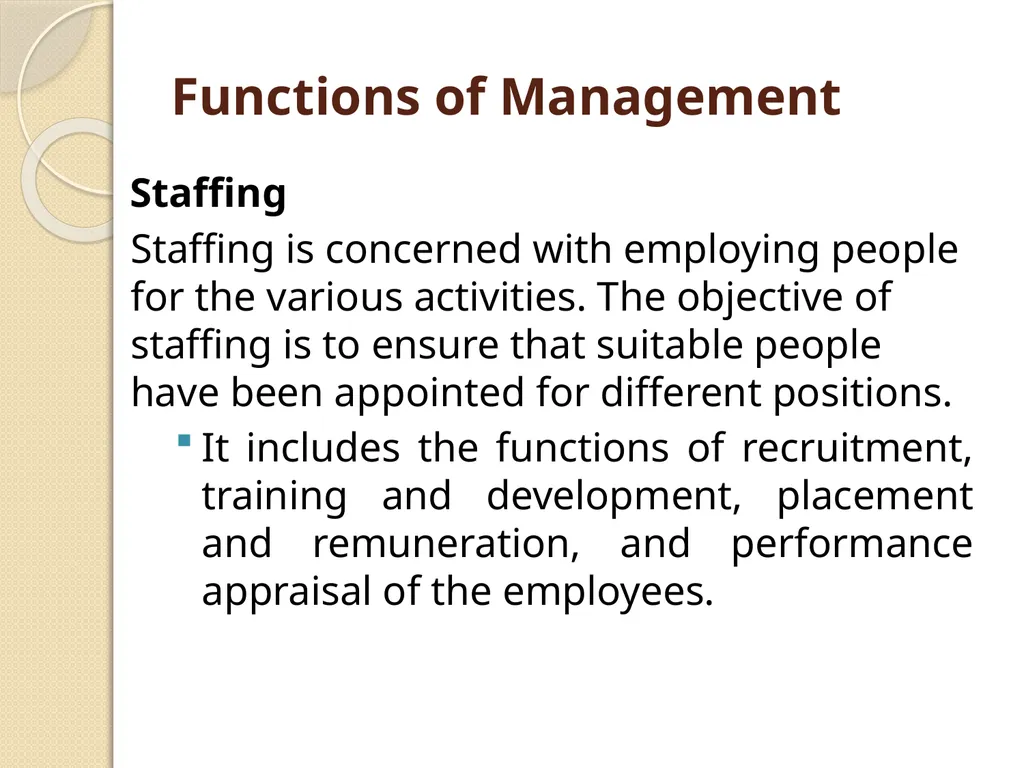
slide6. Functions of Management Staffing
Staffing is concerned with employing people for the various activities. The objective of staffing is to ensure that suitable people have been appointed for different positions.
It includes the functions of recruitment, training and development, placement and remuneration, and performance appraisal of the employees.<br>
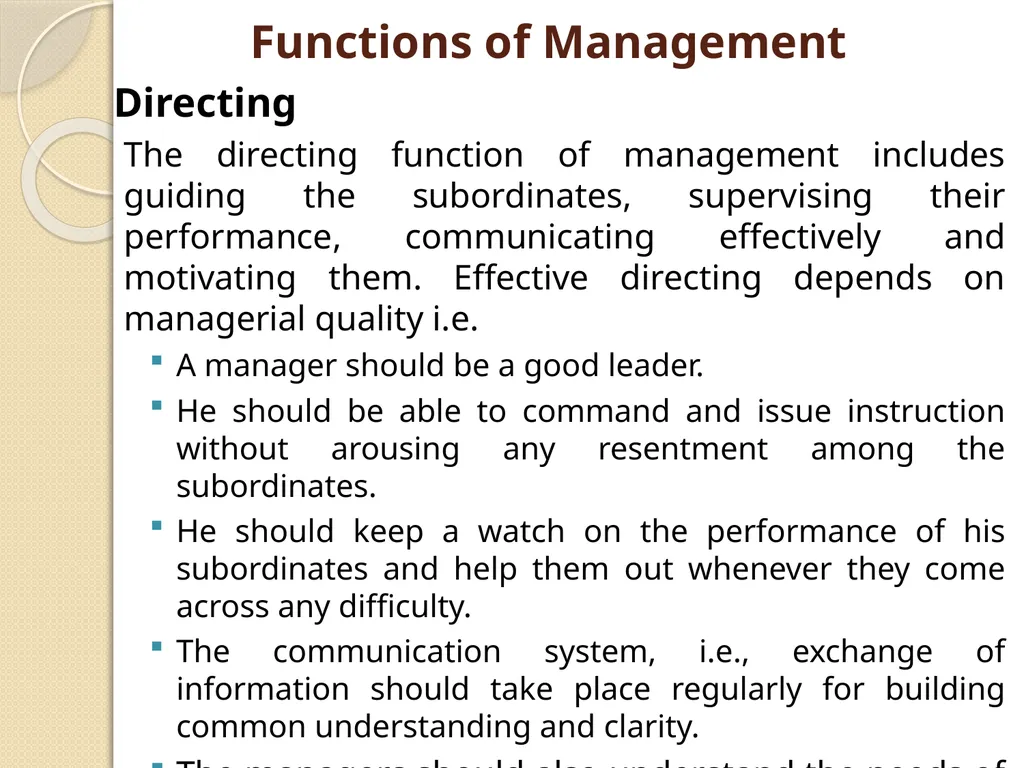
slide7. Functions of Management Directing
The directing function of management includes guiding the subordinates, supervising their performance, communicating effectively and motivating them. Effective directing depends on managerial quality i.e.
A manager should be a good leader.
He should be able to command and issue instruction without arousing any resentment among the subordinates.
He should keep a watch on the performance of his subordinates and help them out whenever they come across any difficulty.
The communication system, i.e., exchange of information should take place regularly for building common understanding and clarity.
The managers should also understand the needs of subordinates and inspire them to do their best and encourage initiative and creativity.<br>
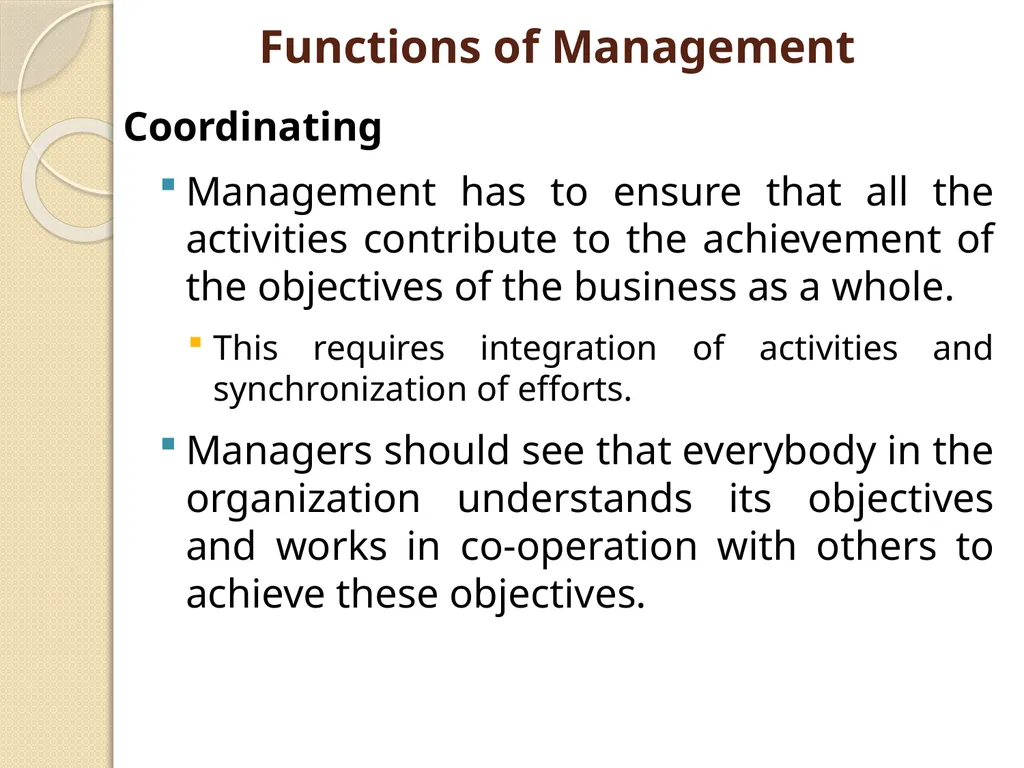
slide8. Functions of Management Coordinating
Management has to ensure that all the activities contribute to the achievement of the objectives of the business as a whole.
This requires integration of activities and synchronization of efforts.
Managers should see that everybody in the organization understands its objectives and works in co-operation with others to achieve these objectives.<br>
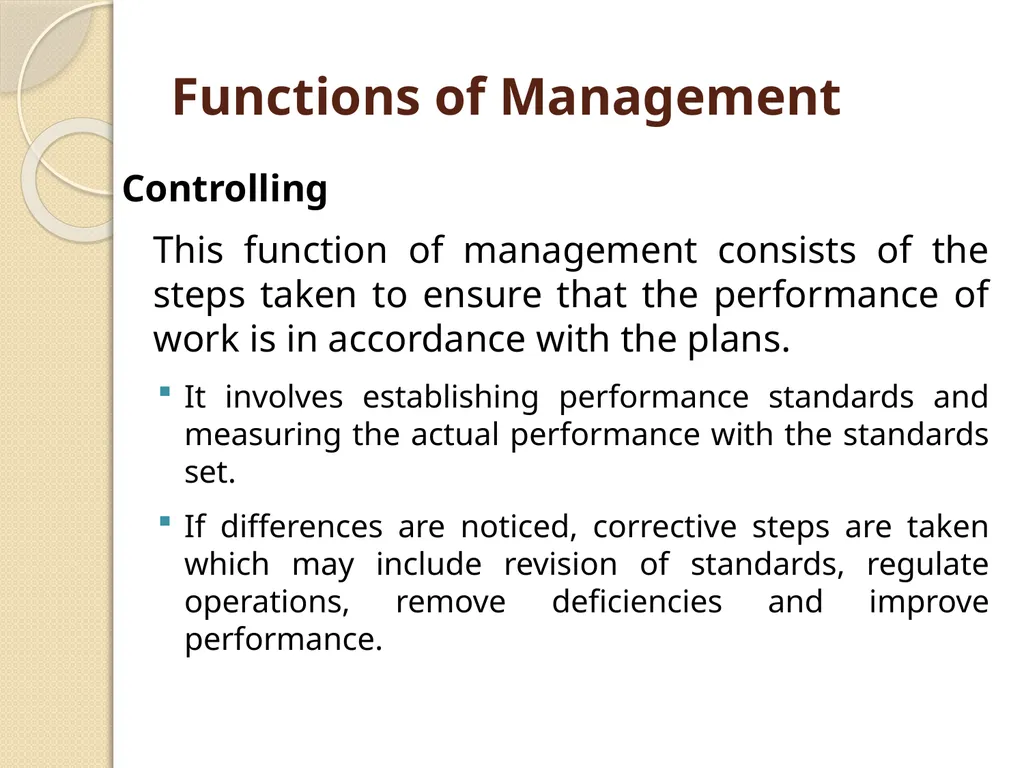
slide9. Functions of Management Controlling
This function of management consists of the steps taken to ensure that the performance of work is in accordance with the plans.
It involves establishing performance standards and measuring the actual performance with the standards set.
If differences are noticed, corrective steps are taken which may include revision of standards, regulate operations, remove deficiencies and improve performance.<br>
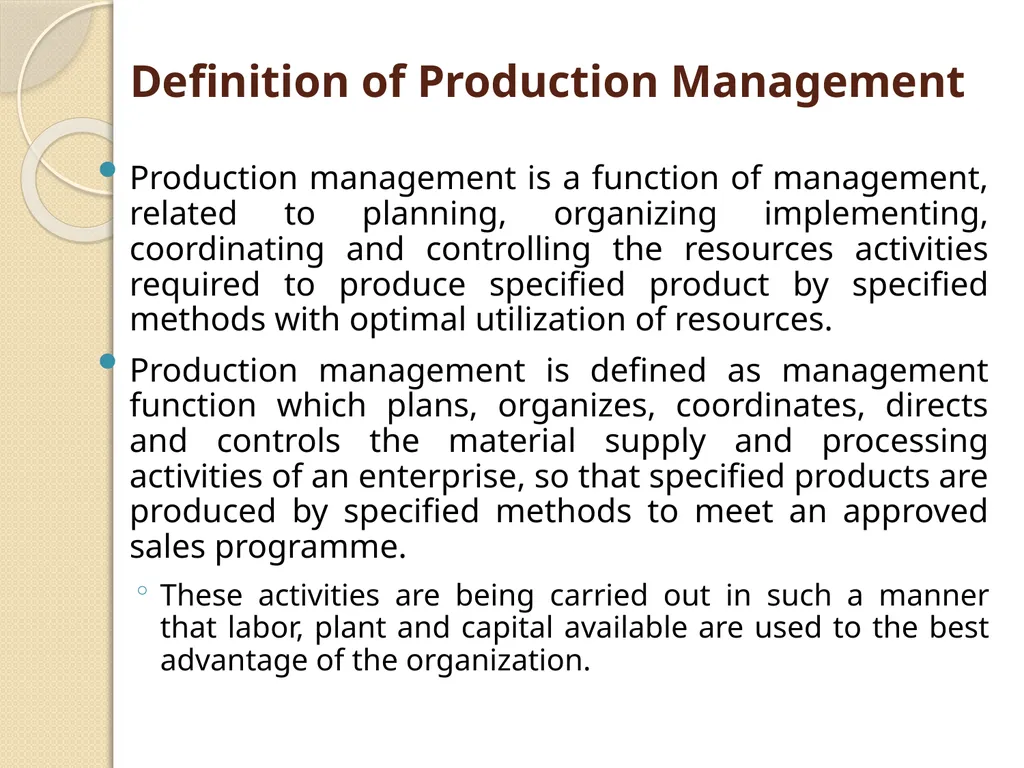
slide10. Definition of Production Management Production management is a function of management, related to planning, organizing implementing, coordinating and controlling the resources activities required to produce specified product by specified methods with optimal utilization of resources.
Production management is defined as management function which plans, organizes, coordinates, directs and controls the material supply and processing activities of an enterprise, so that specified products are produced by specified methods to meet an approved sales programme.
These activities are being carried out in such a manner that labor, plant and capital available are used to the best advantage of the organization.<br>
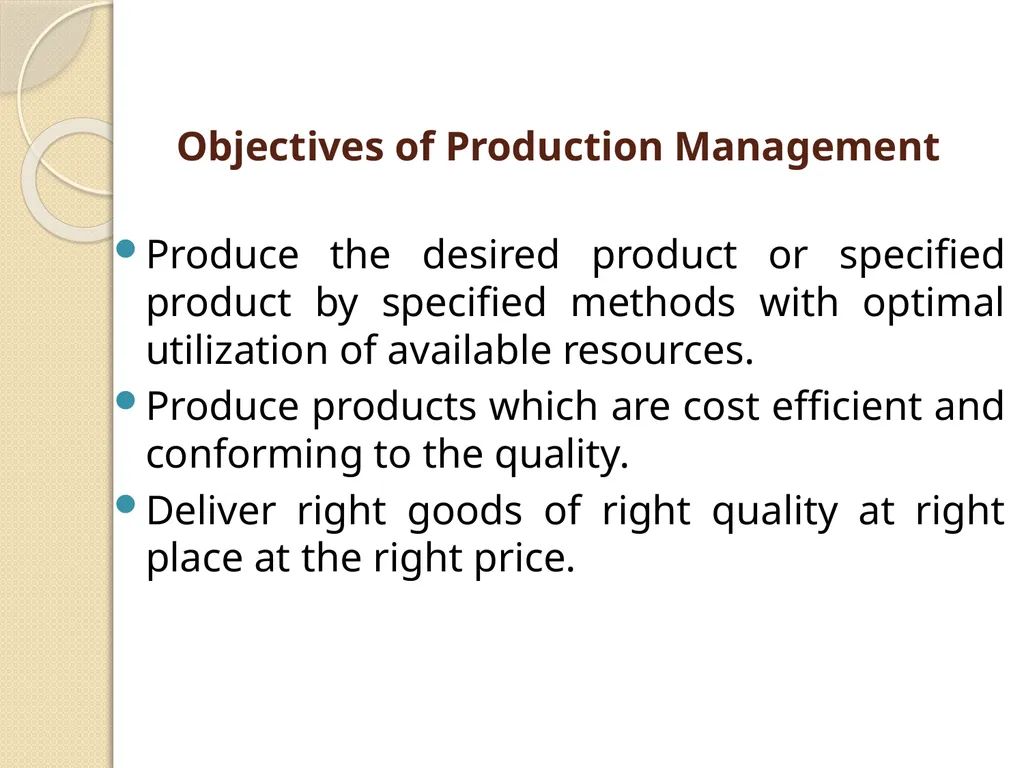
slide11. Objectives of Production Management Produce the desired product or specified product by specified methods with optimal utilization of available resources.
Produce products which are cost efficient and conforming to the quality.
Deliver right goods of right quality at right place at the right price.<br>
slide12. Types of Production Process There are four types of production process that are distinct and require different conditions for their working.
Selection of production process is a strategic decision, which requires to be considered and decided at the stage of planning itself.
It should meet the basic two objectives i.e. to meet the specification of the final product and should be cost effective.<br>
slide13. Classification of Manufacturing Process The manufacturing process is classified into four types.
Job production
Batch production
Mass or flow production
Process Production<br>
slide14. Classification of Manufacturing Process Job production
Herein one or few units of the products are produced as per the requirement and specification of the customer. Production is to meet the delivery schedule and costs are fixed prior to the contract.
Batch production
In this, limited quantities of each of the different types of products are manufactured on same set of machines. Different products are produced separately one after the other.
Mass or flow production
Under this, the production is conducted on a set of machines arranged according to the sequence of operations. A huge quantity of same product is manufactured at a time and is stocked for sale. Different product will require different manufacturing lines.
Process production
Under this, the production is conducted continuously for an indefinite period to meet continuous market demand.<br>
slide15. Scope of Production Management An organization must follow the principles of management for its survival and growth. The same is applicable to production management also.
Reading and learning production management will enable one to be capable of solving the problems of the organization.
The problems a manager face in various organizations are more or less similar to that of Production department but smaller in magnitude.
Knowledge of Production Management helps professionals to tackle the problems of business, including dairy industry.<br>
slide2. What is management? Management is a process of planning, organizing, leading, motivating and controlling the human, financial, physical resources, and information of an organization to reach its goals in an efficient and effective manner.
It is the act of getting people together to accomplish desired goals and objectives using available resources efficiently and effectively.<br>
slide3. Functions of Management Planning
Organizing
Staffing
Directing
Coordinating and
Controlling<br>
slide4. Functions of Management Planning
Planning is deciding in advance what is to be done, when it is to be done, how it is to be done.
It is basically concerned with the selection of goals to be achieved and determining the effective course of action from among the various alternatives.
This involves forecasting, establishing targets, developing the policies and programming and scheduling the action, procedure, etc.,
Thus, planning requires decisions to be made on what should be done, how it should be done, who will do it, where it will be done, and why it is to be done. The essential part of planning consists of setting goals and programmes of activities.<br>
slide5. Functions of Management Organizing
After the plans have been drawn, management has to organize the activities, and physical resources of the firm to carry out the selected programmes successfully.
The organising function of management is primarily concerned with identifying the tasks involved and grouping them into units and departments, and defining the duties and responsibilities of people in different positions within each department.<br>
slide6. Functions of Management Staffing
Staffing is concerned with employing people for the various activities. The objective of staffing is to ensure that suitable people have been appointed for different positions.
It includes the functions of recruitment, training and development, placement and remuneration, and performance appraisal of the employees.<br>
slide7. Functions of Management Directing
The directing function of management includes guiding the subordinates, supervising their performance, communicating effectively and motivating them. Effective directing depends on managerial quality i.e.
A manager should be a good leader.
He should be able to command and issue instruction without arousing any resentment among the subordinates.
He should keep a watch on the performance of his subordinates and help them out whenever they come across any difficulty.
The communication system, i.e., exchange of information should take place regularly for building common understanding and clarity.
The managers should also understand the needs of subordinates and inspire them to do their best and encourage initiative and creativity.<br>
slide8. Functions of Management Coordinating
Management has to ensure that all the activities contribute to the achievement of the objectives of the business as a whole.
This requires integration of activities and synchronization of efforts.
Managers should see that everybody in the organization understands its objectives and works in co-operation with others to achieve these objectives.<br>
slide9. Functions of Management Controlling
This function of management consists of the steps taken to ensure that the performance of work is in accordance with the plans.
It involves establishing performance standards and measuring the actual performance with the standards set.
If differences are noticed, corrective steps are taken which may include revision of standards, regulate operations, remove deficiencies and improve performance.<br>
slide10. Definition of Production Management Production management is a function of management, related to planning, organizing implementing, coordinating and controlling the resources activities required to produce specified product by specified methods with optimal utilization of resources.
Production management is defined as management function which plans, organizes, coordinates, directs and controls the material supply and processing activities of an enterprise, so that specified products are produced by specified methods to meet an approved sales programme.
These activities are being carried out in such a manner that labor, plant and capital available are used to the best advantage of the organization.<br>
slide11. Objectives of Production Management Produce the desired product or specified product by specified methods with optimal utilization of available resources.
Produce products which are cost efficient and conforming to the quality.
Deliver right goods of right quality at right place at the right price.<br>
slide12. Types of Production Process There are four types of production process that are distinct and require different conditions for their working.
Selection of production process is a strategic decision, which requires to be considered and decided at the stage of planning itself.
It should meet the basic two objectives i.e. to meet the specification of the final product and should be cost effective.<br>
slide13. Classification of Manufacturing Process The manufacturing process is classified into four types.
Job production
Batch production
Mass or flow production
Process Production<br>
slide14. Classification of Manufacturing Process Job production
Herein one or few units of the products are produced as per the requirement and specification of the customer. Production is to meet the delivery schedule and costs are fixed prior to the contract.
Batch production
In this, limited quantities of each of the different types of products are manufactured on same set of machines. Different products are produced separately one after the other.
Mass or flow production
Under this, the production is conducted on a set of machines arranged according to the sequence of operations. A huge quantity of same product is manufactured at a time and is stocked for sale. Different product will require different manufacturing lines.
Process production
Under this, the production is conducted continuously for an indefinite period to meet continuous market demand.<br>
slide15. Scope of Production Management An organization must follow the principles of management for its survival and growth. The same is applicable to production management also.
Reading and learning production management will enable one to be capable of solving the problems of the organization.
The problems a manager face in various organizations are more or less similar to that of Production department but smaller in magnitude.
Knowledge of Production Management helps professionals to tackle the problems of business, including dairy industry.<br>