
DEPARTMENT OF PHYSICS PHYSICS WORKSHOP SKILLS


Description: DEPARTMENT OF PHYSICS PHYSICS WORKSHOP SKILLS PHYS203TH Manufacturing is the production of goods through the use of labour, machinery, tools and biological or chemical processing or formulation. Manufacturing can either mean transforming
Related Topics
Download Presentation
"DEPARTMENT OF PHYSICS PHYSICS WORKSHOP SKILLS" is the property of its rightful owner. Permission is granted to download and print the materials on this website for personal, non-commercial use only, and to display it on your personal computer provided you do not modify the materials and that you retain all copyright notices contained in the materials. By downloading content from our website, you accept the terms of this agreement.
Presentation Transcript
slide1. DEPARTMENT OF PHYSICS PHYSICS WORKSHOP SKILLS PHYS203TH<br>
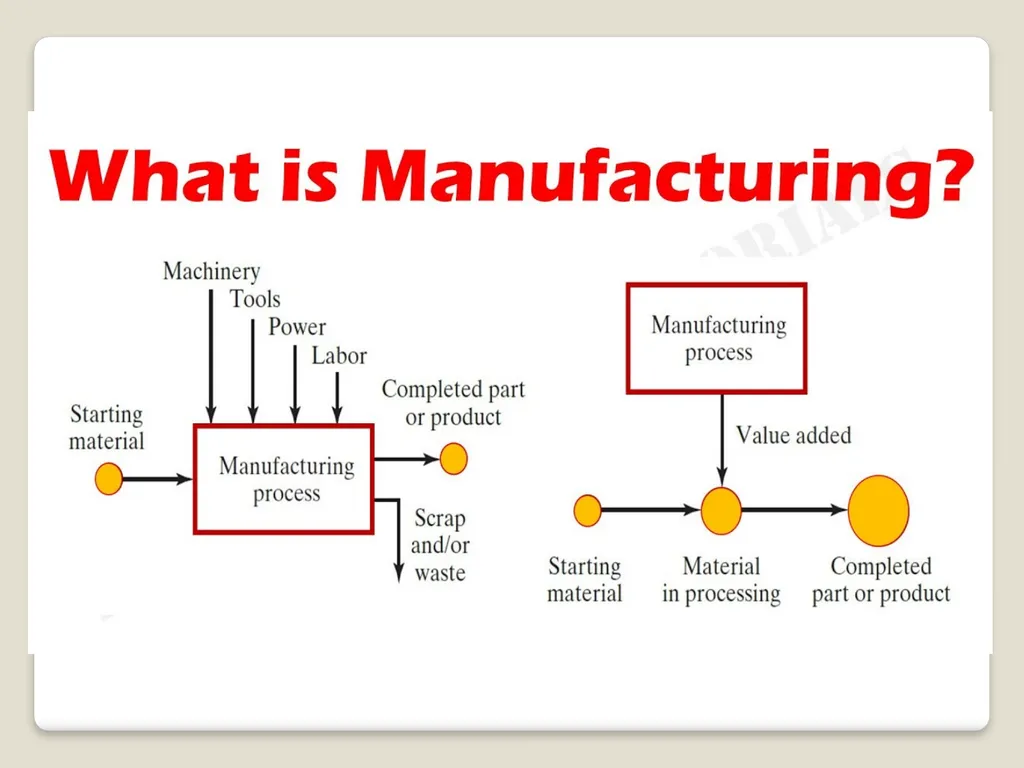
slide2. Manufacturing is the production of goods through the use of labour, machinery, tools and biological or chemical processing or formulation. Manufacturing can either mean transforming raw materials into finished goods on a large scale, or the creation of more complex items by selling basic goods to manufacturers for the production of items such as automobiles, aircraft, or household appliances.
Raw materials are transformed into finished products through manufacturing engineering or the manufacturing process. This process begins with product design and materials selection. The materials are modified during various manufacturing processes to create the finished product.
Modern advanced manufacturing often includes several intermediate processes to create the various components for a finished item, with some manufacturers using the term fabrication. Manufacturing has close connections to the engineering and industrial process design sectors. WHAT IS MANUFACTURING PROCESS<br>
slide4. TYPES OF MANUFACTURING CASTING CORE MAKING MOLDING MACHINING FORMING WELDING<br>
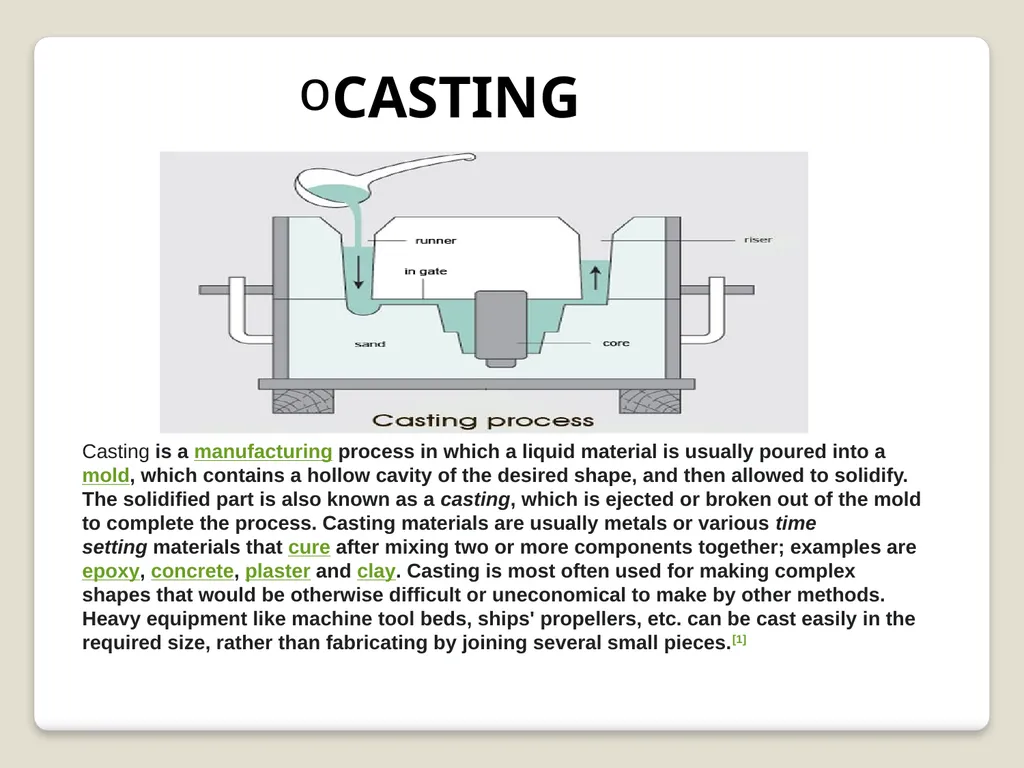
slide5. CASTING Casting is a manufacturing process in which a liquid material is usually poured into a mold, which contains a hollow cavity of the desired shape, and then allowed to solidify. The solidified part is also known as a casting, which is ejected or broken out of the mold to complete the process. Casting materials are usually metals or various time setting materials that cure after mixing two or more components together; examples are epoxy, concrete, plaster and clay. Casting is most often used for making complex shapes that would be otherwise difficult or uneconomical to make by other methods. Heavy equipment like machine tool beds, ships' propellers, etc. can be cast easily in the required size, rather than fabricating by joining several small pieces.[1]<br>
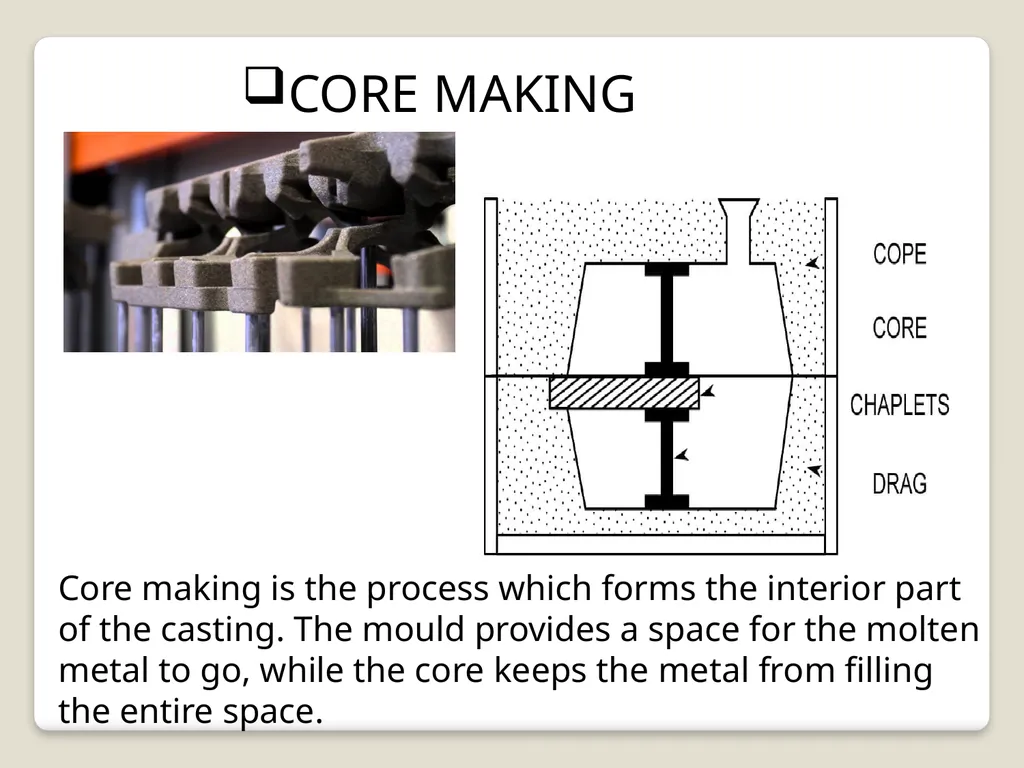
slide6. CORE MAKING Core making is the process which forms the interior part of the casting. The mould provides a space for the molten metal to go, while the core keeps the metal from filling the entire space.<br>
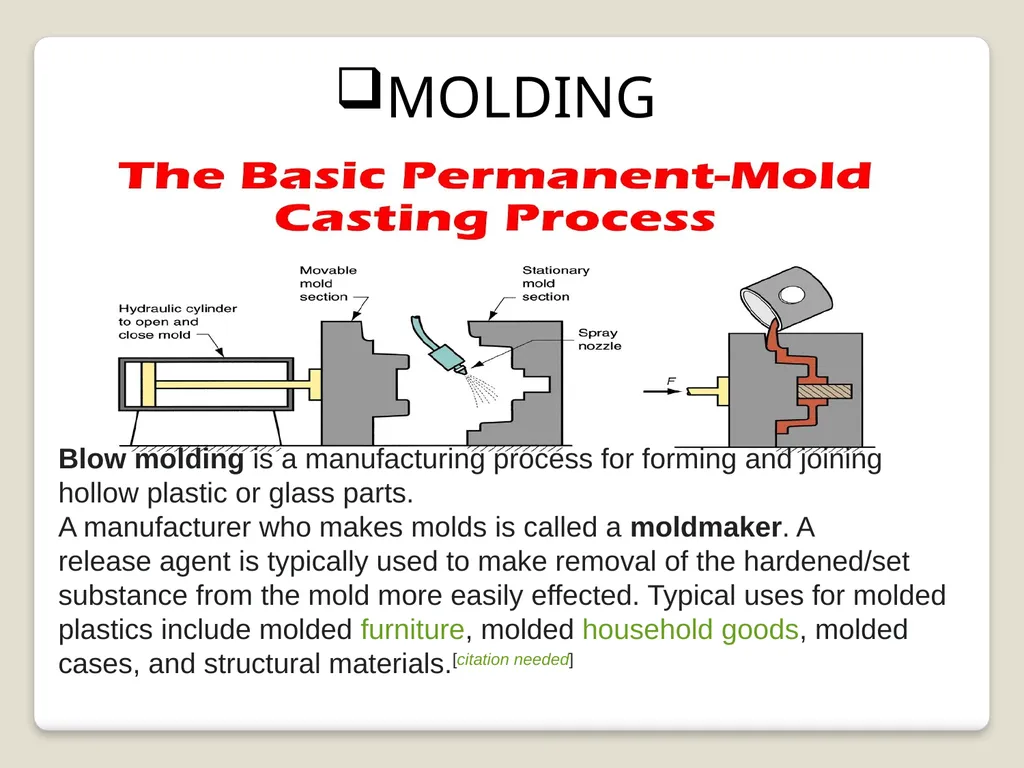
slide7. MOLDING Blow molding is a manufacturing process for forming and joining hollow plastic or glass parts.
A manufacturer who makes molds is called a moldmaker. A release agent is typically used to make removal of the hardened/set substance from the mold more easily effected. Typical uses for molded plastics include molded furniture, molded household goods, molded cases, and structural materials.[citation needed]<br>
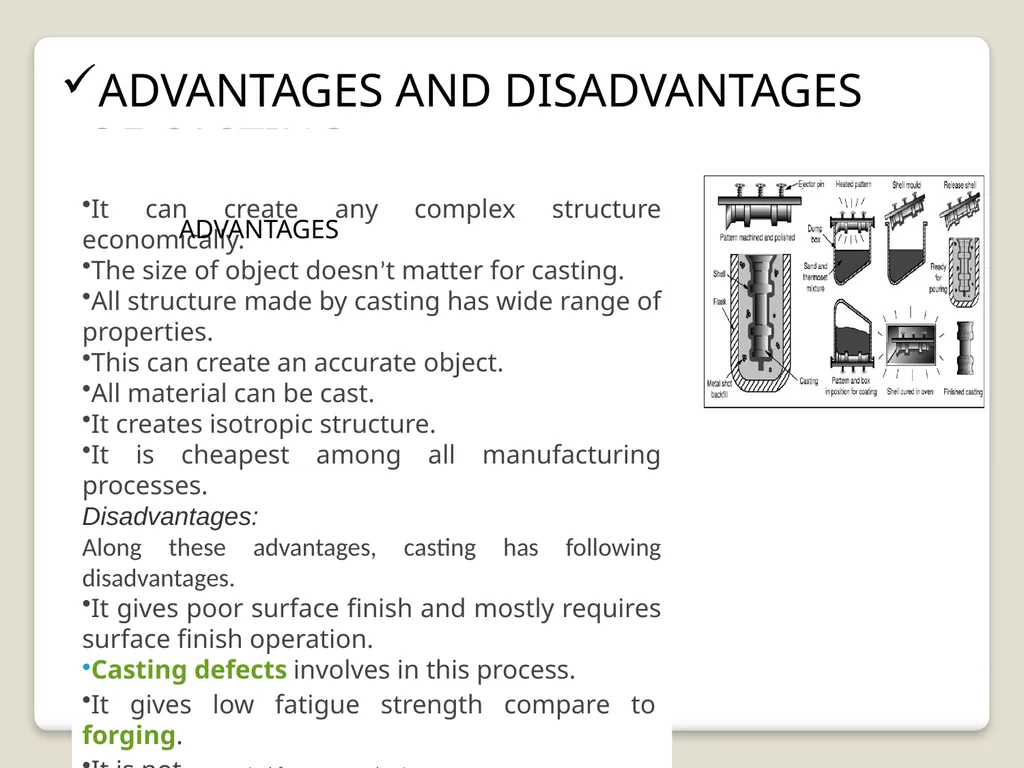
slide8. ADVANTAGES AND DISADVANTAGES OF CASTING It can create any complex structure economically.
The size of object doesn’t matter for casting.
All structure made by casting has wide range of properties.
This can create an accurate object.
All material can be cast.
It creates isotropic structure.
It is cheapest among all manufacturing processes.
Disadvantages:
Along these advantages, casting has following disadvantages.
It gives poor surface finish and mostly requires surface finish operation.
Casting defects involves in this process.
It gives low fatigue strength compare to forging.
It is not economical for mass production. ADVANTAGES<br>
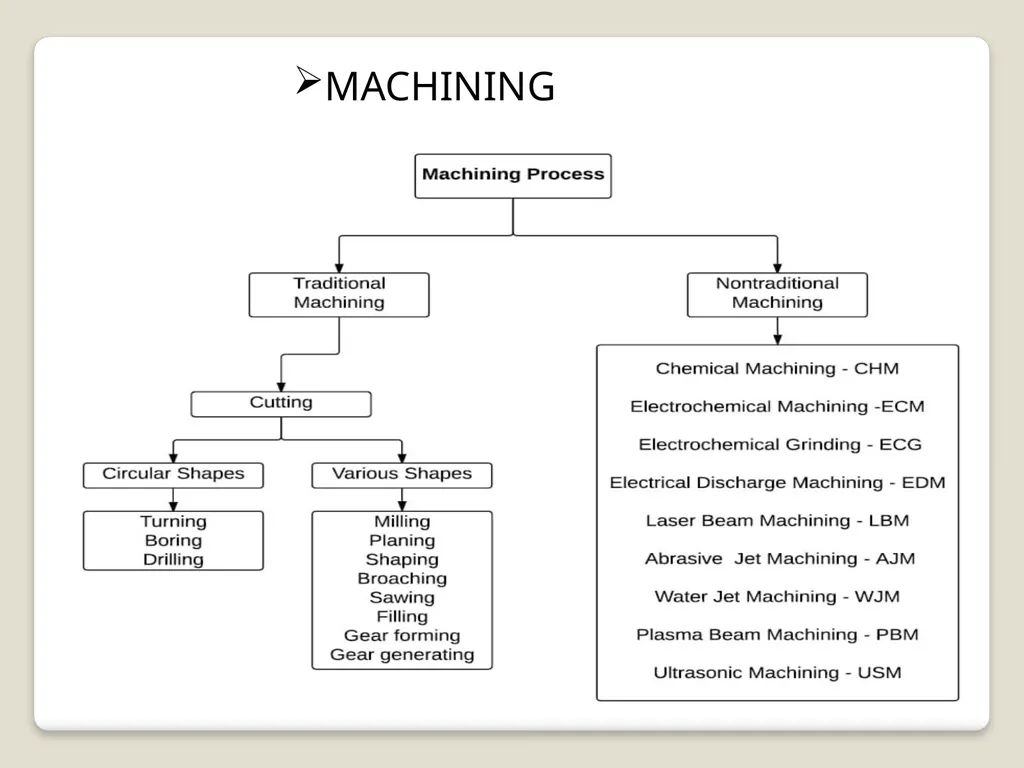
slide9. MACHINING<br>
slide10. Machining is a process in which a material (often metal) is cut to a desired final shape and size by a controlled material-removal process. ... Machining is a part of the manufacture of many metal products, but it can also be used on other materials such as wood, plastic, ceramic, and composite material.<br>
slide11. FORMING Forming processes differ from subtractive processes considering that no material is removed. Rather, forming processes exploit applicable stresses such as compression, tension, shear, or a combination of stresses, in order to malleably deform different materials into pre-defined geometrical shapes.<br>
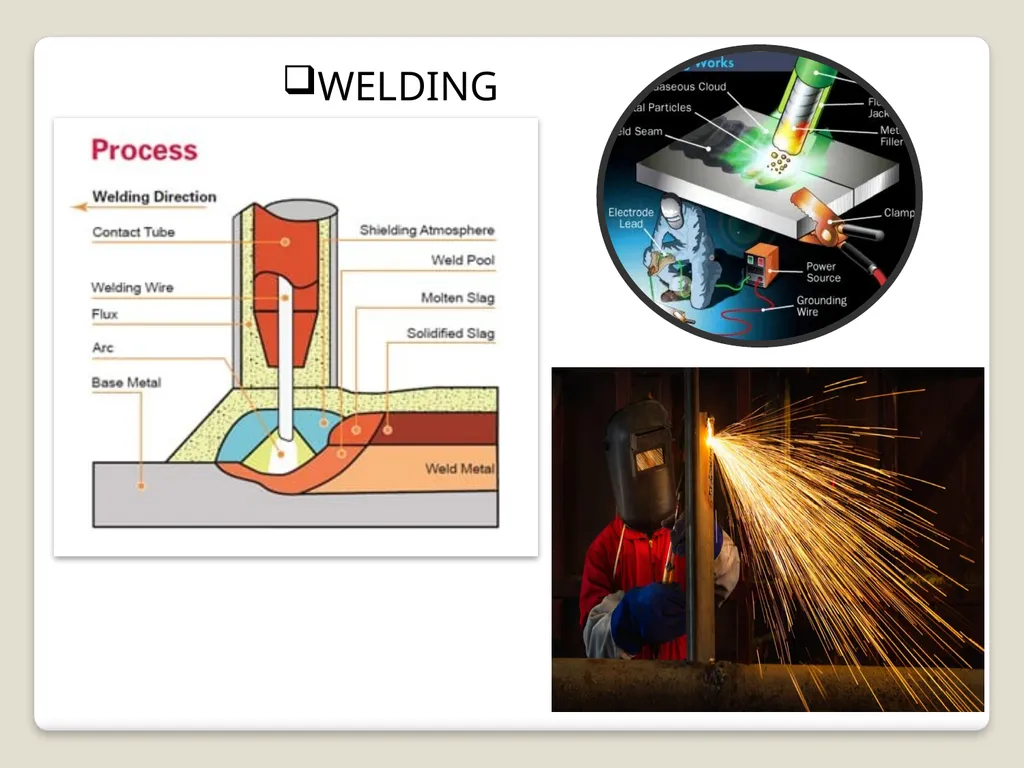
slide12. WELDING<br>
slide13. Welding is a fabrication process whereby two or more parts are fused together by means of heat, pressure or both forming a join as the parts cool. Welding is usually used on metals and thermoplastics but can also be used on wood. The completed welded joint may be referred to as a weldment.
Some materials require the use of specific processes and techniques. A number are considered 'unweldable,' a term not usually found in dictionaries but useful and descriptive in engineering<br>
slide14. THANKYOU……<br>
slide2. Manufacturing is the production of goods through the use of labour, machinery, tools and biological or chemical processing or formulation. Manufacturing can either mean transforming raw materials into finished goods on a large scale, or the creation of more complex items by selling basic goods to manufacturers for the production of items such as automobiles, aircraft, or household appliances.
Raw materials are transformed into finished products through manufacturing engineering or the manufacturing process. This process begins with product design and materials selection. The materials are modified during various manufacturing processes to create the finished product.
Modern advanced manufacturing often includes several intermediate processes to create the various components for a finished item, with some manufacturers using the term fabrication. Manufacturing has close connections to the engineering and industrial process design sectors. WHAT IS MANUFACTURING PROCESS<br>
slide4. TYPES OF MANUFACTURING CASTING CORE MAKING MOLDING MACHINING FORMING WELDING<br>
slide5. CASTING Casting is a manufacturing process in which a liquid material is usually poured into a mold, which contains a hollow cavity of the desired shape, and then allowed to solidify. The solidified part is also known as a casting, which is ejected or broken out of the mold to complete the process. Casting materials are usually metals or various time setting materials that cure after mixing two or more components together; examples are epoxy, concrete, plaster and clay. Casting is most often used for making complex shapes that would be otherwise difficult or uneconomical to make by other methods. Heavy equipment like machine tool beds, ships' propellers, etc. can be cast easily in the required size, rather than fabricating by joining several small pieces.[1]<br>
slide6. CORE MAKING Core making is the process which forms the interior part of the casting. The mould provides a space for the molten metal to go, while the core keeps the metal from filling the entire space.<br>
slide7. MOLDING Blow molding is a manufacturing process for forming and joining hollow plastic or glass parts.
A manufacturer who makes molds is called a moldmaker. A release agent is typically used to make removal of the hardened/set substance from the mold more easily effected. Typical uses for molded plastics include molded furniture, molded household goods, molded cases, and structural materials.[citation needed]<br>
slide8. ADVANTAGES AND DISADVANTAGES OF CASTING It can create any complex structure economically.
The size of object doesn’t matter for casting.
All structure made by casting has wide range of properties.
This can create an accurate object.
All material can be cast.
It creates isotropic structure.
It is cheapest among all manufacturing processes.
Disadvantages:
Along these advantages, casting has following disadvantages.
It gives poor surface finish and mostly requires surface finish operation.
Casting defects involves in this process.
It gives low fatigue strength compare to forging.
It is not economical for mass production. ADVANTAGES<br>
slide9. MACHINING<br>
slide10. Machining is a process in which a material (often metal) is cut to a desired final shape and size by a controlled material-removal process. ... Machining is a part of the manufacture of many metal products, but it can also be used on other materials such as wood, plastic, ceramic, and composite material.<br>
slide11. FORMING Forming processes differ from subtractive processes considering that no material is removed. Rather, forming processes exploit applicable stresses such as compression, tension, shear, or a combination of stresses, in order to malleably deform different materials into pre-defined geometrical shapes.<br>
slide12. WELDING<br>
slide13. Welding is a fabrication process whereby two or more parts are fused together by means of heat, pressure or both forming a join as the parts cool. Welding is usually used on metals and thermoplastics but can also be used on wood. The completed welded joint may be referred to as a weldment.
Some materials require the use of specific processes and techniques. A number are considered 'unweldable,' a term not usually found in dictionaries but useful and descriptive in engineering<br>
slide14. THANKYOU……<br>