
DEVELOPING INCLUSION HEALTH SERVICES Fran Busby-


Description: DEVELOPING INCLUSION HEALTH SERVICES Fran Busby- Service Lead START Homeless Outreach Services PREVALENCE In Q1 2024, 4,389 people slept rough across London, a 23 increase on the previous quarter (CHAIN figures) 50 of these people were
Related Topics
Download Presentation
"DEVELOPING INCLUSION HEALTH SERVICES Fran Busby-" is the property of its rightful owner. Permission is granted to download and print the materials on this website for personal, non-commercial use only, and to display it on your personal computer provided you do not modify the materials and that you retain all copyright notices contained in the materials. By downloading content from our website, you accept the terms of this agreement.
Presentation Transcript
slide1. DEVELOPING INCLUSION HEALTH SERVICES Fran Busby- Service Lead
START Homeless Outreach Services<br>
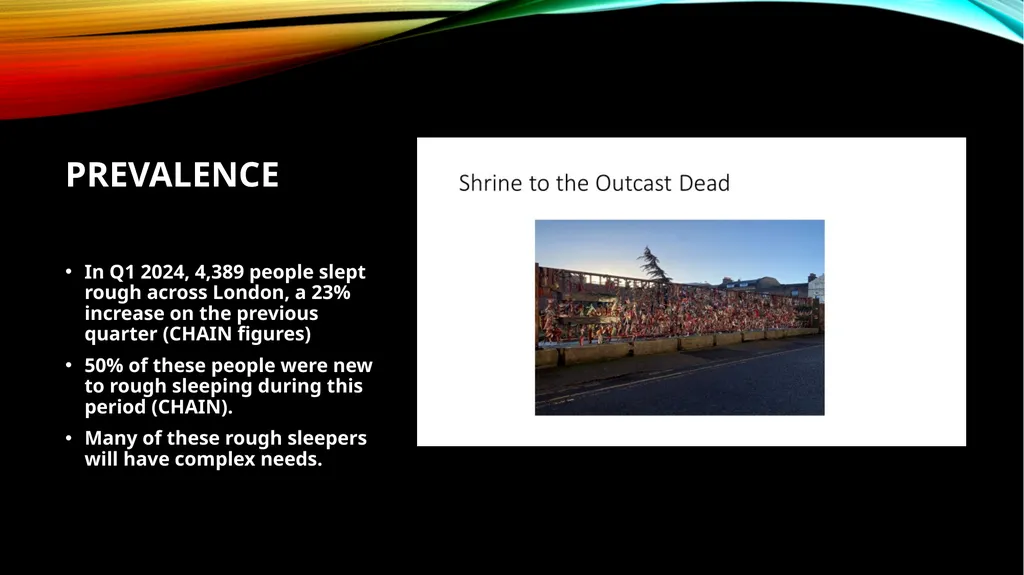
slide2. PREVALENCE In Q1 2024, 4,389 people slept rough across London, a 23% increase on the previous quarter (CHAIN figures)
50% of these people were new to rough sleeping during this period (CHAIN).
Many of these rough sleepers will have complex needs.<br>
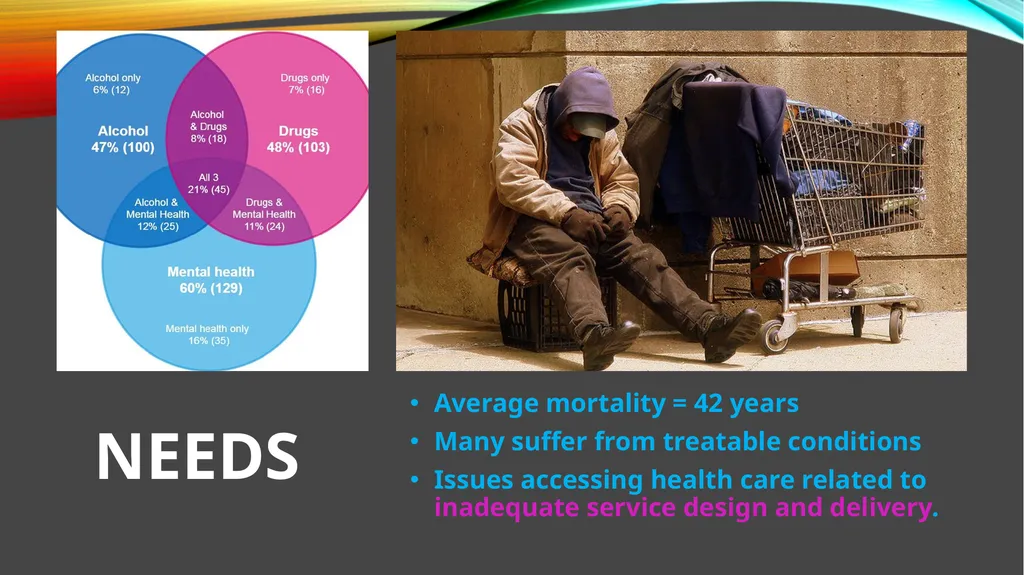
slide3. NEEDS Average mortality = 42 years
Many suffer from treatable conditions
Issues accessing health care related to inadequate service design and delivery.<br>
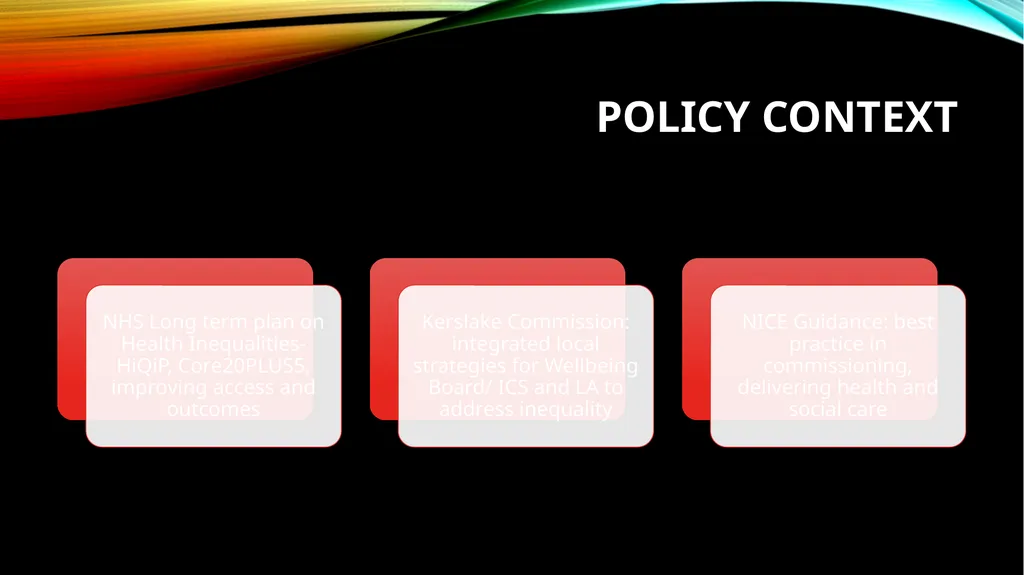
slide4. POLICY CONTEXT<br>
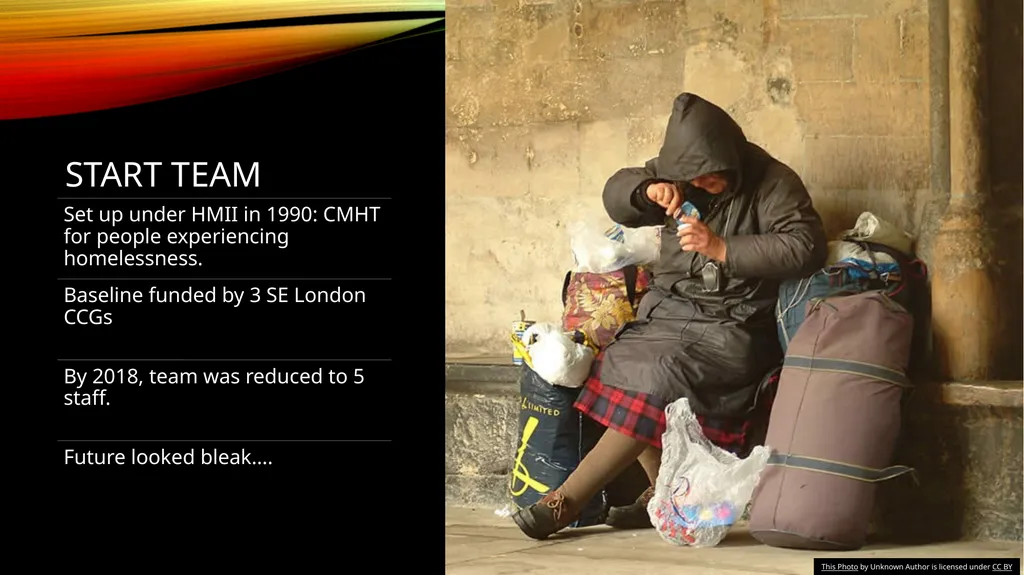
slide5. START TEAM This Photo by Unknown Author is licensed under CC BY<br>
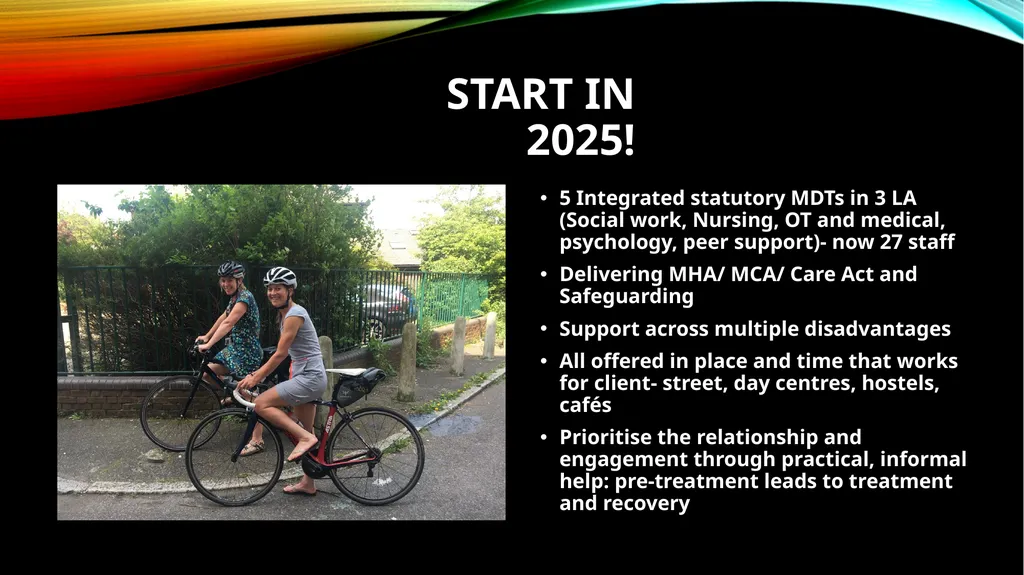
slide6. START IN 2025! 5 Integrated statutory MDTs in 3 LA (Social work, Nursing, OT and medical, psychology, peer support)- now 27 staff
Delivering MHA/ MCA/ Care Act and Safeguarding
Support across multiple disadvantages
All offered in place and time that works for client- street, day centres, hostels, cafés
Prioritise the relationship and engagement through practical, informal help: pre-treatment leads to treatment and recovery<br>
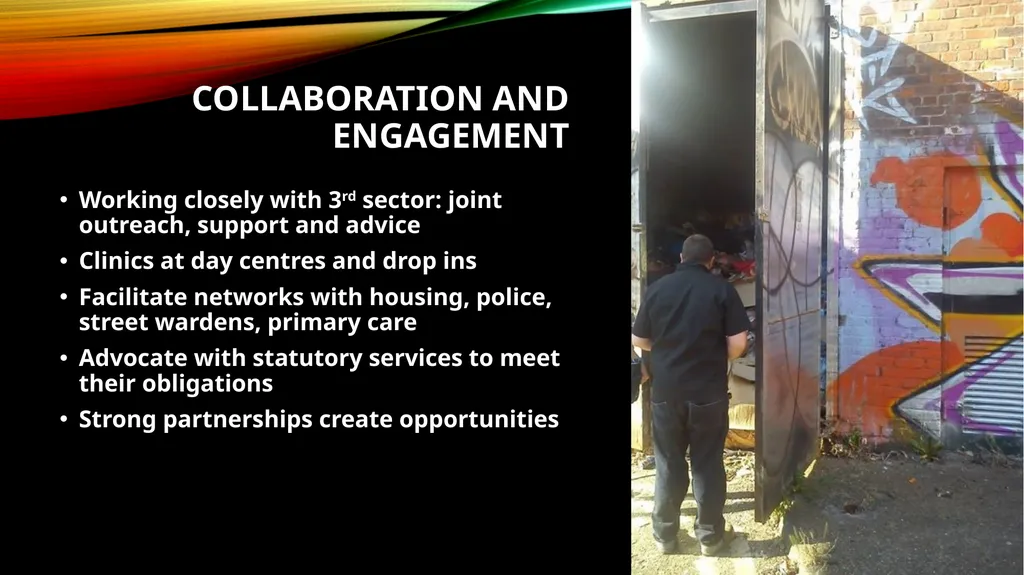
slide7. Collaboration and engagement Working closely with 3rd sector: joint outreach, support and advice
Clinics at day centres and drop ins
Facilitate networks with housing, police, street wardens, primary care
Advocate with statutory services to meet their obligations
Strong partnerships create opportunities<br>
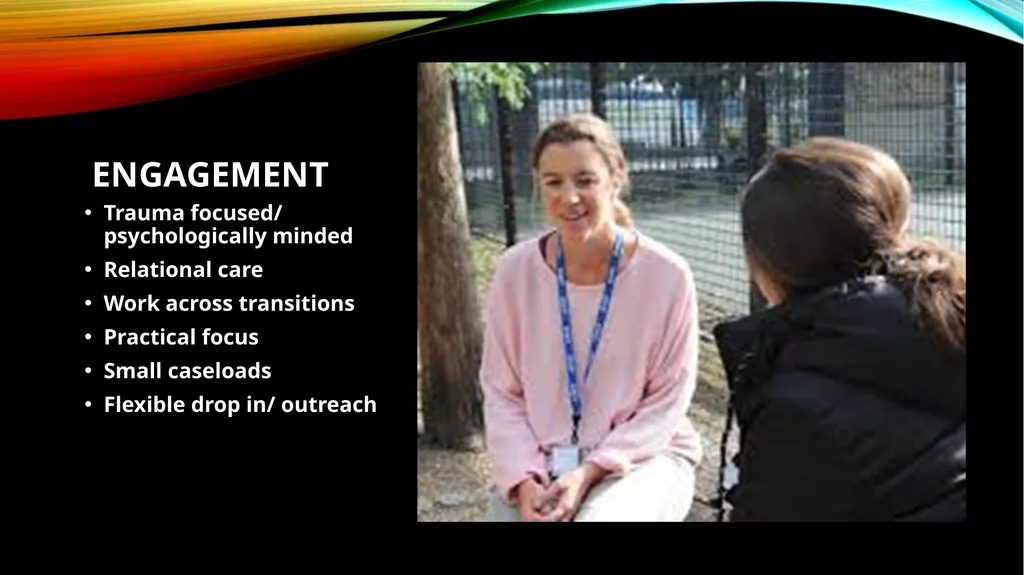
slide8. Engagement Trauma focused/ psychologically minded
Relational care
Work across transitions
Practical focus
Small caseloads
Flexible drop in/ outreach<br>
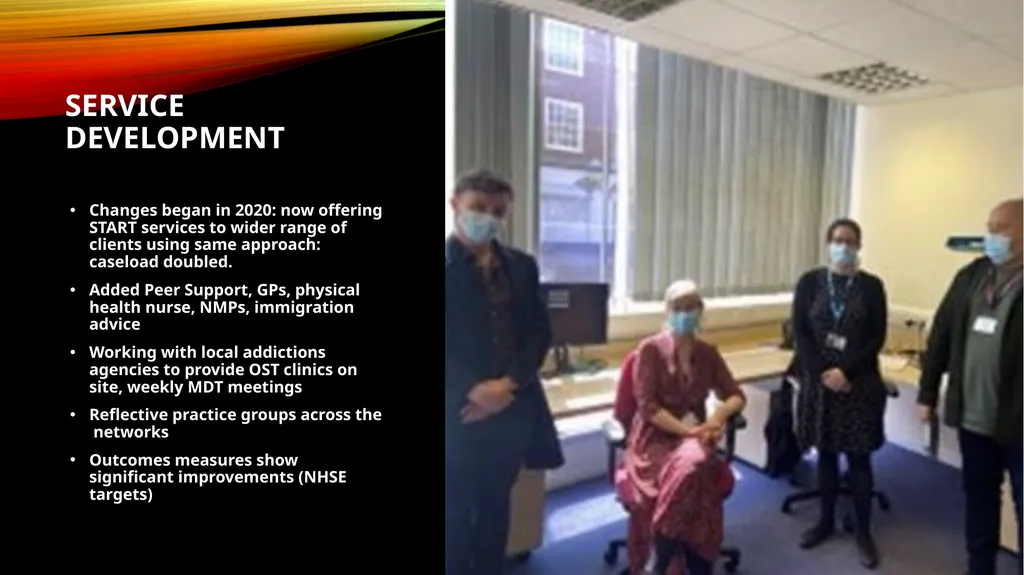
slide9. SERVICE development Changes began in 2020: now offering START services to wider range of clients using same approach: caseload doubled.
Added Peer Support, GPs, physical health nurse, NMPs, immigration advice
Working with local addictions agencies to provide OST clinics on site, weekly MDT meetings
Reflective practice groups across the networks
Outcomes measures show significant improvements (NHSE targets)<br>
slide10. CO-OCCURING CONDITIONS TEAMS ACCESS TO SERVICES
• 35% improvement on average in engagement with physical health intervention
• 70% of the caseload on average engaged with mental health treatment
• 50% of the caseload on average engaged with substance use treatment HOMELESSNESS AND ACUTE CARE
90% sustained accommodation, 20% made a positive move on (specialist/ permanent)
Contact with emergency physical health care decreased by mean score 46%
Contact with Criminal Justice has reduced by mean score 53%
Contact with Emergency mental health care has reduced by mean score 54%<br>
slide11. Nhs long term plan 2019-2024: Mental Health Implementation Plan
£2.3 billion extra a year to embed new services and reach another 2 million
Localised and personalised services to respond to health inequalities- neighbourhood models.
Increased provision for perinatal, CYP, IAPTS, crisis care.
Integrated community models to provide care for SMI with core/ specialist services and reduction in out of area care.
20 new Homeless Mental health teams across the UK.
Expansion of 3rd sector partners in neighbourhood planning.<br>
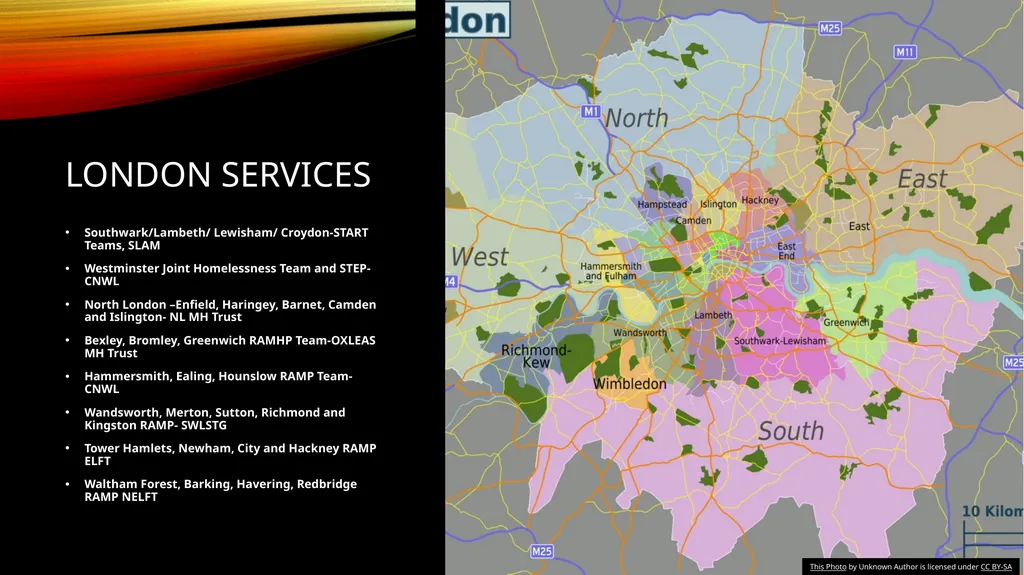
slide12. LONDON SERVICES Southwark/Lambeth/ Lewisham/ Croydon-START Teams, SLAM
Westminster Joint Homelessness Team and STEP-CNWL
North London –Enfield, Haringey, Barnet, Camden and Islington- NL MH Trust
Bexley, Bromley, Greenwich RAMHP Team-OXLEAS MH Trust
Hammersmith, Ealing, Hounslow RAMP Team-CNWL
Wandsworth, Merton, Sutton, Richmond and Kingston RAMP- SWLSTG
Tower Hamlets, Newham, City and Hackney RAMP ELFT
Waltham Forest, Barking, Havering, Redbridge RAMP NELFT This Photo by Unknown Author is licensed under CC BY-SA<br>
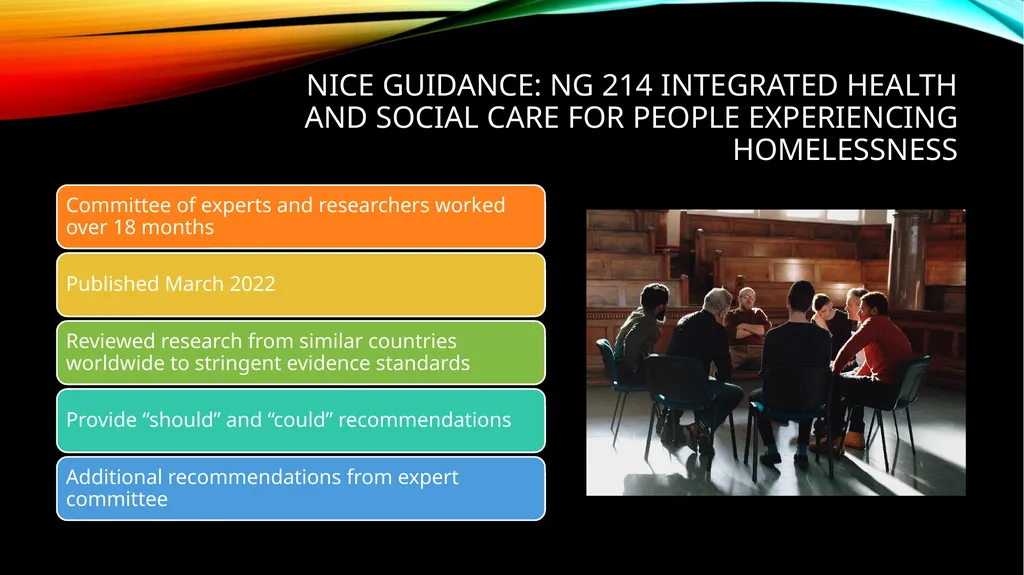
slide13. NICe Guidance: NG 214 Integrated health and social care for people experiencing homelessness<br>
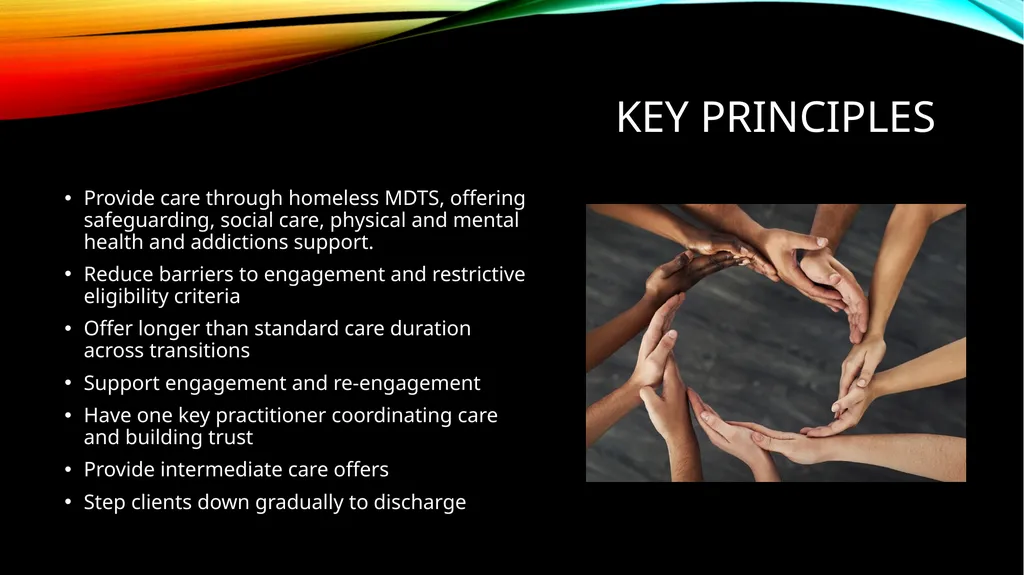
slide14. Key principles Provide care through homeless MDTS, offering safeguarding, social care, physical and mental health and addictions support.
Reduce barriers to engagement and restrictive eligibility criteria
Offer longer than standard care duration across transitions
Support engagement and re-engagement
Have one key practitioner coordinating care and building trust
Provide intermediate care offers
Step clients down gradually to discharge<br>
slide15. BUILD TRUST IN YOUR NETWORKS<br>
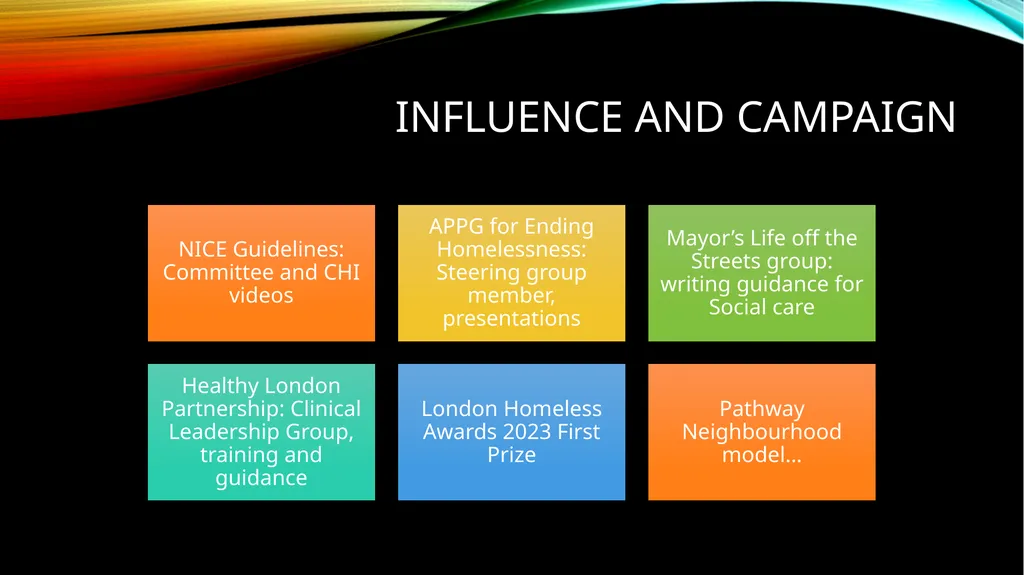
slide16. Influence and campaign<br>
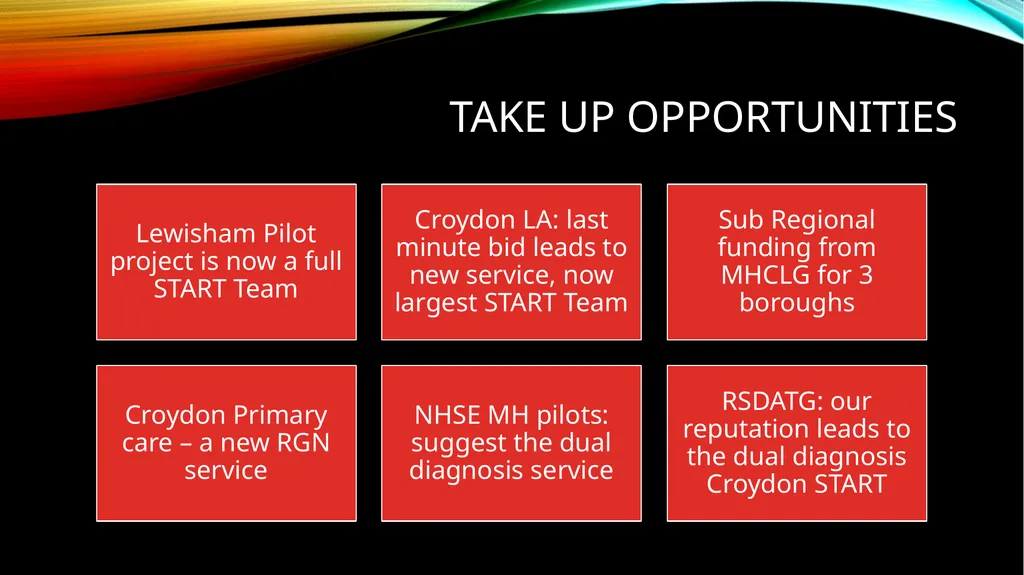
slide17. Take up opportunities<br>
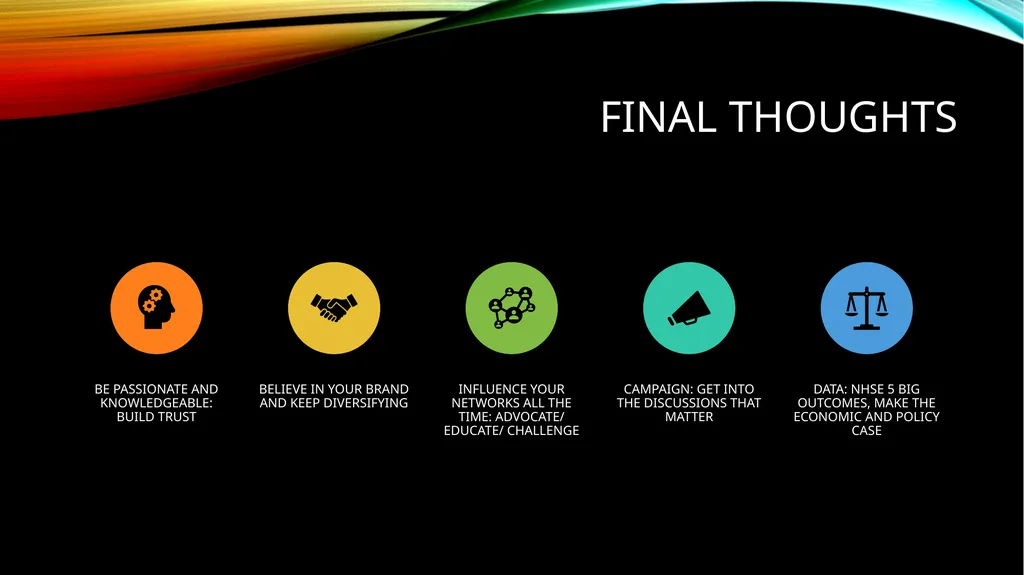
slide18. Final thoughts<br>
START Homeless Outreach Services<br>
slide2. PREVALENCE In Q1 2024, 4,389 people slept rough across London, a 23% increase on the previous quarter (CHAIN figures)
50% of these people were new to rough sleeping during this period (CHAIN).
Many of these rough sleepers will have complex needs.<br>
slide3. NEEDS Average mortality = 42 years
Many suffer from treatable conditions
Issues accessing health care related to inadequate service design and delivery.<br>
slide4. POLICY CONTEXT<br>
slide5. START TEAM This Photo by Unknown Author is licensed under CC BY<br>
slide6. START IN 2025! 5 Integrated statutory MDTs in 3 LA (Social work, Nursing, OT and medical, psychology, peer support)- now 27 staff
Delivering MHA/ MCA/ Care Act and Safeguarding
Support across multiple disadvantages
All offered in place and time that works for client- street, day centres, hostels, cafés
Prioritise the relationship and engagement through practical, informal help: pre-treatment leads to treatment and recovery<br>
slide7. Collaboration and engagement Working closely with 3rd sector: joint outreach, support and advice
Clinics at day centres and drop ins
Facilitate networks with housing, police, street wardens, primary care
Advocate with statutory services to meet their obligations
Strong partnerships create opportunities<br>
slide8. Engagement Trauma focused/ psychologically minded
Relational care
Work across transitions
Practical focus
Small caseloads
Flexible drop in/ outreach<br>
slide9. SERVICE development Changes began in 2020: now offering START services to wider range of clients using same approach: caseload doubled.
Added Peer Support, GPs, physical health nurse, NMPs, immigration advice
Working with local addictions agencies to provide OST clinics on site, weekly MDT meetings
Reflective practice groups across the networks
Outcomes measures show significant improvements (NHSE targets)<br>
slide10. CO-OCCURING CONDITIONS TEAMS ACCESS TO SERVICES
• 35% improvement on average in engagement with physical health intervention
• 70% of the caseload on average engaged with mental health treatment
• 50% of the caseload on average engaged with substance use treatment HOMELESSNESS AND ACUTE CARE
90% sustained accommodation, 20% made a positive move on (specialist/ permanent)
Contact with emergency physical health care decreased by mean score 46%
Contact with Criminal Justice has reduced by mean score 53%
Contact with Emergency mental health care has reduced by mean score 54%<br>
slide11. Nhs long term plan 2019-2024: Mental Health Implementation Plan
£2.3 billion extra a year to embed new services and reach another 2 million
Localised and personalised services to respond to health inequalities- neighbourhood models.
Increased provision for perinatal, CYP, IAPTS, crisis care.
Integrated community models to provide care for SMI with core/ specialist services and reduction in out of area care.
20 new Homeless Mental health teams across the UK.
Expansion of 3rd sector partners in neighbourhood planning.<br>
slide12. LONDON SERVICES Southwark/Lambeth/ Lewisham/ Croydon-START Teams, SLAM
Westminster Joint Homelessness Team and STEP-CNWL
North London –Enfield, Haringey, Barnet, Camden and Islington- NL MH Trust
Bexley, Bromley, Greenwich RAMHP Team-OXLEAS MH Trust
Hammersmith, Ealing, Hounslow RAMP Team-CNWL
Wandsworth, Merton, Sutton, Richmond and Kingston RAMP- SWLSTG
Tower Hamlets, Newham, City and Hackney RAMP ELFT
Waltham Forest, Barking, Havering, Redbridge RAMP NELFT This Photo by Unknown Author is licensed under CC BY-SA<br>
slide13. NICe Guidance: NG 214 Integrated health and social care for people experiencing homelessness<br>
slide14. Key principles Provide care through homeless MDTS, offering safeguarding, social care, physical and mental health and addictions support.
Reduce barriers to engagement and restrictive eligibility criteria
Offer longer than standard care duration across transitions
Support engagement and re-engagement
Have one key practitioner coordinating care and building trust
Provide intermediate care offers
Step clients down gradually to discharge<br>
slide15. BUILD TRUST IN YOUR NETWORKS<br>
slide16. Influence and campaign<br>
slide17. Take up opportunities<br>
slide18. Final thoughts<br>