
Diabetes 101 Understand the: Etiology

Description: Diabetes 101 Understand the: Etiology Pathophysiology Prevalence of Type 1 and Type 2 diabetes. Learning Objectives What is Diabetes?
Related Topics
Download Presentation
"Diabetes 101 Understand the: Etiology" is the property of its rightful owner. Permission is granted to download and print the materials on this website for personal, non-commercial use only, and to display it on your personal computer provided you do not modify the materials and that you retain all copyright notices contained in the materials. By downloading content from our website, you accept the terms of this agreement.
Presentation Transcript
slide1. Diabetes 101<br>
slide2. Understand the:
Etiology
Pathophysiology
Prevalence
of Type 1 and Type 2 diabetes. Learning Objectives<br>
slide4. What is Diabetes? https://health.utah.edu/nutrition-integrative-physiology/community-outreach/utah-center-community-nutrition/clinical-nutrition-resources<br>
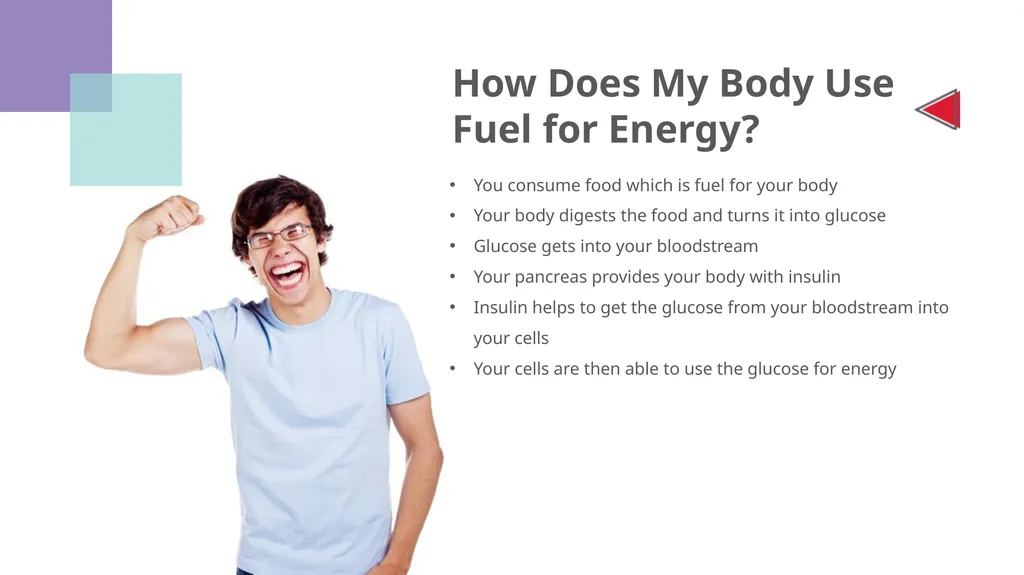
slide5. How Does My Body Use Fuel for Energy? You consume food which is fuel for your body
Your body digests the food and turns it into glucose
Glucose gets into your bloodstream
Your pancreas provides your body with insulin
Insulin helps to get the glucose from your bloodstream into your cells
Your cells are then able to use the glucose for energy<br>
slide6. Type 2 Diabetes:
Pancreas is not able to produce enough insulin
Body is resistant to using insulin Type 1 Diabetes:
Pancreas is unable to produce insulin https://health.utah.edu/nutrition-integrative-physiology/community-outreach/utah-center-community-nutrition/clinical-nutrition-resources<br>
slide7. Type 1 Diabetes Simple presentation template https://health.utah.edu/nutrition-integrative-physiology/community-outreach/utah-center-community-nutrition/clinical-nutrition-resources<br>
slide8. Type 1 Diabetes About 5 -10% of people with diabetes have Type 1
Autoimmune disorder – Body attacks itself and destroys cells in pancreas which produce insulin
Pancreas is unable to produce insulin and cannot use glucose
Must inject themselves with insulin through shots or insulin pump
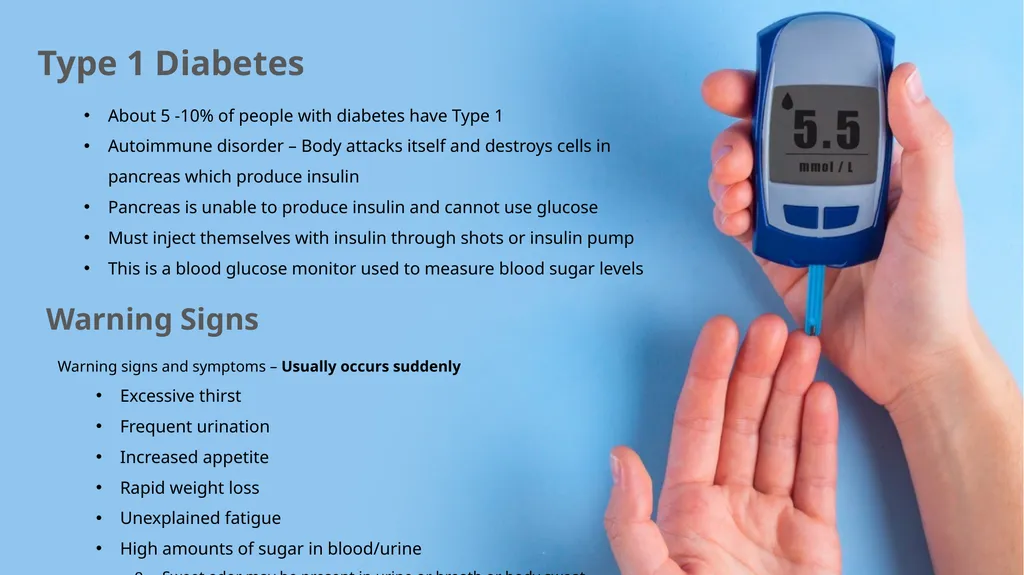
This is a blood glucose monitor used to measure blood sugar levels Warning Signs Warning signs and symptoms – Usually occurs suddenly
Excessive thirst
Frequent urination
Increased appetite
Rapid weight loss
Unexplained fatigue
High amounts of sugar in blood/urine
Sweet odor may be present in urine or breath or body sweat<br>
slide9. Type 2 Diabetes Simple presentation template https://health.utah.edu/nutrition-integrative-physiology/community-outreach/utah-center-community-nutrition/clinical-nutrition-resources<br>
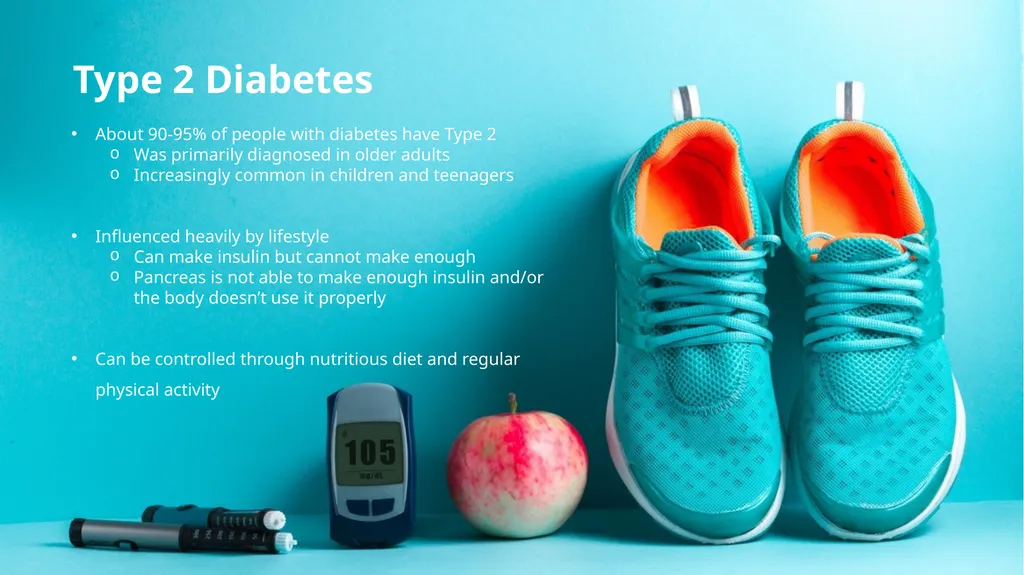
slide10. Type 2 Diabetes About 90-95% of people with diabetes have Type 2
Was primarily diagnosed in older adults
Increasingly common in children and teenagers
Influenced heavily by lifestyle
Can make insulin but cannot make enough
Pancreas is not able to make enough insulin and/or the body doesn’t use it properly
Can be controlled through nutritious diet and regular physical activity<br>
slide11. Warning Signs and Symptoms – Can occur slowly over time
Blurred vision
Tingling or numbness in legs, feet or fingers
Recurring skin, gum or urinary tract infections
Drowsiness
Slow healing of cuts and bruises
Any symptoms that occur with Type 1 diabetes Type 2 Diabetes Warning Signs<br>
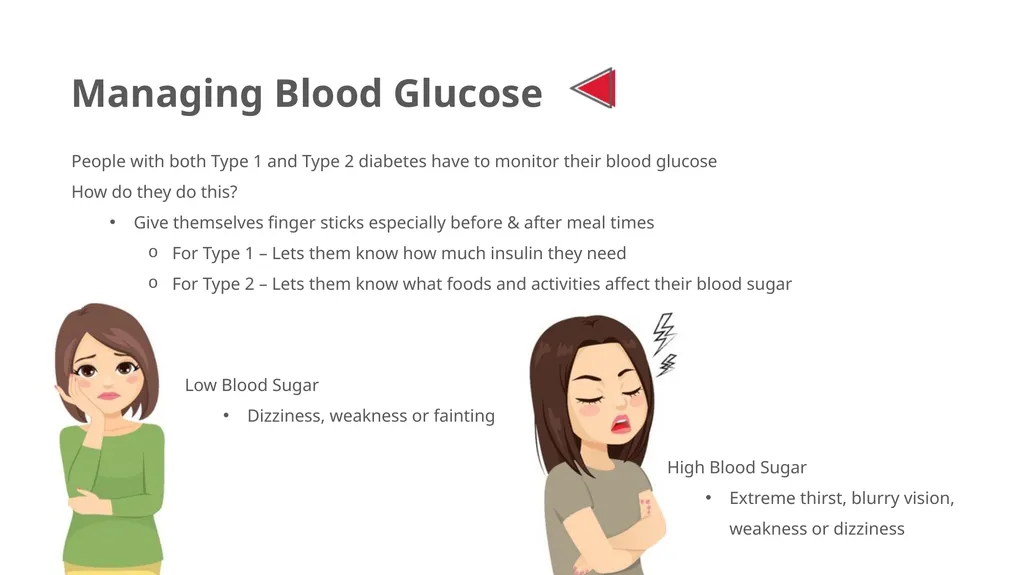
slide14. High Blood Sugar
Extreme thirst, blurry vision, weakness or dizziness Low Blood Sugar
Dizziness, weakness or fainting<br>
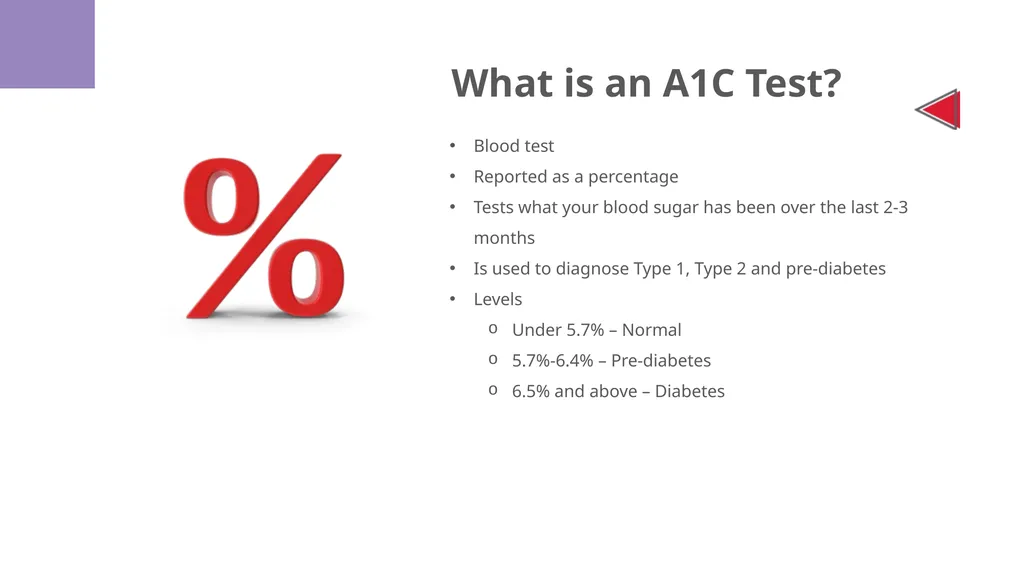
slide15. What is an A1C Test? Blood test
Reported as a percentage
Tests what your blood sugar has been over the last 2-3 months
Is used to diagnose Type 1, Type 2 and pre-diabetes
Levels
Under 5.7% – Normal
5.7%-6.4% – Pre-diabetes
6.5% and above – Diabetes<br>
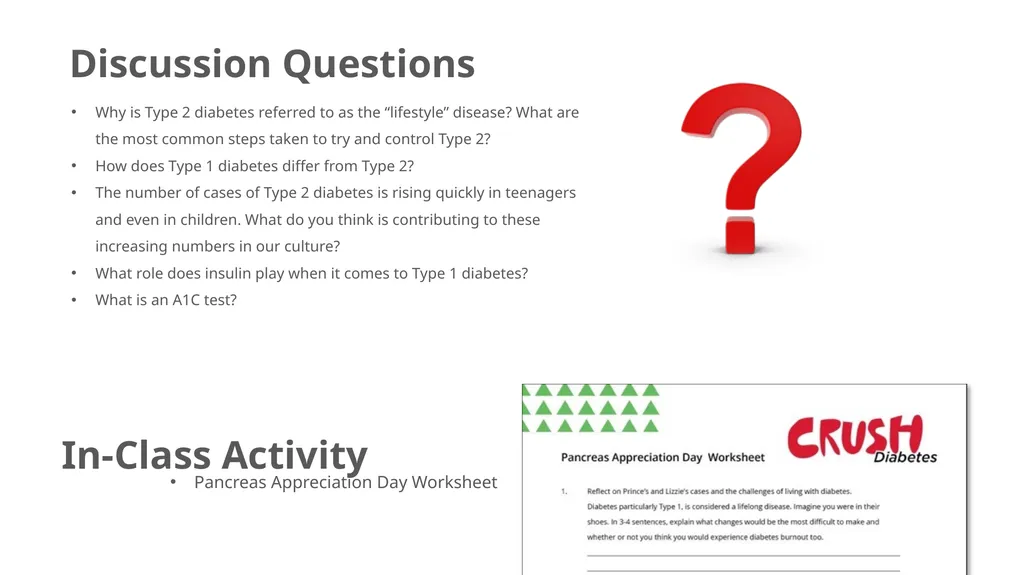
slide17. In-Class Activity Pancreas Appreciation Day Worksheet<br>
slide18. All the sources from the current Crush Diabetes curriculum.
American Diabetes Association (n.d.). Understanding A1C. Retrieved from https://www.diabetes.org/a1c
Diabetes State Burden Toolkit. (2020). Retrieved from https://nccd.cdc.gov/Toolkit/DiabetesBurden/YLL
Kidshealth (2020). Type 1 Diabetes: What is it? Retrieved from https://kidshealth.org/en/kids/type1.html References<br>
slide2. Understand the:
Etiology
Pathophysiology
Prevalence
of Type 1 and Type 2 diabetes. Learning Objectives<br>
slide4. What is Diabetes? https://health.utah.edu/nutrition-integrative-physiology/community-outreach/utah-center-community-nutrition/clinical-nutrition-resources<br>
slide5. How Does My Body Use Fuel for Energy? You consume food which is fuel for your body
Your body digests the food and turns it into glucose
Glucose gets into your bloodstream
Your pancreas provides your body with insulin
Insulin helps to get the glucose from your bloodstream into your cells
Your cells are then able to use the glucose for energy<br>
slide6. Type 2 Diabetes:
Pancreas is not able to produce enough insulin
Body is resistant to using insulin Type 1 Diabetes:
Pancreas is unable to produce insulin https://health.utah.edu/nutrition-integrative-physiology/community-outreach/utah-center-community-nutrition/clinical-nutrition-resources<br>
slide7. Type 1 Diabetes Simple presentation template https://health.utah.edu/nutrition-integrative-physiology/community-outreach/utah-center-community-nutrition/clinical-nutrition-resources<br>
slide8. Type 1 Diabetes About 5 -10% of people with diabetes have Type 1
Autoimmune disorder – Body attacks itself and destroys cells in pancreas which produce insulin
Pancreas is unable to produce insulin and cannot use glucose
Must inject themselves with insulin through shots or insulin pump
This is a blood glucose monitor used to measure blood sugar levels Warning Signs Warning signs and symptoms – Usually occurs suddenly
Excessive thirst
Frequent urination
Increased appetite
Rapid weight loss
Unexplained fatigue
High amounts of sugar in blood/urine
Sweet odor may be present in urine or breath or body sweat<br>
slide9. Type 2 Diabetes Simple presentation template https://health.utah.edu/nutrition-integrative-physiology/community-outreach/utah-center-community-nutrition/clinical-nutrition-resources<br>
slide10. Type 2 Diabetes About 90-95% of people with diabetes have Type 2
Was primarily diagnosed in older adults
Increasingly common in children and teenagers
Influenced heavily by lifestyle
Can make insulin but cannot make enough
Pancreas is not able to make enough insulin and/or the body doesn’t use it properly
Can be controlled through nutritious diet and regular physical activity<br>
slide11. Warning Signs and Symptoms – Can occur slowly over time
Blurred vision
Tingling or numbness in legs, feet or fingers
Recurring skin, gum or urinary tract infections
Drowsiness
Slow healing of cuts and bruises
Any symptoms that occur with Type 1 diabetes Type 2 Diabetes Warning Signs<br>
slide14. High Blood Sugar
Extreme thirst, blurry vision, weakness or dizziness Low Blood Sugar
Dizziness, weakness or fainting<br>
slide15. What is an A1C Test? Blood test
Reported as a percentage
Tests what your blood sugar has been over the last 2-3 months
Is used to diagnose Type 1, Type 2 and pre-diabetes
Levels
Under 5.7% – Normal
5.7%-6.4% – Pre-diabetes
6.5% and above – Diabetes<br>
slide17. In-Class Activity Pancreas Appreciation Day Worksheet<br>
slide18. All the sources from the current Crush Diabetes curriculum.
American Diabetes Association (n.d.). Understanding A1C. Retrieved from https://www.diabetes.org/a1c
Diabetes State Burden Toolkit. (2020). Retrieved from https://nccd.cdc.gov/Toolkit/DiabetesBurden/YLL
Kidshealth (2020). Type 1 Diabetes: What is it? Retrieved from https://kidshealth.org/en/kids/type1.html References<br>