DIALOGUE FOR RECIPROCITY Diane Maodush-Pitzer Danielle Lake GETTING STARTED 1.Please introduce yourself then answer the following: 2. Why do you value community engaged teaching? 3. What challenges have you faceddo you foresee when
"DIALOGUE FOR RECIPROCITY Diane Maodush-Pitzer" is the property of its rightful owner. Permission is granted to
download and print the materials on this website for personal, non-commercial use only, and to display it
on your personal computer provided you do not modify the materials and that you retain all copyright
notices contained in the materials. By downloading content from our website, you accept the terms of this
agreement.
Presentation Transcript
01
DIALOGUE FOR RECIPROCITY Diane Maodush-Pitzer
Danielle Lake<br>
02
GETTING STARTED… 1.Please introduce yourself & then answer the following:
2. Why do you value community engaged teaching?
3. What challenges have you faced/do you foresee when students work with community partners?
--------------------------
“Anytime you are going to do community engagement it starts with listening – if we don’t start there, we are in trouble.”<br>
03
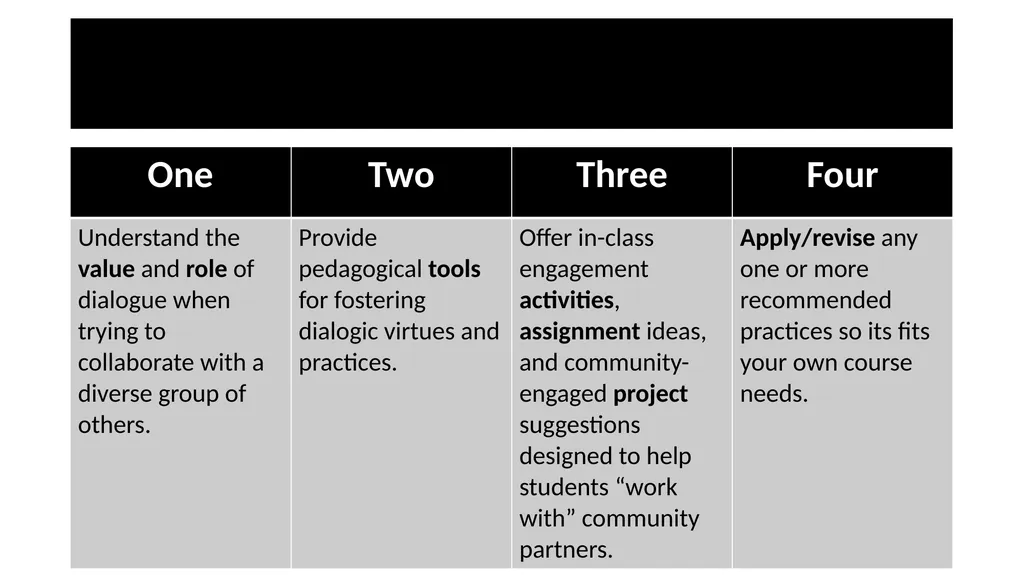
OBJECTIVES<br>
04
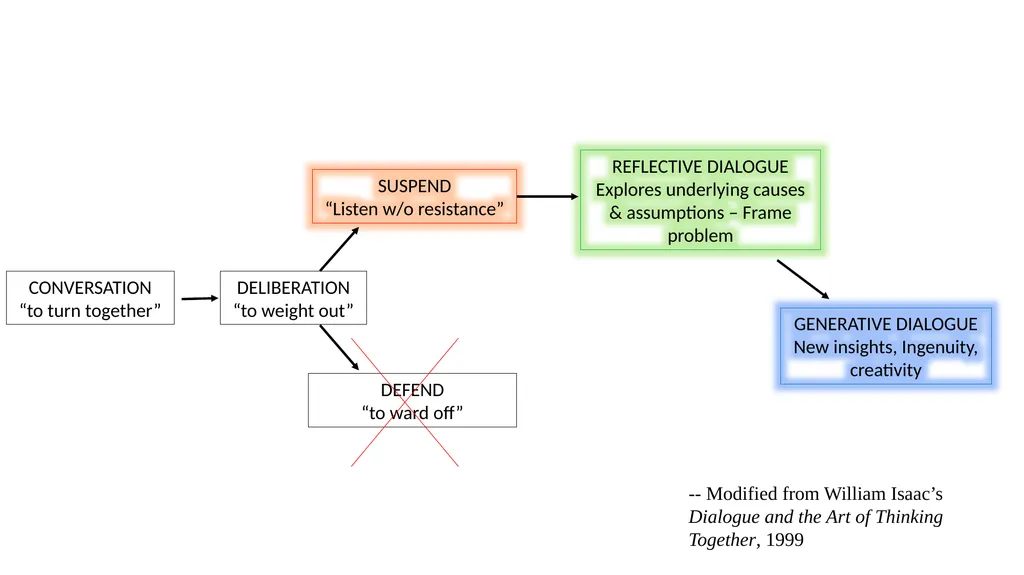
CONVERSATION
“to turn together” DELIBERATION
“to weight out” SUSPEND
“Listen w/o resistance” DEFEND
“to ward off” REFLECTIVE DIALOGUE
Explores underlying causes & assumptions – Frame problem GENERATIVE DIALOGUE
New insights, Ingenuity, creativity -- Modified from William Isaac’s Dialogue and the Art of Thinking Together, 1999<br>
05
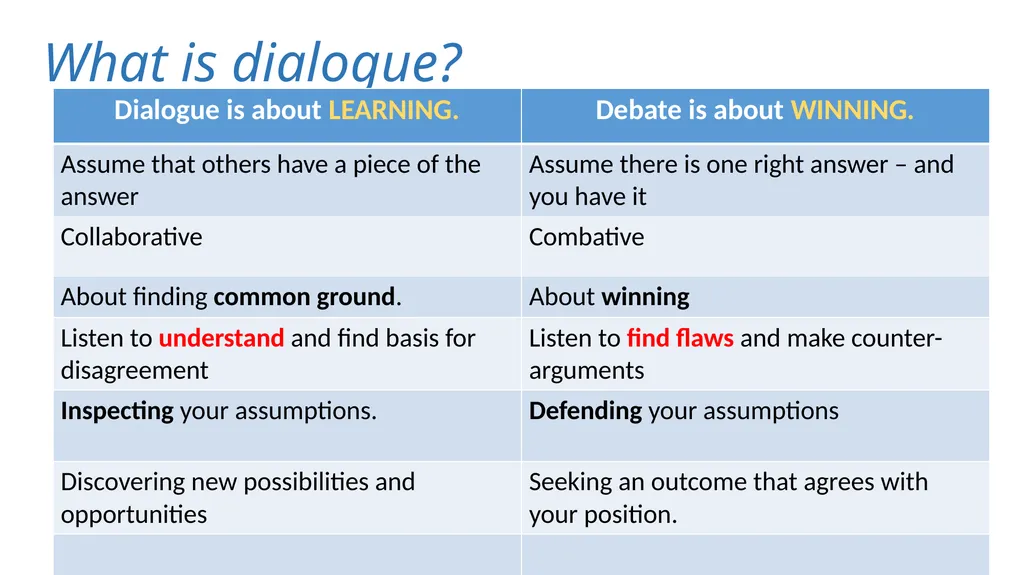
What is dialogue?<br>
06
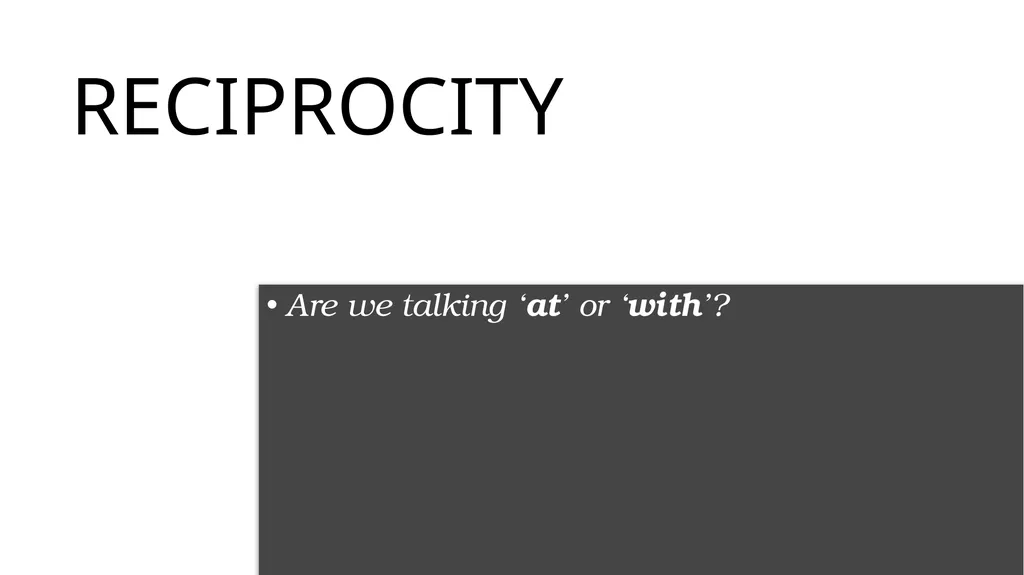
RECIPROCITY Are we talking ‘at’ or ‘with’?<br>
07
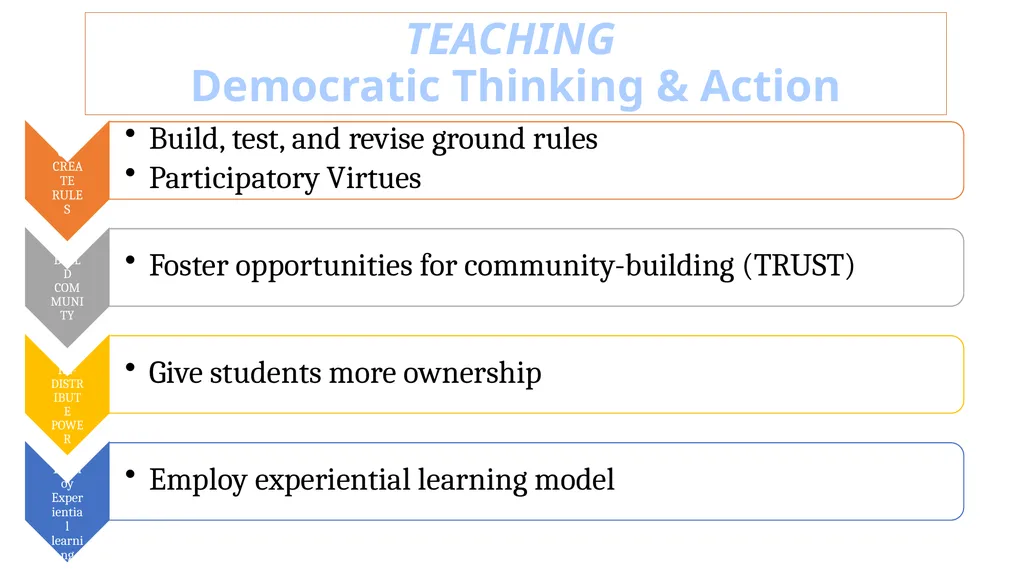
TEACHING Democratic Thinking & Action<br>
08
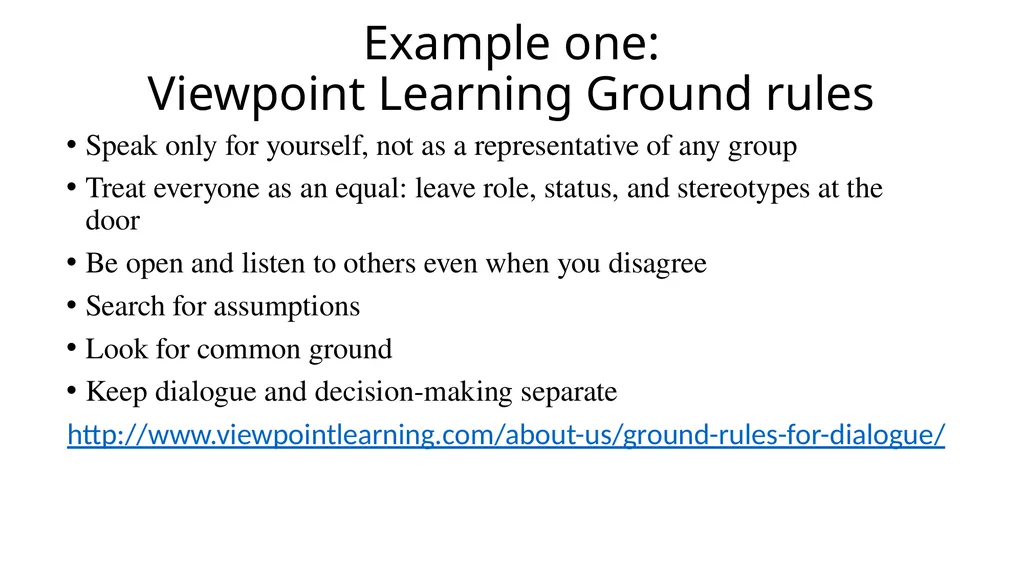
Example one: Viewpoint Learning Ground rules Speak only for yourself, not as a representative of any group
Treat everyone as an equal: leave role, status, and stereotypes at the door
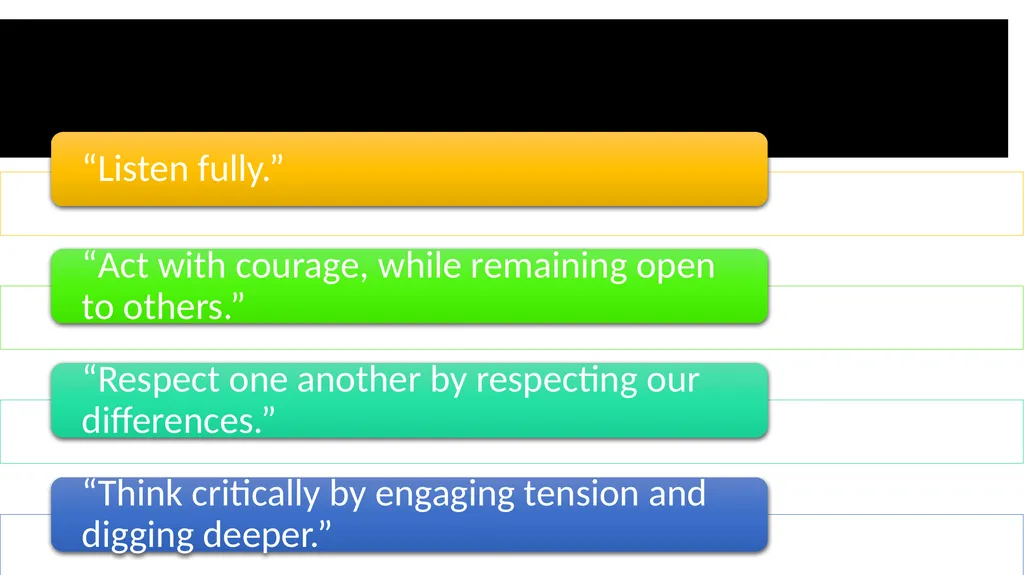
Be open and listen to others even when you disagree
Search for assumptions
Look for common ground
Keep dialogue and decision-making separate
http://www.viewpointlearning.com/about-us/ground-rules-for-dialogue/<br>
09
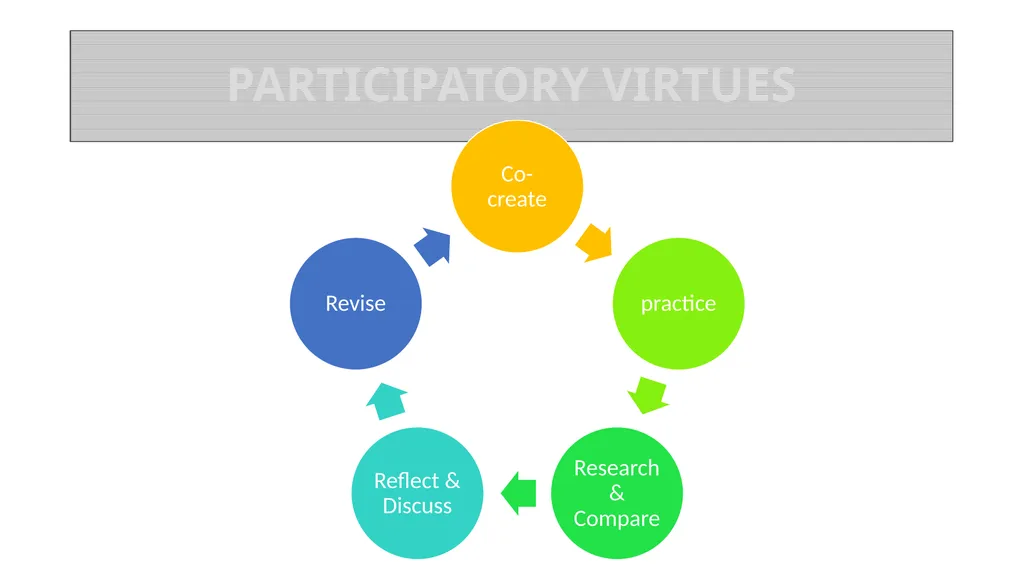
PARTICIPATORY VIRTUES<br>
10
Experimentalism<br>
11
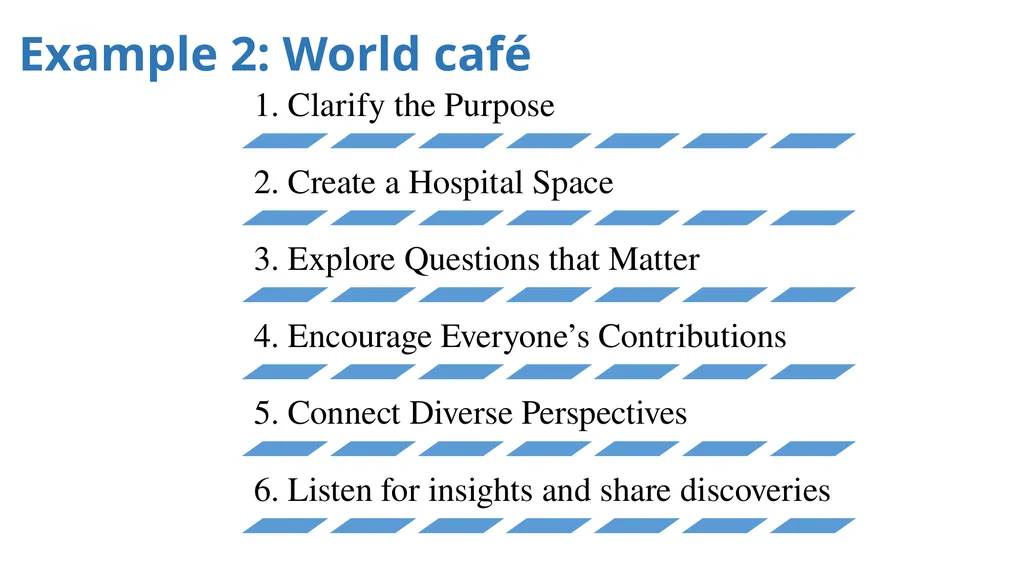
Example 2: World café<br>
12
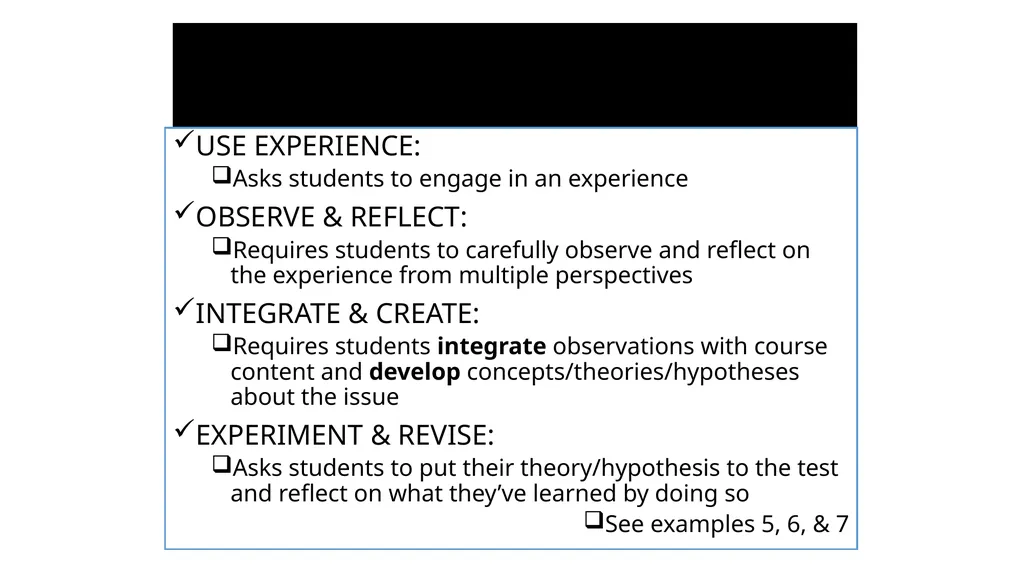
STUDENT OWNERSHIP USE EXPERIENCE:
Asks students to engage in an experience
OBSERVE & REFLECT:
Requires students to carefully observe and reflect on the experience from multiple perspectives
INTEGRATE & CREATE:
Requires students integrate observations with course content and develop concepts/theories/hypotheses about the issue
EXPERIMENT & REVISE:
Asks students to put their theory/hypothesis to the test and reflect on what they’ve learned by doing so
See examples 5, 6, & 7<br>
13
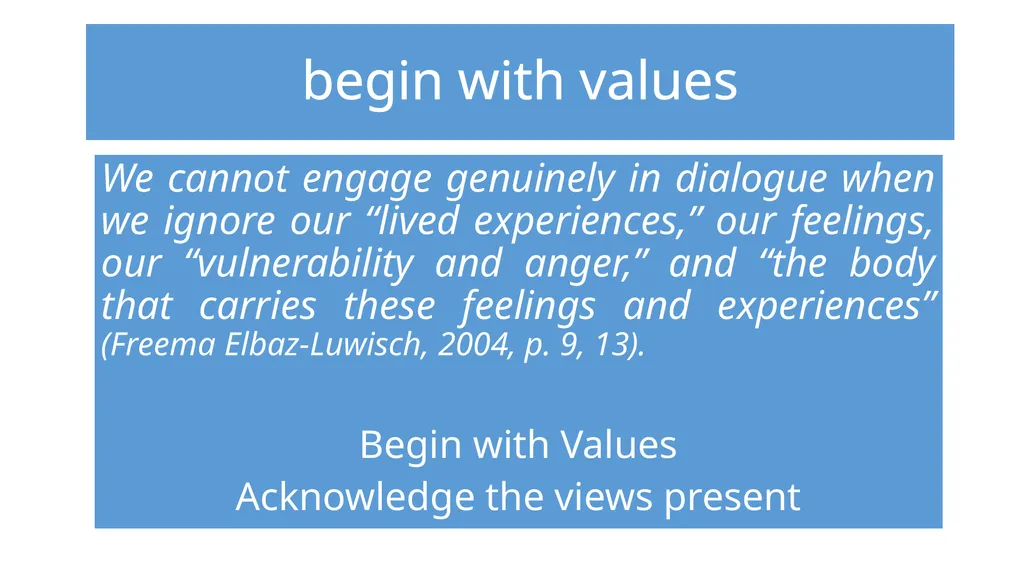
begin with values We cannot engage genuinely in dialogue when we ignore our “lived experiences,” our feelings, our “vulnerability and anger,” and “the body that carries these feelings and experiences” (Freema Elbaz-Luwisch, 2004, p. 9, 13).
Begin with Values
Acknowledge the views present<br>
14
COMMON GROUND??? The area “between” Can we find common ground with others? Yes
Parker Palmer, Healing the Heart of Democracy
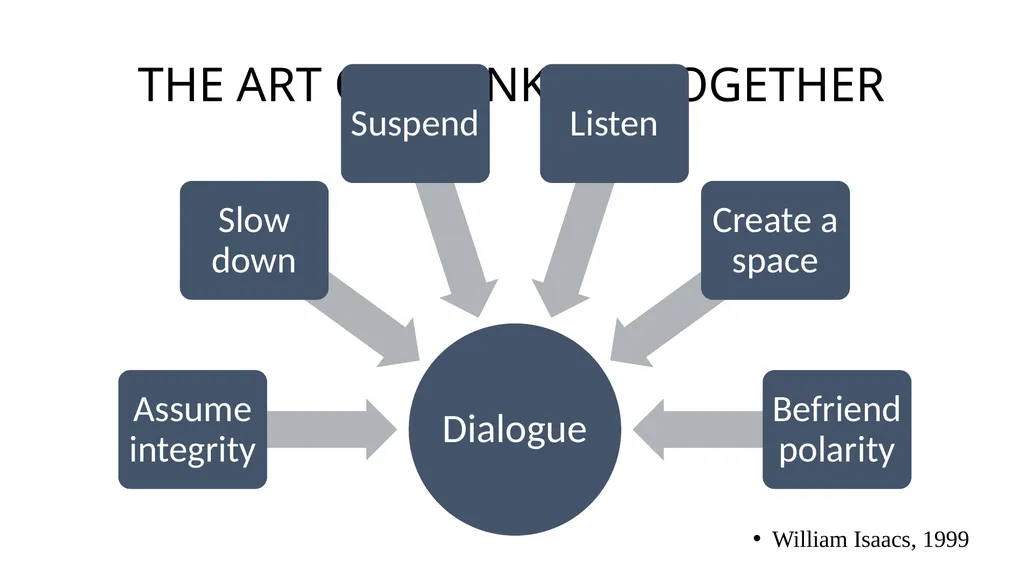
THE ART OF THINKING TOGETHER William Isaacs, 1999<br>
16
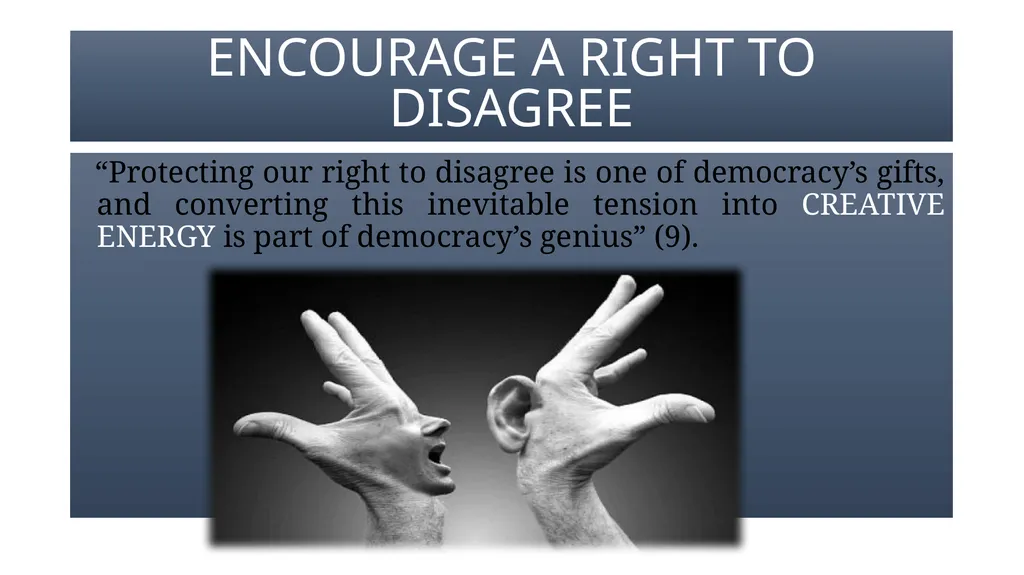
ENCOURAGE A RIGHT TO DISAGREE “Protecting our right to disagree is one of democracy’s gifts, and converting this inevitable tension into CREATIVE ENERGY is part of democracy’s genius” (9).<br>
17
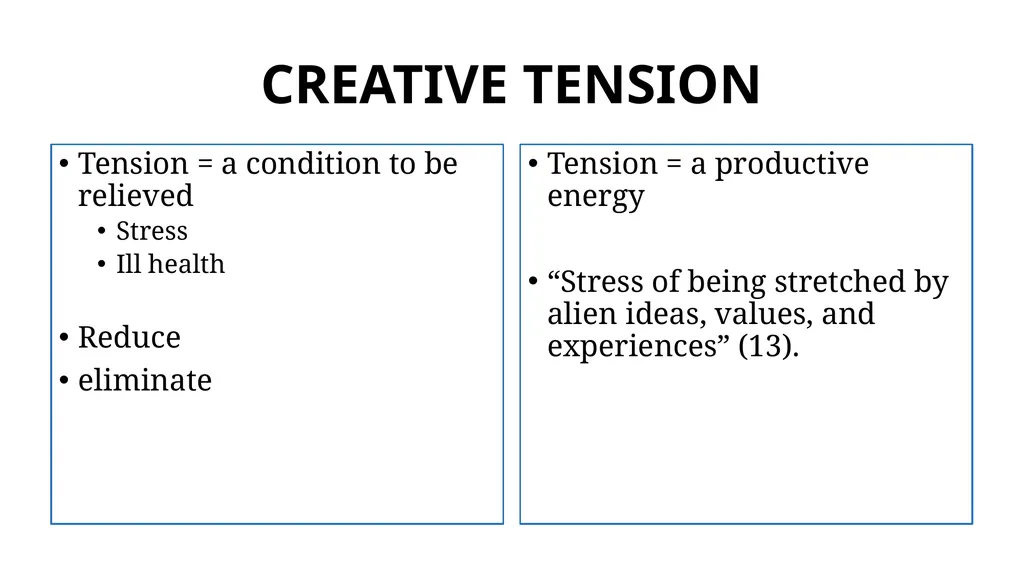
CREATIVE TENSION Tension = a condition to be relieved
Stress
Ill health
Reduce
eliminate Tension = a productive energy
“Stress of being stretched by alien ideas, values, and experiences” (13).<br>
18
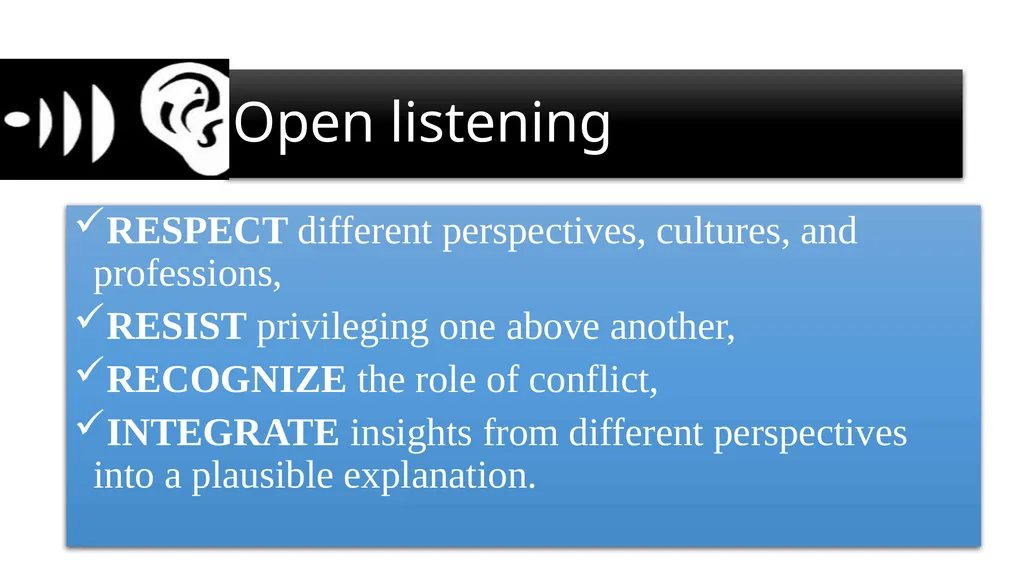
Open listening RESPECT different perspectives, cultures, and professions,
RESIST privileging one above another,
RECOGNIZE the role of conflict,
INTEGRATE insights from different perspectives into a plausible explanation.<br>
19
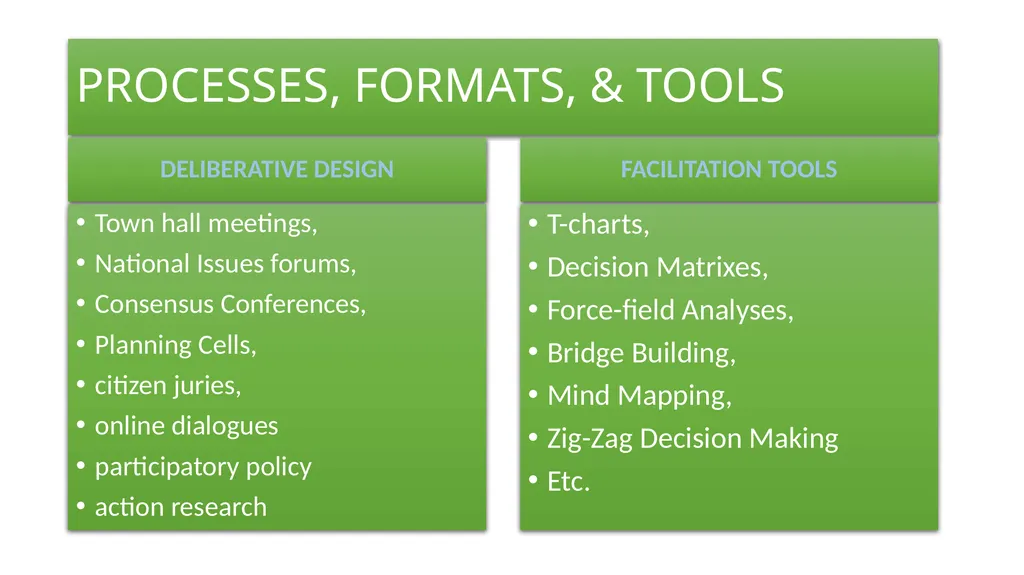
PROCESSES, FORMATS, & TOOLS DELIBERATIVE DESIGN FACILITATION TOOLS Town hall meetings,
National Issues forums,
Consensus Conferences,
Planning Cells,
citizen juries,
online dialogues
participatory policy
action research T-charts,
Decision Matrixes,
Force-field Analyses,
Bridge Building,
Mind Mapping,
Zig-Zag Decision Making
Etc.<br>
20
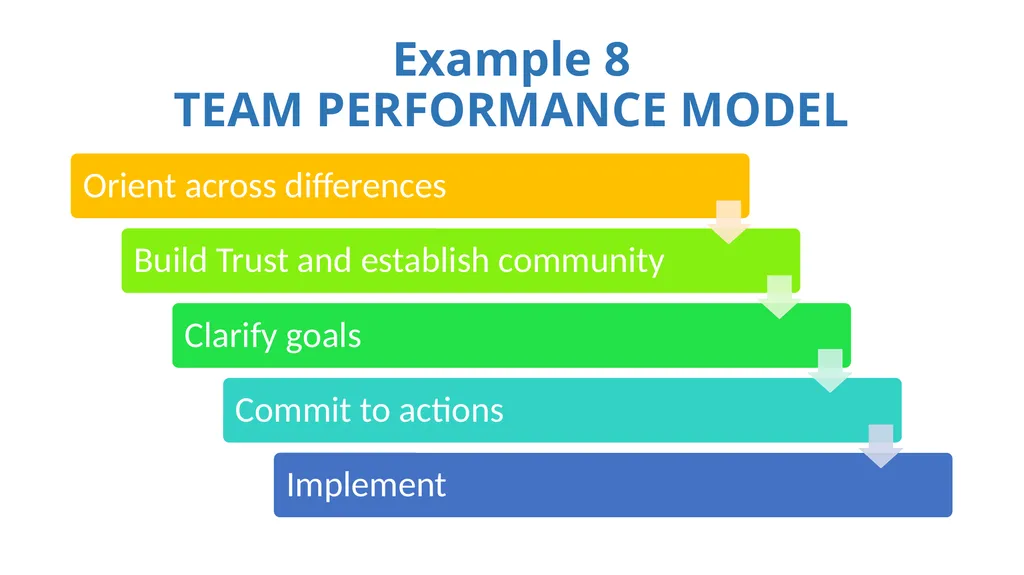
Example 8 TEAM PERFORMANCE MODEL<br>
21
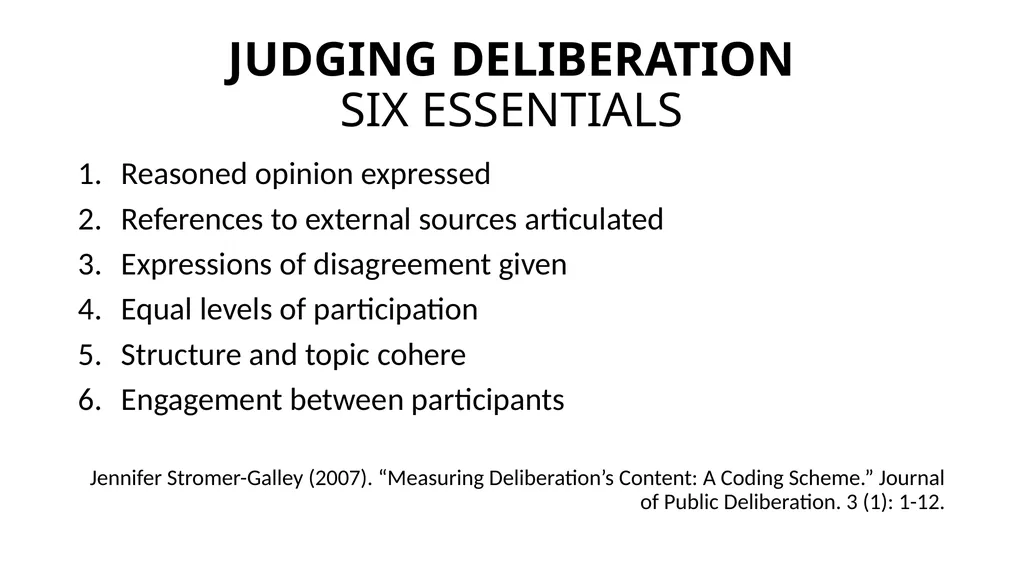
JUDGING DELIBERATION SIX ESSENTIALS Reasoned opinion expressed
References to external sources articulated
Expressions of disagreement given
Equal levels of participation
Structure and topic cohere
Engagement between participants
Jennifer Stromer-Galley (2007). “Measuring Deliberation’s Content: A Coding Scheme.” Journal of Public Deliberation. 3 (1): 1-12.<br>
22
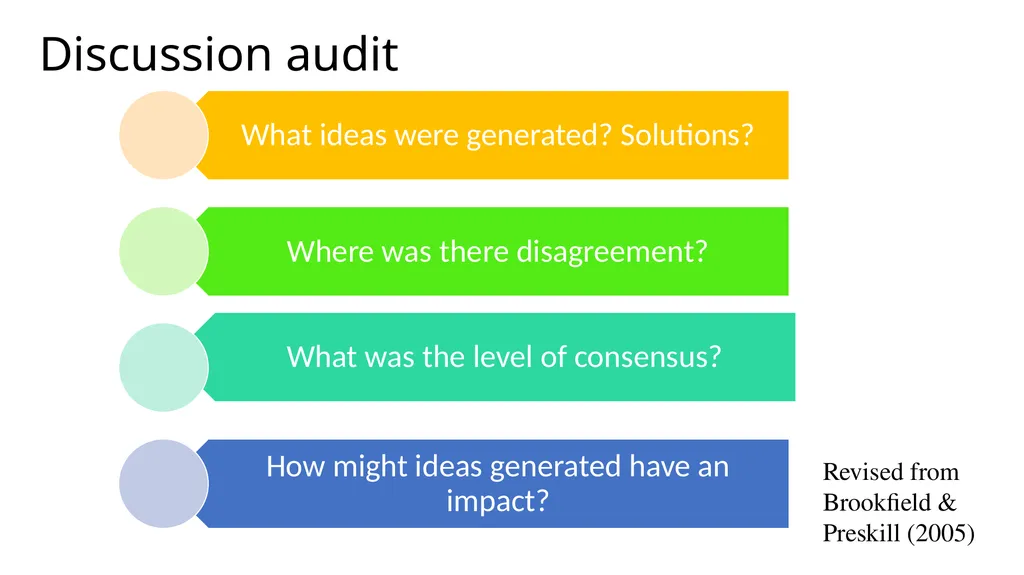
Discussion audit Revised from Brookfield & Preskill (2005)<br>
23
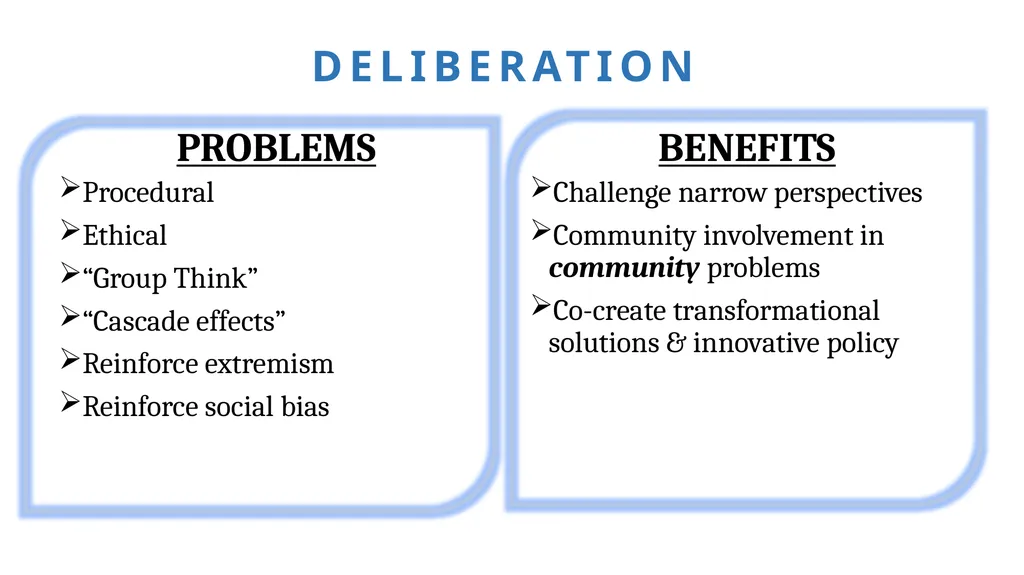
Procedural
Ethical
“Group Think”
“Cascade effects”
Reinforce extremism
Reinforce social bias Challenge narrow perspectives
Community involvement in community problems
Co-create transformational solutions & innovative policy PROBLEMS BENEFITS DELIBERATION<br>
24
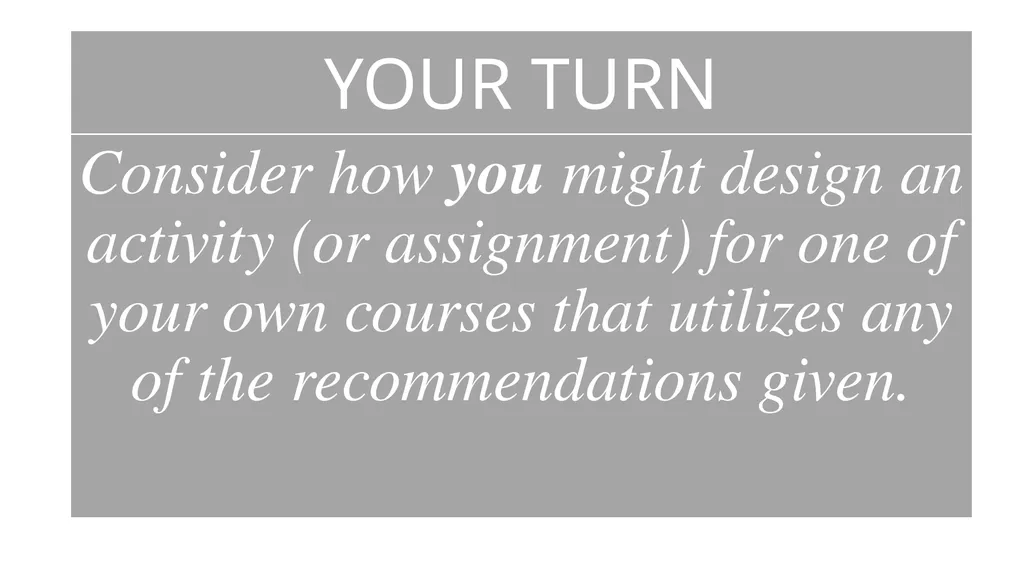
YOUR TURN Consider how you might design an activity (or assignment) for one of your own courses that utilizes any of the recommendations given.<br>