
Diffuse Large B-cell Lymphoma November 10, 2021









Description: Diffuse Large B-cell Lymphoma November 10, 2021 Course Director John P. Leonard, MD Senior Associate Dean for Innovation and Initiatives Executive Vice Chair, Weill Department of Medicine Richard T. Silver Distinguished Professor of
Related Topics
Download Presentation
"Diffuse Large B-cell Lymphoma November 10, 2021" is the property of its rightful owner. Permission is granted to download and print the materials on this website for personal, non-commercial use only, and to display it on your personal computer provided you do not modify the materials and that you retain all copyright notices contained in the materials. By downloading content from our website, you accept the terms of this agreement.
Presentation Transcript
slide1. Diffuse Large B-cell Lymphoma
November 10, 2021<br>
slide2. Course Director
John P. Leonard, MD
Senior Associate Dean for Innovation and Initiatives
Executive Vice Chair, Weill Department of Medicine
Richard T. Silver Distinguished Professor of Hematology & Medical Oncology
Weill Cornell Medical College
New York, New York Presenter
Grzegorz Nowakowski, MD
Professor of Medicine
Division of Hematology
Department of Internal Medicine
Mayo Clinic
Rochester, Minnesota<br>
slide3. This activity is supported by independent educational grants from
AstraZeneca,
Bristol-Myers Squibb
and
Epizyme, Inc<br>
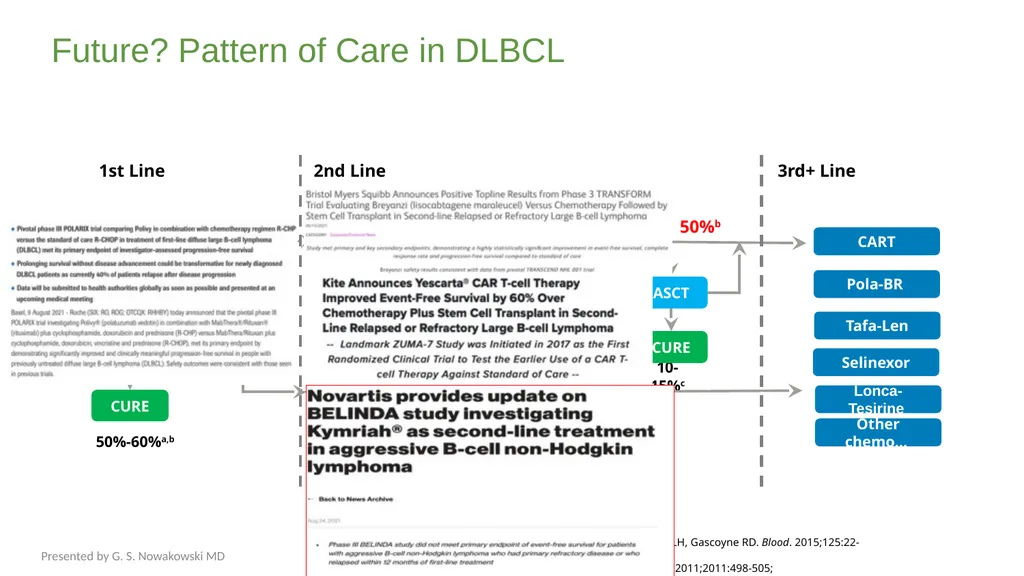
slide4. This activity is jointly provided by<br>
slide5. Continuing Education The University of Nebraska Medical Center, Center for Continuing Education designates this live activity for a maximum of 1 AMA PRA Category 1 Credit™. Physicians should claim only the credit commensurate with the extent of their participation in the activity. In support of improving patient care, this activity has been planned and implemented by University of Nebraska Medical Center and Bio Ascend. University of Nebraska Medical Center is jointly accredited by the Accreditation Council for Continuing Medical Education (ACCME), the Accreditation Council for Pharmacy Education (ACPE), and the American Nurses Credentialing Center (ANCC), to provide continuing education for the healthcare team.<br>
slide6. Disclosure As a jointly accredited provider, the University of Nebraska Medical Center (UNMC) ensures accuracy, balance, objectivity, independence, and scientific rigor in its educational activities and is committed to protecting learners from promotion, marketing, and commercial bias. All faculty, planners, and others in a position to control continuing education content participating in an accredited continuing education activity are required to disclose all financial relationships with ineligible companies. Ineligible companies are organizations whose primary business is producing, marketing, selling, re-selling, or distributing healthcare products used by or on patients. The accredited provider is responsible for mitigating all relevant financial relationships in accredited continuing education. Disclosure of these commitments and/or relationships is included in these activity materials so that participants may formulate their own judgments in interpreting its content and evaluating its recommendations.
This activity may include presentations in which faculty may discuss off-label and/or investigational use of pharmaceuticals or instruments not yet FDA-approved. Participants should note that the use of products outside currently FDA-approved labeling should be considered experimental and are advised to consult current prescribing information for FDA-approved indications. All materials are included with the permission of the faculty. The opinions expressed are those of the faculty and are not to be construed as those of UNMC or Bio Ascend. 6<br>
slide7. Disclosures John P. Leonard, MD
Consulting Fees: ADC Therapeutics, AstraZeneca, Bayer, Bristol-Myers Squibb Company, Epizyme, Kite, a Gilead Company, MEI Pharma, Miltenyi Biotec, Regeneron, Roche/Genentech, Sutro Biopharma
Grzegorz Nowakowski, MD
Consulting Fees: Bantham Pharmaceutical, Blueprint Medicines, Celgene/BMS, Curis, Daiichi Sankyo, Incyte, Karyopharm Therapeutics, Kite Pharma, Kymera Therapeutics, MorphoSys, Roche/Genentech, Ryvu Therapeutics, Seattle Genetics, Selvita, TG Therapeutics, Zai Laboratory
Research Support: Celgene/BMS, Nanostrings, Roche/Genentech
Scientific Advisory Board: Karyopharm Therapeutics, Ryvu Therapeutics
Planning Committee
The following planning committee members have nothing to disclose: UNMC: Brenda Ram, CMP, CHCP
Bio Ascend: Patti Bunyasaranand, MS; Dru Dace, PhD; Lucja Grajkowska, PhD; Kraig Steubing 7<br>
slide8. Learning Objectives Evaluate best available evidence regarding treatment for patients with DLBCL
Assess the implications of emerging clinical trial data regarding DLBCL treatment approaches
Develop strategies to address complicated DLBCL cases 8<br>
slide9. Reminders Please respond to the polling questions as they appear on the webinar screen. All responses are anonymous
You will receive a post-program evaluation link at the end of the webinar. Your response is greatly appreciated
A CME request form is available for download at the end of the online program evaluation
The recording of today’s presentation along with downloadable slides will be available at www.oncologycaseclinic.com in about 2 weeks
Visit www.oncologycaseclinic.com to register for upcoming webinars and view past webinars 9<br>
slide10. Pre-Assessment Question 1 The ROBUST trial examined the addition of what agent to R-CHOP for patients with untreated DLBCL?
Tafasitamab
Lenalidomide
Polatuzumab
Selinexor 10<br>
slide11. Pre-Assessment Question 2 Polatuzumab vedotin is an antibody-drug conjugate that targets which of the following antigens on lymphoma cells?
CD5
CD19
CD20
CD79b 11<br>
slide12. Pre-Assessment Question 3 Which of the following treatment-emergent adverse events (TEAEs) were most common in the LOTIS-2 trial examining loncastuximab tesirine in patients with R/R DLBCL?
Increased gamma-glutamyltransferase (GGT)
Fatigue
Nausea
Cough 12<br>
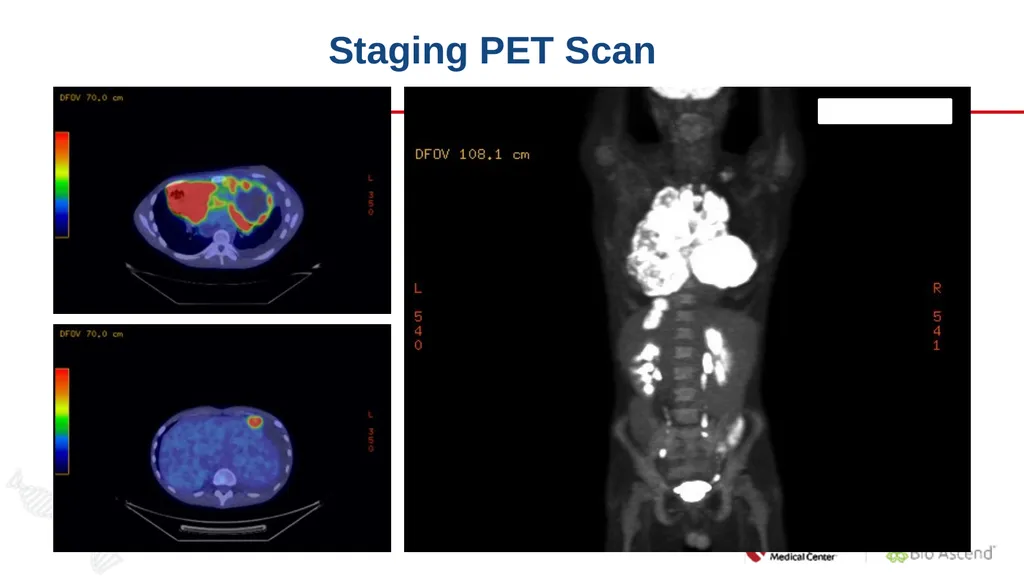
slide13. Patient 1 22 yo male with several months history of dry cough and night sweats, weight loss of >10 lbs
No significant PMH
No family history of immunodeficiency, lymphoma or cancer
Unremarkable physical examination apart from mass protruding from anterior chest
CXR – large intrathoracic masses
CBC – anemia Hb 9.9, chemistries unremarkable; LDH 550 (ULN 220) HIV-/Hepatitis B-/C-<br>
slide14. Staging PET Scan<br>
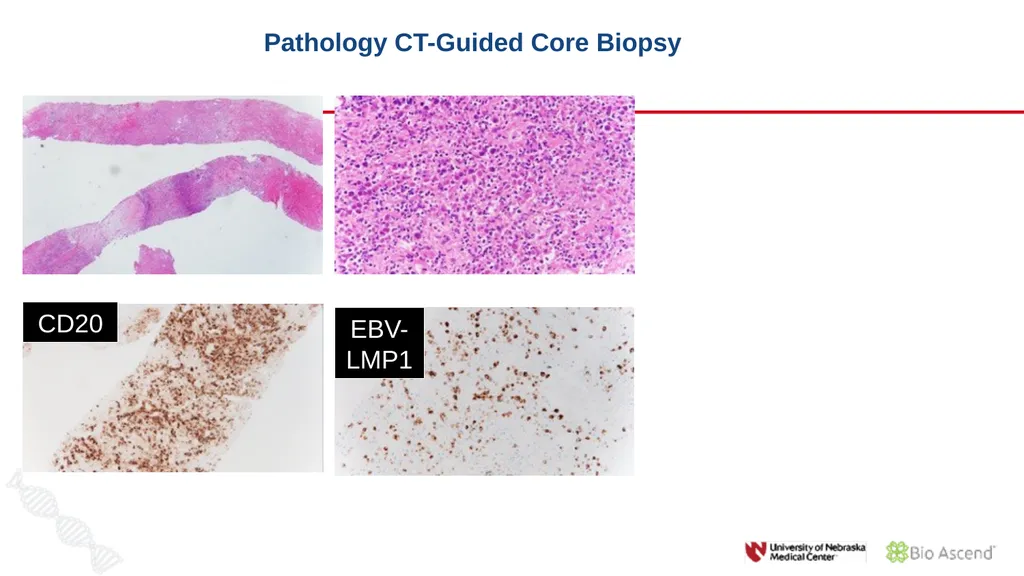
slide15. CD20 EBV-LMP1 Pathology CT-Guided Core Biopsy Positive: CD20, PAX5, EBV-LMP1, EBER (in intact viable cells), MUM1 (>30%).
Negative: CD10 (<30%), BCL6 (<30%), BCL2, BCL6 (<50%), and MYC (<40%), CD30.
Non-GCB by Hans
FISH: MYC-/BCL2-<br>
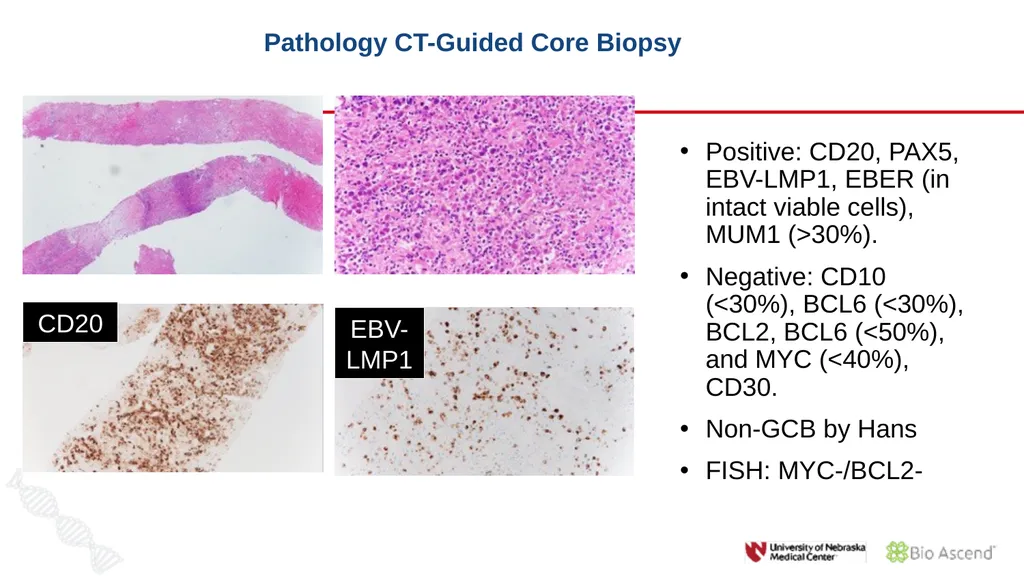
slide16. CD20 EBV-LMP1 Pathology CT-Guided Core Biopsy Positive: CD20, PAX5, EBV-LMP1, EBER (in intact viable cells), MUM1 (>30%).
Negative: CD10 (<30%), BCL6 (<30%), BCL2, BCL6 (<50%), and MYC (<40%), CD30.
Non-GCB by Hans
FISH: MYC-/BCL2-<br>
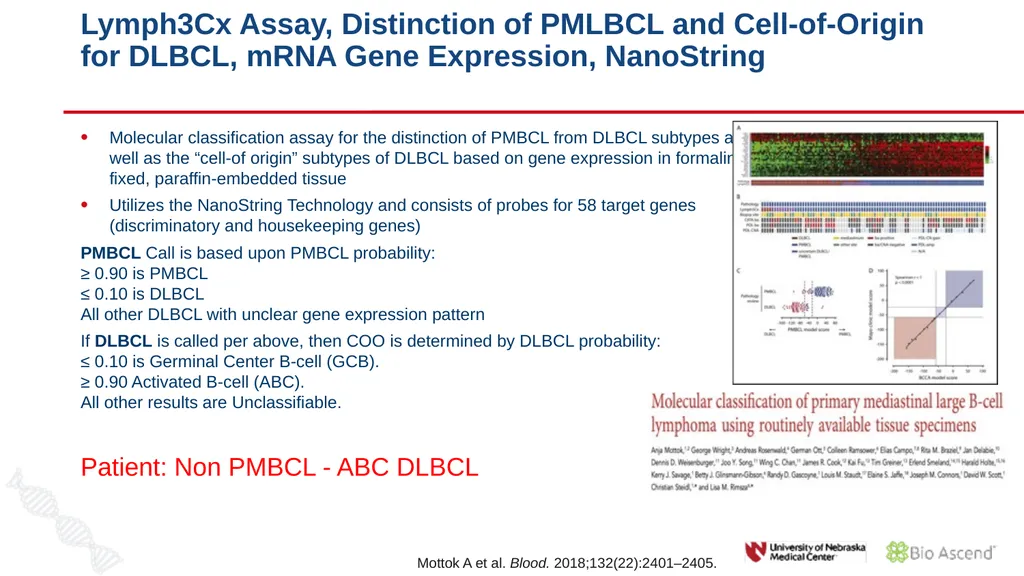
slide17. Lymph3Cx Assay, Distinction of PMLBCL and Cell-of-Origin for DLBCL, mRNA Gene Expression, NanoString Molecular classification assay for the distinction of PMBCL from DLBCL subtypes as well as the “cell-of origin” subtypes of DLBCL based on gene expression in formalin-fixed, paraffin-embedded tissue
Utilizes the NanoString Technology and consists of probes for 58 target genes (discriminatory and housekeeping genes)
PMBCL Call is based upon PMBCL probability: ≥ 0.90 is PMBCL ≤ 0.10 is DLBCL All other DLBCL with unclear gene expression pattern
If DLBCL is called per above, then COO is determined by DLBCL probability: ≤ 0.10 is Germinal Center B-cell (GCB). ≥ 0.90 Activated B-cell (ABC). All other results are Unclassifiable.
Patient: Non PMBCL - ABC DLBCL Mottok A et al. Blood. 2018;132(22):2401–2405.<br>
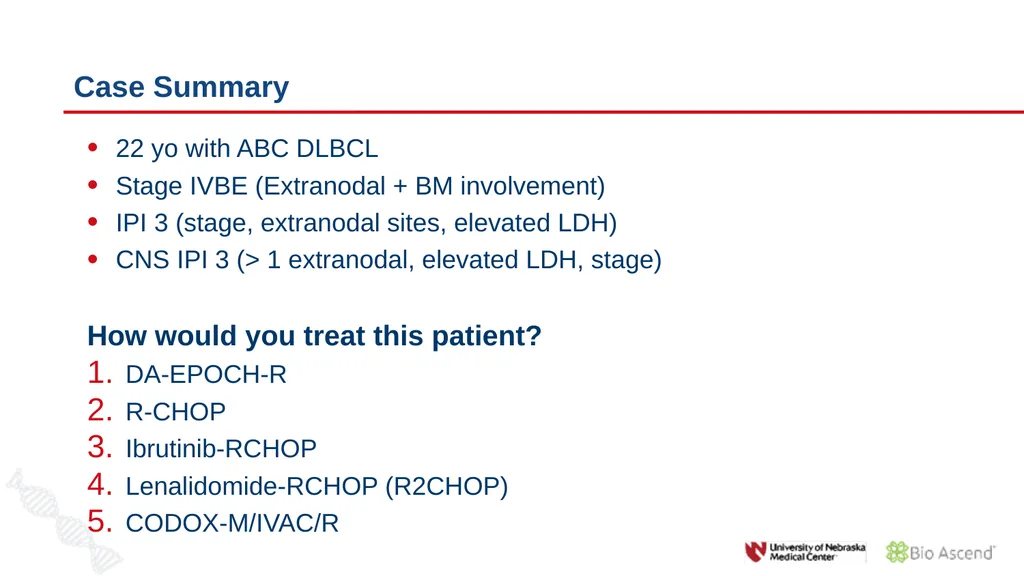
slide18. Case Summary 22 yo with ABC DLBCL
Stage IVBE (Extranodal + BM involvement)
IPI 3 (stage, extranodal sites, elevated LDH)
CNS IPI 3 (> 1 extranodal, elevated LDH, stage)
How would you treat this patient?
DA-EPOCH-R
R-CHOP
Ibrutinib-RCHOP
Lenalidomide-RCHOP (R2CHOP)
CODOX-M/IVAC/R<br>
slide19. Case Summary 22 yo with ABC DLBCL
Stage IVBE (Extranodal + BM involvement)
IPI 3 (stage, extranodal sites, elevated LDH)
CNS IPI 3 (> 1 extranodal, elevated LDH, stage)
How would you treat this patient?
DA-EPOCH-R
R-CHOP
Ibrutinib-RCHOP
Lenalidomide-RCHOP (R2CHOP)
CODOX-M/IVAC/R<br>
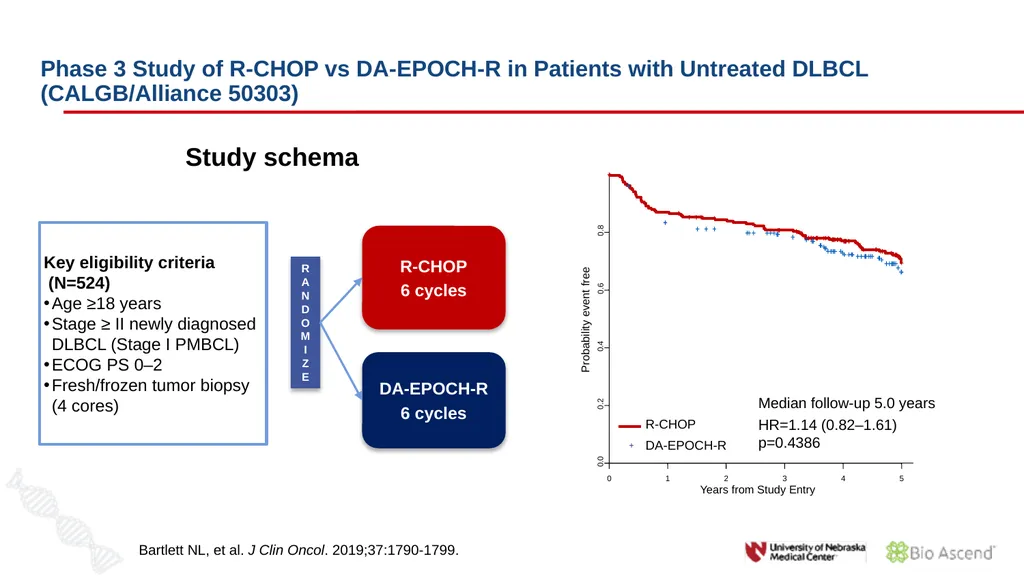
slide20. R-CHOP
6 cycles DA-EPOCH-R
6 cycles Key eligibility criteria (N=524)
Age ≥18 years
Stage ≥ II newly diagnosed DLBCL (Stage I PMBCL)
ECOG PS 0–2
Fresh/frozen tumor biopsy (4 cores) R
A
N
D
O
M
I
Z
E 1:1 Bartlett NL, et al. J Clin Oncol. 2019;37:1790-1799. Study schema Event-free survival Phase 3 Study of R-CHOP vs DA-EPOCH-R in Patients with Untreated DLBCL (CALGB/Alliance 50303)<br>
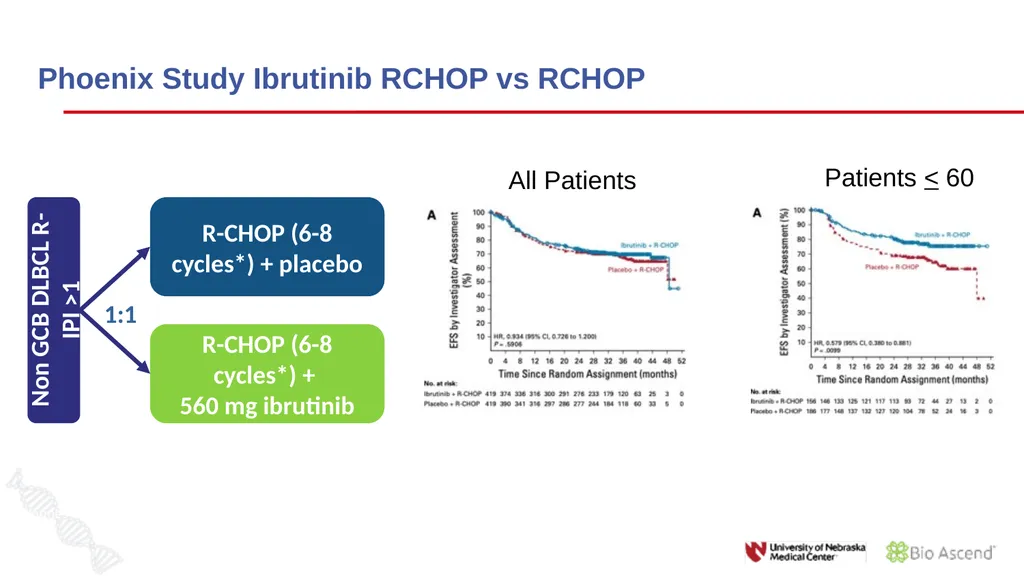
slide21. Phoenix Study Ibrutinib RCHOP vs RCHOP Patients < 60 Younes et al J Clin Oncol 37:1285-1295 All Patients<br>
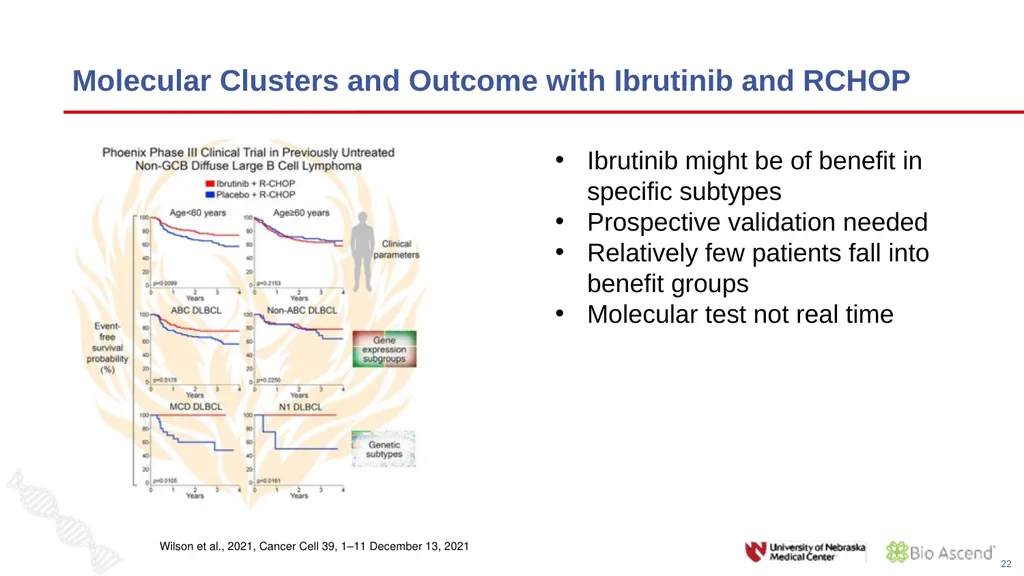
slide22. Molecular Clusters and Outcome with Ibrutinib and RCHOP 22 Ibrutinib might be of benefit in specific subtypes
Prospective validation needed
Relatively few patients fall into benefit groups
Molecular test not real time Wilson et al., 2021, Cancer Cell 39, 1–11 December 13, 2021<br>
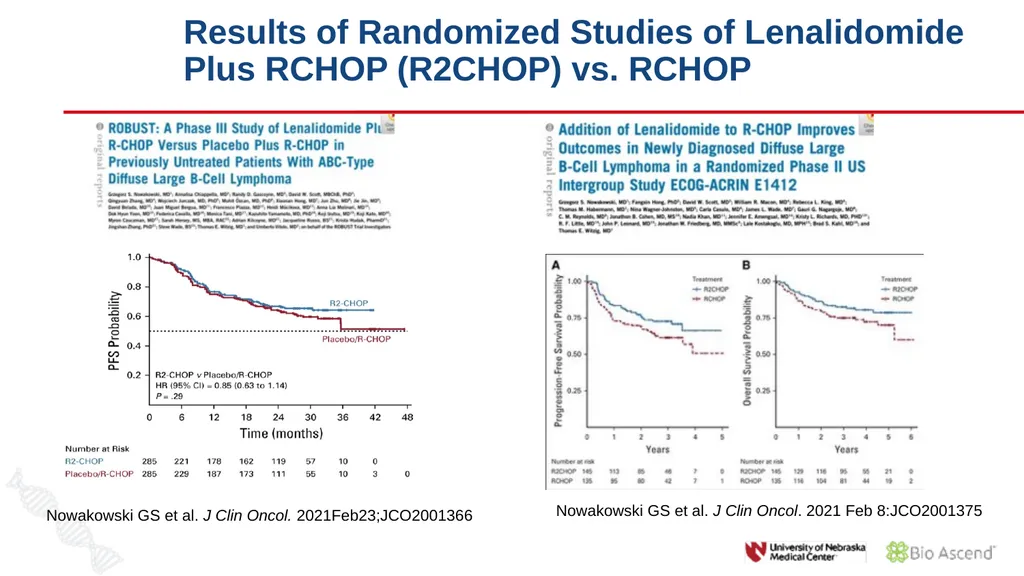
slide23. Results of Randomized Studies of Lenalidomide Plus RCHOP (R2CHOP) vs. RCHOP Nowakowski GS et al. J Clin Oncol. 2021Feb23;JCO2001366. Nowakowski GS et al. J Clin Oncol. 2021 Feb 8:JCO2001375<br>
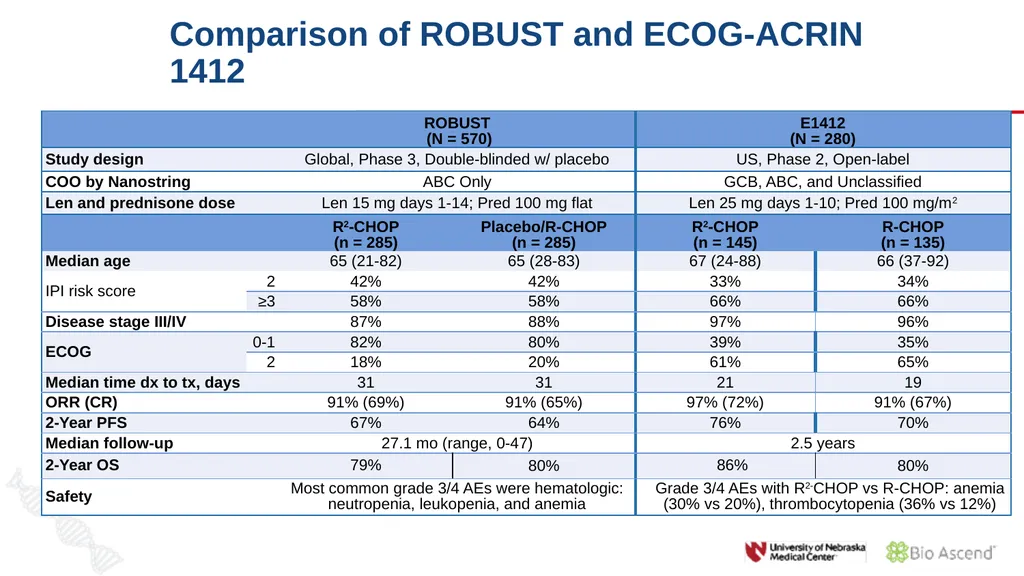
slide24. Comparison of ROBUST and ECOG-ACRIN 1412<br>
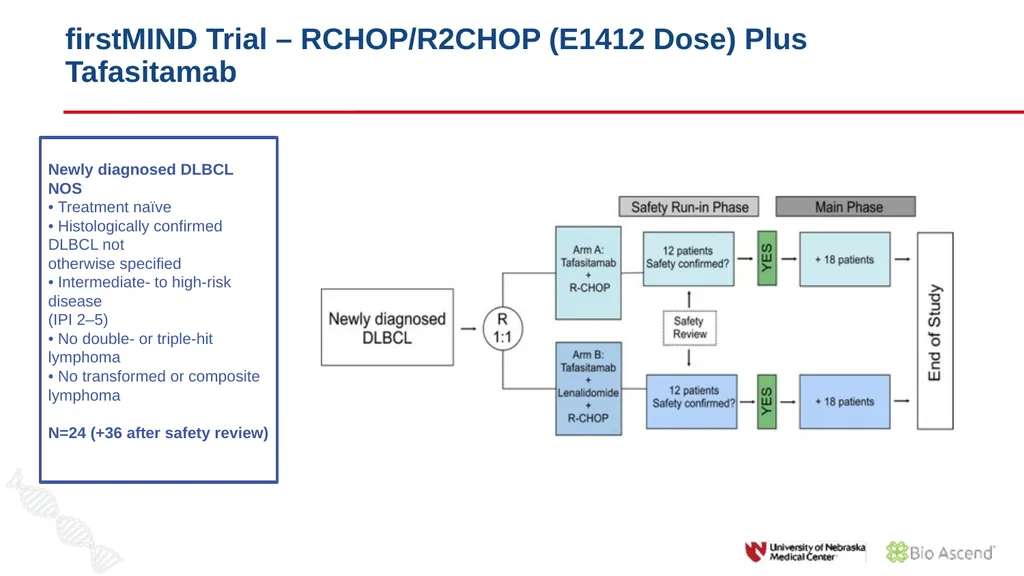
slide25. firstMIND Trial – RCHOP/R2CHOP (E1412 Dose) Plus Tafasitamab Newly diagnosed DLBCL NOS
• Treatment naïve
• Histologically confirmed DLBCL not
otherwise specified
• Intermediate- to high-risk disease
(IPI 2–5)
• No double- or triple-hit lymphoma
• No transformed or composite lymphoma
N=24 (+36 after safety review) Estimated Study Completion Date: May 2022 Belada D et al. ASH 2020. Abstract 3028.<br>
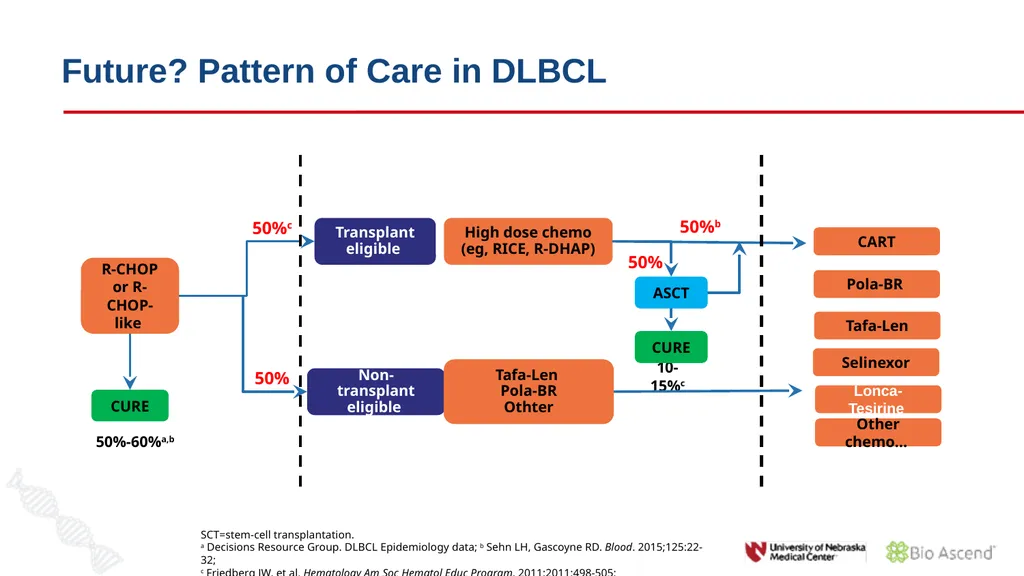
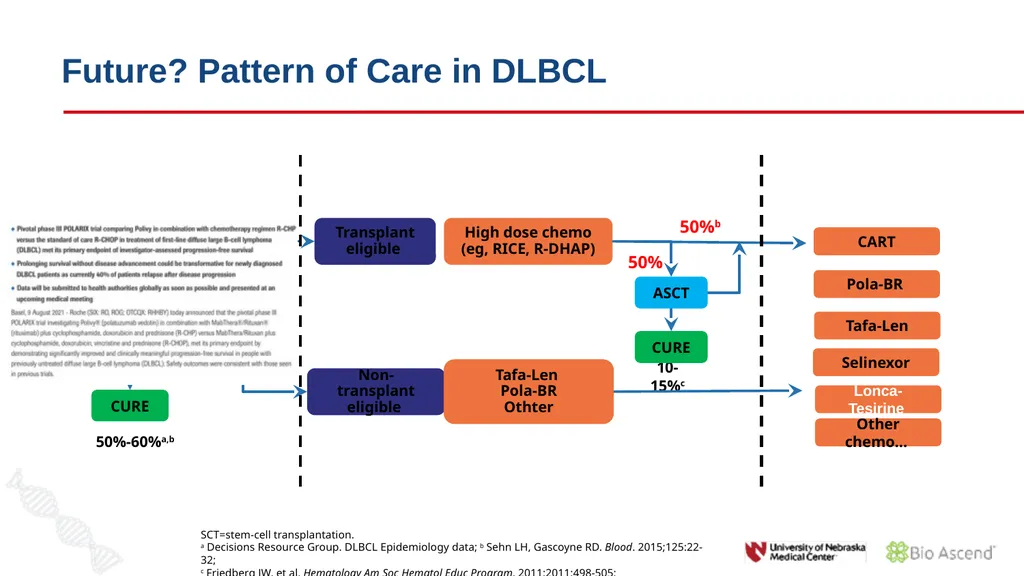
slide26. Future? Pattern of Care in DLBCL 1st Line 2nd Line 3rd+ Line R-CHOP or R-CHOP-like Non-transplant eligible High dose chemo (eg, RICE, R-DHAP) Tafa-Len
Pola-BR
Othter ASCT CURE 50%c 50% 50%b 50% 50%-60%a,b Pola-BR Lonca-Tesirine 10-15%c SCT=stem-cell transplantation.
a Decisions Resource Group. DLBCL Epidemiology data; b Sehn LH, Gascoyne RD. Blood. 2015;125:22-32;
c Friedberg JW, et al. Hematology Am Soc Hematol Educ Program. 2011;2011:498-505; Transplant eligible CURE Tafa-Len Selinexor CART Other chemo…<br>
slide27. Future? Pattern of Care in DLBCL 1st Line 2nd Line 3rd+ Line R-CHOP or R-CHOP-like Non-transplant eligible High dose chemo (eg, RICE, R-DHAP) Tafa-Len
Pola-BR
Othter ASCT CURE 50%c 50% 50%b 50% 50%-60%a,b Pola-BR Lonca-Tesirine 10-15%c SCT=stem-cell transplantation.
a Decisions Resource Group. DLBCL Epidemiology data; b Sehn LH, Gascoyne RD. Blood. 2015;125:22-32;
c Friedberg JW, et al. Hematology Am Soc Hematol Educ Program. 2011;2011:498-505; Transplant eligible CURE Tafa-Len Selinexor CART Other chemo…<br>
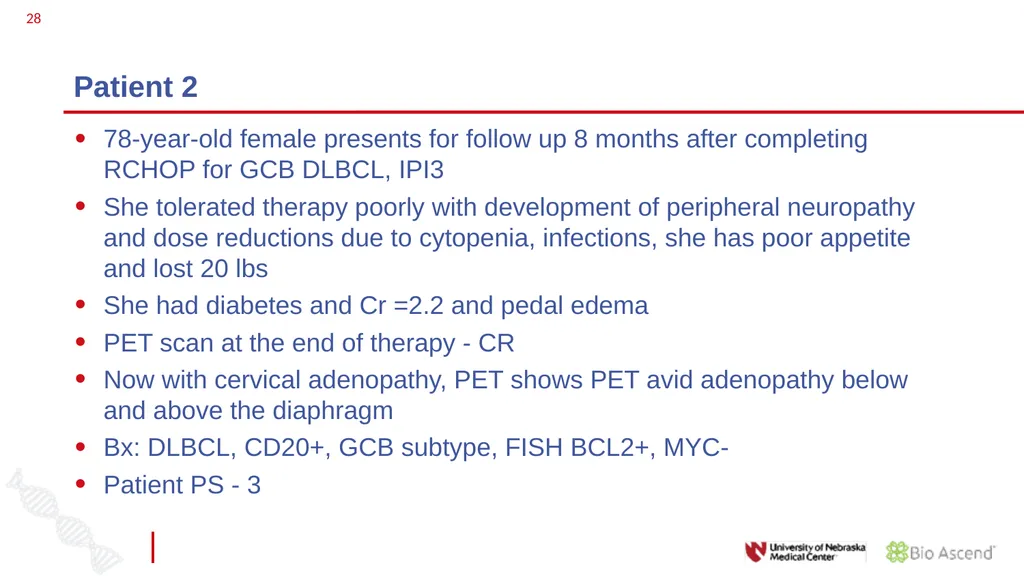
slide28. Patient 2 78-year-old female presents for follow up 8 months after completing RCHOP for GCB DLBCL, IPI3
She tolerated therapy poorly with development of peripheral neuropathy and dose reductions due to cytopenia, infections, she has poor appetite and lost 20 lbs
She had diabetes and Cr =2.2 and pedal edema
PET scan at the end of therapy - CR
Now with cervical adenopathy, PET shows PET avid adenopathy below and above the diaphragm
Bx: DLBCL, CD20+, GCB subtype, FISH BCL2+, MYC-
Patient PS - 3 28<br>
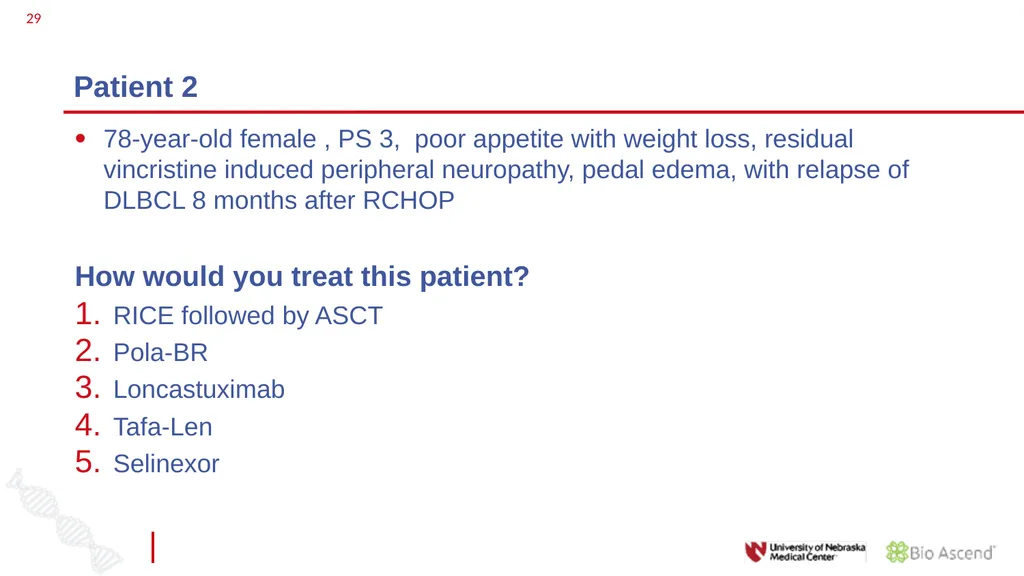
slide29. Patient 2 78-year-old female , PS 3, poor appetite with weight loss, residual vincristine induced peripheral neuropathy, pedal edema, with relapse of DLBCL 8 months after RCHOP
How would you treat this patient?
RICE followed by ASCT
Pola-BR
Loncastuximab
Tafa-Len
Selinexor 29<br>
slide30. Patient 2 78-year old female , PS 3, residual vincristine induced peripheral neuropathy, pedal edema, with relapse of DLBCL 8 months after RCHOP
How would you treat this patient:
RICE followed by ASCT
Pola-BR
Lonca
Tafa-Len
Selinexor 30<br>
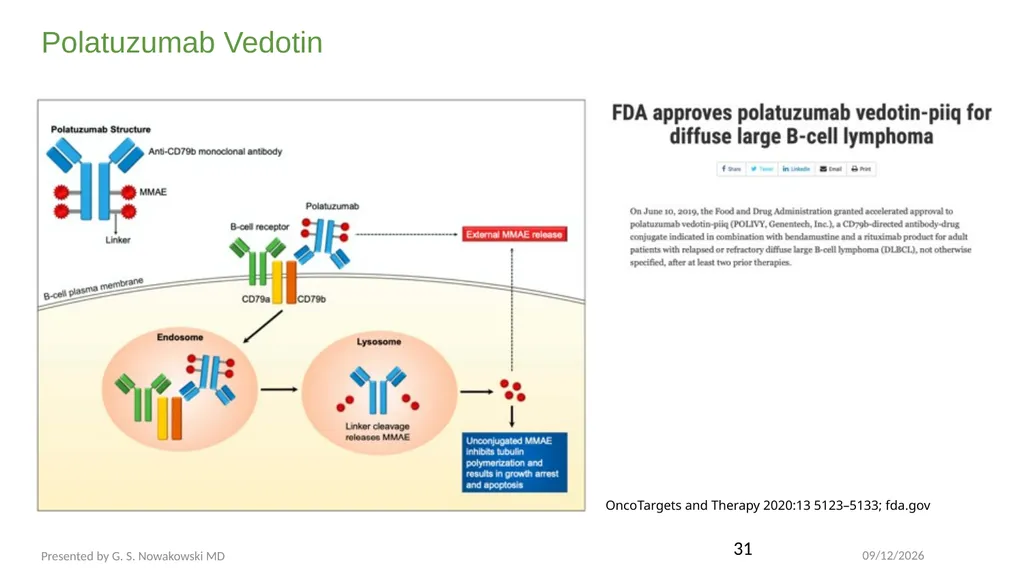
slide31. Polatuzumab Vedotin 11/10/21 Presented by G. S. Nowakowski MD 31 OncoTargets and Therapy 2020:13 5123–5133; fda.gov<br>
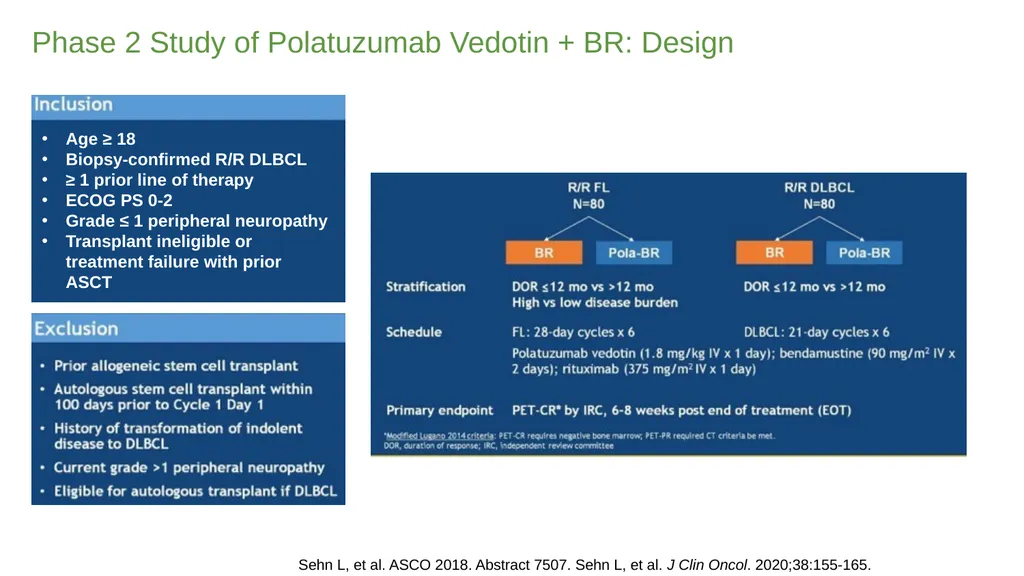
slide32. Phase 2 Study of Polatuzumab Vedotin + BR: Design Sehn L, et al. ASCO 2018. Abstract 7507. Sehn L, et al. J Clin Oncol. 2020;38:155-165. Age ≥ 18
Biopsy-confirmed R/R DLBCL
≥ 1 prior line of therapy
ECOG PS 0-2
Grade ≤ 1 peripheral neuropathy
Transplant ineligible or treatment failure with prior ASCT<br>
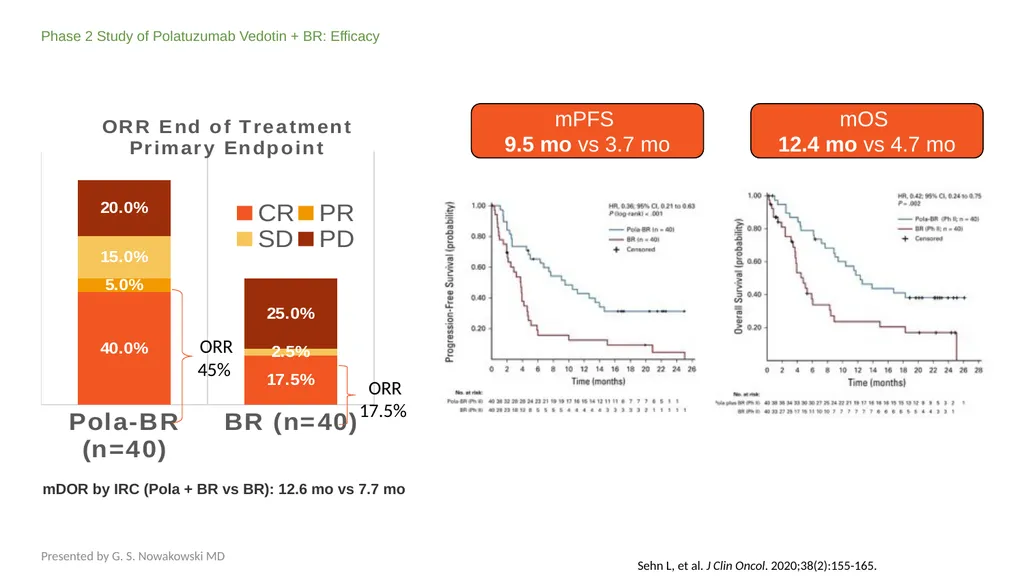
slide33. Phase 2 Study of Polatuzumab Vedotin + BR: Efficacy mDOR by IRC (Pola + BR vs BR): 12.6 mo vs 7.7 mo Sehn L, et al. J Clin Oncol. 2020;38(2):155-165. ORR
45% ORR
17.5% Presented by G. S. Nowakowski MD mPFS
9.5 mo vs 3.7 mo mOS
12.4 mo vs 4.7 mo<br>
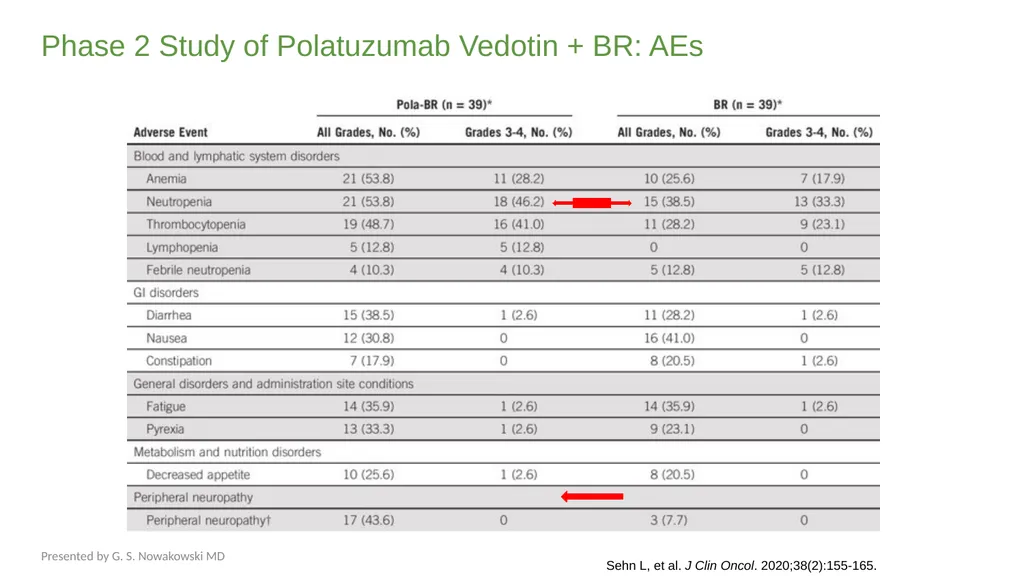
slide34. Phase 2 Study of Polatuzumab Vedotin + BR: AEs Sehn L, et al. J Clin Oncol. 2020;38(2):155-165. Presented by G. S. Nowakowski MD<br>
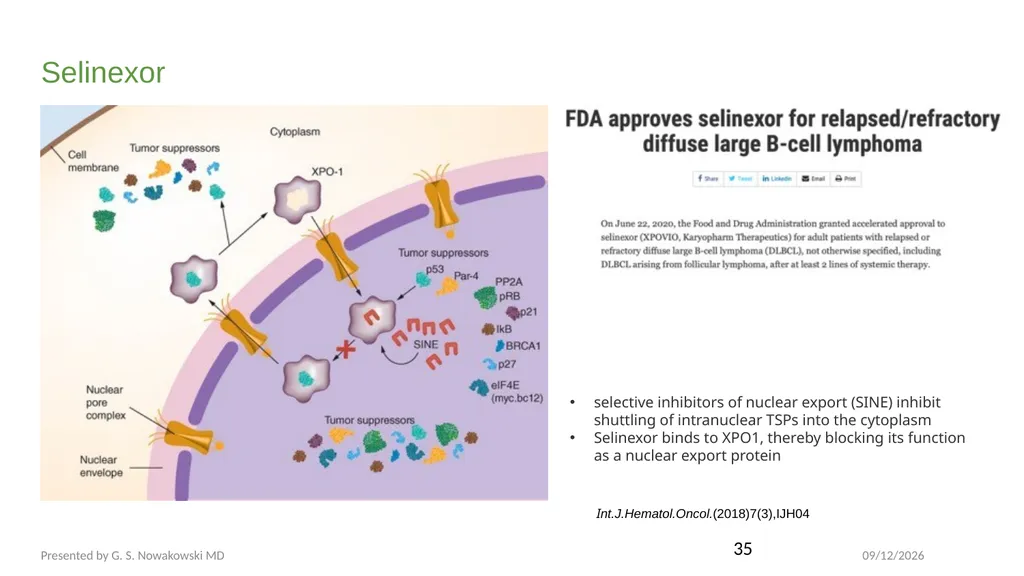
slide35. Selinexor 11/10/21 35 selective inhibitors of nuclear export (SINE) inhibit shuttling of intranuclear TSPs into the cytoplasm
Selinexor binds to XPO1, thereby blocking its function as a nuclear export protein Presented by G. S. Nowakowski MD Int.J.Hematol.Oncol.(2018)7(3),IJH04<br>
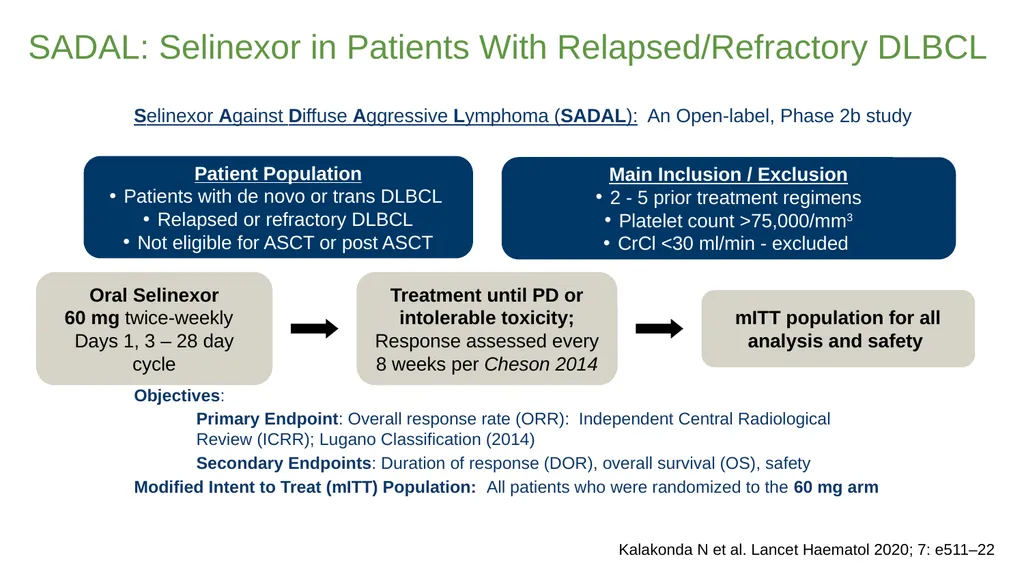
slide36. SADAL: Selinexor in Patients With Relapsed/Refractory DLBCL Objectives:
Primary Endpoint: Overall response rate (ORR): Independent Central Radiological Review (ICRR); Lugano Classification (2014)
Secondary Endpoints: Duration of response (DOR), overall survival (OS), safety
Modified Intent to Treat (mITT) Population: All patients who were randomized to the 60 mg arm Patient Population
Patients with de novo or trans DLBCL
Relapsed or refractory DLBCL
Not eligible for ASCT or post ASCT Main Inclusion / Exclusion
2 - 5 prior treatment regimens
Platelet count >75,000/mm3
CrCl <30 ml/min - excluded Oral Selinexor
60 mg twice-weekly Days 1, 3 – 28 day cycle Treatment until PD or intolerable toxicity; Response assessed every 8 weeks per Cheson 2014 mITT population for all analysis and safety Selinexor Against Diffuse Aggressive Lymphoma (SADAL): An Open-label, Phase 2b study Kalakonda N et al. Lancet Haematol 2020; 7: e511–22<br>
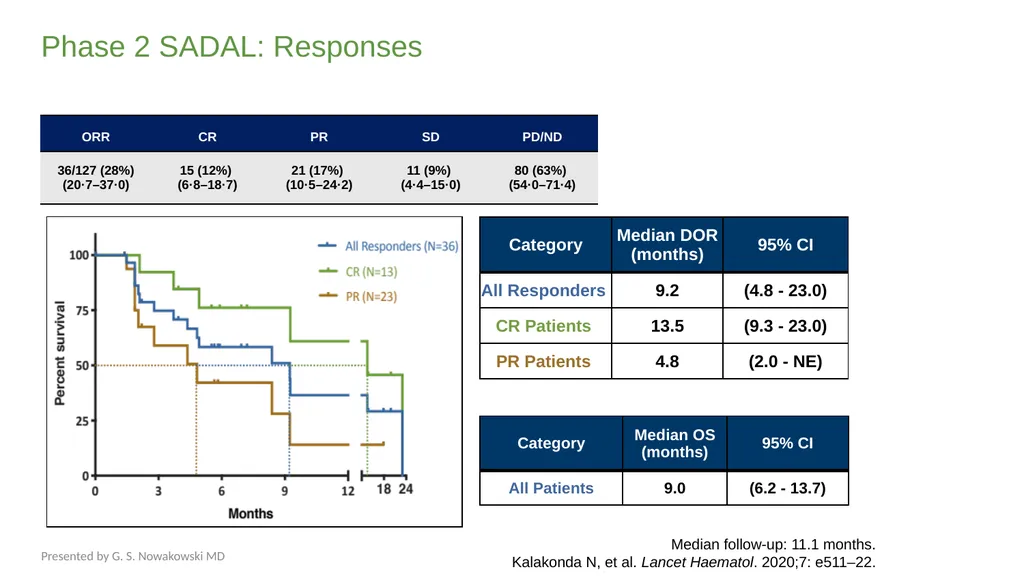
slide37. Phase 2 SADAL: Responses Median follow-up: 11.1 months.
Kalakonda N, et al. Lancet Haematol. 2020;7: e511–22. Presented by G. S. Nowakowski MD<br>
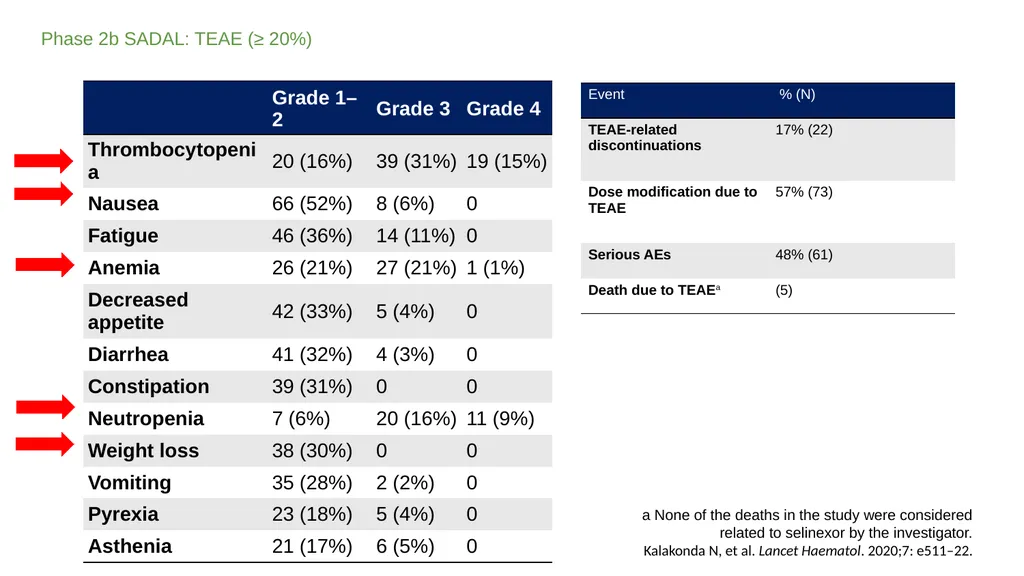
slide38. Phase 2b SADAL: TEAE (≥ 20%) a None of the deaths in the study were considered related to selinexor by the investigator.
Kalakonda N, et al. Lancet Haematol. 2020;7: e511–22.<br>
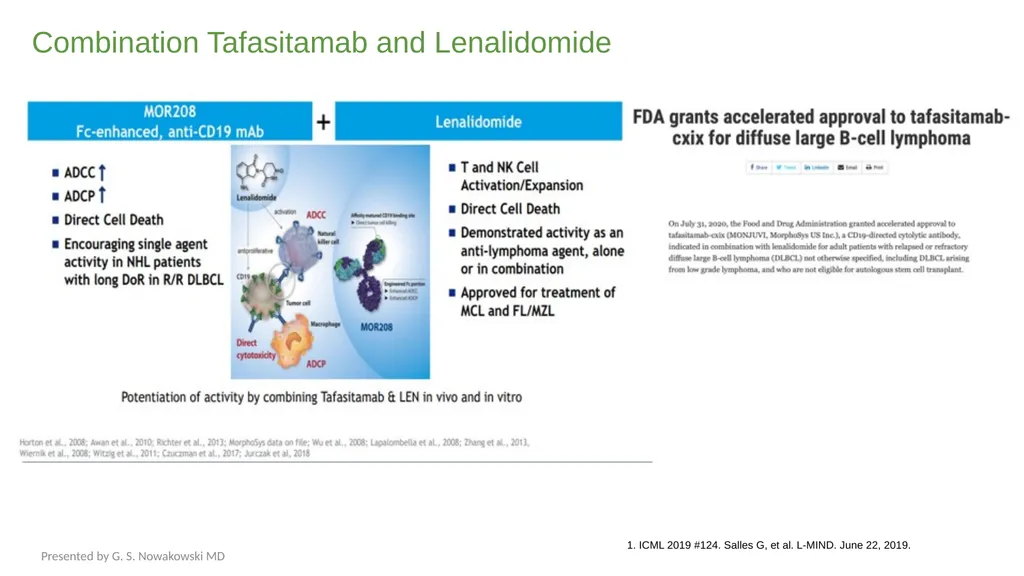
slide39. Combination Tafasitamab and Lenalidomide 1. ICML 2019 #124. Salles G, et al. L-MIND. June 22, 2019. Presented by G. S. Nowakowski MD<br>
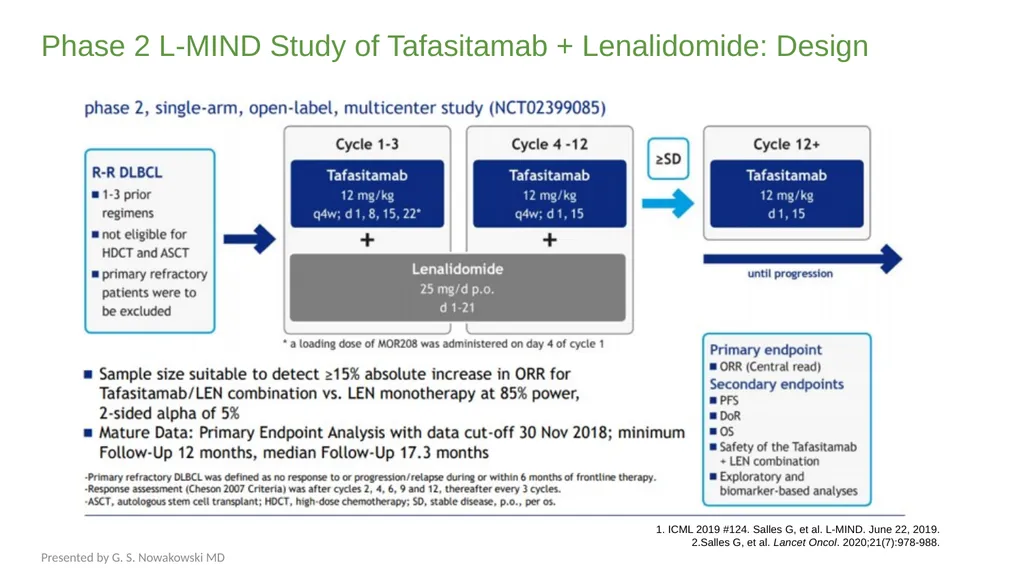
slide40. Phase 2 L-MIND Study of Tafasitamab + Lenalidomide: Design 1. ICML 2019 #124. Salles G, et al. L-MIND. June 22, 2019.
2.Salles G, et al. Lancet Oncol. 2020;21(7):978-988. Presented by G. S. Nowakowski MD<br>
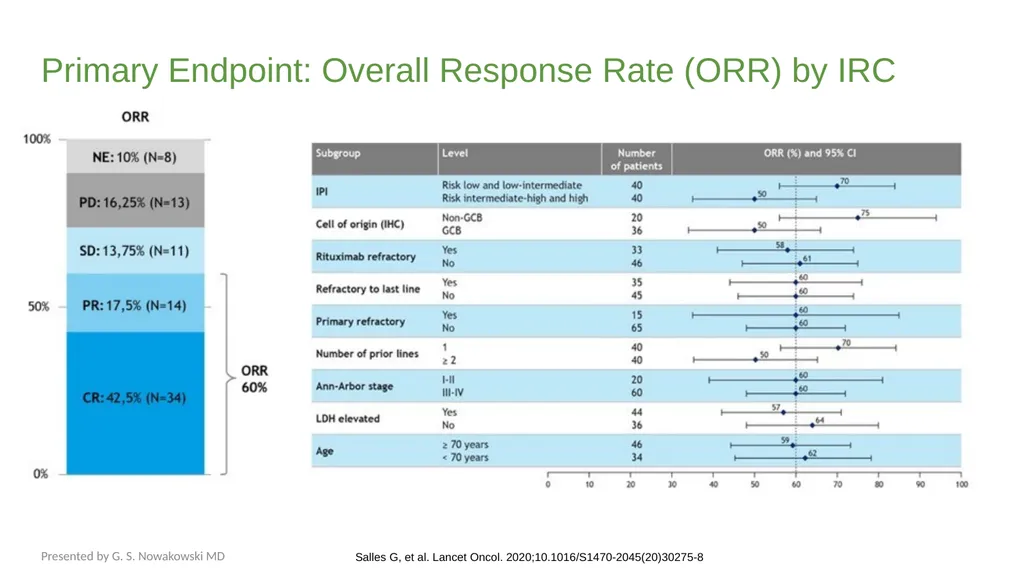
slide41. Primary Endpoint: Overall Response Rate (ORR) by IRC Salles G, et al. Lancet Oncol. 2020;10.1016/S1470-2045(20)30275-8 Presented by G. S. Nowakowski MD<br>
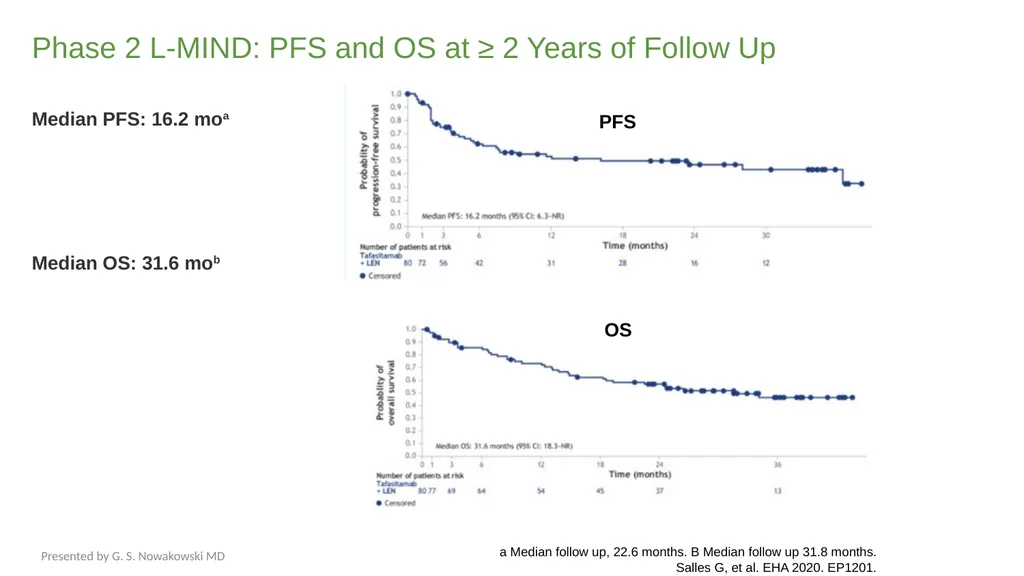
slide42. Phase 2 L-MIND: PFS and OS at ≥ 2 Years of Follow Up Median PFS: 16.2 moa
Median OS: 31.6 mob a Median follow up, 22.6 months. B Median follow up 31.8 months.
Salles G, et al. EHA 2020. EP1201. OS PFS Presented by G. S. Nowakowski MD<br>
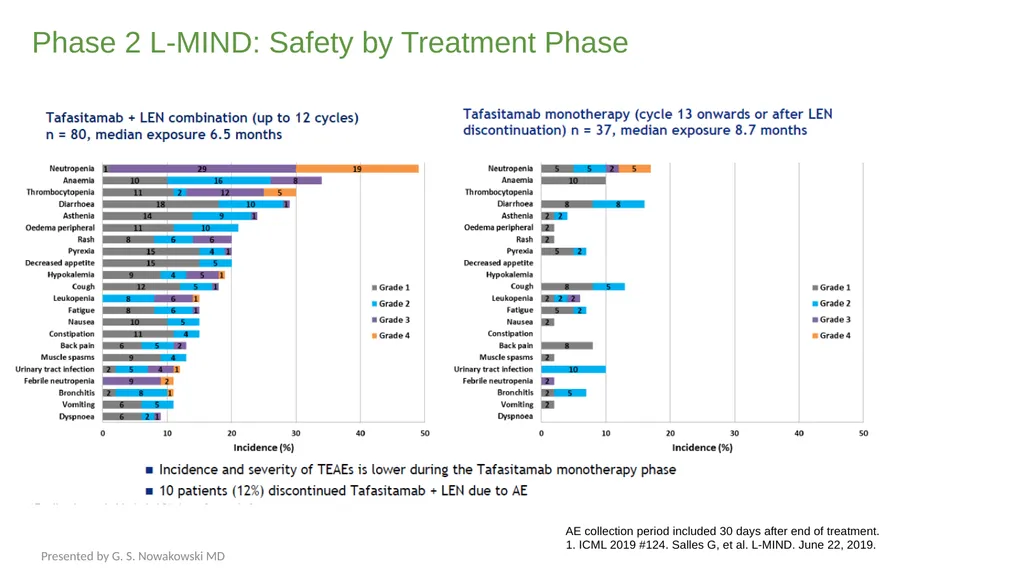
slide43. Phase 2 L-MIND: Safety by Treatment Phase AE collection period included 30 days after end of treatment.
1. ICML 2019 #124. Salles G, et al. L-MIND. June 22, 2019. Presented by G. S. Nowakowski MD<br>
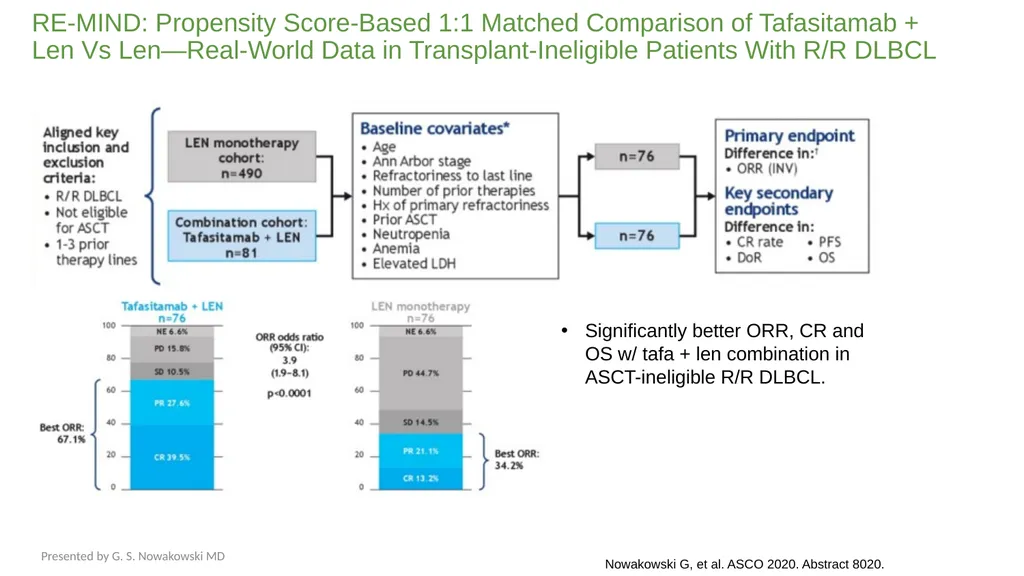
slide44. RE-MIND: Propensity Score-Based 1:1 Matched Comparison of Tafasitamab + Len Vs Len—Real-World Data in Transplant-Ineligible Patients With R/R DLBCL Significantly better ORR, CR and OS w/ tafa + len combination in ASCT-ineligible R/R DLBCL. Nowakowski G, et al. ASCO 2020. Abstract 8020. Presented by G. S. Nowakowski MD<br>
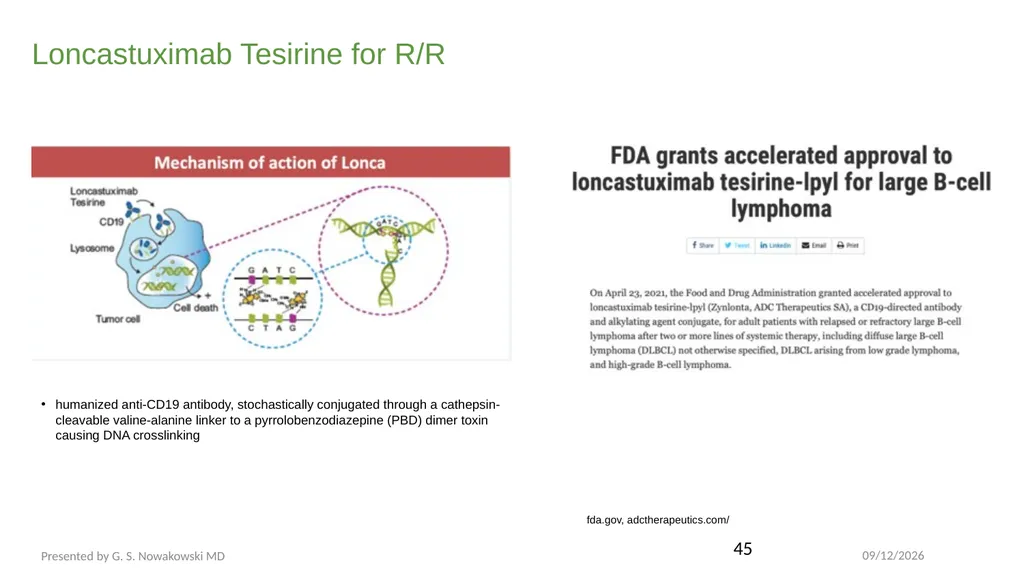
slide45. Loncastuximab Tesirine for R/R 11/10/21 45 fda.gov, adctherapeutics.com/ Presented by G. S. Nowakowski MD humanized anti-CD19 antibody, stochastically conjugated through a cathepsin-cleavable valine-alanine linker to a pyrrolobenzodiazepine (PBD) dimer toxin causing DNA crosslinking<br>
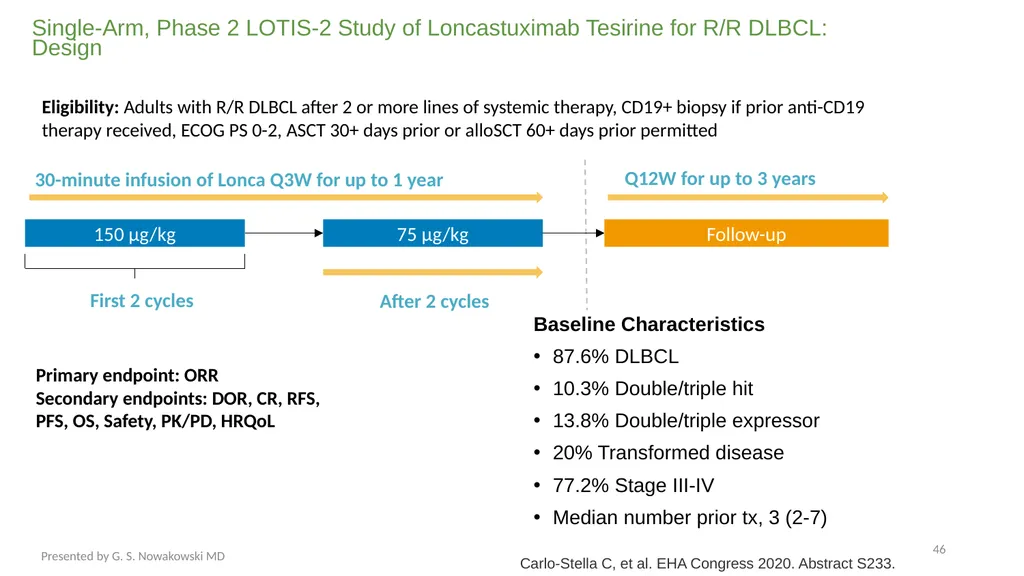
slide46. Single-Arm, Phase 2 LOTIS-2 Study of Loncastuximab Tesirine for R/R DLBCL: Design Carlo-Stella C, et al. EHA Congress 2020. Abstract S233. 46 Eligibility: Adults with R/R DLBCL after 2 or more lines of systemic therapy, CD19+ biopsy if prior anti-CD19 therapy received, ECOG PS 0-2, ASCT 30+ days prior or alloSCT 60+ days prior permitted Primary endpoint: ORR
Secondary endpoints: DOR, CR, RFS, PFS, OS, Safety, PK/PD, HRQoL Baseline Characteristics
87.6% DLBCL
10.3% Double/triple hit
13.8% Double/triple expressor
20% Transformed disease
77.2% Stage III-IV
Median number prior tx, 3 (2-7) Presented by G. S. Nowakowski MD<br>
slide47. LOTIS-2 Trial: Efficacy Results 47 ORR was assessed by independent reviewer. Data cut-off: 06 Aug 2020. *4 patients had treatment ongoing at data cut-off. Caimi PF, et al. ASH 2020l. Abstract 1183. ORRs seen in high-risk subgroups (eg, double/triple hit, transformed disease)
Most responders had response after 2 cycles; median time to first response was 41.0 days (range: 35–247)
Mean lonca cycles: 4.5 (Std: ± 3.89) (Min, max: 1, 18)*
Subsequent treatment
15 pts received CD19-directed CAR-T therapy with an INV-assessed ORR of 46.7% (6 CR; 1 PR)
9 patients proceeded to SCT as consolidation after response to lonca mDoR for the 70 responders: 12.58 months
(95% CI: 6.87, - ) mDoR for patients with a CR:
13.37 months
(95% CI: 12.58, - ) Median PFS: 5.09 mo (95% CI, 2.89-8.31) Median OS: 9.53 mo (95% CI, 6.93-11.24) Presented by G. S. Nowakowski MD<br>
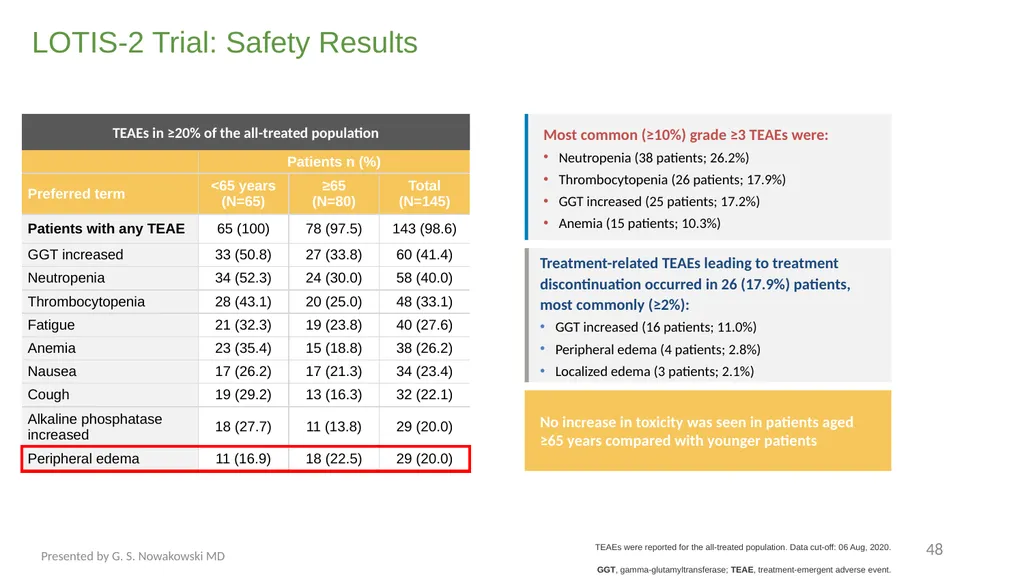
slide48. LOTIS-2 Trial: Safety Results 48 TEAEs were reported for the all-treated population. Data cut-off: 06 Aug, 2020. GGT, gamma-glutamyltransferase; TEAE, treatment-emergent adverse event. No increase in toxicity was seen in patients aged ≥65 years compared with younger patients TEAEs in ≥20% of the all-treated population Presented by G. S. Nowakowski MD<br>
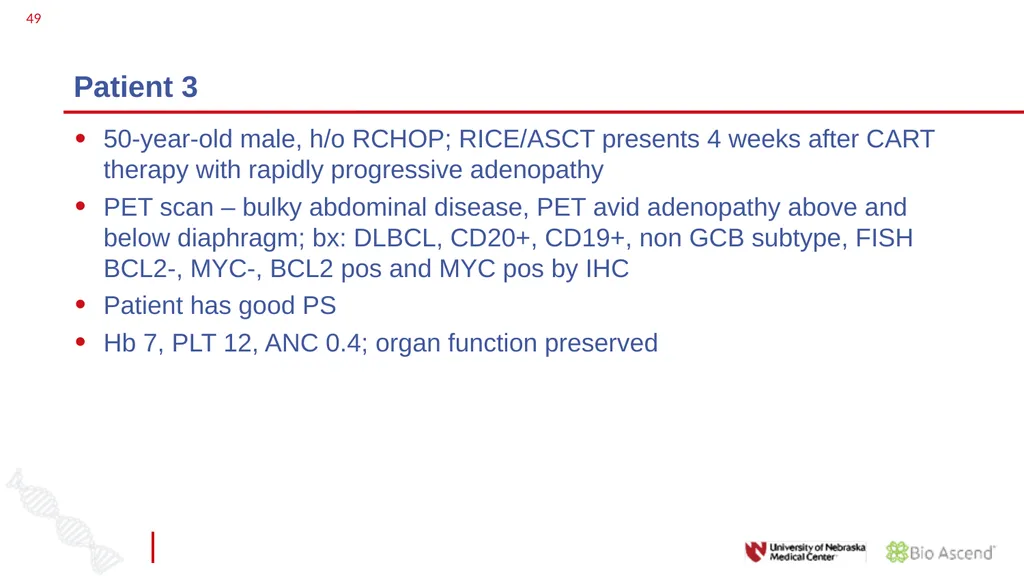
slide49. Patient 3 50-year-old male, h/o RCHOP; RICE/ASCT presents 4 weeks after CART therapy with rapidly progressive adenopathy
PET scan – bulky abdominal disease, PET avid adenopathy above and below diaphragm; bx: DLBCL, CD20+, CD19+, non GCB subtype, FISH BCL2-, MYC-, BCL2 pos and MYC pos by IHC
Patient has good PS
Hb 7, PLT 12, ANC 0.4; organ function preserved 49<br>
slide50. Patient 3 50-year-old male with rapidly progressive disease 4 weeks after CART
How would you treat this patient?
Clinical trial
Lenalidomide
Loncastuximab
Selinexor
Pola BR 50<br>
slide51. Future? Pattern of Care in DLBCL 1st Line 2nd Line 3rd+ Line R-CHOP or R-CHOP-like Non-transplant eligible High dose chemo (eg, RICE, R-DHAP) Tafa-Len
Pola-BR
Othter ASCT CURE 50%c 50% 50%b 50% 50%-60%a,b Pola-BR Lonca-Tesirine 10-15%c SCT=stem-cell transplantation.
a Decisions Resource Group. DLBCL Epidemiology data; b Sehn LH, Gascoyne RD. Blood. 2015;125:22-32;
c Friedberg JW, et al. Hematology Am Soc Hematol Educ Program. 2011;2011:498-505; Transplant eligible CURE Tafa-Len Selinexor CART Other chemo… Presented by G. S. Nowakowski MD<br>
slide52. Future Pattern of Care in DLBCL 1st Line 2nd Line 3rd+ Line R-CHOP or R-CHOP-like Non-transplant eligible High dose chemo (eg, RICE, R-DHAP) Tafa-Len
Pola-BR
Othter ASCT CURE 50%c 50% 50%b 50% 50%-60%a,b Pola-BR Lonca-Tesirine 10-15%c SCT=stem-cell transplantation.
a Decisions Resource Group. DLBCL Epidemiology data; b Sehn LH, Gascoyne RD. Blood. 2015;125:22-32;
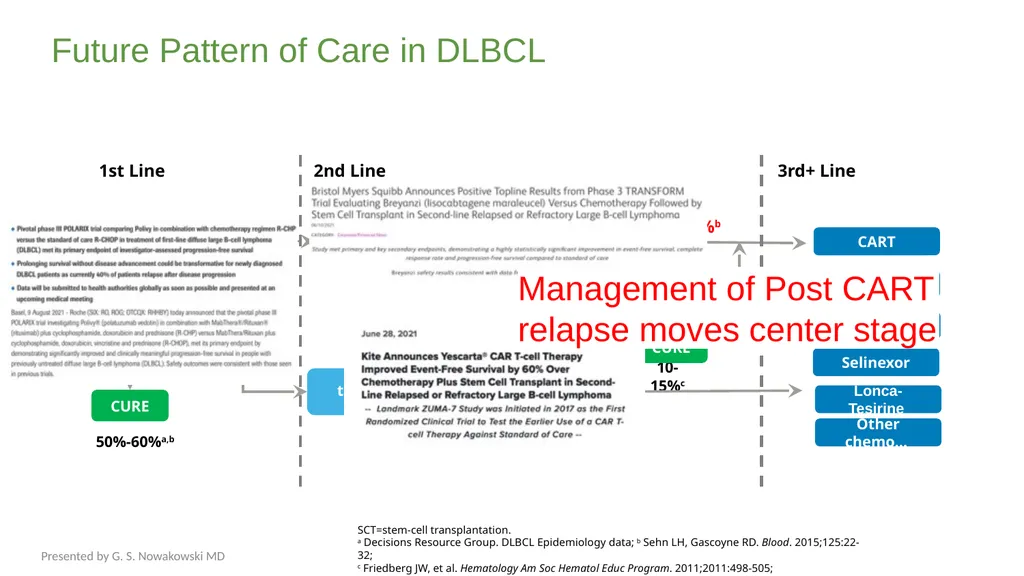
c Friedberg JW, et al. Hematology Am Soc Hematol Educ Program. 2011;2011:498-505; Transplant eligible CURE Tafa-Len Selinexor CART Other chemo… Presented by G. S. Nowakowski MD Management of Post CART relapse moves center stage<br>
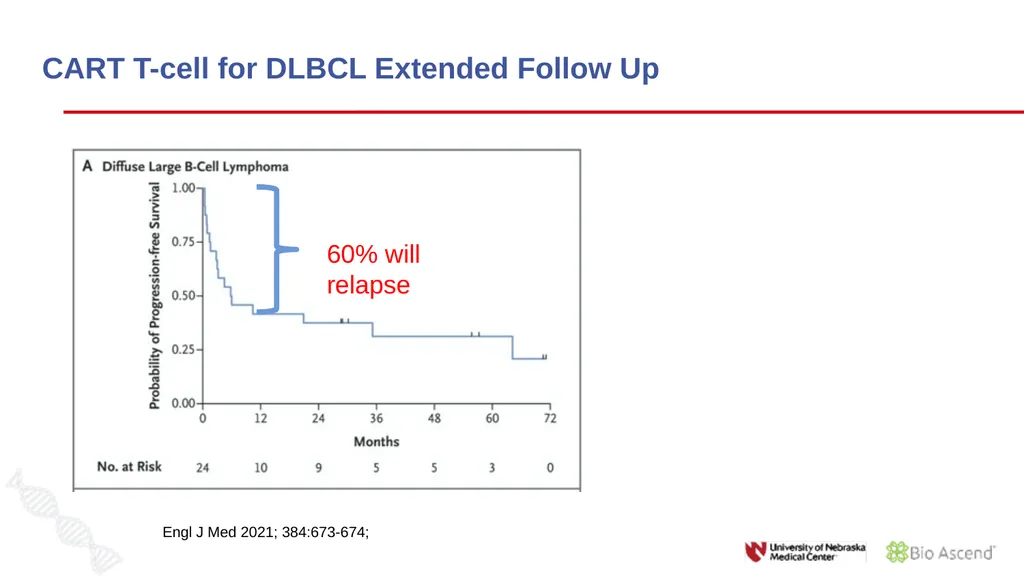
slide53. CART T-cell for DLBCL Extended Follow Up Engl J Med 2021; 384:673-674; 60% will relapse<br>
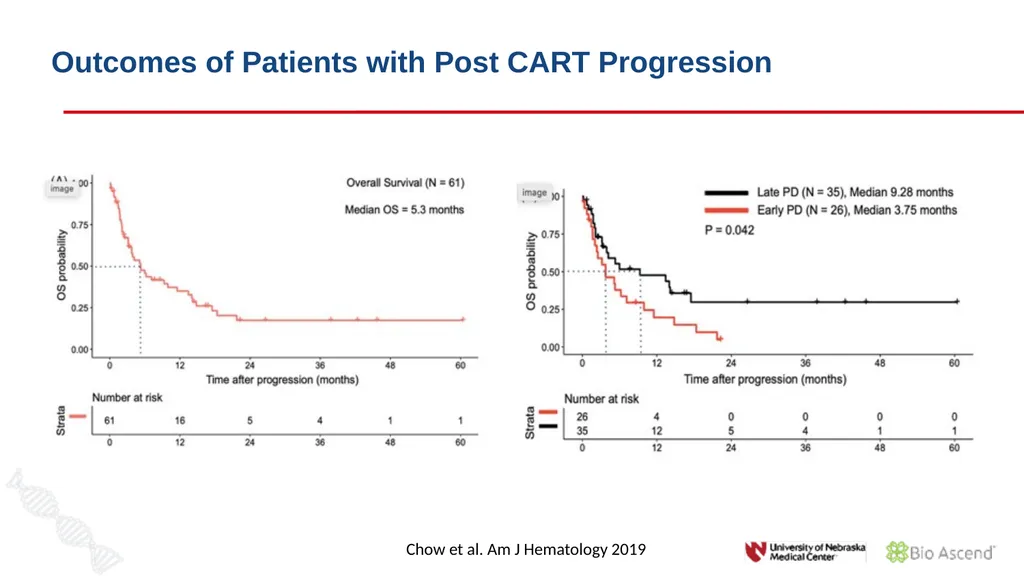
slide54. Outcomes of Patients with Post CART Progression 30 days Chow et al. Am J Hematology 2019<br>
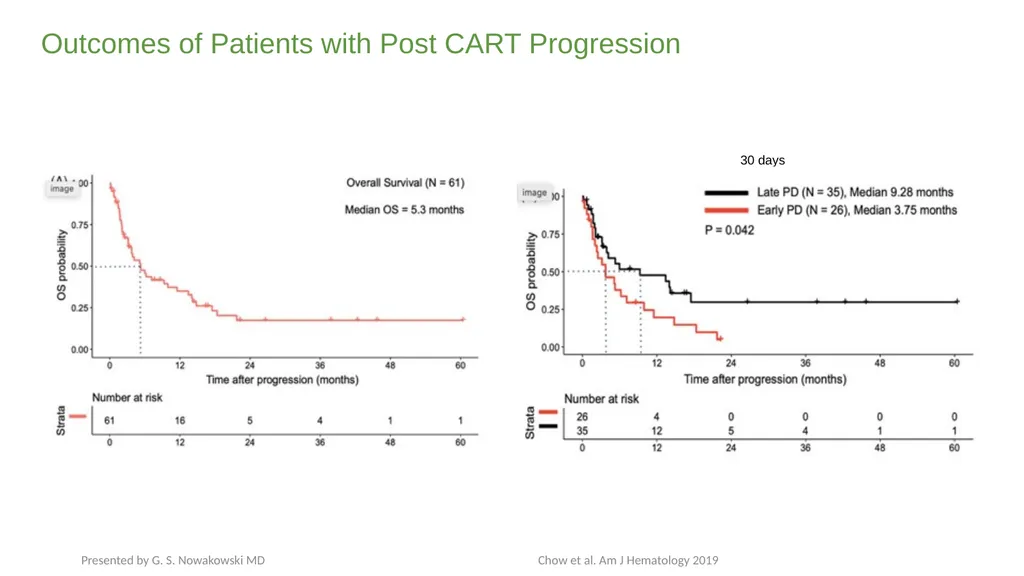
slide55. Outcomes of Patients with Post CART Progression Chow et al. Am J Hematology 2019 Presented by G. S. Nowakowski MD 30 days<br>
slide56. What is the best treatment option for patients with DLBCL post CART relapse? Presented by G. S. Nowakowski MD<br>
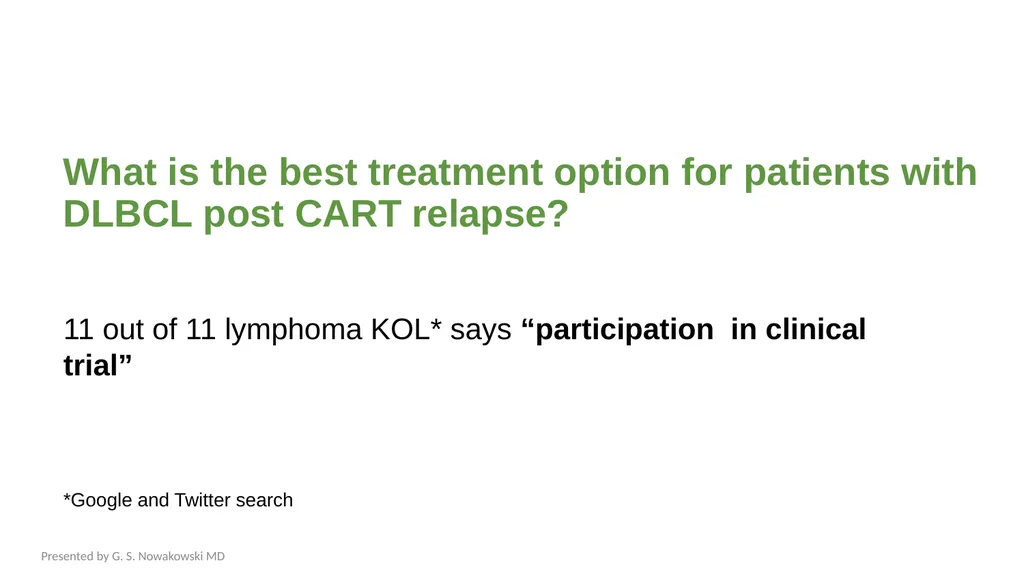
slide57. What is the best treatment option for patients with DLBCL post CART relapse? 11 out of 11 lymphoma KOL* says “participation in clinical trial” Presented by G. S. Nowakowski MD *Google and Twitter search<br>
slide58. Prolonged cytopenias is a major barrier to enrollment in clinical trials of patients with aggressive B-cell lymphoma progressing after CART19 1Kalakonda et al. Lancet Haematol, 2020.
2Sehn et al. JCO, 2020.
3Salles et al. Lancet Oncol, 2020.
4Caimi PF et al. Lancet Oncol, 2021. Other exclusion criteria would be less often a barrier:
ECOG > 2: 3 (6%)
CNS disease: 0 – 7 (14%)
Renal function: 2 (4%) – 8 (15%)
Liver function: 3 (6%) Time from CART19 to disease progression was shorter in patients ineligible to trials compared to eligible patients:
median 1.1 months (0.5 – 4.7) vs. 3.0 (0.9 – 2.7), p = 0.004 Presented by G. S. Nowakowski MD 2021 Pan Pacific Lymphoma Conference Poster Session<br>
slide59. Prolonged cytopenias is a major barrier to enrollment in clinical trials of patients with aggressive B-cell lymphoma progressing after CART19 1Kalakonda et al. Lancet Haematol, 2020.
2Sehn et al. JCO, 2020.
3Salles et al. Lancet Oncol, 2020.
4Caimi PF et al. Lancet Oncol, 2021. Other exclusion criteria would be less often a barrier:
ECOG > 2: 3 (6%)
CNS disease: 0 – 7 (14%)
Renal function: 2 (4%) – 8 (15%)
Liver function: 3 (6%) Time from CART19 to disease progression was shorter in patients ineligible to trials compared to eligible patients:
median 1.1 months (0.5 – 4.7) vs. 3.0 (0.9 – 2.7), p = 0.004 Presented by G. S. Nowakowski MD Only ~ 50% patents will be CT candidates<br>
slide60. Patients potentially excluded from trials have poor prognosis and unmet need for new therapies Approximately half of the pts (47%) would be excluded from landmark clinical trials
The current hematologic exclusion criteria are a major barrier
Adjustment of hematologic exclusion criteria to increase trial participation, especially for primary refractory disease Presented by G. S. Nowakowski MD<br>
slide61. How do we develop studies and treat in patients relapsing post CART ? 11/10/21 Need for studies not excluding patents with cytopenias
Non- myelosuppressive strategies preferred
Immune mediated
Targeted therapy<br>
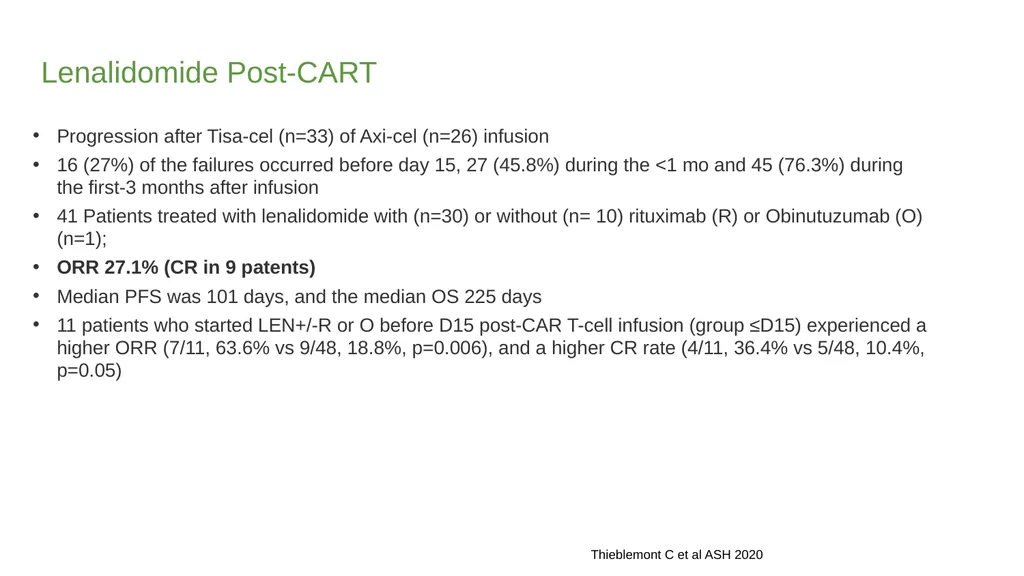
slide62. Lenalidomide Post-CART Progression after Tisa-cel (n=33) of Axi-cel (n=26) infusion
16 (27%) of the failures occurred before day 15, 27 (45.8%) during the <1 mo and 45 (76.3%) during the first-3 months after infusion
41 Patients treated with lenalidomide with (n=30) or without (n= 10) rituximab (R) or Obinutuzumab (O) (n=1);
ORR 27.1% (CR in 9 patents)
Median PFS was 101 days, and the median OS 225 days
11 patients who started LEN+/-R or O before D15 post-CAR T-cell infusion (group ≤D15) experienced a higher ORR (7/11, 63.6% vs 9/48, 18.8%, p=0.006), and a higher CR rate (4/11, 36.4% vs 5/48, 10.4%, p=0.05) Thieblemont C et al ASH 2020<br>
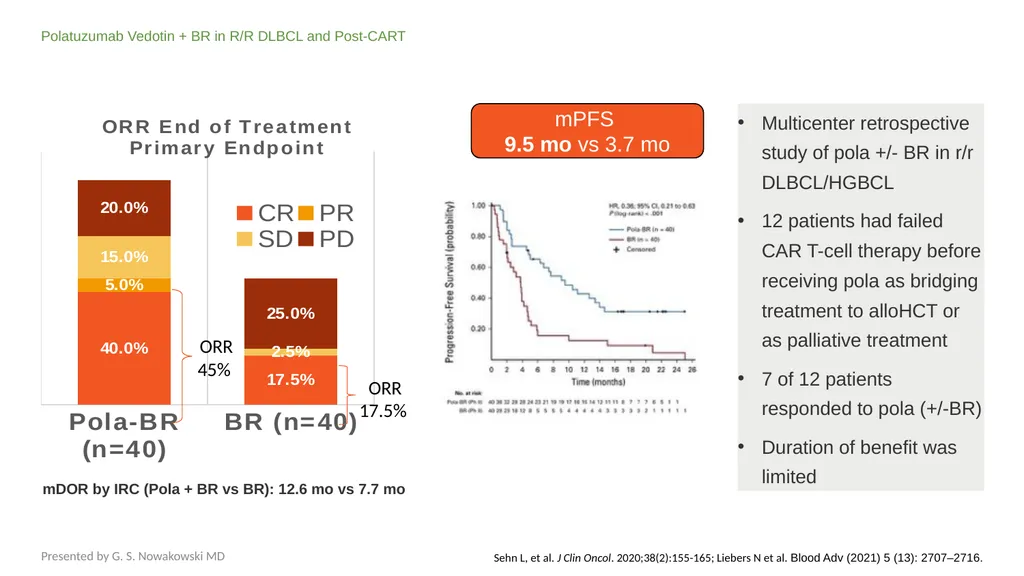
slide63. Polatuzumab Vedotin + BR in R/R DLBCL and Post-CART mDOR by IRC (Pola + BR vs BR): 12.6 mo vs 7.7 mo Sehn L, et al. J Clin Oncol. 2020;38(2):155-165; Liebers N et al. Blood Adv (2021) 5 (13): 2707–2716. ORR
45% ORR
17.5% Presented by G. S. Nowakowski MD mPFS
9.5 mo vs 3.7 mo Multicenter retrospective study of pola +/- BR in r/r DLBCL/HGBCL
12 patients had failed CAR T-cell therapy before receiving pola as bridging treatment to alloHCT or as palliative treatment
7 of 12 patients responded to pola (+/-BR)
Duration of benefit was limited<br>
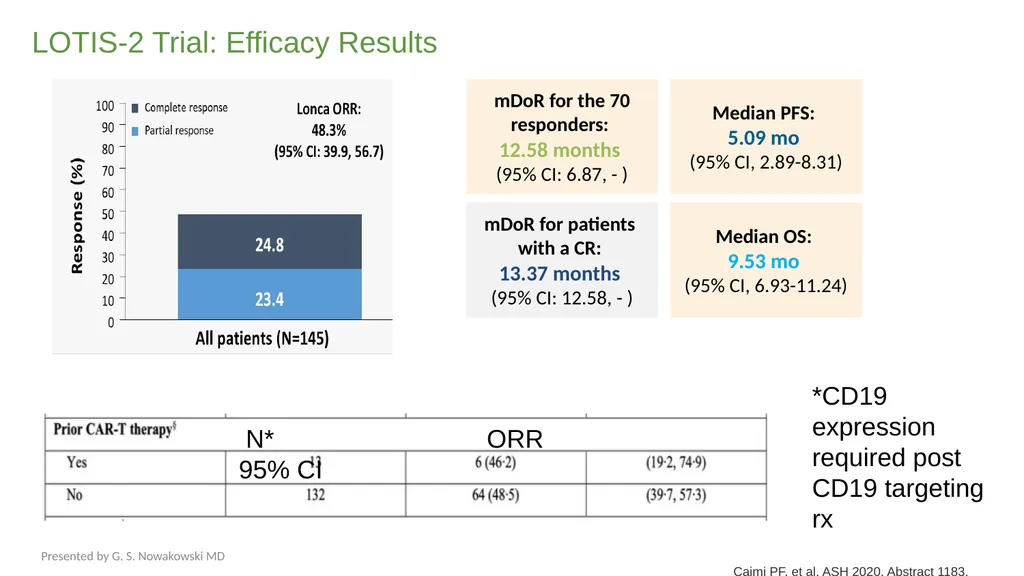
slide64. LOTIS-2 Trial: Efficacy Results . Caimi PF, et al. ASH 2020. Abstract 1183. mDoR for the 70 responders: 12.58 months
(95% CI: 6.87, - ) mDoR for patients with a CR:
13.37 months
(95% CI: 12.58, - ) Median PFS: 5.09 mo (95% CI, 2.89-8.31) Median OS: 9.53 mo (95% CI, 6.93-11.24) Presented by G. S. Nowakowski MD N* ORR 95% CI *CD19 expression required post CD19 targeting rx<br>
slide65. Selinexor in R/R DLBCL Kalakonda N, et al. Lancet Haematol. 2020;7: e511–22.; Horesh N et al. Am J Blood Res. 2021; 11(1): 111–117. Presented by G. S. Nowakowski MD Patient with post CART progression treated (A) with Selinexor (B) as bridge to all SCT (C)<br>
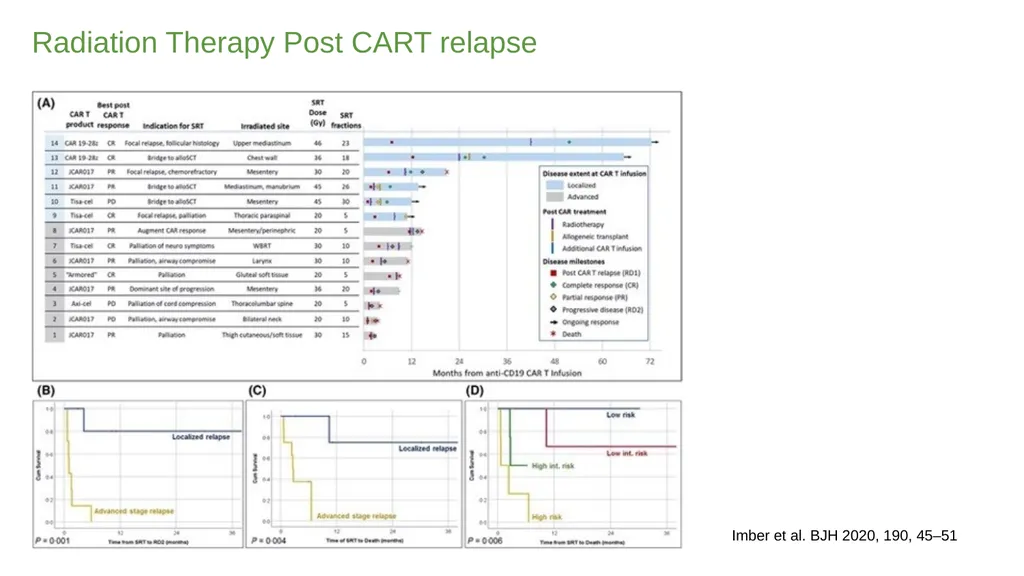
slide66. Radiation Therapy Post CART relapse Imber et al. BJH 2020, 190, 45–51<br>
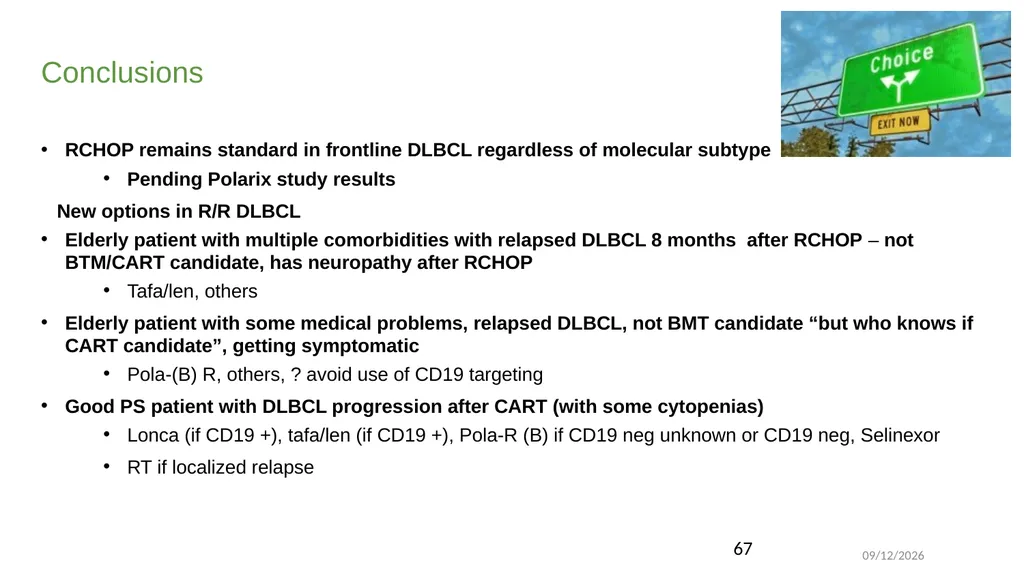
slide67. Conclusions RCHOP remains standard in frontline DLBCL regardless of molecular subtype
Pending Polarix study results
New options in R/R DLBCL
Elderly patient with multiple comorbidities with relapsed DLBCL 8 months after RCHOP – not BTM/CART candidate, has neuropathy after RCHOP
Tafa/len, others
Elderly patient with some medical problems, relapsed DLBCL, not BMT candidate “but who knows if CART candidate”, getting symptomatic
Pola-(B) R, others, ? avoid use of CD19 targeting
Good PS patient with DLBCL progression after CART (with some cytopenias)
Lonca (if CD19 +), tafa/len (if CD19 +), Pola-R (B) if CD19 neg unknown or CD19 neg, Selinexor
RT if localized relapse 11/10/21 67<br>
slide68. Thank You nowakowski.grzegorz@mayo.edu<br>
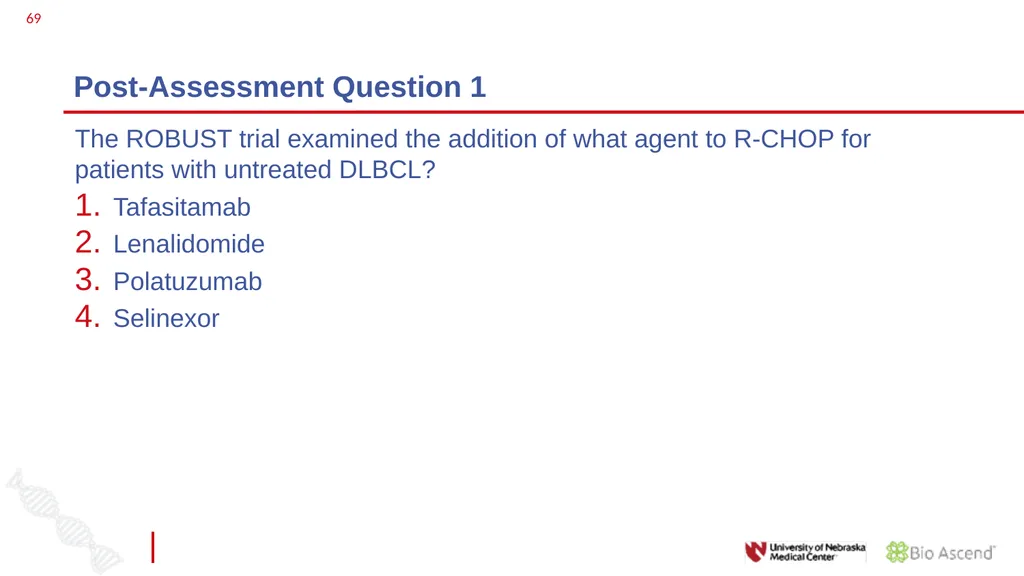
slide69. Post-Assessment Question 1 The ROBUST trial examined the addition of what agent to R-CHOP for patients with untreated DLBCL?
Tafasitamab
Lenalidomide
Polatuzumab
Selinexor 69<br>
slide70. Post-Assessment Question 2 Polatuzumab vedotin is an antibody-drug conjugate that targets which of the following antigens on lymphoma cells?
CD5
CD19
CD20
CD79b 70<br>
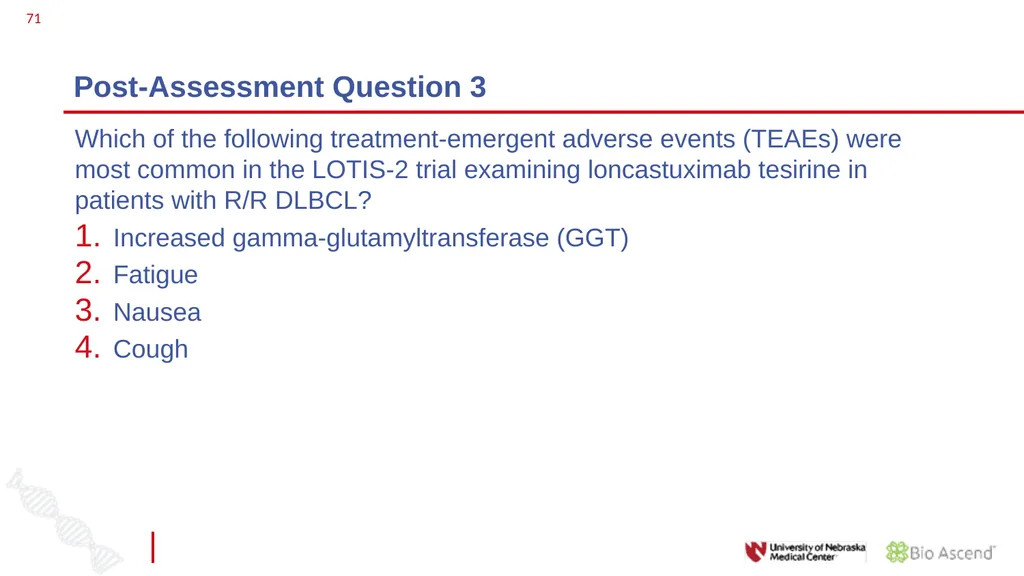
slide71. Post-Assessment Question 3 Which of the following treatment-emergent adverse events (TEAEs) were most common in the LOTIS-2 trial examining loncastuximab tesirine in patients with R/R DLBCL?
Increased gamma-glutamyltransferase (GGT)
Fatigue
Nausea
Cough 71<br>
slide72. Q&A Type your questions into the Question tab
of your webinar control panel<br>
slide73. Thank You!
Please complete the post-webinar evaluation at
(This link will pop-up on your screen after the webinar ends)
https://cvent.me/2KeNyn A CME request form is available for download at the end of the online evaluation.
Visit OncologyCaseClinic.com to register for
upcoming webinars.
A recording of today’s webinar with downloadable slides
will be available at OncologyCaseClinic.com in about 2 weeks.
Next presentation: Wednesday, December 8
Marginal Zone Lymphoma
Leo Gordon, MD, FACP<br>
November 10, 2021<br>
slide2. Course Director
John P. Leonard, MD
Senior Associate Dean for Innovation and Initiatives
Executive Vice Chair, Weill Department of Medicine
Richard T. Silver Distinguished Professor of Hematology & Medical Oncology
Weill Cornell Medical College
New York, New York Presenter
Grzegorz Nowakowski, MD
Professor of Medicine
Division of Hematology
Department of Internal Medicine
Mayo Clinic
Rochester, Minnesota<br>
slide3. This activity is supported by independent educational grants from
AstraZeneca,
Bristol-Myers Squibb
and
Epizyme, Inc<br>
slide4. This activity is jointly provided by<br>
slide5. Continuing Education The University of Nebraska Medical Center, Center for Continuing Education designates this live activity for a maximum of 1 AMA PRA Category 1 Credit™. Physicians should claim only the credit commensurate with the extent of their participation in the activity. In support of improving patient care, this activity has been planned and implemented by University of Nebraska Medical Center and Bio Ascend. University of Nebraska Medical Center is jointly accredited by the Accreditation Council for Continuing Medical Education (ACCME), the Accreditation Council for Pharmacy Education (ACPE), and the American Nurses Credentialing Center (ANCC), to provide continuing education for the healthcare team.<br>
slide6. Disclosure As a jointly accredited provider, the University of Nebraska Medical Center (UNMC) ensures accuracy, balance, objectivity, independence, and scientific rigor in its educational activities and is committed to protecting learners from promotion, marketing, and commercial bias. All faculty, planners, and others in a position to control continuing education content participating in an accredited continuing education activity are required to disclose all financial relationships with ineligible companies. Ineligible companies are organizations whose primary business is producing, marketing, selling, re-selling, or distributing healthcare products used by or on patients. The accredited provider is responsible for mitigating all relevant financial relationships in accredited continuing education. Disclosure of these commitments and/or relationships is included in these activity materials so that participants may formulate their own judgments in interpreting its content and evaluating its recommendations.
This activity may include presentations in which faculty may discuss off-label and/or investigational use of pharmaceuticals or instruments not yet FDA-approved. Participants should note that the use of products outside currently FDA-approved labeling should be considered experimental and are advised to consult current prescribing information for FDA-approved indications. All materials are included with the permission of the faculty. The opinions expressed are those of the faculty and are not to be construed as those of UNMC or Bio Ascend. 6<br>
slide7. Disclosures John P. Leonard, MD
Consulting Fees: ADC Therapeutics, AstraZeneca, Bayer, Bristol-Myers Squibb Company, Epizyme, Kite, a Gilead Company, MEI Pharma, Miltenyi Biotec, Regeneron, Roche/Genentech, Sutro Biopharma
Grzegorz Nowakowski, MD
Consulting Fees: Bantham Pharmaceutical, Blueprint Medicines, Celgene/BMS, Curis, Daiichi Sankyo, Incyte, Karyopharm Therapeutics, Kite Pharma, Kymera Therapeutics, MorphoSys, Roche/Genentech, Ryvu Therapeutics, Seattle Genetics, Selvita, TG Therapeutics, Zai Laboratory
Research Support: Celgene/BMS, Nanostrings, Roche/Genentech
Scientific Advisory Board: Karyopharm Therapeutics, Ryvu Therapeutics
Planning Committee
The following planning committee members have nothing to disclose: UNMC: Brenda Ram, CMP, CHCP
Bio Ascend: Patti Bunyasaranand, MS; Dru Dace, PhD; Lucja Grajkowska, PhD; Kraig Steubing 7<br>
slide8. Learning Objectives Evaluate best available evidence regarding treatment for patients with DLBCL
Assess the implications of emerging clinical trial data regarding DLBCL treatment approaches
Develop strategies to address complicated DLBCL cases 8<br>
slide9. Reminders Please respond to the polling questions as they appear on the webinar screen. All responses are anonymous
You will receive a post-program evaluation link at the end of the webinar. Your response is greatly appreciated
A CME request form is available for download at the end of the online program evaluation
The recording of today’s presentation along with downloadable slides will be available at www.oncologycaseclinic.com in about 2 weeks
Visit www.oncologycaseclinic.com to register for upcoming webinars and view past webinars 9<br>
slide10. Pre-Assessment Question 1 The ROBUST trial examined the addition of what agent to R-CHOP for patients with untreated DLBCL?
Tafasitamab
Lenalidomide
Polatuzumab
Selinexor 10<br>
slide11. Pre-Assessment Question 2 Polatuzumab vedotin is an antibody-drug conjugate that targets which of the following antigens on lymphoma cells?
CD5
CD19
CD20
CD79b 11<br>
slide12. Pre-Assessment Question 3 Which of the following treatment-emergent adverse events (TEAEs) were most common in the LOTIS-2 trial examining loncastuximab tesirine in patients with R/R DLBCL?
Increased gamma-glutamyltransferase (GGT)
Fatigue
Nausea
Cough 12<br>
slide13. Patient 1 22 yo male with several months history of dry cough and night sweats, weight loss of >10 lbs
No significant PMH
No family history of immunodeficiency, lymphoma or cancer
Unremarkable physical examination apart from mass protruding from anterior chest
CXR – large intrathoracic masses
CBC – anemia Hb 9.9, chemistries unremarkable; LDH 550 (ULN 220) HIV-/Hepatitis B-/C-<br>
slide14. Staging PET Scan<br>
slide15. CD20 EBV-LMP1 Pathology CT-Guided Core Biopsy Positive: CD20, PAX5, EBV-LMP1, EBER (in intact viable cells), MUM1 (>30%).
Negative: CD10 (<30%), BCL6 (<30%), BCL2, BCL6 (<50%), and MYC (<40%), CD30.
Non-GCB by Hans
FISH: MYC-/BCL2-<br>
slide16. CD20 EBV-LMP1 Pathology CT-Guided Core Biopsy Positive: CD20, PAX5, EBV-LMP1, EBER (in intact viable cells), MUM1 (>30%).
Negative: CD10 (<30%), BCL6 (<30%), BCL2, BCL6 (<50%), and MYC (<40%), CD30.
Non-GCB by Hans
FISH: MYC-/BCL2-<br>
slide17. Lymph3Cx Assay, Distinction of PMLBCL and Cell-of-Origin for DLBCL, mRNA Gene Expression, NanoString Molecular classification assay for the distinction of PMBCL from DLBCL subtypes as well as the “cell-of origin” subtypes of DLBCL based on gene expression in formalin-fixed, paraffin-embedded tissue
Utilizes the NanoString Technology and consists of probes for 58 target genes (discriminatory and housekeeping genes)
PMBCL Call is based upon PMBCL probability: ≥ 0.90 is PMBCL ≤ 0.10 is DLBCL All other DLBCL with unclear gene expression pattern
If DLBCL is called per above, then COO is determined by DLBCL probability: ≤ 0.10 is Germinal Center B-cell (GCB). ≥ 0.90 Activated B-cell (ABC). All other results are Unclassifiable.
Patient: Non PMBCL - ABC DLBCL Mottok A et al. Blood. 2018;132(22):2401–2405.<br>
slide18. Case Summary 22 yo with ABC DLBCL
Stage IVBE (Extranodal + BM involvement)
IPI 3 (stage, extranodal sites, elevated LDH)
CNS IPI 3 (> 1 extranodal, elevated LDH, stage)
How would you treat this patient?
DA-EPOCH-R
R-CHOP
Ibrutinib-RCHOP
Lenalidomide-RCHOP (R2CHOP)
CODOX-M/IVAC/R<br>
slide19. Case Summary 22 yo with ABC DLBCL
Stage IVBE (Extranodal + BM involvement)
IPI 3 (stage, extranodal sites, elevated LDH)
CNS IPI 3 (> 1 extranodal, elevated LDH, stage)
How would you treat this patient?
DA-EPOCH-R
R-CHOP
Ibrutinib-RCHOP
Lenalidomide-RCHOP (R2CHOP)
CODOX-M/IVAC/R<br>
slide20. R-CHOP
6 cycles DA-EPOCH-R
6 cycles Key eligibility criteria (N=524)
Age ≥18 years
Stage ≥ II newly diagnosed DLBCL (Stage I PMBCL)
ECOG PS 0–2
Fresh/frozen tumor biopsy (4 cores) R
A
N
D
O
M
I
Z
E 1:1 Bartlett NL, et al. J Clin Oncol. 2019;37:1790-1799. Study schema Event-free survival Phase 3 Study of R-CHOP vs DA-EPOCH-R in Patients with Untreated DLBCL (CALGB/Alliance 50303)<br>
slide21. Phoenix Study Ibrutinib RCHOP vs RCHOP Patients < 60 Younes et al J Clin Oncol 37:1285-1295 All Patients<br>
slide22. Molecular Clusters and Outcome with Ibrutinib and RCHOP 22 Ibrutinib might be of benefit in specific subtypes
Prospective validation needed
Relatively few patients fall into benefit groups
Molecular test not real time Wilson et al., 2021, Cancer Cell 39, 1–11 December 13, 2021<br>
slide23. Results of Randomized Studies of Lenalidomide Plus RCHOP (R2CHOP) vs. RCHOP Nowakowski GS et al. J Clin Oncol. 2021Feb23;JCO2001366. Nowakowski GS et al. J Clin Oncol. 2021 Feb 8:JCO2001375<br>
slide24. Comparison of ROBUST and ECOG-ACRIN 1412<br>
slide25. firstMIND Trial – RCHOP/R2CHOP (E1412 Dose) Plus Tafasitamab Newly diagnosed DLBCL NOS
• Treatment naïve
• Histologically confirmed DLBCL not
otherwise specified
• Intermediate- to high-risk disease
(IPI 2–5)
• No double- or triple-hit lymphoma
• No transformed or composite lymphoma
N=24 (+36 after safety review) Estimated Study Completion Date: May 2022 Belada D et al. ASH 2020. Abstract 3028.<br>
slide26. Future? Pattern of Care in DLBCL 1st Line 2nd Line 3rd+ Line R-CHOP or R-CHOP-like Non-transplant eligible High dose chemo (eg, RICE, R-DHAP) Tafa-Len
Pola-BR
Othter ASCT CURE 50%c 50% 50%b 50% 50%-60%a,b Pola-BR Lonca-Tesirine 10-15%c SCT=stem-cell transplantation.
a Decisions Resource Group. DLBCL Epidemiology data; b Sehn LH, Gascoyne RD. Blood. 2015;125:22-32;
c Friedberg JW, et al. Hematology Am Soc Hematol Educ Program. 2011;2011:498-505; Transplant eligible CURE Tafa-Len Selinexor CART Other chemo…<br>
slide27. Future? Pattern of Care in DLBCL 1st Line 2nd Line 3rd+ Line R-CHOP or R-CHOP-like Non-transplant eligible High dose chemo (eg, RICE, R-DHAP) Tafa-Len
Pola-BR
Othter ASCT CURE 50%c 50% 50%b 50% 50%-60%a,b Pola-BR Lonca-Tesirine 10-15%c SCT=stem-cell transplantation.
a Decisions Resource Group. DLBCL Epidemiology data; b Sehn LH, Gascoyne RD. Blood. 2015;125:22-32;
c Friedberg JW, et al. Hematology Am Soc Hematol Educ Program. 2011;2011:498-505; Transplant eligible CURE Tafa-Len Selinexor CART Other chemo…<br>
slide28. Patient 2 78-year-old female presents for follow up 8 months after completing RCHOP for GCB DLBCL, IPI3
She tolerated therapy poorly with development of peripheral neuropathy and dose reductions due to cytopenia, infections, she has poor appetite and lost 20 lbs
She had diabetes and Cr =2.2 and pedal edema
PET scan at the end of therapy - CR
Now with cervical adenopathy, PET shows PET avid adenopathy below and above the diaphragm
Bx: DLBCL, CD20+, GCB subtype, FISH BCL2+, MYC-
Patient PS - 3 28<br>
slide29. Patient 2 78-year-old female , PS 3, poor appetite with weight loss, residual vincristine induced peripheral neuropathy, pedal edema, with relapse of DLBCL 8 months after RCHOP
How would you treat this patient?
RICE followed by ASCT
Pola-BR
Loncastuximab
Tafa-Len
Selinexor 29<br>
slide30. Patient 2 78-year old female , PS 3, residual vincristine induced peripheral neuropathy, pedal edema, with relapse of DLBCL 8 months after RCHOP
How would you treat this patient:
RICE followed by ASCT
Pola-BR
Lonca
Tafa-Len
Selinexor 30<br>
slide31. Polatuzumab Vedotin 11/10/21 Presented by G. S. Nowakowski MD 31 OncoTargets and Therapy 2020:13 5123–5133; fda.gov<br>
slide32. Phase 2 Study of Polatuzumab Vedotin + BR: Design Sehn L, et al. ASCO 2018. Abstract 7507. Sehn L, et al. J Clin Oncol. 2020;38:155-165. Age ≥ 18
Biopsy-confirmed R/R DLBCL
≥ 1 prior line of therapy
ECOG PS 0-2
Grade ≤ 1 peripheral neuropathy
Transplant ineligible or treatment failure with prior ASCT<br>
slide33. Phase 2 Study of Polatuzumab Vedotin + BR: Efficacy mDOR by IRC (Pola + BR vs BR): 12.6 mo vs 7.7 mo Sehn L, et al. J Clin Oncol. 2020;38(2):155-165. ORR
45% ORR
17.5% Presented by G. S. Nowakowski MD mPFS
9.5 mo vs 3.7 mo mOS
12.4 mo vs 4.7 mo<br>
slide34. Phase 2 Study of Polatuzumab Vedotin + BR: AEs Sehn L, et al. J Clin Oncol. 2020;38(2):155-165. Presented by G. S. Nowakowski MD<br>
slide35. Selinexor 11/10/21 35 selective inhibitors of nuclear export (SINE) inhibit shuttling of intranuclear TSPs into the cytoplasm
Selinexor binds to XPO1, thereby blocking its function as a nuclear export protein Presented by G. S. Nowakowski MD Int.J.Hematol.Oncol.(2018)7(3),IJH04<br>
slide36. SADAL: Selinexor in Patients With Relapsed/Refractory DLBCL Objectives:
Primary Endpoint: Overall response rate (ORR): Independent Central Radiological Review (ICRR); Lugano Classification (2014)
Secondary Endpoints: Duration of response (DOR), overall survival (OS), safety
Modified Intent to Treat (mITT) Population: All patients who were randomized to the 60 mg arm Patient Population
Patients with de novo or trans DLBCL
Relapsed or refractory DLBCL
Not eligible for ASCT or post ASCT Main Inclusion / Exclusion
2 - 5 prior treatment regimens
Platelet count >75,000/mm3
CrCl <30 ml/min - excluded Oral Selinexor
60 mg twice-weekly Days 1, 3 – 28 day cycle Treatment until PD or intolerable toxicity; Response assessed every 8 weeks per Cheson 2014 mITT population for all analysis and safety Selinexor Against Diffuse Aggressive Lymphoma (SADAL): An Open-label, Phase 2b study Kalakonda N et al. Lancet Haematol 2020; 7: e511–22<br>
slide37. Phase 2 SADAL: Responses Median follow-up: 11.1 months.
Kalakonda N, et al. Lancet Haematol. 2020;7: e511–22. Presented by G. S. Nowakowski MD<br>
slide38. Phase 2b SADAL: TEAE (≥ 20%) a None of the deaths in the study were considered related to selinexor by the investigator.
Kalakonda N, et al. Lancet Haematol. 2020;7: e511–22.<br>
slide39. Combination Tafasitamab and Lenalidomide 1. ICML 2019 #124. Salles G, et al. L-MIND. June 22, 2019. Presented by G. S. Nowakowski MD<br>
slide40. Phase 2 L-MIND Study of Tafasitamab + Lenalidomide: Design 1. ICML 2019 #124. Salles G, et al. L-MIND. June 22, 2019.
2.Salles G, et al. Lancet Oncol. 2020;21(7):978-988. Presented by G. S. Nowakowski MD<br>
slide41. Primary Endpoint: Overall Response Rate (ORR) by IRC Salles G, et al. Lancet Oncol. 2020;10.1016/S1470-2045(20)30275-8 Presented by G. S. Nowakowski MD<br>
slide42. Phase 2 L-MIND: PFS and OS at ≥ 2 Years of Follow Up Median PFS: 16.2 moa
Median OS: 31.6 mob a Median follow up, 22.6 months. B Median follow up 31.8 months.
Salles G, et al. EHA 2020. EP1201. OS PFS Presented by G. S. Nowakowski MD<br>
slide43. Phase 2 L-MIND: Safety by Treatment Phase AE collection period included 30 days after end of treatment.
1. ICML 2019 #124. Salles G, et al. L-MIND. June 22, 2019. Presented by G. S. Nowakowski MD<br>
slide44. RE-MIND: Propensity Score-Based 1:1 Matched Comparison of Tafasitamab + Len Vs Len—Real-World Data in Transplant-Ineligible Patients With R/R DLBCL Significantly better ORR, CR and OS w/ tafa + len combination in ASCT-ineligible R/R DLBCL. Nowakowski G, et al. ASCO 2020. Abstract 8020. Presented by G. S. Nowakowski MD<br>
slide45. Loncastuximab Tesirine for R/R 11/10/21 45 fda.gov, adctherapeutics.com/ Presented by G. S. Nowakowski MD humanized anti-CD19 antibody, stochastically conjugated through a cathepsin-cleavable valine-alanine linker to a pyrrolobenzodiazepine (PBD) dimer toxin causing DNA crosslinking<br>
slide46. Single-Arm, Phase 2 LOTIS-2 Study of Loncastuximab Tesirine for R/R DLBCL: Design Carlo-Stella C, et al. EHA Congress 2020. Abstract S233. 46 Eligibility: Adults with R/R DLBCL after 2 or more lines of systemic therapy, CD19+ biopsy if prior anti-CD19 therapy received, ECOG PS 0-2, ASCT 30+ days prior or alloSCT 60+ days prior permitted Primary endpoint: ORR
Secondary endpoints: DOR, CR, RFS, PFS, OS, Safety, PK/PD, HRQoL Baseline Characteristics
87.6% DLBCL
10.3% Double/triple hit
13.8% Double/triple expressor
20% Transformed disease
77.2% Stage III-IV
Median number prior tx, 3 (2-7) Presented by G. S. Nowakowski MD<br>
slide47. LOTIS-2 Trial: Efficacy Results 47 ORR was assessed by independent reviewer. Data cut-off: 06 Aug 2020. *4 patients had treatment ongoing at data cut-off. Caimi PF, et al. ASH 2020l. Abstract 1183. ORRs seen in high-risk subgroups (eg, double/triple hit, transformed disease)
Most responders had response after 2 cycles; median time to first response was 41.0 days (range: 35–247)
Mean lonca cycles: 4.5 (Std: ± 3.89) (Min, max: 1, 18)*
Subsequent treatment
15 pts received CD19-directed CAR-T therapy with an INV-assessed ORR of 46.7% (6 CR; 1 PR)
9 patients proceeded to SCT as consolidation after response to lonca mDoR for the 70 responders: 12.58 months
(95% CI: 6.87, - ) mDoR for patients with a CR:
13.37 months
(95% CI: 12.58, - ) Median PFS: 5.09 mo (95% CI, 2.89-8.31) Median OS: 9.53 mo (95% CI, 6.93-11.24) Presented by G. S. Nowakowski MD<br>
slide48. LOTIS-2 Trial: Safety Results 48 TEAEs were reported for the all-treated population. Data cut-off: 06 Aug, 2020. GGT, gamma-glutamyltransferase; TEAE, treatment-emergent adverse event. No increase in toxicity was seen in patients aged ≥65 years compared with younger patients TEAEs in ≥20% of the all-treated population Presented by G. S. Nowakowski MD<br>
slide49. Patient 3 50-year-old male, h/o RCHOP; RICE/ASCT presents 4 weeks after CART therapy with rapidly progressive adenopathy
PET scan – bulky abdominal disease, PET avid adenopathy above and below diaphragm; bx: DLBCL, CD20+, CD19+, non GCB subtype, FISH BCL2-, MYC-, BCL2 pos and MYC pos by IHC
Patient has good PS
Hb 7, PLT 12, ANC 0.4; organ function preserved 49<br>
slide50. Patient 3 50-year-old male with rapidly progressive disease 4 weeks after CART
How would you treat this patient?
Clinical trial
Lenalidomide
Loncastuximab
Selinexor
Pola BR 50<br>
slide51. Future? Pattern of Care in DLBCL 1st Line 2nd Line 3rd+ Line R-CHOP or R-CHOP-like Non-transplant eligible High dose chemo (eg, RICE, R-DHAP) Tafa-Len
Pola-BR
Othter ASCT CURE 50%c 50% 50%b 50% 50%-60%a,b Pola-BR Lonca-Tesirine 10-15%c SCT=stem-cell transplantation.
a Decisions Resource Group. DLBCL Epidemiology data; b Sehn LH, Gascoyne RD. Blood. 2015;125:22-32;
c Friedberg JW, et al. Hematology Am Soc Hematol Educ Program. 2011;2011:498-505; Transplant eligible CURE Tafa-Len Selinexor CART Other chemo… Presented by G. S. Nowakowski MD<br>
slide52. Future Pattern of Care in DLBCL 1st Line 2nd Line 3rd+ Line R-CHOP or R-CHOP-like Non-transplant eligible High dose chemo (eg, RICE, R-DHAP) Tafa-Len
Pola-BR
Othter ASCT CURE 50%c 50% 50%b 50% 50%-60%a,b Pola-BR Lonca-Tesirine 10-15%c SCT=stem-cell transplantation.
a Decisions Resource Group. DLBCL Epidemiology data; b Sehn LH, Gascoyne RD. Blood. 2015;125:22-32;
c Friedberg JW, et al. Hematology Am Soc Hematol Educ Program. 2011;2011:498-505; Transplant eligible CURE Tafa-Len Selinexor CART Other chemo… Presented by G. S. Nowakowski MD Management of Post CART relapse moves center stage<br>
slide53. CART T-cell for DLBCL Extended Follow Up Engl J Med 2021; 384:673-674; 60% will relapse<br>
slide54. Outcomes of Patients with Post CART Progression 30 days Chow et al. Am J Hematology 2019<br>
slide55. Outcomes of Patients with Post CART Progression Chow et al. Am J Hematology 2019 Presented by G. S. Nowakowski MD 30 days<br>
slide56. What is the best treatment option for patients with DLBCL post CART relapse? Presented by G. S. Nowakowski MD<br>
slide57. What is the best treatment option for patients with DLBCL post CART relapse? 11 out of 11 lymphoma KOL* says “participation in clinical trial” Presented by G. S. Nowakowski MD *Google and Twitter search<br>
slide58. Prolonged cytopenias is a major barrier to enrollment in clinical trials of patients with aggressive B-cell lymphoma progressing after CART19 1Kalakonda et al. Lancet Haematol, 2020.
2Sehn et al. JCO, 2020.
3Salles et al. Lancet Oncol, 2020.
4Caimi PF et al. Lancet Oncol, 2021. Other exclusion criteria would be less often a barrier:
ECOG > 2: 3 (6%)
CNS disease: 0 – 7 (14%)
Renal function: 2 (4%) – 8 (15%)
Liver function: 3 (6%) Time from CART19 to disease progression was shorter in patients ineligible to trials compared to eligible patients:
median 1.1 months (0.5 – 4.7) vs. 3.0 (0.9 – 2.7), p = 0.004 Presented by G. S. Nowakowski MD 2021 Pan Pacific Lymphoma Conference Poster Session<br>
slide59. Prolonged cytopenias is a major barrier to enrollment in clinical trials of patients with aggressive B-cell lymphoma progressing after CART19 1Kalakonda et al. Lancet Haematol, 2020.
2Sehn et al. JCO, 2020.
3Salles et al. Lancet Oncol, 2020.
4Caimi PF et al. Lancet Oncol, 2021. Other exclusion criteria would be less often a barrier:
ECOG > 2: 3 (6%)
CNS disease: 0 – 7 (14%)
Renal function: 2 (4%) – 8 (15%)
Liver function: 3 (6%) Time from CART19 to disease progression was shorter in patients ineligible to trials compared to eligible patients:
median 1.1 months (0.5 – 4.7) vs. 3.0 (0.9 – 2.7), p = 0.004 Presented by G. S. Nowakowski MD Only ~ 50% patents will be CT candidates<br>
slide60. Patients potentially excluded from trials have poor prognosis and unmet need for new therapies Approximately half of the pts (47%) would be excluded from landmark clinical trials
The current hematologic exclusion criteria are a major barrier
Adjustment of hematologic exclusion criteria to increase trial participation, especially for primary refractory disease Presented by G. S. Nowakowski MD<br>
slide61. How do we develop studies and treat in patients relapsing post CART ? 11/10/21 Need for studies not excluding patents with cytopenias
Non- myelosuppressive strategies preferred
Immune mediated
Targeted therapy<br>
slide62. Lenalidomide Post-CART Progression after Tisa-cel (n=33) of Axi-cel (n=26) infusion
16 (27%) of the failures occurred before day 15, 27 (45.8%) during the <1 mo and 45 (76.3%) during the first-3 months after infusion
41 Patients treated with lenalidomide with (n=30) or without (n= 10) rituximab (R) or Obinutuzumab (O) (n=1);
ORR 27.1% (CR in 9 patents)
Median PFS was 101 days, and the median OS 225 days
11 patients who started LEN+/-R or O before D15 post-CAR T-cell infusion (group ≤D15) experienced a higher ORR (7/11, 63.6% vs 9/48, 18.8%, p=0.006), and a higher CR rate (4/11, 36.4% vs 5/48, 10.4%, p=0.05) Thieblemont C et al ASH 2020<br>
slide63. Polatuzumab Vedotin + BR in R/R DLBCL and Post-CART mDOR by IRC (Pola + BR vs BR): 12.6 mo vs 7.7 mo Sehn L, et al. J Clin Oncol. 2020;38(2):155-165; Liebers N et al. Blood Adv (2021) 5 (13): 2707–2716. ORR
45% ORR
17.5% Presented by G. S. Nowakowski MD mPFS
9.5 mo vs 3.7 mo Multicenter retrospective study of pola +/- BR in r/r DLBCL/HGBCL
12 patients had failed CAR T-cell therapy before receiving pola as bridging treatment to alloHCT or as palliative treatment
7 of 12 patients responded to pola (+/-BR)
Duration of benefit was limited<br>
slide64. LOTIS-2 Trial: Efficacy Results . Caimi PF, et al. ASH 2020. Abstract 1183. mDoR for the 70 responders: 12.58 months
(95% CI: 6.87, - ) mDoR for patients with a CR:
13.37 months
(95% CI: 12.58, - ) Median PFS: 5.09 mo (95% CI, 2.89-8.31) Median OS: 9.53 mo (95% CI, 6.93-11.24) Presented by G. S. Nowakowski MD N* ORR 95% CI *CD19 expression required post CD19 targeting rx<br>
slide65. Selinexor in R/R DLBCL Kalakonda N, et al. Lancet Haematol. 2020;7: e511–22.; Horesh N et al. Am J Blood Res. 2021; 11(1): 111–117. Presented by G. S. Nowakowski MD Patient with post CART progression treated (A) with Selinexor (B) as bridge to all SCT (C)<br>
slide66. Radiation Therapy Post CART relapse Imber et al. BJH 2020, 190, 45–51<br>
slide67. Conclusions RCHOP remains standard in frontline DLBCL regardless of molecular subtype
Pending Polarix study results
New options in R/R DLBCL
Elderly patient with multiple comorbidities with relapsed DLBCL 8 months after RCHOP – not BTM/CART candidate, has neuropathy after RCHOP
Tafa/len, others
Elderly patient with some medical problems, relapsed DLBCL, not BMT candidate “but who knows if CART candidate”, getting symptomatic
Pola-(B) R, others, ? avoid use of CD19 targeting
Good PS patient with DLBCL progression after CART (with some cytopenias)
Lonca (if CD19 +), tafa/len (if CD19 +), Pola-R (B) if CD19 neg unknown or CD19 neg, Selinexor
RT if localized relapse 11/10/21 67<br>
slide68. Thank You nowakowski.grzegorz@mayo.edu<br>
slide69. Post-Assessment Question 1 The ROBUST trial examined the addition of what agent to R-CHOP for patients with untreated DLBCL?
Tafasitamab
Lenalidomide
Polatuzumab
Selinexor 69<br>
slide70. Post-Assessment Question 2 Polatuzumab vedotin is an antibody-drug conjugate that targets which of the following antigens on lymphoma cells?
CD5
CD19
CD20
CD79b 70<br>
slide71. Post-Assessment Question 3 Which of the following treatment-emergent adverse events (TEAEs) were most common in the LOTIS-2 trial examining loncastuximab tesirine in patients with R/R DLBCL?
Increased gamma-glutamyltransferase (GGT)
Fatigue
Nausea
Cough 71<br>
slide72. Q&A Type your questions into the Question tab
of your webinar control panel<br>
slide73. Thank You!
Please complete the post-webinar evaluation at
(This link will pop-up on your screen after the webinar ends)
https://cvent.me/2KeNyn A CME request form is available for download at the end of the online evaluation.
Visit OncologyCaseClinic.com to register for
upcoming webinars.
A recording of today’s webinar with downloadable slides
will be available at OncologyCaseClinic.com in about 2 weeks.
Next presentation: Wednesday, December 8
Marginal Zone Lymphoma
Leo Gordon, MD, FACP<br>