Distributed Infrastructure on Population Health DIPoH Assembly of Members II 13 November 2019, Brussles Name: Linda Abboud, Petronille Bogaert and Herman Van Oyen Institution: Sciensano, Belgium Contact: infact.coordinationsciensano.be
"Distributed Infrastructure on Population Health" is the property of its rightful owner. Permission is granted to
download and print the materials on this website for personal, non-commercial use only, and to display it
on your personal computer provided you do not modify the materials and that you retain all copyright
notices contained in the materials. By downloading content from our website, you accept the terms of this
agreement.
Presentation Transcript
01
Distributed Infrastructure on Population Health DIPoH Assembly of Members II – 13 November 2019, Brussles Name: Linda Abboud, Petronille Bogaert and Herman Van Oyen
Institution: Sciensano, Belgium
Contact: infact.coordination@sciensano.be<br>
02
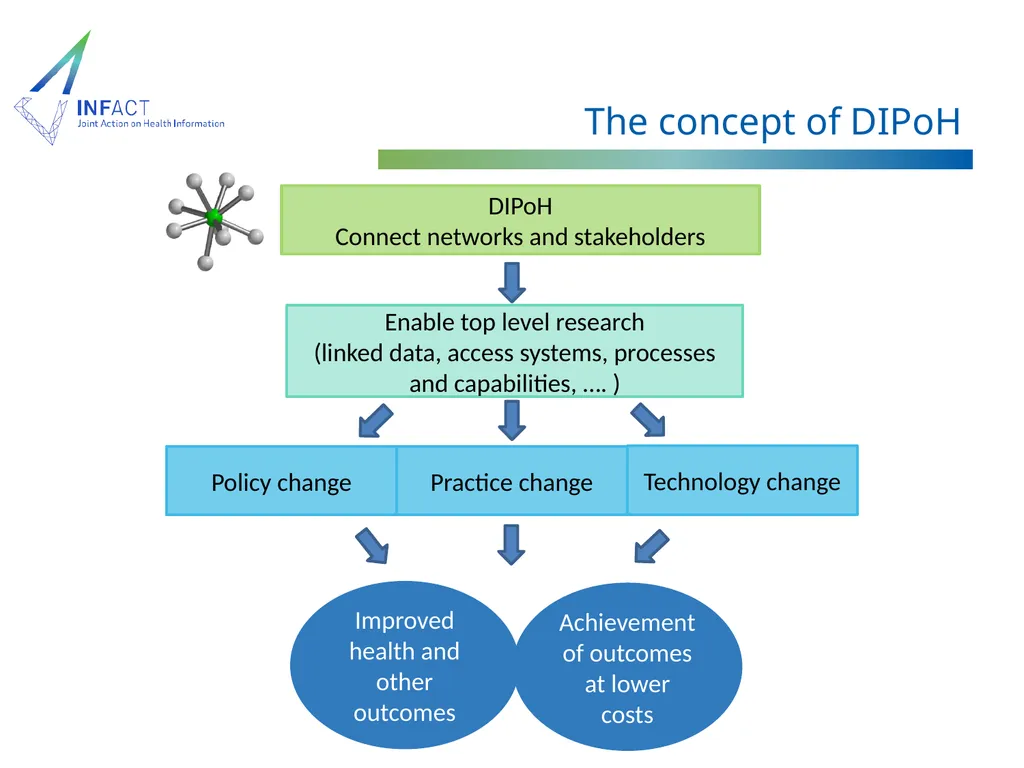
The concept of DIPoH DIPoH
Connect networks and stakeholders Enable top level research
(linked data, access systems, processes and capabilities, …. ) Policy change Practice change Technology change Improved health and other outcomes Achievement of outcomes at lower costs<br>
03
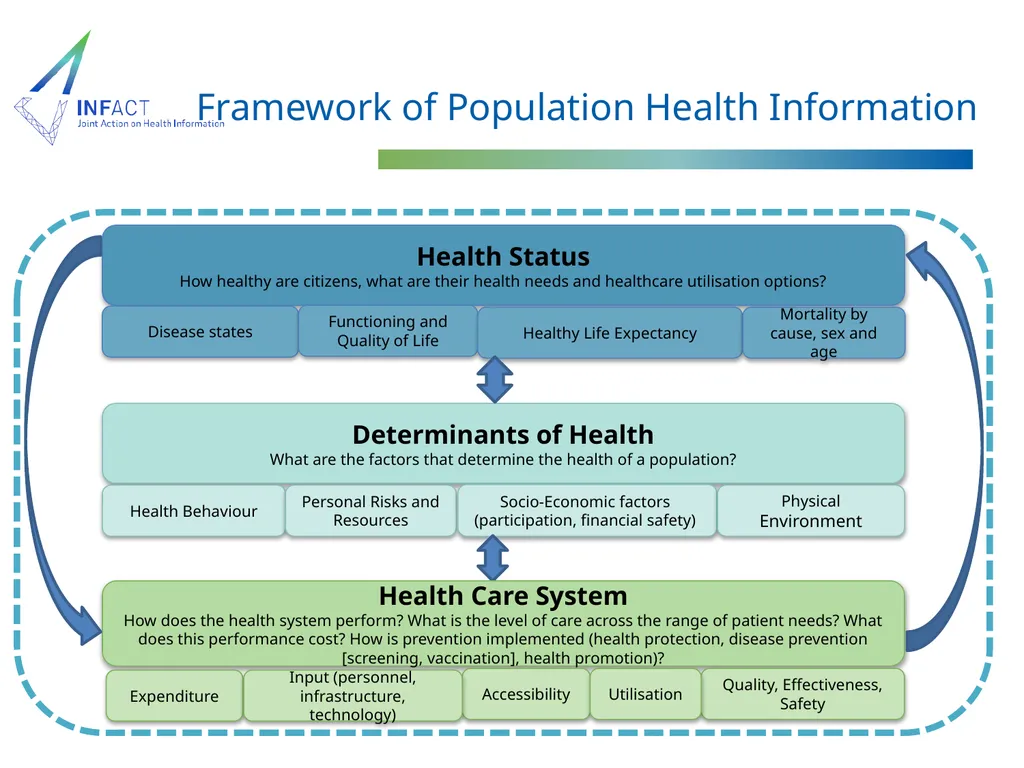
Framework of Population Health Information Health Status
How healthy are citizens, what are their health needs and healthcare utilisation options? Disease states Functioning and Quality of Life Healthy Life Expectancy Mortality by cause, sex and age Determinants of Health
What are the factors that determine the health of a population? Health Behaviour Personal Risks and Resources Socio-Economic factors
(participation, financial safety) Physical Environment Health Care System
How does the health system perform? What is the level of care across the range of patient needs? What does this performance cost? How is prevention implemented (health protection, disease prevention [screening, vaccination], health promotion)? Expenditure Quality, Effectiveness, Safety Accessibility Utilisation Input (personnel, infrastructure, technology)<br>
04
Uniqueness of DIPoH Covers the population as a whole (healthy and non healthy)
Focus on non communicable chronic diseases
Facilitate secondary use of routine data sources
Include individual and aggregated level data
Does not include experimental research
Boost national population health research<br>
05
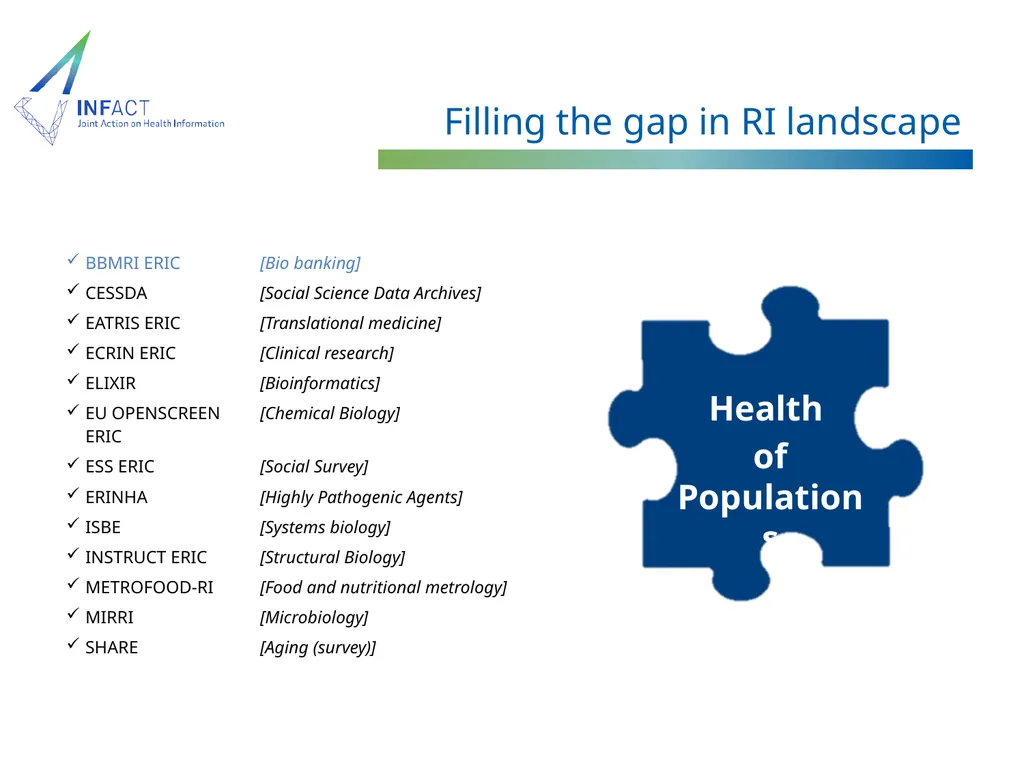
Filling the gap in RI landscape Health
of Populations<br>
06
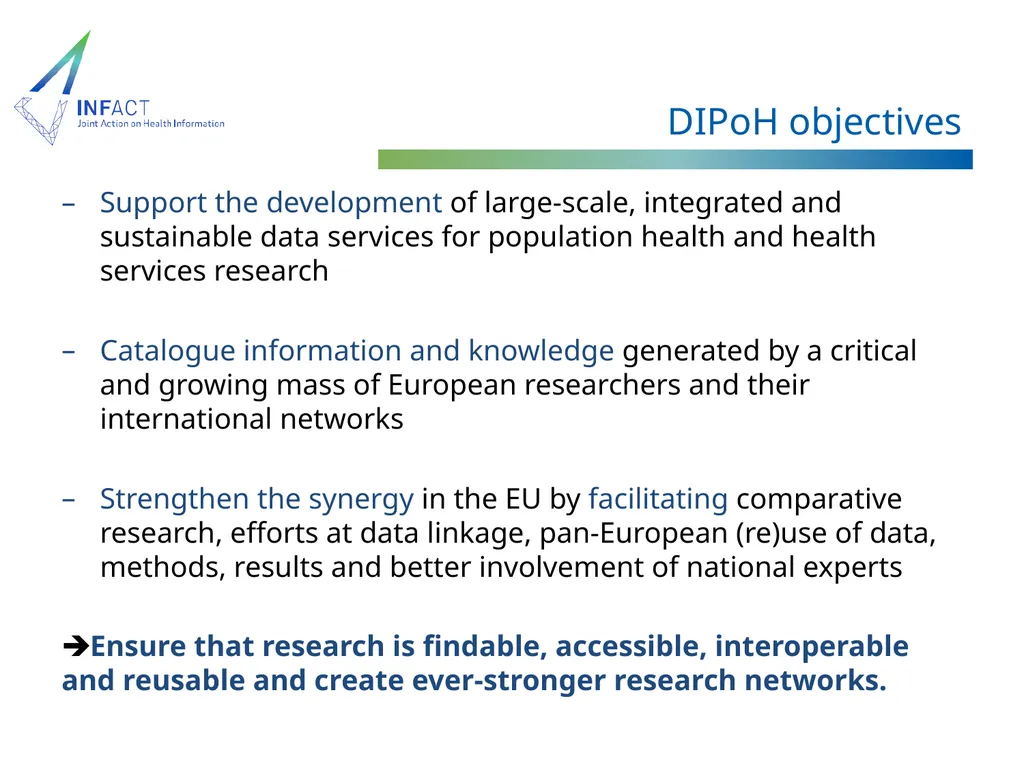
DIPoH objectives Support the development of large-scale, integrated and sustainable data services for population health and health services research
Catalogue information and knowledge generated by a critical and growing mass of European researchers and their international networks
Strengthen the synergy in the EU by facilitating comparative research, efforts at data linkage, pan-European (re)use of data, methods, results and better involvement of national experts
Ensure that research is findable, accessible, interoperable and reusable and create ever-stronger research networks.<br>
07
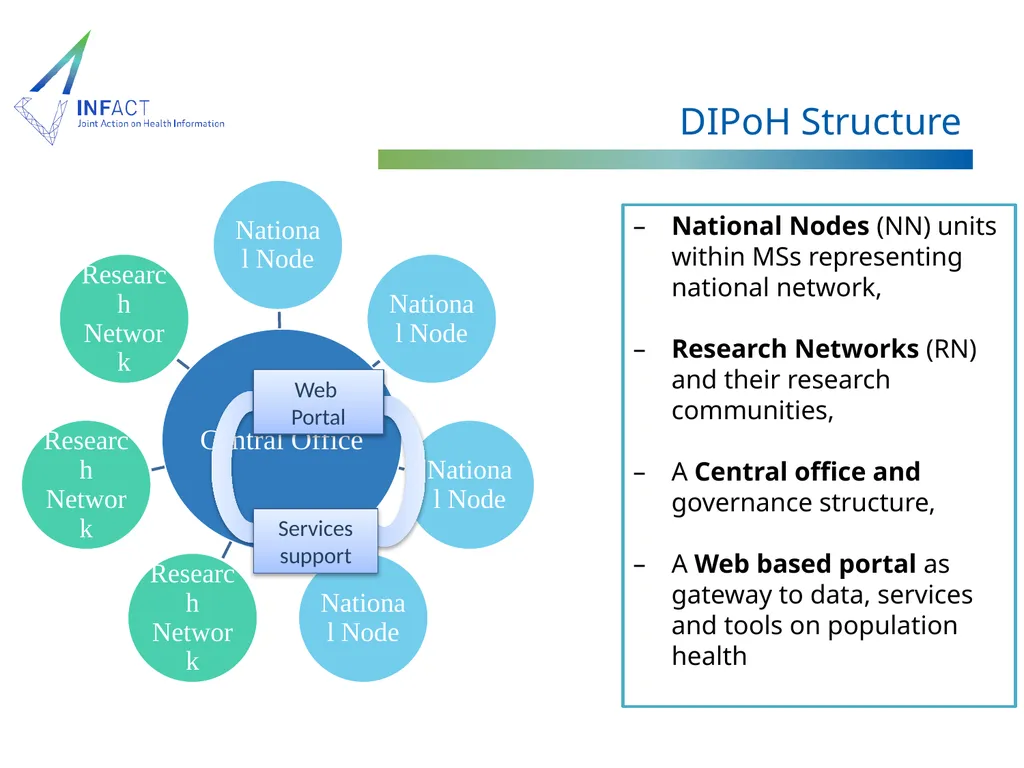
DIPoH Structure National Nodes (NN) units within MSs representing national network,
Research Networks (RN) and their research communities,
A Central office and governance structure,
A Web based portal as gateway to data, services and tools on population health<br>
08
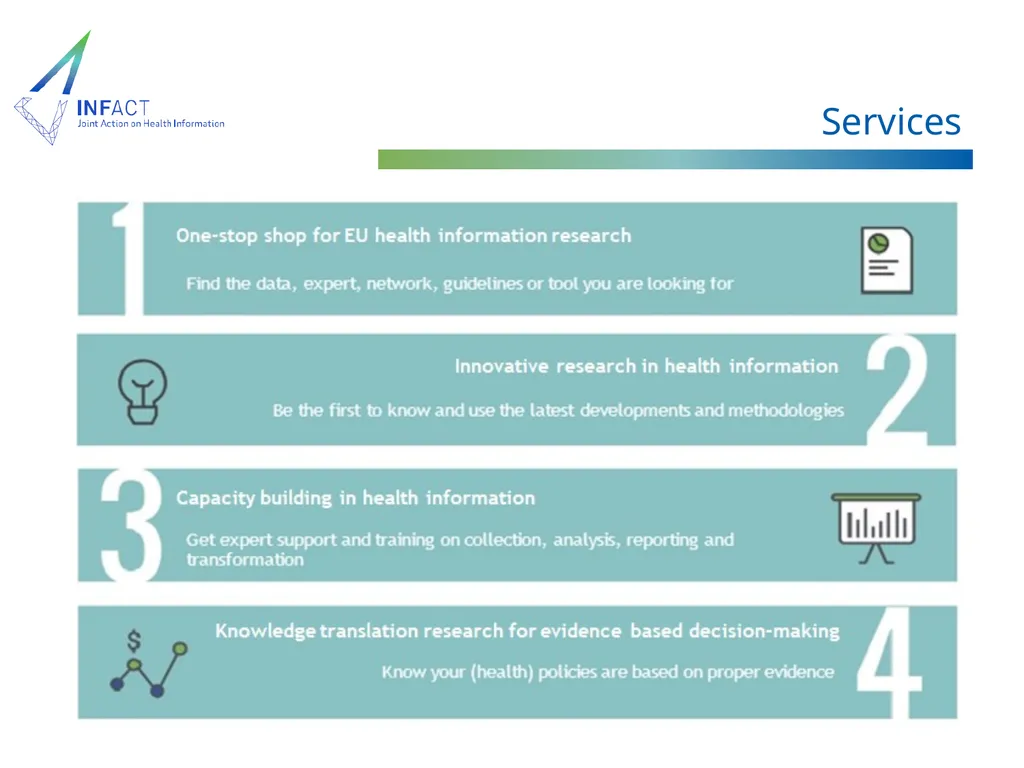
Services<br>
09
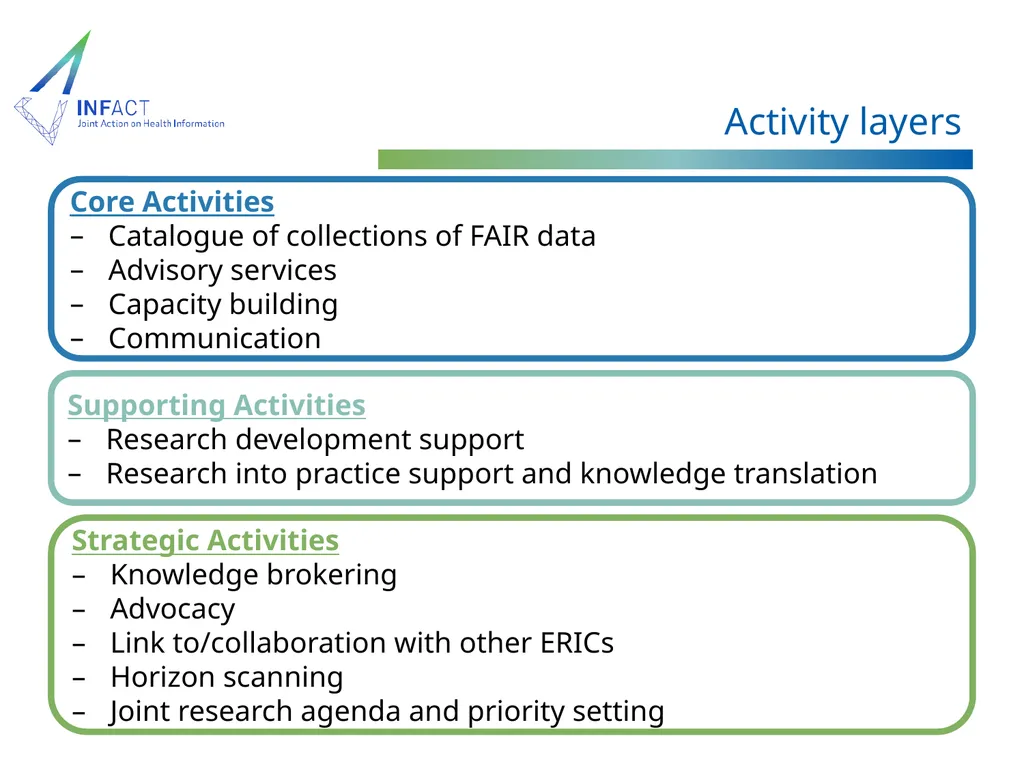
Activity layers Core Activities
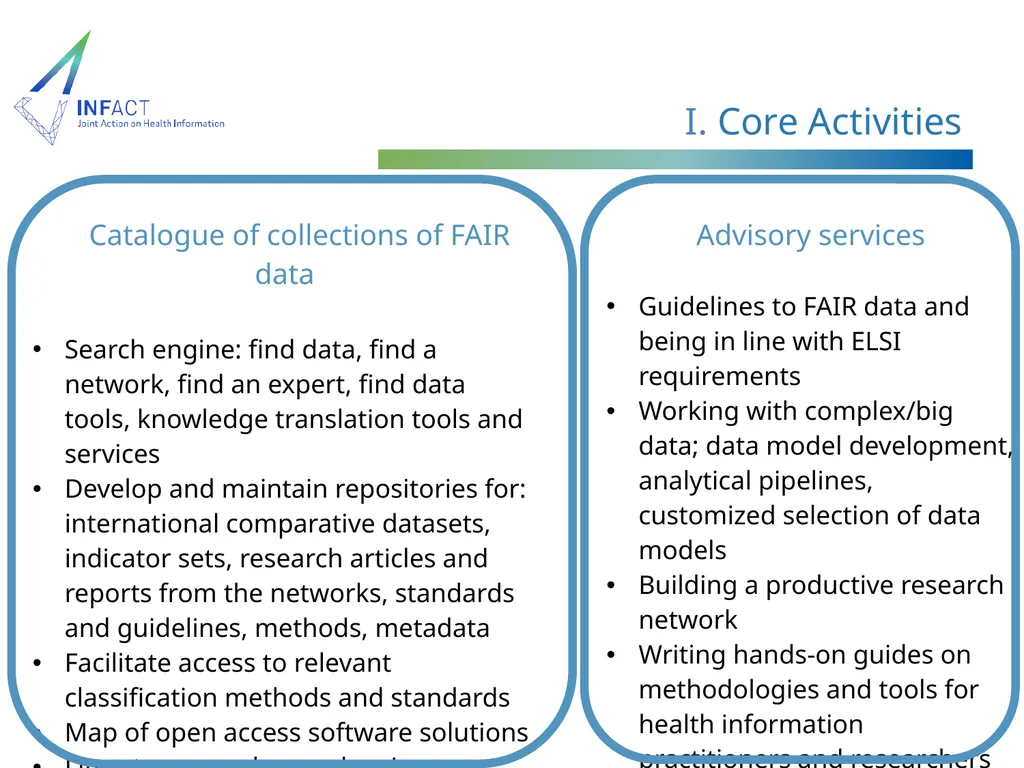
Catalogue of collections of FAIR data
Advisory services
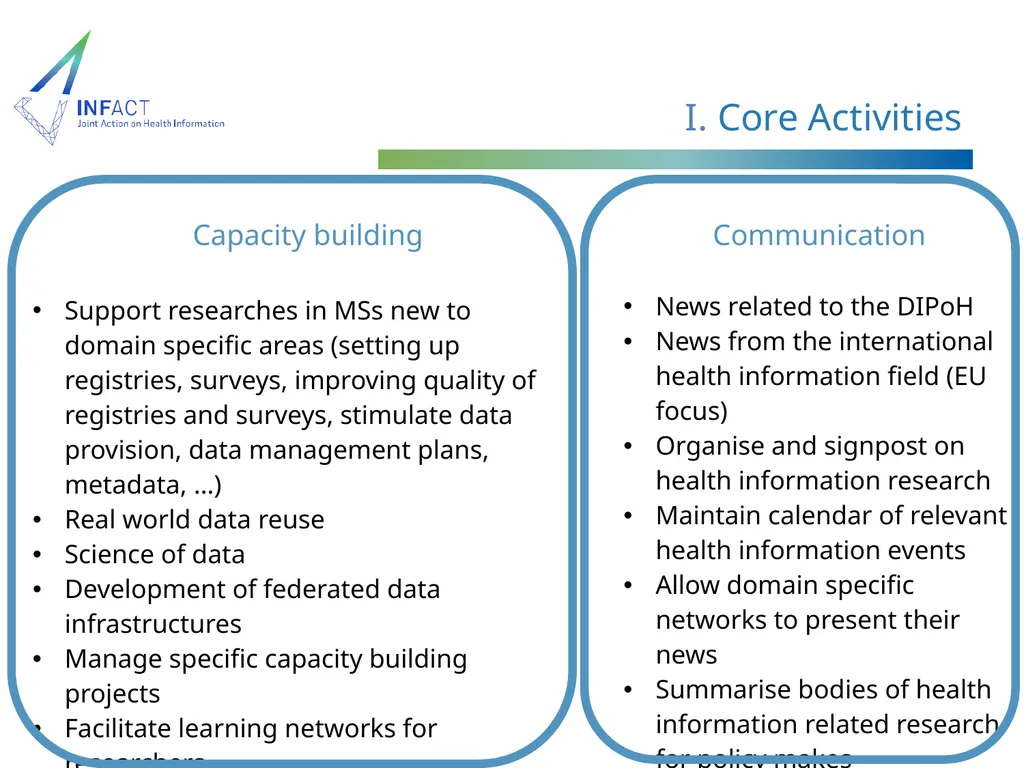
Capacity building
Communication Supporting Activities
Research development support
Research into practice support and knowledge translation Strategic Activities
Knowledge brokering
Advocacy
Link to/collaboration with other ERICs
Horizon scanning
Joint research agenda and priority setting<br>
10
I. Core Activities<br>
11
I. Core Activities<br>
12
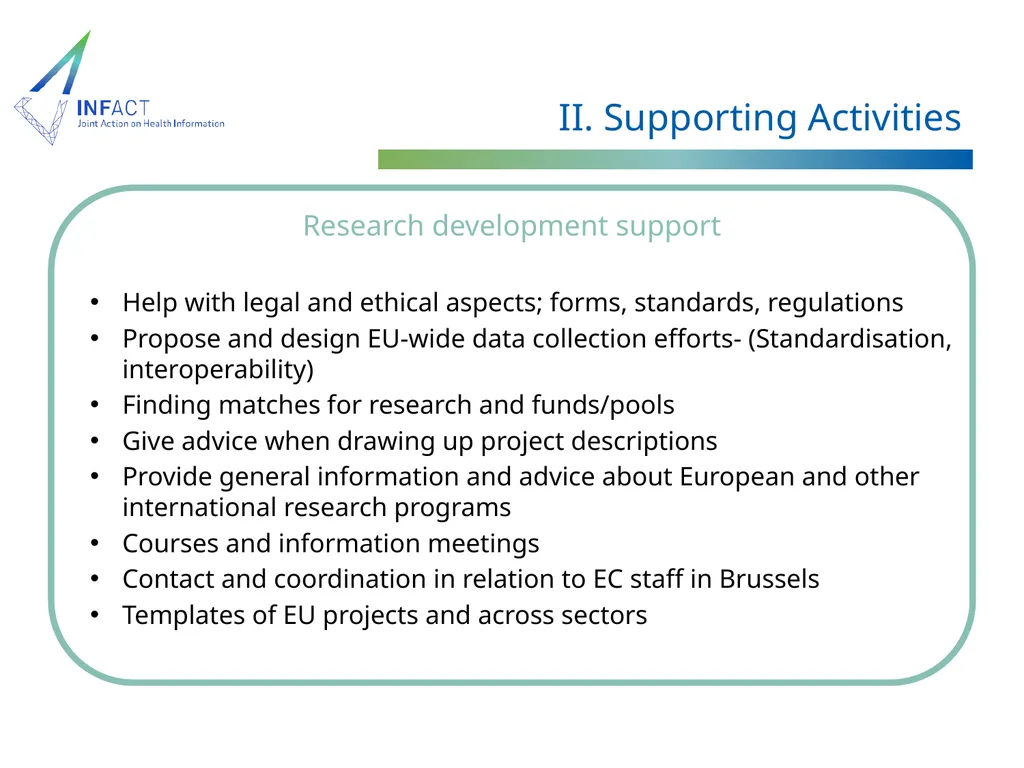
II. Supporting Activities Research development support
Help with legal and ethical aspects; forms, standards, regulations
Propose and design EU-wide data collection efforts- (Standardisation, interoperability)
Finding matches for research and funds/pools
Give advice when drawing up project descriptions
Provide general information and advice about European and other international research programs
Courses and information meetings
Contact and coordination in relation to EC staff in Brussels
Templates of EU projects and across sectors<br>
13
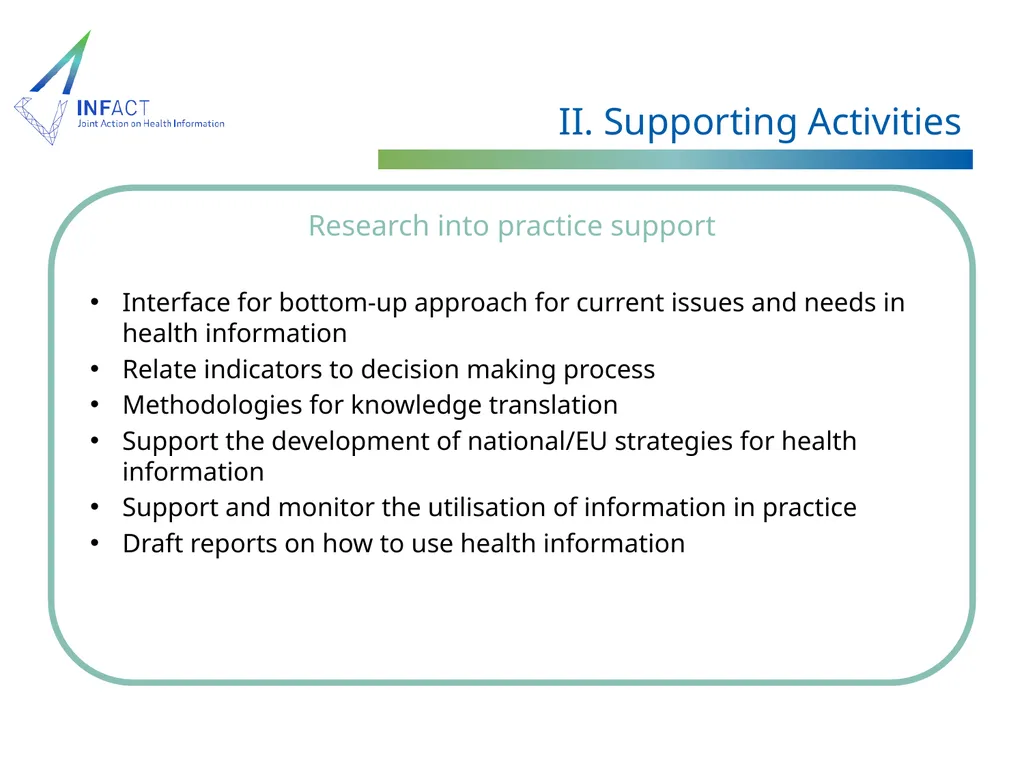
II. Supporting Activities Research into practice support
Interface for bottom-up approach for current issues and needs in health information
Relate indicators to decision making process
Methodologies for knowledge translation
Support the development of national/EU strategies for health information
Support and monitor the utilisation of information in practice
Draft reports on how to use health information<br>
14
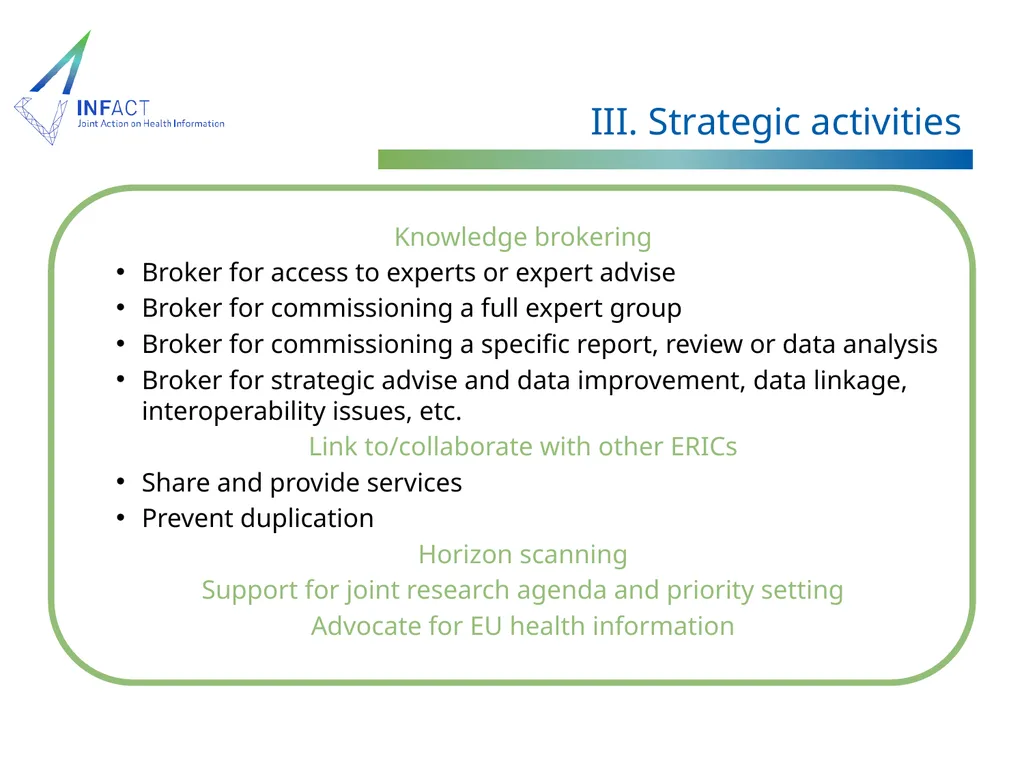
III. Strategic activities Knowledge brokering
Broker for access to experts or expert advise
Broker for commissioning a full expert group
Broker for commissioning a specific report, review or data analysis
Broker for strategic advise and data improvement, data linkage, interoperability issues, etc.
Link to/collaborate with other ERICs
Share and provide services
Prevent duplication
Horizon scanning
Support for joint research agenda and priority setting
Advocate for EU health information<br>