04
Looking after yourself during Exam Week End of year exams can be stressful, but don’t worry, it is normal to feel some nerves when you have exams approaching.
There are lots of different ways to prevent stress:
Exercise
Exercise reduces stress and produces endorphins (chemicals in your brain that make you feel good!).
Action: Go outside for a walk or do an indoor workout
2. Sleep
It is important that you get a good night sleep to help your brain to work!
Action: Get at least 8 hours of sleep a night.
3. Mindfulness
Sometimes we need a break from revising and doing some mindfulness activities can help declutter our brains.
Action: Complete some pages in your mindfulness booklets.
4. Talk to someone
If you feel too stressed, remember, you are not alone so talk to someone.
Action: Speak to your friends, families or member of staff if you are feeling really stressed.<br>
05
How to Revise for English 1.
2.
3. Use the video to make notes on how best to revise for this subject.<br>
06
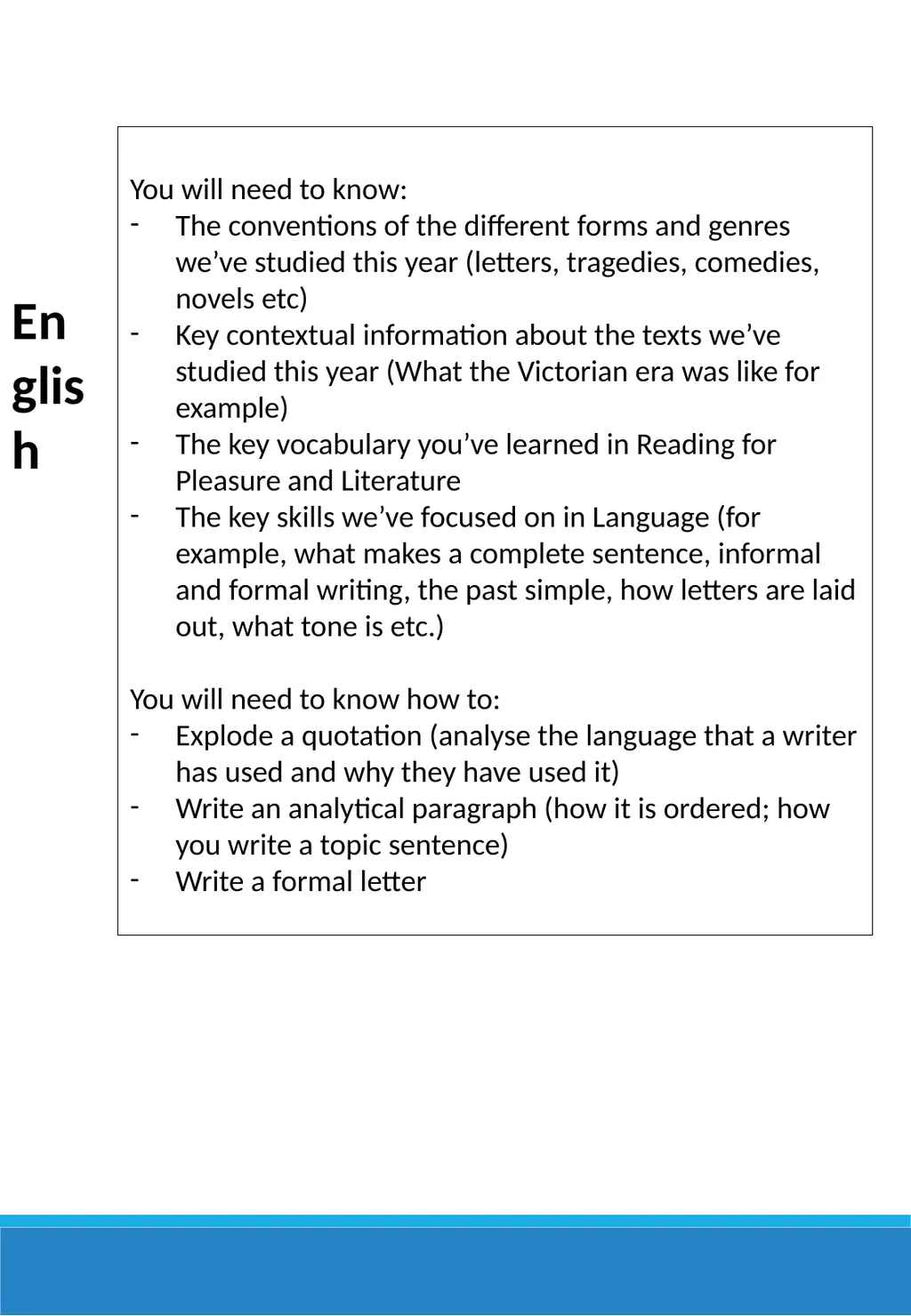
You will need to know:
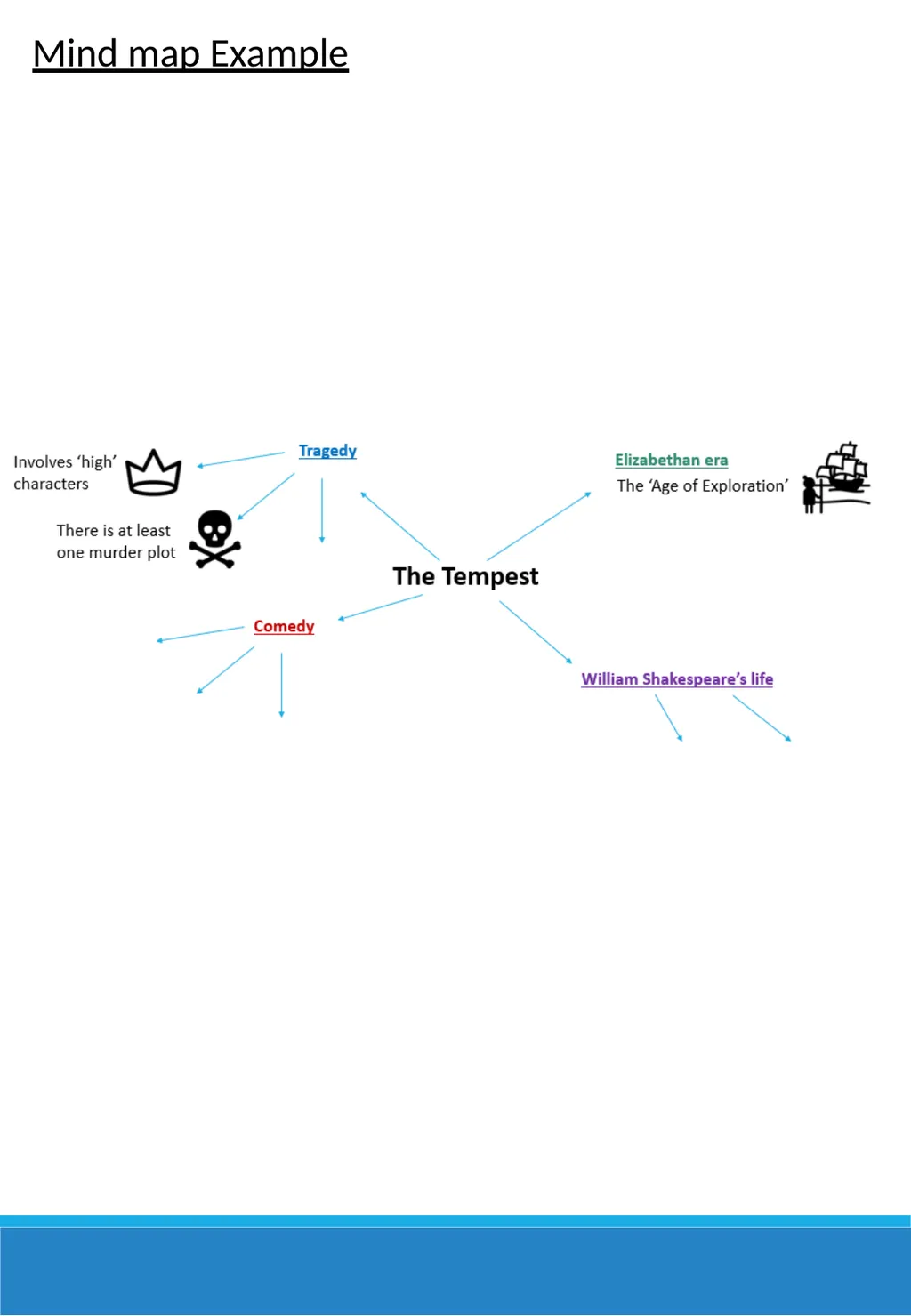
The conventions of the different forms and genres we’ve studied this year (letters, tragedies, comedies, novels etc)
Key contextual information about the texts we’ve studied this year (What the Victorian era was like for example)
The key vocabulary you’ve learned in Reading for Pleasure and Literature
The key skills we’ve focused on in Language (for example, what makes a complete sentence, informal and formal writing, the past simple, how letters are laid out, what tone is etc.)
You will need to know how to:
Explode a quotation (analyse the language that a writer has used and why they have used it)
Write an analytical paragraph (how it is ordered; how you write a topic sentence)
Write a formal letter English<br>
07
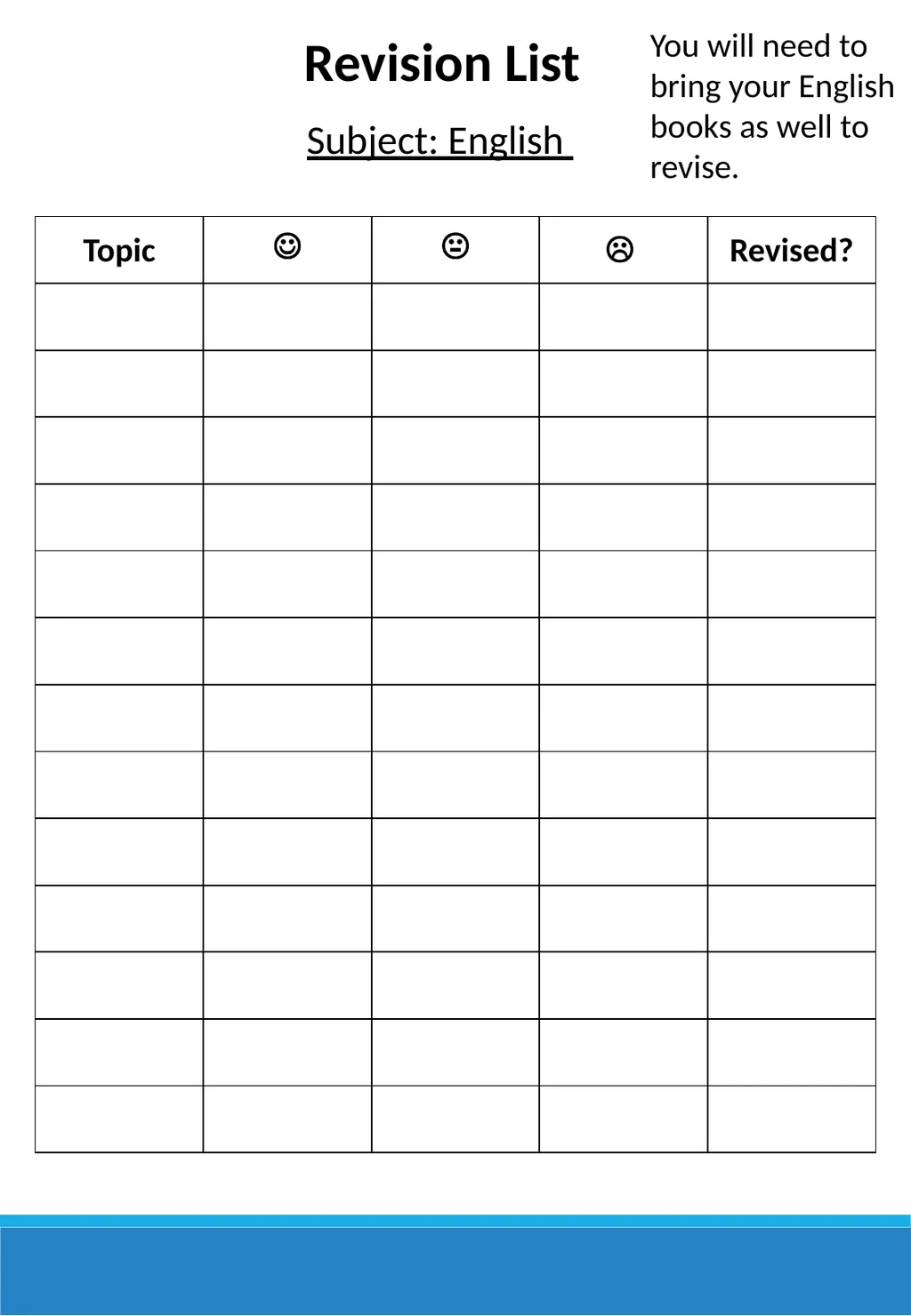
Subject: English Revision List You will need to bring your English books as well to revise.<br>
08
How to Revise for Maths 1.
2.
3. Use the video to make notes on how best to revise for this subject.<br>
09
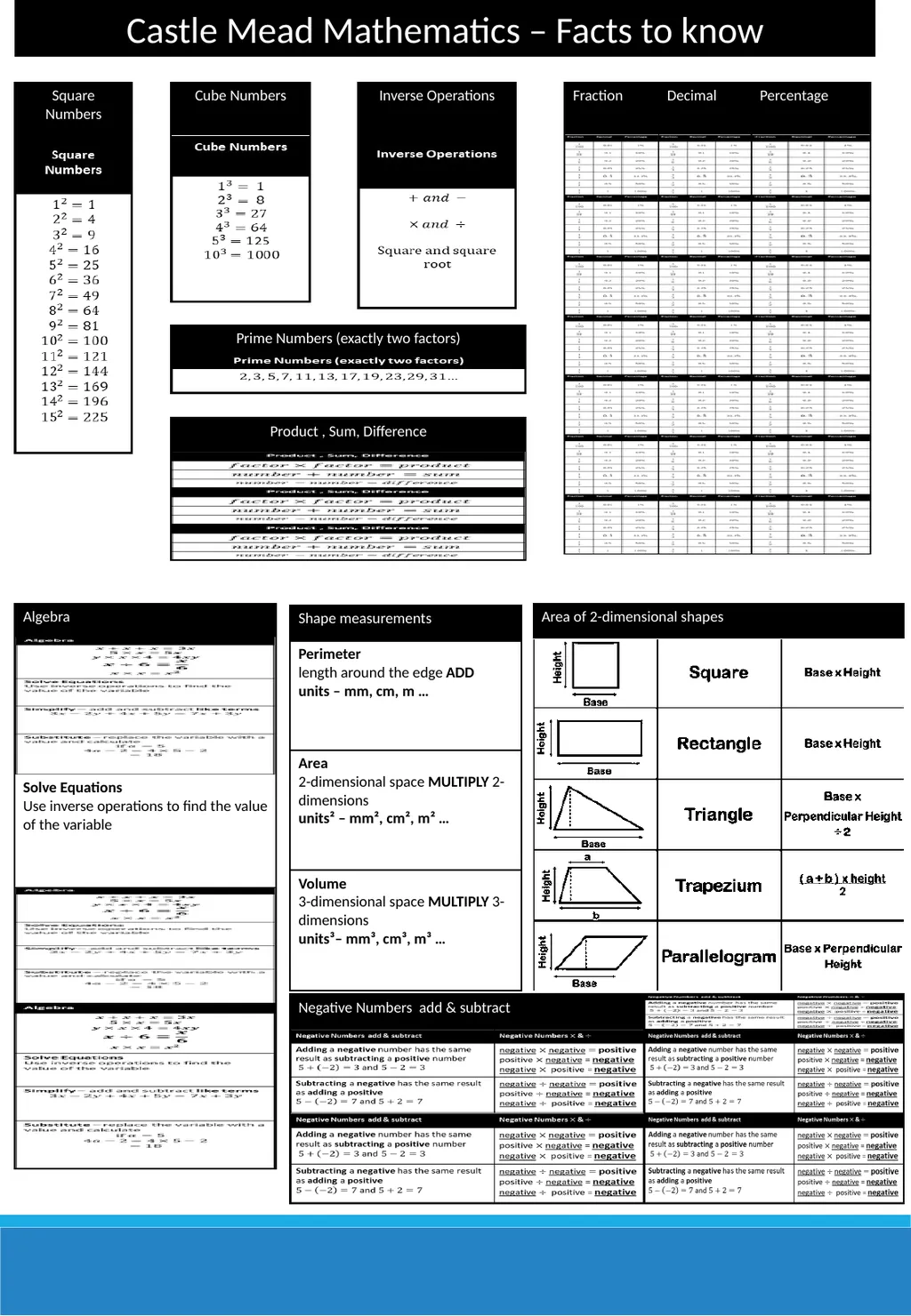
Castle Mead Mathematics – Facts to know<br>
10
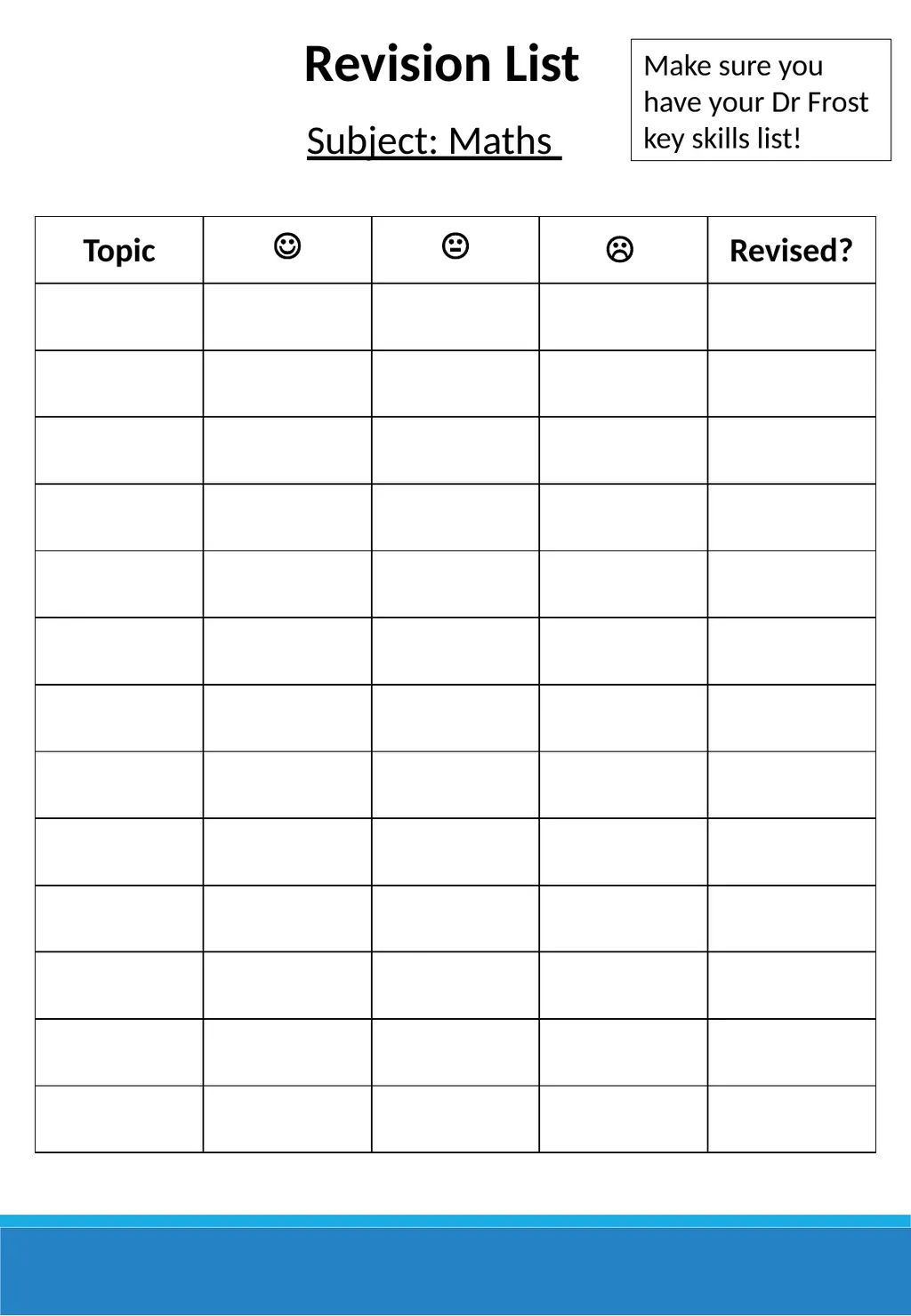
Subject: Maths Revision List Make sure you have your Dr Frost key skills list!<br>
11
How to Revise for Science 1.
2.
3. Use the video to make notes on how best to revise for this subject.<br>
13
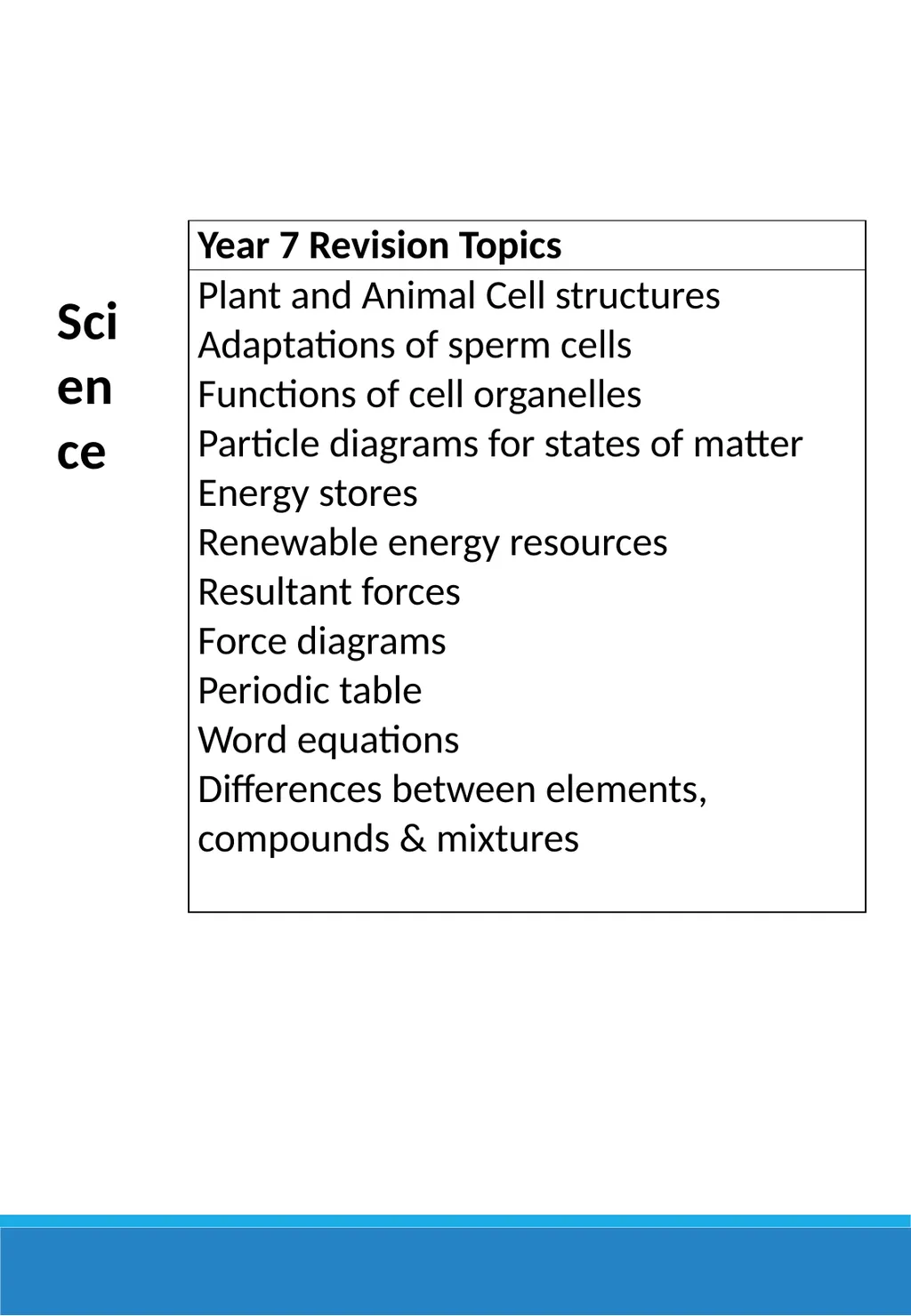
Subject: Science Revision List<br>
14
How to Revise for RE 1.
2.
3. Use the video to make notes on how best to revise for this subject.<br>
15
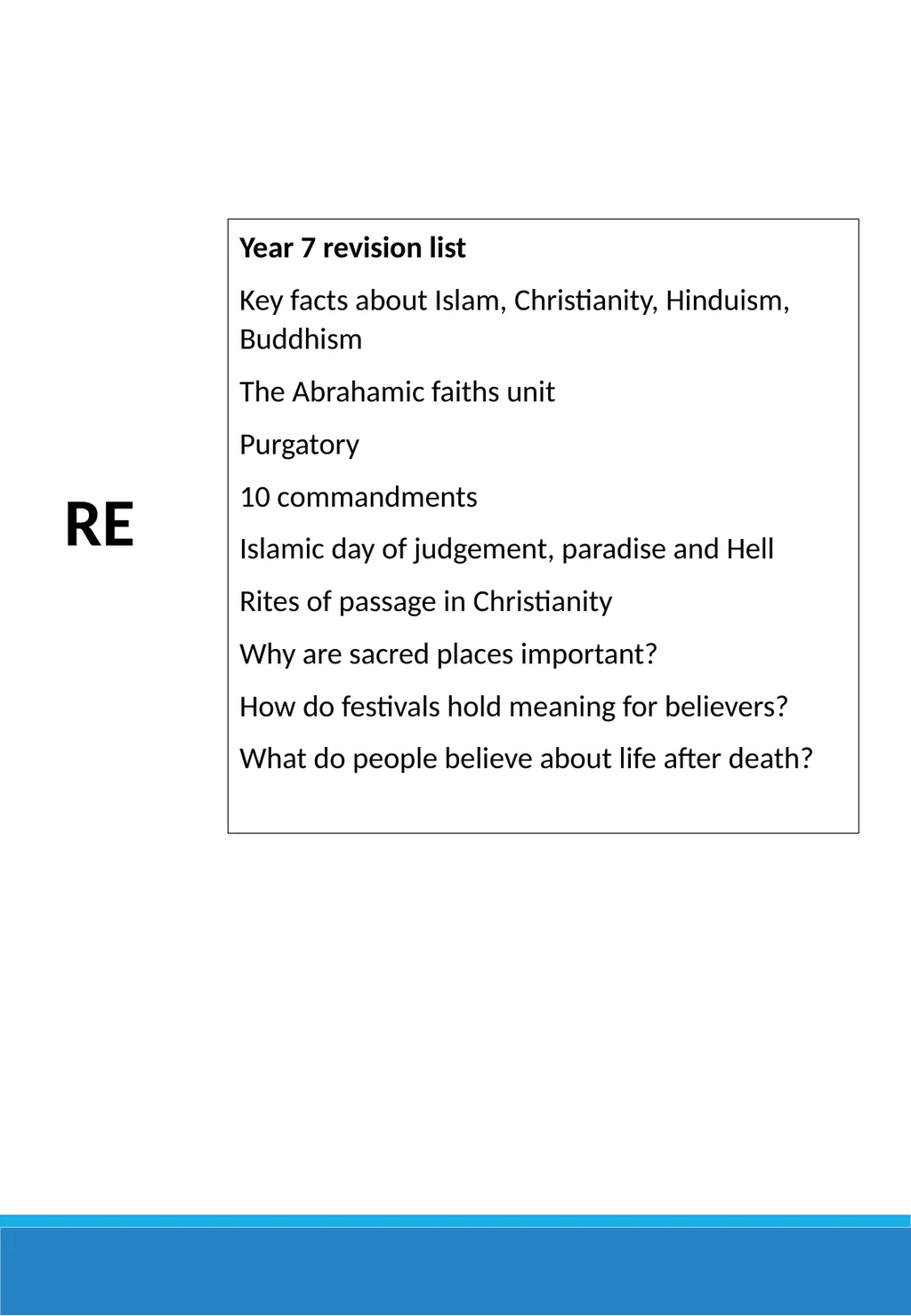
Year 7 revision list
Key facts about Islam, Christianity, Hinduism, Buddhism
The Abrahamic faiths unit
Purgatory
10 commandments
Islamic day of judgement, paradise and Hell
Rites of passage in Christianity
Why are sacred places important?
How do festivals hold meaning for believers?
What do people believe about life after death? RE<br>
16
Subject: RE Revision List<br>
17
How to Revise for French 1.
2.
3. Use the video to make notes on how best to revise for this subject.<br>
18
Year 7
Revise the vocab sheet you have been given in lessons.
Plus:
Units 1 and 2 – Describing myself and my family, animals, colours, numbers, physical description, personality description
Unit 3 – Sports and hobbies – jouer and faire, opinions plus infinitives
+ intensifiers, time indicators, complex opinions French<br>
19
Subject: French Revision List<br>
20
How to Revise for History 1.
2.
3. Use the video to make notes on how best to revise for this subject.<br>
21
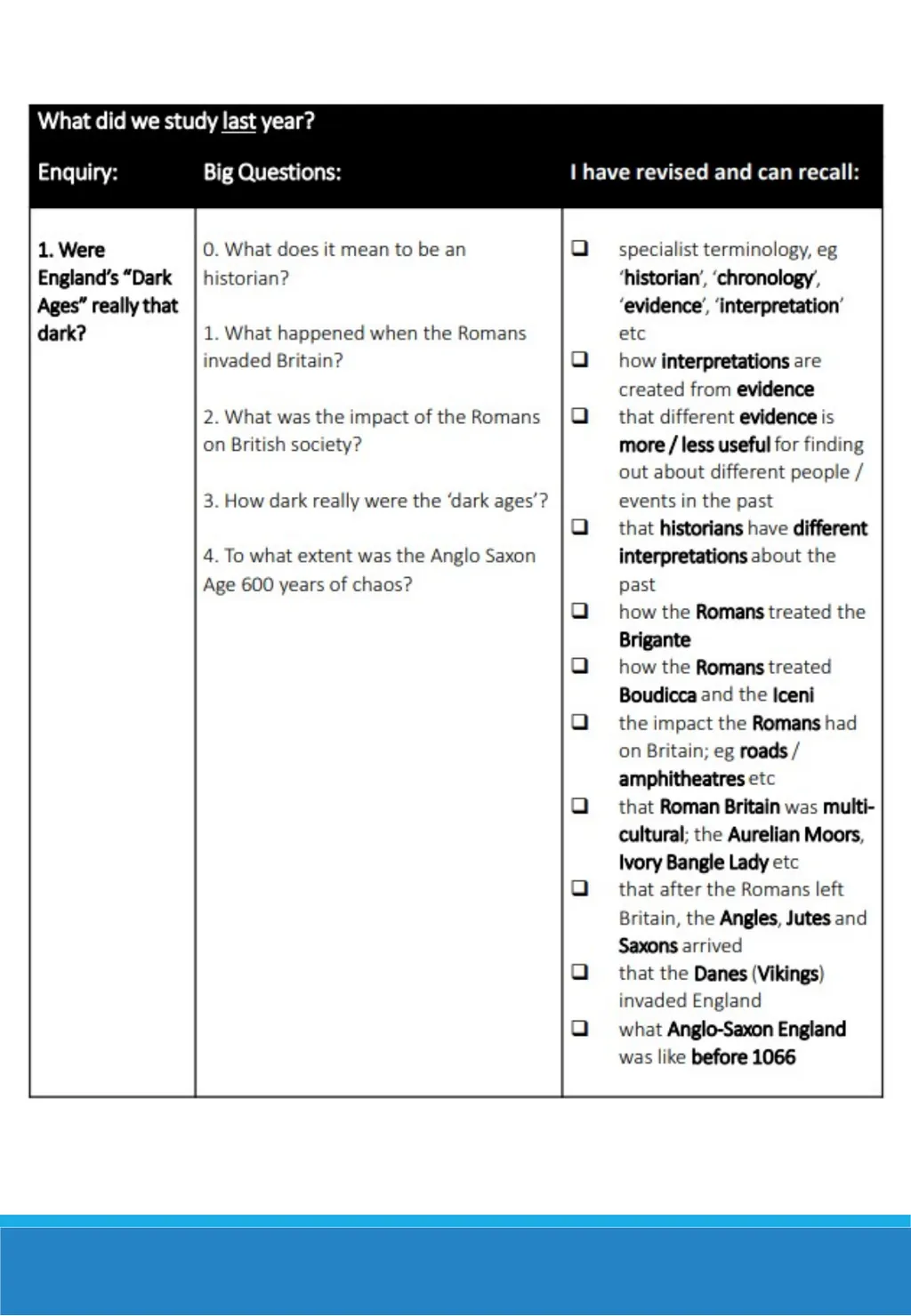
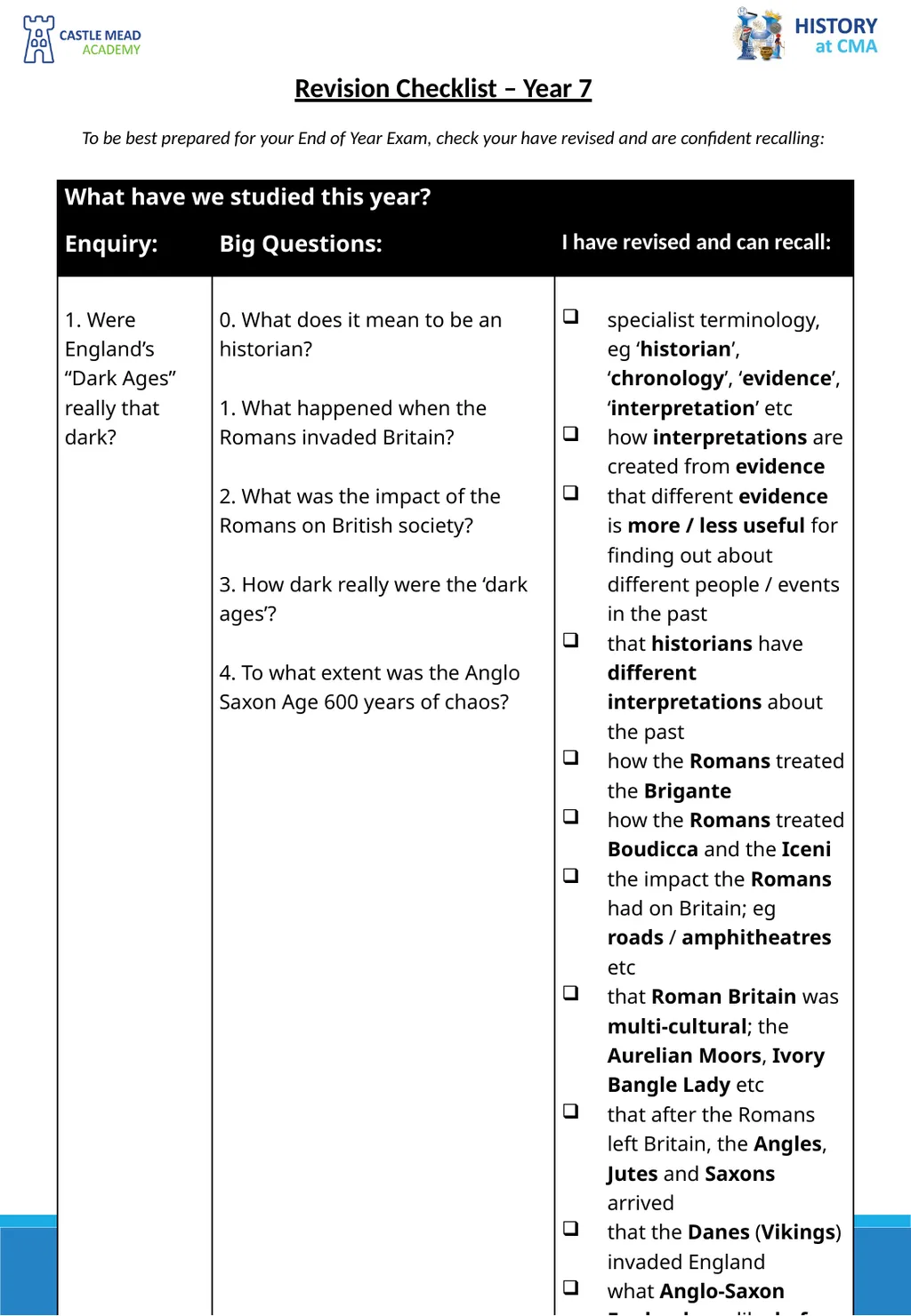
Revision Checklist – Year 7 To be best prepared for your End of Year Exam, check your have revised and are confident recalling:<br>
22
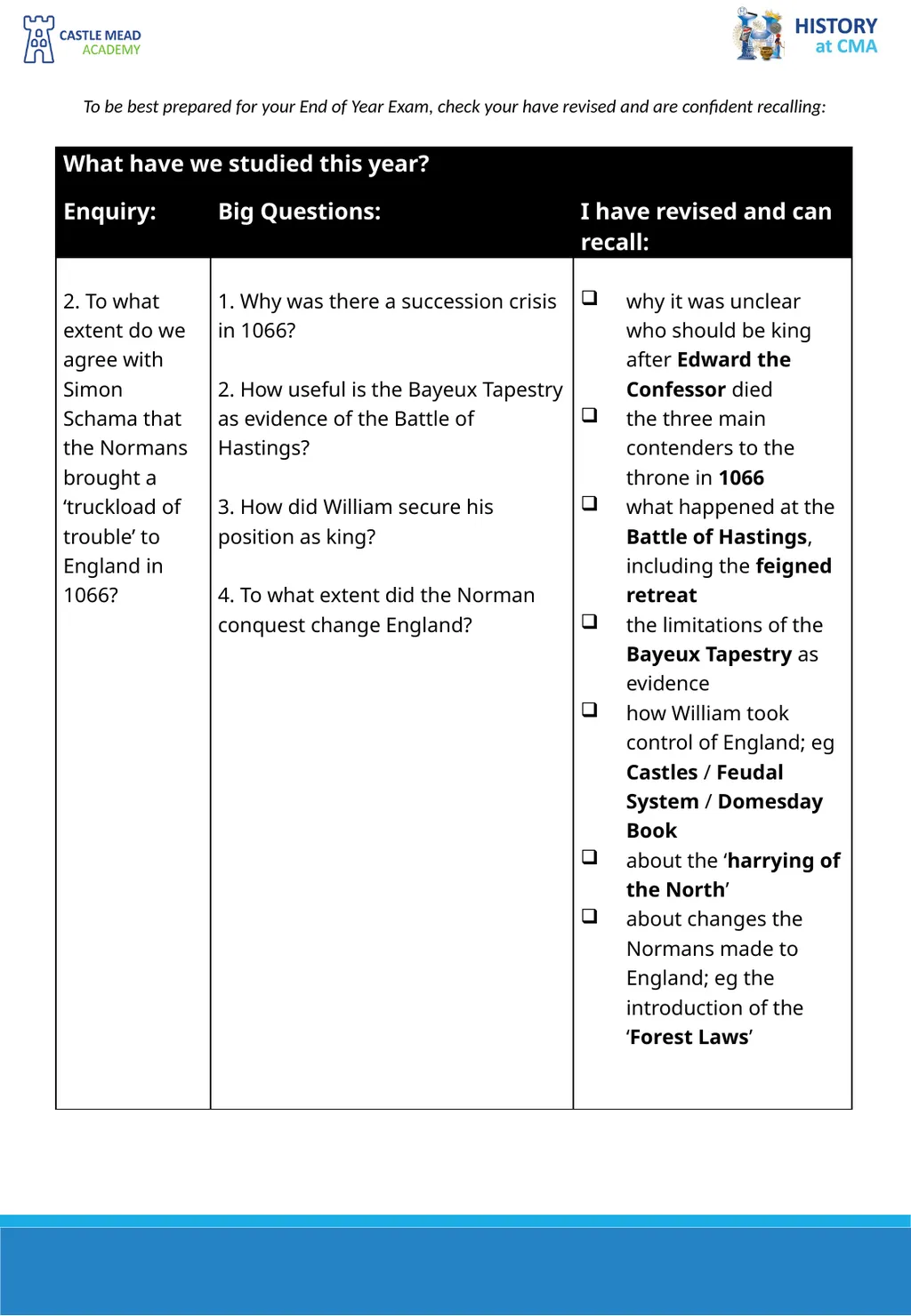
To be best prepared for your End of Year Exam, check your have revised and are confident recalling:<br>
23
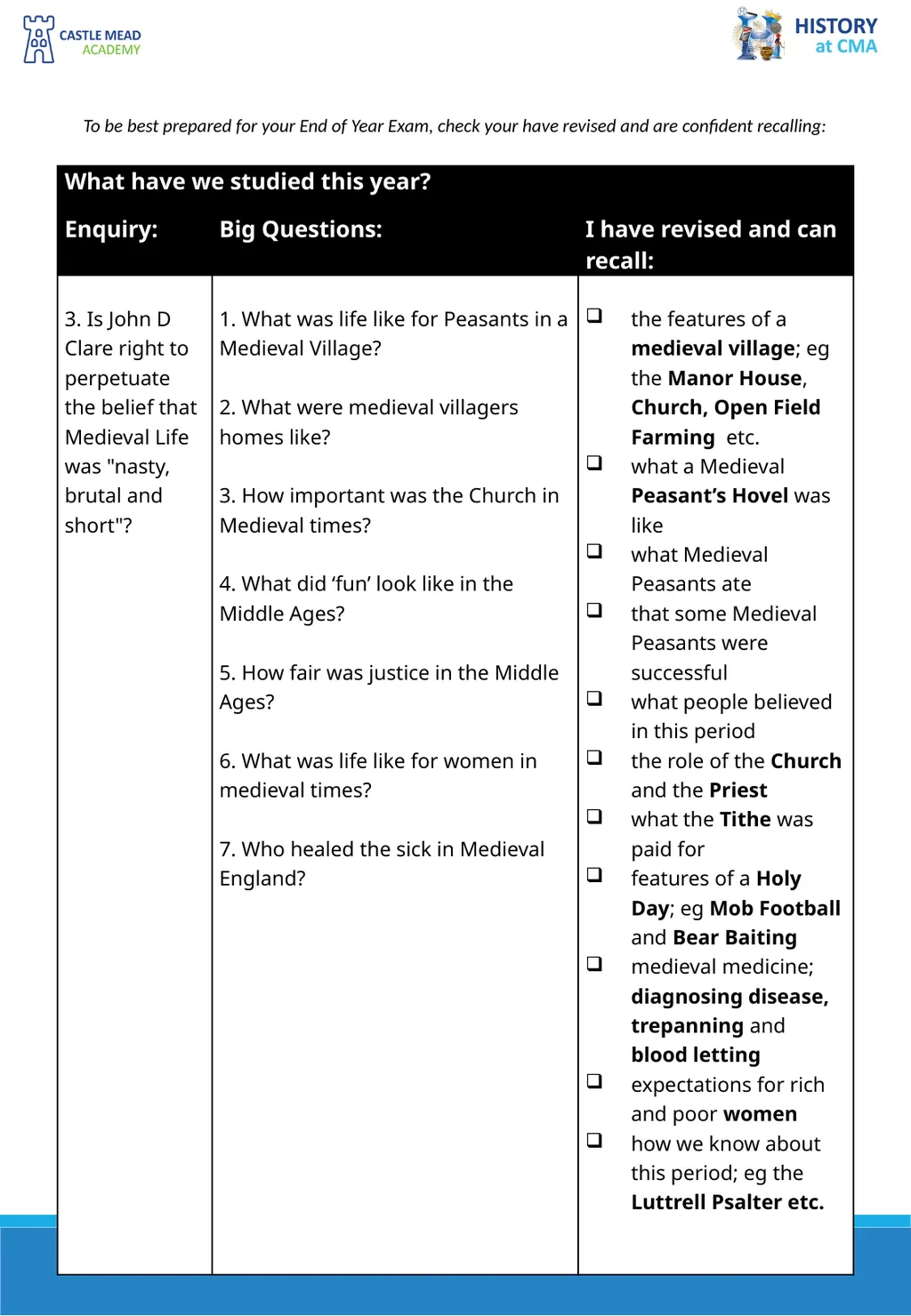
To be best prepared for your End of Year Exam, check your have revised and are confident recalling:<br>
24
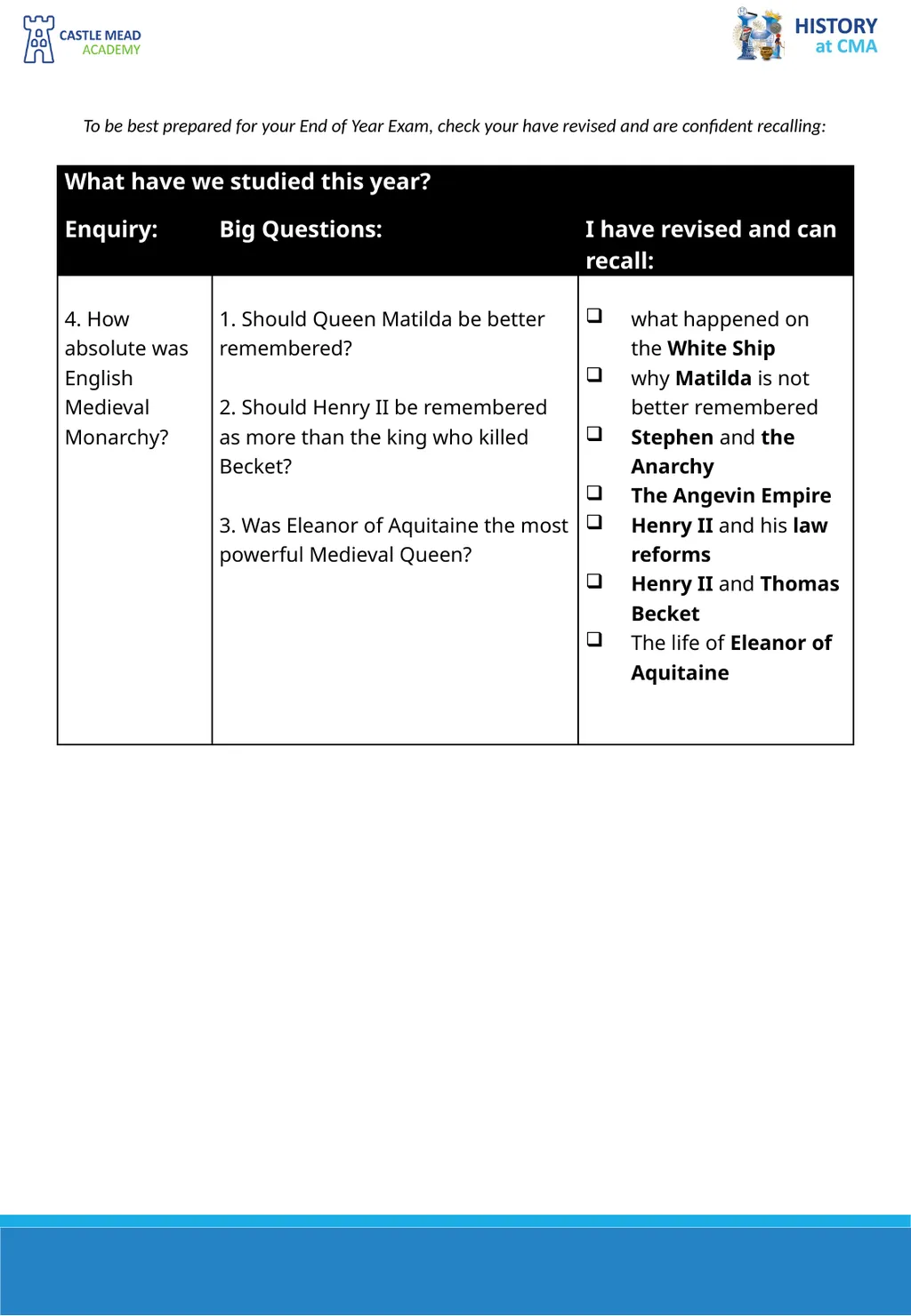
To be best prepared for your End of Year Exam, check your have revised and are confident recalling:<br>
25
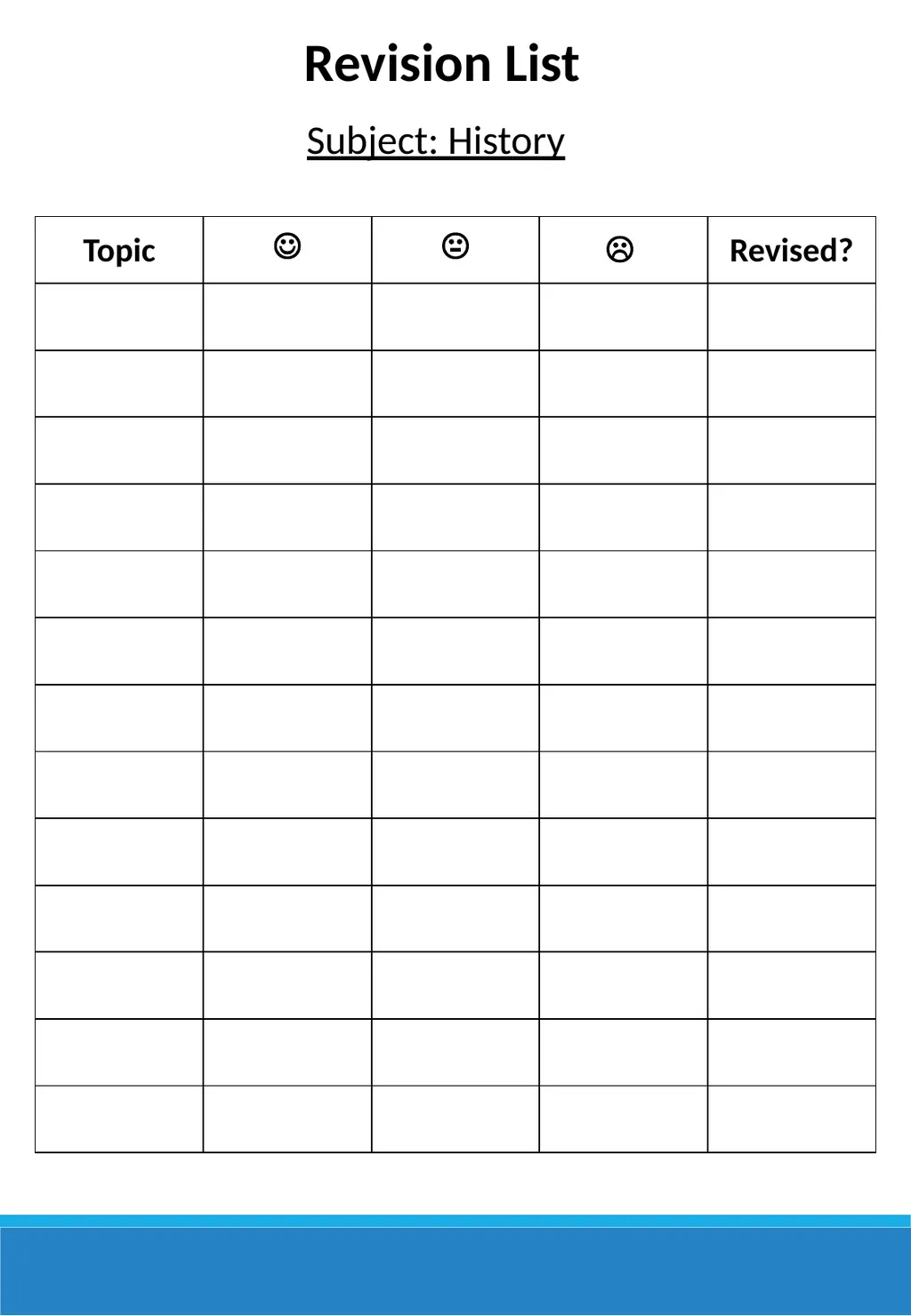
Subject: History Revision List<br>
26
How to Revise for Geography 1.
2.
3. Use the video to make notes on how best to revise for this subject.<br>
27
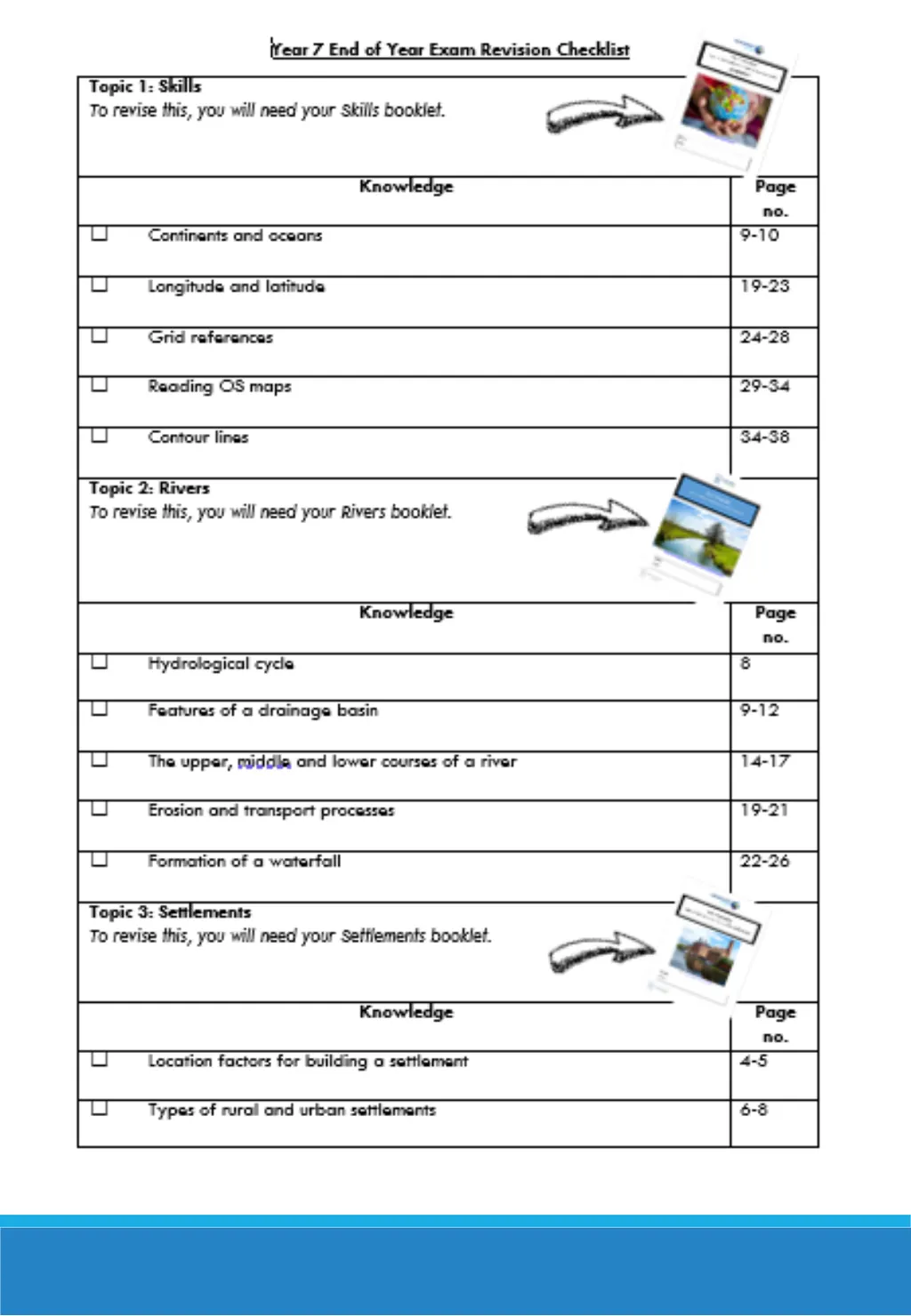
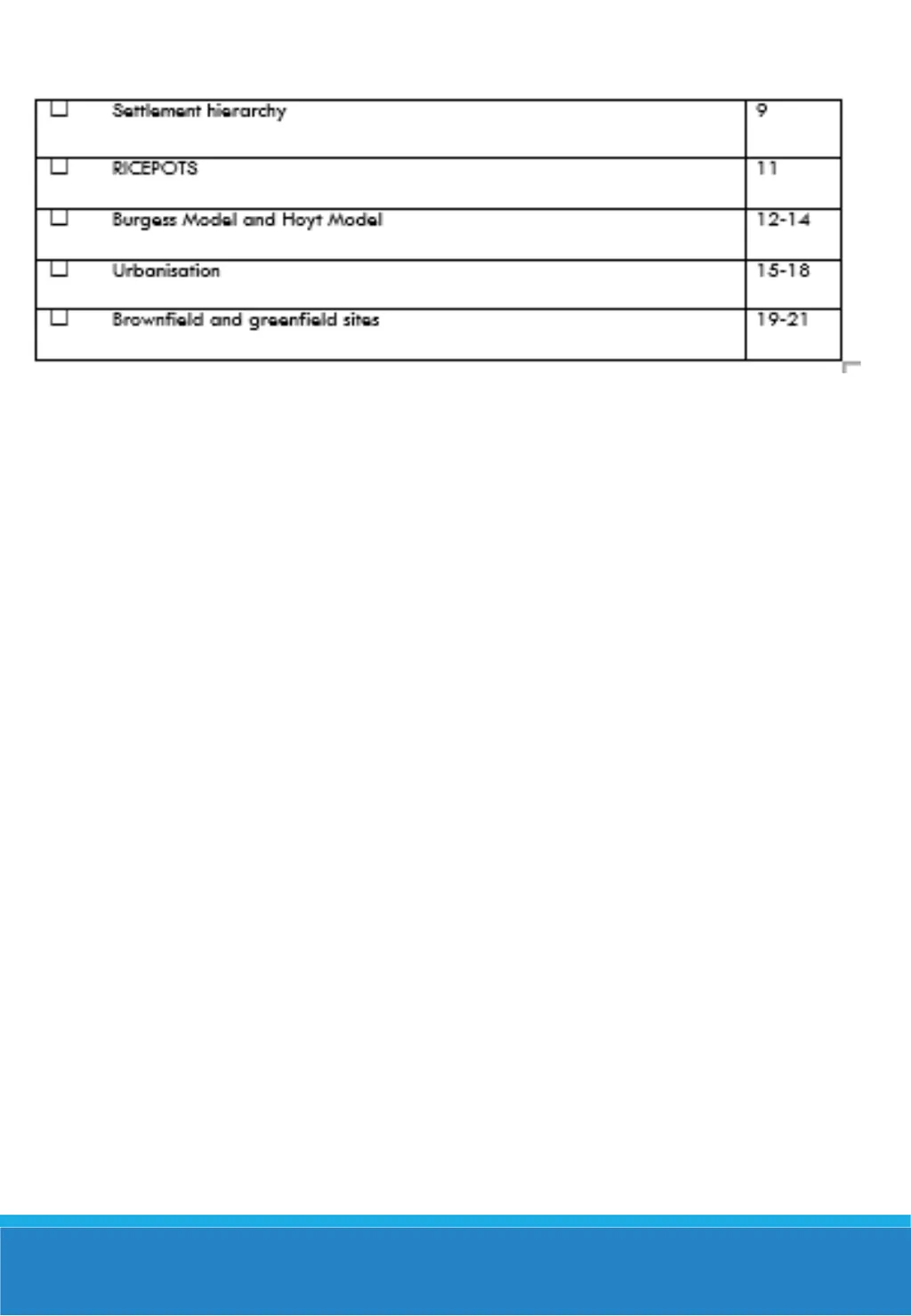
Subject: Geography Revision List Add the topics from the checklist provided<br>
28
How to Revise for Design Technology 1.
2.
3. Use the video to make notes on how best to revise for this subject.<br>
29
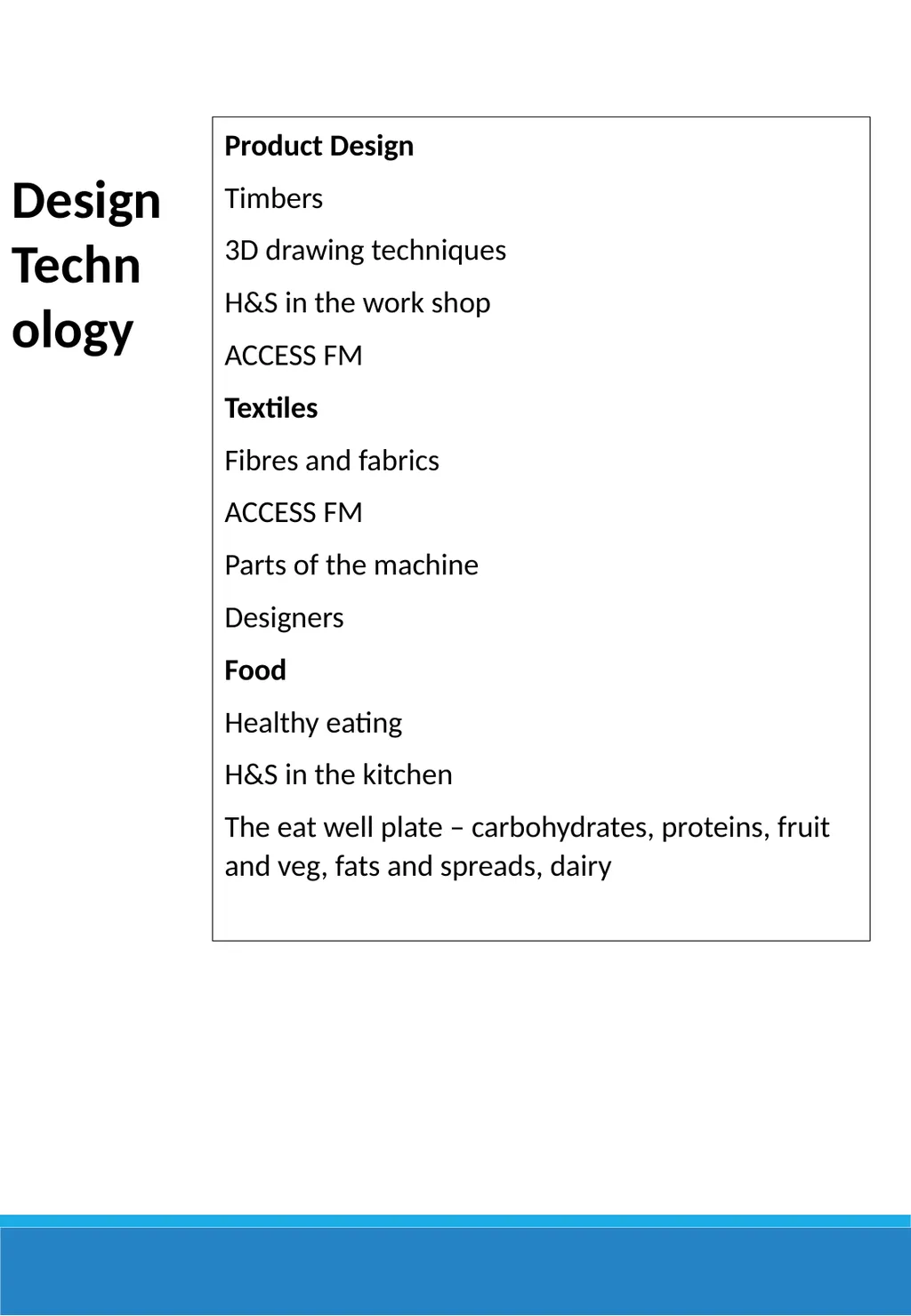
Product Design
Timbers
3D drawing techniques
H&S in the work shop
ACCESS FM
Textiles
Fibres and fabrics
ACCESS FM
Parts of the machine
Designers
Food
Healthy eating
H&S in the kitchen
The eat well plate – carbohydrates, proteins, fruit and veg, fats and spreads, dairy Design Technology<br>
30
Subject: Design Technology Revision List<br>
31
How to Revise for Computer Science 1.
2.
3. Use the video to make notes on how best to revise for this subject.<br>
32
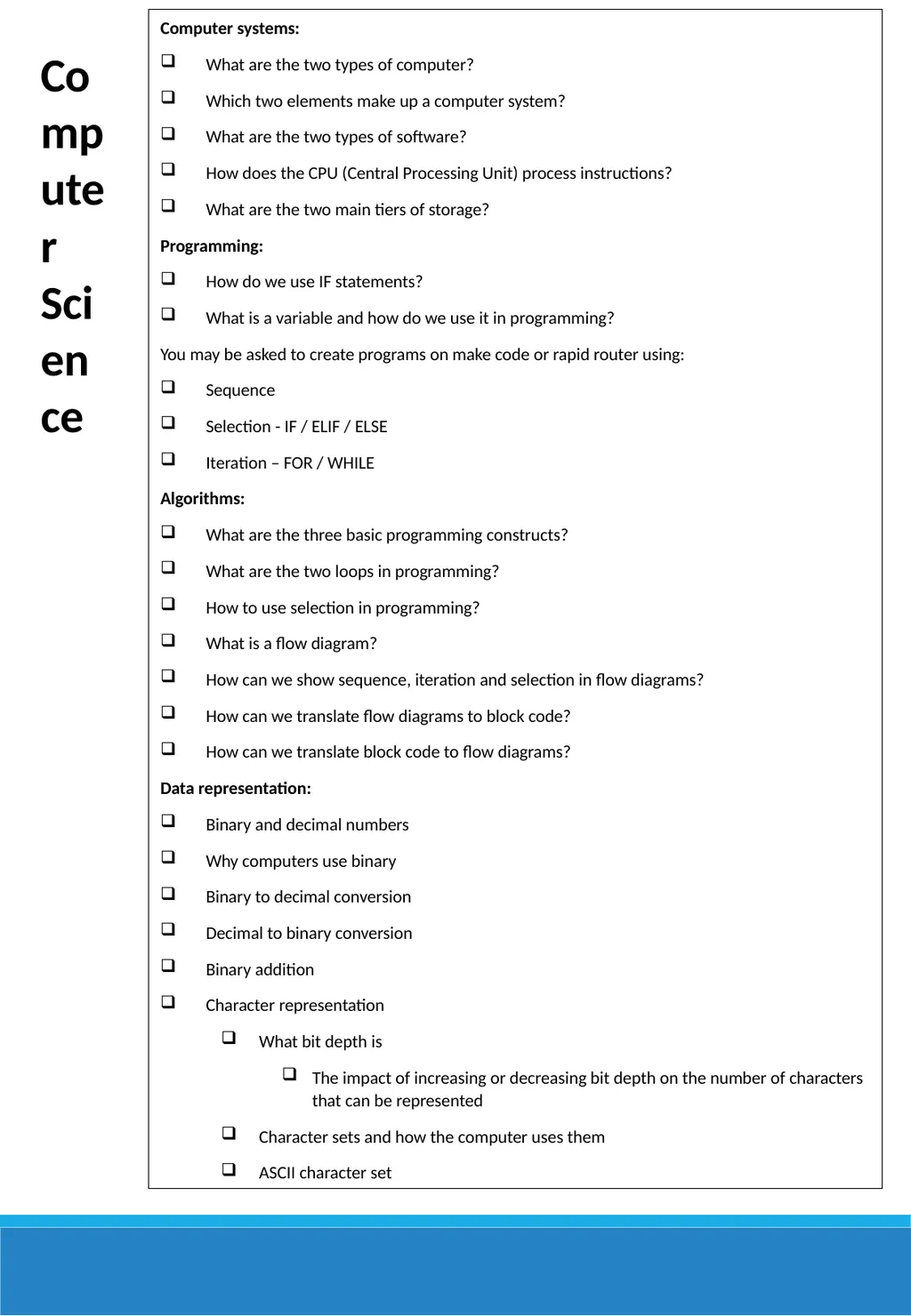
Computer systems:
What are the two types of computer?
Which two elements make up a computer system?
What are the two types of software?
How does the CPU (Central Processing Unit) process instructions?
What are the two main tiers of storage?
Programming:
How do we use IF statements?
What is a variable and how do we use it in programming?
You may be asked to create programs on make code or rapid router using:
Sequence
Selection - IF / ELIF / ELSE
Iteration – FOR / WHILE
Algorithms:
What are the three basic programming constructs?
What are the two loops in programming?
How to use selection in programming?
What is a flow diagram?
How can we show sequence, iteration and selection in flow diagrams?
How can we translate flow diagrams to block code?
How can we translate block code to flow diagrams?
Data representation:
Binary and decimal numbers
Why computers use binary
Binary to decimal conversion
Decimal to binary conversion
Binary addition
Character representation
What bit depth is
The impact of increasing or decreasing bit depth on the number of characters that can be represented
Character sets and how the computer uses them
ASCII character set Computer Science<br>
33
Subject: Computer Science Revision List<br>
34
How to Revise for Drama 1.
2.
3. Use the video to make notes on how best to revise for this subject.<br>
35
Drama Basics:�- Rules of the theatre�- Non-naturalistic techniques �- Vocal and Physical skills
Year 7 Topics: �- Theatre through the Ages �- Devising �- Introduction to scripts (The Wardrobe)�- Live Theatre Review<br>
36
Subject: Drama Revision List<br>
37
How to Revise for Music 1.
2.
3. Use the video to make notes on how best to revise for this subject.<br>
38
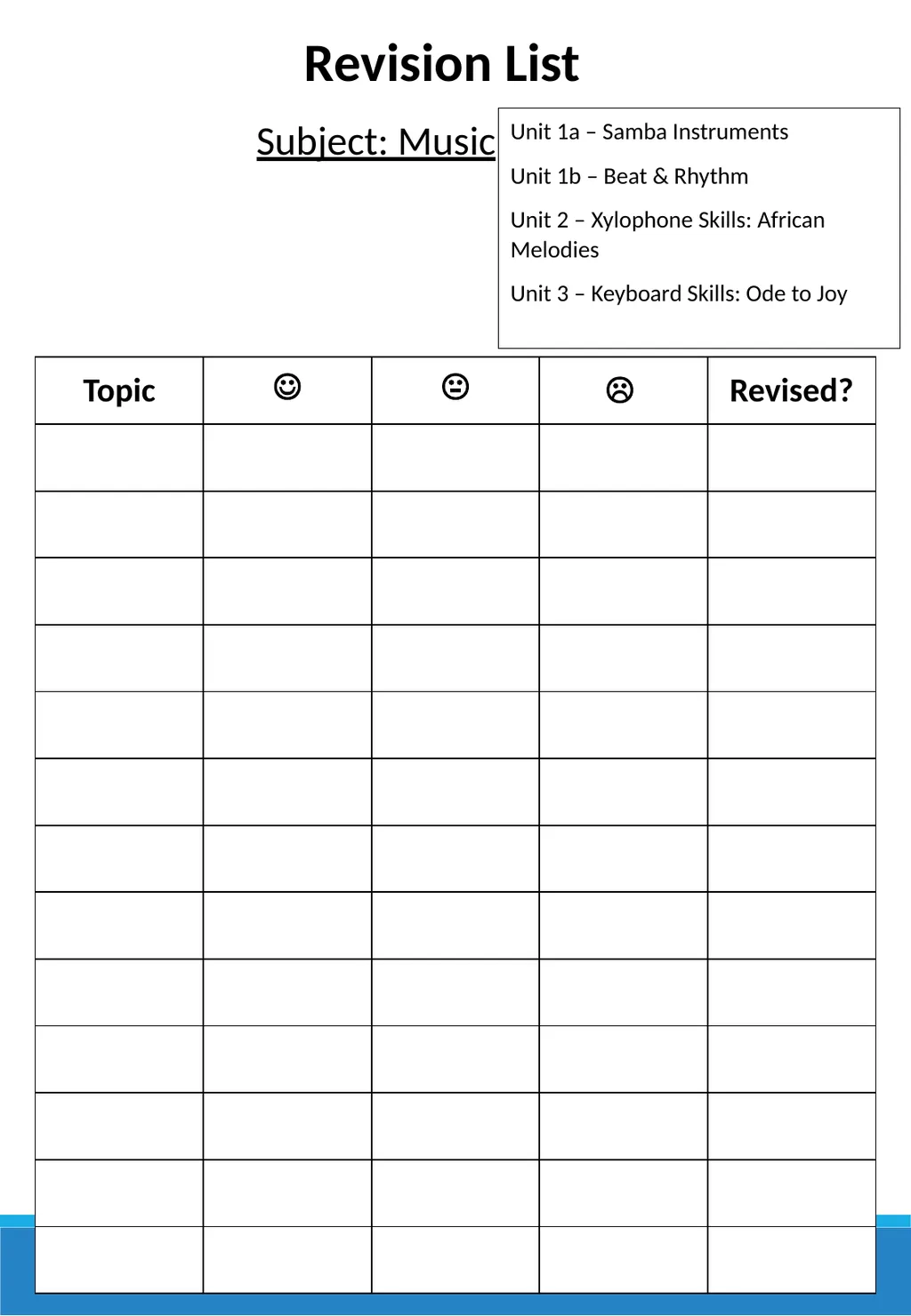
Subject: Music Revision List Unit 1a – Samba Instruments
Unit 1b – Beat & Rhythm
Unit 2 – Xylophone Skills: African Melodies
Unit 3 – Keyboard Skills: Ode to Joy<br>