
Dr Eilidh Cage Ethics How do we define ethics? In
Description: Dr Eilidh Cage Ethics How do we define ethics? In social science, we can think of it as principles of conduct Why should we care about ethics? Working with humans Developing trust so people take part in research in the future
Related Topics
Download Presentation
"Dr Eilidh Cage Ethics How do we define ethics? In" is the property of its rightful owner. Permission is granted to download and print the materials on this website for personal, non-commercial use only, and to display it on your personal computer provided you do not modify the materials and that you retain all copyright notices contained in the materials. By downloading content from our website, you accept the terms of this agreement.
Presentation Transcript
slide1. Dr Eilidh Cage Ethics<br>
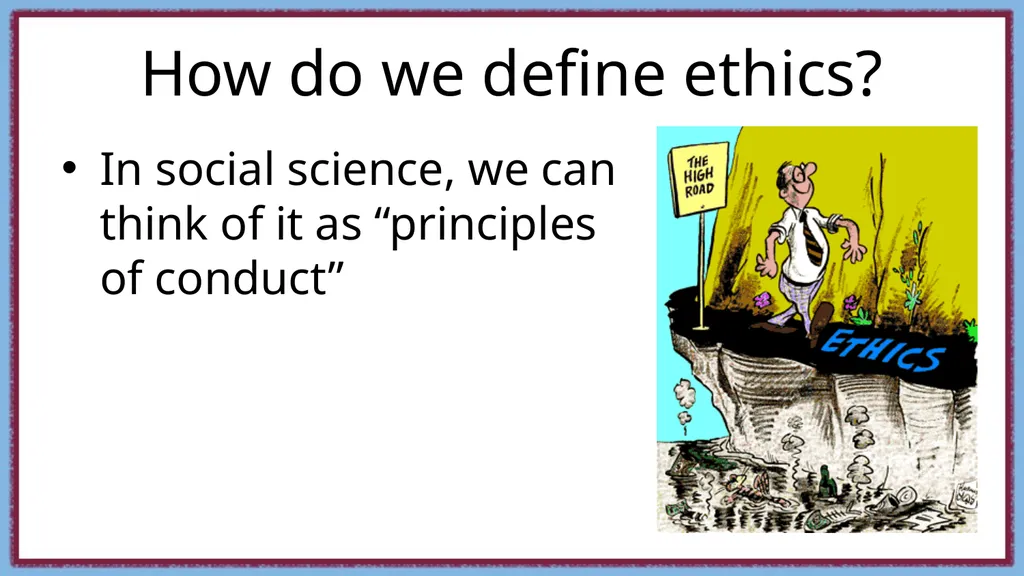
slide2. How do we define ethics? In social science, we can think of it as “principles of conduct”<br>
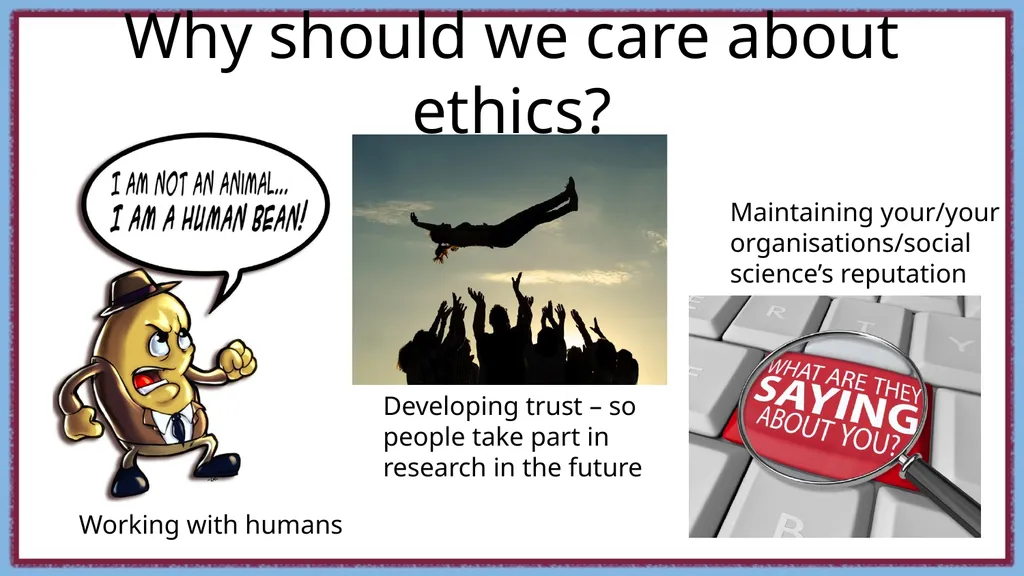
slide3. Why should we care about ethics? Working with humans Developing trust – so people take part in research in the future Maintaining your/your organisations/social science’s reputation<br>
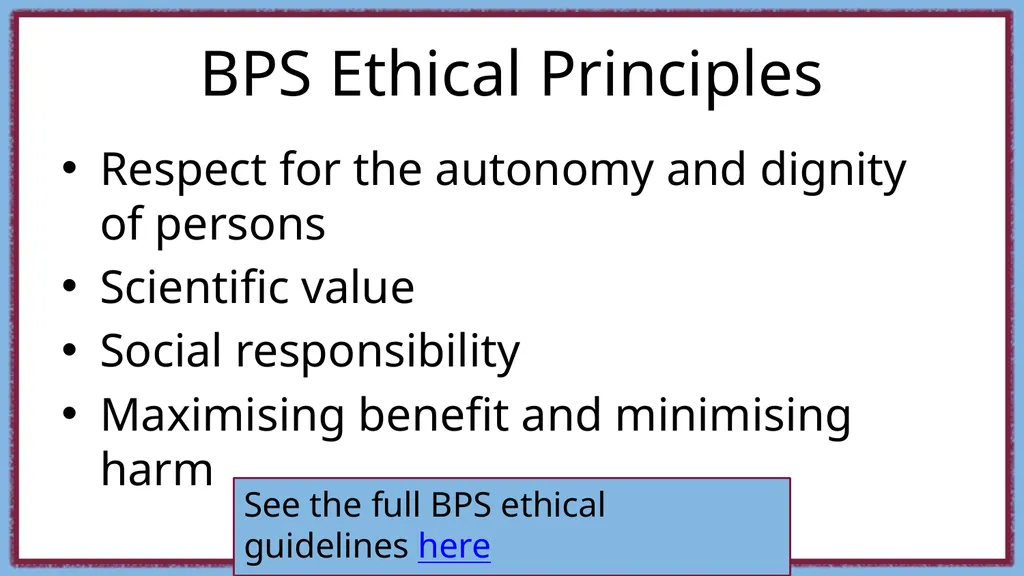
slide4. BPS Ethical Principles Respect for the autonomy and dignity of persons
Scientific value
Social responsibility
Maximising benefit and minimising harm See the full BPS ethical guidelines here<br>
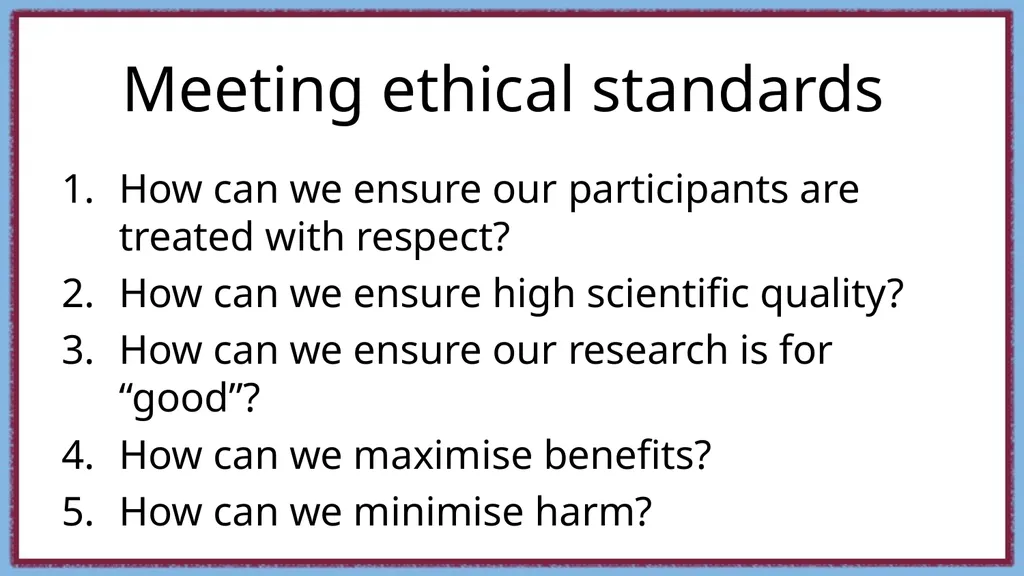
slide5. Meeting ethical standards How can we ensure our participants are treated with respect?
How can we ensure high scientific quality?
How can we ensure our research is for “good”?
How can we maximise benefits?
How can we minimise harm?<br>
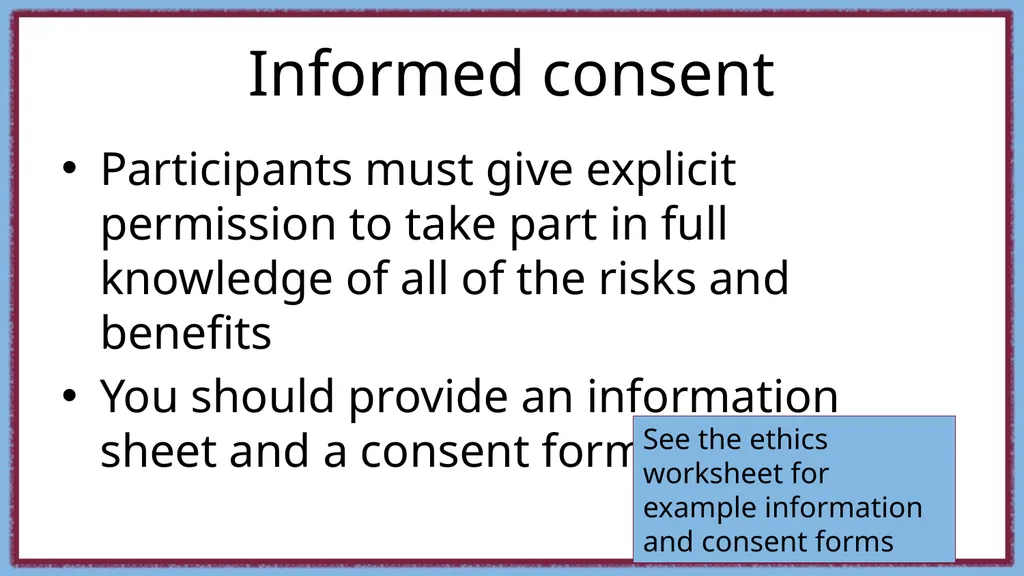
slide6. Informed consent Participants must give explicit permission to take part in full knowledge of all of the risks and benefits
You should provide an information sheet and a consent form See the ethics worksheet for example information and consent forms<br>
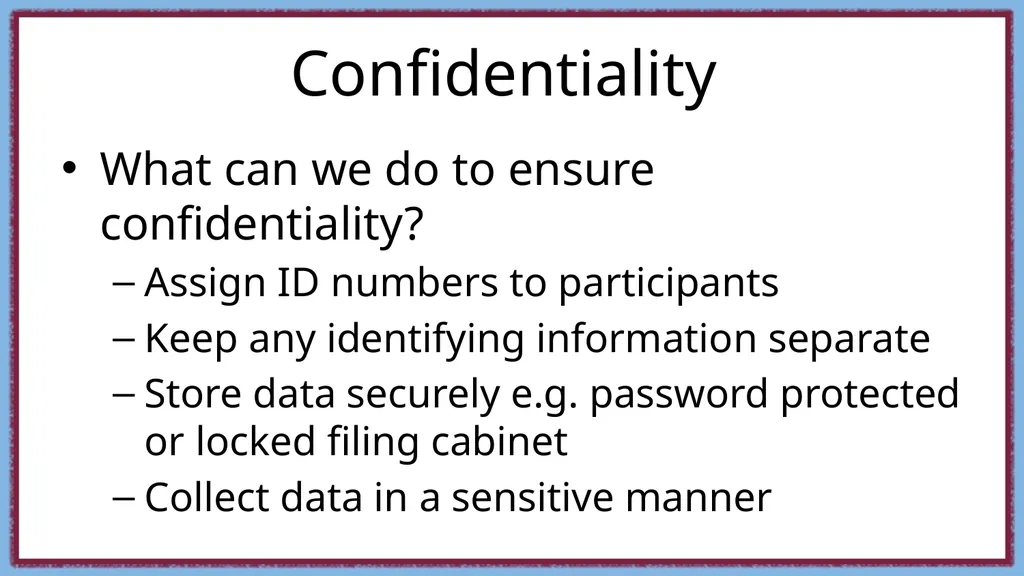
slide7. Confidentiality What can we do to ensure confidentiality?
Assign ID numbers to participants
Keep any identifying information separate
Store data securely e.g. password protected or locked filing cabinet
Collect data in a sensitive manner<br>
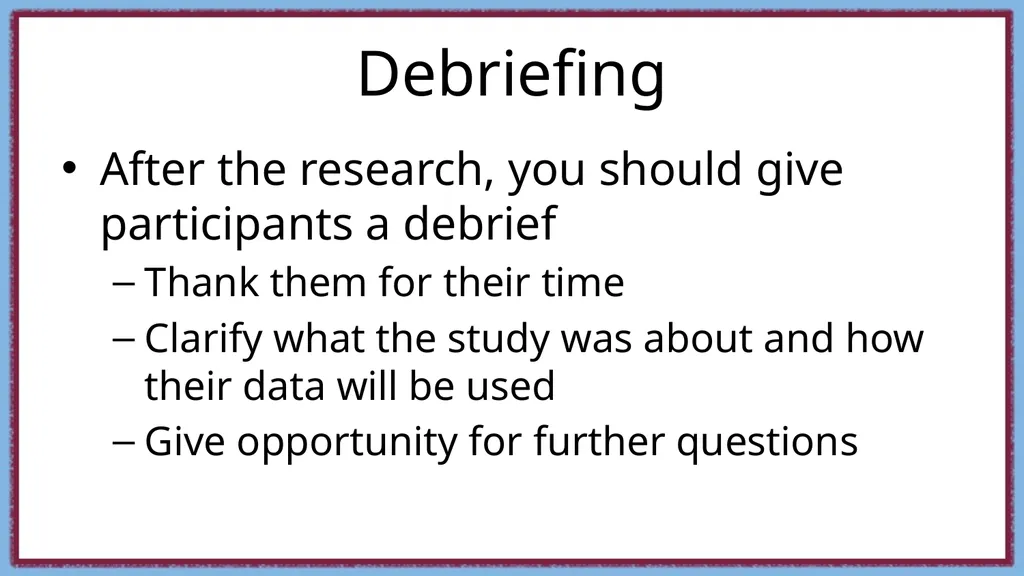
slide8. Debriefing After the research, you should give participants a debrief
Thank them for their time
Clarify what the study was about and how their data will be used
Give opportunity for further questions<br>
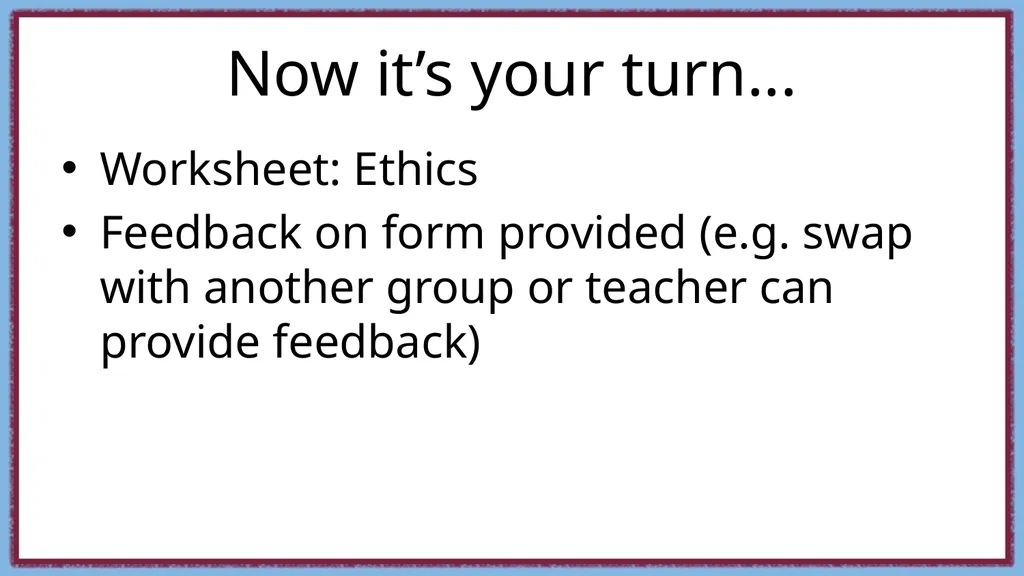
slide9. Now it’s your turn... Worksheet: Ethics
Feedback on form provided (e.g. swap with another group or teacher can provide feedback)<br>
slide2. How do we define ethics? In social science, we can think of it as “principles of conduct”<br>
slide3. Why should we care about ethics? Working with humans Developing trust – so people take part in research in the future Maintaining your/your organisations/social science’s reputation<br>
slide4. BPS Ethical Principles Respect for the autonomy and dignity of persons
Scientific value
Social responsibility
Maximising benefit and minimising harm See the full BPS ethical guidelines here<br>
slide5. Meeting ethical standards How can we ensure our participants are treated with respect?
How can we ensure high scientific quality?
How can we ensure our research is for “good”?
How can we maximise benefits?
How can we minimise harm?<br>
slide6. Informed consent Participants must give explicit permission to take part in full knowledge of all of the risks and benefits
You should provide an information sheet and a consent form See the ethics worksheet for example information and consent forms<br>
slide7. Confidentiality What can we do to ensure confidentiality?
Assign ID numbers to participants
Keep any identifying information separate
Store data securely e.g. password protected or locked filing cabinet
Collect data in a sensitive manner<br>
slide8. Debriefing After the research, you should give participants a debrief
Thank them for their time
Clarify what the study was about and how their data will be used
Give opportunity for further questions<br>
slide9. Now it’s your turn... Worksheet: Ethics
Feedback on form provided (e.g. swap with another group or teacher can provide feedback)<br>