Dr Keith Meadows, DHP Research Consultancy Ltd Development of the Nutrition and Dietetic Patient Outcome Questionnaire (NDPOQ-A and NDPOQ-P) Presented at the British Dietetic Association May 2014 Patient Reported Outcome (PRO): Any report
"Dr Keith Meadows, DHP Research & Consultancy Ltd" is the property of its rightful owner. Permission is granted to
download and print the materials on this website for personal, non-commercial use only, and to display it
on your personal computer provided you do not modify the materials and that you retain all copyright
notices contained in the materials. By downloading content from our website, you accept the terms of this
agreement.
Presentation Transcript
01
Dr Keith Meadows, DHP Research & Consultancy Ltd Development of the Nutrition and Dietetic Patient Outcome Questionnaire (NDPOQ-A and NDPOQ-P)
Presented at the British Dietetic Association
May 2014<br>
02
Patient Reported Outcome (PRO): Any report of the status of a patient’s health condition that comes directly from the patient, without interpretation of the patient’s response by a clinician or anyone else.
Use of a PRO instrument is advised when measuring a concept best known by the patient or best measured from the patient’s perspective. Copyright DHP Research 2012 What is a patient reported outcome?<br>
03
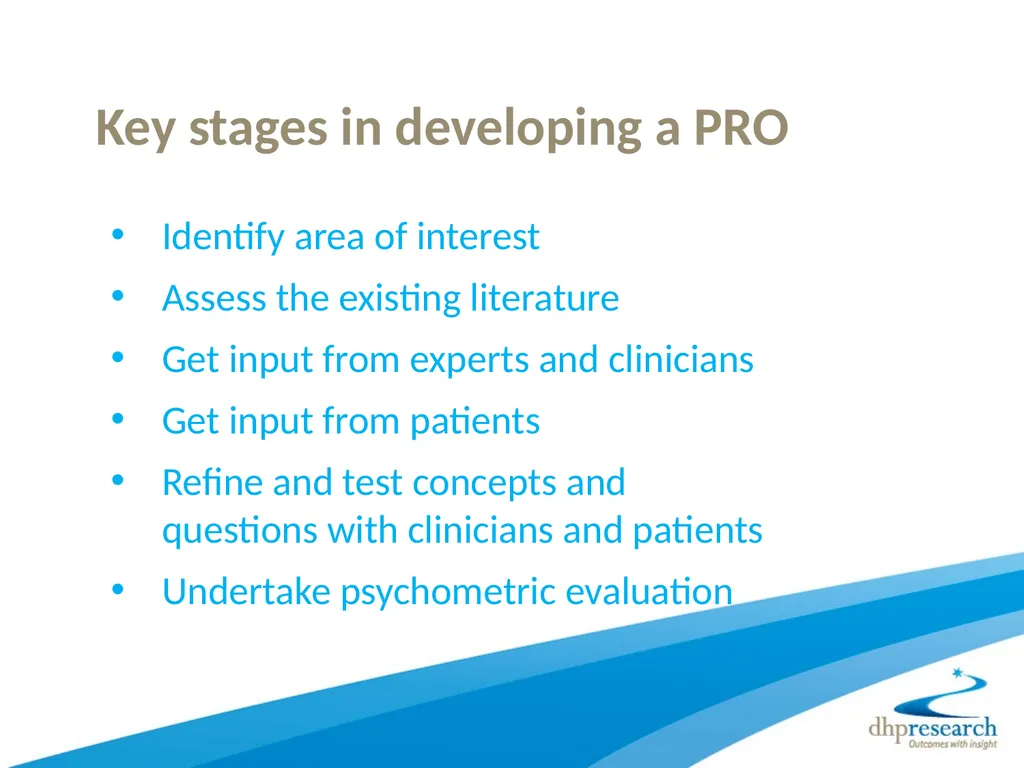
Key stages in developing a PRO Copyright DHP Research 2012 Identify area of interest
Assess the existing literature
Get input from experts and clinicians
Get input from patients
Refine and test concepts and questions with clinicians and patients
Undertake psychometric evaluation<br>
04
A PROM must demonstrate evidence of: Copyright DHP Research 2012 Validity - Does it measure what it is meant to measure?
Reliability - Are the results stable over time when periods? (Test-retest reliability)?
Responsiveness – Is the measure responsive to change when change is present?<br>
05
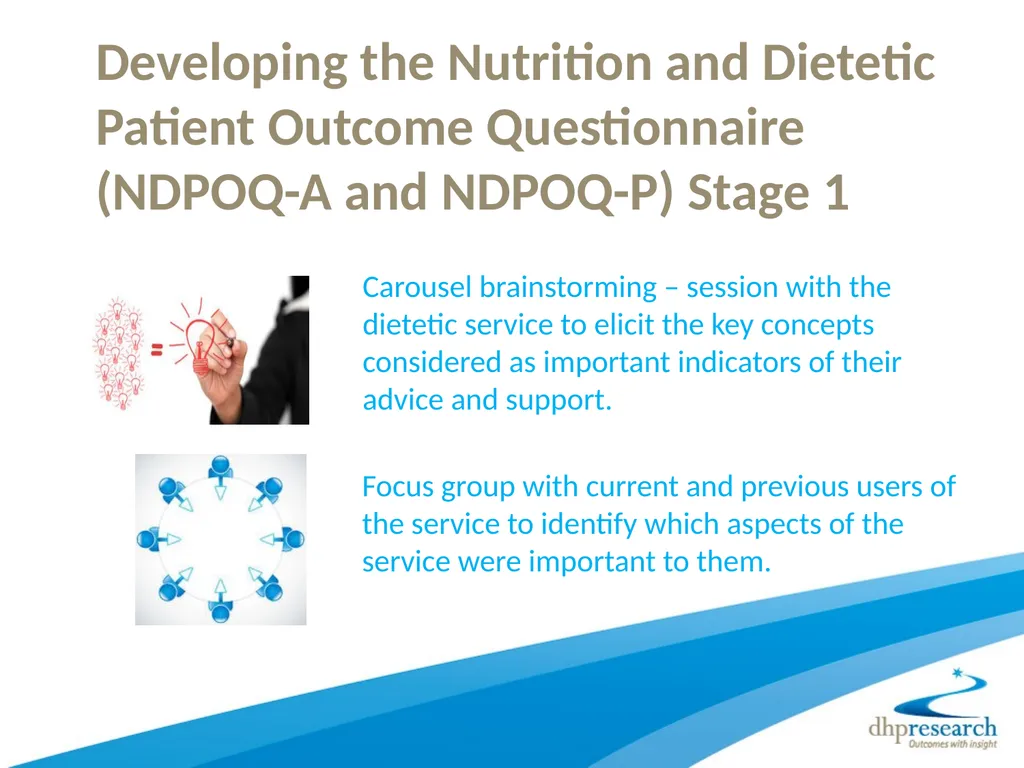
Developing the Nutrition and Dietetic Patient Outcome Questionnaire (NDPOQ-A and NDPOQ-P) Stage 1 Copyright DHP Research 2012 Carousel brainstorming – session with the dietetic service to elicit the key concepts considered as important indicators of their advice and support. Focus group with current and previous users of the service to identify which aspects of the service were important to them.<br>
06
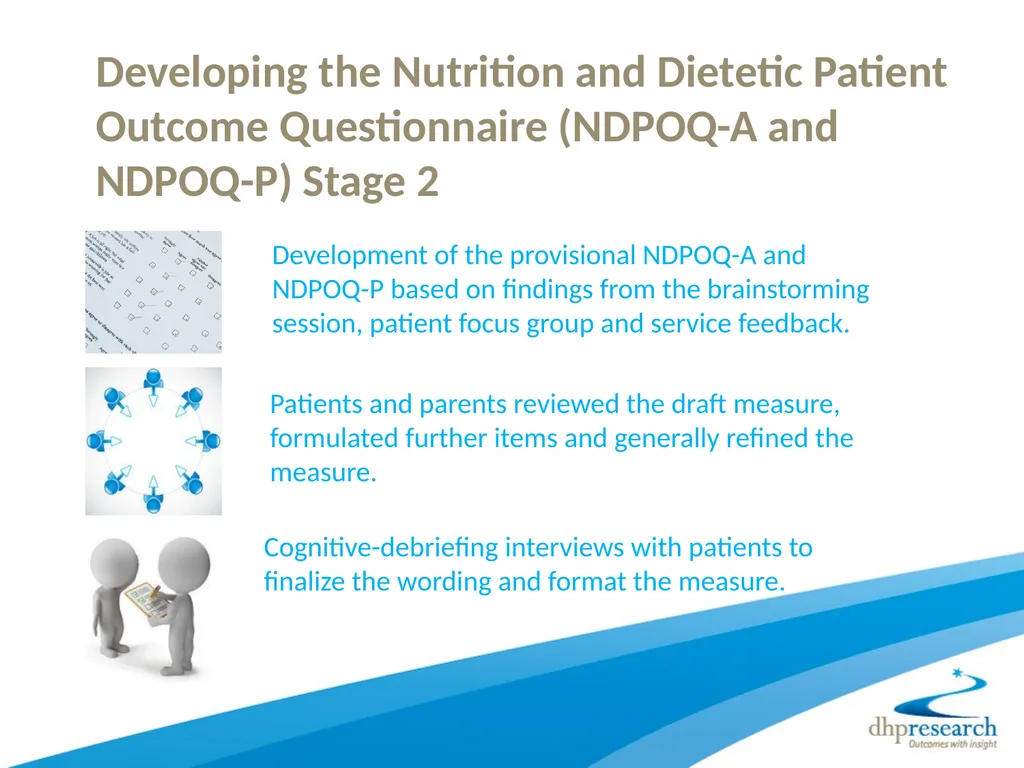
Developing the Nutrition and Dietetic Patient Outcome Questionnaire (NDPOQ-A and NDPOQ-P) Stage 2 Copyright DHP Research 2012 Development of the provisional NDPOQ-A and NDPOQ-P based on findings from the brainstorming session, patient focus group and service feedback. Patients and parents reviewed the draft measure, formulated further items and generally refined the measure. Cognitive-debriefing interviews with patients to finalize the wording and format the measure.<br>
07
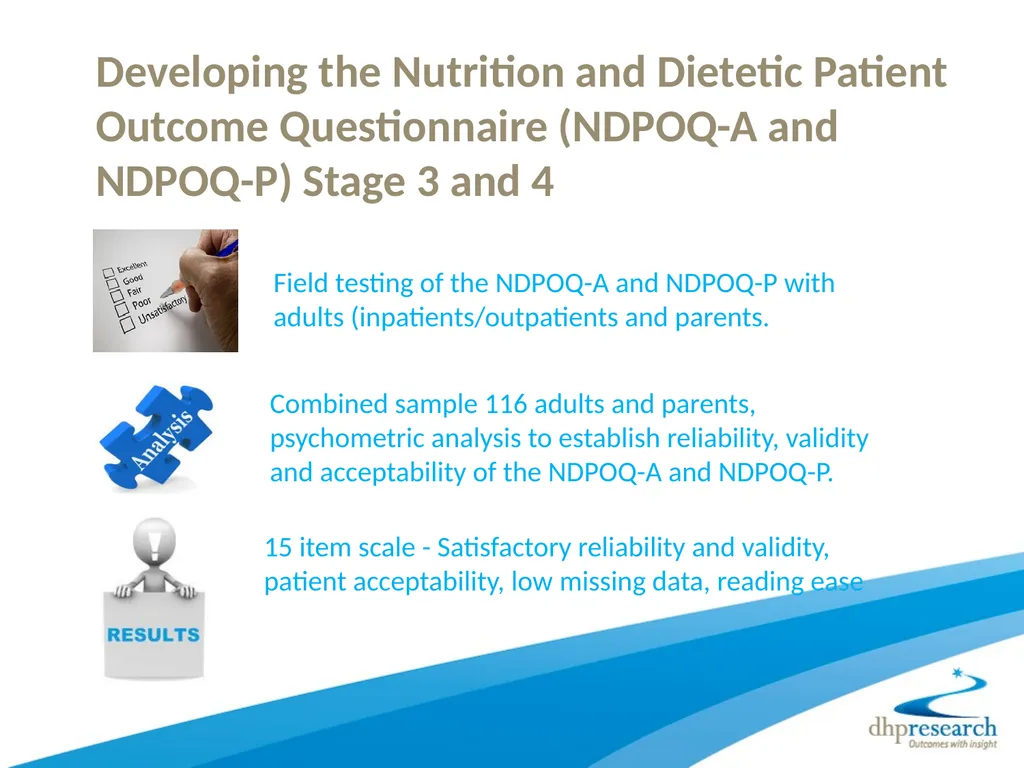
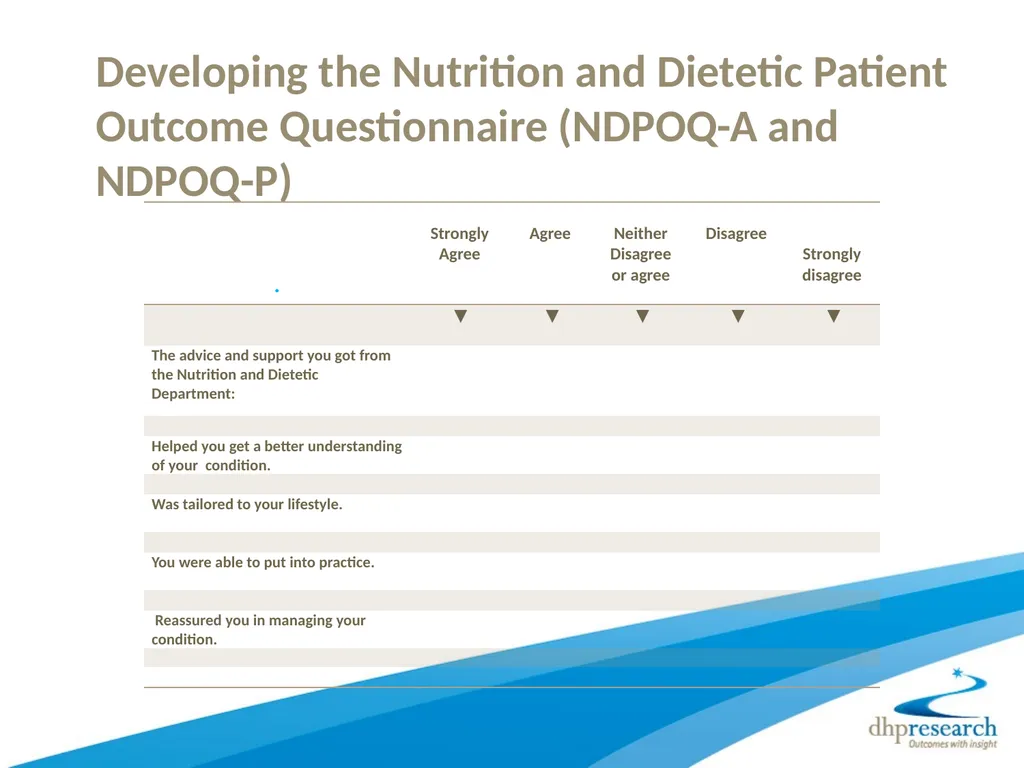
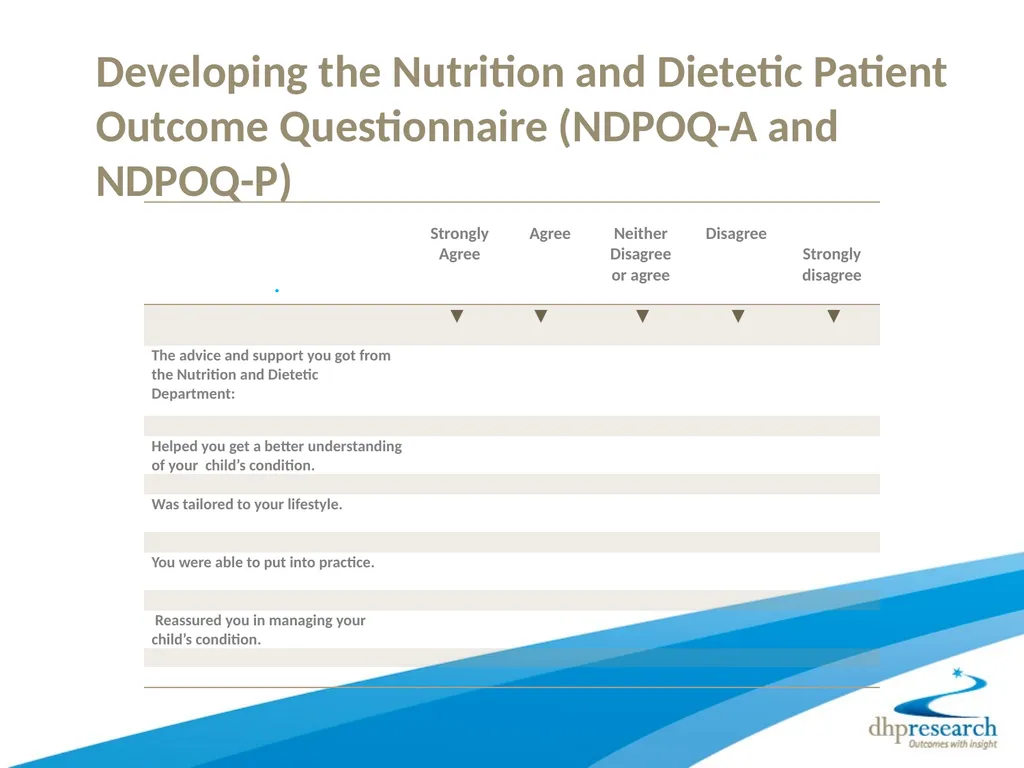
Developing the Nutrition and Dietetic Patient Outcome Questionnaire (NDPOQ-A and NDPOQ-P) Stage 3 and 4 Copyright DHP Research 2012 Field testing of the NDPOQ-A and NDPOQ-P with adults (inpatients/outpatients and parents. Combined sample 116 adults and parents, psychometric analysis to establish reliability, validity and acceptability of the NDPOQ-A and NDPOQ-P. 15 item scale - Satisfactory reliability and validity, patient acceptability, low missing data, reading ease<br>
08
Developing the Nutrition and Dietetic Patient Outcome Questionnaire (NDPOQ-A and NDPOQ-P) Copyright DHP Research 2012 .<br>
09
Developing the Nutrition and Dietetic Patient Outcome Questionnaire (NDPOQ-A and NDPOQ-P) Copyright DHP Research 2012 .<br>
10
Copyright DHP Research 2012 . What now?
When to collect the data?
For short-term interventions with a clear episode of care? At end of episode of care
What about chronic patients (intervention for 3 months or longer, eg diabetes, renal)? At 6 monthly intervals