Dr. V. Krishnakumar, M.com., M.Phil., Ph.D.,
Description: Dr. V. Krishnakumar, M.com., M.Phil., Ph.D., Assistant Professor, PG Research Department of Commerce, Cardamom Planters Association College, Bodinayakanur. Introduction to Auditing Definition: Auditing is the process of examining

Related Topics
Download Presentation
"Dr. V. Krishnakumar, M.com., M.Phil., Ph.D.," is the property of its rightful owner. Permission is granted to download and print the materials on this website for personal, non-commercial use only, and to display it on your personal computer provided you do not modify the materials and that you retain all copyright notices contained in the materials. By downloading content from our website, you accept the terms of this agreement.
Presentation Transcript
slide1. Dr. V. Krishnakumar, M.com., M.Phil., Ph.D.,

Assistant Professor,
PG & Research Department of Commerce,
Cardamom Planters’ Association College,
Bodinayakanur.<br>
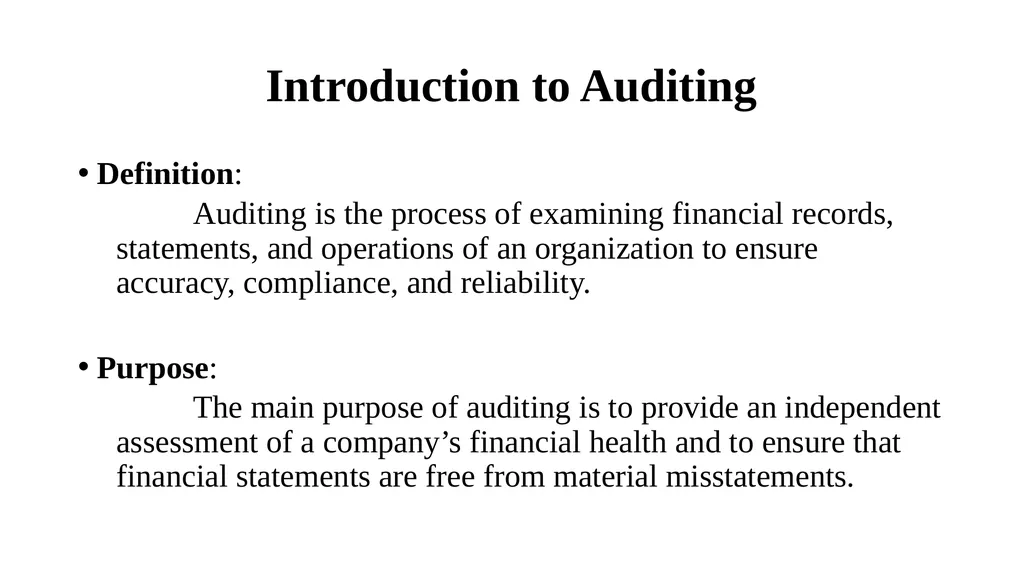
slide2. Introduction to Auditing Definition:
Auditing is the process of examining financial records, statements, and operations of an organization to ensure accuracy, compliance, and reliability.
Purpose:
The main purpose of auditing is to provide an independent assessment of a company’s financial health and to ensure that financial statements are free from material misstatements.<br>
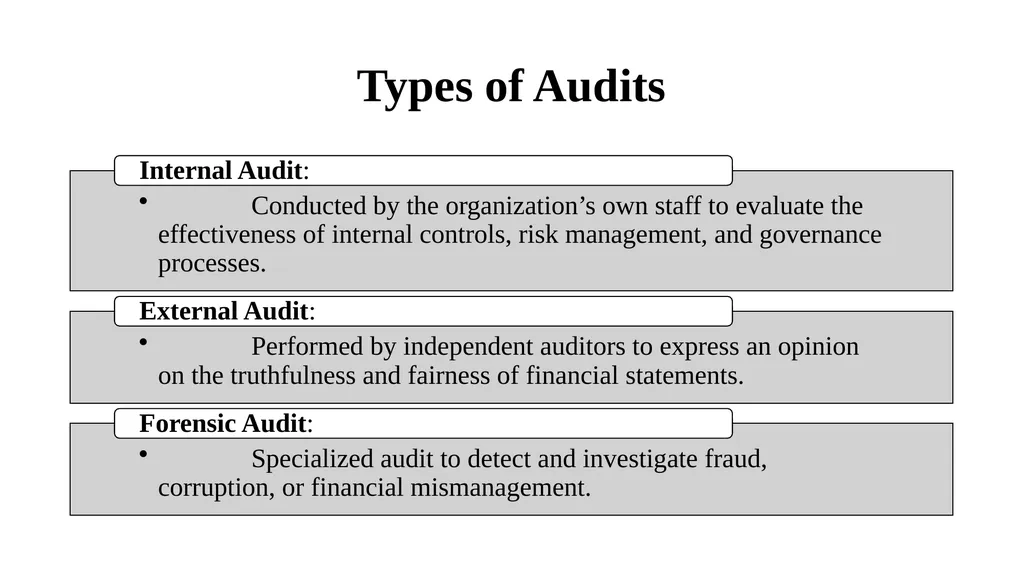
slide3. Types of Audits<br>
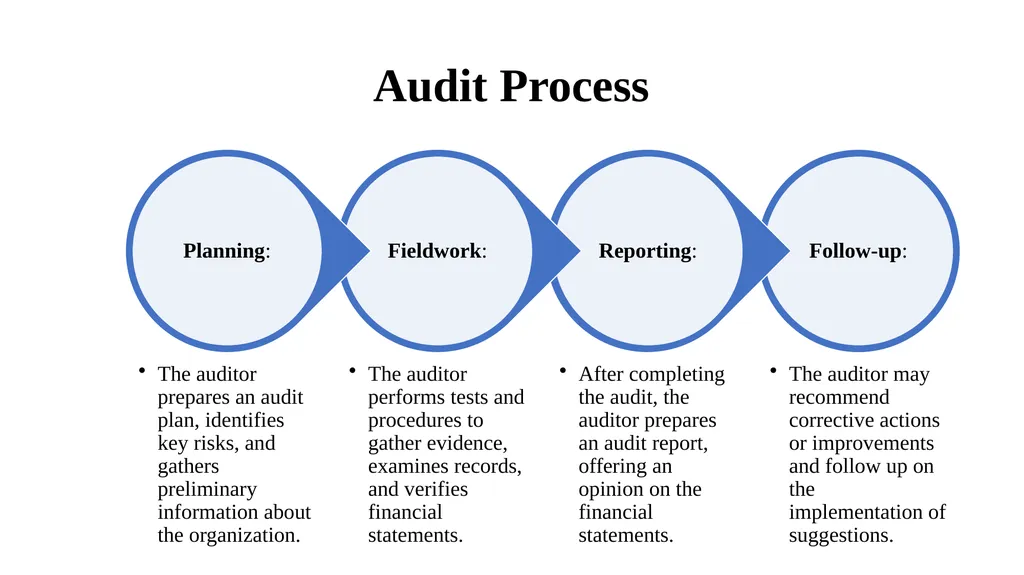
slide4. Audit Process<br>
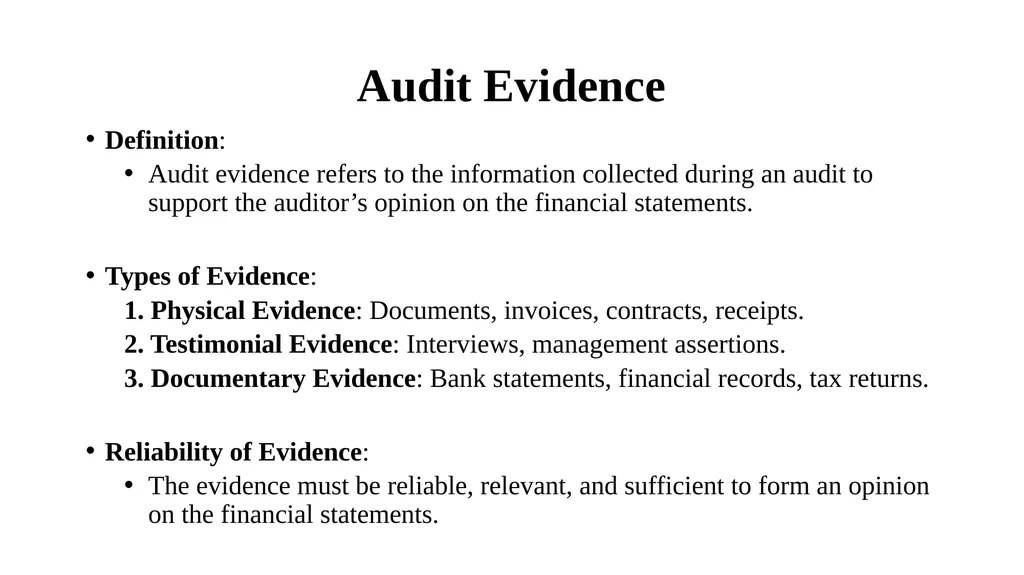
slide5. Audit Evidence Definition:
Audit evidence refers to the information collected during an audit to support the auditor’s opinion on the financial statements.
Types of Evidence:
1. Physical Evidence: Documents, invoices, contracts, receipts.
2. Testimonial Evidence: Interviews, management assertions.
3. Documentary Evidence: Bank statements, financial records, tax returns.
Reliability of Evidence:
The evidence must be reliable, relevant, and sufficient to form an opinion on the financial statements.<br>
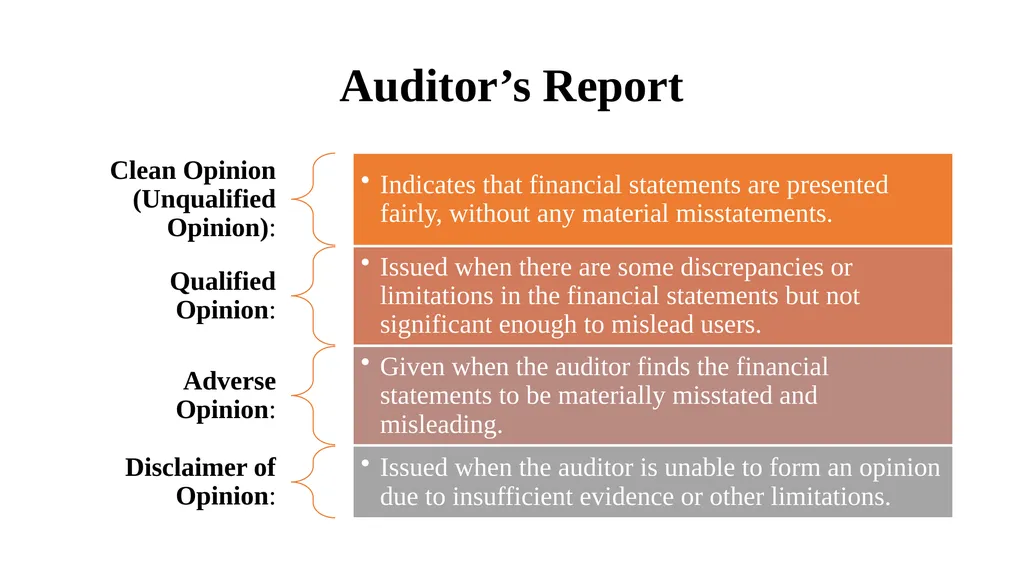
slide6. Auditor’s Report<br>
Assistant Professor,
PG & Research Department of Commerce,
Cardamom Planters’ Association College,
Bodinayakanur.<br>
slide2. Introduction to Auditing Definition:
Auditing is the process of examining financial records, statements, and operations of an organization to ensure accuracy, compliance, and reliability.
Purpose:
The main purpose of auditing is to provide an independent assessment of a company’s financial health and to ensure that financial statements are free from material misstatements.<br>
slide3. Types of Audits<br>
slide4. Audit Process<br>
slide5. Audit Evidence Definition:
Audit evidence refers to the information collected during an audit to support the auditor’s opinion on the financial statements.
Types of Evidence:
1. Physical Evidence: Documents, invoices, contracts, receipts.
2. Testimonial Evidence: Interviews, management assertions.
3. Documentary Evidence: Bank statements, financial records, tax returns.
Reliability of Evidence:
The evidence must be reliable, relevant, and sufficient to form an opinion on the financial statements.<br>
slide6. Auditor’s Report<br>