
Drama presentation Greek shadow puppet theatre:
LS
Published · 12 slides · 0 views

1 / 1

Description
Drama presentation Greek shadow puppet theatre: Karagiozis Conor Coakley Intro: Karagiozis is in fact a shadow puppet and a fictional character. He originates from Greek folklore. Although being a single character, the idea of Greek shadow
Related Topics
Share
Embed code
Download this presentation From Below
"Drama presentation Greek shadow puppet theatre:" is the property of its rightful owner. Permission is granted to download and print the materials on this website for personal, non-commercial use only, and to display it on your personal computer provided you do not modify the materials and that you retain all copyright notices contained in the materials. By downloading content from our website, you accept the terms of this agreement.
Presentation Transcript
01
Drama presentation Greek shadow puppet theatre: Karagiozis
Conor Coakley<br>
Conor Coakley<br>
02
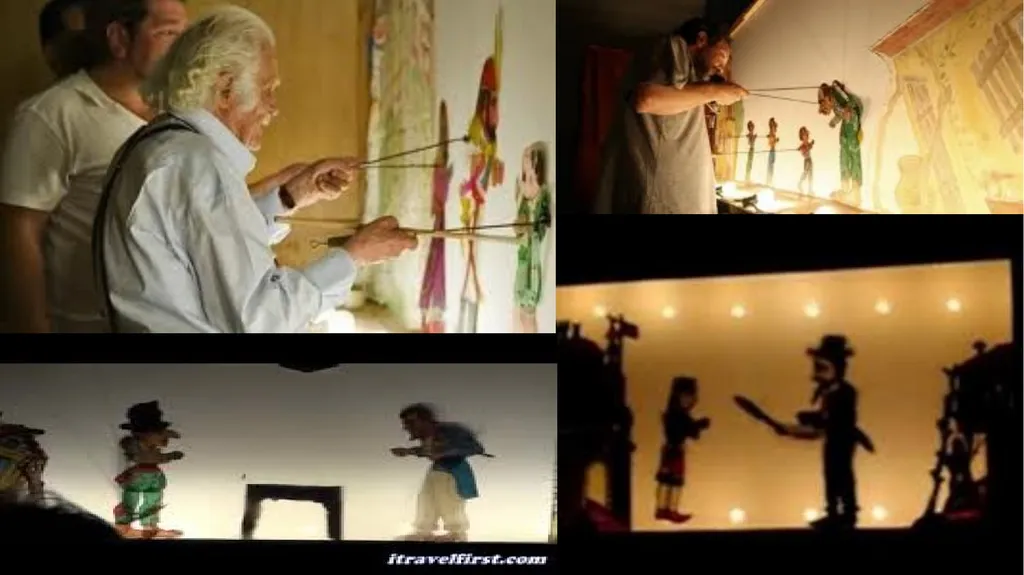
Intro: Karagiozis is in fact a shadow puppet and a fictional character. He originates from Greek folklore. Although being a single character, the idea of Greek shadow theatre is built around him and his many adventures. Originally the character comes from Turkish shadow plays. The Greek plays included paper-made puppets, which were handled by one puppeteer who stood between a white sheet/cloth and was illuminated by some form of light. Greece was one of the few countries in Europe that adopted shadow theatre, as it had primarily been a popular form of theatre in Asia. However Greece moulded the form of theatre to suit its own aspects and give it its own unique sense of Greekness. They did this by adding music, acting and social satire, which included local folklore.<br>
03
Origins: It is believed that the Greek culture “borrowed” Karagiozis from the ottoman culture that were currently developing in the Balkans during the time of the Italian renaissance. Karagiozis, as a name, gives us an idea of the characters origin as the puppet always appeared in theatre with black eyes and in Turkish “Kara” means “black” and “gioz” means “eyes”. With regards to how the Greeks obtained the form of theatre, it is believed that while under Ottoman rule the Greeks would put on shadow puppet plays for the sultan; plays which were inspired by Greek folklore. As a form of theatre, Karagiozis developed throughout the Italian renaissance period in Greece but died down as the time period drew to a close. It was revitalised in the 1880’s as that coincided with the Greek revolution and the war, which proclaimed Greece as an independent nation. It would continue to be renewed until 1910. From 1915-1950 it flourished in Modern Greek culture.<br>
04
The Plays: Overall there are three types of plays performed in the style of Greek shadow-puppet theatre relating to Karagiozis. These included comedies inspired by everyday life, those influenced by fairytales and finally traditional folklore and heroic themes inspired by the years of oppressive Ottoman rule. The Karagiozophaiti would move the puppets in vigorous ways and would dress the puppets themselves in strange and ragged clothing to show the brutal nature of the Ottoman oppression and the innocent and merciless beatings that would be dealt out. During these shadow performances the audience deemed the characters as magical. Not solely because of the character shadow performances, but also due to the incredibly important props. One of the most important props being the white sheet, which was essential to any Greek shadow puppet play. Lanterns and gas lamps were also incredibly important as they acted as the light source (although they were slowly replaced by electrical lamps). The scenery also played a key role. However, the Karagiozophaiti was probably the most important part of the production. Without him, the performance would cease to be.<br>
05
Some of the most known Tales: Alexander the Great and the accursed snake
Karagiozis the doctor
Karagiozis the cook
Karagiozis the senator
Karagiozis the scholar
Karagiozis the prophet
Karagiozis the fisherman
Karagiozis and the gorilla
Karagiozis and the ghost<br>
Karagiozis the doctor
Karagiozis the cook
Karagiozis the senator
Karagiozis the scholar
Karagiozis the prophet
Karagiozis the fisherman
Karagiozis and the gorilla
Karagiozis and the ghost<br>
06
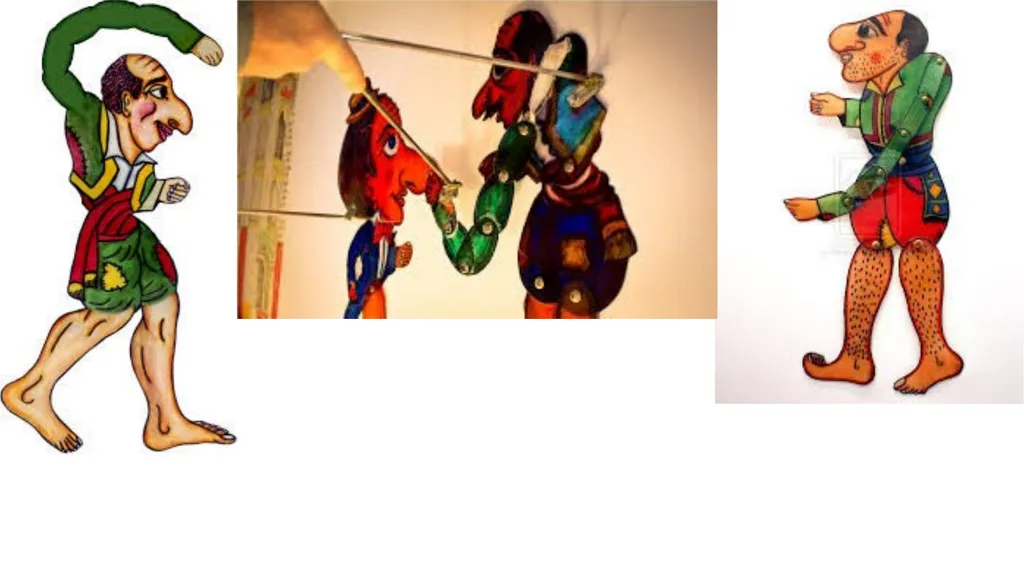
Karagiosiz: Karagiozis is a poor, deformed hunchbacked Greek. Hi clothes are always ragged, his feet are always bare and his right hand is always depicted ass long. He lives in a poor Greek cottage with his wife Aglaia and his three sons. The plays always take place during the rule of the Ottaman Empire and the set always consists of his cottage being on the far left and the sultan’s palace being in the far right. Karagiozis is always finding mischievous ways of making money to deal with his poverty and feed his family. Many believe that there are only 2 real forms of plays that Karagiozis performs in: the Heroics and the Comedies. The heroics being based on real stories that took place under the Ottoman rule, with Karagiozis being represented as the helper of an important hero. His characteristics consisted of an unsatisfied greed, along with the continuous babbling of nonsense, as well as cunning word games and numerous linguistic mistakes. However these aspects seemed to give Karagiozis a special place in the hearts of Greeks.<br>
07
Storyline: Karagiozis appears in the scene with his 3 sons dancing and singing. He welcomes the audience[1] and has a comical dialogue with his children. He then enters his cottage
The Vizier or a local Ottoman lord reports that he has a problem and needs someone to perform a deed
Hadjiavatis obeys and starts announcing the news (usually a singing sequence) until Karagiozis hears about it
Initially annoyed by Hadjiavatis' shouting, he finds it's an opportunity to gain money (either by helping the Vizier or not) and sometimes asks Hadjiavatis to aid him.
Karagiozis either attempts to help the Vizier or fool him. The regular characters (see below) appear one at a time in the scene (they often appear with an introducing song which is standard for each of them); Karagiozis has a funny dialogue with them, mocks them, fools them, or becomes annoyed and ousts them violently.
Finally, the Vizier either rewards Karagiozis or his mischief is revealed and the Vizier’s bodyguard, Veligekas, punishes him - usually.<br>
The Vizier or a local Ottoman lord reports that he has a problem and needs someone to perform a deed
Hadjiavatis obeys and starts announcing the news (usually a singing sequence) until Karagiozis hears about it
Initially annoyed by Hadjiavatis' shouting, he finds it's an opportunity to gain money (either by helping the Vizier or not) and sometimes asks Hadjiavatis to aid him.
Karagiozis either attempts to help the Vizier or fool him. The regular characters (see below) appear one at a time in the scene (they often appear with an introducing song which is standard for each of them); Karagiozis has a funny dialogue with them, mocks them, fools them, or becomes annoyed and ousts them violently.
Finally, the Vizier either rewards Karagiozis or his mischief is revealed and the Vizier’s bodyguard, Veligekas, punishes him - usually.<br>
08
Characters: Karagiozis is a trickster poor Greek man whose sole interest is sleep and eating. Socially, he is in closer relation to Hadjiavatis than any other characters, and often he informs him, sometimes they cooperate in business, but sometimes Hadjiavatis is a victim of Karagiozis' tricks.
Kollitiria (Κολλητήρια), Karagiozis' three kids. Some versions give their names as Kollitiri, Kopritis and Bitsikokos.
Aglaia, (Αγλαΐα) Karagiozis' wife, who is usually unseen but whose characteristically nagging voice is heard to be coming from inside Karagiozis's house.
Hadjiavatis (Χατζηαβάτης), he is Karagiozis' friend and sidekick, an honest and serious figure but often ends up being wrapped up in Karagiozis' schemes. He has a tendency to flatter the powerful and is sometimes depicted as a compliant person towards the occupying and dominant establishment, contrasting Karagiozis.
Barba Yorgos (Μπάρμπα Γιώργος, "Uncle George"), he represents a crude villager from the mountains, depicted as a shepherd or dairy farmer usually on some business related visit in the lowlands; he is depicted as a Vlach from Rumeli uncontaminated by urban trends, always depicted broad built and strong with traditional outfit. Even though he believes his nephew to be a crook, he helps him out and beats all the opponents black and blue with his staff.
Stavrakas (Σταύρακας), whose puppet is the only one with a long independent arm, like Karagiozis. Although trying to bully the others, Karagiozis usually teases him.<br>
Kollitiria (Κολλητήρια), Karagiozis' three kids. Some versions give their names as Kollitiri, Kopritis and Bitsikokos.
Aglaia, (Αγλαΐα) Karagiozis' wife, who is usually unseen but whose characteristically nagging voice is heard to be coming from inside Karagiozis's house.
Hadjiavatis (Χατζηαβάτης), he is Karagiozis' friend and sidekick, an honest and serious figure but often ends up being wrapped up in Karagiozis' schemes. He has a tendency to flatter the powerful and is sometimes depicted as a compliant person towards the occupying and dominant establishment, contrasting Karagiozis.
Barba Yorgos (Μπάρμπα Γιώργος, "Uncle George"), he represents a crude villager from the mountains, depicted as a shepherd or dairy farmer usually on some business related visit in the lowlands; he is depicted as a Vlach from Rumeli uncontaminated by urban trends, always depicted broad built and strong with traditional outfit. Even though he believes his nephew to be a crook, he helps him out and beats all the opponents black and blue with his staff.
Stavrakas (Σταύρακας), whose puppet is the only one with a long independent arm, like Karagiozis. Although trying to bully the others, Karagiozis usually teases him.<br>
09
Other Characters: Sior Dionysios (Σιορ Διονύσιος), an Italianate gentleman from Zakynthos of some aristocratic stock. Faithful to his Ionian Islands origin, he sings cantades and speaks the Ionian Greek dialect with the appropriate accent.
Morfonios (Μορφονιός), a European bred softie; he is very ugly with a huge head with an extremely large nose; however, he considers himself to be handsome and keeps falling in love.
Solomon (Σολομών), a rich Jew from Thessaloniki, one of the less known characters, he speaks in his own fashion, sometimes uttering a very fast repeating sound often compared to a Gatling gun, earning him, by Karagiozis, the nickname "heavy arms", despite his frail build. His personality can vary, but usually plays minor roles.
Vizier (Βεζύρης), also called Pasha (Πασάς) in some versions, he is the dominant figure of the occupying side and lives in the Sarayi. He is usually the beginning of each new tale, by announcing trials, deeds, tests etc. to which Karagiozis usually decides to become involved.
Fatme (Φατμέ) is the Vizier or Pasha's beautiful daughter who has either obedient or rebellious roles; she has more than one way of causing trouble sometimes for good, opposing her despotic father or for bad in dislike of Karagiozis or some other hero.
Veligekas (Βελιγκέκας), an Albanian guard of the Sarai. He is the executive arm of the Pasha, always in the lookout for Karagiozis and never wastes an opportunity to give him a good beating. Usually gets beaten though by Barba Yorgos.
Peponias (Πεπόνιας), a fat officer of the Sarai, in some versions replacing Veligekas.<br>
Morfonios (Μορφονιός), a European bred softie; he is very ugly with a huge head with an extremely large nose; however, he considers himself to be handsome and keeps falling in love.
Solomon (Σολομών), a rich Jew from Thessaloniki, one of the less known characters, he speaks in his own fashion, sometimes uttering a very fast repeating sound often compared to a Gatling gun, earning him, by Karagiozis, the nickname "heavy arms", despite his frail build. His personality can vary, but usually plays minor roles.
Vizier (Βεζύρης), also called Pasha (Πασάς) in some versions, he is the dominant figure of the occupying side and lives in the Sarayi. He is usually the beginning of each new tale, by announcing trials, deeds, tests etc. to which Karagiozis usually decides to become involved.
Fatme (Φατμέ) is the Vizier or Pasha's beautiful daughter who has either obedient or rebellious roles; she has more than one way of causing trouble sometimes for good, opposing her despotic father or for bad in dislike of Karagiozis or some other hero.
Veligekas (Βελιγκέκας), an Albanian guard of the Sarai. He is the executive arm of the Pasha, always in the lookout for Karagiozis and never wastes an opportunity to give him a good beating. Usually gets beaten though by Barba Yorgos.
Peponias (Πεπόνιας), a fat officer of the Sarai, in some versions replacing Veligekas.<br>
10
A short video https://www.youtube.com/watch?v=BFfQiQBXDEY<br>