Drug Overdose Prevention Program Awareness Training Dr. Shane Creel Overview of the HeroinOpiate Problem Identifying Opioid Overdoses How to Respond to an Overdose Use of Naloxone After Naloxone Outreach EffortsTreatment Referrals
"Drug Overdose Prevention Program Awareness" is the property of its rightful owner. Permission is granted to
download and print the materials on this website for personal, non-commercial use only, and to display it
on your personal computer provided you do not modify the materials and that you retain all copyright
notices contained in the materials. By downloading content from our website, you accept the terms of this
agreement.
Presentation Transcript
01
Drug Overdose Prevention Program Awareness Training Dr. Shane Creel<br>
02
Overview of the Heroin/Opiate Problem
Identifying Opioid Overdoses
How to Respond to an Overdose
Use of Naloxone
After Naloxone – Outreach Efforts/Treatment Referrals TOPICS<br>
03
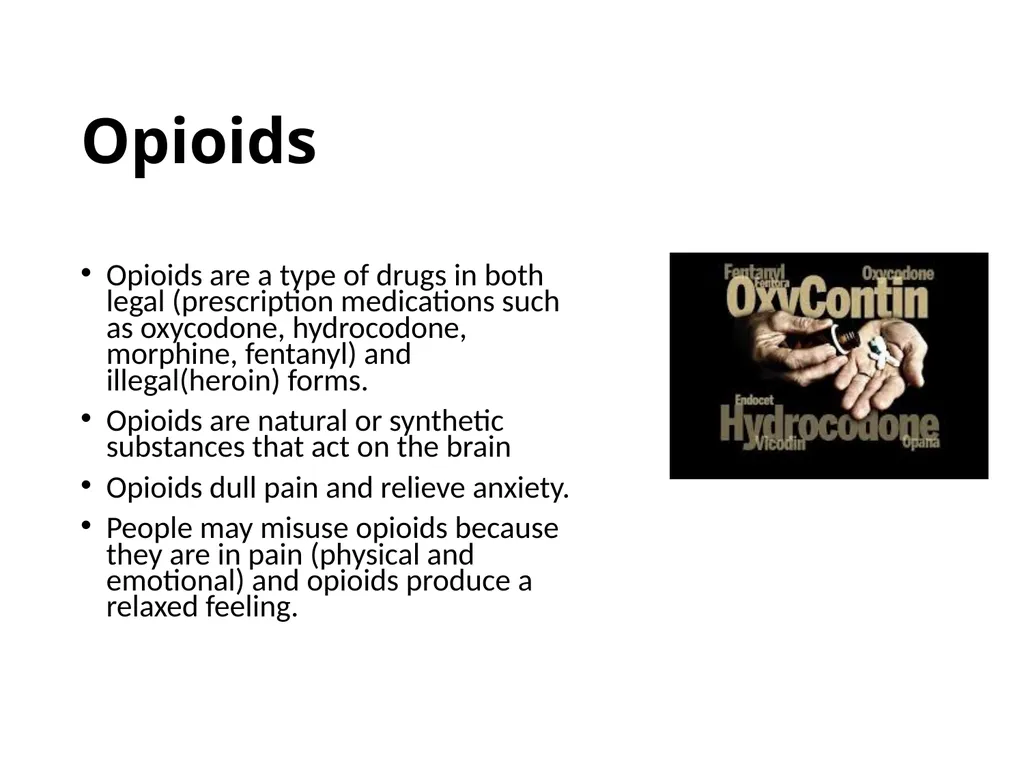
Opioids Opioids are a type of drugs in both legal (prescription medications such as oxycodone, hydrocodone, morphine, fentanyl) and illegal(heroin) forms.
Opioids are natural or synthetic substances that act on the brain
Opioids dull pain and relieve anxiety.
People may misuse opioids because they are in pain (physical and emotional) and opioids produce a relaxed feeling.<br>
04
A NATIONAL EPIDEMIC Between 1999 - 2017,
Deaths from prescription opioid overdose death ae more than five times higher in 2017 v. 1999.
In 2017, 47,600 deaths occurred as a result of an overdose from a prescription painkiller.
On average, 130 Americans die every day from an opioid overdose.
Every day, over 1,000 people are treated in emergency departments for misusing prescription opioids.<br>
05
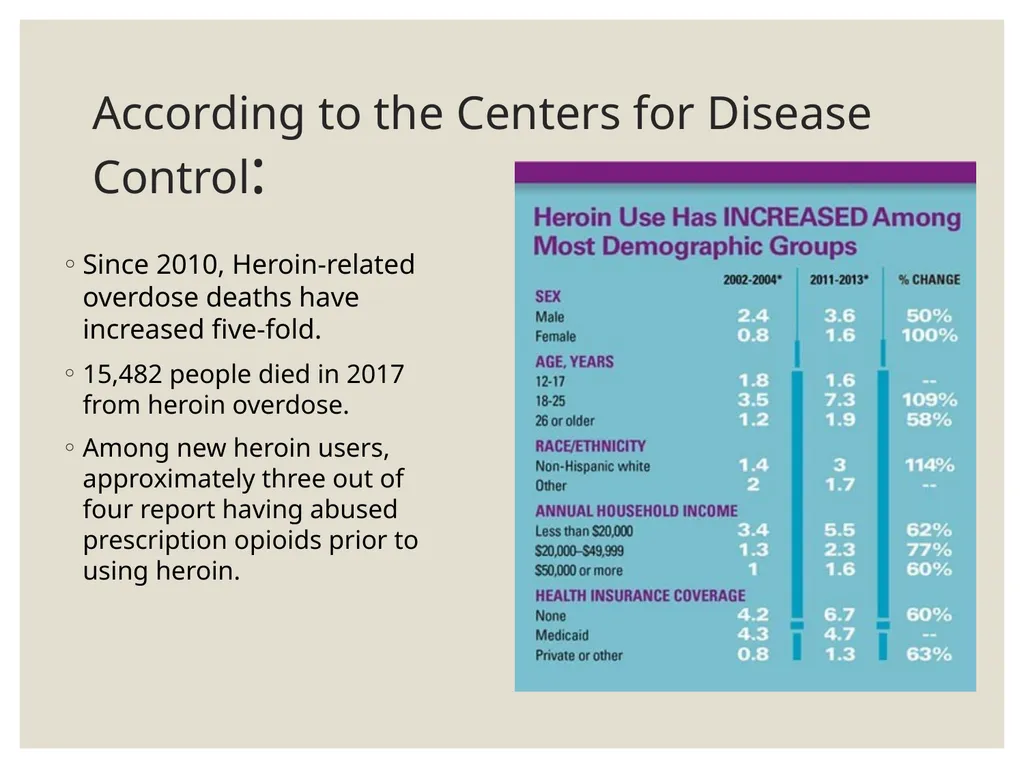
According to the Centers for Disease Control: Since 2010, Heroin-related overdose deaths have increased five-fold.
15,482 people died in 2017 from heroin overdose.
Among new heroin users, approximately three out of four report having abused prescription opioids prior to using heroin.<br>
06
Texas Opioid Summary Texas continues to have one of the lowest rates of drug overdose deaths involving opioids.
In 2017, there were 1,458 overdose deaths involving opioids in Texas—a rate of 5.1 deaths per 100,000 persons, compared to the national rate of 14.6 deaths per 100,000
A rising trend in opioid-involved overdose deaths was seen in cases related to synthetic opioids (mainly fentanyl) or heroin.
Over the last decade, deaths involving fentanyl tripled from 118 in 2007 to 348 deaths in 2017. Source: Illinois Department of Public Health<br>
07
Who is at risk of an overdose? Switching between prescriptions
Mixing opioids with other prescriptions
People with chronic medical conditions (HIV, cardiovascular or respiratory disease, mental illnesses)
Recently released from incarceration and in-patient Tx programs.
Recently completing a mandatory opioid detoxification or having abstained from use for a period of time
Discharge from emergency medical care after opioid intoxication<br>
08
Strategies to prevent overdose death Talk to people and caregivers about ways to avoid an accidental overdose, especially at discharge:
Do not adjust prescribed dosage, skip doses, or take any extra doses
Do not mix with other dugs and/or alcohol (i.e. anti-anxiety drugs like benzodiazepines, antidepressants, or cocaine)
Abstain from use of opioids unless prescribed, and attempt abstinence from heroin.
2018 Opioid Overdose Prevention Toolkit<br>
09
Overdose Overdose is a condition that usually occurs over 1-3 hours
May be caused by:
Excess intake of opioids
Combination of opioid and a depressant
Opioid use in someone with a medical condition
When in doubt, call 911!<br>
10
How Overdose Works<br>
11
Reversing Overdose Try to wake them up
Shake them and shout
If no response, grind your knuckles into the breast bone for 5 to 10 seconds
Call 911
Administer Naloxone
Check for breathing/ give rescue breathing
Stay with the person until help arrives<br>
12
ACTION PLAN STEPS<br>
13
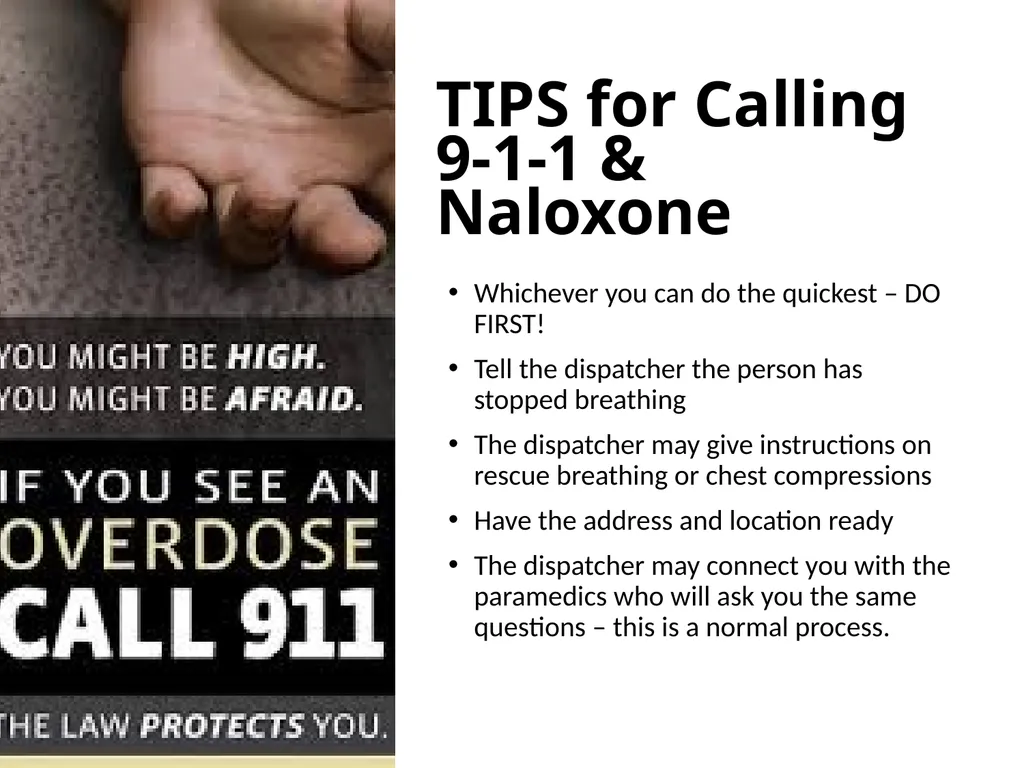
TIPS for Calling 9-1-1 & Naloxone Whichever you can do the quickest – DO FIRST!
Tell the dispatcher the person has stopped breathing
The dispatcher may give instructions on rescue breathing or chest compressions
Have the address and location ready
The dispatcher may connect you with the paramedics who will ask you the same questions – this is a normal process.<br>
14
Rescue Breathing Please review the steps below to perfect your rescue breathing technique:
1. Be sure the person’s airway is clear (check that nothing inside the person’s mouth or throat is blocking the airway
2. Place one hand on the person’s chin, tilt the head back.
3. Pinch the nose closed.
4. Place your mouth over the person’s mouth to make a seal and give 2 slow breaths.
5. The person’s chest should rise (but not the stomach).
6. Follow up with one breath every 5 seconds until the person can breath on their own<br>
15
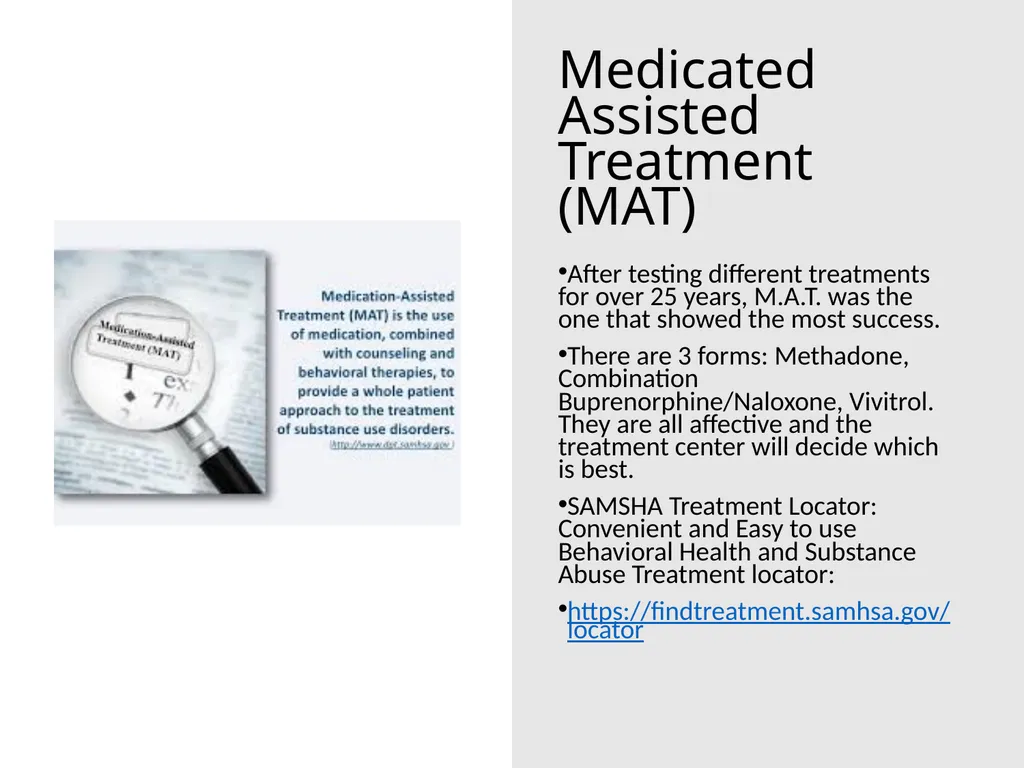
Medicated Assisted Treatment (MAT) After testing different treatments for over 25 years, M.A.T. was the one that showed the most success.
There are 3 forms: Methadone, Combination Buprenorphine/Naloxone, Vivitrol. They are all affective and the treatment center will decide which is best.
SAMSHA Treatment Locator: Convenient and Easy to use Behavioral Health and Substance Abuse Treatment locator:
https://findtreatment.samhsa.gov/locator<br>