
E X P E R I E N C E
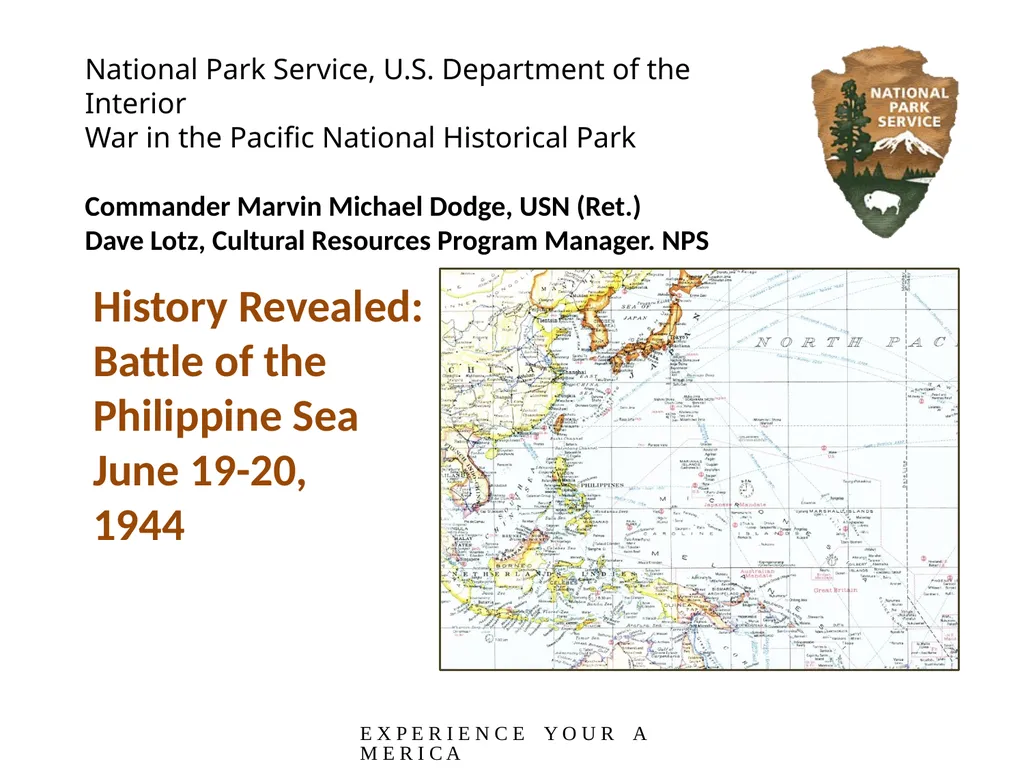





Description: E X P E R I E N C E Y O U R A M E R I C A National Park Service, U.S. Department of the Interior War in the Pacific National Historical Park Commander Marvin Michael Dodge, USN (Ret.) Dave Lotz, Cultural Resources Program Manager. NPS
Related Topics
Download Presentation
"E X P E R I E N C E" is the property of its rightful owner. Permission is granted to download and print the materials on this website for personal, non-commercial use only, and to display it on your personal computer provided you do not modify the materials and that you retain all copyright notices contained in the materials. By downloading content from our website, you accept the terms of this agreement.
Presentation Transcript
slide1. E X P E R I E N C E Y O U R A M E R I C A National Park Service, U.S. Department of the Interior
War in the Pacific National Historical Park
Commander Marvin Michael Dodge, USN (Ret.)
Dave Lotz, Cultural Resources Program Manager. NPS History Revealed:
Battle of the Philippine Sea
June 19-20,
1944<br>
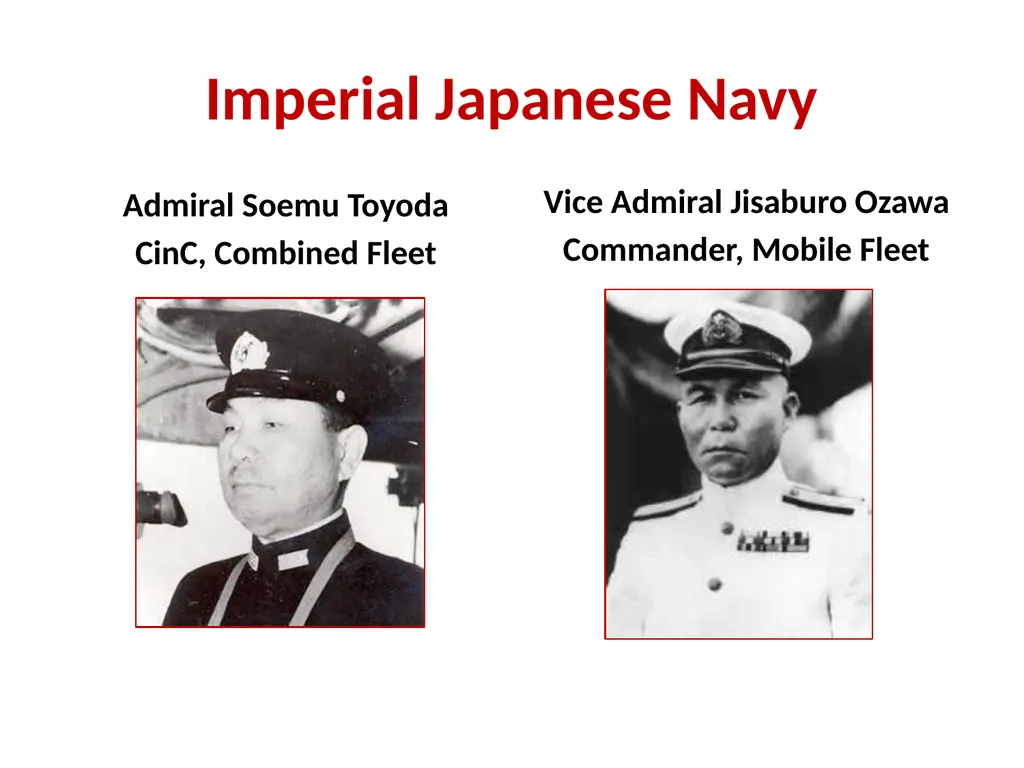
slide2. Imperial Japanese Navy Admiral Soemu Toyoda
CinC, Combined Fleet Vice Admiral Jisaburo Ozawa
Commander, Mobile Fleet<br>
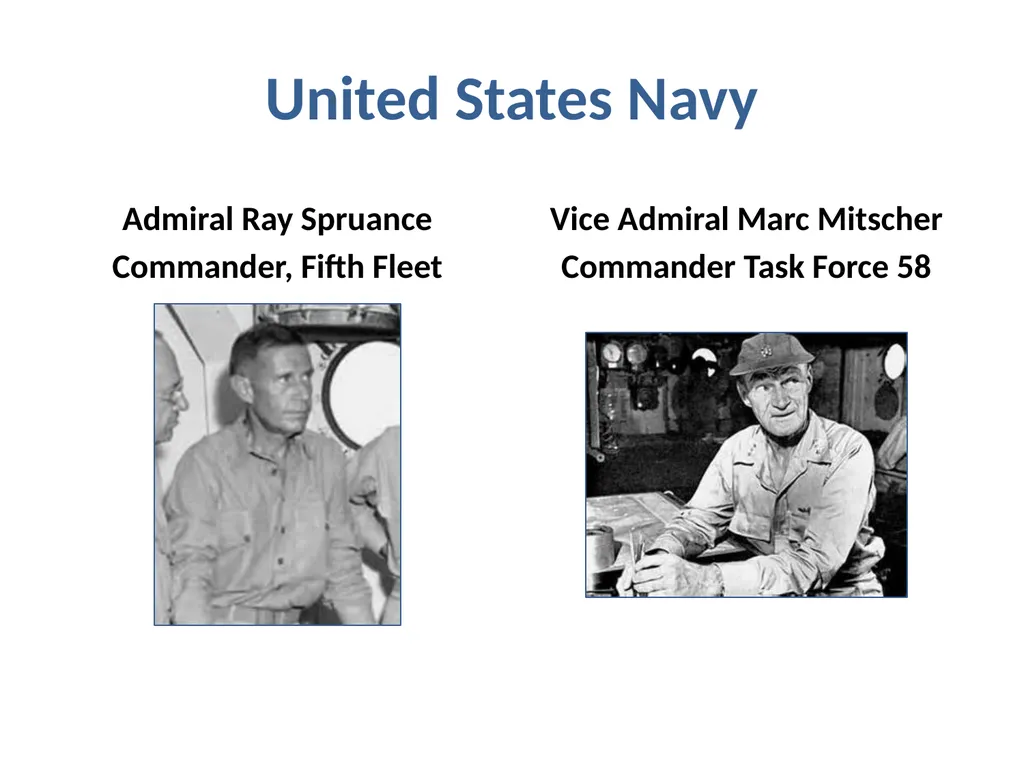
slide3. United States Navy Admiral Ray Spruance
Commander, Fifth Fleet Vice Admiral Marc Mitscher
Commander Task Force 58<br>
slide4. Fifth aircraft carrier battle of the war Imperial Japanese Navy:
9 aircraft carriers U.S. Navy:
15 aircraft carriers<br>
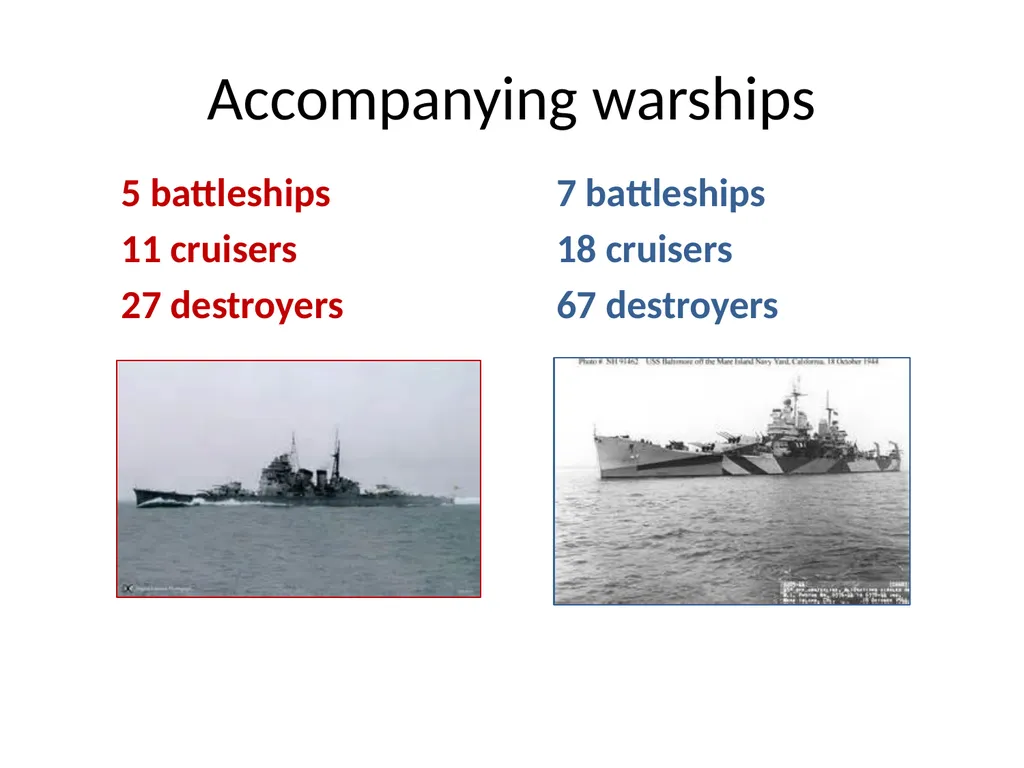
slide5. Accompanying warships 5 battleships
11 cruisers
27 destroyers 7 battleships
18 cruisers
67 destroyers<br>
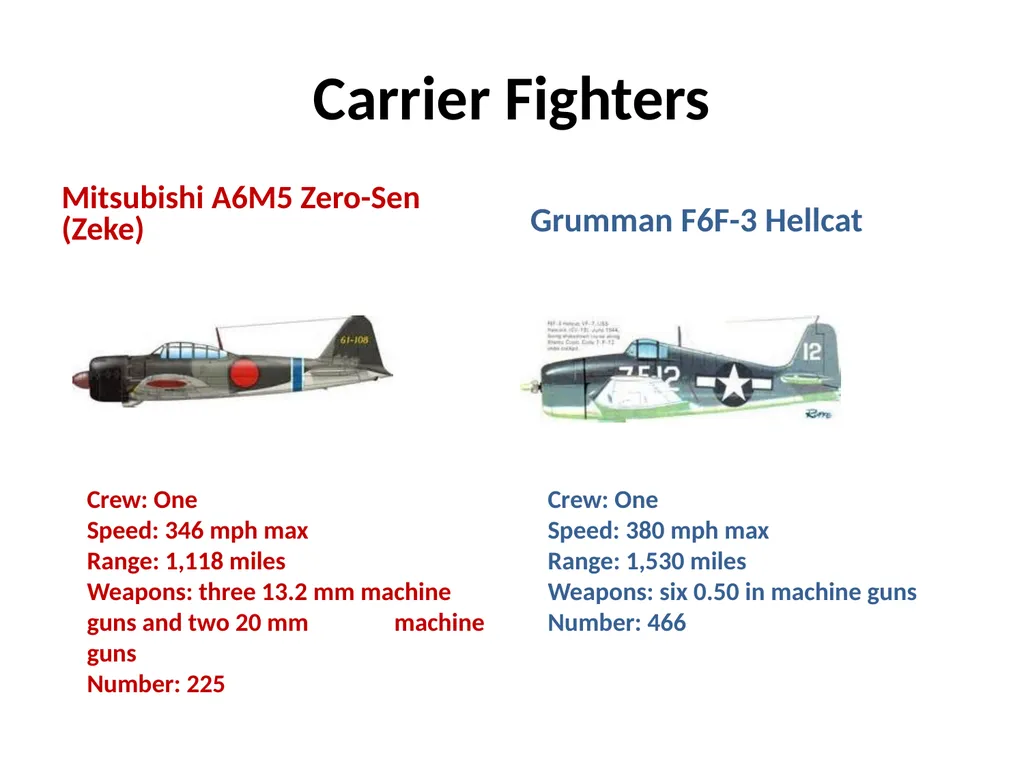
slide6. Carrier Fighters Mitsubishi A6M5 Zero-Sen (Zeke) Grumman F6F-3 Hellcat Crew: One
Speed: 346 mph max
Range: 1,118 miles
Weapons: three 13.2 mm machine guns and two 20 mm machine guns
Number: 225 Crew: One
Speed: 380 mph max
Range: 1,530 miles
Weapons: six 0.50 in machine guns
Number: 466<br>
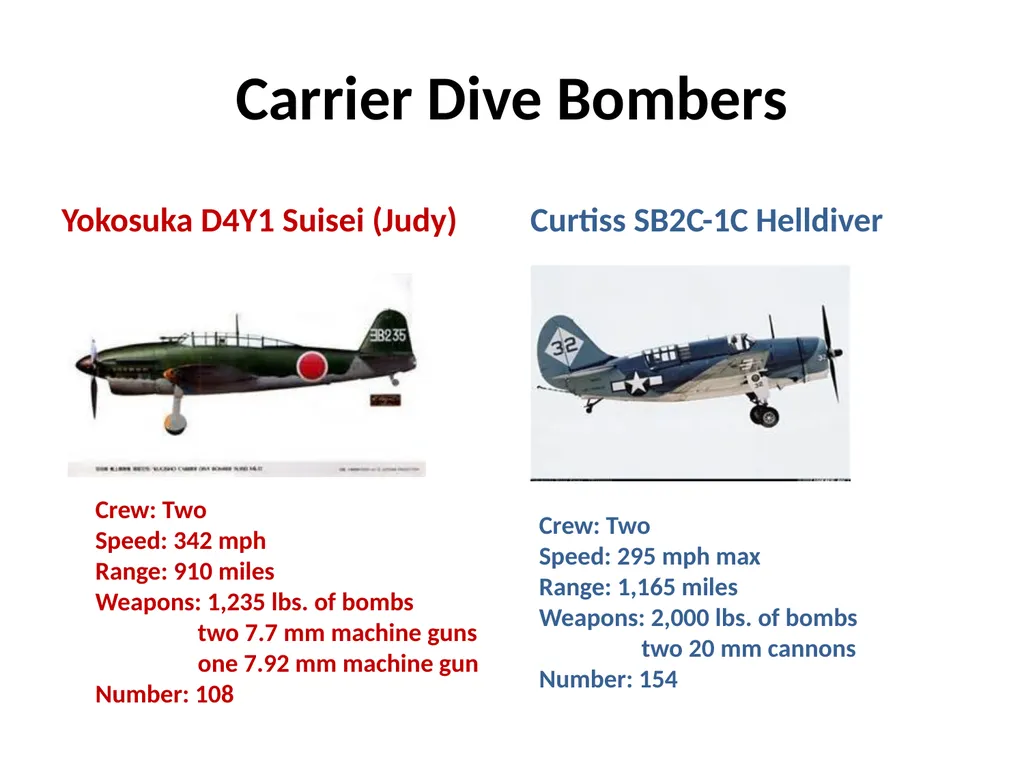
slide7. Carrier Dive Bombers Yokosuka D4Y1 Suisei (Judy) Curtiss SB2C-1C Helldiver Crew: Two
Speed: 342 mph
Range: 910 miles
Weapons: 1,235 lbs. of bombs
two 7.7 mm machine guns
one 7.92 mm machine gun
Number: 108 Crew: Two
Speed: 295 mph max
Range: 1,165 miles
Weapons: 2,000 lbs. of bombs
two 20 mm cannons
Number: 154<br>
slide8. Older Carrier Dive Bombers Aichi D3A2 (Val) Douglas SBD-5 Dauntless Crew: Two
Speed: 255 mph max
Range: 773 miles
Weapons: 2,250 lbs. of bombs
two 0.50 in machine guns
two 0.30 in machine guns
Number: 79 Crew: Two
Speed: 239 mph max
Range: 913 miles
Weapons: 816 lbs. of bombs
three 7.7 mm machine guns
Number: 27<br>
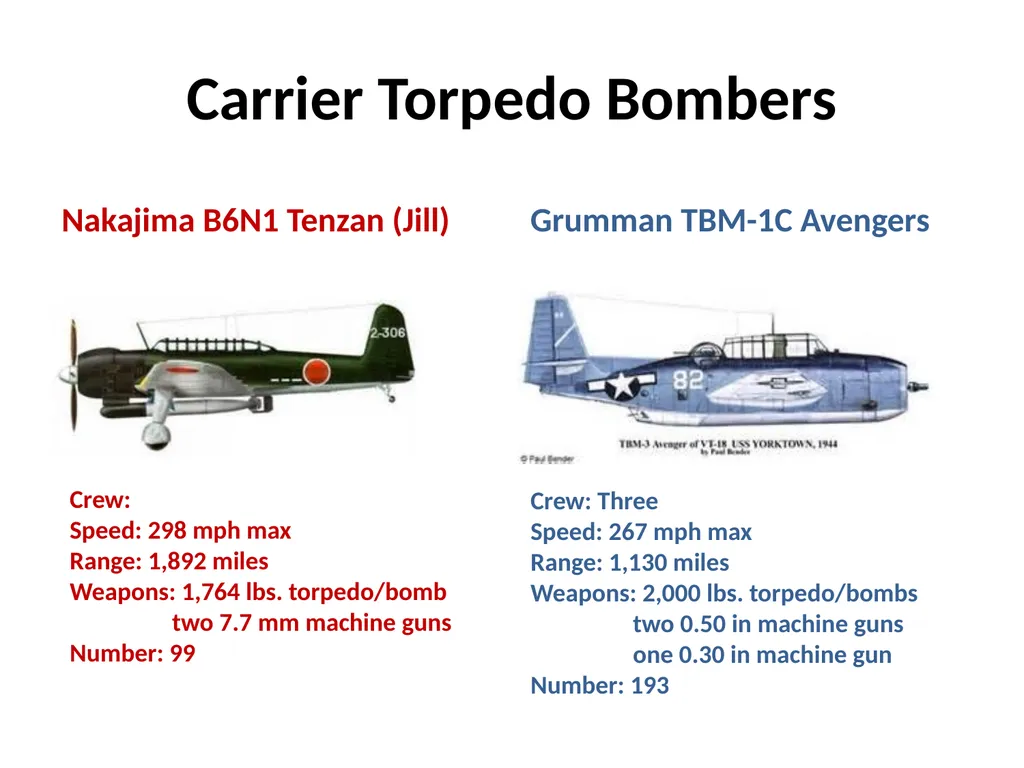
slide9. Carrier Torpedo Bombers Nakajima B6N1 Tenzan (Jill) Grumman TBM-1C Avengers Crew:
Speed: 298 mph max
Range: 1,892 miles
Weapons: 1,764 lbs. torpedo/bomb
two 7.7 mm machine guns
Number: 99 Crew: Three
Speed: 267 mph max
Range: 1,130 miles
Weapons: 2,000 lbs. torpedo/bombs
two 0.50 in machine guns
one 0.30 in machine gun
Number: 193<br>
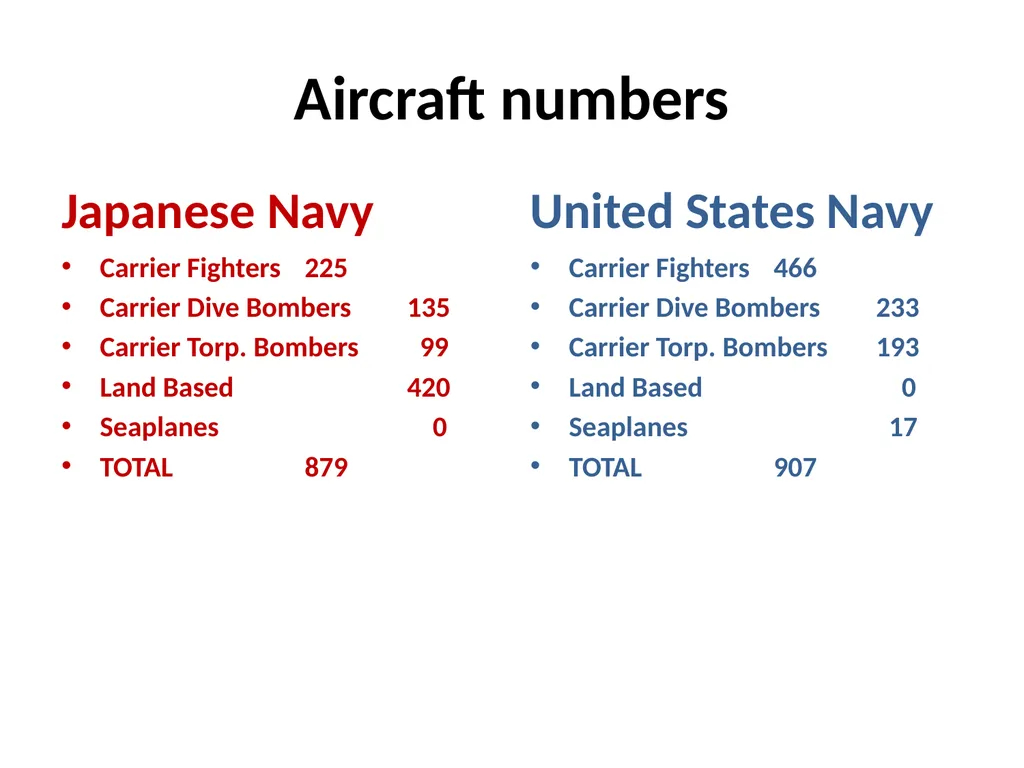
slide10. Aircraft numbers Japanese Navy Carrier Fighters 225
Carrier Dive Bombers 135
Carrier Torp. Bombers 99
Land Based 420
Seaplanes 0
TOTAL 879 United States Navy Carrier Fighters 466
Carrier Dive Bombers 233
Carrier Torp. Bombers 193
Land Based 0
Seaplanes 17
TOTAL 907<br>
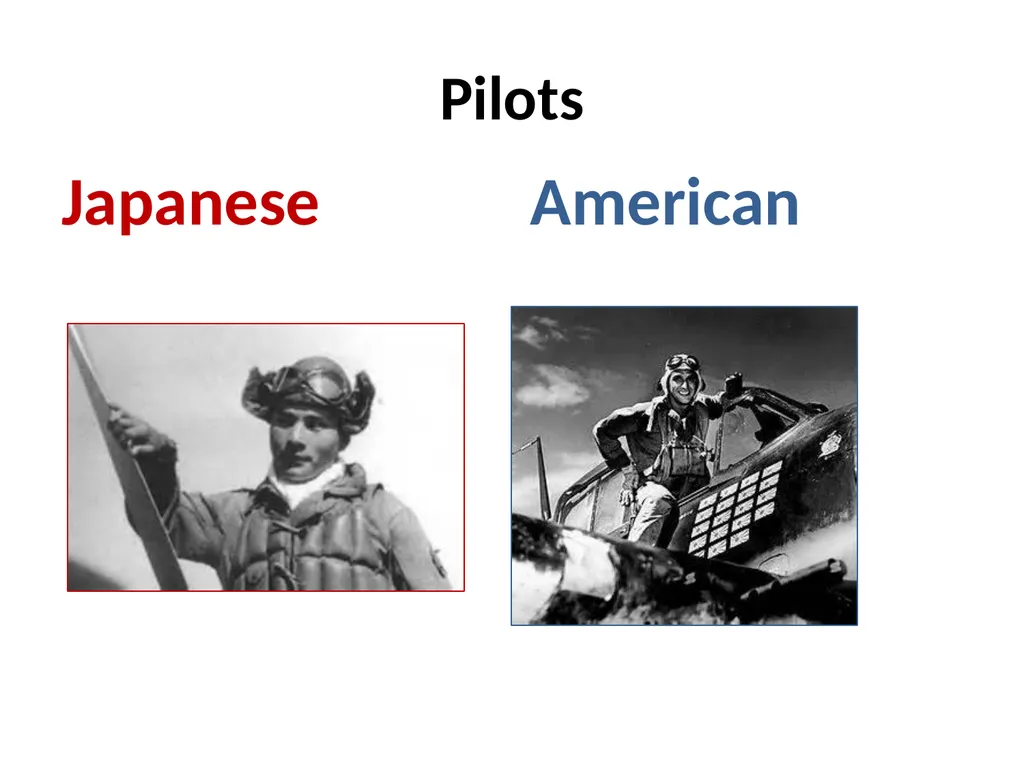
slide11. Pilots Japanese American<br>
slide12. Fleet Approaches, 0001K 19 June 1944 Japanese Navy steaming east from the Philippines.
U.S. Navy positioned to the west of the Mariana Islands to defend the Saipan invasion of June 15, 1944.<br>
slide13. Considerations Prevailing Winds from the Northeast.
Japanese controlled nearby airfields on Rota, Tinian and Guam.
Japanese knew the locations of the American carriers days prior to the battle.
The U.S. Navy did not know the locations of the Japanese carriers with the exception of infrequent submarine sightings.<br>
slide14. Tactical considerations Admiral Spruance primary purpose was to protect the invasion of Saipan.
Admiral Spruance concerned the Japanese might divide forces and execute an “end around”.
Admiral Lee, commander of USN battleships, did not want a night surface engagement.<br>
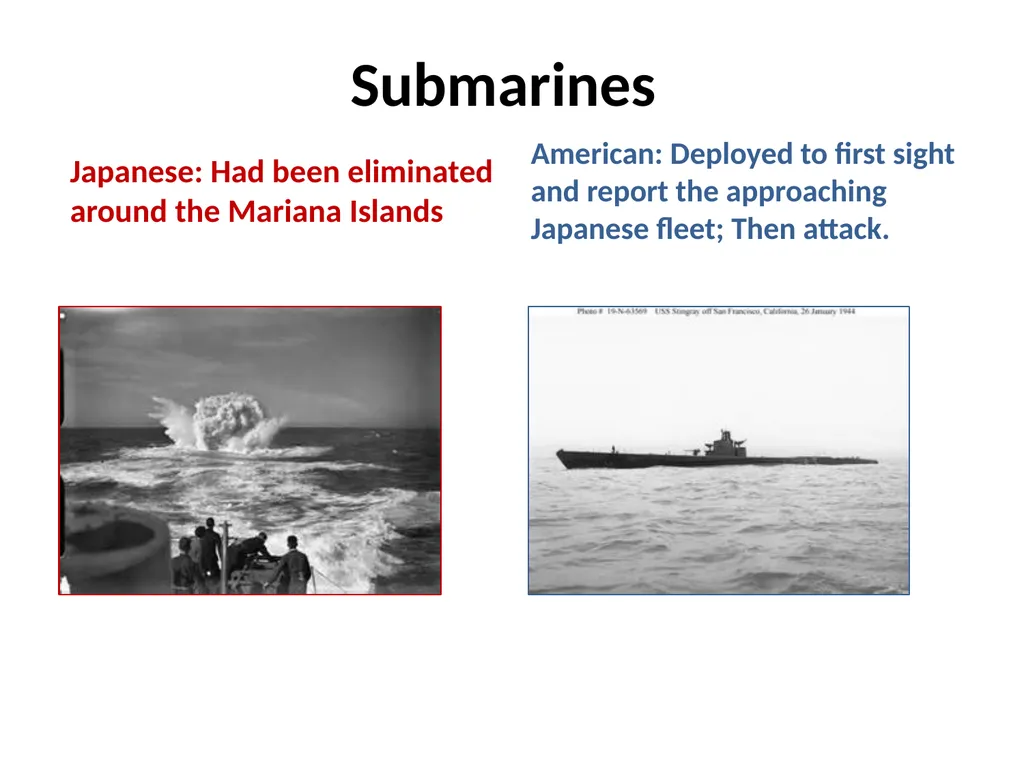
slide15. Submarines Japanese: Had been eliminated around the Mariana Islands American: Deployed to first sight and report the approaching Japanese fleet; Then attack.<br>
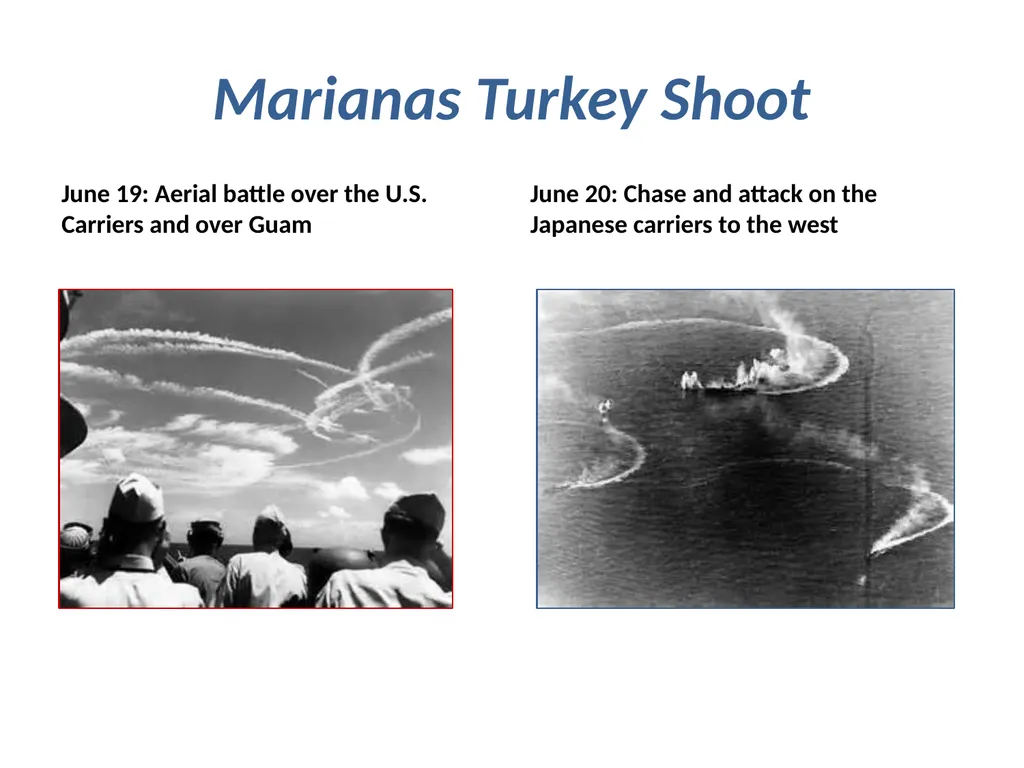
slide16. Marianas Turkey Shoot June 19: Aerial battle over the U.S. Carriers and over Guam June 20: Chase and attack on the Japanese carriers to the west<br>
slide17. Aftermath Japanese losses Aircraft: 550-645
Ships: 3 carriers, 2 oilers
Men: 2,987 est. United States losses Aircraft: 123
Ships: none
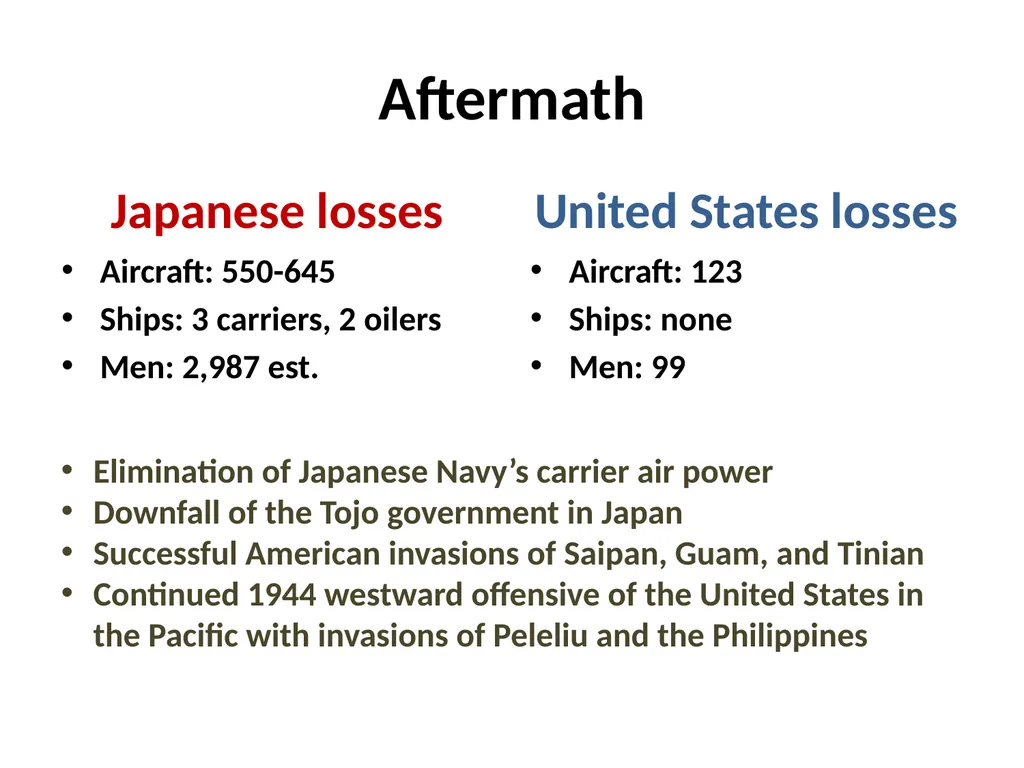
Men: 99 Elimination of Japanese Navy’s carrier air power
Downfall of the Tojo government in Japan
Successful American invasions of Saipan, Guam, and Tinian
Continued 1944 westward offensive of the United States in the Pacific with invasions of Peleliu and the Philippines<br>
slide18. Key factors for the U.S. victory American pilot training
American tactics
American technology
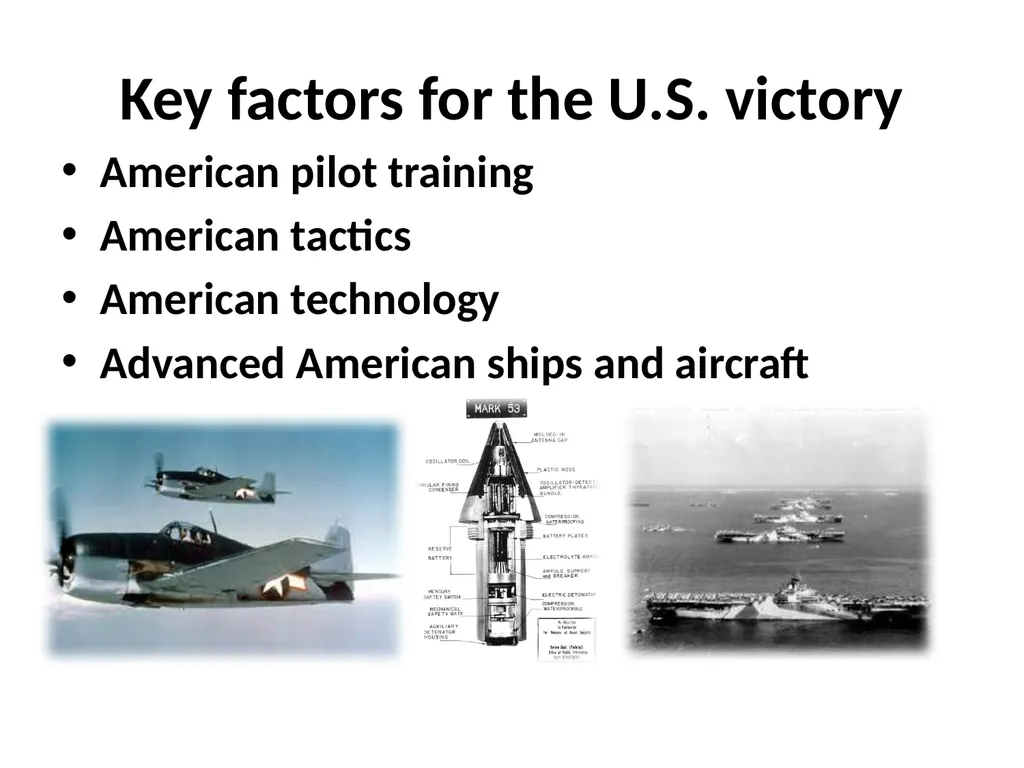
Advanced American ships and aircraft<br>
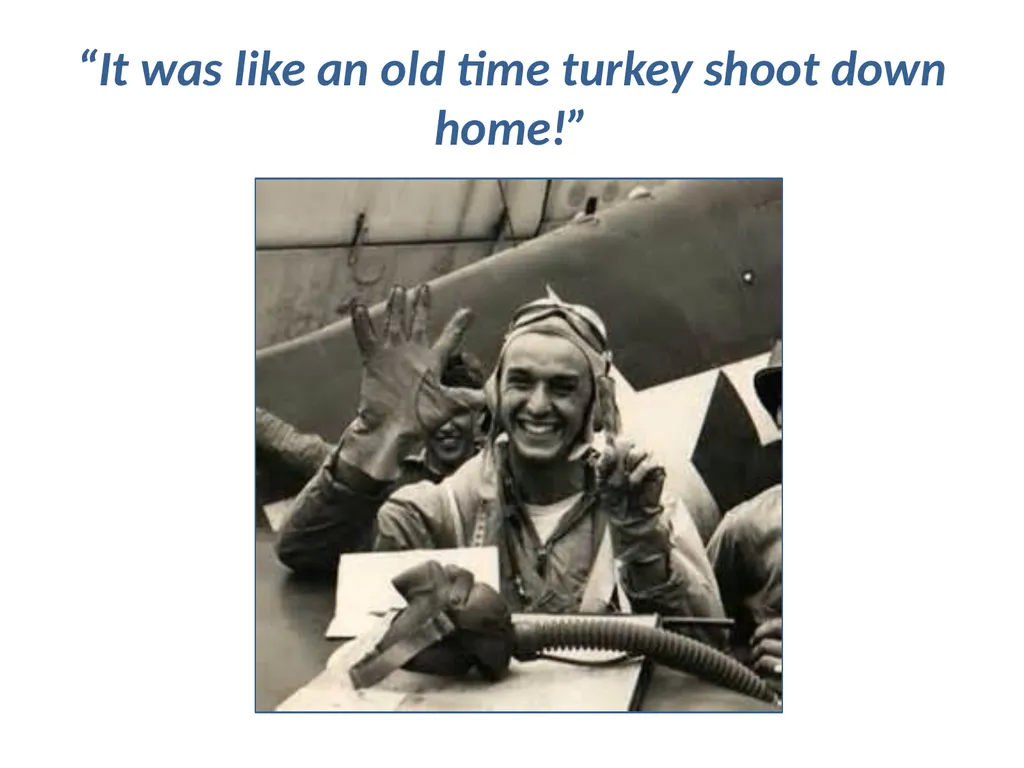
slide19. “It was like an old time turkey shoot down home!”<br>
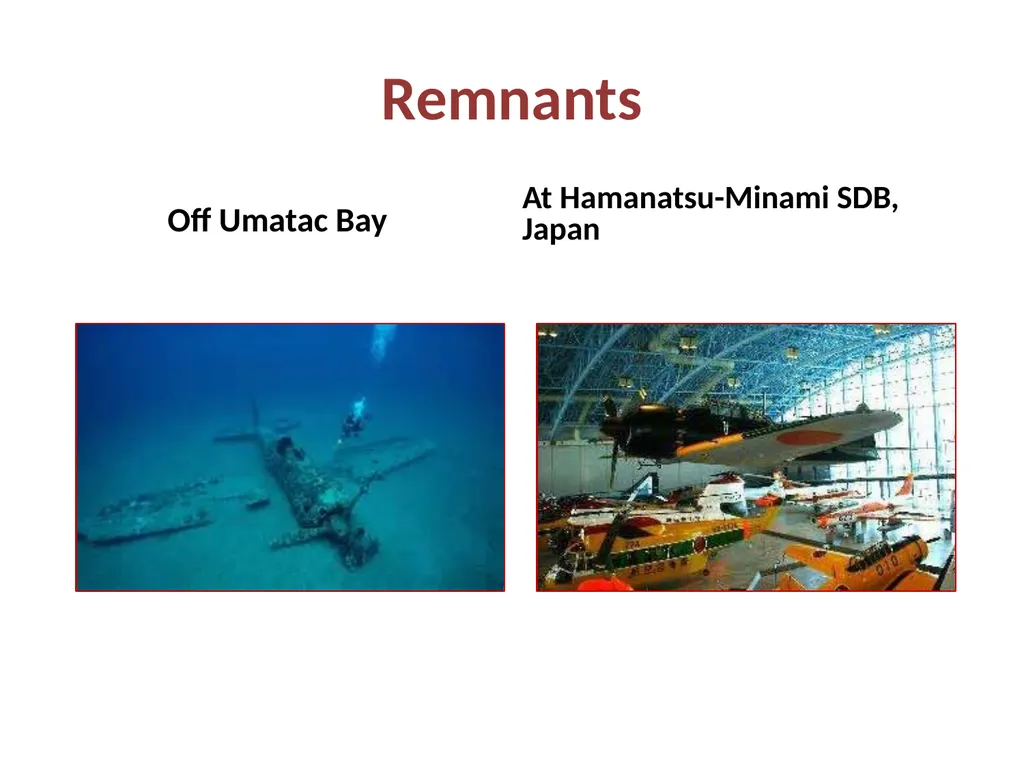
slide20. Remnants Off Umatac Bay At Hamanatsu-Minami SDB, Japan<br>
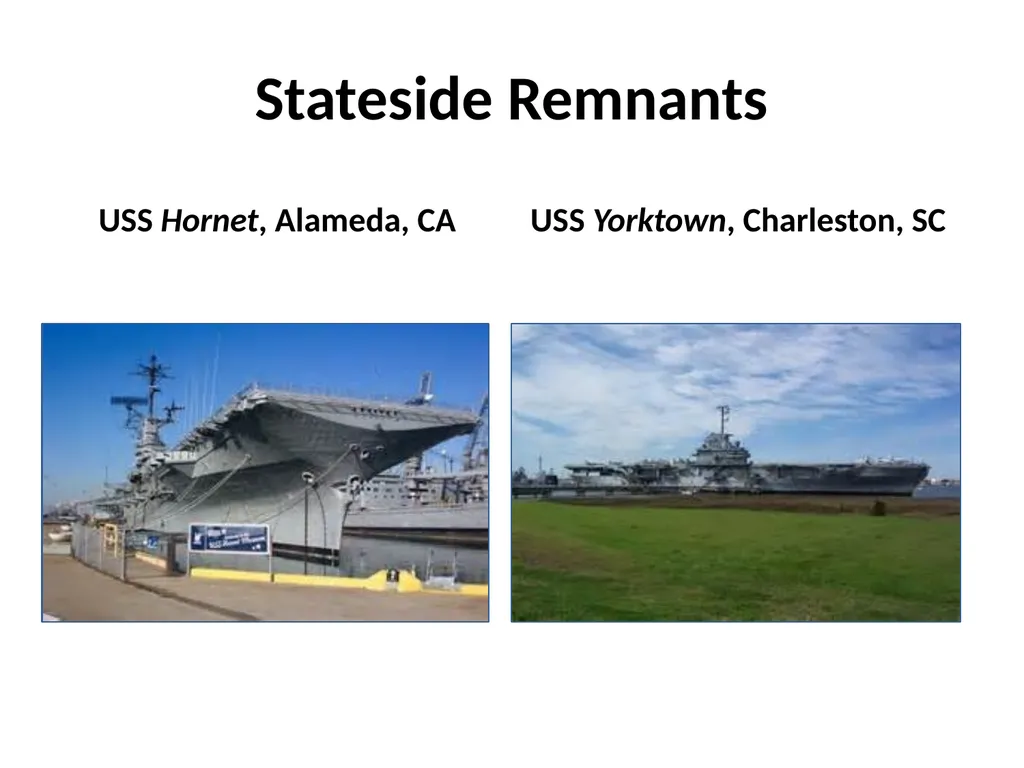
slide21. Stateside Remnants USS Hornet, Alameda, CA USS Yorktown, Charleston, SC<br>
slide22. Thanks for your interest in our heritage and park!<br>
War in the Pacific National Historical Park
Commander Marvin Michael Dodge, USN (Ret.)
Dave Lotz, Cultural Resources Program Manager. NPS History Revealed:
Battle of the Philippine Sea
June 19-20,
1944<br>
slide2. Imperial Japanese Navy Admiral Soemu Toyoda
CinC, Combined Fleet Vice Admiral Jisaburo Ozawa
Commander, Mobile Fleet<br>
slide3. United States Navy Admiral Ray Spruance
Commander, Fifth Fleet Vice Admiral Marc Mitscher
Commander Task Force 58<br>
slide4. Fifth aircraft carrier battle of the war Imperial Japanese Navy:
9 aircraft carriers U.S. Navy:
15 aircraft carriers<br>
slide5. Accompanying warships 5 battleships
11 cruisers
27 destroyers 7 battleships
18 cruisers
67 destroyers<br>
slide6. Carrier Fighters Mitsubishi A6M5 Zero-Sen (Zeke) Grumman F6F-3 Hellcat Crew: One
Speed: 346 mph max
Range: 1,118 miles
Weapons: three 13.2 mm machine guns and two 20 mm machine guns
Number: 225 Crew: One
Speed: 380 mph max
Range: 1,530 miles
Weapons: six 0.50 in machine guns
Number: 466<br>
slide7. Carrier Dive Bombers Yokosuka D4Y1 Suisei (Judy) Curtiss SB2C-1C Helldiver Crew: Two
Speed: 342 mph
Range: 910 miles
Weapons: 1,235 lbs. of bombs
two 7.7 mm machine guns
one 7.92 mm machine gun
Number: 108 Crew: Two
Speed: 295 mph max
Range: 1,165 miles
Weapons: 2,000 lbs. of bombs
two 20 mm cannons
Number: 154<br>
slide8. Older Carrier Dive Bombers Aichi D3A2 (Val) Douglas SBD-5 Dauntless Crew: Two
Speed: 255 mph max
Range: 773 miles
Weapons: 2,250 lbs. of bombs
two 0.50 in machine guns
two 0.30 in machine guns
Number: 79 Crew: Two
Speed: 239 mph max
Range: 913 miles
Weapons: 816 lbs. of bombs
three 7.7 mm machine guns
Number: 27<br>
slide9. Carrier Torpedo Bombers Nakajima B6N1 Tenzan (Jill) Grumman TBM-1C Avengers Crew:
Speed: 298 mph max
Range: 1,892 miles
Weapons: 1,764 lbs. torpedo/bomb
two 7.7 mm machine guns
Number: 99 Crew: Three
Speed: 267 mph max
Range: 1,130 miles
Weapons: 2,000 lbs. torpedo/bombs
two 0.50 in machine guns
one 0.30 in machine gun
Number: 193<br>
slide10. Aircraft numbers Japanese Navy Carrier Fighters 225
Carrier Dive Bombers 135
Carrier Torp. Bombers 99
Land Based 420
Seaplanes 0
TOTAL 879 United States Navy Carrier Fighters 466
Carrier Dive Bombers 233
Carrier Torp. Bombers 193
Land Based 0
Seaplanes 17
TOTAL 907<br>
slide11. Pilots Japanese American<br>
slide12. Fleet Approaches, 0001K 19 June 1944 Japanese Navy steaming east from the Philippines.
U.S. Navy positioned to the west of the Mariana Islands to defend the Saipan invasion of June 15, 1944.<br>
slide13. Considerations Prevailing Winds from the Northeast.
Japanese controlled nearby airfields on Rota, Tinian and Guam.
Japanese knew the locations of the American carriers days prior to the battle.
The U.S. Navy did not know the locations of the Japanese carriers with the exception of infrequent submarine sightings.<br>
slide14. Tactical considerations Admiral Spruance primary purpose was to protect the invasion of Saipan.
Admiral Spruance concerned the Japanese might divide forces and execute an “end around”.
Admiral Lee, commander of USN battleships, did not want a night surface engagement.<br>
slide15. Submarines Japanese: Had been eliminated around the Mariana Islands American: Deployed to first sight and report the approaching Japanese fleet; Then attack.<br>
slide16. Marianas Turkey Shoot June 19: Aerial battle over the U.S. Carriers and over Guam June 20: Chase and attack on the Japanese carriers to the west<br>
slide17. Aftermath Japanese losses Aircraft: 550-645
Ships: 3 carriers, 2 oilers
Men: 2,987 est. United States losses Aircraft: 123
Ships: none
Men: 99 Elimination of Japanese Navy’s carrier air power
Downfall of the Tojo government in Japan
Successful American invasions of Saipan, Guam, and Tinian
Continued 1944 westward offensive of the United States in the Pacific with invasions of Peleliu and the Philippines<br>
slide18. Key factors for the U.S. victory American pilot training
American tactics
American technology
Advanced American ships and aircraft<br>
slide19. “It was like an old time turkey shoot down home!”<br>
slide20. Remnants Off Umatac Bay At Hamanatsu-Minami SDB, Japan<br>
slide21. Stateside Remnants USS Hornet, Alameda, CA USS Yorktown, Charleston, SC<br>
slide22. Thanks for your interest in our heritage and park!<br>