04
Ginny Elder MN,FNP,PMHNP Medical<br>
05
Daisy Thompson LCSW, CADCII Clinician<br>
06
Julie Fletcher BA Supported Employment<br>
07
Brianne Hernandez BA Case Manager<br>
08
Services Offered with EASA Outreach and education
Screening, assessment, and treatment planning by mental health professionals specifically trained in early psychosis work
Education and support for individuals and families/primary support systems
Crisis management & counseling
Supported Employment
Psychiatric Services
Assistance with knowing rights and available benefits<br>
09
Services Continued… Resource brokering and advocacy
Individual and/or family counseling
Supported Education (Coming Soon!)
Multi-Family Group
Health Services
Alumni/Mentoring (Coming Soon!)
Goal setting and planning
Independent living skill development
Wellness planning
Transition planning
Mediation and insurance support
Support for vocational and educational settings<br>
11
History and Culture Definitions of Mental Health Experiences have differed throughout history and across cultures
In Victorian Times, a woman could be considered mentally unstable due to having symptoms of post-partum depression, or for being ‘disobedient’.
In early American history, people struggling with mental health were often placed in institutions that were similar to jails.
Some cultures view challenges with mental health as responses to stress, while others view them as spiritual issues.<br>
12
Current Perspectives We Have Come a Long Way, Baby!
EASA is a person-centered support system that respects the individual, their experience, and their wants and needs throughout the treatment process. EASA acknowledges and respects the diverse cultures and experiences of all participants and constantly strives to provide care that is respectful to an individual’s culture and belief system.<br>
13
How Early Intervention Helps Psychosis often becomes a problem when the symptoms are left undetected and untreated when they first develop. Early intervention treats the symptoms as close to when they first develop as possible. This helps keep young people on track for reaching their life goals and full potential in work, school, life, and relationships.<br>
14
Understanding Psychosis "Psychosis" is a broad term that covers many different symptoms and experiences
There are number of diagnoses that share symptoms of psychosis such as: Depression, anxiety, post traumatic stress disorder (PTSD), brain tumors, substance use/abuse, and schizophrenia, to name just a few.
EASA treats the type of psychosis most likely related to the diagnoses of the at risk state of psychosis, schizophrenia, or Bipolar I.
We give a mental health diagnosis when you come into EASA. That diagnosis represents the symptoms we will treat over the course of two years<br>
15
What Does Psychosis Look Like? Some Common symptoms include:
Hallucinations (seeing, hearing feeling or tasting things that other people don't)
Feeling overwhelmed by sensory information (lights seem too bright, noises too loud)
Difficulty filtering stimulation from the environment
Delusions (false personal beliefs based on incorrect inferences about reality which are inconsistent with culture and previous beliefs, and which are firmly sustained in spite of evidence or proof to the contrary)
Confused thinking or speech
Difficulty doing ordinary things (often includes problems with memory, attention, putting thoughts together)<br>
16
Who Can Experience Psychosis? Psychosis is more common than you think!
Anyone can develop psychosis. Many people see or hear things that others don't, or have ideas that are unusual. Psychosis is only a problem when it is causing you or someone close to you significant distress or harm.
It affects 3 in 100 people, and usually occurs for the first time between the ages of 15 and 30. Men often develop psychosis 5 to 10 years younger than women. It can be caused by a variety of medical illnesses, sleep deprivation, severe stress or trauma, drug reactions, genetic predisposition, and other factors.<br>
17
Interventions for Psychosis EASA uses interventions accepted in the USA as best practices to treat early stages of psychosis related to schizophrenia and bipolar disorders. EASA also uses interventions that are accepted as best practices by the international standards of treatment for early intervention for psychosis.<br>
18
What Helps a Young Person Experiencing Psychosis? Building trust with their treatment team
Staying involved in activities with peers and friends
Reducing stressors where possible
Pursuing life goals, explore, wonder, and try new things
Avoiding street drugs and alcohol
Asking for help
Learning new ways to manage typical life stresses
Identifying personal values that might help through this unexpected change<br>
19
How Can the Family Help? Revise expectations (at least temporarily)
Know it can take some time for things to start changing
Be mindful of stimulation and stress
Set appropriate limits
Work on assertive communication and attentive listening
Support medication plan (if appropriate)
Collaborate on relapse and prevention planning
Get involved with EASA!<br>
20
Families and Support People Need Help Too! Get involved in treatment with EASA
Attend Workshop
Attend MFG
Engage in family therapy
Consult with EASA staff and communicate needs
Give us a chance to earn your trust
Ask questions
Stay involved, even when things get better
Practice what you learn in treatment in the real world
Consider what you might need to meet your mental health needs
Consider treatment team suggestions on how to approach and stay involved with your young person in an age appropriate way<br>
21
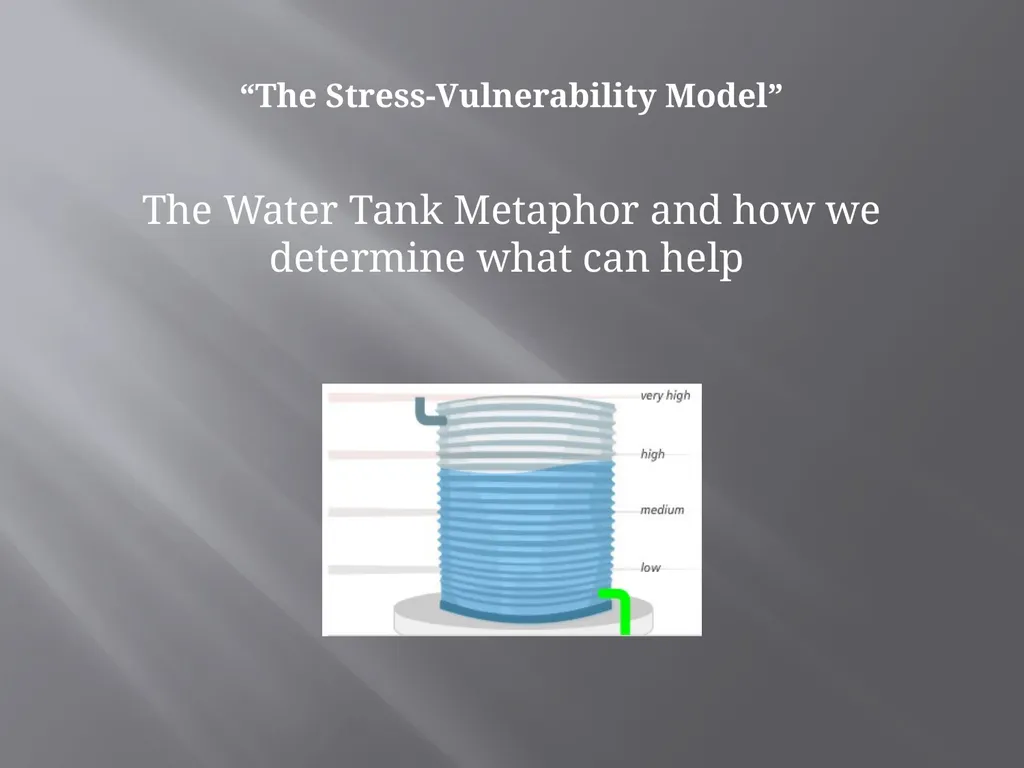
“The Stress-Vulnerability Model” The Water Tank Metaphor and how we determine what can help<br>
22
Medication In addition to EASA’s comprehensive and developmentally informed support that fits this age group and successfully treats symptoms of psychosis, certain medications can be helpful in treating psychosis. As a participant in EASA you have access to a psychiatrist who can explore medication interventions with you. Today, we are lucky to have Ginny Elder, one of our EASA medical providers, to discuss current trends in medication interventions for psychosis.<br>
23
Introduction to Multi-Family Group Welcome Back Brianne and Julie!
History of Multifamily Group
What is Multifamily Group?
How does it Work?
Who Can Benefit from MFG?
Positive Outcomes from MFG<br>
24
EASA Family Guidelines Believe in your power to affect the outcome: You can!
One step at a time
Consider using medication to protect your future, if the doctor recommends it
Reduce stresses and responsibilities for a while
Use the symptoms as indicators Anticipate life stresses
Keep it cool
Give each other space
Set a few simple limits
Ignore what you can’t change
Keep it simple
Carry on business as usual
Solve Problems step by step
Keep a balanced life and a balanced perspective<br>
25
EASA Family Guidelines Cont. Avoid alcohol and street drugs
Explain circumstances to your closest friends and relatives and ask them for help and to stand by you
Don’t move abruptly or far away until stability returns
Attend multifamily groups
Follow the recovery plan
Keep Hope Alive<br>
26
Problem Solving Method Problem Solving Method explained, and the Problem Solving Worksheet is introduced.
Success Story: https://www.youtube.com/watch?v=9LyHPOEhF4c<br>
27
Dinner Enjoy your
meal and good company!<br>
28
Closing We are so glad you are joining our EASA family!
Please fill-out the EASA MFG Workshop Evaluation before you leave.
See you at our next MFG on 3/9/17 at 5:00PM!<br>