04
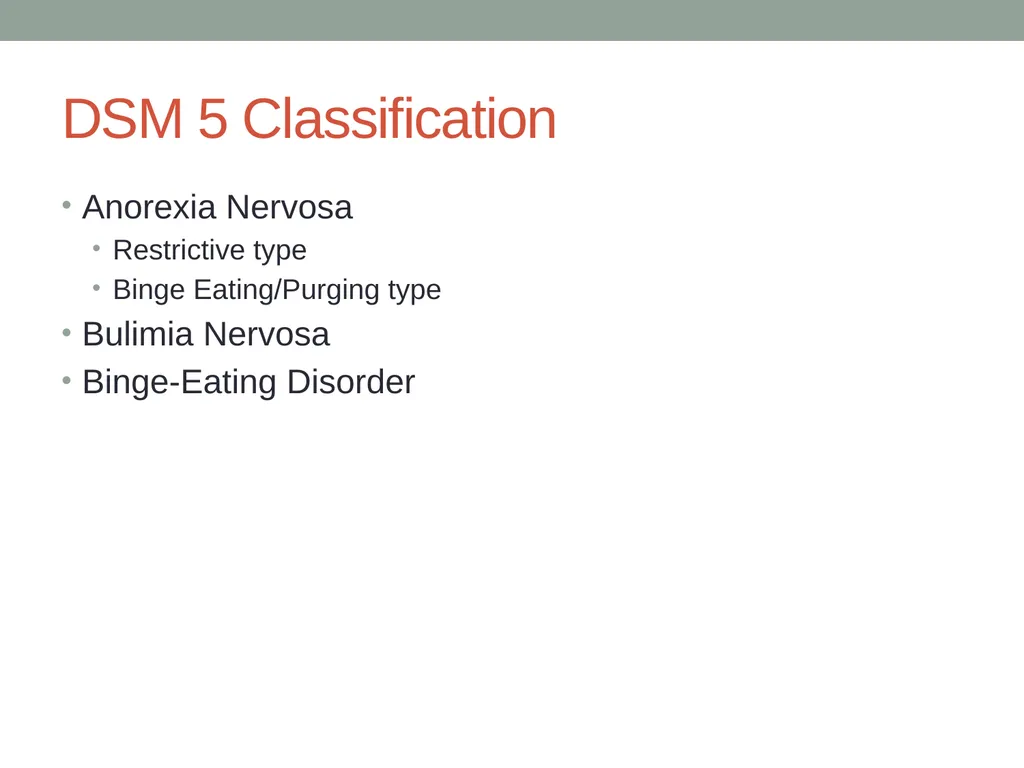
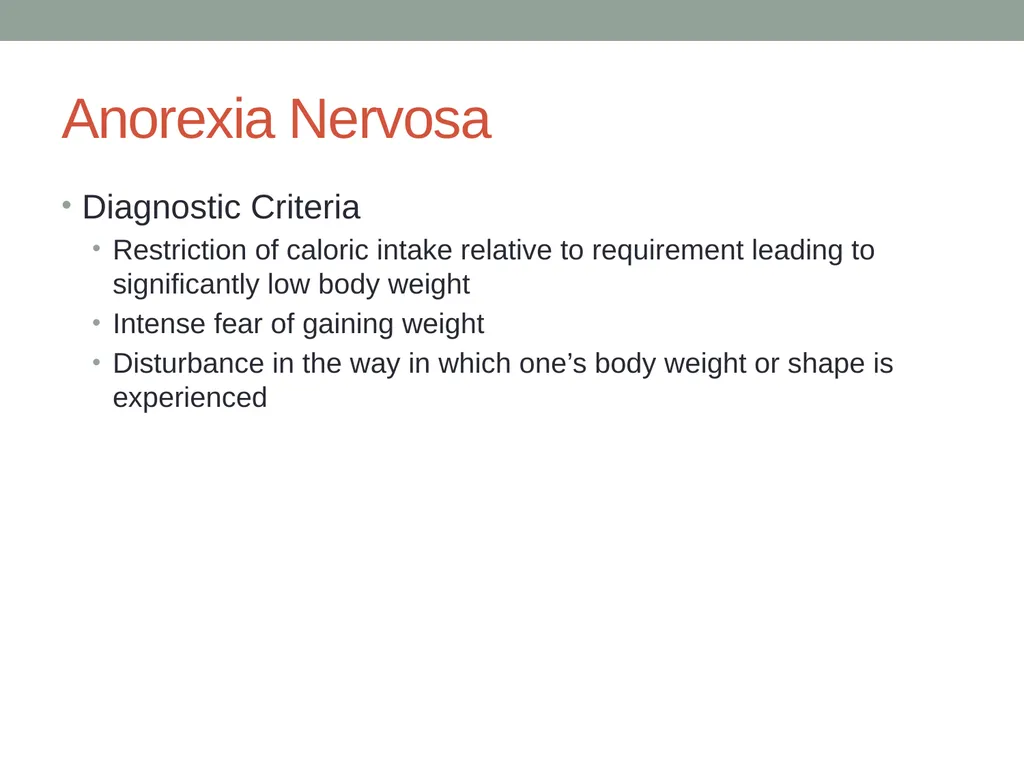
Anorexia Nervosa Diagnostic Criteria
Restriction of caloric intake relative to requirement leading to significantly low body weight
Intense fear of gaining weight
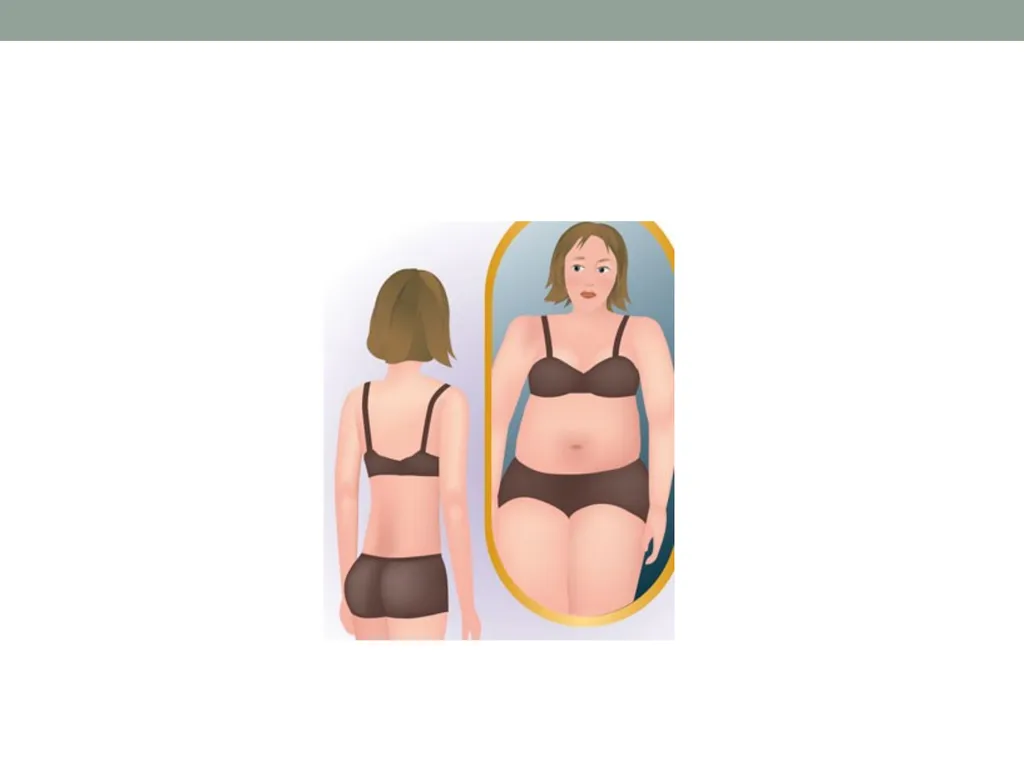
Disturbance in the way in which one’s body weight or shape is experienced<br>
05
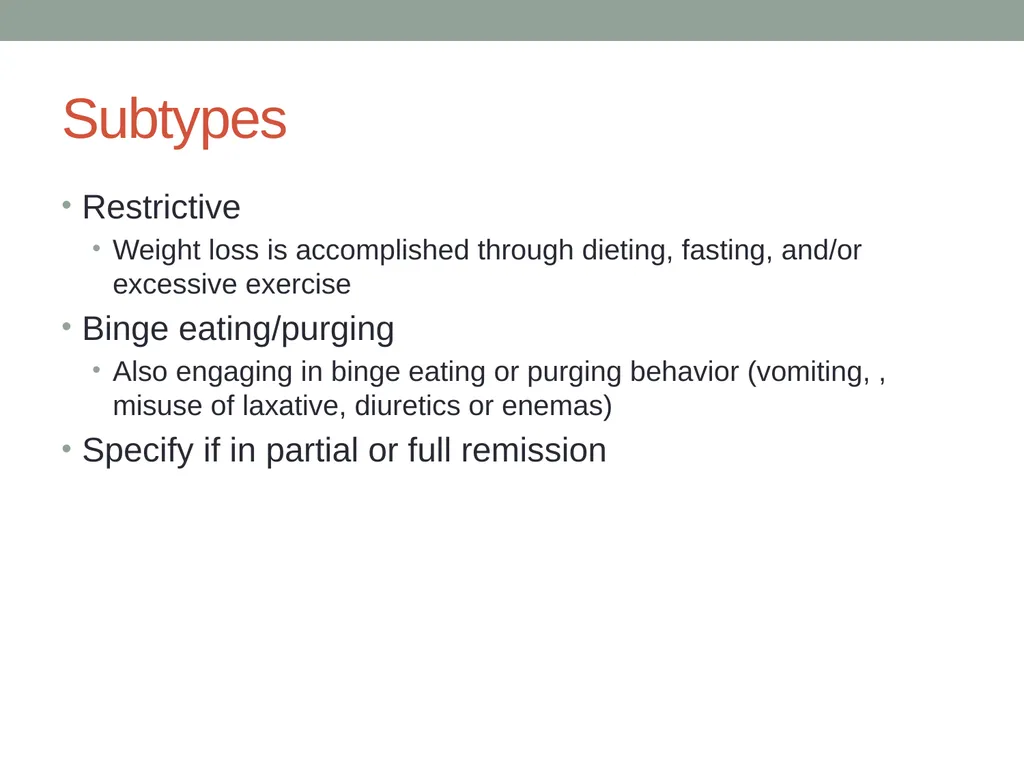
Subtypes Restrictive
Weight loss is accomplished through dieting, fasting, and/or excessive exercise
Binge eating/purging
Also engaging in binge eating or purging behavior (vomiting, , misuse of laxative, diuretics or enemas)
Specify if in partial or full remission<br>
06
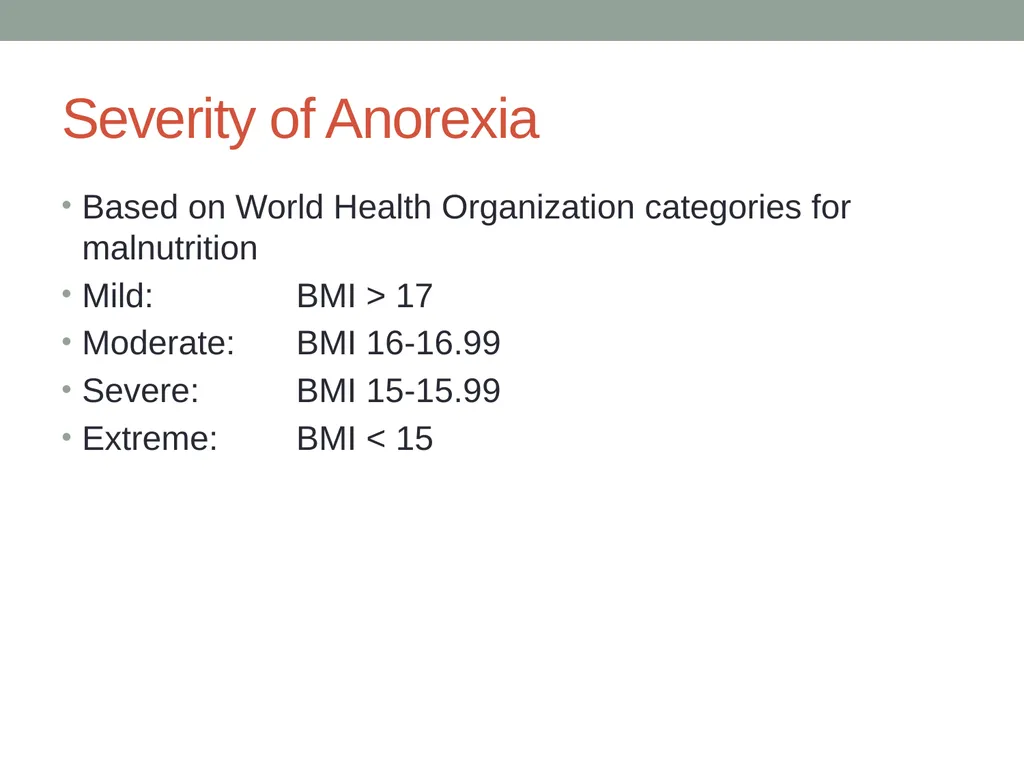
Severity of Anorexia Based on World Health Organization categories for malnutrition
Mild: BMI > 17
Moderate: BMI 16-16.99
Severe: BMI 15-15.99
Extreme: BMI < 15<br>
07
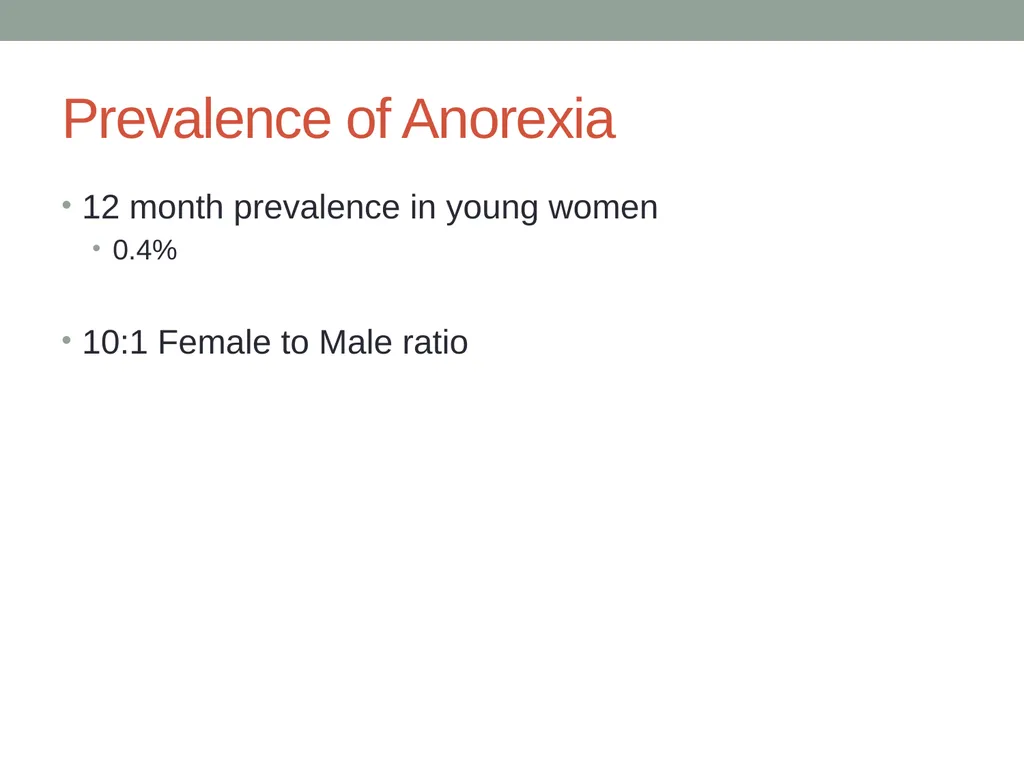
Prevalence of Anorexia 12 month prevalence in young women
0.4%
10:1 Female to Male ratio<br>
08
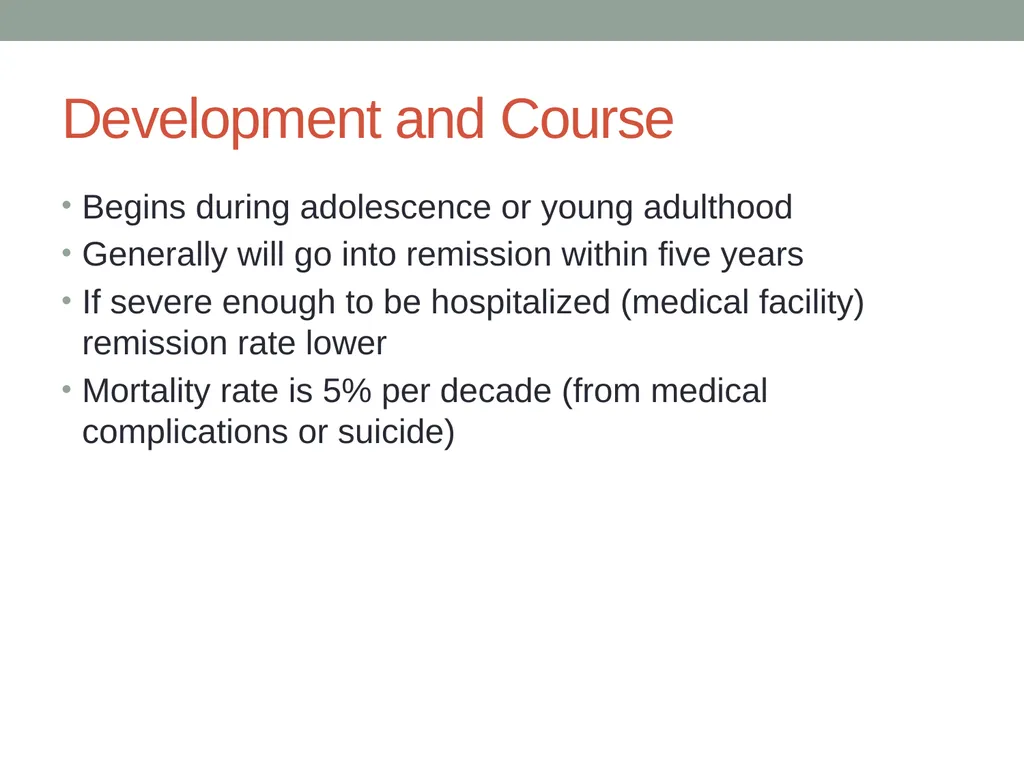
Development and Course Begins during adolescence or young adulthood
Generally will go into remission within five years
If severe enough to be hospitalized (medical facility) remission rate lower
Mortality rate is 5% per decade (from medical complications or suicide)<br>
09
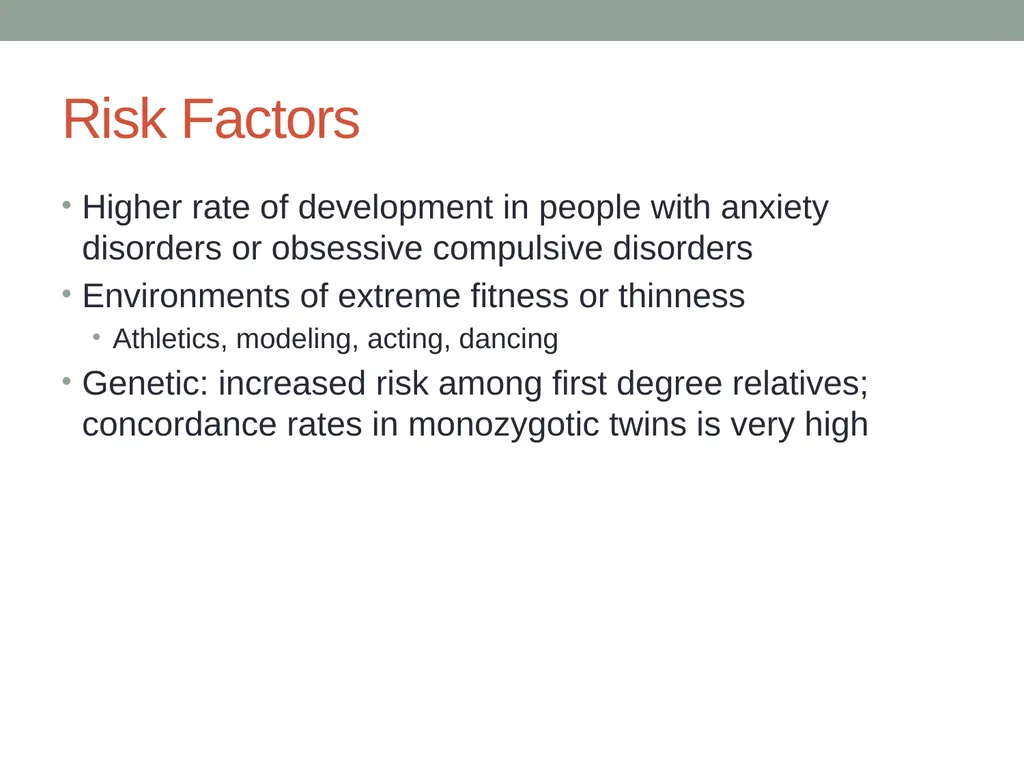
Risk Factors Higher rate of development in people with anxiety disorders or obsessive compulsive disorders
Environments of extreme fitness or thinness
Athletics, modeling, acting, dancing
Genetic: increased risk among first degree relatives; concordance rates in monozygotic twins is very high<br>
10
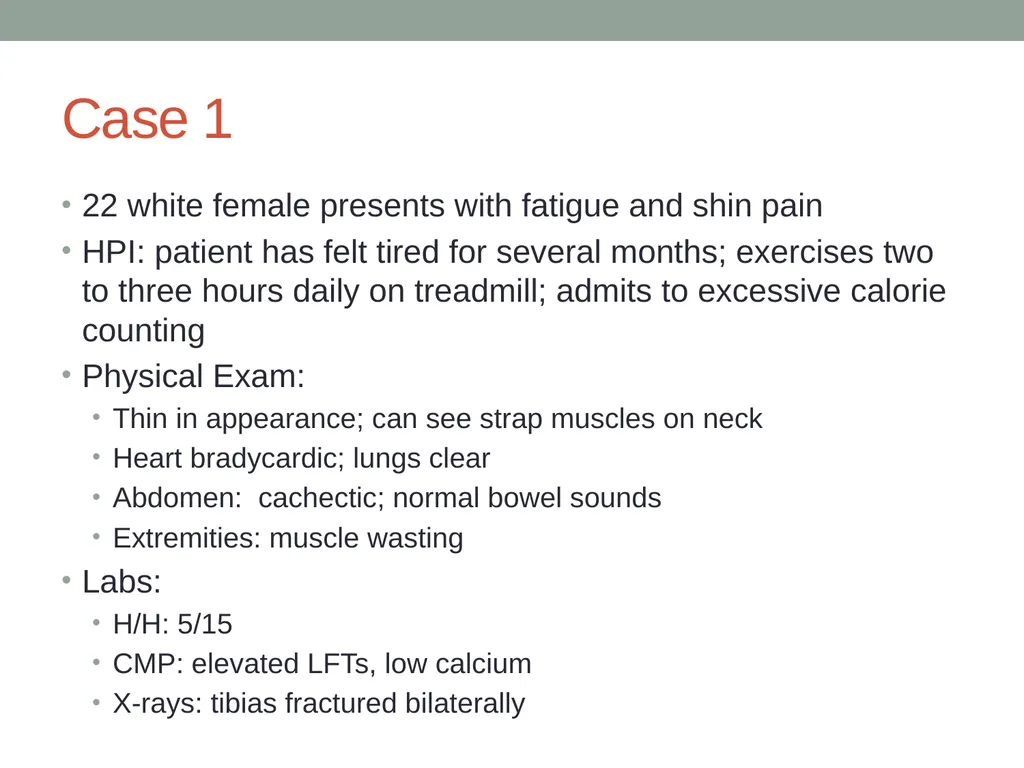
Case 1 22 white female presents with fatigue and shin pain
HPI: patient has felt tired for several months; exercises two to three hours daily on treadmill; admits to excessive calorie counting
Physical Exam:
Thin in appearance; can see strap muscles on neck
Heart bradycardic; lungs clear
Abdomen: cachectic; normal bowel sounds
Extremities: muscle wasting
Labs:
H/H: 5/15
CMP: elevated LFTs, low calcium
X-rays: tibias fractured bilaterally<br>
11
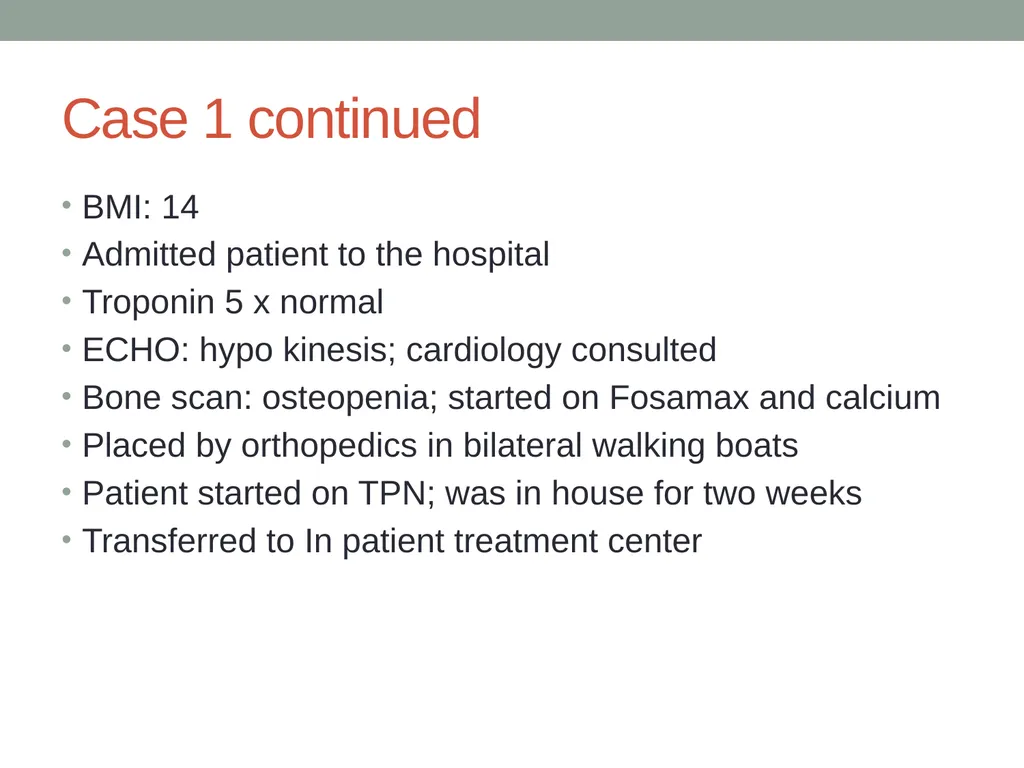
Case 1 continued BMI: 14
Admitted patient to the hospital
Troponin 5 x normal
ECHO: hypo kinesis; cardiology consulted
Bone scan: osteopenia; started on Fosamax and calcium
Placed by orthopedics in bilateral walking boats
Patient started on TPN; was in house for two weeks
Transferred to In patient treatment center<br>
12
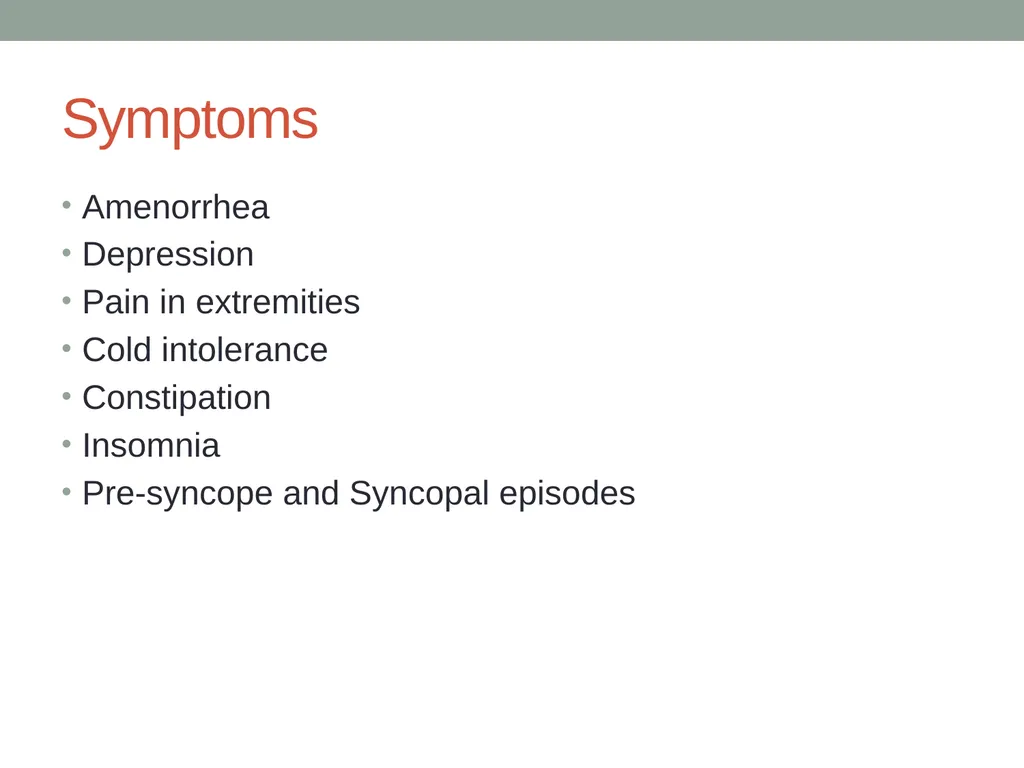
Symptoms Amenorrhea
Depression
Pain in extremities
Cold intolerance
Constipation
Insomnia
Pre-syncope and Syncopal episodes<br>
13
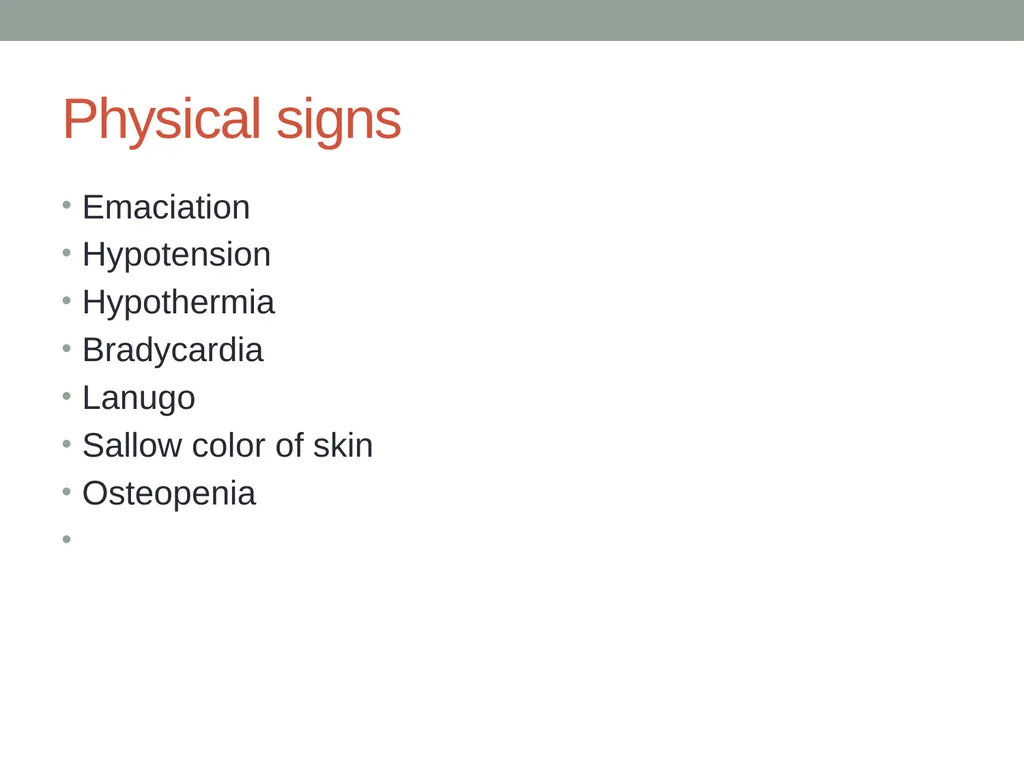
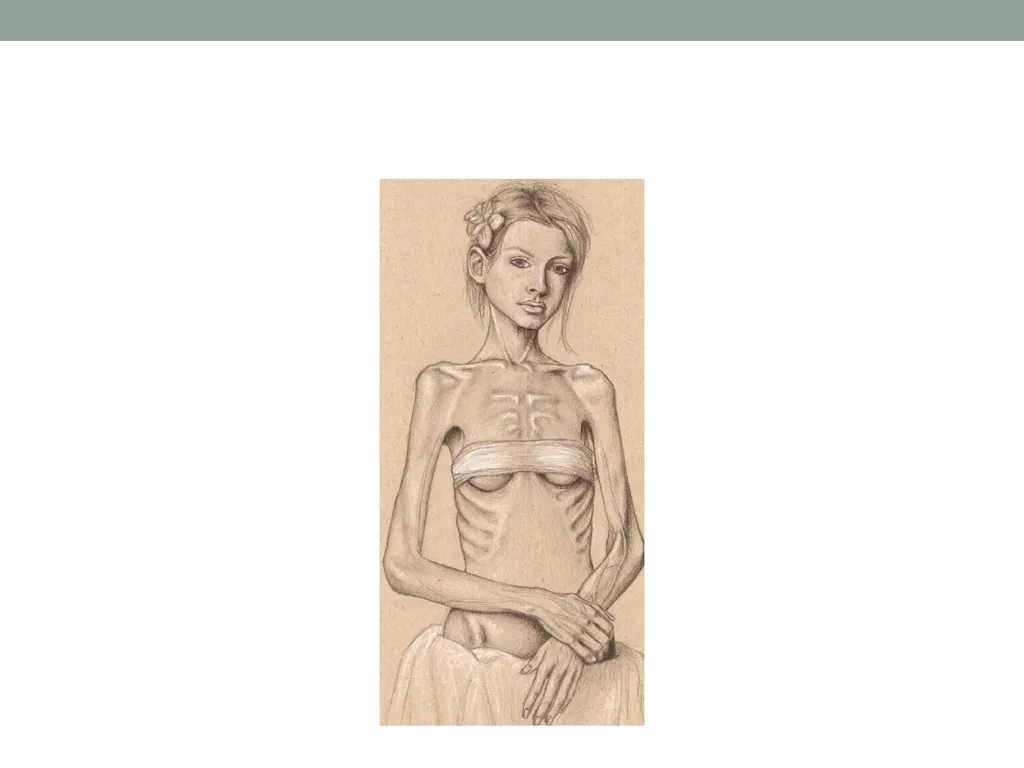
Physical signs Emaciation
Hypotension
Hypothermia
Bradycardia
Lanugo
Sallow color of skin
Osteopenia<br>
14
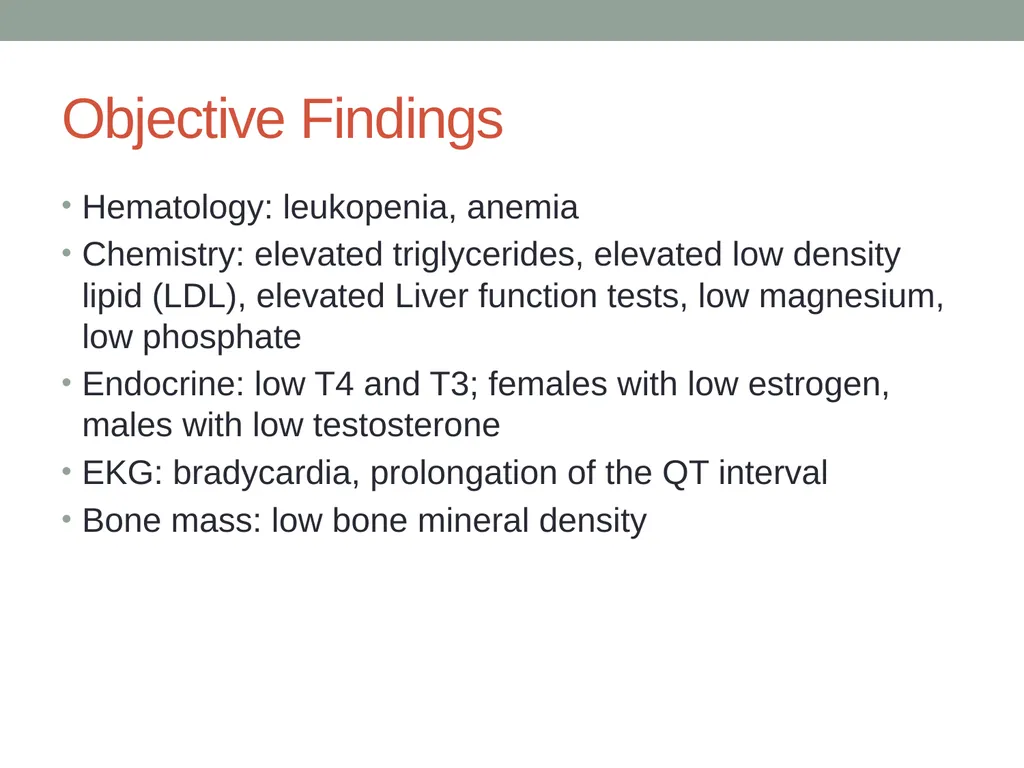
Objective Findings Hematology: leukopenia, anemia
Chemistry: elevated triglycerides, elevated low density lipid (LDL), elevated Liver function tests, low magnesium, low phosphate
Endocrine: low T4 and T3; females with low estrogen, males with low testosterone
EKG: bradycardia, prolongation of the QT interval
Bone mass: low bone mineral density<br>
15
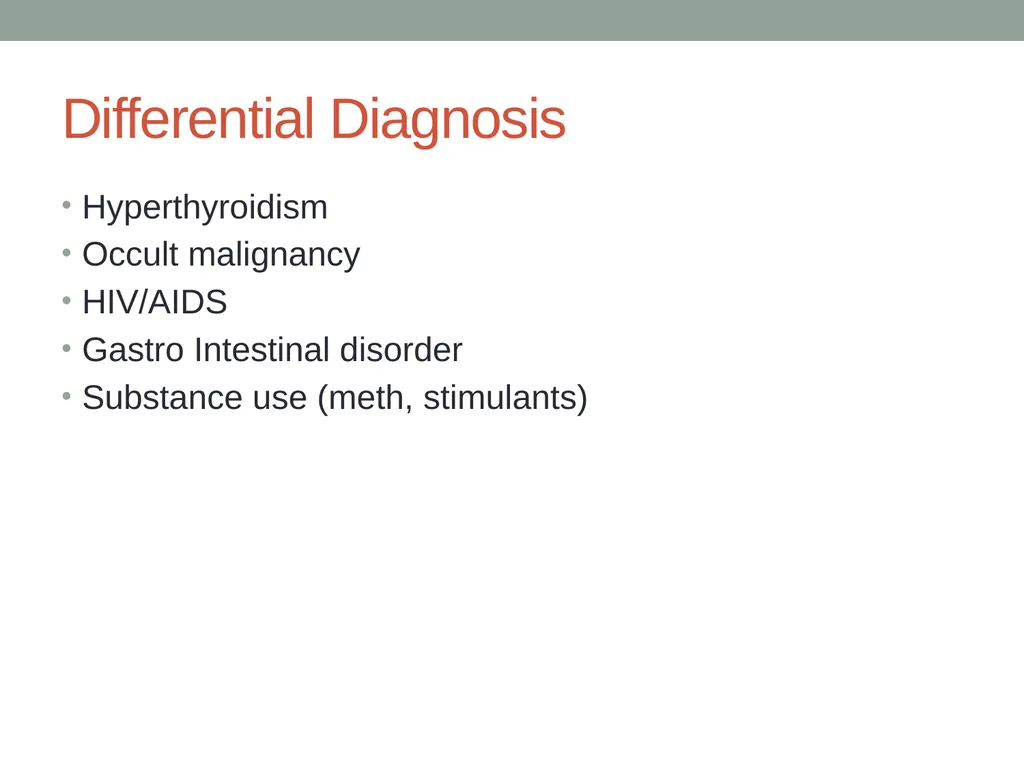
Differential Diagnosis Hyperthyroidism
Occult malignancy
HIV/AIDS
Gastro Intestinal disorder
Substance use (meth, stimulants)<br>
16
Psychological Characteristics Refusal to eat despite feeling hungry
Body dysmorphia (believing fat while emaciated)
Lack of sex drive
Interfamily conflicts
Excessive exercising
Generally was/is a good student (honors, AP)<br>
17
Treatment Team approach:
Primary care doctor
Nutritionist/Dietician
Therapist
+/- psychiatrist
CAUTION with group therapies
Intensive outpatient behavioral/psychological treatment
In patient behavioral/psychological treatment programs
In patient medical hospitalization
Family therapy<br>
18
Hospital Treatment Medical hospitalization sometimes required for those with severe malnutrition and always with extreme malnutrition (generally less than BMI of 16)
Re-feeding syndrome
Too much food into the non active gut can cause massive electrolyte shifts resulting in high magnesium and phosphate levels
This can lead to fatal arrhythmias
Discovered after World War II when concentration camp victims were fed too quickly by allied personnel
Must use TPN first (total parental nutrition) before starting oral feeds<br>
19
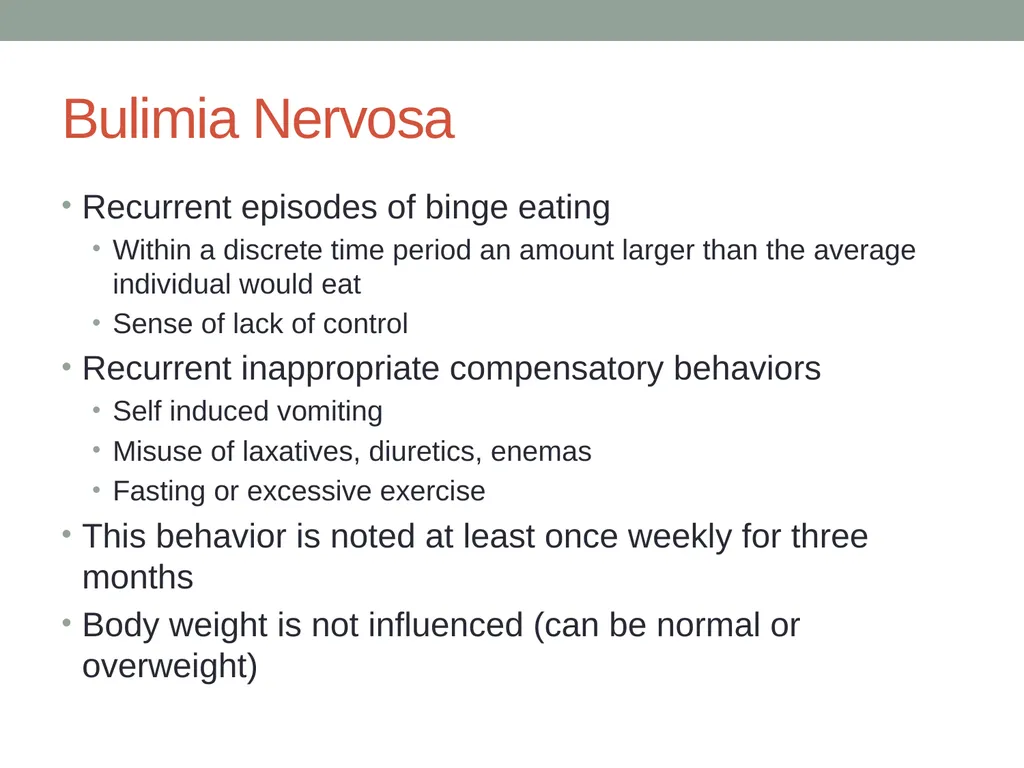
Bulimia Nervosa Recurrent episodes of binge eating
Within a discrete time period an amount larger than the average individual would eat
Sense of lack of control
Recurrent inappropriate compensatory behaviors
Self induced vomiting
Misuse of laxatives, diuretics, enemas
Fasting or excessive exercise
This behavior is noted at least once weekly for three months
Body weight is not influenced (can be normal or overweight)<br>
20
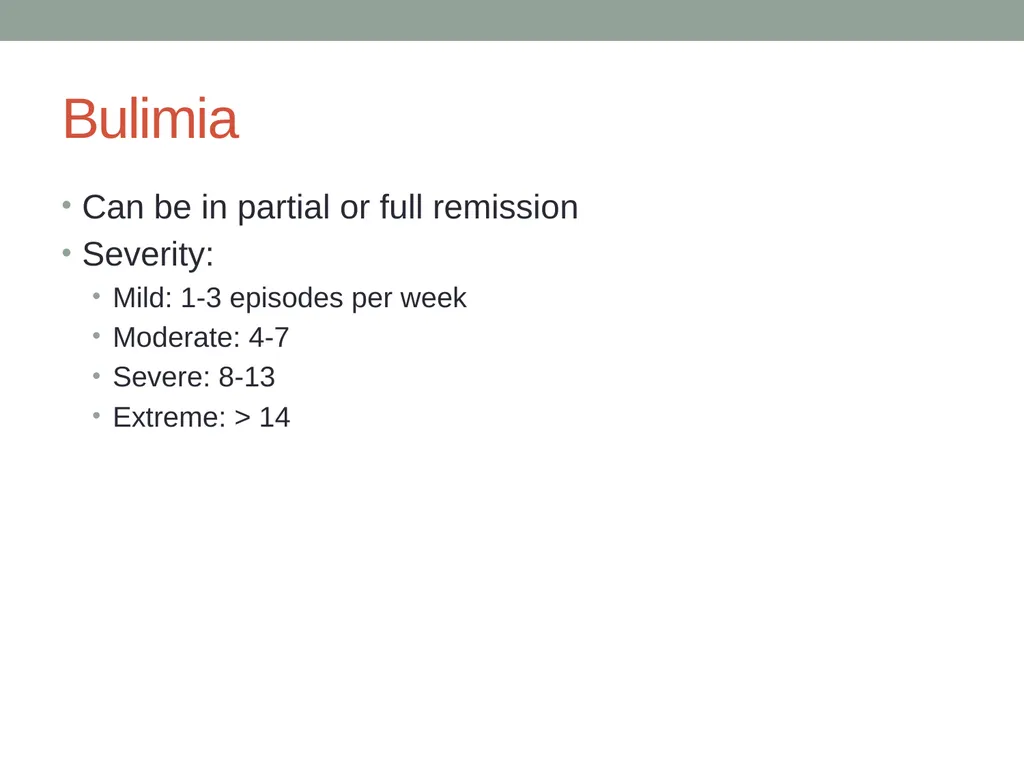
Bulimia Can be in partial or full remission
Severity:
Mild: 1-3 episodes per week
Moderate: 4-7
Severe: 8-13
Extreme: > 14<br>
21
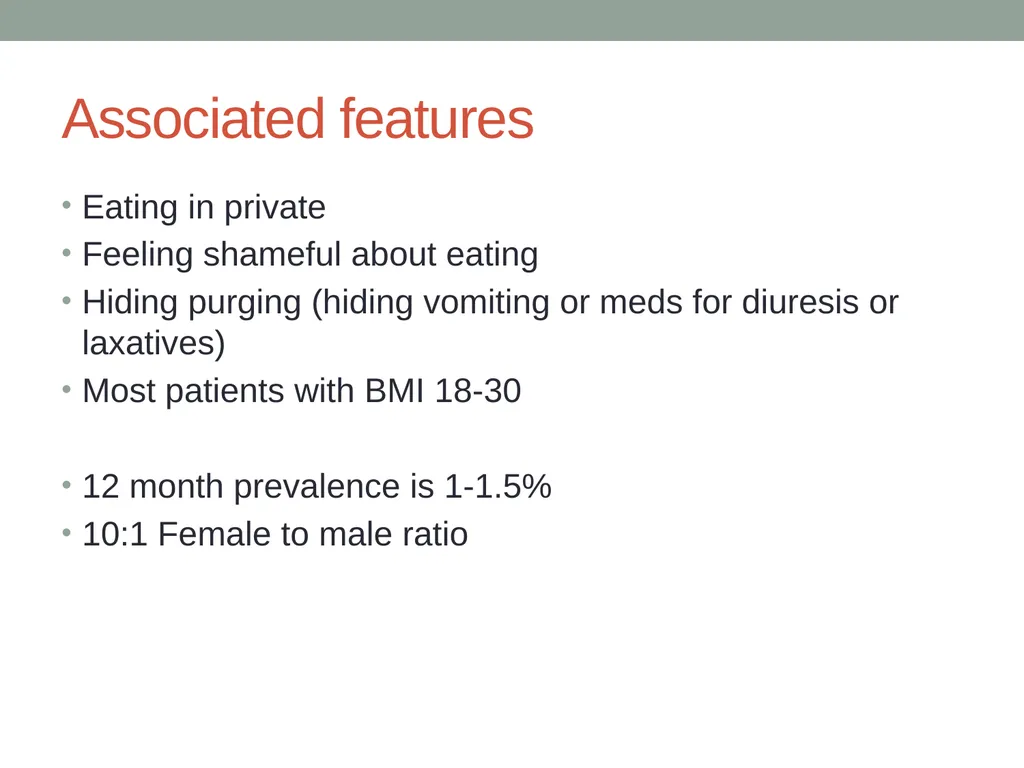
Associated features Eating in private
Feeling shameful about eating
Hiding purging (hiding vomiting or meds for diuresis or laxatives)
Most patients with BMI 18-30
12 month prevalence is 1-1.5%
10:1 Female to male ratio<br>
22
Risk factors Low self esteem, social anxiety, dysthymia
Environments of thin culture
Genetic: childhood obesity and early puberty increase the risk; familial transmission not as strong as anorexia<br>
23
Case 2 18 Hispanic female presents due to excessive heartburn
HPI: patient admits to binging and purging; vomits four to five times daily; exercises to extreme; admits to depression
Physical:
Patient with enlarged parotids, scars on back of hands; dental enamel deteriotion; otherwise physical is normal
Labs: EKG, CBC, CMP, TSH all normal
Diagnosis: GERD due to frequent emesis
Treated with antidepressants, counseling, nutritionist
Ended up having to have partial parotidectomy and dentures<br>
24
Symptoms Parotid gland pain
Gastro esophageal reflux
Constipation
Menstrual irregularities<br>
25
Signs/lab work Many times no abnormalities are noted on physical exam or lab testing
Parotid enlargement
Poor dentition
Scarring on hands (Russell sign)
Electrolyte abnormalities
Melanosis coli (blackened colon walls noted on colonoscopy if misusing laxatives)<br>
26
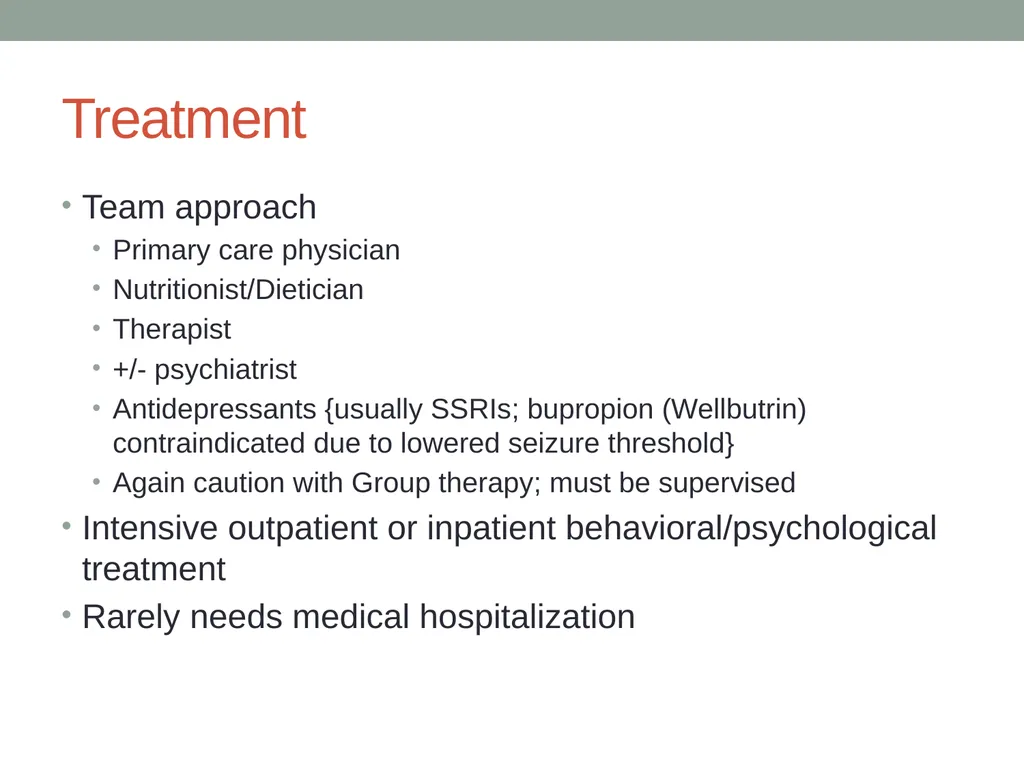
Treatment Team approach
Primary care physician
Nutritionist/Dietician
Therapist
+/- psychiatrist
Antidepressants {usually SSRIs; bupropion (Wellbutrin) contraindicated due to lowered seizure threshold}
Again caution with Group therapy; must be supervised
Intensive outpatient or inpatient behavioral/psychological treatment
Rarely needs medical hospitalization<br>
27
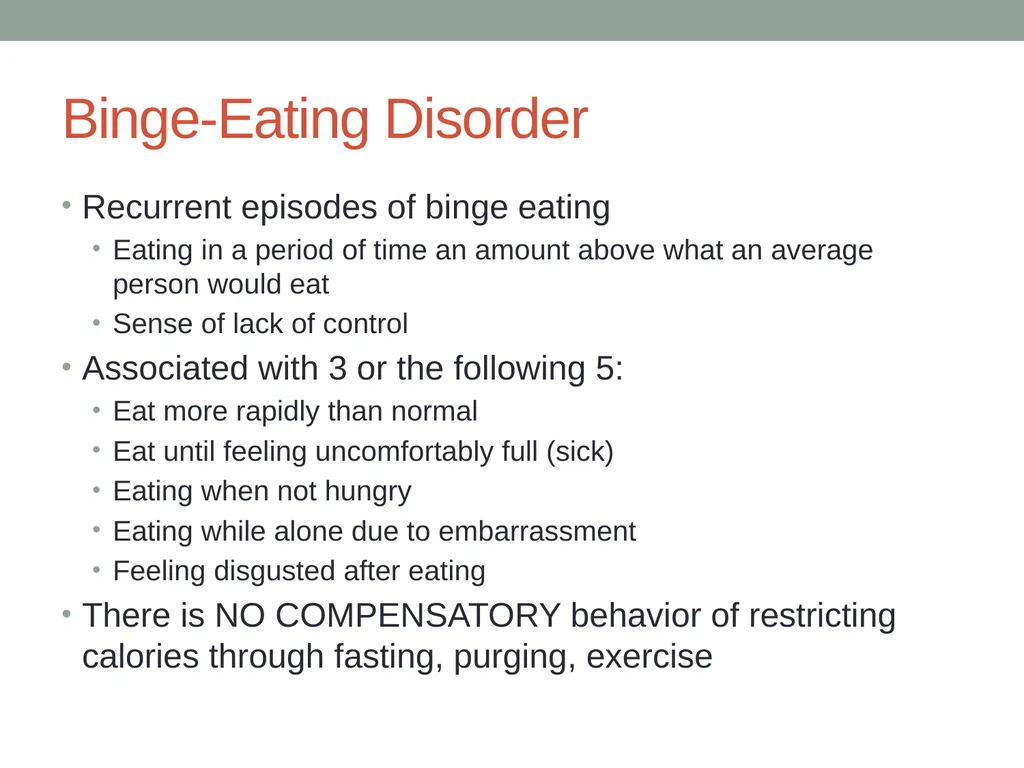
Binge-Eating Disorder Recurrent episodes of binge eating
Eating in a period of time an amount above what an average person would eat
Sense of lack of control
Associated with 3 or the following 5:
Eat more rapidly than normal
Eat until feeling uncomfortably full (sick)
Eating when not hungry
Eating while alone due to embarrassment
Feeling disgusted after eating
There is NO COMPENSATORY behavior of restricting calories through fasting, purging, exercise<br>
28
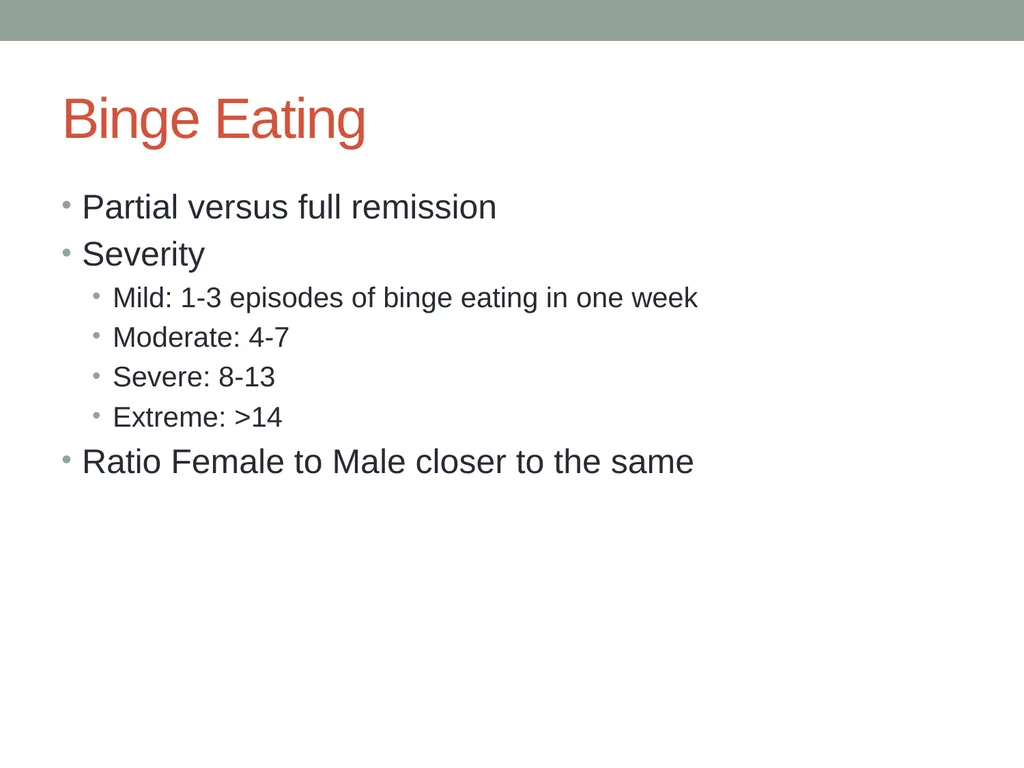
Binge Eating Partial versus full remission
Severity
Mild: 1-3 episodes of binge eating in one week
Moderate: 4-7
Severe: 8-13
Extreme: >14
Ratio Female to Male closer to the same<br>
29
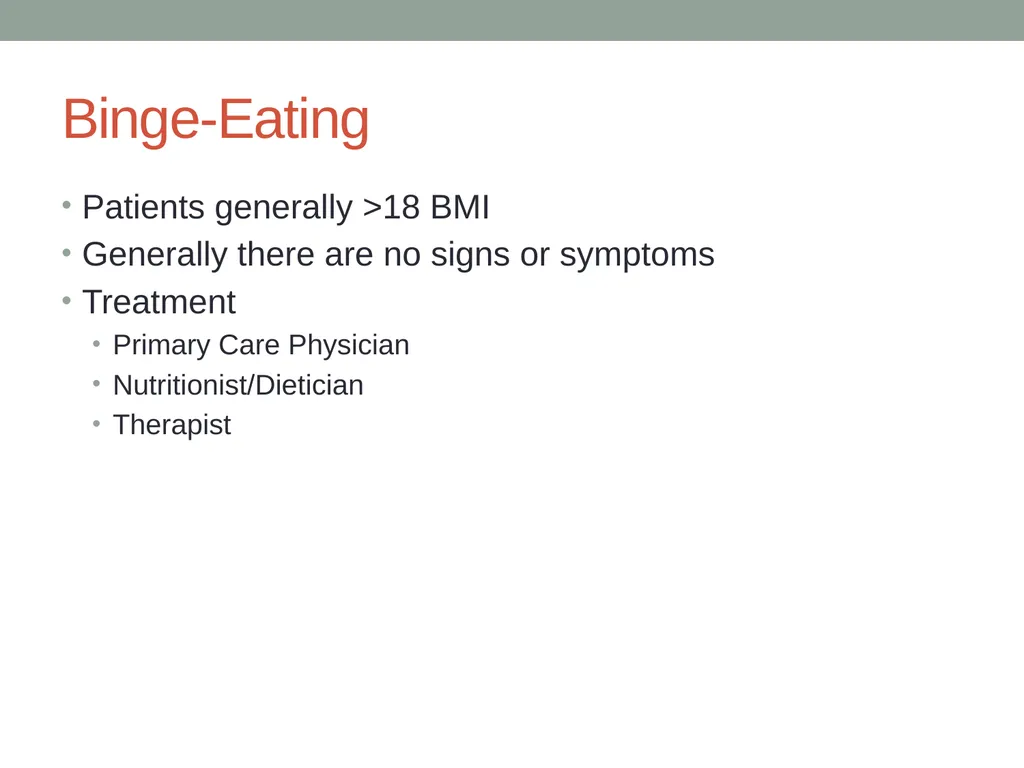
Binge-Eating Patients generally >18 BMI
Generally there are no signs or symptoms
Treatment
Primary Care Physician
Nutritionist/Dietician
Therapist<br>
30
Bibliography Diagnostic and Statistical Manual of Mental Disorders. Fifth Edition; pages 338-353.
First Aid for the Basic Sciences: Organ Systems. Second Edition; pages 567-572.
Board Review Series: Behavioral Science. Sixth Edition; pages 148-149.<br>