Ecosystem: Conceptual Questions Elementary Grade
Description: Ecosystem: Conceptual Questions Elementary Grade 7: Life Sciences Created by Kshamta Hunter EDCP 349 Section 401 Winter 2011 In this lesson Ecosystem Vocab Parts of the ecosystem AbioticBiotic parts of the ecosystem Food chain and its
Related Topics
Download Presentation
"Ecosystem: Conceptual Questions Elementary Grade" is the property of its rightful owner. Permission is granted to download and print the materials on this website for personal, non-commercial use only, and to display it on your personal computer provided you do not modify the materials and that you retain all copyright notices contained in the materials. By downloading content from our website, you accept the terms of this agreement.
Presentation Transcript
slide1. Ecosystem: Conceptual Questions Elementary Grade 7: Life Sciences
Created by Kshamta Hunter
EDCP 349 Section 401 Winter 2011<br>
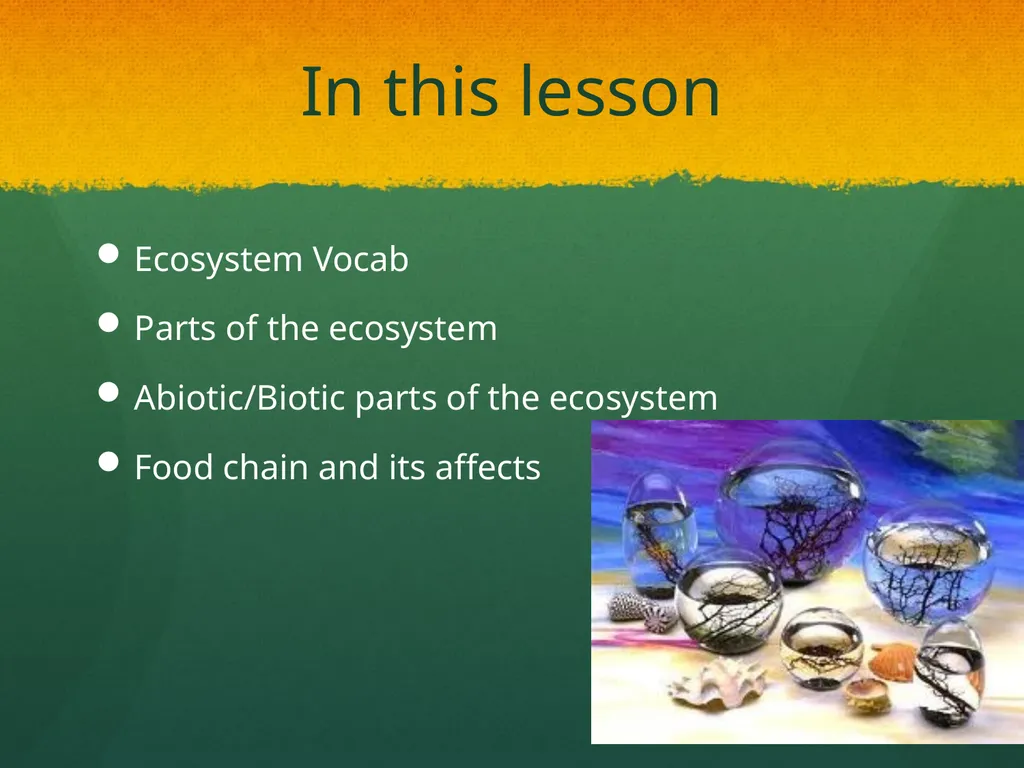
slide2. In this lesson Ecosystem Vocab
Parts of the ecosystem
Abiotic/Biotic parts of the ecosystem
Food chain and its affects<br>
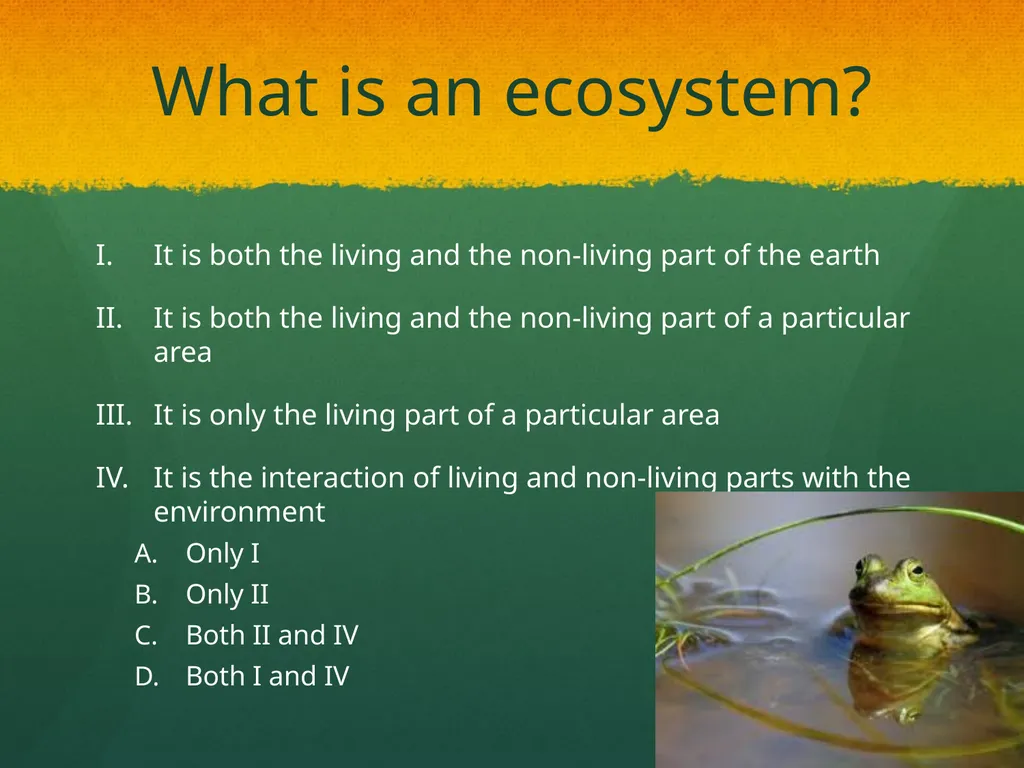
slide3. What is an ecosystem? It is both the living and the non-living part of the earth
It is both the living and the non-living part of a particular area
It is only the living part of a particular area
It is the interaction of living and non-living parts with the environmentÂ
Only I
Only II
Both II and IV
Both I and IV<br>
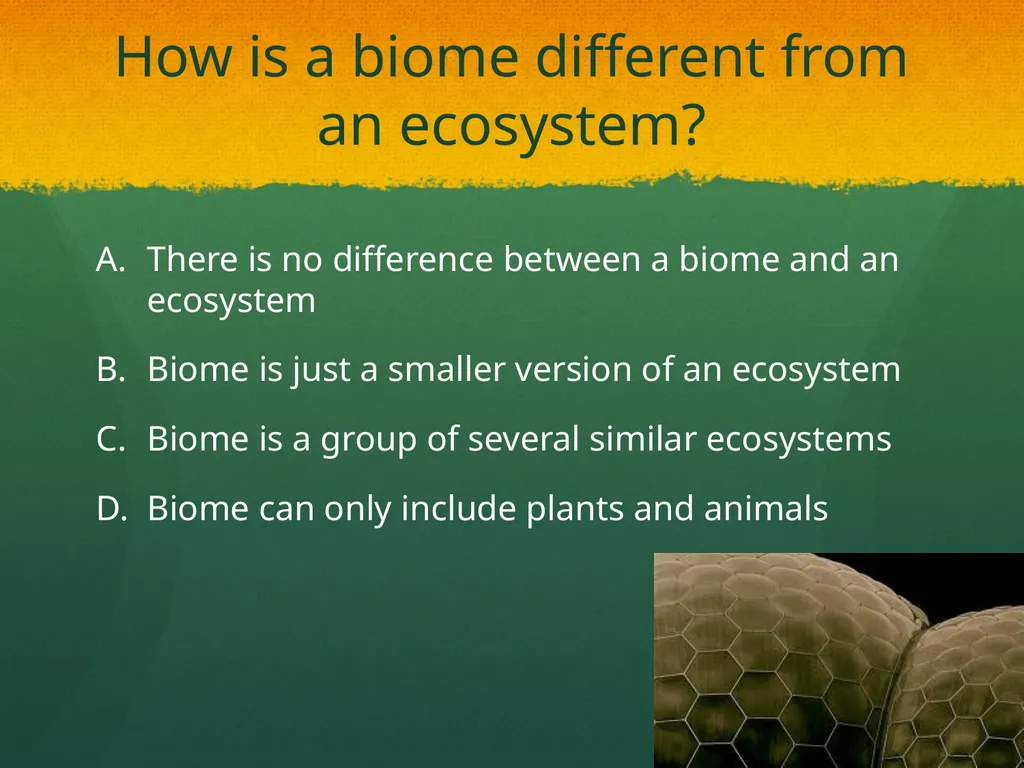
slide4. How is a biome different from an ecosystem? There is no difference between a biome and an ecosystem
Biome is just a smaller version of an ecosystem
Biome is a group of several similar ecosystems
Biome can only include plants and animals<br>
slide5. Which of the following is not one of the four main biomes of Canada? Tundra
Boreal Forest or Taiga
Temperate Deciduous Forest
Grassland
None of the above How would you improve this question? What might be a problem in phrasing it?<br>
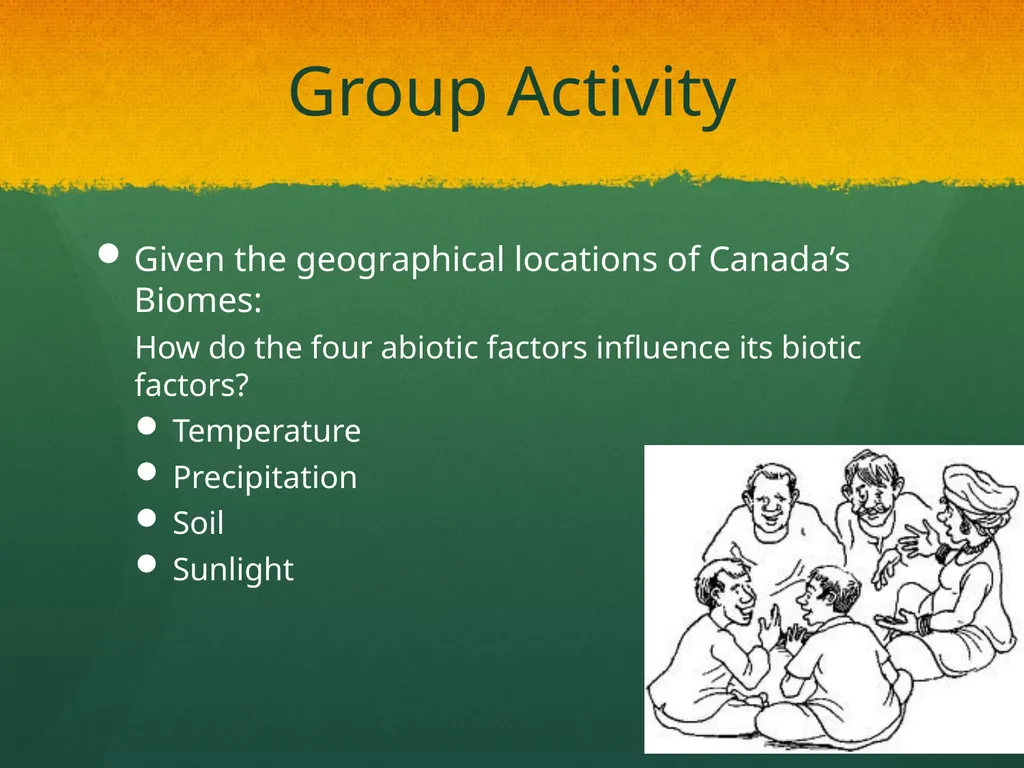
slide6. Group Activity Given the geographical locations of Canada’s Biomes:
How do the four abiotic factors influence its biotic factors?
Temperature
Precipitation
Soil
Sunlight<br>
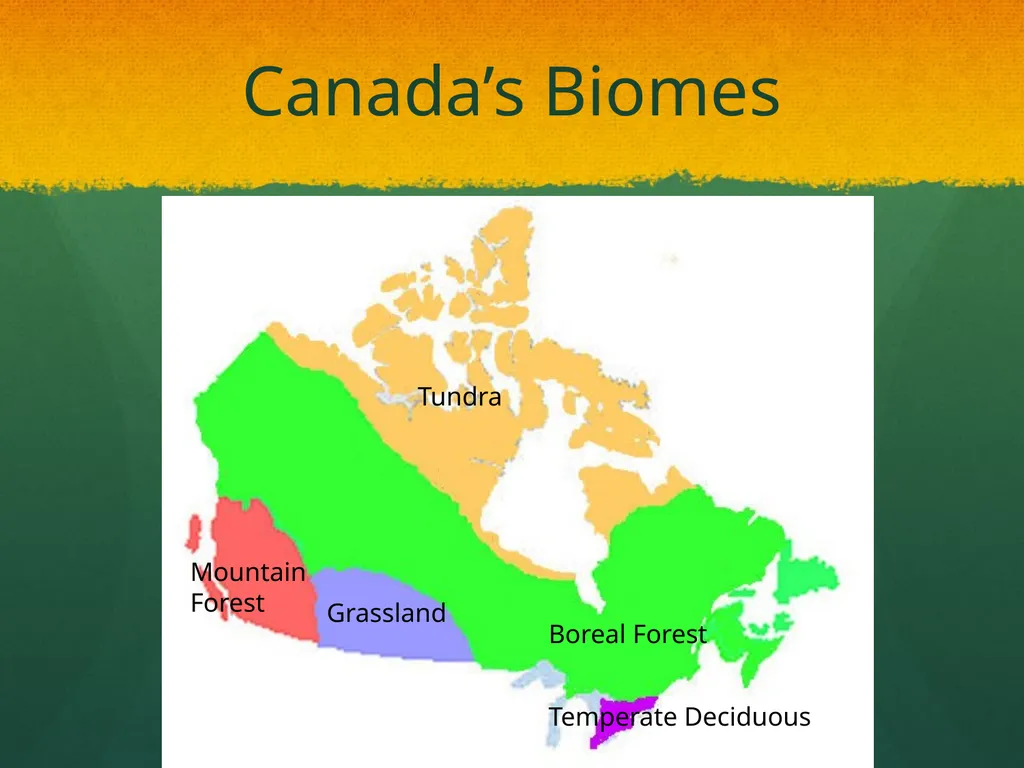
slide7. Canada’s Biomes Boreal Forest Tundra Grassland Temperate Deciduous Mountain Forest<br>
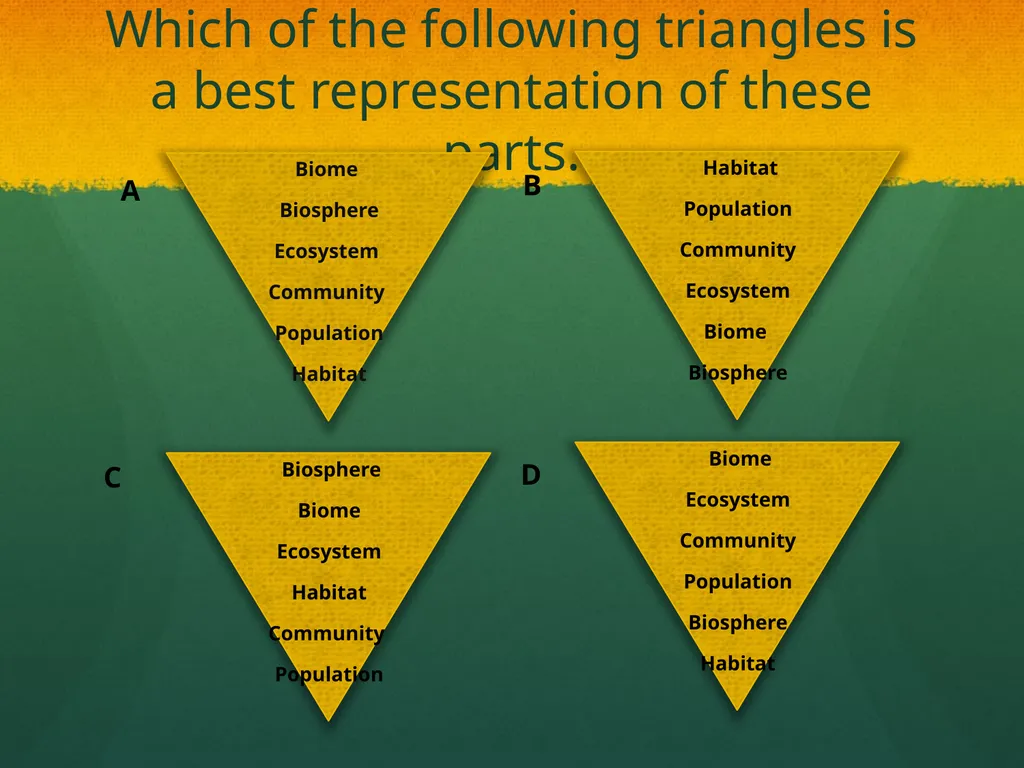
slide8. Which of the following triangles is a best representation of these parts. A B C D<br>
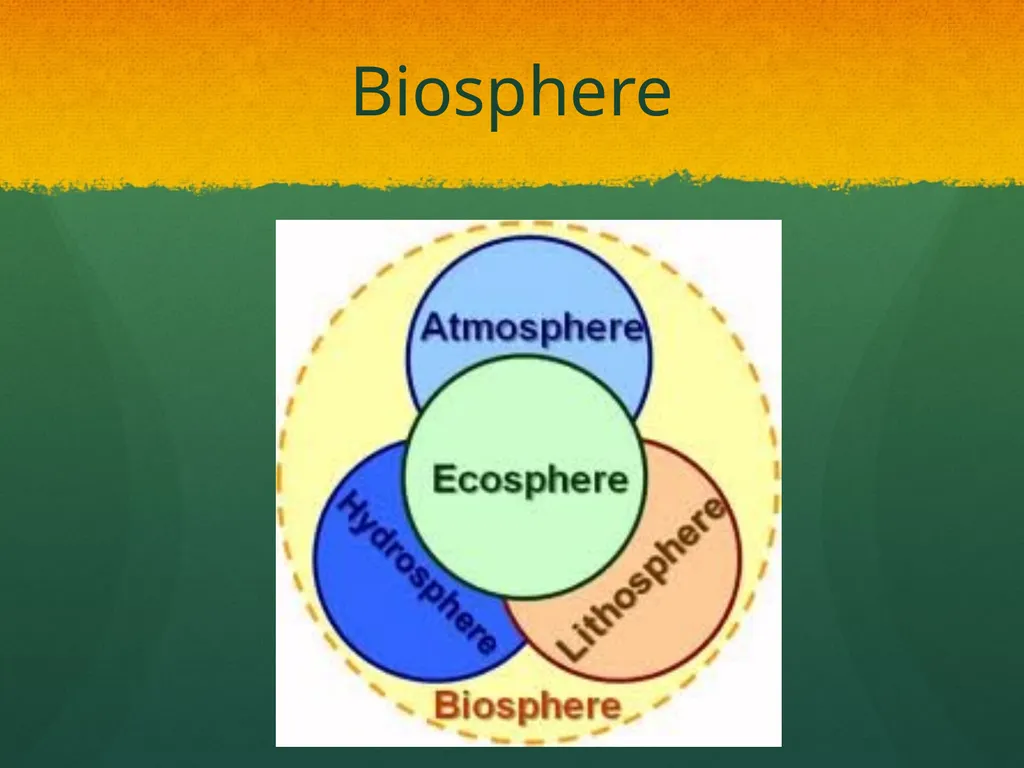
slide9. Biosphere<br>
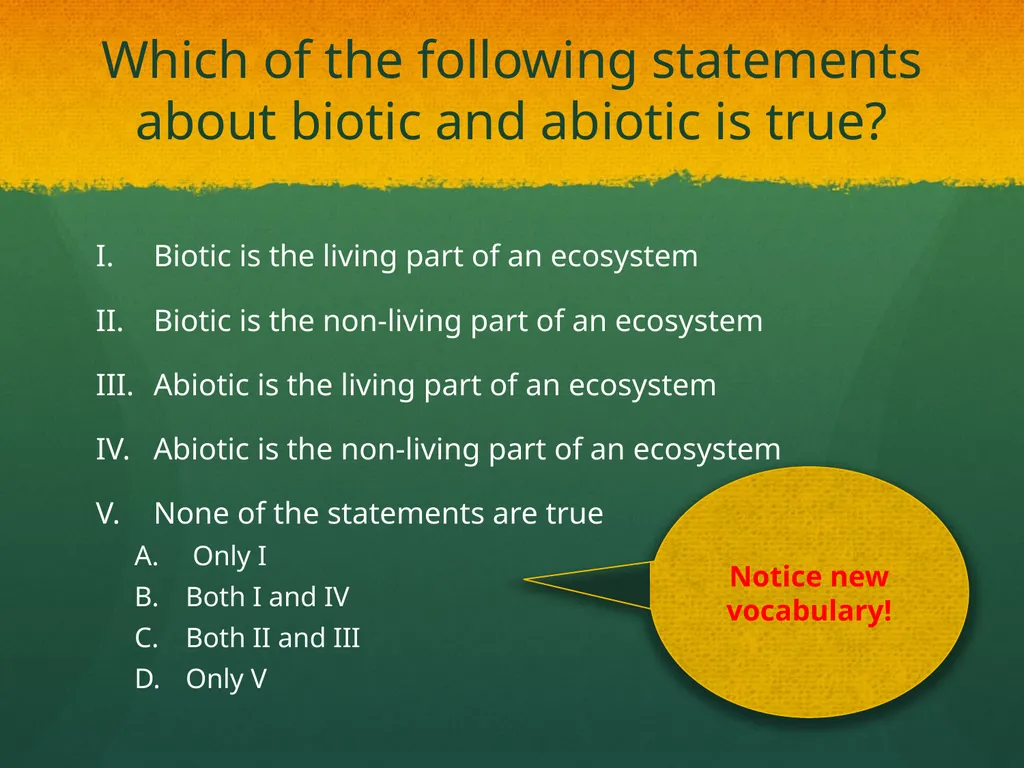
slide10. Which of the following statements about biotic and abiotic is true? Biotic is the living part of an ecosystem
Biotic is the non-living part of an ecosystem
Abiotic is the living part of an ecosystem
Abiotic is the non-living part of an ecosystem
None of the statements are true
 Only I
Both I and IV
Both II and III
Only V Notice new vocabulary!<br>
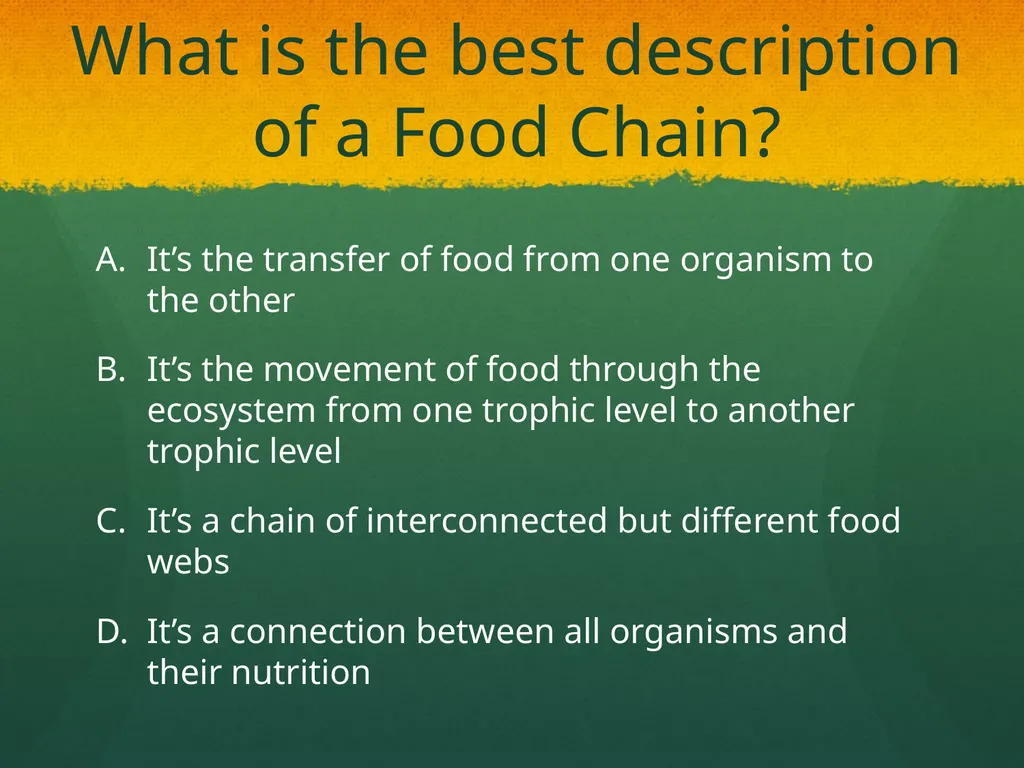
slide11. What is the best description of a Food Chain? It’s the transfer of food from one organism to the other
It’s the movement of food through the ecosystem from one trophic level to another trophic level
It’s a chain of interconnected but different food webs
It’s a connection between all organisms and their nutrition<br>
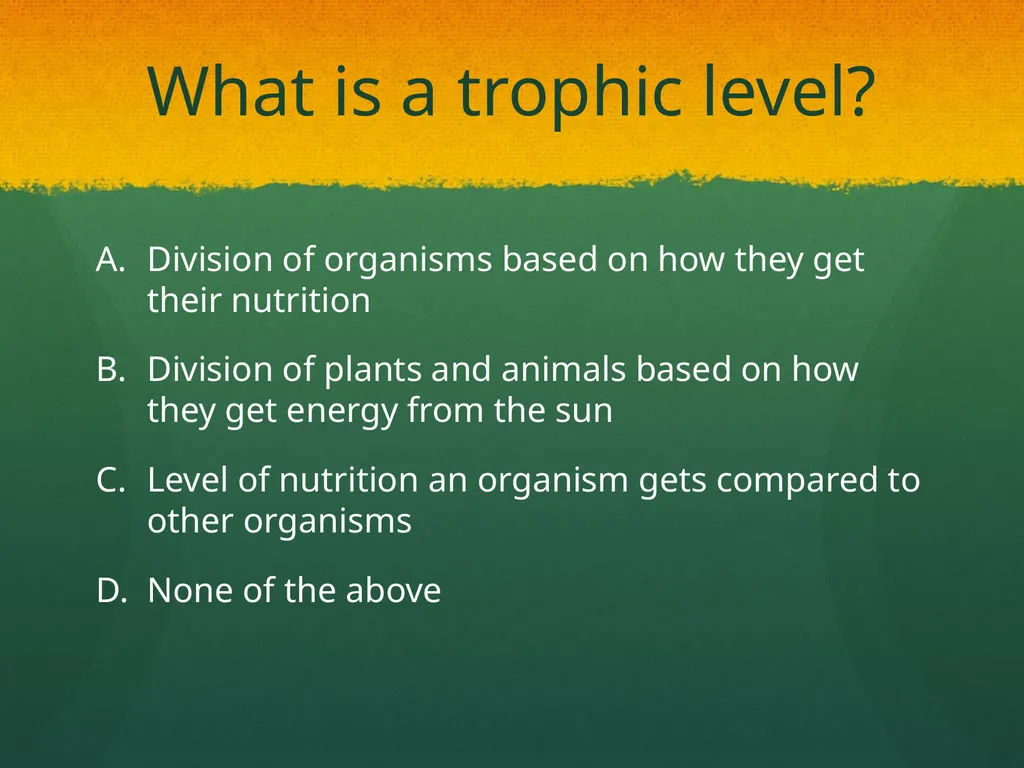
slide12. What is a trophic level? Division of organisms based on how they get their nutrition
Division of plants and animals based on how they get energy from the sun
Level of nutrition an organism gets compared to other organisms
None of the above<br>
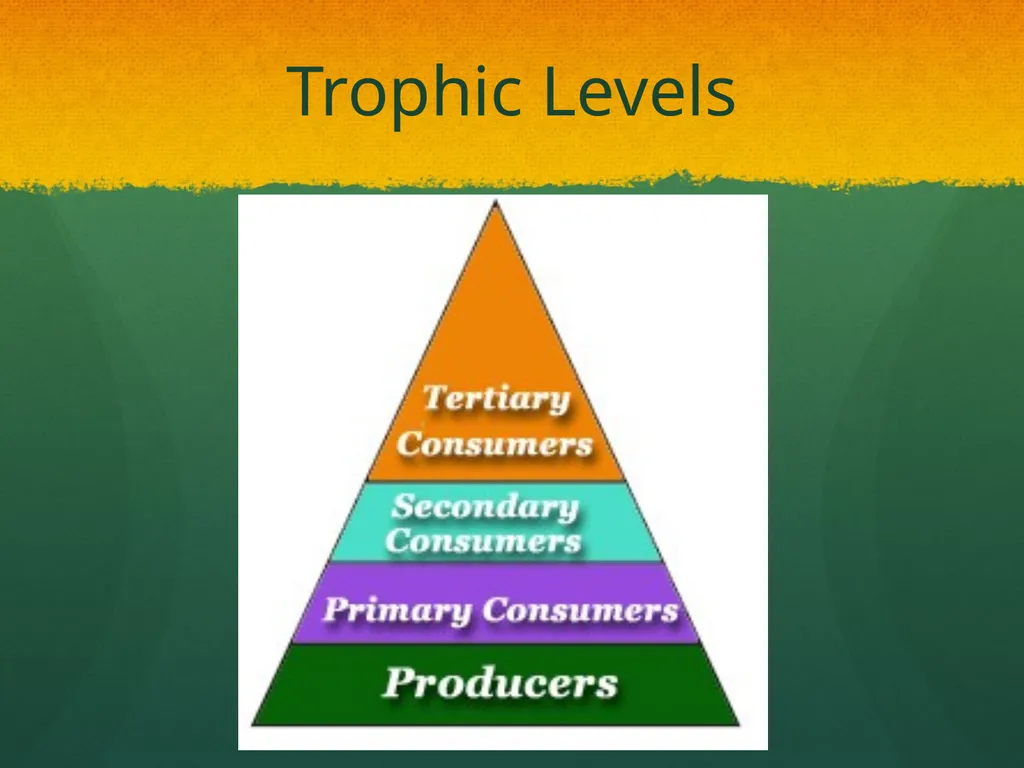
slide13. Trophic Levels<br>
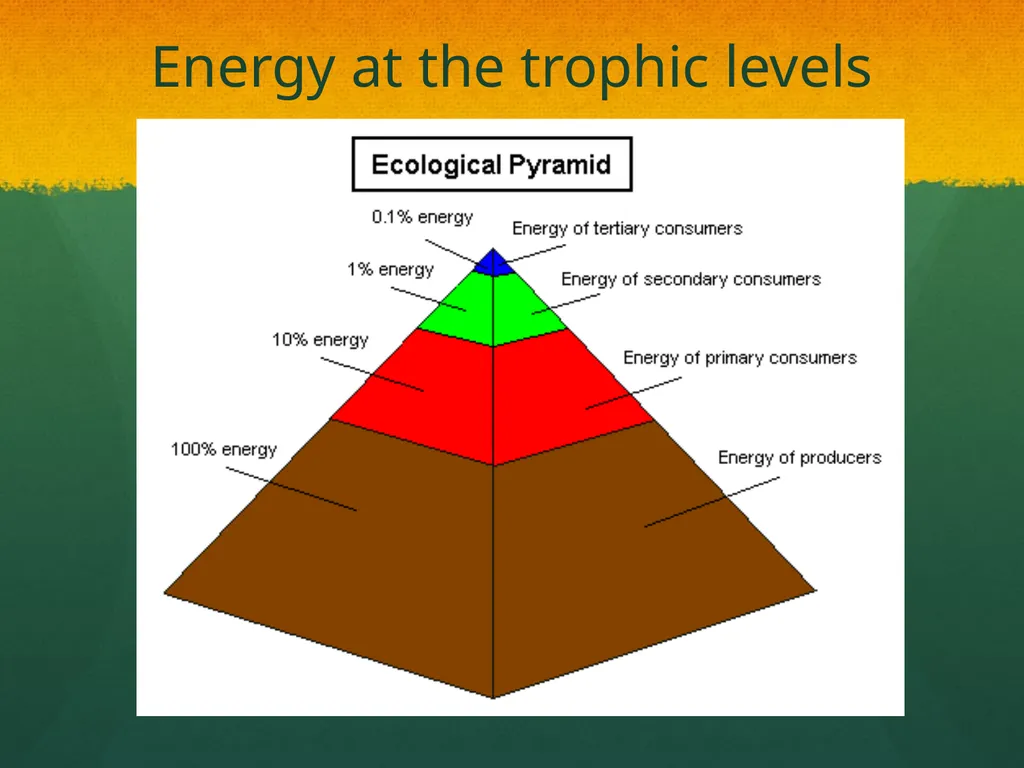
slide14. Energy at the trophic levels<br>
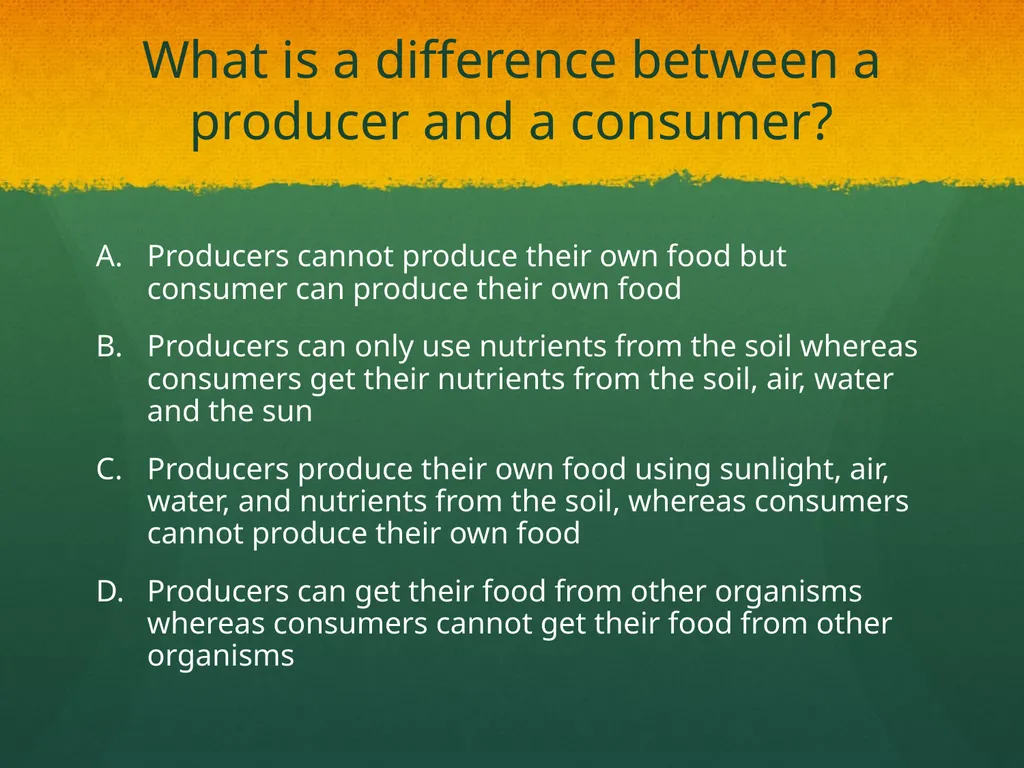
slide15. What is a difference between a producer and a consumer? Producers cannot produce their own food but consumer can produce their own food
Producers can only use nutrients from the soil whereas consumers get their nutrients from the soil, air, water and the sun
Producers produce their own food using sunlight, air, water, and nutrients from the soil, whereas consumers cannot produce their own food
Producers can get their food from other organisms whereas consumers cannot get their food from other organisms<br>
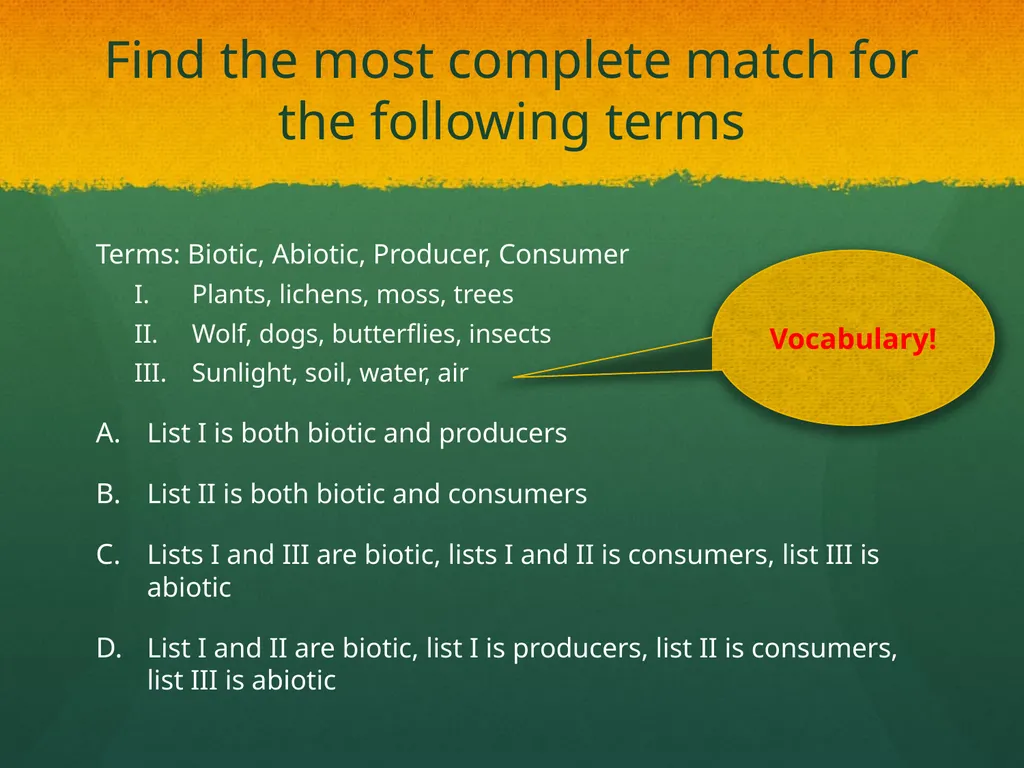
slide16. Find the most complete match for the following terms Terms: Biotic, Abiotic, Producer, Consumer
Plants, lichens, moss, trees
Wolf, dogs, butterflies, insects
Sunlight, soil, water, air
List I is both biotic and producers
List II is both biotic and consumers
Lists I and III are biotic, lists I and II is consumers, list III is abiotic
List I and II are biotic, list I is producers, list II is consumers, list III is abiotic Vocabulary!<br>
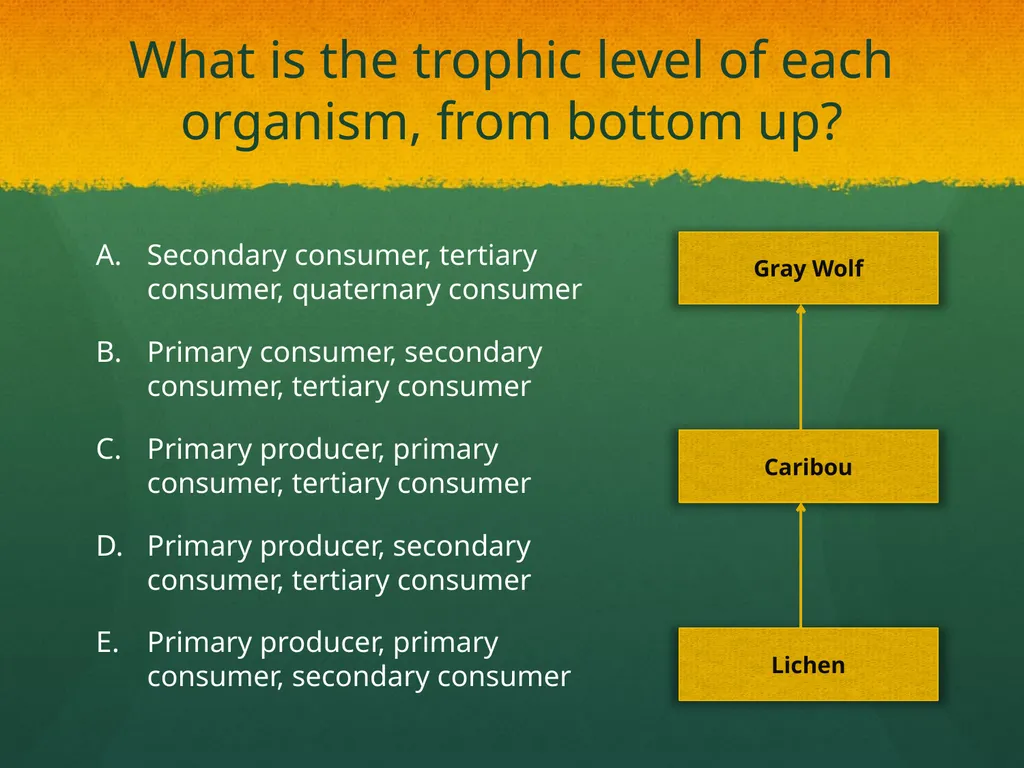
slide17. What is the trophic level of each organism, from bottom up? Secondary consumer, tertiary consumer, quaternary consumer
Primary consumer, secondary consumer, tertiary consumer
Primary producer, primary consumer, tertiary consumer
Primary producer, secondary consumer, tertiary consumer
Primary producer, primary consumer, secondary consumer<br>
slide18. If wetland forests were cleared for agricultural development, what kind of affect would it have on this food chain, if any? Decrease in lichen will reduce caribou population, which will consequently decrease grey wolf population
Caribou will thrive on the agricultural land, which will consequently increase grey wolf population
Increase in lichen available for caribou will also increase grey wolf population
It will not have any significant affect on this food chain<br>
slide19. Activities! Abiotic/biotic Outside
Make a food chain or a food web and assign trophic levels
Build a mini ecosystem
http://www.enchantedlearning.com/biomes/
http://www.blueplanetbiomes.org/world_biomes.htm<br>
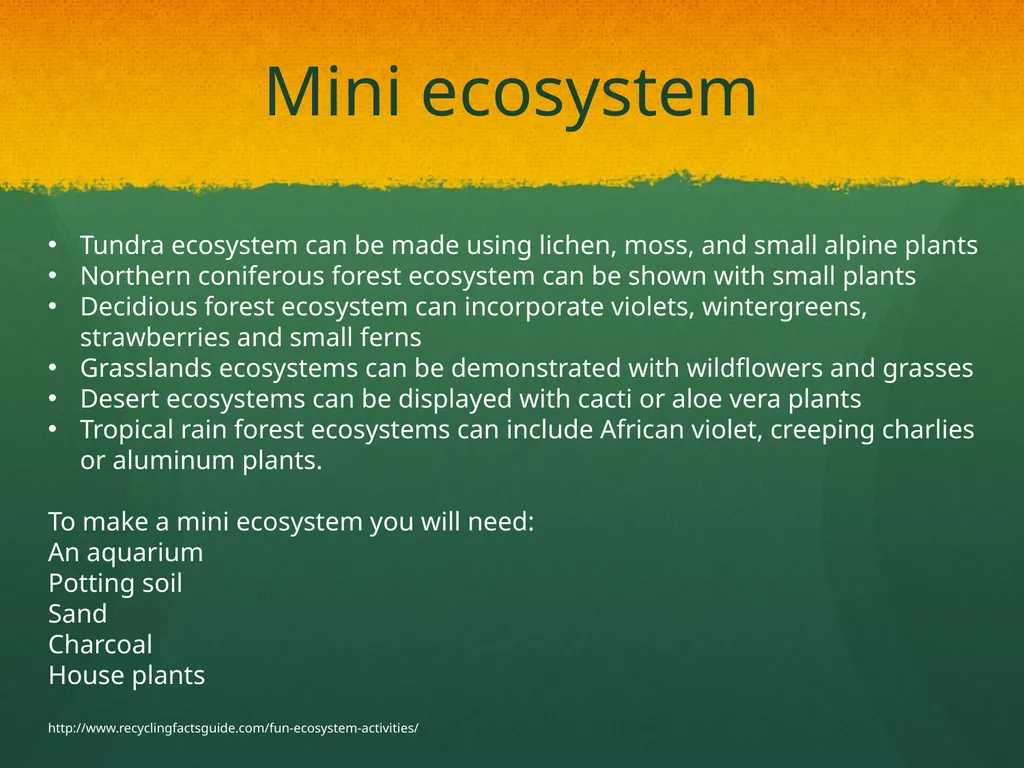
slide20. Mini ecosystem Tundra ecosystem can be made using lichen, moss, and small alpine plants
Northern coniferous forest ecosystem can be shown with small plants
Decidious forest ecosystem can incorporate violets, wintergreens, strawberries and small ferns
Grasslands ecosystems can be demonstrated with wildflowers and grasses
Desert ecosystems can be displayed with cacti or aloe vera plants
Tropical rain forest ecosystems can include African violet, creeping charlies or aluminum plants.
To make a mini ecosystem you will need:
An aquarium
Potting soil
Sand
Charcoal
House plants
http://www.recyclingfactsguide.com/fun-ecosystem-activities/<br>
slide21. Pointers for making effective conceptual questions Start with simple factual questions, but don’t use it too often
Use ‘none of the above’, ‘all of the above’ or multiple answer (A and B)choices
Use plausible wrong answers that may reveal student confusion
Use about 4-5 choices for each question
Use diagrams, charts, or graphs as answers
Suggested approach to using clickers:
Stage 1: Pose question
Stage 2: Individual answers using clickers
Stage 3: Peer discussion
Stage 4: Vote again using clickers
Stage 5: whole class discussion
Listen to student discussions
CWSEI Clicker Resource Guide, 2009<br>

Created by Kshamta Hunter
EDCP 349 Section 401 Winter 2011<br>
slide2. In this lesson Ecosystem Vocab
Parts of the ecosystem
Abiotic/Biotic parts of the ecosystem
Food chain and its affects<br>
slide3. What is an ecosystem? It is both the living and the non-living part of the earth
It is both the living and the non-living part of a particular area
It is only the living part of a particular area
It is the interaction of living and non-living parts with the environmentÂ
Only I
Only II
Both II and IV
Both I and IV<br>
slide4. How is a biome different from an ecosystem? There is no difference between a biome and an ecosystem
Biome is just a smaller version of an ecosystem
Biome is a group of several similar ecosystems
Biome can only include plants and animals<br>
slide5. Which of the following is not one of the four main biomes of Canada? Tundra
Boreal Forest or Taiga
Temperate Deciduous Forest
Grassland
None of the above How would you improve this question? What might be a problem in phrasing it?<br>
slide6. Group Activity Given the geographical locations of Canada’s Biomes:
How do the four abiotic factors influence its biotic factors?
Temperature
Precipitation
Soil
Sunlight<br>
slide7. Canada’s Biomes Boreal Forest Tundra Grassland Temperate Deciduous Mountain Forest<br>
slide8. Which of the following triangles is a best representation of these parts. A B C D<br>
slide9. Biosphere<br>
slide10. Which of the following statements about biotic and abiotic is true? Biotic is the living part of an ecosystem
Biotic is the non-living part of an ecosystem
Abiotic is the living part of an ecosystem
Abiotic is the non-living part of an ecosystem
None of the statements are true
 Only I
Both I and IV
Both II and III
Only V Notice new vocabulary!<br>
slide11. What is the best description of a Food Chain? It’s the transfer of food from one organism to the other
It’s the movement of food through the ecosystem from one trophic level to another trophic level
It’s a chain of interconnected but different food webs
It’s a connection between all organisms and their nutrition<br>
slide12. What is a trophic level? Division of organisms based on how they get their nutrition
Division of plants and animals based on how they get energy from the sun
Level of nutrition an organism gets compared to other organisms
None of the above<br>
slide13. Trophic Levels<br>
slide14. Energy at the trophic levels<br>
slide15. What is a difference between a producer and a consumer? Producers cannot produce their own food but consumer can produce their own food
Producers can only use nutrients from the soil whereas consumers get their nutrients from the soil, air, water and the sun
Producers produce their own food using sunlight, air, water, and nutrients from the soil, whereas consumers cannot produce their own food
Producers can get their food from other organisms whereas consumers cannot get their food from other organisms<br>
slide16. Find the most complete match for the following terms Terms: Biotic, Abiotic, Producer, Consumer
Plants, lichens, moss, trees
Wolf, dogs, butterflies, insects
Sunlight, soil, water, air
List I is both biotic and producers
List II is both biotic and consumers
Lists I and III are biotic, lists I and II is consumers, list III is abiotic
List I and II are biotic, list I is producers, list II is consumers, list III is abiotic Vocabulary!<br>
slide17. What is the trophic level of each organism, from bottom up? Secondary consumer, tertiary consumer, quaternary consumer
Primary consumer, secondary consumer, tertiary consumer
Primary producer, primary consumer, tertiary consumer
Primary producer, secondary consumer, tertiary consumer
Primary producer, primary consumer, secondary consumer<br>
slide18. If wetland forests were cleared for agricultural development, what kind of affect would it have on this food chain, if any? Decrease in lichen will reduce caribou population, which will consequently decrease grey wolf population
Caribou will thrive on the agricultural land, which will consequently increase grey wolf population
Increase in lichen available for caribou will also increase grey wolf population
It will not have any significant affect on this food chain<br>
slide19. Activities! Abiotic/biotic Outside
Make a food chain or a food web and assign trophic levels
Build a mini ecosystem
http://www.enchantedlearning.com/biomes/
http://www.blueplanetbiomes.org/world_biomes.htm<br>
slide20. Mini ecosystem Tundra ecosystem can be made using lichen, moss, and small alpine plants
Northern coniferous forest ecosystem can be shown with small plants
Decidious forest ecosystem can incorporate violets, wintergreens, strawberries and small ferns
Grasslands ecosystems can be demonstrated with wildflowers and grasses
Desert ecosystems can be displayed with cacti or aloe vera plants
Tropical rain forest ecosystems can include African violet, creeping charlies or aluminum plants.
To make a mini ecosystem you will need:
An aquarium
Potting soil
Sand
Charcoal
House plants
http://www.recyclingfactsguide.com/fun-ecosystem-activities/<br>
slide21. Pointers for making effective conceptual questions Start with simple factual questions, but don’t use it too often
Use ‘none of the above’, ‘all of the above’ or multiple answer (A and B)choices
Use plausible wrong answers that may reveal student confusion
Use about 4-5 choices for each question
Use diagrams, charts, or graphs as answers
Suggested approach to using clickers:
Stage 1: Pose question
Stage 2: Individual answers using clickers
Stage 3: Peer discussion
Stage 4: Vote again using clickers
Stage 5: whole class discussion
Listen to student discussions
CWSEI Clicker Resource Guide, 2009<br>