
Effective-Resistance-Reducing Flows, Spectrally

Description: Effective-Resistance-Reducing Flows, Spectrally Thin Trees, and ATSP Nima Anari UC Berkeley Shayan Oveis Gharan Univ of Washington History of Graph Sparsification 2 Spectral Sparsifier Spielman-Teng04 Cut Sparsifier Benczur-Karger96
Related Topics
Download Presentation
"Effective-Resistance-Reducing Flows, Spectrally" is the property of its rightful owner. Permission is granted to download and print the materials on this website for personal, non-commercial use only, and to display it on your personal computer provided you do not modify the materials and that you retain all copyright notices contained in the materials. By downloading content from our website, you accept the terms of this agreement.
Presentation Transcript
slide1. Effective-Resistance-Reducing Flows,
Spectrally Thin Trees, and ATSP Nima Anari
UC Berkeley Shayan Oveis Gharan
Univ of Washington<br>
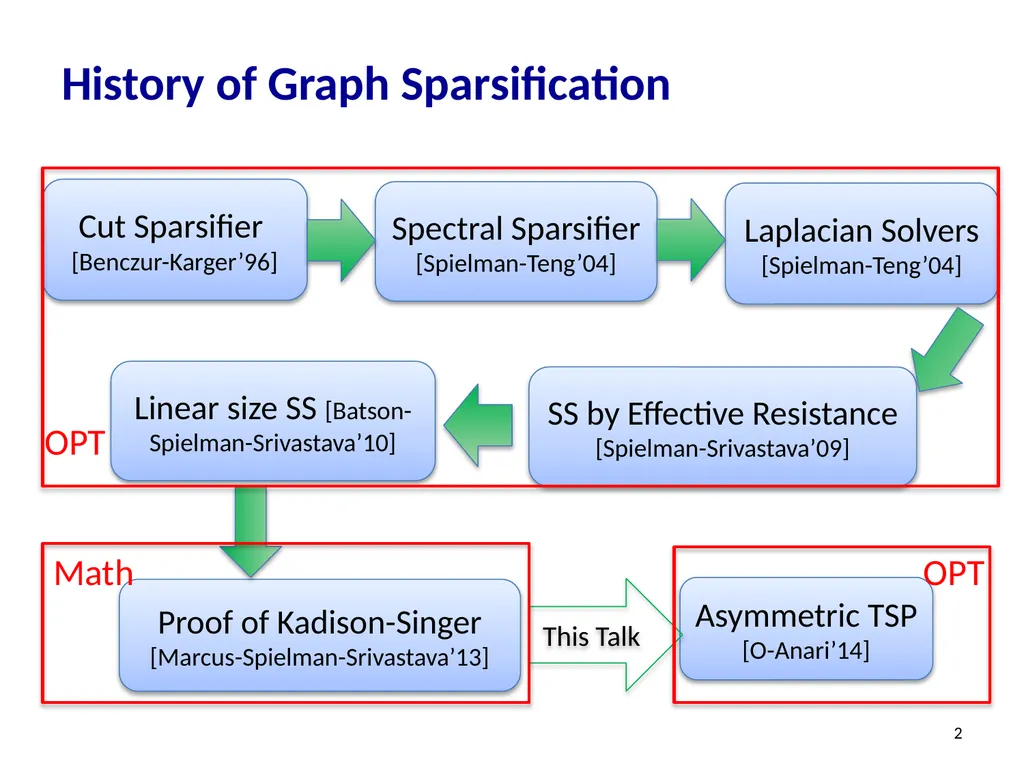
slide2. History of Graph Sparsification 2 Spectral Sparsifier [Spielman-Teng’04] Cut Sparsifier
[Benczur-Karger’96] Spectrally Thin Tree Proof of Kadison-Singer
[Marcus-Spielman-Srivastava’13] Asymmetric TSP
[O-Anari’14] Laplacian Solvers
[Spielman-Teng’04] SS by Effective Resistance [Spielman-Srivastava’09] Linear size SS [Batson-Spielman-Srivastava’10] This Talk<br>
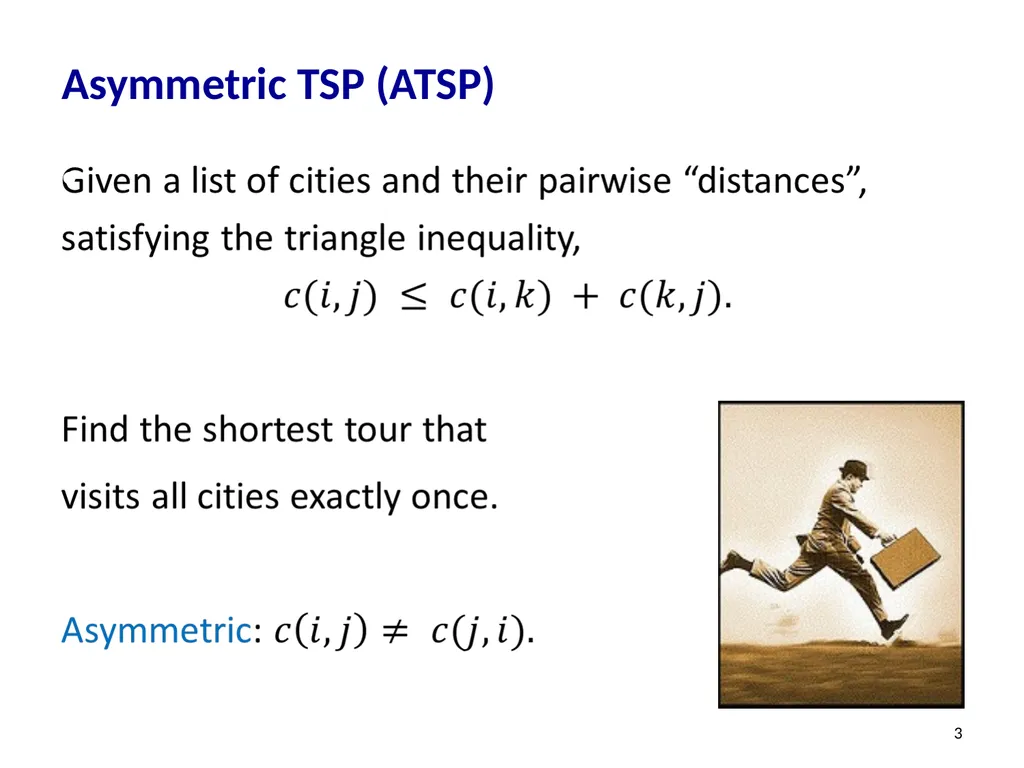
slide3. Asymmetric TSP (ATSP) 3<br>
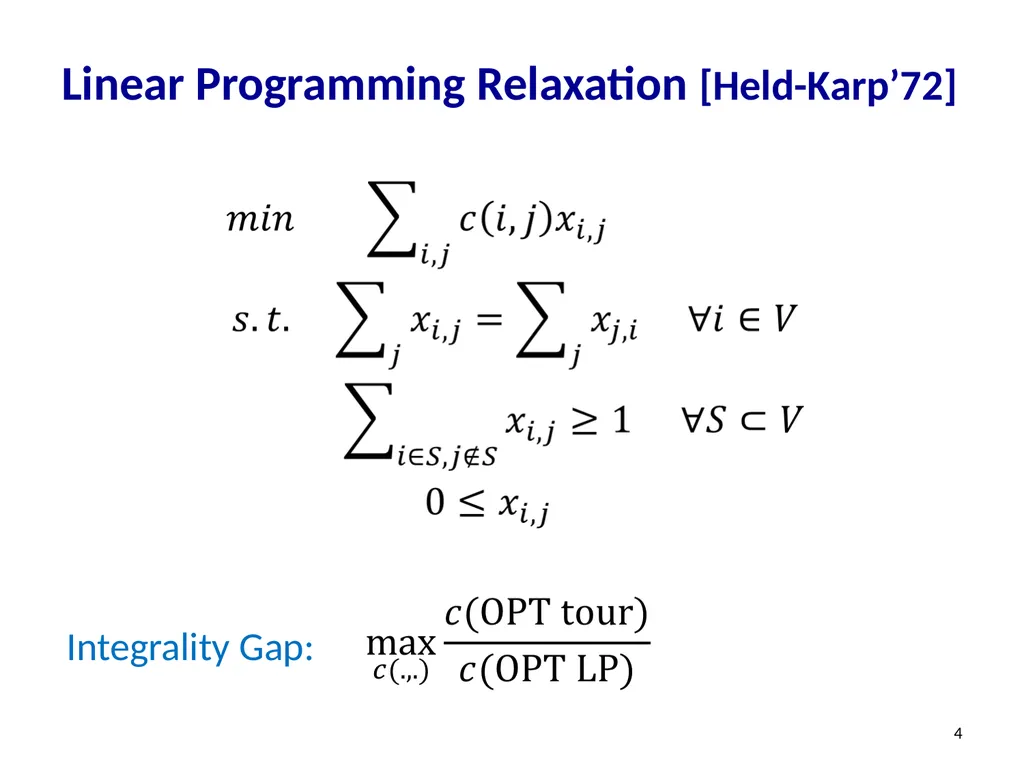
slide4. Linear Programming Relaxation [Held-Karp’72] 4 Integrality Gap:<br>
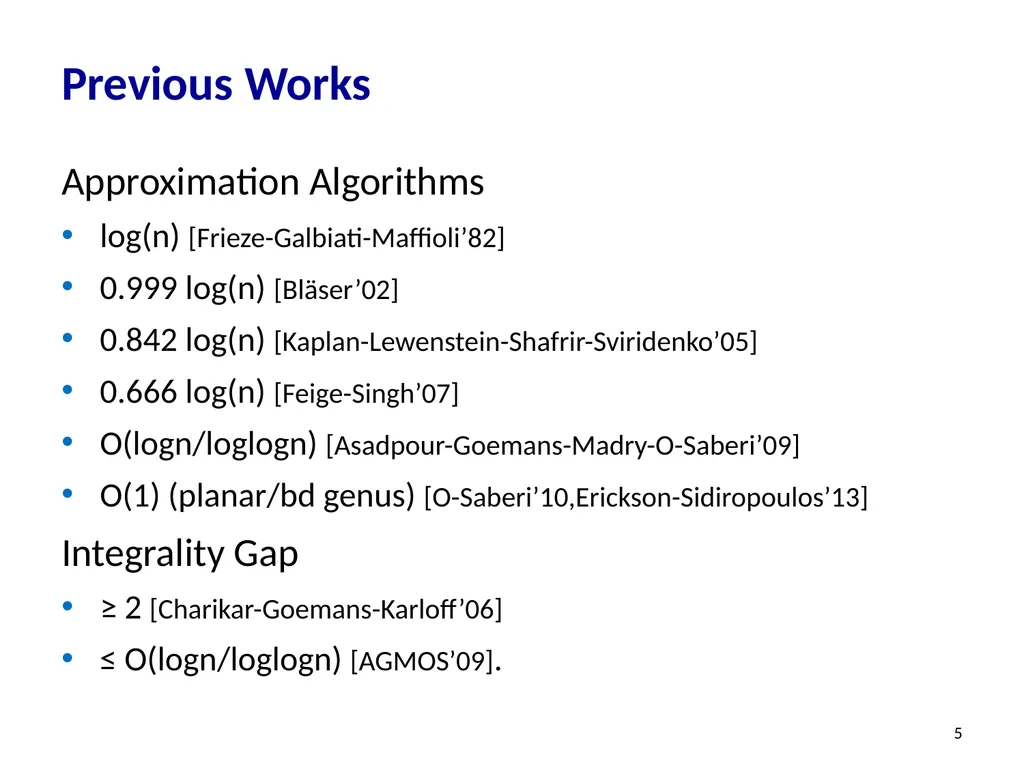
slide5. Previous Works Approximation Algorithms
log(n) [Frieze-Galbiati-Maffioli’82]
0.999 log(n) [Bläser’02]
0.842 log(n) [Kaplan-Lewenstein-Shafrir-Sviridenko’05]
0.666 log(n) [Feige-Singh’07]
O(logn/loglogn) [Asadpour-Goemans-Madry-O-Saberi’09]
O(1) (planar/bd genus) [O-Saberi’10,Erickson-Sidiropoulos’13]
Integrality Gap
≥ 2 [Charikar-Goemans-Karloff’06]
≤ O(logn/loglogn) [AGMOS’09]. 5<br>
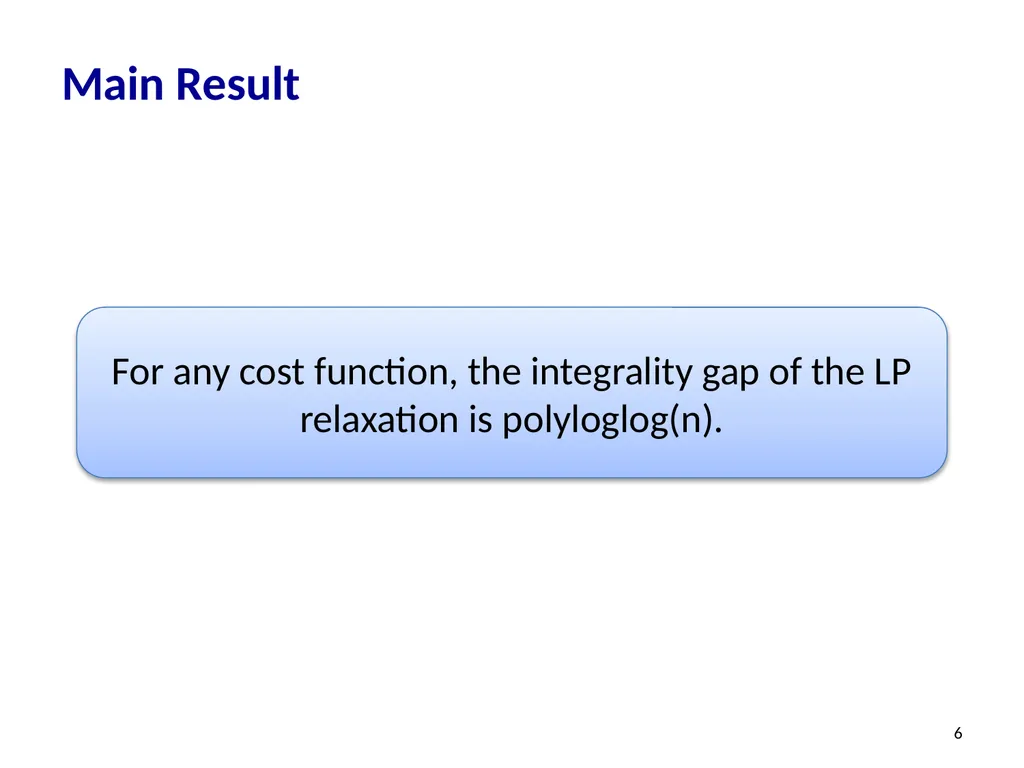
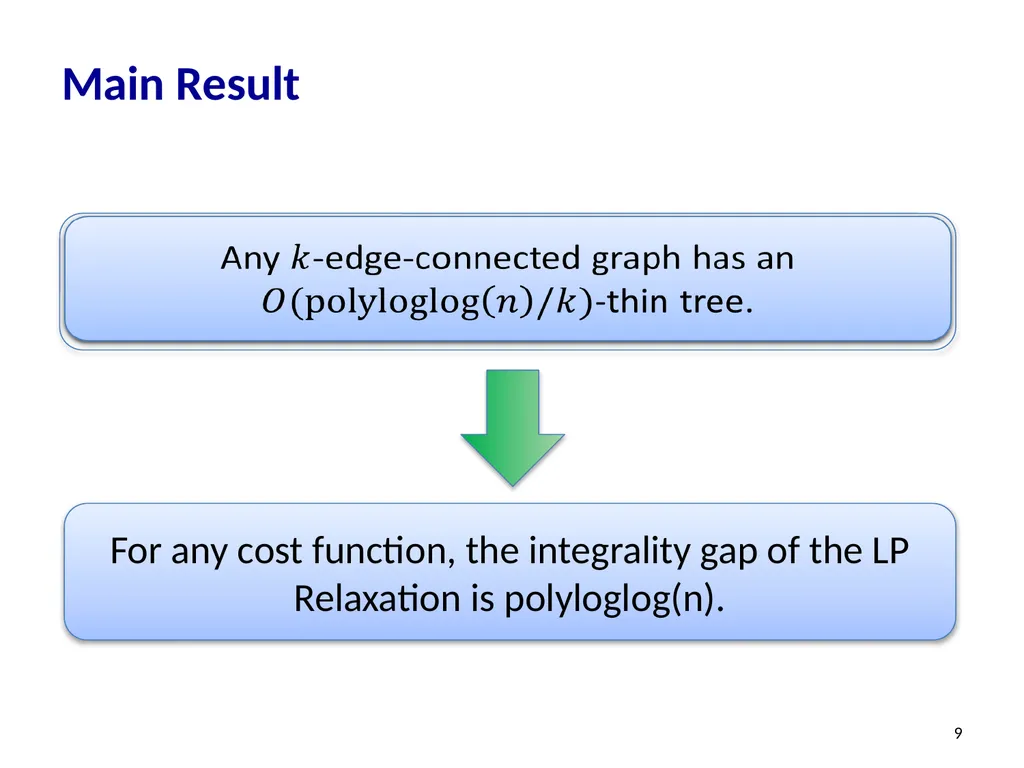
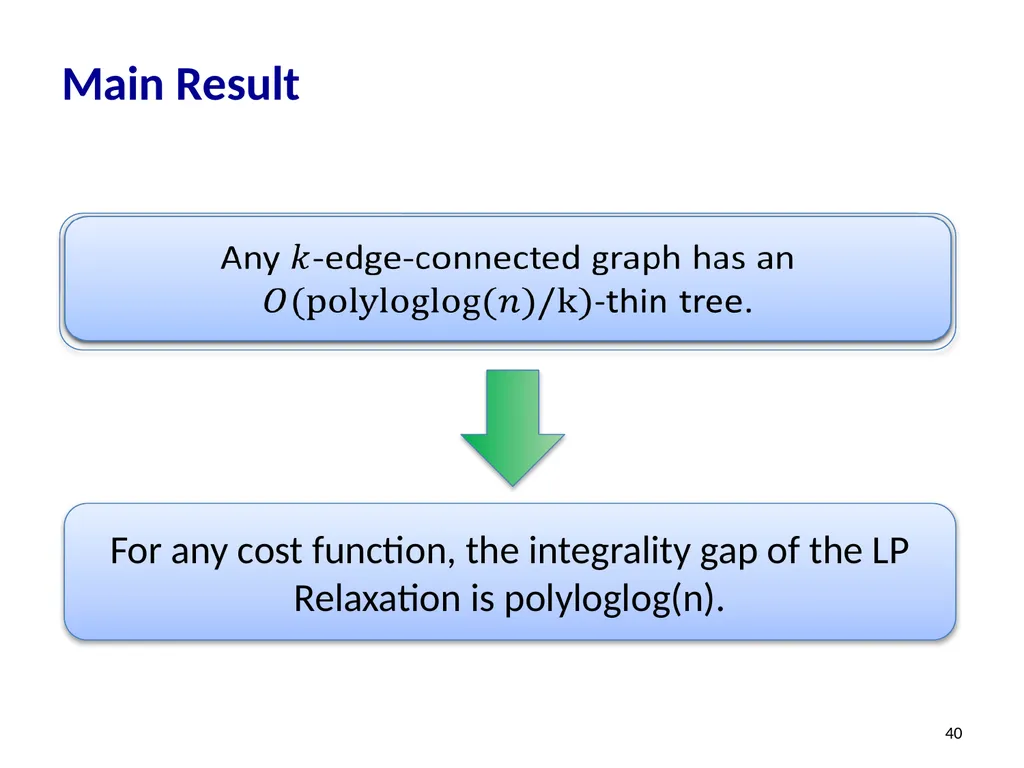
slide6. Main Result 6 For any cost function, the integrality gap of the LP relaxation is polyloglog(n).<br>
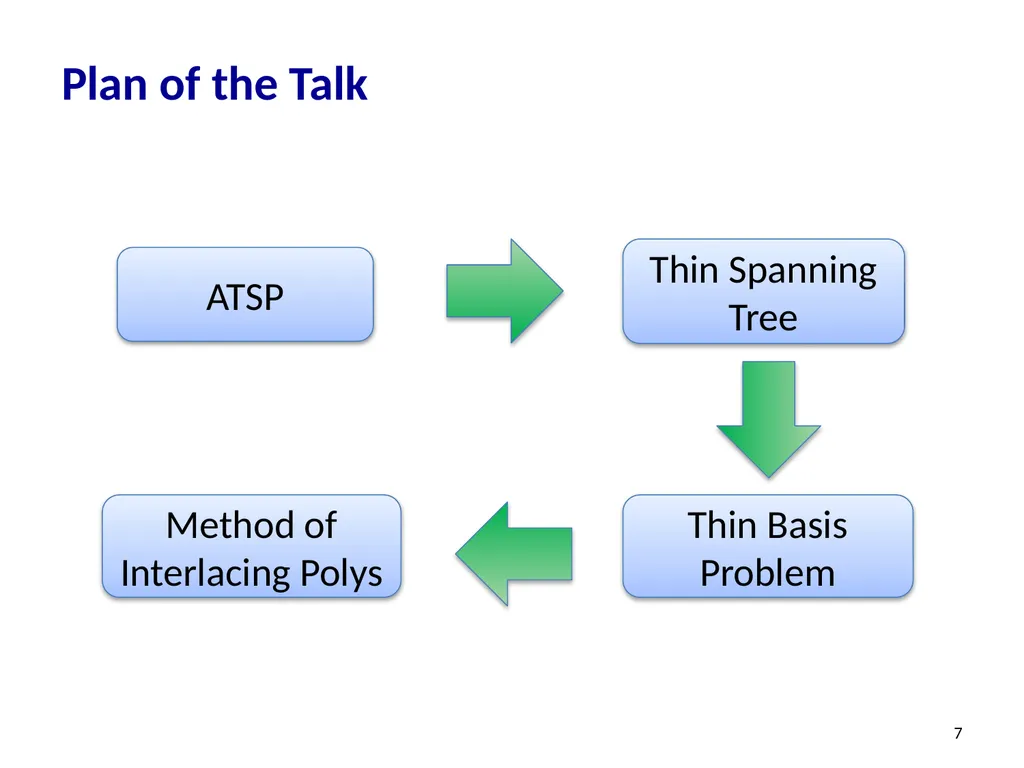
slide7. Plan of the Talk 7 ATSP Thin Spanning Tree Thin Basis Problem Method of Interlacing Polys<br>
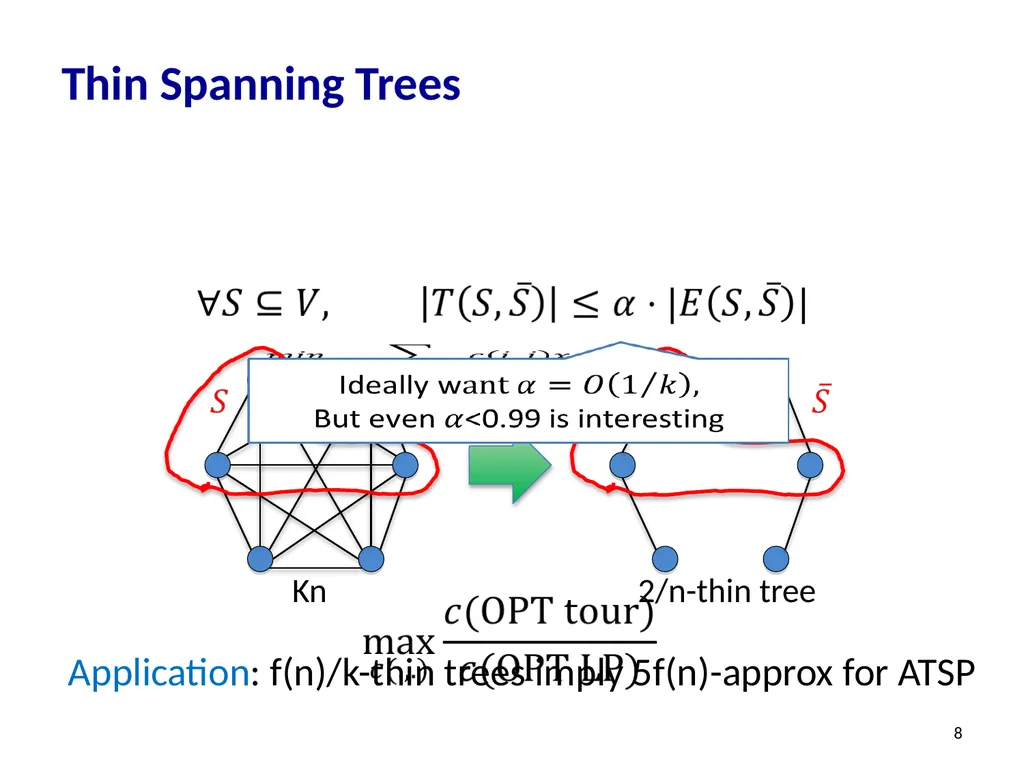
slide8. Thin Spanning Trees 8 Kn 2/n-thin tree Application: f(n)/k-thin trees imply 5f(n)-approx for ATSP<br>
slide9. Main Result 9 For any cost function, the integrality gap of the LP Relaxation is polyloglog(n).<br>
slide10. 10 In Pursuit of Thin Trees<br>
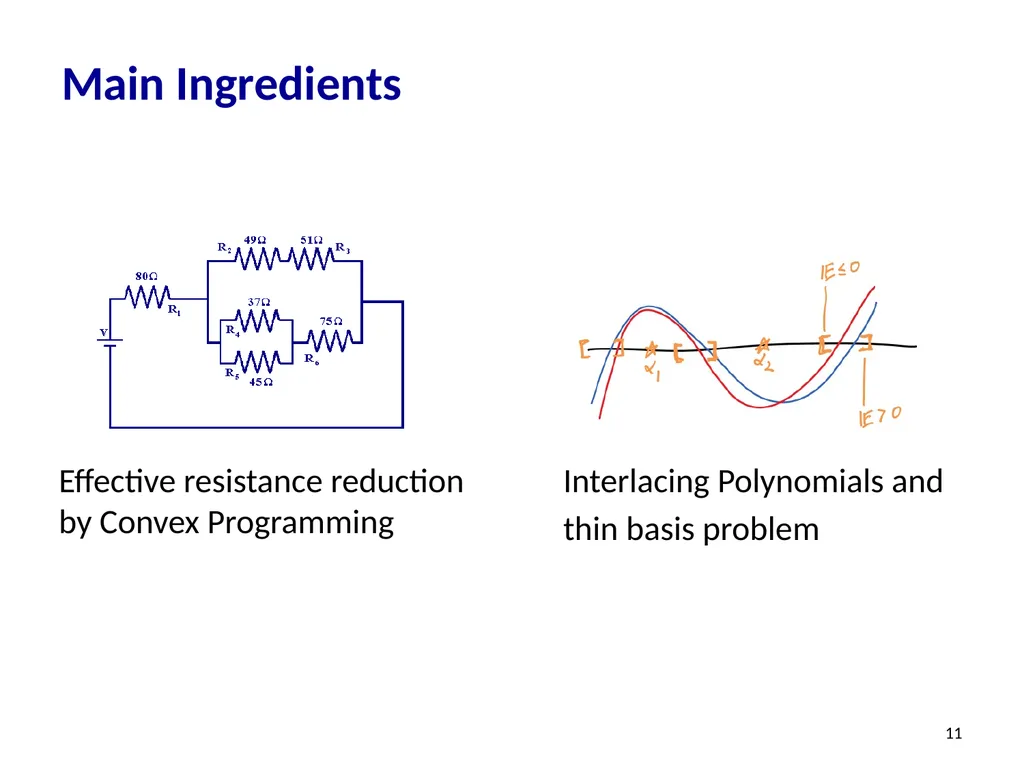
slide11. Main Ingredients 11 Interlacing Polynomials and
thin basis problem Effective resistance reduction
by Convex Programming<br>
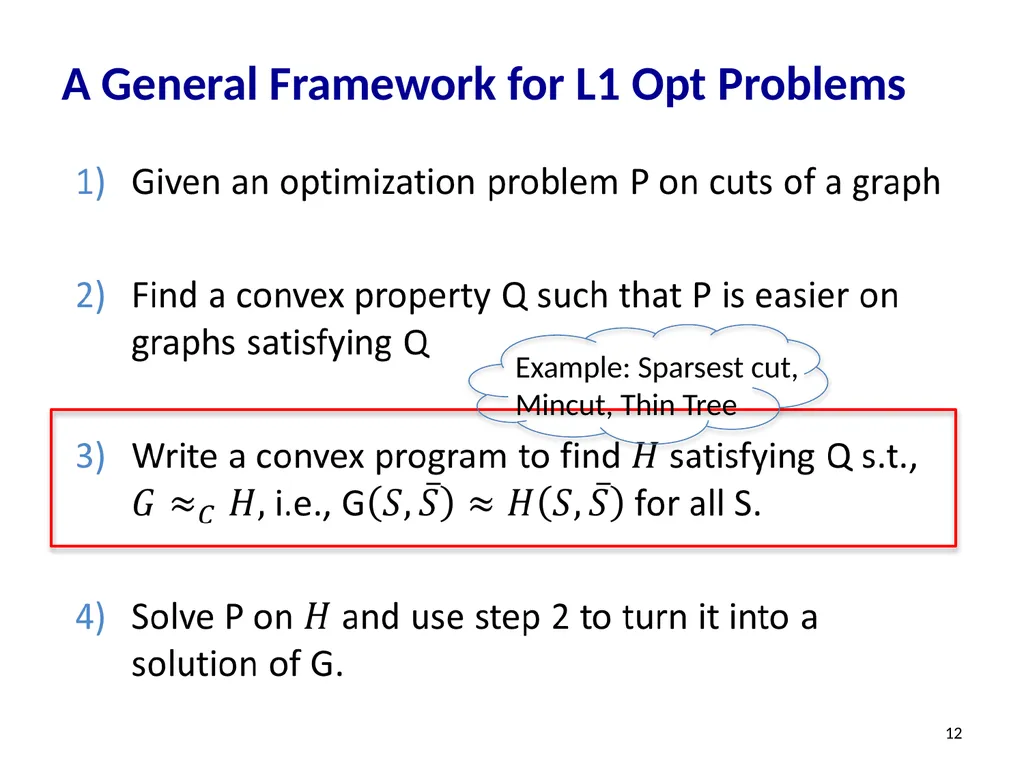
slide12. A General Framework for L1 Opt Problems 12<br>
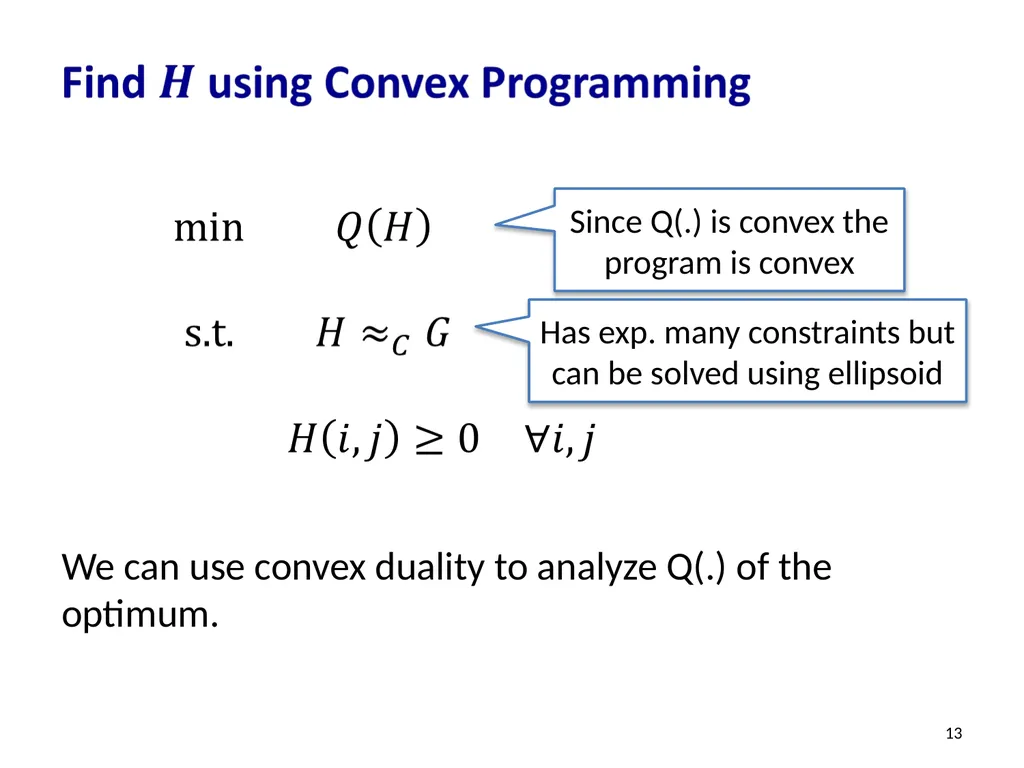
slide13. We can use convex duality to analyze Q(.) of the optimum. 13 Has exp. many constraints but can be solved using ellipsoid Since Q(.) is convex the program is convex<br>
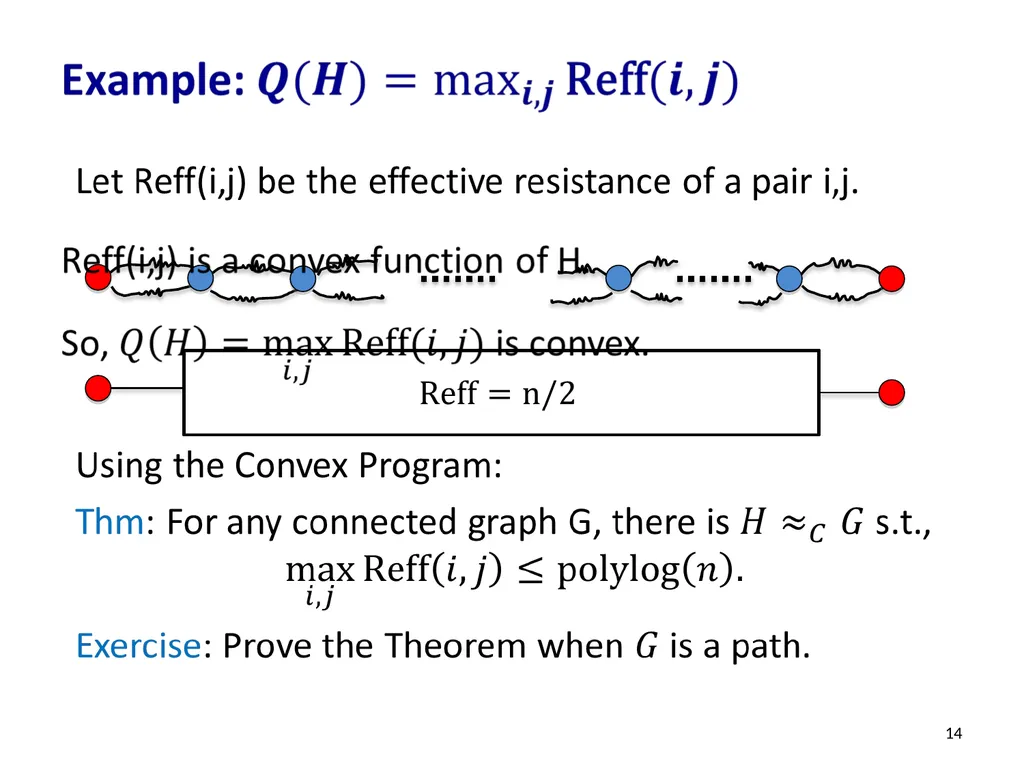
slide14. 14<br>
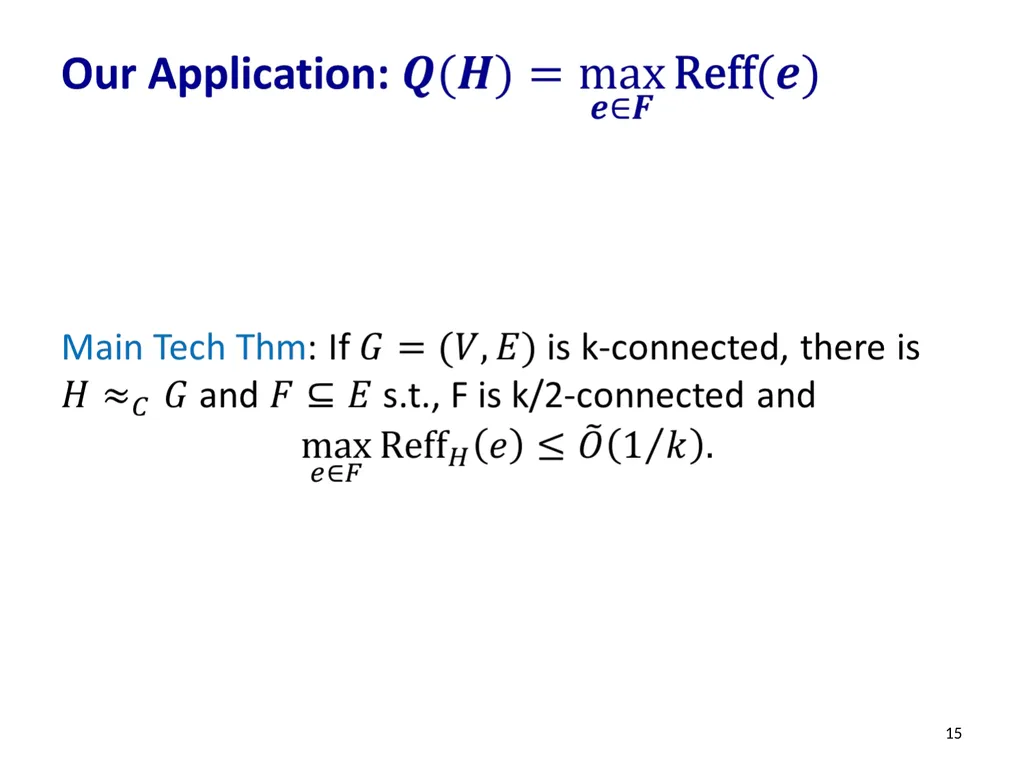
slide15. 15<br>
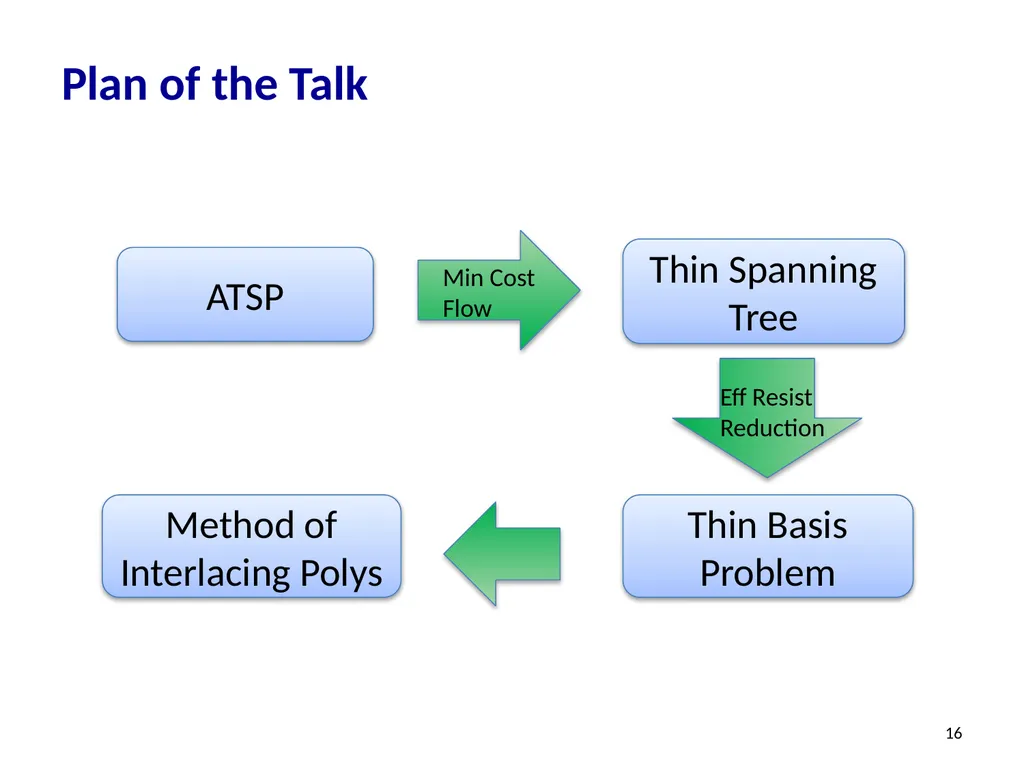
slide16. Plan of the Talk 16 ATSP Thin Spanning Tree Thin Basis Problem Method of Interlacing Polys Min Cost
Flow Eff Resist
Reduction<br>
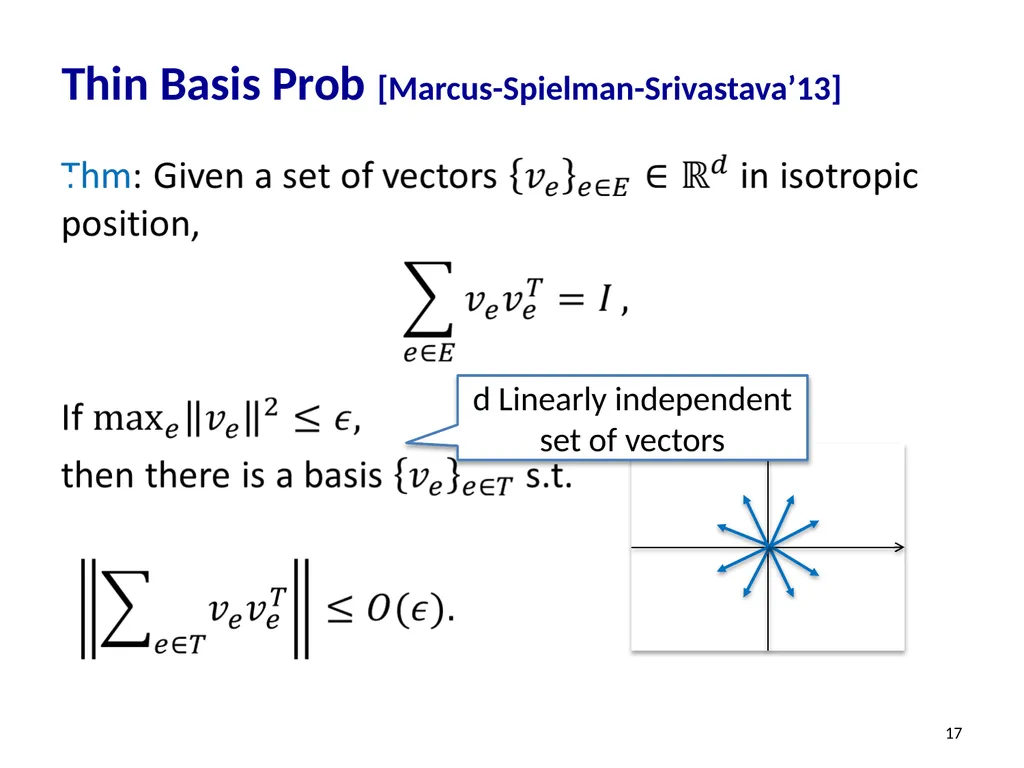
slide17. Thin Basis Prob [Marcus-Spielman-Srivastava’13] 17 d Linearly independent set of vectors<br>
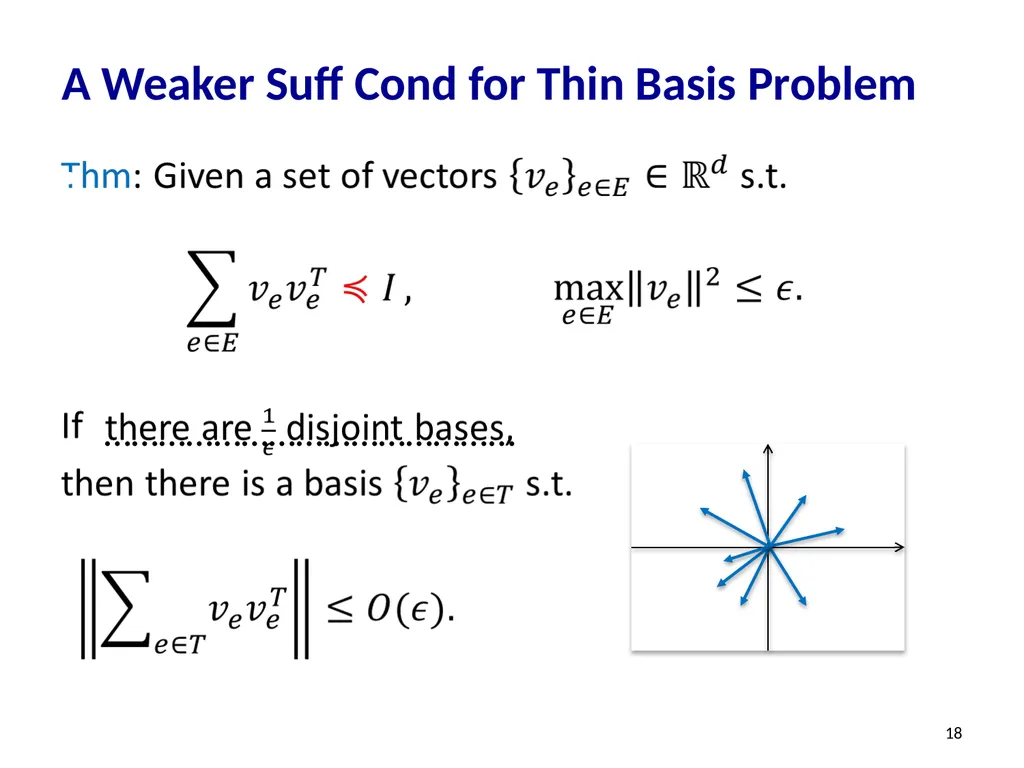
slide18. A Weaker Suff Cond for Thin Basis Problem 18 ………………………………………<br>
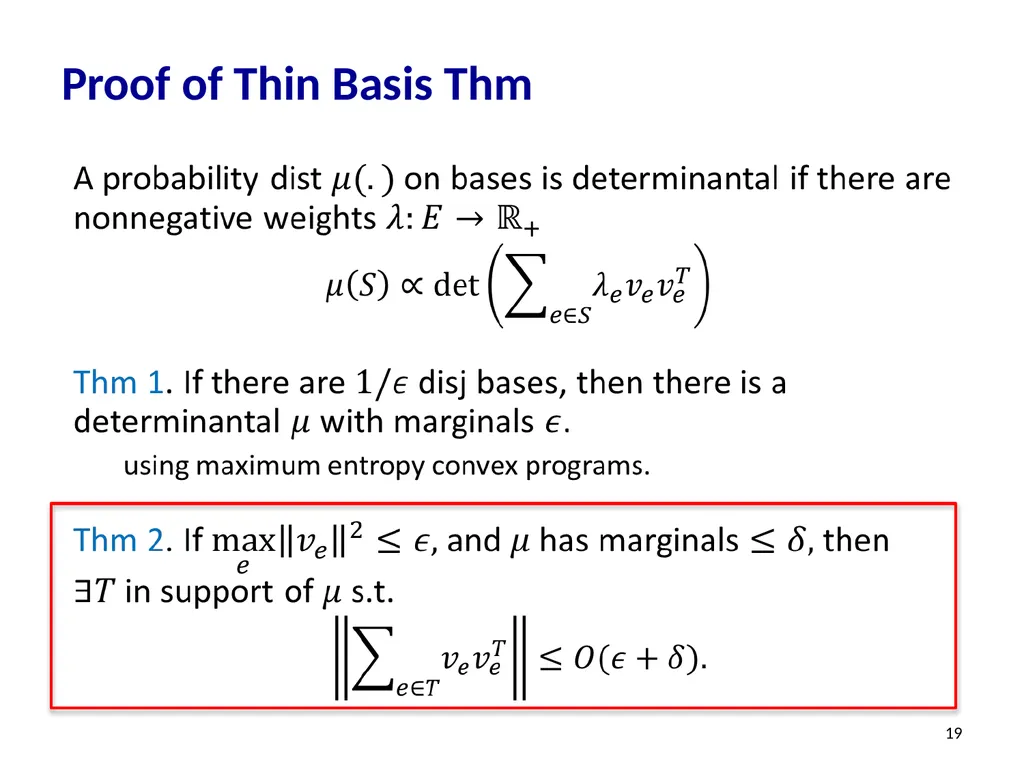
slide19. Proof of Thin Basis Thm 19<br>
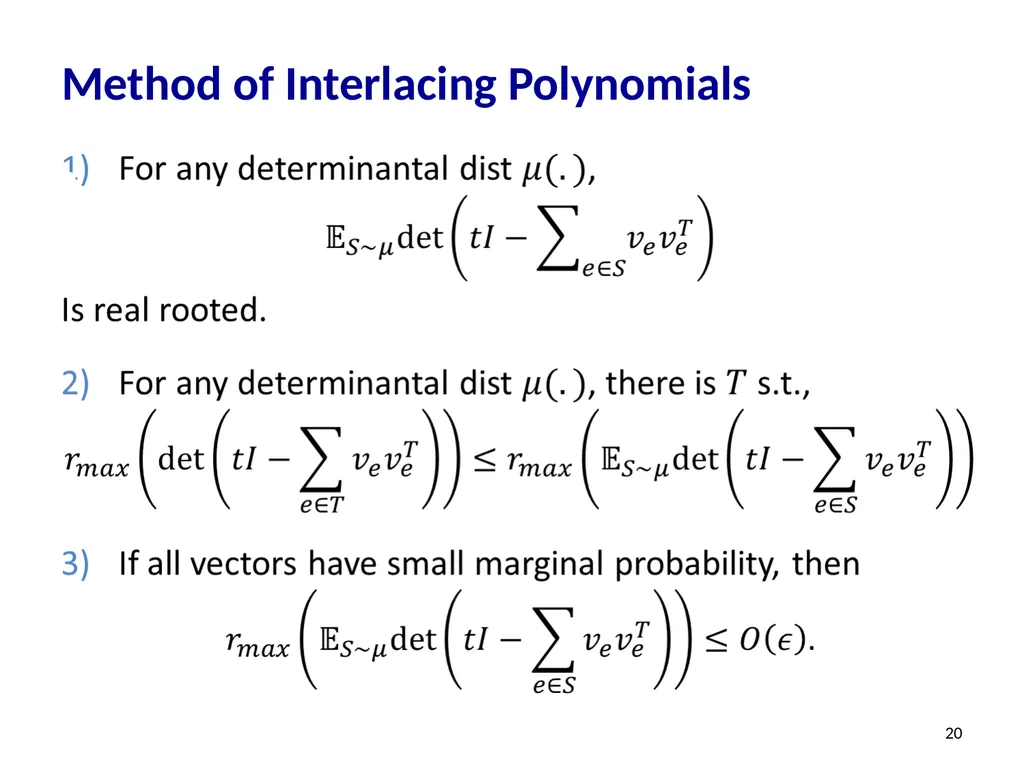
slide20. Method of Interlacing Polynomials 20<br>
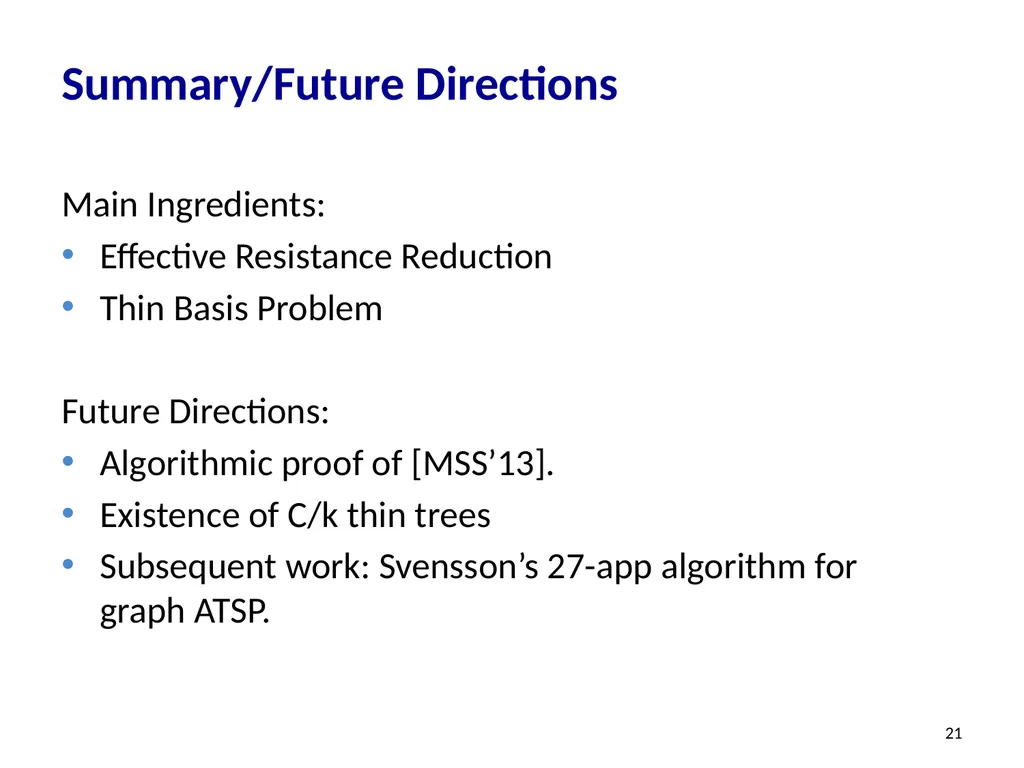
slide21. Summary/Future Directions Main Ingredients:
Effective Resistance Reduction
Thin Basis Problem
Future Directions:
Algorithmic proof of [MSS’13].
Existence of C/k thin trees
Subsequent work: Svensson’s 27-app algorithm for graph ATSP. 21<br>
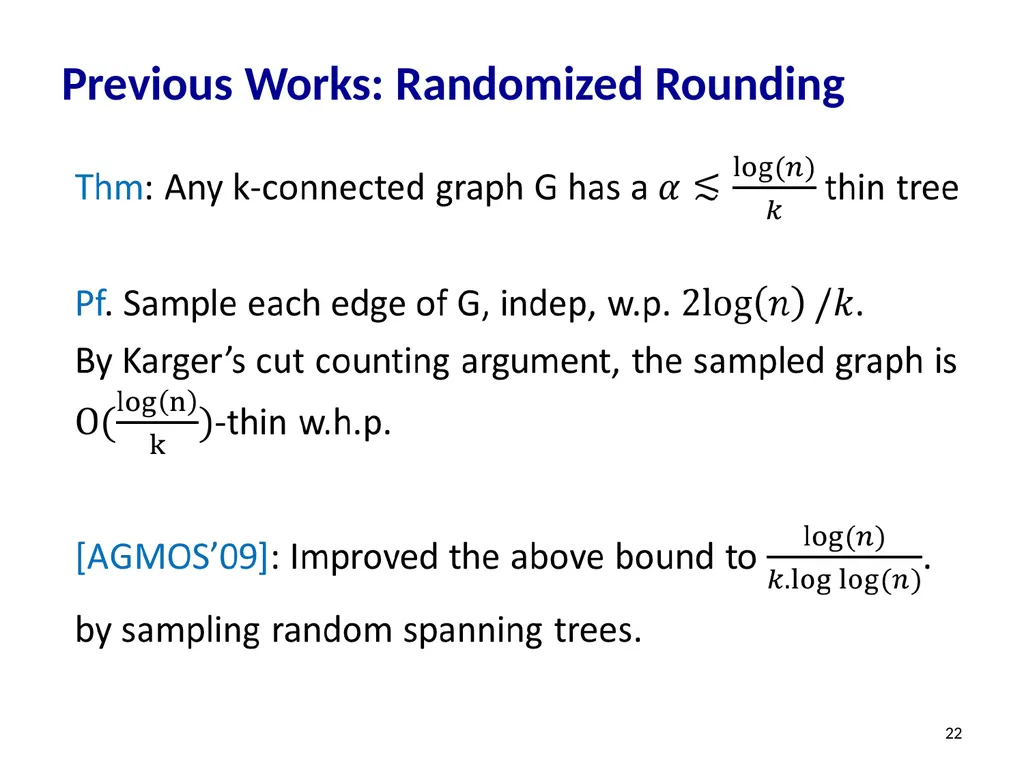
slide22. Previous Works: Randomized Rounding 22<br>
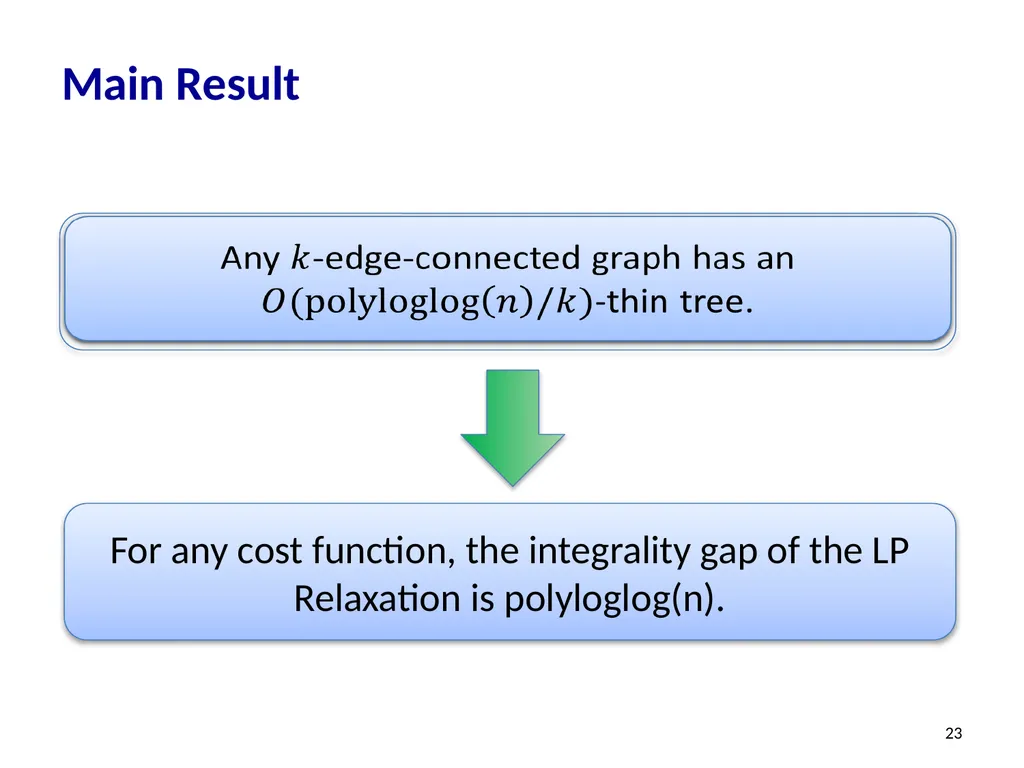
slide23. Main Result 23 For any cost function, the integrality gap of the LP Relaxation is polyloglog(n).<br>
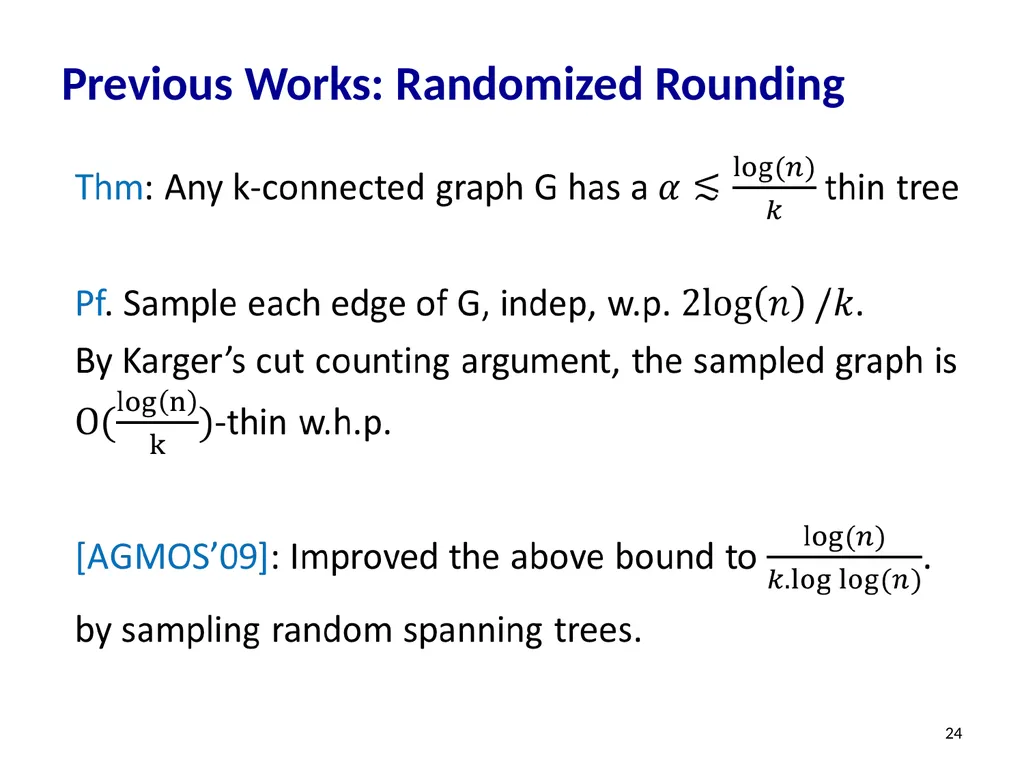
slide24. Previous Works: Randomized Rounding 24<br>
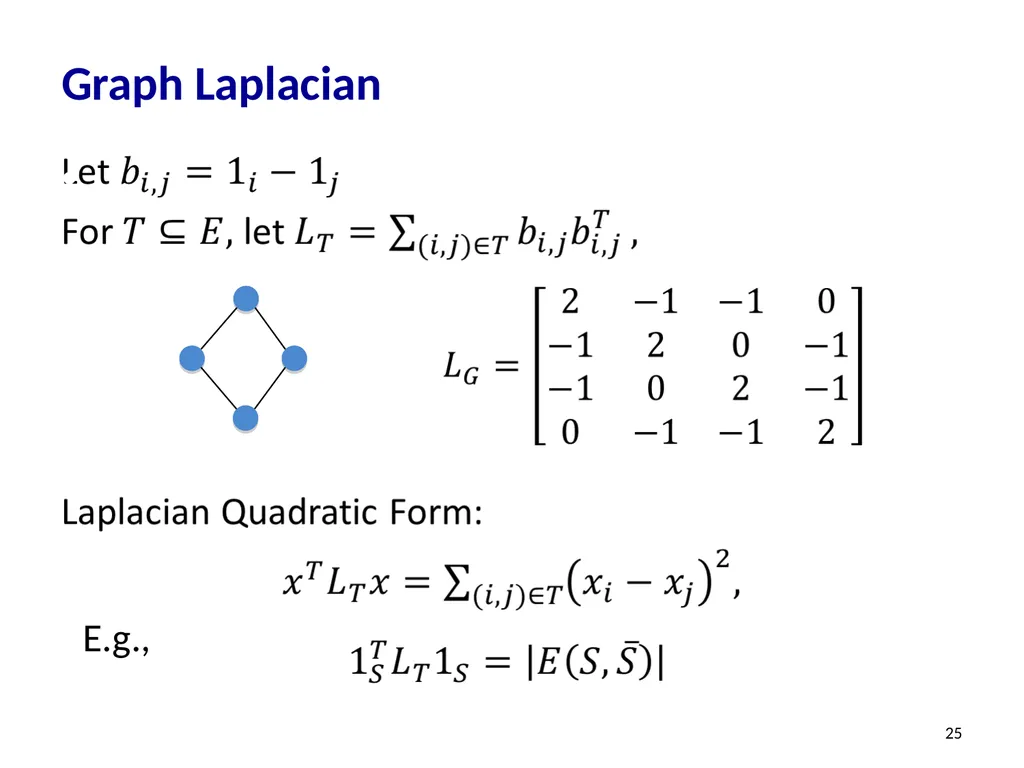
slide25. Graph Laplacian 25 E.g.,<br>
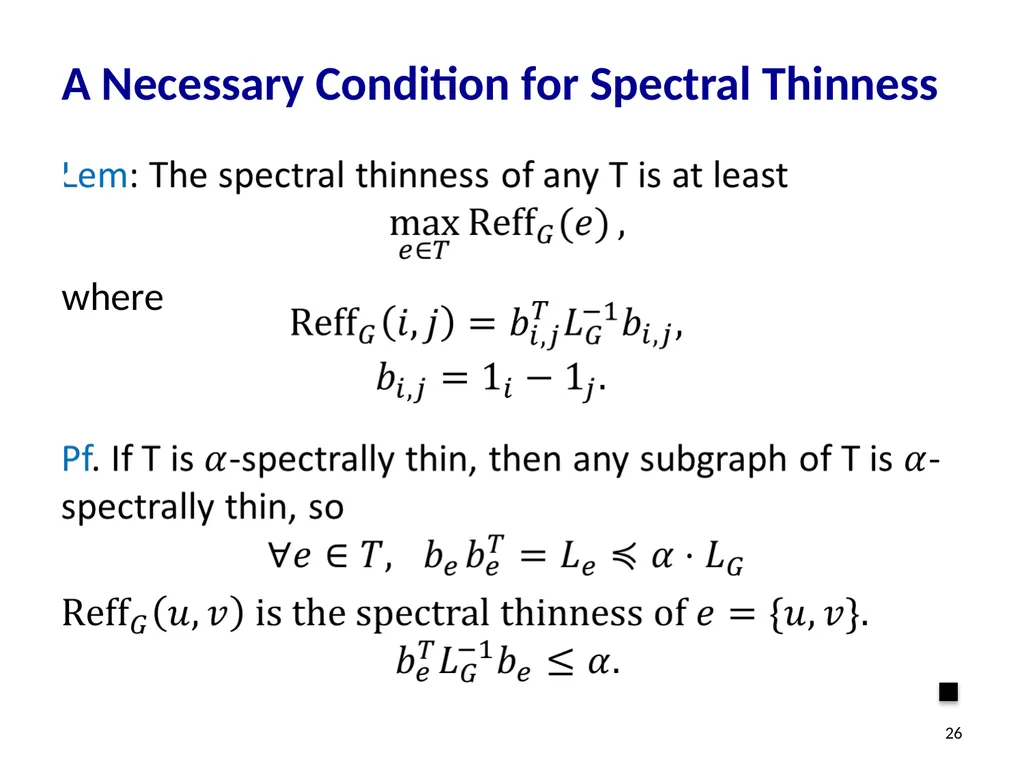
slide26. A Necessary Condition for Spectral Thinness 26 where<br>
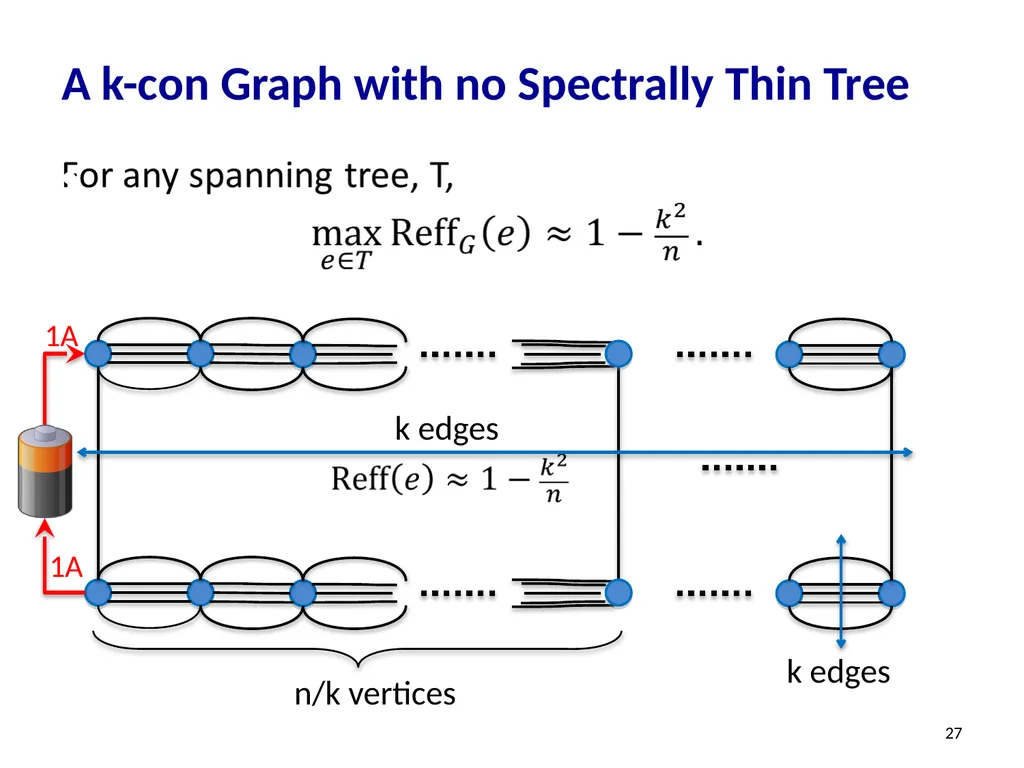
slide27. A k-con Graph with no Spectrally Thin Tree 27 n/k vertices k edges k edges<br>
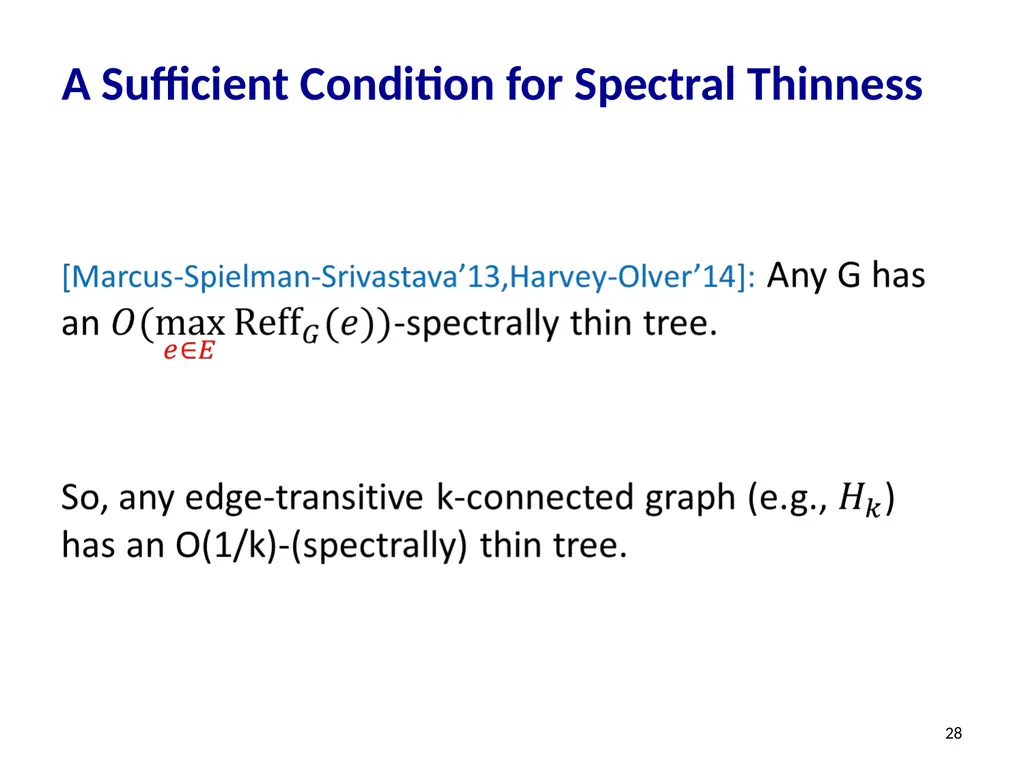
slide28. A Sufficient Condition for Spectral Thinness 28<br>
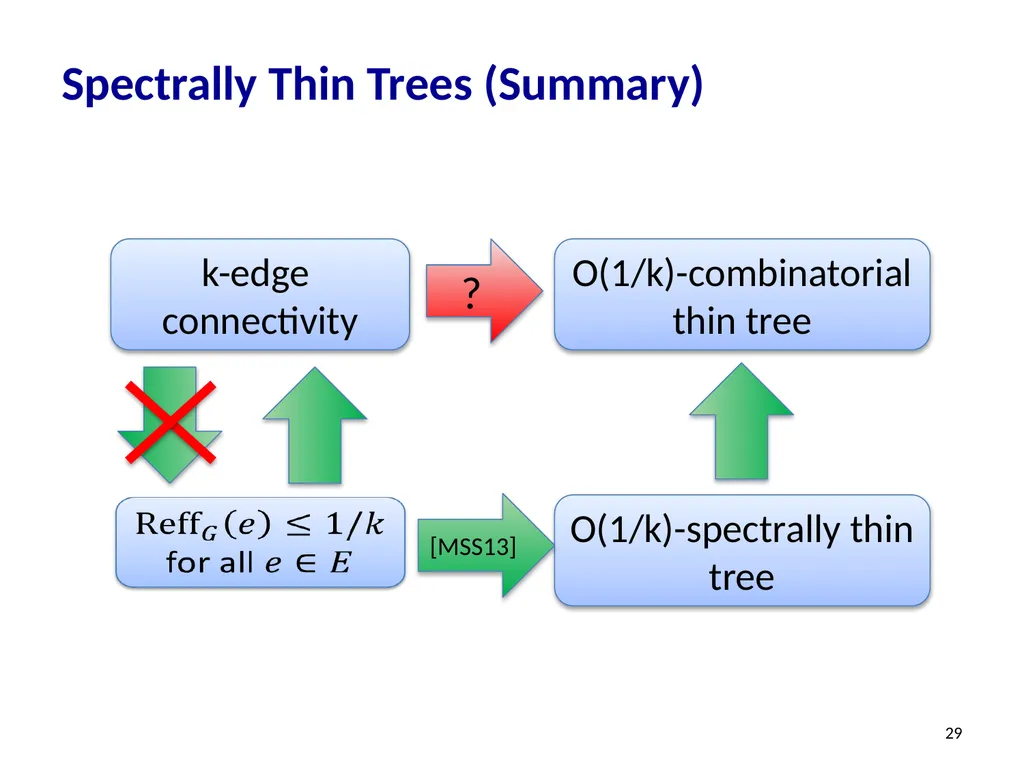
slide29. Spectrally Thin Trees (Summary) 29 k-edge
connectivity O(1/k)-combinatorial thin tree O(1/k)-spectrally thin tree [MSS13] ?<br>
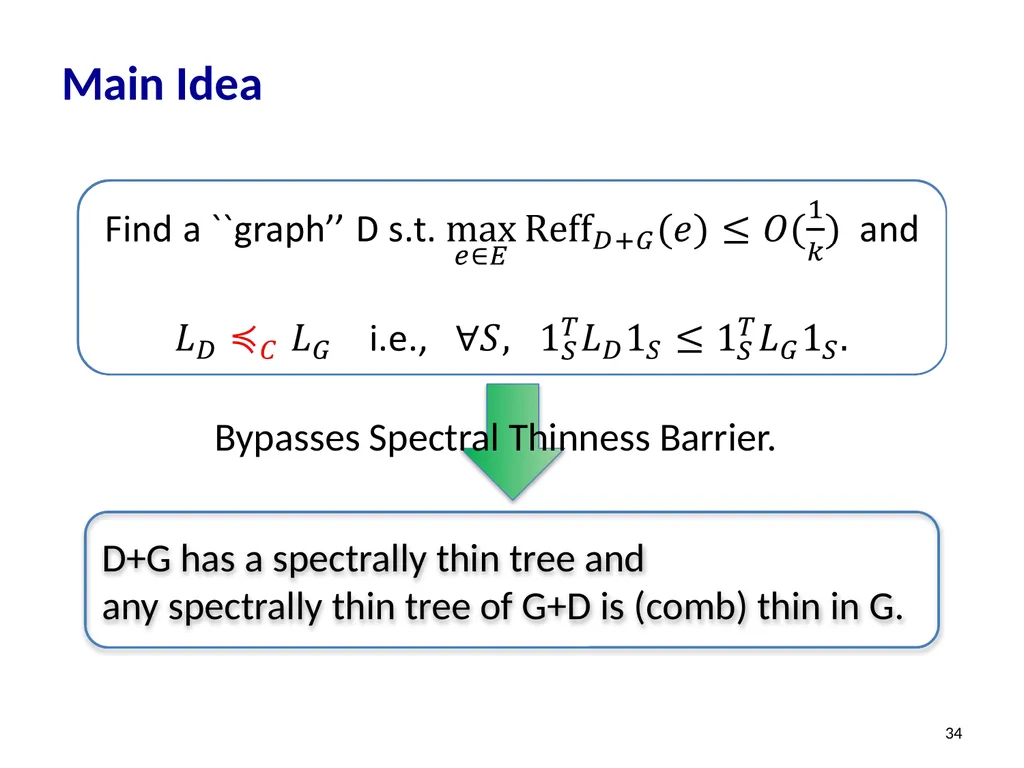
slide30. Our Approach 30<br>
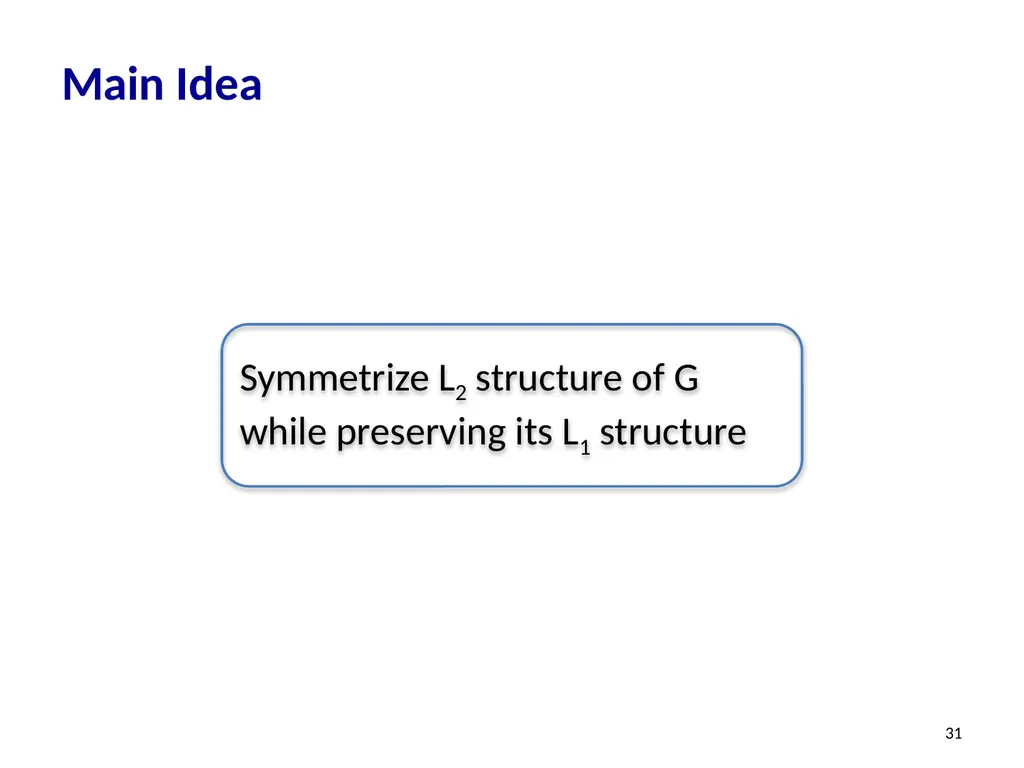
slide31. Main Idea 31 Symmetrize L2 structure of G
while preserving its L1 structure<br>
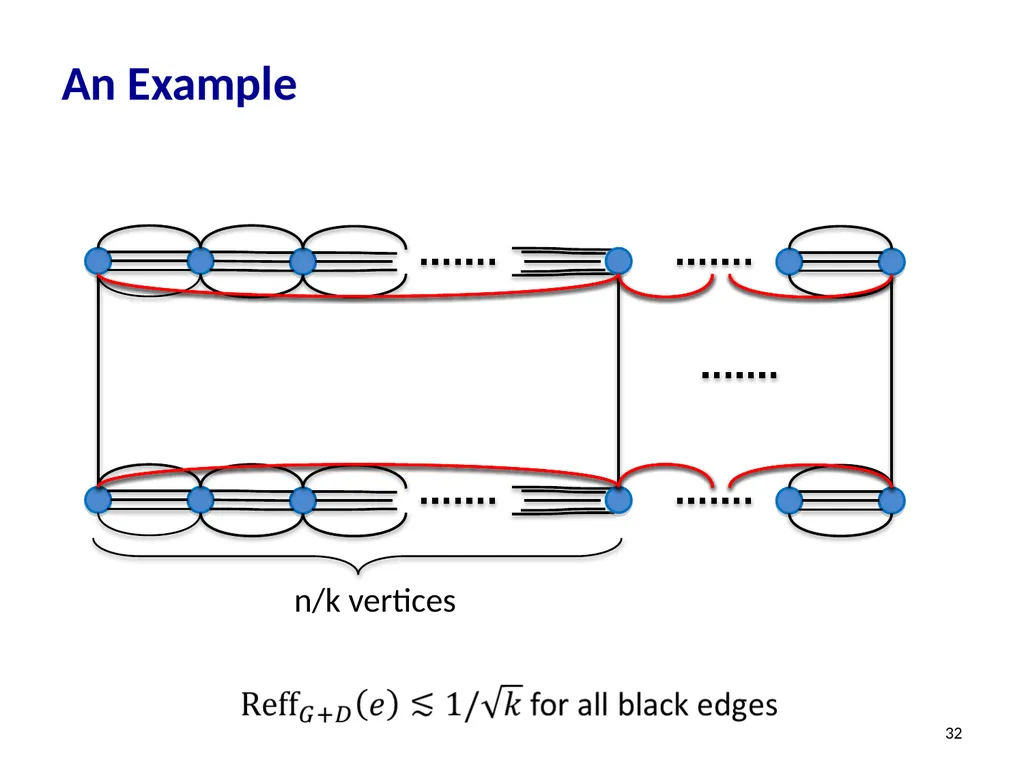
slide32. An Example 32 n/k vertices<br>
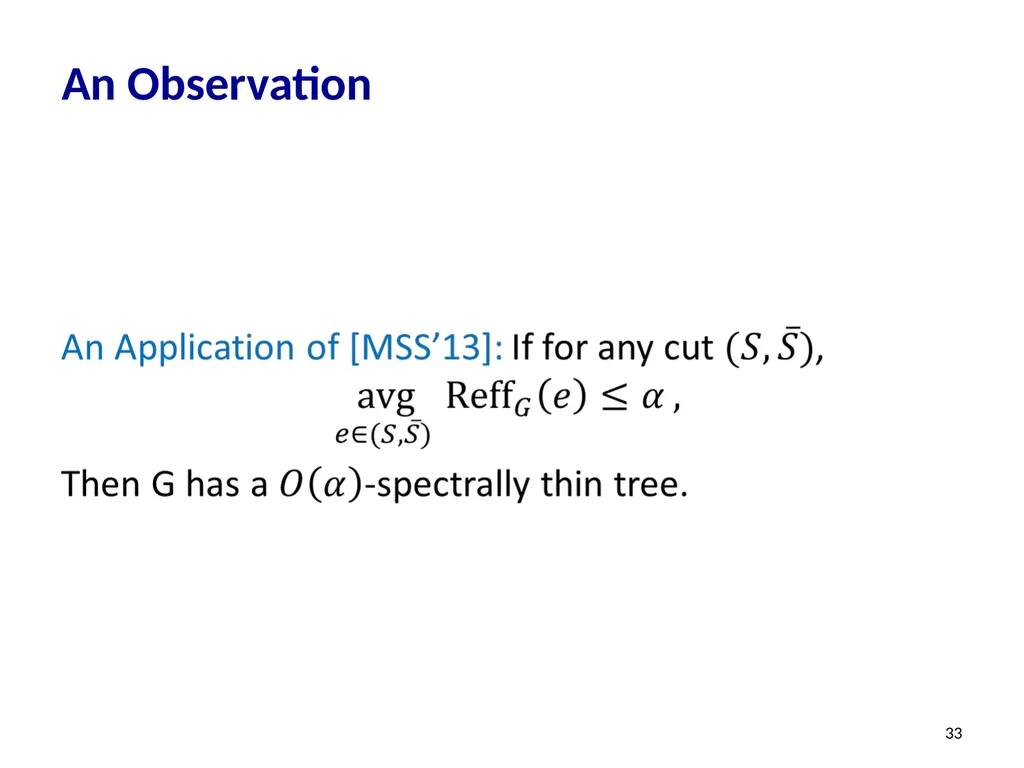
slide33. An Observation 33<br>
slide34. Main Idea 34 D+G has a spectrally thin tree and
any spectrally thin tree of G+D is (comb) thin in G. Bypasses Spectral Thinness Barrier.<br>
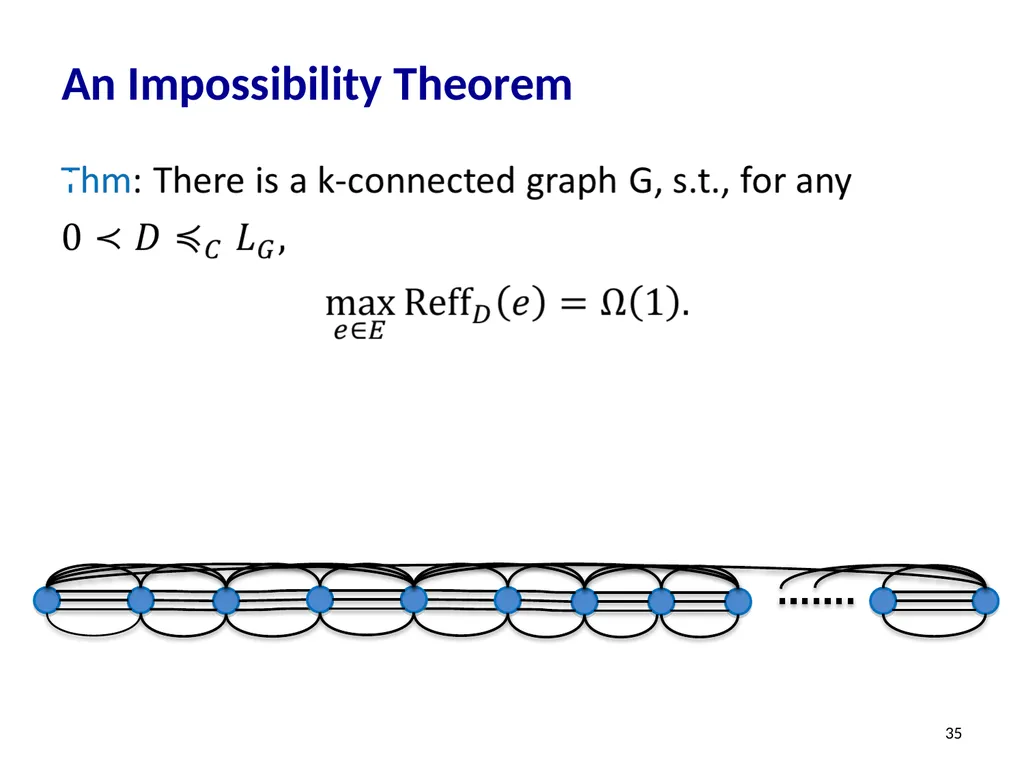
slide35. An Impossibility Theorem 35<br>
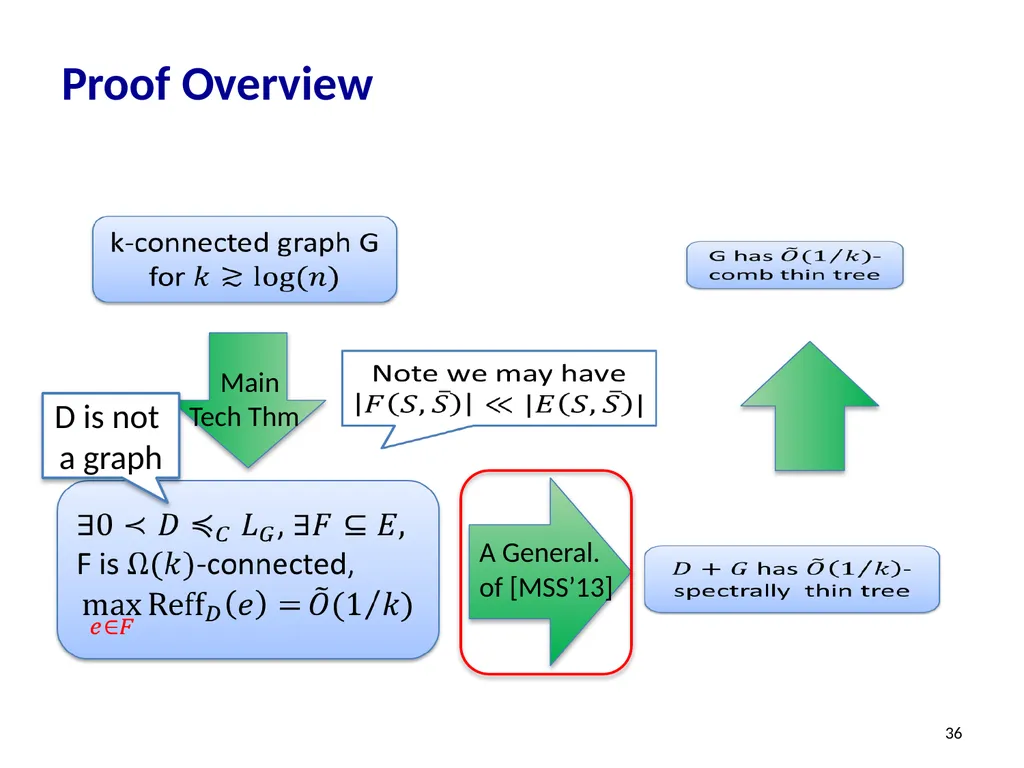
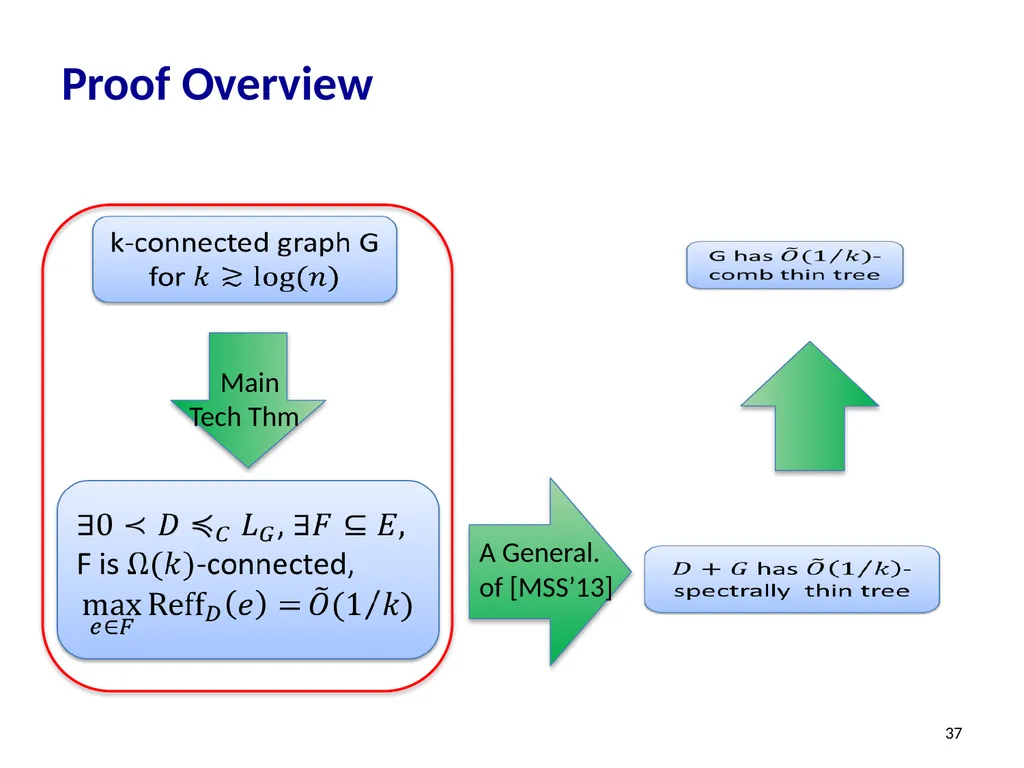
slide36. Proof Overview 36 D is not a graph<br>
slide37. Proof Overview 37<br>
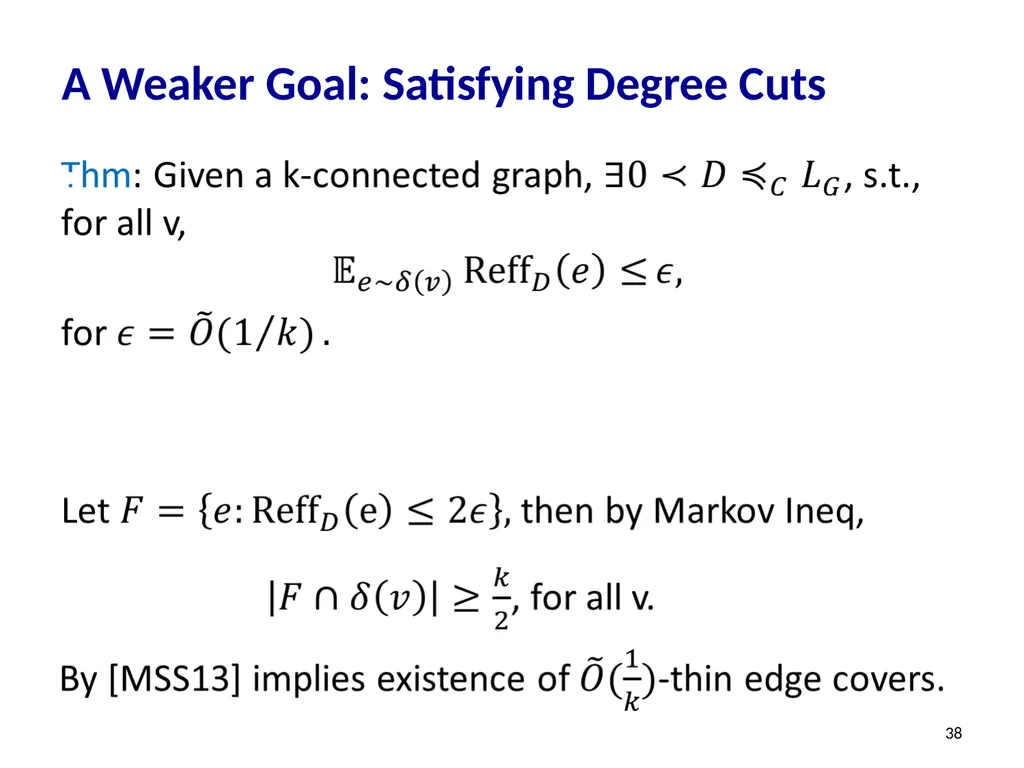
slide38. A Weaker Goal: Satisfying Degree Cuts 38<br>
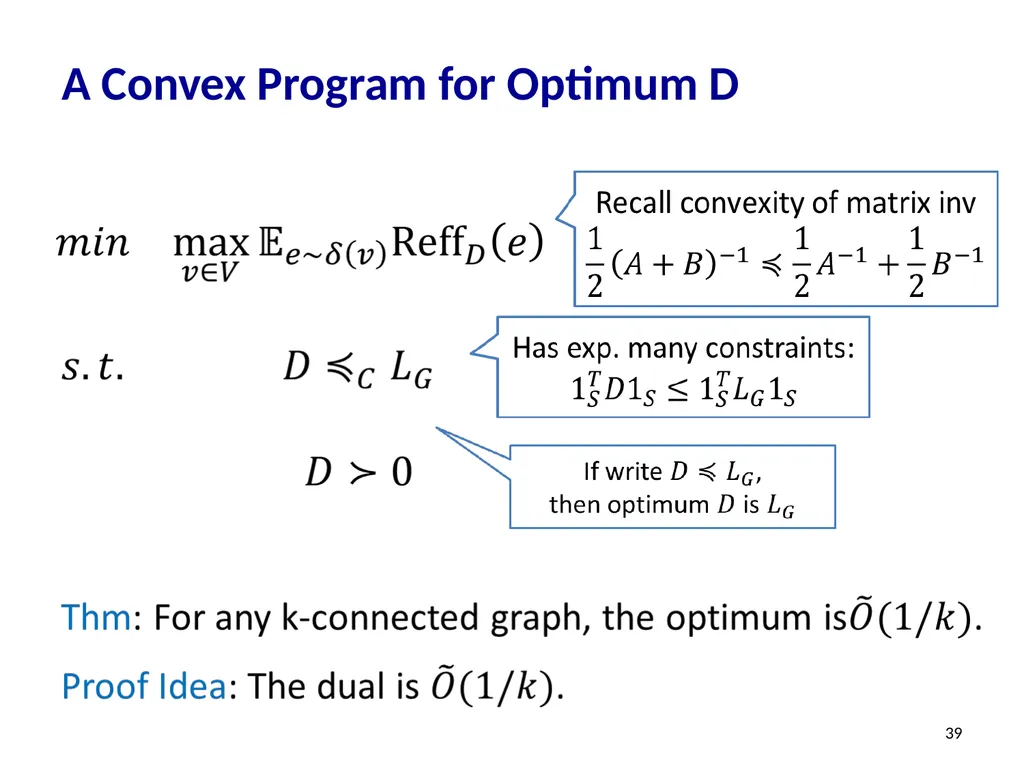
slide39. A Convex Program for Optimum D 39<br>
slide40. Main Result 40 For any cost function, the integrality gap of the LP Relaxation is polyloglog(n).<br>
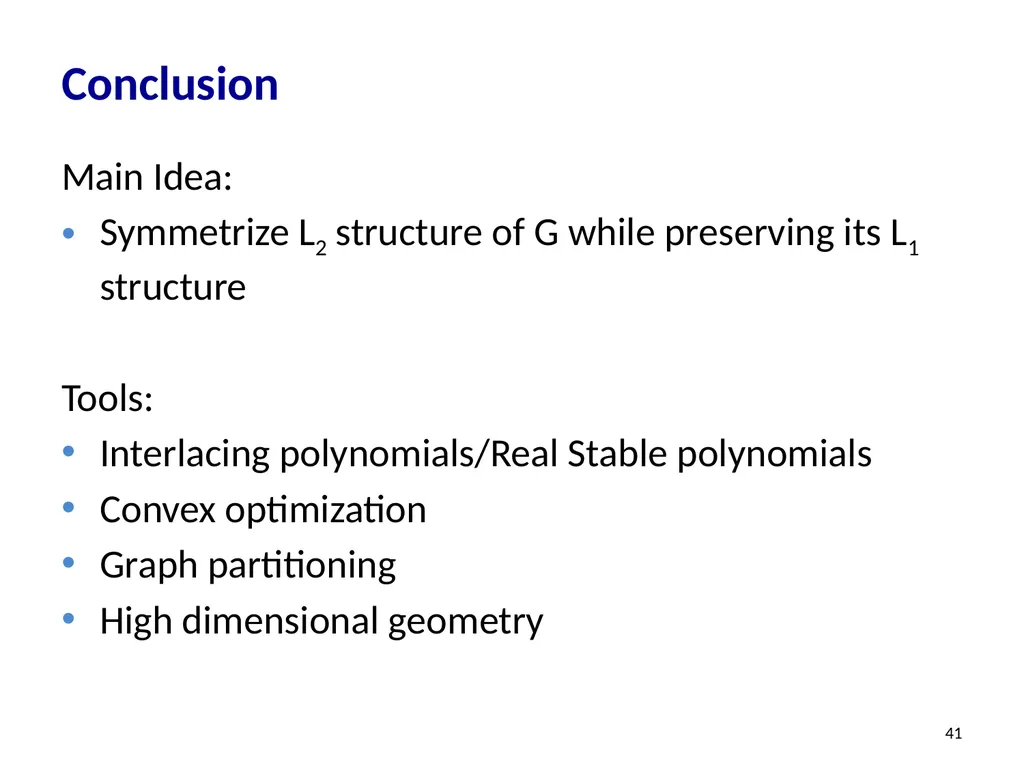
slide41. Conclusion Main Idea:
Symmetrize L2 structure of G while preserving its L1 structure
Tools:
Interlacing polynomials/Real Stable polynomials
Convex optimization
Graph partitioning
High dimensional geometry 41<br>
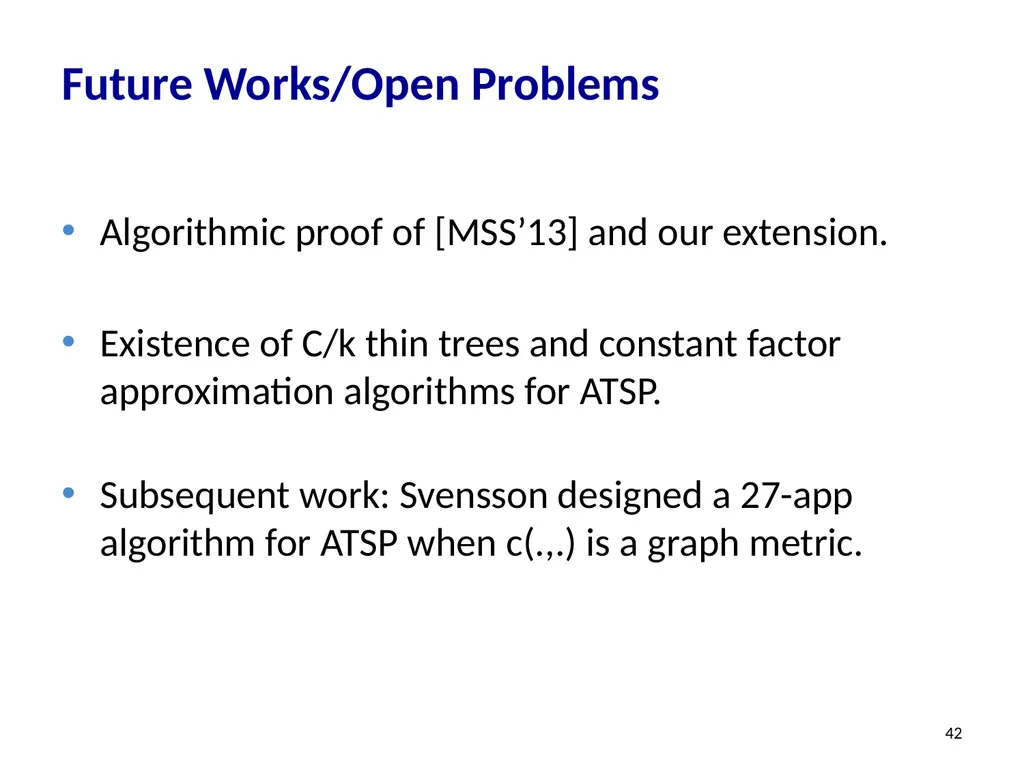
slide42. Future Works/Open Problems Algorithmic proof of [MSS’13] and our extension.
Existence of C/k thin trees and constant factor approximation algorithms for ATSP.
Subsequent work: Svensson designed a 27-app algorithm for ATSP when c(.,.) is a graph metric. 42<br>
UC Berkeley Shayan Oveis Gharan
Univ of Washington<br>
slide2. History of Graph Sparsification 2 Spectral Sparsifier [Spielman-Teng’04] Cut Sparsifier
[Benczur-Karger’96] Spectrally Thin Tree Proof of Kadison-Singer
[Marcus-Spielman-Srivastava’13] Asymmetric TSP
[O-Anari’14] Laplacian Solvers
[Spielman-Teng’04] SS by Effective Resistance [Spielman-Srivastava’09] Linear size SS [Batson-Spielman-Srivastava’10] This Talk<br>
slide3. Asymmetric TSP (ATSP) 3<br>
slide4. Linear Programming Relaxation [Held-Karp’72] 4 Integrality Gap:<br>
slide5. Previous Works Approximation Algorithms
log(n) [Frieze-Galbiati-Maffioli’82]
0.999 log(n) [Bläser’02]
0.842 log(n) [Kaplan-Lewenstein-Shafrir-Sviridenko’05]
0.666 log(n) [Feige-Singh’07]
O(logn/loglogn) [Asadpour-Goemans-Madry-O-Saberi’09]
O(1) (planar/bd genus) [O-Saberi’10,Erickson-Sidiropoulos’13]
Integrality Gap
≥ 2 [Charikar-Goemans-Karloff’06]
≤ O(logn/loglogn) [AGMOS’09]. 5<br>
slide6. Main Result 6 For any cost function, the integrality gap of the LP relaxation is polyloglog(n).<br>
slide7. Plan of the Talk 7 ATSP Thin Spanning Tree Thin Basis Problem Method of Interlacing Polys<br>
slide8. Thin Spanning Trees 8 Kn 2/n-thin tree Application: f(n)/k-thin trees imply 5f(n)-approx for ATSP<br>
slide9. Main Result 9 For any cost function, the integrality gap of the LP Relaxation is polyloglog(n).<br>
slide10. 10 In Pursuit of Thin Trees<br>
slide11. Main Ingredients 11 Interlacing Polynomials and
thin basis problem Effective resistance reduction
by Convex Programming<br>
slide12. A General Framework for L1 Opt Problems 12<br>
slide13. We can use convex duality to analyze Q(.) of the optimum. 13 Has exp. many constraints but can be solved using ellipsoid Since Q(.) is convex the program is convex<br>
slide14. 14<br>
slide15. 15<br>
slide16. Plan of the Talk 16 ATSP Thin Spanning Tree Thin Basis Problem Method of Interlacing Polys Min Cost
Flow Eff Resist
Reduction<br>
slide17. Thin Basis Prob [Marcus-Spielman-Srivastava’13] 17 d Linearly independent set of vectors<br>
slide18. A Weaker Suff Cond for Thin Basis Problem 18 ………………………………………<br>
slide19. Proof of Thin Basis Thm 19<br>
slide20. Method of Interlacing Polynomials 20<br>
slide21. Summary/Future Directions Main Ingredients:
Effective Resistance Reduction
Thin Basis Problem
Future Directions:
Algorithmic proof of [MSS’13].
Existence of C/k thin trees
Subsequent work: Svensson’s 27-app algorithm for graph ATSP. 21<br>
slide22. Previous Works: Randomized Rounding 22<br>
slide23. Main Result 23 For any cost function, the integrality gap of the LP Relaxation is polyloglog(n).<br>
slide24. Previous Works: Randomized Rounding 24<br>
slide25. Graph Laplacian 25 E.g.,<br>
slide26. A Necessary Condition for Spectral Thinness 26 where<br>
slide27. A k-con Graph with no Spectrally Thin Tree 27 n/k vertices k edges k edges<br>
slide28. A Sufficient Condition for Spectral Thinness 28<br>
slide29. Spectrally Thin Trees (Summary) 29 k-edge
connectivity O(1/k)-combinatorial thin tree O(1/k)-spectrally thin tree [MSS13] ?<br>
slide30. Our Approach 30<br>
slide31. Main Idea 31 Symmetrize L2 structure of G
while preserving its L1 structure<br>
slide32. An Example 32 n/k vertices<br>
slide33. An Observation 33<br>
slide34. Main Idea 34 D+G has a spectrally thin tree and
any spectrally thin tree of G+D is (comb) thin in G. Bypasses Spectral Thinness Barrier.<br>
slide35. An Impossibility Theorem 35<br>
slide36. Proof Overview 36 D is not a graph<br>
slide37. Proof Overview 37<br>
slide38. A Weaker Goal: Satisfying Degree Cuts 38<br>
slide39. A Convex Program for Optimum D 39<br>
slide40. Main Result 40 For any cost function, the integrality gap of the LP Relaxation is polyloglog(n).<br>
slide41. Conclusion Main Idea:
Symmetrize L2 structure of G while preserving its L1 structure
Tools:
Interlacing polynomials/Real Stable polynomials
Convex optimization
Graph partitioning
High dimensional geometry 41<br>
slide42. Future Works/Open Problems Algorithmic proof of [MSS’13] and our extension.
Existence of C/k thin trees and constant factor approximation algorithms for ATSP.
Subsequent work: Svensson designed a 27-app algorithm for ATSP when c(.,.) is a graph metric. 42<br>