
Efficient Voting via the Top-k Elicitation Scheme:

Description: Efficient Voting via the Top-k Elicitation Scheme: A Probabilistic Approach Joel Oren, University of Toronto Joint work with Yuval Filmus, Institute of Advanced Study 1 Motivation Common theme: communication-efficient group decision-making.
Related Topics
Download Presentation
"Efficient Voting via the Top-k Elicitation Scheme:" is the property of its rightful owner. Permission is granted to download and print the materials on this website for personal, non-commercial use only, and to display it on your personal computer provided you do not modify the materials and that you retain all copyright notices contained in the materials. By downloading content from our website, you accept the terms of this agreement.
Presentation Transcript
slide1. Efficient Voting via the Top-k Elicitation Scheme: A Probabilistic Approach Joel Oren, University of Toronto
Joint work with Yuval Filmus, Institute of Advanced Study 1<br>
slide2. Motivation Common theme: communication-efficient group decision-making.
How to pick the single “best” item/candidate, without extracting too much information from the customers/committee members.
Hiring committees: members can’t rank all of the candidates.
Too many candidates.
Committee members may only be familiar with just subsets of candidates in their own fields. 2<br>
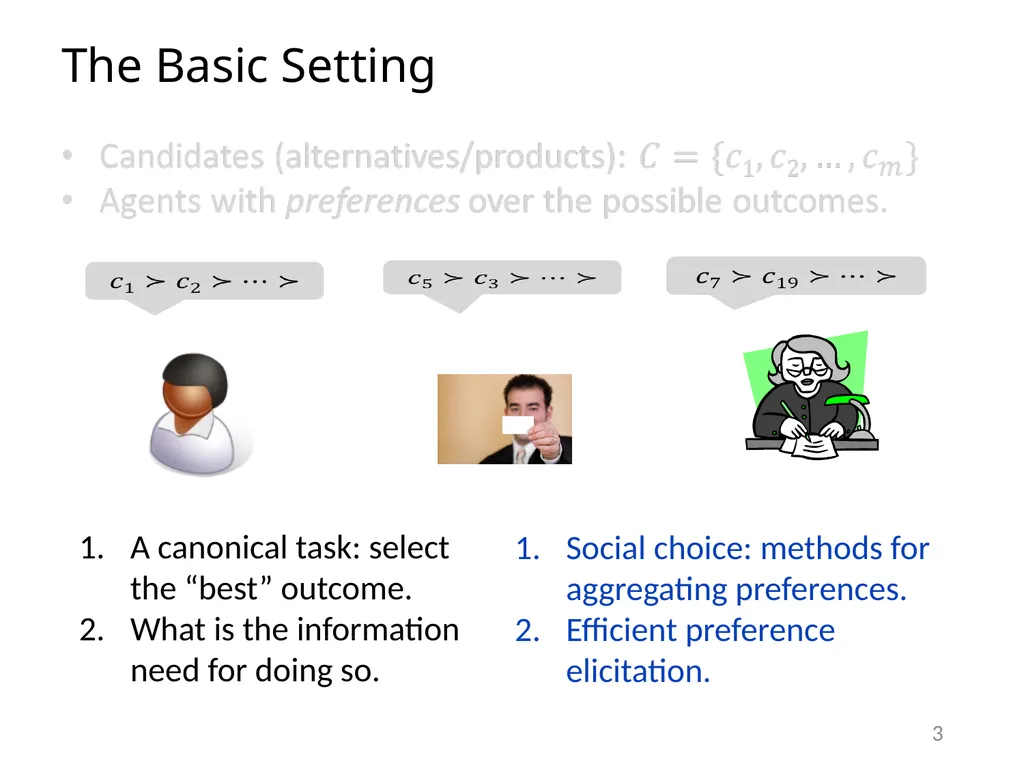
slide3. The Basic Setting 3 A canonical task: select the “best” outcome.
What is the information need for doing so. Social choice: methods for aggregating preferences.
Efficient preference elicitation.<br>
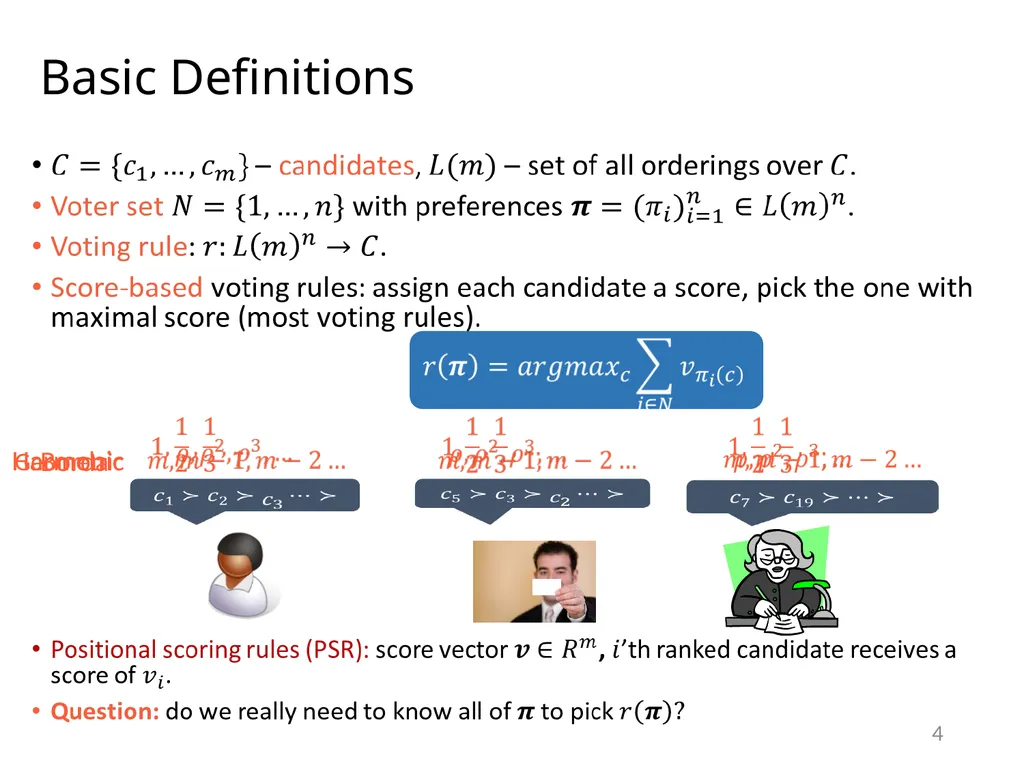
slide4. Basic Definitions 4 Borda Harmonic Geometric<br>
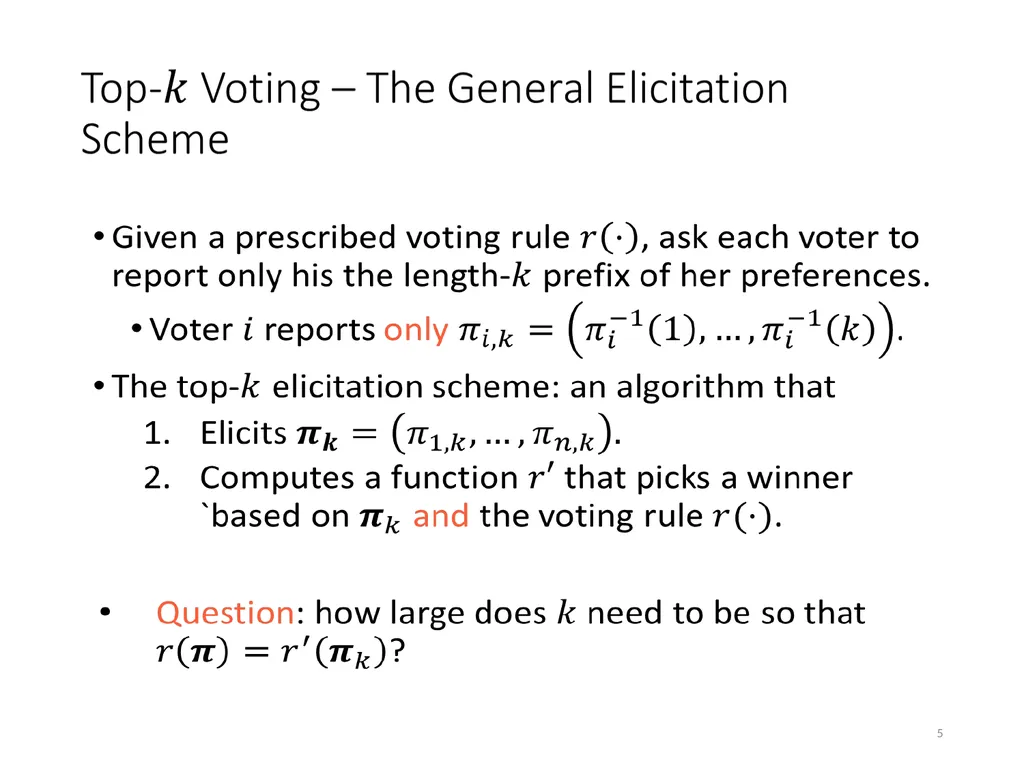
slide5. 5<br>
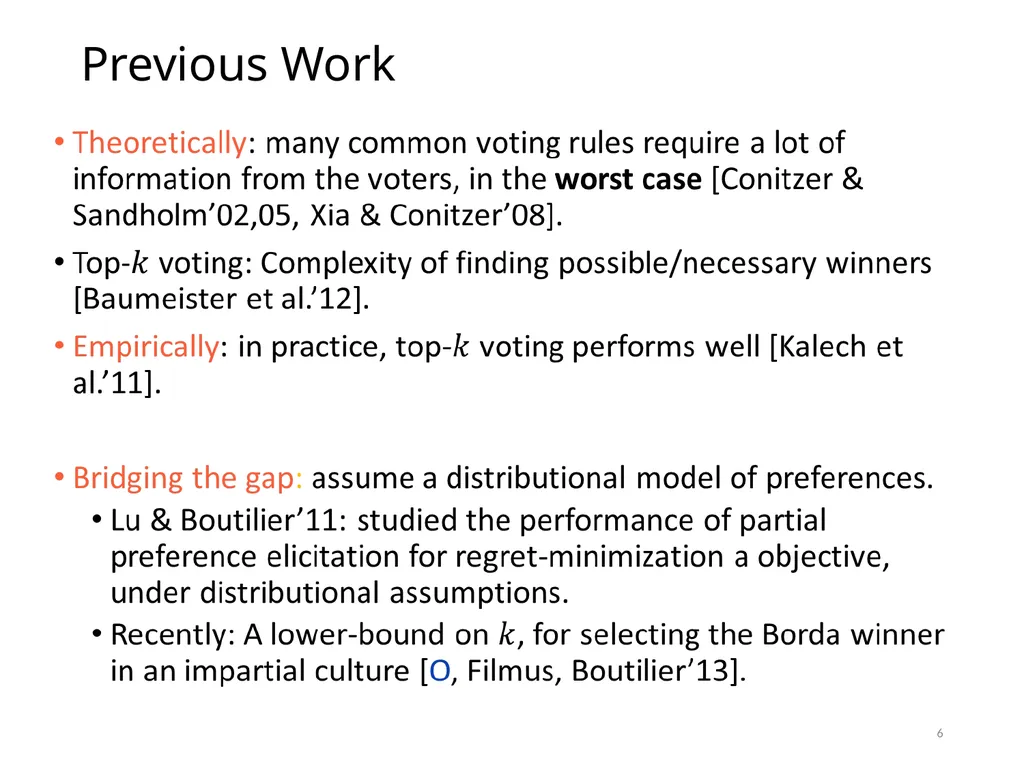
slide6. Previous Work 6<br>
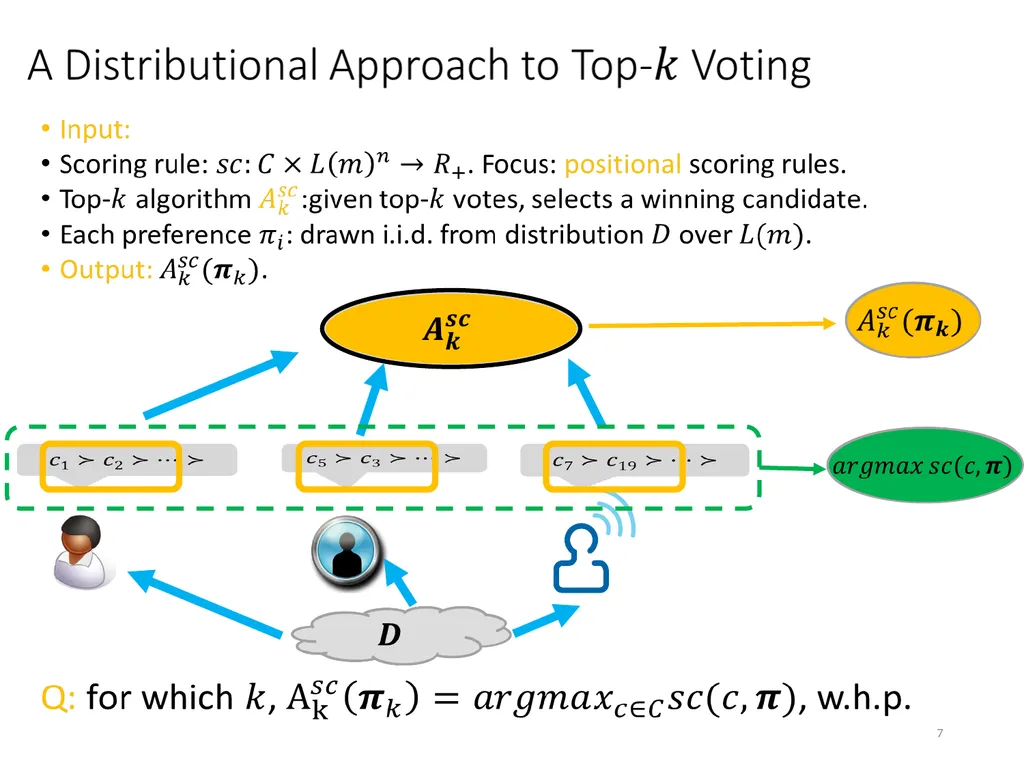
slide7. 7<br>
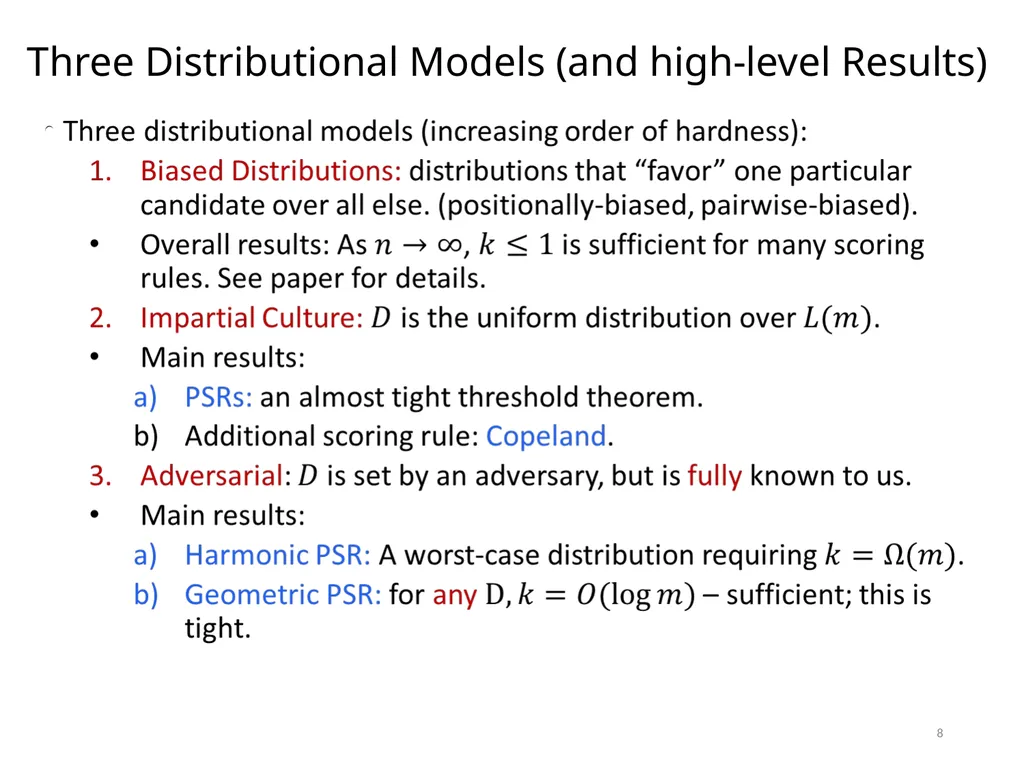
slide8. Three Distributional Models (and high-level Results) 8<br>
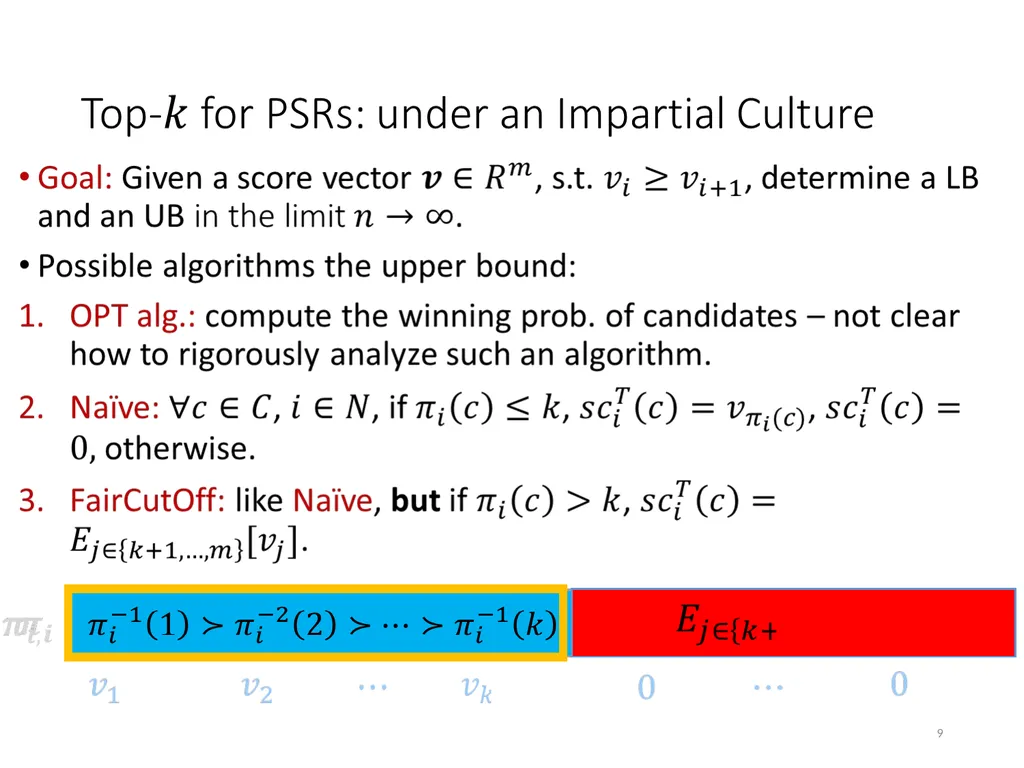
slide9. 9<br>
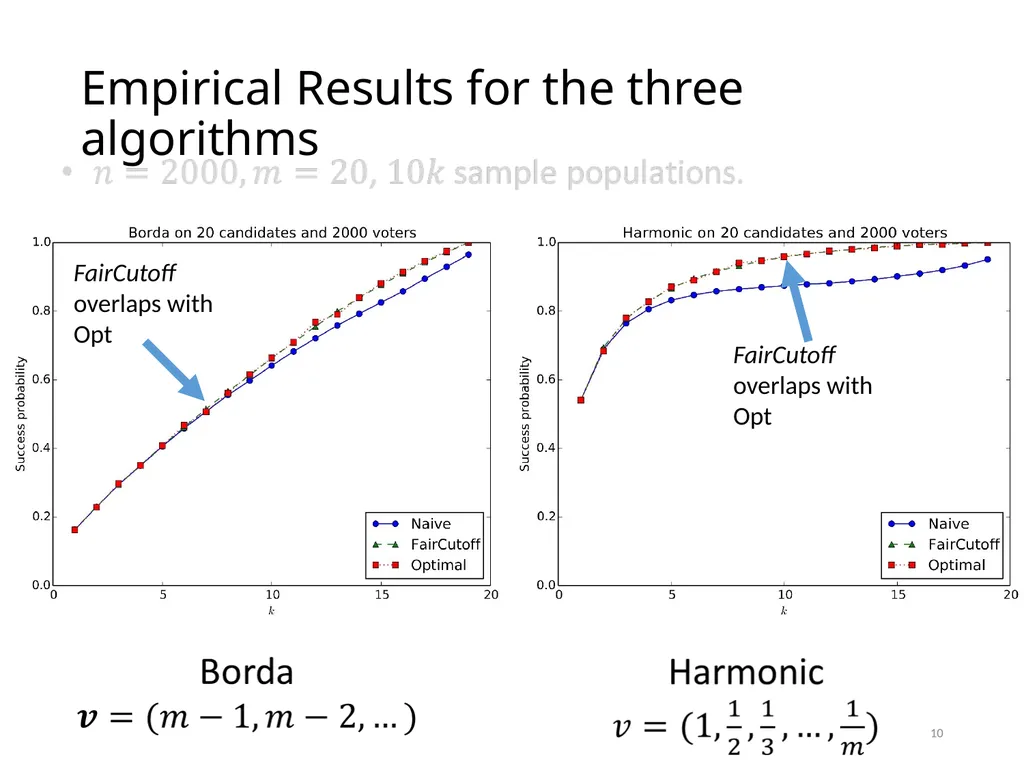
slide10. Empirical Results for the three algorithms 10 FairCutoff overlaps with Opt FairCutoff overlaps with Opt<br>
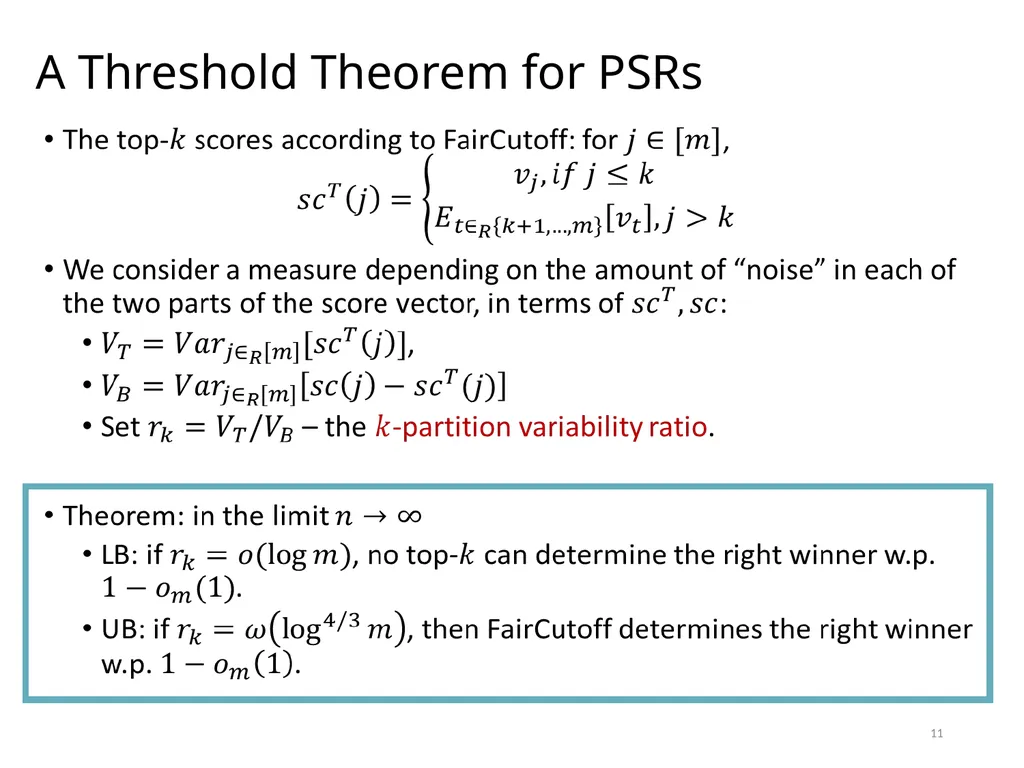
slide11. A Threshold Theorem for PSRs 11<br>
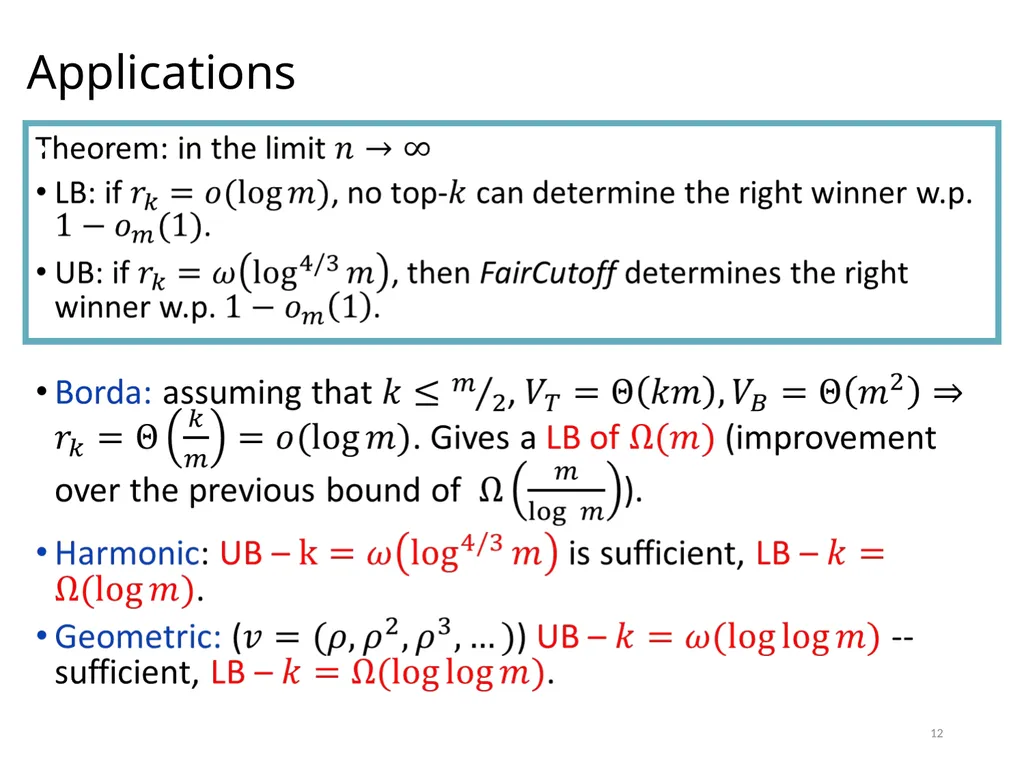
slide12. Applications 12<br>
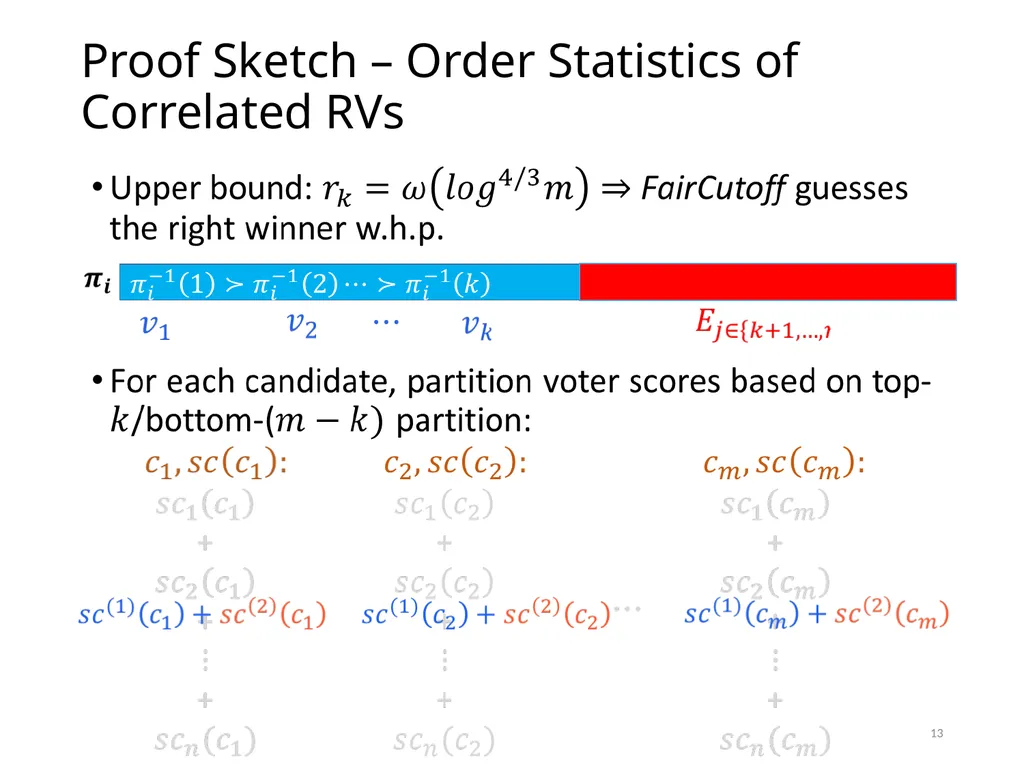
slide13. Proof Sketch – Order Statistics of Correlated RVs 13<br>
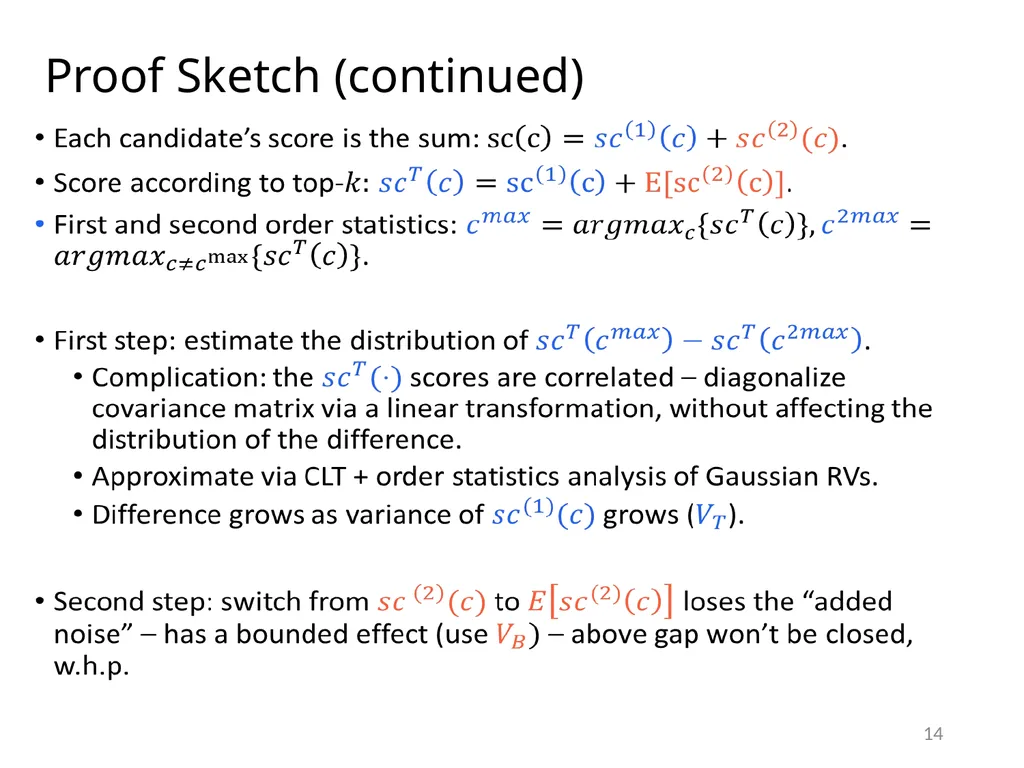
slide14. Proof Sketch (continued) 14<br>
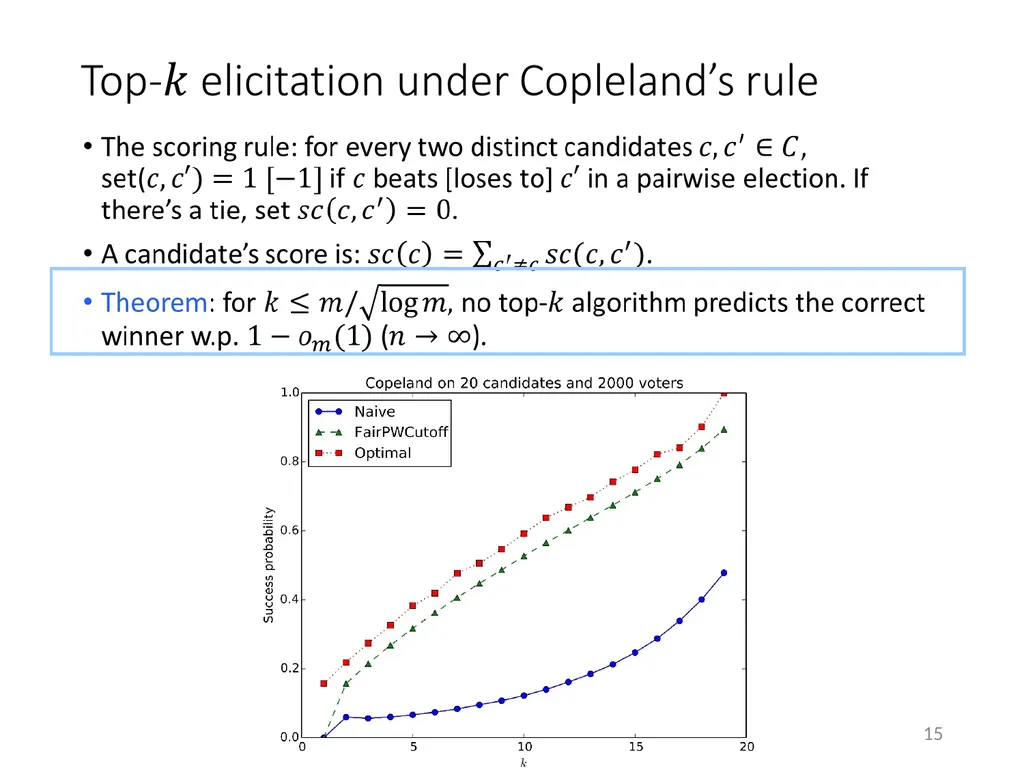
slide15. 15<br>
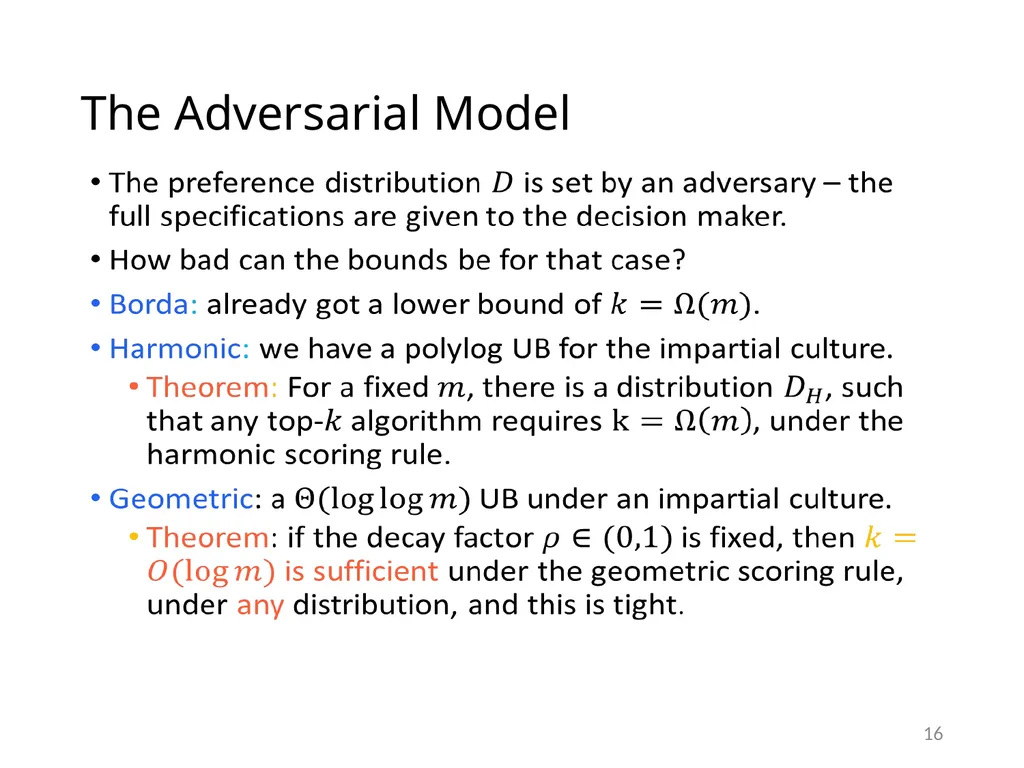
slide16. The Adversarial Model 16<br>
slide17. 17<br>
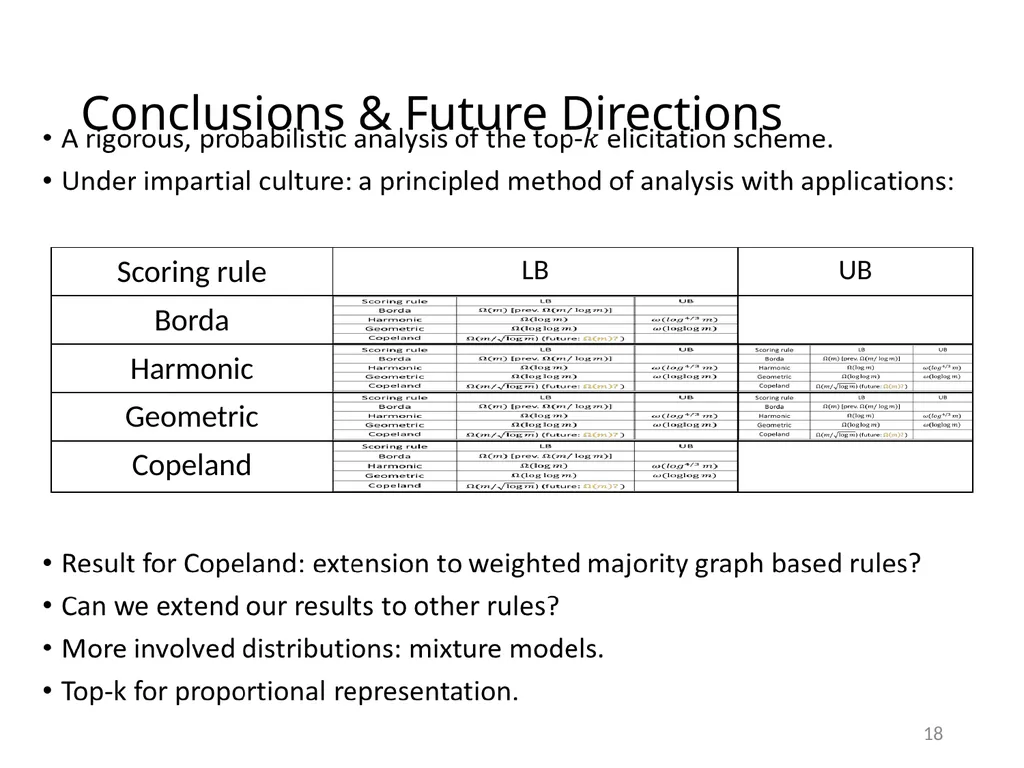
slide18. Conclusions & Future Directions 18<br>
slide19. Contact: oren@cs.toronto.edu Homepage: www.cs.toronto.edu/~oren Thank you! 19<br>
Joint work with Yuval Filmus, Institute of Advanced Study 1<br>
slide2. Motivation Common theme: communication-efficient group decision-making.
How to pick the single “best” item/candidate, without extracting too much information from the customers/committee members.
Hiring committees: members can’t rank all of the candidates.
Too many candidates.
Committee members may only be familiar with just subsets of candidates in their own fields. 2<br>
slide3. The Basic Setting 3 A canonical task: select the “best” outcome.
What is the information need for doing so. Social choice: methods for aggregating preferences.
Efficient preference elicitation.<br>
slide4. Basic Definitions 4 Borda Harmonic Geometric<br>
slide5. 5<br>
slide6. Previous Work 6<br>
slide7. 7<br>
slide8. Three Distributional Models (and high-level Results) 8<br>
slide9. 9<br>
slide10. Empirical Results for the three algorithms 10 FairCutoff overlaps with Opt FairCutoff overlaps with Opt<br>
slide11. A Threshold Theorem for PSRs 11<br>
slide12. Applications 12<br>
slide13. Proof Sketch – Order Statistics of Correlated RVs 13<br>
slide14. Proof Sketch (continued) 14<br>
slide15. 15<br>
slide16. The Adversarial Model 16<br>
slide17. 17<br>
slide18. Conclusions & Future Directions 18<br>
slide19. Contact: oren@cs.toronto.edu Homepage: www.cs.toronto.edu/~oren Thank you! 19<br>