Elements and Principles of Art and Design Element: Color Hue: Technical Term for Color Pigment: Physical Material of Color Painting Materials Paint palette Acrylic Paint Paint brushes Cup of water Paper Towel Sketchbook Paper Paint Pump
"Elements and Principles of Art and Design Element:" is the property of its rightful owner. Permission is granted to
download and print the materials on this website for personal, non-commercial use only, and to display it
on your personal computer provided you do not modify the materials and that you retain all copyright
notices contained in the materials. By downloading content from our website, you accept the terms of this
agreement.
Presentation Transcript
01
Elements and Principles
of Art and Design
Element: Color
Hue: Technical Term for Color
Pigment: Physical Material of Color<br>
02
Painting Materials
Paint palette
Acrylic Paint
Paint brushes
Cup of water
Paper Towel
Sketchbook / Paper<br>
03
Paint Pump Tips
Only take a dime-size amount of paint (you can always go back for more)
If paint does not come out of the pump easily, STOP.
Get a paper towel and cover the opening of the spout and push the pump.
If paint does not come out, find a pair of scissors or a sharp/narrow object.
Use the object to clear any dried paint from the spout. Try to push again.<br>
04
Painting Tips
Add dark colors to light colors (never light to dark)
Only mix as much as you need: be conservative and do not waste paint
Wash your brush and pat dry with paper towel for each different color<br>
05
Cleaning Your Brush
Rinse brush thoroughly and carefully under warm water.
Massage bristles to work out any paint left.
Squeeze the bristles. If the water comes out clear, the brush is clean.<br>
06
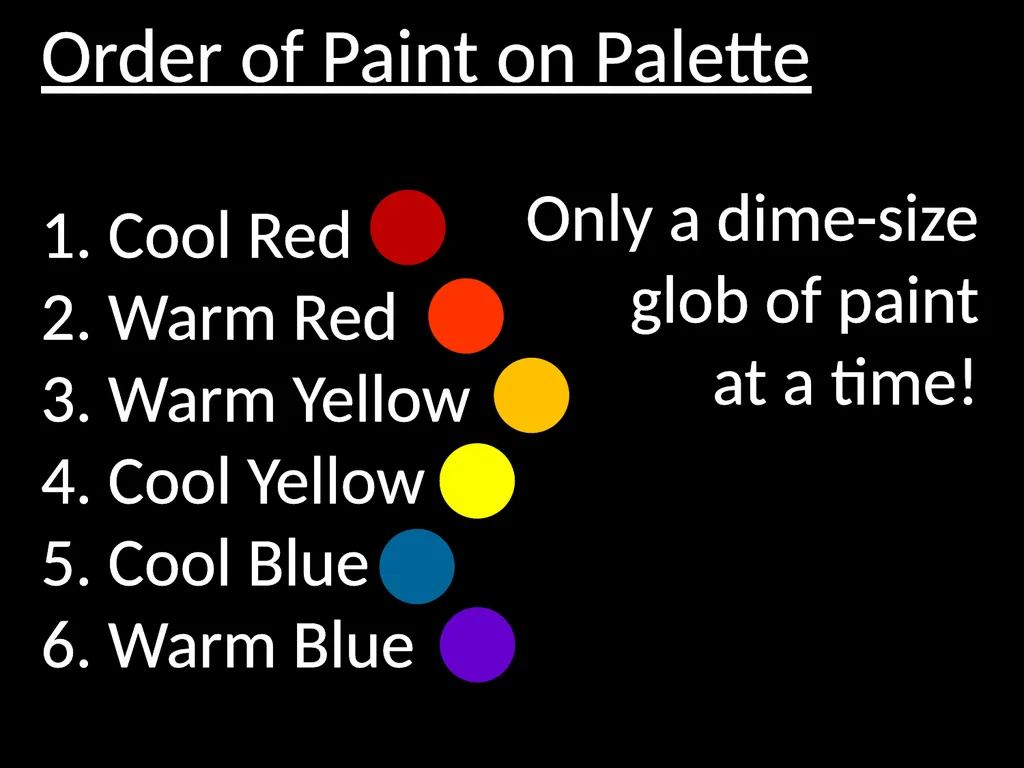
Order of Paint on Palette
1. Cool Red
2. Warm Red
3. Warm Yellow
4. Cool Yellow
5. Cool Blue
6. Warm Blue Only a dime-size
glob of paint
at a time!<br>
07
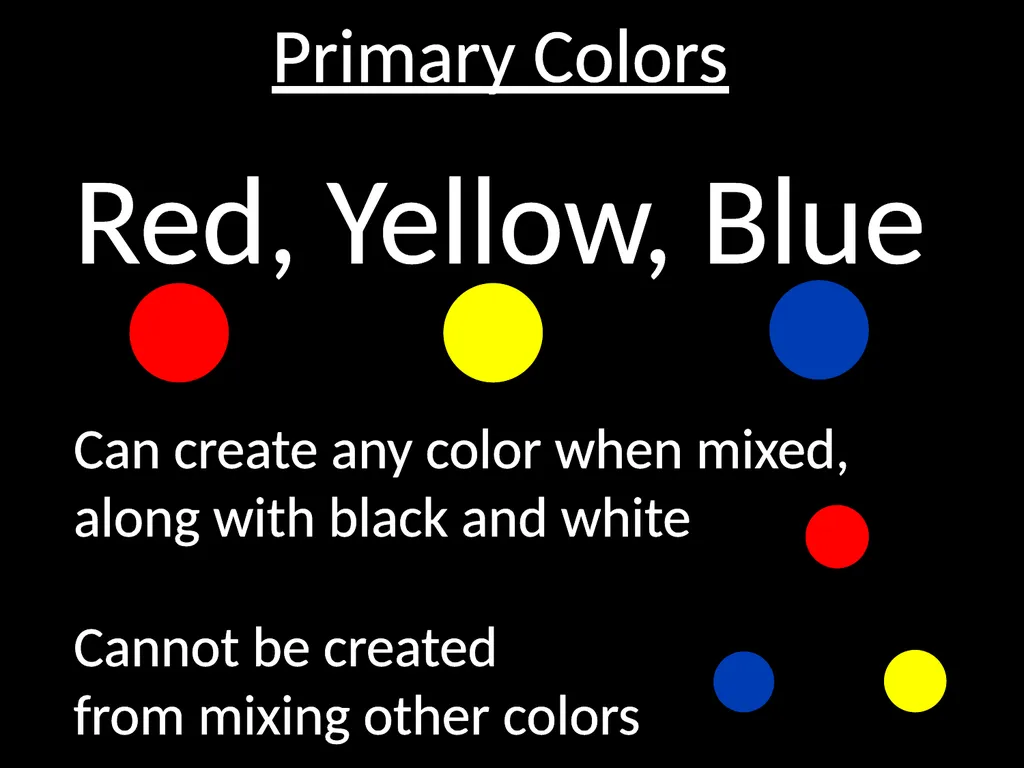
Primary Colors
Red, Yellow, Blue
Can create any color when mixed,
along with black and white
Cannot be created
from mixing other colors<br>
08
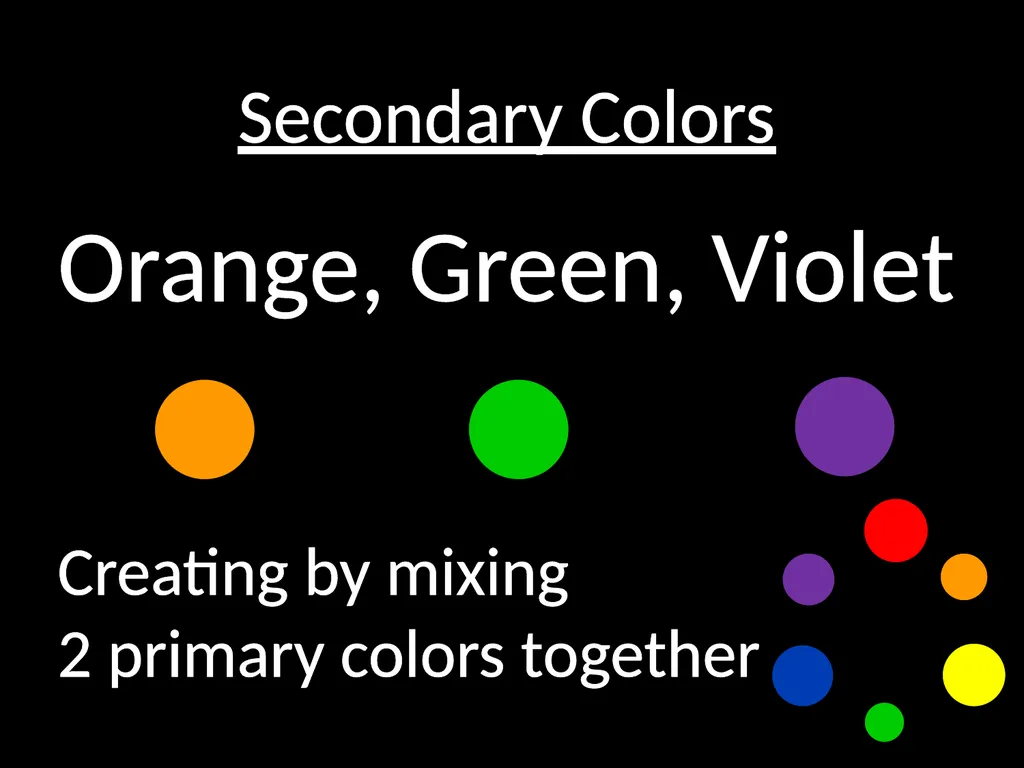
Secondary Colors
Orange, Green, Violet
Creating by mixing
2 primary colors together<br>
09
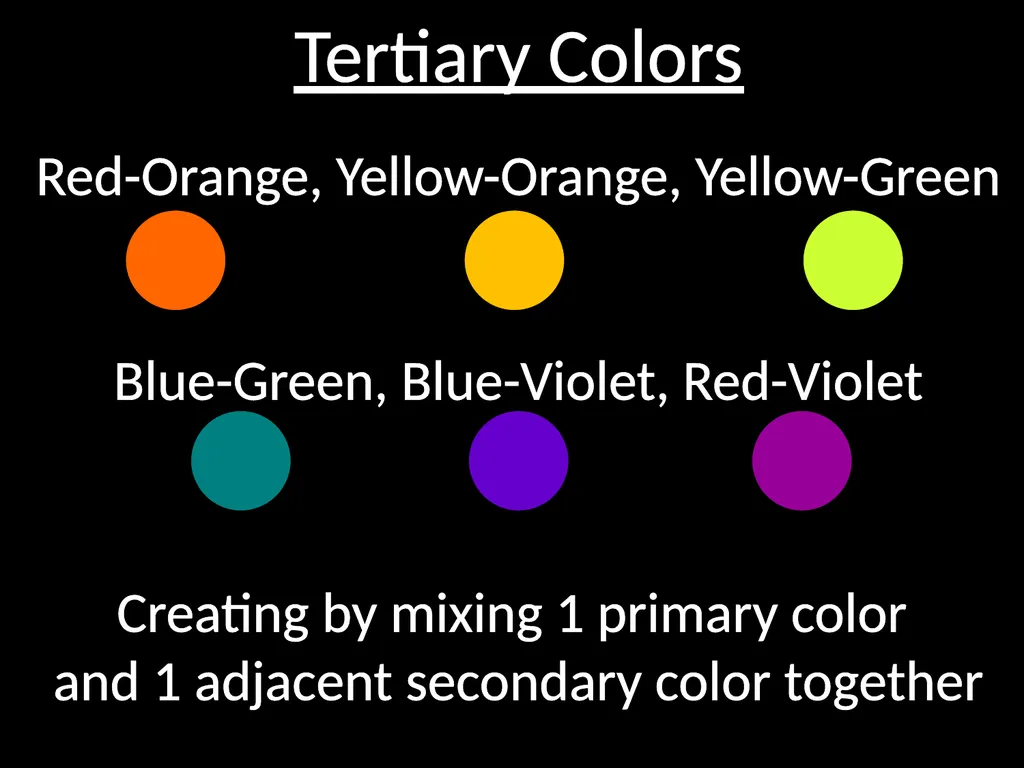
Tertiary Colors
Red-Orange, Yellow-Orange, Yellow-Green
Blue-Green, Blue-Violet, Red-Violet
Creating by mixing 1 primary color
and 1 adjacent secondary color together<br>
10
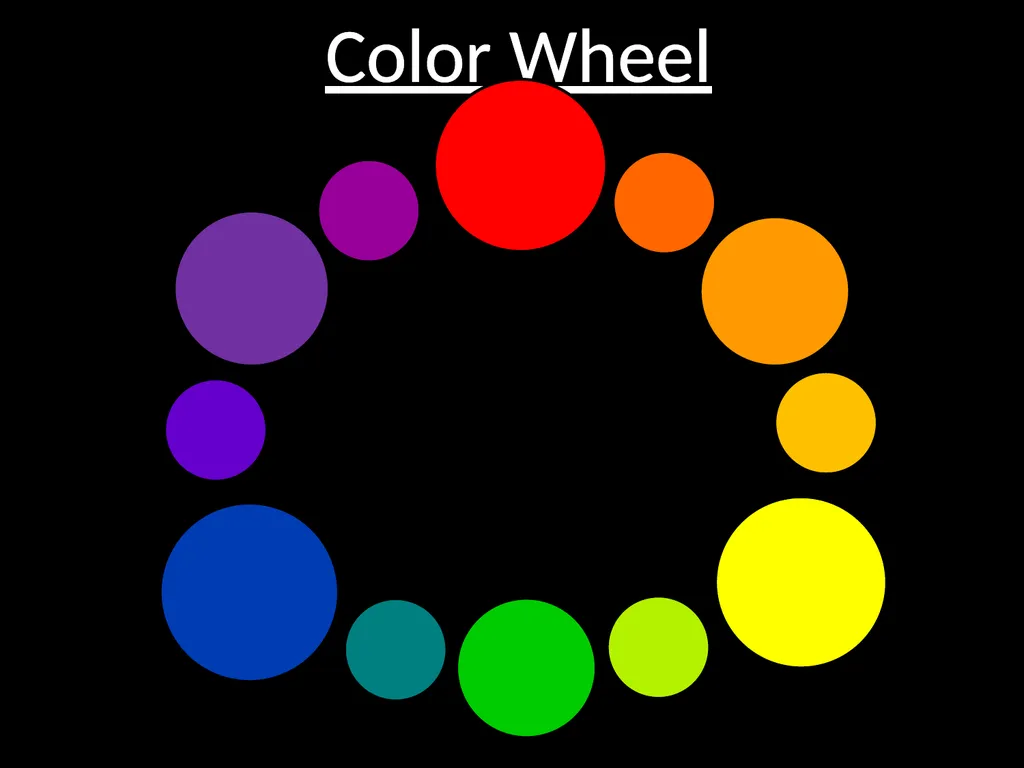
Color Wheel<br>
11
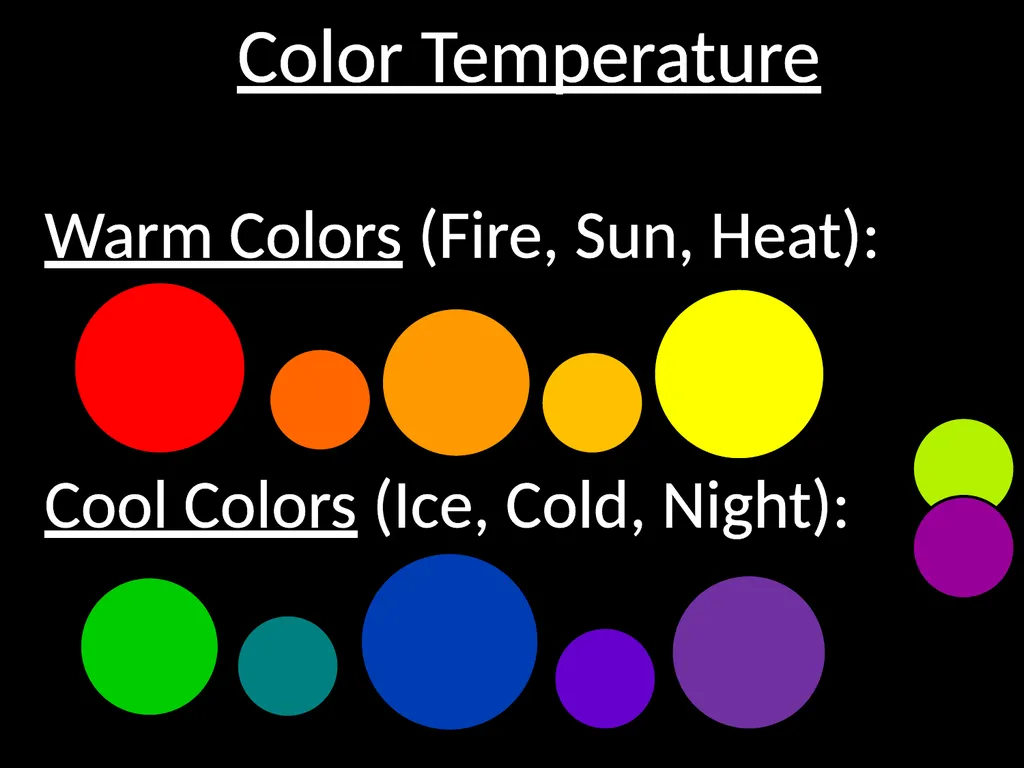
Color Temperature
Warm Colors (Fire, Sun, Heat):
Cool Colors (Ice, Cold, Night):<br>
12
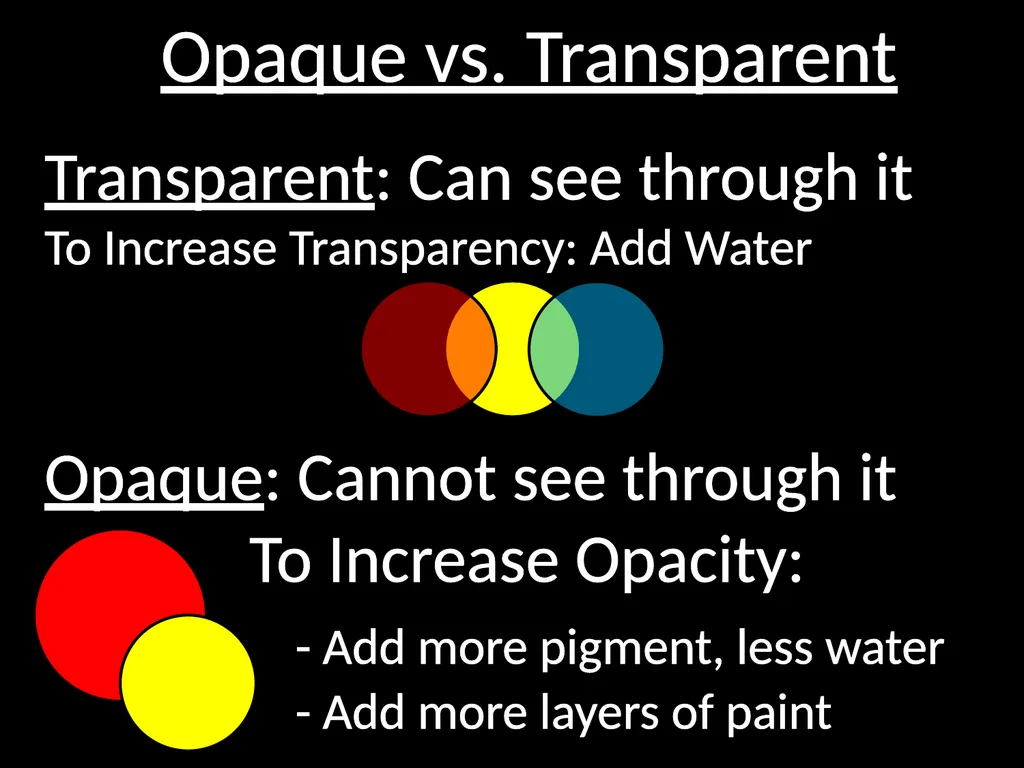
Opaque vs. Transparent
Transparent: Can see through it
To Increase Transparency: Add Water
Opaque: Cannot see through it
To Increase Opacity:
- Add more pigment, less water
- Add more layers of paint<br>
13
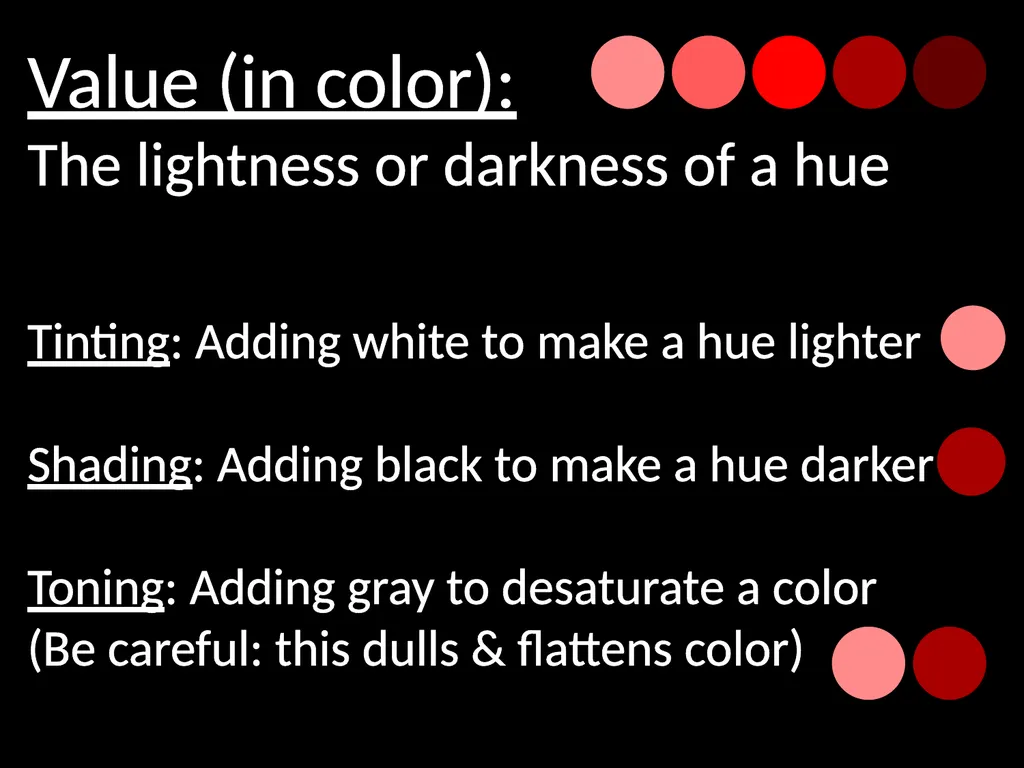
Value (in color):
The lightness or darkness of a hue
Tinting: Adding white to make a hue lighter
Shading: Adding black to make a hue darker
Toning: Adding gray to desaturate a color
(Be careful: this dulls & flattens color)<br>
14
Color Scheme
An arrangement or combination of colors used in a work of art
Monochromatic
Analogous
Complementary<br>
15
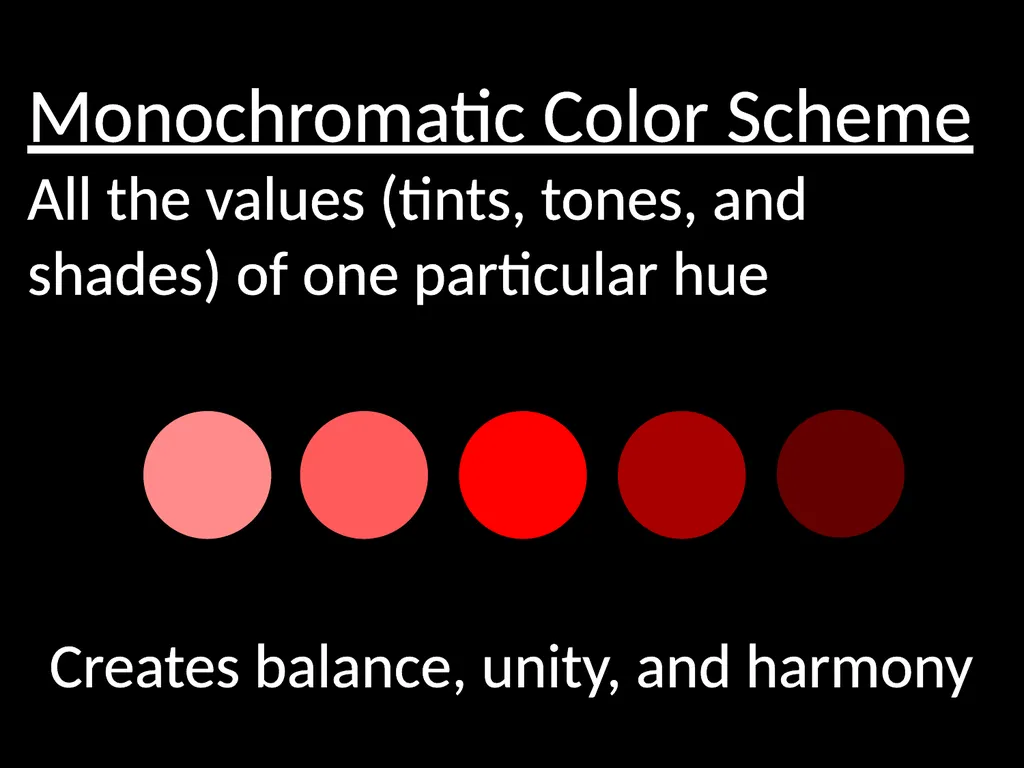
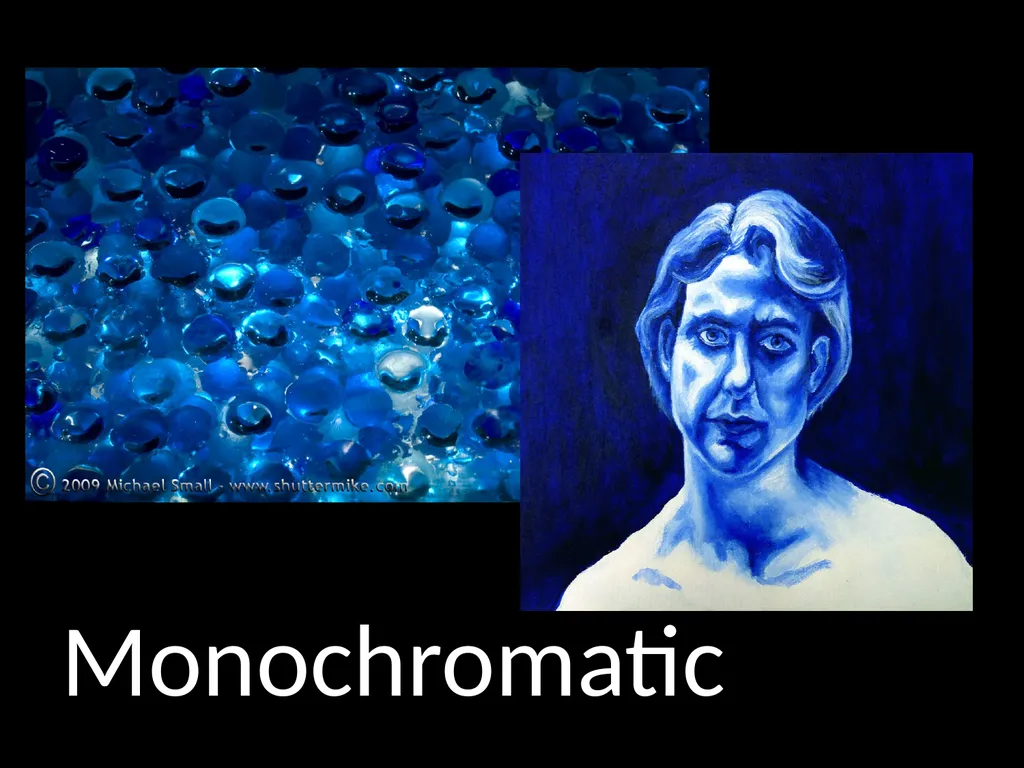
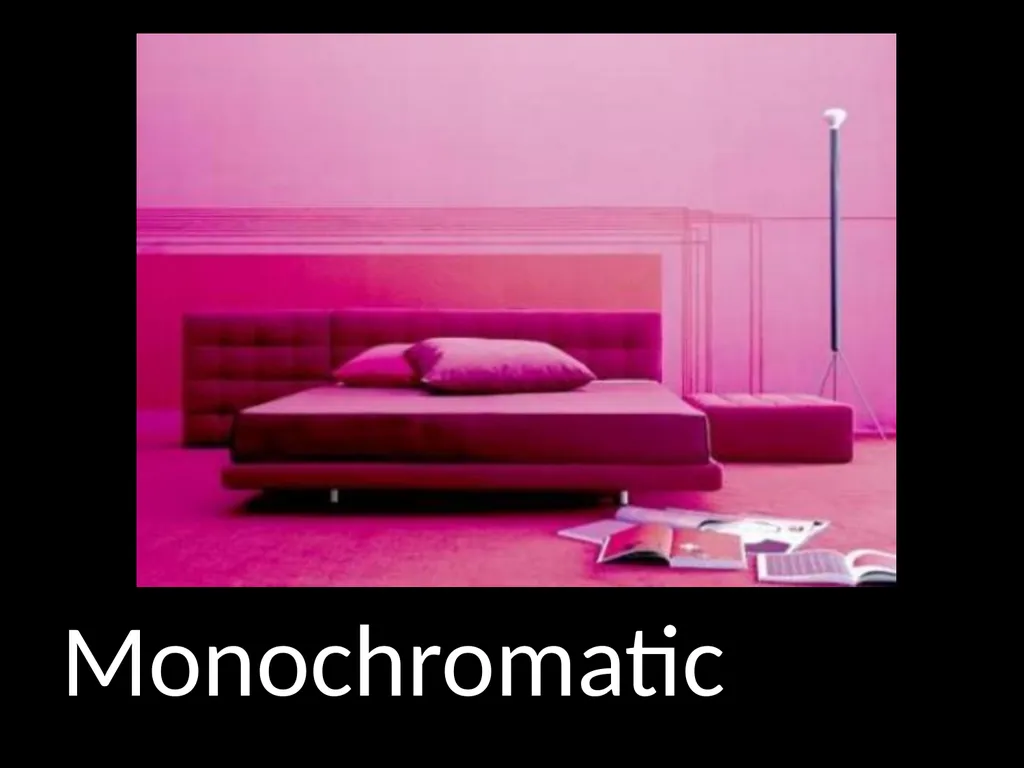
Monochromatic Color Scheme
All the values (tints, tones, and shades) of one particular hue
Creates balance, unity, and harmony<br>
16
Monochromatic<br>
17
Monochromatic<br>
18
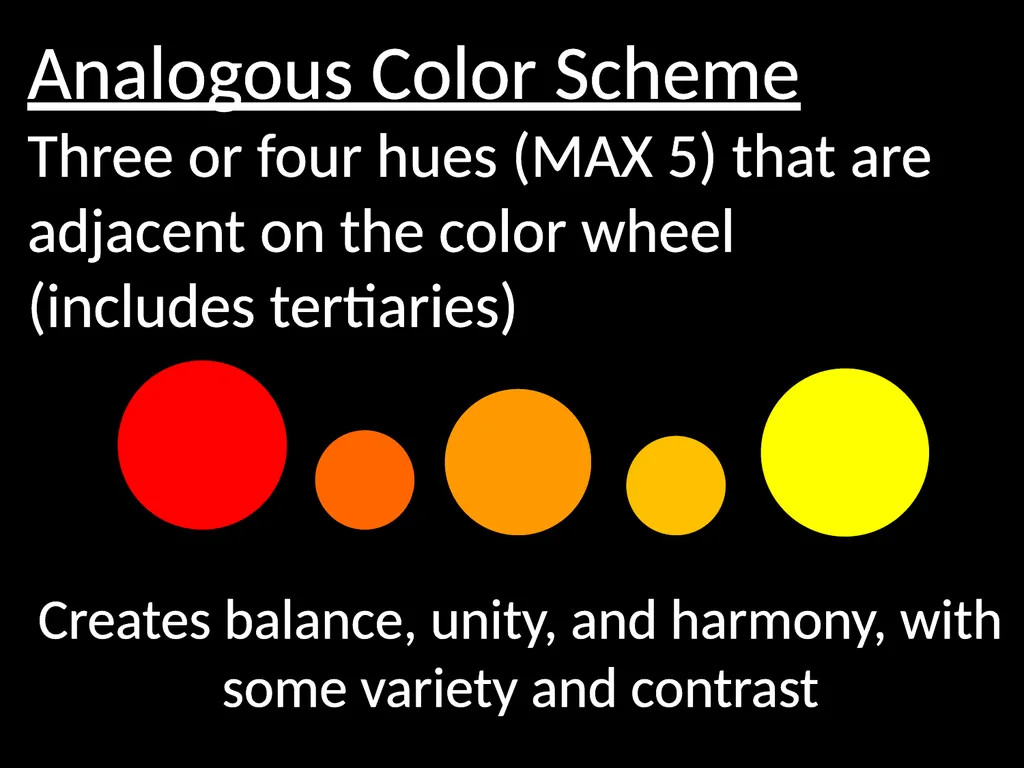
Analogous Color Scheme
Three or four hues (MAX 5) that are adjacent on the color wheel
(includes tertiaries)
Creates balance, unity, and harmony, with some variety and contrast<br>
19
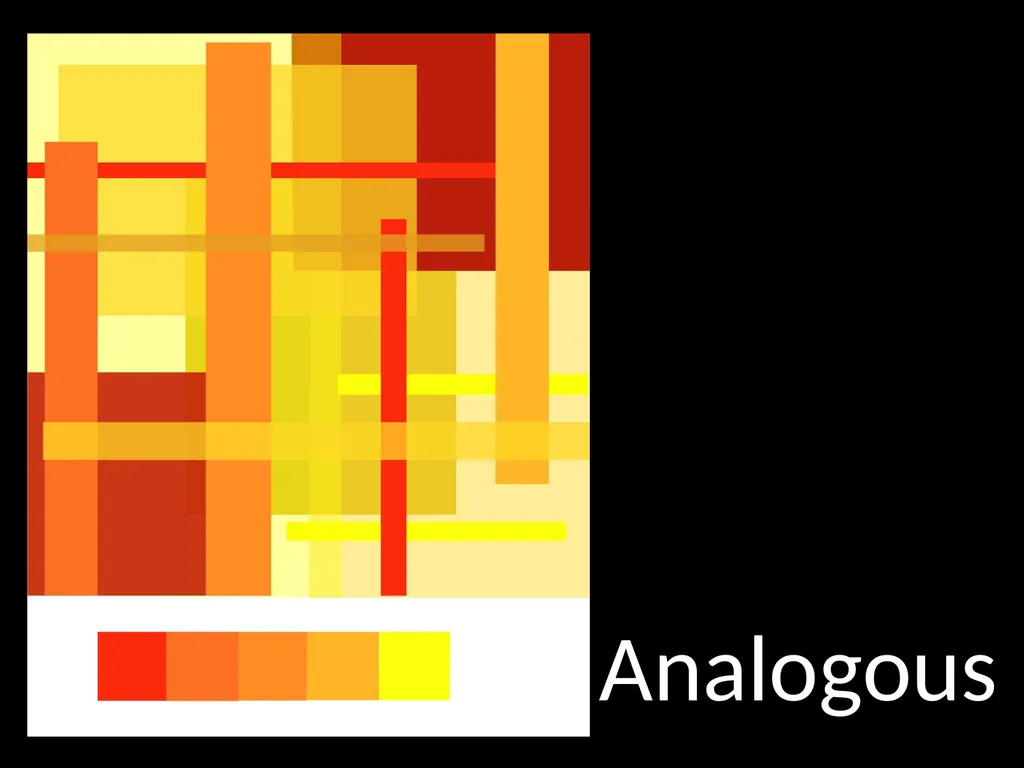
Analogous<br>
20
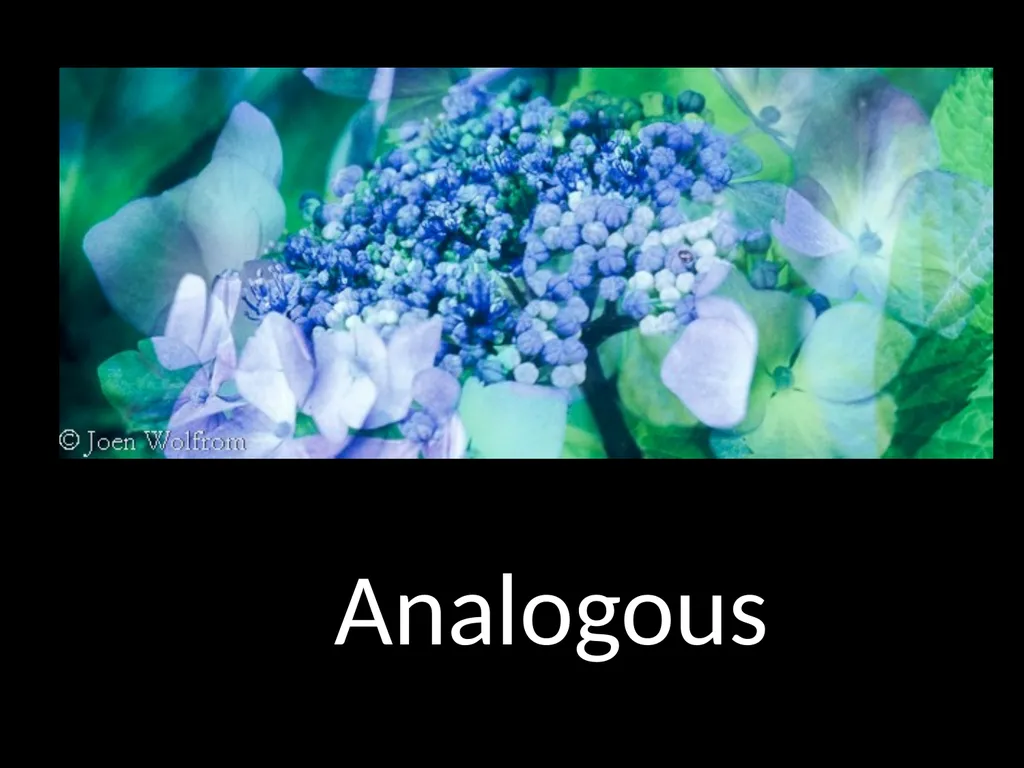
Analogous<br>
21
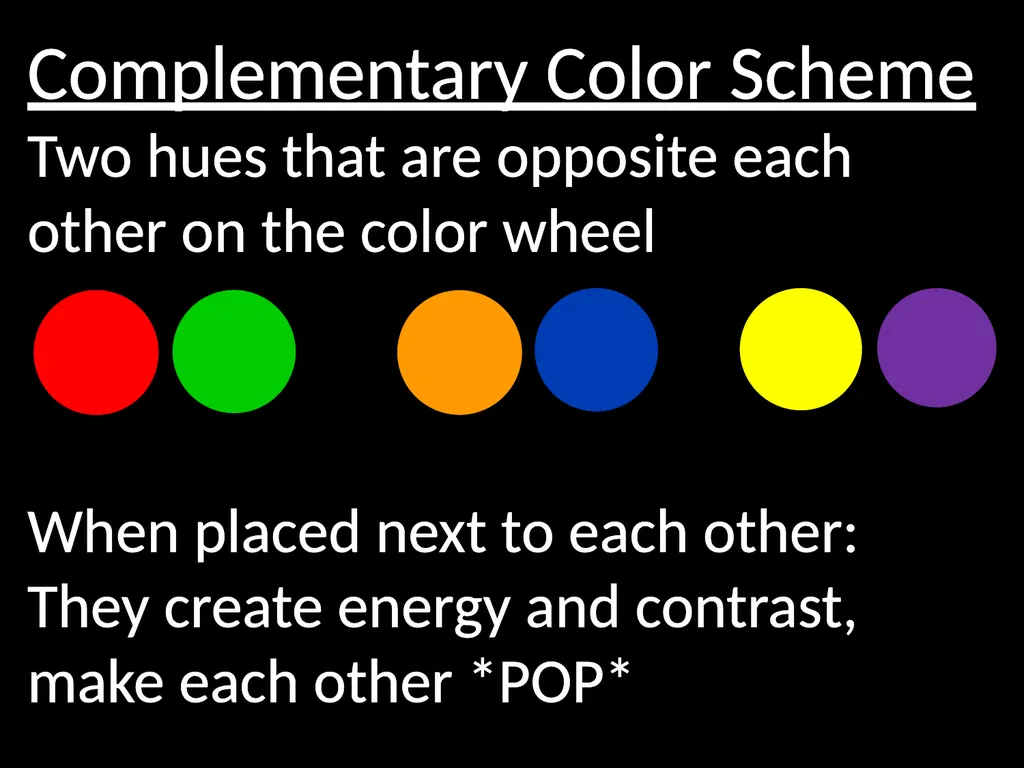
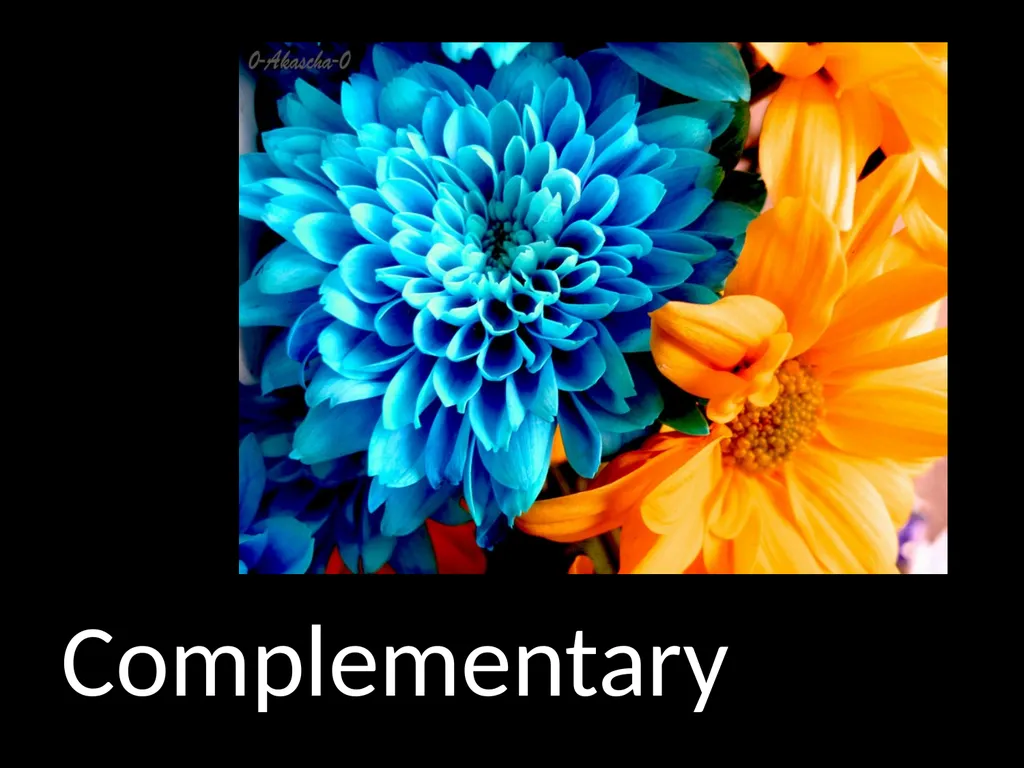
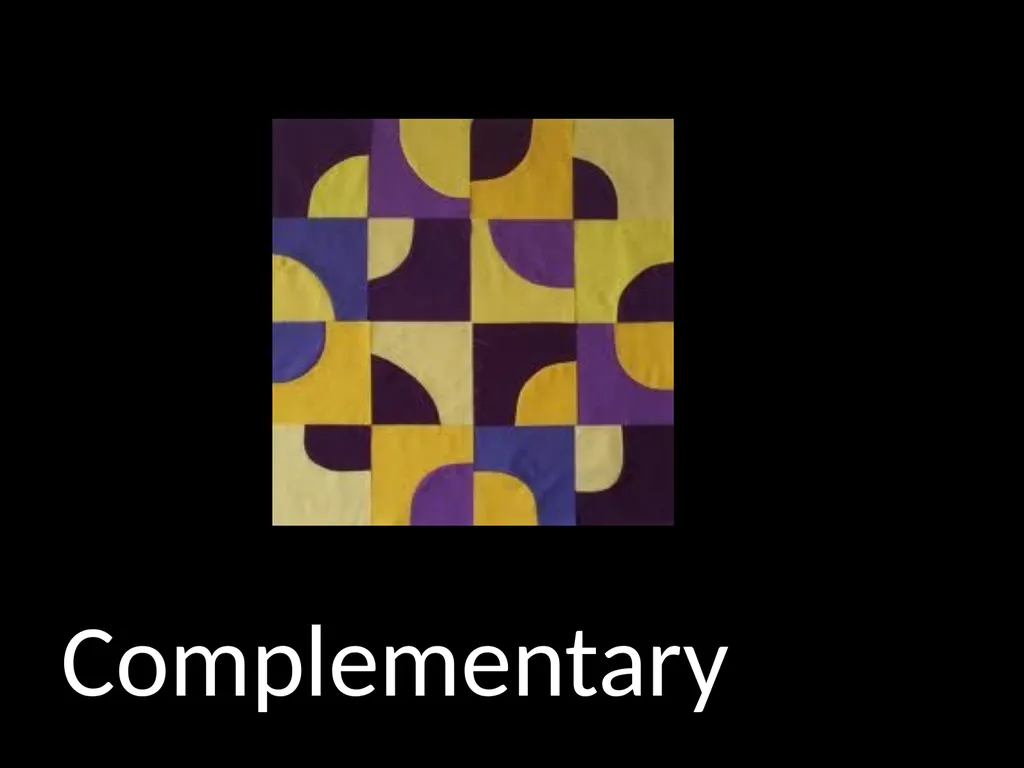
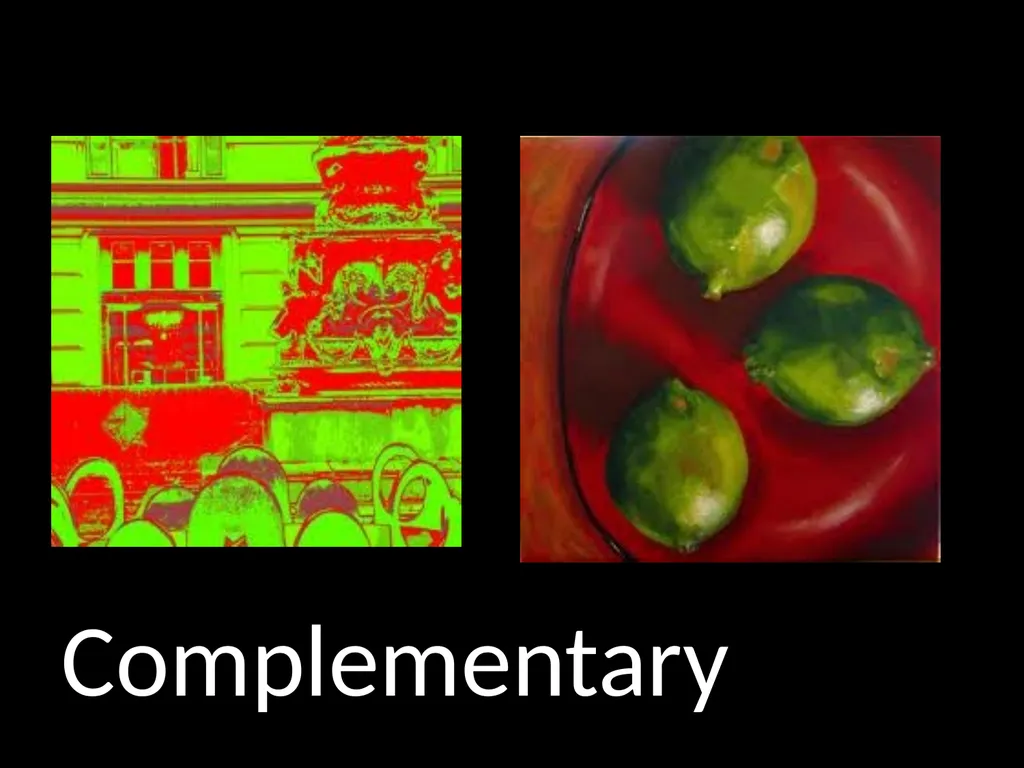
Complementary Color Scheme
Two hues that are opposite each other on the color wheel
When placed next to each other: They create energy and contrast, make each other *POP*<br>
22
Complementary<br>
23
Complementary<br>
24
Complementary<br>
25
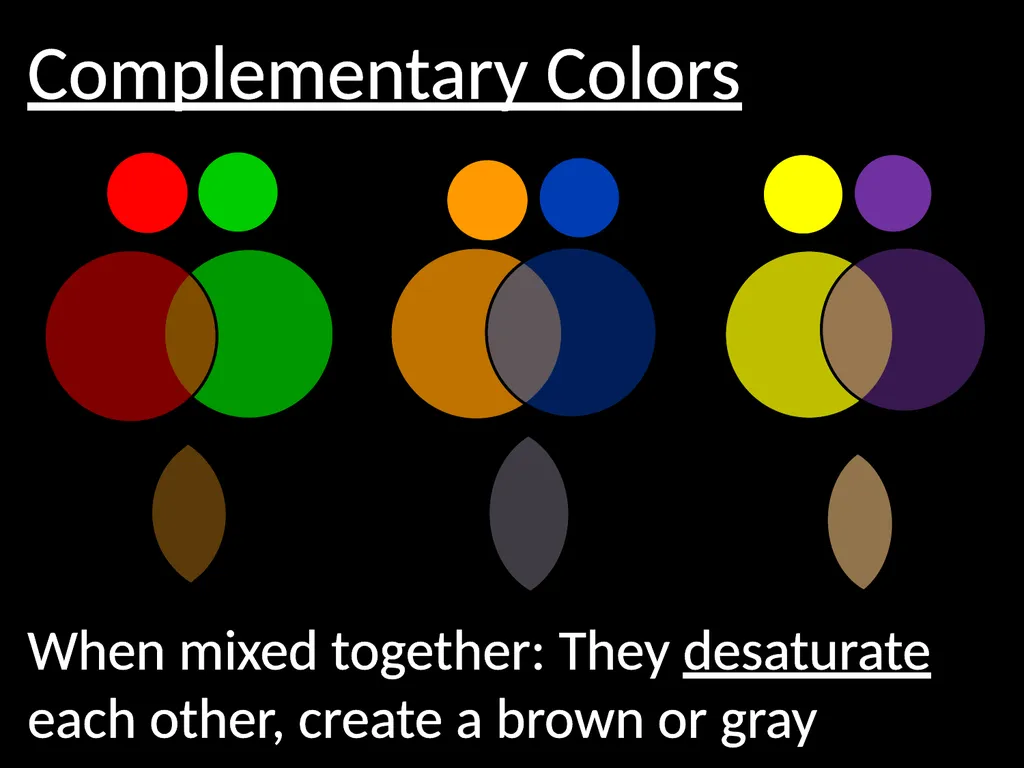
Complementary Colors
When mixed together: They desaturate each other, create a brown or gray<br>
26
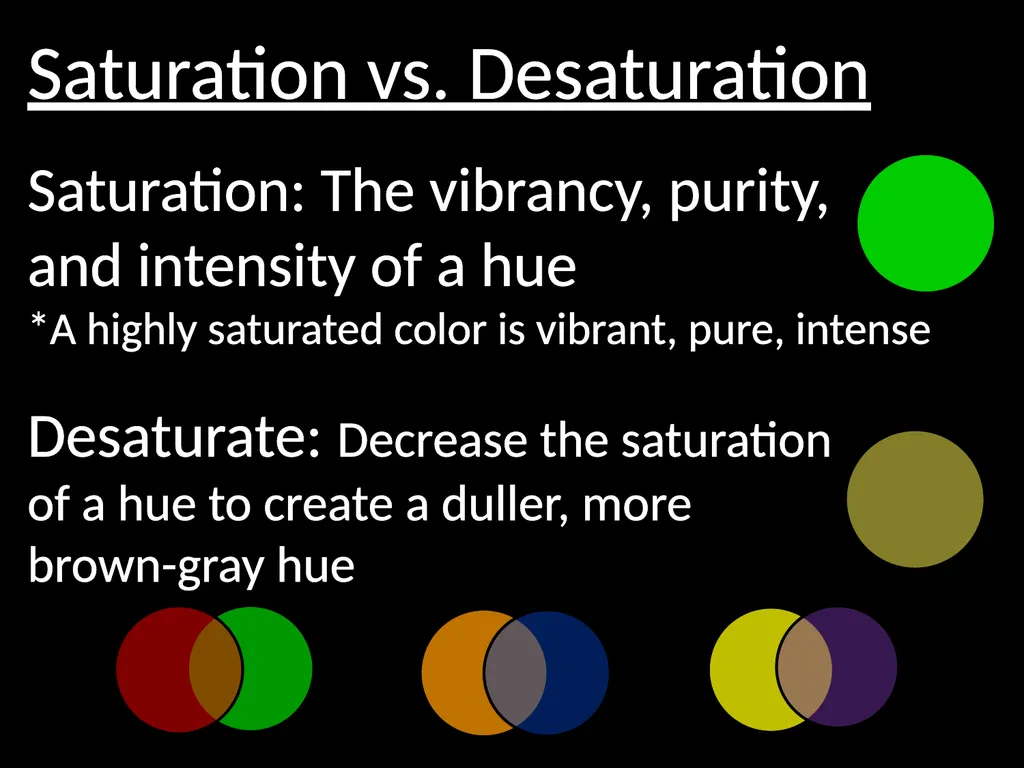
Saturation vs. Desaturation
Saturation: The vibrancy, purity,
and intensity of a hue
*A highly saturated color is vibrant, pure, intense
Desaturate: Decrease the saturation
of a hue to create a duller, more
brown-gray hue<br>