
Endowing a Game-Based Learning Hub for Augmenting
Description: Endowing a Game-Based Learning Hub for Augmenting Teaching and Learning: Design, Constellations and Perceptions from a Teachers Perspective Petros Lameras1, Stephanie Philippe2, Panagiotis Petridis3 1 School of Computing, Electronics and
Related Topics
Download Presentation
"Endowing a Game-Based Learning Hub for Augmenting" is the property of its rightful owner. Permission is granted to download and print the materials on this website for personal, non-commercial use only, and to display it on your personal computer provided you do not modify the materials and that you retain all copyright notices contained in the materials. By downloading content from our website, you accept the terms of this agreement.
Presentation Transcript
slide1. Endowing a Game-Based Learning Hub for Augmenting Teaching and Learning: Design, Constellations and Perceptions from a Teachers Perspective Petros Lameras1, Stephanie Philippe2, Panagiotis Petridis3
1 School of Computing, Electronics and Mathematics, Coventry University, Coventry, UK
2 Department of Research, Manzalab, Paris, France
3 Aston Business School, Aston University, Birmingham, UK 14th European Conference on Game Based Learning, 23-25 September 2020, Brighton, UK, a Virtual Conference<br>
slide2. Outline Rationale
Research questions
GBL hub interface
Research design
Results
Mapping perceptions of GBL with approaches to using the GBL hub
Conclusions<br>
slide3. Rationale There is consensus that GBL integrates and combines constructivist learning theories with game-like elements as means to provide self-regulated, goal-centred, creative and situated learning experiences
Teachers’ perceptions of and approaches to using learning technologies and digital pedagogies are not investigated systematically and comprehensively
Teachers may feel overwhelmed about the plethora of GBL tools, processes and strategies that exist on the Web, with no indications on how to search and access GBL that is relevant to subject-content, pedagogy and student profile<br>
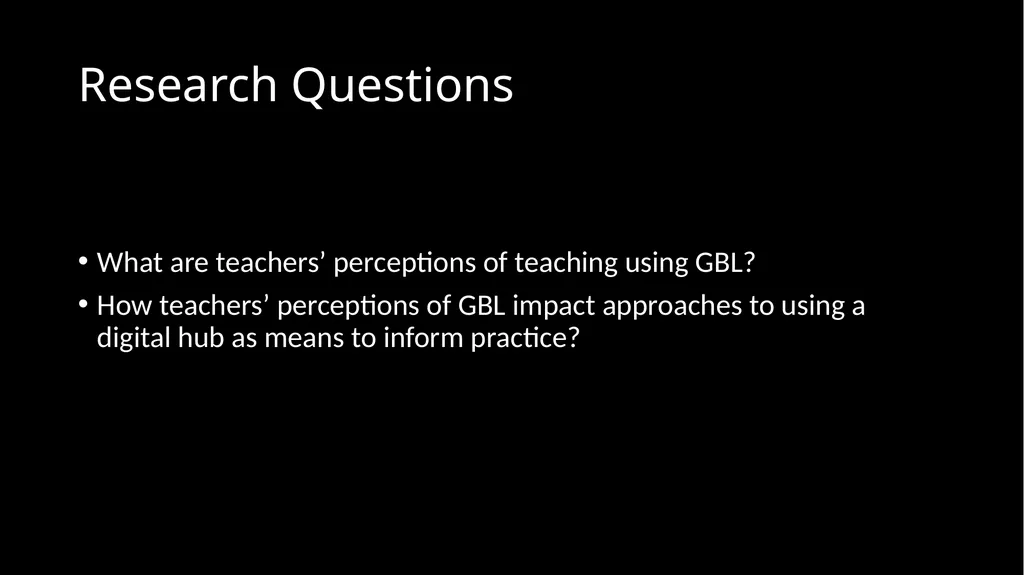
slide4. Research Questions What are teachers’ perceptions of teaching using GBL?
How teachers’ perceptions of GBL impact approaches to using a digital hub as means to inform practice?<br>
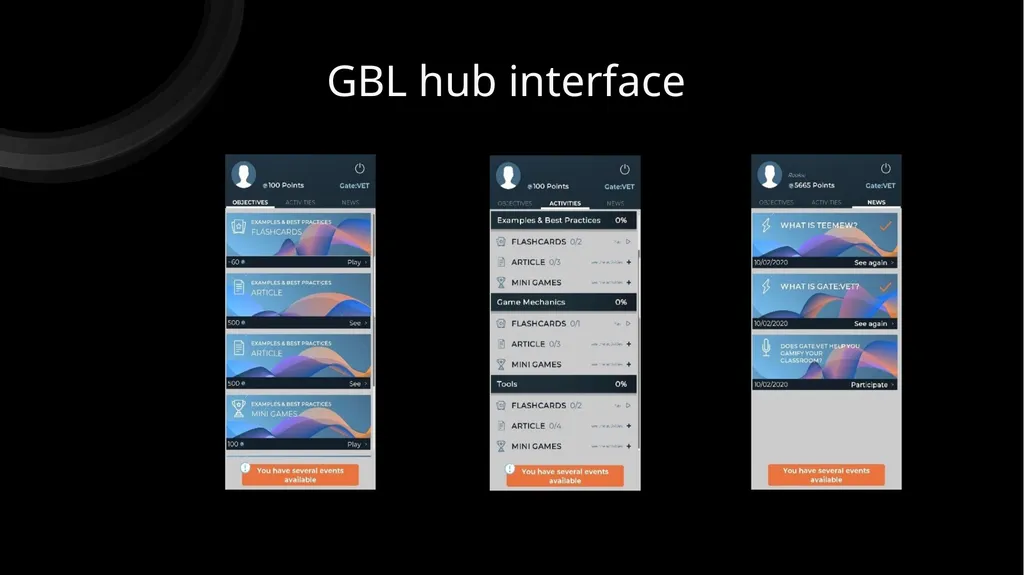
slide5. GBL hub interface<br>
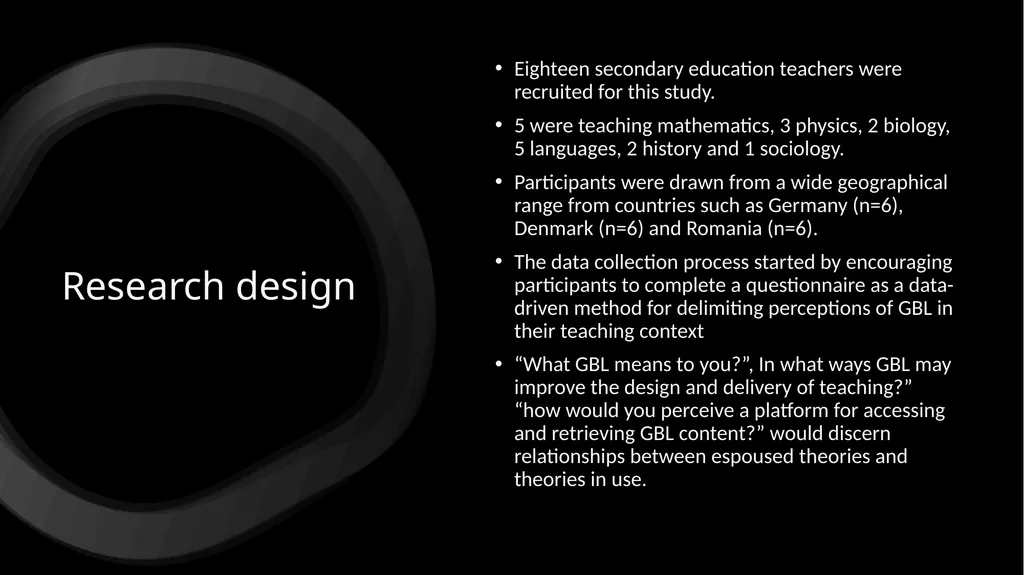
slide6. Research design Eighteen secondary education teachers were recruited for this study.
5 were teaching mathematics, 3 physics, 2 biology, 5 languages, 2 history and 1 sociology.
Participants were drawn from a wide geographical range from countries such as Germany (n=6), Denmark (n=6) and Romania (n=6).
The data collection process started by encouraging participants to complete a questionnaire as a data-driven method for delimiting perceptions of GBL in their teaching context
“What GBL means to you?”, In what ways GBL may improve the design and delivery of teaching?” “how would you perceive a platform for accessing and retrieving GBL content?” would discern relationships between espoused theories and theories in use.<br>
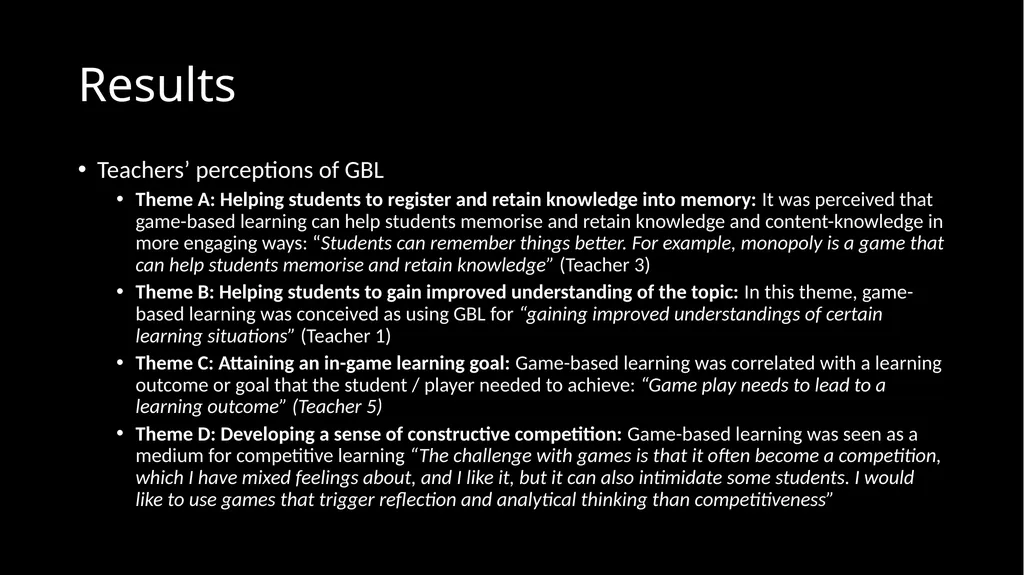
slide7. Results Teachers’ perceptions of GBL
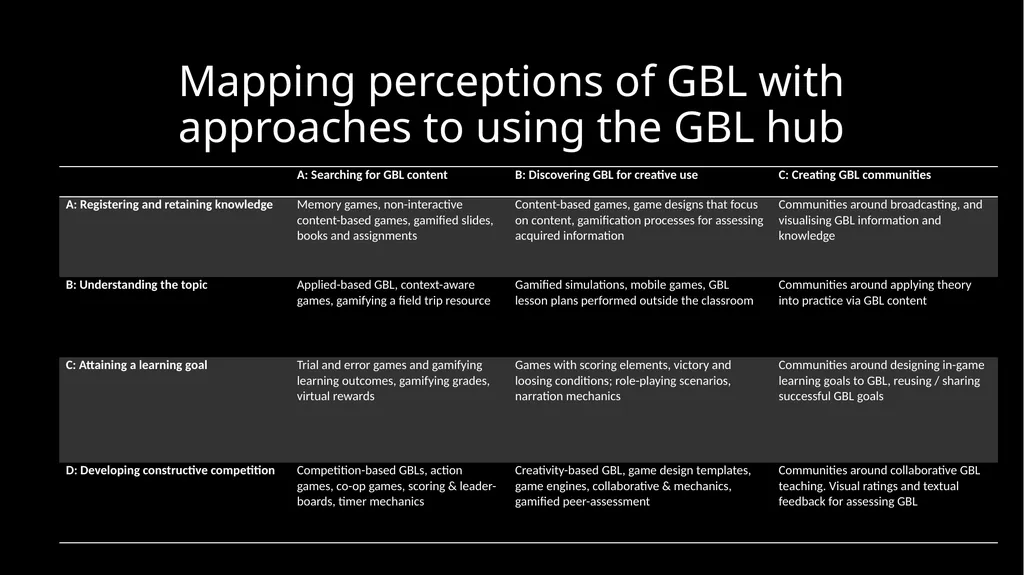
Theme A: Helping students to register and retain knowledge into memory: It was perceived that game-based learning can help students memorise and retain knowledge and content-knowledge in more engaging ways: “Students can remember things better. For example, monopoly is a game that can help students memorise and retain knowledge” (Teacher 3)
Theme B: Helping students to gain improved understanding of the topic: In this theme, game-based learning was conceived as using GBL for “gaining improved understandings of certain learning situations” (Teacher 1)
Theme C: Attaining an in-game learning goal: Game-based learning was correlated with a learning outcome or goal that the student / player needed to achieve: “Game play needs to lead to a learning outcome” (Teacher 5)
Theme D: Developing a sense of constructive competition: Game-based learning was seen as a medium for competitive learning “The challenge with games is that it often become a competition, which I have mixed feelings about, and I like it, but it can also intimidate some students. I would like to use games that trigger reflection and analytical thinking than competitiveness”<br>
slide8. Results Teachers’ approaches to using a GBL hub
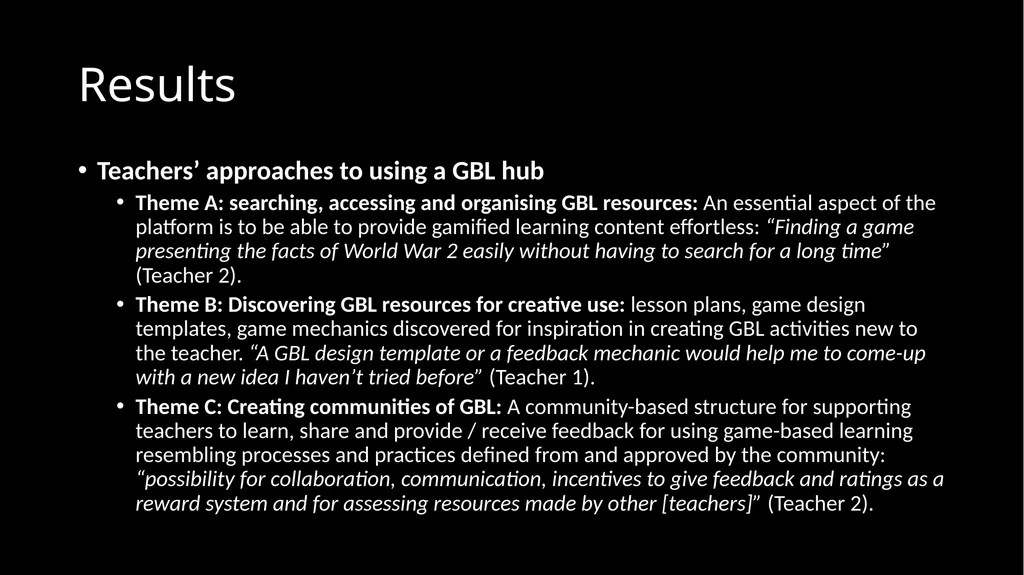
Theme A: searching, accessing and organising GBL resources: An essential aspect of the platform is to be able to provide gamified learning content effortless: “Finding a game presenting the facts of World War 2 easily without having to search for a long time” (Teacher 2).
Theme B: Discovering GBL resources for creative use: lesson plans, game design templates, game mechanics discovered for inspiration in creating GBL activities new to the teacher. “A GBL design template or a feedback mechanic would help me to come-up with a new idea I haven’t tried before” (Teacher 1).
Theme C: Creating communities of GBL: A community-based structure for supporting teachers to learn, share and provide / receive feedback for using game-based learning resembling processes and practices defined from and approved by the community: “possibility for collaboration, communication, incentives to give feedback and ratings as a reward system and for assessing resources made by other [teachers]” (Teacher 2).<br>
slide9. Mapping perceptions of GBL with approaches to using the GBL hub<br>
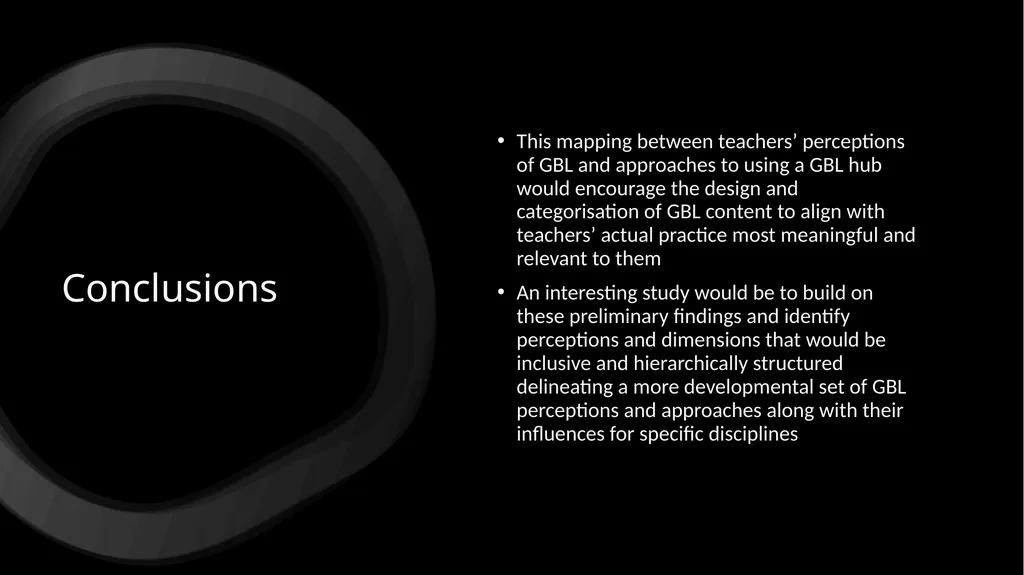
slide10. Conclusions This mapping between teachers’ perceptions of GBL and approaches to using a GBL hub would encourage the design and categorisation of GBL content to align with teachers’ actual practice most meaningful and relevant to them
An interesting study would be to build on these preliminary findings and identify perceptions and dimensions that would be inclusive and hierarchically structured delineating a more developmental set of GBL perceptions and approaches along with their influences for specific disciplines<br>
1 School of Computing, Electronics and Mathematics, Coventry University, Coventry, UK
2 Department of Research, Manzalab, Paris, France
3 Aston Business School, Aston University, Birmingham, UK 14th European Conference on Game Based Learning, 23-25 September 2020, Brighton, UK, a Virtual Conference<br>
slide2. Outline Rationale
Research questions
GBL hub interface
Research design
Results
Mapping perceptions of GBL with approaches to using the GBL hub
Conclusions<br>
slide3. Rationale There is consensus that GBL integrates and combines constructivist learning theories with game-like elements as means to provide self-regulated, goal-centred, creative and situated learning experiences
Teachers’ perceptions of and approaches to using learning technologies and digital pedagogies are not investigated systematically and comprehensively
Teachers may feel overwhelmed about the plethora of GBL tools, processes and strategies that exist on the Web, with no indications on how to search and access GBL that is relevant to subject-content, pedagogy and student profile<br>
slide4. Research Questions What are teachers’ perceptions of teaching using GBL?
How teachers’ perceptions of GBL impact approaches to using a digital hub as means to inform practice?<br>
slide5. GBL hub interface<br>
slide6. Research design Eighteen secondary education teachers were recruited for this study.
5 were teaching mathematics, 3 physics, 2 biology, 5 languages, 2 history and 1 sociology.
Participants were drawn from a wide geographical range from countries such as Germany (n=6), Denmark (n=6) and Romania (n=6).
The data collection process started by encouraging participants to complete a questionnaire as a data-driven method for delimiting perceptions of GBL in their teaching context
“What GBL means to you?”, In what ways GBL may improve the design and delivery of teaching?” “how would you perceive a platform for accessing and retrieving GBL content?” would discern relationships between espoused theories and theories in use.<br>
slide7. Results Teachers’ perceptions of GBL
Theme A: Helping students to register and retain knowledge into memory: It was perceived that game-based learning can help students memorise and retain knowledge and content-knowledge in more engaging ways: “Students can remember things better. For example, monopoly is a game that can help students memorise and retain knowledge” (Teacher 3)
Theme B: Helping students to gain improved understanding of the topic: In this theme, game-based learning was conceived as using GBL for “gaining improved understandings of certain learning situations” (Teacher 1)
Theme C: Attaining an in-game learning goal: Game-based learning was correlated with a learning outcome or goal that the student / player needed to achieve: “Game play needs to lead to a learning outcome” (Teacher 5)
Theme D: Developing a sense of constructive competition: Game-based learning was seen as a medium for competitive learning “The challenge with games is that it often become a competition, which I have mixed feelings about, and I like it, but it can also intimidate some students. I would like to use games that trigger reflection and analytical thinking than competitiveness”<br>
slide8. Results Teachers’ approaches to using a GBL hub
Theme A: searching, accessing and organising GBL resources: An essential aspect of the platform is to be able to provide gamified learning content effortless: “Finding a game presenting the facts of World War 2 easily without having to search for a long time” (Teacher 2).
Theme B: Discovering GBL resources for creative use: lesson plans, game design templates, game mechanics discovered for inspiration in creating GBL activities new to the teacher. “A GBL design template or a feedback mechanic would help me to come-up with a new idea I haven’t tried before” (Teacher 1).
Theme C: Creating communities of GBL: A community-based structure for supporting teachers to learn, share and provide / receive feedback for using game-based learning resembling processes and practices defined from and approved by the community: “possibility for collaboration, communication, incentives to give feedback and ratings as a reward system and for assessing resources made by other [teachers]” (Teacher 2).<br>
slide9. Mapping perceptions of GBL with approaches to using the GBL hub<br>
slide10. Conclusions This mapping between teachers’ perceptions of GBL and approaches to using a GBL hub would encourage the design and categorisation of GBL content to align with teachers’ actual practice most meaningful and relevant to them
An interesting study would be to build on these preliminary findings and identify perceptions and dimensions that would be inclusive and hierarchically structured delineating a more developmental set of GBL perceptions and approaches along with their influences for specific disciplines<br>