ENGINEERING LICENSURE A PATH OF OPPORTUNITY What is an engineer?? An engineer is an individual who uses hisher mathematical and engineering science skills to produce products and systems that are useful to mankind. WHY DO WE HAVE
Related Topics
Share
Embed code
Download this presentation From Below
"ENGINEERING LICENSURE A PATH OF OPPORTUNITY What" is the property of its rightful owner. Permission is granted to
download and print the materials on this website for personal, non-commercial use only, and to display it
on your personal computer provided you do not modify the materials and that you retain all copyright
notices contained in the materials. By downloading content from our website, you accept the terms of this
agreement.
Presentation Transcript
01
ENGINEERING LICENSURE
A PATH OF OPPORTUNITY<br>
02
What is an engineer?? An engineer is an individual who uses his/her mathematical and engineering science skills to produce products and systems that are useful to mankind.<br>
03
WHY DO WE HAVE LICENSURE? In order to safeguard life, health, and property, and to promote the public welfare.<br>
04
1. Prestige
2. Career Development
3. Authority
4. Flexibility
Money Five Reasons to Get Licensed<br>
05
VIDEO<br>
06
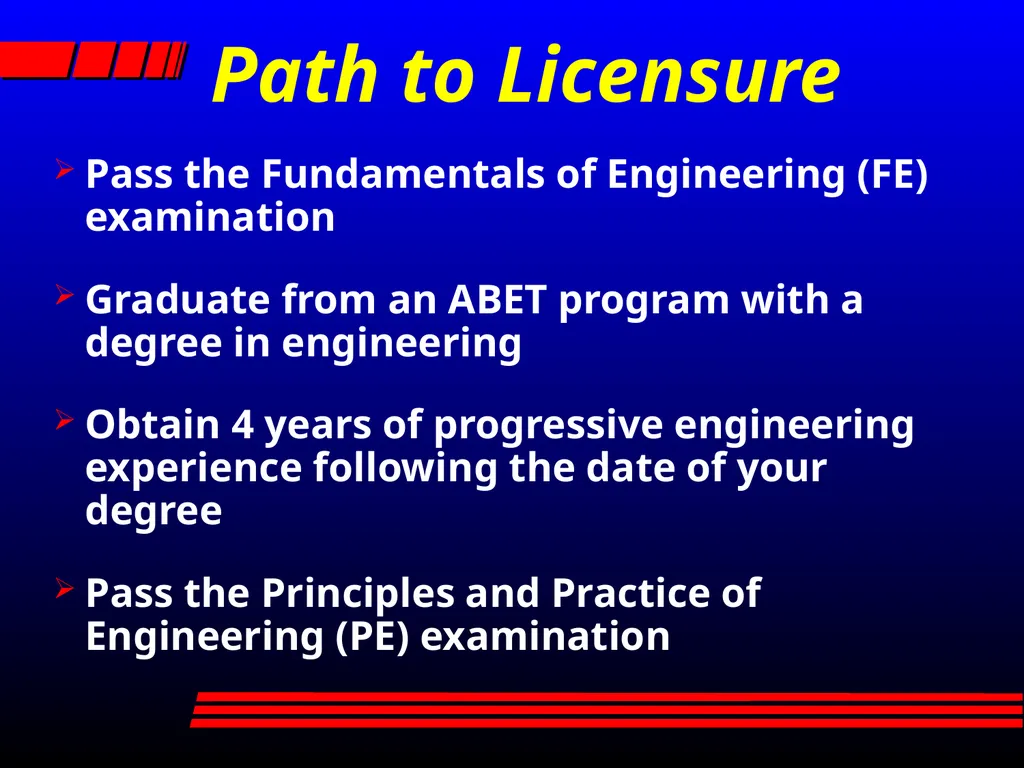
Path to Licensure Pass the Fundamentals of Engineering (FE) examination
Graduate from an ABET program with a degree in engineering
Obtain 4 years of progressive engineering experience following the date of your degree
Pass the Principles and Practice of Engineering (PE) examination<br>
07
The path to licensure begins with the FE: the Fundamentals of Engineering Examination<br>
08
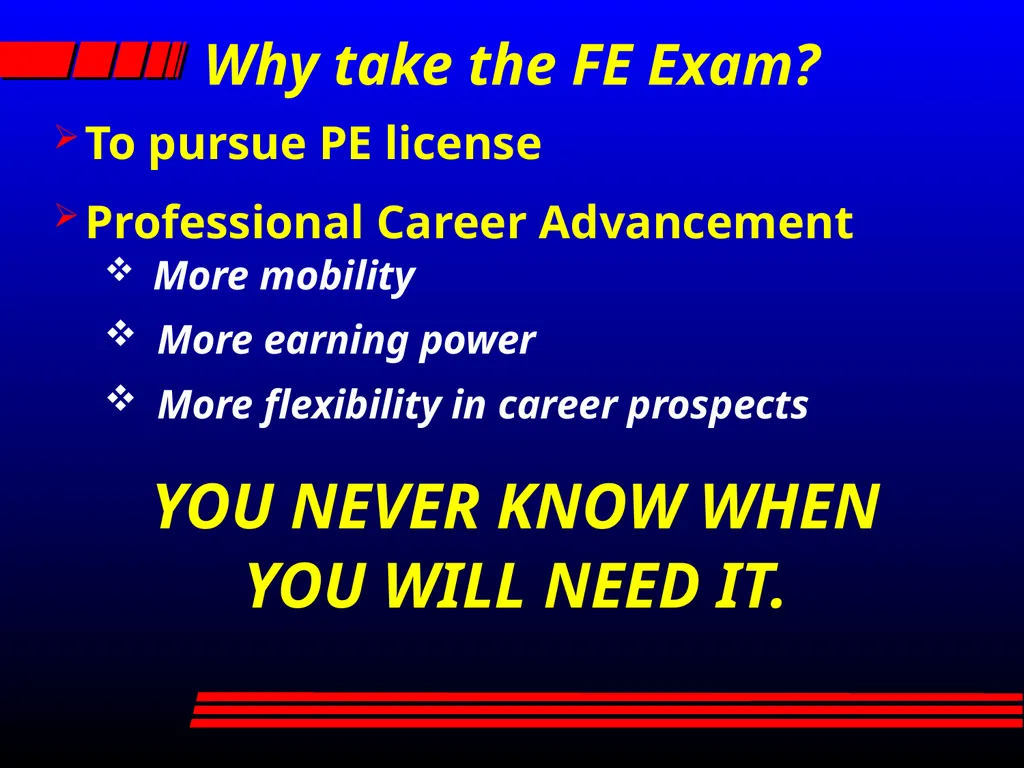
Why take the FE Exam? To pursue PE license
Professional Career Advancement
More mobility
More earning power
More flexibility in career prospects
YOU NEVER KNOW WHEN
YOU WILL NEED IT.<br>
09
Once you pass the FE, it is good forever and is accepted in all 50 states and numerous U.S. territories*.<br>
10
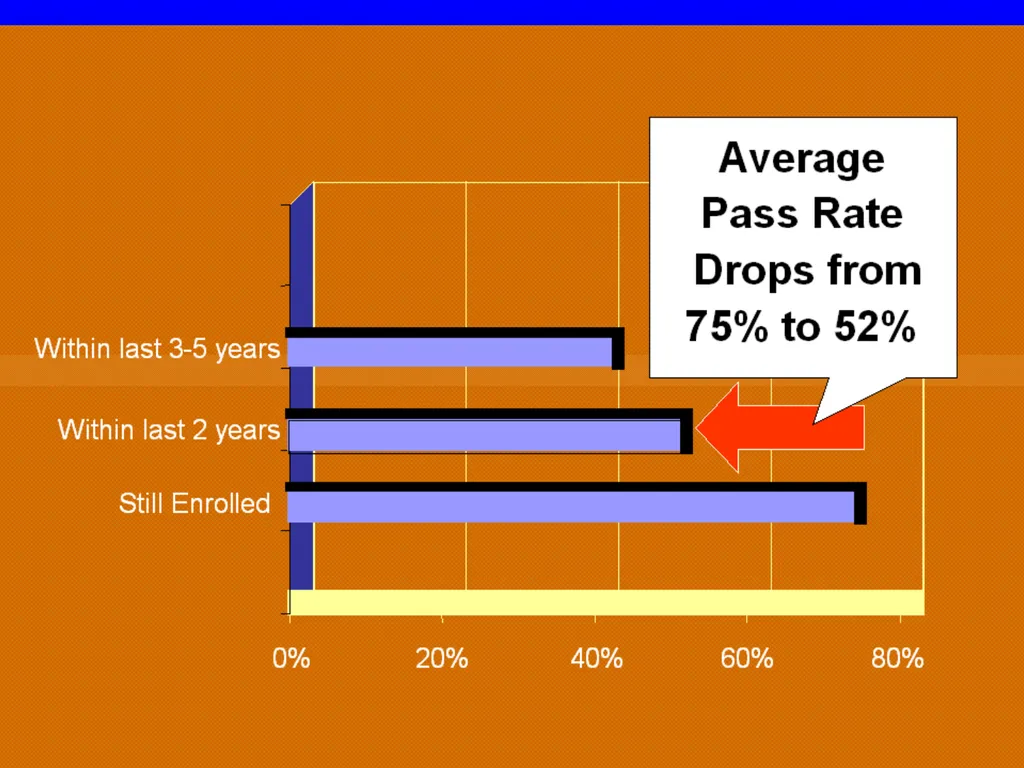
You may take the exam anytime, but pass rates are the highest during your last two semesters in school . FE EXAM<br>
11
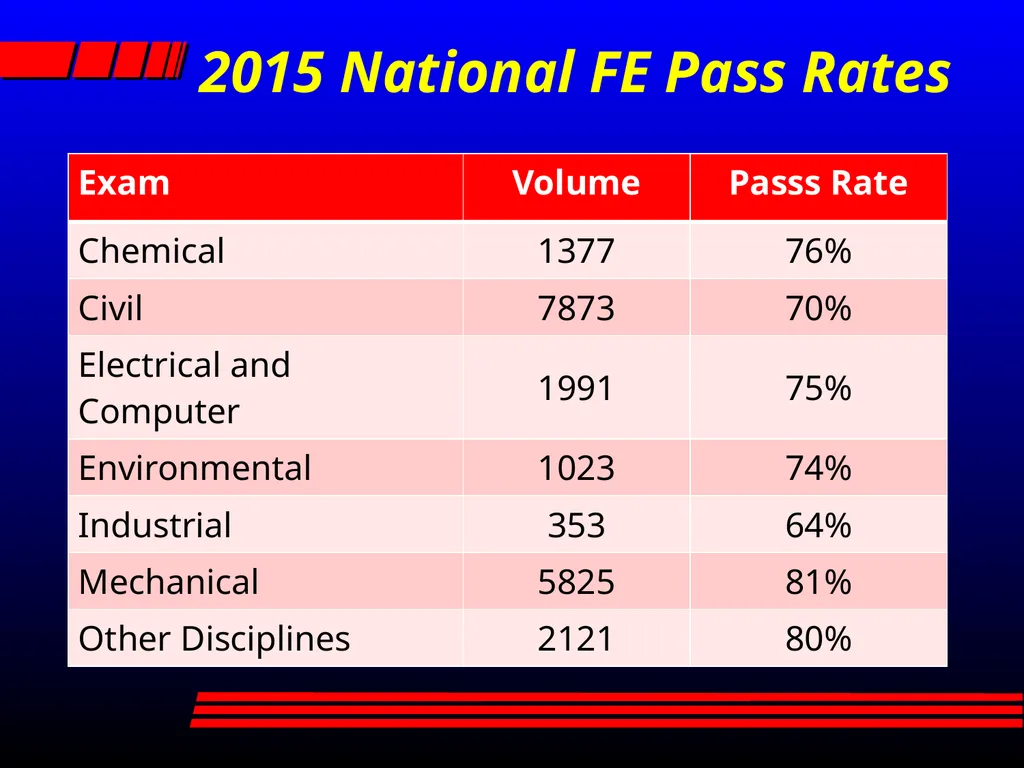
2015 National FE Pass Rates<br>
12
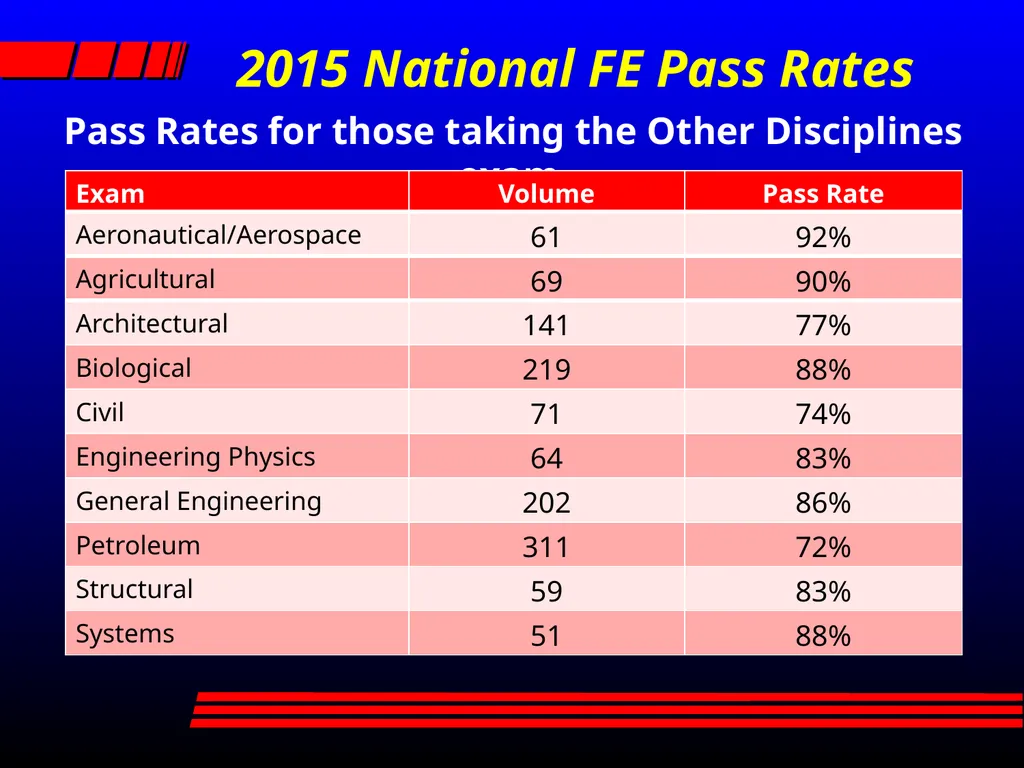
2015 National FE Pass Rates Pass Rates for those taking the Other Disciplines exam<br>
13
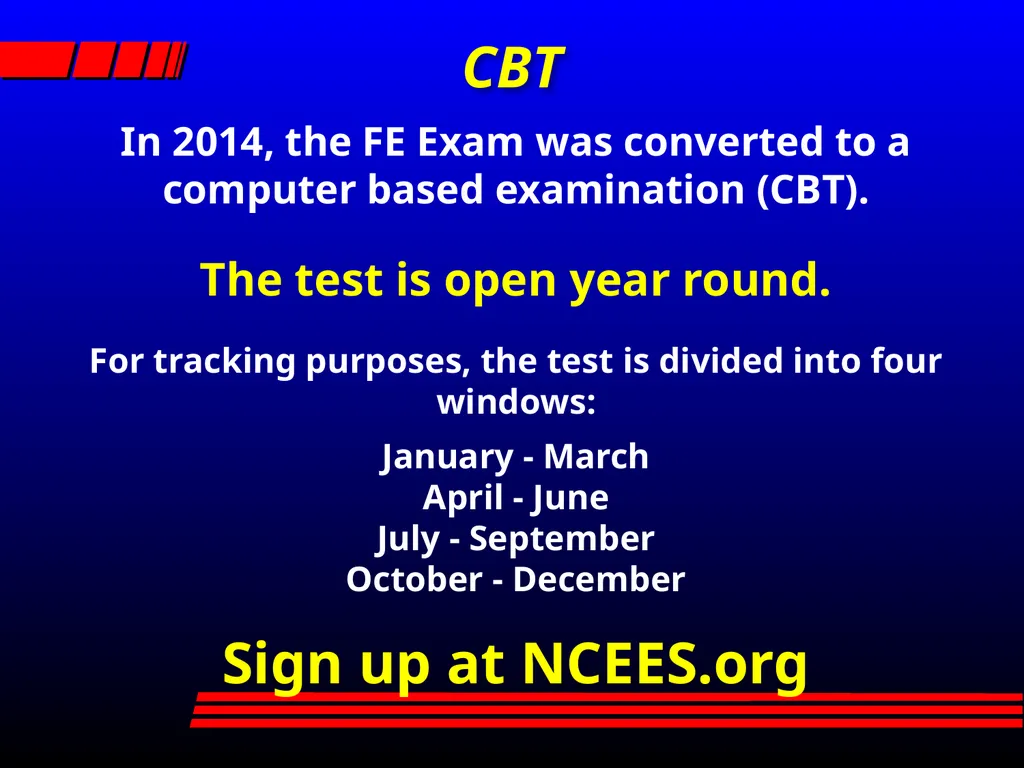
In 2014, the FE Exam was converted to a computer based examination (CBT).
The test is open year round.
For tracking purposes, the test is divided into four windows:
January - March
April - June
July - September
October - December
Sign up at NCEES.org CBT<br>
14
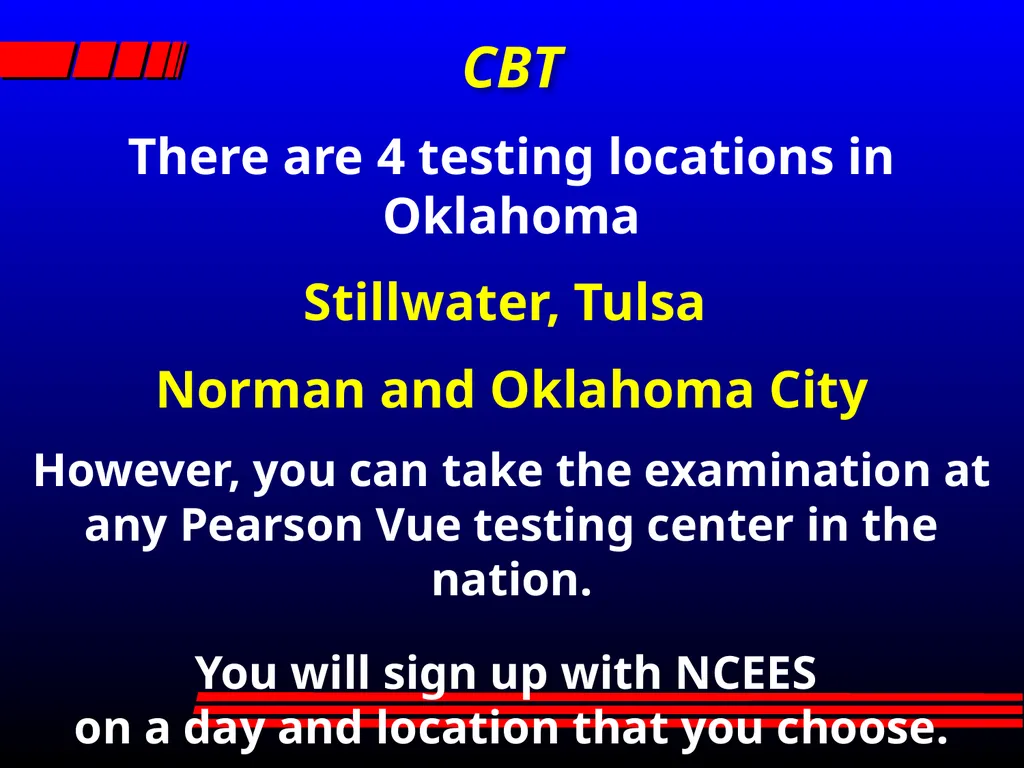
There are 4 testing locations in Oklahoma
Stillwater, Tulsa
Norman and Oklahoma City
However, you can take the examination at any Pearson Vue testing center in the nation.
You will sign up with NCEES
on a day and location that you choose. CBT<br>
15
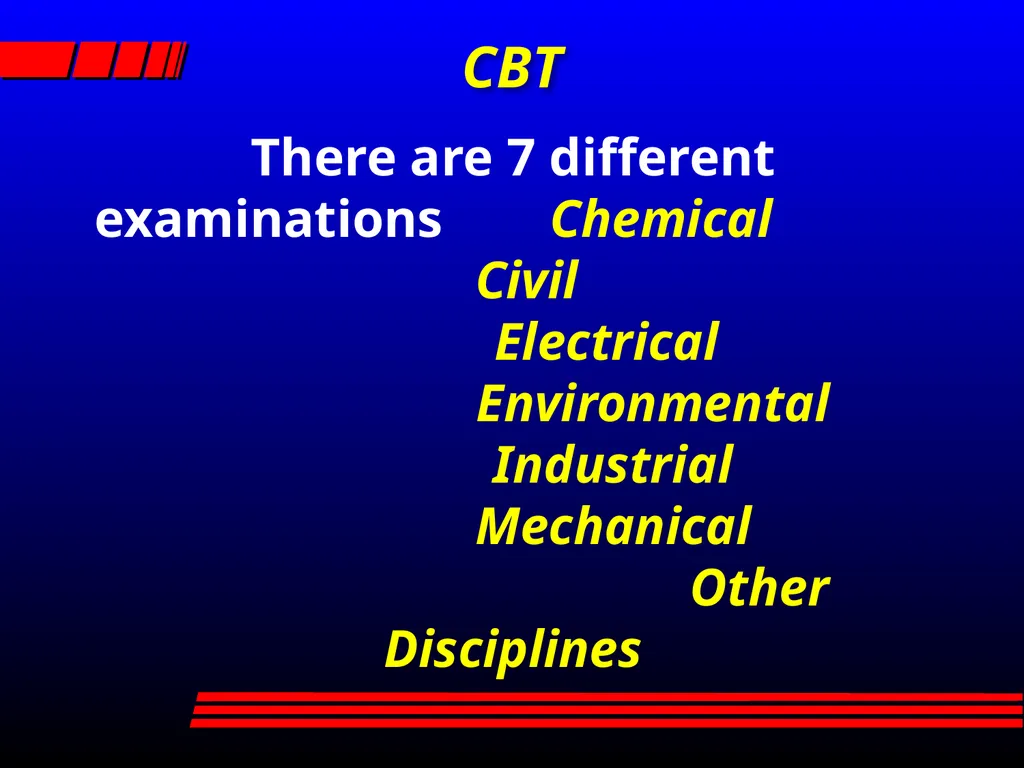
There are 7 different examinations Chemical Civil Electrical Environmental Industrial Mechanical Other Disciplines CBT<br>
16
The CBT exam is 5 hours and 20 minutes long and will cover 110 questions.
You will schedule a 6 hour block of time. This block will contain a tutorial, an optional 25 minute break, and an end of exam survey.
The cost of the exam is $225.00. CBT<br>
17
The CBT exam is a closed book exam but you will have an electronic reference manual available on a split screen.
The reference material will be available for review or purchase on the NCEES website prior to the exam.
Examinees will be able to bring and use NCEES approved calculators on CBT exams. CBT<br>
18
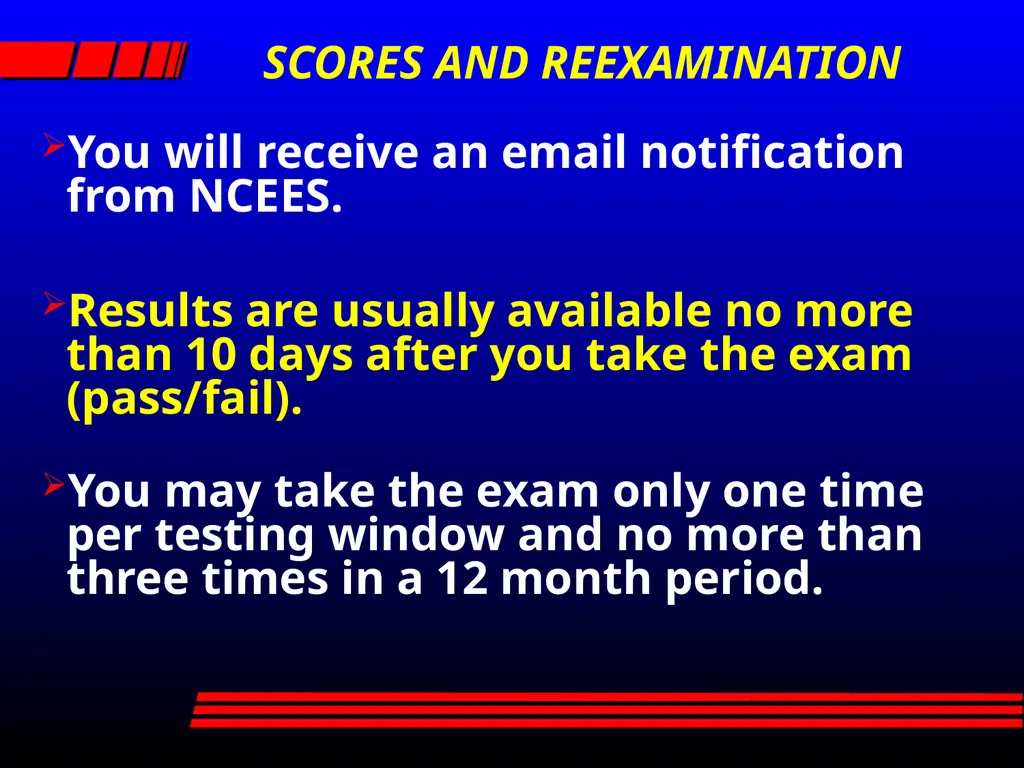
You will receive an email notification from NCEES.
Results are usually available no more than 10 days after you take the exam (pass/fail).
You may take the exam only one time per testing window and no more than three times in a 12 month period. SCORES AND REEXAMINATION<br>
19
Link to
NCEES CBT Information. CBT http://ncees.org/exams/fe-exam/<br>
20
After passing the FE exam and graduating you may apply to be certified as an engineer intern in any state or territory where you have accepted employment.
In Oklahoma, EI Certification requires:
Passing the FE Exam
Graduating from an ABET degree program*
Character References from 3 people Engineer Intern<br>
21
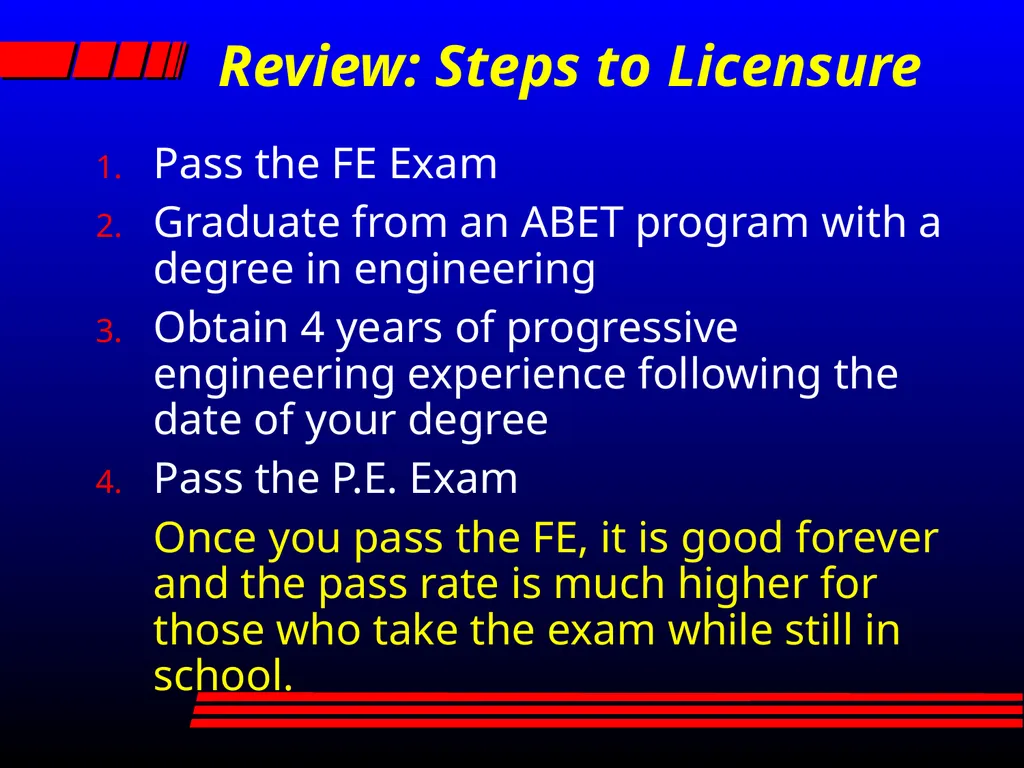
Review: Steps to Licensure Pass the FE Exam
Graduate from an ABET program with a degree in engineering
Obtain 4 years of progressive engineering experience following the date of your degree
Pass the P.E. Exam
Once you pass the FE, it is good forever and the pass rate is much higher for those who take the exam while still in school.<br>
22
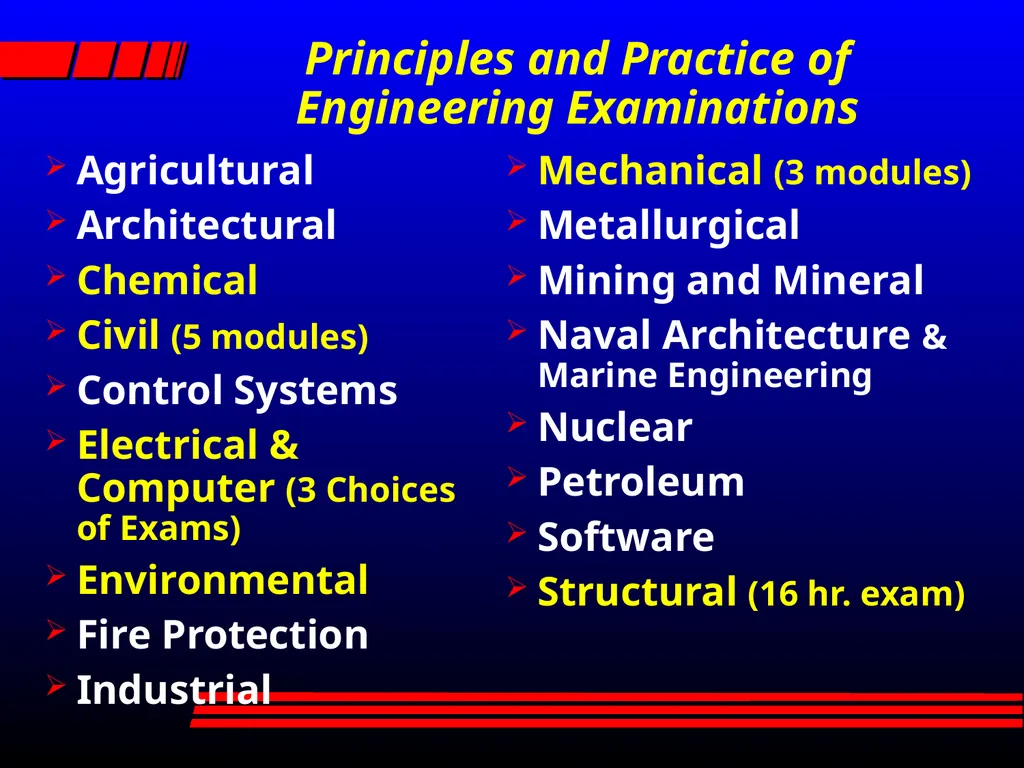
Principles and Practice of Engineering Examinations Agricultural
Architectural
Chemical
Civil (5 modules)
Control Systems
Electrical & Computer (3 Choices of Exams)
Environmental
Fire Protection
Industrial Mechanical (3 modules)
Metallurgical
Mining and Mineral
Naval Architecture & Marine Engineering
Nuclear
Petroleum
Software
Structural (16 hr. exam)<br>