Enlightenment, Counter-Enlightenment, and the Supernatural Peter Marshall What was the relationship between religion and the Enlightenment? no longer seen as intrinsically antagonistic. Few outright atheists among leading figures; some
"Enlightenment, Counter-Enlightenment, and the" is the property of its rightful owner. Permission is granted to
download and print the materials on this website for personal, non-commercial use only, and to display it
on your personal computer provided you do not modify the materials and that you retain all copyright
notices contained in the materials. By downloading content from our website, you accept the terms of this
agreement.
Presentation Transcript
01
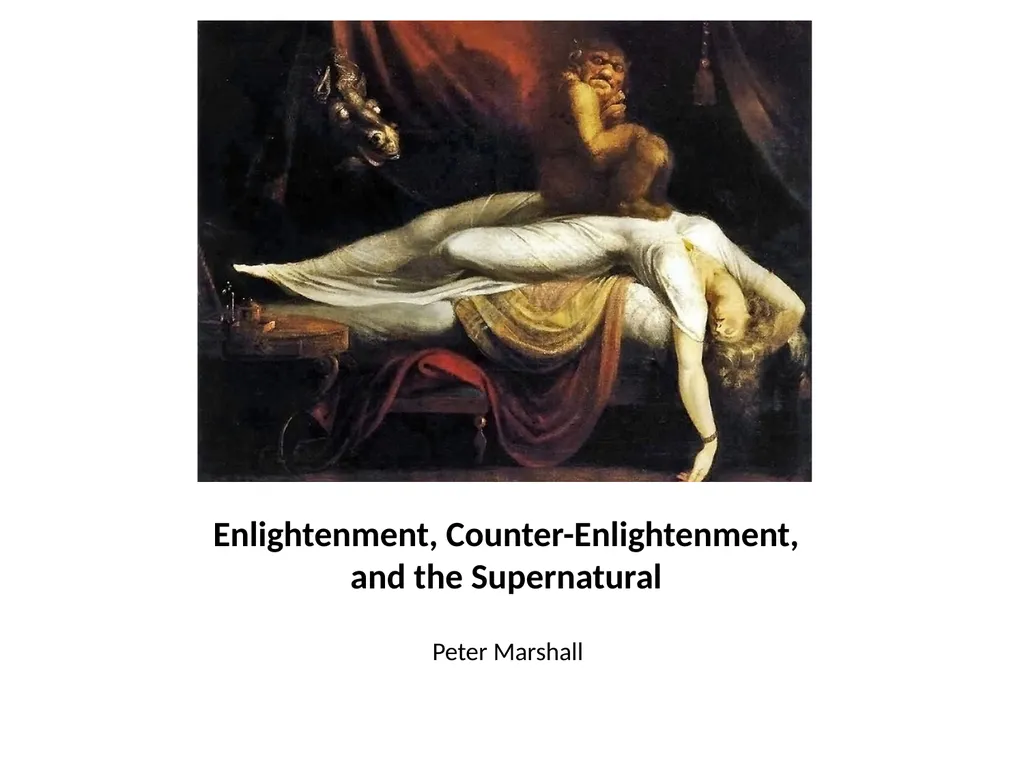
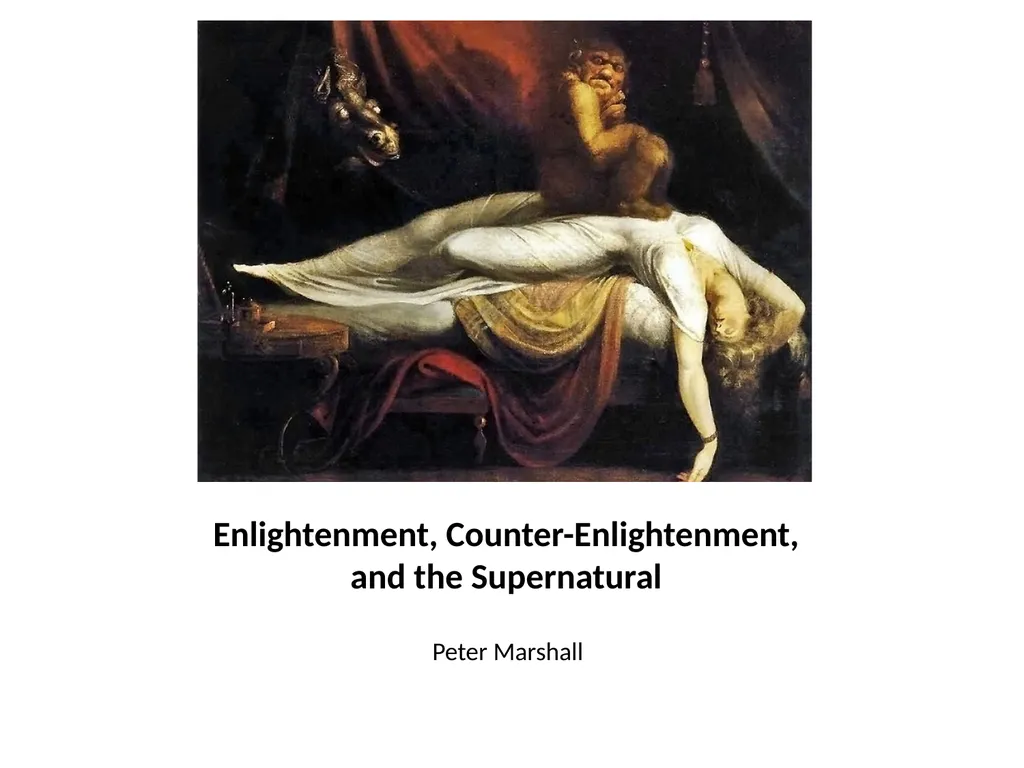
Enlightenment, Counter-Enlightenment, and the Supernatural Peter Marshall<br>
02
What was the relationship between religion and the Enlightenment?
no longer seen as intrinsically antagonistic. Few outright atheists among leading figures; some founding fathers (eg Isaac Newton) genuinely devout.
Yet ‘age of Enlightenment’ at war with religious ‘bigotry’ and ‘fanaticism’, ‘priestcraft’, ‘superstition’, ‘irrationality’.
God’s creation understood in the light of human reason: a non-interventionist deity and a metaphorical devil.
Rejection of literal belief in miracles and other supernatural events; world governed by ordered principles, not God’s unpredictable providence. End of witchcraft trials across most of Europe by c. 1700. Delayed implementation of principles inherent in Protestant Reformation? (Max Weber’s ‘Disenchantment of the World’).
but….<br>
03
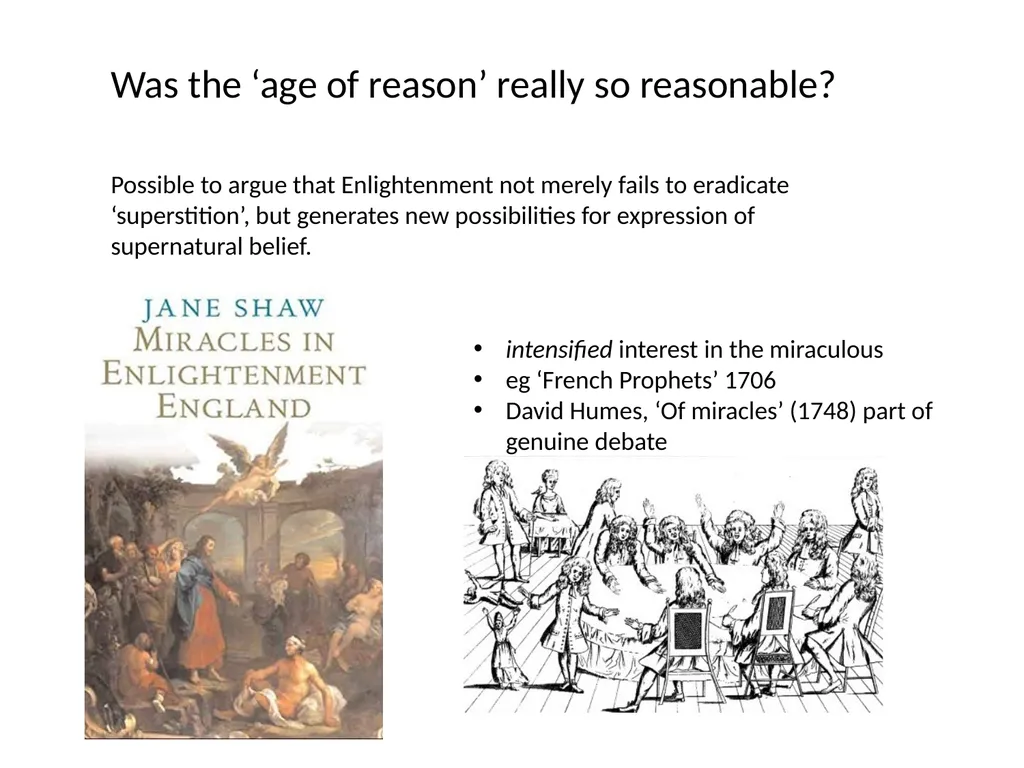
Was the ‘age of reason’ really so reasonable?
Possible to argue that Enlightenment not merely fails to eradicate ‘superstition’, but generates new possibilities for expression of supernatural belief. intensified interest in the miraculous
eg ‘French Prophets’ 1706
David Humes, ‘Of miracles’ (1748) part of genuine debate<br>
04
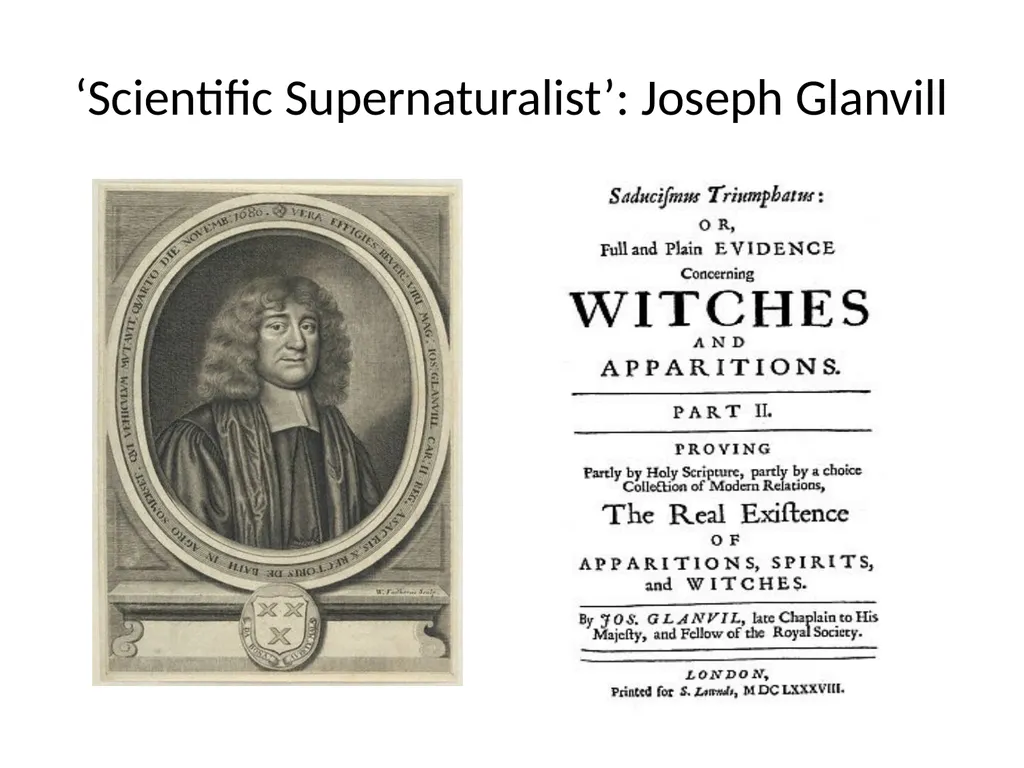
‘Scientific Supernaturalist’: Joseph Glanvill<br>
05
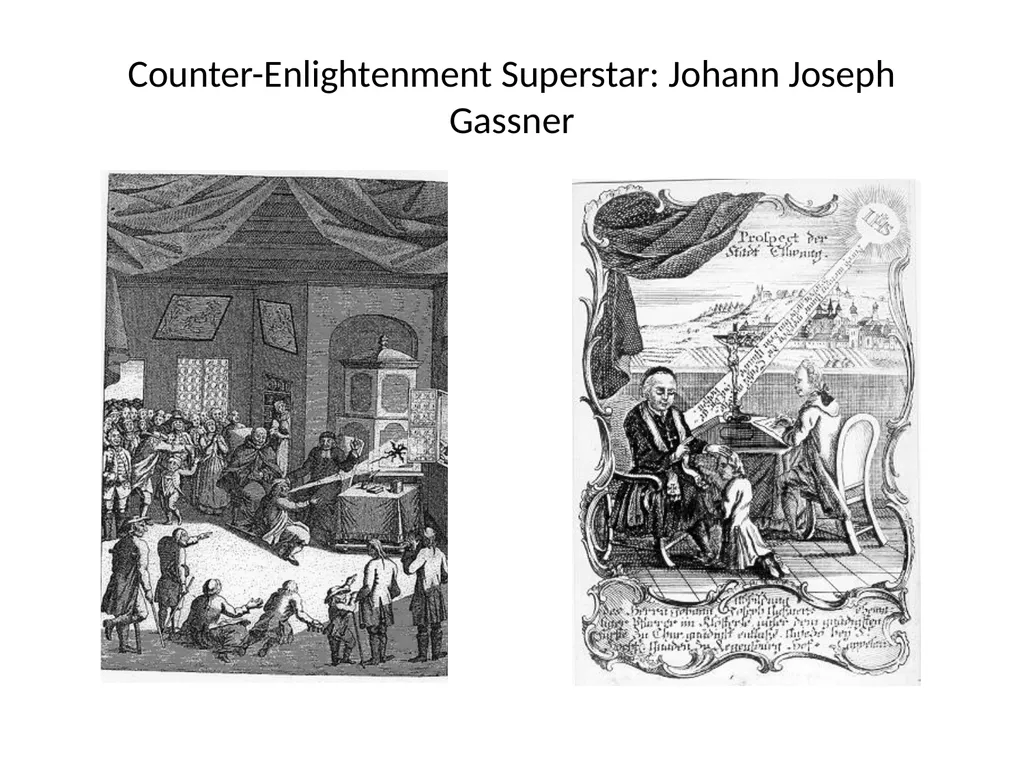
Counter-Enlightenment Superstar: Johann Joseph Gassner<br>
06
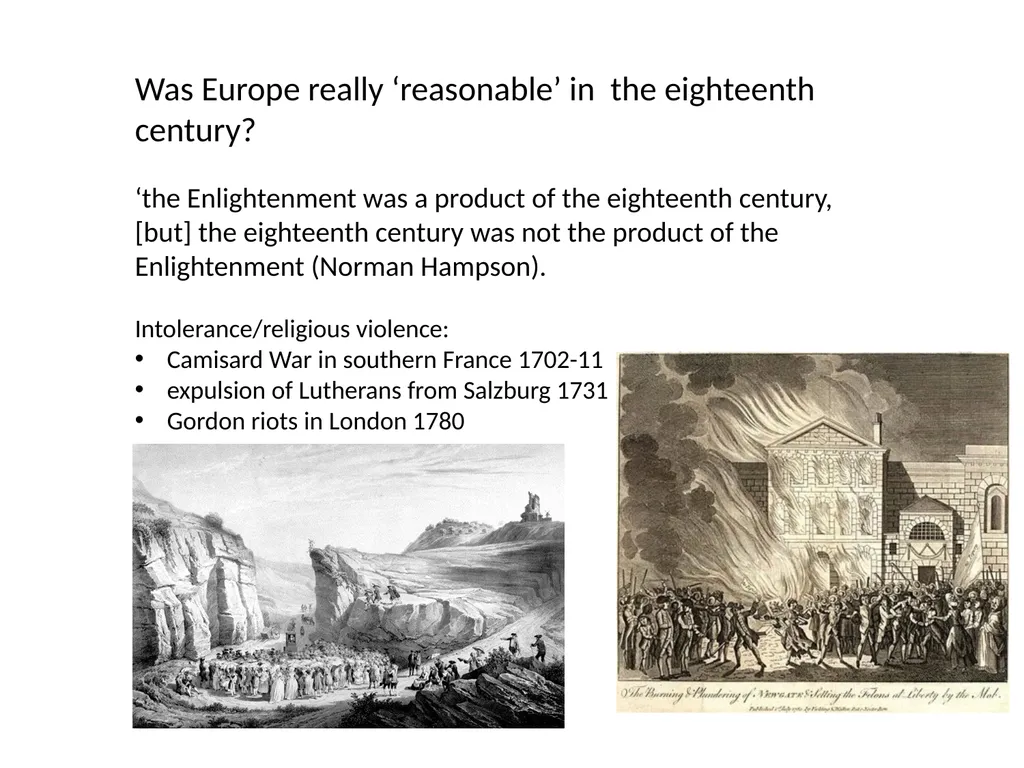
Was Europe really ‘reasonable’ in the eighteenth century?
‘the Enlightenment was a product of the eighteenth century, [but] the eighteenth century was not the product of the Enlightenment (Norman Hampson).
Intolerance/religious violence:
Camisard War in southern France 1702-11
expulsion of Lutherans from Salzburg 1731
Gordon riots in London 1780<br>
07
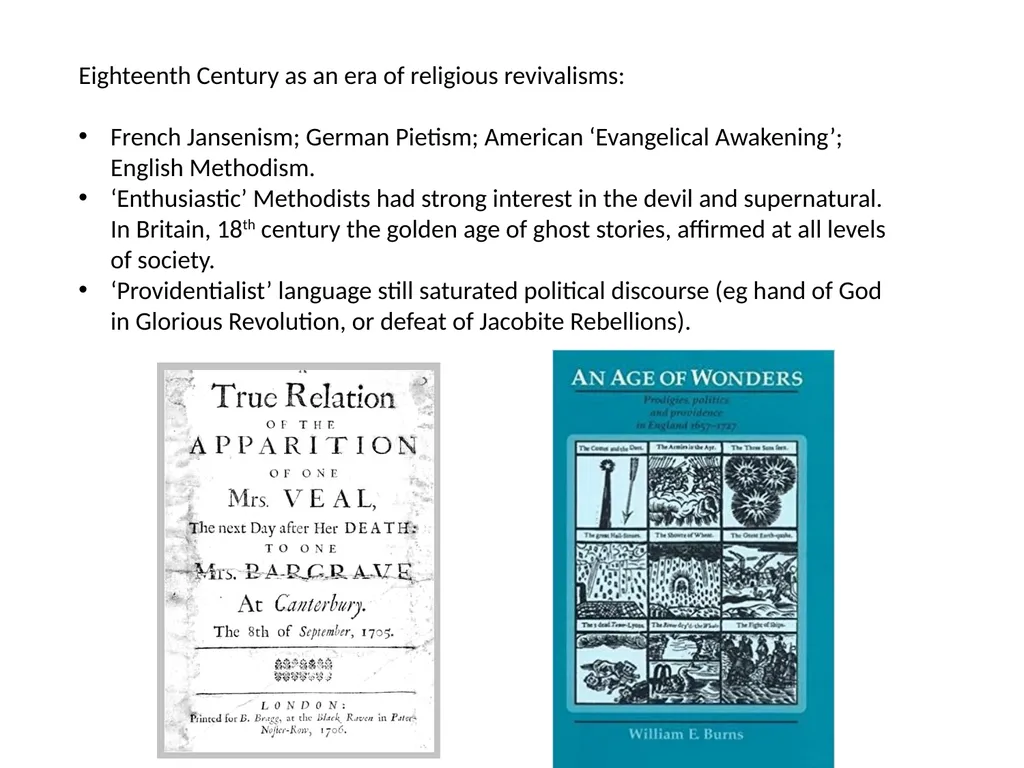
Eighteenth Century as an era of religious revivalisms:
French Jansenism; German Pietism; American ‘Evangelical Awakening’; English Methodism.
‘Enthusiastic’ Methodists had strong interest in the devil and supernatural. In Britain, 18th century the golden age of ghost stories, affirmed at all levels of society.
‘Providentialist’ language still saturated political discourse (eg hand of God in Glorious Revolution, or defeat of Jacobite Rebellions).<br>
08
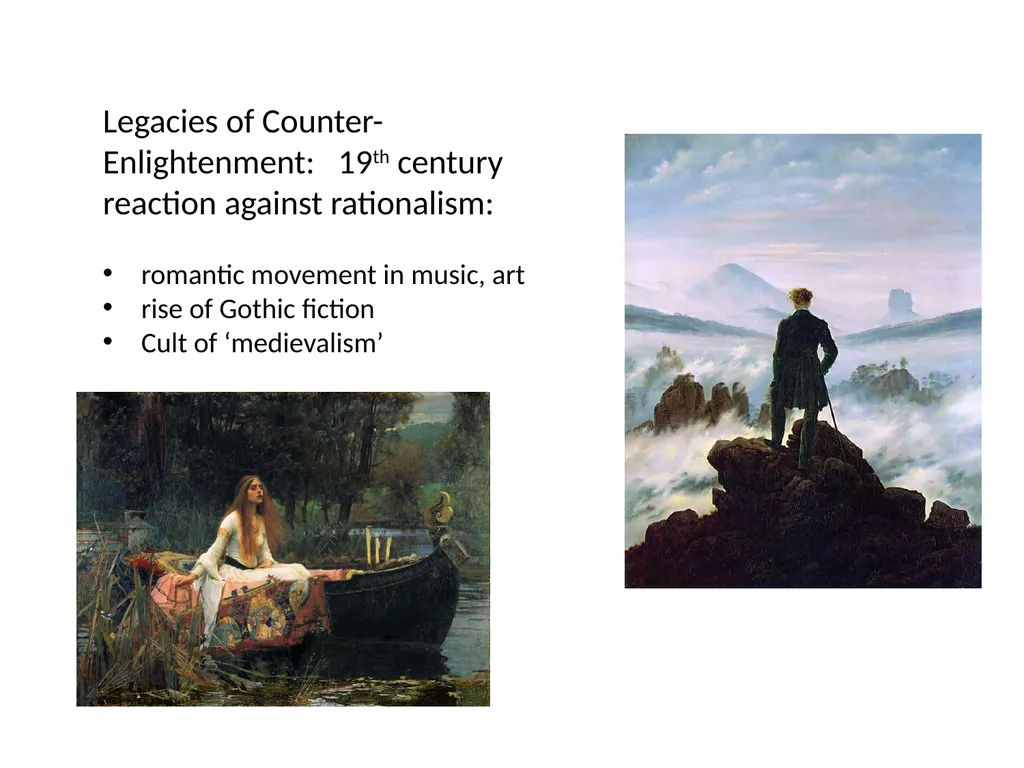
Legacies of Counter-Enlightenment: 19th century reaction against rationalism:
romantic movement in music, art
rise of Gothic fiction
Cult of ‘medievalism’<br>