
Entrepreneurship Development SMALL SCALE INDUSTRY


Description: Entrepreneurship Development SMALL SCALE INDUSTRY MSME Brief Idea about MSME MSME Classification Micro , Small Medium Enterprises MSME are classified in two Classes Manufacturing Enterprise Service Enterprise Manufacturing Enterprises-
Related Topics
Download Presentation
"Entrepreneurship Development SMALL SCALE INDUSTRY" is the property of its rightful owner. Permission is granted to download and print the materials on this website for personal, non-commercial use only, and to display it on your personal computer provided you do not modify the materials and that you retain all copyright notices contained in the materials. By downloading content from our website, you accept the terms of this agreement.
Presentation Transcript
slide1. Entrepreneurship Development SMALL SCALE INDUSTRY<br>
slide2. MSME<br>
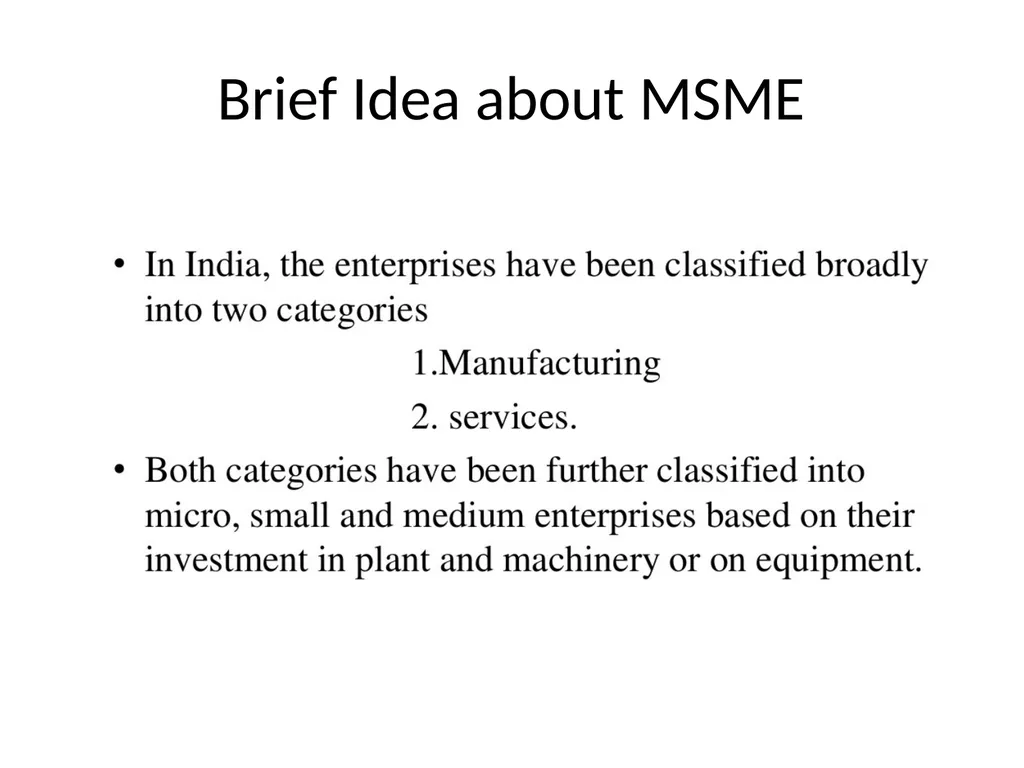
slide3. Brief Idea about MSME<br>
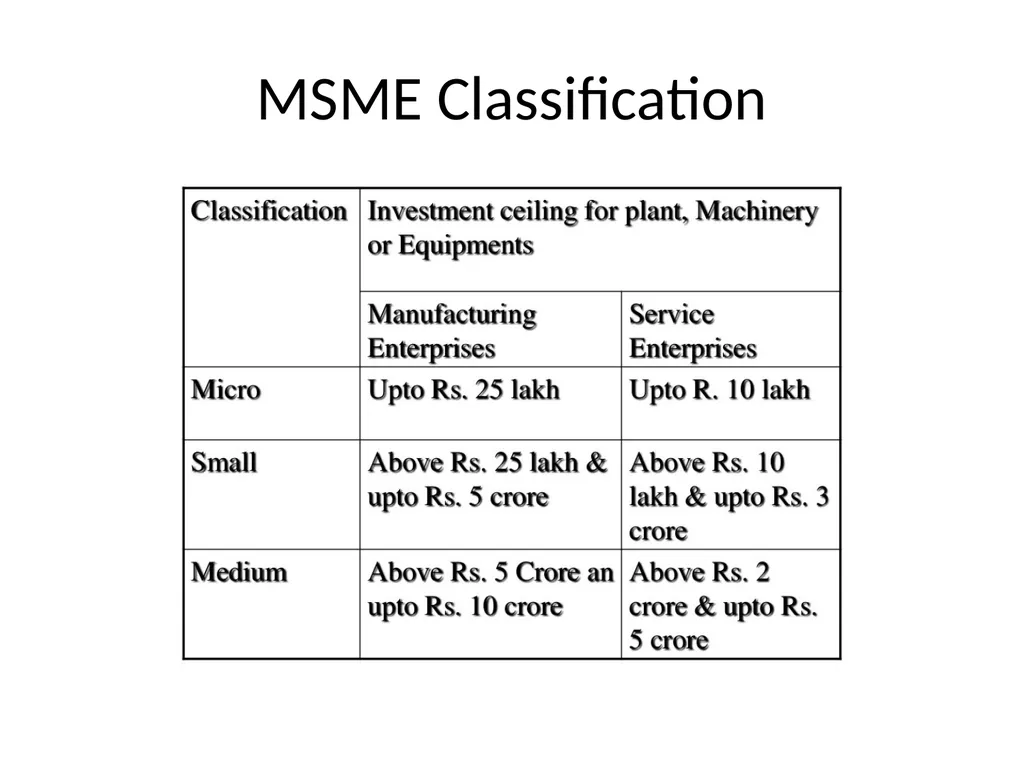
slide4. MSME Classification<br>
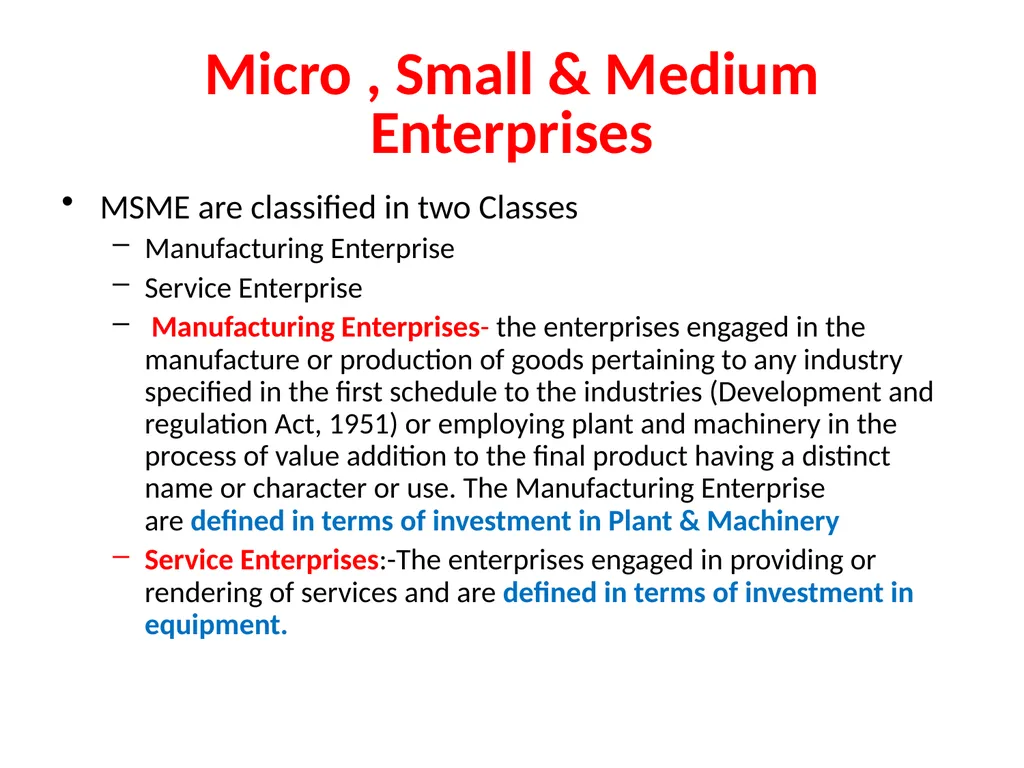
slide5. Micro , Small & Medium Enterprises MSME are classified in two Classes
Manufacturing Enterprise
Service Enterprise
Manufacturing Enterprises- the enterprises engaged in the manufacture or production of goods pertaining to any industry specified in the first schedule to the industries (Development and regulation Act, 1951) or employing plant and machinery in the process of value addition to the final product having a distinct name or character or use. The Manufacturing Enterprise are defined in terms of investment in Plant & Machinery
Service Enterprises:-The enterprises engaged in providing or rendering of services and are defined in terms of investment in equipment.<br>
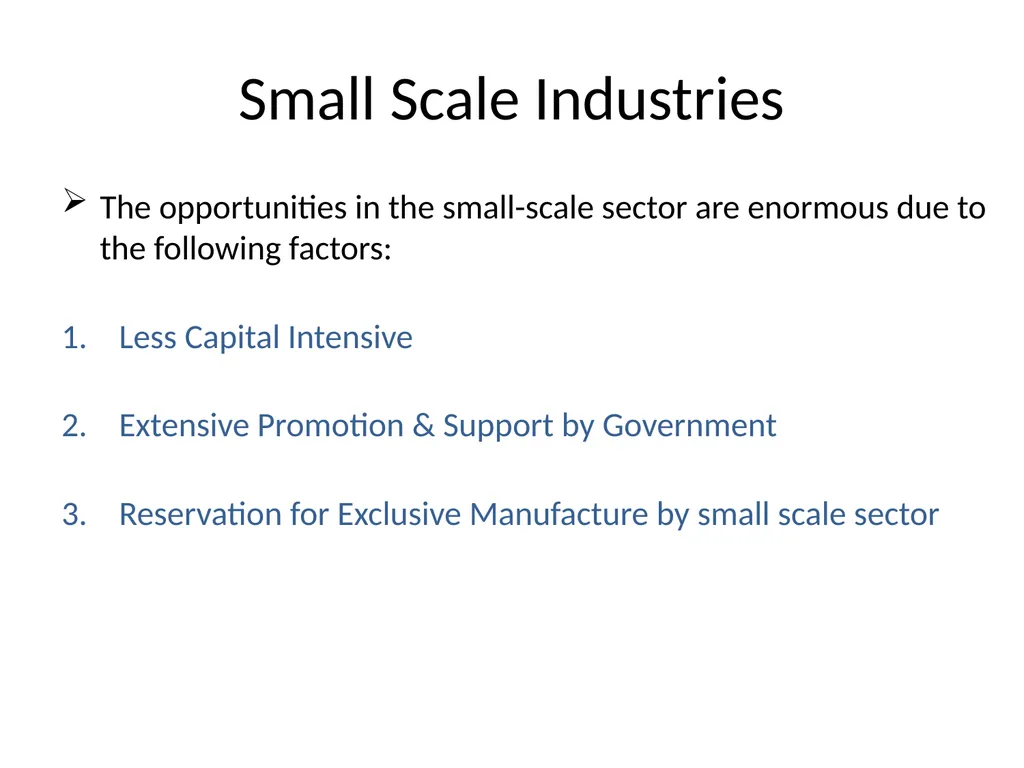
slide6. Small Scale Industries The opportunities in the small-scale sector are enormous due to the following factors:
Less Capital Intensive
Extensive Promotion & Support by Government
Reservation for Exclusive Manufacture by small scale sector<br>
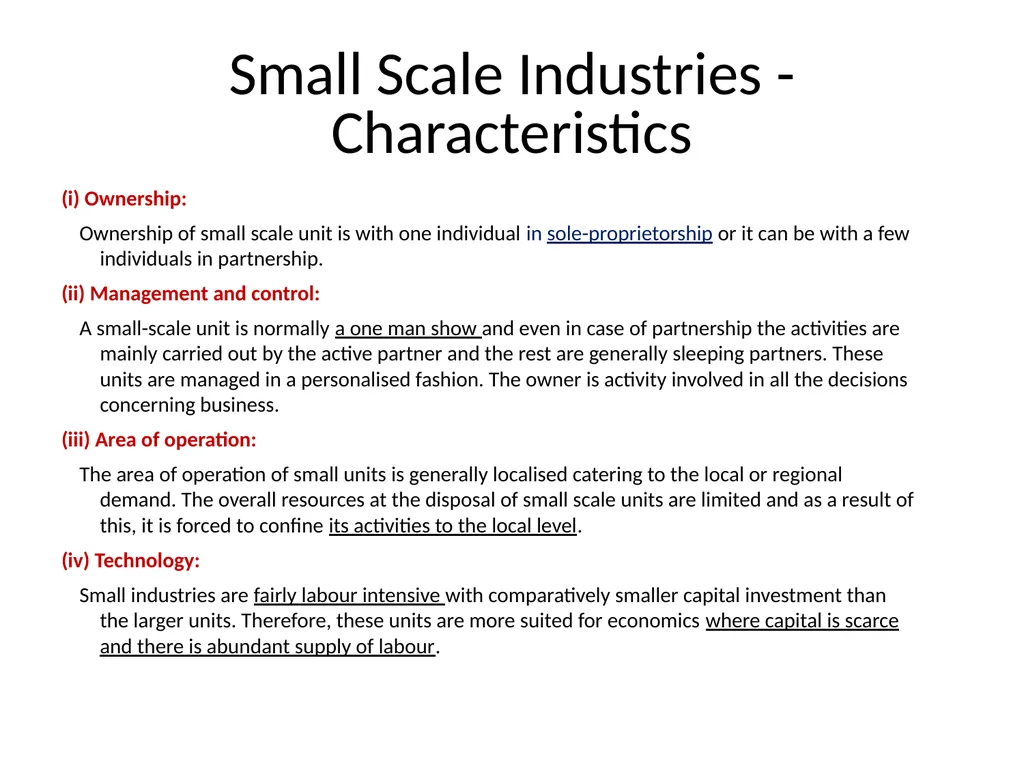
slide7. Small Scale Industries - Characteristics (i) Ownership:
Ownership of small scale unit is with one individual in sole-proprietorship or it can be with a few individuals in partnership.
(ii) Management and control:
A small-scale unit is normally a one man show and even in case of partnership the activities are mainly carried out by the active partner and the rest are generally sleeping partners. These units are managed in a personalised fashion. The owner is activity involved in all the decisions concerning business.
(iii) Area of operation:
The area of operation of small units is generally localised catering to the local or regional demand. The overall resources at the disposal of small scale units are limited and as a result of this, it is forced to confine its activities to the local level.
(iv) Technology:
Small industries are fairly labour intensive with comparatively smaller capital investment than the larger units. Therefore, these units are more suited for economics where capital is scarce and there is abundant supply of labour.<br>
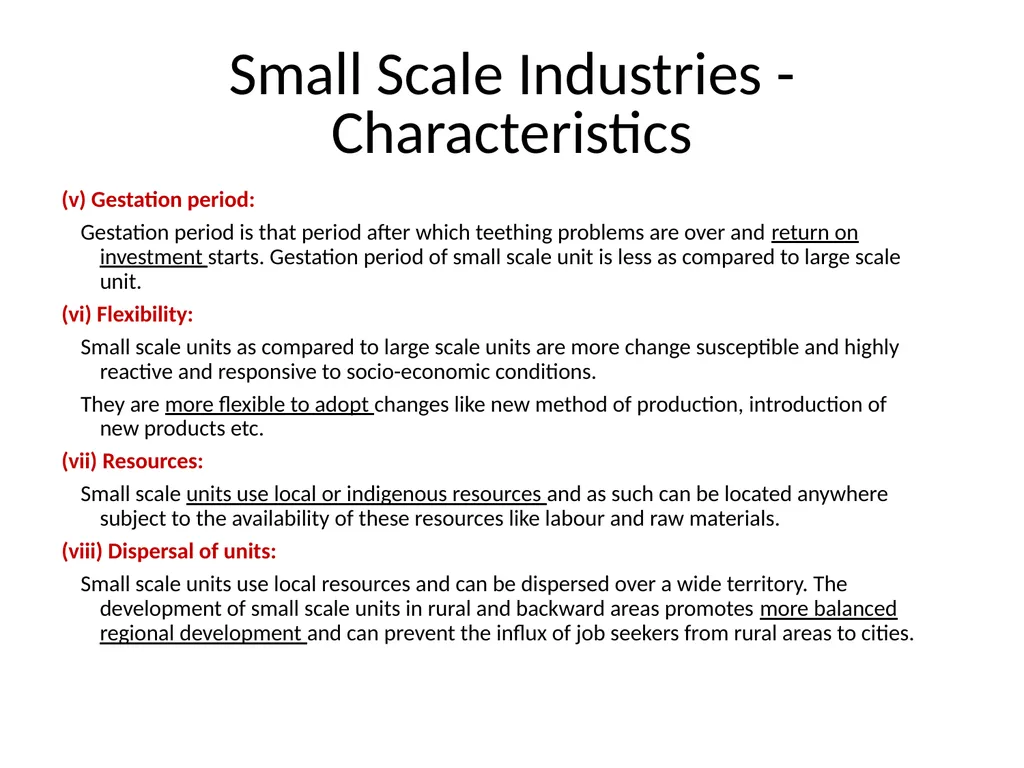
slide8. Small Scale Industries - Characteristics (v) Gestation period:
Gestation period is that period after which teething problems are over and return on investment starts. Gestation period of small scale unit is less as compared to large scale unit.
(vi) Flexibility:
Small scale units as compared to large scale units are more change susceptible and highly reactive and responsive to socio-economic conditions.
They are more flexible to adopt changes like new method of production, introduction of new products etc.
(vii) Resources:
Small scale units use local or indigenous resources and as such can be located anywhere subject to the availability of these resources like labour and raw materials.
(viii) Dispersal of units:
Small scale units use local resources and can be dispersed over a wide territory. The development of small scale units in rural and backward areas promotes more balanced regional development and can prevent the influx of job seekers from rural areas to cities.<br>
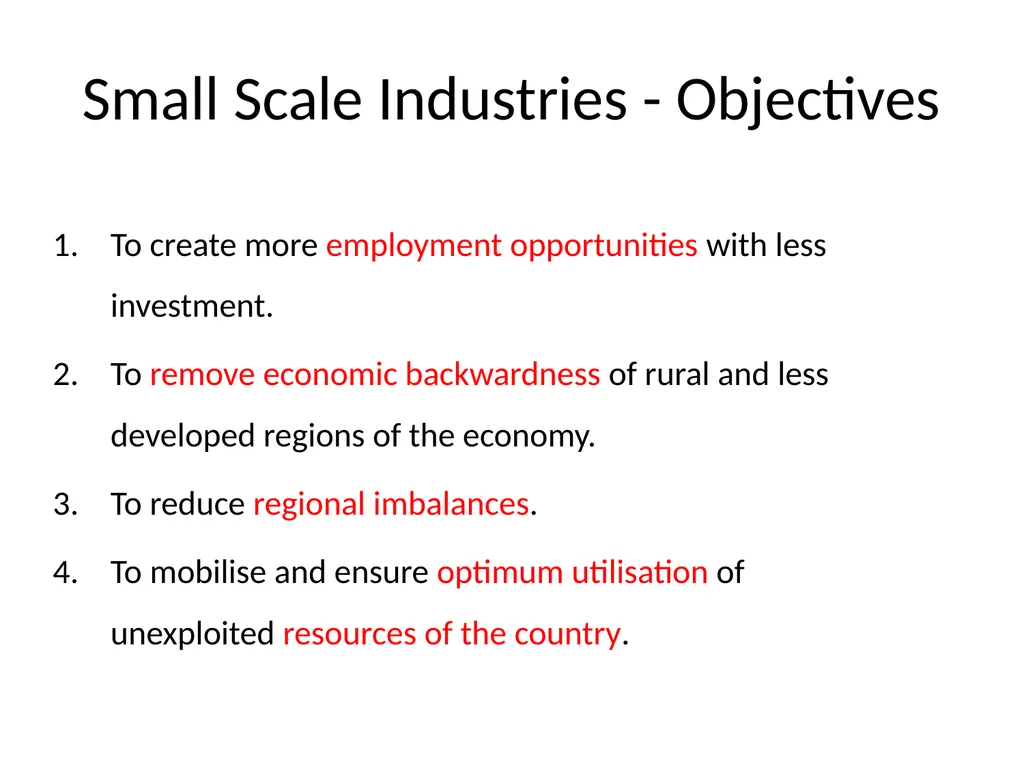
slide9. Small Scale Industries - Objectives To create more employment opportunities with less investment.
To remove economic backwardness of rural and less developed regions of the economy.
To reduce regional imbalances.
To mobilise and ensure optimum utilisation of unexploited resources of the country.<br>
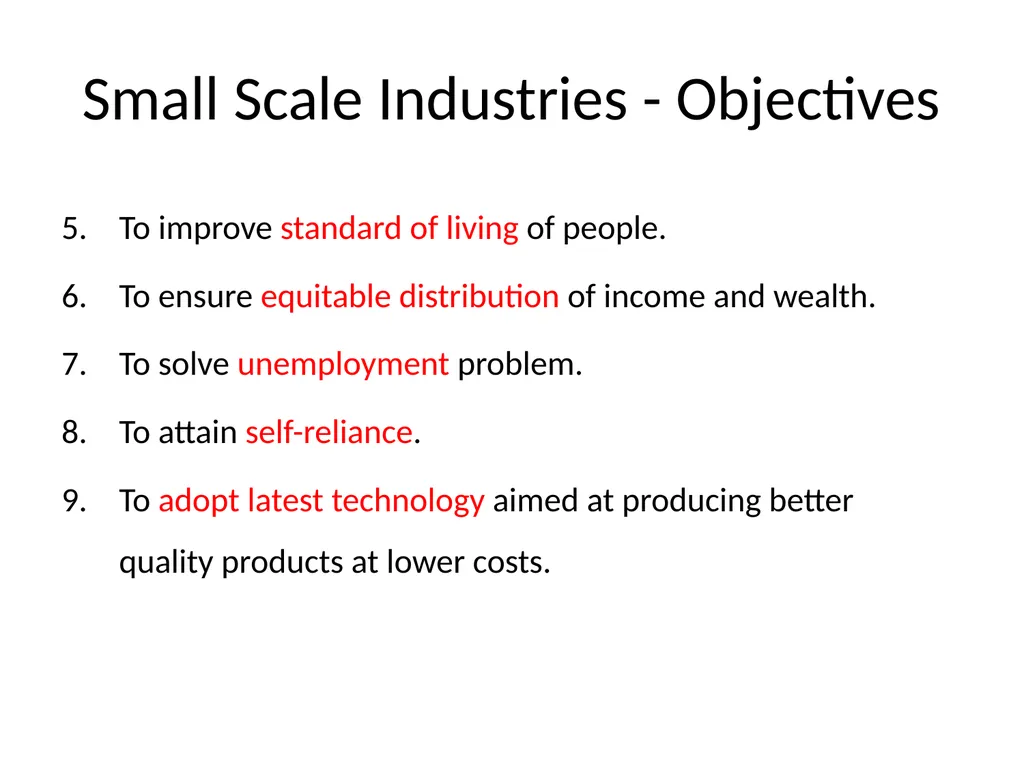
slide10. Small Scale Industries - Objectives To improve standard of living of people.
To ensure equitable distribution of income and wealth.
To solve unemployment problem.
To attain self-reliance.
To adopt latest technology aimed at producing better quality products at lower costs.<br>
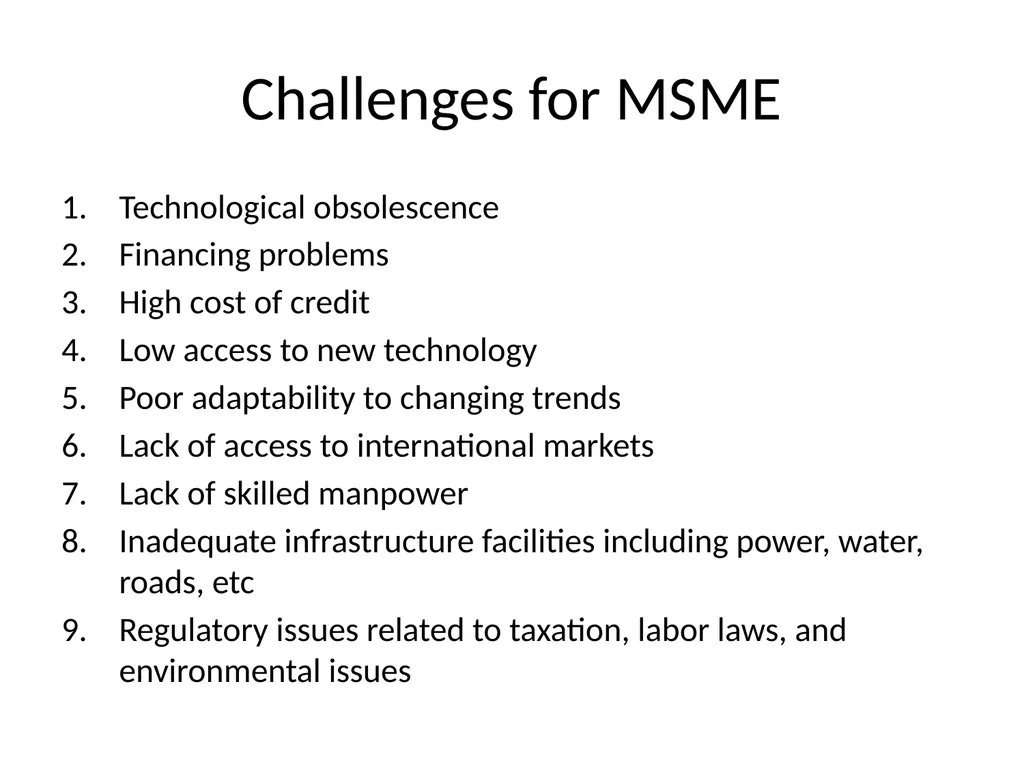
slide11. Challenges for MSME Technological obsolescence
Financing problems
High cost of credit
Low access to new technology
Poor adaptability to changing trends
Lack of access to international markets
Lack of skilled manpower
Inadequate infrastructure facilities including power, water, roads, etc
Regulatory issues related to taxation, labor laws, and environmental issues<br>
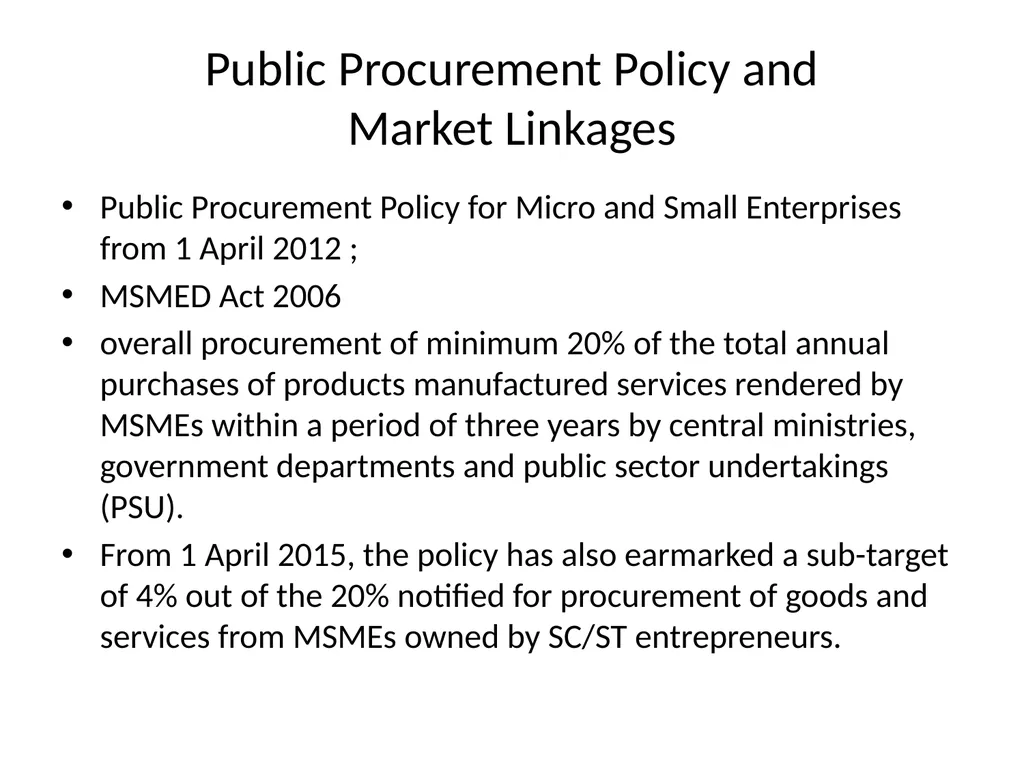
slide12. Public Procurement Policy and Market Linkages Public Procurement Policy for Micro and Small Enterprises from 1 April 2012 ;
MSMED Act 2006
overall procurement of minimum 20% of the total annual purchases of products manufactured services rendered by MSMEs within a period of three years by central ministries, government departments and public sector undertakings (PSU).
From 1 April 2015, the policy has also earmarked a sub-target of 4% out of the 20% notified for procurement of goods and services from MSMEs owned by SC/ST entrepreneurs.<br>
slide2. MSME<br>
slide3. Brief Idea about MSME<br>
slide4. MSME Classification<br>
slide5. Micro , Small & Medium Enterprises MSME are classified in two Classes
Manufacturing Enterprise
Service Enterprise
Manufacturing Enterprises- the enterprises engaged in the manufacture or production of goods pertaining to any industry specified in the first schedule to the industries (Development and regulation Act, 1951) or employing plant and machinery in the process of value addition to the final product having a distinct name or character or use. The Manufacturing Enterprise are defined in terms of investment in Plant & Machinery
Service Enterprises:-The enterprises engaged in providing or rendering of services and are defined in terms of investment in equipment.<br>
slide6. Small Scale Industries The opportunities in the small-scale sector are enormous due to the following factors:
Less Capital Intensive
Extensive Promotion & Support by Government
Reservation for Exclusive Manufacture by small scale sector<br>
slide7. Small Scale Industries - Characteristics (i) Ownership:
Ownership of small scale unit is with one individual in sole-proprietorship or it can be with a few individuals in partnership.
(ii) Management and control:
A small-scale unit is normally a one man show and even in case of partnership the activities are mainly carried out by the active partner and the rest are generally sleeping partners. These units are managed in a personalised fashion. The owner is activity involved in all the decisions concerning business.
(iii) Area of operation:
The area of operation of small units is generally localised catering to the local or regional demand. The overall resources at the disposal of small scale units are limited and as a result of this, it is forced to confine its activities to the local level.
(iv) Technology:
Small industries are fairly labour intensive with comparatively smaller capital investment than the larger units. Therefore, these units are more suited for economics where capital is scarce and there is abundant supply of labour.<br>
slide8. Small Scale Industries - Characteristics (v) Gestation period:
Gestation period is that period after which teething problems are over and return on investment starts. Gestation period of small scale unit is less as compared to large scale unit.
(vi) Flexibility:
Small scale units as compared to large scale units are more change susceptible and highly reactive and responsive to socio-economic conditions.
They are more flexible to adopt changes like new method of production, introduction of new products etc.
(vii) Resources:
Small scale units use local or indigenous resources and as such can be located anywhere subject to the availability of these resources like labour and raw materials.
(viii) Dispersal of units:
Small scale units use local resources and can be dispersed over a wide territory. The development of small scale units in rural and backward areas promotes more balanced regional development and can prevent the influx of job seekers from rural areas to cities.<br>
slide9. Small Scale Industries - Objectives To create more employment opportunities with less investment.
To remove economic backwardness of rural and less developed regions of the economy.
To reduce regional imbalances.
To mobilise and ensure optimum utilisation of unexploited resources of the country.<br>
slide10. Small Scale Industries - Objectives To improve standard of living of people.
To ensure equitable distribution of income and wealth.
To solve unemployment problem.
To attain self-reliance.
To adopt latest technology aimed at producing better quality products at lower costs.<br>
slide11. Challenges for MSME Technological obsolescence
Financing problems
High cost of credit
Low access to new technology
Poor adaptability to changing trends
Lack of access to international markets
Lack of skilled manpower
Inadequate infrastructure facilities including power, water, roads, etc
Regulatory issues related to taxation, labor laws, and environmental issues<br>
slide12. Public Procurement Policy and Market Linkages Public Procurement Policy for Micro and Small Enterprises from 1 April 2012 ;
MSMED Act 2006
overall procurement of minimum 20% of the total annual purchases of products manufactured services rendered by MSMEs within a period of three years by central ministries, government departments and public sector undertakings (PSU).
From 1 April 2015, the policy has also earmarked a sub-target of 4% out of the 20% notified for procurement of goods and services from MSMEs owned by SC/ST entrepreneurs.<br>