Essential information for educators who assist the 7 of Utah school students who are diagnosed with asthma What to do in Case of an Asthma Attack What is Asthma? A chronic lung disease that can make it hard to breathe Three things happen
"Essential information for educators who assist the" is the property of its rightful owner. Permission is granted to
download and print the materials on this website for personal, non-commercial use only, and to display it
on your personal computer provided you do not modify the materials and that you retain all copyright
notices contained in the materials. By downloading content from our website, you accept the terms of this
agreement.
Presentation Transcript
01
Essential information for educators who assist the 7% of Utah school students who are diagnosed with asthma What to do in Case of an Asthma Attack<br>
02
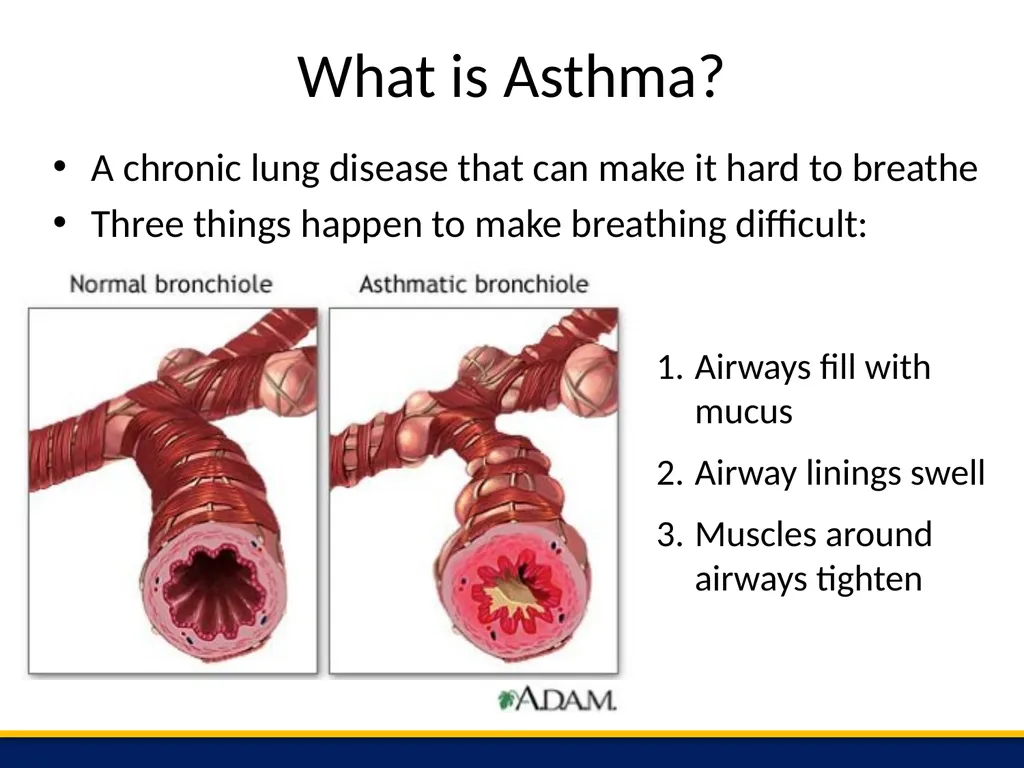
What is Asthma? A chronic lung disease that can make it hard to breathe
Three things happen to make breathing difficult: Airways fill with mucus
Airway linings swell
Muscles around airways tighten<br>
03
Signs and Symptoms Shortness of breath
Wheezing
Coughing
Chest tightness
Appearing fearful or worried Lack of energy
Irritable
Stuffy, runny nose
Retractions
Nasal flaring These periods are called attacks or episodes and should always be taken seriously People with asthma often experience periods of:<br>
04
Is there a cure? No cure, but it can be controlled
Someone with controlled asthma can live a normal life
Asthma can be controlled by:
Knowing and avoiding common triggers
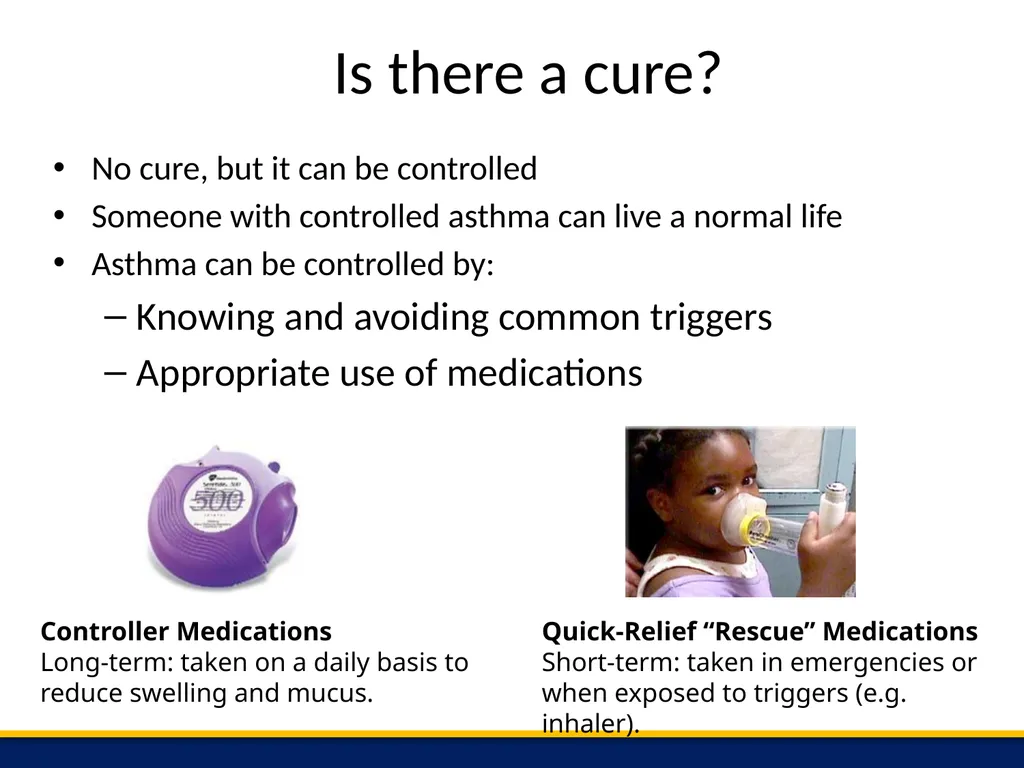
Appropriate use of medications Controller Medications
Long-term: taken on a daily basis to reduce swelling and mucus. Quick-Relief “Rescue” Medications
Short-term: taken in emergencies or when exposed to triggers (e.g. inhaler).<br>
05
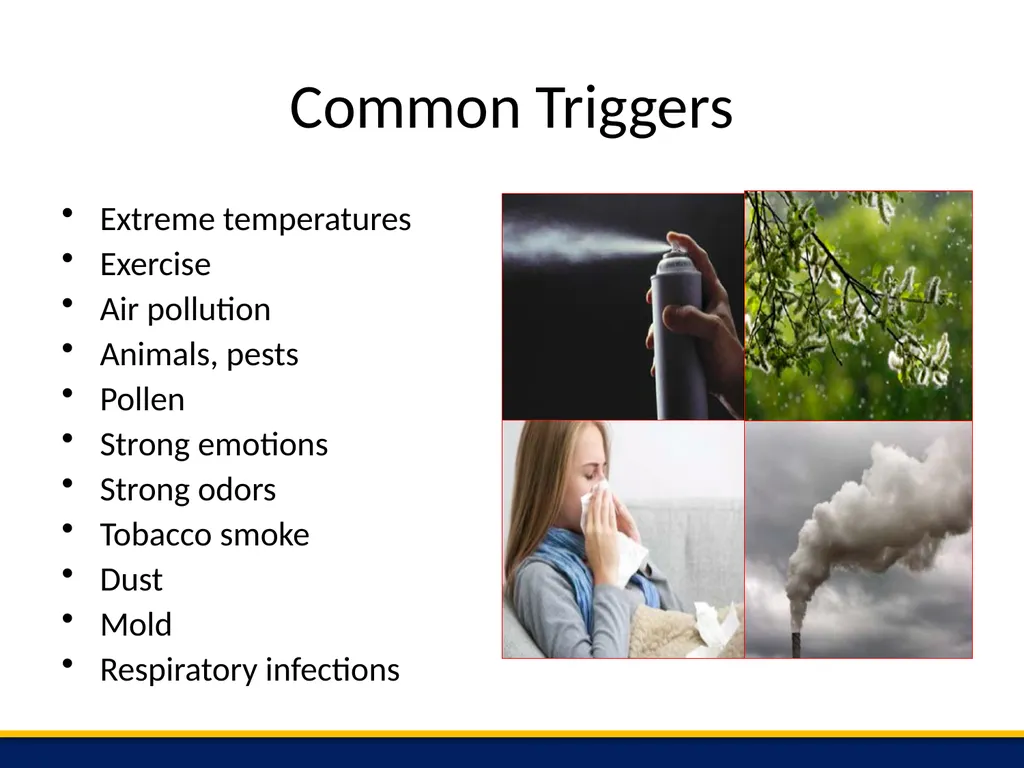
Common Triggers Extreme temperatures
Exercise
Air pollution
Animals, pests
Pollen
Strong emotions
Strong odors
Tobacco smoke
Dust
Mold
Respiratory infections<br>
06
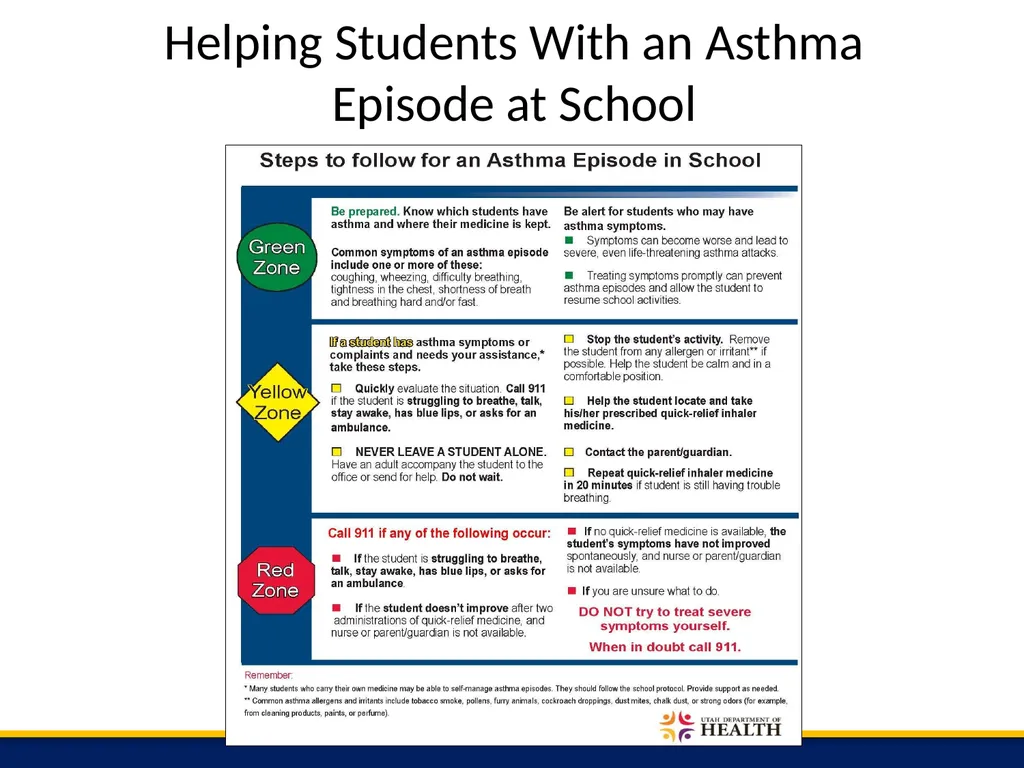
Helping Students With an Asthma Episode at School<br>
07
Be prepared Know which children have asthma
Be aware of any triggers
If possible, remove triggers from classroom
Be alert of symptoms
Know where the medicine is kept<br>
08
If a child has asthma symptoms and needs your assistance… NEVER leave child alone
Stop the child’s activity
Help the child remain calm
Put the child in an upright, sitting position
Do not have the child lay down
Help the child locate quick-relief medicine
Assist as the child self-administers medication
Call parent or guardian
Repeat quick-relief inhaler medicine in 20 minutes if child is still having trouble breathing<br>
09
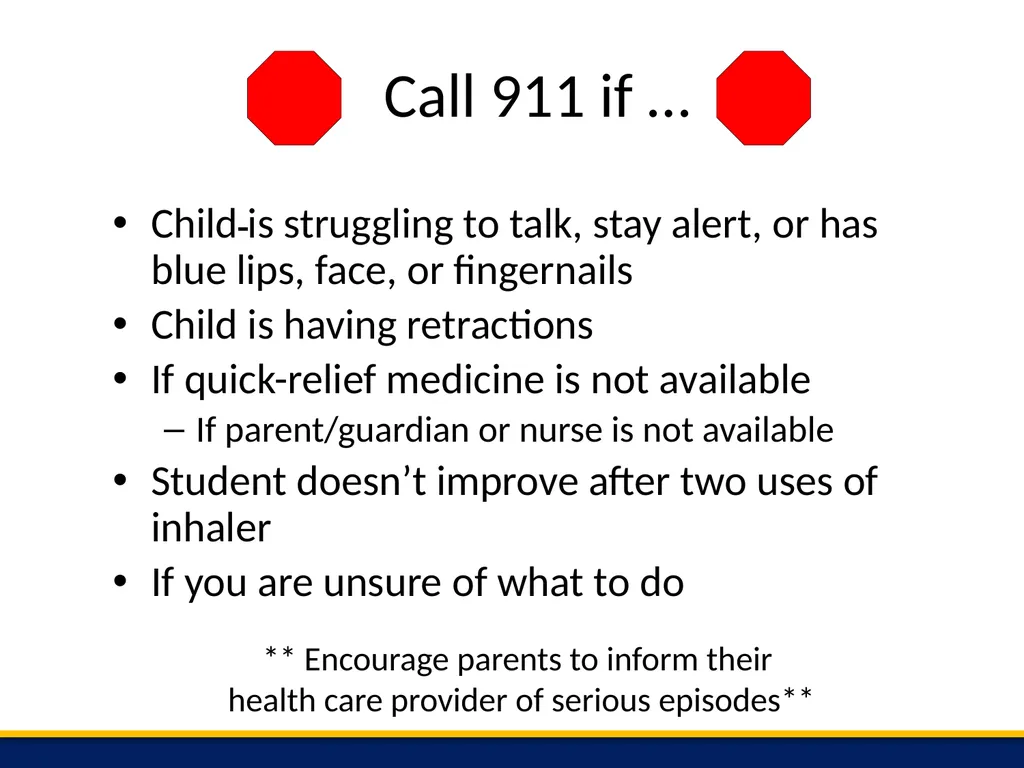
Call 911 if … Child is struggling to talk, stay alert, or has blue lips, face, or fingernails
Child is having retractions
If quick-relief medicine is not available
If parent/guardian or nurse is not available
Student doesn’t improve after two uses of inhaler
If you are unsure of what to do ** Encourage parents to inform their
health care provider of serious episodes**<br>
10
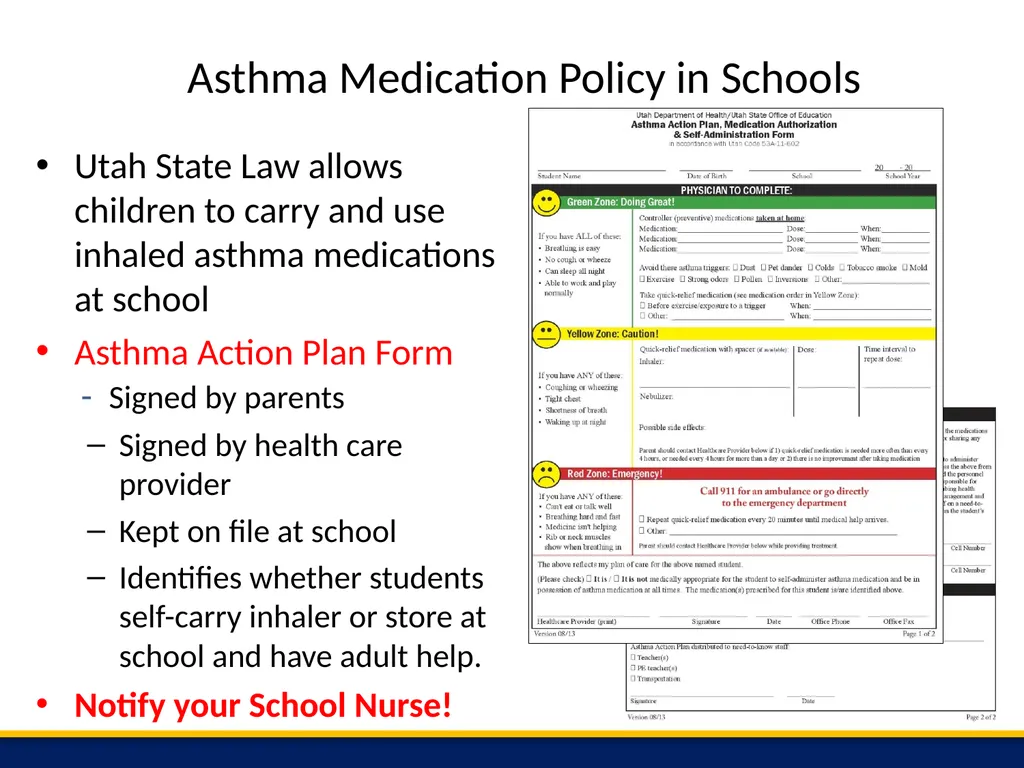
Asthma Medication Policy in Schools Utah State Law allows children to carry and use inhaled asthma medications at school
Asthma Action Plan Form
- Signed by parents
Signed by health care provider
Kept on file at school
Identifies whether students self-carry inhaler or store at school and have adult help.
Notify your School Nurse!<br>
11
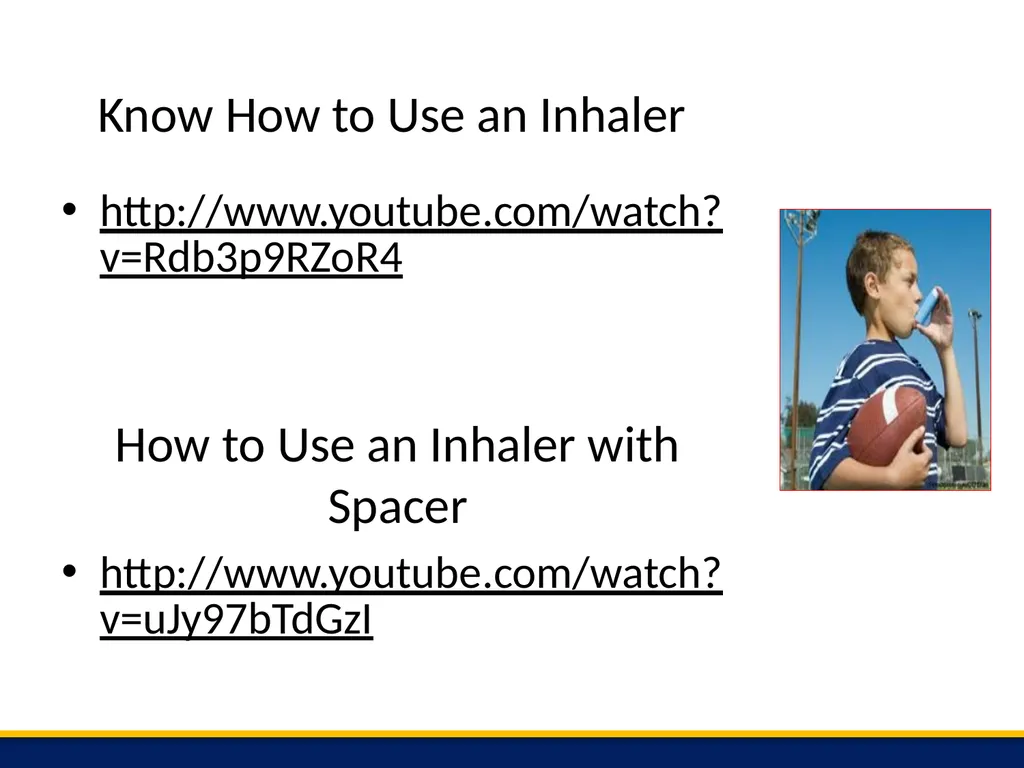
Know How to Use an Inhaler http://www.youtube.com/watch?v=Rdb3p9RZoR4
How to Use an Inhaler with Spacer
http://www.youtube.com/watch?v=uJy97bTdGzI<br>
12
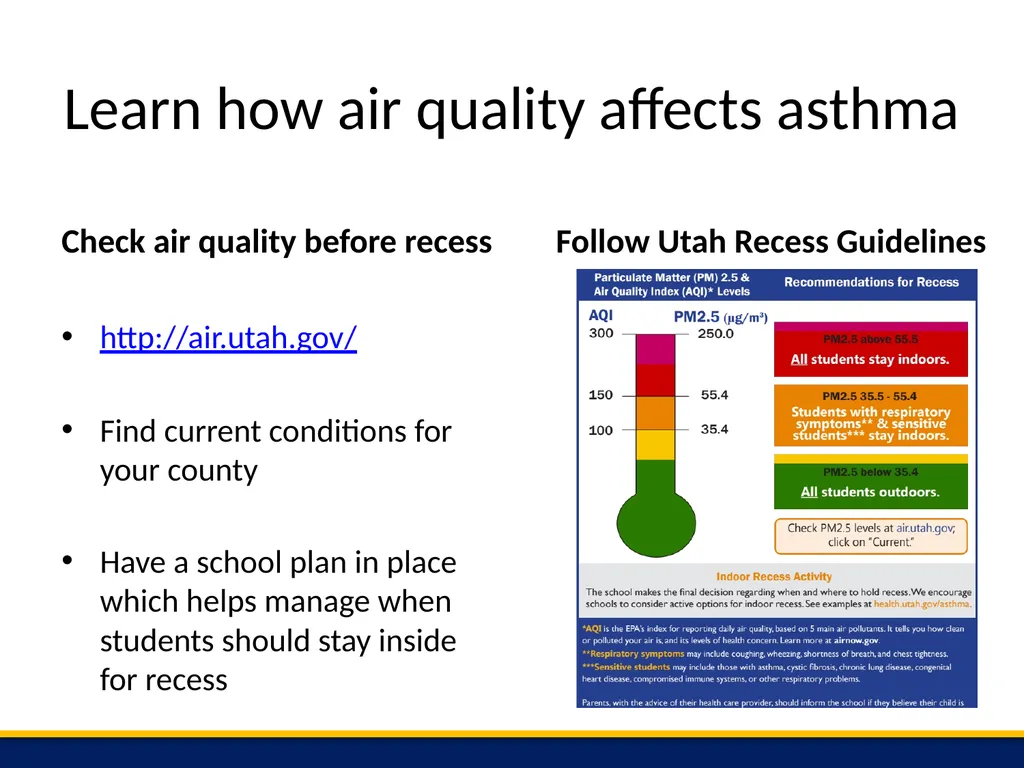
Learn how air quality affects asthma Check air quality before recess http://air.utah.gov/
Find current conditions for your county
Have a school plan in place which helps manage when students should stay inside for recess Follow Utah Recess Guidelines<br>
13
Resources Utah Asthma School Resource Manual
Utah Department of Health Asthma Program
http://health.utah.gov/asthma/schools/index.html 801-538-6894
Air Quality Conditions
http://air.utah.gov/
Recess Guidance: http://health.utah.gov/asthma/airquality/recess.html<br>