
Essentials of Consumer Behavior, 2nd Ed. Debra
Description: Essentials of Consumer Behavior, 2nd Ed. Debra Stephens Chapter One Introduction to Consumer Behavior Consumer behavior is Shopping? Deciding what to purchase? Responding to marketing tactics? Yes and more. 1. The dynamic interaction of
Related Topics
Download Presentation
"Essentials of Consumer Behavior, 2nd Ed. Debra" is the property of its rightful owner. Permission is granted to download and print the materials on this website for personal, non-commercial use only, and to display it on your personal computer provided you do not modify the materials and that you retain all copyright notices contained in the materials. By downloading content from our website, you accept the terms of this agreement.
Presentation Transcript
slide1. Essentials of Consumer Behavior, 2nd Ed.
Debra Stephens Chapter One
Introduction to Consumer Behavior<br>
slide2. Consumer behavior is… Shopping? Deciding what to purchase? Responding to marketing tactics? Yes and more….
1. The dynamic interaction of affect and cognition, behavior, and the environment by which human beings conduct the exchange aspects of their lives
2. The overt actions of consumers
3. The behavior of the consumer or decision maker in the marketplace of products and services
{American Marketing Association Dictionary)<br>
slide3. Exercise: Analyzing Your Morning Routine Purposes of this exercise:
to introduce you to the distinctions among the three types of consumer responses-cognition, affect, behavior, and
to illustrate to you that “boring” routines hide important consumer insights that are useful to brands<br>
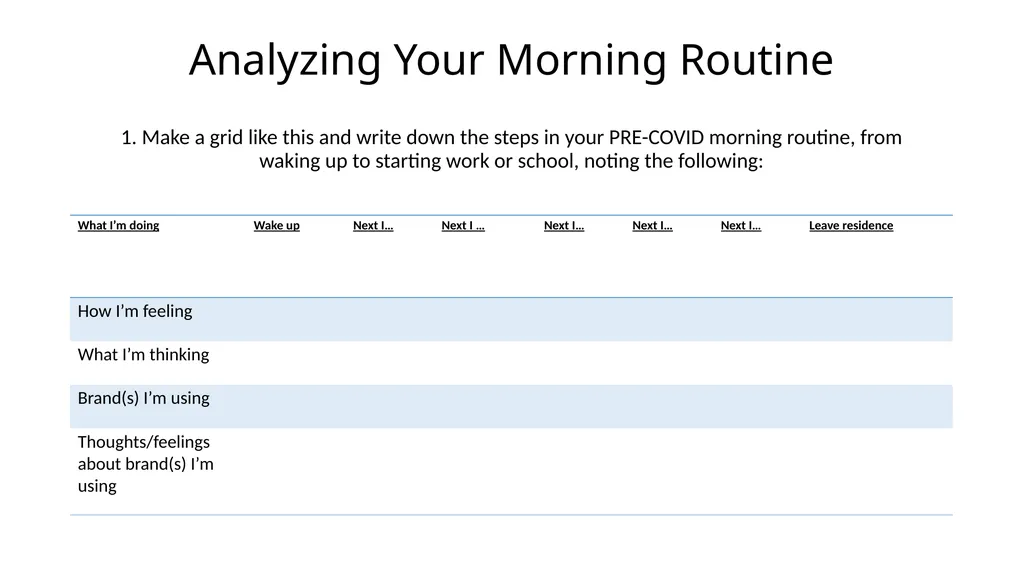
slide4. Analyzing Your Morning Routine 1. Make a grid like this and write down the steps in your PRE-COVID morning routine, from waking up to starting work or school, noting the following:<br>
slide5. Morning Routine Exercise continued Follow-up questions:
Is your morning routine different during this pandemic? If so, in what ways- thoughts, feelings, behaviors, brands used?
Which parts of your routine (pre-pandemic or now) do you find unpleasant or annoying? Which parts do you enjoy?
For any problematic activity, come up with one product idea that would eliminate the problem or make that routine more enjoyable or efficient.<br>
slide6. Morning Routine and Consumer Behavior: Brands Embrace Context of Product Use Problem-solution approach jettisoned for focus on male vulnerability (more feelings-focused
just-for-men-proves-grooming-ads-evolved
Progressive Grocer
How the pandemic changed America's breakfast habits
Sleep habits are in the news- and on Ikea Sleep Hub
Breakfast habits hard to change…why?
time-of-day-consumer-decision-making (knowledge@wharton)<br>
slide7. Breakfast Routine: Discipline-Specific Questions Traditional economist: How much are consumers willing to pay for the convenience of a breakfast and coffee away from home vs at home?
Motivational psychologist: What are the unconscious needs and motives that make us want the same breakfast we had as children?
Social psychologist: How do our friends’ breakfast habit influence ours?
Cognitive psychologist: What are our underlying thoughts and beliefs about breakfast products and brands that play a role in our selection of breakfast foods and beverages?
Sociologist: Who (demographics) eats different foods for breakfast? (Regional, age, and social class variations) What does the network of influence on breakfast food choices look like?
Anthropologist: What are the occasions (rites and rituals) that we associate with a “special” breakfast? What place does that breakfast have in the ritual as a whole?
Behavioral economist: How do our cognitive biases affect your breakfast food/beverage choices?
A marketer would have an interest in the answers to all these questions.<br>
slide2. Consumer behavior is… Shopping? Deciding what to purchase? Responding to marketing tactics? Yes and more….
1. The dynamic interaction of affect and cognition, behavior, and the environment by which human beings conduct the exchange aspects of their lives
2. The overt actions of consumers
3. The behavior of the consumer or decision maker in the marketplace of products and services
{American Marketing Association Dictionary)<br>
slide3. Exercise: Analyzing Your Morning Routine Purposes of this exercise:
to introduce you to the distinctions among the three types of consumer responses-cognition, affect, behavior, and
to illustrate to you that “boring” routines hide important consumer insights that are useful to brands<br>
slide4. Analyzing Your Morning Routine 1. Make a grid like this and write down the steps in your PRE-COVID morning routine, from waking up to starting work or school, noting the following:<br>
slide5. Morning Routine Exercise continued Follow-up questions:
Is your morning routine different during this pandemic? If so, in what ways- thoughts, feelings, behaviors, brands used?
Which parts of your routine (pre-pandemic or now) do you find unpleasant or annoying? Which parts do you enjoy?
For any problematic activity, come up with one product idea that would eliminate the problem or make that routine more enjoyable or efficient.<br>
slide6. Morning Routine and Consumer Behavior: Brands Embrace Context of Product Use Problem-solution approach jettisoned for focus on male vulnerability (more feelings-focused
just-for-men-proves-grooming-ads-evolved
Progressive Grocer
How the pandemic changed America's breakfast habits
Sleep habits are in the news- and on Ikea Sleep Hub
Breakfast habits hard to change…why?
time-of-day-consumer-decision-making (knowledge@wharton)<br>
slide7. Breakfast Routine: Discipline-Specific Questions Traditional economist: How much are consumers willing to pay for the convenience of a breakfast and coffee away from home vs at home?
Motivational psychologist: What are the unconscious needs and motives that make us want the same breakfast we had as children?
Social psychologist: How do our friends’ breakfast habit influence ours?
Cognitive psychologist: What are our underlying thoughts and beliefs about breakfast products and brands that play a role in our selection of breakfast foods and beverages?
Sociologist: Who (demographics) eats different foods for breakfast? (Regional, age, and social class variations) What does the network of influence on breakfast food choices look like?
Anthropologist: What are the occasions (rites and rituals) that we associate with a “special” breakfast? What place does that breakfast have in the ritual as a whole?
Behavioral economist: How do our cognitive biases affect your breakfast food/beverage choices?
A marketer would have an interest in the answers to all these questions.<br>