
ETHNO BOTANY ETHNO BOTANY The term ethno botany
AS
Published · 41 slides · 0 views

1 / 1



Description
ETHNO BOTANY ETHNO BOTANY The term ethno botany was coined by J.W. Harshberger in 1895 the study of plants used by the primitive and tribal people. Though this discipline has existed for ages, ethno botany emerged as a distinct academic
Related Topics
Share
Embed code
Download this presentation From Below
"ETHNO BOTANY ETHNO BOTANY The term ethno botany" is the property of its rightful owner. Permission is granted to download and print the materials on this website for personal, non-commercial use only, and to display it on your personal computer provided you do not modify the materials and that you retain all copyright notices contained in the materials. By downloading content from our website, you accept the terms of this agreement.
Presentation Transcript
01
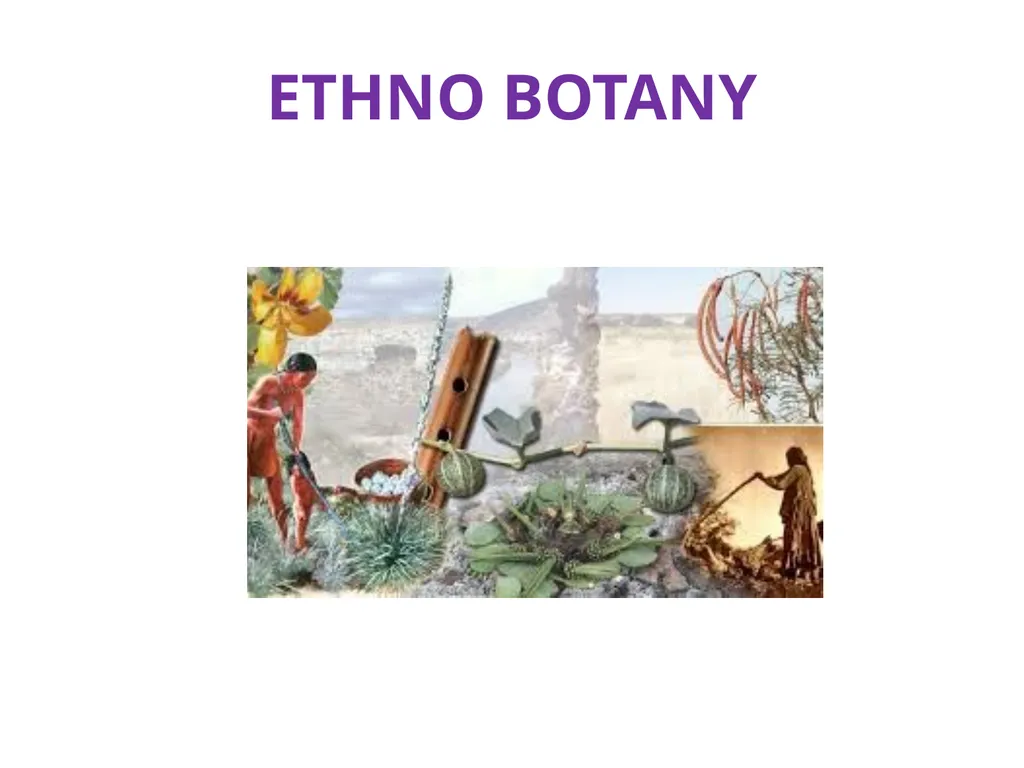
ETHNO BOTANY<br>
02
ETHNO BOTANY The term ethno botany was coined by J.W. Harshberger in 1895
the study of plants used by the primitive and tribal people.
Though this discipline has existed for ages, ethno botany emerged as a distinct academic branch of natural science in twentieth century.<br>
the study of plants used by the primitive and tribal people.
Though this discipline has existed for ages, ethno botany emerged as a distinct academic branch of natural science in twentieth century.<br>
03
ETHNO BOTANY… Schultes (1962), ethno botany is defined as the study of the relationships between the people of a primitive society and plants
Alcom (1984) states that ethno botany is the study of contextualized plant use.
Jain (1987) elaborated it as the total natural and traditional relationship and interaction between man and his surrounding plant wealth<br>
Alcom (1984) states that ethno botany is the study of contextualized plant use.
Jain (1987) elaborated it as the total natural and traditional relationship and interaction between man and his surrounding plant wealth<br>
04
Wickens (1990) defined ethno botany as the study of useful plants prior to commercial exploitation and eventful domestication. In fact, ethno botany is the first knowledge on plants which primitive and aboriginal people had acquired by sheer necessity, intuition, observation and experimentation in the forests.<br>
05
ETHNO BOTANY…DEFINATION It is now almost universally recognized as the total direct or natural relationship between man and plants and it includes the use of plants by both tribals and non-tribals without any implication of primitive or developed societies.
Ethno botany is an interdisciplinary science and has relevance to sociology, anthropology, taxonomy, photochemistry, archaeology, ecology, agriculture, medicine, linguistics etc.<br>
Ethno botany is an interdisciplinary science and has relevance to sociology, anthropology, taxonomy, photochemistry, archaeology, ecology, agriculture, medicine, linguistics etc.<br>
06
Today ethno botany has become an important and crucial area of research and development in resource management, sustainable utilization and conservation of biodiversity and socioeconomic development. Now the botanists, social scientists, anthropologists, the practitioners of indigenous medicines all over the world are engaged in the study of man-plant interactions in natural environment<br>
07
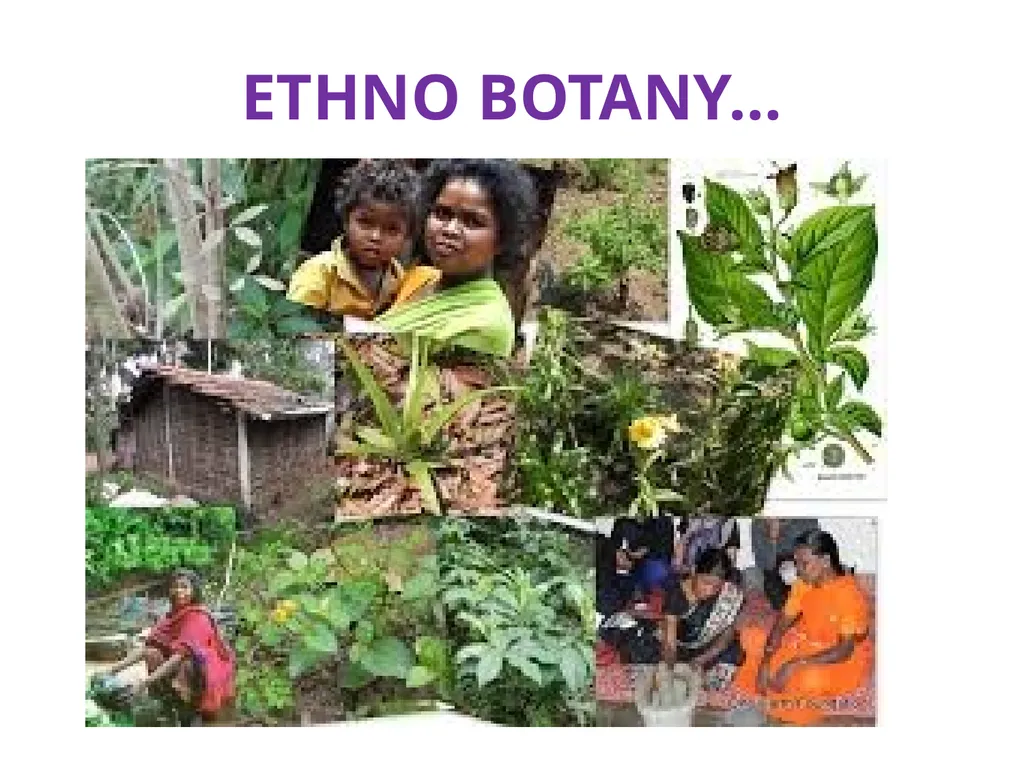
ETHNO BOTANY…<br>
08
History of Development of
Ethno botany: Prior to coining of the term Ethno botany usage of plants by human being for various purposes found place in the ancient Sanskrit, Greek, Arabic literatures, ethnographies, travelogues etc.<br>
09
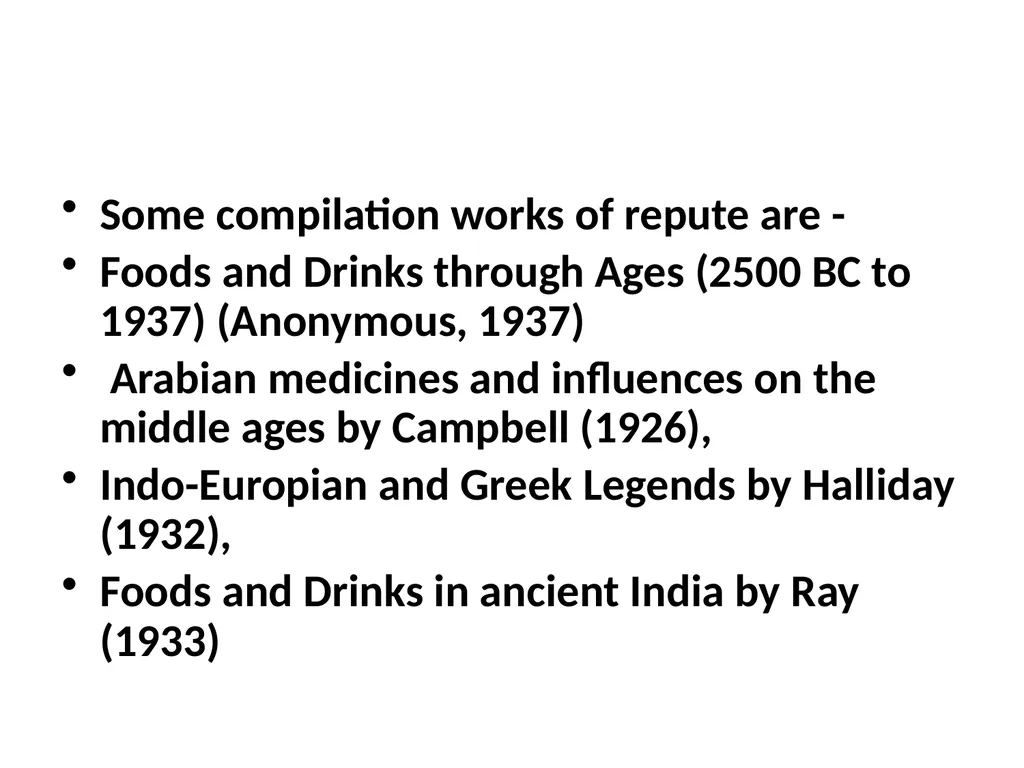
Some compilation works of repute are -
Foods and Drinks through Ages (2500 BC to 1937) (Anonymous, 1937)
Arabian medicines and influences on the middle ages by Campbell (1926),
Indo-Europian and Greek Legends by Halliday (1932),
Foods and Drinks in ancient India by Ray (1933)<br>
Foods and Drinks through Ages (2500 BC to 1937) (Anonymous, 1937)
Arabian medicines and influences on the middle ages by Campbell (1926),
Indo-Europian and Greek Legends by Halliday (1932),
Foods and Drinks in ancient India by Ray (1933)<br>
10
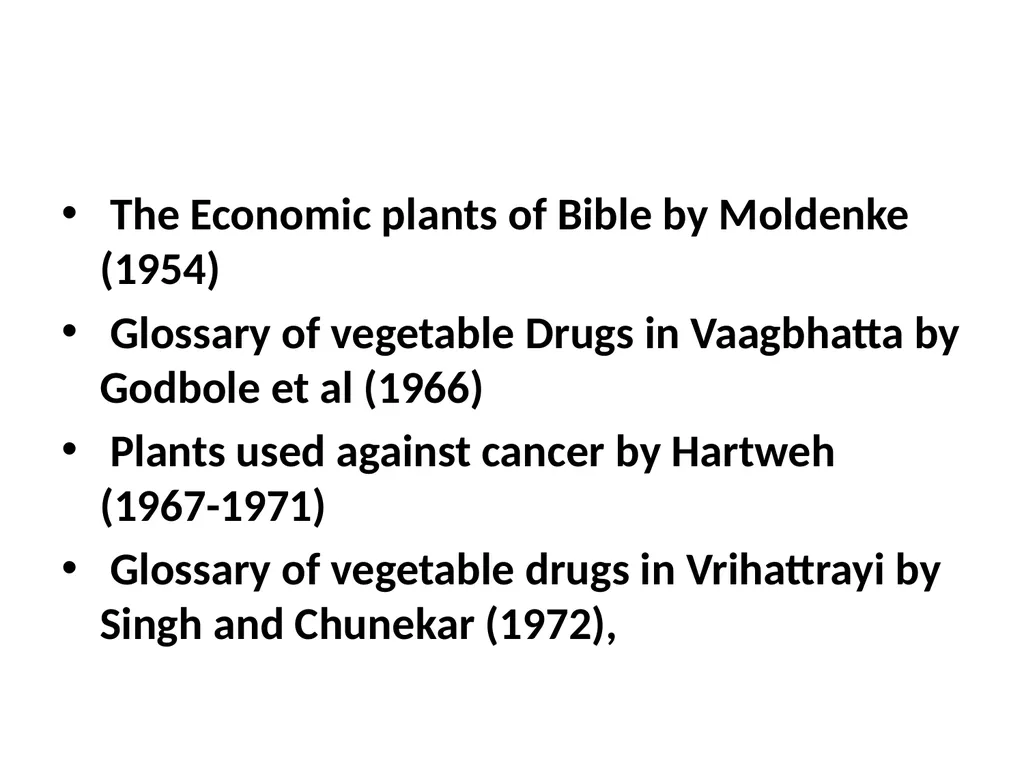
The Economic plants of Bible by Moldenke (1954)
Glossary of vegetable Drugs in Vaagbhatta by Godbole et al (1966)
Plants used against cancer by Hartweh (1967-1971)
Glossary of vegetable drugs in Vrihattrayi by Singh and Chunekar (1972),<br>
Glossary of vegetable Drugs in Vaagbhatta by Godbole et al (1966)
Plants used against cancer by Hartweh (1967-1971)
Glossary of vegetable drugs in Vrihattrayi by Singh and Chunekar (1972),<br>
11
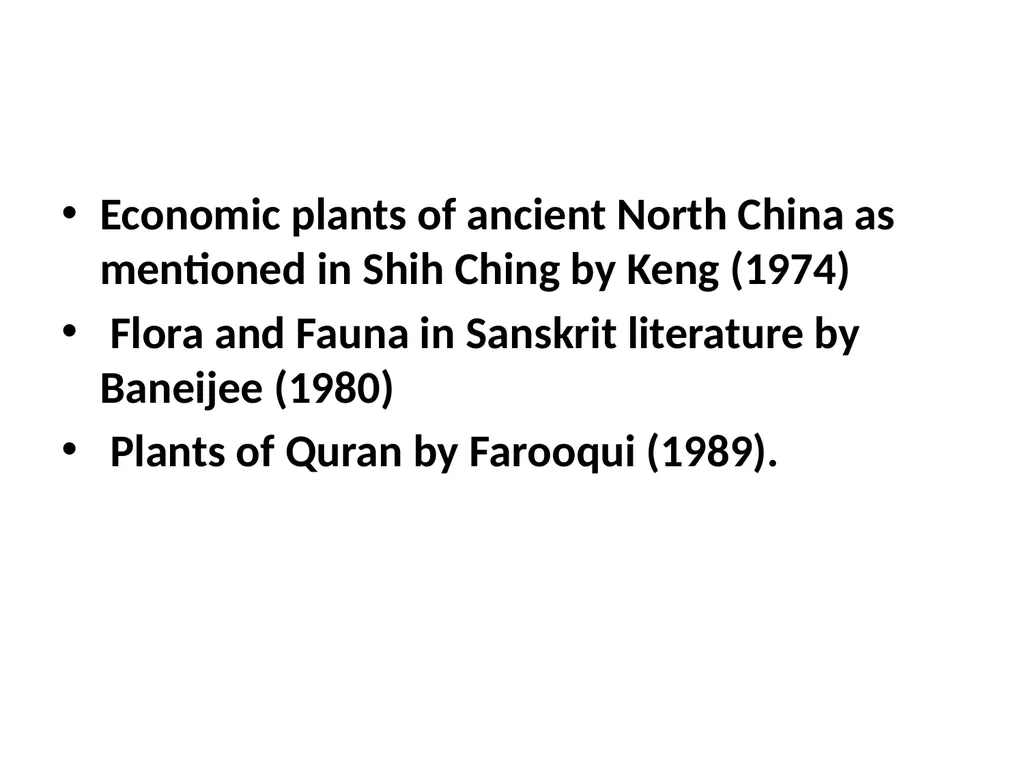
Economic plants of ancient North China as mentioned in Shih Ching by Keng (1974)
Flora and Fauna in Sanskrit literature by Baneijee (1980)
Plants of Quran by Farooqui (1989).<br>
Flora and Fauna in Sanskrit literature by Baneijee (1980)
Plants of Quran by Farooqui (1989).<br>
12
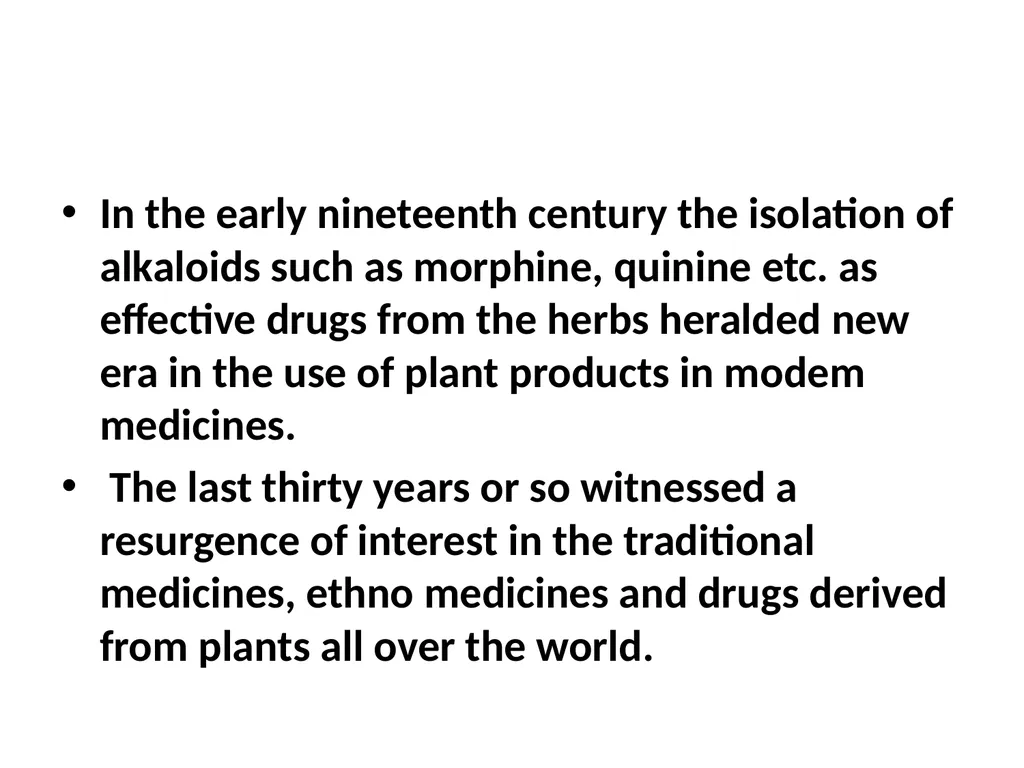
In the early nineteenth century the isolation of alkaloids such as morphine, quinine etc. as effective drugs from the herbs heralded new era in the use of plant products in modem medicines.
The last thirty years or so witnessed a resurgence of interest in the traditional medicines, ethno medicines and drugs derived from plants all over the world.<br>
The last thirty years or so witnessed a resurgence of interest in the traditional medicines, ethno medicines and drugs derived from plants all over the world.<br>
13
The twentieth century has witnessed the emergence of ethno botany as a distinct academic branch of natural science. There has been an increasing interest in the scientific study of ethnic plants used by various indigenous peoples commonly designated as aboriginal natives, first people, original settlers,
Aadivasees, Vanya jaati (forest castes), Aadim Jaati (primitive castes), Jan Jaati (folk communities) and tribals.
More than a dozen books and a thousand research publications on ethno botany have appeared in the world.<br>
Aadivasees, Vanya jaati (forest castes), Aadim Jaati (primitive castes), Jan Jaati (folk communities) and tribals.
More than a dozen books and a thousand research publications on ethno botany have appeared in the world.<br>
14
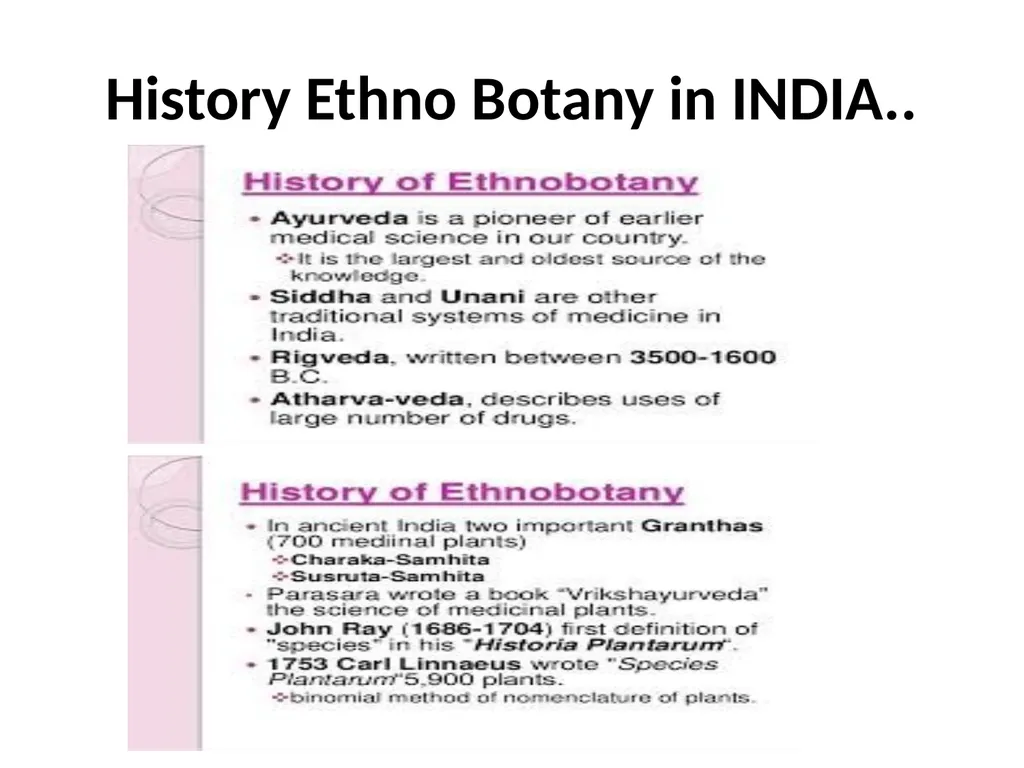
History Ethno Botany in INDIA..<br>
15
Data collection methods The following are the three methods of collecting ethnobotanical information.
First one is ‘Cat and Mouse’ technique as termed by Schultes (1962).
In this, all the useful specimens are collected by the investigator and shown to the informants one by
one giving the known uses.
The informant will interrogate the investigator out of curiosity to confirm whether their knowledge coincides with that of the investigator’s, thus revealing their secrets on medicinal plants.<br>
First one is ‘Cat and Mouse’ technique as termed by Schultes (1962).
In this, all the useful specimens are collected by the investigator and shown to the informants one by
one giving the known uses.
The informant will interrogate the investigator out of curiosity to confirm whether their knowledge coincides with that of the investigator’s, thus revealing their secrets on medicinal plants.<br>
16
2. The knowledgeable informants were taken directly to the field and information was collected through in depth interviews.
Informal discussions were carried out with the informants having high degree of herbal knowledge.<br>
Informal discussions were carried out with the informants having high degree of herbal knowledge.<br>
17
3. In the third method the informants were employed on daily wages. They were
allowed to take the role of a demonstrator or instructor to the investigator, thus helping in
collecting the specimens from the field.<br>
allowed to take the role of a demonstrator or instructor to the investigator, thus helping in
collecting the specimens from the field.<br>
18
Applications…. Agriculture
Agriculture may be defined as the culturally influenced selection of plants with specific genetic characteristics that are desired by humans to create domesticated plants, or crops.
Ethnobotany contributes to an understanding of agriculture in two ways:
By revealing ways to create genetically altered plants for human purposes.
By describing and explaining the many different ways the same crop can be raised, whether for economic gain, a desire for sustained yield, or other culturally specific purposes.<br>
Agriculture may be defined as the culturally influenced selection of plants with specific genetic characteristics that are desired by humans to create domesticated plants, or crops.
Ethnobotany contributes to an understanding of agriculture in two ways:
By revealing ways to create genetically altered plants for human purposes.
By describing and explaining the many different ways the same crop can be raised, whether for economic gain, a desire for sustained yield, or other culturally specific purposes.<br>
19
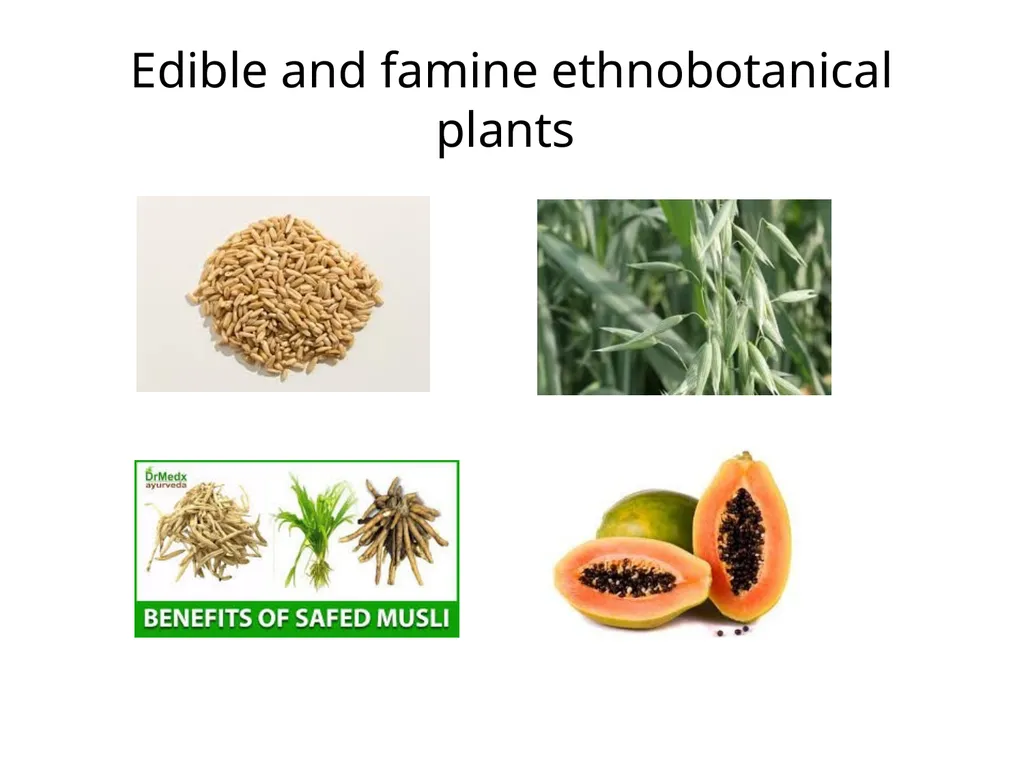
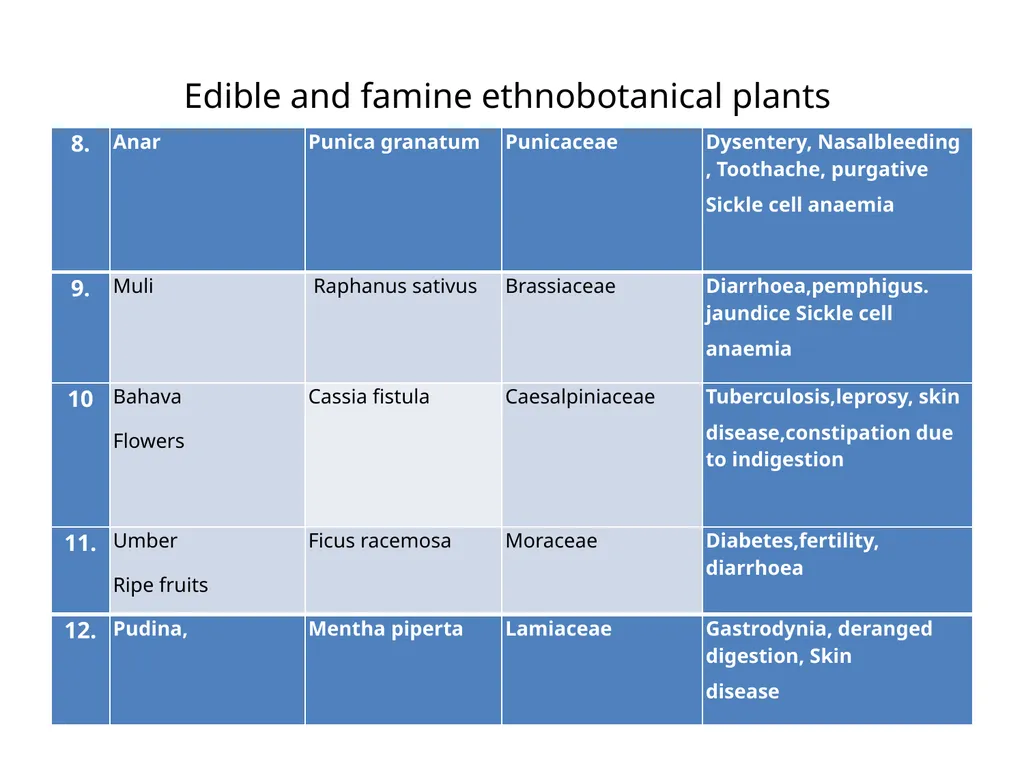
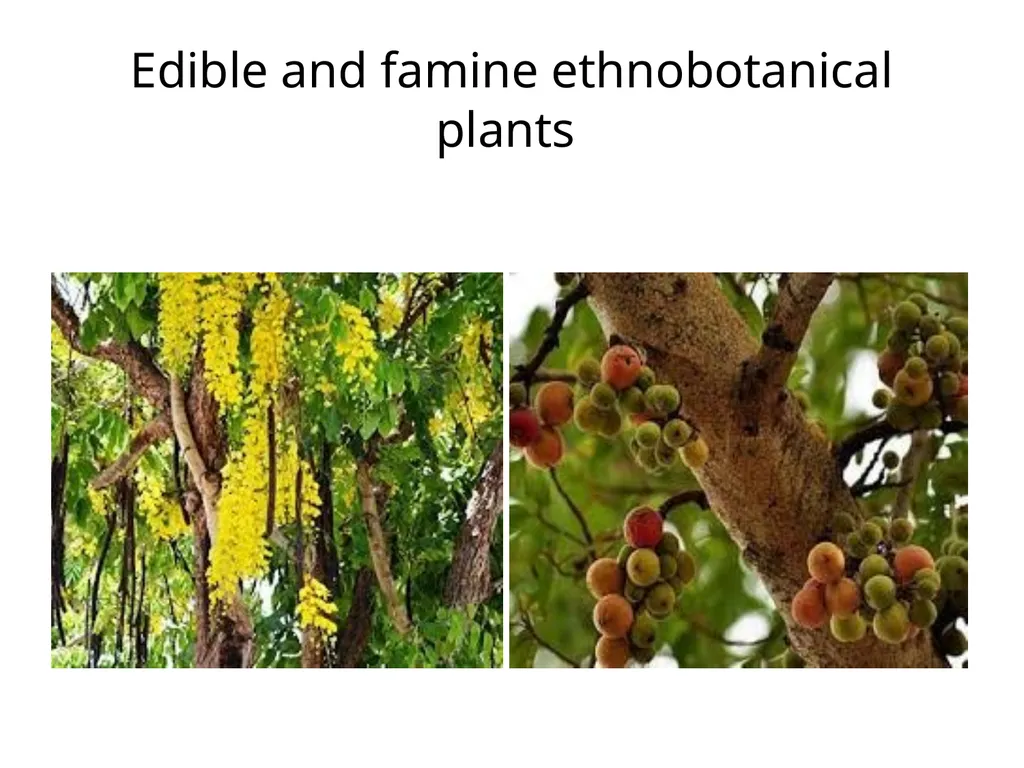
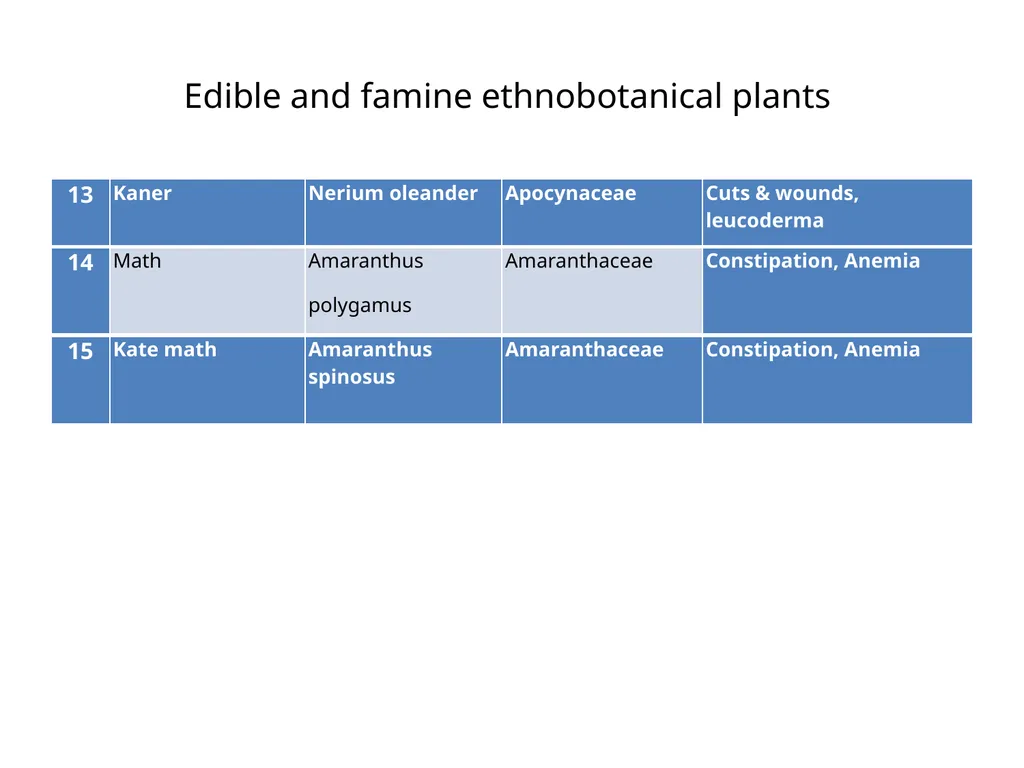
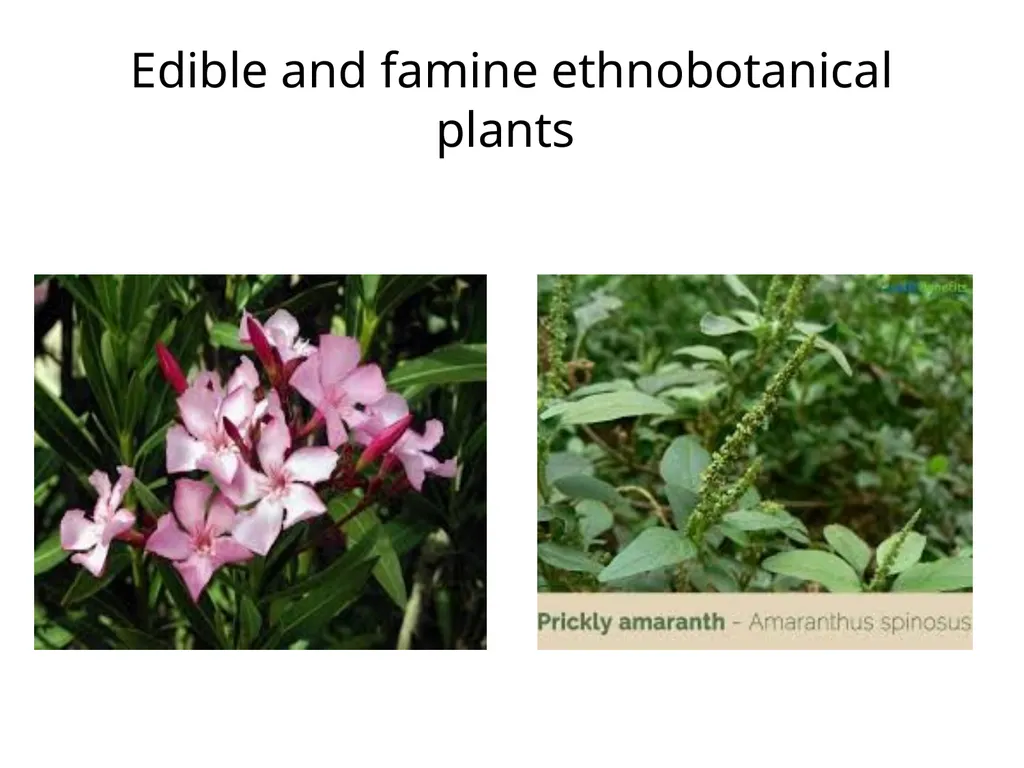
Famine plants / edible plants The tribal communities, over several years, have developed specialized set of practices using wild forest resources to fulfill their daily needs. This traditional knowledge is a result of the trial and error method followed over the generations .
The tribes have shown dependence mainly on the wild plant species for purposes such as food, medicine, shelter, and so on . These wild plants have not only proved to be the source of food for daily consumption but also as a key resource during extreme situations such as famines as well .<br>
The tribes have shown dependence mainly on the wild plant species for purposes such as food, medicine, shelter, and so on . These wild plants have not only proved to be the source of food for daily consumption but also as a key resource during extreme situations such as famines as well .<br>
20
Apart from the dietary aspect, the village doctors, locally called as Vaidu, who are aware of the medical properties of the wild edibles, have been successful in providing remedies for several ailments at the village level . Thus, the wild plants have played a significant role in the livelihood of the tribal communities as they mainly prove to be of dietary and medicinal importance. Realizing this significance, several ethno botanical studies have been undertaken to tap the specific neutraceutical and pharmaceutical potential .
The wild edible plants not only serve as emergrncy food sources during famines but also have medicinal properties. Most of the tribal communities in India have this knowledge of triple benefits of these plants,thus emphyeising the role and importance of these plants in Ethnobotany.<br>
The wild edible plants not only serve as emergrncy food sources during famines but also have medicinal properties. Most of the tribal communities in India have this knowledge of triple benefits of these plants,thus emphyeising the role and importance of these plants in Ethnobotany.<br>
21
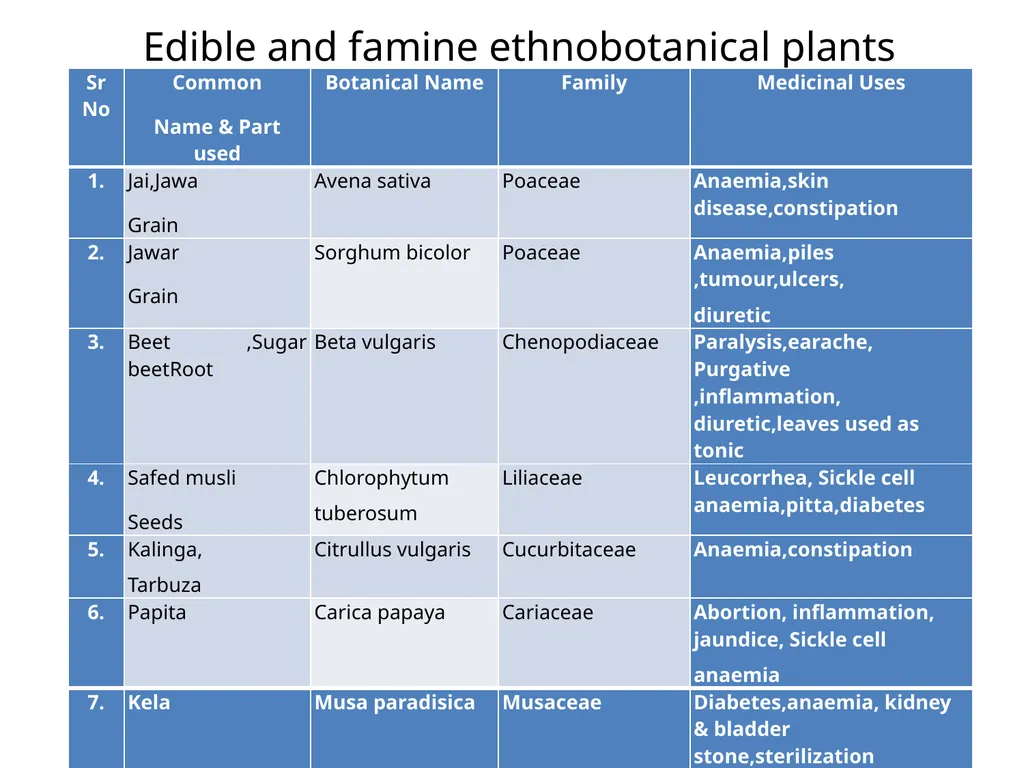
Edible and famine ethnobotanical plants<br>
22
Edible and famine ethnobotanical plants<br>
23
Edible and famine ethnobotanical plants<br>
24
Edible and famine ethnobotanical plants<br>
25
Edible and famine ethnobotanical plants<br>
26
Edible and famine ethnobotanical plants<br>
27
Ethnomedicine Ethnomedicine is a sub-field of ethnobotany that deals with the study of traditional medicines—not only those with relevant written sources (e.g., Traditional Chinese Medicine and Ayurveda), but also those whose knowledge and practices have been orally transmitted over the centuries.
While the focus of ethnomedical studies is often the indigenous perception and use of traditional medicines, another stimulus for this type of research is drug discovery and development. Major pharmaceuticals such as digoxin, morphine, and atropine have been traced to counter, opium, and belladonna, respectively.
Ethnomedical investigations in this century have led to the development of important drugs such as reserpine (a treatment for hypertension) podophyllotoxin (the base of an important anti-cancer drug), and vinblastine (used in the treatment of certain cancers).<br>
While the focus of ethnomedical studies is often the indigenous perception and use of traditional medicines, another stimulus for this type of research is drug discovery and development. Major pharmaceuticals such as digoxin, morphine, and atropine have been traced to counter, opium, and belladonna, respectively.
Ethnomedical investigations in this century have led to the development of important drugs such as reserpine (a treatment for hypertension) podophyllotoxin (the base of an important anti-cancer drug), and vinblastine (used in the treatment of certain cancers).<br>
28
Skin ailments
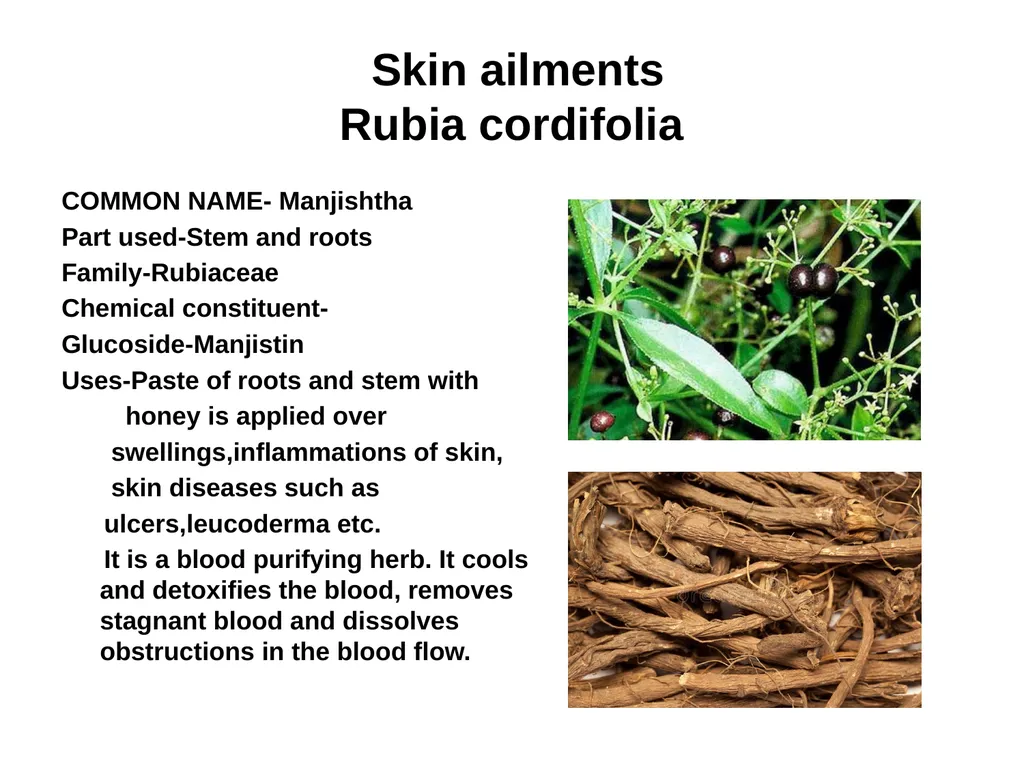
Rubia cordifolia COMMON NAME- Manjishtha
Part used-Stem and roots
Family-Rubiaceae
Chemical constituent-
Glucoside-Manjistin
Uses-Paste of roots and stem with
honey is applied over
swellings,inflammations of skin,
skin diseases such as
ulcers,leucoderma etc.
It is a blood purifying herb. It cools and detoxifies the blood, removes stagnant blood and dissolves obstructions in the blood flow.<br>
Part used-Stem and roots
Family-Rubiaceae
Chemical constituent-
Glucoside-Manjistin
Uses-Paste of roots and stem with
honey is applied over
swellings,inflammations of skin,
skin diseases such as
ulcers,leucoderma etc.
It is a blood purifying herb. It cools and detoxifies the blood, removes stagnant blood and dissolves obstructions in the blood flow.<br>
29
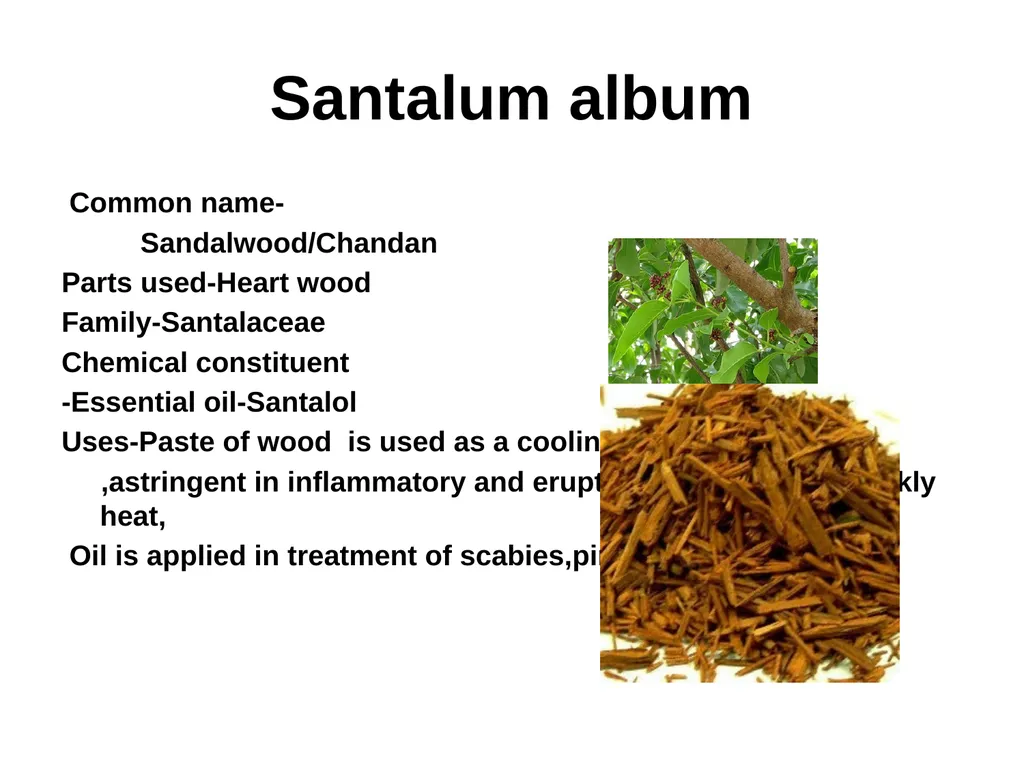
Santalum album Common name-
Sandalwood/Chandan
Parts used-Heart wood
Family-Santalaceae
Chemical constituent
-Essential oil-Santalol
Uses-Paste of wood is used as a cooling dressing,antiseptic
,astringent in inflammatory and eruptive skin diseases,prickly heat,
Oil is applied in treatment of scabies,pimples etc<br>
Sandalwood/Chandan
Parts used-Heart wood
Family-Santalaceae
Chemical constituent
-Essential oil-Santalol
Uses-Paste of wood is used as a cooling dressing,antiseptic
,astringent in inflammatory and eruptive skin diseases,prickly heat,
Oil is applied in treatment of scabies,pimples etc<br>
30
Liver ailments
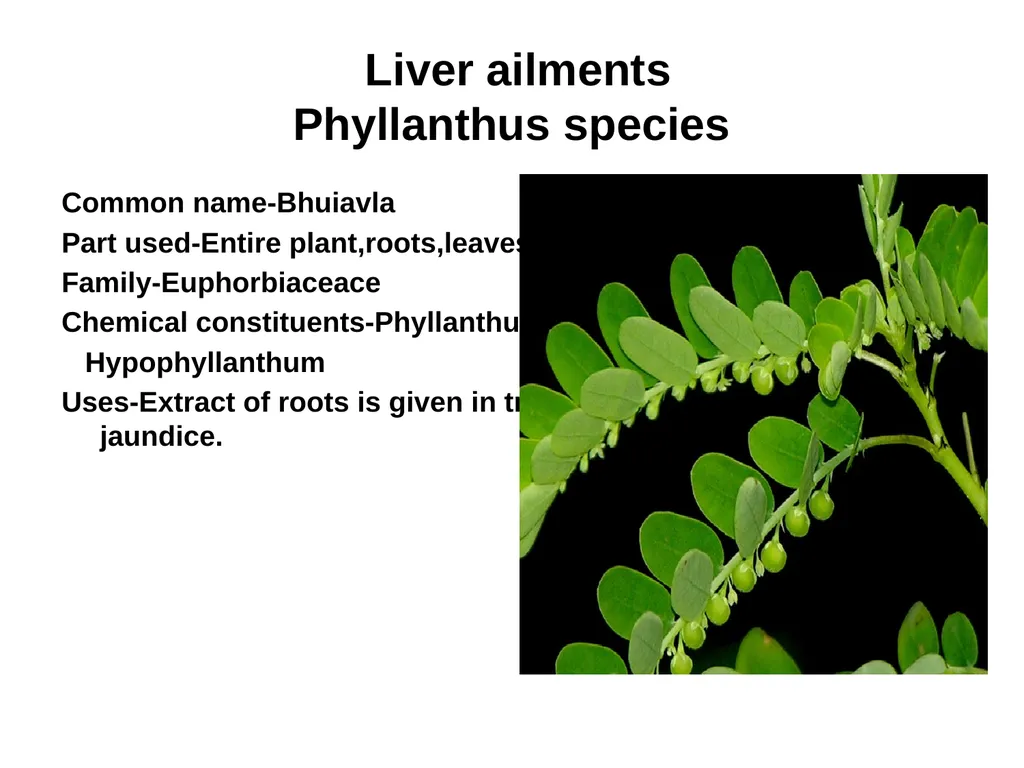
Phyllanthus species Common name-Bhuiavla
Part used-Entire plant,roots,leaves.
Family-Euphorbiaceace
Chemical constituents-Phyllanthum,
Hypophyllanthum
Uses-Extract of roots is given in treatment of liver disorders and jaundice.<br>
Part used-Entire plant,roots,leaves.
Family-Euphorbiaceace
Chemical constituents-Phyllanthum,
Hypophyllanthum
Uses-Extract of roots is given in treatment of liver disorders and jaundice.<br>
31
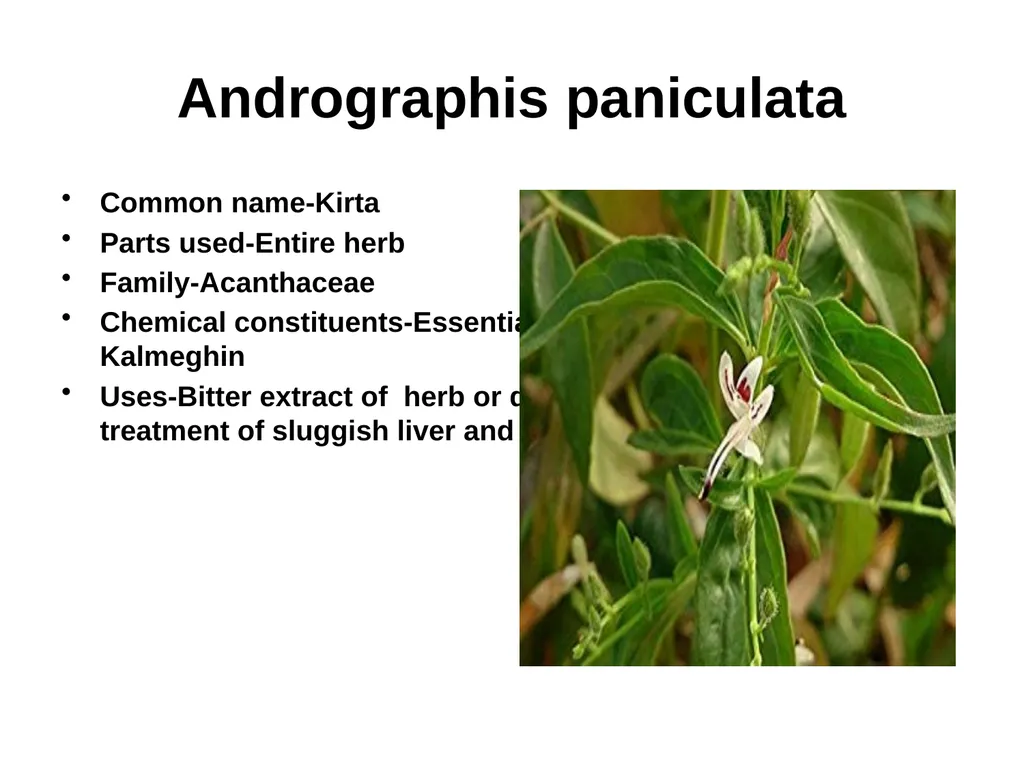
Andrographis paniculata Common name-Kirta
Parts used-Entire herb
Family-Acanthaceae
Chemical constituents-Essential oil, bitter substance-Kalmeghin
Uses-Bitter extract of herb or decoction of leaves is given in treatment of sluggish liver and other liver disorders.<br>
Parts used-Entire herb
Family-Acanthaceae
Chemical constituents-Essential oil, bitter substance-Kalmeghin
Uses-Bitter extract of herb or decoction of leaves is given in treatment of sluggish liver and other liver disorders.<br>
32
Wound healing and ageing
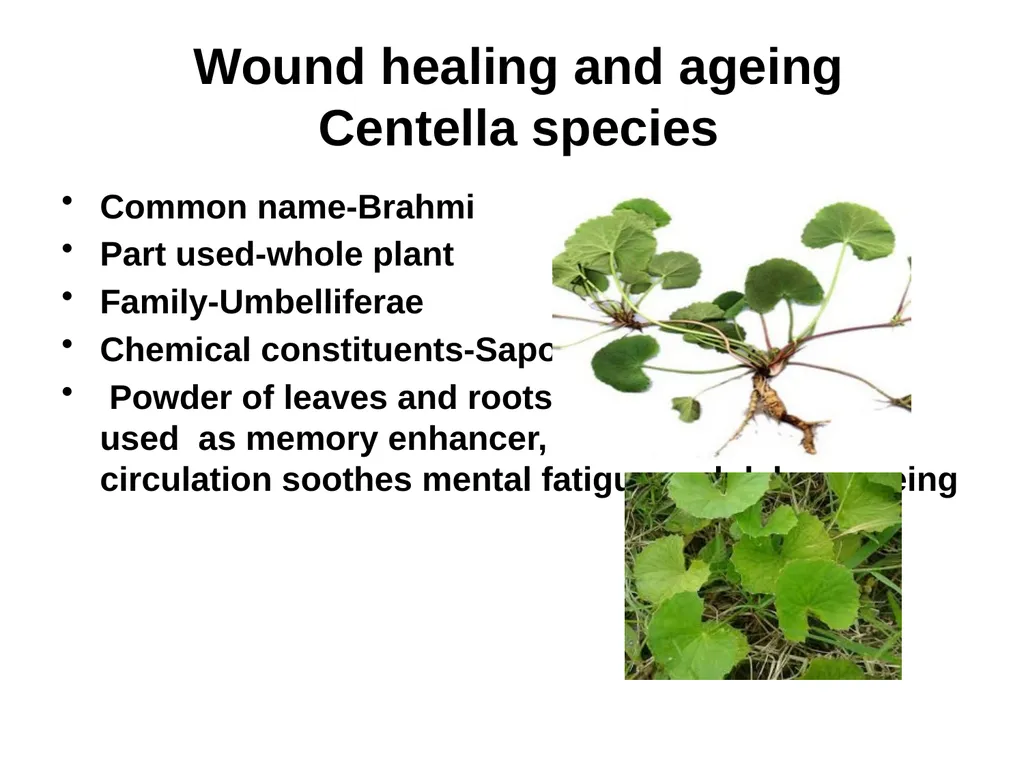
Centella species Common name-Brahmi
Part used-whole plant
Family-Umbelliferae
Chemical constituents-Saponin-Brahmoside
Powder of leaves and roots applied on wounds, used as memory enhancer, improves blood circulation soothes mental fatigue and delays ageing<br>
Part used-whole plant
Family-Umbelliferae
Chemical constituents-Saponin-Brahmoside
Powder of leaves and roots applied on wounds, used as memory enhancer, improves blood circulation soothes mental fatigue and delays ageing<br>
33
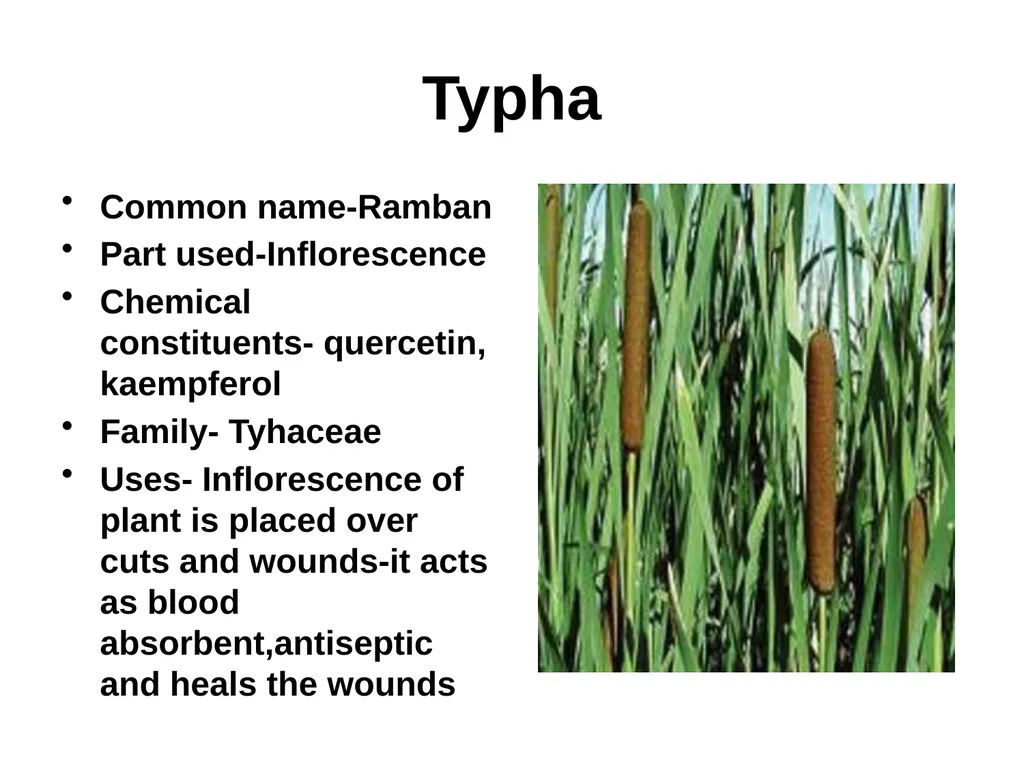
Typha Common name-Ramban
Part used-Inflorescence
Chemical constituents- quercetin, kaempferol
Family- Tyhaceae
Uses- Inflorescence of plant is placed over cuts and wounds-it acts as blood absorbent,antiseptic and heals the wounds<br>
Part used-Inflorescence
Chemical constituents- quercetin, kaempferol
Family- Tyhaceae
Uses- Inflorescence of plant is placed over cuts and wounds-it acts as blood absorbent,antiseptic and heals the wounds<br>
34
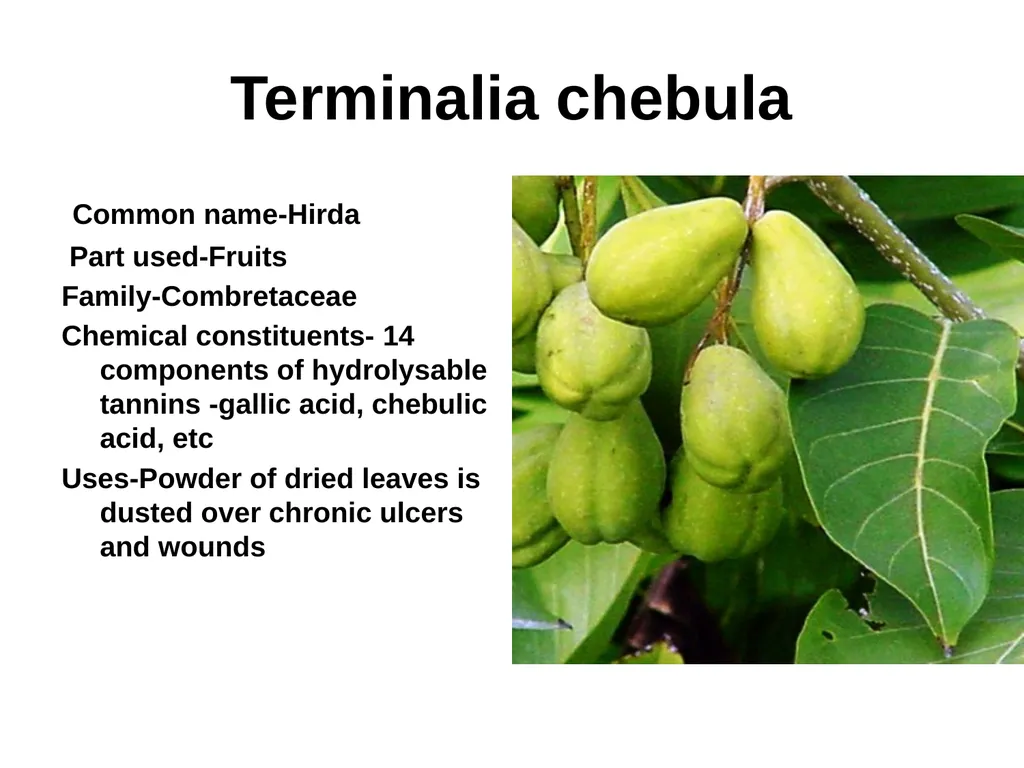
Terminalia chebula Common name-Hirda
Part used-Fruits
Family-Combretaceae
Chemical constituents- 14 components of hydrolysable tannins -gallic acid, chebulic acid, etc
Uses-Powder of dried leaves is dusted over chronic ulcers and wounds<br>
Part used-Fruits
Family-Combretaceae
Chemical constituents- 14 components of hydrolysable tannins -gallic acid, chebulic acid, etc
Uses-Powder of dried leaves is dusted over chronic ulcers and wounds<br>
35
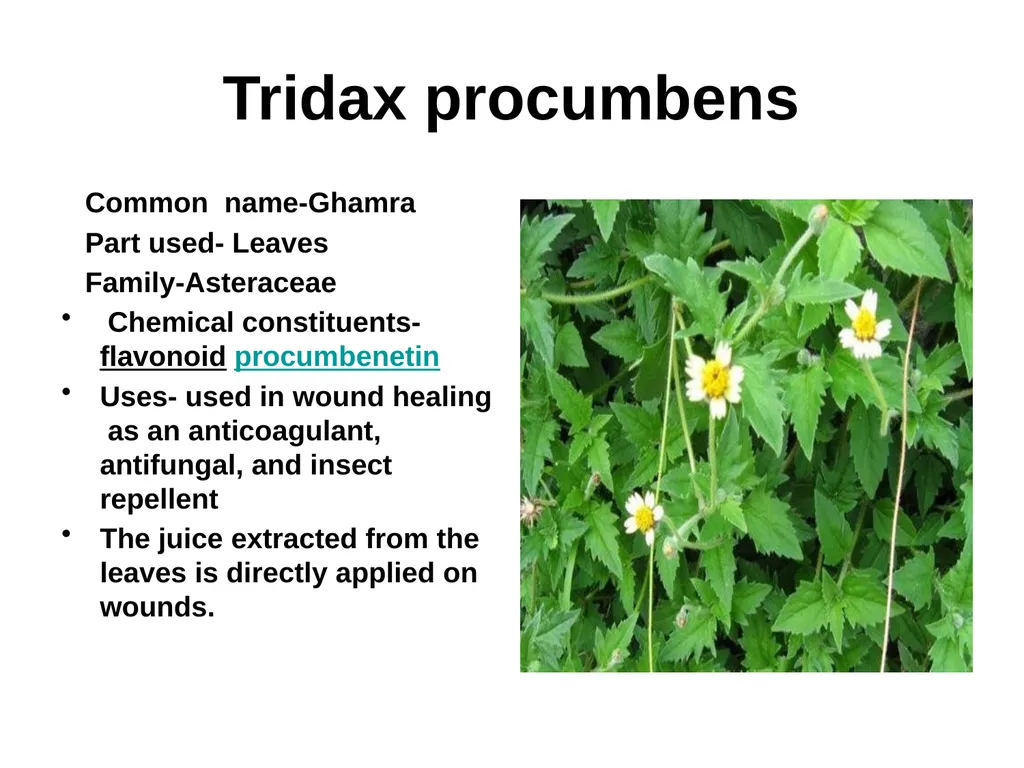
Tridax procumbens Common name-Ghamra
Part used- Leaves
Family-Asteraceae
Chemical constituents-flavonoid procumbenetin
Uses- used in wound healing as an anticoagulant, antifungal, and insect repellent
The juice extracted from the leaves is directly applied on wounds.<br>
Part used- Leaves
Family-Asteraceae
Chemical constituents-flavonoid procumbenetin
Uses- used in wound healing as an anticoagulant, antifungal, and insect repellent
The juice extracted from the leaves is directly applied on wounds.<br>
36
Fever
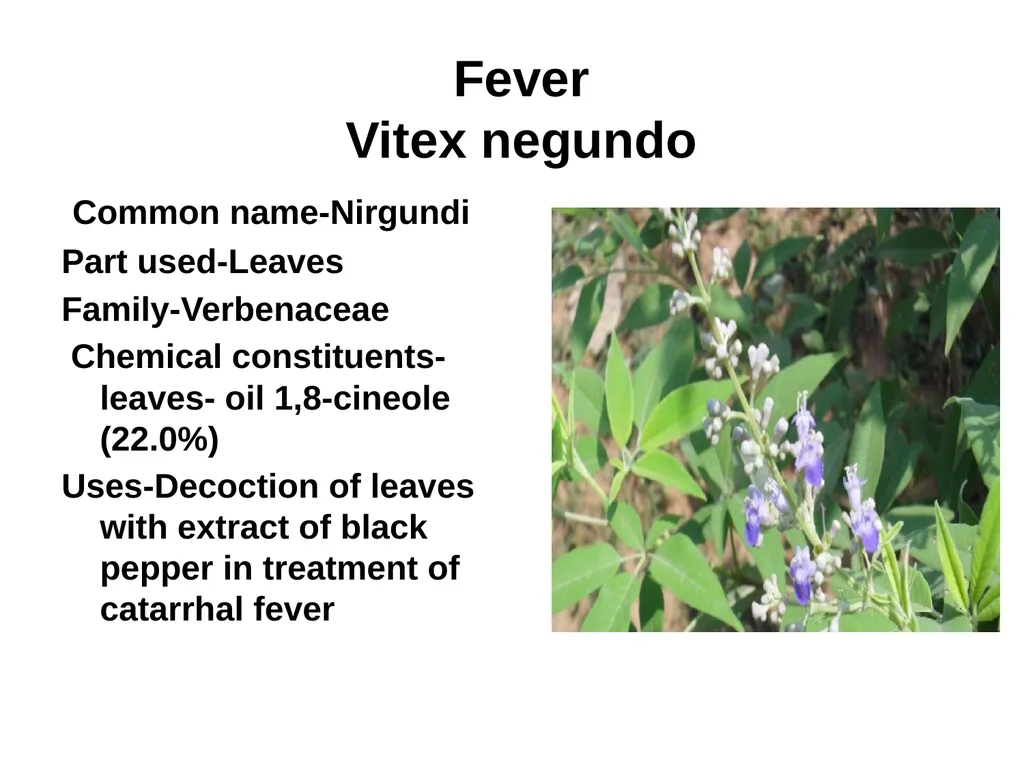
Vitex negundo Common name-Nirgundi
Part used-Leaves
Family-Verbenaceae
Chemical constituents-leaves- oil 1,8-cineole (22.0%)
Uses-Decoction of leaves with extract of black pepper in treatment of catarrhal fever<br>
Part used-Leaves
Family-Verbenaceae
Chemical constituents-leaves- oil 1,8-cineole (22.0%)
Uses-Decoction of leaves with extract of black pepper in treatment of catarrhal fever<br>
37
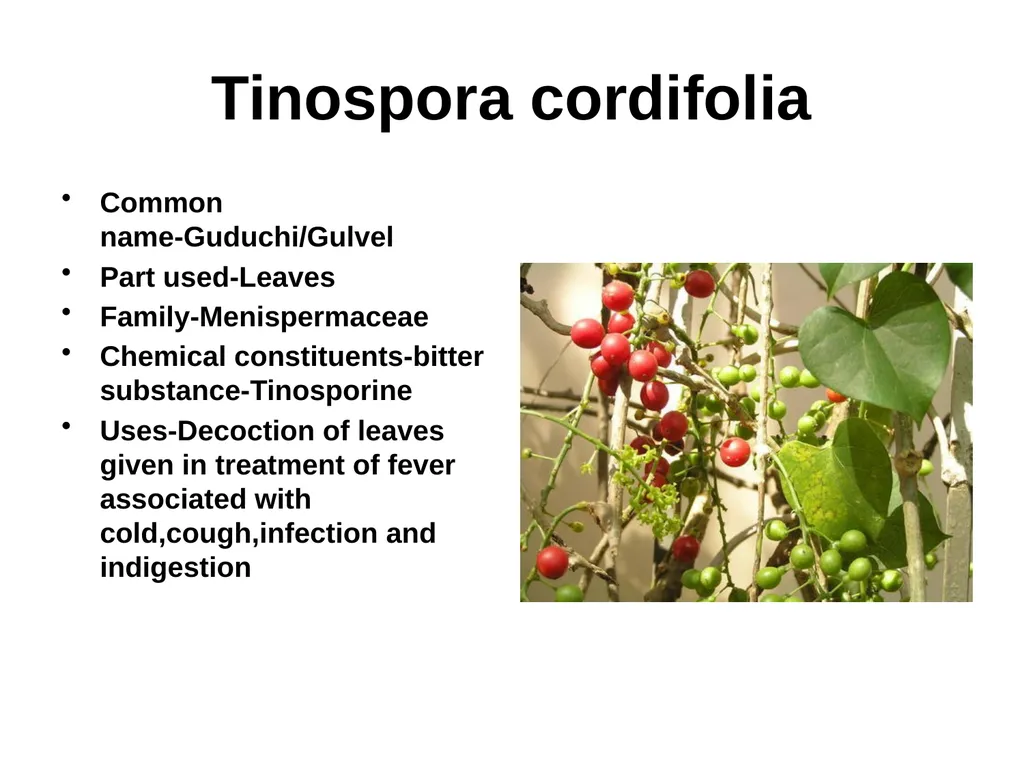
Tinospora cordifolia Common name-Guduchi/Gulvel
Part used-Leaves
Family-Menispermaceae
Chemical constituents-bitter substance-Tinosporine
Uses-Decoction of leaves given in treatment of fever associated with cold,cough,infection and indigestion<br>
Part used-Leaves
Family-Menispermaceae
Chemical constituents-bitter substance-Tinosporine
Uses-Decoction of leaves given in treatment of fever associated with cold,cough,infection and indigestion<br>
38
Diabetis
Momordia charantia Common name-Karela
Part used-Fruit
Family-Cucurbiataceae
Chemical constituents-Momordicin
Uses-Fruits are effective in treatment and diet control in diabetes.
-Helps in maintaining blood sugar levels.
Lowers bad cholesterol levels.
Cleanses the liver. ...
Helps in weight loss. ...
Boosts your immune system.
Good for eyes.<br>
Part used-Fruit
Family-Cucurbiataceae
Chemical constituents-Momordicin
Uses-Fruits are effective in treatment and diet control in diabetes.
-Helps in maintaining blood sugar levels.
Lowers bad cholesterol levels.
Cleanses the liver. ...
Helps in weight loss. ...
Boosts your immune system.
Good for eyes.<br>
39
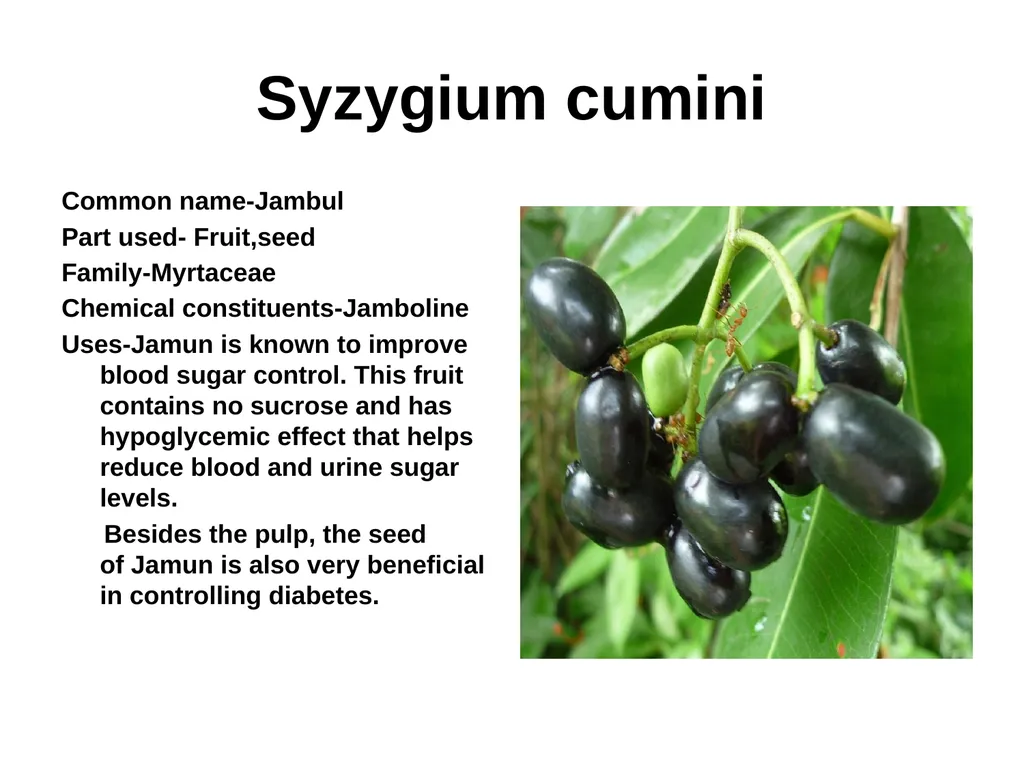
Syzygium cumini Common name-Jambul
Part used- Fruit,seed
Family-Myrtaceae
Chemical constituents-Jamboline
Uses-Jamun is known to improve blood sugar control. This fruit contains no sucrose and has hypoglycemic effect that helps reduce blood and urine sugar levels.
Besides the pulp, the seed of Jamun is also very beneficial in controlling diabetes.<br>
Part used- Fruit,seed
Family-Myrtaceae
Chemical constituents-Jamboline
Uses-Jamun is known to improve blood sugar control. This fruit contains no sucrose and has hypoglycemic effect that helps reduce blood and urine sugar levels.
Besides the pulp, the seed of Jamun is also very beneficial in controlling diabetes.<br>
40
Toxic plants and antidotes Poisonous plants are those plants that produce toxins that deter herbivores from consuming them. Plants cannot move to escape their predators, so they must have other means of protecting themselves from herbivorous animals. Some plants have physical defenses such as thorns, spines and prickles, but by far the most common type of protection is chemical.
Over millennia, through the process of natural selection, plants have evolved the means to produce a vast and complicated array of chemical compounds in order to deter herbivores.
Tannin, for example, is a defensive compound that emerged relatively early in the evolutionary history of plants, while more complex molecules such as polyacetylenes are found in younger groups of plants such as the Asterales.
Many of the known plant defense compoundsprimarily defend against consumption by insects, though other animals, including humans, that consume such plants may also experience negative effects, ranging from mild discomfort to death.<br>
Over millennia, through the process of natural selection, plants have evolved the means to produce a vast and complicated array of chemical compounds in order to deter herbivores.
Tannin, for example, is a defensive compound that emerged relatively early in the evolutionary history of plants, while more complex molecules such as polyacetylenes are found in younger groups of plants such as the Asterales.
Many of the known plant defense compoundsprimarily defend against consumption by insects, though other animals, including humans, that consume such plants may also experience negative effects, ranging from mild discomfort to death.<br>