
EU-China relation and de-risking global






Description: EU-China relation and de-risking global decarbonization Alicia García-Herrero, Senior Research Fellow at Bruegel EU-China relations have deteriorated since the zenith reached in December 2020 with the agreement on a Comprehensive Agreement
Related Topics
Download Presentation
"EU-China relation and de-risking global" is the property of its rightful owner. Permission is granted to download and print the materials on this website for personal, non-commercial use only, and to display it on your personal computer provided you do not modify the materials and that you retain all copyright notices contained in the materials. By downloading content from our website, you accept the terms of this agreement.
Presentation Transcript
slide1. EU-China relation and de-risking global decarbonization Alicia García-Herrero, Senior Research Fellow at Bruegel<br>
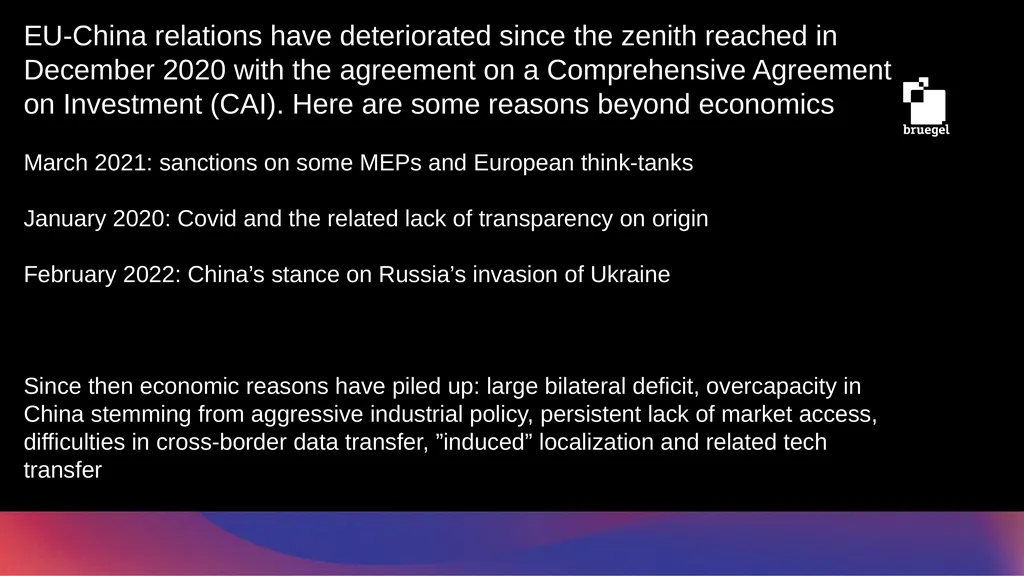
slide2. EU-China relations have deteriorated since the zenith reached in December 2020 with the agreement on a Comprehensive Agreement on Investment (CAI). Here are some reasons beyond economics March 2021: sanctions on some MEPs and European think-tanks January 2020: Covid and the related lack of transparency on origin February 2022: China’s stance on Russia’s invasion of Ukraine Since then economic reasons have piled up: large bilateral deficit, overcapacity in China stemming from aggressive industrial policy, persistent lack of market access, difficulties in cross-border data transfer, ”induced” localization and related tech transfer 3. China: Risk on potential overcapacity for green tech<br>
slide3. 1. Zooming into our trade-investment relations<br>
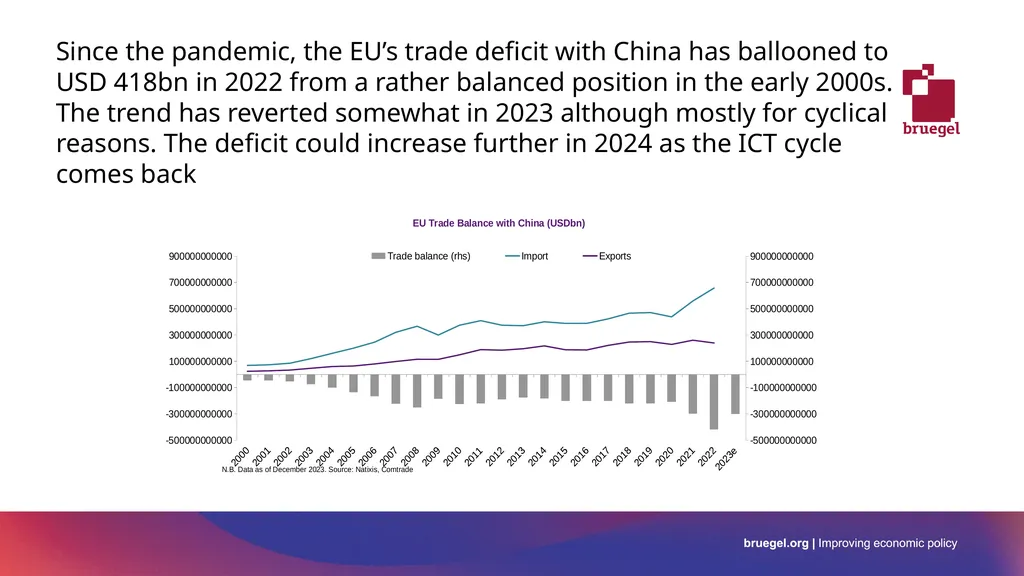
slide4. Since the pandemic, the EU’s trade deficit with China has ballooned to USD 418bn in 2022 from a rather balanced position in the early 2000s. The trend has reverted somewhat in 2023 although mostly for cyclical reasons. The deficit could increase further in 2024 as the ICT cycle comes back<br>
slide5. China’s imports are now growing at a slower rate than global trade. Moreover, Chinese imports from the EU, including Germany, have done worse than the global average<br>
slide6. One of the reasons for the huge increase in European imports from China is the competitiveness gains China has made from deflationary forces and a cheap RMB<br>
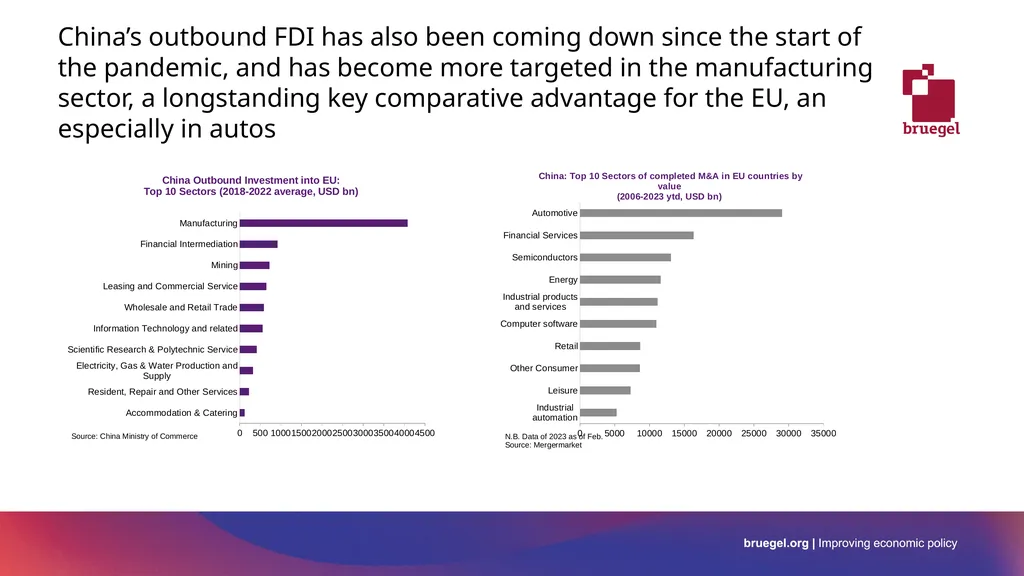
slide7. China’s outbound FDI has also been coming down since the start of the pandemic, and has become more targeted in the manufacturing sector, a longstanding key comparative advantage for the EU, an especially in autos<br>
slide8. 2. Growing strategic dependences, especially in green tech<br>
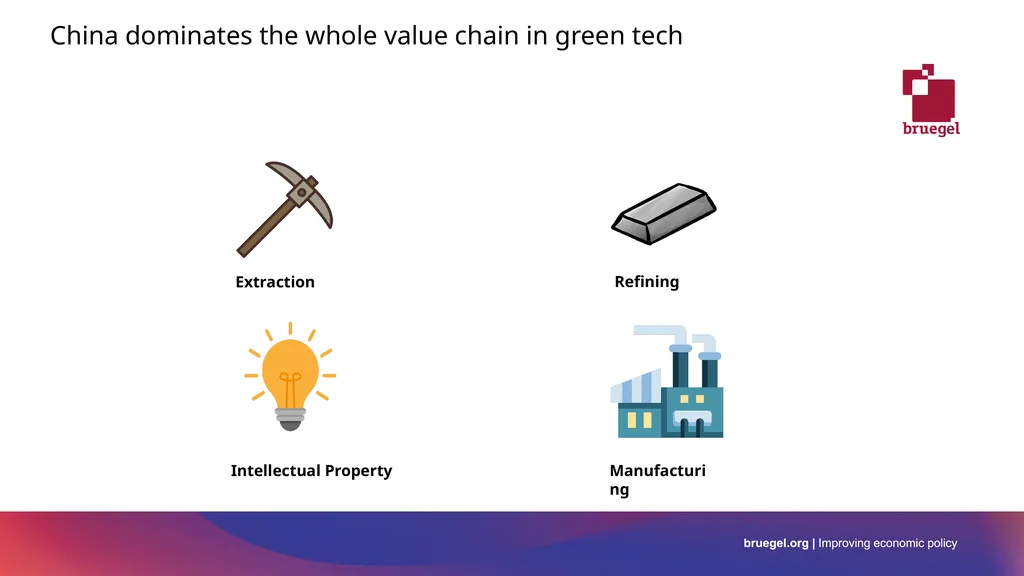
slide9. China dominates the whole value chain in green tech Extraction Refining Intellectual Property Manufacturing<br>
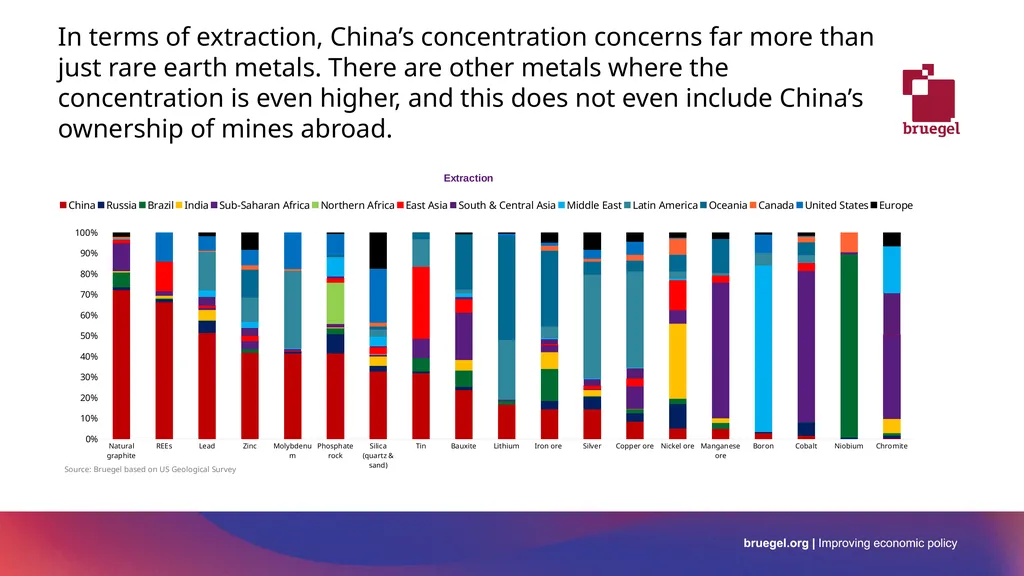
slide10. In terms of extraction, China’s concentration concerns far more than just rare earth metals. There are other metals where the concentration is even higher, and this does not even include China’s ownership of mines abroad.<br>
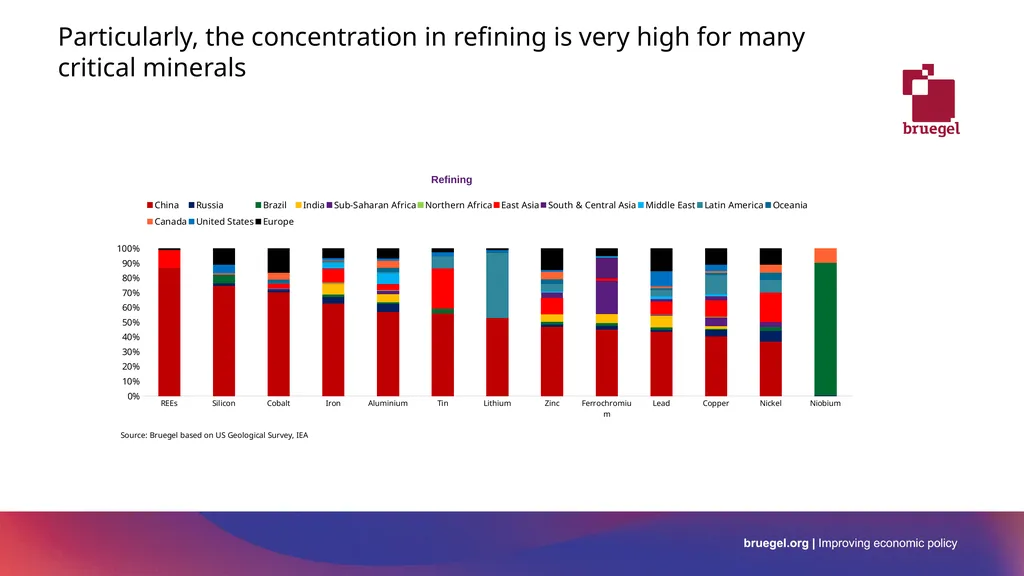
slide11. Particularly, the concentration in refining is very high for many critical minerals Refining<br>
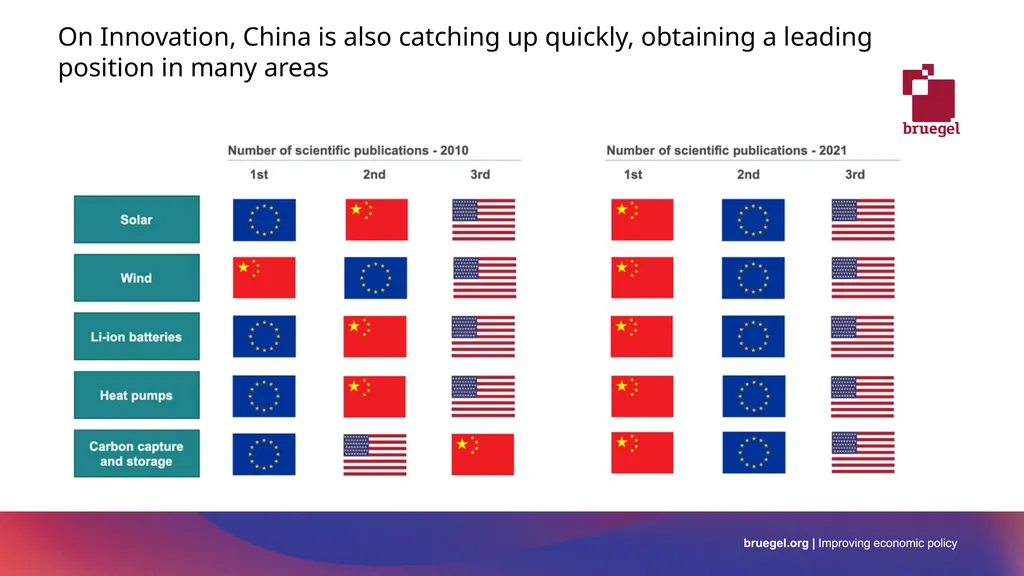
slide12. On Innovation, China is also catching up quickly, obtaining a leading position in many areas<br>
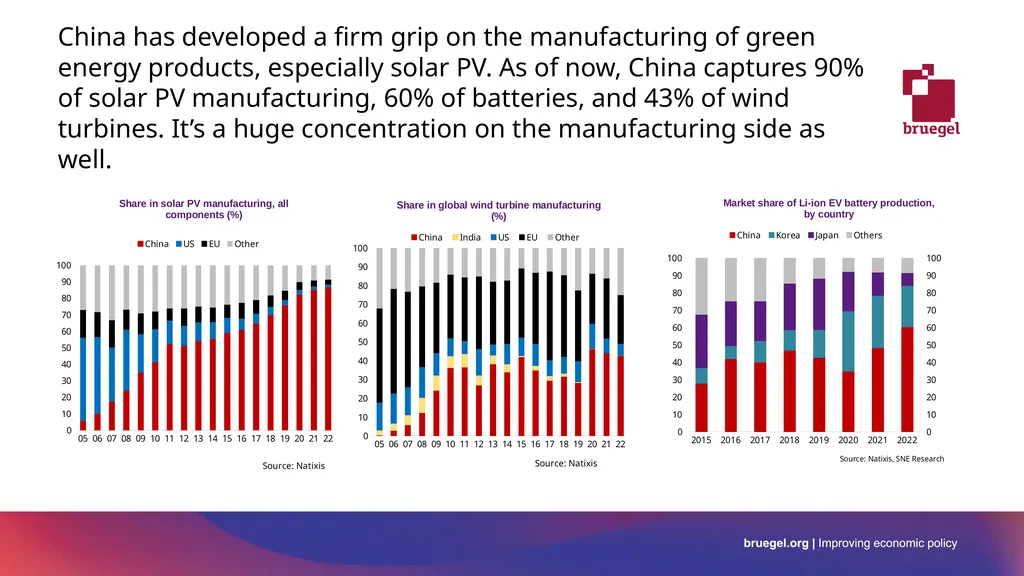
slide13. China has developed a firm grip on the manufacturing of green energy products, especially solar PV. As of now, China captures 90% of solar PV manufacturing, 60% of batteries, and 43% of wind turbines. It’s a huge concentration on the manufacturing side as well.<br>
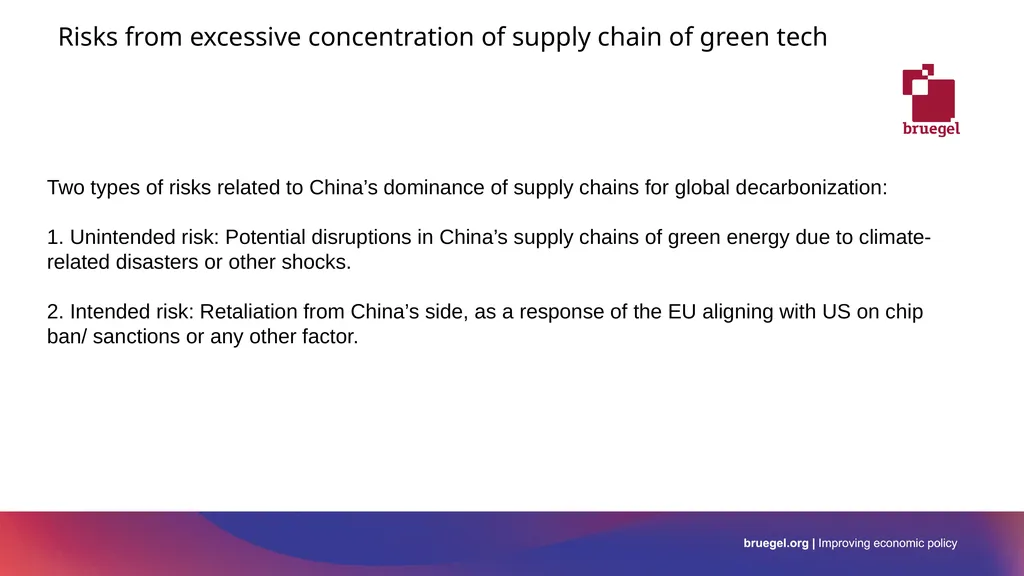
slide14. Risks from excessive concentration of supply chain of green tech Two types of risks related to China’s dominance of supply chains for global decarbonization: 1. Unintended risk: Potential disruptions in China’s supply chains of green energy due to climate-related disasters or other shocks.
2. Intended risk: Retaliation from China’s side, as a response of the EU aligning with US on chip ban/ sanctions or any other factor.<br>
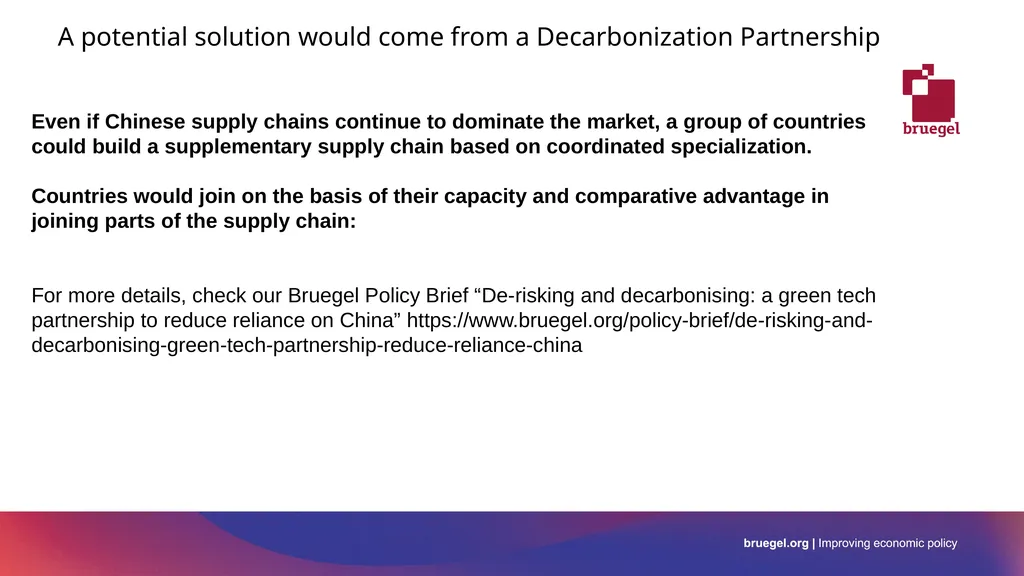
slide15. A potential solution would come from a Decarbonization Partnership Even if Chinese supply chains continue to dominate the market, a group of countries could build a supplementary supply chain based on coordinated specialization.
Countries would join on the basis of their capacity and comparative advantage in joining parts of the supply chain:
For more details, check our Bruegel Policy Brief “De-risking and decarbonising: a green tech partnership to reduce reliance on China” https://www.bruegel.org/policy-brief/de-risking-and-decarbonising-green-tech-partnership-reduce-reliance-china<br>
slide16. 3. Overcapacity as a key risk going forward<br>
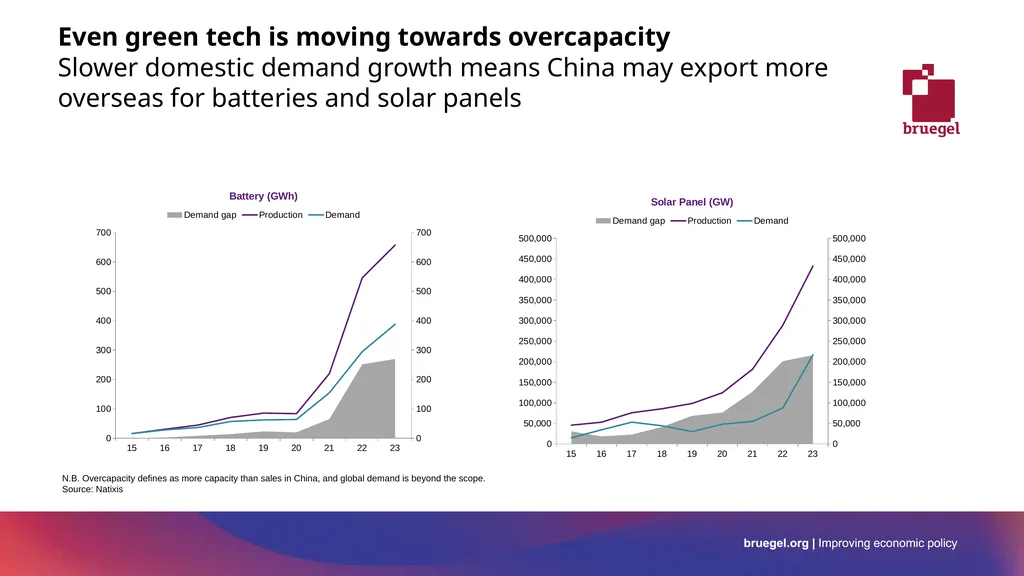
slide17. Even green tech is moving towards overcapacity Slower domestic demand growth means China may export more overseas for batteries and solar panels N.B. Overcapacity defines as more capacity than sales in China, and global demand is beyond the scope.
Source: Natixis<br>
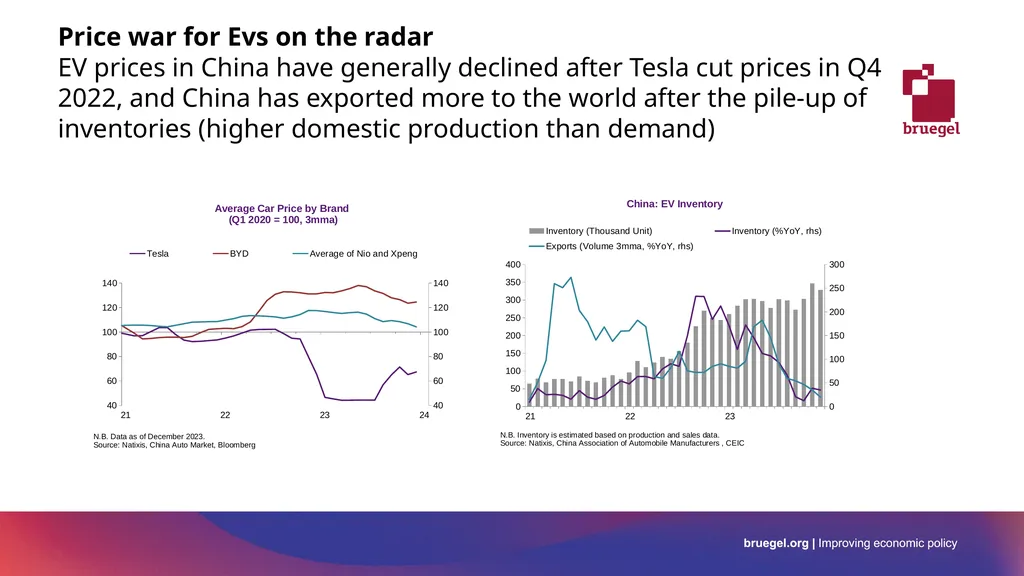
slide18. Price war for Evs on the radar EV prices in China have generally declined after Tesla cut prices in Q4 2022, and China has exported more to the world after the pile-up of inventories (higher domestic production than demand)<br>
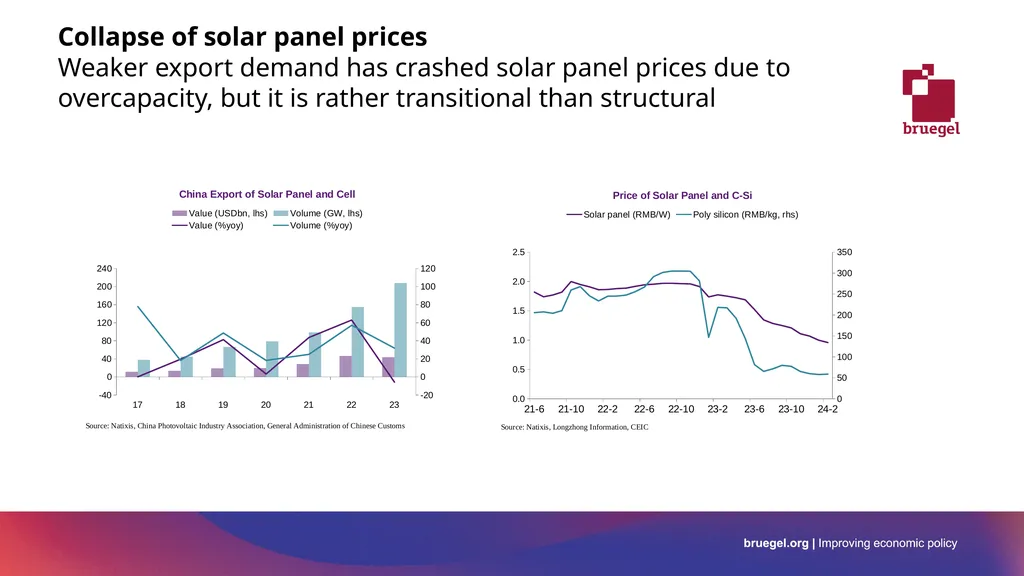
slide19. Collapse of solar panel prices Weaker export demand has crashed solar panel prices due to overcapacity, but it is rather transitional than structural<br>
slide20. 4. Conclusions<br>
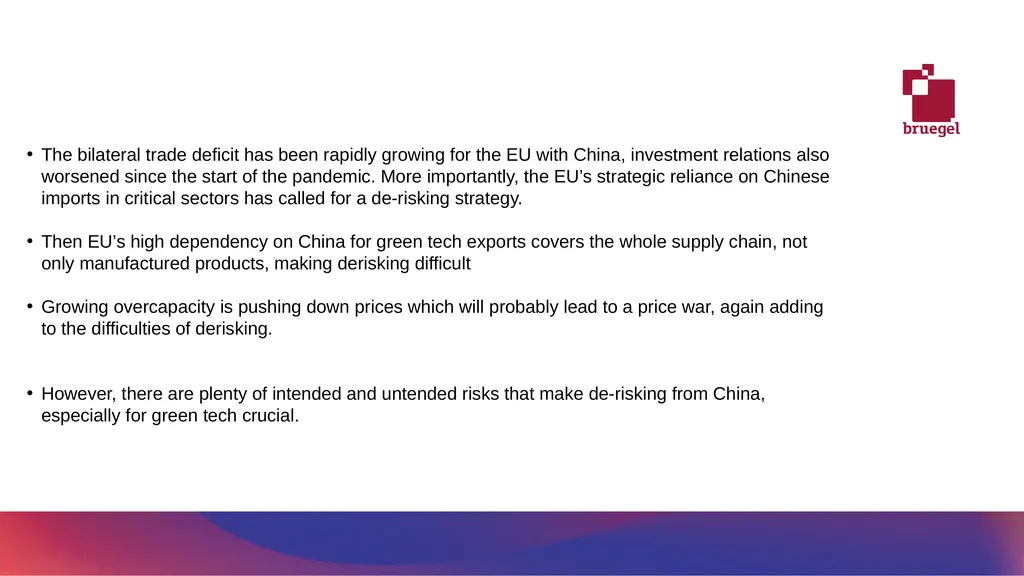
slide21. The bilateral trade deficit has been rapidly growing for the EU with China, investment relations also worsened since the start of the pandemic. More importantly, the EU’s strategic reliance on Chinese imports in critical sectors has called for a de-risking strategy.
Then EU’s high dependency on China for green tech exports covers the whole supply chain, not only manufactured products, making derisking difficult
Growing overcapacity is pushing down prices which will probably lead to a price war, again adding to the difficulties of derisking.
However, there are plenty of intended and untended risks that make de-risking from China, especially for green tech crucial.<br>
slide2. EU-China relations have deteriorated since the zenith reached in December 2020 with the agreement on a Comprehensive Agreement on Investment (CAI). Here are some reasons beyond economics March 2021: sanctions on some MEPs and European think-tanks January 2020: Covid and the related lack of transparency on origin February 2022: China’s stance on Russia’s invasion of Ukraine Since then economic reasons have piled up: large bilateral deficit, overcapacity in China stemming from aggressive industrial policy, persistent lack of market access, difficulties in cross-border data transfer, ”induced” localization and related tech transfer 3. China: Risk on potential overcapacity for green tech<br>
slide3. 1. Zooming into our trade-investment relations<br>
slide4. Since the pandemic, the EU’s trade deficit with China has ballooned to USD 418bn in 2022 from a rather balanced position in the early 2000s. The trend has reverted somewhat in 2023 although mostly for cyclical reasons. The deficit could increase further in 2024 as the ICT cycle comes back<br>
slide5. China’s imports are now growing at a slower rate than global trade. Moreover, Chinese imports from the EU, including Germany, have done worse than the global average<br>
slide6. One of the reasons for the huge increase in European imports from China is the competitiveness gains China has made from deflationary forces and a cheap RMB<br>
slide7. China’s outbound FDI has also been coming down since the start of the pandemic, and has become more targeted in the manufacturing sector, a longstanding key comparative advantage for the EU, an especially in autos<br>
slide8. 2. Growing strategic dependences, especially in green tech<br>
slide9. China dominates the whole value chain in green tech Extraction Refining Intellectual Property Manufacturing<br>
slide10. In terms of extraction, China’s concentration concerns far more than just rare earth metals. There are other metals where the concentration is even higher, and this does not even include China’s ownership of mines abroad.<br>
slide11. Particularly, the concentration in refining is very high for many critical minerals Refining<br>
slide12. On Innovation, China is also catching up quickly, obtaining a leading position in many areas<br>
slide13. China has developed a firm grip on the manufacturing of green energy products, especially solar PV. As of now, China captures 90% of solar PV manufacturing, 60% of batteries, and 43% of wind turbines. It’s a huge concentration on the manufacturing side as well.<br>
slide14. Risks from excessive concentration of supply chain of green tech Two types of risks related to China’s dominance of supply chains for global decarbonization: 1. Unintended risk: Potential disruptions in China’s supply chains of green energy due to climate-related disasters or other shocks.
2. Intended risk: Retaliation from China’s side, as a response of the EU aligning with US on chip ban/ sanctions or any other factor.<br>
slide15. A potential solution would come from a Decarbonization Partnership Even if Chinese supply chains continue to dominate the market, a group of countries could build a supplementary supply chain based on coordinated specialization.
Countries would join on the basis of their capacity and comparative advantage in joining parts of the supply chain:
For more details, check our Bruegel Policy Brief “De-risking and decarbonising: a green tech partnership to reduce reliance on China” https://www.bruegel.org/policy-brief/de-risking-and-decarbonising-green-tech-partnership-reduce-reliance-china<br>
slide16. 3. Overcapacity as a key risk going forward<br>
slide17. Even green tech is moving towards overcapacity Slower domestic demand growth means China may export more overseas for batteries and solar panels N.B. Overcapacity defines as more capacity than sales in China, and global demand is beyond the scope.
Source: Natixis<br>
slide18. Price war for Evs on the radar EV prices in China have generally declined after Tesla cut prices in Q4 2022, and China has exported more to the world after the pile-up of inventories (higher domestic production than demand)<br>
slide19. Collapse of solar panel prices Weaker export demand has crashed solar panel prices due to overcapacity, but it is rather transitional than structural<br>
slide20. 4. Conclusions<br>
slide21. The bilateral trade deficit has been rapidly growing for the EU with China, investment relations also worsened since the start of the pandemic. More importantly, the EU’s strategic reliance on Chinese imports in critical sectors has called for a de-risking strategy.
Then EU’s high dependency on China for green tech exports covers the whole supply chain, not only manufactured products, making derisking difficult
Growing overcapacity is pushing down prices which will probably lead to a price war, again adding to the difficulties of derisking.
However, there are plenty of intended and untended risks that make de-risking from China, especially for green tech crucial.<br>