
Exchange Rate Experience Between the Oil Shocks,

Published  . 0 views
↓ Download
Exchange Rate Experience Between the Oil Shocks,
1 / 1
Exchange Rate Experience Between the Oil Shocks, - slide 1 of 11 Exchange Rate Experience Between the Oil Shocks, - slide 2 of 11 Exchange Rate Experience Between the Oil Shocks, - slide 3 of 11 Exchange Rate Experience Between the Oil Shocks, - slide 4 of 11 Exchange Rate Experience Between the Oil Shocks, - slide 5 of 11 Exchange Rate Experience Between the Oil Shocks, - slide 6 of 11 Exchange Rate Experience Between the Oil Shocks, - slide 7 of 11 Exchange Rate Experience Between the Oil Shocks, - slide 8 of 11 Exchange Rate Experience Between the Oil Shocks, - slide 9 of 11 Exchange Rate Experience Between the Oil Shocks, - slide 10 of 11 Exchange Rate Experience Between the Oil Shocks, - slide 11 of 11
Description: Exchange Rate Experience Between the Oil Shocks, 1973-1980 Megan Garcia; Jessica Hoffer First Oil Shock and Its Effects 1973-1975 War between Israel and Arab countries OPEC (Organization of Petroleum Exporting Countries International Cartel

Related Topics

Download Presentation

"Exchange Rate Experience Between the Oil Shocks," is the property of its rightful owner. Permission is granted to download and print the materials on this website for personal, non-commercial use only, and to display it on your personal computer provided you do not modify the materials and that you retain all copyright notices contained in the materials. By downloading content from our website, you accept the terms of this agreement.

Presentation Transcript

slide1. Exchange Rate Experience Between the Oil Shocks, 1973-1980 Megan Garcia; Jessica Hoffer<br>
slide2. First Oil Shock and Its Effects 1973-1975
War between Israel and Arab countries
OPEC (Organization of Petroleum Exporting Countries
International Cartel with the largest oil producers
Imposed oil embargo<br>
slide3. 1974 By March 1974 oil prices soared to $12 a barrel from a previous $3.
This slowed down consumption and investment leading to the recession
Current accounts balance decreased
Unemployment increased
Increases in the price of petroleum products increased the oil price affecting wages<br>
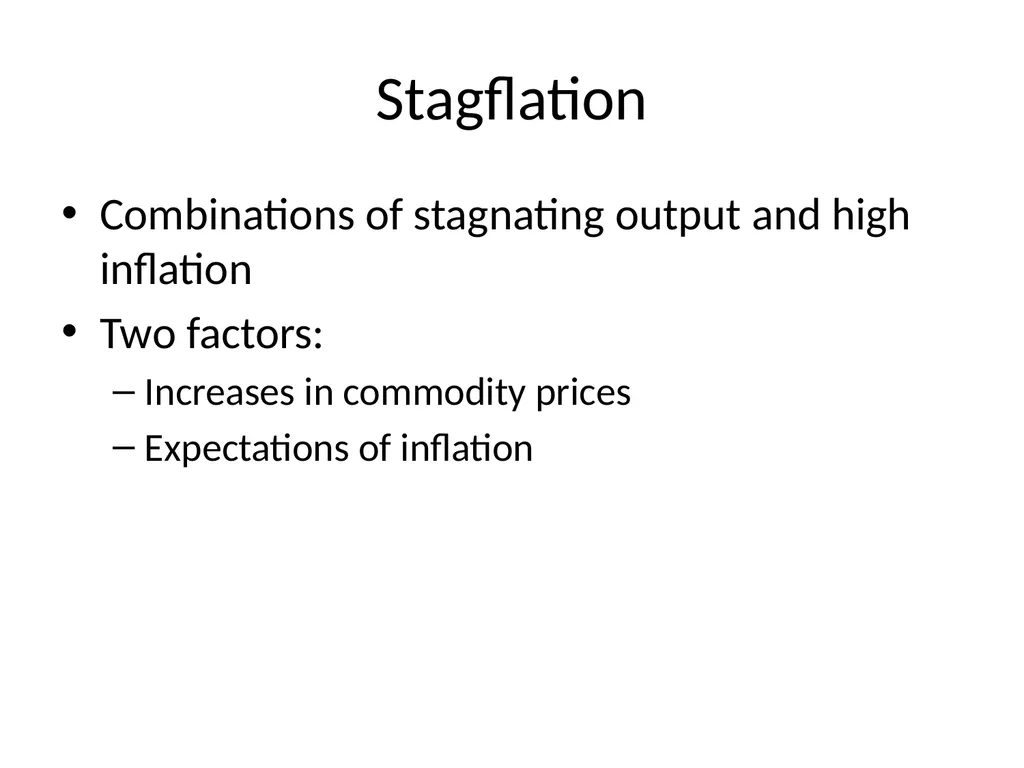
slide5. Stagflation Combinations of stagnating output and high inflation
Two factors:
Increases in commodity prices
Expectations of inflation<br>
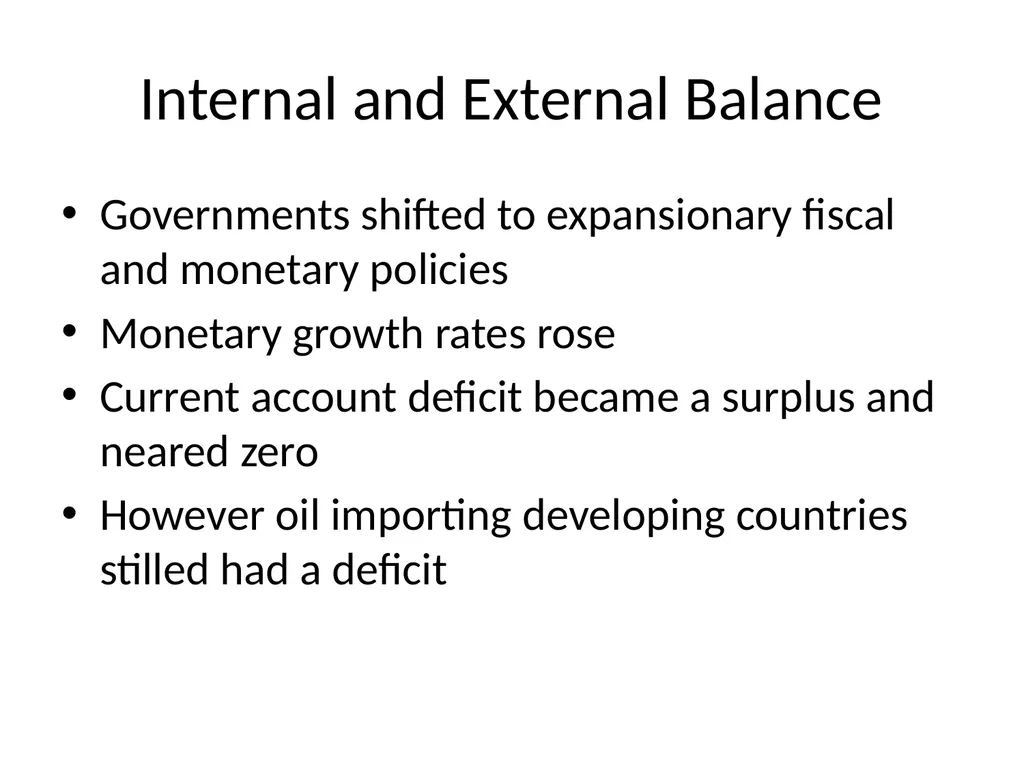
slide6. Internal and External Balance Governments shifted to expansionary fiscal and monetary policies
Monetary growth rates rose
Current account deficit became a surplus and neared zero
However oil importing developing countries stilled had a deficit<br>
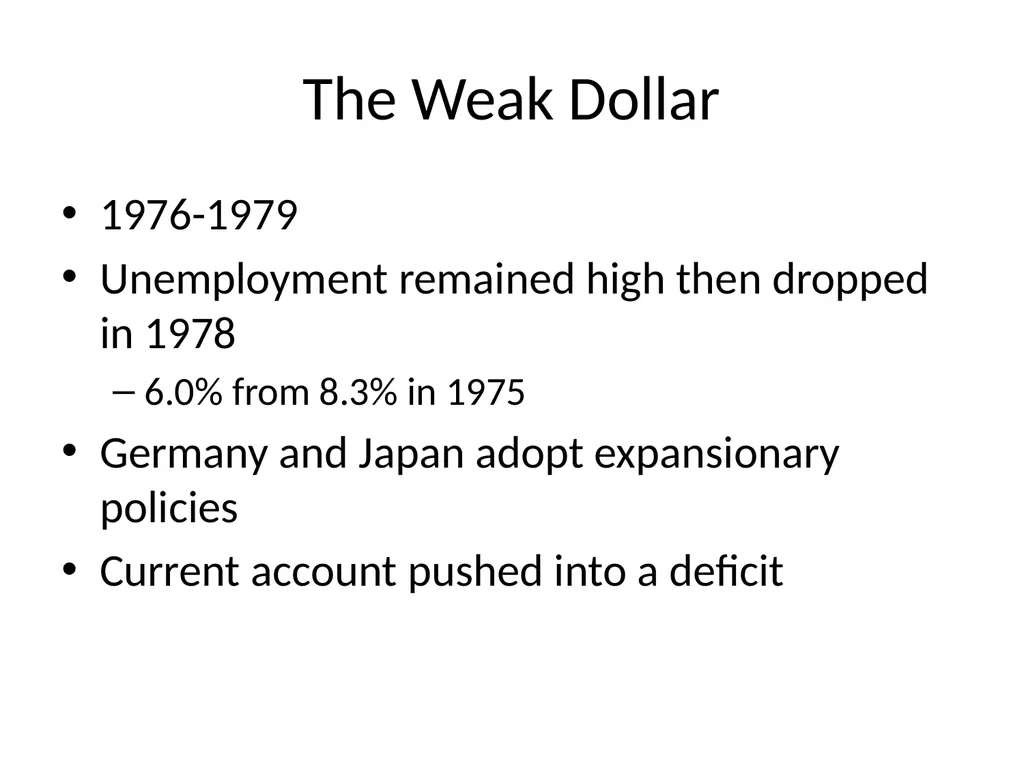
slide7. The Weak Dollar 1976-1979
Unemployment remained high then dropped in 1978
6.0% from 8.3% in 1975
Germany and Japan adopt expansionary policies
Current account pushed into a deficit<br>
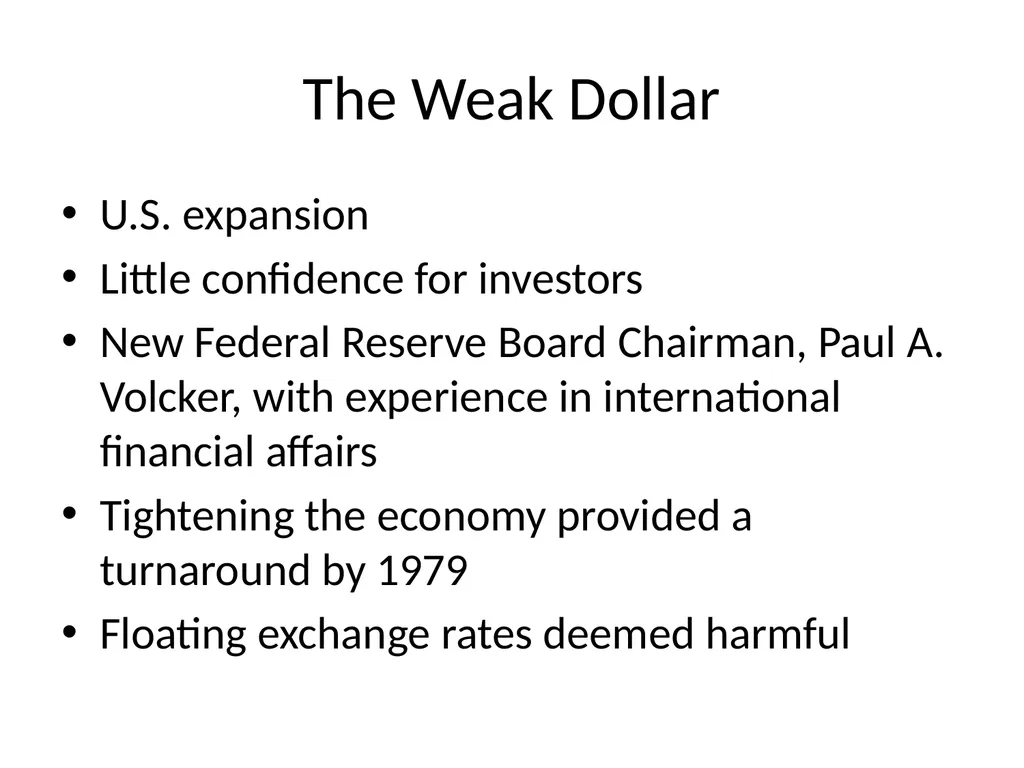
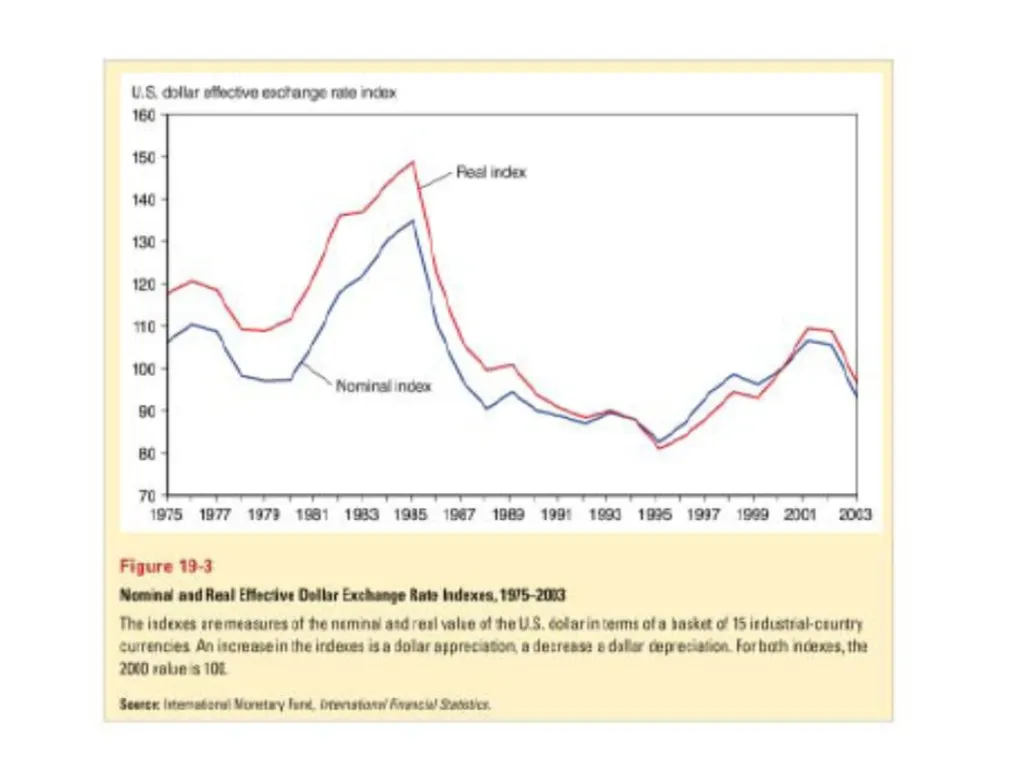
slide8. The Weak Dollar U.S. expansion
Little confidence for investors
New Federal Reserve Board Chairman, Paul A. Volcker, with experience in international financial affairs
Tightening the economy provided a turnaround by 1979
Floating exchange rates deemed harmful<br>
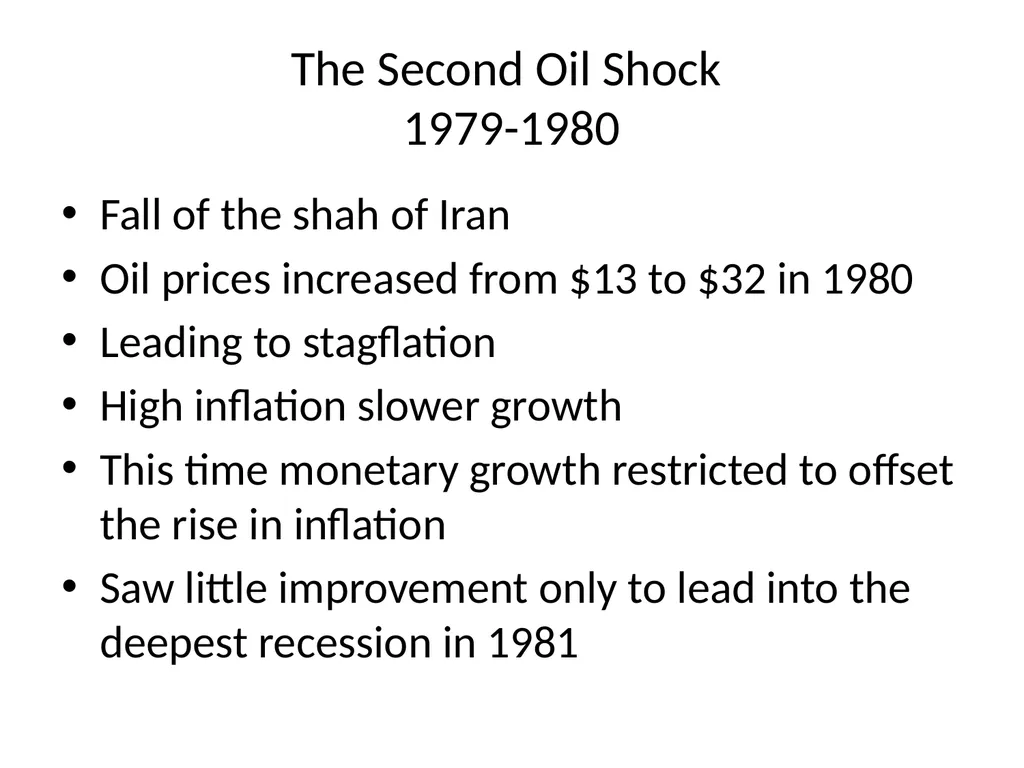
slide10. The Second Oil Shock 1979-1980 Fall of the shah of Iran
Oil prices increased from $13 to $32 in 1980
Leading to stagflation
High inflation slower growth
This time monetary growth restricted to offset the rise in inflation
Saw little improvement only to lead into the deepest recession in 1981<br>
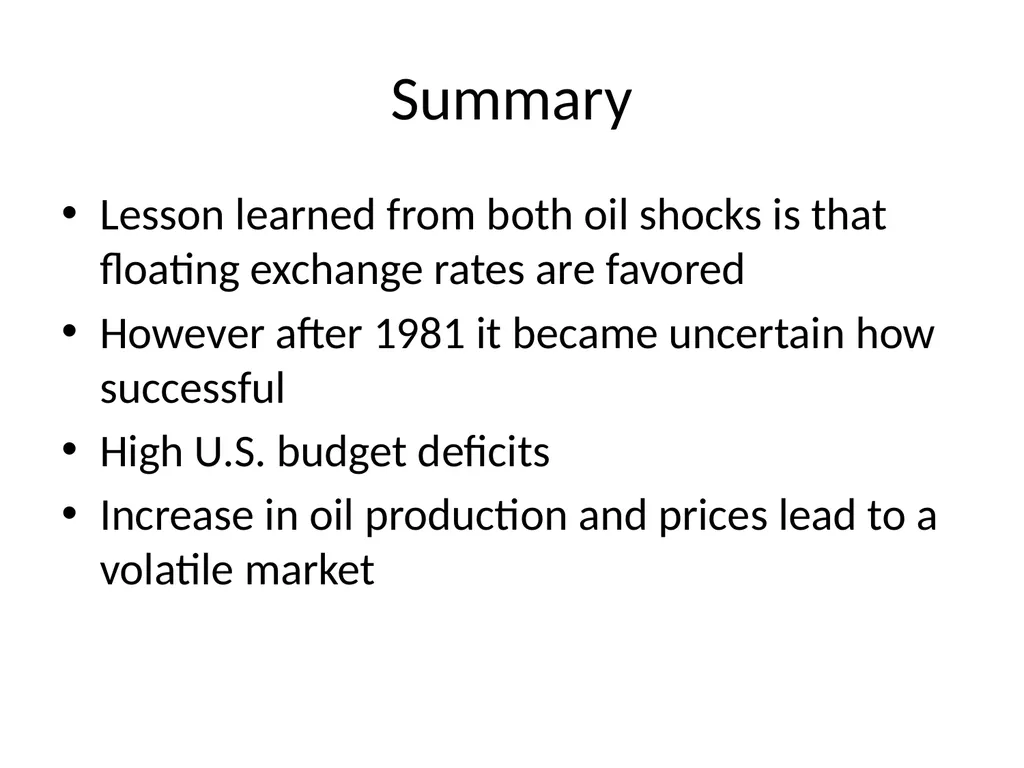
slide11. Summary Lesson learned from both oil shocks is that floating exchange rates are favored
However after 1981 it became uncertain how successful
High U.S. budget deficits
Increase in oil production and prices lead to a volatile market<br>