
Expectations vs. Reality Surviving parenthood





Description: Expectations vs. Reality Surviving parenthood during the COVID19 pandemic In this workshop we are going to discuss the opportunities in your current circumstances where we can stop dwelling in the negative and start brainstorm what we can
Related Topics
Download Presentation
"Expectations vs. Reality Surviving parenthood" is the property of its rightful owner. Permission is granted to download and print the materials on this website for personal, non-commercial use only, and to display it on your personal computer provided you do not modify the materials and that you retain all copyright notices contained in the materials. By downloading content from our website, you accept the terms of this agreement.
Presentation Transcript
slide1. Expectations vs. Reality Surviving parenthood during the COVID19 pandemic<br>
slide2. In this workshop we are going to discuss the opportunities in your current circumstances where we can stop dwelling in the negative and start brainstorm what we can do.
We will explore how to pick battles big enough to matter, and small enough to win.
We will focus social and emotional learning (SEL) as the foundation for our families Changing the Lens<br>
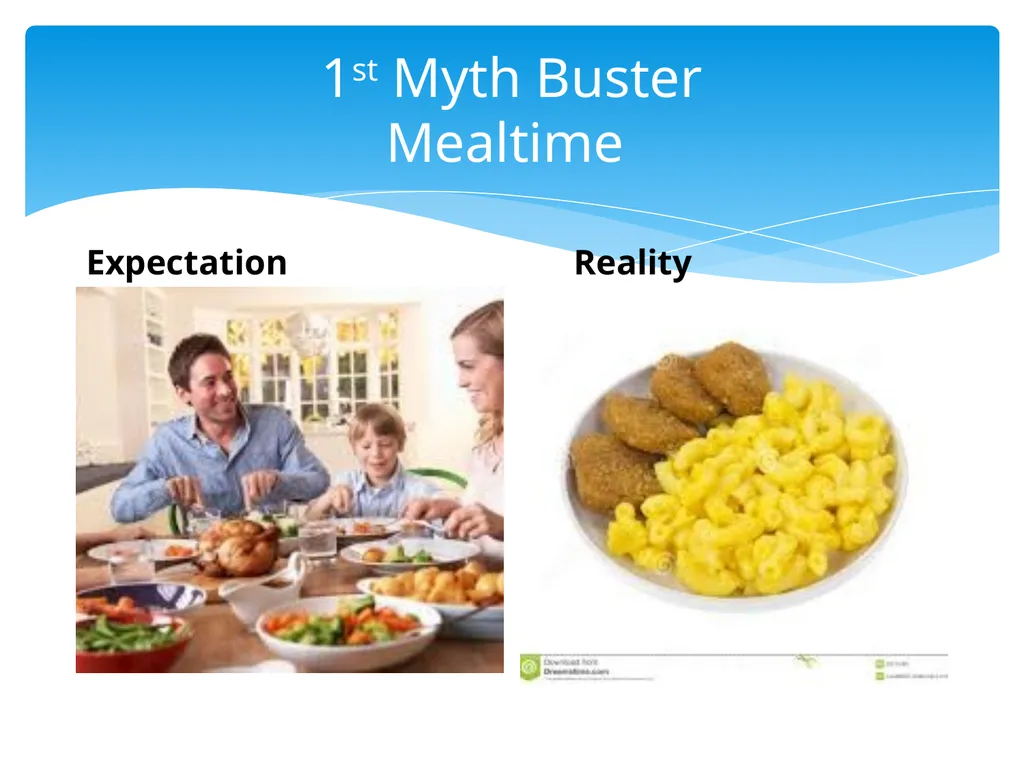
slide3. 1st Myth Buster Mealtime Expectation Reality<br>
slide4. Dwelling in the negative:
What will other people think if I serve chicken fingers and fries ever night?
Everyone else’s social media platforms are amazing, and I have no clean dishes let alone a four course meal.
We exhaust our energy beating ourselves up, so let's agree to stop doing that. Let's talk about empowering meal time to be about connecting with each other.
Start by becoming aware of a person, place or thing you want to appreciate. Did someone do something nice for you? Did you do something nice for someone else. Why do we care so much about what other people think?<br>
slide5. Some kids take in their nutrients over the course of the week so don’t worry if you serve cereal for dinner one night or mac n cheese for a week straight! Add some peas, beans, or broccoli (or what ever you have) and call it a win!
Offer healthy options when you can
Make sure you offer kids are getting a variety of fruits and vegetables throughout out the week. It can take up to 18 food introductions before kids will try something new. What’s really important<br>
slide6. Make sure you start a tradition where every night you share one thing with each other during meal time, or one thing that you were grateful for.
Gratitude allows us to celebrate the present, it dispels negative emotions, builds more resilience and cultivates a higher sense of self worth.
A 2019 study published in the Journal of Happiness Studies found that gratitude is linked to happiness in children by age 5. This means that instilling gratitude in your kids at a young age could help them grow up to be happier people.
This is free, and it only costs us time. Changing the lens<br>
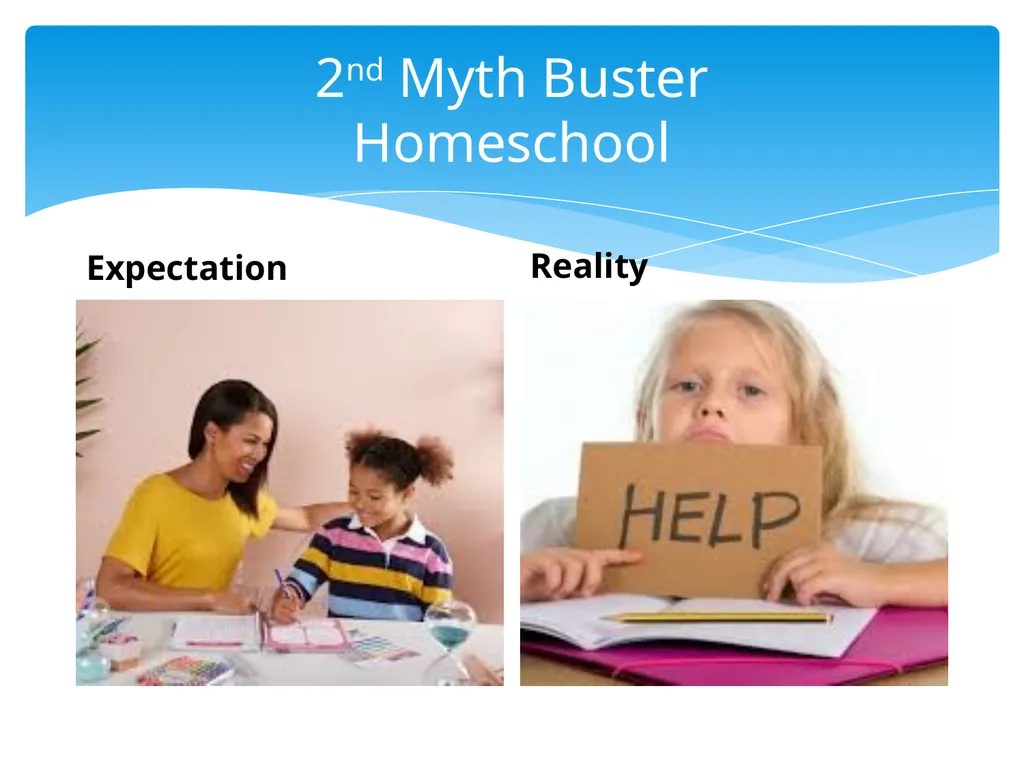
slide7. 2nd Myth Buster Homeschool Expectation Reality<br>
slide8. Dwelling in the negative:
I let me kid use screen time, what will people say?
Everyone else’s social media platforms are amazing, their schooling looks like it came from pinterest.
Let’s talk about empowering “school” time for what it is.
Most of us did not choose to homeschool our kids. We did not spend weeks picking curriculum, taking classes to be successful in homeschool, nor did we join a homeschool group in our communities to get support.
Most of us are crisis schooling our kids. Two different things. Why do we Mom/Dad shame ourselves or others?<br>
slide9. My kids is falling behind. No one is going to “get ahead of our child”, everyone is in this same boat.
We need to lower our standards slightly so we do not burn ourselves or our children’s love of learning right out.
Every September when my kids were young, I would be asked from the school. What is your goal for your child this year? Every year to this day I write: To be become a lifelong learner. I want them to learn new things, not specific things. What is your goal?
Remember what that goal is and work towards that goal not a specific learning standard. The schools will work really hard to make sure everyone has what they need when we get back. Change the lens<br>
slide10. Children learn through PLAY! Set aside a few minutes each day to play with your child!
READ READ READ!!! Did I mention READ? Reading to your child every day is the single most important thing you can do to help build their language and literacy development – a book a day is awesome!
Your children are learning other skills right now, make sure you acknowledge those. They are learning how to be resilient, strong and independent. What’s Really Important<br>
slide11. Video
https://www.facebook.com/LetGrowOrg/videos/256256115522193/ LET GROW<br>
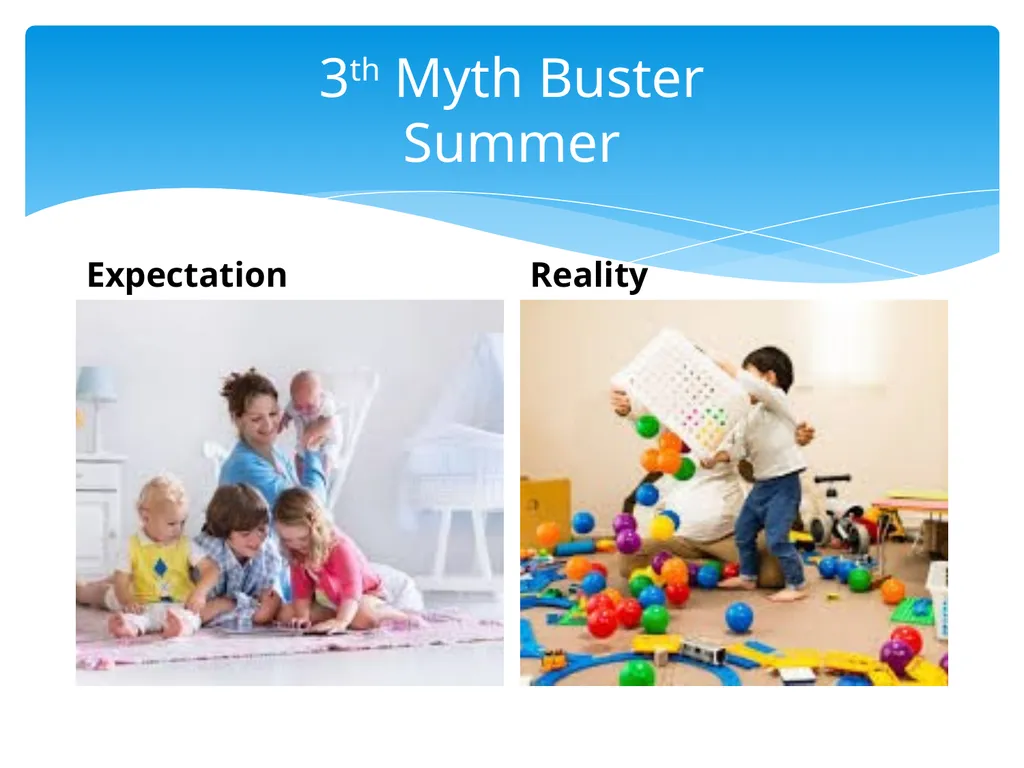
slide12. 3th Myth Buster Summer Expectation Reality<br>
slide13. Dwelling in the negative:
We beat ourselves up about this before the pandemic.
Summer is long and unstructured by nature - embrace the flexibility! Beat Ourselves Up<br>
slide14. Create a structure and schedule for summer
Make a plan. Brainstorm a theme for your summer like Gratitude or Kindness. (Just examples)
You can’t expect gratitude to just appear, the flowers won’t grow if you don’t water them.
You must practice this.
Brainstorm with your family how will your family do this? Think action. Change the lens<br>
slide15. *spending quality time with your child
* foster independence and growth (have your child get dressed themself or put dishes in the sink, etc)
* talk to your child everyday - talk about things you are grateful for or highs and lows of the day
* READ - can’t say it enough :)
* PLAY - remember kids learn best through play! What’s Really Important<br>
slide16. We know September will look different but there are some things that we know will be the same when we head back to school! The following slides have some helpful tips to help your child get ready for Kindergarten, or whatever may come this fall! Get Ready For September<br>
slide17. *Change your child’s schedule so it reflects that of a typical kindergarten school day: wake up earlier, and eat lunch at the same your child’s class will.
*Read books about kindergarten/school and talk about your child’s fears or excitement. I suggest The Kissing Hand, Miss Bindergarten Gets Ready for Kindergarten, The Night Before Kindergarten, and Welcome to Kindergarten.
*Approach the year with enthusiasm and excitement and your child is likely to follow your lead. Over the Summer<br>
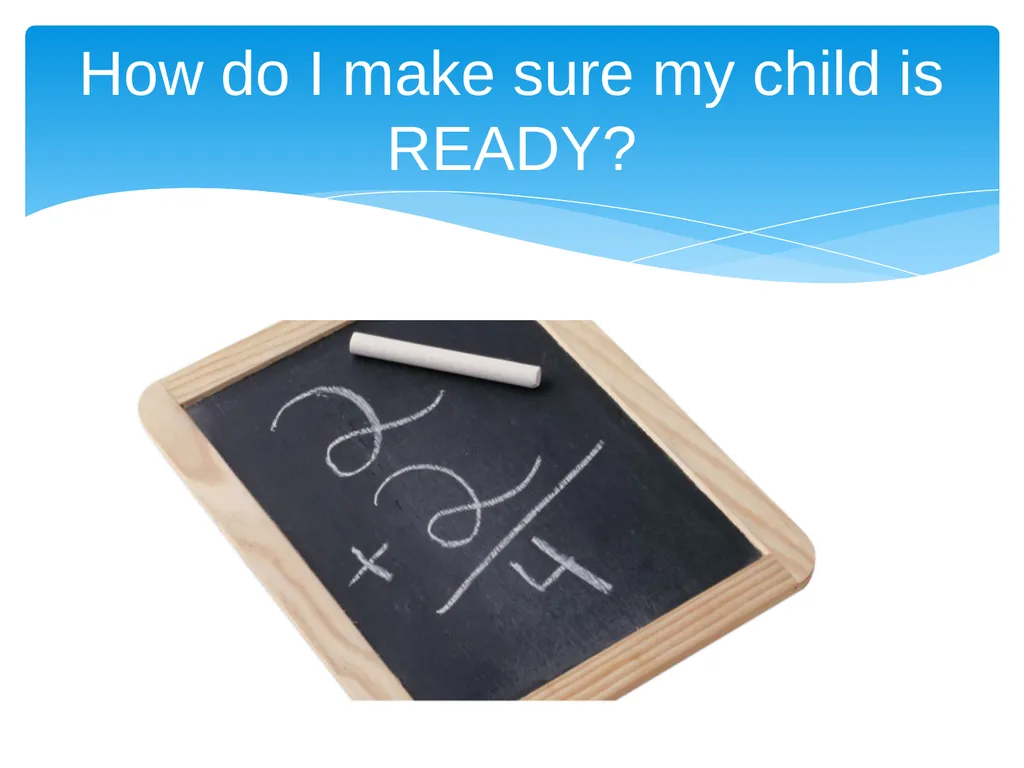
slide18. How do I make sure my child is READY?<br>
slide19. Teach your child to be a good LISTENER (i.e. not to interrupt when others are talking)
Read to your child daily
Establish a bedtime routine so it is firmly in place when school starts. This includes PLENTY of sleep.
Play simple games (board games, word games) and practice TURN TAKING
Give them simple chores such as folding clothes, setting the table
Teach them to ask for HELP – there are some skills your child may not be able to do before, make sure they are able to ask an adult for help From the Kindergarten Teacher<br>
slide20. •Self Help Skills
–Dress themselves in the morning
–Put their own coat on
–Zippering, buttoning, practice tying shoes
–Feed themselves Self Help Skills<br>
slide21. •Getting Ready to Write:
–Drawing
•Hold the Pencil in the web space with the thumb opposed
•Face – eyes, nose, mouth
•Body – even just a line for a body is fine
–Practice making a picture of your family or a picture to illustrate a special activity you did Fine Motor Skills<br>
slide22. •Cutting
–Hold the scissors with the thumb up
–By Kindergarten your child should be able to cut on a straight line for at least 6 inches
–Practice cutting different basic shapes
•Square, circle, triangle Fine Motor Cont...<br>
slide23. Children should be able to walk in a line with the class in the hallways. We work on the concept of walking "next to me," "in front of me," and "behind me." Play games like follow the leader with the family
Children should be able to use "walking feet" when traversing the school hallway, and be able to stop on demand. Play freeze dance to practice freezing on demand! Gross Motor Skills<br>
slide24. Listening
–Follow 1-2 step simple directions
•Give your child 2 step directions – get the plates and set the table
–Listen to and understand a story
•READ with your child – ask questions throughout the story
–Follow a simple conversation
•Talk with your child – ask them questions to keep the conversation going Speech and Language<br>
slide25. Literacy/Reading
–Know how a book works – read from left to right and top to bottom in English
–Identify Rhymes
–“Read” a few picture books from memory
–Imitate reading by talking about pictures in a book Speech and Language<br>
slide26. Speaking
–Your child should be understood by most people
–Answer simple yes/no questions
–Answer open ending questions
–Retell a story or talk about an event
–Participate appropriately in conversation
–Show interest in and start conversations Speech and Language<br>
slide27. –Talk with your child frequently – in your home language!
–Read a variety of books and talk with your child about the story
–Help your child focus on sound patterns of words such as rhyming games
–Have your child retell stories and talk about the events of the day
–Talk with your child during daily activities – give directions for your child to follow (making cookies)
–Talk about things that are alike and different
–Give your child reasons and opportunities to write Speech and Language Tips<br>
slide28. Help your child learn to be Independent
–Give your child things to do at home
–Let your child do things for themselves
Establish Good Routines at home
–Bedtime routines
–Dinner routines Summary<br>
slide2. In this workshop we are going to discuss the opportunities in your current circumstances where we can stop dwelling in the negative and start brainstorm what we can do.
We will explore how to pick battles big enough to matter, and small enough to win.
We will focus social and emotional learning (SEL) as the foundation for our families Changing the Lens<br>
slide3. 1st Myth Buster Mealtime Expectation Reality<br>
slide4. Dwelling in the negative:
What will other people think if I serve chicken fingers and fries ever night?
Everyone else’s social media platforms are amazing, and I have no clean dishes let alone a four course meal.
We exhaust our energy beating ourselves up, so let's agree to stop doing that. Let's talk about empowering meal time to be about connecting with each other.
Start by becoming aware of a person, place or thing you want to appreciate. Did someone do something nice for you? Did you do something nice for someone else. Why do we care so much about what other people think?<br>
slide5. Some kids take in their nutrients over the course of the week so don’t worry if you serve cereal for dinner one night or mac n cheese for a week straight! Add some peas, beans, or broccoli (or what ever you have) and call it a win!
Offer healthy options when you can
Make sure you offer kids are getting a variety of fruits and vegetables throughout out the week. It can take up to 18 food introductions before kids will try something new. What’s really important<br>
slide6. Make sure you start a tradition where every night you share one thing with each other during meal time, or one thing that you were grateful for.
Gratitude allows us to celebrate the present, it dispels negative emotions, builds more resilience and cultivates a higher sense of self worth.
A 2019 study published in the Journal of Happiness Studies found that gratitude is linked to happiness in children by age 5. This means that instilling gratitude in your kids at a young age could help them grow up to be happier people.
This is free, and it only costs us time. Changing the lens<br>
slide7. 2nd Myth Buster Homeschool Expectation Reality<br>
slide8. Dwelling in the negative:
I let me kid use screen time, what will people say?
Everyone else’s social media platforms are amazing, their schooling looks like it came from pinterest.
Let’s talk about empowering “school” time for what it is.
Most of us did not choose to homeschool our kids. We did not spend weeks picking curriculum, taking classes to be successful in homeschool, nor did we join a homeschool group in our communities to get support.
Most of us are crisis schooling our kids. Two different things. Why do we Mom/Dad shame ourselves or others?<br>
slide9. My kids is falling behind. No one is going to “get ahead of our child”, everyone is in this same boat.
We need to lower our standards slightly so we do not burn ourselves or our children’s love of learning right out.
Every September when my kids were young, I would be asked from the school. What is your goal for your child this year? Every year to this day I write: To be become a lifelong learner. I want them to learn new things, not specific things. What is your goal?
Remember what that goal is and work towards that goal not a specific learning standard. The schools will work really hard to make sure everyone has what they need when we get back. Change the lens<br>
slide10. Children learn through PLAY! Set aside a few minutes each day to play with your child!
READ READ READ!!! Did I mention READ? Reading to your child every day is the single most important thing you can do to help build their language and literacy development – a book a day is awesome!
Your children are learning other skills right now, make sure you acknowledge those. They are learning how to be resilient, strong and independent. What’s Really Important<br>
slide11. Video
https://www.facebook.com/LetGrowOrg/videos/256256115522193/ LET GROW<br>
slide12. 3th Myth Buster Summer Expectation Reality<br>
slide13. Dwelling in the negative:
We beat ourselves up about this before the pandemic.
Summer is long and unstructured by nature - embrace the flexibility! Beat Ourselves Up<br>
slide14. Create a structure and schedule for summer
Make a plan. Brainstorm a theme for your summer like Gratitude or Kindness. (Just examples)
You can’t expect gratitude to just appear, the flowers won’t grow if you don’t water them.
You must practice this.
Brainstorm with your family how will your family do this? Think action. Change the lens<br>
slide15. *spending quality time with your child
* foster independence and growth (have your child get dressed themself or put dishes in the sink, etc)
* talk to your child everyday - talk about things you are grateful for or highs and lows of the day
* READ - can’t say it enough :)
* PLAY - remember kids learn best through play! What’s Really Important<br>
slide16. We know September will look different but there are some things that we know will be the same when we head back to school! The following slides have some helpful tips to help your child get ready for Kindergarten, or whatever may come this fall! Get Ready For September<br>
slide17. *Change your child’s schedule so it reflects that of a typical kindergarten school day: wake up earlier, and eat lunch at the same your child’s class will.
*Read books about kindergarten/school and talk about your child’s fears or excitement. I suggest The Kissing Hand, Miss Bindergarten Gets Ready for Kindergarten, The Night Before Kindergarten, and Welcome to Kindergarten.
*Approach the year with enthusiasm and excitement and your child is likely to follow your lead. Over the Summer<br>
slide18. How do I make sure my child is READY?<br>
slide19. Teach your child to be a good LISTENER (i.e. not to interrupt when others are talking)
Read to your child daily
Establish a bedtime routine so it is firmly in place when school starts. This includes PLENTY of sleep.
Play simple games (board games, word games) and practice TURN TAKING
Give them simple chores such as folding clothes, setting the table
Teach them to ask for HELP – there are some skills your child may not be able to do before, make sure they are able to ask an adult for help From the Kindergarten Teacher<br>
slide20. •Self Help Skills
–Dress themselves in the morning
–Put their own coat on
–Zippering, buttoning, practice tying shoes
–Feed themselves Self Help Skills<br>
slide21. •Getting Ready to Write:
–Drawing
•Hold the Pencil in the web space with the thumb opposed
•Face – eyes, nose, mouth
•Body – even just a line for a body is fine
–Practice making a picture of your family or a picture to illustrate a special activity you did Fine Motor Skills<br>
slide22. •Cutting
–Hold the scissors with the thumb up
–By Kindergarten your child should be able to cut on a straight line for at least 6 inches
–Practice cutting different basic shapes
•Square, circle, triangle Fine Motor Cont...<br>
slide23. Children should be able to walk in a line with the class in the hallways. We work on the concept of walking "next to me," "in front of me," and "behind me." Play games like follow the leader with the family
Children should be able to use "walking feet" when traversing the school hallway, and be able to stop on demand. Play freeze dance to practice freezing on demand! Gross Motor Skills<br>
slide24. Listening
–Follow 1-2 step simple directions
•Give your child 2 step directions – get the plates and set the table
–Listen to and understand a story
•READ with your child – ask questions throughout the story
–Follow a simple conversation
•Talk with your child – ask them questions to keep the conversation going Speech and Language<br>
slide25. Literacy/Reading
–Know how a book works – read from left to right and top to bottom in English
–Identify Rhymes
–“Read” a few picture books from memory
–Imitate reading by talking about pictures in a book Speech and Language<br>
slide26. Speaking
–Your child should be understood by most people
–Answer simple yes/no questions
–Answer open ending questions
–Retell a story or talk about an event
–Participate appropriately in conversation
–Show interest in and start conversations Speech and Language<br>
slide27. –Talk with your child frequently – in your home language!
–Read a variety of books and talk with your child about the story
–Help your child focus on sound patterns of words such as rhyming games
–Have your child retell stories and talk about the events of the day
–Talk with your child during daily activities – give directions for your child to follow (making cookies)
–Talk about things that are alike and different
–Give your child reasons and opportunities to write Speech and Language Tips<br>
slide28. Help your child learn to be Independent
–Give your child things to do at home
–Let your child do things for themselves
Establish Good Routines at home
–Bedtime routines
–Dinner routines Summary<br>