Exploring Pre-Exposure Prophylaxis (PrEP) uptake and continuation among gender and sexually diverse populations in Bangladesh: A pilot program analysis Session title: Communities taking charge: Overcoming prevention challenges through
"Exploring Pre-Exposure Prophylaxis (PrEP) uptake" is the property of its rightful owner. Permission is granted to
download and print the materials on this website for personal, non-commercial use only, and to display it
on your personal computer provided you do not modify the materials and that you retain all copyright
notices contained in the materials. By downloading content from our website, you accept the terms of this
agreement.
Presentation Transcript
01
Exploring Pre-Exposure Prophylaxis (PrEP) uptake and continuation among gender and sexually diverse populations in Bangladesh: A pilot program analysis Session title: Communities taking charge: Overcoming prevention challenges through peer-led interventions Dr. Golam Sarwar, Assistant Scientist and Program Manager, International Centre for Diarrhoeal Disease Research, Bangladesh (ICDDR,B)<br>
02
What is your main question?
What are the key features and lessons learned from the PrEP pilot intervention for Men who have sex with men (MSM) and Transgender women in Dhaka, Bangladesh?
What did you find?
As per the WHO recommendations to embed PrEP as part of a comprehensive HIV prevention intervention, this approach was adopted in Bangladesh, based on the recent epidemiological context of increasing HIV infection among Men who have sex with men (MSM) and Transgender women. The pilot showed promising results such as no new HIV infections and high retention rates.
Why is it important?
This analysis is important because it shows the main features of the PrEP pilot program and how it has played a key role in contributing to the HIV prevention response for these vulnerable populations in Bangladesh. Summary<br>
03
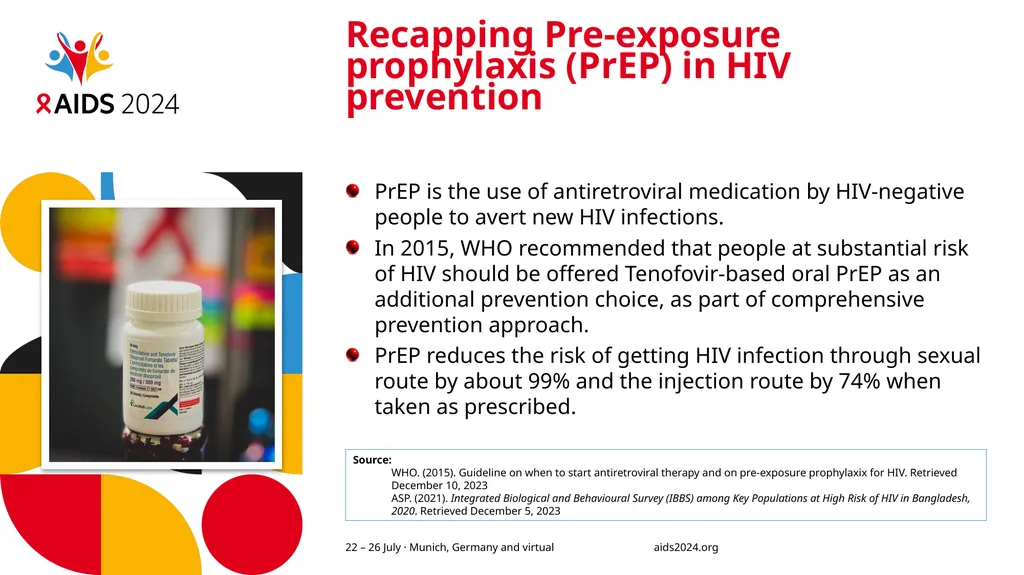
PrEP is the use of antiretroviral medication by HIV-negative people to avert new HIV infections.
In 2015, WHO recommended that people at substantial risk of HIV should be offered Tenofovir-based oral PrEP as an additional prevention choice, as part of comprehensive prevention approach.
PrEP reduces the risk of getting HIV infection through sexual route by about 99% and the injection route by 74% when taken as prescribed. Recapping Pre-exposure prophylaxis (PrEP) in HIV prevention Source:
WHO. (2015). Guideline on when to start antiretroviral therapy and on pre-exposure prophylaxix for HIV. Retrieved December 10, 2023
ASP. (2021). Integrated Biological and Behavioural Survey (IBBS) among Key Populations at High Risk of HIV in Bangladesh, 2020. Retrieved December 5, 2023<br>
04
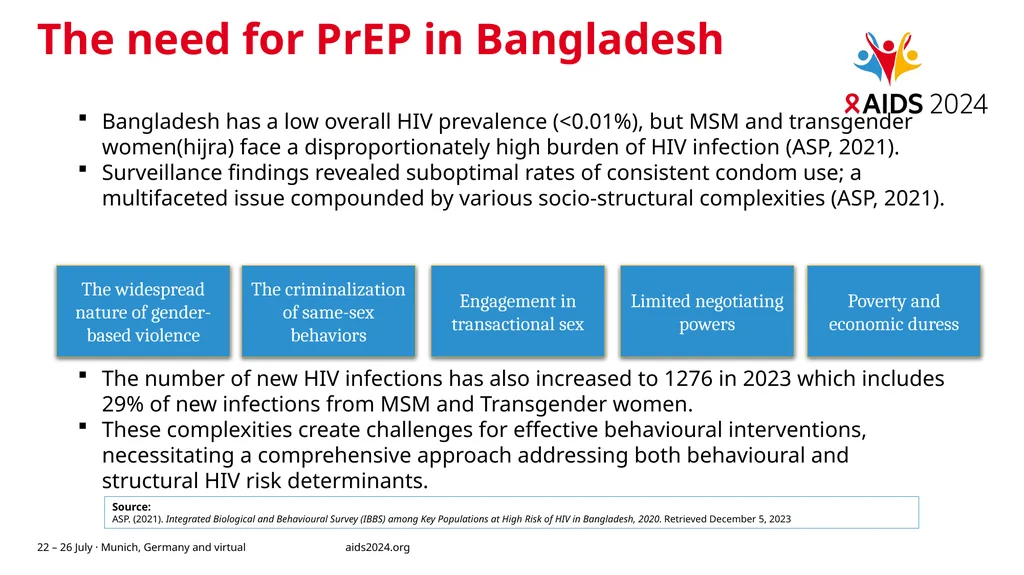
The need for PrEP in Bangladesh Bangladesh has a low overall HIV prevalence (<0.01%), but MSM and transgender women(hijra) face a disproportionately high burden of HIV infection (ASP, 2021).
Surveillance findings revealed suboptimal rates of consistent condom use; a multifaceted issue compounded by various socio-structural complexities (ASP, 2021). The number of new HIV infections has also increased to 1276 in 2023 which includes 29% of new infections from MSM and Transgender women.
These complexities create challenges for effective behavioural interventions, necessitating a comprehensive approach addressing both behavioural and structural HIV risk determinants. Source:
ASP. (2021). Integrated Biological and Behavioural Survey (IBBS) among Key Populations at High Risk of HIV in Bangladesh, 2020. Retrieved December 5, 2023<br>
05
An overview of our existing HIV program Bangladesh has been operating HIV prevention interventions for key populations, including MSM and Transgender women, since 1995.
These programs provide behavioral interventions which render HIV and STI prevention and management services (e.g. condom/lubricants, HIV testing, STI screening, etc.)
In the context of increasing HIV prevalence, behavioral interventions may not suffice
As part of the global recommendation for combination interventions, we embedded PrEP as part of our existing HIV prevention intervention<br>
06
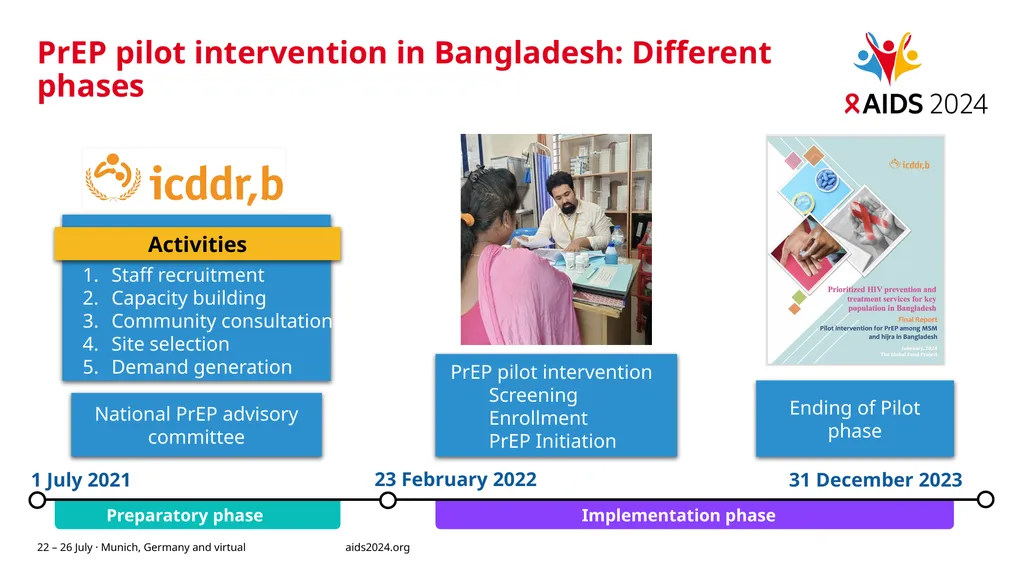
PrEP pilot intervention in Bangladesh: Different phases Ending of Pilot phase 1 July 2021 31 December 2023 National PrEP advisory committee 23 February 2022 Preparatory phase Implementation phase<br>
07
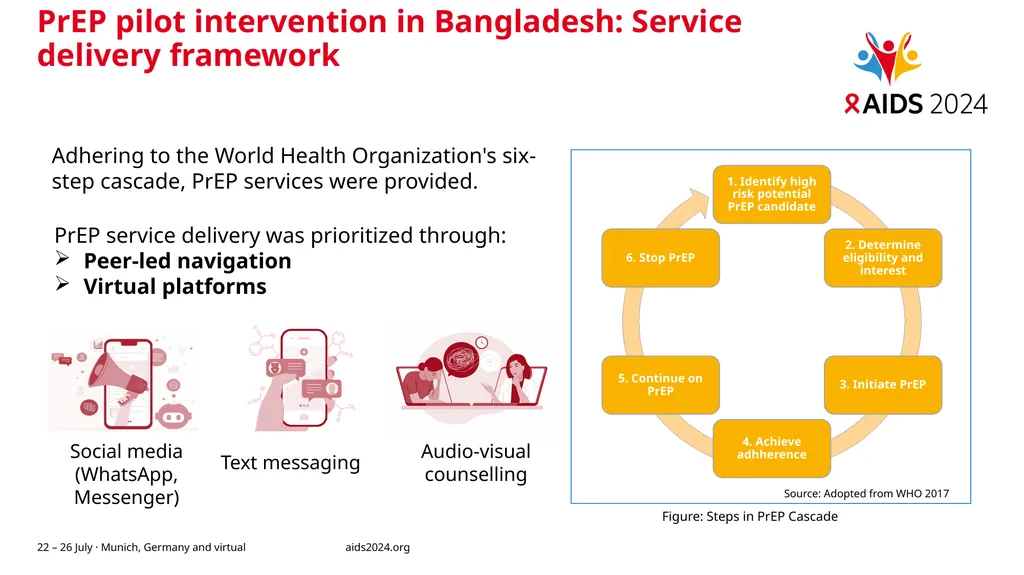
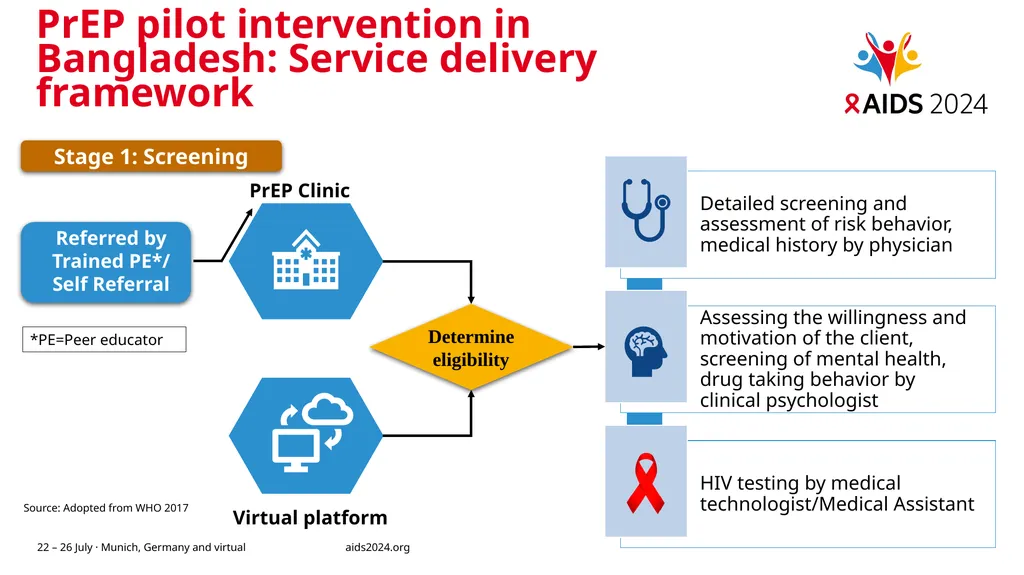
PrEP pilot intervention in Bangladesh: Service delivery framework PrEP service delivery was prioritized through:
Peer-led navigation
Virtual platforms Adhering to the World Health Organization's six-step cascade, PrEP services were provided. Figure: Steps in PrEP Cascade Source: Adopted from WHO 2017 Social media (WhatsApp, Messenger) Audio-visual counselling Text messaging<br>
08
PrEP pilot intervention in Bangladesh: Service delivery framework Determine eligibility PrEP Clinic Virtual platform Stage 1: Screening *PE=Peer educator Source: Adopted from WHO 2017<br>
09
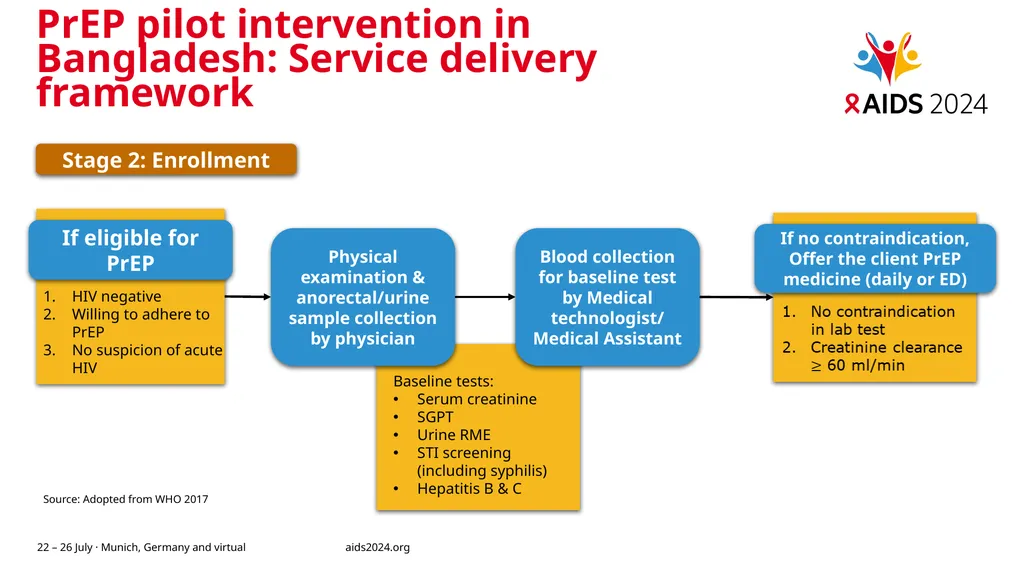
Physical examination & anorectal/urine sample collection by physician Blood collection for baseline test by Medical technologist/ Medical Assistant Baseline tests:
Serum creatinine
SGPT
Urine RME
STI screening (including syphilis)
Hepatitis B & C Stage 2: Enrollment Source: Adopted from WHO 2017 PrEP pilot intervention in Bangladesh: Service delivery framework<br>
10
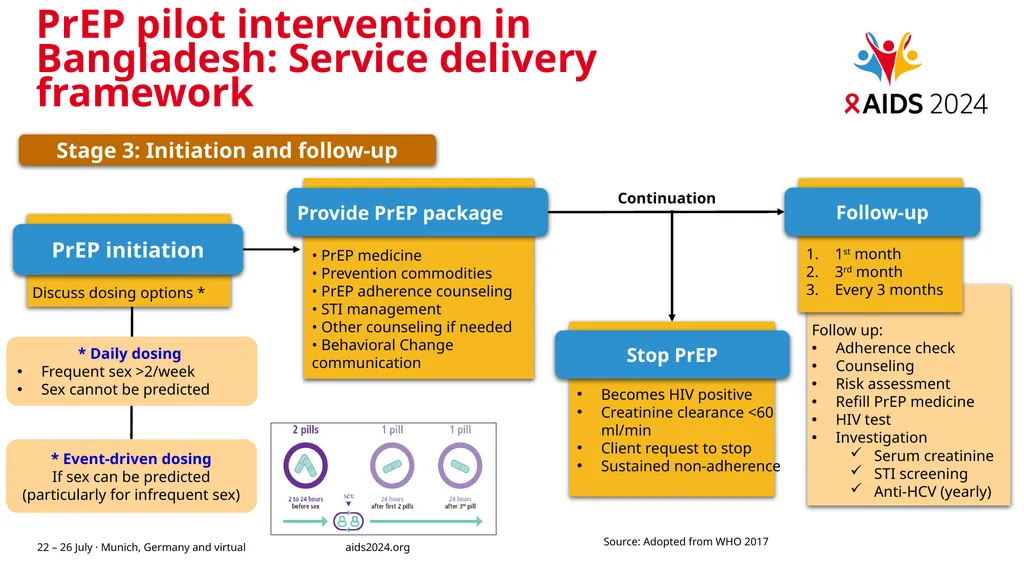
Provide PrEP package Follow up:
Adherence check
Counseling
Risk assessment
Refill PrEP medicine
HIV test
Investigation
Serum creatinine
STI screening
Anti-HCV (yearly) Continuation • PrEP medicine • Prevention commodities • PrEP adherence counseling • STI management • Other counseling if needed • Behavioral Change communication * Daily dosing
Frequent sex >2/week
Sex cannot be predicted * Event-driven dosing
If sex can be predicted (particularly for infrequent sex) Stage 3: Initiation and follow-up Source: Adopted from WHO 2017 PrEP pilot intervention in Bangladesh: Service delivery framework<br>
11
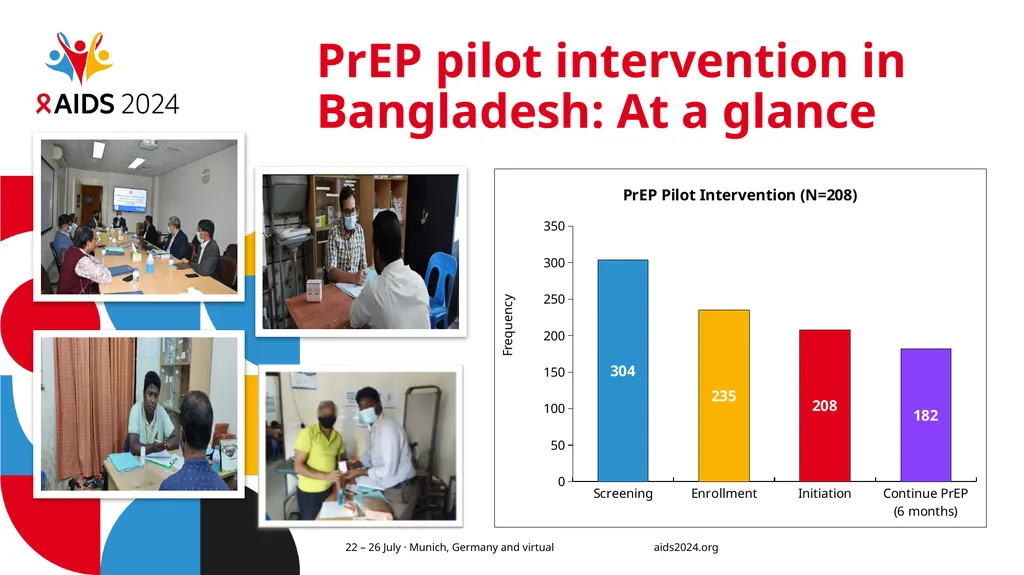
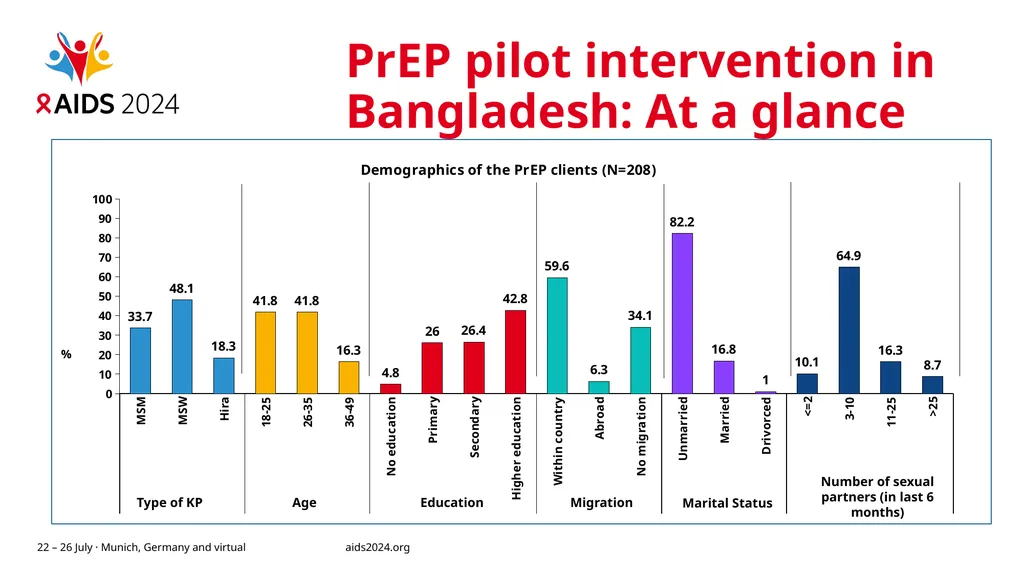
PrEP pilot intervention in Bangladesh: At a glance<br>
12
PrEP pilot intervention in Bangladesh: At a glance<br>
13
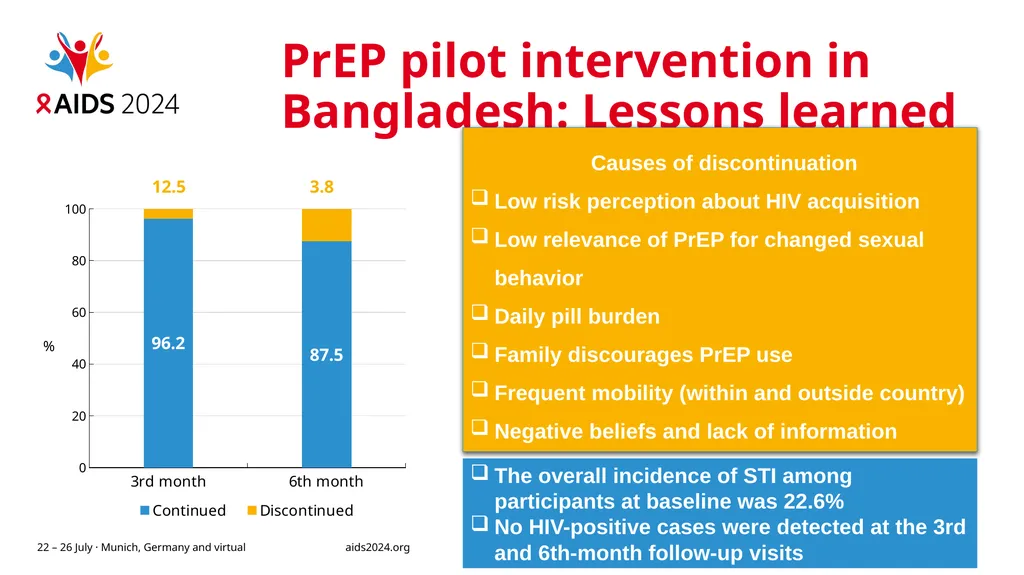
PrEP pilot intervention in Bangladesh: Lessons learned 3.8 12.5 The overall incidence of STI among participants at baseline was 22.6%
No HIV-positive cases were detected at the 3rd and 6th-month follow-up visits<br>
14
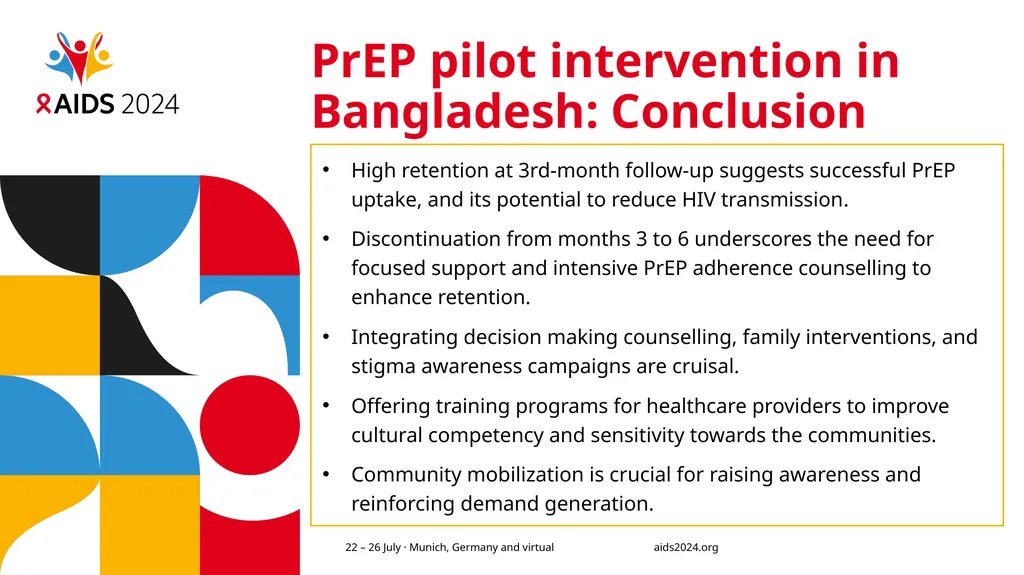
High retention at 3rd-month follow-up suggests successful PrEP uptake, and its potential to reduce HIV transmission.
Discontinuation from months 3 to 6 underscores the need for focused support and intensive PrEP adherence counselling to enhance retention.
Integrating decision making counselling, family interventions, and stigma awareness campaigns are cruisal.
Offering training programs for healthcare providers to improve cultural competency and sensitivity towards the communities.
Community mobilization is crucial for raising awareness and reinforcing demand generation. PrEP pilot intervention in Bangladesh: Conclusion<br>
15
Increasing the coverage of PrEP clients to substantial numbers enabling from 2024
Initiatives to capacitate the service provider
Engaging virtual platforms more extensively
Increasing satellite sessions to reduce the number of visit to the facilities
Utilizing the other service centers as refill centers to decentralize PrEP service PrEP pilot intervention in Bangladesh: Future directions<br>