Fatigue Subtitlesubject What is Fatigue? Fatigue is a state of physicaland or mental exhaustion which can lead to errors. This is ultimately caused by a reduction in a persons level of alertness. Fatigued workers are: Less able to
"Fatigue Subtitle/subject What is Fatigue? Fatigue" is the property of its rightful owner. Permission is granted to
download and print the materials on this website for personal, non-commercial use only, and to display it
on your personal computer provided you do not modify the materials and that you retain all copyright
notices contained in the materials. By downloading content from our website, you accept the terms of this
agreement.
Presentation Transcript
01
Fatigue Subtitle/subject<br>
02
What is Fatigue? Fatigue is a state of physical/and or mental exhaustion which can lead to errors. This is ultimately caused by a reduction in a person’s level of alertness.
Fatigued workers are:
Less able to perform safely and effectively
Less alert
Less productive and;
More likely to have accidents<br>
03
Reasons for Fatigue in the Workplace Change in focus and work demand
High demand – mental and/or physical
Extended working hours
7 day working weeks for a prolonged period<br>
04
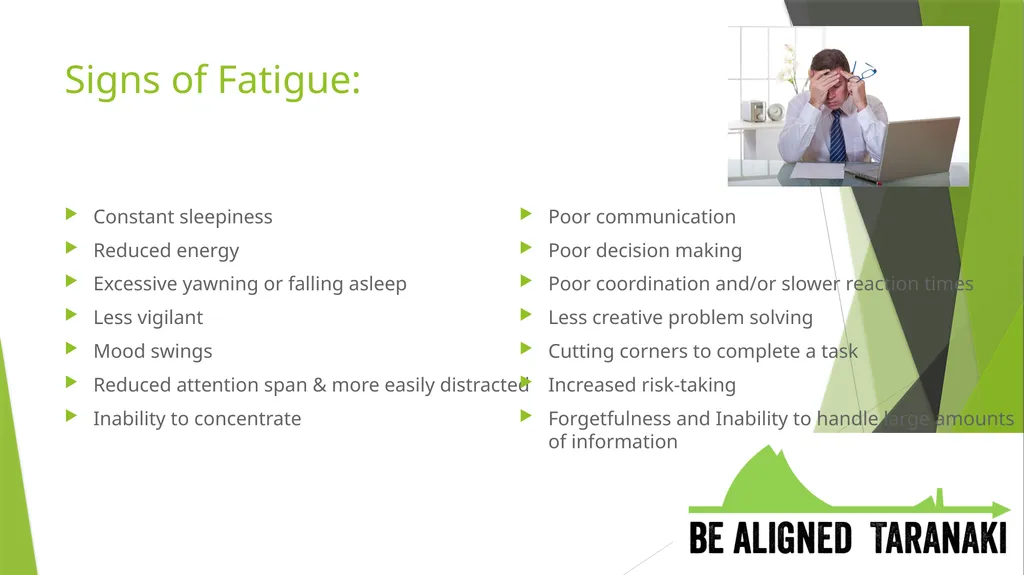
Signs of Fatigue: Constant sleepiness
Reduced energy
Excessive yawning or falling asleep
Less vigilant
Mood swings
Reduced attention span & more easily distracted
Inability to concentrate Poor communication
Poor decision making
Poor coordination and/or slower reaction times
Less creative problem solving
Cutting corners to complete a task
Increased risk-taking
Forgetfulness and Inability to handle large amounts of information<br>
05
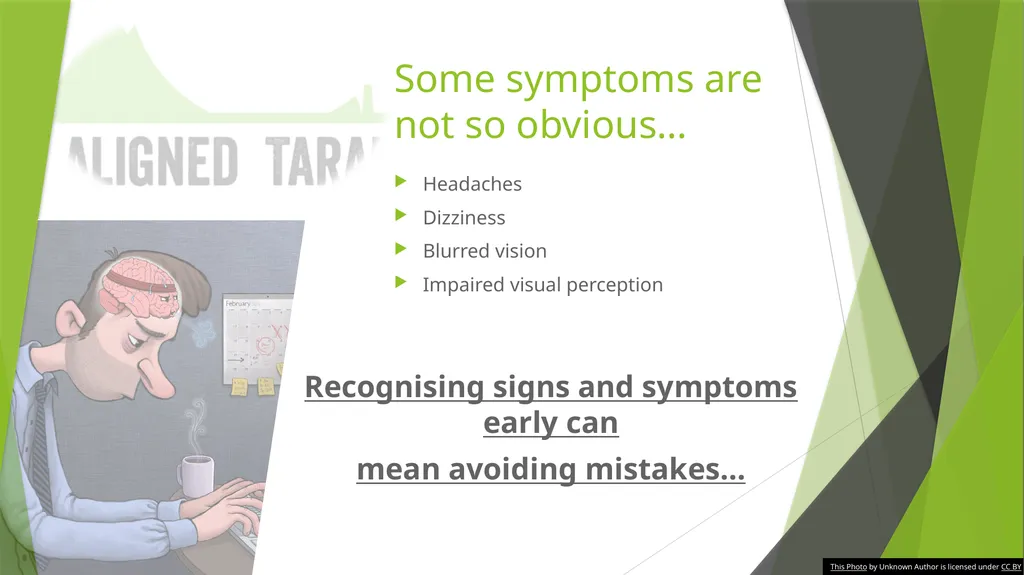
Some symptoms are not so obvious… Headaches
Dizziness
Blurred vision
Impaired visual perception Recognising signs and symptoms early can
mean avoiding mistakes… This Photo by Unknown Author is licensed under CC BY<br>
06
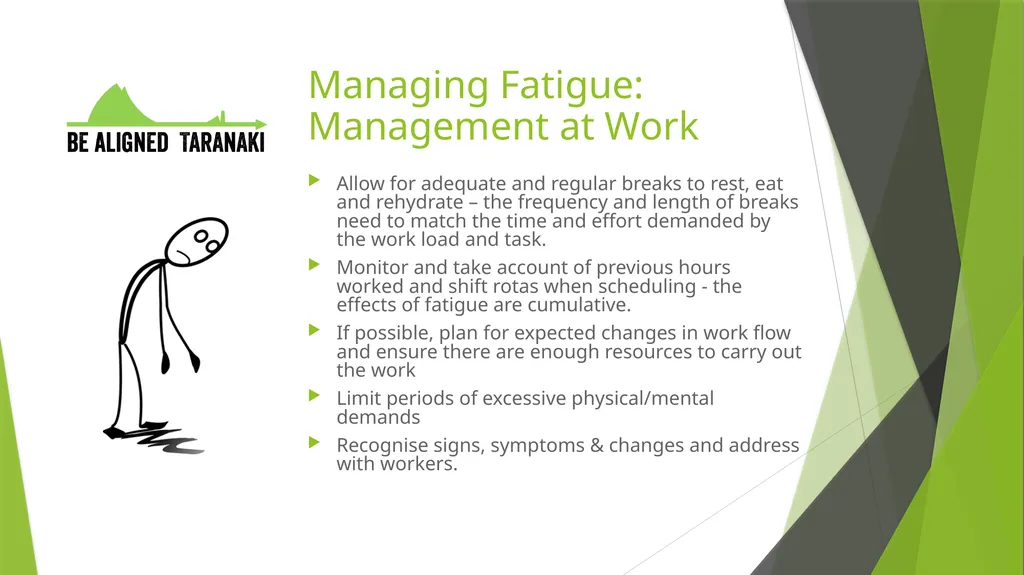
Managing Fatigue: Management at Work Allow for adequate and regular breaks to rest, eat and rehydrate – the frequency and length of breaks need to match the time and effort demanded by the work load and task.
Monitor and take account of previous hours worked and shift rotas when scheduling - the effects of fatigue are cumulative.
If possible, plan for expected changes in work flow and ensure there are enough resources to carry out the work
Limit periods of excessive physical/mental demands
Recognise signs, symptoms & changes and address with workers.<br>
07
Managing Fatigue: Individual Management Strategies Know your limitations
Get a good nights sleep – People generally need between 7.5 and 9 hours of sleep to maintain health and alertness
Ensure you take breaks
Nutrition – Eat healthy and keep fluids up
Work/life balance – ‘switch off’ after work hours.
Communicate with your line manager/supervisor who can affect change if signs of fatigue are identified by yourself or highlighted by your work mates
Be vocal and SPEAK UP – this is a vital part of protecting your welfare and ensuring you get the help you need<br>
08
Managing Fatigue: Balancing shift-work and home-life Make family and friends / neighbours aware – engaging with your family and friends / neighbours regarding shift patterns is important. Shift work significantly affects moods and behaviours.
Being a shift-worker is a balancing act – juggling the demands of family life alongside stressful jobs, long hours and rotating shifts ultimately leads to fatigue.
Reflect on the amount of time spent at work and the family responsibilities you have.
A shift-worker’s battle is lack of sleep which is a major contributor of fatigue - ensure your family understands your sleep/rest needs and can support you in this.
With good communication, engagment, healthy relationships and a great level of understanding, shift work can offer families a happy balance of work and family life.<br>
09
Managing Fatigue: Co-workers Communicate and engage with your workmates if you notice signs and symptoms of fatigue.
Ensure your workmates take regular breaks.
Nutrition – Encourage your workmates to eat healthy and keep fluids up
Suggest your workmates engage with management if signs and symptoms are recognised. This Photo by Unknown Author is licensed under CC BY<br>
10
Fatigue Management Factors to Consider Human Biology: Each individual’s sleep pattern, body clock, health and age
Life outside work: family and friends, social commitments, commuting.
Management of other stressors
BRAINSTORM WHAT THESE OTHER STRESSORS MIGHT BE…
Remember - we all have a life outside of work!<br>