ffFOWL TYPHOID 4th Professional Dr. Anil Kumar
Description: ffFOWL TYPHOID 4th Professional Dr. Anil Kumar Unit-5 Asst. Professor Dept. of VCC Fowl Typhoid Etiology: Fowl typhoid is caused by Salmonella gallinarum, which is related to, but not identical to, S. pullorum. Transmission: Fowl typhoid is
Related Topics
Download Presentation
"ffFOWL TYPHOID 4th Professional Dr. Anil Kumar" is the property of its rightful owner. Permission is granted to download and print the materials on this website for personal, non-commercial use only, and to display it on your personal computer provided you do not modify the materials and that you retain all copyright notices contained in the materials. By downloading content from our website, you accept the terms of this agreement.
Presentation Transcript
slide1. ffFOWL TYPHOID
4th Professional Dr. Anil Kumar
Unit-5 Asst. Professor Dept. of VCC<br>
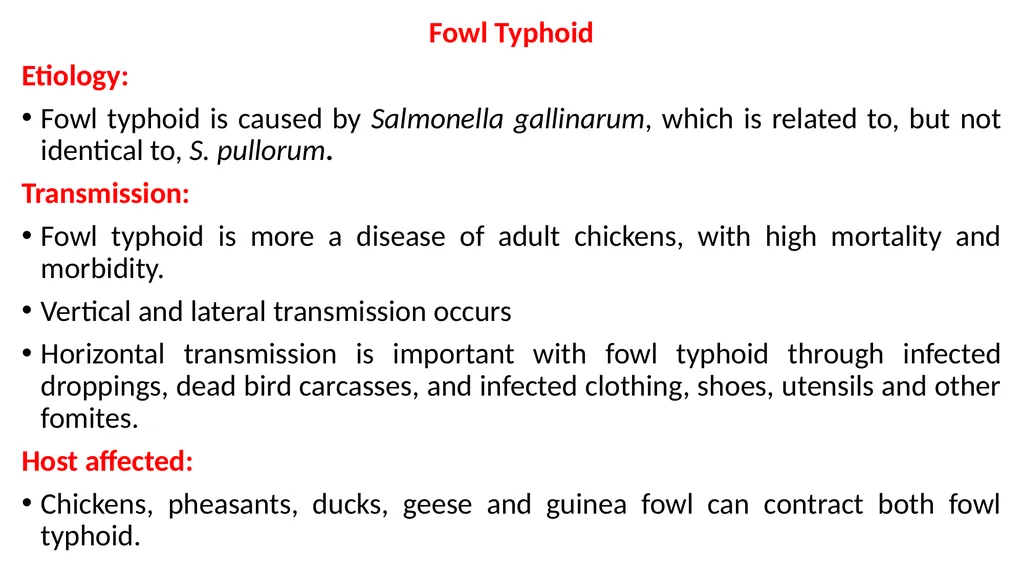
slide2. Fowl Typhoid
Etiology:
Fowl typhoid is caused by Salmonella gallinarum, which is related to, but not identical to, S. pullorum.
Transmission:
Fowl typhoid is more a disease of adult chickens, with high mortality and morbidity.
Vertical and lateral transmission occurs
Horizontal transmission is important with fowl typhoid through infected droppings, dead bird carcasses, and infected clothing, shoes, utensils and other fomites.
Host affected:
Chickens, pheasants, ducks, geese and guinea fowl can contract both fowl typhoid.<br>
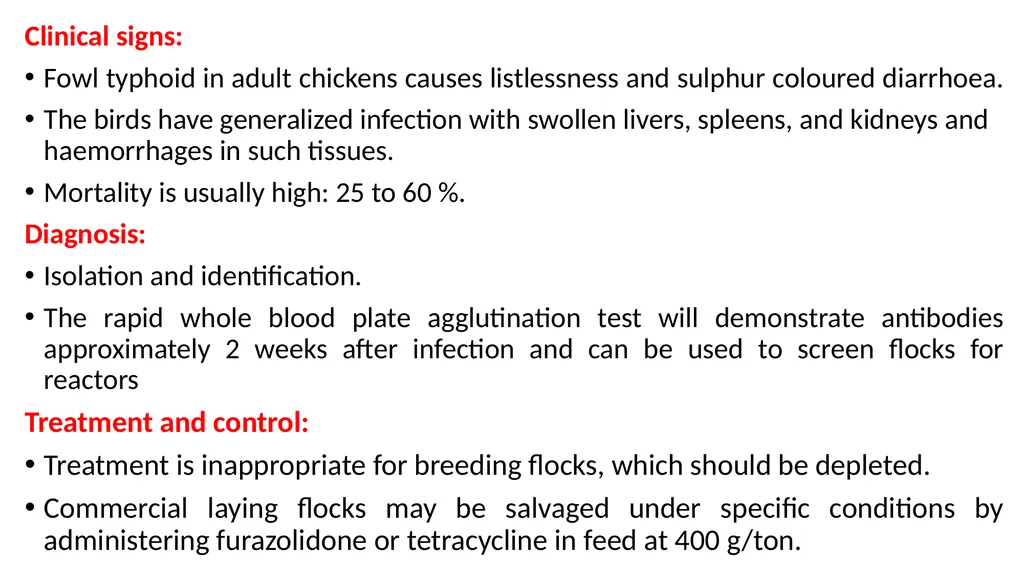
slide3. Clinical signs:
Fowl typhoid in adult chickens causes listlessness and sulphur coloured diarrhoea.
The birds have generalized infection with swollen livers, spleens, and kidneys and haemorrhages in such tissues.
Mortality is usually high: 25 to 60 %.
Diagnosis:
Isolation and identification.
The rapid whole blood plate agglutination test will demonstrate antibodies approximately 2 weeks after infection and can be used to screen flocks for reactors
Treatment and control:
Treatment is inappropriate for breeding flocks, which should be depleted.
Commercial laying flocks may be salvaged under specific conditions by administering furazolidone or tetracycline in feed at 400 g/ton.<br>
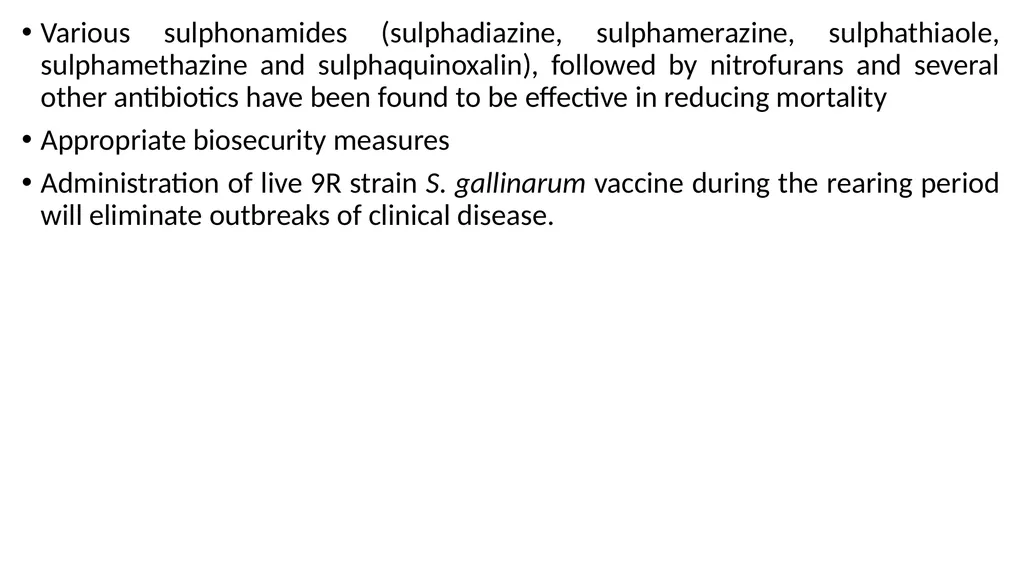
slide4. Various sulphonamides (sulphadiazine, sulphamerazine, sulphathiaole, sulphamethazine and sulphaquinoxalin), followed by nitrofurans and several other antibiotics have been found to be effective in reducing mortality
Appropriate biosecurity measures
Administration of live 9R strain S. gallinarum vaccine during the rearing period will eliminate outbreaks of clinical disease.<br>
4th Professional Dr. Anil Kumar
Unit-5 Asst. Professor Dept. of VCC<br>
slide2. Fowl Typhoid
Etiology:
Fowl typhoid is caused by Salmonella gallinarum, which is related to, but not identical to, S. pullorum.
Transmission:
Fowl typhoid is more a disease of adult chickens, with high mortality and morbidity.
Vertical and lateral transmission occurs
Horizontal transmission is important with fowl typhoid through infected droppings, dead bird carcasses, and infected clothing, shoes, utensils and other fomites.
Host affected:
Chickens, pheasants, ducks, geese and guinea fowl can contract both fowl typhoid.<br>
slide3. Clinical signs:
Fowl typhoid in adult chickens causes listlessness and sulphur coloured diarrhoea.
The birds have generalized infection with swollen livers, spleens, and kidneys and haemorrhages in such tissues.
Mortality is usually high: 25 to 60 %.
Diagnosis:
Isolation and identification.
The rapid whole blood plate agglutination test will demonstrate antibodies approximately 2 weeks after infection and can be used to screen flocks for reactors
Treatment and control:
Treatment is inappropriate for breeding flocks, which should be depleted.
Commercial laying flocks may be salvaged under specific conditions by administering furazolidone or tetracycline in feed at 400 g/ton.<br>
slide4. Various sulphonamides (sulphadiazine, sulphamerazine, sulphathiaole, sulphamethazine and sulphaquinoxalin), followed by nitrofurans and several other antibiotics have been found to be effective in reducing mortality
Appropriate biosecurity measures
Administration of live 9R strain S. gallinarum vaccine during the rearing period will eliminate outbreaks of clinical disease.<br>