
FINNISH EDUCATION IN A NUTSHELL MAIN PRINCIPALS:
Description: FINNISH EDUCATION IN A NUTSHELL MAIN PRINCIPALS: Provide education to all children equal opportunities Education is free at all levels Every pupil and student has the right to educational support Special needs education is generally
Related Topics
Download Presentation
"FINNISH EDUCATION IN A NUTSHELL MAIN PRINCIPALS:" is the property of its rightful owner. Permission is granted to download and print the materials on this website for personal, non-commercial use only, and to display it on your personal computer provided you do not modify the materials and that you retain all copyright notices contained in the materials. By downloading content from our website, you accept the terms of this agreement.
Presentation Transcript
slide1. FINNISH EDUCATION IN A NUTSHELL<br>
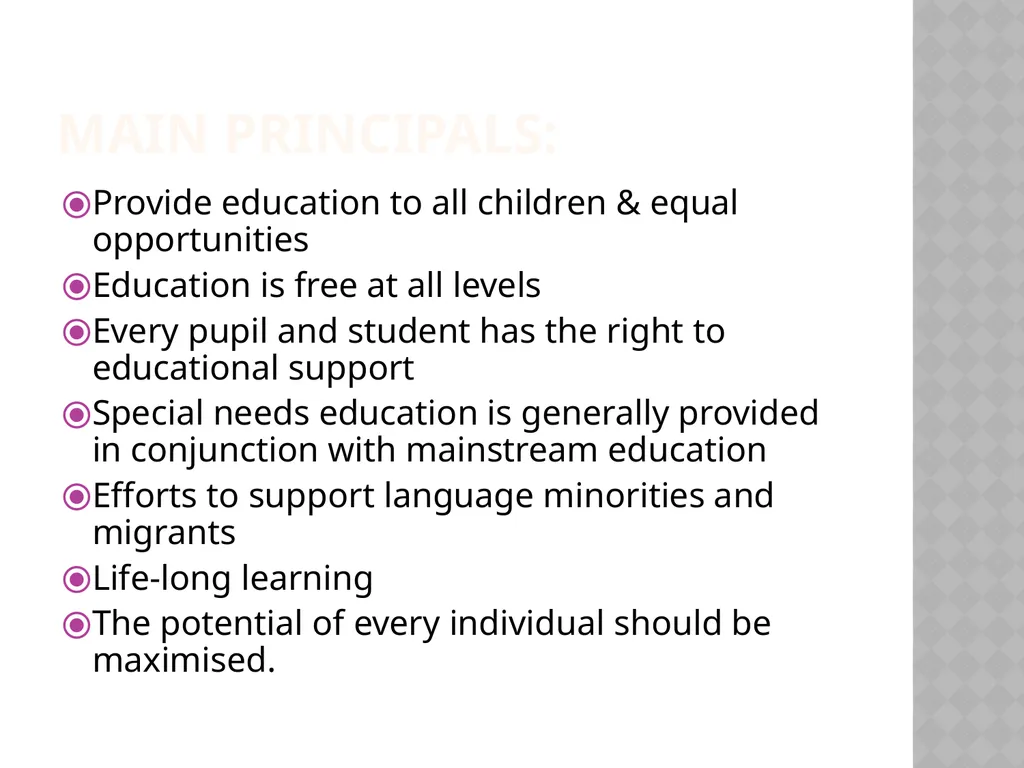
slide3. MAIN PRINCIPALS: Provide education to all children & equal opportunities
Education is free at all levels
Every pupil and student has the right to educational support
Special needs education is generally provided in conjunction with mainstream education
Efforts to support language minorities and migrants
Life-long learning
The potential of every individual should be maximised.<br>
slide4. ALL FINNISH COMPREHENSIVE SCHOOLS:
Most education is publicly funded
Basic education is provided within a single structure
School year is the same everywhere (but timetables are local)
National core curriculum (which leaves room for local variations)
No National tests for pupils in basic education<br>
slide5. LOCAL & TEACHERS’ AUTONOMY
Local administration and educational institutions play a key role
Education system is based on trust and responsibility. Educational autonomy is high at all levels
Quality assurance is based on steering instead of controlling
Assessment is part of daily schoolwork<br>
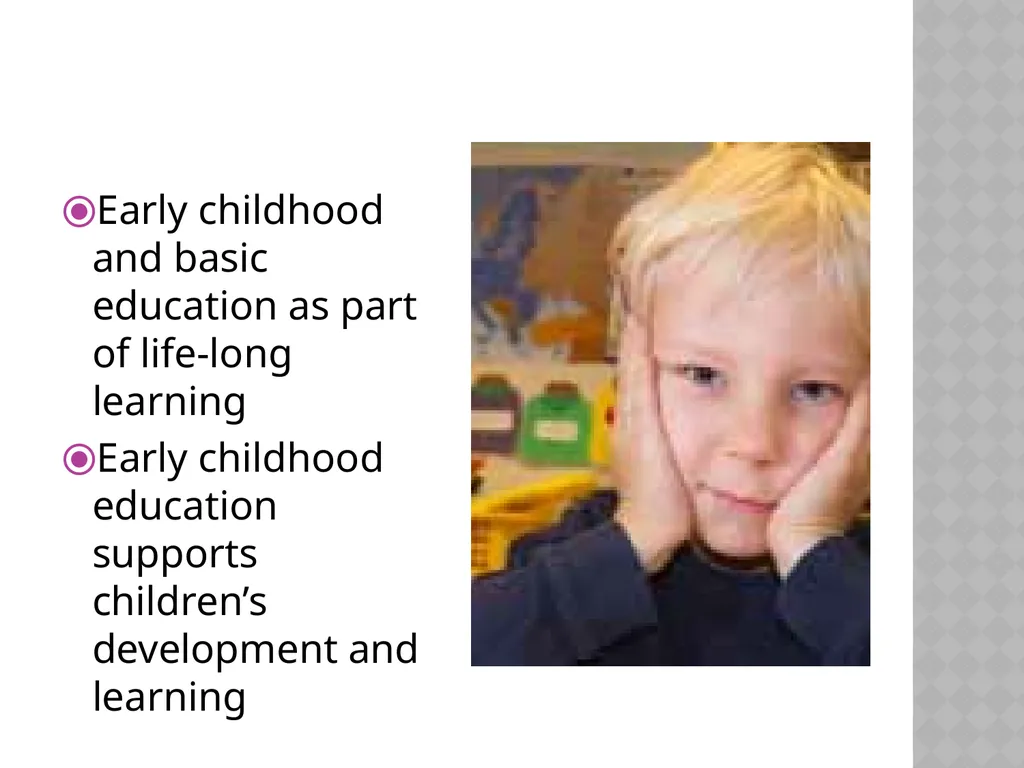
slide6. Early childhood and basic education as part of life-long learning
Early childhood education supports children’s development and learning<br>
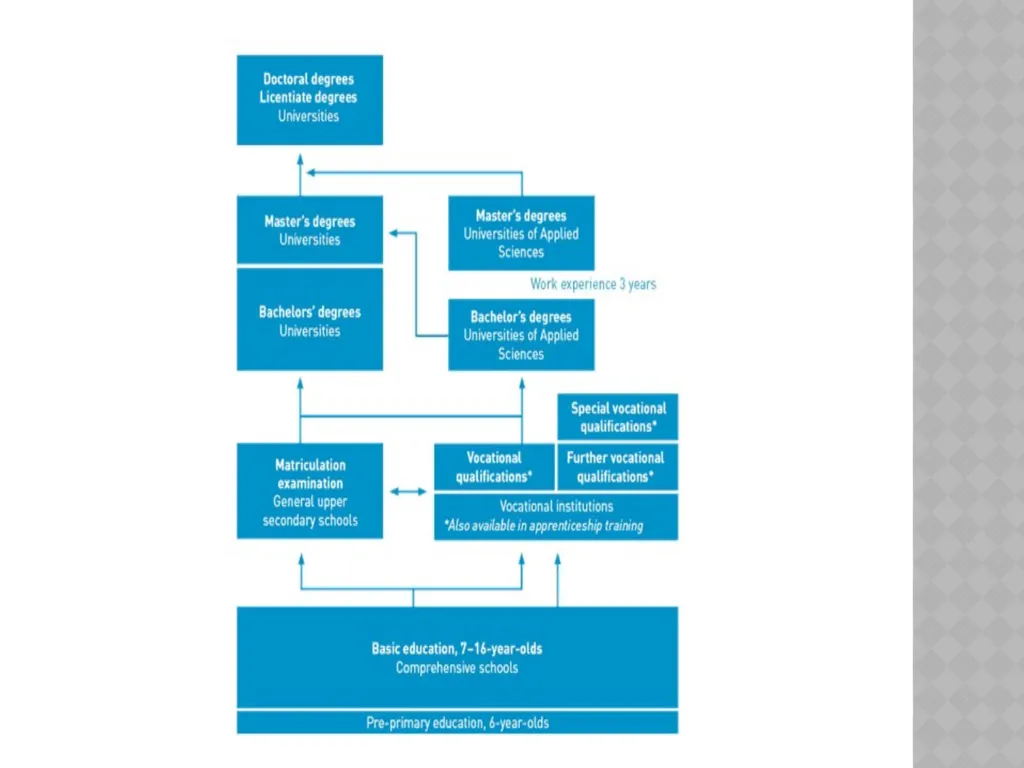
slide7. TO THE UPPER SECONDARY LEVEL Most students continue their studies after basic education to the vocational institutions or to the general upper secondary school
General upper secondary education is flexibly organised
is designed to last three years, but students may complete it in 2 to 4 years.
Instruction is organised in modular form not tied to year classes and students can decide on their individual study schedules
Based on the national core curriculum, each education provider then prepares the local curriculum.
First national examination at the end: The National Matriculation examination<br>
slide8. VOCATIONAL INSTITUTES in cooperation with the world of work
covers eight fields of education, more than fifty vocational (social, commercial, technology, nature..)
three years of study
includes at least half a year of on-the- joblearning in workplaces<br>
slide3. MAIN PRINCIPALS: Provide education to all children & equal opportunities
Education is free at all levels
Every pupil and student has the right to educational support
Special needs education is generally provided in conjunction with mainstream education
Efforts to support language minorities and migrants
Life-long learning
The potential of every individual should be maximised.<br>
slide4. ALL FINNISH COMPREHENSIVE SCHOOLS:
Most education is publicly funded
Basic education is provided within a single structure
School year is the same everywhere (but timetables are local)
National core curriculum (which leaves room for local variations)
No National tests for pupils in basic education<br>
slide5. LOCAL & TEACHERS’ AUTONOMY
Local administration and educational institutions play a key role
Education system is based on trust and responsibility. Educational autonomy is high at all levels
Quality assurance is based on steering instead of controlling
Assessment is part of daily schoolwork<br>
slide6. Early childhood and basic education as part of life-long learning
Early childhood education supports children’s development and learning<br>
slide7. TO THE UPPER SECONDARY LEVEL Most students continue their studies after basic education to the vocational institutions or to the general upper secondary school
General upper secondary education is flexibly organised
is designed to last three years, but students may complete it in 2 to 4 years.
Instruction is organised in modular form not tied to year classes and students can decide on their individual study schedules
Based on the national core curriculum, each education provider then prepares the local curriculum.
First national examination at the end: The National Matriculation examination<br>
slide8. VOCATIONAL INSTITUTES in cooperation with the world of work
covers eight fields of education, more than fifty vocational (social, commercial, technology, nature..)
three years of study
includes at least half a year of on-the- joblearning in workplaces<br>