
Formula for Interview Success: Preparation +

Description: Formula for Interview Success: Preparation Practice Presented by: Shelly Drouillard The Center for Experiential Learning Career Services The University of Toledo Contact Information The Center for Experiential Learning Career Services
Related Topics
Download Presentation
"Formula for Interview Success: Preparation +" is the property of its rightful owner. Permission is granted to download and print the materials on this website for personal, non-commercial use only, and to display it on your personal computer provided you do not modify the materials and that you retain all copyright notices contained in the materials. By downloading content from our website, you accept the terms of this agreement.
Presentation Transcript
slide1. Formula for Interview Success:
Preparation + Practice Presented by: Shelly Drouillard
The Center for Experiential Learning & Career Services
The University of Toledo<br>
slide2. Contact Information The Center for Experiential Learning & Career Services
The University of Toledo Student Union 1533 419.530.4341
www.utoledo.edu/success/career<br>
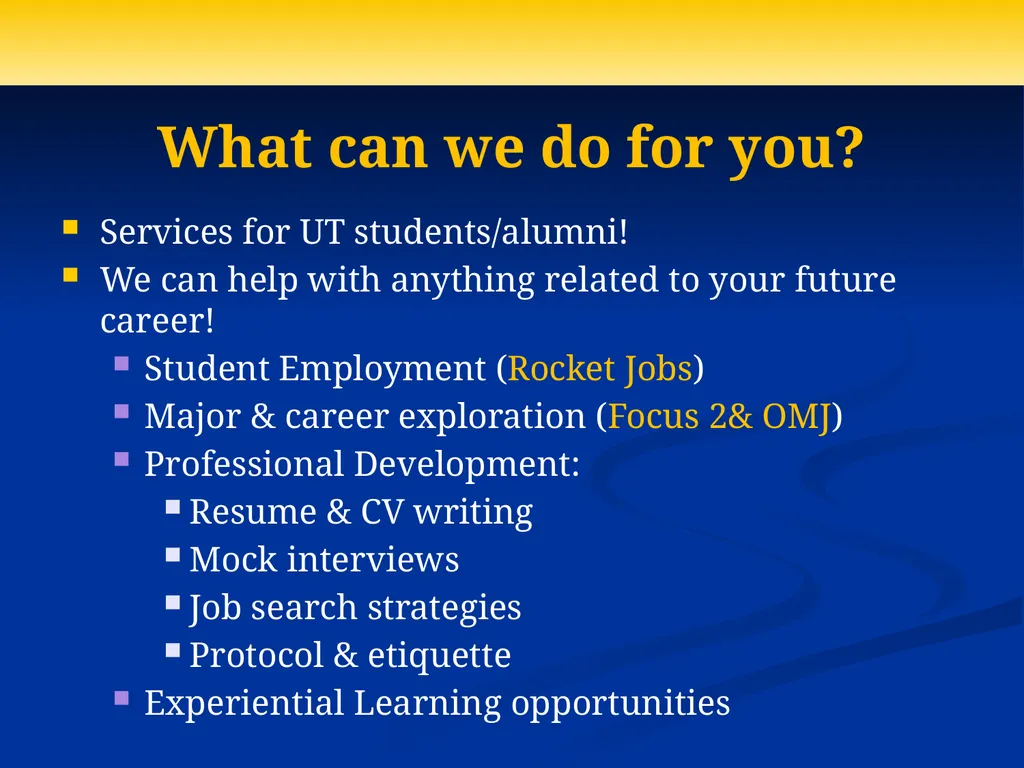
slide3. What can we do for you? Services for UT students/alumni!
We can help with anything related to your future career!
Student Employment (Rocket Jobs)
Major & career exploration (Focus 2& OMJ)
Professional Development:
Resume & CV writing
Mock interviews
Job search strategies
Protocol & etiquette
Experiential Learning opportunities<br>
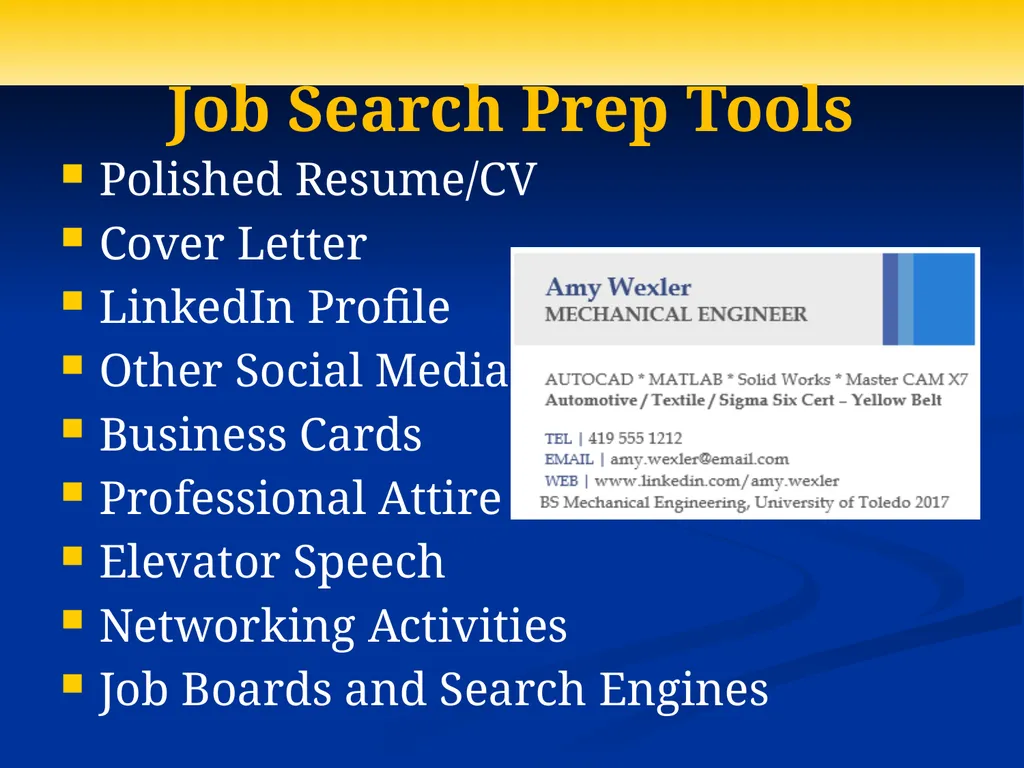
slide5. Job Search Prep Tools Polished Resume/CV
Cover Letter
LinkedIn Profile
Other Social Media
Business Cards
Professional Attire
Elevator Speech
Networking Activities
Job Boards and Search Engines<br>
slide6. How to maximize resume/CV impact<br>
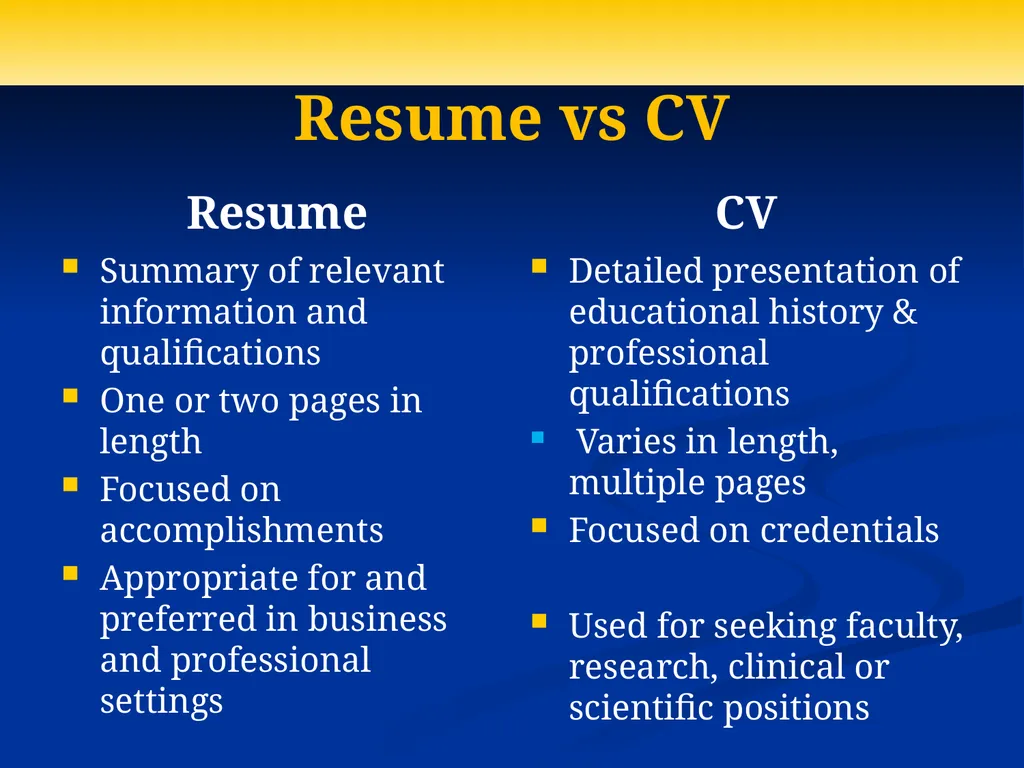
slide7. Resume vs CV Resume Summary of relevant information and qualifications
One or two pages in length
Focused on accomplishments
Appropriate for and preferred in business and professional settings CV Detailed presentation of educational history & professional qualifications
Varies in length, multiple pages
Focused on credentials
Used for seeking faculty, research, clinical or scientific positions<br>
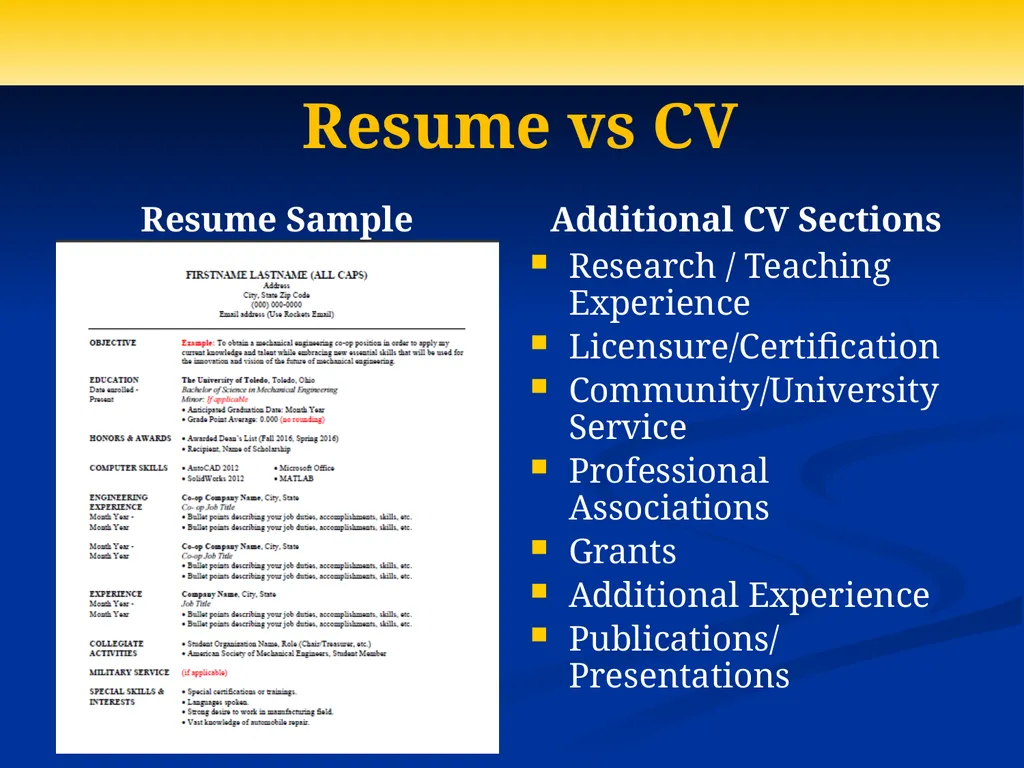
slide8. Resume vs CV Resume Sample Additional CV Sections Research / Teaching Experience
Licensure/Certification
Community/University Service
Professional Associations
Grants
Additional Experience
Publications/ Presentations<br>
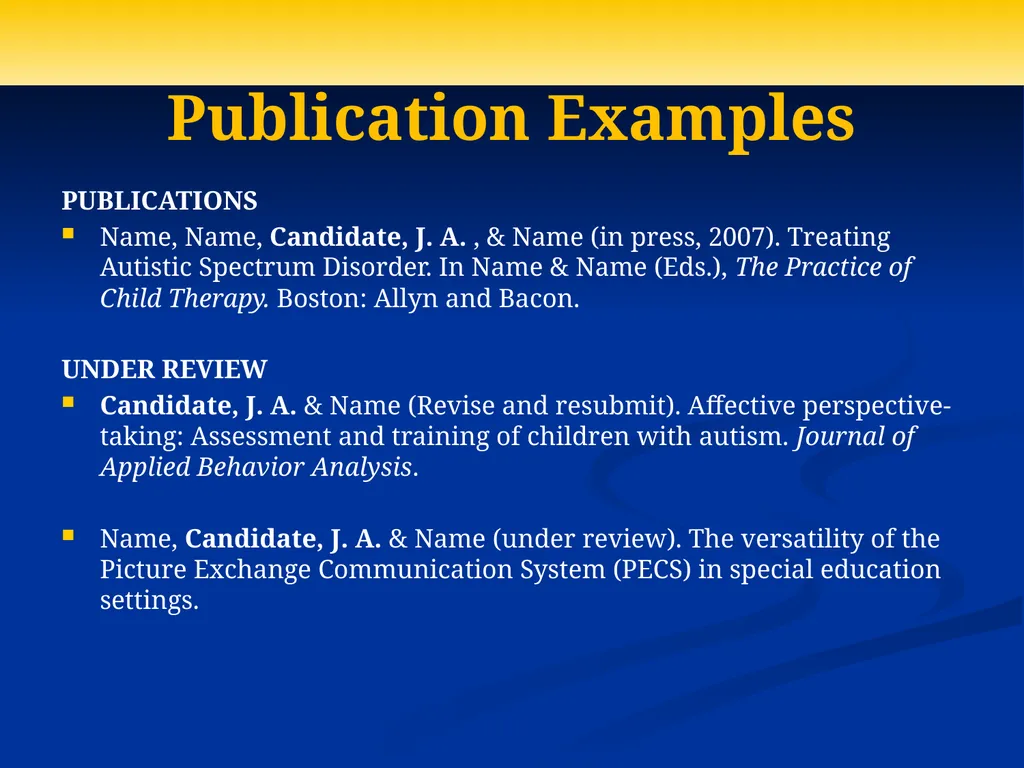
slide9. Publication Examples PUBLICATIONS
Name, Name, Candidate, J. A. , & Name (in press, 2007). Treating Autistic Spectrum Disorder. In Name & Name (Eds.), The Practice of Child Therapy. Boston: Allyn and Bacon.
UNDER REVIEW
Candidate, J. A. & Name (Revise and resubmit). Affective perspective-taking: Assessment and training of children with autism. Journal of Applied Behavior Analysis.
Name, Candidate, J. A. & Name (under review). The versatility of the Picture Exchange Communication System (PECS) in special education settings.<br>
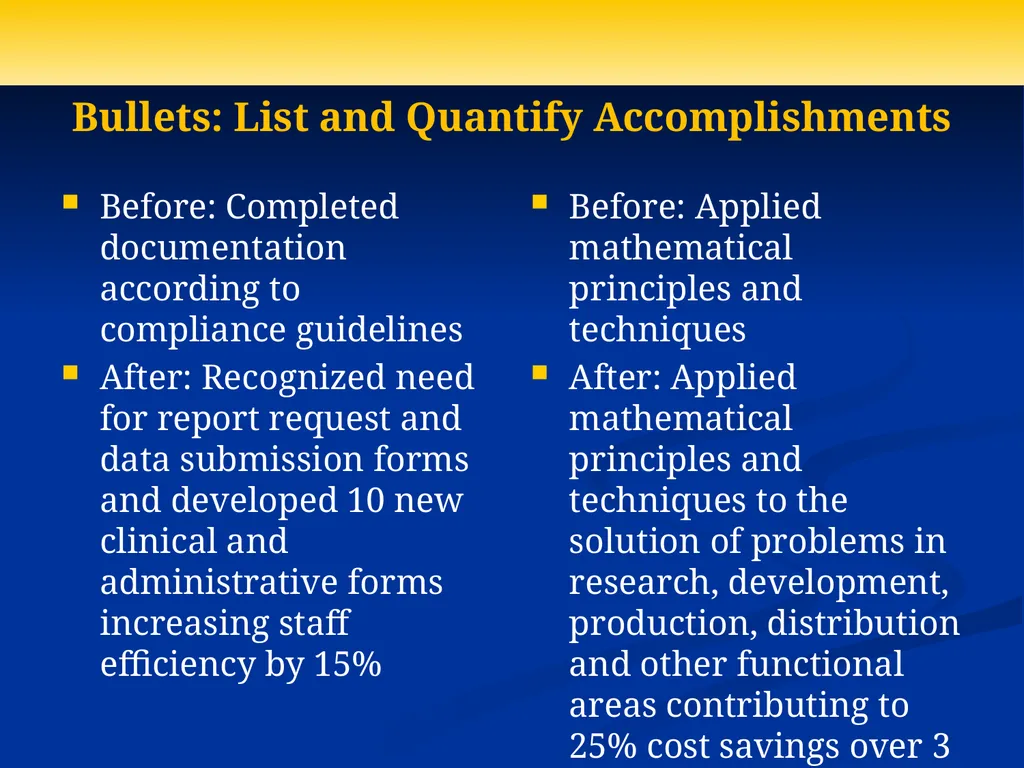
slide10. Bullets: List and Quantify Accomplishments Before: Completed documentation according to compliance guidelines
After: Recognized need for report request and data submission forms and developed 10 new clinical and administrative forms increasing staff efficiency by 15% Before: Applied mathematical principles and techniques
After: Applied mathematical principles and techniques to the solution of problems in research, development, production, distribution and other functional areas contributing to 25% cost savings over 3 year time period.<br>
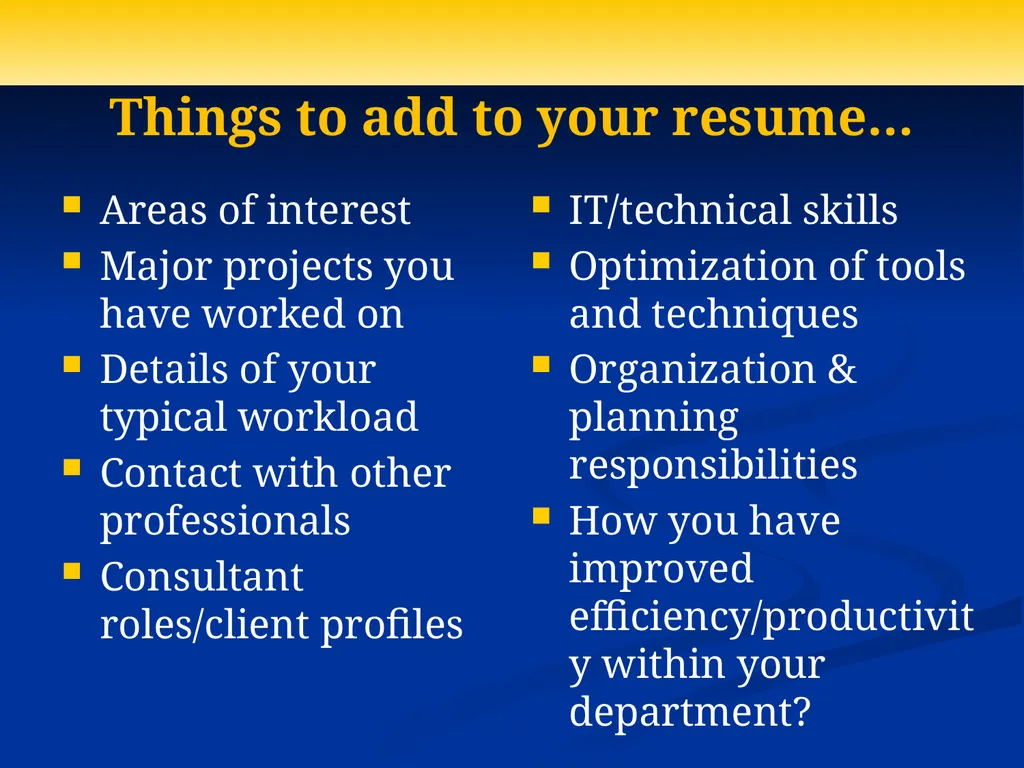
slide11. Things to add to your resume… Areas of interest
Major projects you have worked on
Details of your typical workload
Contact with other professionals
Consultant roles/client profiles IT/technical skills
Optimization of tools and techniques
Organization & planning responsibilities
How you have improved efficiency/productivity within your department?<br>
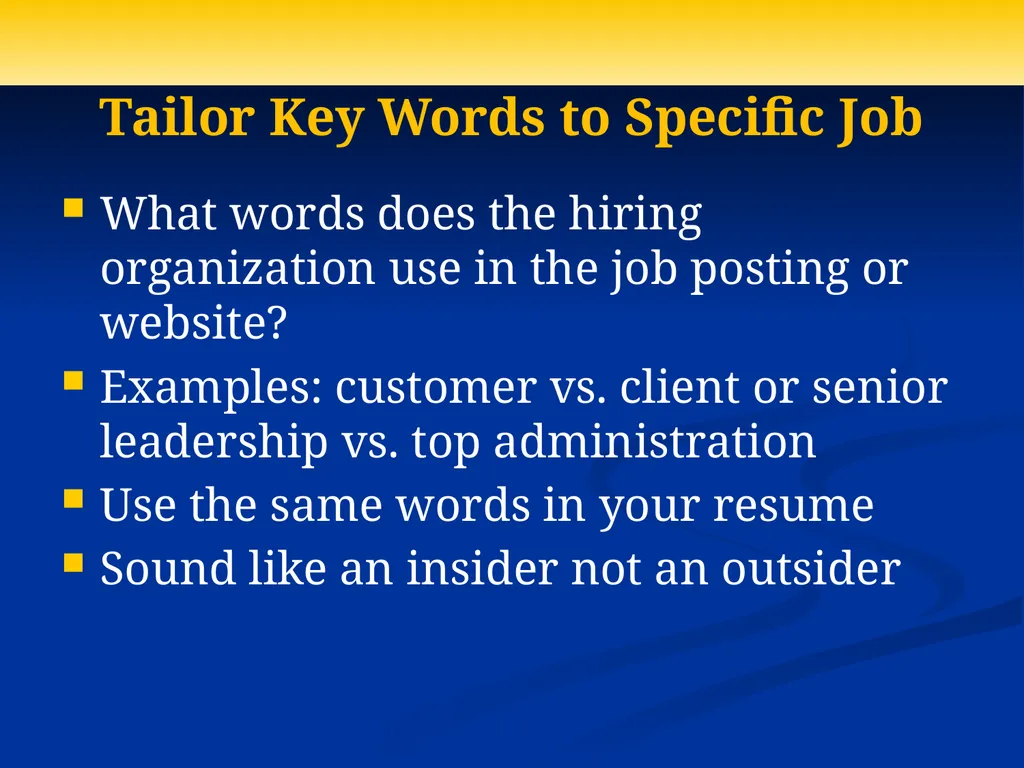
slide12. Tailor Key Words to Specific Job What words does the hiring organization use in the job posting or website?
Examples: customer vs. client or senior leadership vs. top administration
Use the same words in your resume
Sound like an insider not an outsider<br>
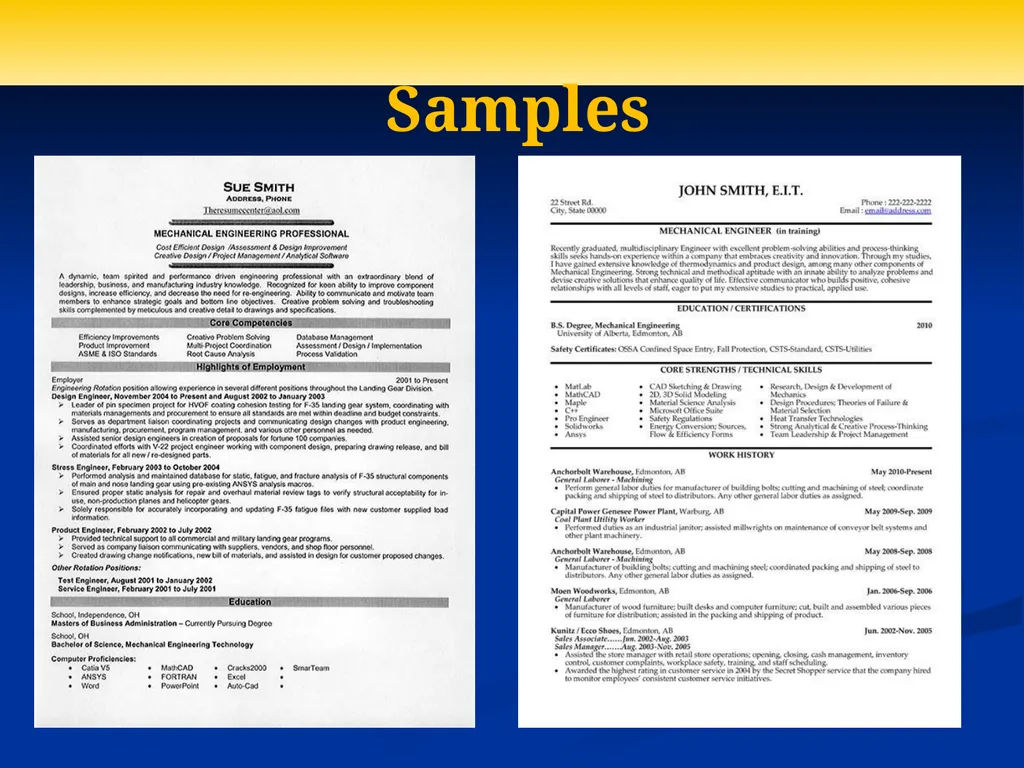
slide13. Samples<br>
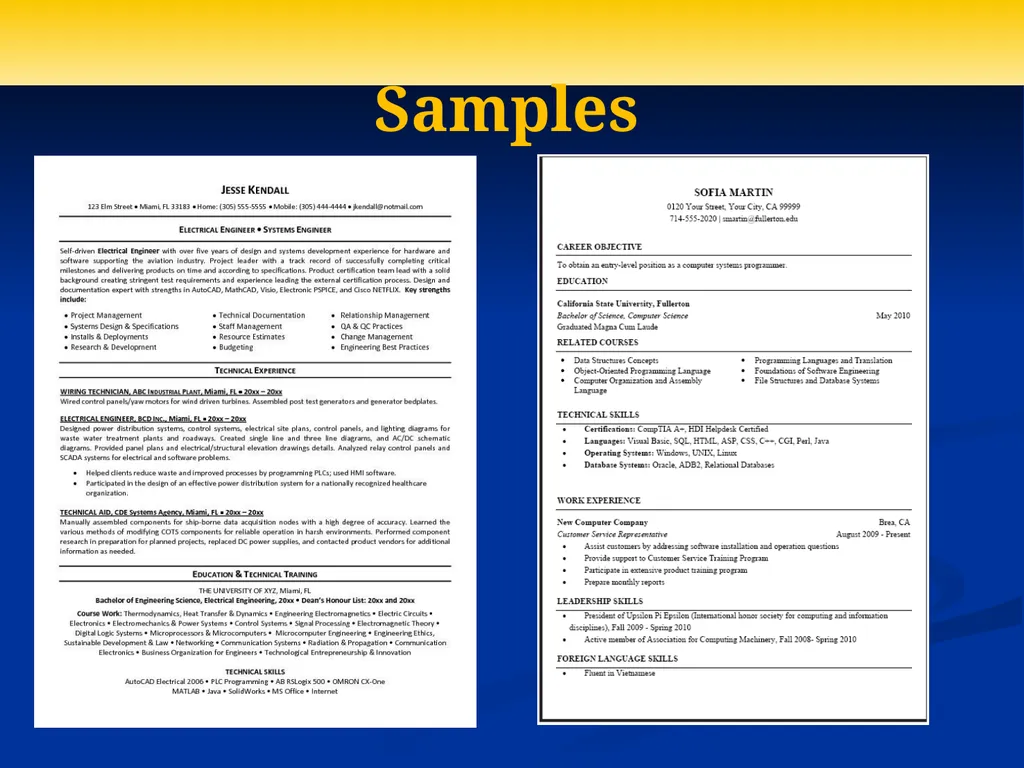
slide14. Samples<br>
slide15. Interview Strategies<br>
slide16. Interview Goals Employer: Gather additional information
Assess candidate’s “soft skills”
Communication
Self-management
Attitude
Personality
Interpersonal
Motivation
Looking for candidates who will be a good fit for their organization, customers and work environment Candidate: Make the most favorable impression
Stand out from the other candidates
Secure an interview
Expand your network
To match with a work environment that will give you the best opportunity for success.<br>
slide17. Before the Interview: Know Yourself Be prepared to talk about anything and everything on your resume, including your, coursework, course projects, technical skills, work experiences and extra-curricular activities
Identify your skills, interests and work values, strengths and weaknesses
Be able to communicate your long and short term goals
Be prepared to candidly answer questions about anything that could be perceived as a weakness in your application — a disappointing grade, lackluster semester, lack of certain experience.<br>
slide18. Before the Interview: Know The Employer Review the Employers’ Websites
Areas relevant to your position.
Products they offer and the services they perform.
Mission statement and how long they have been incorporated.
Recent news section or press releases
Do a Quick Web Search
Searching for a company in a search engine will often bring up other websites with information.
Blogs or social media websites, e.g. Twitter, Facebook, LinkedIn.
Additional Company Research Tips
Speak with a current or former staff member.
Talk with someone that uses their products or services.<br>
slide19. Interview Materials Prepare your interview materials before you leave
Up-to-date copies of your resume
List of references
Work samples or portfolio
Padfolio or folder
Company research/list of questions<br>
slide20. Practice Your Pitch PRACTICE, PRACTICE, PRACTICE answers to sample interview questions
Conduct mock interviews with trusted faculty members, advisors or Career Services
Record yourself on video to check your diction, speed and body language
Practice answering interview questions in front of a mirror<br>
slide21. In-Person
Interviewing Tips<br>
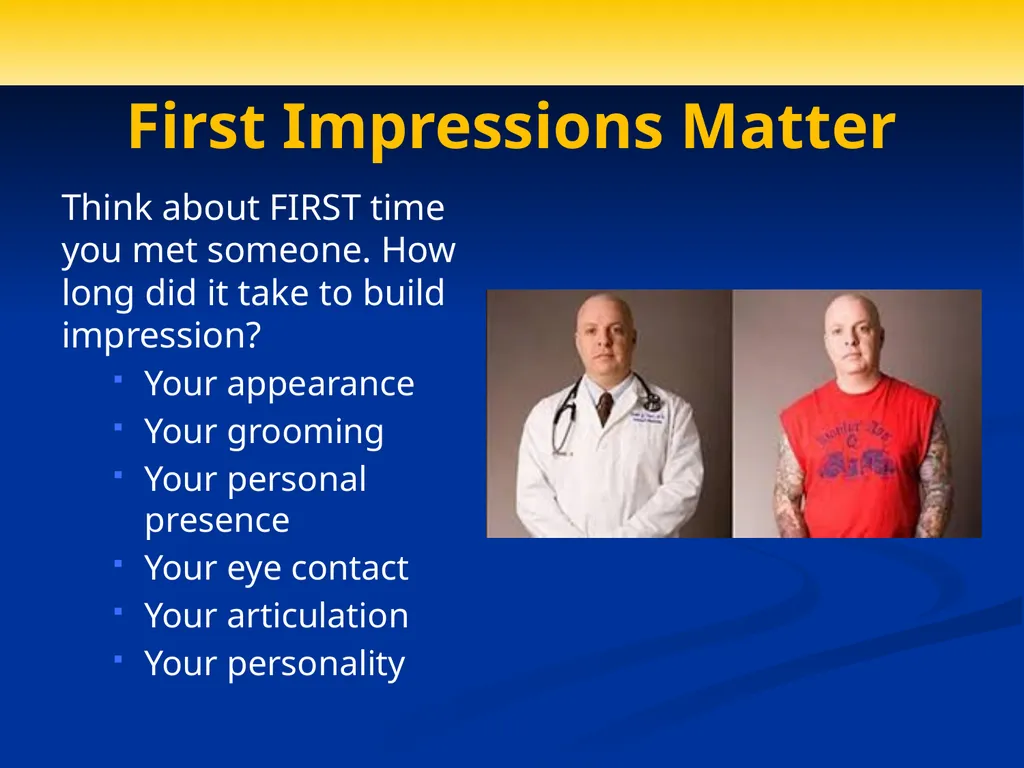
slide22. First Impressions Matter Think about FIRST time you met someone. How long did it take to build impression?
Your appearance
Your grooming
Your personal presence
Your eye contact
Your articulation
Your personality<br>
slide23. Impressions Matter Before You Arrive & Throughout the Day Be respectful and courteous to the administrative staff, including when you are scheduling your interviews.
Remember that the people you interact with on your interview day will be paying attention to your interpersonal skills and professionalism, even in this highly compressed time frame.<br>
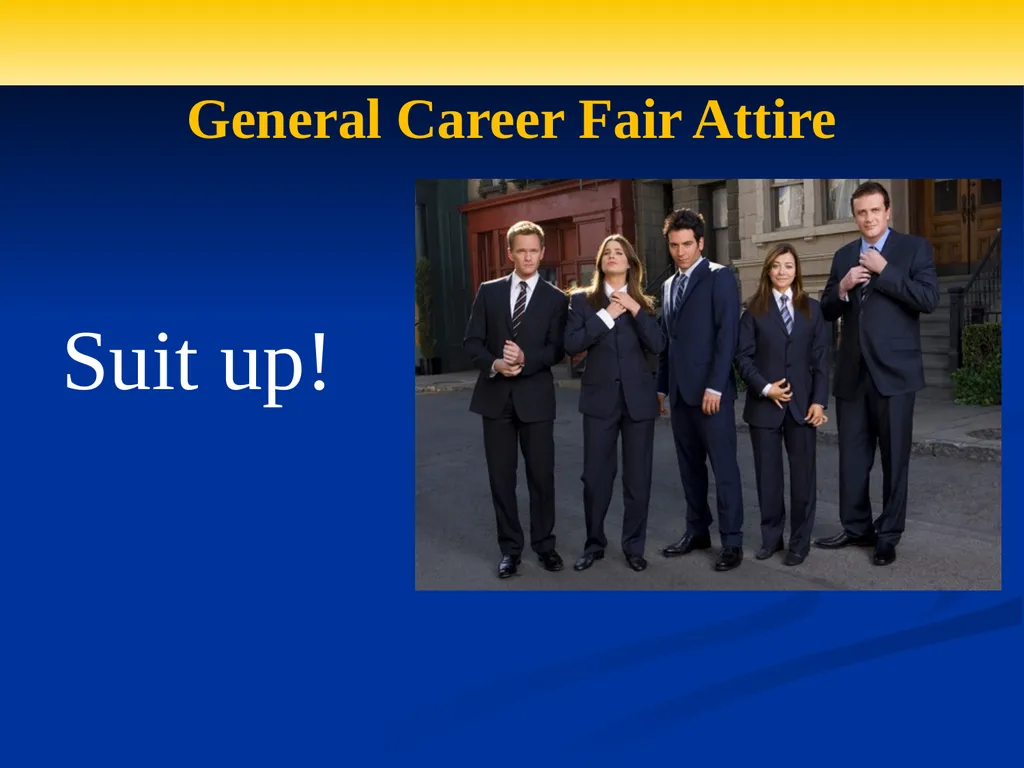
slide24. Suit up! General Career Fair Attire<br>
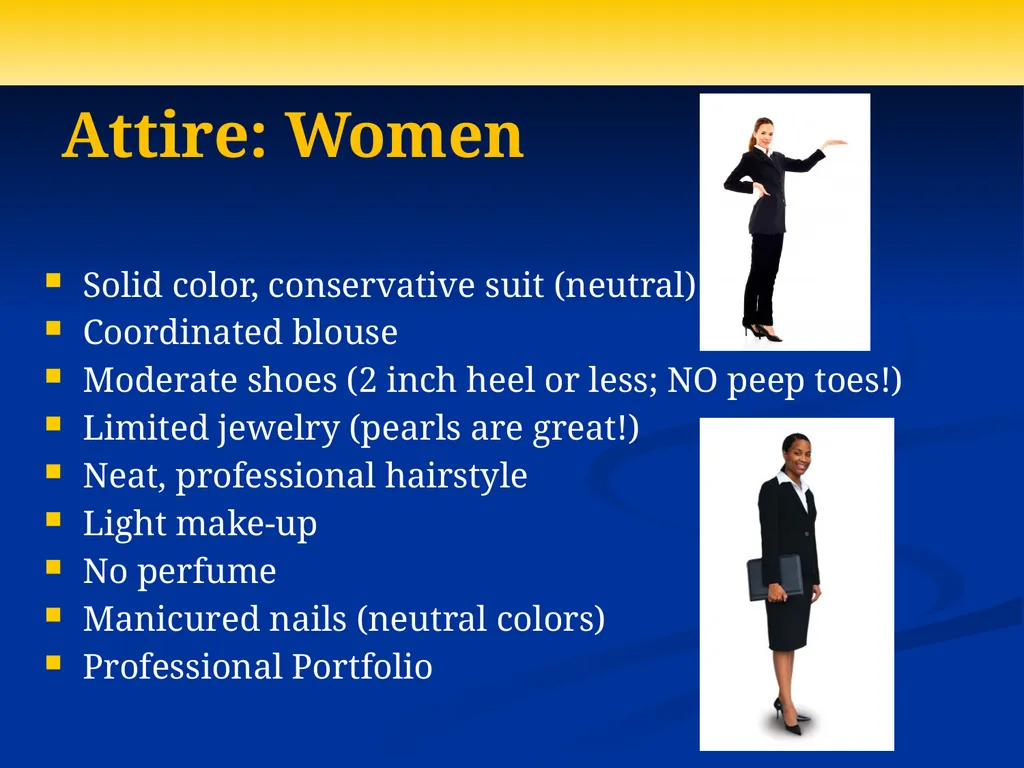
slide25. Attire: Women Solid color, conservative suit (neutral)
Coordinated blouse
Moderate shoes (2 inch heel or less; NO peep toes!)
Limited jewelry (pearls are great!)
Neat, professional hairstyle
Light make-up
No perfume
Manicured nails (neutral colors)
Professional Portfolio<br>
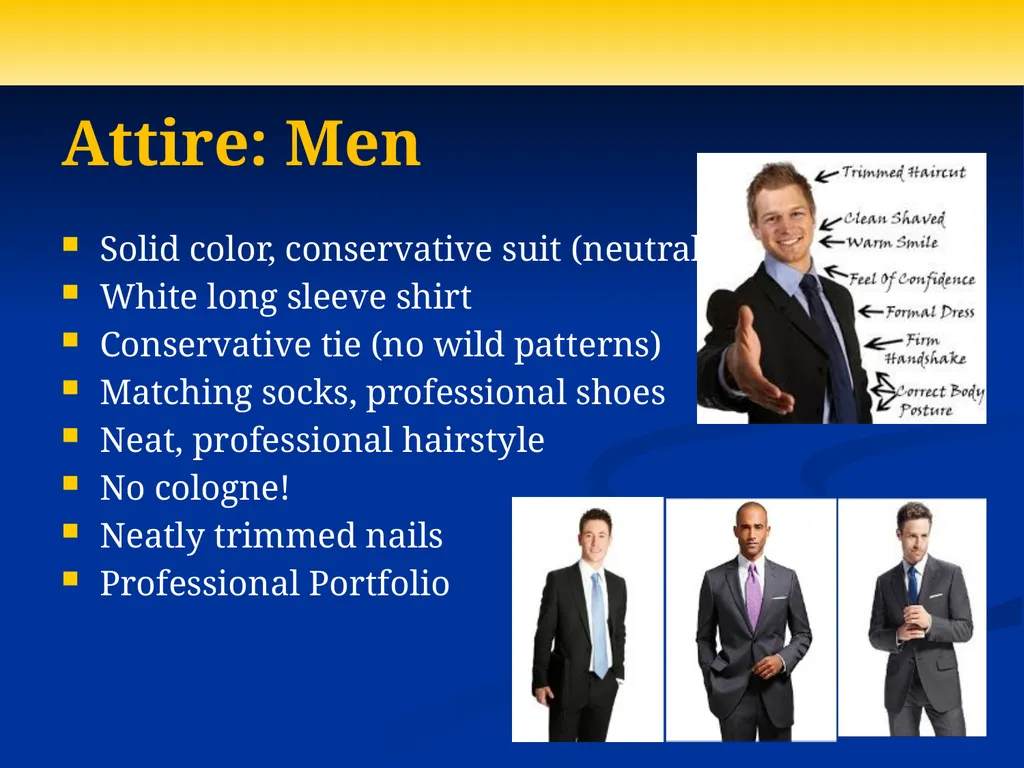
slide26. Attire: Men Solid color, conservative suit (neutral)
White long sleeve shirt
Conservative tie (no wild patterns)
Matching socks, professional shoes
Neat, professional hairstyle
No cologne!
Neatly trimmed nails
Professional Portfolio<br>
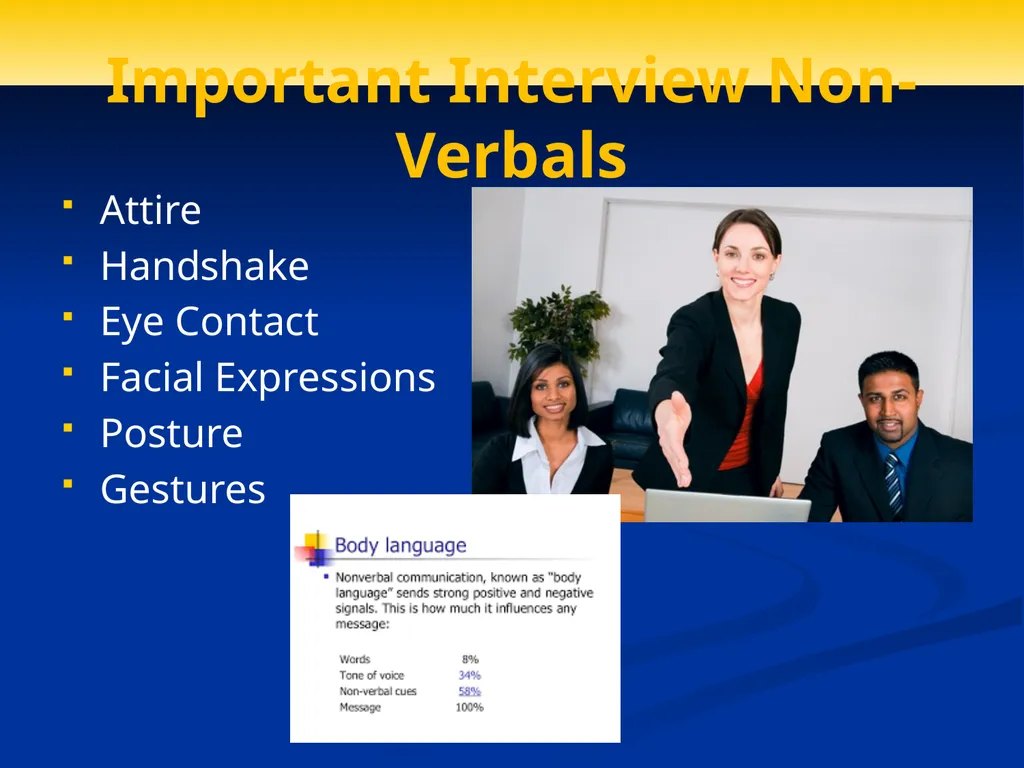
slide27. Important Interview Non-Verbals Attire
Handshake
Eye Contact
Facial Expressions
Posture
Gestures<br>
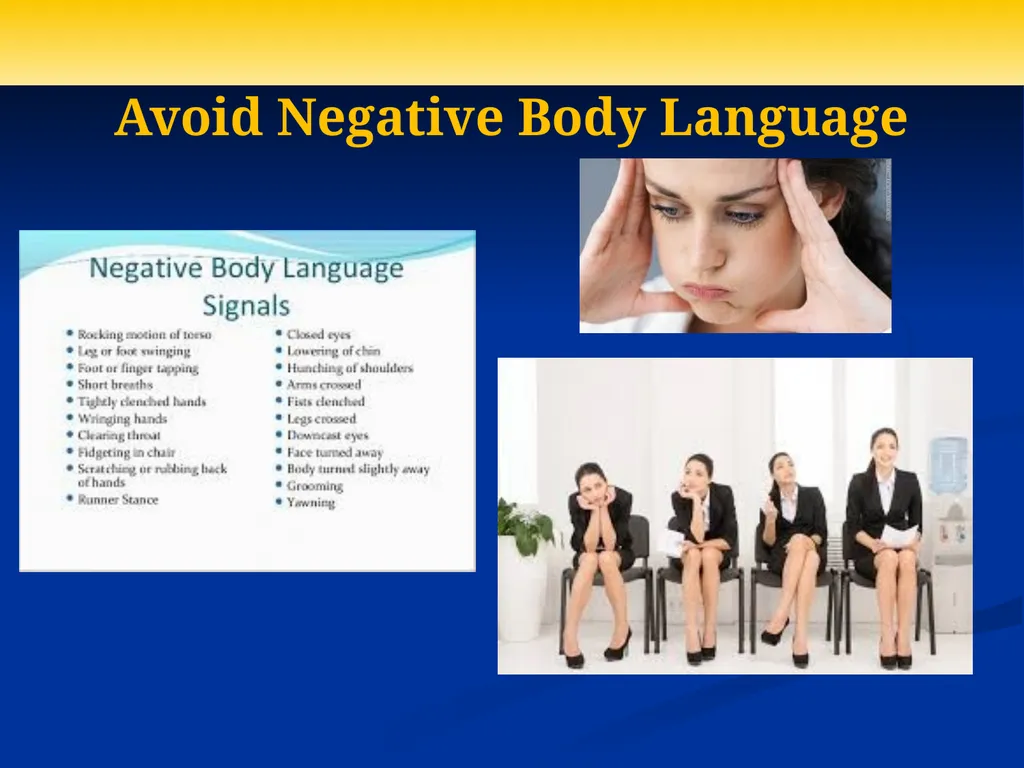
slide28. Avoid Negative Body Language<br>
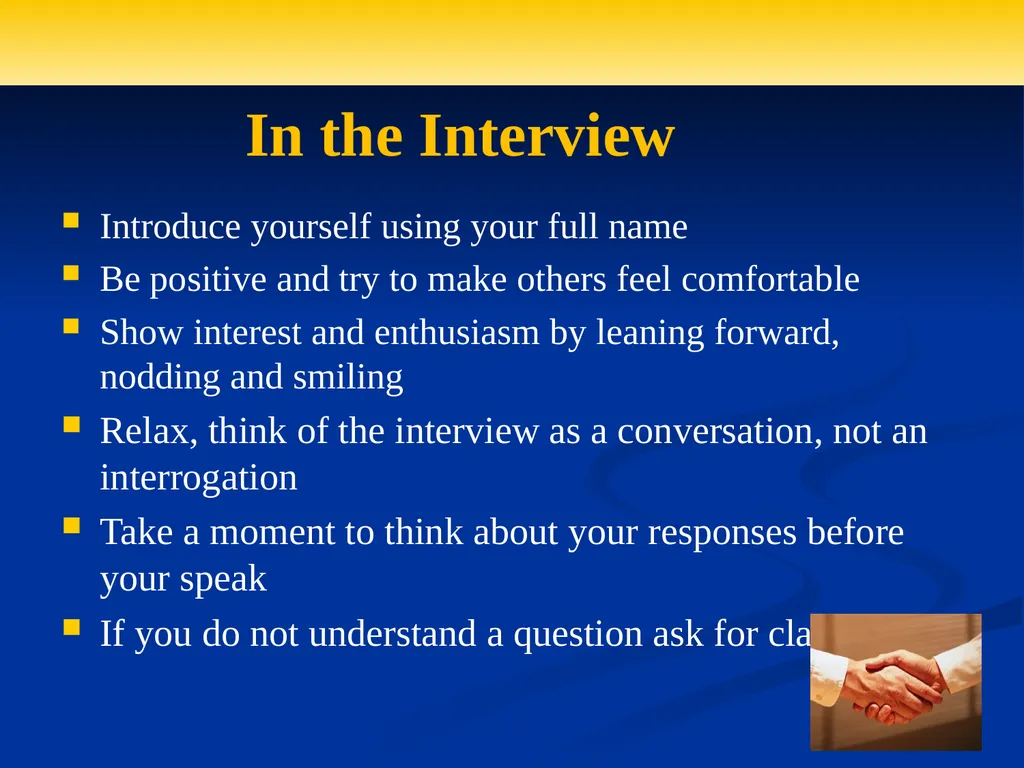
slide29. Introduce yourself using your full name
Be positive and try to make others feel comfortable
Show interest and enthusiasm by leaning forward, nodding and smiling
Relax, think of the interview as a conversation, not an interrogation
Take a moment to think about your responses before your speak
If you do not understand a question ask for clarification In the Interview<br>
slide30. Interview Questions<br>
slide31. Most Common Interview Questions Tell me about yourself
Why should I hire you?
What are your top strengths & number 1 weakness?
What do you see yourself doing in 5 years?
Why are you interested in our organization? What do you know about our clinic?
What are your expectations from a supervisor? What type of management style do you most like to work under?<br>
slide32. Before and After Examples Tell me about yourself?
https://www.youtube.com/watch?v=Cyww7eRVj3E<br>
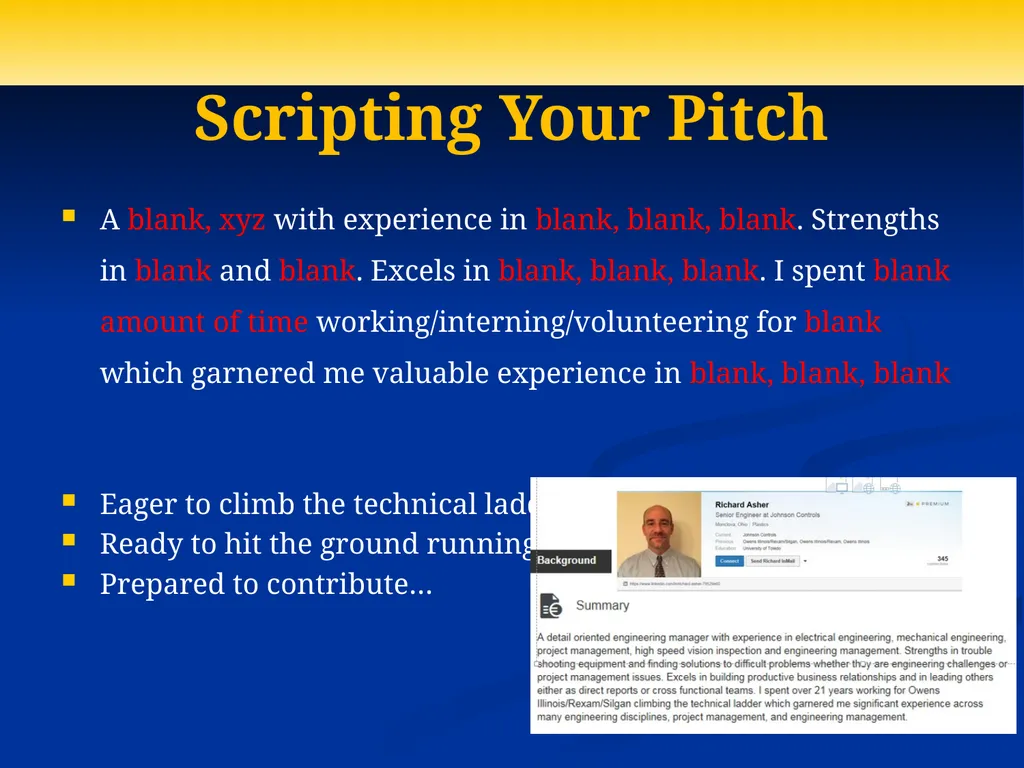
slide33. Scripting Your Pitch A blank, xyz with experience in blank, blank, blank. Strengths in blank and blank. Excels in blank, blank, blank. I spent blank amount of time working/interning/volunteering for blank which garnered me valuable experience in blank, blank, blank
Eager to climb the technical ladder…
Ready to hit the ground running…
Prepared to contribute…<br>
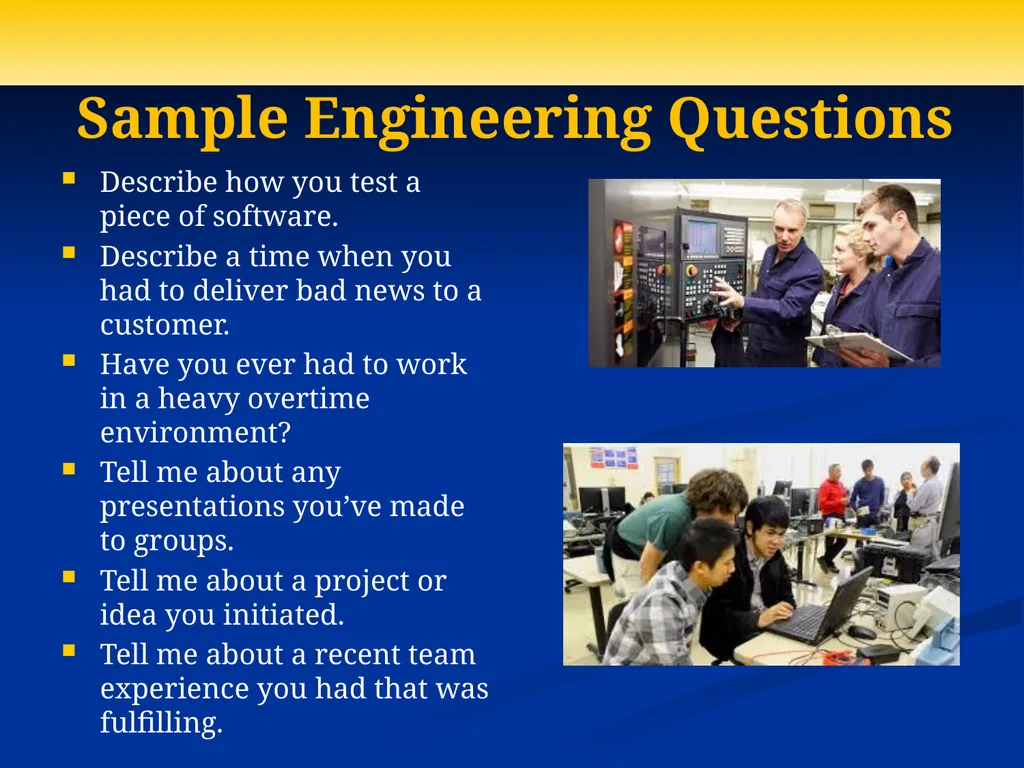
slide34. Sample Engineering Questions Describe how you test a piece of software.
Describe a time when you had to deliver bad news to a customer.
Have you ever had to work in a heavy overtime environment?
Tell me about any presentations you’ve made to groups.
Tell me about a project or idea you initiated.
Tell me about a recent team experience you had that was fulfilling.<br>
slide35. Behavior Based Interview (BBI) Past Behavior = Future Performance<br>
slide36. BBI Questions Describe a situation where you were successful in getting crucial information from another person.
Tell me about a time when you worked with people that were different from you. What barriers did you need to address and how did you overcome them?
Tell me about a time when you changed your opinion on an issue based on new information or an experience.<br>
slide37. STAR System for Behavior-Based Q’s Situation
Task(s)
Actions(s)
Result(s)<br>
slide38. Do you have any questions? ALWAYS have questions prepared!
Inquisitive minds are always learning new things and recruiters know that continuing learning is critical to succeeding as a engineer
Demonstrate knowledge of the company, industry, position
Questions will tell them a lot about who you are and what you care about most.
Write questions down questions before the interview<br>
slide39. Possible Questions to Ask Can you describe a typical work day?
What would be some of my top priorities or projects?
How would you describe the organization’s culture?
What are the characteristics/qualities of others who have been successful in this role?
Are there opportunities for advancement?
Also think of questions related to other program details that are important to you. Remember that your questions will tell them a lot about who you are and what you care about most.<br>
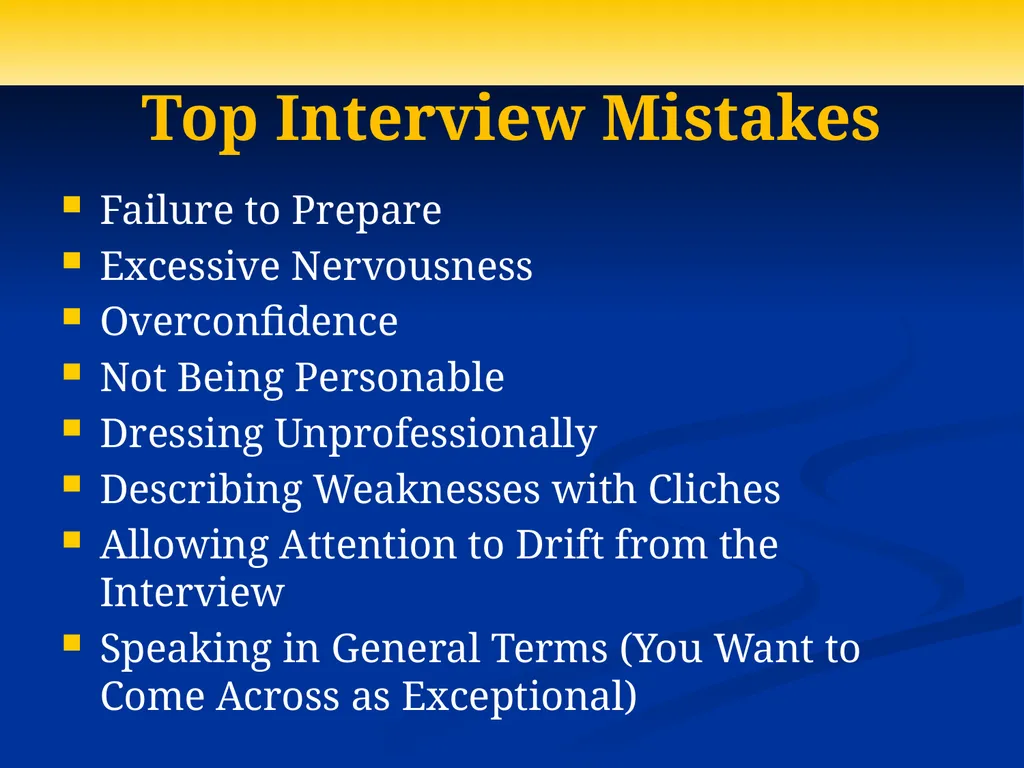
slide40. Top Interview Mistakes Failure to Prepare
Excessive Nervousness
Overconfidence
Not Being Personable
Dressing Unprofessionally
Describing Weaknesses with Cliches
Allowing Attention to Drift from the Interview
Speaking in General Terms (You Want to Come Across as Exceptional)<br>
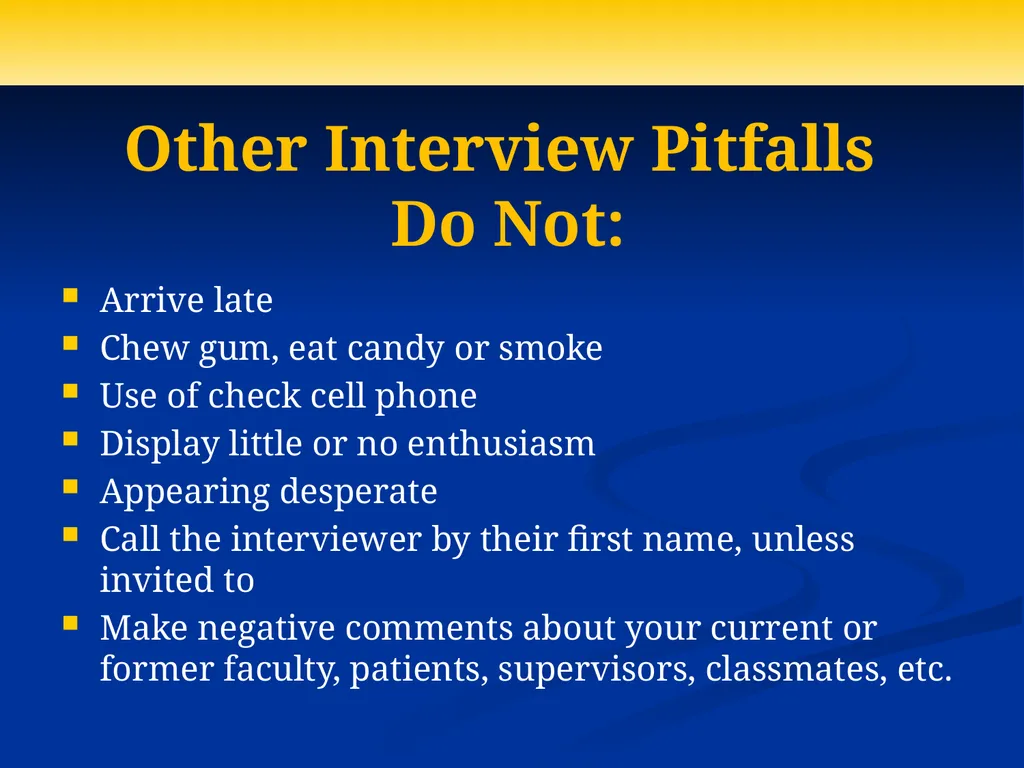
slide41. Other Interview Pitfalls Do Not: Arrive late
Chew gum, eat candy or smoke
Use of check cell phone
Display little or no enthusiasm
Appearing desperate
Call the interviewer by their first name, unless invited to
Make negative comments about your current or former faculty, patients, supervisors, classmates, etc.<br>
slide42. Send a thank you card!
If the process is happening rapidly, an e-mail may suffice
A nice note to your interviewers shows that you have taken the time to tell them how much you appreciate their consideration After the Interview<br>
slide43. Questions?<br>
slide44. Evaluation Time!
Please complete our brief evaluation form. We use this information for assessment purposes! Your thoughts and responses are very important to us.
Thank you!<br>
The Center for Experiential Learning & Career Services
The University of Toledo<br>
slide2. Contact Information The Center for Experiential Learning & Career Services
The University of Toledo Student Union 1533 419.530.4341
www.utoledo.edu/success/career<br>
slide3. What can we do for you? Services for UT students/alumni!
We can help with anything related to your future career!
Student Employment (Rocket Jobs)
Major & career exploration (Focus 2& OMJ)
Professional Development:
Resume & CV writing
Mock interviews
Job search strategies
Protocol & etiquette
Experiential Learning opportunities<br>
slide5. Job Search Prep Tools Polished Resume/CV
Cover Letter
LinkedIn Profile
Other Social Media
Business Cards
Professional Attire
Elevator Speech
Networking Activities
Job Boards and Search Engines<br>
slide6. How to maximize resume/CV impact<br>
slide7. Resume vs CV Resume Summary of relevant information and qualifications
One or two pages in length
Focused on accomplishments
Appropriate for and preferred in business and professional settings CV Detailed presentation of educational history & professional qualifications
Varies in length, multiple pages
Focused on credentials
Used for seeking faculty, research, clinical or scientific positions<br>
slide8. Resume vs CV Resume Sample Additional CV Sections Research / Teaching Experience
Licensure/Certification
Community/University Service
Professional Associations
Grants
Additional Experience
Publications/ Presentations<br>
slide9. Publication Examples PUBLICATIONS
Name, Name, Candidate, J. A. , & Name (in press, 2007). Treating Autistic Spectrum Disorder. In Name & Name (Eds.), The Practice of Child Therapy. Boston: Allyn and Bacon.
UNDER REVIEW
Candidate, J. A. & Name (Revise and resubmit). Affective perspective-taking: Assessment and training of children with autism. Journal of Applied Behavior Analysis.
Name, Candidate, J. A. & Name (under review). The versatility of the Picture Exchange Communication System (PECS) in special education settings.<br>
slide10. Bullets: List and Quantify Accomplishments Before: Completed documentation according to compliance guidelines
After: Recognized need for report request and data submission forms and developed 10 new clinical and administrative forms increasing staff efficiency by 15% Before: Applied mathematical principles and techniques
After: Applied mathematical principles and techniques to the solution of problems in research, development, production, distribution and other functional areas contributing to 25% cost savings over 3 year time period.<br>
slide11. Things to add to your resume… Areas of interest
Major projects you have worked on
Details of your typical workload
Contact with other professionals
Consultant roles/client profiles IT/technical skills
Optimization of tools and techniques
Organization & planning responsibilities
How you have improved efficiency/productivity within your department?<br>
slide12. Tailor Key Words to Specific Job What words does the hiring organization use in the job posting or website?
Examples: customer vs. client or senior leadership vs. top administration
Use the same words in your resume
Sound like an insider not an outsider<br>
slide13. Samples<br>
slide14. Samples<br>
slide15. Interview Strategies<br>
slide16. Interview Goals Employer: Gather additional information
Assess candidate’s “soft skills”
Communication
Self-management
Attitude
Personality
Interpersonal
Motivation
Looking for candidates who will be a good fit for their organization, customers and work environment Candidate: Make the most favorable impression
Stand out from the other candidates
Secure an interview
Expand your network
To match with a work environment that will give you the best opportunity for success.<br>
slide17. Before the Interview: Know Yourself Be prepared to talk about anything and everything on your resume, including your, coursework, course projects, technical skills, work experiences and extra-curricular activities
Identify your skills, interests and work values, strengths and weaknesses
Be able to communicate your long and short term goals
Be prepared to candidly answer questions about anything that could be perceived as a weakness in your application — a disappointing grade, lackluster semester, lack of certain experience.<br>
slide18. Before the Interview: Know The Employer Review the Employers’ Websites
Areas relevant to your position.
Products they offer and the services they perform.
Mission statement and how long they have been incorporated.
Recent news section or press releases
Do a Quick Web Search
Searching for a company in a search engine will often bring up other websites with information.
Blogs or social media websites, e.g. Twitter, Facebook, LinkedIn.
Additional Company Research Tips
Speak with a current or former staff member.
Talk with someone that uses their products or services.<br>
slide19. Interview Materials Prepare your interview materials before you leave
Up-to-date copies of your resume
List of references
Work samples or portfolio
Padfolio or folder
Company research/list of questions<br>
slide20. Practice Your Pitch PRACTICE, PRACTICE, PRACTICE answers to sample interview questions
Conduct mock interviews with trusted faculty members, advisors or Career Services
Record yourself on video to check your diction, speed and body language
Practice answering interview questions in front of a mirror<br>
slide21. In-Person
Interviewing Tips<br>
slide22. First Impressions Matter Think about FIRST time you met someone. How long did it take to build impression?
Your appearance
Your grooming
Your personal presence
Your eye contact
Your articulation
Your personality<br>
slide23. Impressions Matter Before You Arrive & Throughout the Day Be respectful and courteous to the administrative staff, including when you are scheduling your interviews.
Remember that the people you interact with on your interview day will be paying attention to your interpersonal skills and professionalism, even in this highly compressed time frame.<br>
slide24. Suit up! General Career Fair Attire<br>
slide25. Attire: Women Solid color, conservative suit (neutral)
Coordinated blouse
Moderate shoes (2 inch heel or less; NO peep toes!)
Limited jewelry (pearls are great!)
Neat, professional hairstyle
Light make-up
No perfume
Manicured nails (neutral colors)
Professional Portfolio<br>
slide26. Attire: Men Solid color, conservative suit (neutral)
White long sleeve shirt
Conservative tie (no wild patterns)
Matching socks, professional shoes
Neat, professional hairstyle
No cologne!
Neatly trimmed nails
Professional Portfolio<br>
slide27. Important Interview Non-Verbals Attire
Handshake
Eye Contact
Facial Expressions
Posture
Gestures<br>
slide28. Avoid Negative Body Language<br>
slide29. Introduce yourself using your full name
Be positive and try to make others feel comfortable
Show interest and enthusiasm by leaning forward, nodding and smiling
Relax, think of the interview as a conversation, not an interrogation
Take a moment to think about your responses before your speak
If you do not understand a question ask for clarification In the Interview<br>
slide30. Interview Questions<br>
slide31. Most Common Interview Questions Tell me about yourself
Why should I hire you?
What are your top strengths & number 1 weakness?
What do you see yourself doing in 5 years?
Why are you interested in our organization? What do you know about our clinic?
What are your expectations from a supervisor? What type of management style do you most like to work under?<br>
slide32. Before and After Examples Tell me about yourself?
https://www.youtube.com/watch?v=Cyww7eRVj3E<br>
slide33. Scripting Your Pitch A blank, xyz with experience in blank, blank, blank. Strengths in blank and blank. Excels in blank, blank, blank. I spent blank amount of time working/interning/volunteering for blank which garnered me valuable experience in blank, blank, blank
Eager to climb the technical ladder…
Ready to hit the ground running…
Prepared to contribute…<br>
slide34. Sample Engineering Questions Describe how you test a piece of software.
Describe a time when you had to deliver bad news to a customer.
Have you ever had to work in a heavy overtime environment?
Tell me about any presentations you’ve made to groups.
Tell me about a project or idea you initiated.
Tell me about a recent team experience you had that was fulfilling.<br>
slide35. Behavior Based Interview (BBI) Past Behavior = Future Performance<br>
slide36. BBI Questions Describe a situation where you were successful in getting crucial information from another person.
Tell me about a time when you worked with people that were different from you. What barriers did you need to address and how did you overcome them?
Tell me about a time when you changed your opinion on an issue based on new information or an experience.<br>
slide37. STAR System for Behavior-Based Q’s Situation
Task(s)
Actions(s)
Result(s)<br>
slide38. Do you have any questions? ALWAYS have questions prepared!
Inquisitive minds are always learning new things and recruiters know that continuing learning is critical to succeeding as a engineer
Demonstrate knowledge of the company, industry, position
Questions will tell them a lot about who you are and what you care about most.
Write questions down questions before the interview<br>
slide39. Possible Questions to Ask Can you describe a typical work day?
What would be some of my top priorities or projects?
How would you describe the organization’s culture?
What are the characteristics/qualities of others who have been successful in this role?
Are there opportunities for advancement?
Also think of questions related to other program details that are important to you. Remember that your questions will tell them a lot about who you are and what you care about most.<br>
slide40. Top Interview Mistakes Failure to Prepare
Excessive Nervousness
Overconfidence
Not Being Personable
Dressing Unprofessionally
Describing Weaknesses with Cliches
Allowing Attention to Drift from the Interview
Speaking in General Terms (You Want to Come Across as Exceptional)<br>
slide41. Other Interview Pitfalls Do Not: Arrive late
Chew gum, eat candy or smoke
Use of check cell phone
Display little or no enthusiasm
Appearing desperate
Call the interviewer by their first name, unless invited to
Make negative comments about your current or former faculty, patients, supervisors, classmates, etc.<br>
slide42. Send a thank you card!
If the process is happening rapidly, an e-mail may suffice
A nice note to your interviewers shows that you have taken the time to tell them how much you appreciate their consideration After the Interview<br>
slide43. Questions?<br>
slide44. Evaluation Time!
Please complete our brief evaluation form. We use this information for assessment purposes! Your thoughts and responses are very important to us.
Thank you!<br>