Fractional Flow Reserve or 3D-Quantitative-Coronary-Angiography Based Vessel-FFR guided revascularization: the FAST III Trial Joost Daemen, MD, PhD, FESC On behalf of the FAST III investigators Jari van der Eijk, Marco Barbierato, Robert
"Fractional Flow Reserve or" is the property of its rightful owner. Permission is granted to
download and print the materials on this website for personal, non-commercial use only, and to display it
on your personal computer provided you do not modify the materials and that you retain all copyright
notices contained in the materials. By downloading content from our website, you accept the terms of this
agreement.
Presentation Transcript
01
Fractional Flow Reserve or 3D-Quantitative-Coronary-Angiography Based Vessel-FFR guided revascularization: the FAST III Trial Joost Daemen, MD, PhD, FESC
On behalf of the FAST III investigators
Jari van der Eijk, Marco Barbierato, Robert Byrne, Paolo Canova, Giovanni Luigi De Maria, Eric Van Belle, Ignacio Amat-Santos, Antonio Mangieri, Thomas Hovasse, Manel Sabate, Shane Flood, Simone Biscaglia, Fernando Rivero, Domenico D'Amario, Youssef Abdelwahed, Rohit Oemrawsing, Raul Moreno, James Cockburn, Luca Testa, Ton de Vries, Ulf Landmesser, Adrian Banning, Jan Tijssen, Ernest Spitzer<br>
02
Disclosures Institutional grants/research support:
Abbott Vascular, Boston Scientific, ACIST Medical, Medtronic, Pie Medical, and ReCor medical.
Consultancy and speaker fees:
Abbott Vascular, ACIST medical, Boston Scientific, Cardialysis, CardiacBooster, Kaminari Medical, ReCor Medical, Pulse Medical, Pie Medical, Shockwave, Siemens Healthineers and Medtronic.<br>
03
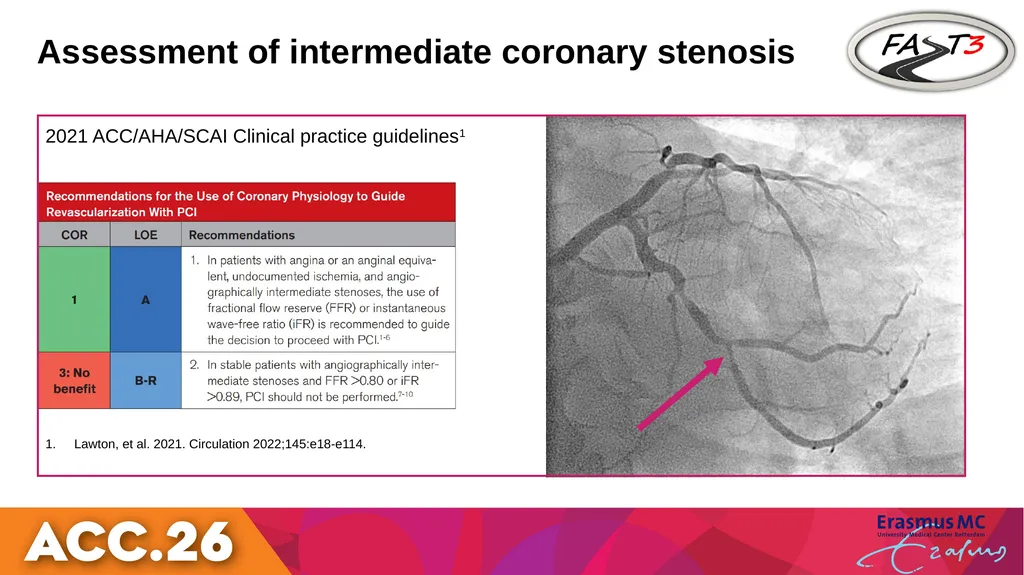
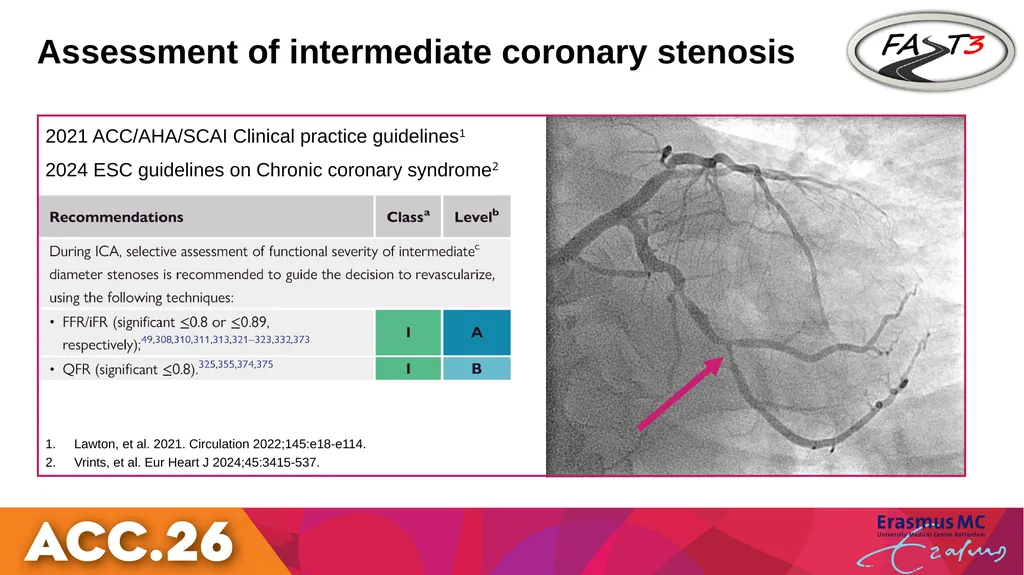
Assessment of intermediate coronary stenosis 2021 ACC/AHA/SCAI Clinical practice guidelines1 Lawton, et al. 2021. Circulation 2022;145:e18-e114.<br>
04
Assessment of intermediate coronary stenosis 2021 ACC/AHA/SCAI Clinical practice guidelines1 2024 ESC guidelines on Chronic coronary syndrome2 Lawton, et al. 2021. Circulation 2022;145:e18-e114.
Vrints, et al. Eur Heart J 2024;45:3415-537.<br>
05
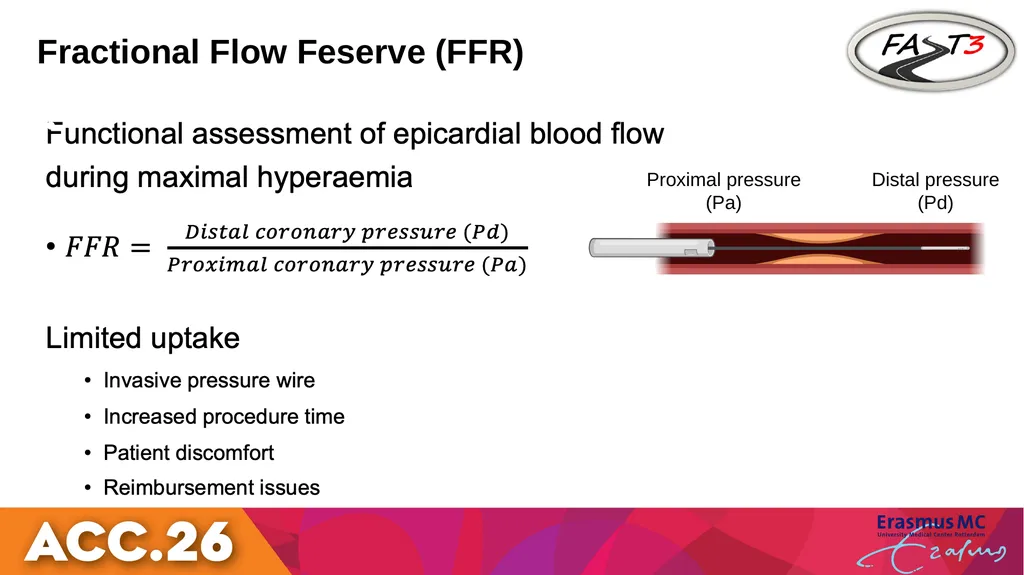
Fractional Flow Feserve (FFR)<br>
06
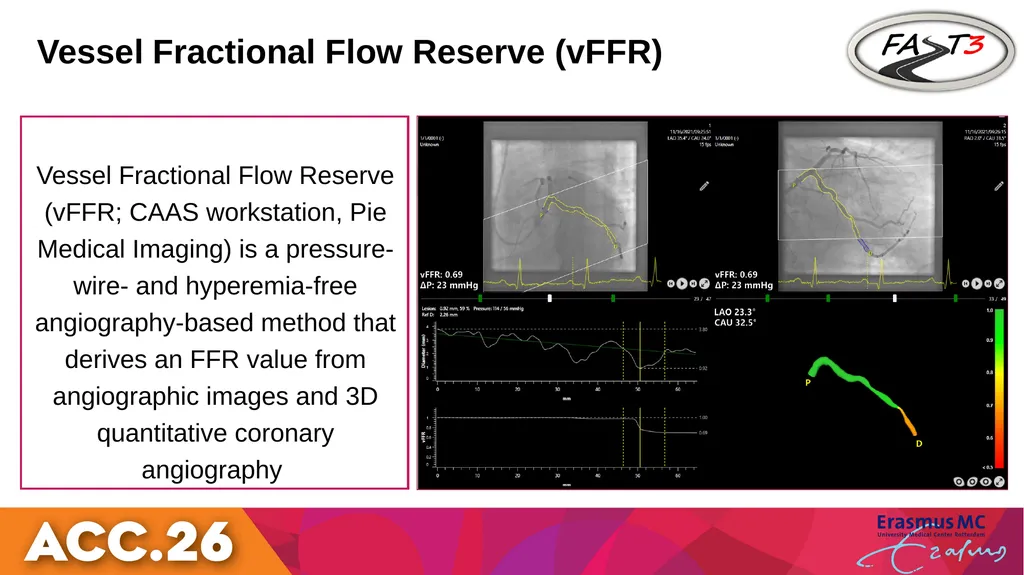
Vessel Fractional Flow Reserve (vFFR) Vessel Fractional Flow Reserve (vFFR; CAAS workstation, Pie Medical Imaging) is a pressure-wire- and hyperemia-free angiography-based method that derives an FFR value from angiographic images and 3D quantitative coronary angiography High diagnostic agreement with FFR Masdjedi K, et al. EuroIntervention 2020;16:591-9. Masdjedi K, et al. EuroIntervention 2022;17:1498-505. Neleman T, et al. JACC Cardiovasc Imaging 2021;14:504-6.<br>
07
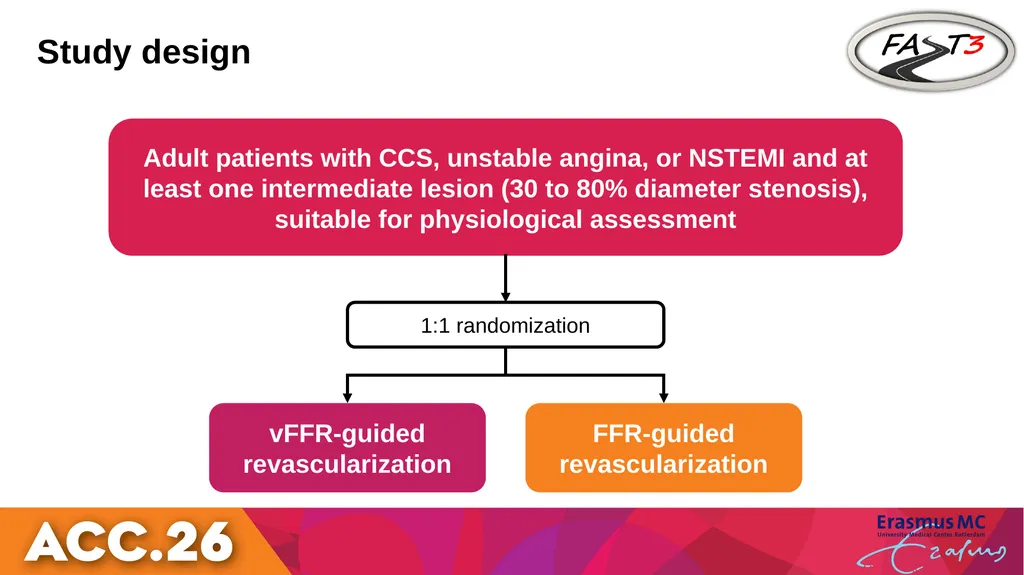
Aim FAST III was designed to assess whether vFFR-guided revascularization is noninferior to FFR-guided revascularization<br>
08
Study design<br>
09
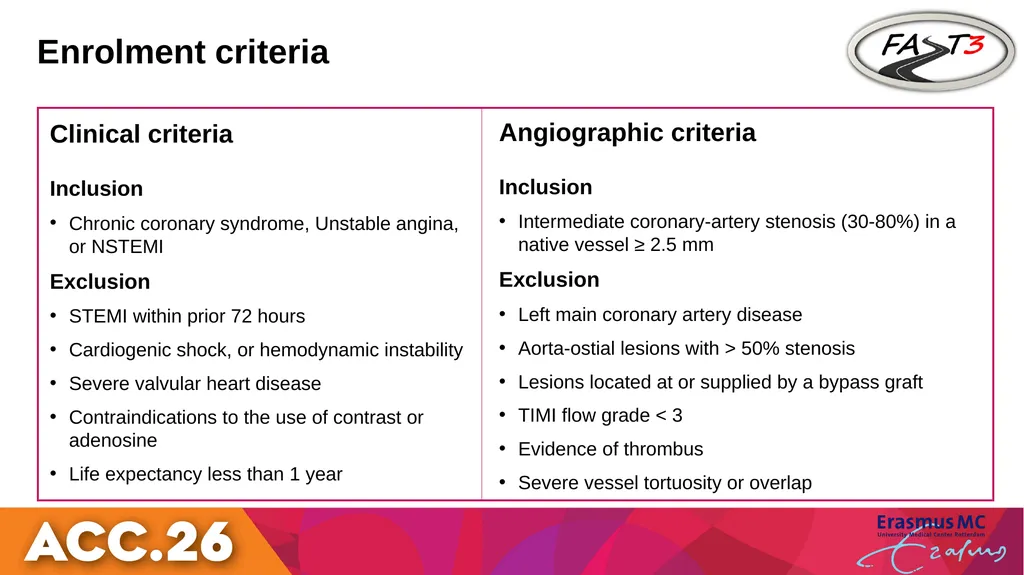
Enrolment criteria Angiographic criteria
Inclusion
Intermediate coronary-artery stenosis (30-80%) in a native vessel ≥ 2.5 mm
Exclusion
Left main coronary artery disease
Aorta-ostial lesions with > 50% stenosis
Lesions located at or supplied by a bypass graft
TIMI flow grade < 3
Evidence of thrombus
Severe vessel tortuosity or overlap Clinical criteria
Inclusion
Chronic coronary syndrome, Unstable angina, or NSTEMI
Exclusion
STEMI within prior 72 hours
Cardiogenic shock, or hemodynamic instability
Severe valvular heart disease
Contraindications to the use of contrast or adenosine
Life expectancy less than 1 year<br>
10
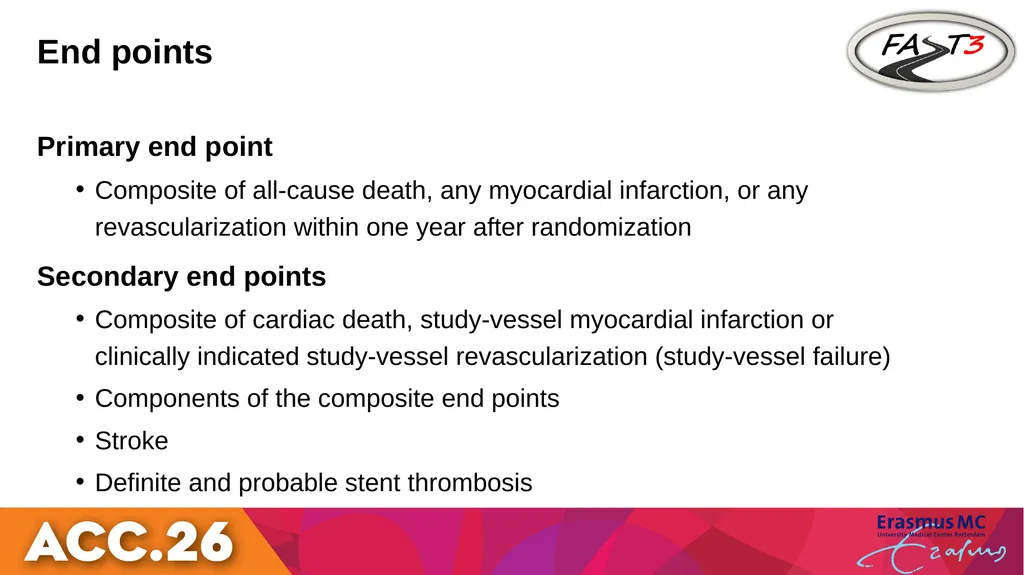
End points Primary end point
Composite of all-cause death, any myocardial infarction, or any revascularization within one year after randomization
Secondary end points
Composite of cardiac death, study-vessel myocardial infarction or clinically indicated study-vessel revascularization (study-vessel failure)
Components of the composite end points
Stroke
Definite and probable stent thrombosis<br>
11
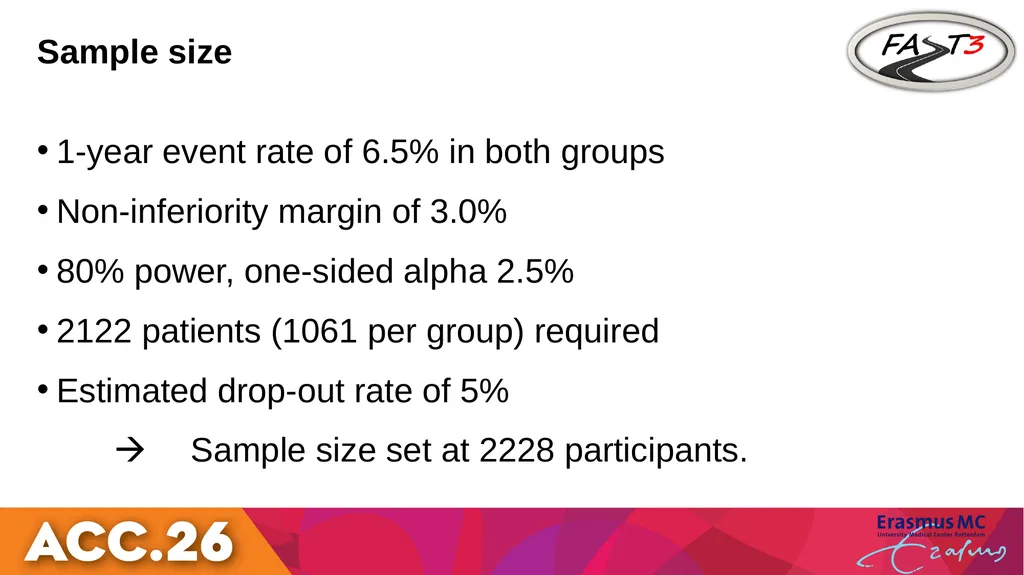
Sample size 1-year event rate of 6.5% in both groups
Non-inferiority margin of 3.0%
80% power, one-sided alpha 2.5%
2122 patients (1061 per group) required
Estimated drop-out rate of 5%
Sample size set at 2228 participants.<br>
12
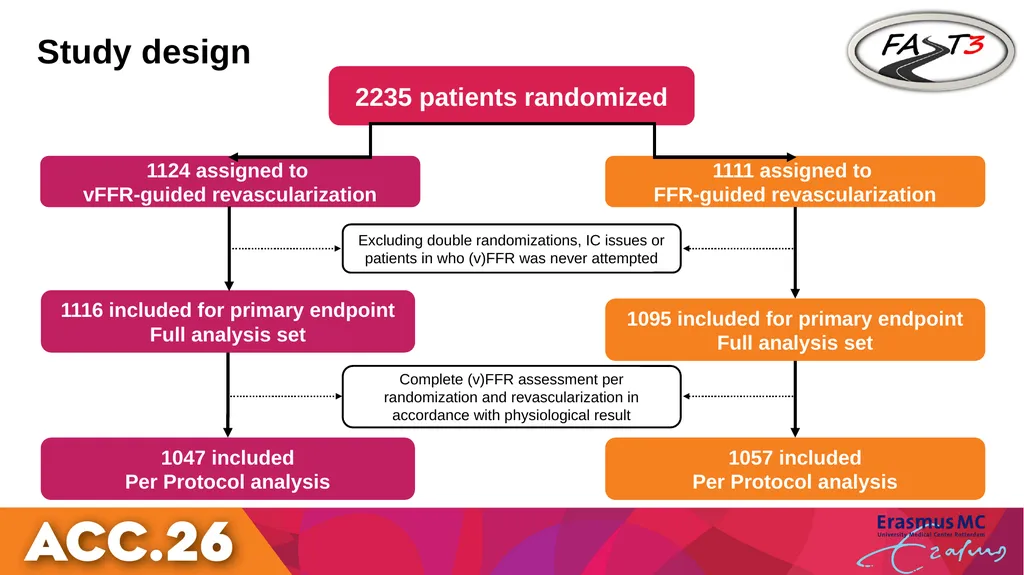
Study design 2235 patients randomized 1124 assigned to vFFR-guided revascularization 1111 assigned to FFR-guided revascularization 1116 included for primary endpoint
Full analysis set 1095 included for primary endpoint
Full analysis set 1047 included
Per Protocol analysis 1057 included
Per Protocol analysis Excluding double randomizations, IC issues or patients in who (v)FFR was never attempted Complete (v)FFR assessment per randomization and revascularization in accordance with physiological result<br>
13
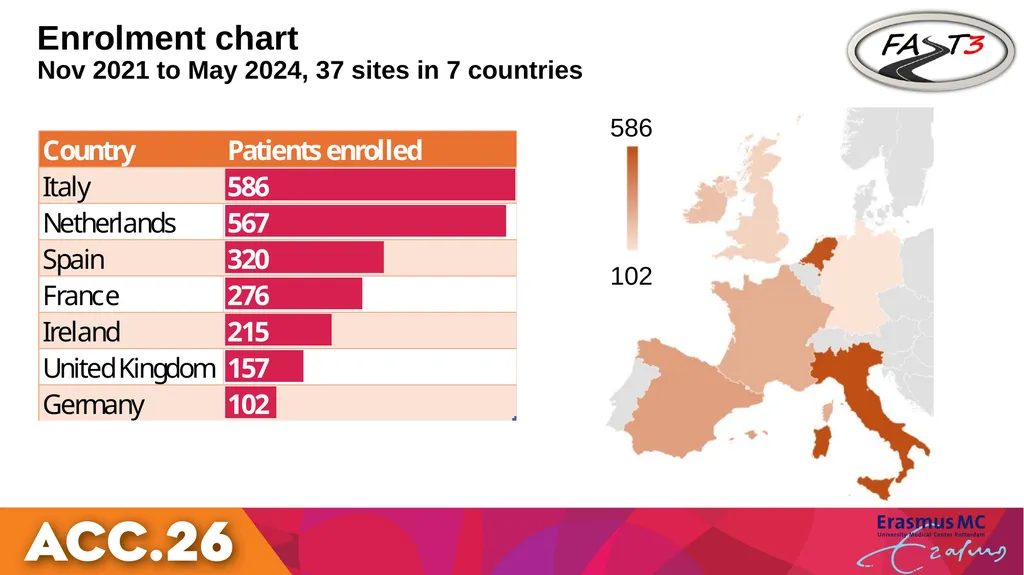
Enrolment chart Nov 2021 to May 2024, 37 sites in 7 countries<br>
14
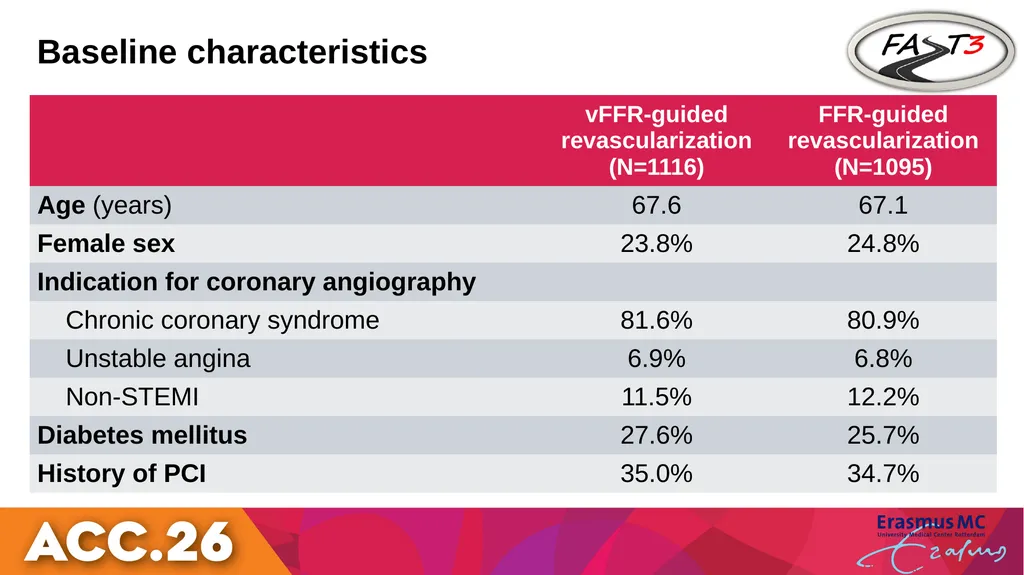
Baseline characteristics<br>
15
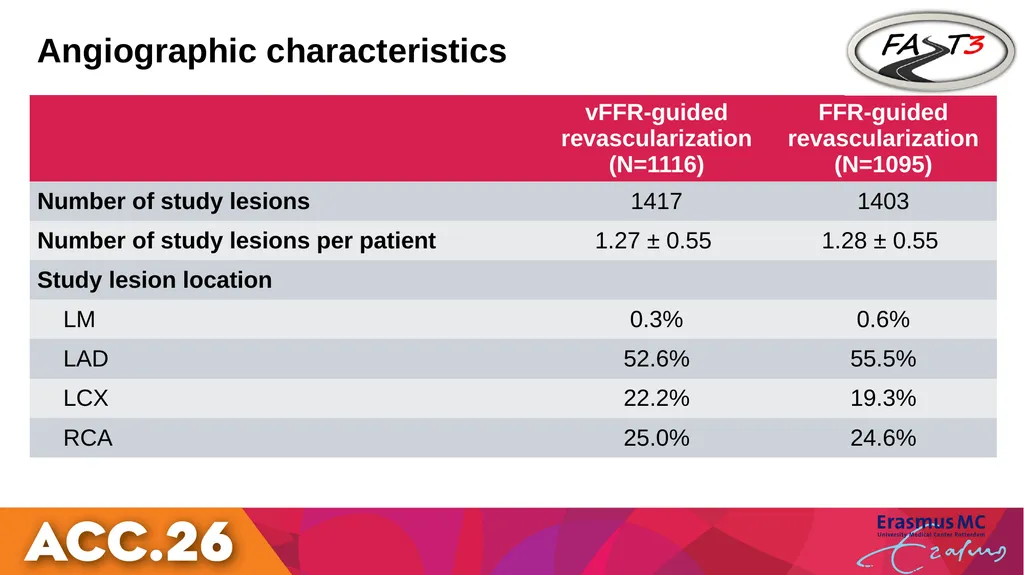
Angiographic characteristics<br>
16
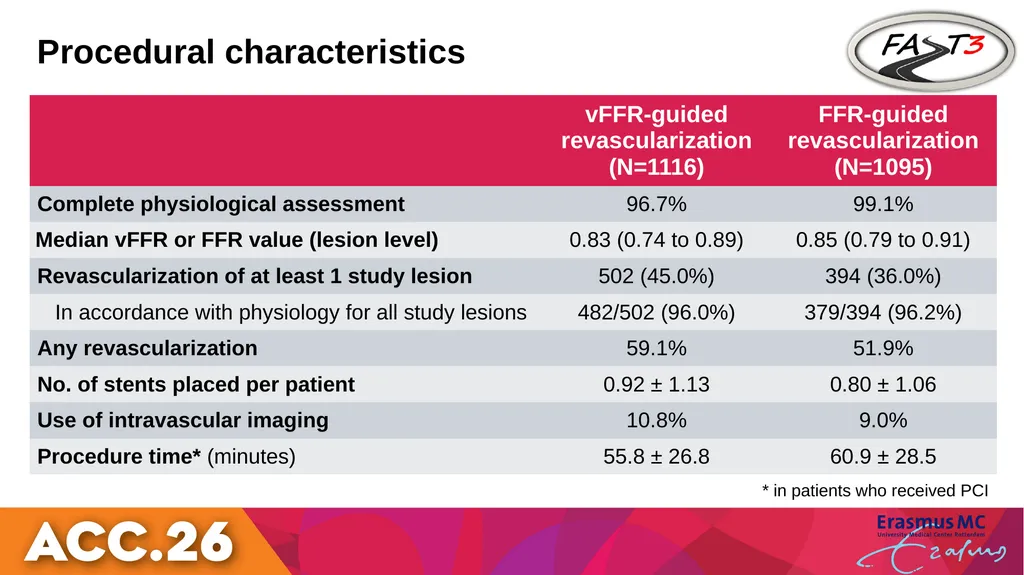
Procedural characteristics * in patients who received PCI<br>
17
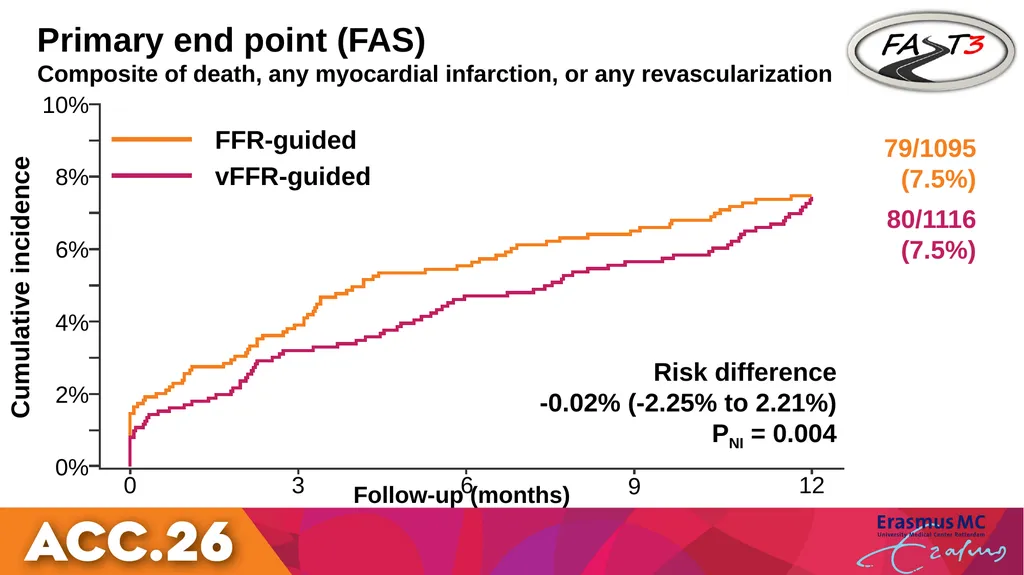
Primary end point (FAS) Composite of death, any myocardial infarction, or any revascularization FFR-guided vFFR-guided Risk difference -0.02% (-2.25% to 2.21%) PNI = 0.004 80/1116 (7.5%) 79/1095
(7.5%) Cumulative incidence Follow-up (months)<br>
18
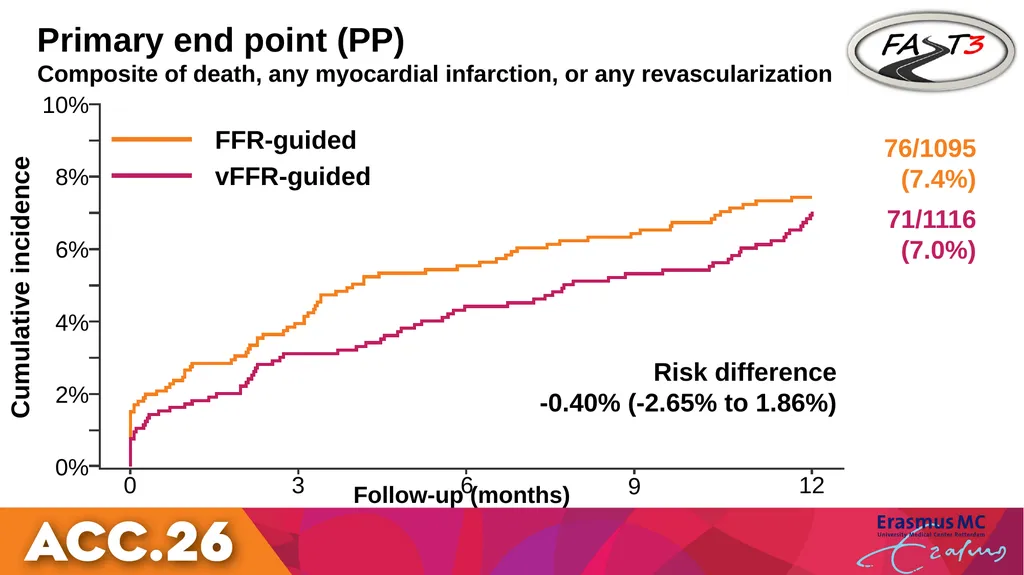
Primary end point (PP) Composite of death, any myocardial infarction, or any revascularization Risk difference -0.40% (-2.65% to 1.86%) 71/1116 (7.0%) 76/1095 (7.4%) FFR-guided vFFR-guided Cumulative incidence Follow-up (months)<br>
19
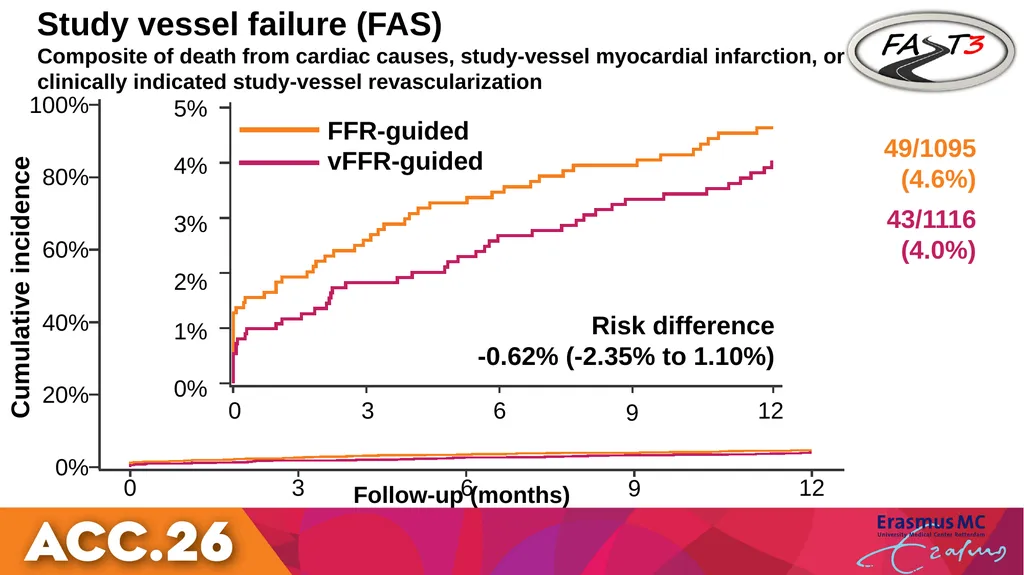
vFFR-guided Study vessel failure (FAS) Composite of death from cardiac causes, study-vessel myocardial infarction, or clinically indicated study-vessel revascularization Follow-up (months) Cumulative incidence 0 3 6 9 12 FFR-guided Risk difference -0.62% (-2.35% to 1.10%) 43/1116 (4.0%) 49/1095 (4.6%) 5% 4% 3% 2% 1% 0%<br>
20
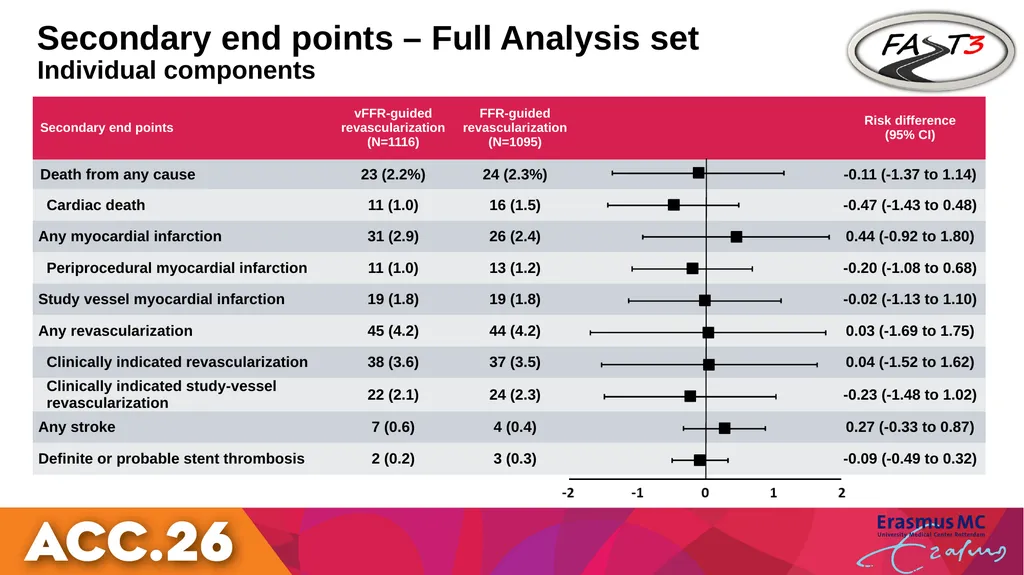
Secondary end points – Full Analysis set Individual components<br>
21
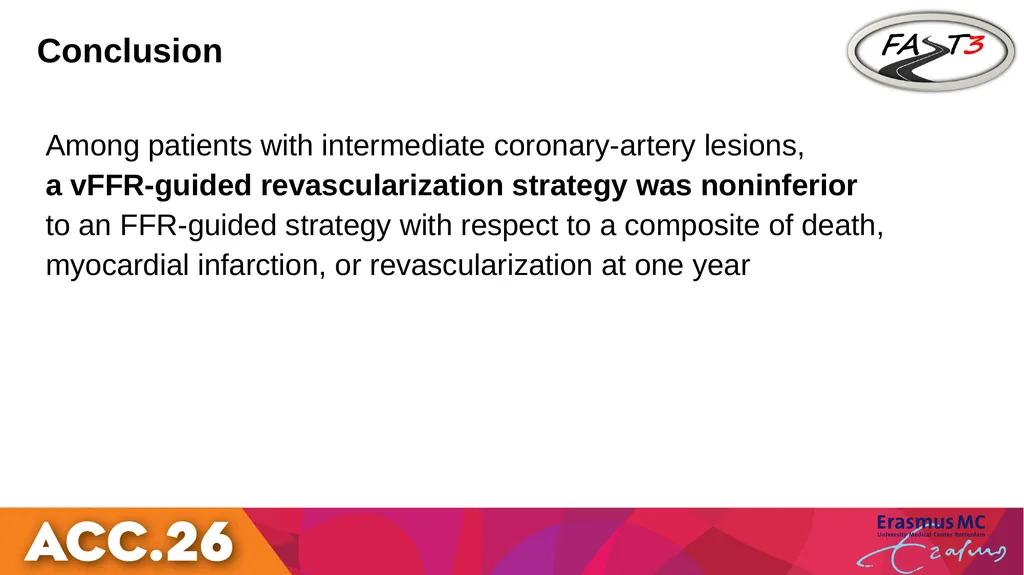
Conclusion Among patients with intermediate coronary-artery lesions, a vFFR-guided revascularization strategy was noninferior to an FFR-guided strategy with respect to a composite of death, myocardial infarction, or revascularization at one year<br>
22
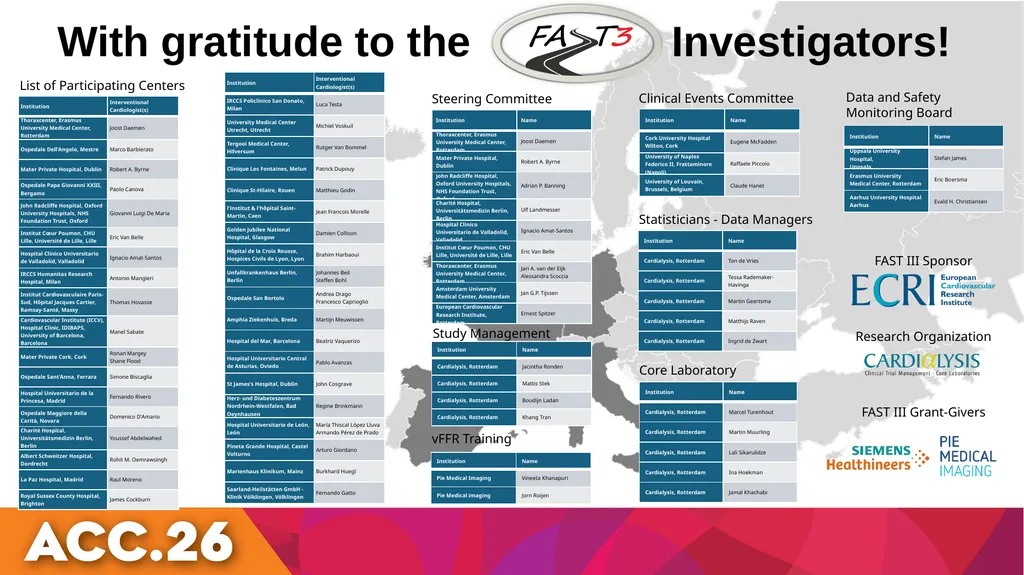
With gratitude to the Investigators! List of Participating Centers Steering Committee Study Management Statisticians - Data Managers Core Laboratory Data and Safety
Monitoring Board FAST III Sponsor FAST III Grant-Givers Research Organization Clinical Events Committee vFFR Training<br>