Frankenstein: A Modern Prometheus By Mary Shelley Author Mary Shelley Lived from August 20, 1797 to February 1, 1851 (53) Somers Town, London Married to Percy Shelley (Ozymandias) Was actually famous as an author while she was alive
"Frankenstein: A Modern Prometheus By Mary Shelley" is the property of its rightful owner. Permission is granted to
download and print the materials on this website for personal, non-commercial use only, and to display it
on your personal computer provided you do not modify the materials and that you retain all copyright
notices contained in the materials. By downloading content from our website, you accept the terms of this
agreement.
Presentation Transcript
01
Frankenstein: A Modern Prometheus By Mary Shelley<br>
02
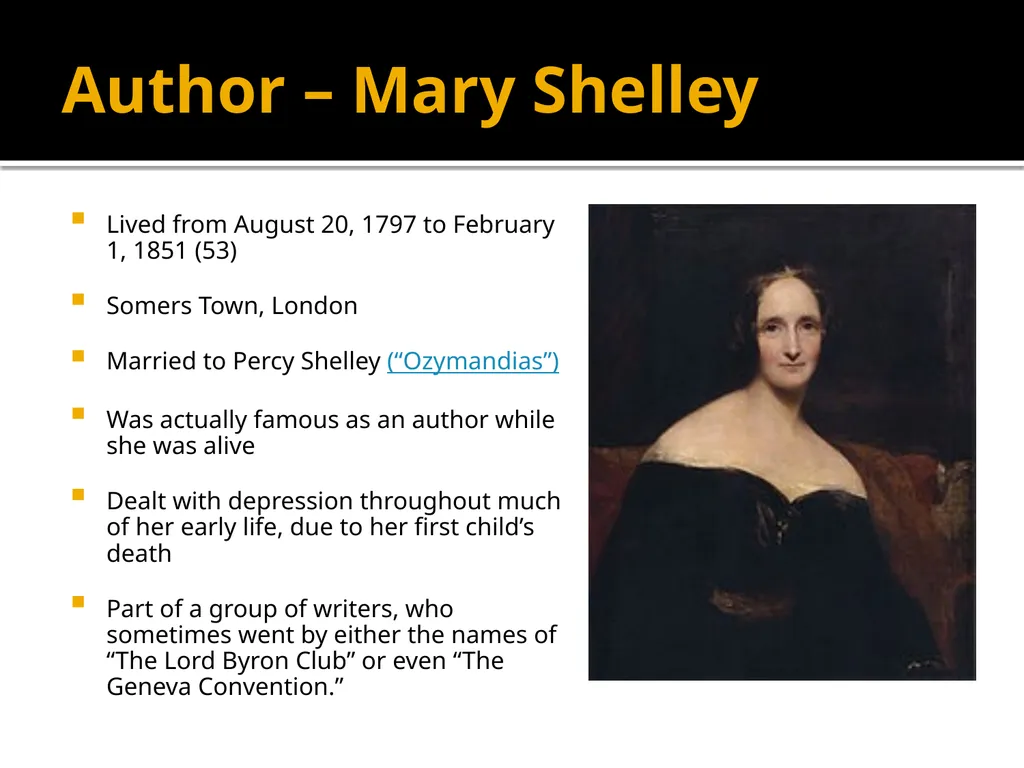
Author – Mary Shelley Lived from August 20, 1797 to February 1, 1851 (53)
Somers Town, London
Married to Percy Shelley (“Ozymandias”)
Was actually famous as an author while she was alive
Dealt with depression throughout much of her early life, due to her first child’s death
Part of a group of writers, who sometimes went by either the names of “The Lord Byron Club” or even “The Geneva Convention.”<br>
03
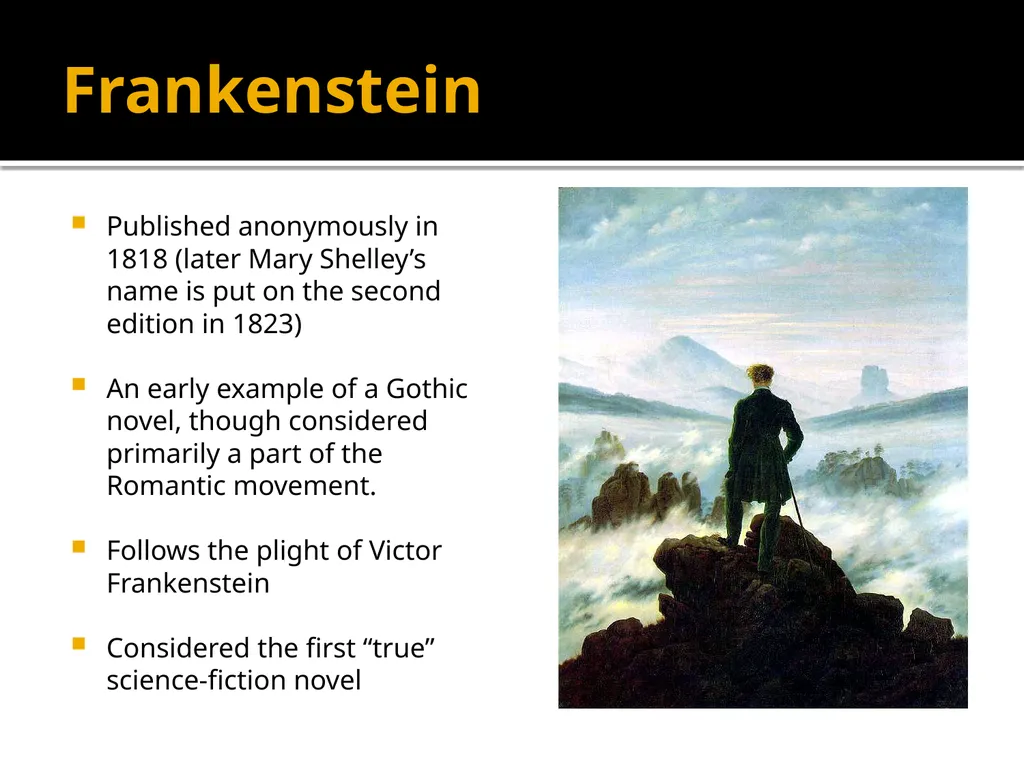
Frankenstein Published anonymously in 1818 (later Mary Shelley’s name is put on the second edition in 1823)
An early example of a Gothic novel, though considered primarily a part of the Romantic movement.
Follows the plight of Victor Frankenstein
Considered the first “true” science-fiction novel<br>
04
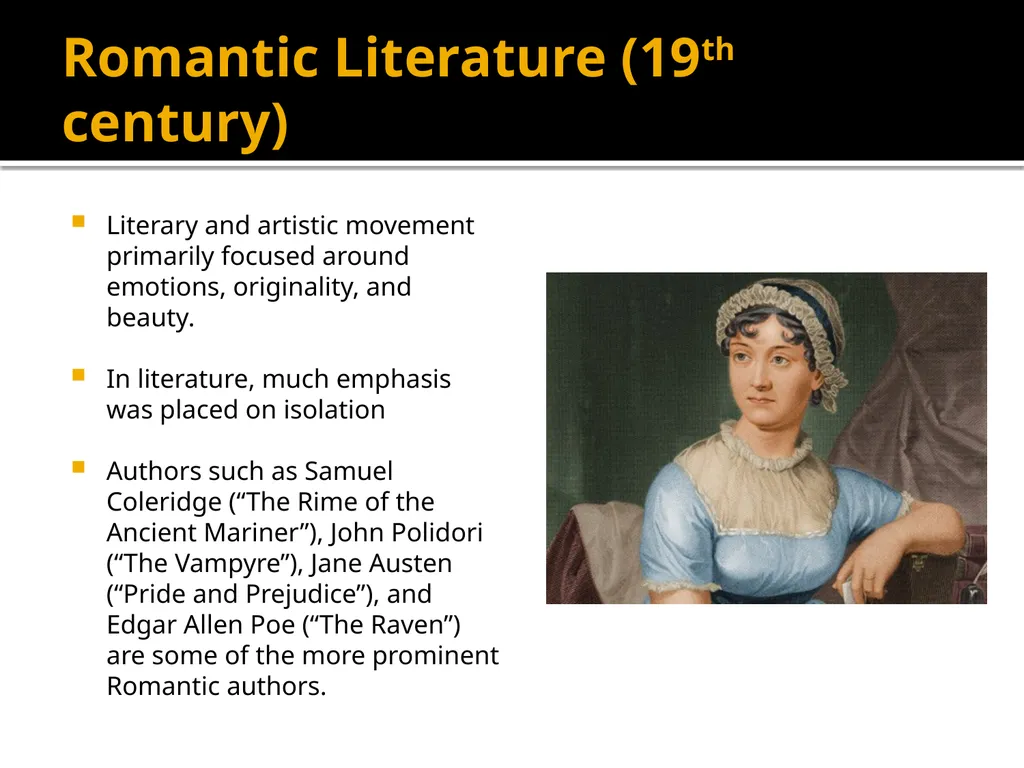
Romantic Literature (19th century) Literary and artistic movement primarily focused around emotions, originality, and beauty.
In literature, much emphasis was placed on isolation
Authors such as Samuel Coleridge (“The Rime of the Ancient Mariner”), John Polidori (“The Vampyre”), Jane Austen (“Pride and Prejudice”), and Edgar Allen Poe (“The Raven”) are some of the more prominent Romantic authors.<br>
05
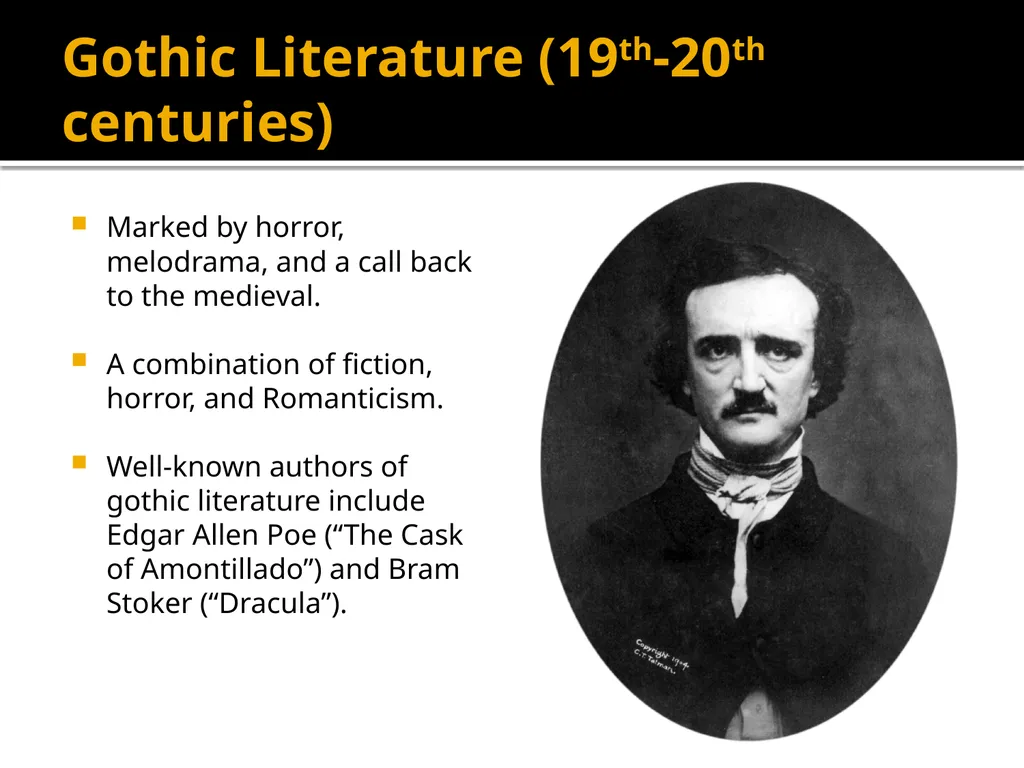
Gothic Literature (19th-20th centuries) Marked by horror, melodrama, and a call back to the medieval.
A combination of fiction, horror, and Romanticism.
Well-known authors of gothic literature include Edgar Allen Poe (“The Cask of Amontillado”) and Bram Stoker (“Dracula”).<br>
06
Style Epistolary novel
Written as a series of letters from Captain Robert Walton to his sister, Margaret Seville
Often used to add greater realism, as it mimics the workings of reality
Offers multiple points of view without an omniscient narrator<br>
07
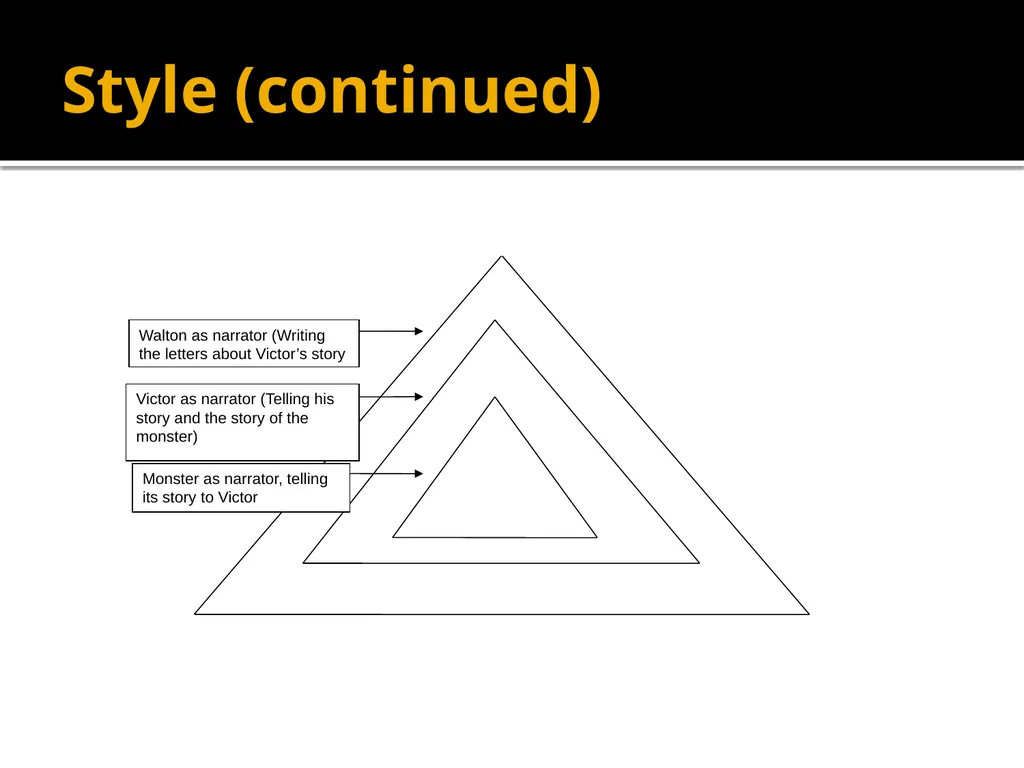
Style (continued) Walton as narrator (Writing the letters about Victor’s story Victor as narrator (Telling his story and the story of the monster) Monster as narrator, telling its story to Victor<br>
08
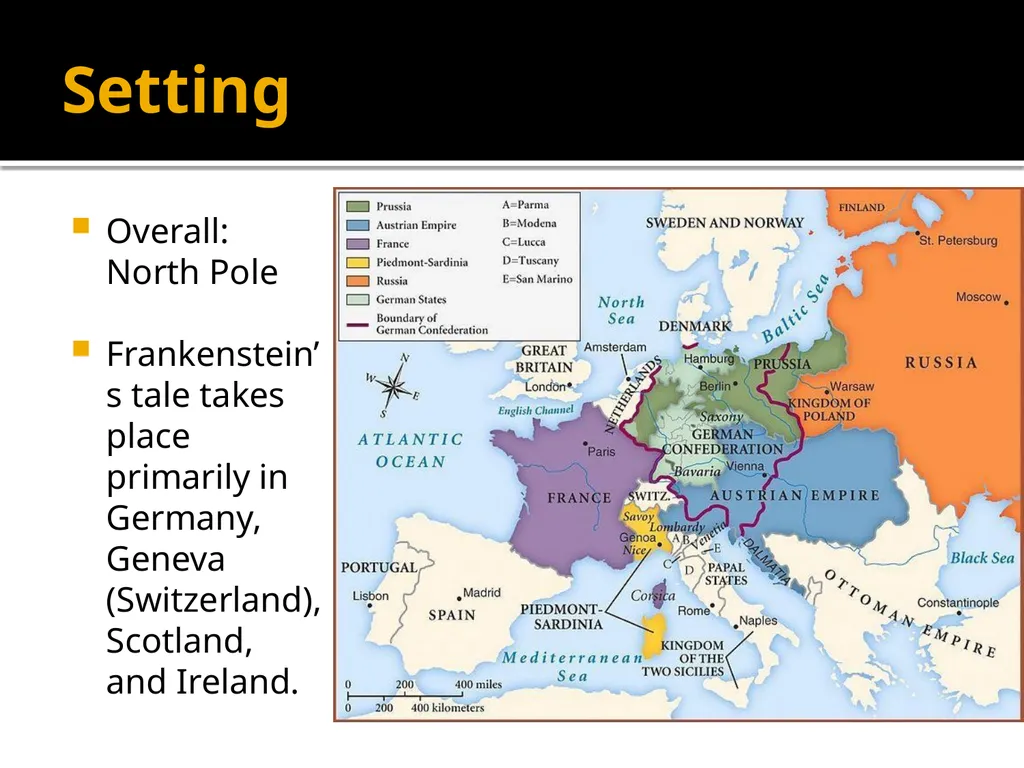
Setting Overall: North Pole
Frankenstein’s tale takes place primarily in Germany, Geneva (Switzerland), Scotland, and Ireland.<br>
09
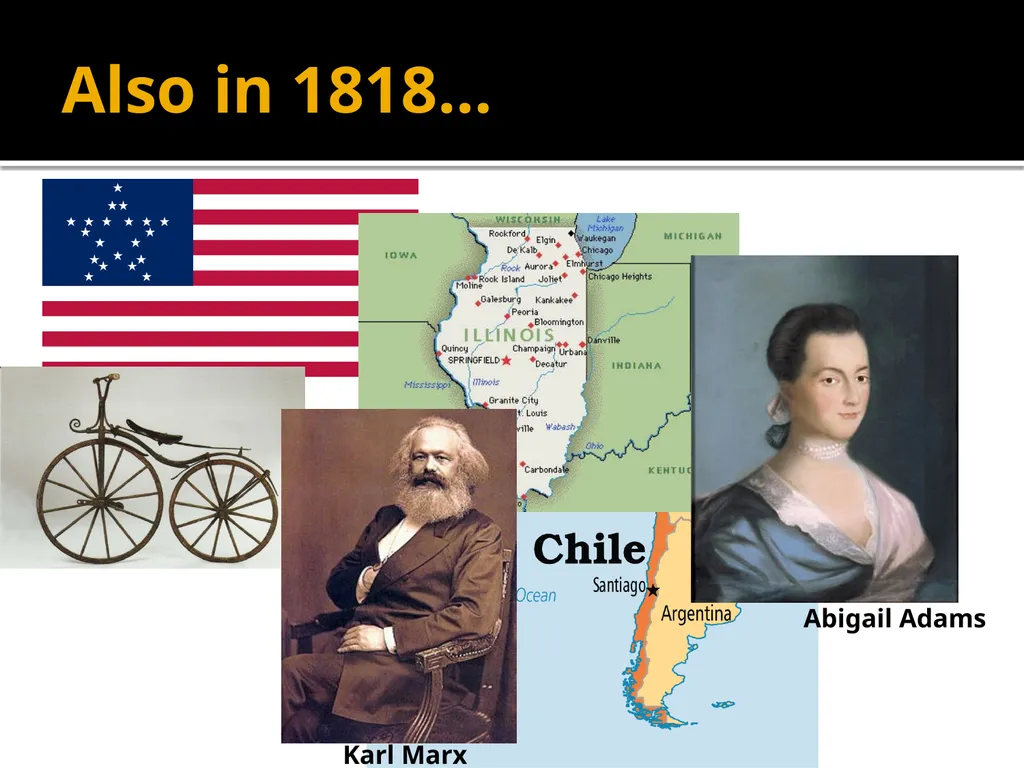
Also in 1818… Karl Marx Abigail Adams<br>
10
End<br>
11
The Epigraph “Did I request thee, Maker, from my clay
To mould me Man? Did I solicit thee
From darkness to promote me?”
John Milton, Paradise Lost (X.743-5)<br>
12
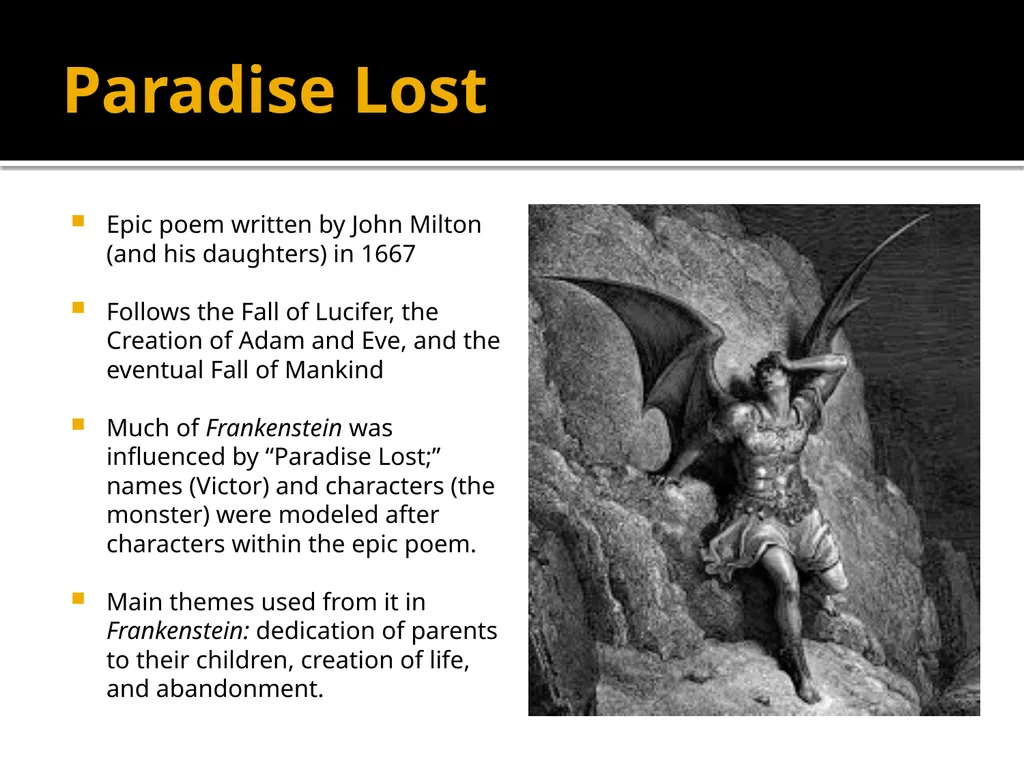
Paradise Lost Epic poem written by John Milton (and his daughters) in 1667
Follows the Fall of Lucifer, the Creation of Adam and Eve, and the eventual Fall of Mankind
Much of Frankenstein was influenced by “Paradise Lost;” names (Victor) and characters (the monster) were modeled after characters within the epic poem.
Main themes used from it in Frankenstein: dedication of parents to their children, creation of life, and abandonment.<br>