
FY20 Solution Taxonomy Microsoft Confidential

Description: FY20 Solution Taxonomy Microsoft Confidential File: aka.msFY20Taxonomy Table of Content Taxonomy Design Principles Business Goals One company, one language. Define a common language across OCP, MO, BG, Services, ATU, STU CSU leveraged
Related Topics
Download Presentation
"FY20 Solution Taxonomy Microsoft Confidential" is the property of its rightful owner. Permission is granted to download and print the materials on this website for personal, non-commercial use only, and to display it on your personal computer provided you do not modify the materials and that you retain all copyright notices contained in the materials. By downloading content from our website, you accept the terms of this agreement.
Presentation Transcript
slide1. FY20 Solution Taxonomy Microsoft Confidential
File: aka.ms/FY20Taxonomy<br>
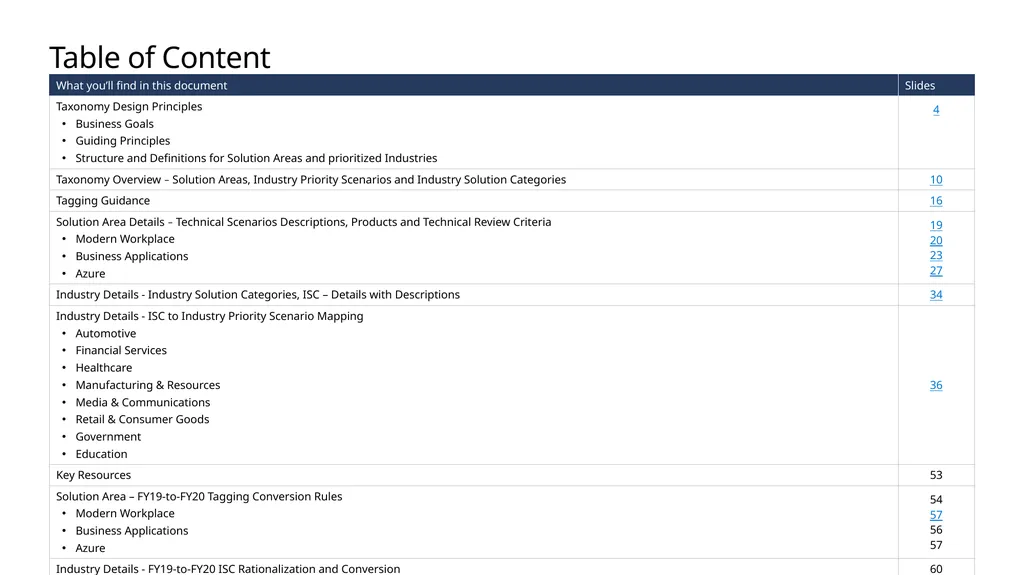
slide2. Table of Content<br>
slide3. Taxonomy Design Principles<br>
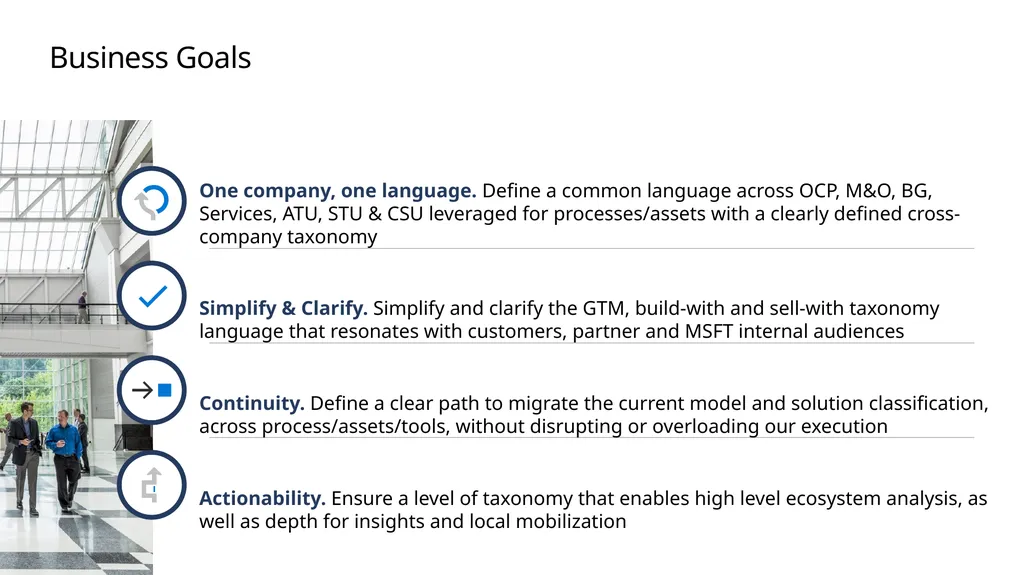
slide4. Business Goals One company, one language. Define a common language across OCP, M&O, BG, Services, ATU, STU & CSU leveraged for processes/assets with a clearly defined cross-company taxonomy
Simplify & Clarify. Simplify and clarify the GTM, build-with and sell-with taxonomy language that resonates with customers, partner and MSFT internal audiences
Continuity. Define a clear path to migrate the current model and solution classification, across process/assets/tools, without disrupting or overloading our execution
Actionability. Ensure a level of taxonomy that enables high level ecosystem analysis, as well as depth for insights and local mobilization<br>
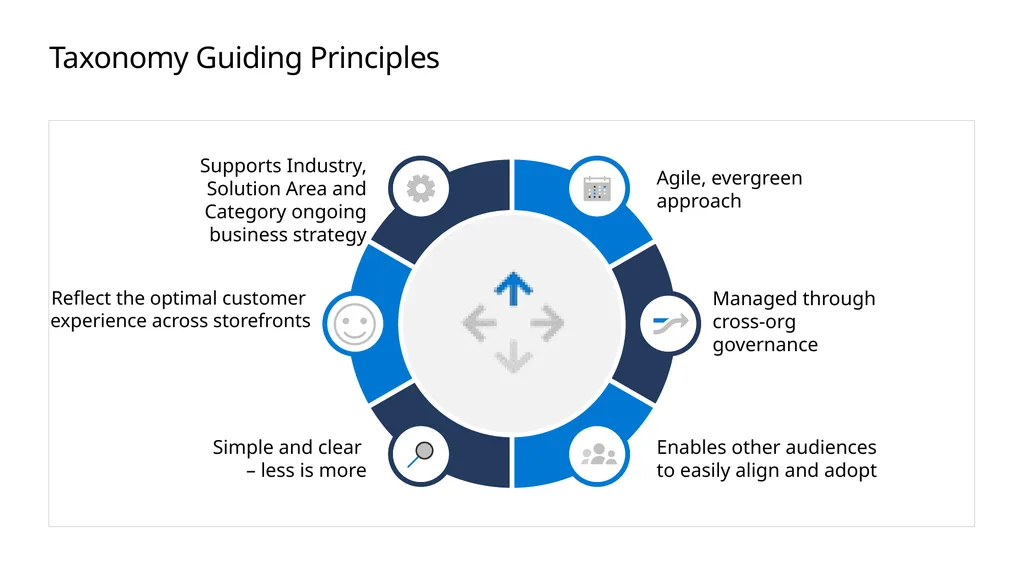
slide5. Taxonomy Guiding Principles Supports Industry, Solution Area and Category ongoing business strategy Agile, evergreen approach Reflect the optimal customer experience across storefronts Managed through cross-org governance Simple and clear – less is more Enables other audiences to easily align and adopt<br>
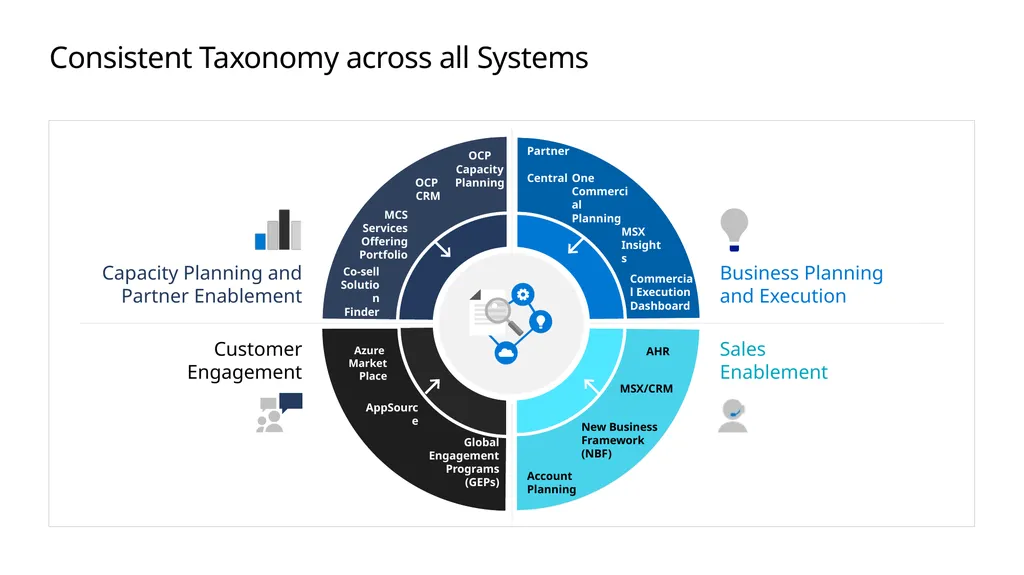
slide6. Consistent Taxonomy across all Systems Capacity Planning and Partner Enablement Customer Engagement Business Planning and Execution Sales Enablement<br>
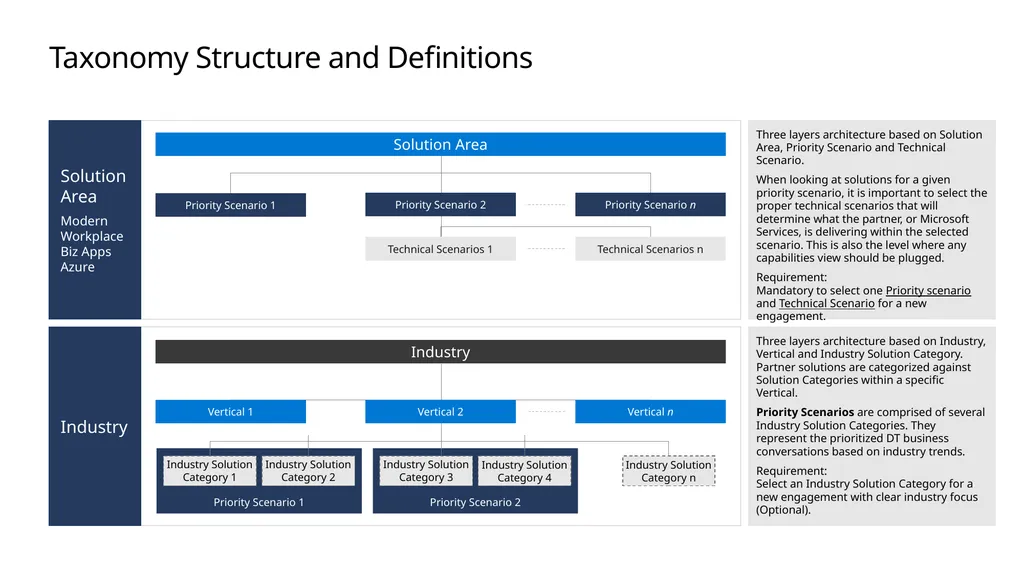
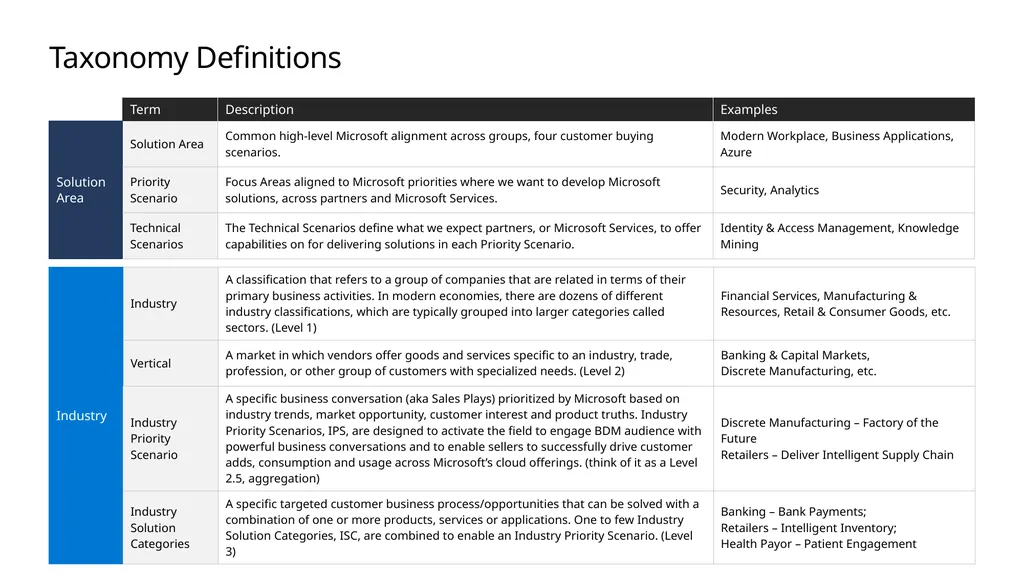
slide7. Three layers architecture based on Solution Area, Priority Scenario and Technical Scenario.
When looking at solutions for a given priority scenario, it is important to select the proper technical scenarios that will determine what the partner, or Microsoft Services, is delivering within the selected scenario. This is also the level where any capabilities view should be plugged.
Requirement:
Mandatory to select one Priority scenario and Technical Scenario for a new engagement. Three layers architecture based on Industry, Vertical and Industry Solution Category. Partner solutions are categorized against Solution Categories within a specific Vertical.
Priority Scenarios are comprised of several Industry Solution Categories. They represent the prioritized DT business conversations based on industry trends.
Requirement:
Select an Industry Solution Category for a new engagement with clear industry focus (Optional). Solution Area
Modern Workplace
Biz Apps
Azure Industry Taxonomy Structure and Definitions Priority Scenario n Solution Area Priority Scenario 1 Industry Vertical n Vertical 1 Vertical 2 Priority Scenario 1 Industry Solution Category n Technical Scenarios n Priority Scenario 2 Priority Scenario 2 Industry Solution Category 1 Industry Solution Category 2 Industry Solution Category 3 Industry Solution Category 4 Technical Scenarios 1<br>
slide8. Taxonomy Definitions<br>
slide9. SA and Industry Summary<br>
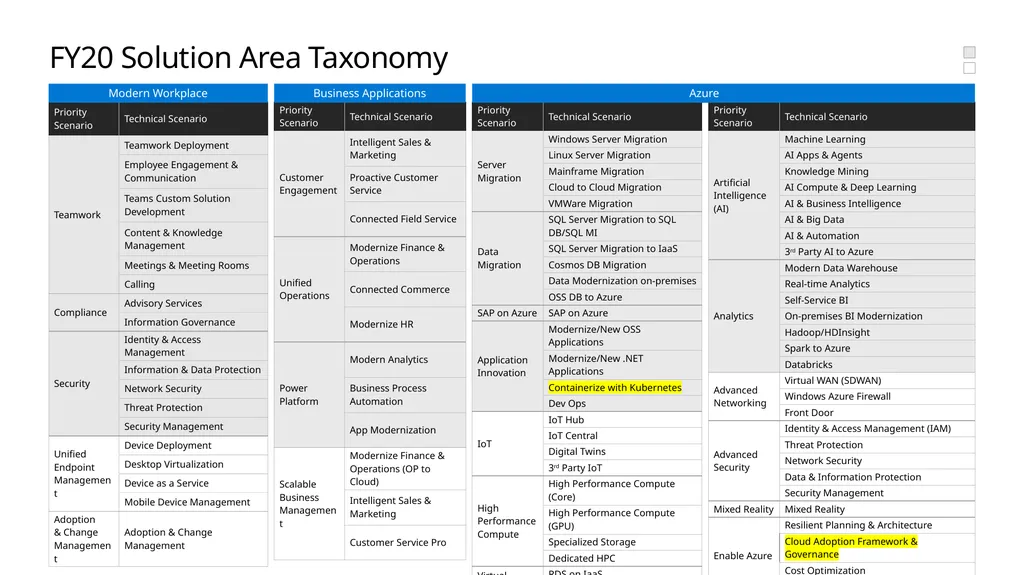
slide10. FY20 Solution Area Taxonomy Priority Growth Modern Workplace Business Applications Azure<br>
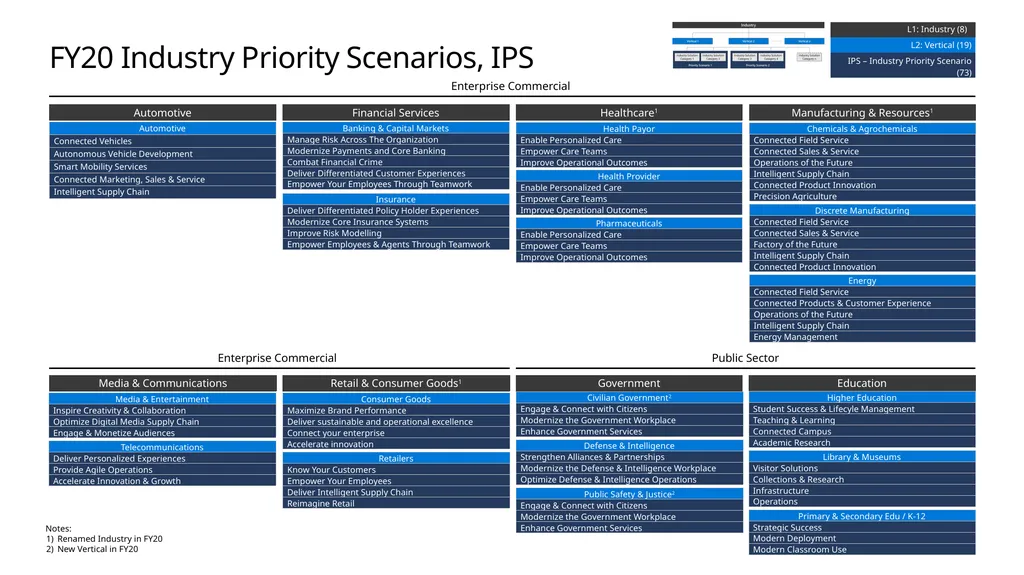
slide11. FY20 Industry Priority Scenarios, IPS Enterprise Commercial Enterprise Commercial Public Sector Notes:
Renamed Industry in FY20
New Vertical in FY20 L1: Industry (8)<br>
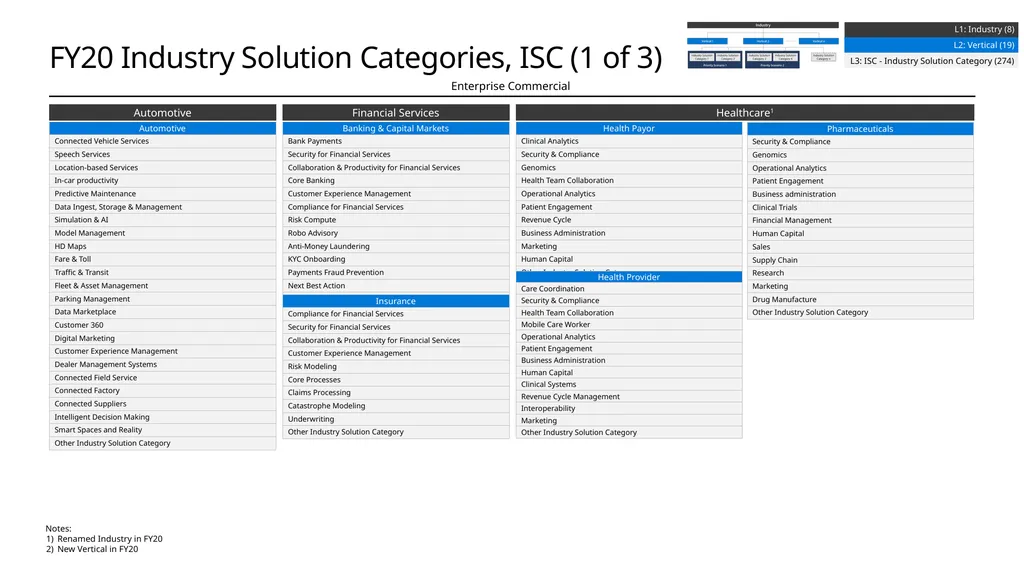
slide12. FY20 Industry Solution Categories, ISC (1 of 3) Enterprise Commercial Notes:
Renamed Industry in FY20
New Vertical in FY20 L1: Industry (8)<br>
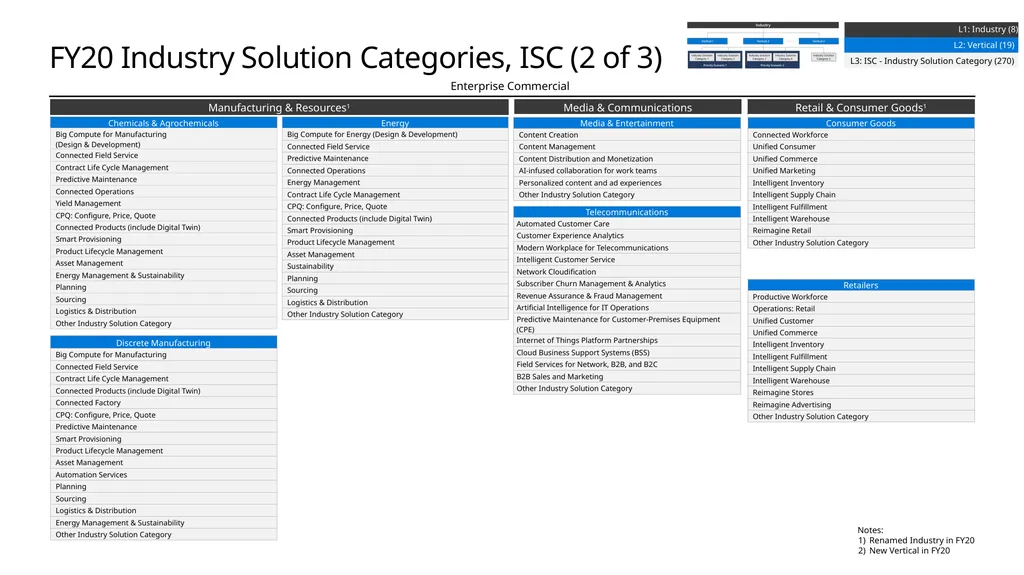
slide13. FY20 Industry Solution Categories, ISC (2 of 3) Notes:
Renamed Industry in FY20
New Vertical in FY20 Enterprise Commercial L1: Industry (8)<br>
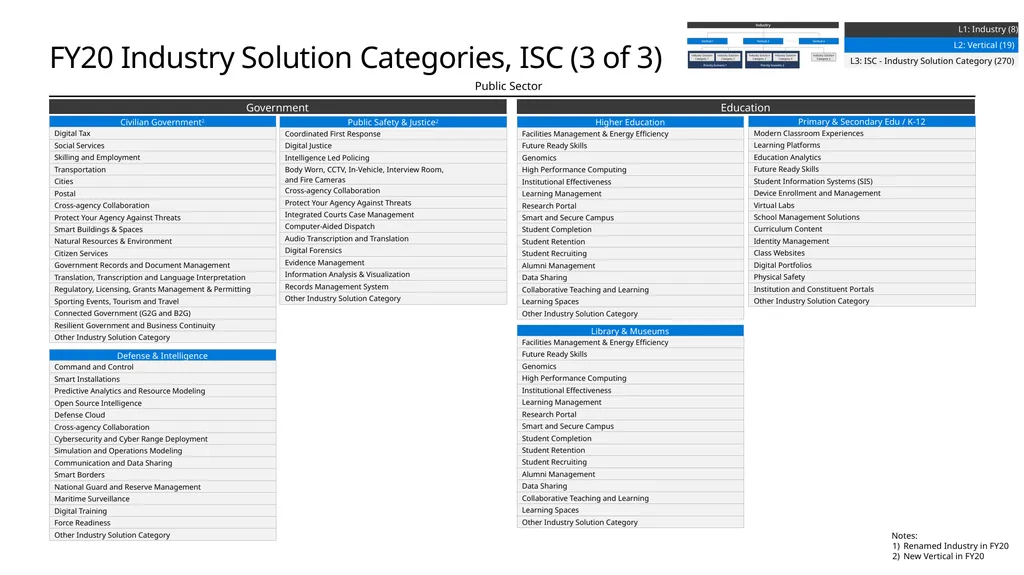
slide14. FY20 Industry Solution Categories, ISC (3 of 3) Notes:
Renamed Industry in FY20
New Vertical in FY20 Public Sector L1: Industry (8)<br>
slide15. Solution Tagging Guidance<br>
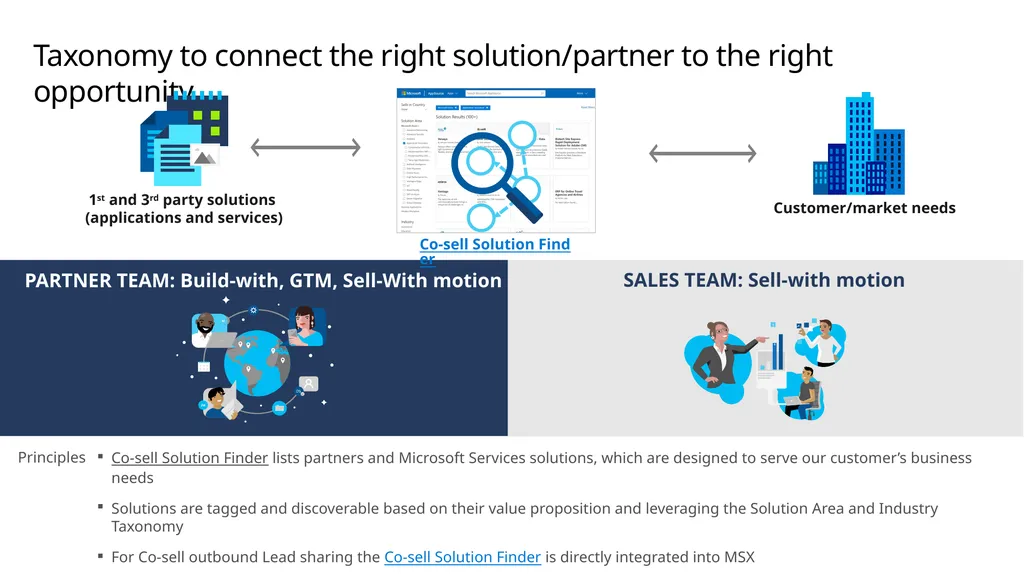
slide16. Taxonomy to connect the right solution/partner to the right opportunity Co-sell Solution Finder lists partners and Microsoft Services solutions, which are designed to serve our customer’s business needs
Solutions are tagged and discoverable based on their value proposition and leveraging the Solution Area and Industry Taxonomy
For Co-sell outbound Lead sharing the Co-sell Solution Finder is directly integrated into MSX
Solution Area and Industry taxonomy are aligned with the MSX Sales Programs. Co-sell Solution Finder Principles<br>
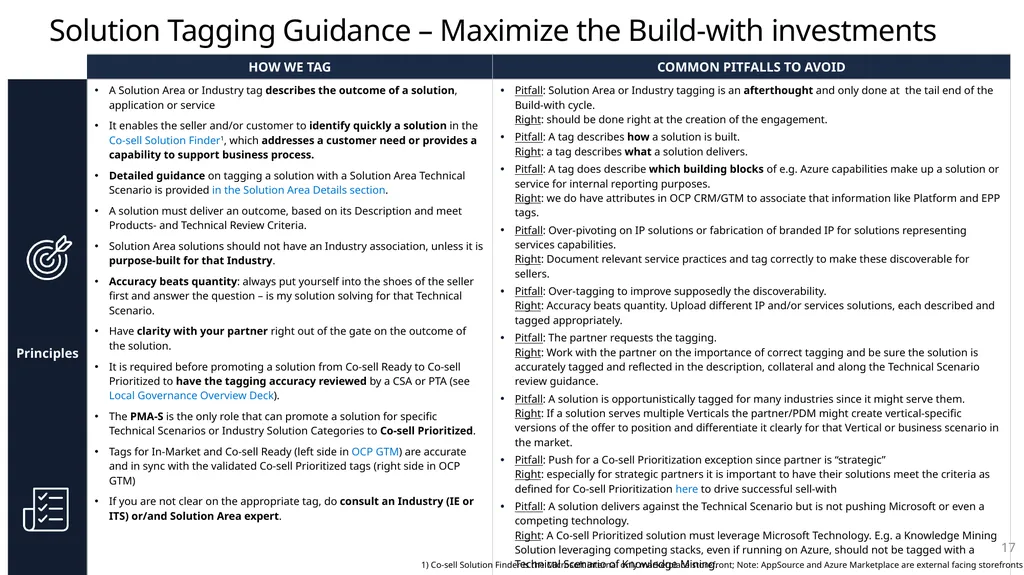
slide17. Solution Tagging Guidance – Maximize the Build-with investments 17 1) Co-sell Solution Finder is the Microsoft internal only marketplace storefront; Note: AppSource and Azure Marketplace are external facing storefronts<br>
slide18. Solution Areas – Details Descriptions & Technical Review Criteria<br>
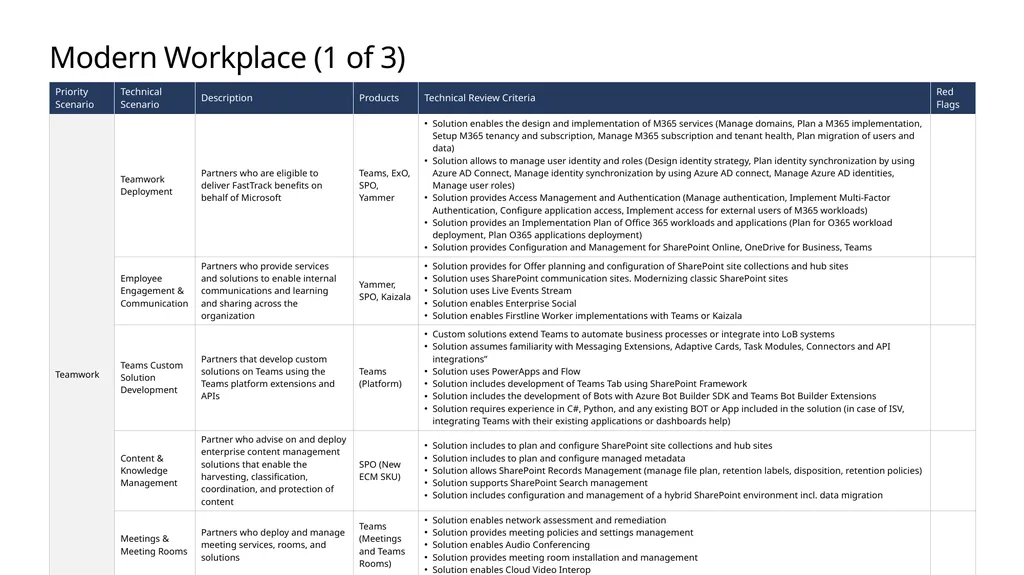
slide19. Modern Workplace (1 of 3)<br>
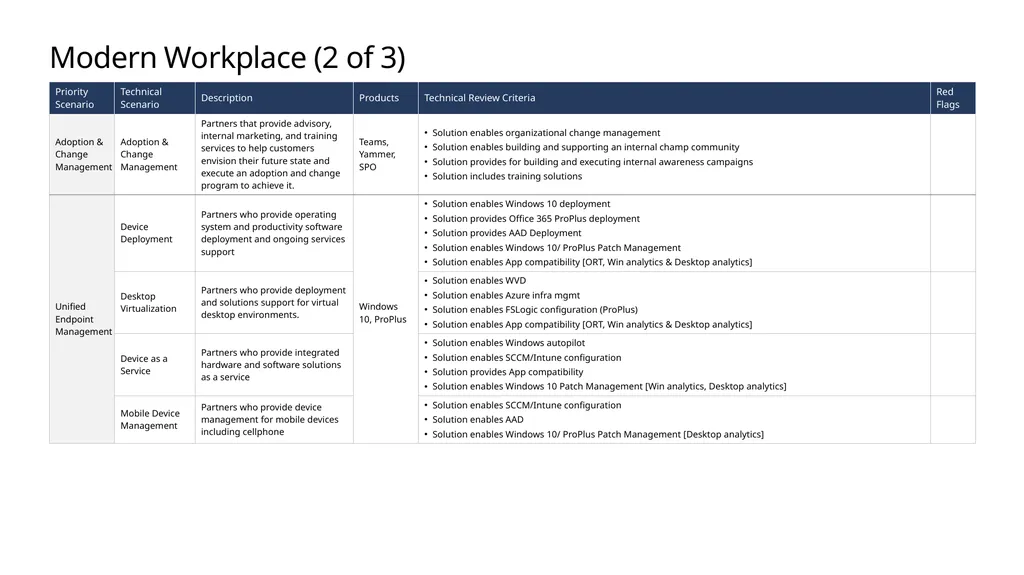
slide20. Modern Workplace (2 of 3)<br>
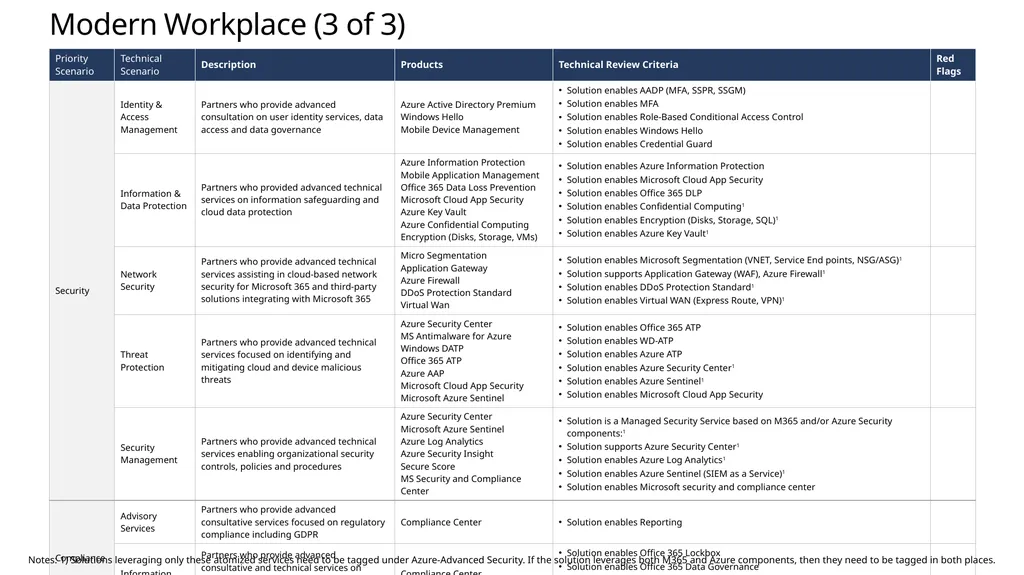
slide21. Modern Workplace (3 of 3) Notes: 1) Solutions leveraging only these atomized services need to be tagged under Azure-Advanced Security. If the solution leverages both M365 and Azure components, then they need to be tagged in both places.<br>
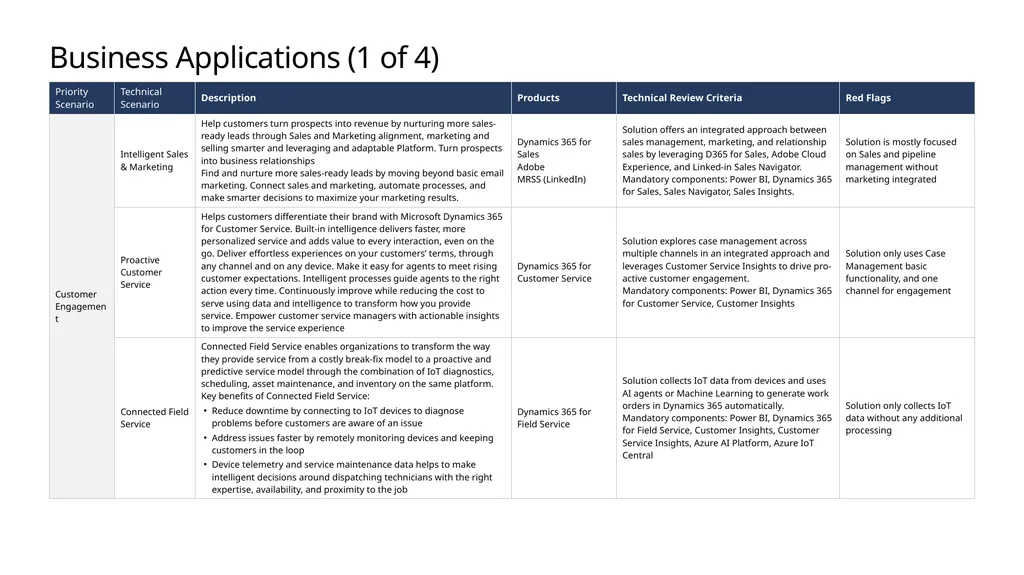
slide22. Business Applications (1 of 4)<br>
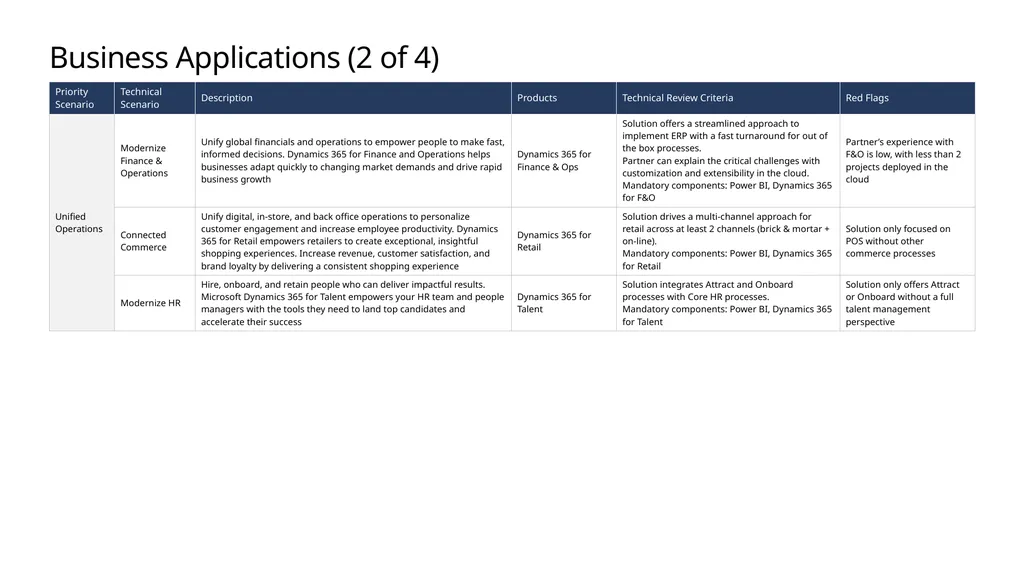
slide23. Business Applications (2 of 4)<br>
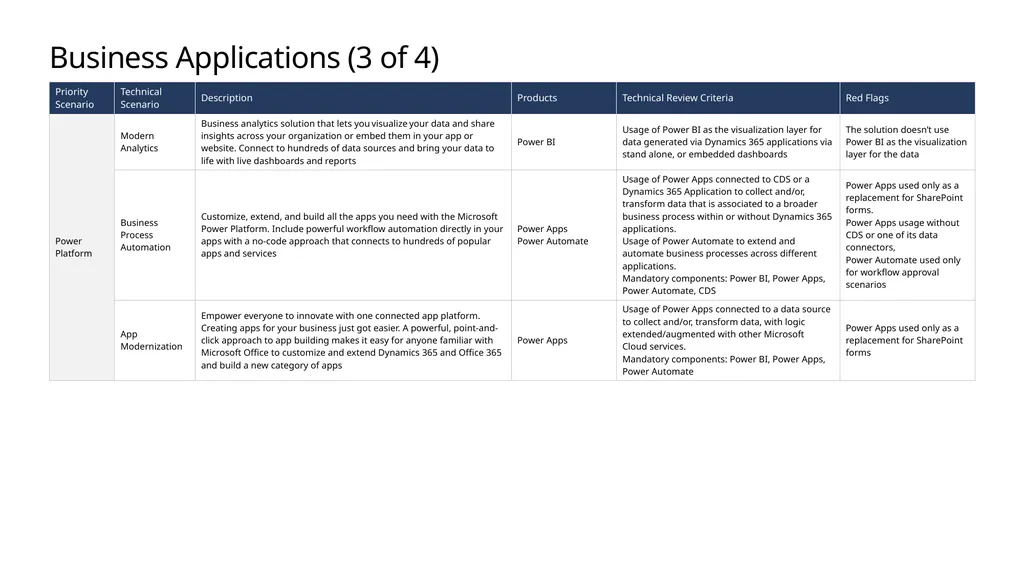
slide24. Business Applications (3 of 4)<br>
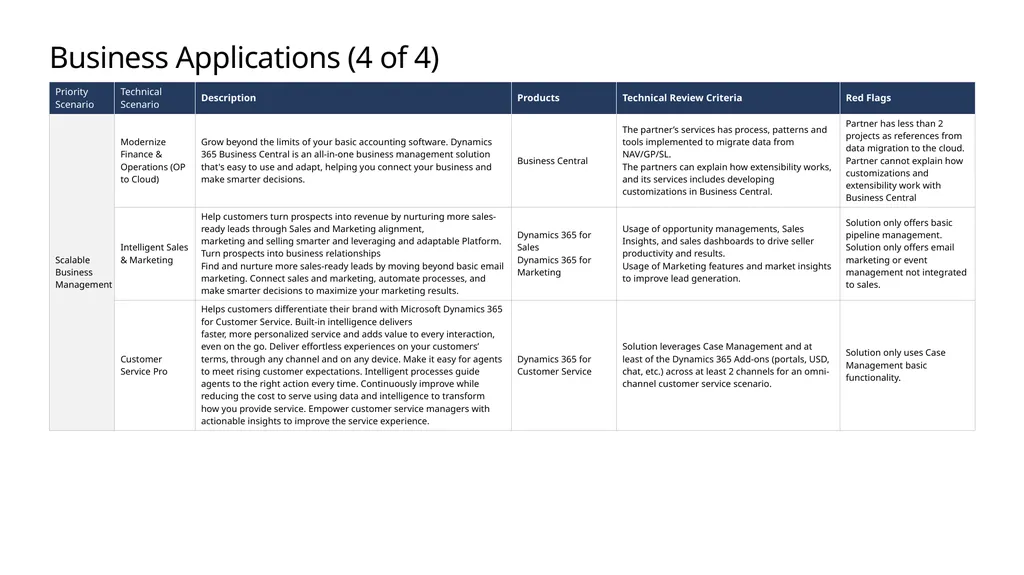
slide25. Business Applications (4 of 4)<br>
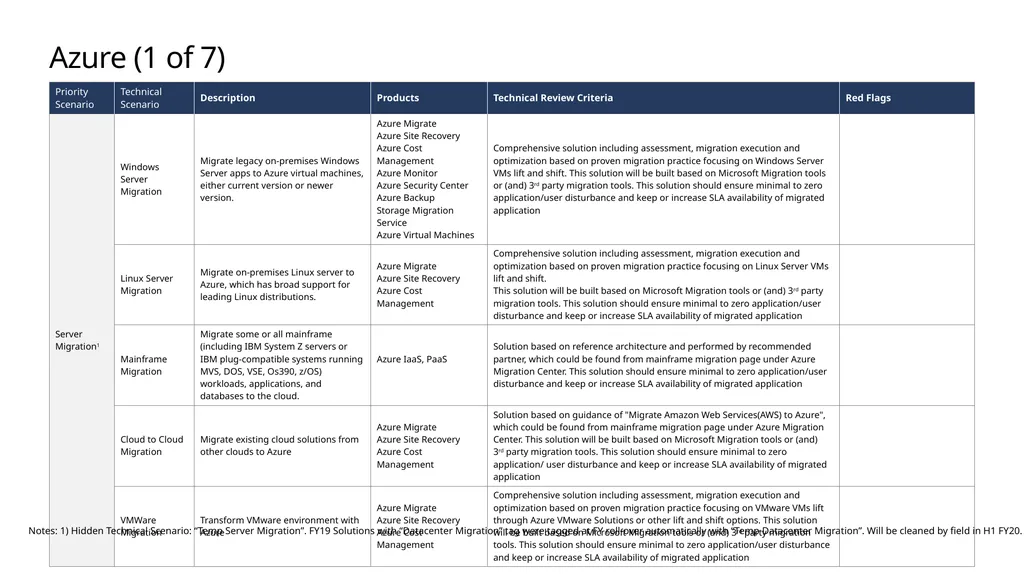
slide26. Azure (1 of 7) Notes: 1) Hidden Technical Scenario: “Temp Server Migration”. FY19 Solutions with “Datacenter Migration” tag were tagged at FY roll-over automatically with “Temp Datacenter Migration”. Will be cleaned by field in H1 FY20.<br>
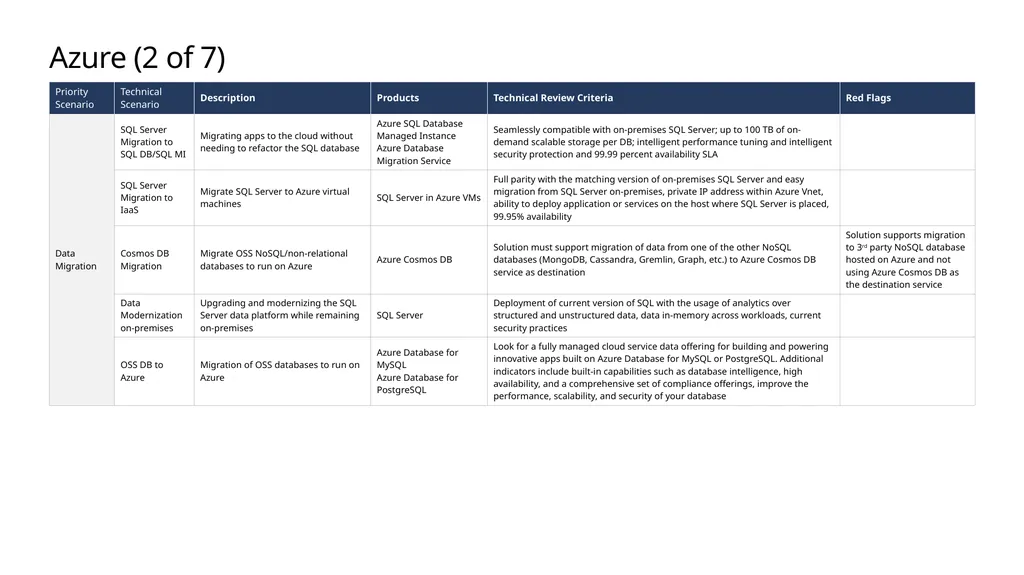
slide27. Azure (2 of 7)<br>
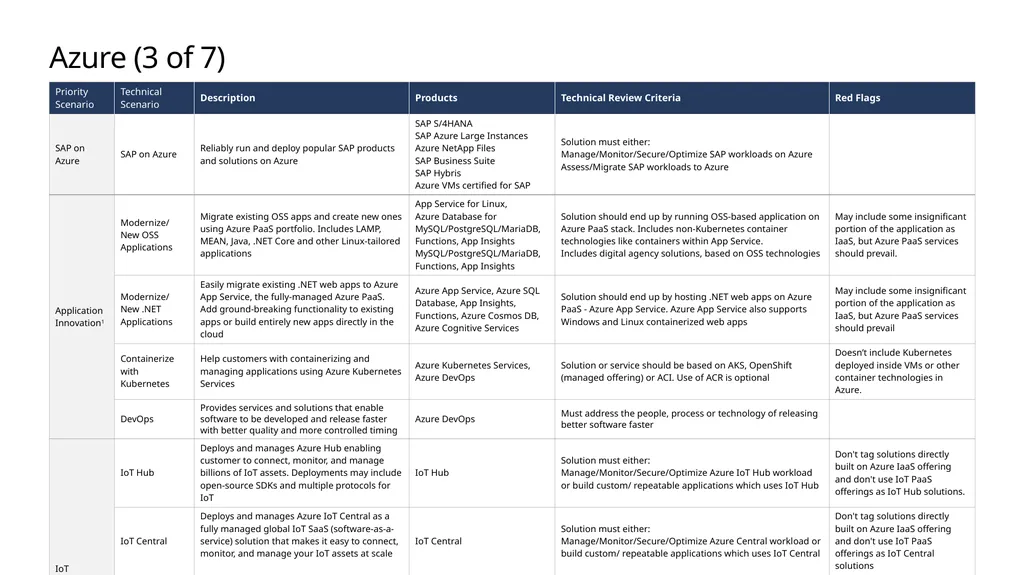
slide28. Azure (3 of 7) Notes: 1) Hidden Technical Scenario: “Temp App Modernization”. FY19 Solutions with “App modernization” tag were tagged at FY roll-over automatically with “Temp App Modernization”. Will be cleaned by field in H1 FY20.<br>
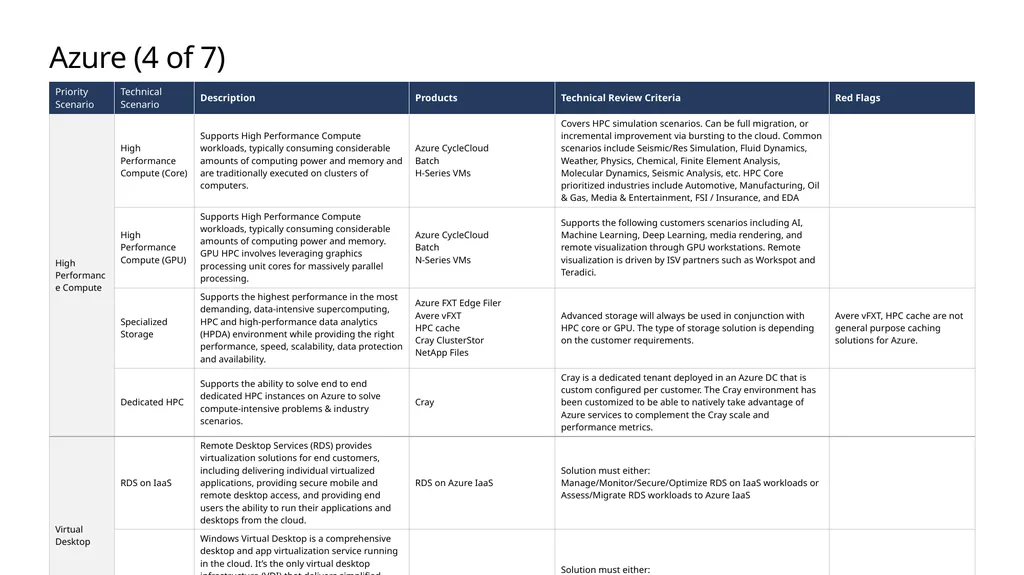
slide29. Azure (4 of 7)<br>
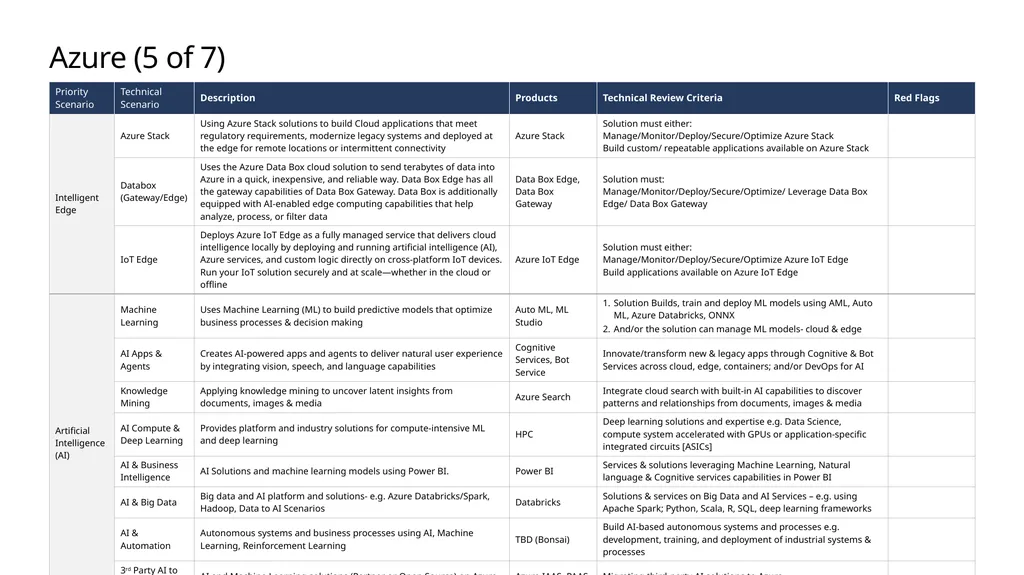
slide30. Azure (5 of 7)<br>
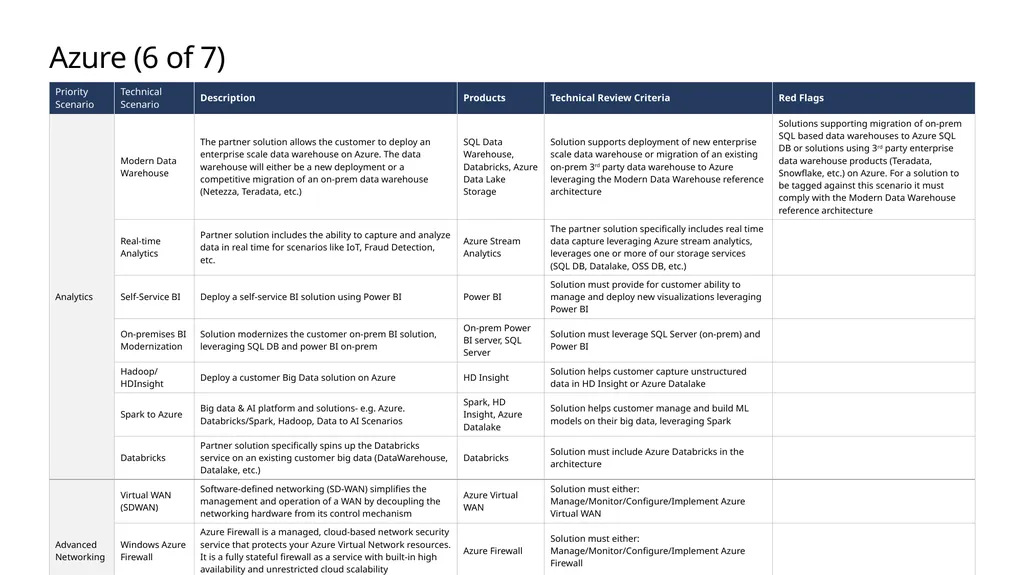
slide31. Azure (6 of 7)<br>
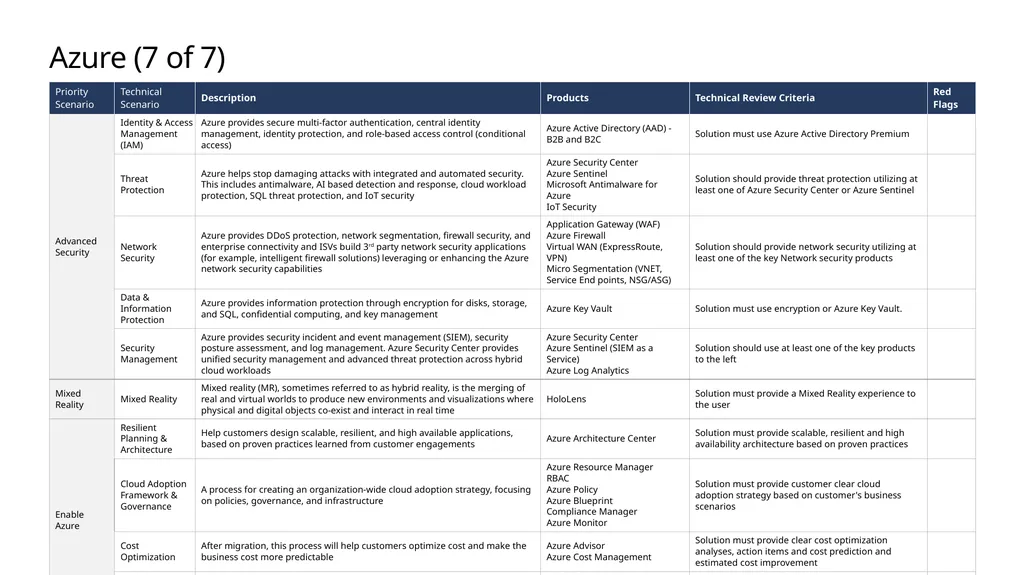
slide32. Azure (7 of 7)<br>
slide33. FY20 Industry Details Industry Solution Categories, ISC<br>
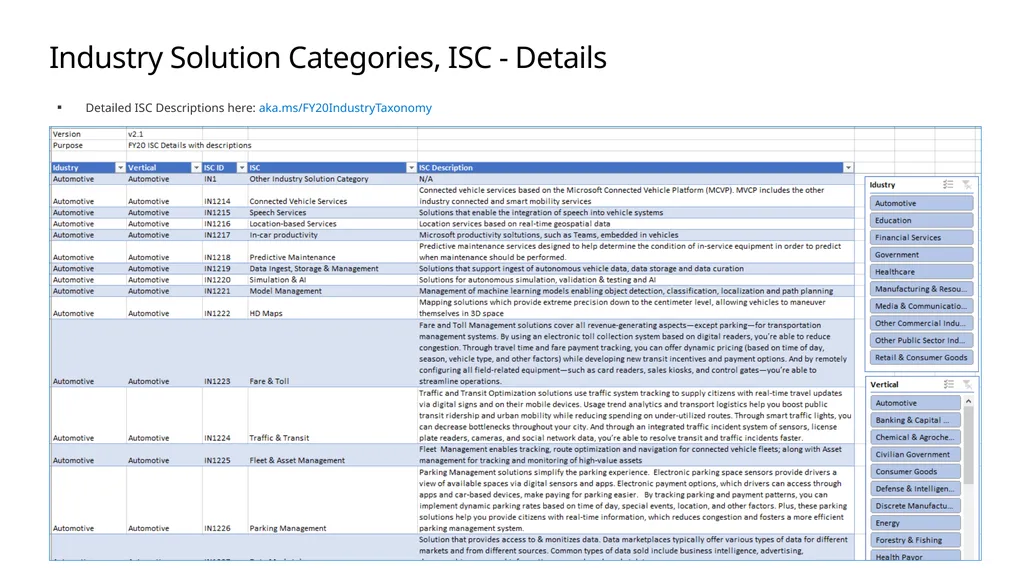
slide34. Industry Solution Categories, ISC - Details Detailed ISC Descriptions here: aka.ms/FY20IndustryTaxonomy<br>
slide35. FY20 Industry Details ISC to Industry Priority Scenario Mapping<br>
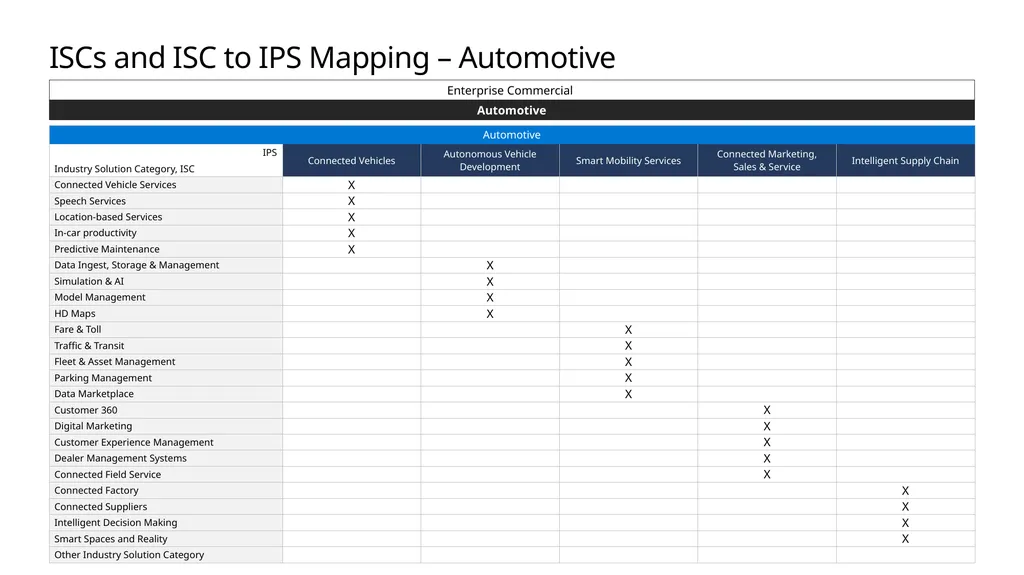
slide36. ISCs and ISC to IPS Mapping – Automotive Enterprise Commercial Automotive<br>
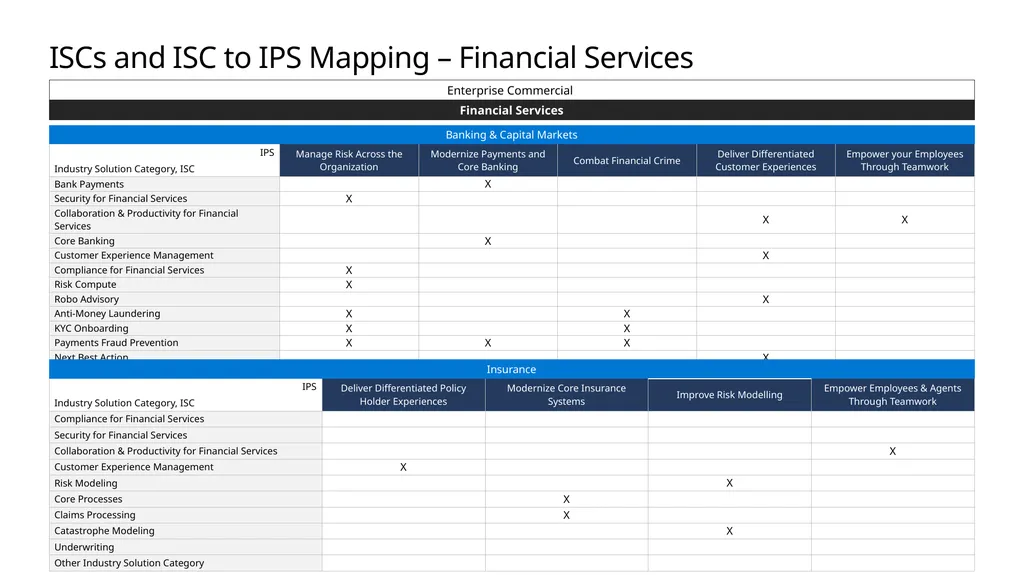
slide37. ISCs and ISC to IPS Mapping – Financial Services Enterprise Commercial Financial Services<br>
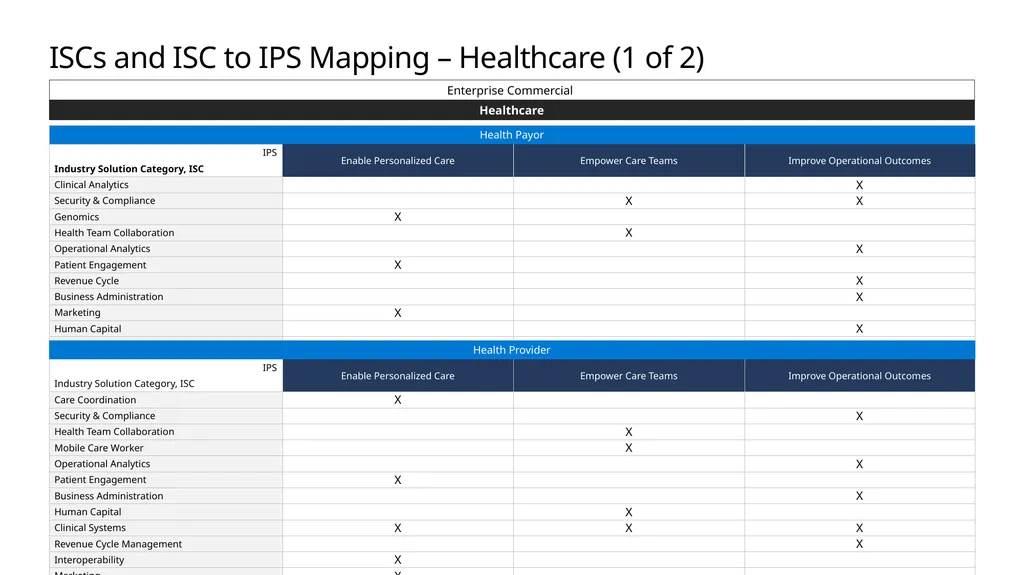
slide38. ISCs and ISC to IPS Mapping – Healthcare (1 of 2) Enterprise Commercial Healthcare<br>
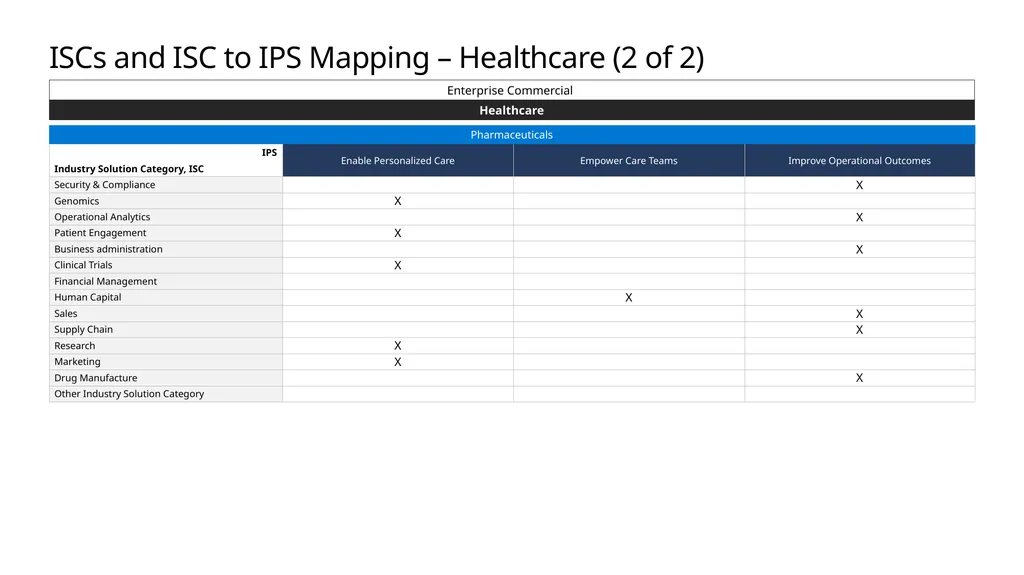
slide39. ISCs and ISC to IPS Mapping – Healthcare (2 of 2) Enterprise Commercial Healthcare<br>
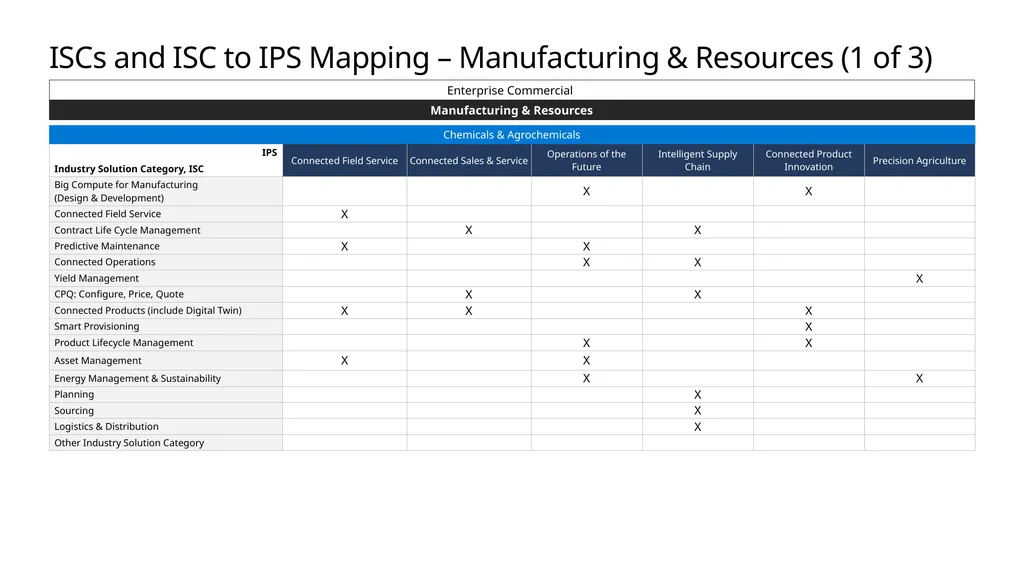
slide40. ISCs and ISC to IPS Mapping – Manufacturing & Resources (1 of 3) Enterprise Commercial Manufacturing & Resources<br>
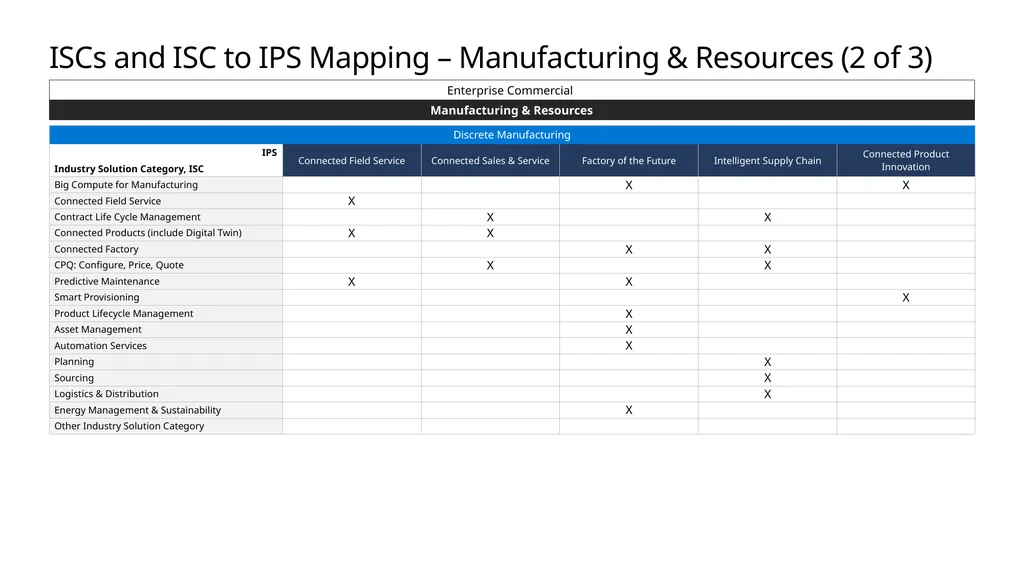
slide41. ISCs and ISC to IPS Mapping – Manufacturing & Resources (2 of 3) Enterprise Commercial Manufacturing & Resources<br>
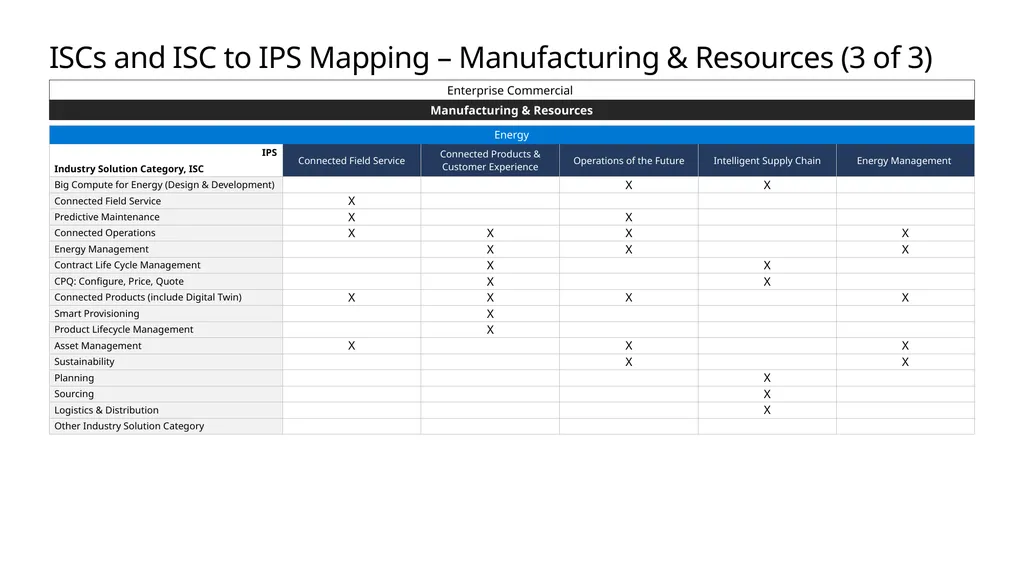
slide42. ISCs and ISC to IPS Mapping – Manufacturing & Resources (3 of 3) Enterprise Commercial Manufacturing & Resources<br>
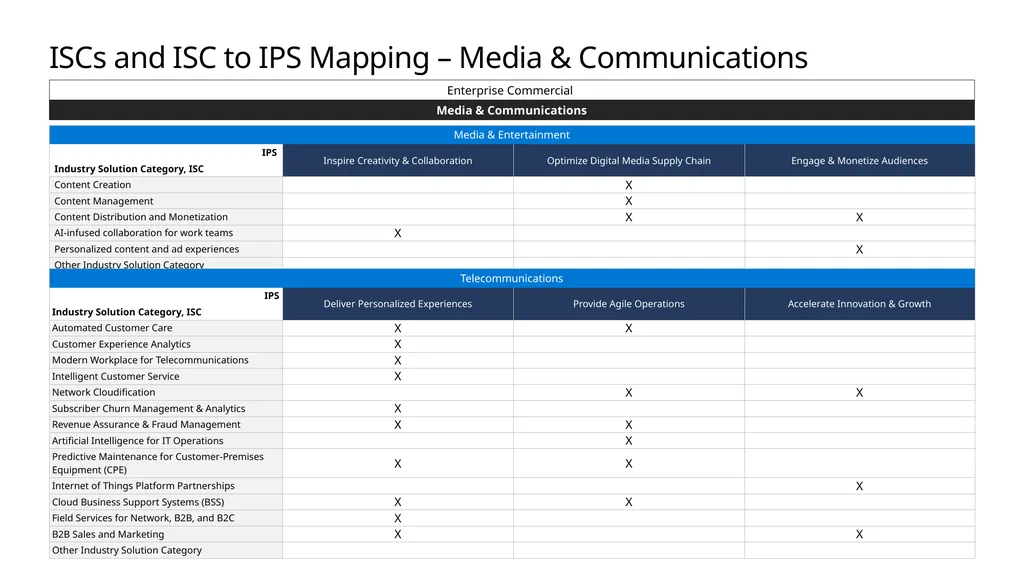
slide43. ISCs and ISC to IPS Mapping – Media & Communications Enterprise Commercial Media & Communications<br>
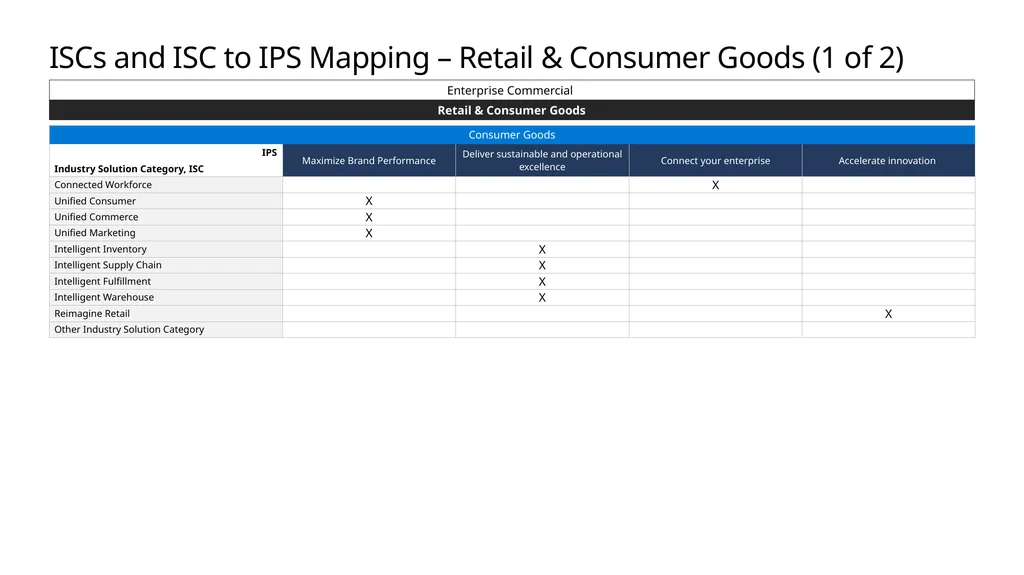
slide44. ISCs and ISC to IPS Mapping – Retail & Consumer Goods (1 of 2) Enterprise Commercial Retail & Consumer Goods<br>
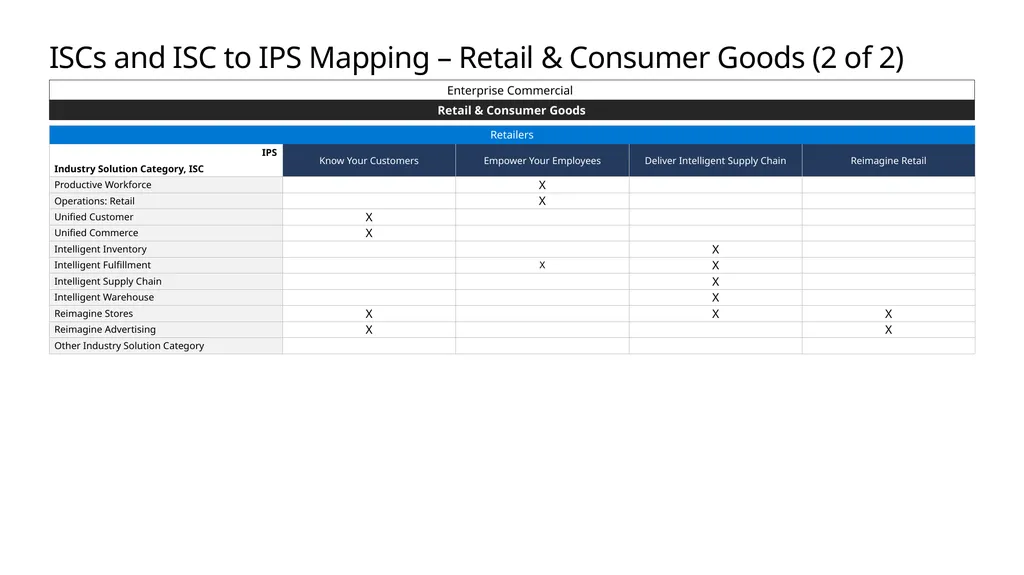
slide45. ISCs and ISC to IPS Mapping – Retail & Consumer Goods (2 of 2) Enterprise Commercial Retail & Consumer Goods<br>
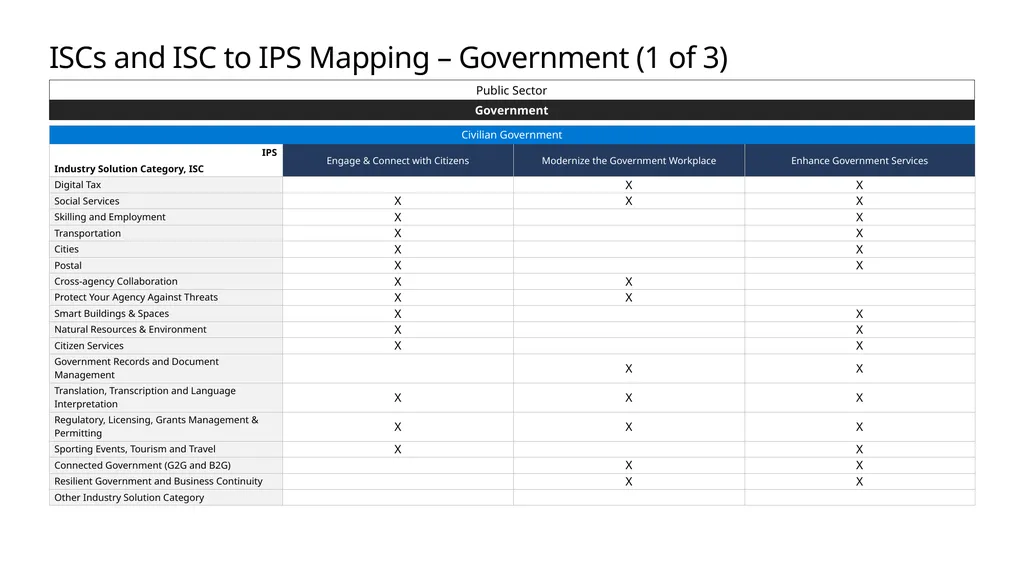
slide46. ISCs and ISC to IPS Mapping – Government (1 of 3) Public Sector Government<br>
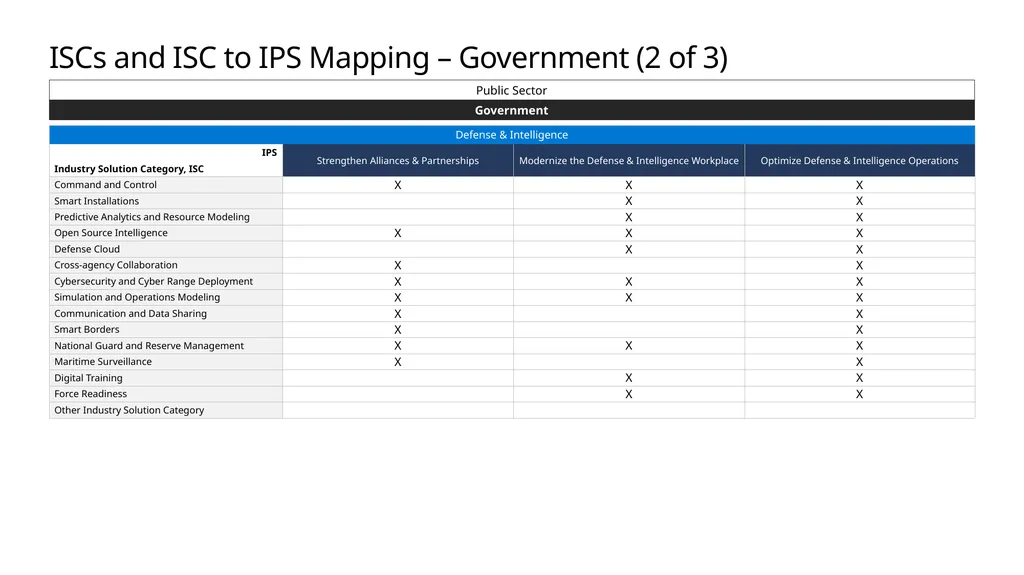
slide47. ISCs and ISC to IPS Mapping – Government (2 of 3) Public Sector Government<br>
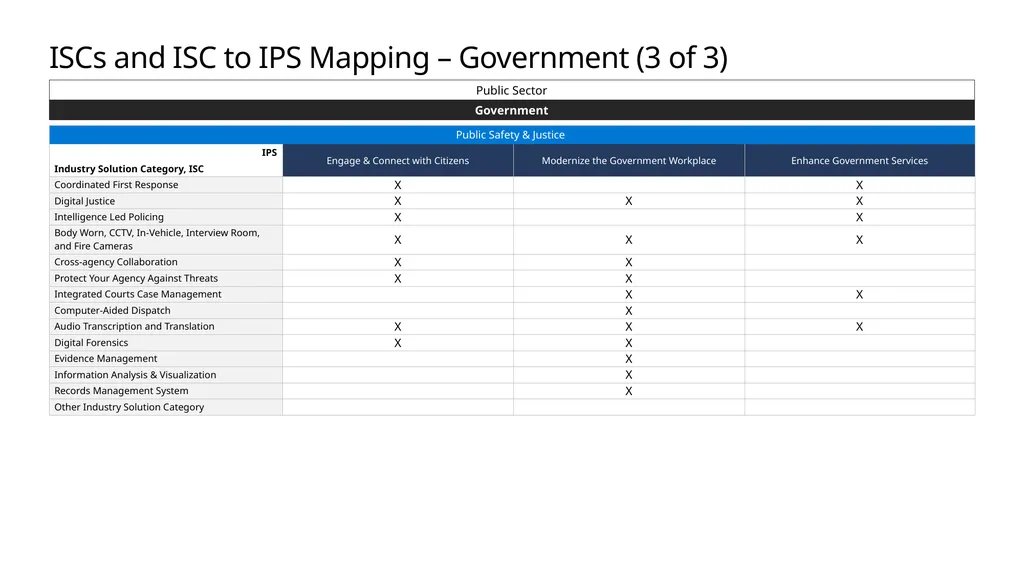
slide48. ISCs and ISC to IPS Mapping – Government (3 of 3) Public Sector Government<br>
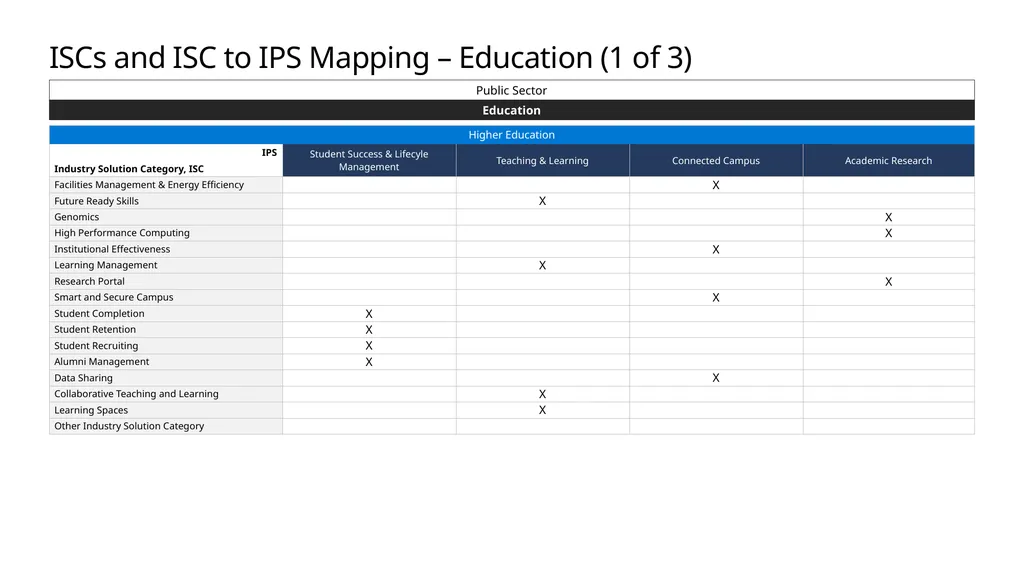
slide49. ISCs and ISC to IPS Mapping – Education (1 of 3) Public Sector Education<br>
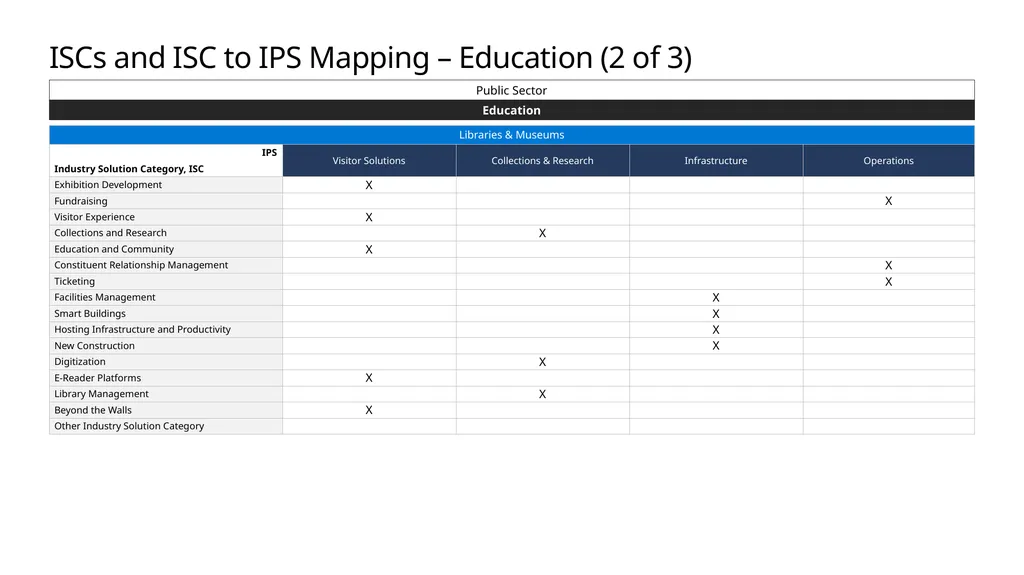
slide50. ISCs and ISC to IPS Mapping – Education (2 of 3) Public Sector Education<br>
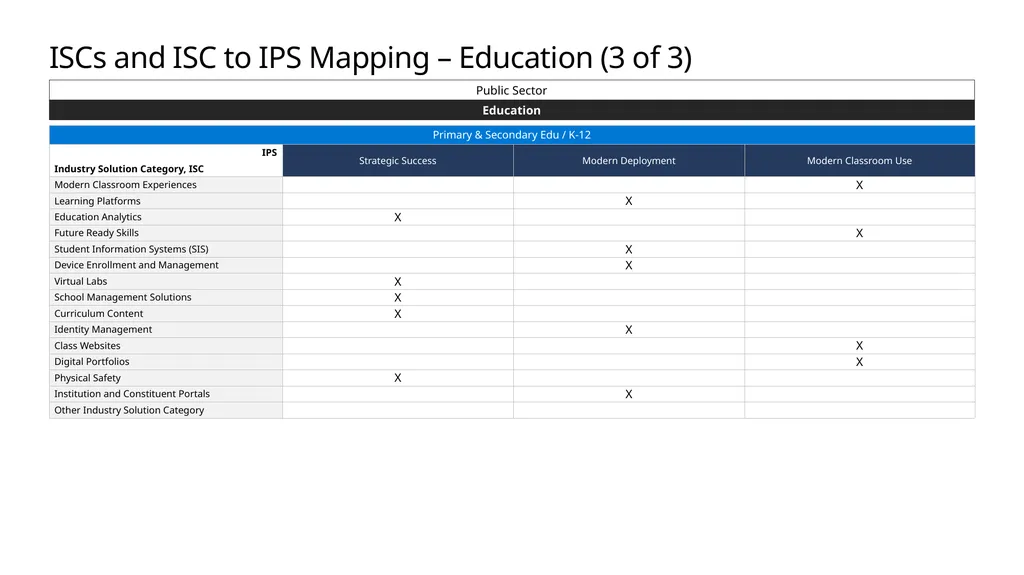
slide51. ISCs and ISC to IPS Mapping – Education (3 of 3) Public Sector Education<br>
File: aka.ms/FY20Taxonomy<br>
slide2. Table of Content<br>
slide3. Taxonomy Design Principles<br>
slide4. Business Goals One company, one language. Define a common language across OCP, M&O, BG, Services, ATU, STU & CSU leveraged for processes/assets with a clearly defined cross-company taxonomy
Simplify & Clarify. Simplify and clarify the GTM, build-with and sell-with taxonomy language that resonates with customers, partner and MSFT internal audiences
Continuity. Define a clear path to migrate the current model and solution classification, across process/assets/tools, without disrupting or overloading our execution
Actionability. Ensure a level of taxonomy that enables high level ecosystem analysis, as well as depth for insights and local mobilization<br>
slide5. Taxonomy Guiding Principles Supports Industry, Solution Area and Category ongoing business strategy Agile, evergreen approach Reflect the optimal customer experience across storefronts Managed through cross-org governance Simple and clear – less is more Enables other audiences to easily align and adopt<br>
slide6. Consistent Taxonomy across all Systems Capacity Planning and Partner Enablement Customer Engagement Business Planning and Execution Sales Enablement<br>
slide7. Three layers architecture based on Solution Area, Priority Scenario and Technical Scenario.
When looking at solutions for a given priority scenario, it is important to select the proper technical scenarios that will determine what the partner, or Microsoft Services, is delivering within the selected scenario. This is also the level where any capabilities view should be plugged.
Requirement:
Mandatory to select one Priority scenario and Technical Scenario for a new engagement. Three layers architecture based on Industry, Vertical and Industry Solution Category. Partner solutions are categorized against Solution Categories within a specific Vertical.
Priority Scenarios are comprised of several Industry Solution Categories. They represent the prioritized DT business conversations based on industry trends.
Requirement:
Select an Industry Solution Category for a new engagement with clear industry focus (Optional). Solution Area
Modern Workplace
Biz Apps
Azure Industry Taxonomy Structure and Definitions Priority Scenario n Solution Area Priority Scenario 1 Industry Vertical n Vertical 1 Vertical 2 Priority Scenario 1 Industry Solution Category n Technical Scenarios n Priority Scenario 2 Priority Scenario 2 Industry Solution Category 1 Industry Solution Category 2 Industry Solution Category 3 Industry Solution Category 4 Technical Scenarios 1<br>
slide8. Taxonomy Definitions<br>
slide9. SA and Industry Summary<br>
slide10. FY20 Solution Area Taxonomy Priority Growth Modern Workplace Business Applications Azure<br>
slide11. FY20 Industry Priority Scenarios, IPS Enterprise Commercial Enterprise Commercial Public Sector Notes:
Renamed Industry in FY20
New Vertical in FY20 L1: Industry (8)<br>
slide12. FY20 Industry Solution Categories, ISC (1 of 3) Enterprise Commercial Notes:
Renamed Industry in FY20
New Vertical in FY20 L1: Industry (8)<br>
slide13. FY20 Industry Solution Categories, ISC (2 of 3) Notes:
Renamed Industry in FY20
New Vertical in FY20 Enterprise Commercial L1: Industry (8)<br>
slide14. FY20 Industry Solution Categories, ISC (3 of 3) Notes:
Renamed Industry in FY20
New Vertical in FY20 Public Sector L1: Industry (8)<br>
slide15. Solution Tagging Guidance<br>
slide16. Taxonomy to connect the right solution/partner to the right opportunity Co-sell Solution Finder lists partners and Microsoft Services solutions, which are designed to serve our customer’s business needs
Solutions are tagged and discoverable based on their value proposition and leveraging the Solution Area and Industry Taxonomy
For Co-sell outbound Lead sharing the Co-sell Solution Finder is directly integrated into MSX
Solution Area and Industry taxonomy are aligned with the MSX Sales Programs. Co-sell Solution Finder Principles<br>
slide17. Solution Tagging Guidance – Maximize the Build-with investments 17 1) Co-sell Solution Finder is the Microsoft internal only marketplace storefront; Note: AppSource and Azure Marketplace are external facing storefronts<br>
slide18. Solution Areas – Details Descriptions & Technical Review Criteria<br>
slide19. Modern Workplace (1 of 3)<br>
slide20. Modern Workplace (2 of 3)<br>
slide21. Modern Workplace (3 of 3) Notes: 1) Solutions leveraging only these atomized services need to be tagged under Azure-Advanced Security. If the solution leverages both M365 and Azure components, then they need to be tagged in both places.<br>
slide22. Business Applications (1 of 4)<br>
slide23. Business Applications (2 of 4)<br>
slide24. Business Applications (3 of 4)<br>
slide25. Business Applications (4 of 4)<br>
slide26. Azure (1 of 7) Notes: 1) Hidden Technical Scenario: “Temp Server Migration”. FY19 Solutions with “Datacenter Migration” tag were tagged at FY roll-over automatically with “Temp Datacenter Migration”. Will be cleaned by field in H1 FY20.<br>
slide27. Azure (2 of 7)<br>
slide28. Azure (3 of 7) Notes: 1) Hidden Technical Scenario: “Temp App Modernization”. FY19 Solutions with “App modernization” tag were tagged at FY roll-over automatically with “Temp App Modernization”. Will be cleaned by field in H1 FY20.<br>
slide29. Azure (4 of 7)<br>
slide30. Azure (5 of 7)<br>
slide31. Azure (6 of 7)<br>
slide32. Azure (7 of 7)<br>
slide33. FY20 Industry Details Industry Solution Categories, ISC<br>
slide34. Industry Solution Categories, ISC - Details Detailed ISC Descriptions here: aka.ms/FY20IndustryTaxonomy<br>
slide35. FY20 Industry Details ISC to Industry Priority Scenario Mapping<br>
slide36. ISCs and ISC to IPS Mapping – Automotive Enterprise Commercial Automotive<br>
slide37. ISCs and ISC to IPS Mapping – Financial Services Enterprise Commercial Financial Services<br>
slide38. ISCs and ISC to IPS Mapping – Healthcare (1 of 2) Enterprise Commercial Healthcare<br>
slide39. ISCs and ISC to IPS Mapping – Healthcare (2 of 2) Enterprise Commercial Healthcare<br>
slide40. ISCs and ISC to IPS Mapping – Manufacturing & Resources (1 of 3) Enterprise Commercial Manufacturing & Resources<br>
slide41. ISCs and ISC to IPS Mapping – Manufacturing & Resources (2 of 3) Enterprise Commercial Manufacturing & Resources<br>
slide42. ISCs and ISC to IPS Mapping – Manufacturing & Resources (3 of 3) Enterprise Commercial Manufacturing & Resources<br>
slide43. ISCs and ISC to IPS Mapping – Media & Communications Enterprise Commercial Media & Communications<br>
slide44. ISCs and ISC to IPS Mapping – Retail & Consumer Goods (1 of 2) Enterprise Commercial Retail & Consumer Goods<br>
slide45. ISCs and ISC to IPS Mapping – Retail & Consumer Goods (2 of 2) Enterprise Commercial Retail & Consumer Goods<br>
slide46. ISCs and ISC to IPS Mapping – Government (1 of 3) Public Sector Government<br>
slide47. ISCs and ISC to IPS Mapping – Government (2 of 3) Public Sector Government<br>
slide48. ISCs and ISC to IPS Mapping – Government (3 of 3) Public Sector Government<br>
slide49. ISCs and ISC to IPS Mapping – Education (1 of 3) Public Sector Education<br>
slide50. ISCs and ISC to IPS Mapping – Education (2 of 3) Public Sector Education<br>
slide51. ISCs and ISC to IPS Mapping – Education (3 of 3) Public Sector Education<br>