Gap Assessment Tool (GAT) for the NTD road map: AN INTRODUCTION Disease-specific assessment Example: Schistosomiasis The 2022 GAT Greater standardisation of assessment criteria across diseases. Increased objectivity in colour ranking
"Gap Assessment Tool (GAT) for the NTD road map: AN" is the property of its rightful owner. Permission is granted to
download and print the materials on this website for personal, non-commercial use only, and to display it
on your personal computer provided you do not modify the materials and that you retain all copyright
notices contained in the materials. By downloading content from our website, you accept the terms of this
agreement.
Presentation Transcript
01
Gap Assessment Tool (GAT) for the NTD road map: AN INTRODUCTION<br>
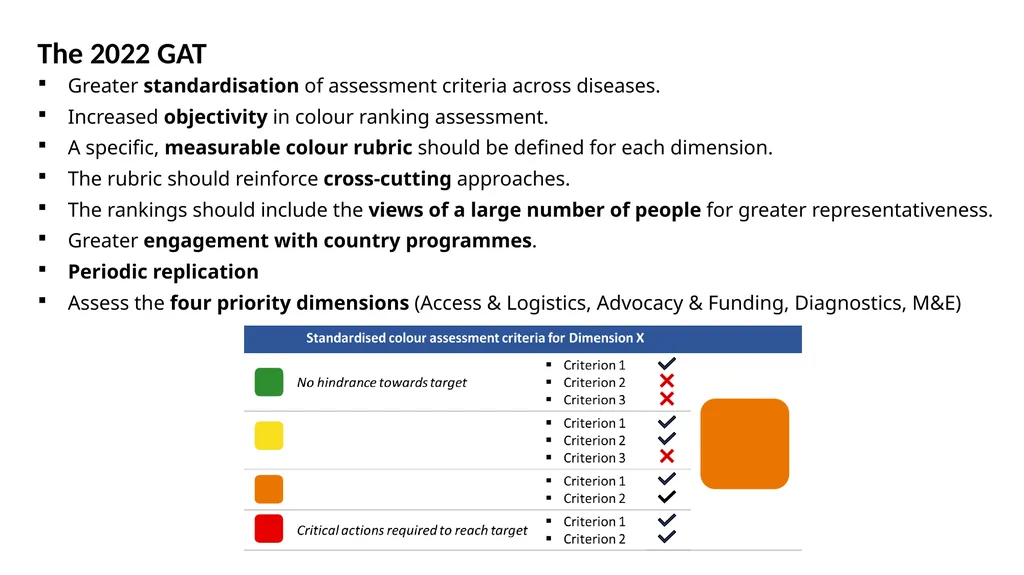
The 2022 GAT Greater standardisation of assessment criteria across diseases.
Increased objectivity in colour ranking assessment.
A specific, measurable colour rubric should be defined for each dimension.
The rubric should reinforce cross-cutting approaches.
The rankings should include the views of a large number of people for greater representativeness.
Greater engagement with country programmes.
Periodic replication
Assess the four priority dimensions (Access & Logistics, Advocacy & Funding, Diagnostics, M&E)<br>
04
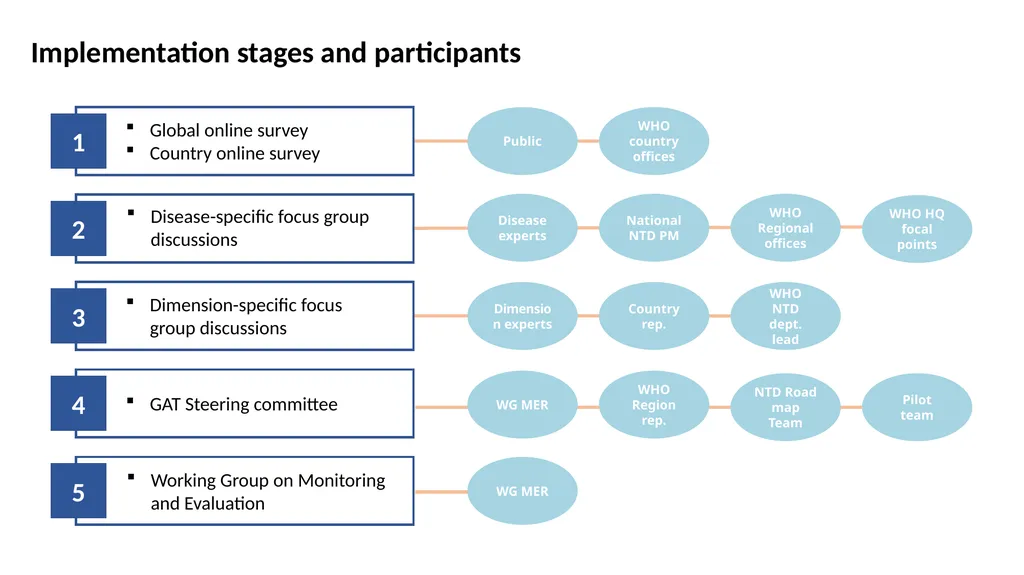
Implementation stages and participants<br>
05
PROGRESS UPDATE<br>
06
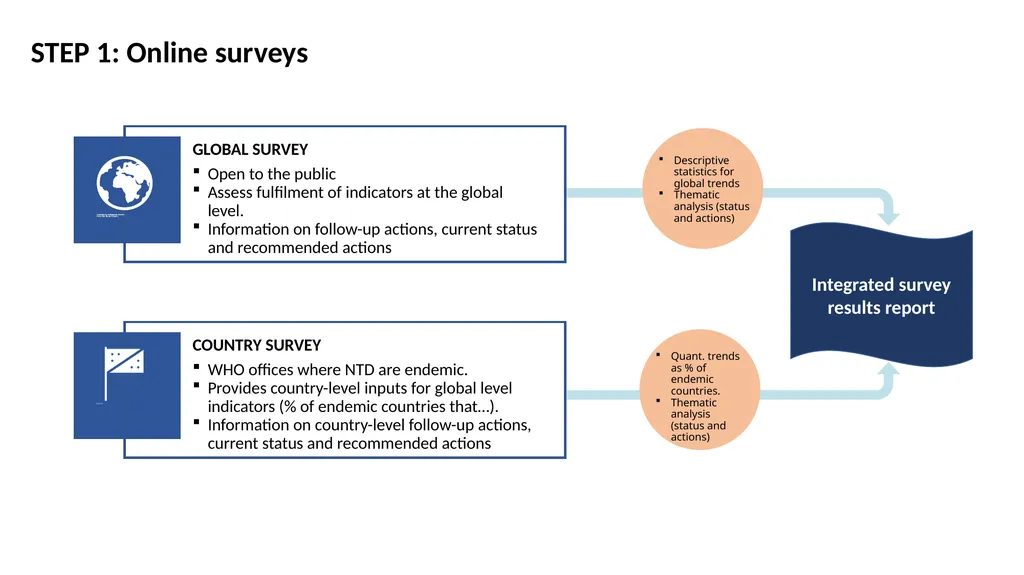
GLOBAL SURVEY
Open to the public
Assess fulfilment of indicators at the global level.
Information on follow-up actions, current status and recommended actions Integrated survey results report STEP 1: Online surveys<br>
07
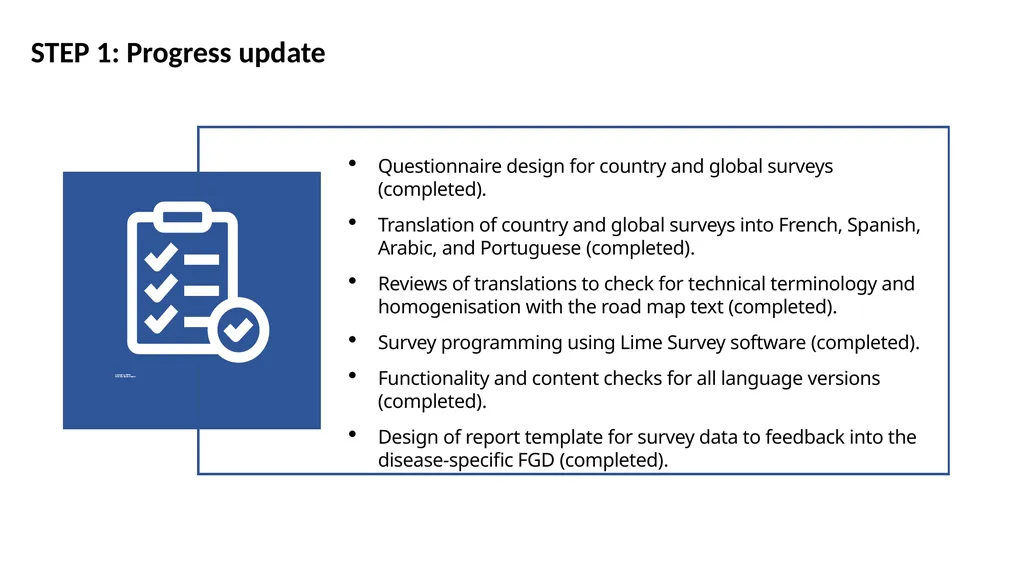
Questionnaire design for country and global surveys (completed).
Translation of country and global surveys into French, Spanish, Arabic, and Portuguese (completed).
Reviews of translations to check for technical terminology and homogenisation with the road map text (completed).
Survey programming using Lime Survey software (completed).
Functionality and content checks for all language versions (completed).
Design of report template for survey data to feedback into the disease-specific FGD (completed). STEP 1: Progress update<br>
08
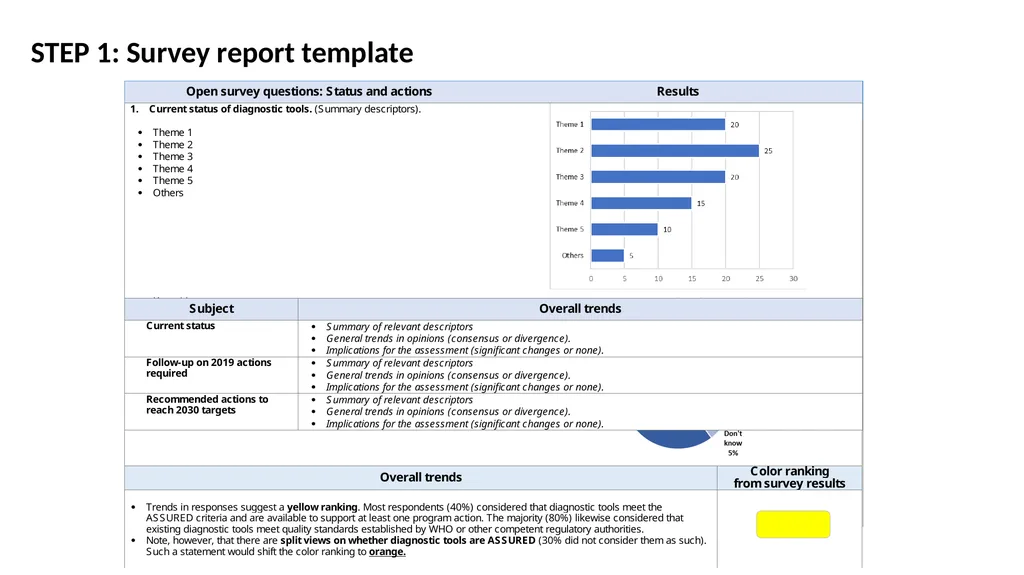
STEP 1: Survey report template<br>
09
Design of the methodological process for disease-specific FGD (completed).
Identification of experts and country representatives for disease-specific FGD (ongoing).
Design of the methodological process of dimension-level FGD (completed).
Briefing sessions for members of disease-specific FGD (planning).
Scheduling for disease-specific FGD (planning). STEP 2: Progress update<br>
10
Integrated survey results report STEP 2: Disease-specific focus group discussions Colour ranking Narrow down potential colour rankings
Assess criteria fulfilment Profile Describe current status
Recommend critical actions Trends Outline justification for changes compared to previous gap assessment.<br>
11
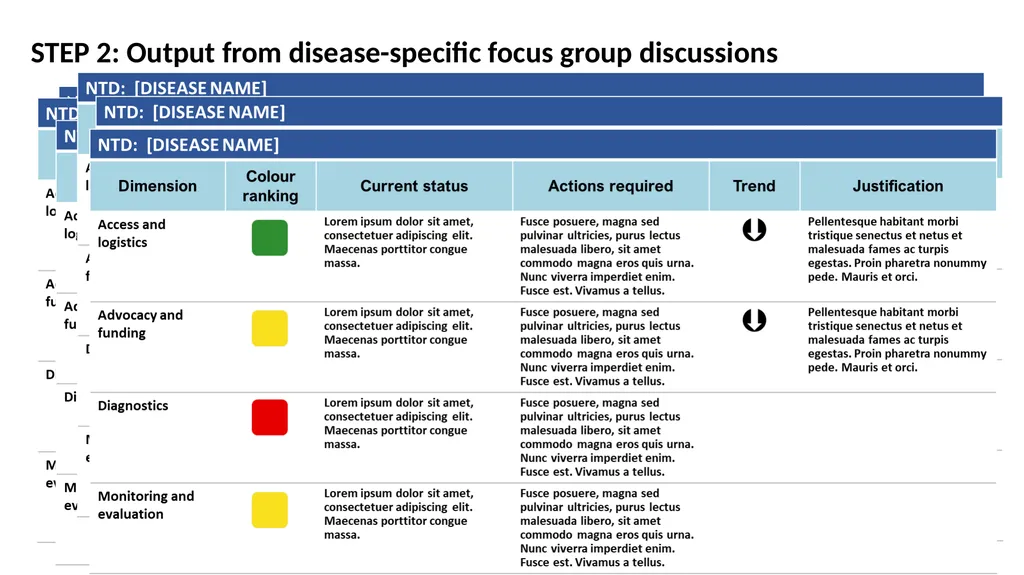
STEP 2: Output from disease-specific focus group discussions<br>
12
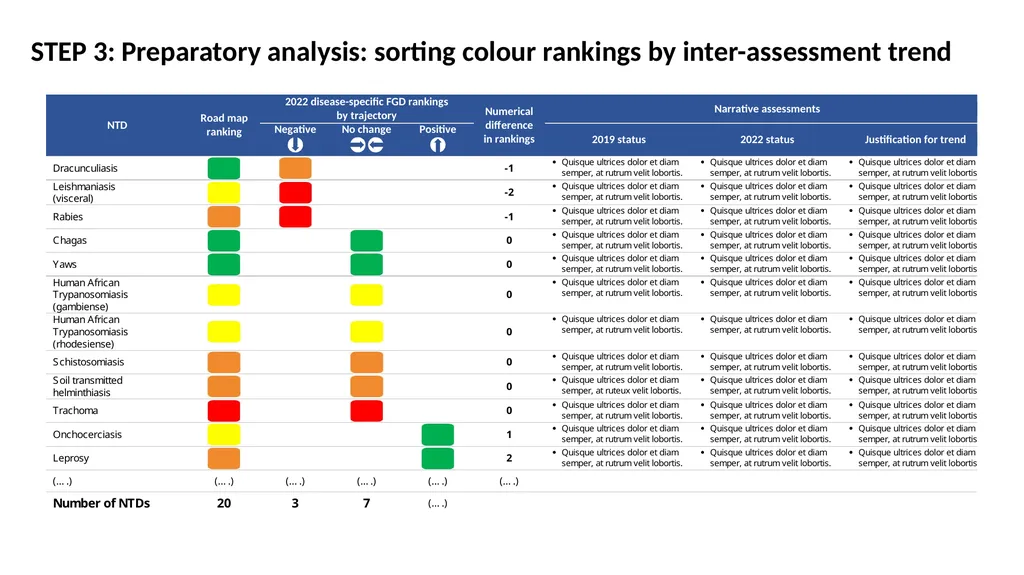
STEP 3: Preparatory analysis: sorting colour rankings by inter-assessment trend<br>
13
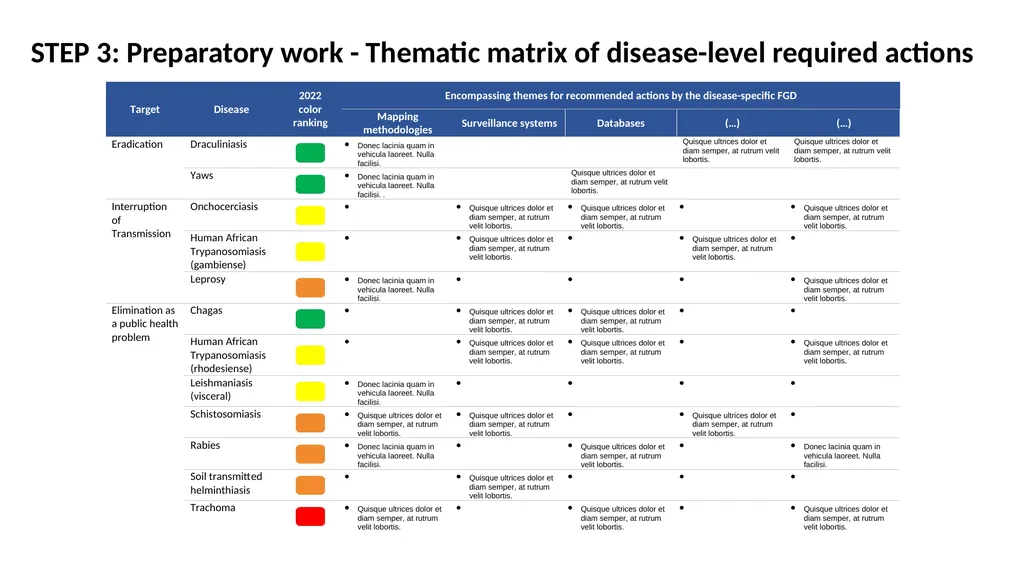
STEP 3: Preparatory work - Thematic matrix of disease-level required actions<br>
14
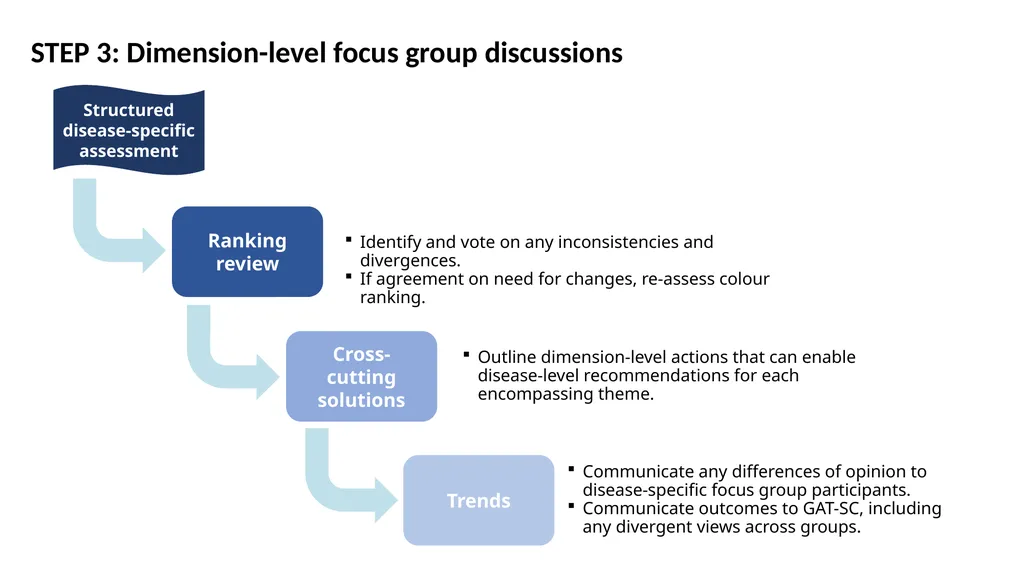
Structured disease-specific assessment STEP 3: Dimension-level focus group discussions Ranking review Identify and vote on any inconsistencies and divergences.
If agreement on need for changes, re-assess colour ranking. Cross-cutting solutions Outline dimension-level actions that can enable disease-level recommendations for each encompassing theme. Trends Communicate any differences of opinion to disease-specific focus group participants.
Communicate outcomes to GAT-SC, including any divergent views across groups.<br>
15
NEXT STEPS<br>
16
Online surveys to be released the week of 12th December (TBC).
Communications push to motive responses on release and again after the New Year.
Data collection to be completed on 15th January.
Final composition of disease-specific FGD.
Final composition of the GAT Steering Committee.
Scheduling of briefing sessions for disease-specific FGD members. Upcoming activities (Dec-Jan)<br>
17
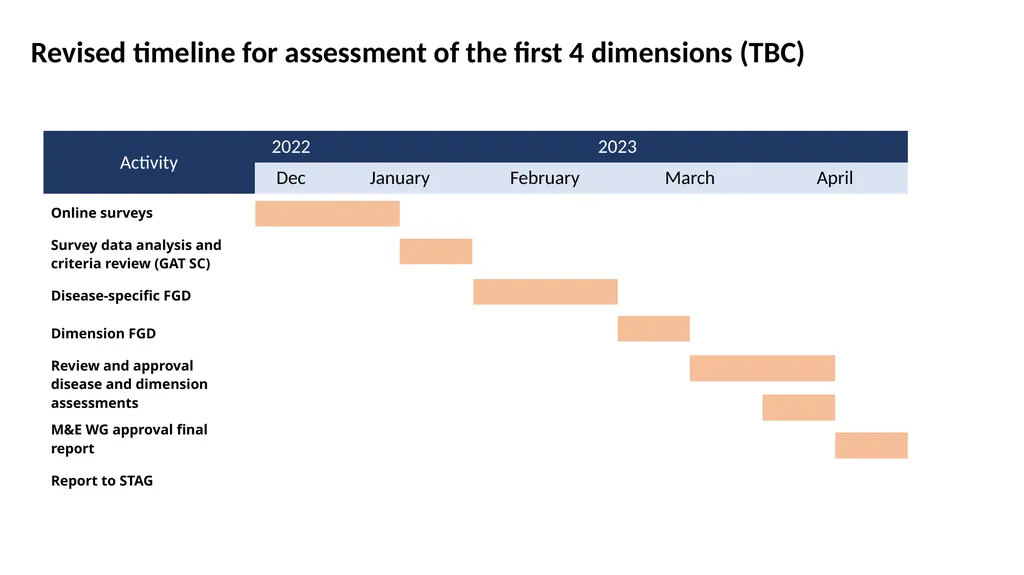
Revised timeline for assessment of the first 4 dimensions (TBC)<br>