Gearing Up for Implementation of Next Generation Standards: Planning Discussions to Define the Elements that Support the P-3 Instructional Cycle 1 Welcome and Introductions 2 Purpose and Objectives Purpose: To structure conversations about
"Gearing Up for Implementation of Next Generation" is the property of its rightful owner. Permission is granted to
download and print the materials on this website for personal, non-commercial use only, and to display it
on your personal computer provided you do not modify the materials and that you retain all copyright
notices contained in the materials. By downloading content from our website, you accept the terms of this
agreement.
Presentation Transcript
01
Gearing Up for Implementation of Next Generation Standards: Planning Discussions to Define the Elements that Support the P-3 Instructional Cycle 1<br>
02
Welcome and Introductions 2<br>
03
Purpose and Objectives Purpose:
To structure conversations about the elements that support the P-3 instructional cycle within the context of New York State’s Next Generation Early Learning Standards.
Objectives:
At the end of the meeting, participants will be able to:
Articulate key messages about the Next Generation standards for young learners
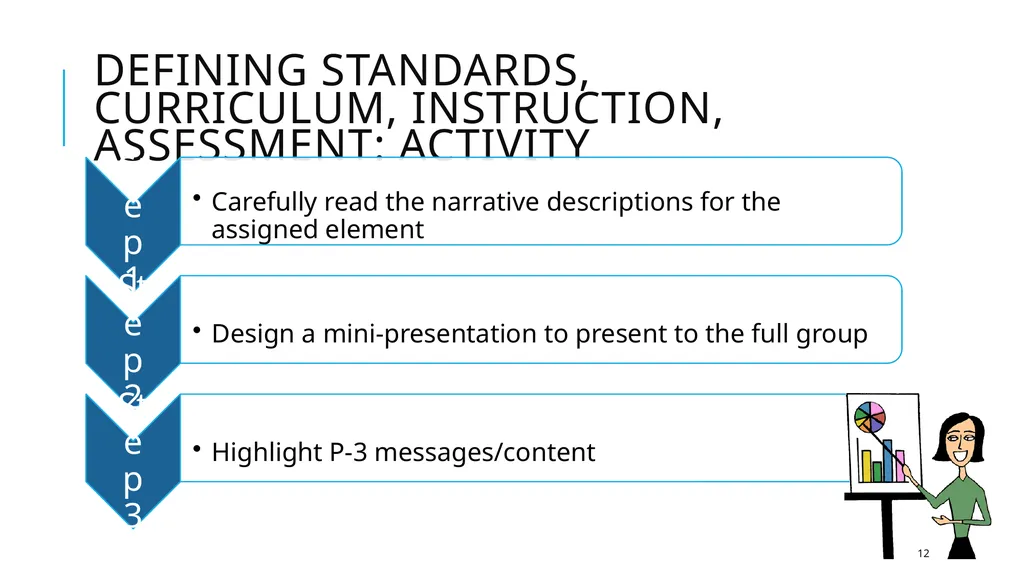
Define and distinguish between learning standards, curriculum, instruction, and assessment
Describe implementation challenges
List strategies for managing challenges 3<br>
04
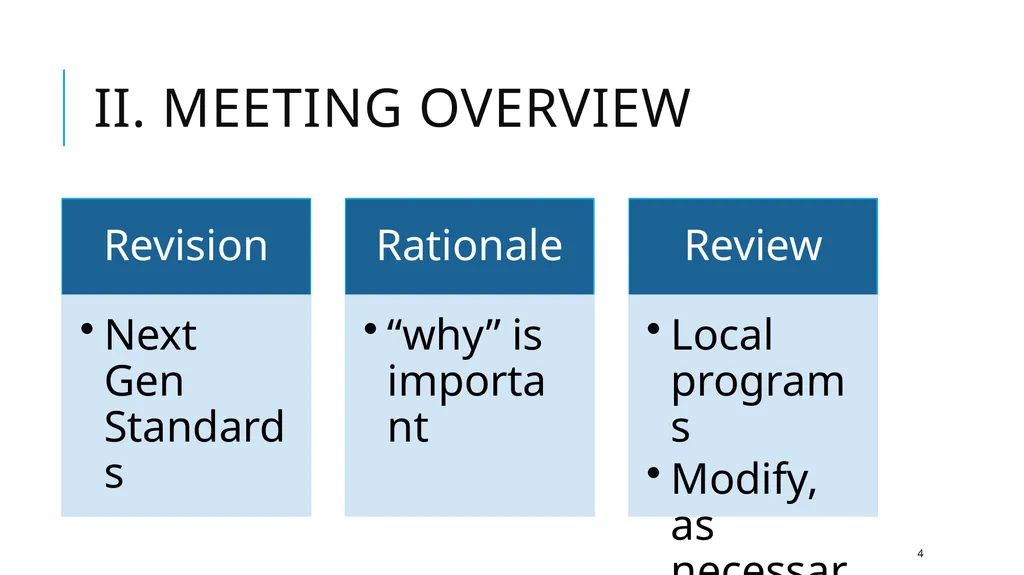
II. Meeting Overview 4<br>
05
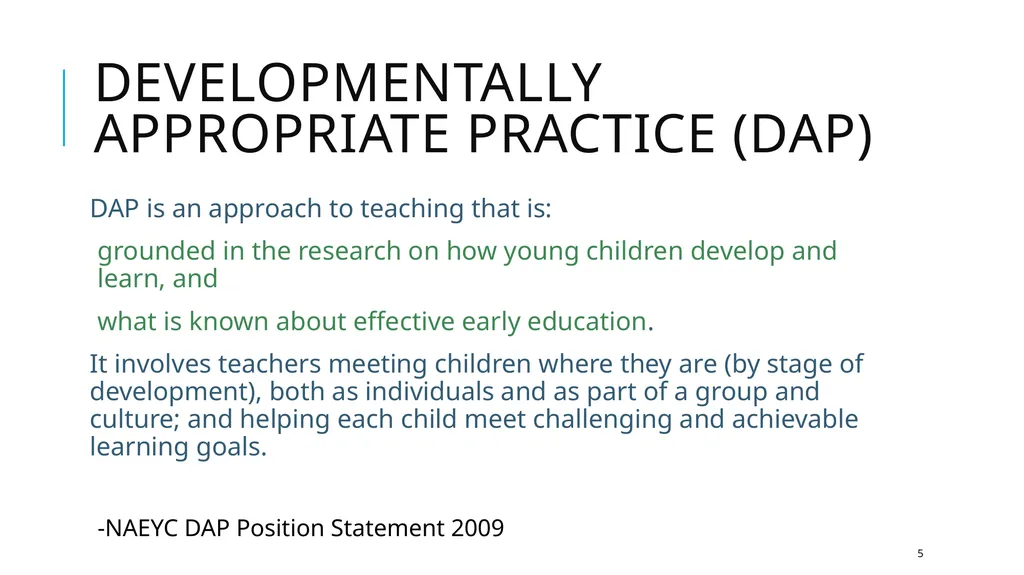
Developmentally Appropriate Practice (DAP) 5 DAP is an approach to teaching that is:
grounded in the research on how young children develop and learn, and
what is known about effective early education.
It involves teachers meeting children where they are (by stage of development), both as individuals and as part of a group and culture; and helping each child meet challenging and achievable learning goals.
-NAEYC DAP Position Statement 2009<br>
06
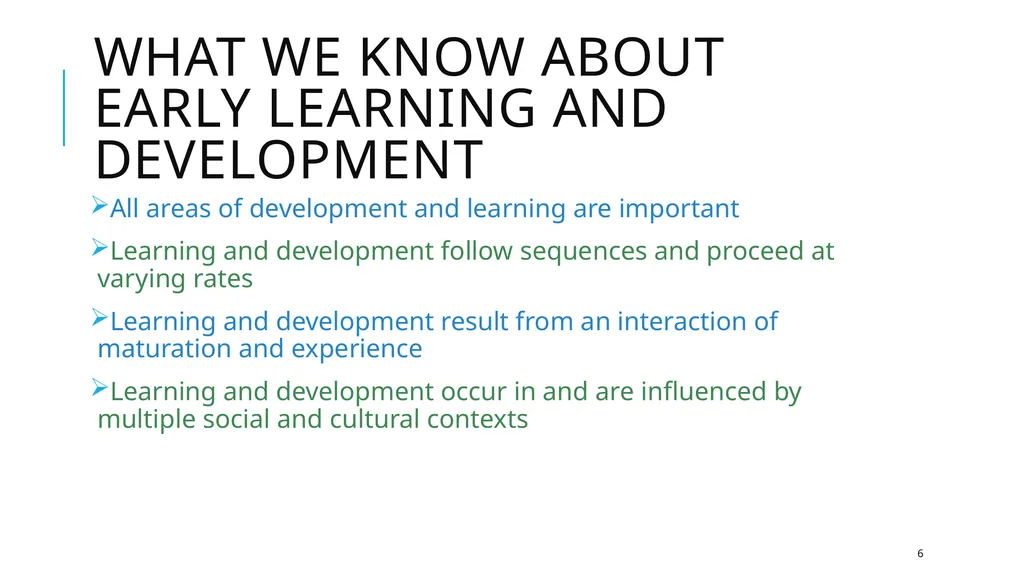
What we know about early learning and development 6 All areas of development and learning are important
Learning and development follow sequences and proceed at varying rates
Learning and development result from an interaction of maturation and experience
Learning and development occur in and are influenced by multiple social and cultural contexts<br>
07
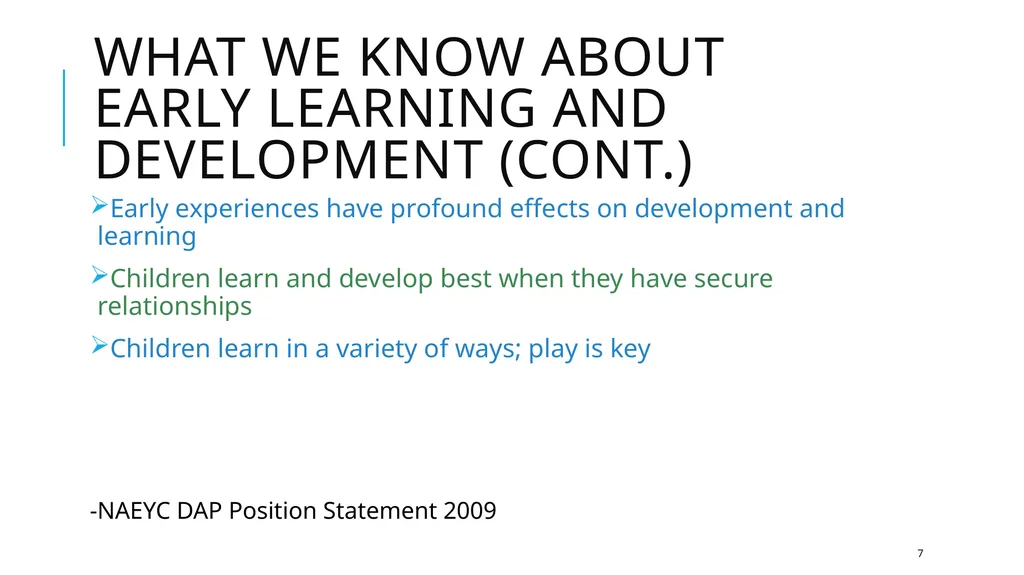
What we know about early learning and development (cont.) 7 Early experiences have profound effects on development and learning
Children learn and develop best when they have secure relationships
Children learn in a variety of ways; play is key
-NAEYC DAP Position Statement 2009<br>
08
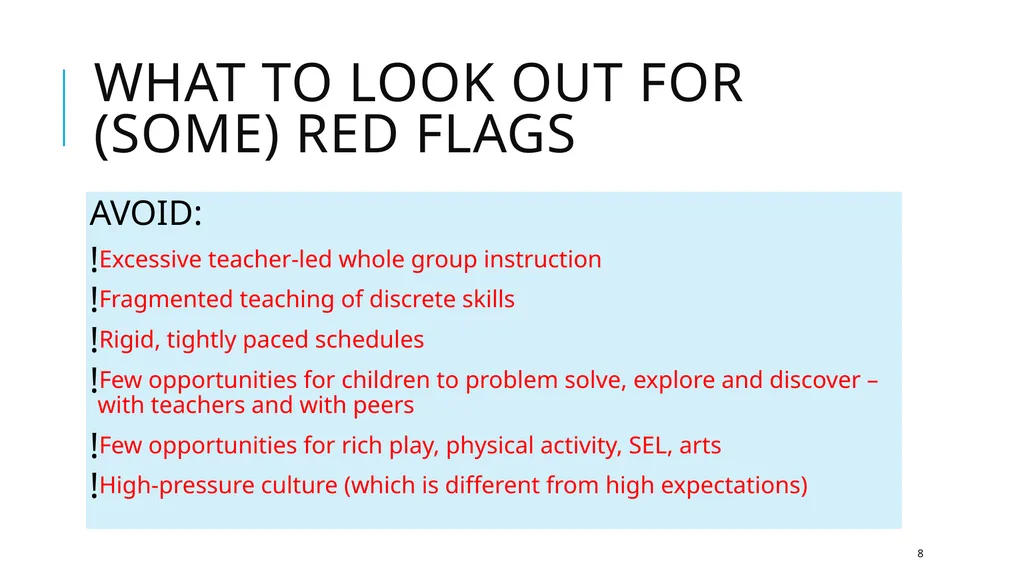
What to look out for (Some) Red Flags 8 AVOID:
Excessive teacher-led whole group instruction
Fragmented teaching of discrete skills
Rigid, tightly paced schedules
Few opportunities for children to problem solve, explore and discover – with teachers and with peers
Few opportunities for rich play, physical activity, SEL, arts
High-pressure culture (which is different from high expectations)<br>
09
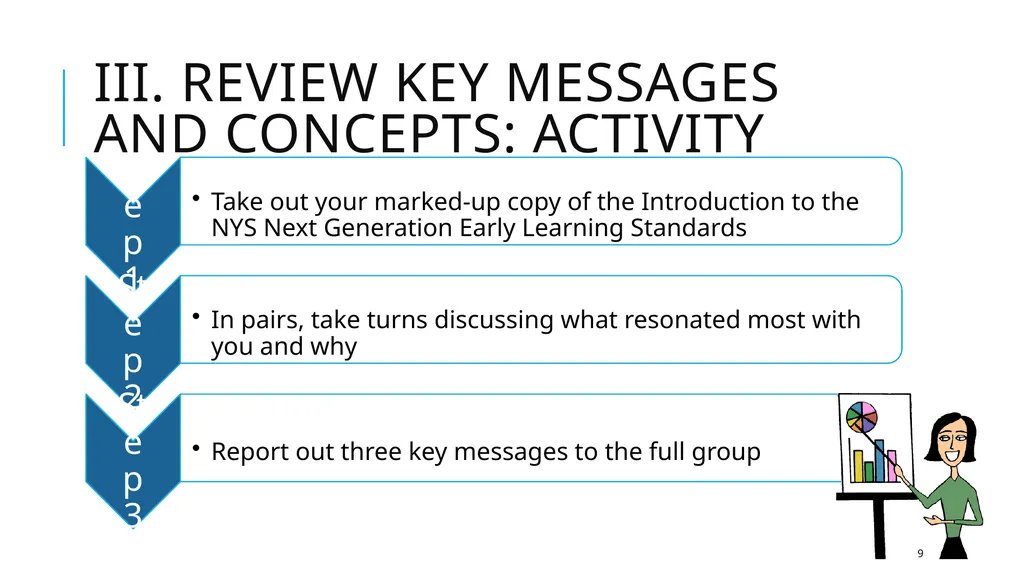
III. Review Key Messages and Concepts: Activity 9<br>
10
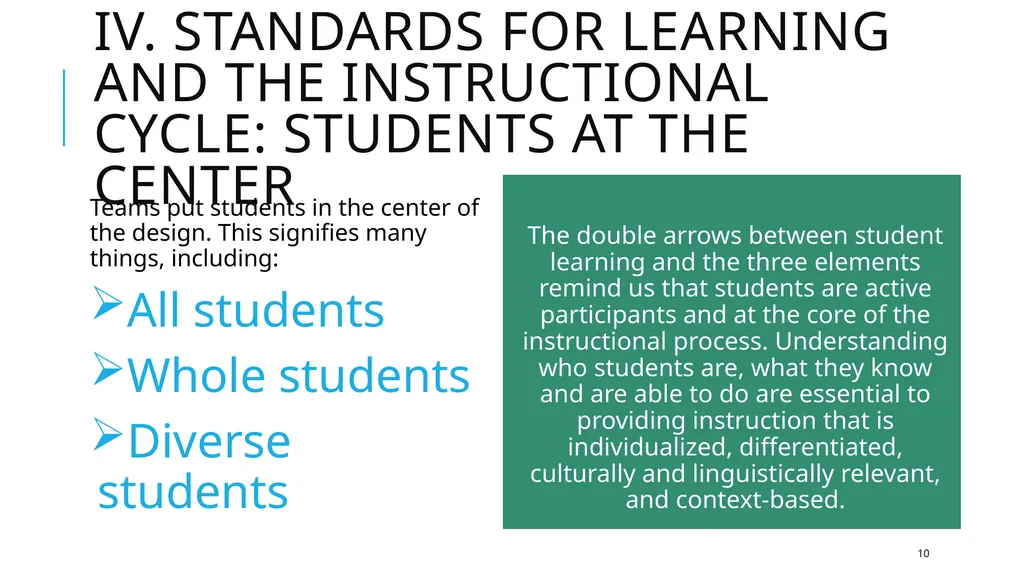
IV. Standards for Learning and the Instructional Cycle: Students at the Center Teams put students in the center of the design. This signifies many things, including:
All students
Whole students
Diverse students The double arrows between student learning and the three elements remind us that students are active participants and at the core of the instructional process. Understanding who students are, what they know and are able to do are essential to providing instruction that is individualized, differentiated, culturally and linguistically relevant, and context-based. 10<br>
11
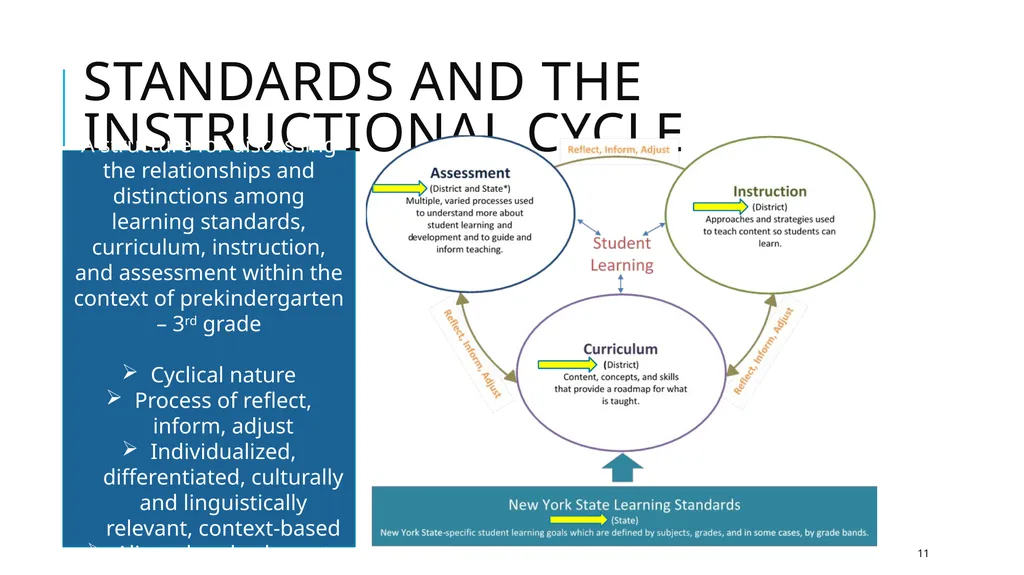
Standards and the Instructional Cycle 11 A structure for discussing the relationships and distinctions among learning standards, curriculum, instruction, and assessment within the context of prekindergarten – 3rd grade
Cyclical nature
Process of reflect, inform, adjust
Individualized, differentiated, culturally and linguistically relevant, context-based
Aligned and coherent<br>
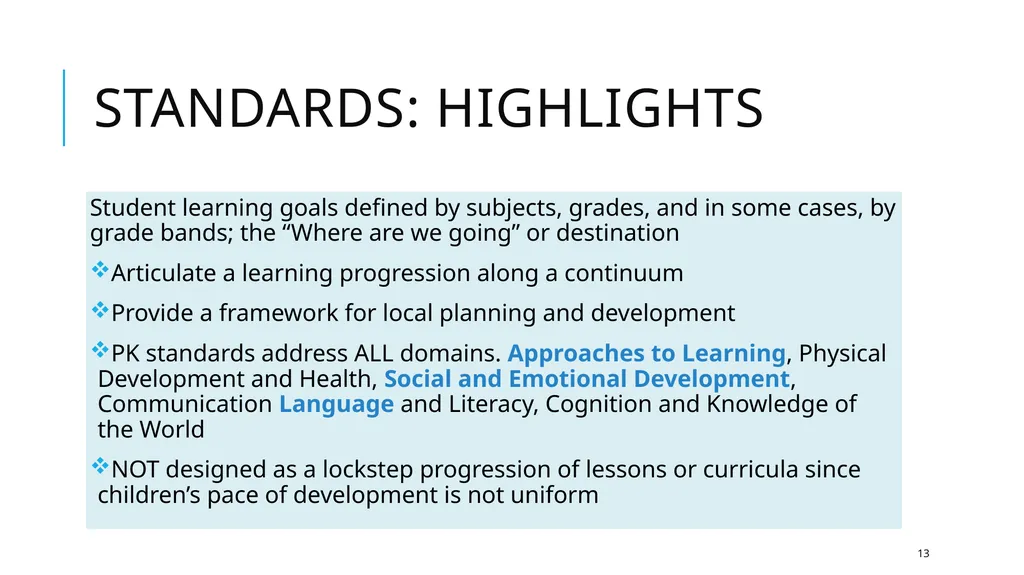
Standards: Highlights 13 Student learning goals defined by subjects, grades, and in some cases, by grade bands; the “Where are we going” or destination
Articulate a learning progression along a continuum
Provide a framework for local planning and development
PK standards address ALL domains. Approaches to Learning, Physical Development and Health, Social and Emotional Development, Communication Language and Literacy, Cognition and Knowledge of the World
NOT designed as a lockstep progression of lessons or curricula since children’s pace of development is not uniform<br>
14
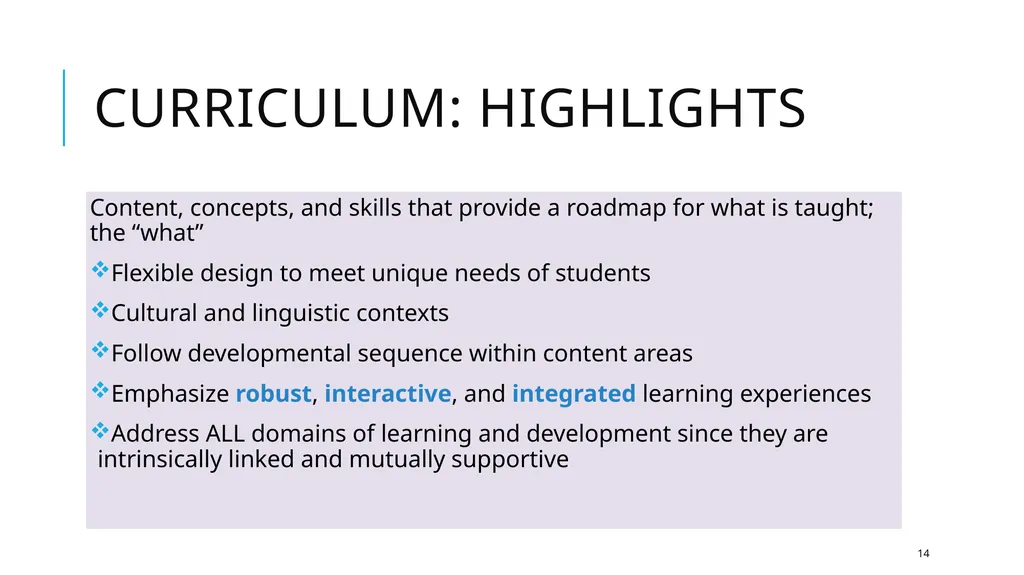
Curriculum: Highlights 14 Content, concepts, and skills that provide a roadmap for what is taught; the “what”
Flexible design to meet unique needs of students
Cultural and linguistic contexts
Follow developmental sequence within content areas
Emphasize robust, interactive, and integrated learning experiences
Address ALL domains of learning and development since they are intrinsically linked and mutually supportive<br>
15
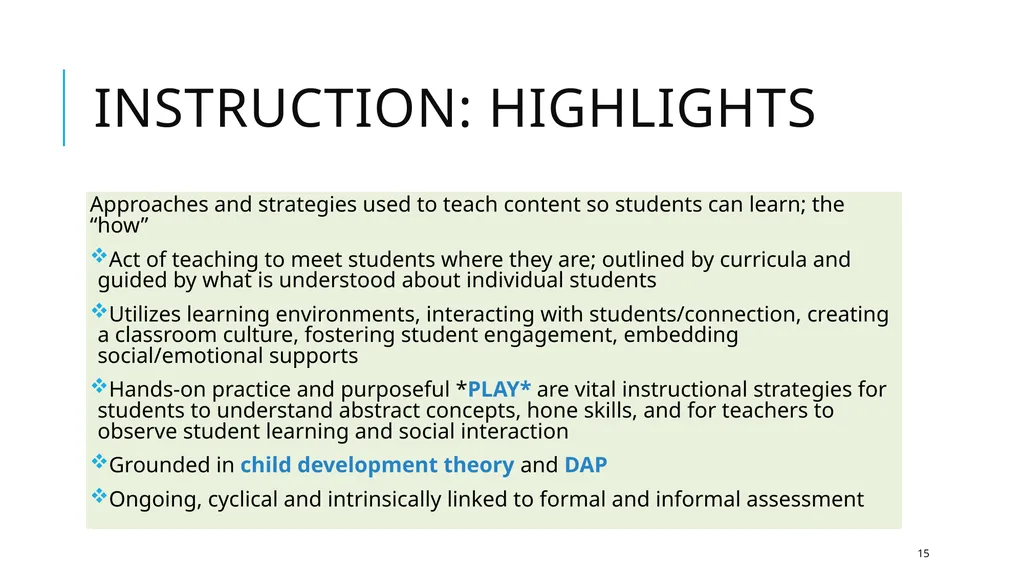
Instruction: Highlights 15 Approaches and strategies used to teach content so students can learn; the “how”
Act of teaching to meet students where they are; outlined by curricula and guided by what is understood about individual students
Utilizes learning environments, interacting with students/connection, creating a classroom culture, fostering student engagement, embedding social/emotional supports
Hands-on practice and purposeful *PLAY* are vital instructional strategies for students to understand abstract concepts, hone skills, and for teachers to observe student learning and social interaction
Grounded in child development theory and DAP
Ongoing, cyclical and intrinsically linked to formal and informal assessment<br>
16
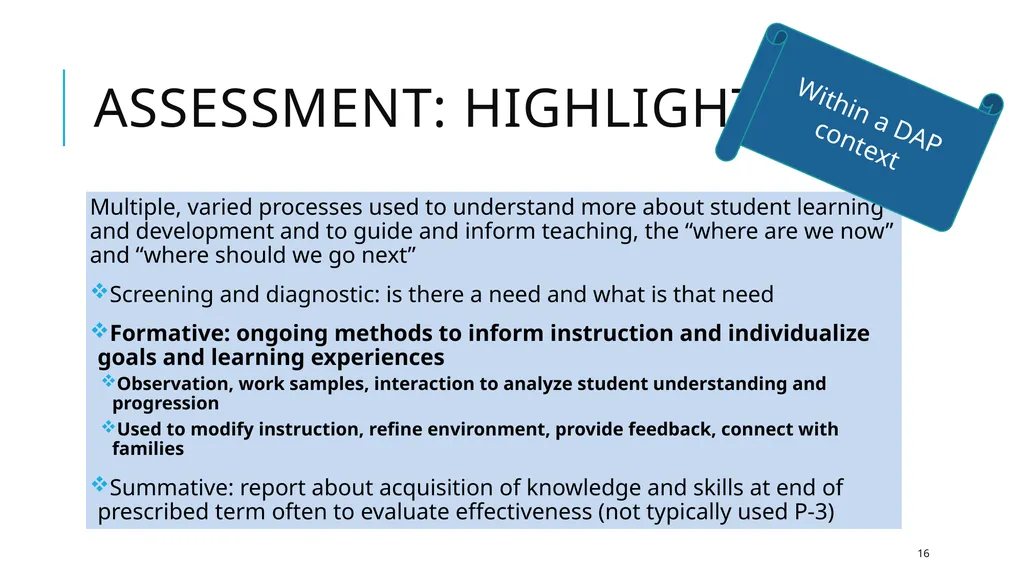
Assessment: Highlights 16 Multiple, varied processes used to understand more about student learning and development and to guide and inform teaching, the “where are we now” and “where should we go next”
Screening and diagnostic: is there a need and what is that need
Formative: ongoing methods to inform instruction and individualize goals and learning experiences
Observation, work samples, interaction to analyze student understanding and progression
Used to modify instruction, refine environment, provide feedback, connect with families
Summative: report about acquisition of knowledge and skills at end of prescribed term often to evaluate effectiveness (not typically used P-3) Within a DAP context<br>
17
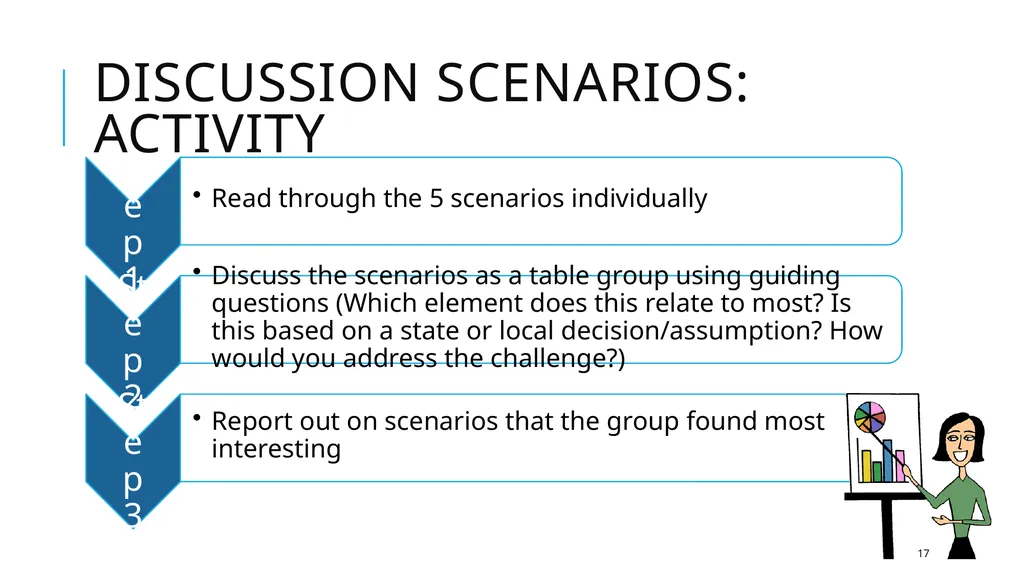
Discussion Scenarios: Activity 17<br>
18
Local Reflection What are our strengths?
What areas do we need to review?
How can we address our needs? 18<br>