Gender auditing: creating a gender-sensitive workplace Session 3: What does a gender just workplace look like? Visioning exercise part 1 What would a gender just organisation look like? You can either base your responses on a specific
"Gender auditing: creating a gender-sensitive" is the property of its rightful owner. Permission is granted to
download and print the materials on this website for personal, non-commercial use only, and to display it
on your personal computer provided you do not modify the materials and that you retain all copyright
notices contained in the materials. By downloading content from our website, you accept the terms of this
agreement.
Presentation Transcript
01
Gender auditing: creating a gender-sensitive workplace Session 3: What does a ‘gender just’ workplace look like?<br>
02
Visioning exercise part 1 What would a ‘gender just’ organisation look like?
You can either base your responses on a specific context/organisation that you consider to be a model for gender justice, or you may simply imagine.
Please note your responses on a flipchart: drawings could be used as well as words. 2<br>
03
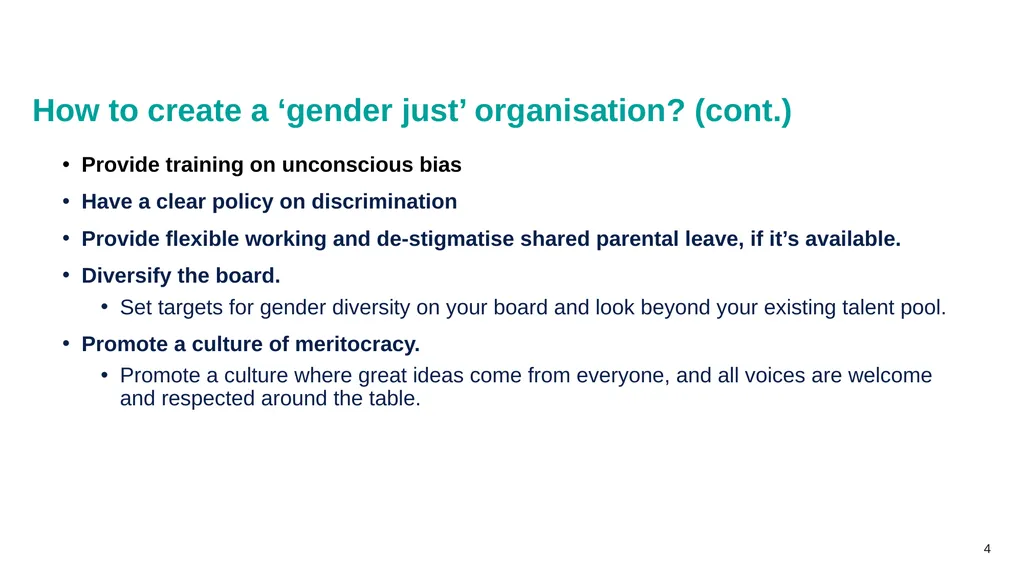
How to create a ‘gender just’ organisation? 3 Be transparent
Report on your gender statistics transparently. This is the law for companies over a certain size in some countries.
Support women into more senior roles
Set gender targets, broken down by business lines and functions.
Make sure that female employees are applying for promotions and asking for pay rises.
Implement gender neutral recruitment processes
Carefully word your job adverts. Research shows that adjectives such as ‘competitive’ and ‘determined’ put off women. On the other hand, words such as ‘collaborative’ and ‘cooperative’ tend to attract more women than men.
Review salaries and standardise pay<br>
04
How to create a ‘gender just’ organisation? (cont.) 4 Provide training on unconscious bias
Have a clear policy on discrimination
Provide flexible working and de-stigmatise shared parental leave, if it’s available.
Diversify the board.
Set targets for gender diversity on your board and look beyond your existing talent pool.
Promote a culture of meritocracy.
Promote a culture where great ideas come from everyone, and all voices are welcome and respected around the table.<br>
05
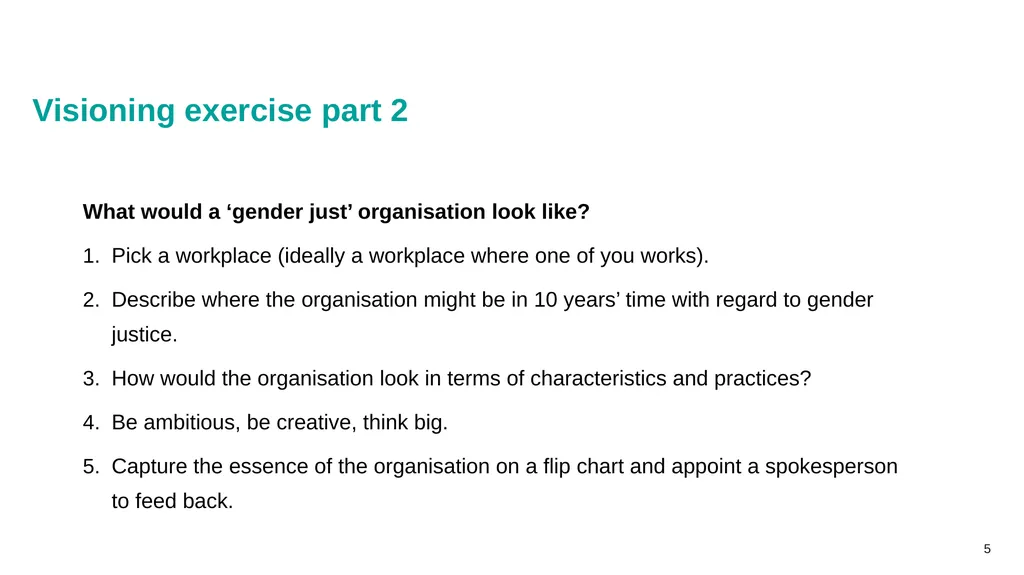
Visioning exercise part 2 What would a ‘gender just’ organisation look like?
Pick a workplace (ideally a workplace where one of you works).
Describe where the organisation might be in 10 years’ time with regard to gender justice.
How would the organisation look in terms of characteristics and practices?
Be ambitious, be creative, think big.
Capture the essence of the organisation on a flip chart and appoint a spokesperson to feed back. 5<br>
06
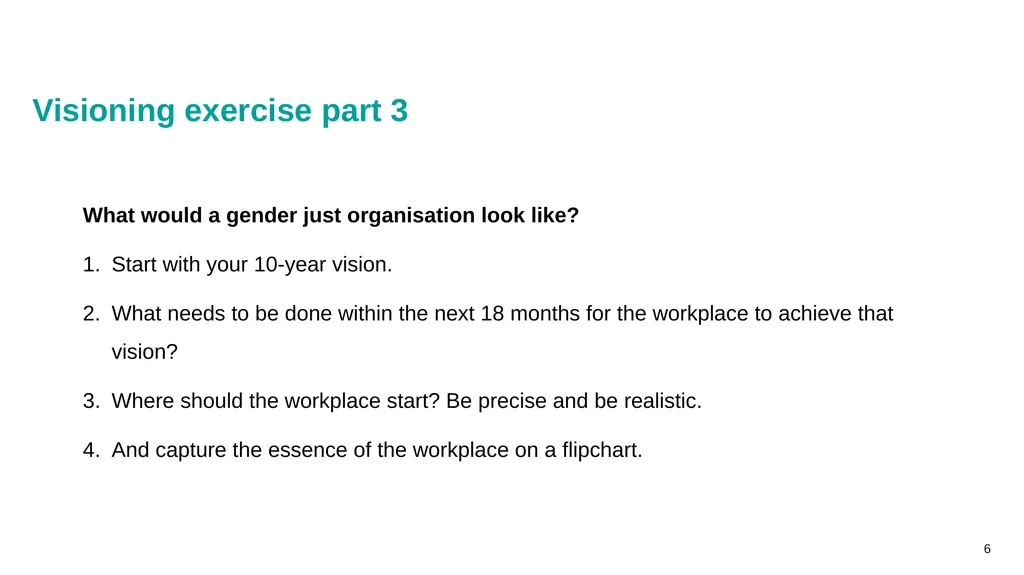
Visioning exercise part 3 What would a gender just organisation look like?
Start with your 10-year vision.
What needs to be done within the next 18 months for the workplace to achieve that vision?
Where should the workplace start? Be precise and be realistic.
And capture the essence of the workplace on a flipchart. 6<br>
07
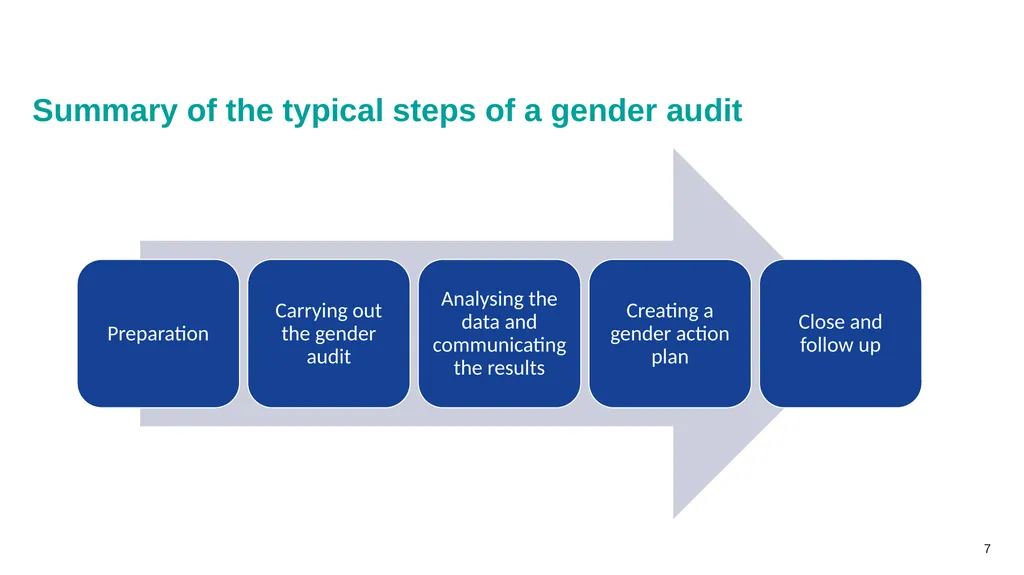
Summary of the typical steps of a gender audit 7<br>
08
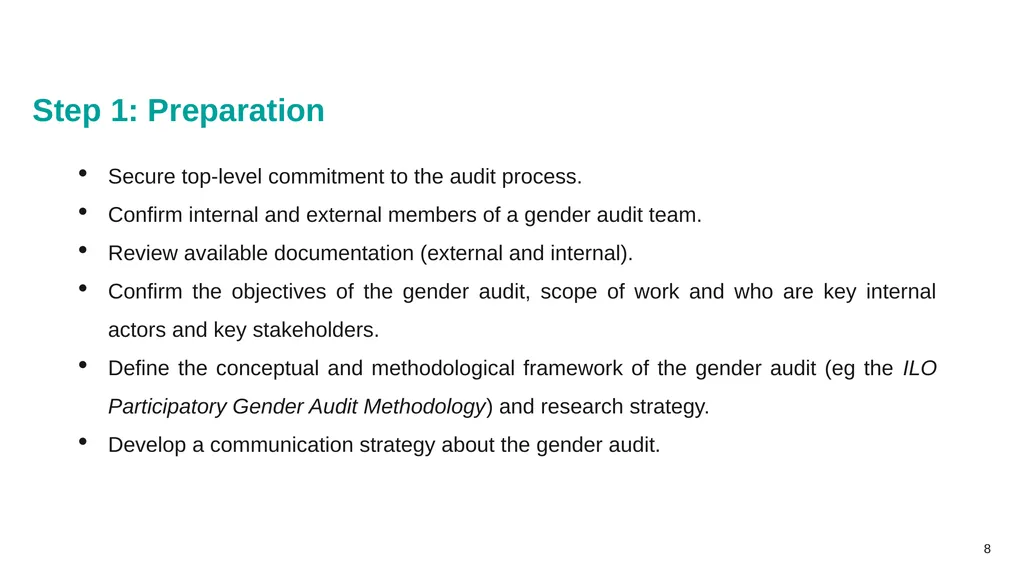
Step 1: Preparation Secure top-level commitment to the audit process.
Confirm internal and external members of a gender audit team.
Review available documentation (external and internal).
Confirm the objectives of the gender audit, scope of work and who are key internal actors and key stakeholders.
Define the conceptual and methodological framework of the gender audit (eg the ILO Participatory Gender Audit Methodology) and research strategy.
Develop a communication strategy about the gender audit. 8<br>
09
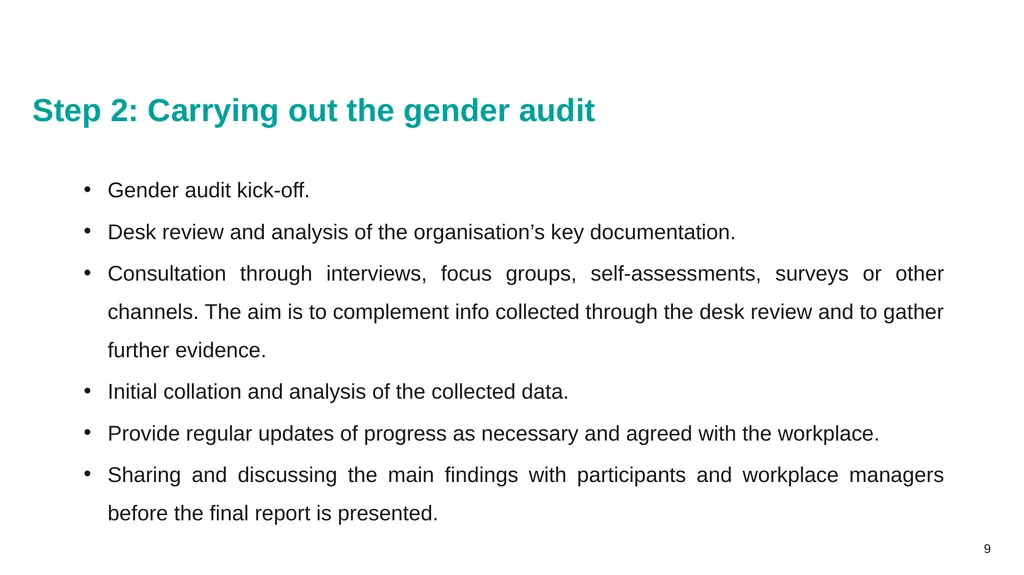
Step 2: Carrying out the gender audit Gender audit kick-off.
Desk review and analysis of the organisation’s key documentation.
Consultation through interviews, focus groups, self-assessments, surveys or other channels. The aim is to complement info collected through the desk review and to gather further evidence.
Initial collation and analysis of the collected data.
Provide regular updates of progress as necessary and agreed with the workplace.
Sharing and discussing the main findings with participants and workplace managers before the final report is presented. 9<br>
10
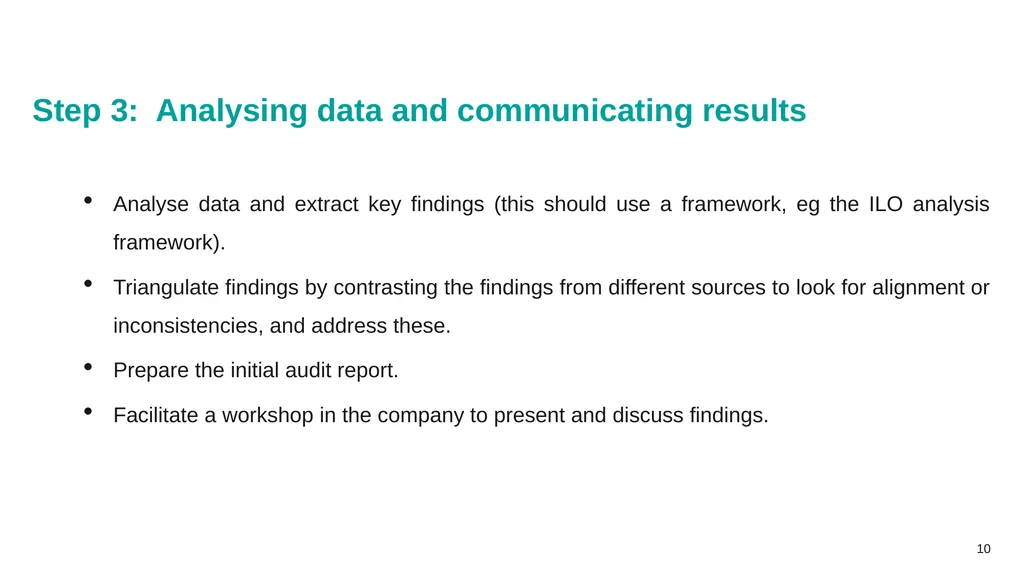
Step 3: Analysing data and communicating results Analyse data and extract key findings (this should use a framework, eg the ILO analysis framework).
Triangulate findings by contrasting the findings from different sources to look for alignment or inconsistencies, and address these.
Prepare the initial audit report.
Facilitate a workshop in the company to present and discuss findings. 10<br>
11
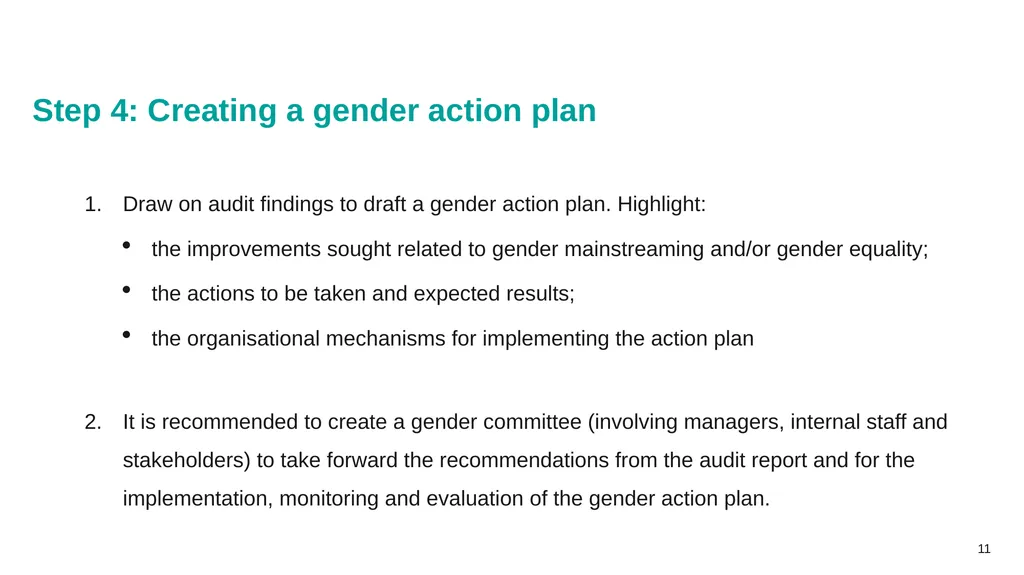
Step 4: Creating a gender action plan Draw on audit findings to draft a gender action plan. Highlight:
the improvements sought related to gender mainstreaming and/or gender equality;
the actions to be taken and expected results;
the organisational mechanisms for implementing the action plan
It is recommended to create a gender committee (involving managers, internal staff and stakeholders) to take forward the recommendations from the audit report and for the implementation, monitoring and evaluation of the gender action plan. 11<br>
12
Step 5: Close and follow up This is the final step and usually involves sending the final draft of the report to directors.